Spectamur Agendo

Prospect Hill Cemetery, York, Pennsylvania

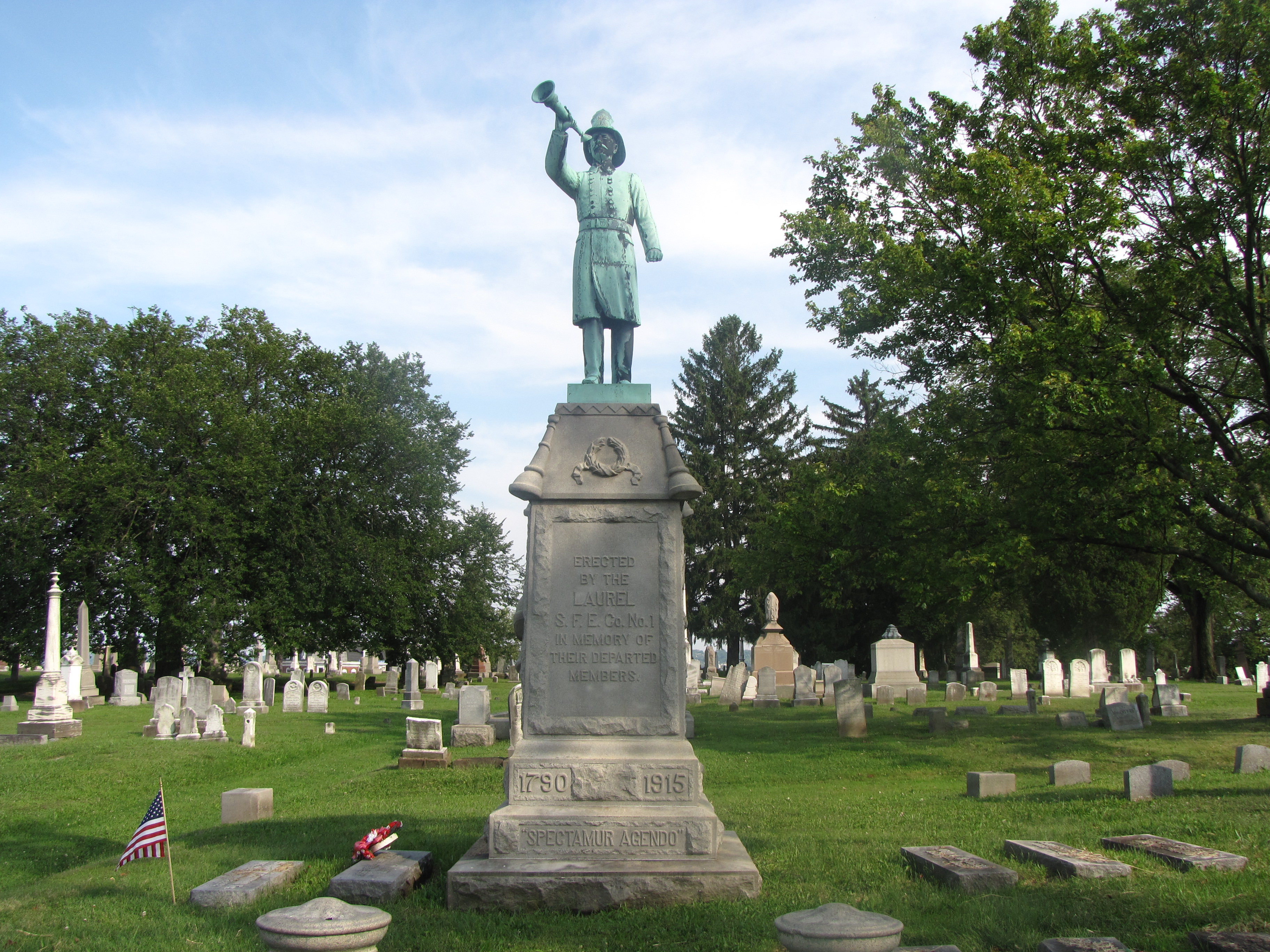
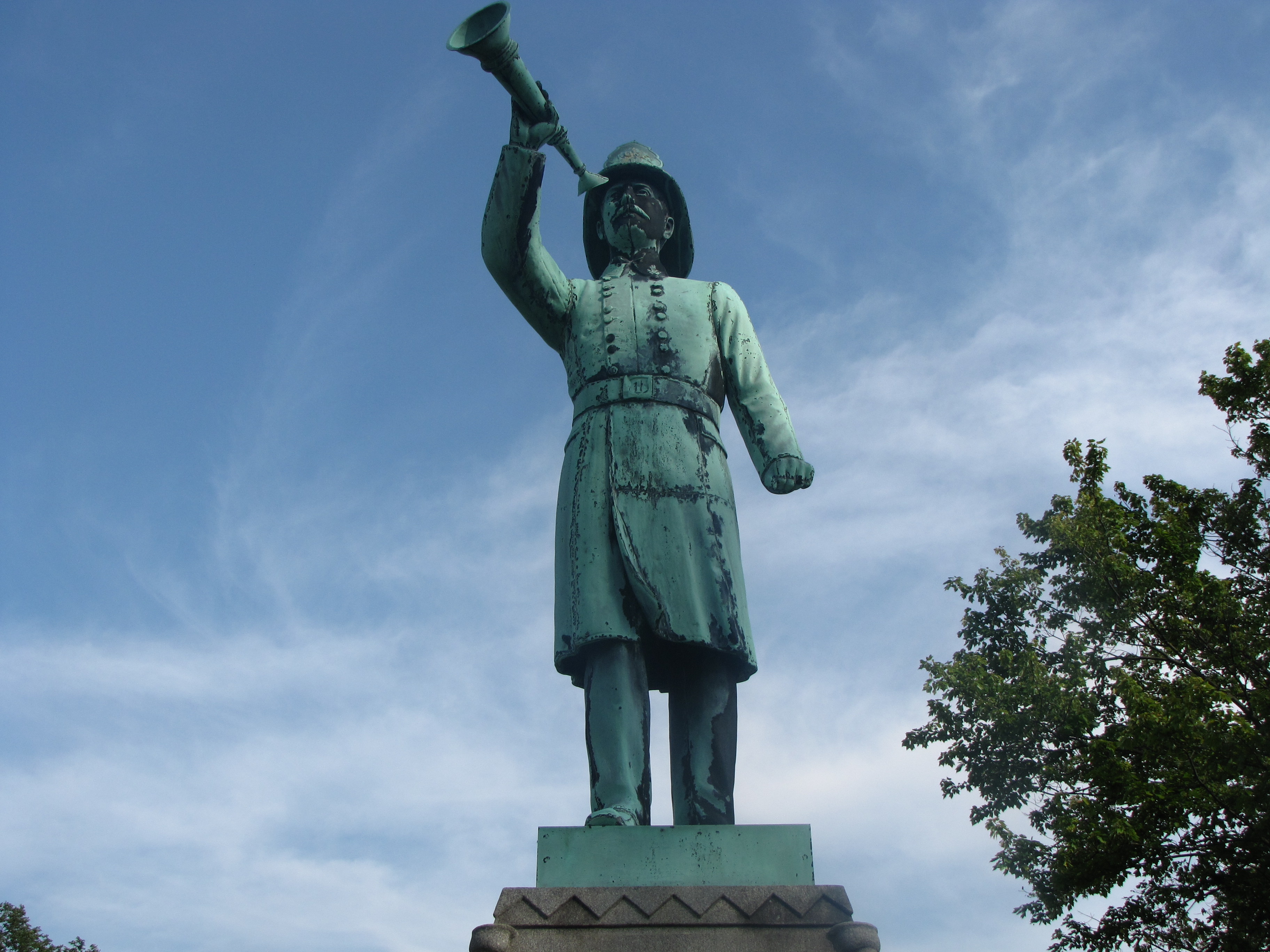
The Sun Fire Engine Company of York, Pennsylvania, is one of the oldest fire engine companies in the nation.  S. F. E. eventually became the Laurel Company Number 1.  The monument that was erected in 1915 in the Prospect Hill Cemetery in York is dedicated to the fallen members of the fire engine company.

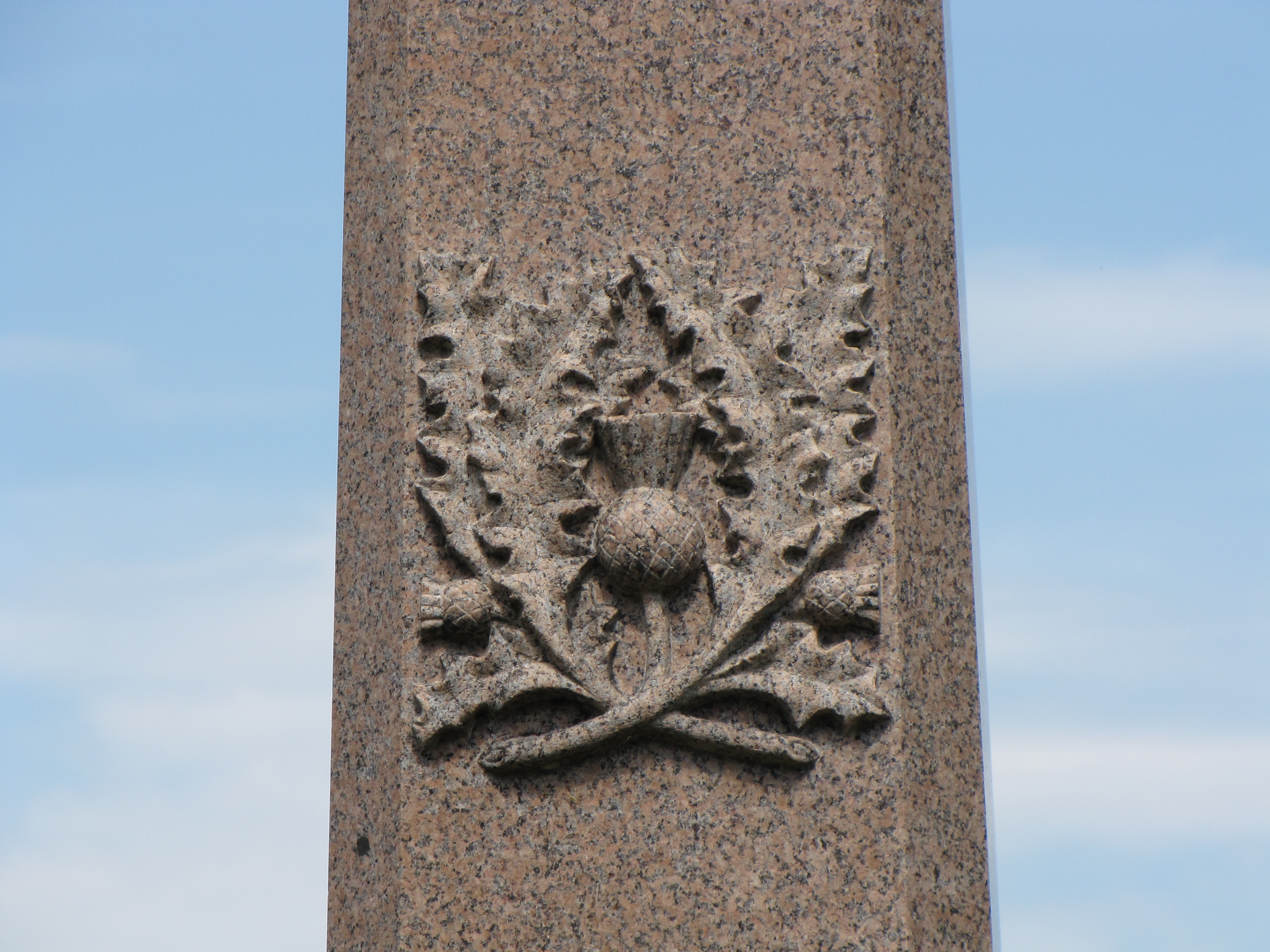
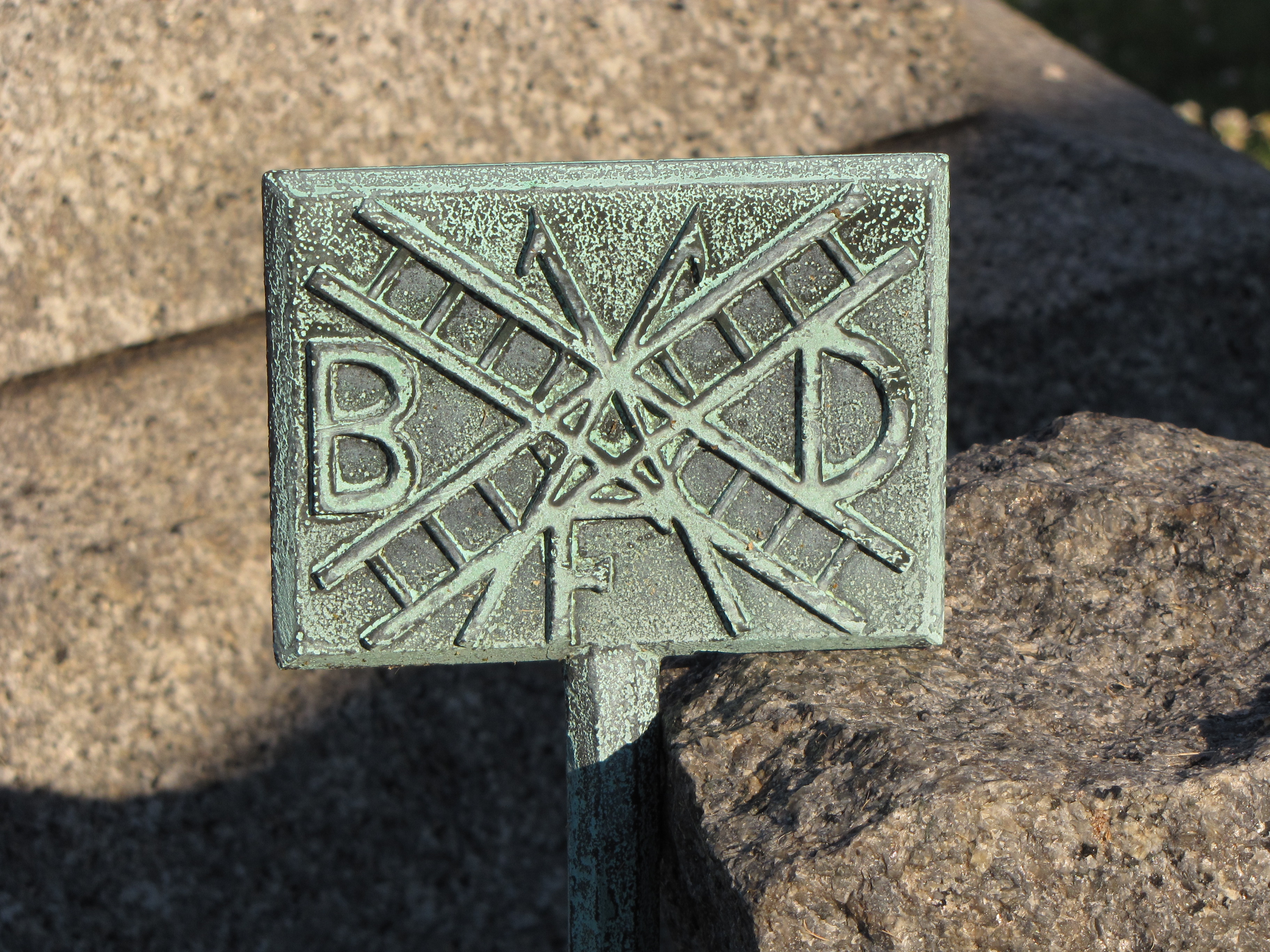
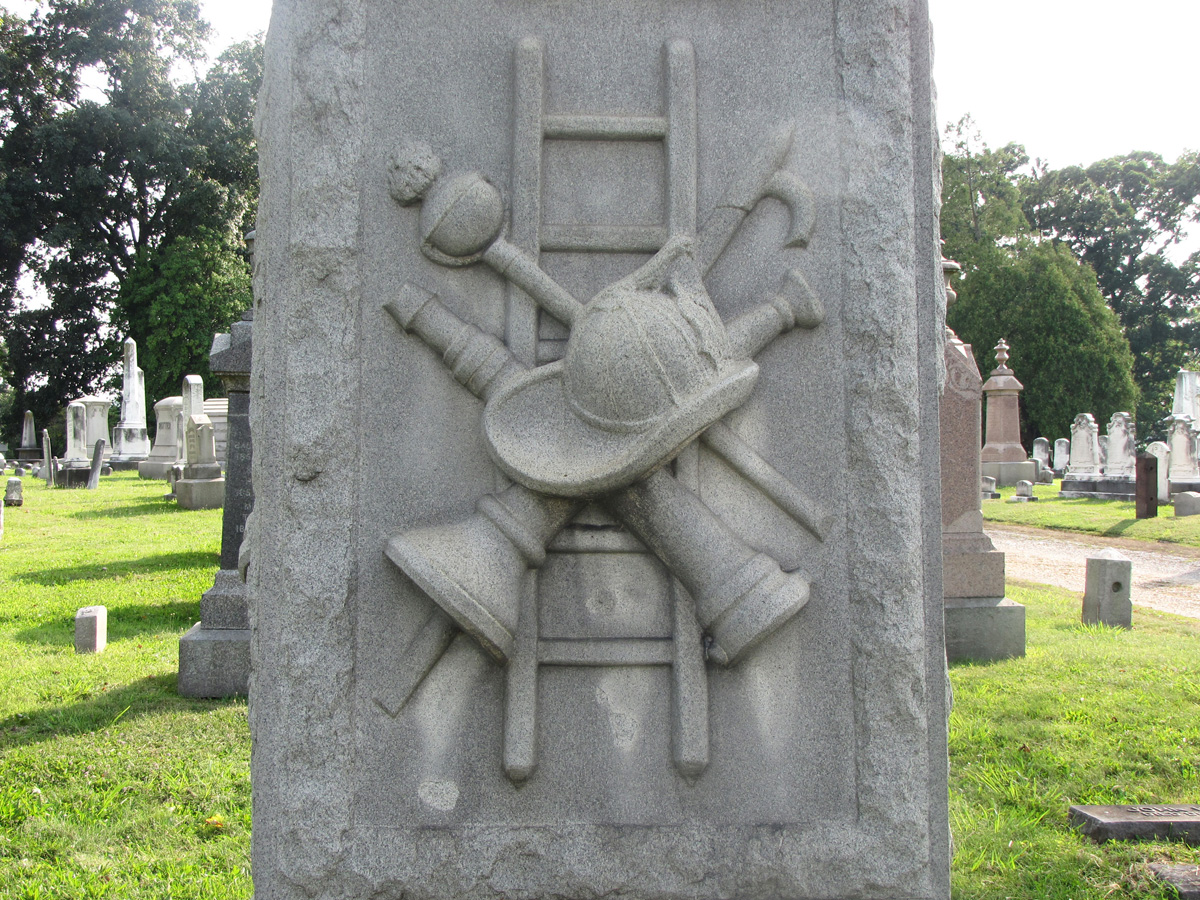
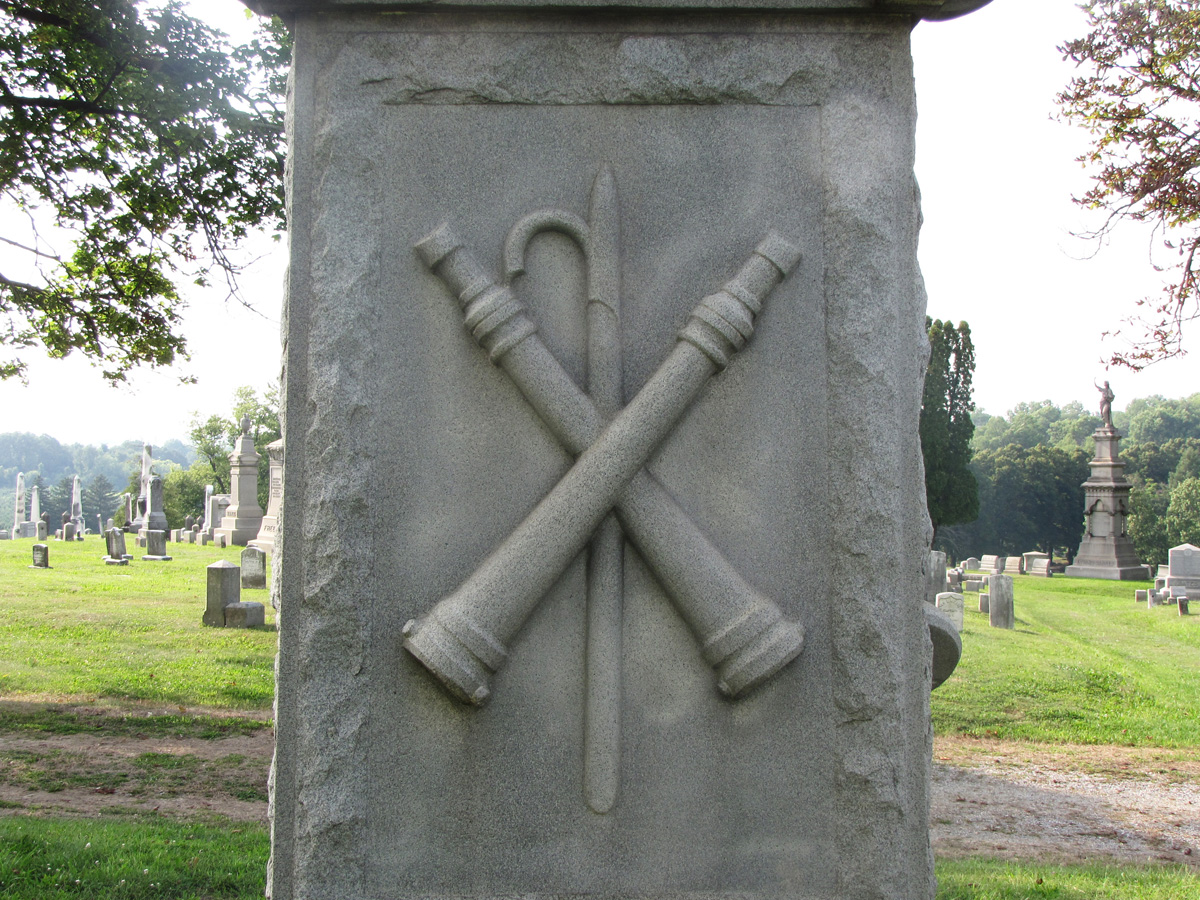
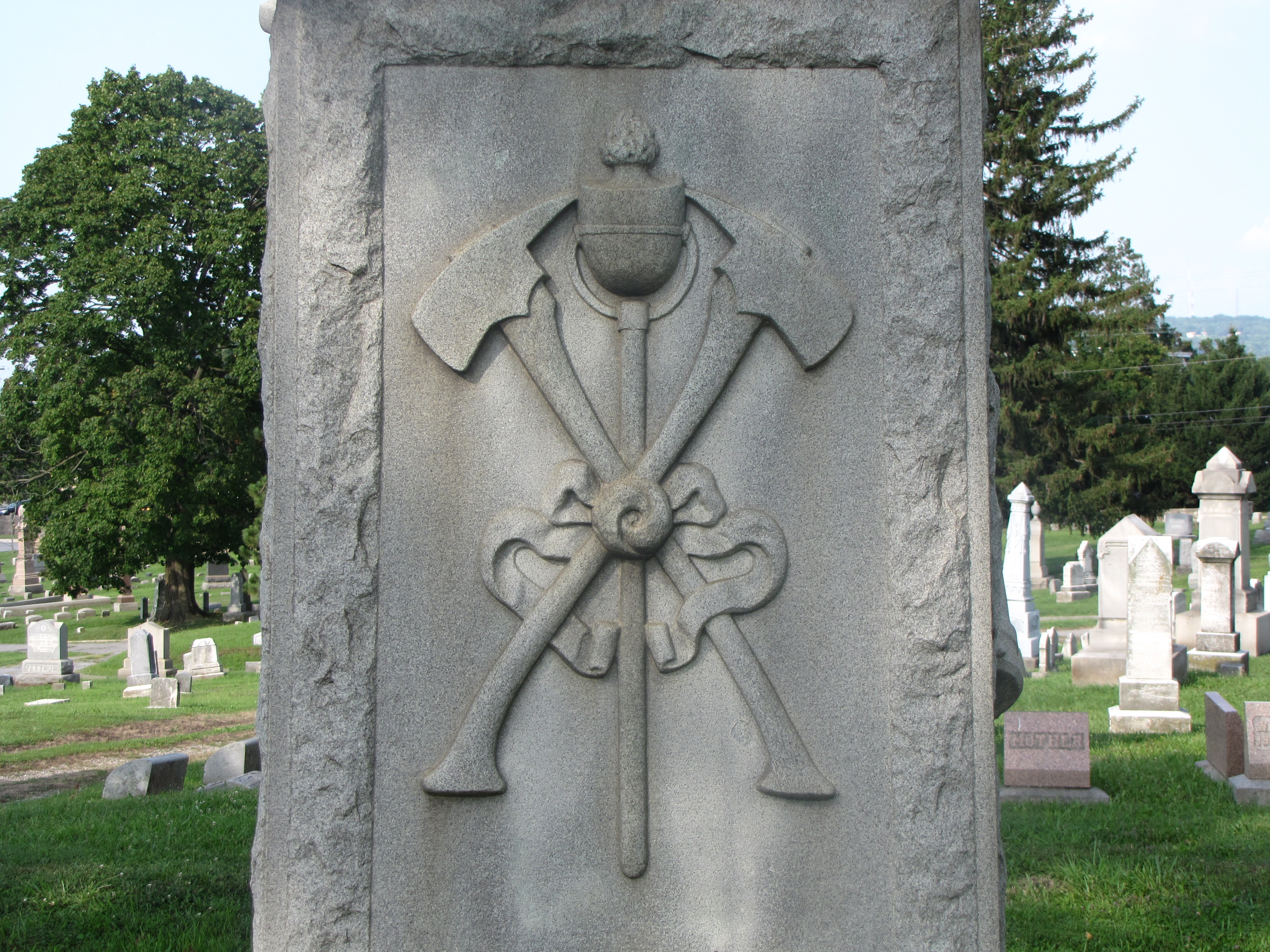
The monument features a copper sculpture of a fireman holding a bugle as if he is getting ready to call his fellow firefighters to action.  The firefighter stands on top of a granite base that features three bas-reliefs that highlight the tools of the firefighters’ trade.

This bas-relief displays a firefighter’s hat, ladder, hook, bugle, nozzle, and torch.

This bas-relief shows two crossed nozzles and a firefighter’s hook.

This bas-relief displays two crossed axes over a torch.

The base of the monument has inscribed in Latin the phrase, “Spectamur Agendo” which translates to, “Let us be judged by our acts” or “By our deeds we are known”.  This statement is a definite nod to the acts of bravery of the men and women who have worn the firefighters’ uniform.  Inscribed on the base of the monument is the following:

ERECTED

BY THE

LAUREL

S. F. E. Co. N0. 1

IN MEMORY OF

THEIR DEPARTED

MEMBERS.

1790-1915

“SPECTAMUR AGENDO”

Posted in Uncategorized | Leave a comment

Pro Bono Publico

Cypress Grove Cemetery, New Orleans, Louisiana

Cypress Cemetery at New Orleans honors firefighters in several communal tombs dedicated to firefighters which were designed in a number of different styles.

The tomb pictured above was built by the Perseverance Fire Company Number 13 and designed by architect John Bennett in 1840.

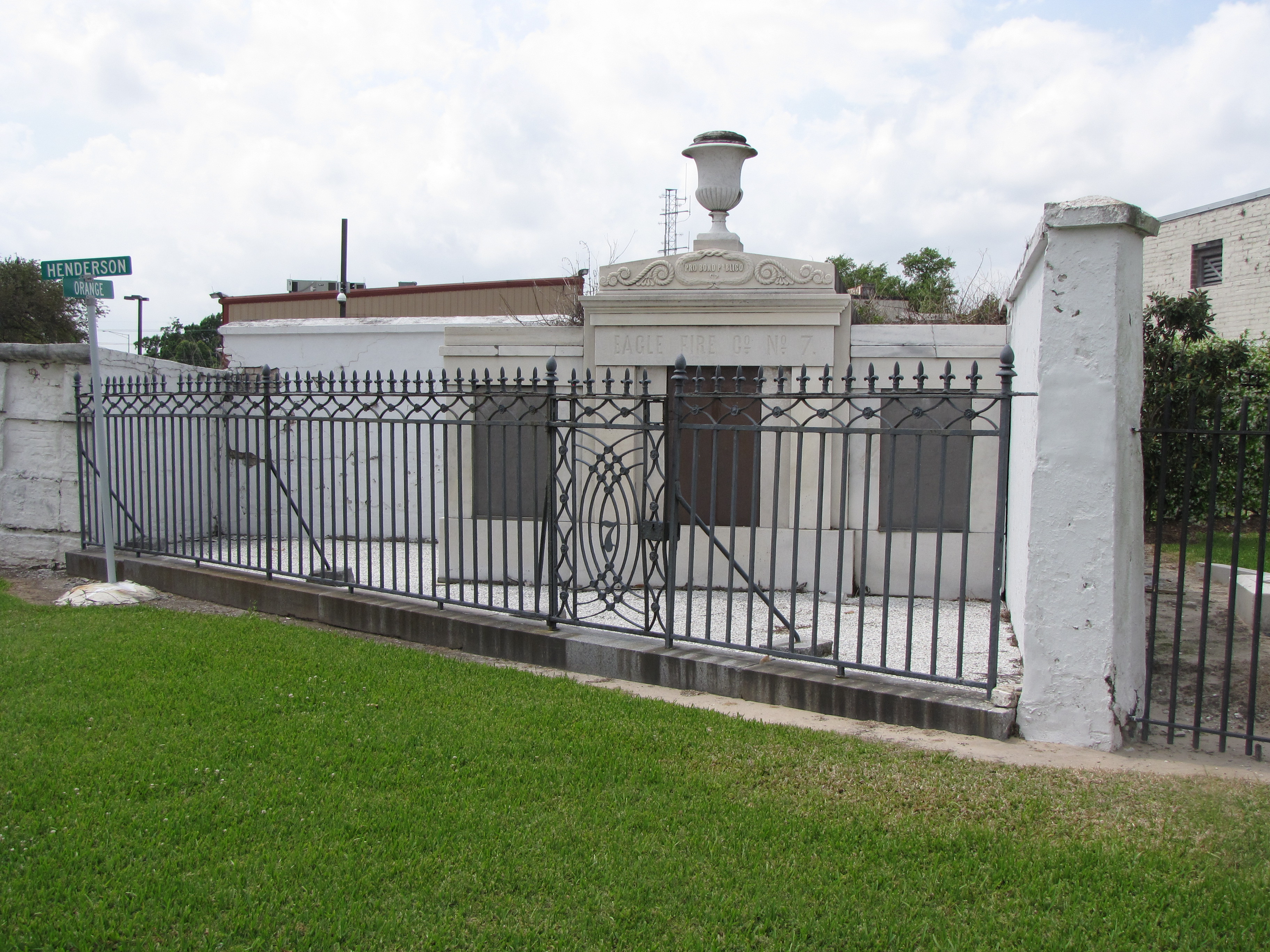
The tomb below was built by the Eagle Fire Company No. 7.  The number “7” is emblazoned on the gate.  Underneath the urn on top of the monument are the words, “Pro Bono Publico” which is Latin and translates to, “For the Public Good”.

Cypress Grove Cemetery, New Orelans, Louisiana

Posted in Uncategorized | Leave a comment

Hook and Ladder

Lafayette Cemetery Number 1, New Orleans, Louisiana

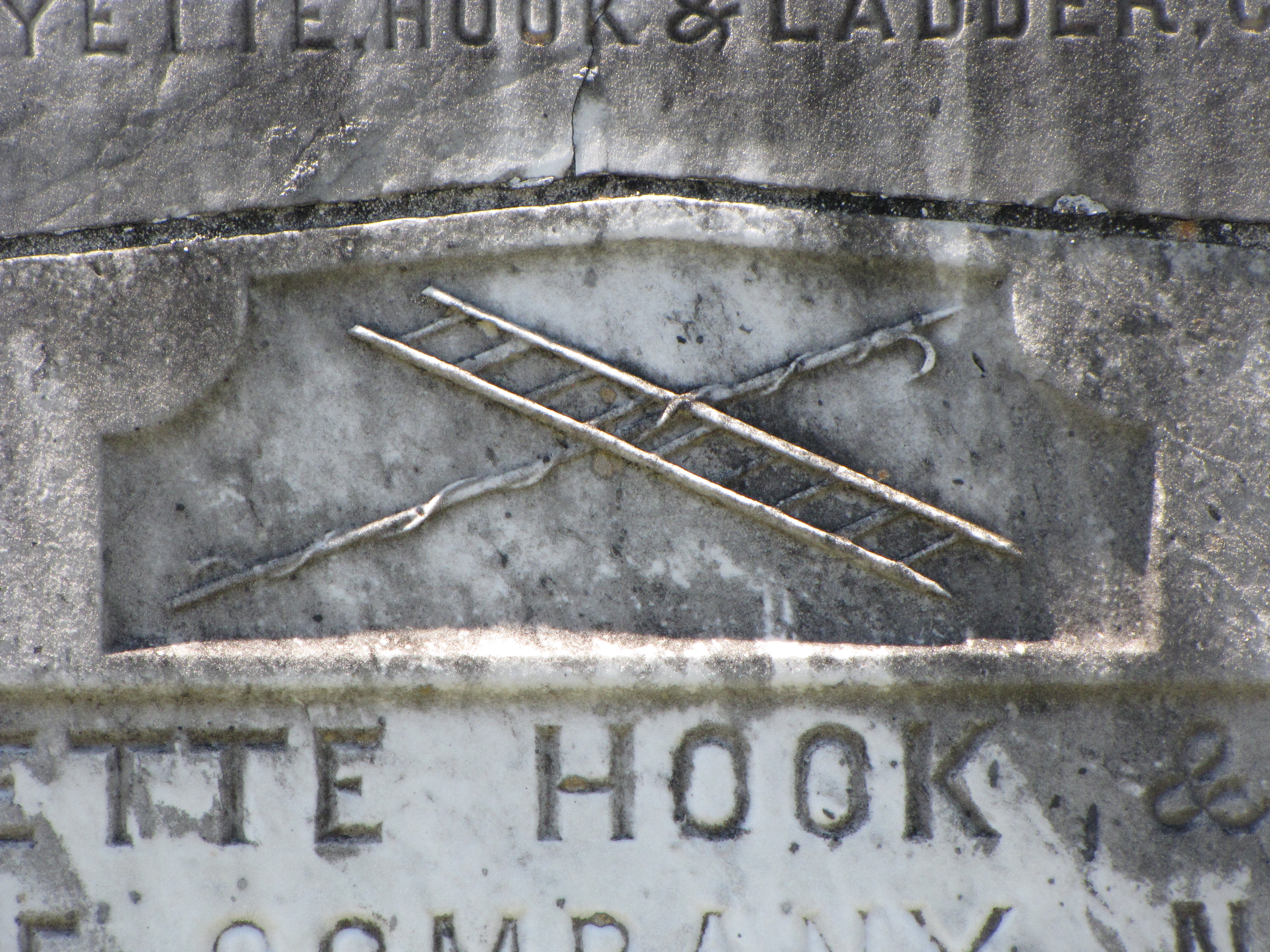
Firefighting companies were also known as Hook and Ladder companies.  Hook and Ladder companies got their names from two of the primary tools of their trade.  Ladders, of course, were used to scale walls and reach people who needed to be rescued from upper stories.  Ladders also allowed the firefighters to scale the sides of buildings to get to the roofs to fight fires from above the fire in some cases.  Hooks were simple poles that had a hook attached on the end, to enable the firefighter to punch out a window or for pulling a piece of wall or siding away from a building to see if the fire had breached the interior walls.

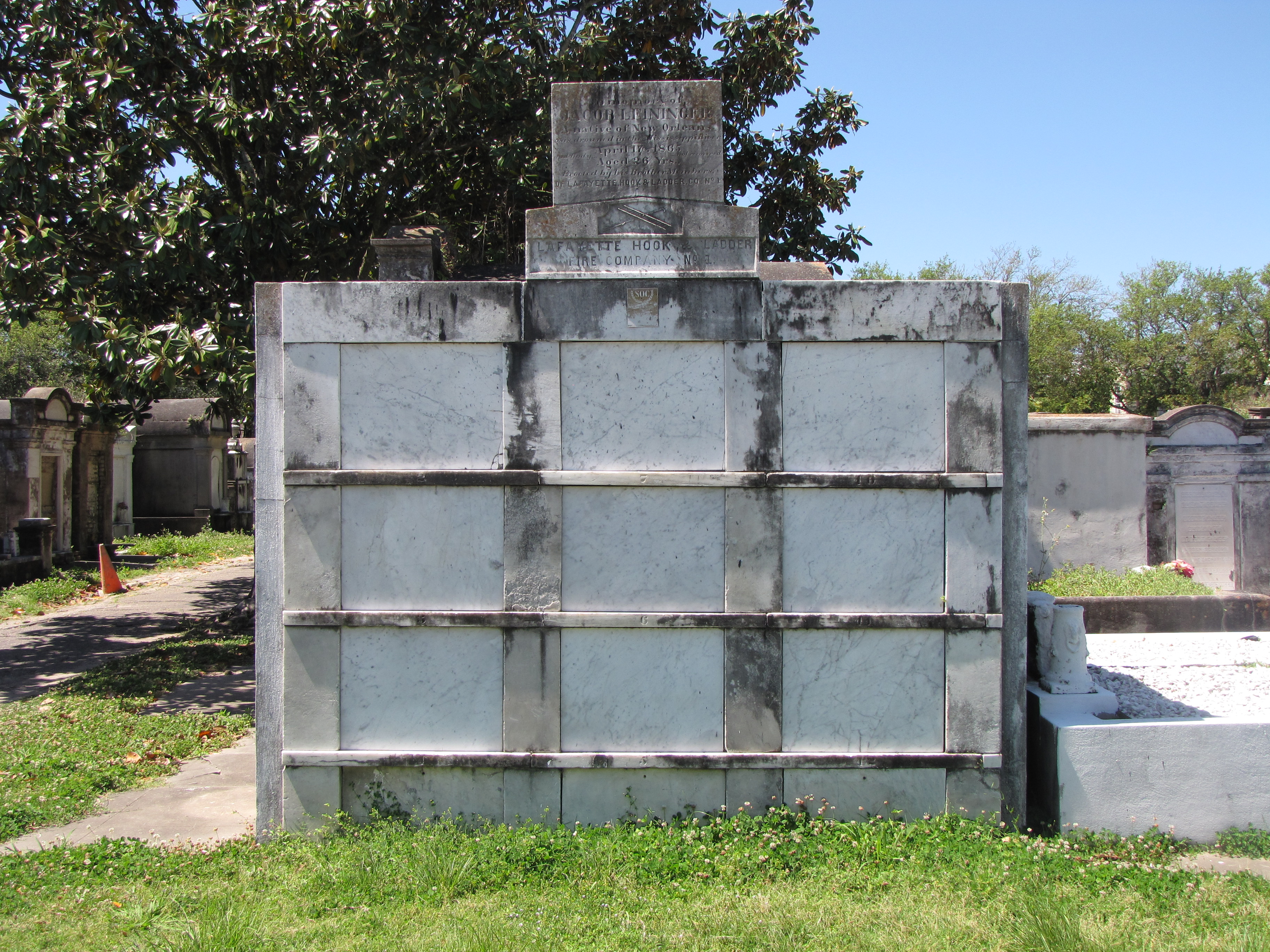
A communal tomb was built in the Lafayette Cemetery Number 1 at New Orleans, Louisiana, for the Lafayette Hook & Ladder Company Number 1 in honor of one of their members.  The dedication is centered on top of the communal tomb and features the hook and ladder symbol.

In memory of

JACOB LEININGER

A native of New Orleans

Was drowned in the Mississippi River

April 17, 1865

And Body not recovered

AGED 26 YRS.,

Erected by his Brother Members,

OF LAFAYETTE HOOK & LADDER, Co. No 1

Posted in Uncategorized | 1 Comment

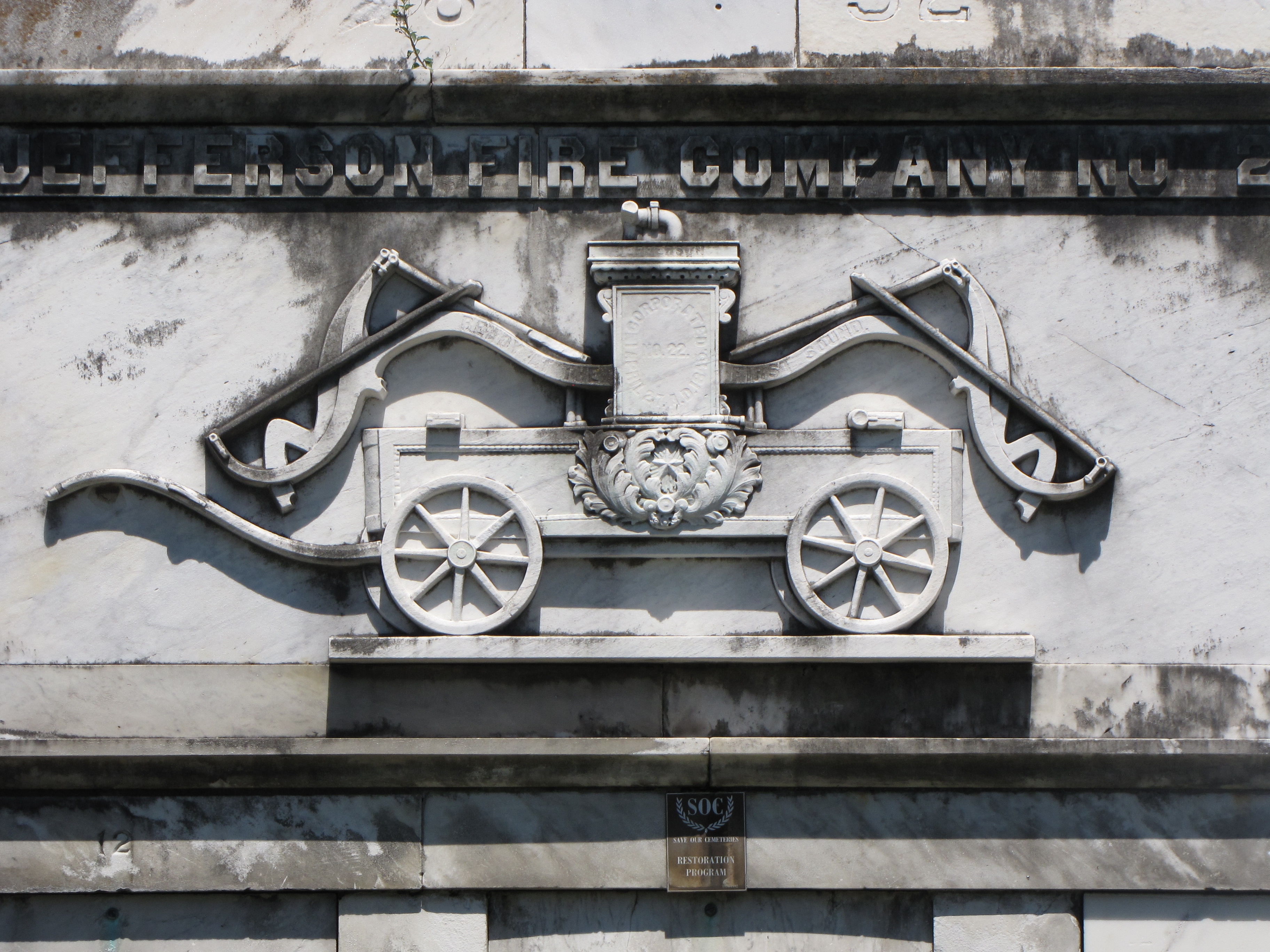
Jefferson Fire Company Number 22

Lafayette Cemtery Number 1, New Orleans, Louisiana

Firefighting Companies were vital to all communities which could be swept away by fire.  Entire communities could be lost to flame, so volunteer and professional firefighters were vital to save lives and citizens’ homes and businesses.  Firefighters had to be ready at a moment’s notice to fly into action and risk life and limb to battle an inferno.

Fire companies provided their members with social benefits of fraternity but also provided them with society benefits of insurance and security. These societies were prestiges and many of the members included prominent citizens.

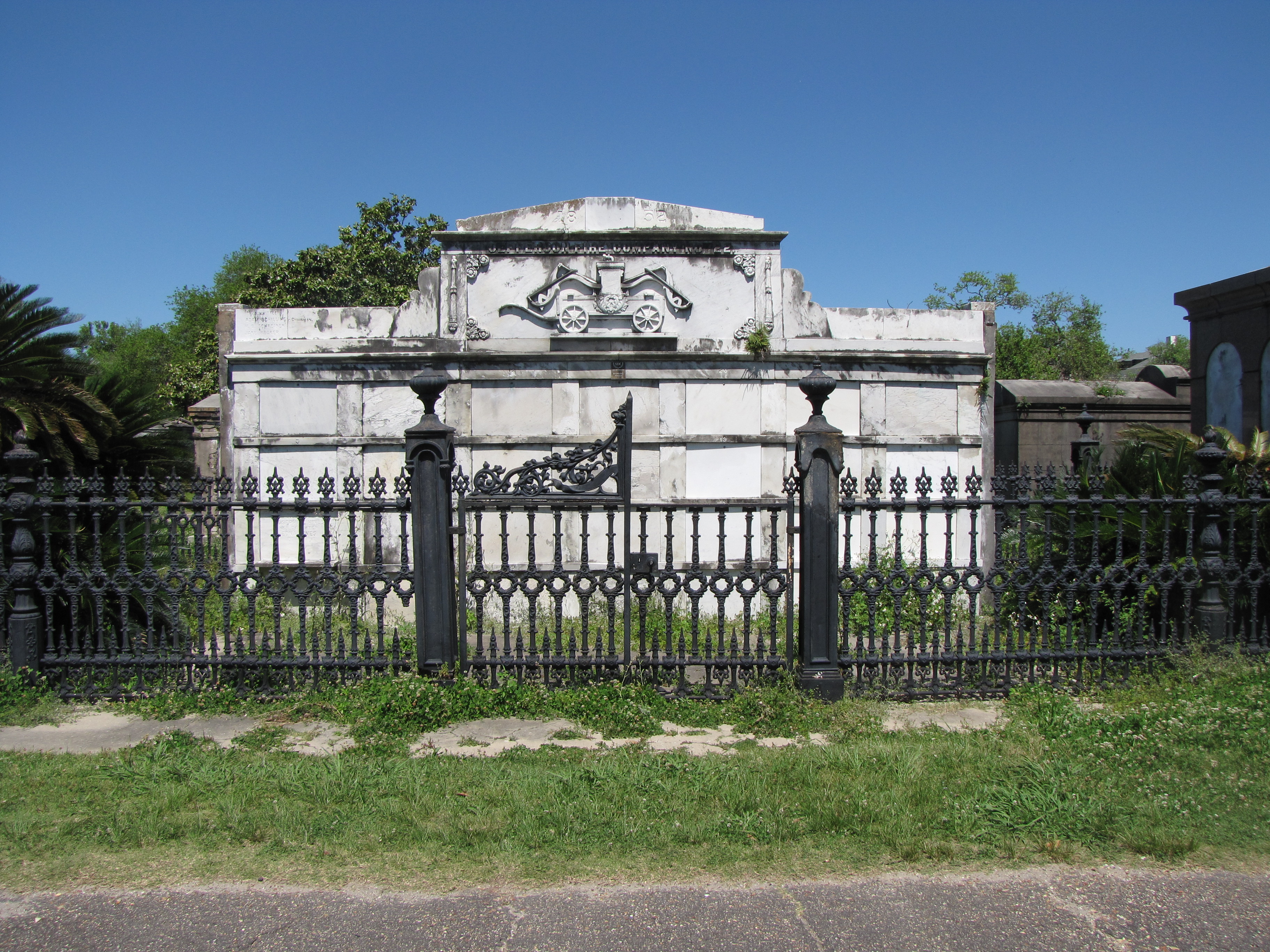
In Lafayette Cemetery Number 1 at New Orleans, Louisiana, the communal tomb of the Jefferson Fire Company Number 22, built in 1852, proudly displays the pumper wagon that represented relief and rescure to a vulnerable city.

Many organizations and societies of the time provided life insurance and burial benefits to their members.  Here the members were to be buried in a communal tomb.

Posted in Uncategorized | Leave a comment

A Firefighter Remembered

Cypress Grove Cemetery, New Orleans, Louisiana

Many individual gravestones in the Cypress Grove Cemetery at New Orleans are dedicated to firefighters.  The gravestone of W. H. Webb, propped up against a tomb, is decorated with a pumper signifying his service as a fireman.

In Memory of

W.H. WEBB

Native of New York

Died Jan. 1, 1881, aged 42 yrs

Death came as gently

As the light wind wandering

Through groves of bloom

Detaches the delicate blossom

From the trees.

We closed thy dear eyes

After days of pain.

And we will trust the God

To soon meet you again.

          From your loving Wife

SUSAN A. WEBB.

Native of New Orleans

Born August 4, 1812,

Died May 24, 1886, aged 43 yrs.

A precious one from us is gone.

A voice we loved is till.

A place is vacant in our home

Which never can be filled.

          By her devoted Mother.

Posted in Uncategorized | Leave a comment

The Fallen Firefighter


Cypress Grove Cemetery, New Orleans, Louisiana

Firefighters have had their bravery memorialized in stone by grateful citizens that have taken many forms.  In the Cypress Grove Cemetery, sometimes known as the fireman’s cemetery because it was founded with funds from the Fireman’s Charitable and Benevolent Association, the first monument erected in the cemetery was built and dedicated to a fallen firefighter.

Designed by J.N. B. Pouilly with a broken column, representing a life cut short, as the main feature, towers over the base of the tomb.  The monument is a classical design, with acanthus and inverted torches decorating the base.

The monument is dedicated to Irad Ferry, who at 36, was battling a fire on New Year’s Day on Camp Street.  During the firefight, Ferry was mortally wounded and died three days later.  He was first laid to rest at the Girod Street Cemetery but his remains were removed to Cypress Cemetery after it was opened.  One of the panels in the monument displays the bas-relief of a pumper of the era.

Dedicated to the memory of

Irad Ferry

Born in Wilton, Connecticut

13 December 1801

Died 4th January 1837

The sacrifice of your life for the safety of others

shall not be forgotten by your grateful survivors.

This monument to perpetuate the glory of your disinter-

estedness is erected by Mississippi Fire Company No. 2

With the 1st and 2nd Municipalities.

Detail from the Irad Ferry Monument of an early pumper

Posted in Uncategorized | Leave a comment

Home in Heaven

Walnut Grove Cemetery, rural Greene County, Indiana

The epitaph for the 12-year girl tells of the family’s loss and the possible suffering of the little child before she passed away.

A loved one has gone from

our circle. On earth we shall

meet her no more. She has gone

to her home in Heaven. And

all her afflictions are o-er.

Posted in Uncategorized | Leave a comment

First Responders

Forest Lawn Cemetery, Buffalo, New York

There are monuments in cemeteries all across America, like this one in the Forest Lawn Cemetery at Buffalo, New York, that stand as a testament to the bravery of firefighters, police officers, and first responders who have fallen in the line of duty.

On 911, America was attacked by al-Qaeda in a series of suicide airplane attacks–one flew into the Pentagon at Arlington, Virginia, one flight crashed near Shanksville, Pennsylvania, and two flights crashed into the two towers of the World Trade Center.  2,977 Americans were killed and over 6,000 were injured.  Among the dead were 343 New York City firefighters, 23 police officers, 37 Port Authority police officers, and eight EMTs.

Posted in Uncategorized | Leave a comment

The Obelisk

Somerset Cemetery, Somerset, Ohio

After the French and British occupations of Egypt, there was a renewed interest in Egyptian architecture and symbolism in America, including the obelisk, those tall thin four-sided columns that tapered upward and then end in a pyramid at the top.  The obelisk is a ubiquitous gravestone shape found in American graveyards.  They range from short obelisks like the zinc-cast obelisk in the Somerset Cemetery at Somerset, Ohio, which is only a few feet tall to soaring monuments upwards of 30 to 40 feet like the obelisk in the Forest Lawn Cemetery at Buffalo, New York, pictured below.

The obelisk is said to represent a single ray of sunlight, petrified from sunlight into stone.  It was thought that the Egyptian sung god Ra lived within the obelisks.  These towering monuments were often placed flanking the entrance to temples.

The most famous obelisk and the tallest in the world (standing at 555 feet) is the Washington Monument in Washington, D.C. built to honor George Washington.

Forest Lawn Cemetery, Buffalo, New York

Posted in Uncategorized | 2 Comments

Grape clusters and leaves

Forest Lawn Cemetery, Buffalo, New York

The Richard Perry Morrison Monument in the Forest Lawn Cemetery at Buffalo, New York, above is decorated with grape clusters and leaves.  In Christianity the Eucharist, which is part of a religious ceremony also called Holy Communion, is a time when Christ’s followers are to do as Jesus instructed at the Last Supper.  Jesus broke bread and said, “This is my body” and drank wine and said, “This is my blood”.  The grape in cemetery symbolism represents the blood of Christ.
Posted in Symbolism | 1 Comment