The Lion

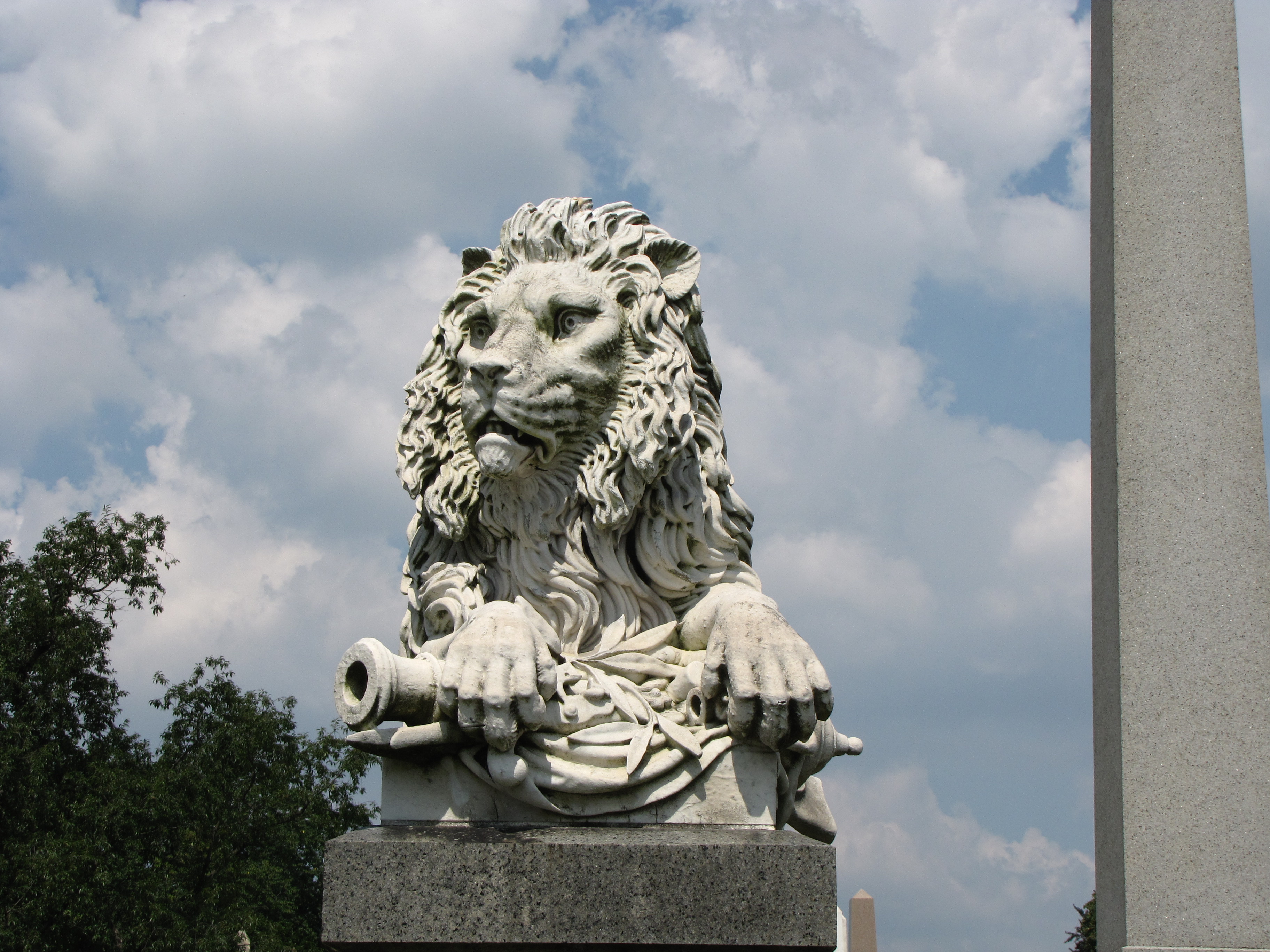
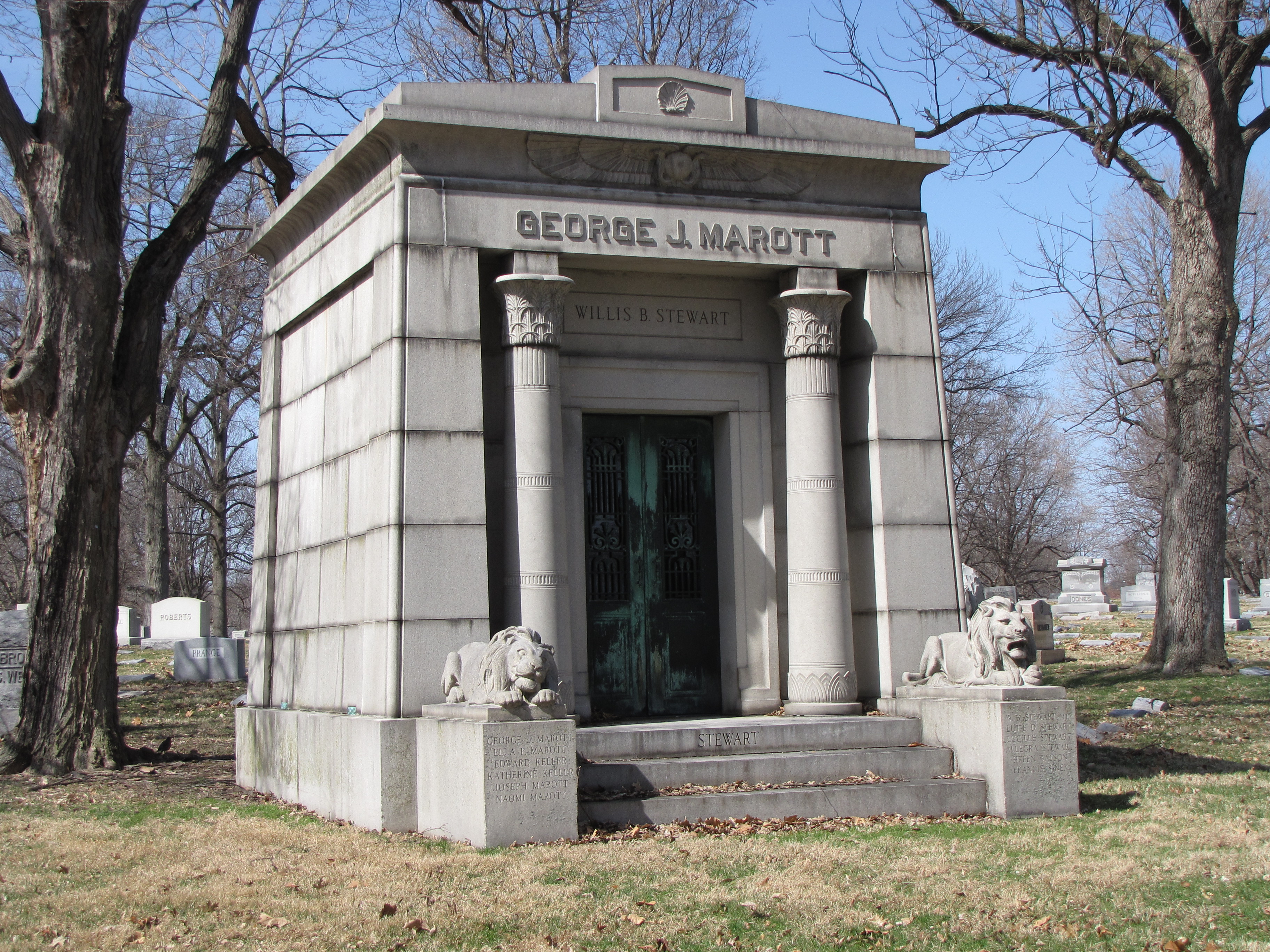
Laurel Hill Cemetery, Philadelphia, Pennsylvania

 The lion has long been a symbol of bravery, strength, and majesty. In popular culture, the lion is known for its power and is called King of the Jungle and King of the Beasts.

The lion is often used as a royal emblem, found eight times in the Royal Arms for the Queen of England alone!

The lion in funerary art symbolizes the power of God. It is often depicted flanking the entrance of a tomb to guard against evil spirits to the passageway to the next realm. It also represents the courage of the souls the lions guard. There is also a connection of the lion to the Resurrection. It was once believed that lion cubs were born dead but would come to life after three days when the cubs were breathed upon by a male lion. The three days is significant because it is the number of days Jesus was in the tomb before he was Resurrected.

Crown Hill Cemetery, Indianapolis, Indiana

Posted in Symbolism | Leave a comment

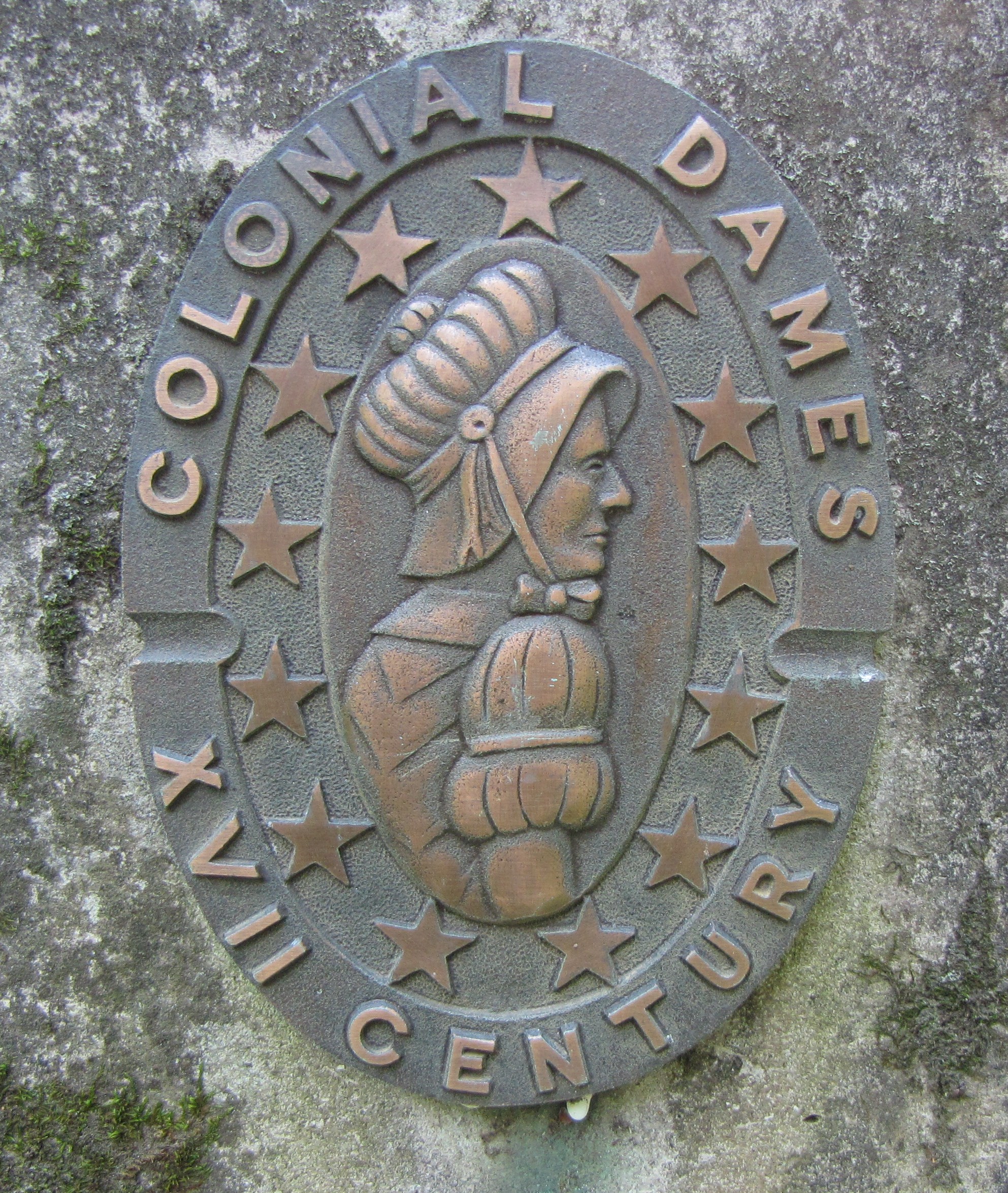
The Colonial Dames of America XVII Century

Indiana University Campus Cemetery, Bloomington, Indiana

The National Society of the Colonial Dames of America XVII Century

Motto: A Lasting Legacy

Theme: Honoring our Heritage, Embracing the Future

Scripture: “Who shall dwell in thy holy hill?  He that walketh uprightly and
worketh righteousness, and speaketh the truth in his heart.” 

Psalm 15: 1-2

Many organizations were founded in the later part of the 19th Century that required the prospective members demonstrate that their ancestors had been in the United States before a certain date or that their ancestors had served in a war.  Examples of these organizations are Sons of the American Revolution (1889), The Daughters of the American Revolution (1890), The Daughters of the War of 1812 (1892), The Order of the Founders and Patriots of America (1896), The Mayflower Society (1897), and The National Society of the Colonial Dames of America XVII was founded in 1915.

The National Society of the Colonial Dames of America XVII Century is a hereditary society, that is, membership is conferred based on what your ancestors did.  According to their Web site, “Any woman … is eligible … if there is a blood relationship to the applicant, and is the lineal descendant of an ancestor who lived and served prior to 1701 in one of the original Colonies” of the United States.

This patriotic organization’s 12,000 members are dedicated to a host of preservation, education, research, and service goals, such as, among many others:

  • the preservation of the records and of the historic sites of our country
  • fostering interest in historical colonial research
  • the education of the youth of our country.
Posted in Metal Markers | 2 Comments

Amateur Radio

Chesterton Cemetery, Chesterton, Indiana

Indiana limestone is abundant in the state.  Some of the most flawless limestone can be found in a rich trough between Bedford and Bloomington referred to as Salem limestone.  The Pentagon, the soaring National Cathedral and the solemn Lincoln Memorial in Washington, D.C., New York City’s Empire State Building, the Biltmore Mansion is Ashville, North Carolina, and 35 of the 50 state capitol buildings were built with Indiana limestone.  It is a beautiful, rich cream-colored stone that is fairly easy to work.  Generations of talented carvers learned their craft in this state, and it continues to be a place of gifted and creative carvers. 

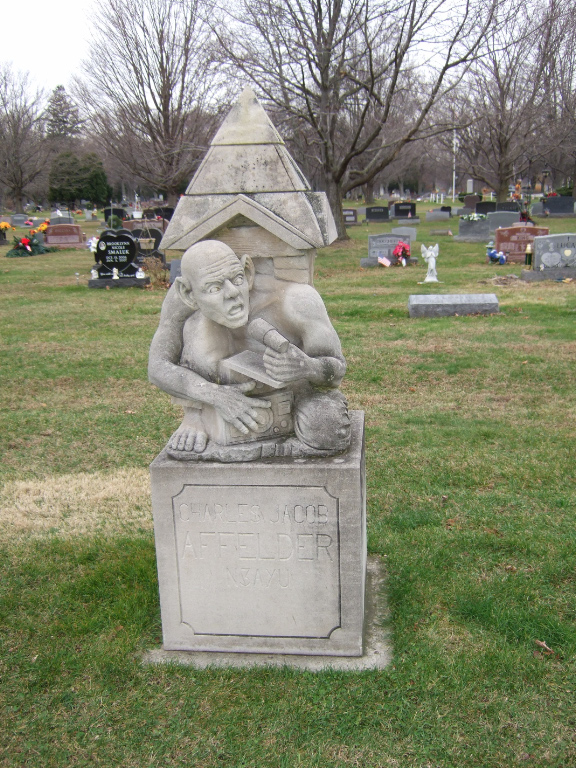
Not only can the stone carvers’ talents be seen in spectacular buildings but even in modest tombstones across the state.  Indiana has thousands of tree-stump tombstones that dot cemeteries through the entire state and exported throughout the country.  The carvers have also created one-off works of art.  One such marker, photographed by my friend and neighbor, Doug Parker, is the tombstone of Charles Jacob Affelder in the Chesterton Cemetery in Chesterton, Indiana, in the Northwest corner of the state.

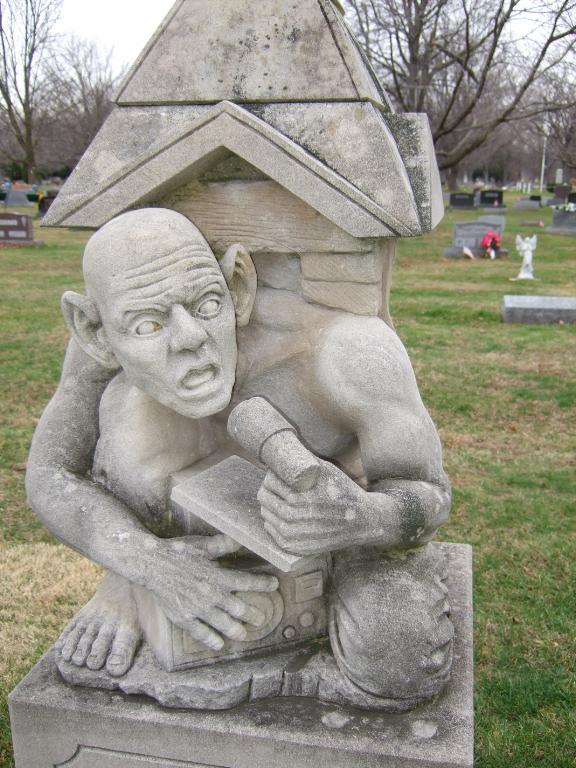
The tombstone has a figure that some people on various Web sites refer to as a Gollum-like creature from Tolkien’s The Hobbit, crouching under a gothic roof.  The bare-chested man has his right hand resting on the top of a ham radio and his other hand is clutching a microphone.  Carved on the front of the tombstone is, “Charles Jacob Affelder, N3AYU.”  The tombstone is a curious sight, in an otherwise average Midwestern cemetery. 

Further investigation of the deceased Affelder reveals that he was born August 5, 1915, in Allegheny County, Pennsylvania.  He was an avid ham radio enthusiast.  The mix of letters and numbers, A3AYU, listed underneath his name was his ham radio callsign.  Affelder had been a ham operator since 1933.  He held several patents for improvements to the radio microphone, perhaps memorialized in stone on his marker.  Affelder also worked for KDKA in Pittsburgh and for the Voice of America behind the scenes as an engineer.  Affelder’s tombstone is a tribute to his love of the radio world to which he dedicated so much of his life and career.  Charles Jacob Affelder died on January 10, 1994, at Chesterton,  Porter County, Indiana.

Close up of the Charles Jacob Affelder tombstone

Posted in Uncategorized | 6 Comments

Rock of Ages–Cross I Cling

Oak Hill Cemetery, rural Indiana

Rock of Ages, cleft for me,
Let me hide myself in Thee;
Let the water and the blood,
From Thy riven side which flowed,
Be of sin the double cure,
Cleanse me from its guilt and pow’r.

Not the labors of my hands
Can fulfill Thy law’s demands;
Could my zeal no respite know,
Could my tears forever flow,
All for sin could not atone:
Thou must save, and Thou alone.

Nothing in my hand I bring,
Simply to Thy cross I cling;
Naked, come to Thee for dress;
Helpless, look to Thee for grace;
Foul, I to the fountain fly;
Wash me, Saviour, or I die.

While I draw this fleeting breath,
When my eyelids close in death,
When I soar to worlds unknown,
See Thee on Thy judgment throne;
Rock of Ages, cleft for me,
Let me hide myself in Thee.

Then above the world and sin,
Thro’ the veil, drawn right within,
I shall see Him face to face,
Sing the story, saved by grace,
Rock of Ages, cleft for me,
Let me ever be with Thee.

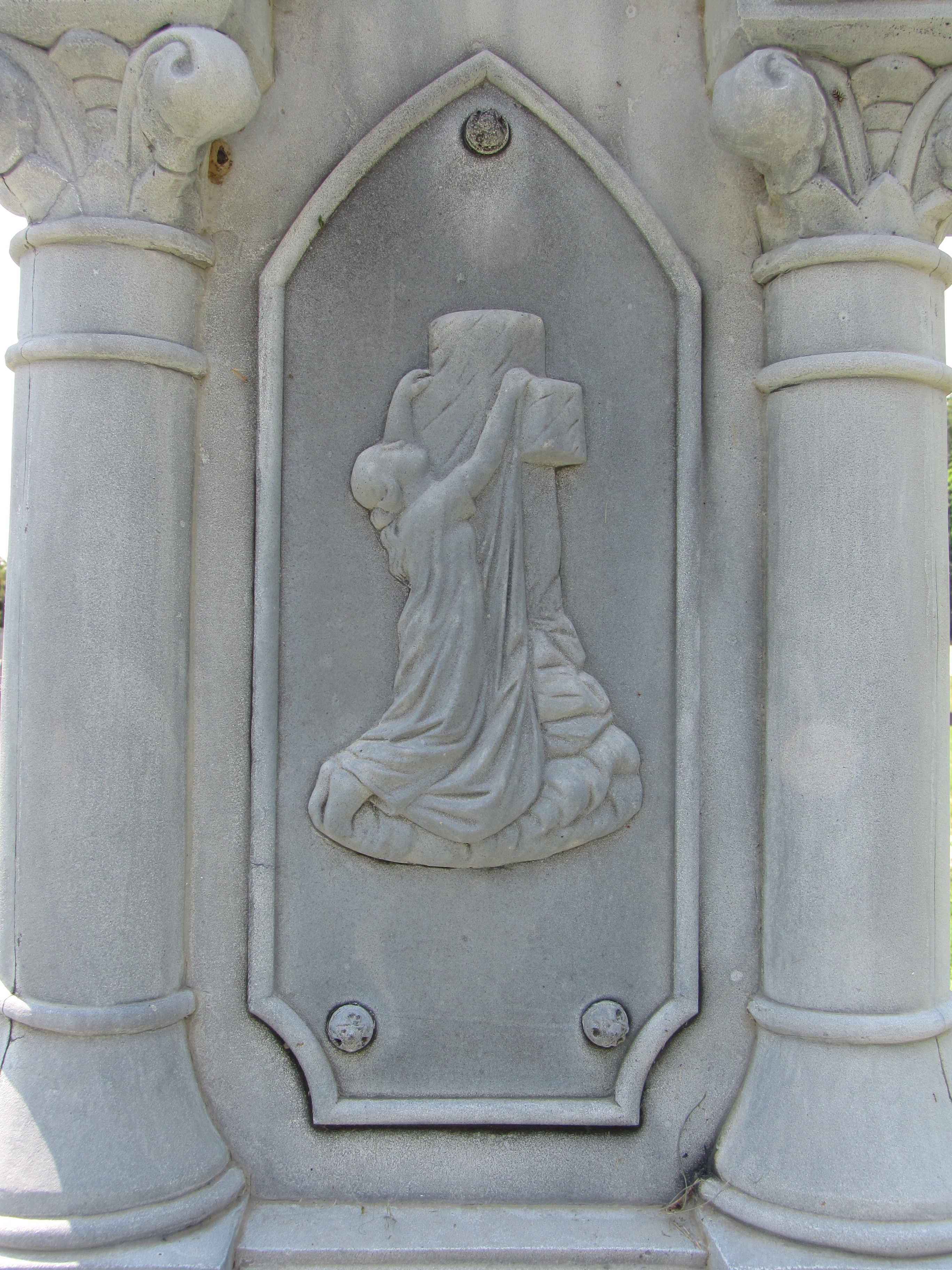
“Rock of Ages” was written by Reverend Augustus Montague Toplady in 1763 and first published in 1775.  The hymn has been a popular Christian standard for over a century.  At the turn of the 19th Century, postcards depicted a dramatic scene of a woman in a flowing dress being buffeted by a storm surrounded by stormy white-crested waves clinging to a cross illustrating the first two lines of the third stanza from the hymn:

“Nothing in my hand I bring,
Simply to Thy cross I cling”

The image above is a bas-relief of those two lines of the great hymn.  This motif is commonly found on white-bronze markers (blue-tinted cast zinc markers) made in Bridgeport, Connecticut.  The woman symbolizes faith.  The raging sea is a metaphor for the sea of sin in which humankind lives, and the cross is the hope to which sinners cling to be saved.

The James and Mary Pickens Monument, Oak Hill Cemetery, rural Indiana

Posted in Symbolism | 1 Comment

William Henry Harrison and the body snatchers

WILLIAM

HENRY

HARRISON

SECRETARY OF THE

NORTHWEST TERRITORY

DELEGATE OF THE NORTHWEST

TERRITORY TO CONGRESS

TERRITORIAL GOVERNOR

OF INDIANA

MEMBER OF CONGRESS FROM

OHIO

OHIO STATE SENATOR

UNITED STATES SENATOR

FROM OHIO

MINISTER TO COLOMBIA

NINTH PRESIDENT OF

THE UNITED STATES


ENSIGN OF THE FIRST

UNITED STATES INFANTRY

COMMANDANT

OF FORT WASHINGTON

HERO OF TIPPECANOE

MAJOR GENERAL

IN THE WAR OF 1812

VICTOR OF THE BATTLE

OF THE THAMES

AVENGER OF THE MASSACRE

OF THE RIVER BASIN

 —The text from the front and the back of the William Henry Harrison Tomb

William Henry Harrison Tomb, North Bend, Ohio

In the tiny Ohio town of North Bend, rising high above the Ohio River on Mt. Nebo is the tomb of William Henry Harrison, the 9th President of the United States. The monument, made of Bedford limestone, towering 60 feet high, is a testament to the long military and political career of Harrison.

William Henry Harrison Monument

Harrison was born February 9, 1773, the son of Benjamin Harrison, who was a signer of the Declaration of Independence. He was born into genteel and wealthy Virginia society even though he was depicted by his political enemies as Granny Harrison, the petitcoat general who would rather “sit in his log cabin drinking hard cider” than assume the duties of president. Harrison adopted the log cabin and cider as symbols of his campaign and the slogan “Tippecanoe and Tyler, Too!” Whig Harrison defeated Democrat Martin Van Buren in a lop-sided electoral win—234 to 60, though the popular vote was closer—1,275,390 (52.9%) to 1,128,854 (46.8%). William Henry Harrison has the distinction of having the longest inaugural address (over 8,000 words) and the shortest presidency (lasting a mere 31 days).

William Henry Harrison

The real story in the tomb is not about William Henry Harrison, but instead about his son, John Scott Harrison, who was the only man in United States history to be both the son (his father was William Henry Harrison, 9th President) and the father (his son was Benjamin Harrison, 23rd President) of a president. John Scott Harrison was born in Vincennes, Indiana, on October 4, 1804. Though he studied medicine, he later became a farmer, and was elected to the United States Congress from Ohio. Harrison died on May 25, 1878, in North Bend, Ohio. He was to be buried not in the towering tomb of his father, but in the Congress Green Cemetery just across the road. The cemetery was established by his mother’s (Anna Symmes Harrison) father, John Cleves Symmes. Symmes had dreams of establishng a large frontier city on the very spot where the cemetery now lay.

John Scott Harrison

The Saturday before John Scott died another Harrison relative, Augustus Devin, had been buried in the Congress Green Cemetery. When the funeral party came to John Scott’s grave which was being prepared to receive Harrison, it was noticed that Devin’s grave had been tampered with and his body was missing. Immediately, steps were taken to secure Harrison’s grave from body snatchers. Brothers Benjamin Harrison and John Harrison Jr. watched as their father’s metal casket was lowered into a brick vault. After the casket was secure in the vault, three large stones were cemeted on top to fit a lid for the vault. In addition, the Harrison’s paid a young man to guard the grave for a month after the burial.

At the time, medical schools needed cadavers for study. It was suspected that graverobbers and medical professors collaborated—the graverobbers delivered the dead bodies and the fee was paid and no questions were asked. Because of the practice, John Jr. and his cousin George Eaton went to look for Devin’s body in Cincinnati where it had been rumored that a late night delivery had been made to the Ohio Medical College.

A relunctant janitor showed the John Jr. and Eaton who were accompanied by Constable Lacey, Detective Snelbaker, and a search warrant around the medical school. Finding nothing after a thorough search the four were ready to leave when the detective noticed a rope suspending something down an elevator shaft. When the rope was pulled up, the body of an old man was found, clearly not Devin’s body. The body was laid out on the floor and when the covering over the head of the body was removed, it was John Scott Harrison who had only been buried twenty four hours ealier. A horrified John Jr. Said, “My God, that’s my father!” The men had come to find Augustus Devin and instead found John Scott Harrison.

The body santchers were never found, though, Devin’s body was later discovered at the University of Michigan medical college in a vat of brine. The young night watcheman who had been hired had been derelict in his duties. It seemed he was spoked by being in the cemetery at night and did not complete his watch the first evening when the crypt robbers dug down to the two small stones over the base of the casket where they pried open the vault, cut open the lower part of the lid of the casket and lifted John Scott Harrison by the feet.

After the discovery in the medical school, Harrison’s body was held in the John Strader Mausoleum at Spring Grove Cemetery, in Cincinnati before its re-burial in the William Henry Harrison Tomb.

The inside of the William Henry Harrison Tomb


Posted in Presidential graves | 3 Comments

Empty Chair–Tree-Stump Tombstone

Calvary Cemetery, Decatur, Illinois

Here the tree-stump tombstone is carved into the form of an empty chair.  The chair back and the arms of the chair (one is missing) are formed out of tree branches with the stump forming the base of the chair.  On the back of the chair hangs a man’s hat.  This tombstone depicts a lonely scene.  In funerary symbolism the vacant chair symbolizes the loss of a loved one.

Posted in Treestump gravestones, Uncategorized | Leave a comment

A lover’s embrace–tree-stump tombstone style

Clover Hill Cemetery, Harrodsburg, Indiana

Above is the tree-stump tombstone of James and Mary Sears, another example of one of many designs found in the tree-stump tombstone motif.  Their marker displays the name “SEARS” at the base to look like the letters were put together from tree branches.  In the bottom of the gravestone ferns cluster at the base. Ferns represent humility, frankness, and sincerity.  In this example they also add to the country feel of this tree-stump tombstone.  Grape clusters, which represent the blood of Christ, and grape leaves grow at the top of the marker where the two halves come together with two limbs like arms twining around each other like a lover’s embrace, representing the love and marriage of the deceased couple.
Posted in Treestump gravestones | 1 Comment

Woodmen of the World and the Tree-Stump Gravestone

Fairmont Cemetery, Denver, Colorado

Joseph Cullen Root, a prolific founder, founded four fraternal organizations during his lifetime, one of them being the Modern Woodmen of America (MWA).  MWA was founded on on January 5, 1883.  Root was inspired by a Sunday sermon in Lyons, Iowa. During the sermon the pastor extolled the virtues that came from “woodmen” cutting down the forest to build homes and communities. It was then that Root adopted the term Woodmen for his newly formed organization. The tools to clear those forests were adopted as symbols for the organization at the same time– axe, beetle (mallet) and wedge – symbolizing industry, power and progress. 
 
After Root had a falling out with the Woodmen of America, he founded the Woodmen of the World organization on June 6, 1890, at Omaha, Nebraska. He had been a member of several organizations, including the Odd Fellows, but Root wanted this new organization to be beneficial.  He wanted to make sure that after the death of the breadwinner that the family would be protected through a death benefit payout. 
 
In addition to the life insurance benefits, an early program that lasted until the late 1920s, was to provide a marker for each member upon their death. The influence of that early sermon can be seen in many of the tree-stump tombstones, fitting designs for the Woodmen of the World members, with its imagery the axe, beetle, and wedge.

The tree-stump tombstone is also a physical depiction of the cleared forest.  There are many varieties of what these gravestones look like. 

Posted in Treestump gravestones | 13 Comments

Tree-Stump Squirrel

Mitchell Cemetery, Mitchell, Indiana

The Eberle Martin tree-stump tombstone in Mitchell, Indiana, is an unique example of this type of marker because of its bas-relief profile of the deceased at the top.

Many of the tree-stump tombstones are carved to appear as if the bark has been peeled back from the tree, done to create a space for the information to be carved into the stone.  On this tombstone, the backside of the peeled bark has an incised carving of a squirrel.  The furry little rodent is sitting atop of a log holding a nut in his tiny little paws in a prayful pose.  The squirrel is not a commonly seen symbol in the cemetery.  The squirrel here is in a religious meditation and represents spiritual striving.

Posted in Symbolism, Treestump gravestones | 5 Comments

Tree-Stump Tombstones

 The rustic movement of the mid-nineteenth century was characterized by designs that were made to look like they were from the country. Elegant and slim curved lines in furniture gave way to bulkier and heavier forms made from pieces that came directly from the trees often with the bark still intact. Homes, cabins, and garden houses were designed in the rustic style eschewing classic designs. In decorative furniture this often took the form of chairs made from rough tree limbs curved to form arms and chair backs, chair legs made from tree roots growing upwards. In cabins, railings and the siding were made from unhewn logs with the bark still in place.

Caretaker's Cottage, Cave Hill Cemetery, Louisville, Kentucky


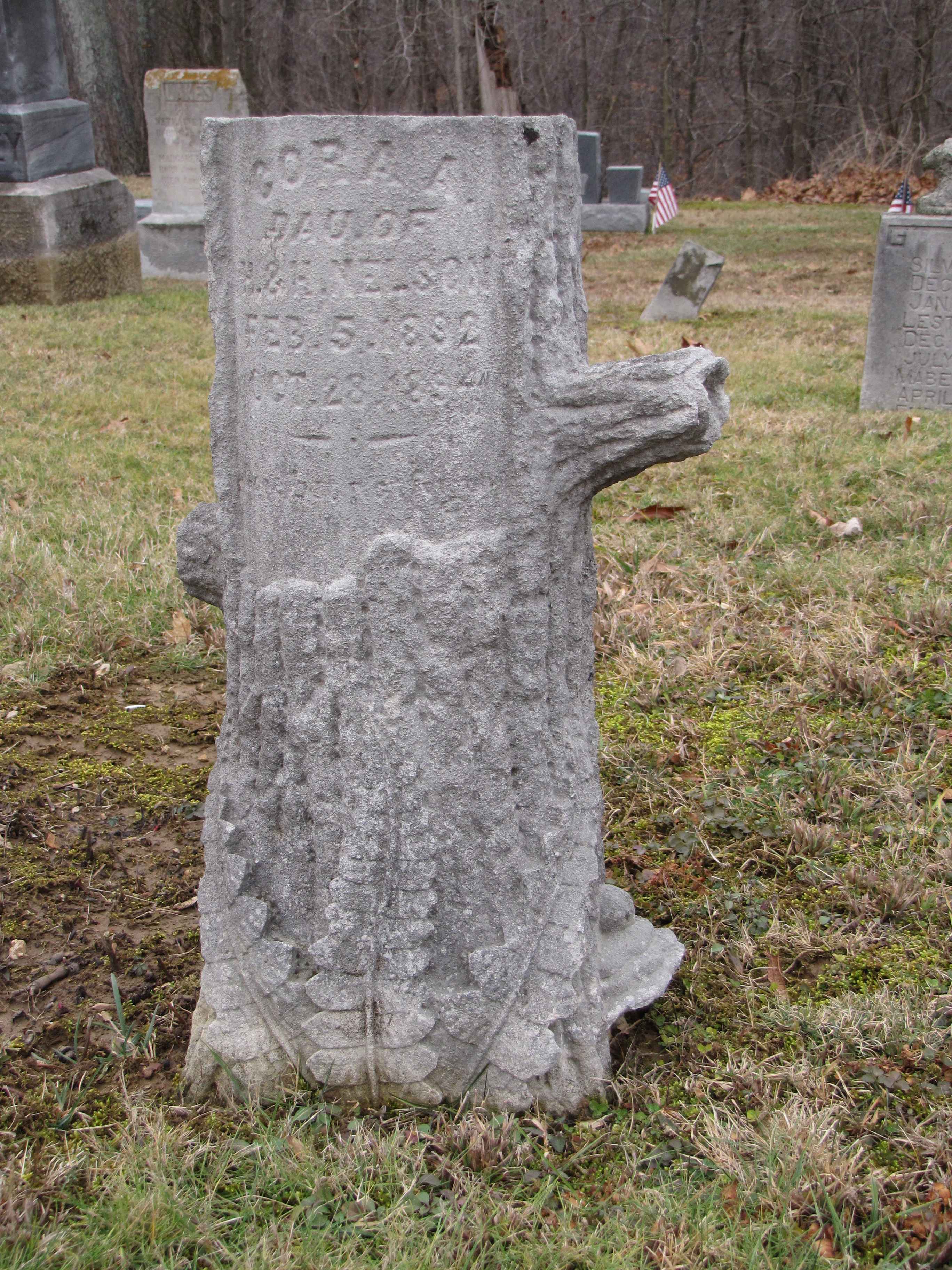
In funerary art, tombstones took on the look of tree stumps. The gravestones were purposefully designed to look like trees that had been cut and left in the cemetery to mark a grave. Most of these tree-stump tombstones were carved from limestone, which is easier to carve, though some are made from marble and even a few from granite. Often, the gravestones were carved to look like rustic furniture. Benches and chairs can be found in many cemeteries. The creativity of the carvers were boundless. Thousands of tree-stump tombstones exist in nearly as many designs.


Cemetery Bench, Oak Hill Cemetery, rural Indiana


The rustic movement coincided with the rural cemetery movement. The rural cemeteries were often located on the outskirts of town and laid out as a park would be—with broad avenues and winding pathways, featuring picturesque landscaping such as ponds, abundant trees, and shrubs. The tree-stump tombstones were a funerary art contrivance mimicking the natural surroundings of the cemetery. The tree-stump tombstones were most popular for a twenty year-period from about 1885 until about 1905.

Chambersville Cemetery and Mausoleum, Chambersville, Indiana

Posted in Treestump gravestones | 4 Comments