Pointing Upward

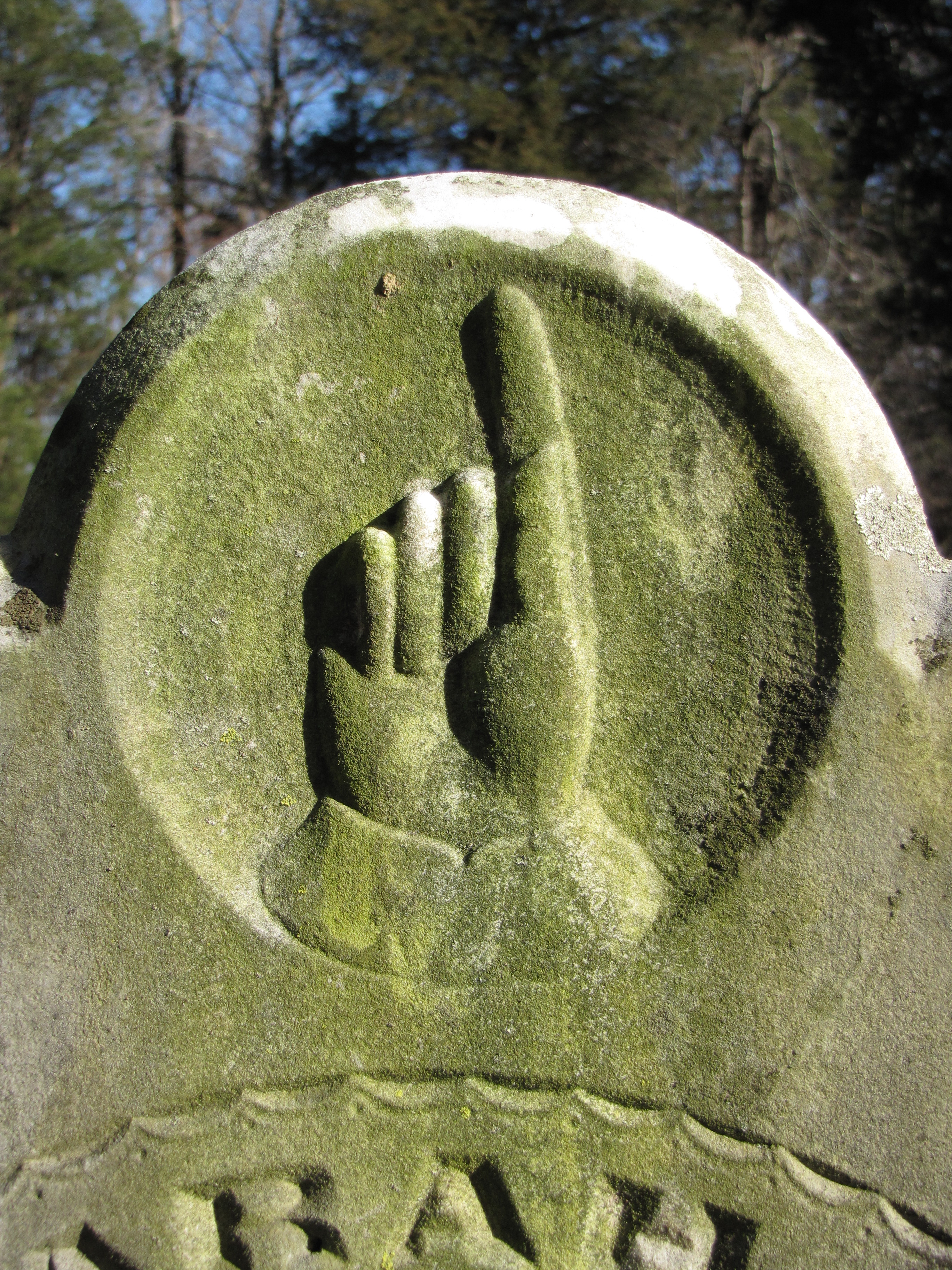
Sand Creek Cemetery, rural Martinsville, Indiana

The finger pointing upward, indicates the soul traveling to Heaven, sometimes a presumptious claim, though hopeful.
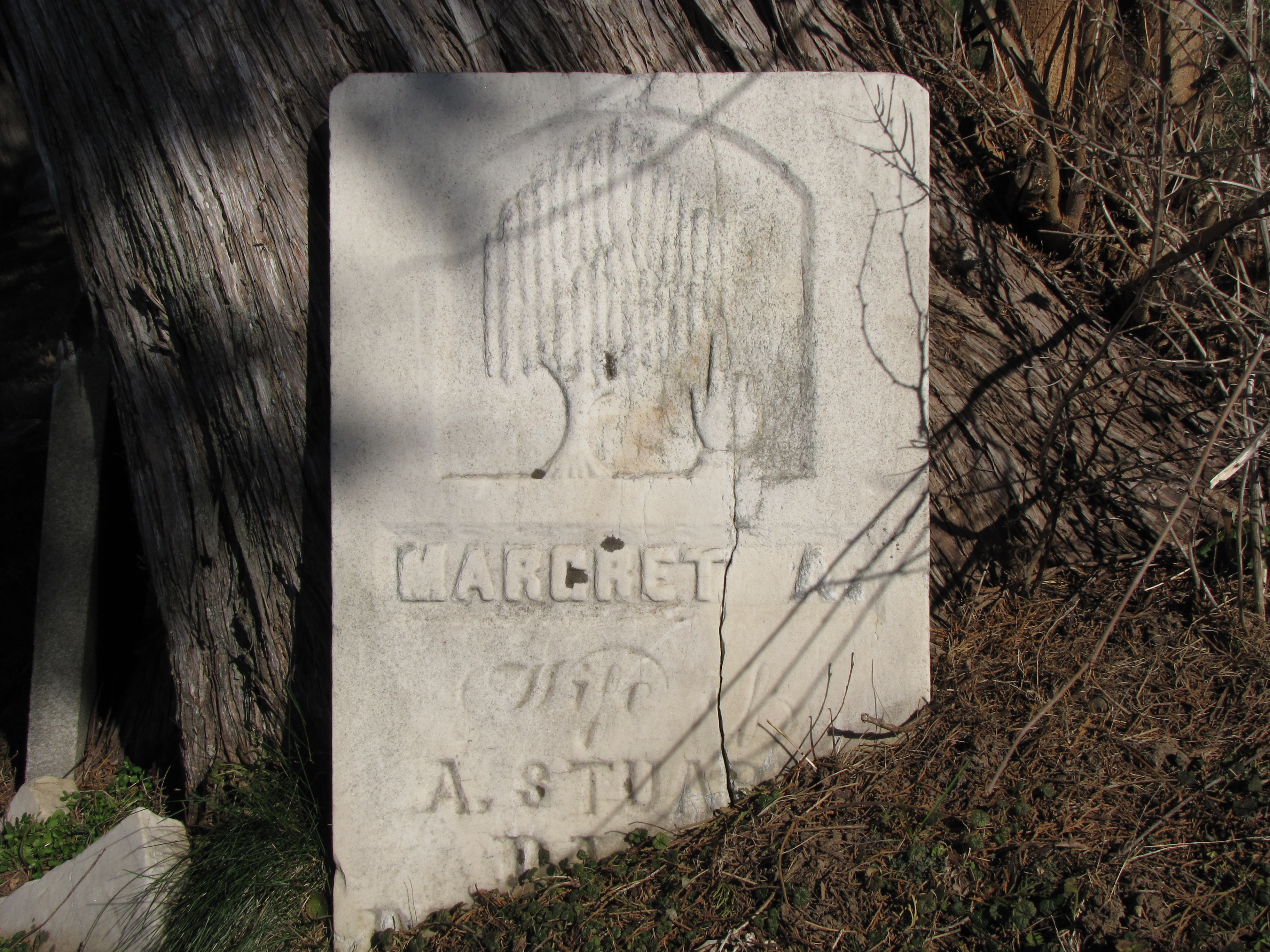
 

Sand Creek Cemetery, rural Martinsville, Indiana

Here the finger pointing upwards is coupled with the image of a willow tree, a traditional symbol of sorrow.  This seems to indicate while the soul of their loved one has gone to Heaven, the family on Earth mourns the loss and grieves for their loved one.
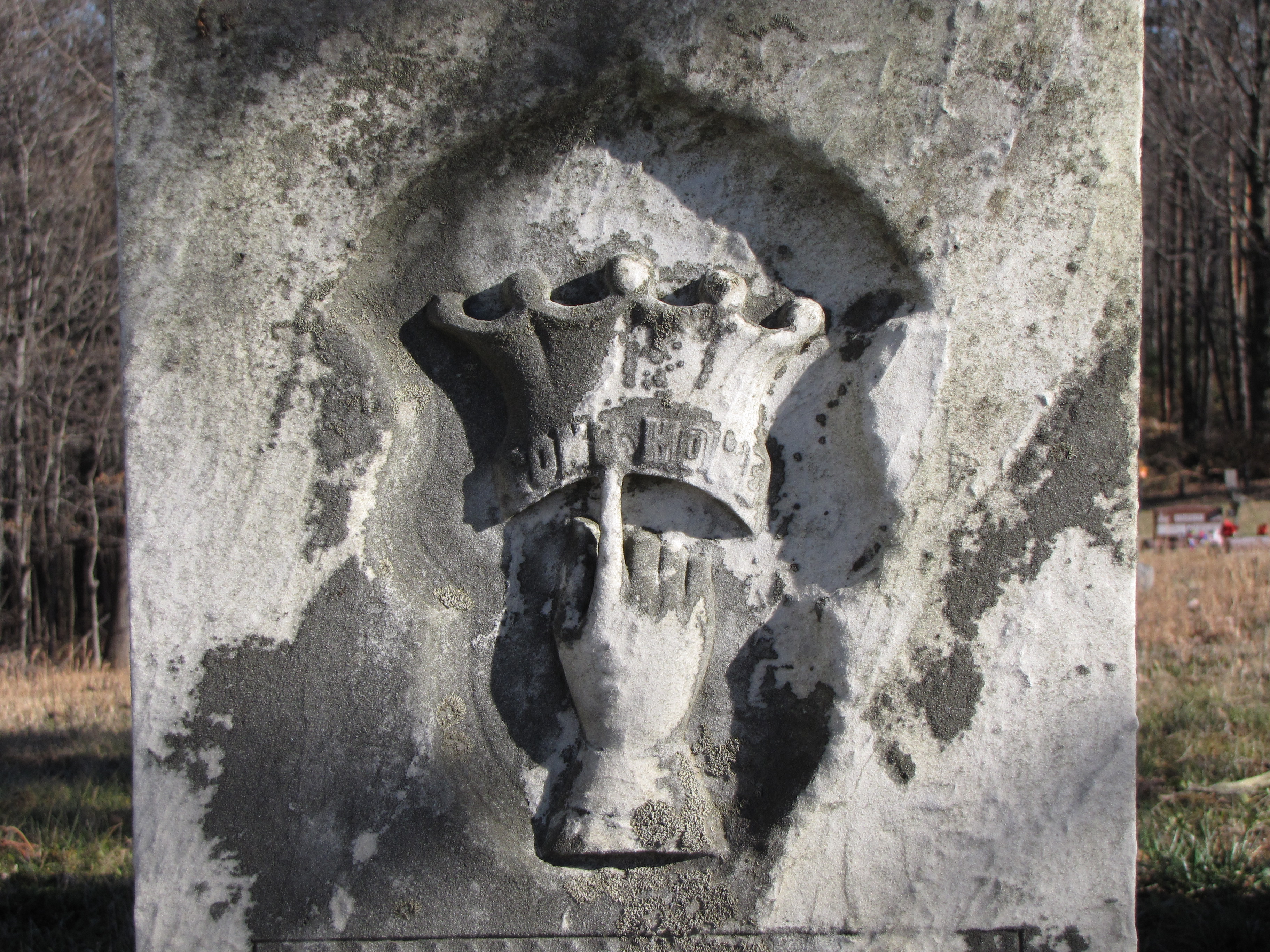
 

Mt. Nebo Churchyard Cemetery, Mt. Nebo, Indiana

The image above of the finger pointing upward is coupled with a crown that has the words, GONE HOME, on the base.  The crown symbolizes victory.  Most likely the combination of the images represent the flight of the soul from the earthly realm to the Heavenly realm.  “Gone Home” is an often used euphemism for Heaven.  In this case an indication that the soul received its “crown” in Heaven.
Posted in Symbolism | Leave a comment

The Bonds of Marriage

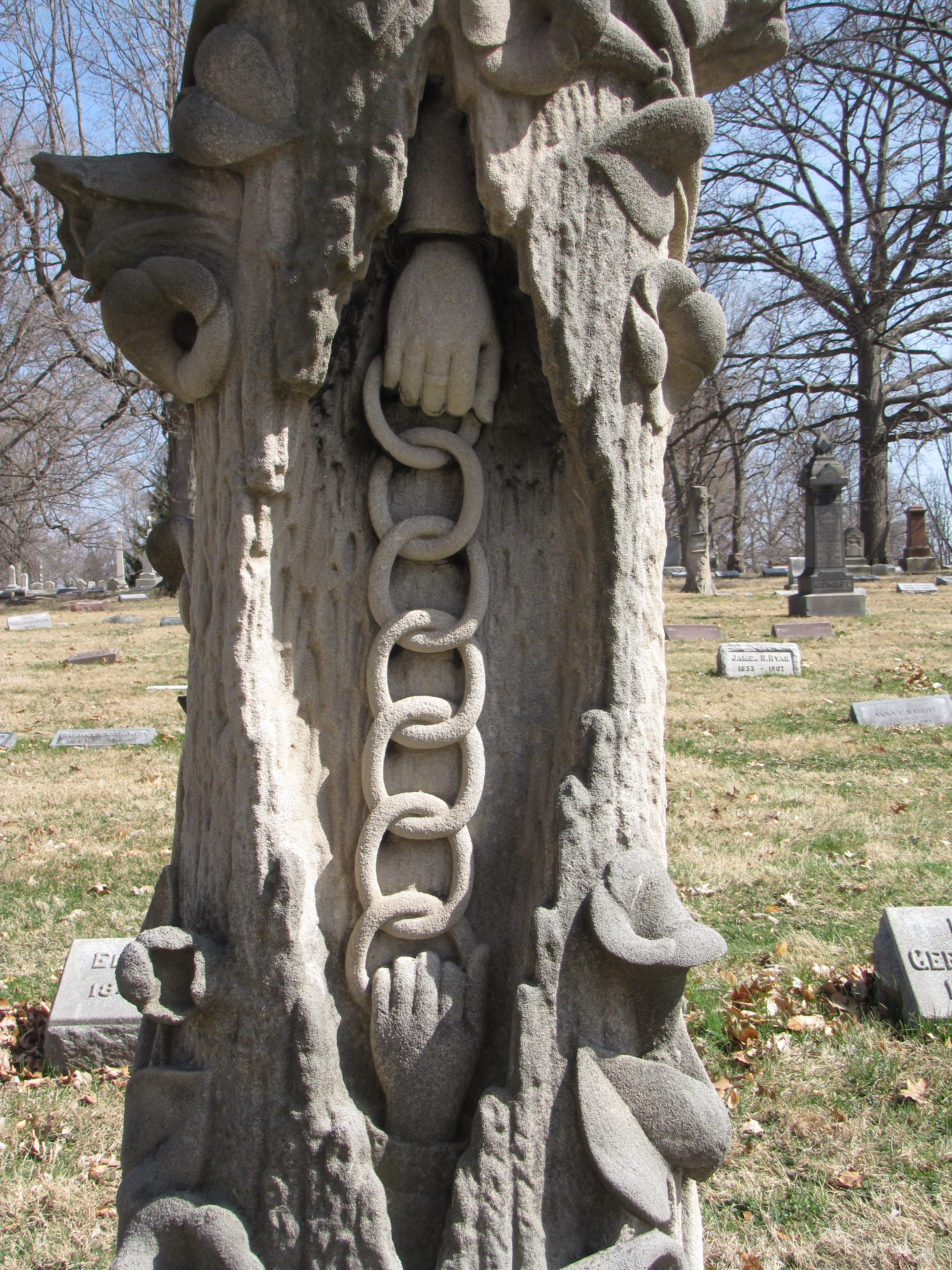
Crown Hill Cemetery, Indianapolis, Indiana

In the tree-stump tombstone above, two hands emerge from the opening in the bark of the tree.  The two hands are depicted clasping a chain.  The hand at the top is a male’s hand; the shirt cuff is square, unadorned, and masculine.  The hand below is clearly the hand of woman because of the fluted and lace sleeve. 
 
There are seven links in the chain that the couple holds between them.  It could possibly be a coincidence, or more likely holds Biblical significance.  The number seven shows up more often in the Bible than any other number.  The number seven first shows up in the Book of Genesis.  The creation story tells us that God created the Earth in seven days and on the seventh day, God rested.  God’s work was done in seven days.  Thus the number seven has come to represent completeness. 
 
Here the seven-link chain symbolizes the tender bonds of marriage.  The motif is an expression of the marriage being a path to completeness on Earth, that the couple holds onto even to death, “unto death do us part.”
 

Henry and Ella Smith Tombstone, Crown Hill Cemetery, Indianapolis, Indiana

Posted in Symbolism | Leave a comment

Tree-Stump Tombstone and Fern

Knightridge Cemetery, rural Bloomington, Indiana

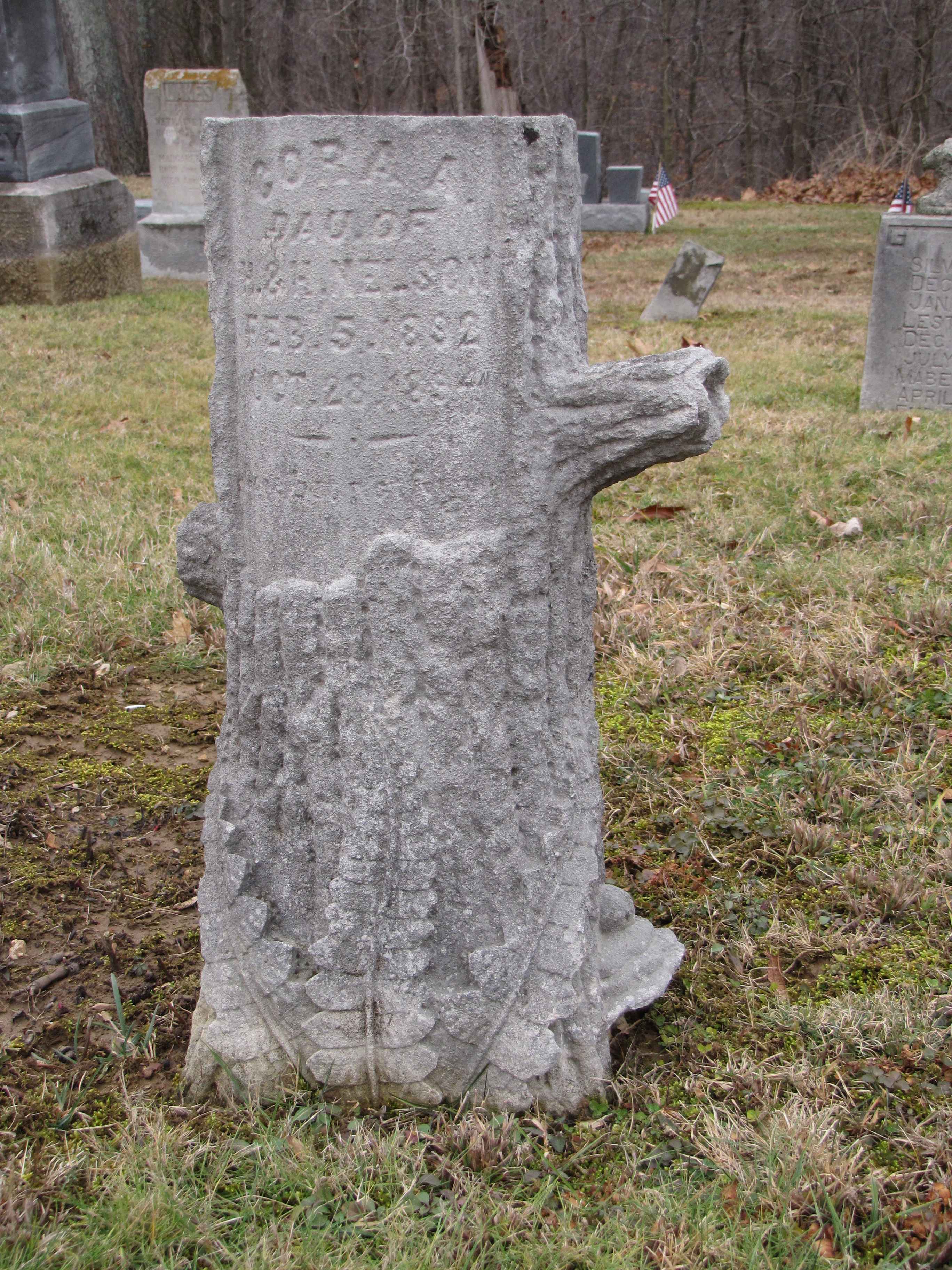
This small tombstone in the church cemetery in rural Bloomington, Indiana, is a stump, not fully grown in width or height.  This tree-stump tombstone is a metaphor in limestone, representing a life that has been cut short. Little Cora Nelson was less than two years old when she died and was buried.  Twinning up the base of the stump are three fern fronds.  The fern, a forest botanical, in funerary art represents both sincerity and sorrow.
 
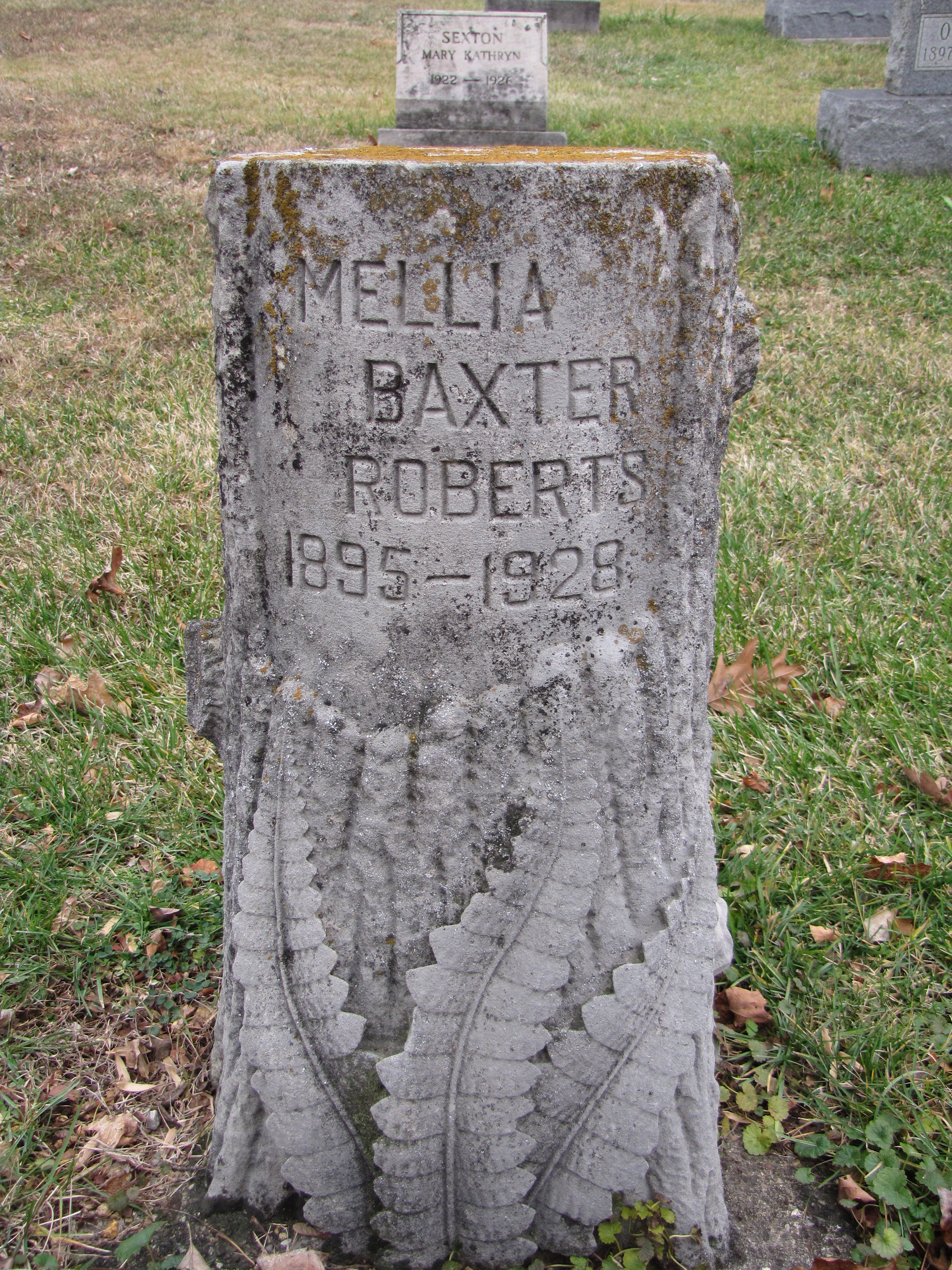
The gravestone for 33-year old Mellia Baxter Roberts below, in the same cemetery, is another example of the tree-stump tombstone with the three fern fronds at the base of the marker.
 

Knightridge Cemetery, rural Bloomington, Indiana

Posted in Symbolism, Treestump gravestones | Leave a comment

Budden on Earth

Knightridge Cemetery, rural Bloomington, Indiana

For me, the hardest gravestones to look at are the ones for children.  They speak to the father in me.  I can look at them and understand the grief and the sorrow that the parents felt at the loss of a child, though, I cannot not personally bear the thought of what it must be like to endure.  I am often reminded of the feelings expressed by President Grover Cleveland, when he buried his daughter, “Baby Ruth”.  He could not quite get over the feeling that as his 12-year daughter lay in the coffin, that she was cold.  It haunted him.  It is those kind of irrational feelings and thoughts that people have during funerals.  I remember when my father died, my Uncle Fred asked me if I had taken shoes up to the funeral home for my Dad.  He said with a tear in his eye, “Brother Wilbur has always had cold feet.”

The bottom of this gravestone for a one-day old infant girl, who was born and died three days before Christmas in 1920, displays the iconic lamb motif–found almost exclusively on children’s gravestones.  The lamb is the symbol of the Lord, the Good Shepherd.  It also represents innocence, likely the reason why this motif usually adorns the tombstones of infants and young children.  Most often the lamb is lying down, often asleep, a euphemism for death. 

This gravestone also has carved on it, one of the epitaphs associated with children, “BUDDEN ON EARTH TO BLOOM IN HEAVEN.”  What is unusual about this treatment is that the carving of the two flowers on the gravestone illustrate the epitaph by displaying a bud and then a flower in full bloom.

In the half-circle of the top of the rounded-top tablet is a rising sun.  Often it is difficult to discern whether the sun is setting or rising.  That has long been a problem to know which is which.  In fact, Benjamin Franklin had the same difficulty at the Constitutional Convention of 1787 upon looking at the picture of the sun painted on the back of the President’s Chair.  Franklin said, “I have often looked at that picture behind the president without being able to tell whether it was a rising or setting sun. Now at length I have the happiness to know that it is indeed a rising, not a setting sun.” 

Franklin was making a statement about the work that had been completed by the delegates to the convention and his view of what it meant for the United States.  In funerary art, however, it is less about commentary and more about what the carving looks like.  In this motif, the rays eminating from the sun usually indicate that it is a rising sun.  The rising sun motif represents resurection and a renewed life. 

Posted in Epitaphs, Symbolism | Leave a comment

Disabled American Veterans

Knightridge Cemetery, rural Bloomington, Indiana

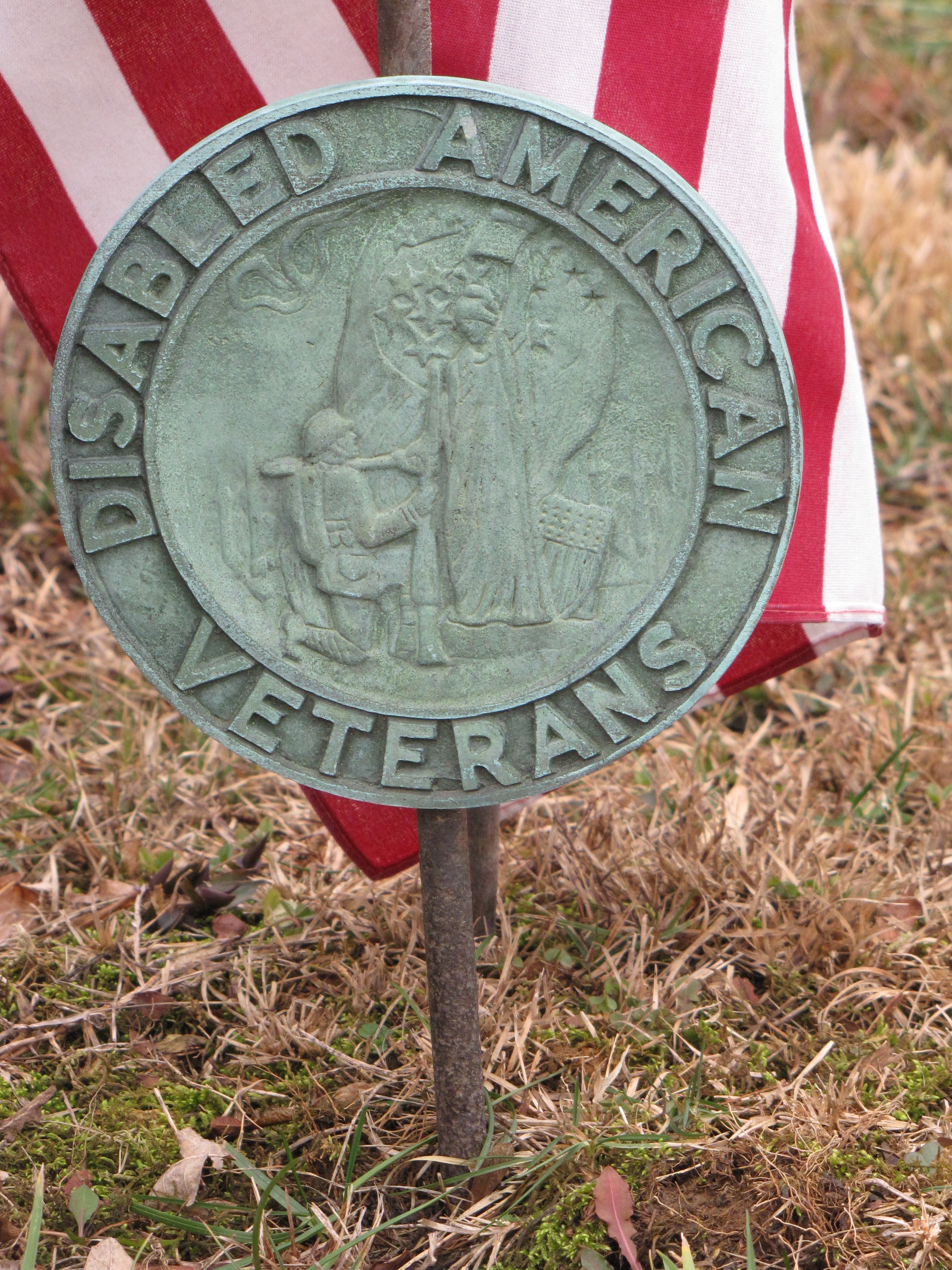
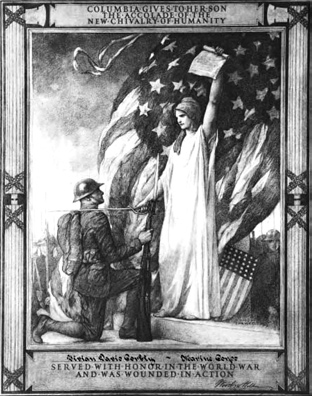
 The Disabled American Veterans organization was formed September 25, 1920, in the wake of World War I.  Few services were offered to soldiers upon their return from the war.  At a Christmas dinner hosted by an Ohio Superior Court Judge Robert F. Max the idea first surfaced to form the organization to assist wounded soldiers.The metal marker is a reproduction of the organization’s logo, which originated from a painting commissioned for a certificate of service by President Woodrow Wilson and executed by artist Edwin Blashfield. The original painting features a wounded veteran holding a rifle kneeling before Columbia.  Columbia, the symbol of freedom, is framed with an American flag and shield behind her.  She uses a sword to knight the soldier in honor of service to the nation.  In the other hand she holds above her head the certificate announcing the service and sacrifice of the veteran.

Today the Disabled American Veterans has over one million members.

Columbia Gives to Her Son the Accolade of the New Chevalry of Humanity

Posted in Metal Markers | Leave a comment

Father Time and the Weeping Virgin

Lake View Cemetery, Cleveland, Ohio

In this bas-relief, a winged Father Time is depicted here as an old man, with long hair and a long beard, with a large pair of wings.  Father Time is plying the tools of his trade that make him recognizable–a scythe, he carries over his shoulder and an hourglass resting behind him.  The scythe, a tool that was once used in the harvest, symbolizes the Divine harvest.  The hourglass is a reminder that time marches on and as the sands of time pass by all come closer to death; life is short.  Just as wheat is cut down by the scythe during the harvest, so are souls by Father Time.

Here, Father Time is standing behind a “weeping virgin”.  Father Time is delicately untangling the Virgin’s hair.  The act of untangling represents that with perserverance all things can be accomplished.  The weeping woman is holding in one hand a sprig of acacia, which represents the immortality of the soul, and in the other a rolled scroll, symbolic of life and time.  They stand before a broken column, the symbol of a life cut short.

Posted in Symbolism | Leave a comment

The Lion

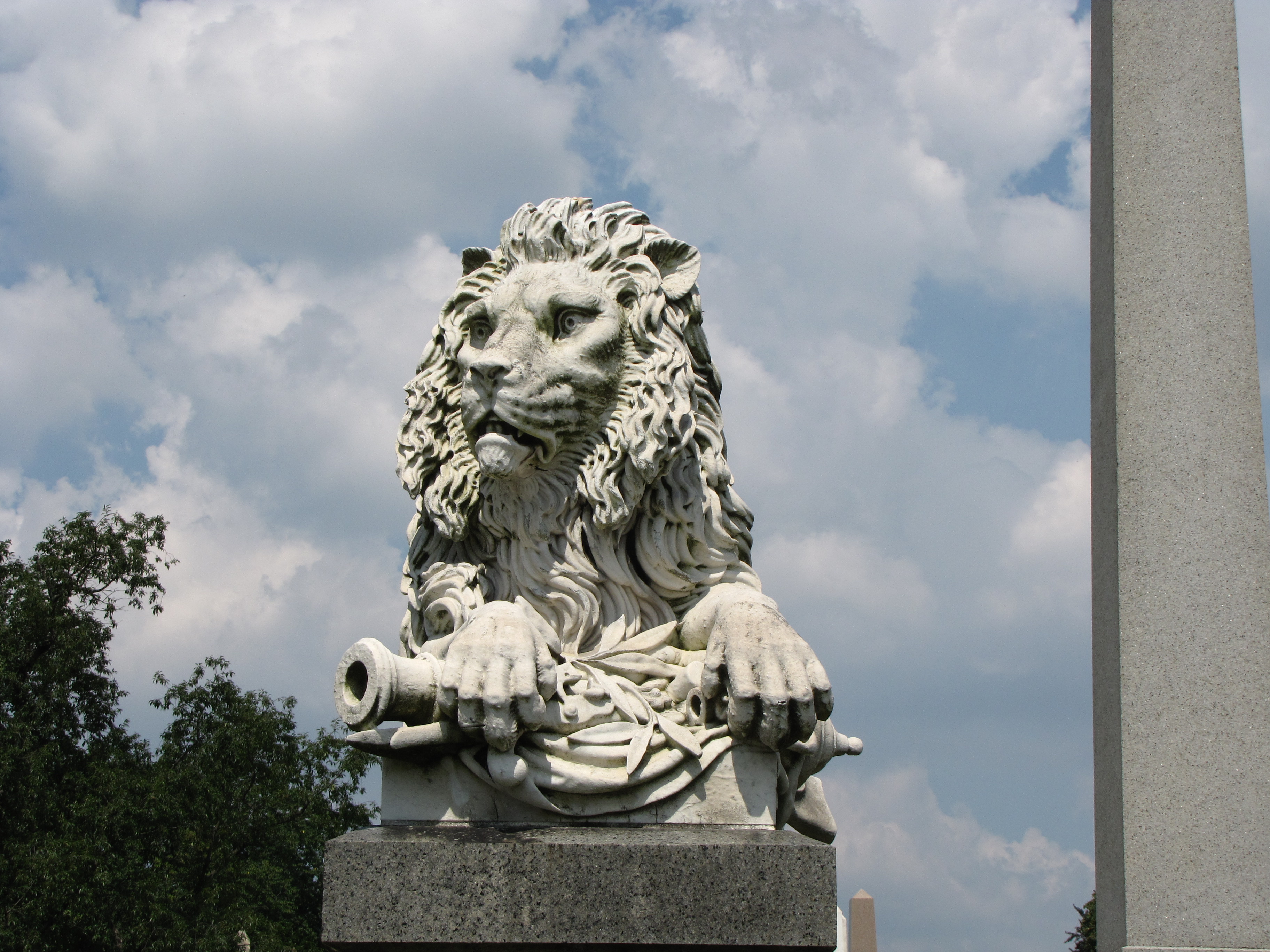
Laurel Hill Cemetery, Philadelphia, Pennsylvania

 The lion has long been a symbol of bravery, strength, and majesty. In popular culture, the lion is known for its power and is called King of the Jungle and King of the Beasts.

The lion is often used as a royal emblem, found eight times in the Royal Arms for the Queen of England alone!

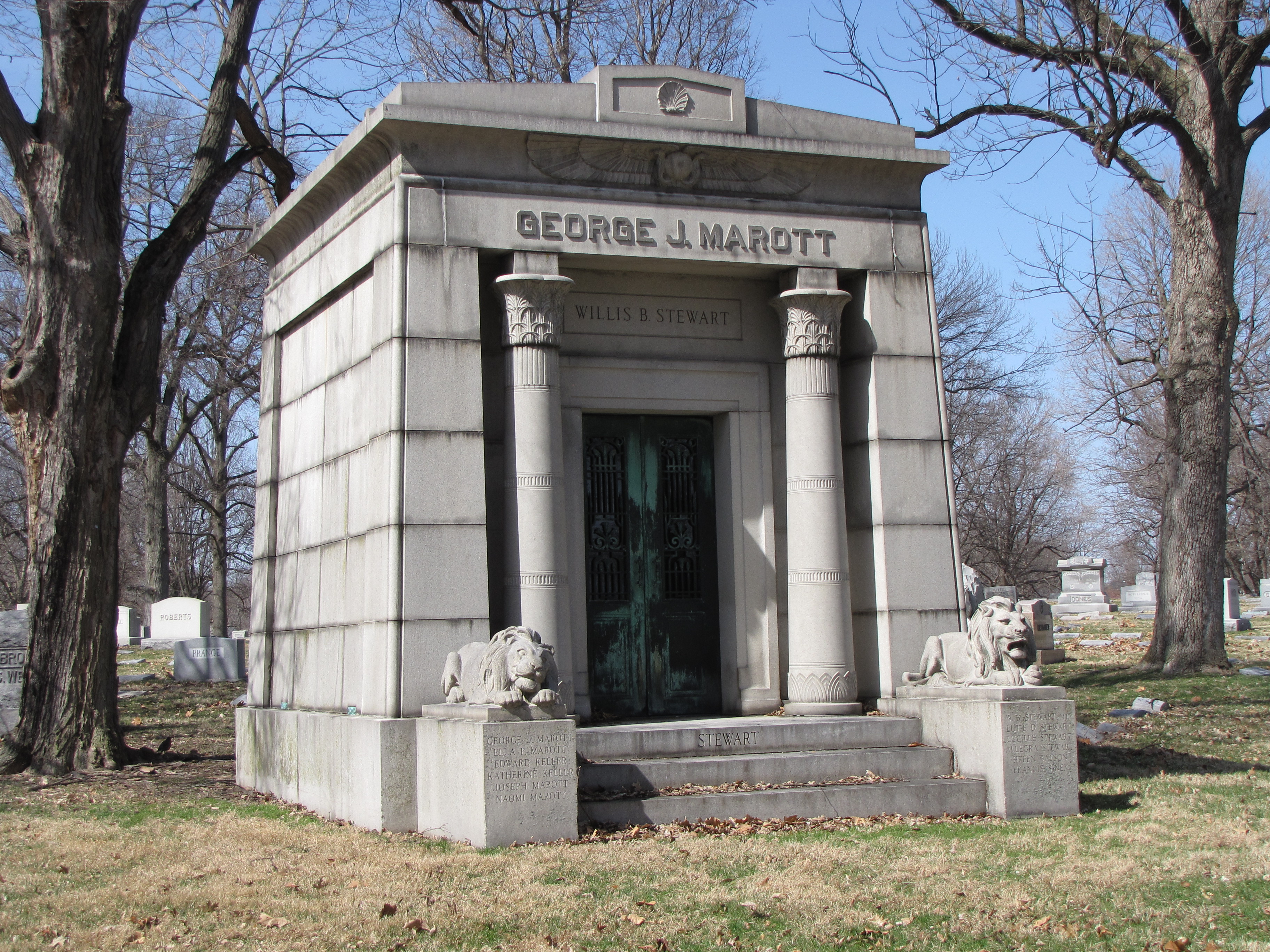
The lion in funerary art symbolizes the power of God. It is often depicted flanking the entrance of a tomb to guard against evil spirits to the passageway to the next realm. It also represents the courage of the souls the lions guard. There is also a connection of the lion to the Resurrection. It was once believed that lion cubs were born dead but would come to life after three days when the cubs were breathed upon by a male lion. The three days is significant because it is the number of days Jesus was in the tomb before he was Resurrected.

Crown Hill Cemetery, Indianapolis, Indiana

Posted in Symbolism | Leave a comment

The Colonial Dames of America XVII Century

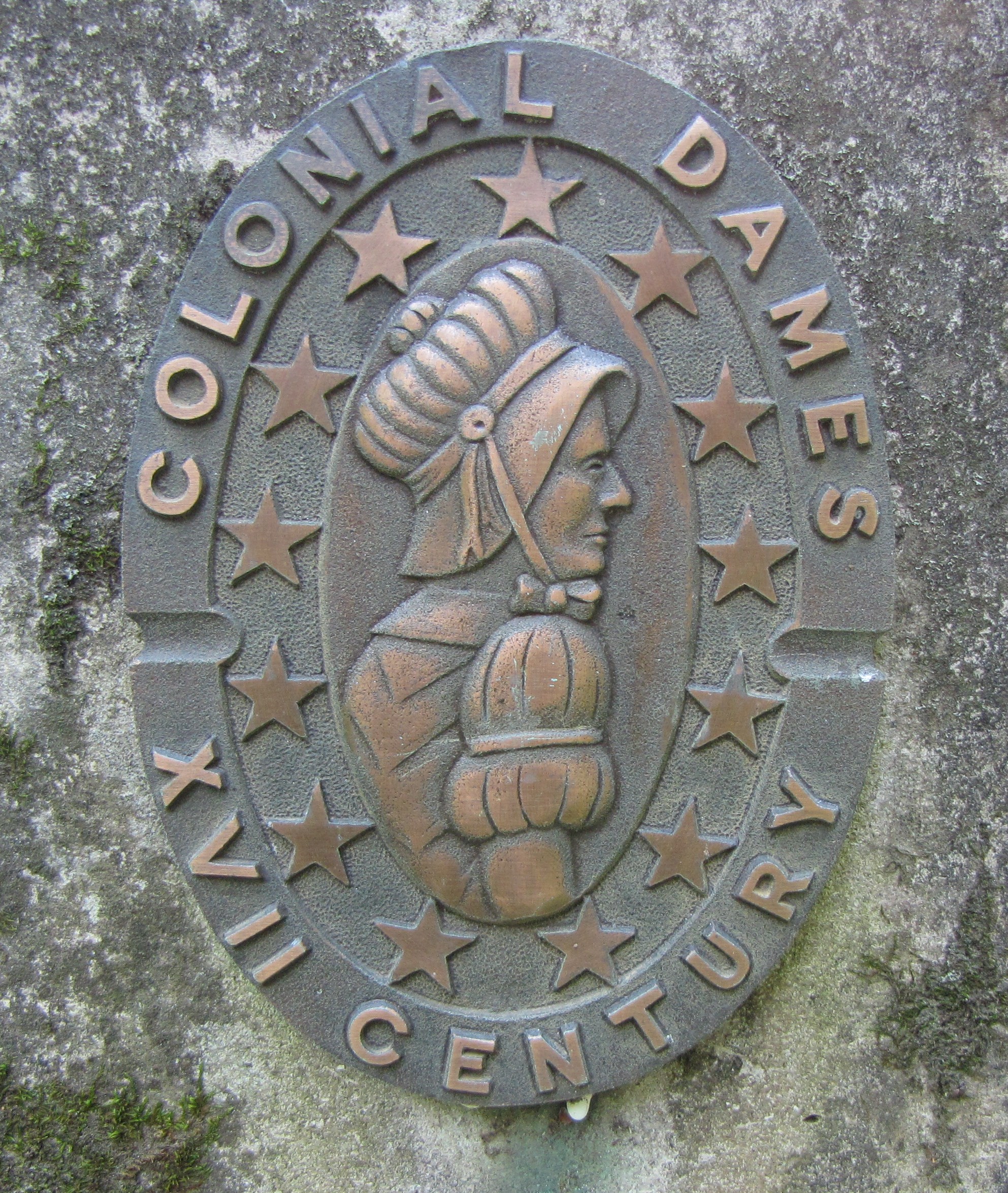
Indiana University Campus Cemetery, Bloomington, Indiana

The National Society of the Colonial Dames of America XVII Century

Motto: A Lasting Legacy

Theme: Honoring our Heritage, Embracing the Future

Scripture: “Who shall dwell in thy holy hill?  He that walketh uprightly and
worketh righteousness, and speaketh the truth in his heart.” 

Psalm 15: 1-2

Many organizations were founded in the later part of the 19th Century that required the prospective members demonstrate that their ancestors had been in the United States before a certain date or that their ancestors had served in a war.  Examples of these organizations are Sons of the American Revolution (1889), The Daughters of the American Revolution (1890), The Daughters of the War of 1812 (1892), The Order of the Founders and Patriots of America (1896), The Mayflower Society (1897), and The National Society of the Colonial Dames of America XVII was founded in 1915.

The National Society of the Colonial Dames of America XVII Century is a hereditary society, that is, membership is conferred based on what your ancestors did.  According to their Web site, “Any woman … is eligible … if there is a blood relationship to the applicant, and is the lineal descendant of an ancestor who lived and served prior to 1701 in one of the original Colonies” of the United States.

This patriotic organization’s 12,000 members are dedicated to a host of preservation, education, research, and service goals, such as, among many others:

  • the preservation of the records and of the historic sites of our country
  • fostering interest in historical colonial research
  • the education of the youth of our country.
Posted in Metal Markers | 2 Comments

Amateur Radio

Chesterton Cemetery, Chesterton, Indiana

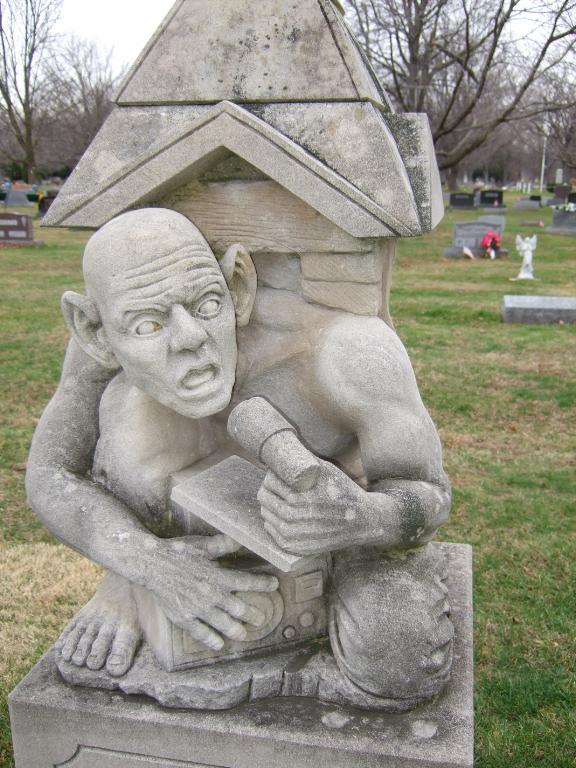
Indiana limestone is abundant in the state.  Some of the most flawless limestone can be found in a rich trough between Bedford and Bloomington referred to as Salem limestone.  The Pentagon, the soaring National Cathedral and the solemn Lincoln Memorial in Washington, D.C., New York City’s Empire State Building, the Biltmore Mansion is Ashville, North Carolina, and 35 of the 50 state capitol buildings were built with Indiana limestone.  It is a beautiful, rich cream-colored stone that is fairly easy to work.  Generations of talented carvers learned their craft in this state, and it continues to be a place of gifted and creative carvers. 

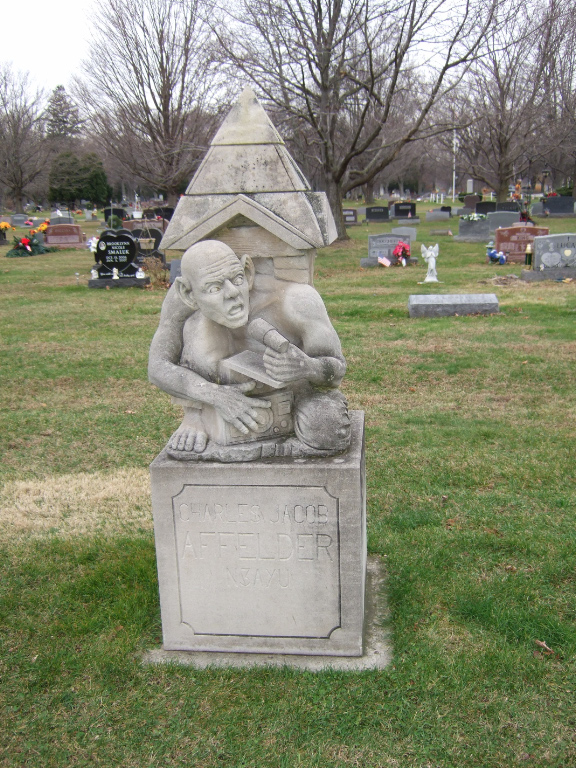
Not only can the stone carvers’ talents be seen in spectacular buildings but even in modest tombstones across the state.  Indiana has thousands of tree-stump tombstones that dot cemeteries through the entire state and exported throughout the country.  The carvers have also created one-off works of art.  One such marker, photographed by my friend and neighbor, Doug Parker, is the tombstone of Charles Jacob Affelder in the Chesterton Cemetery in Chesterton, Indiana, in the Northwest corner of the state.

The tombstone has a figure that some people on various Web sites refer to as a Gollum-like creature from Tolkien’s The Hobbit, crouching under a gothic roof.  The bare-chested man has his right hand resting on the top of a ham radio and his other hand is clutching a microphone.  Carved on the front of the tombstone is, “Charles Jacob Affelder, N3AYU.”  The tombstone is a curious sight, in an otherwise average Midwestern cemetery. 

Further investigation of the deceased Affelder reveals that he was born August 5, 1915, in Allegheny County, Pennsylvania.  He was an avid ham radio enthusiast.  The mix of letters and numbers, A3AYU, listed underneath his name was his ham radio callsign.  Affelder had been a ham operator since 1933.  He held several patents for improvements to the radio microphone, perhaps memorialized in stone on his marker.  Affelder also worked for KDKA in Pittsburgh and for the Voice of America behind the scenes as an engineer.  Affelder’s tombstone is a tribute to his love of the radio world to which he dedicated so much of his life and career.  Charles Jacob Affelder died on January 10, 1994, at Chesterton,  Porter County, Indiana.

Close up of the Charles Jacob Affelder tombstone

Posted in Uncategorized | 6 Comments

Rock of Ages–Cross I Cling

Oak Hill Cemetery, rural Indiana

Rock of Ages, cleft for me,
Let me hide myself in Thee;
Let the water and the blood,
From Thy riven side which flowed,
Be of sin the double cure,
Cleanse me from its guilt and pow’r.

Not the labors of my hands
Can fulfill Thy law’s demands;
Could my zeal no respite know,
Could my tears forever flow,
All for sin could not atone:
Thou must save, and Thou alone.

Nothing in my hand I bring,
Simply to Thy cross I cling;
Naked, come to Thee for dress;
Helpless, look to Thee for grace;
Foul, I to the fountain fly;
Wash me, Saviour, or I die.

While I draw this fleeting breath,
When my eyelids close in death,
When I soar to worlds unknown,
See Thee on Thy judgment throne;
Rock of Ages, cleft for me,
Let me hide myself in Thee.

Then above the world and sin,
Thro’ the veil, drawn right within,
I shall see Him face to face,
Sing the story, saved by grace,
Rock of Ages, cleft for me,
Let me ever be with Thee.

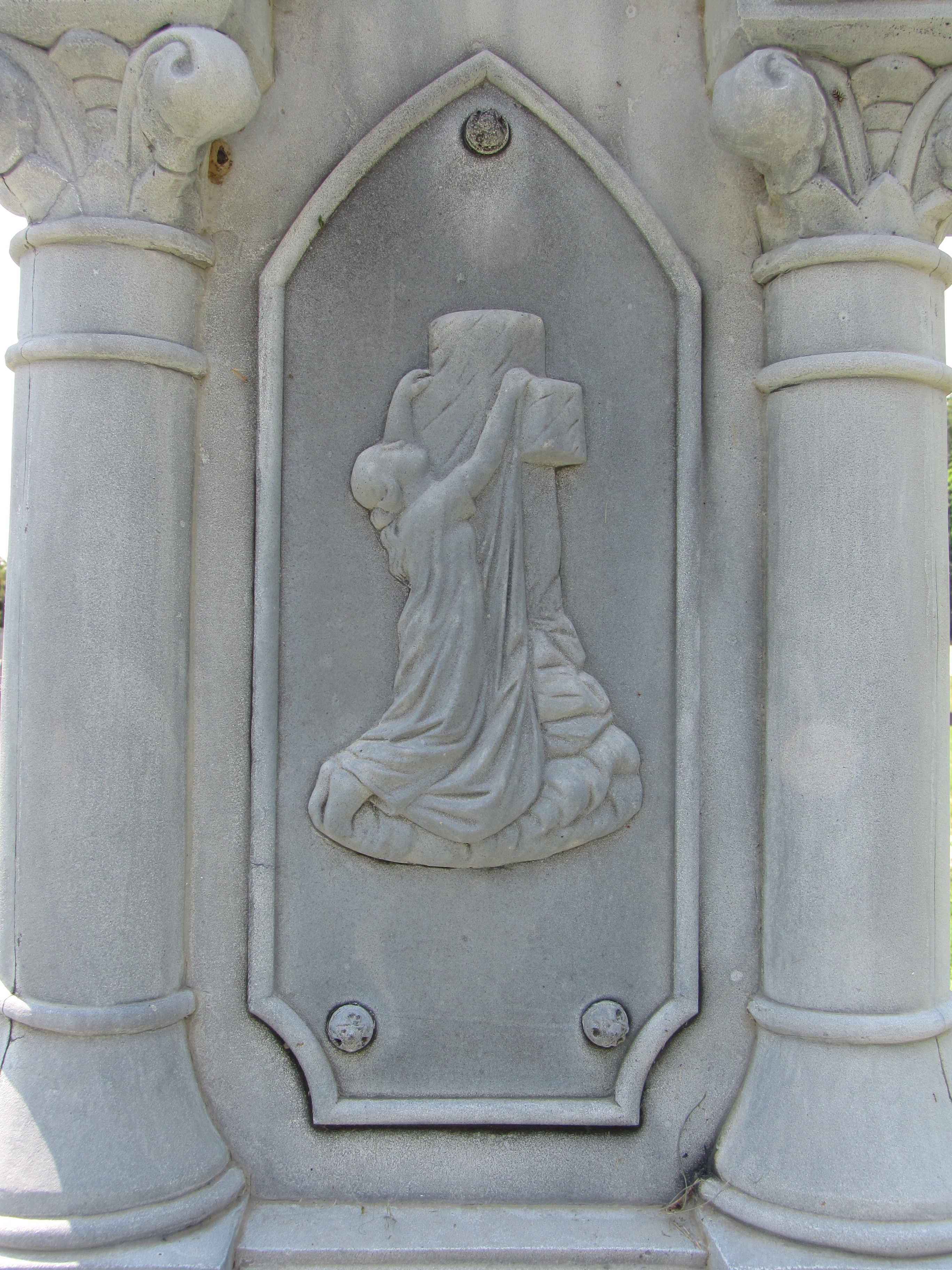
“Rock of Ages” was written by Reverend Augustus Montague Toplady in 1763 and first published in 1775.  The hymn has been a popular Christian standard for over a century.  At the turn of the 19th Century, postcards depicted a dramatic scene of a woman in a flowing dress being buffeted by a storm surrounded by stormy white-crested waves clinging to a cross illustrating the first two lines of the third stanza from the hymn:

“Nothing in my hand I bring,
Simply to Thy cross I cling”

The image above is a bas-relief of those two lines of the great hymn.  This motif is commonly found on white-bronze markers (blue-tinted cast zinc markers) made in Bridgeport, Connecticut.  The woman symbolizes faith.  The raging sea is a metaphor for the sea of sin in which humankind lives, and the cross is the hope to which sinners cling to be saved.

The James and Mary Pickens Monument, Oak Hill Cemetery, rural Indiana

Posted in Symbolism | 1 Comment