First Burial

Dr. James Nissen's grave, Oakland Cemetery, Atlanta, Georgia

Not far within the gates of the Oakland Cemetery in Atlanta is an eroded and faded ornamented-top marble tablet, the inscription lost to the elements.  But for the survey done of the cemetery in the 1930s by Franklin Miller Garrett, the name of the person in the grave would have been lost to history.  Garrett, however, Atlanta’s only official city historian (and Coca-Cola Company historian for 28 years) preserved a part of the story. According to legend, Nissen was a doctor visiting Atlanta when he took ill.  He died September 22, 1850.  The metal plaque mounted in front of his weathered tombstone tells the gruesome piece of the story, “Nissen, the cemetery’s first interment was fearful of being buried alive; therefore, he requested his jugular vein be severed prior to burial.”  As far as anyone knows, his last request was granted and then he was buried in the city where he died.
Posted in Uncategorized | Leave a comment

Six Feet Under

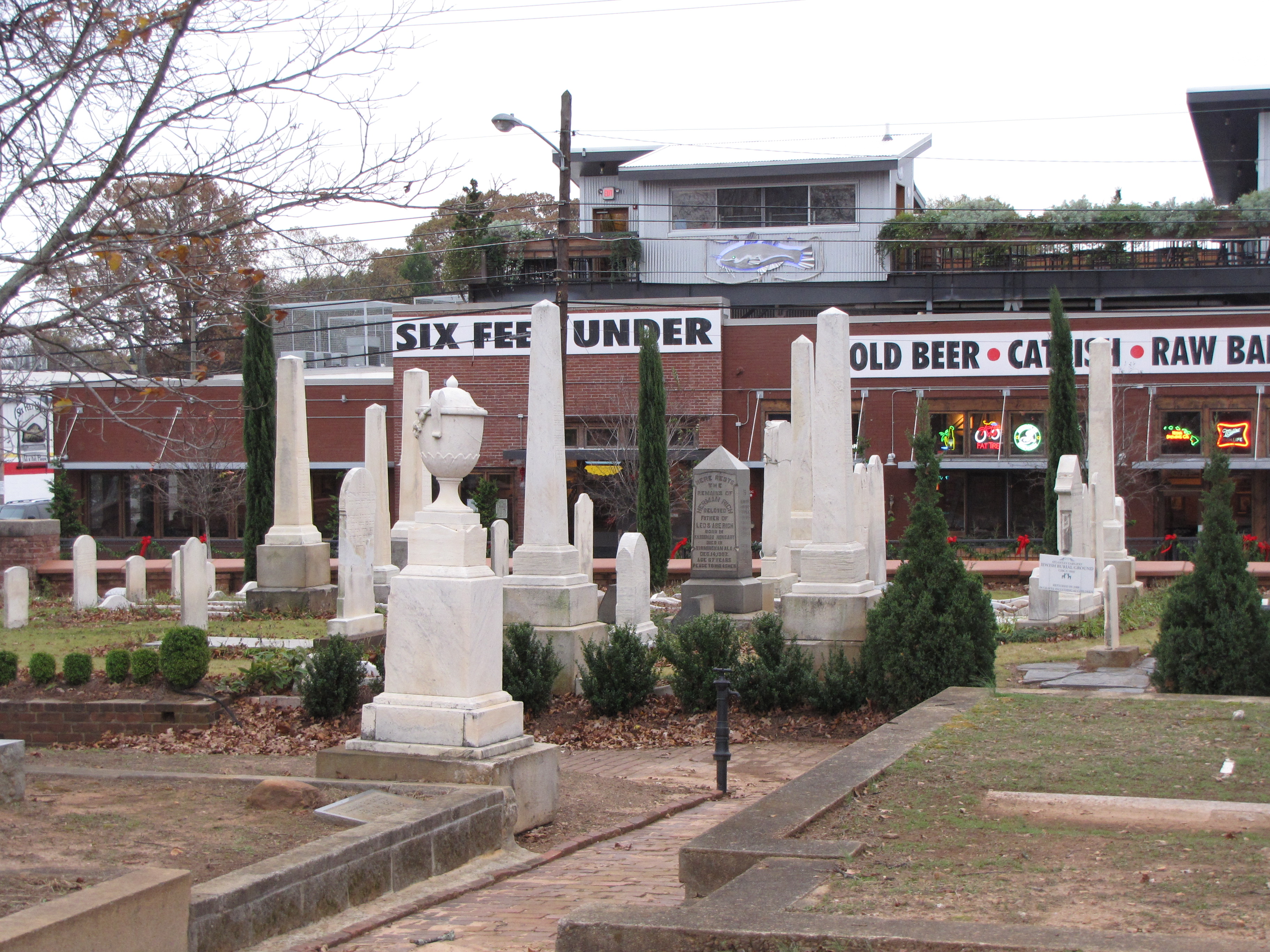
The View from Oakland Cemetery facing Six Feet Under Pub and Fish House

Garden cemeteries were laid out and designed so they could be a respite from the cities that surrounded them. Not only were the cemeteries intended to be burial places for the dead but a park that families could go to for a Sunday afternoon picnic or drive. Oakland Cemetery, founded in 1850, in Atlanta, Georgia, is one such cemetery. At first, it only had six acres but later expanded to 88 acres containing the graves of many Georgia luminaries such as Gone With the Wind author Margaret Mitchell Marsh, golfer Bobby Jones, and John Pemberton, the pharmacist who concocted Coca-Cola.

If traipsing through a cemetery works up a thirst and hunger, leaving you wanting a nosh, a perfect oasis was opened by a restaurantuer with a sense of humor right across Memorial Street appropriately named SIX FEET UNDER. You can sit and enjoy a beer and some Southern food favorites like seafood gumbo, hush puppies, fried green tomatoes, or a catfish po’ boy along with many other pub-food favorites. The fish house has a terrace on top that has a bird’s eye view of Oakland Cemetery, the perfect place to sample the keylime pie and ponder life and death.


Six Feet Under Pub and Fish House, Atlanta, Georgia


Posted in Uncategorized | 1 Comment

End of the Trail

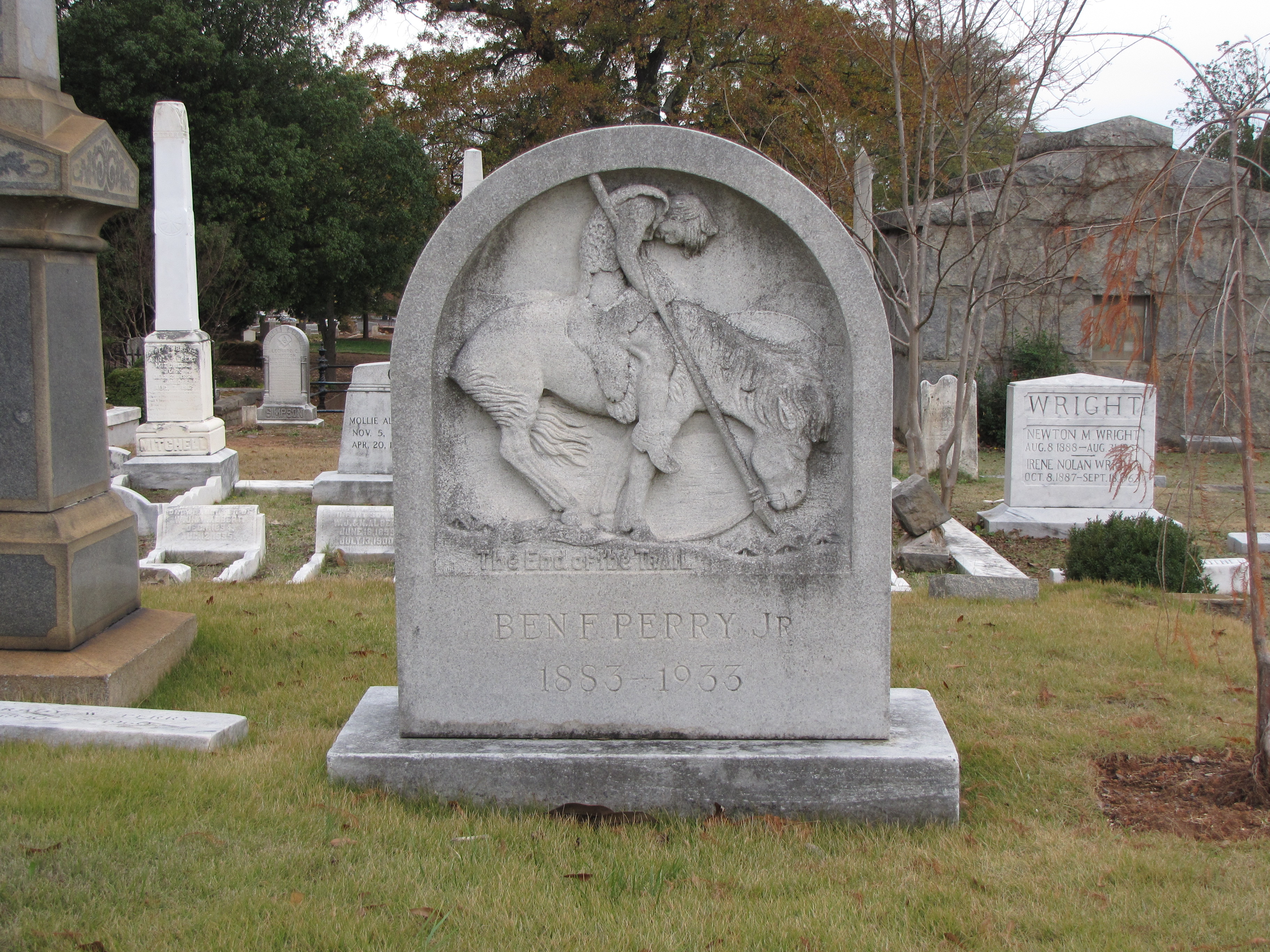
Ben F. Perry Jr. Tombstone, Oakland Cemetery, Atlanta, Georgia

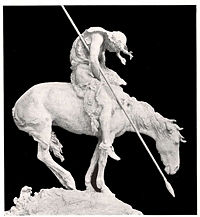
Among the many unique and beautiful monuments in the Oakland Cemetery, in Atlanta, Georgia, is Ben Perry Jr’s gravestone. His marker is a rounded-top tablet with a bas-relief replica of the sculpture, The End of the Trail, a powerful tribute mourning the loss of the Sioux people, by the famous western sculptor, James Earle Fraser.  Fraser created the sculpture for the Panama Pacific Exposition held in 1915 in San Francisco.  The End of the Trail is also a fitting metaphor for the end of one’s life.
 

The End of the Trail scupture by James Earle Fraser

In addition for his fame for The End of the Trail, his most famous work, Fraser was also recognized for the art he created for the United States Mint, for the Indian Head Nickel.
Posted in Uncategorized | Leave a comment

Niobe

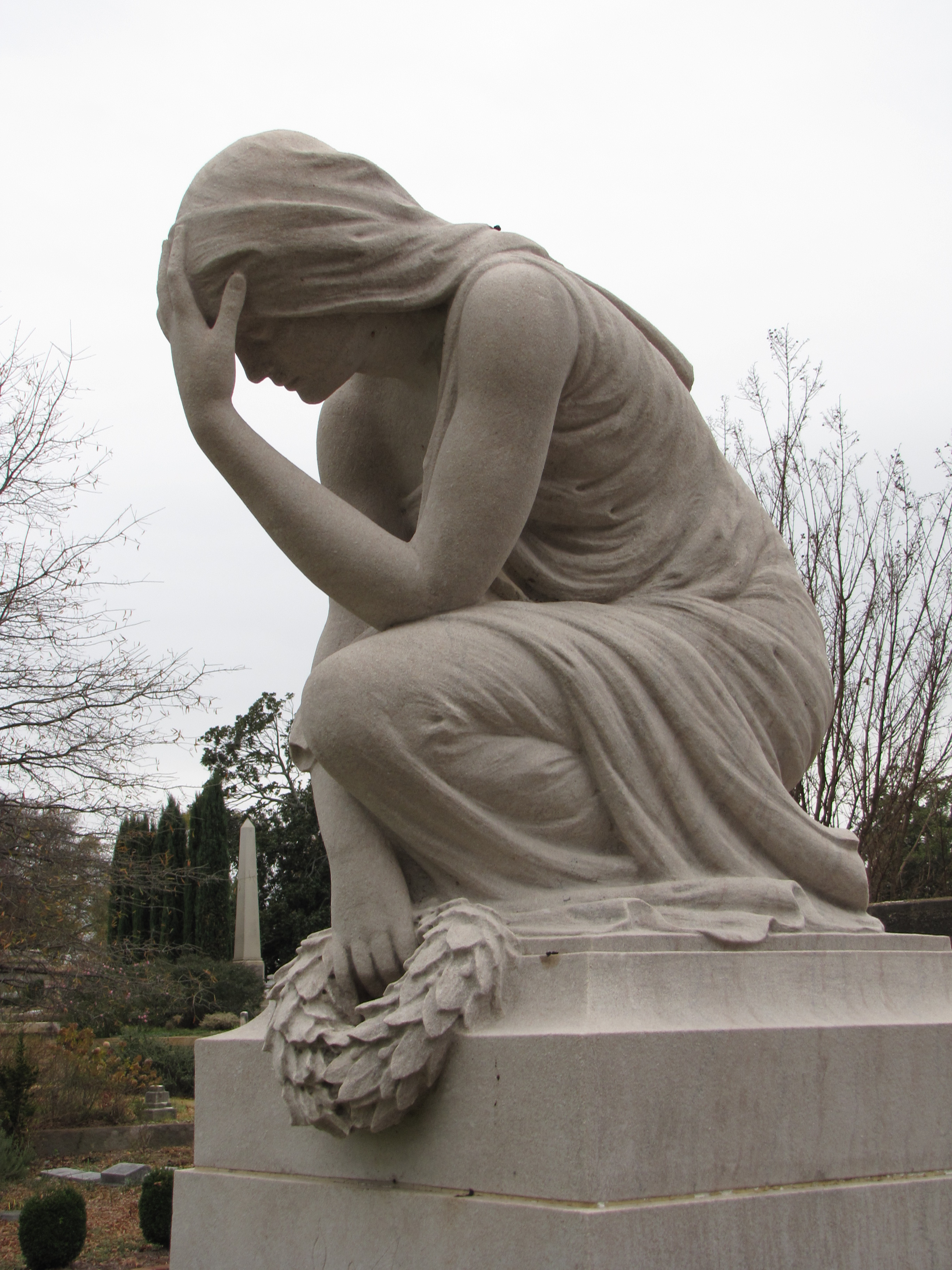
The Gray Family Monument, Oakland Cemetery, Atlanta, Georgia

The monument of James Richard Gray (September 30, 1859-June 25, 1917, THE HEART OF OAK THE STRONG ARMS THE BUSY HANDS ARE DUST) and May Inman Gray (March 6, 1862-January 6, 1940, “MY TASK ACCOMPLISHED AND THE LONG DAY DONE) is adorned with a magnificent white-marble sculpture of the Niobe, the Greek mythological Queen of Thebes. Niobe had fourteen children (the Niobids) and taunted Leto, who only had two children, Apollo and Artemis. In his rage he sent his two children to avenge the slight done to him by Niobe striking out at what was most dear to her.
 

Niobe

Niobe, became the symbol of mourning when Apollo slaughtered her seven sons and Artemis killed her seven daughters. As one version of the story goes, upon seeing his dead fourteen children, Amphion, the King of Thebes, commited suicide. Niobe was so stricken with grief that she fled to Mount Siplyus, Manisa, Turkey ,where she turned to stone. Her grief was so powerful that tears flowed ceaselessly from her forming the River Acheloos.


The Gray Family Monument, Oakland Cemetery, Atlanta, Georgia


Posted in Uncategorized | 4 Comments

The Lion of the Atlanta

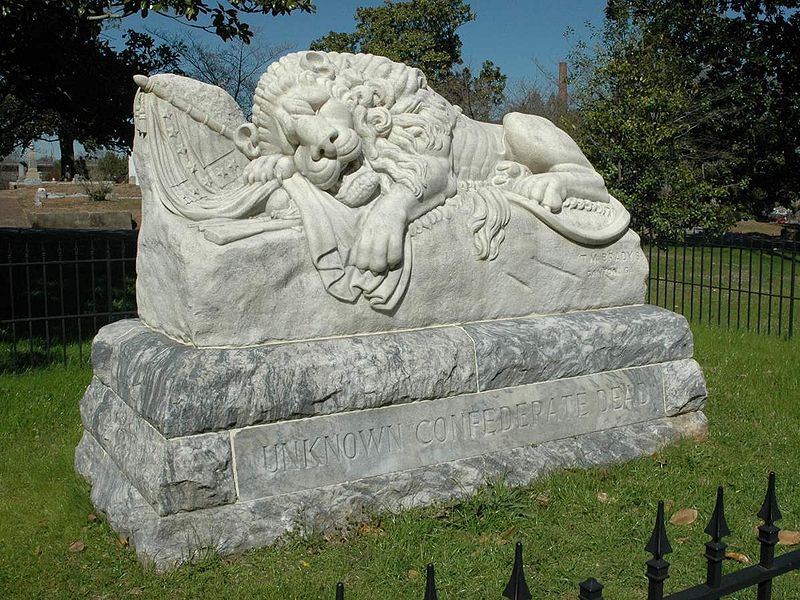
Oakland Cemetery, Atlanta, Georgia

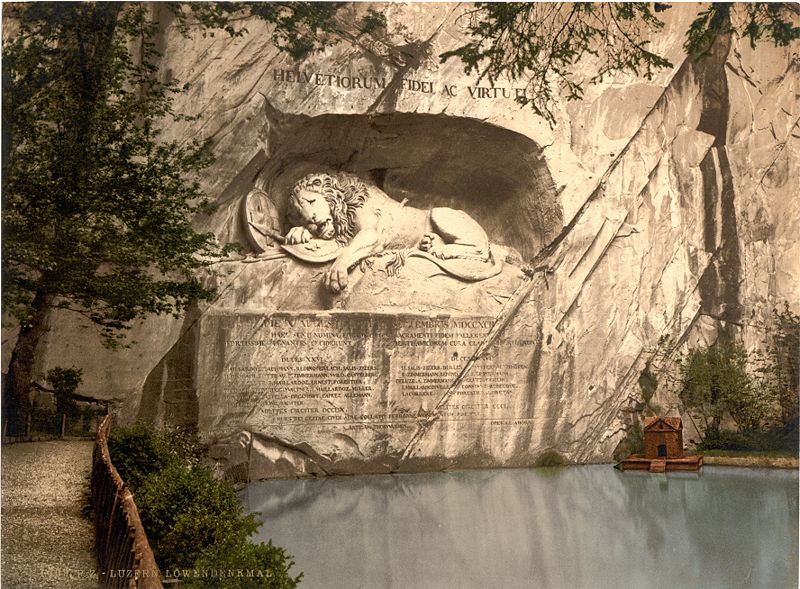
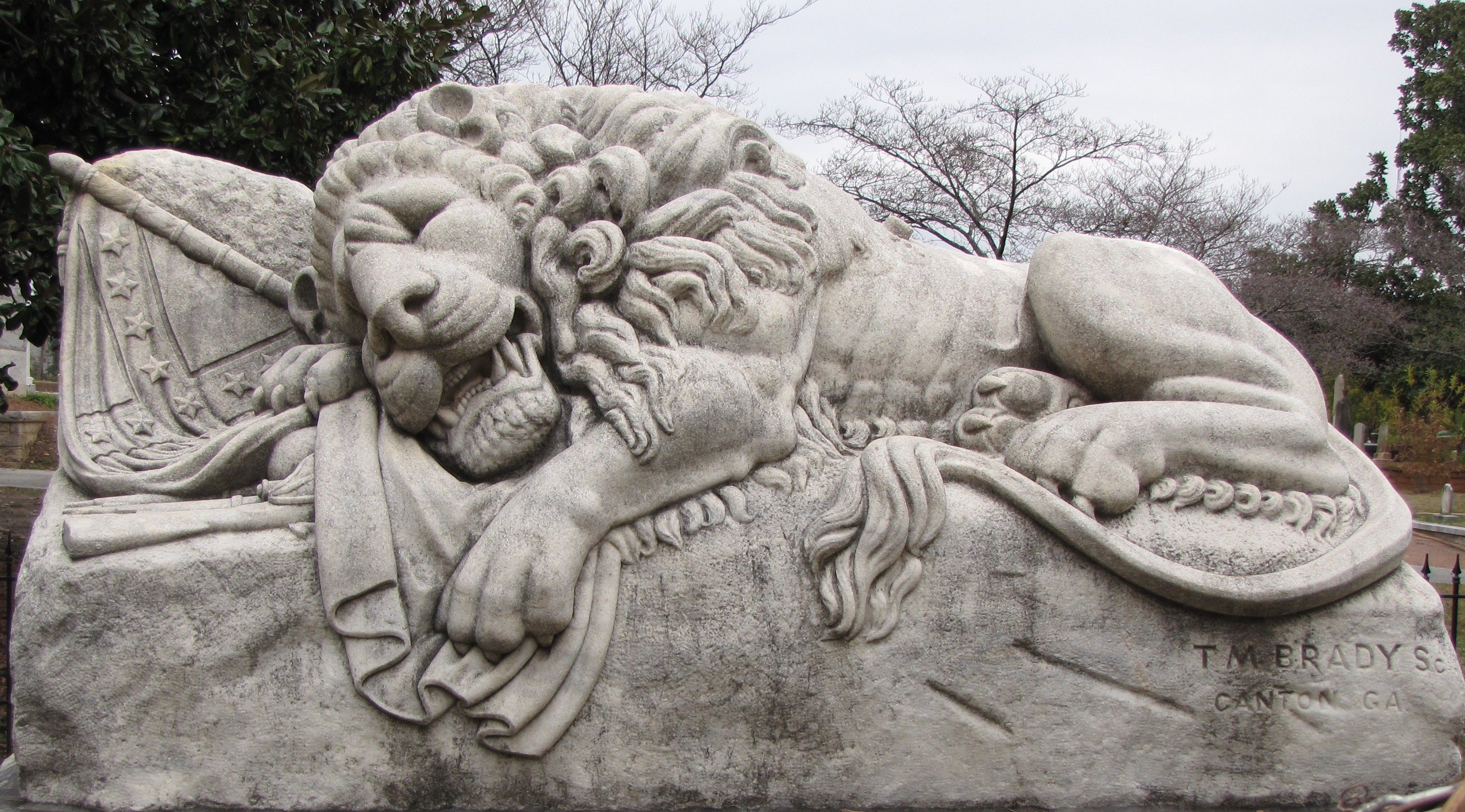
Today a friend of mine, Renet Bender, has written a guest post about a cemetery that she likes and one of her favorite monuments within it, The Lion of Atlanta.  The Ladies Memorial Association commissioned T. M. Brady of Canton, Georgia, to create a monument to the unknown Confederate war dead buried in Oakland Cemetery.  The sculpture was commemorated on April 26, 1894.  The inspiration for the Lion of Atlanta was Bertil Thorvaldsen’s colossal Lion of Lucerne (Switzerland), which Mark Twain called “the most mournful and moving stone in the world.”   As the artist was completing the sculpture he was told he would not be paid the full amount for his work.  To demonstrate his contempt for those who contracted the work, Thorvaldsen carved the inset in the shape of a hog.
 

The Lion of Lucerne

 
The Lion of the Confederacy
 

Oakland Cemetery is an eighty-eight acre space of beauty and serenity in the heart of Atlanta, Georgia.  The cemetery served as the final resting place for everyone in Atlanta between 1850 and the early 1880’s, including all races, religions, and social classes (segregated of course).  Among the notables in this cemetery you can find the graves of  James Tate, co-founder of the first black school in Atlanta, Bishop Wesley John Gaines, a former slave and founder of Morris Brown College, Dr. Joseph Jacobs, the pharmacist who introduced Coca-Cola, and author of Gone with the Wind, Margaret Mitchell, just to name a few. 

In July of 1864,  Confederate General John Bell Hood stood on a hill and watched the Battle of Atlanta just a couple of miles away.  So it is only fitting that there be a large area of unmarked graves from this battle.  It is said that some three thousand soldiers are buried in several mass graves here.  Their only monument is the beautiful marble “Lion of Atlanta”. This monument represents the Confederate soldiers who died defending their beliefs.   The proud, mortally wounded lion is lying down, signifying defeat in battle.  In his paw, he clutches a fallen battle flag, and he seems to be pulling his beloved banner toward him.  Standing on the grass beside the lion, one can almost sense the thousands of souls interred here and the great sadness of the Confederacy.  This place commands – and demands – reverence. 

Oakland Cemetery, Atlanta, Georgia

Posted in Famous graves | 17 Comments

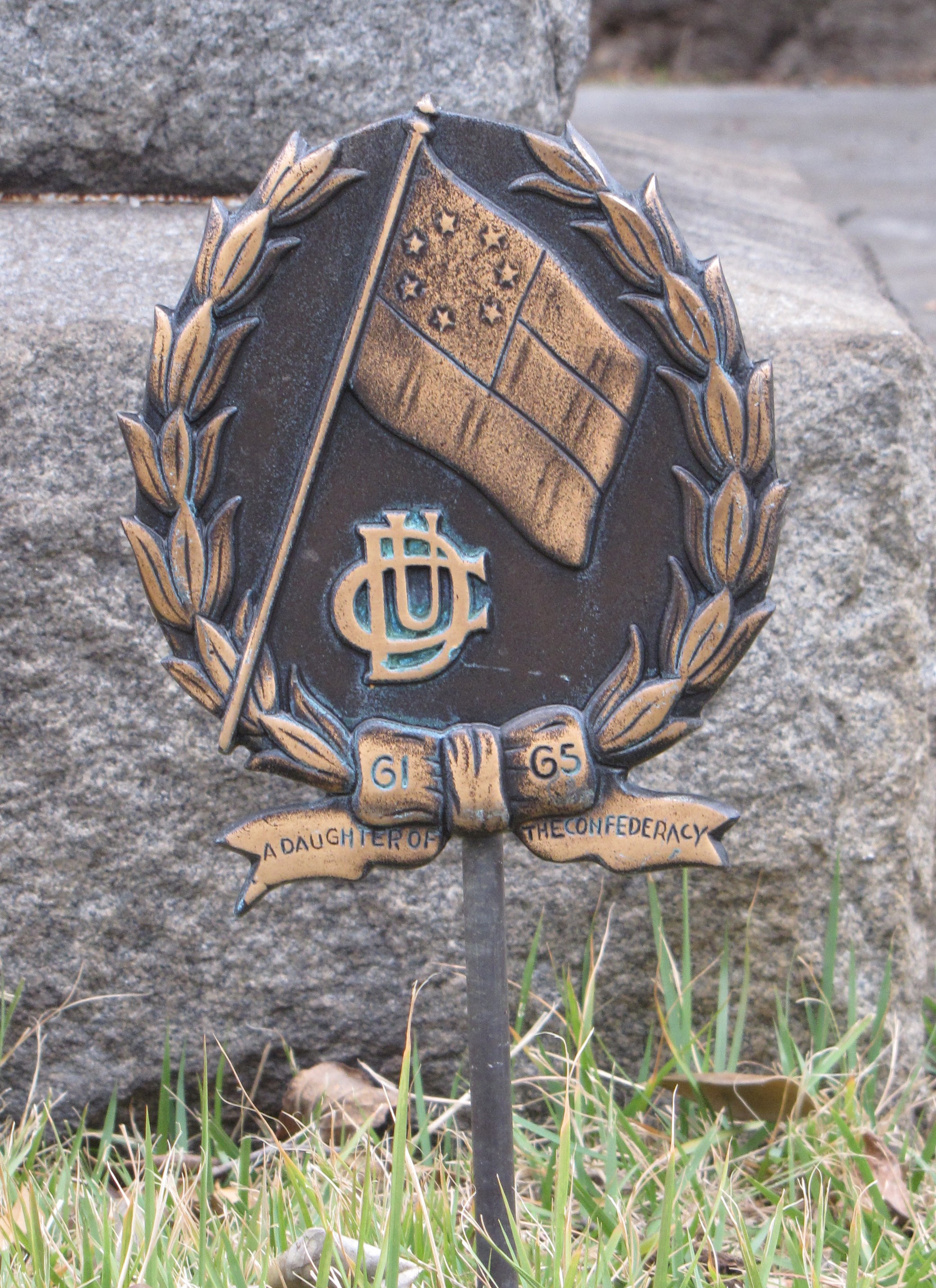
United Daughters of the Confederacy

Oakland Cemetery, Atlanta, Georgia

Just as the women of the North had founded an organization to honor the service of their soldiers, so did the women of the South.  Any female 16 years of age or older who can document direct lineal or collateral descent from a soldier who served honorably in the Army, Navy or Civil Service of the Confederate States of America is eligible to join.
 
The organization was founded in 1894, by two women, Caroline Meriwether Goodlet and Anna Davenport Raines.  The purpose of the UDC is to preserve the history of the Confederacy, honor the memory of those who served, and to preserve and mark historical locations.  Their motto is, “Love, Live, Pray, Think, Dare.”
 
The United Daughters of the Confederacy maintain a library at their headquaters in Richmond, Virginia.  They preserve and house a collection of rare books, letters, diaries, and other papers relevant and important to the history of the war.  The UDC also awards a scholarship for original research about Confederate history.
 
The metal marker is a replica of the emblem of the UDC.  A laurel, gathered together with a ribbon with two dates 61 and 65, the beginning and ending of the war, surrounds a Confederate flag and the intertwined letters U D C. 
 

Oakland Cemetery, Atlanta, Georgia

Posted in Metal Markers | Leave a comment

The Daughters of Union Veterans of the Civil War

Fairmont Cemetery, Denver, Colorado

 The National organization of the Daughters of Union Veterans of the Civil War, 1861 – 1865 (DUV) was founded May 30, 1885 by Olive Howard, Harriet Knapp, Eva Merwin, Frank Merwin, and Bertha Martin.  On June 3, 1885, the first meeting was held at the home of Eva Meerwin, 419 First Street, SE Massillon, Ohio, with the purpose of preserving the history of the Civil War.

The organization accepts all females, eight years or older, who can document lineal descent from an honorably discharged soldier or sailor who served in the Union Army, Navy, Marine Corps, and Revenue Cutter Service during the Civil War (1861 – 1865), and those who died or were killed while serving in the armed services of the Union between April 12, 1861 and April 9, 1865. The organization maintains a museum and library dedicated to preserving the history of the war at their headquarters at 503 S. Walnut, Springfield, Illinois.

The Daughters of Union Veterans organization’s motto is, “Fraternity, Charity, and Loyalty. Their mission is, “To spread widely the teachings of patriotism, that those who dwell in this broad of ours will so live that, in peace or in war, there shall be no stain on “The Flag Our Fathers Saved”.

The metal marker is a replica of the organization’s insignia, a laurel wreath, surrounding the intertwined letters D U V. The laurel is a traditional symbol of victory and military glory from as far back as the times of the Romans.

Posted in Metal Markers | Leave a comment

President Garfield, wounded by an assassin, killed by his doctors

The Garfield Tomb, Lake View Cemetery, Cleveland, Ohio

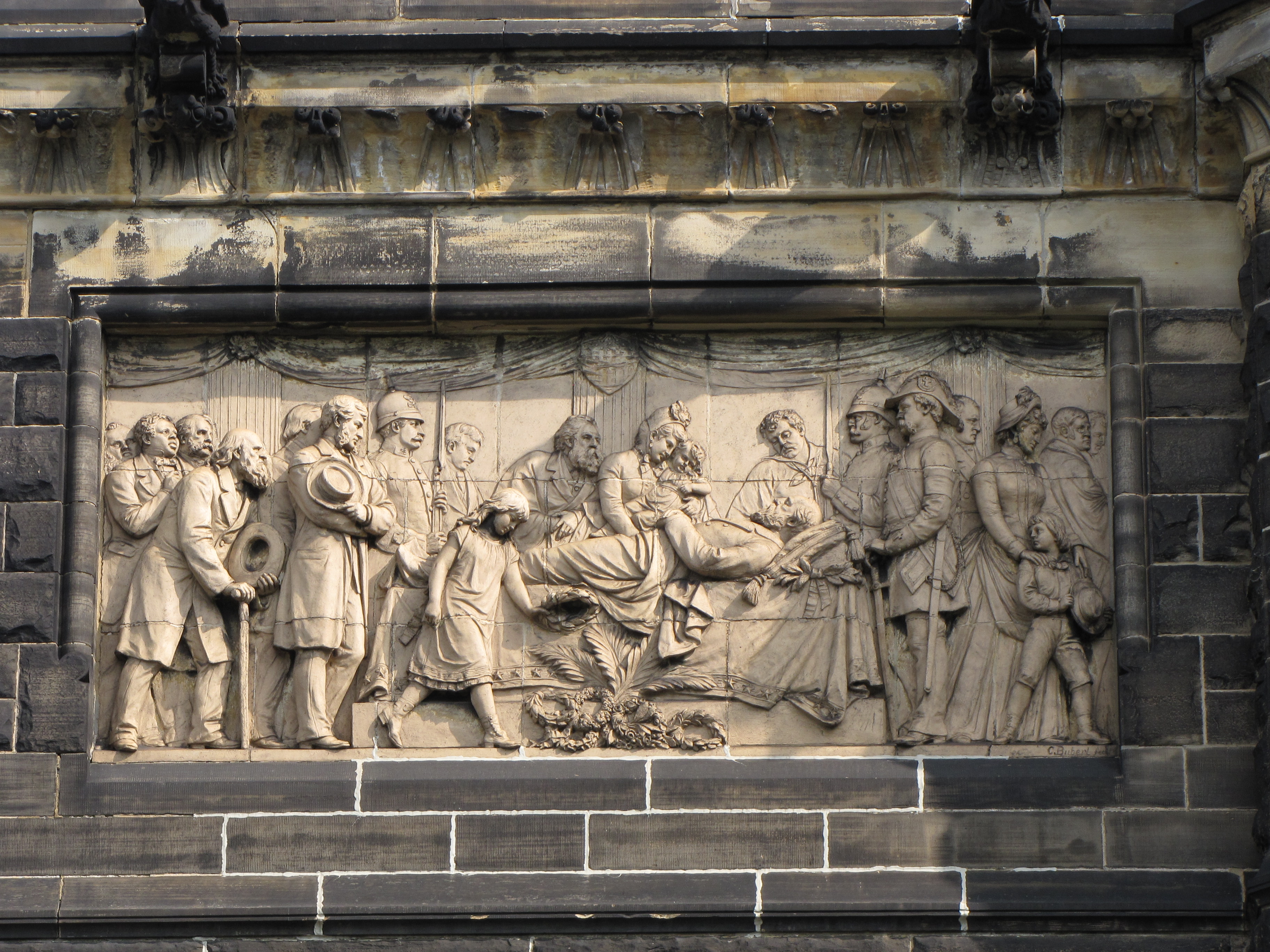
The tomb, in the Lake View Cemetery was designed by George H. Keller, is a circular tower 50 feet in diameter soaring 180 feet high made of Ohio sandstone. Wrapped around the “porch” of the monument are five bas-relief panels that depict scenes in Garfield’s life and the last of the five illustrating his death.

James Abram Garfield (November 19, 1831 – September 19, 1881)

James Garfield, the 20th President of the United States, was the last person who came from log-cabin beginnings to be elected to the highest office in the land. Garfield was born in the Ohio countryside on a farm. At less than two years old, his father died and the family struggled to get by living in abject poverty. By hard work and determination, Garfield rose to the presidency. As a teenager, Garfield took a job working on the Erie Canal on a construction crew but was determined to gain an education. He turned out to be a gifted learner and was hired at Hiram College to teach where he had been a student. Garfield was elected as an Ohio State Senator, nine-time United States Congressman from Ohio, and served as a General in the Union Army during the Civil War. After the war in Congress, Garfield was a tireless supporter of freed slaves and political reform railing against the political spoils system.

Garfield was a skilled and compelling orator. In 1880, at the Republican National Convention he was asked to give a nomination speech for the Secretary of the Treasury, John Sherman, who was running for the presidency. His spellbinding speech so moved the conventioneers that Garfield himself was nominated on the 35th ballot.

Only four months into Garfield’s presidency, Charles Guiteau, a dissatisfied office seeker and lunatic, shot the president twice once in the arm and once in the back. For the following 80 days Dr. D. Willard Bliss directed the care of the wounded Garfield. But it was not the assassin’s bullets that killed the felled president, but the inept care he received. Bliss believed that the antiseptic and sterilized operating conditions that Joseph Lister wrote about was quackery. In fact, Garfield’s bullet wound was searched by the bare and unwashed hands nine times without antiseptic on the day he was shot which led to the infections that riddled and weakened his body.  A new book, Destiny of the Republic: A Tale of Madness, Medicine and the Murder of a President, by Candice Millard details the apalling medical care that President Garfield received before his death.

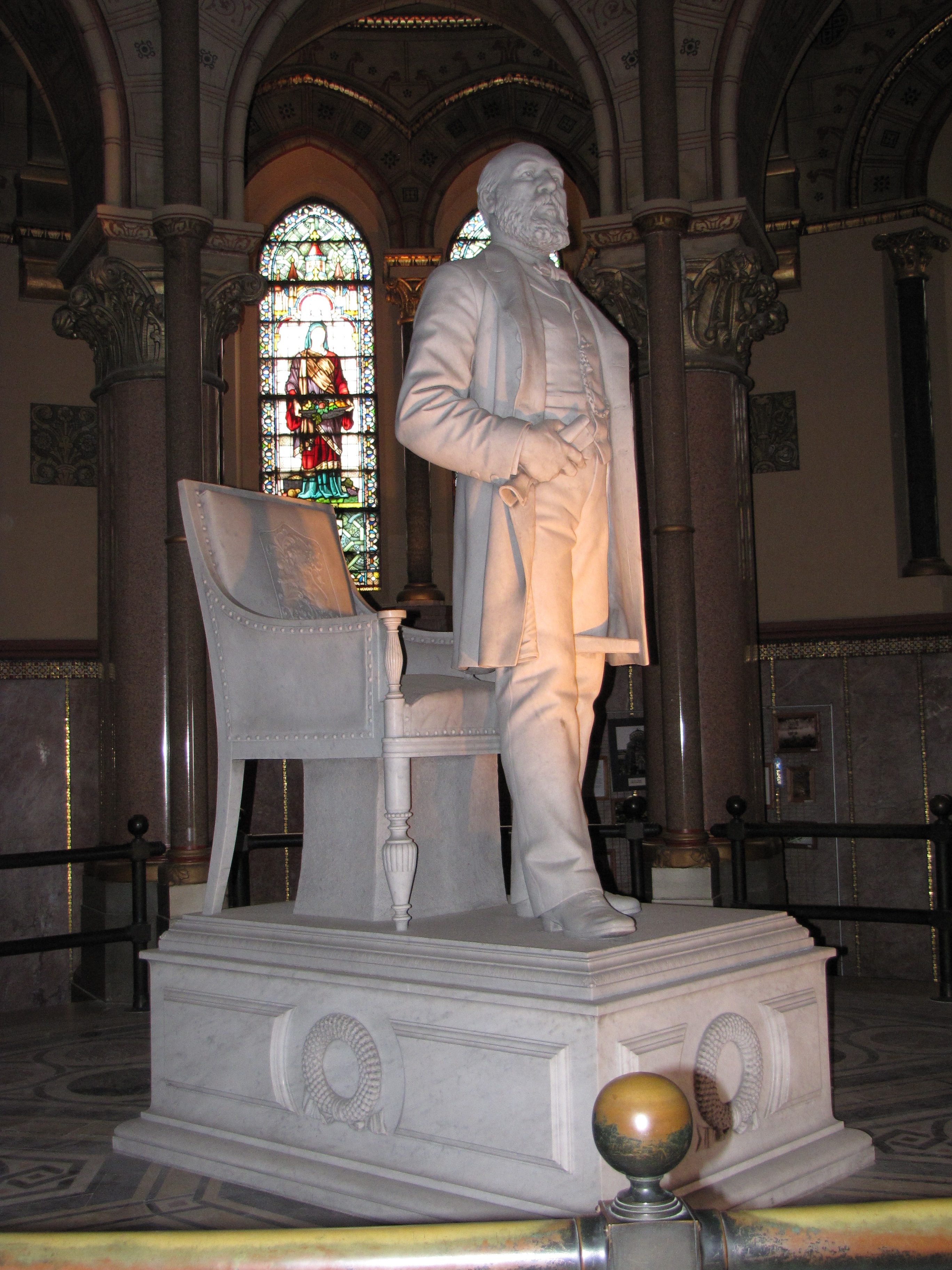
The white marble sculpture of James A. Garfield

This white Carrara marble sculpture by Alexander Doyle captures James Garfield just as he stood beside a chair to deliver a speech in Congress.

The dome of the Garfield Tomb

The dome of the Garfield Monument depicts angels from the four corners—North, South, East, and West–of America mourning the loss of the President.

The last of five bas-reliefs on the porch of the Garfield Tomb

 The scene of Garfield’s death at Elberon, New Jersey

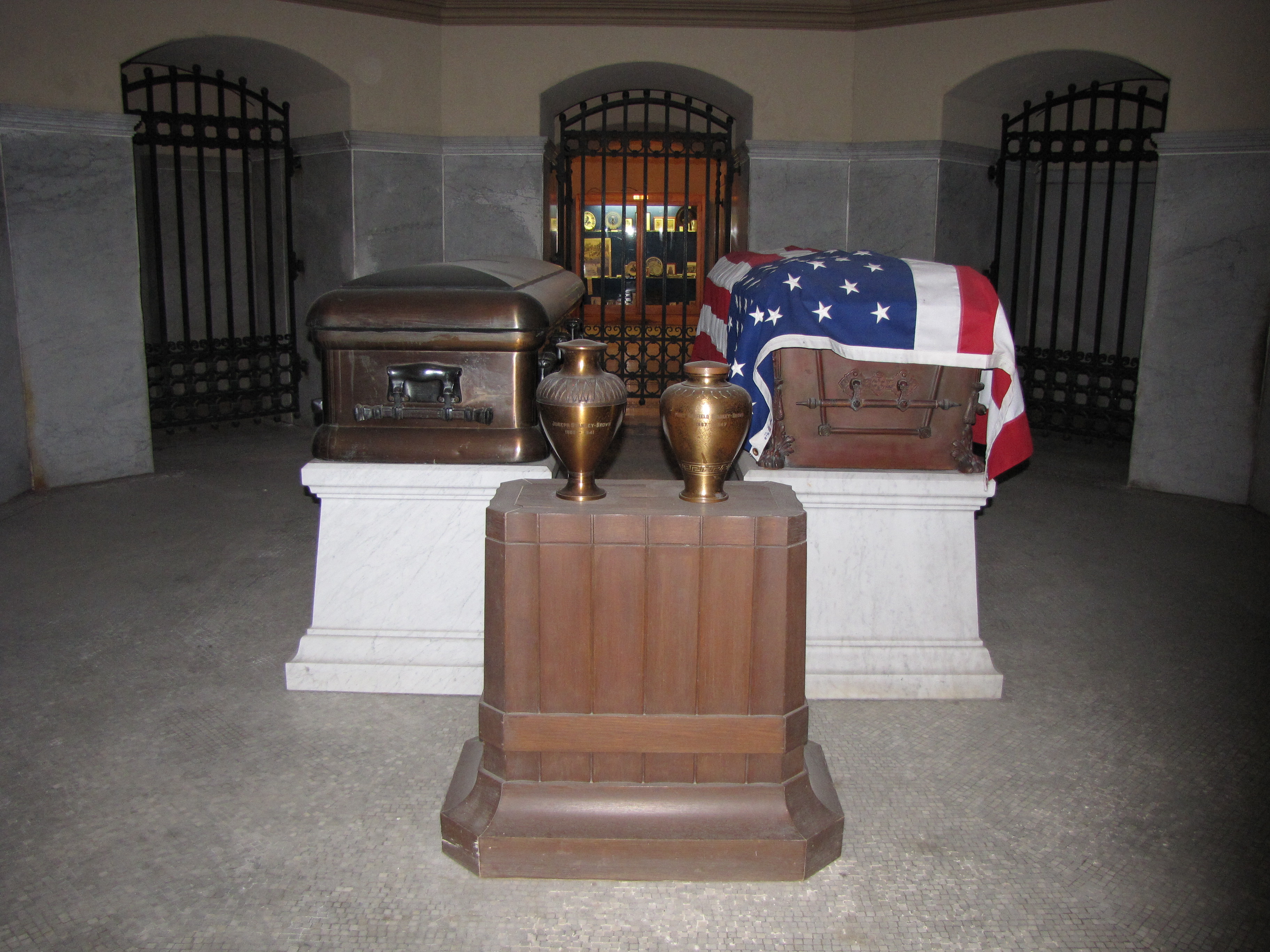
The crypt displaying the casket of President Garfield

Below the great hall with the statue of Garfield is the crypt that displays Garfield’s bronze flag-draped coffin next to Lucretia’s casket. Two urns are placed in the crypt—that hold the remains of Mollie Garfield Stanley-Brown, their daughter, and her husband, and former devoted secretary to President Garfield.

Posted in Presidential graves | 3 Comments

The last two ocean voyages by Columbus

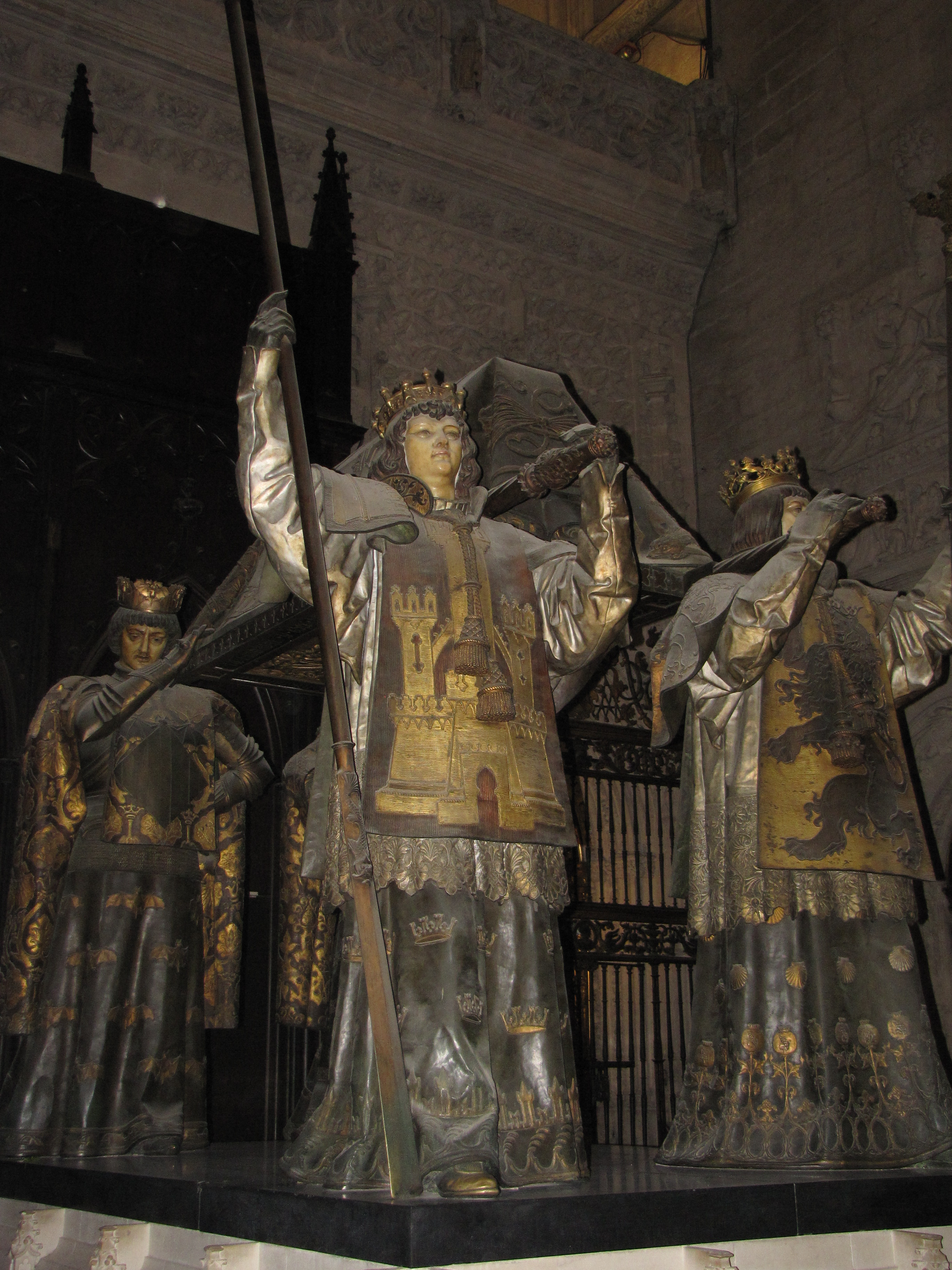
The Columbus Tomb, Seville, Spain

Ordinarily I don’t write about graves, tombs, or funerary symbolism outside of North America, but this is a brief interlude into the world outside my regular “beat”.  I took these photos when my family and I were on vacation in Seville, Spain, and touring the awe-inspiring Seville Cathedral, the largest Gothic Cathedral, and the third largest church in the world.  I was struck by the magnificance of the Columbus Tomb designed in the romantic-style by artist Arturo Melida.  The four mace bearers carrying the mortal remains of Christopher Columbus represent the four kingdoms–Castile, Leon, Aragon, and Navarra–that were under Spanish rule when Columbus left on his 1492 voyage of discovery.  Then I was struck by the mystery and contraversy of who might actually be in the tomb since there has long been a lingering doubt.
 
Christopher Columbus, famous for his voyages to the New World, traveled more after he died than most people do during their lifetimes.   He died in Spain in 1509, and was originally buried at Valladolid, Spain.  After his will was read, the remains of Christopher Columbus and those of his son, Diego, were shipped to the Caribbean island of Hispanola (modern-day Dominican Republic and Haiti) in 1537 making what was thought to be his last trans-Atlantic passage. Christopher Columbus and Diego Columbus were buried along side the remains of Christopher’s brother, Bartholomew, in the Cathedral of Santa Maria in Santo Domingo.  They rested there underneath the altar of the church for over two and a half centuries.
 
But France won dominion over the Spanish territory in 1795.  To protect the remains of Columbus the Spaniards shipped an unmarked casket and the remains within to the island of Cuba, to be reburied in Havana.  
 
The Dominican Republic, however, claimed that Columbus’s dust and bones remained in Hispanola. To bolster their claims, they shared the discovery of a box that had been uncovered in the Santo Domingo cathedral, in 1877,  with an inscription “C.C.A” on the outside of the lead box.  Inside the box the inscription read, “The illustrious and excellent man, Don Colon Admiral of the Ocean Sea.”  The title of the Admiral of the Ocean Sea had been conferred on both Christorpher and his son, Diego.  Also, both were referred to as Don Colon.  The authorities in Santa Domingo declared that they held the remains of Christopher Columbus because the lead box they had in had the intials C. C. A.–Cristobal Colon, Admiral. The Spanish rejected that claim, with the theory that the majority of Christopher Columbus’s remains were in their possession, while some may have been left behind.
 
After the Spanish-American War and the defeat of the Spanish, Columbus was on the move again and the unmarked casket made its last ocean voyage in 1898 to Seville, Spain, to finally dock in the tomb in the Seville Cathedral.
 
However, DNA analysis of bone fragments from the Tomb in Seville were compared to the bone fragments and dust from the Seville tomb of Christopher’s brother Diego Colon which happen to be a perfect match. Researchers announced the results in 2006, hoping to put an end to the contraversy. But one aspect of the case was left unturned–the DNA from the Dominican Republic was not not analyzed, the contraversy remains to this day.
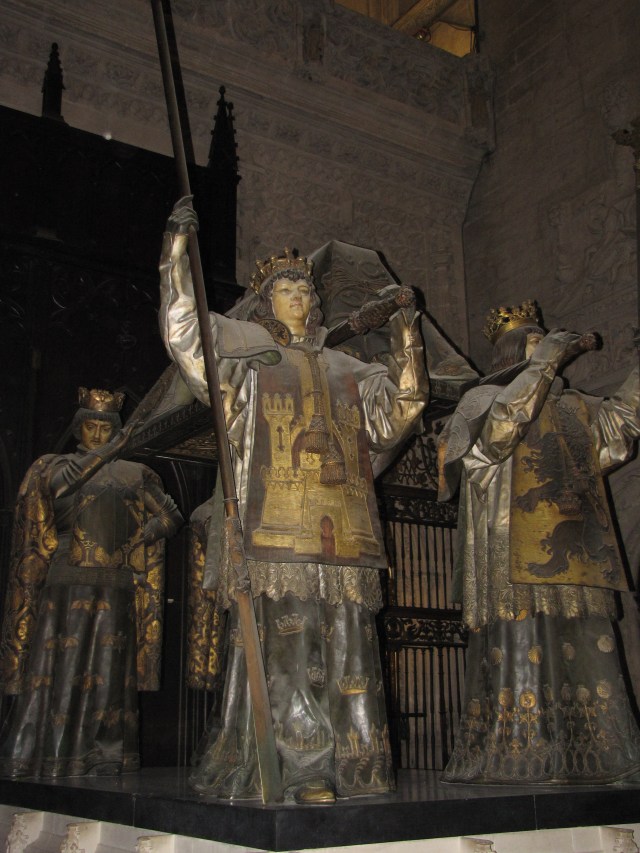
 

The Columbus Tomb, Seville, Spain

Posted in Famous graves | 2 Comments

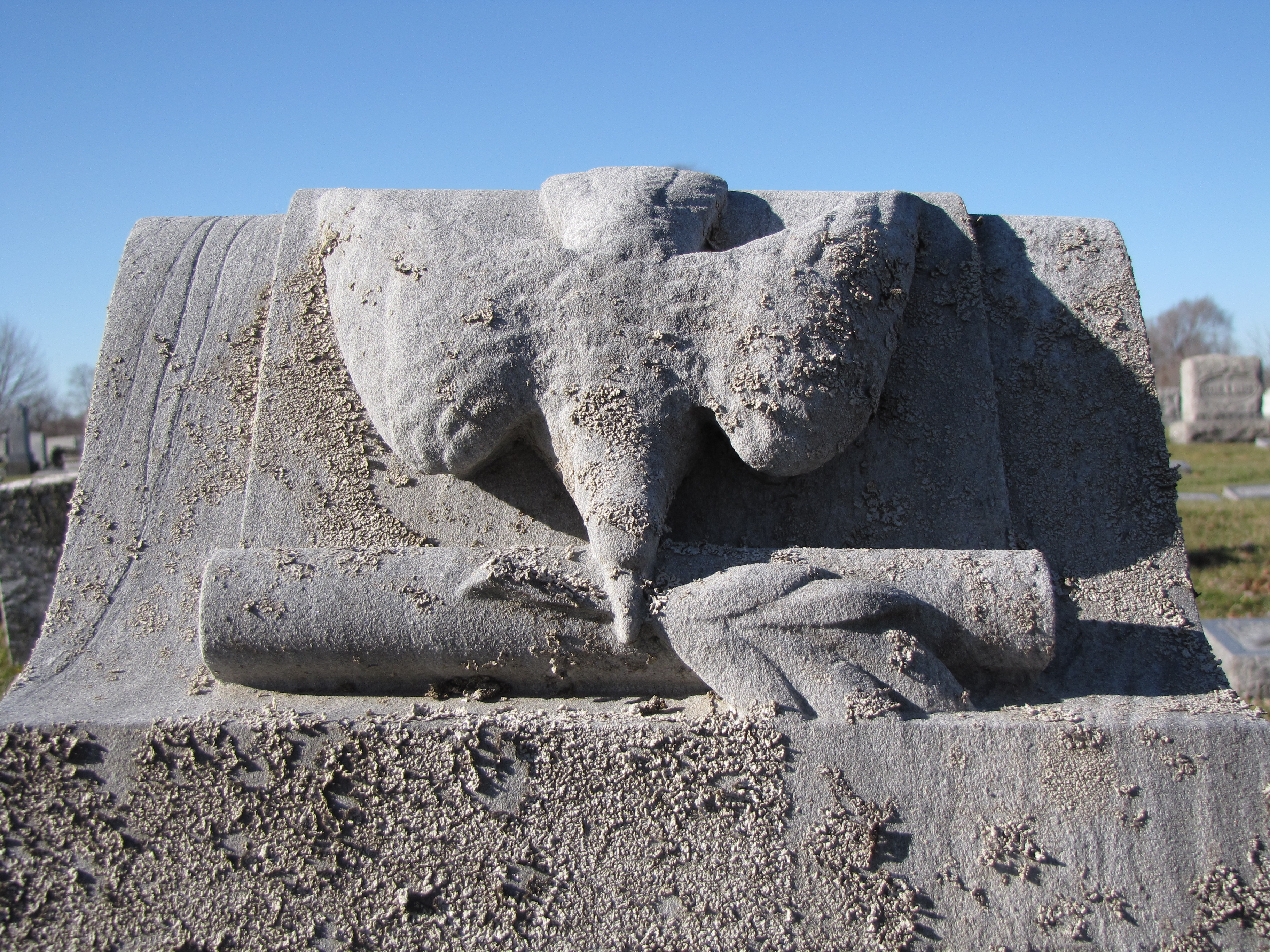
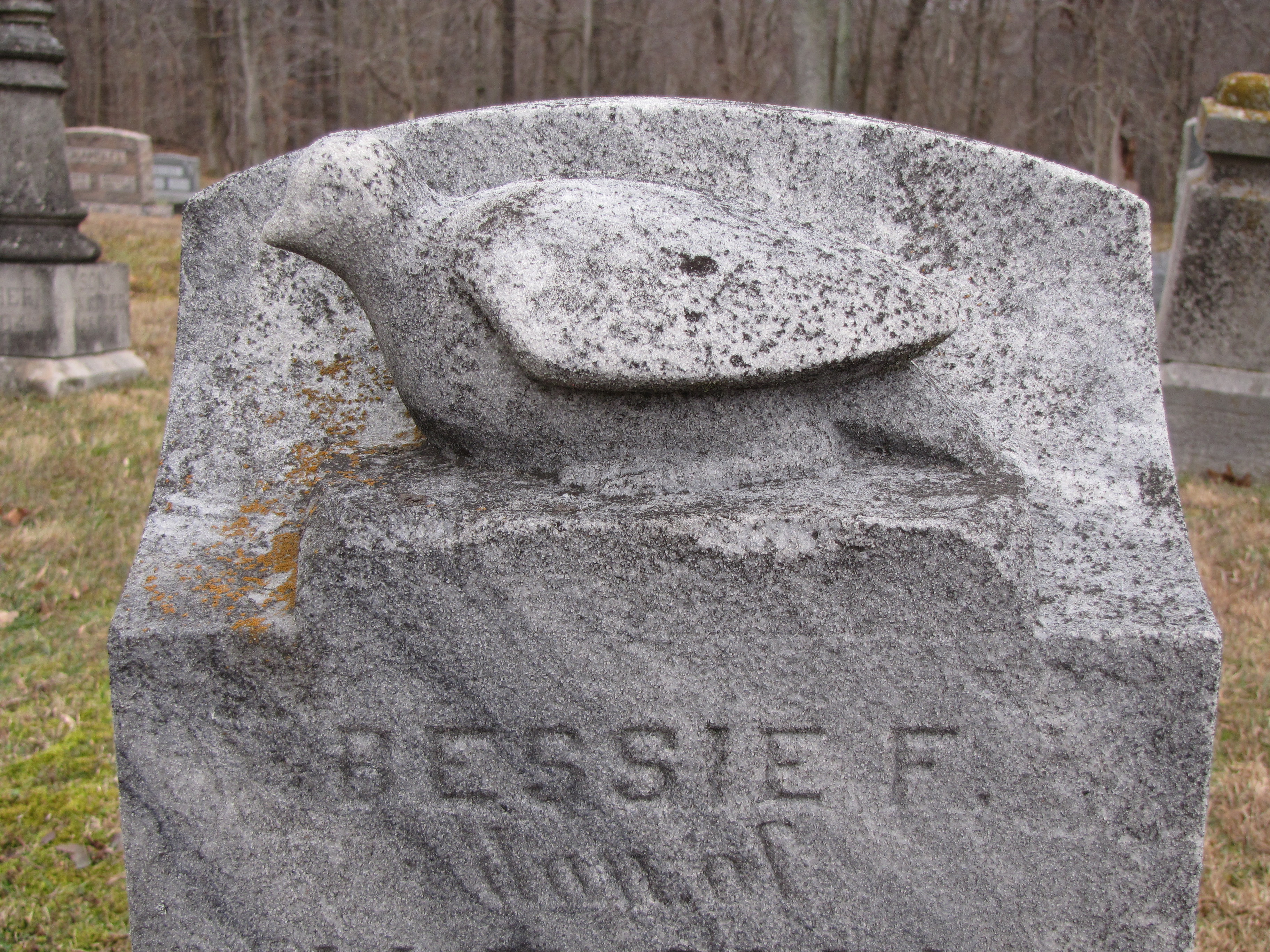
Dove

Holy Cross St. Joseph Cemetery, Indianapolis, Indiana


Many symbols found on gravestones have multiple meanings. The dove is one of those.

 Several references in the Bible refer to the dove as a symbol of the Holy Spirit. Matthew 3:16 reads, “And Jesus, when he was baptized, went up straightway out of the water: and, lo, the heavens were opened unto him, and he saw the Spirit of God descending like a dove, and lighting upon him.” In Mark 1:10 the Bible says, “And Straightway coming up out of the water, he saw the heavens opened, and the Spirit like a dove descending upon him.” Again in John 1:32, the Bible reads, “And John bare record, saying, I saw the Spirit descending from heaven like a dove, and it abode upon him.”

Along with the dove symbolizing the Holy Spirit, the dove is also closely associated with peace, often depicted with a sprig of an olive in its beak. This, too, originated in the Bible. After the waters receded in the story of Noah, the dove appears. Genesis 8:11, “And the dove came in to him in the evening; and, lo, in her mouth was an olive leaf pluckt off; so Noah knew that the waters were abated from off the earth.”   It was a sign of God’s forgiveness.

The dove, with its white color, is also a symbol of purity and innocence and for that reason is often found the tombstones of children.

Thus the dove symbolizes the Holy Spirit, peace, and purity.

Knightridge Cemetery, rural Bloomington, Indiana


Posted in Symbolism | Leave a comment