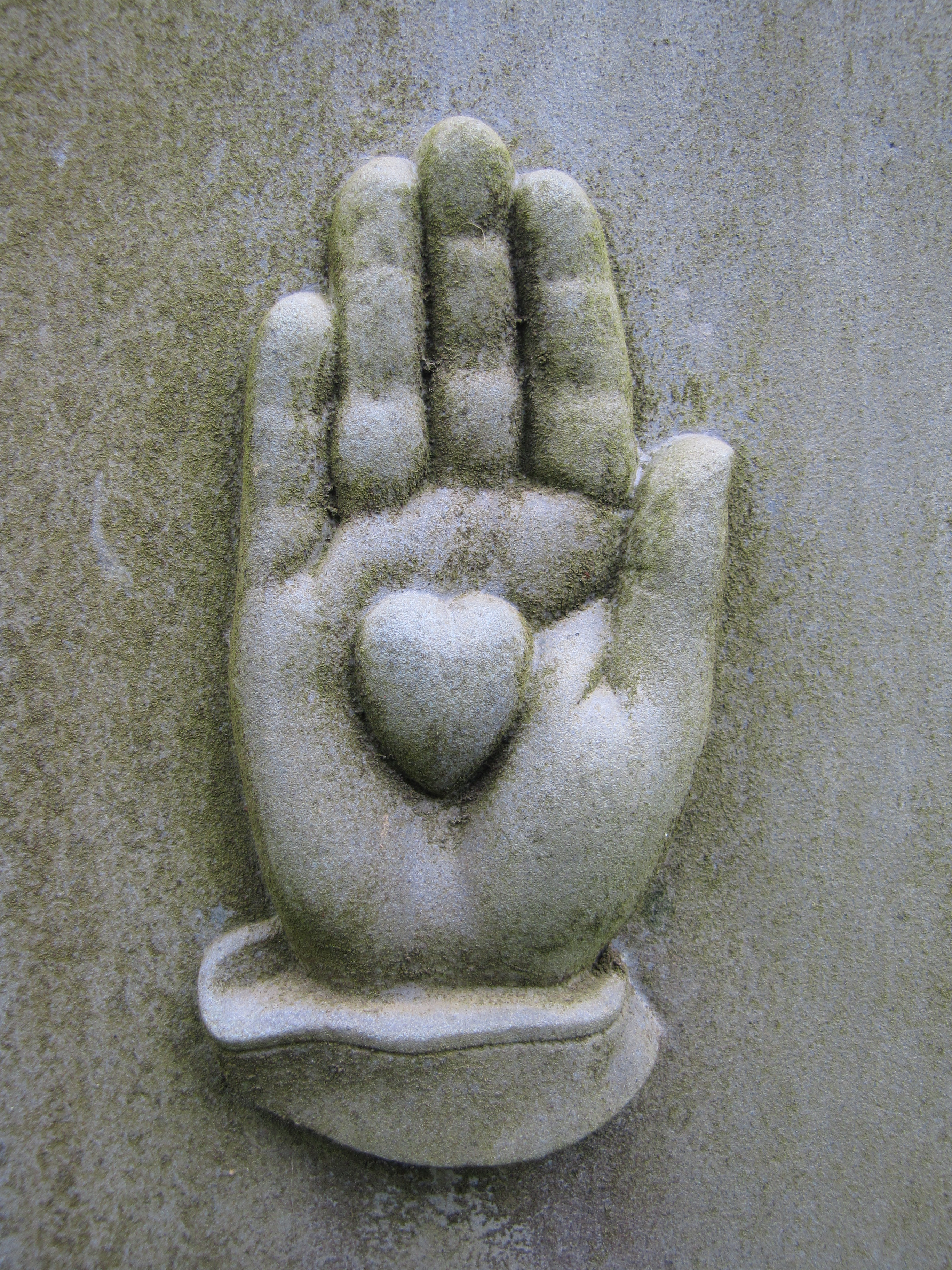
Heart-in-Hand

Riverview Cemetery, Portland, Oregon

When I walk around cemeteries, I look for symbols I have not seen and, of course, stellar examples of funerary art.  I have written before about the the Heart-in-Heart symbol but was struck by the pristine condition of the symbol found on this white bronze “zinc” marker.  The Heart-in-Hand symbol has significance with several organizations and religions, especially the Shakers, but when coupled with the three linked rings, it is associated with the Odd Fellows.  (The three rings symbol is also found on the gravestone of the Heart-in-Hand symbol.)

As you can see, the heart rests in the center of the palm.  The Heart-in-Hand symbol represents charity given with an open heart.

Posted in Symbolism | 3 Comments

Supreme Council of the Royal Arcanum

The crown with the initials V. M C. is a symbol representing the Supreme Council of the Royal Arcanum, a membership organization founded by John A. Cummings and Dr. Darius Wilson in Boston on June 23, 1877.  The State of Massachusetts granted the society a charter on November 5th of that year.

The Royal Arcanum is a fraternal benefit society founded to deliver insurance to its members.  Their mission from the start was to provide benefits to its members that would improve the lives of the membership and those of their families.  The society was founded on their expressed values found on their insignia—V for Virtue, M for Mercy, and C for Charity.

According to their official Website, the objectives of the society are to:

  • Unite all eligible male and female persons of sound bodily health and good moral standing, who are socially acceptable.
  • Give moral and material aid in its power to its members and those dependent on them.
  • Teach morality without religious distinction, patriotism without partisanship, and brotherhood without creed or class.
  • Educate the members socially, morally and intellectually.
  • Assist the families of deceased members.
  • Establish funds for the payment of Death Benefits, Educational Loans and Annuities.

The society is alive and well today still delivering benefits long after many other organizations of the same kind have long since ceased to operate.

Greenwood Hills Cemetery, Portland, Oregon

Posted in Uncategorized | Leave a comment

KP

The Knights of Pythias, a society based on the Greek story of friendship from 400 B. C. between Damon and Pythias, became the very first fraternal organization to receive a charter under an Act of the United States Congress.

Pythians promote cooperation and friendship between people of good will, find happiness through service to mankind, believe that friendship is essential in life, view home life as a top priority, show an interest in public affairs, enhance their home communities, respect and honor the law of the land, and expand their influence with people of like interests and energy.

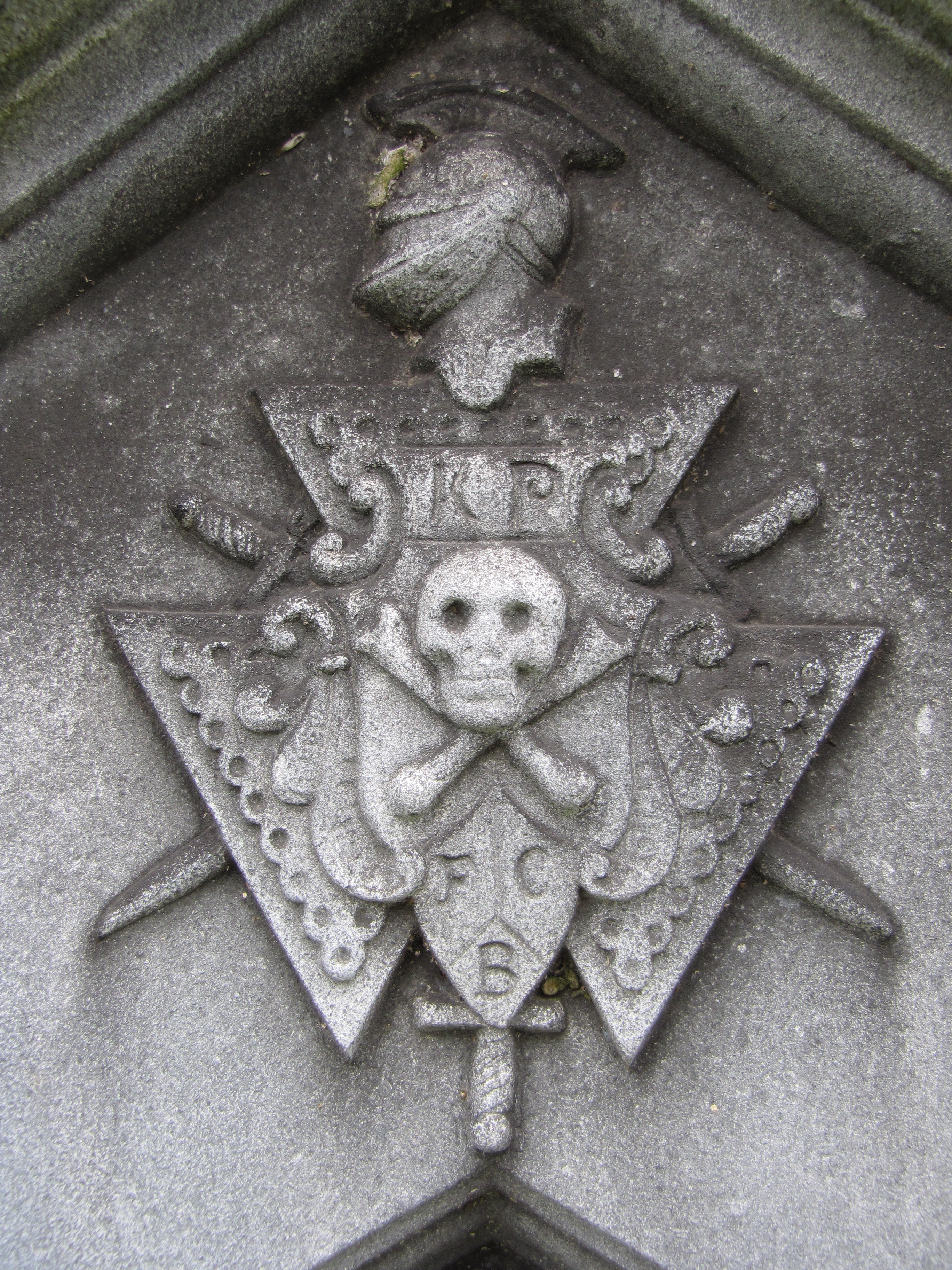
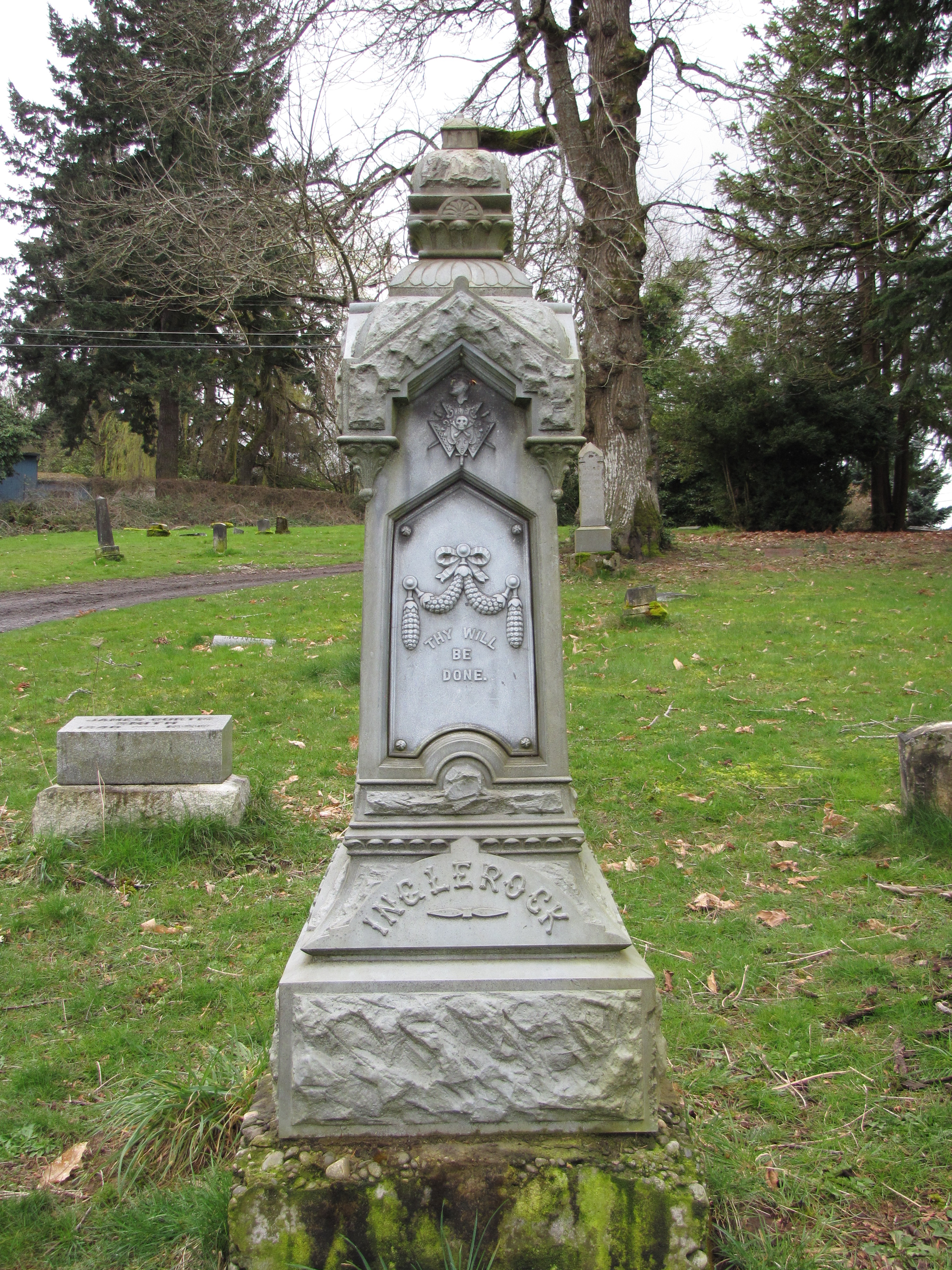
The symbol in the marker above features many of the symbols that are significant to the Knights of Pythias.  A knight’s helmet, above a shield with three letters, “F”, “C”, and “B”, which stand for their motto, FRIENDSHIP, CHARITY, and BENEVOLENCE, surrounded by swords, battle axes, and a spear, representing the weapons that were used against their enemies.  The secondary shield also displays the skull and cross bones, one of as many as 20,000 different symbols used by the Pythians.

Greenwood Hills Cemetery, Portland, Oregon

Posted in Uncategorized | Leave a comment

PS

The symbol above marks the grave of a woman who belonged to the Order of Pythian Sisters.  The organization is the auxillary organization for the Knights of Pythias.  On October 22-23, 1888, the Order was founded at Warsaw, Indiana, by Pythian Knight, Joseph Addison Hill, of Greencastle, Indiana.  Hill was a master of creating order and ceremony and imbued their symbols with meaning.  A laurel wreath surrounds a Maltese Cross with a crown in the center, the cross is crisscrossed by a rapier and star baton, topped with falcon-crested helmet.  The four letters, P, L E, and F, inside the arms of the cross stand for Purity, Love, Equality, and Fidelity.  In a final salute, ALL HAIL SISTER FAREWELL, the member sisters say goodbye.

Greenwood Hills Cemetery, Portland, Oregon

Posted in Uncategorized | Leave a comment

Horseback Evangelism

Greene County Chapel Cemetery, rural Greene County, Indiana

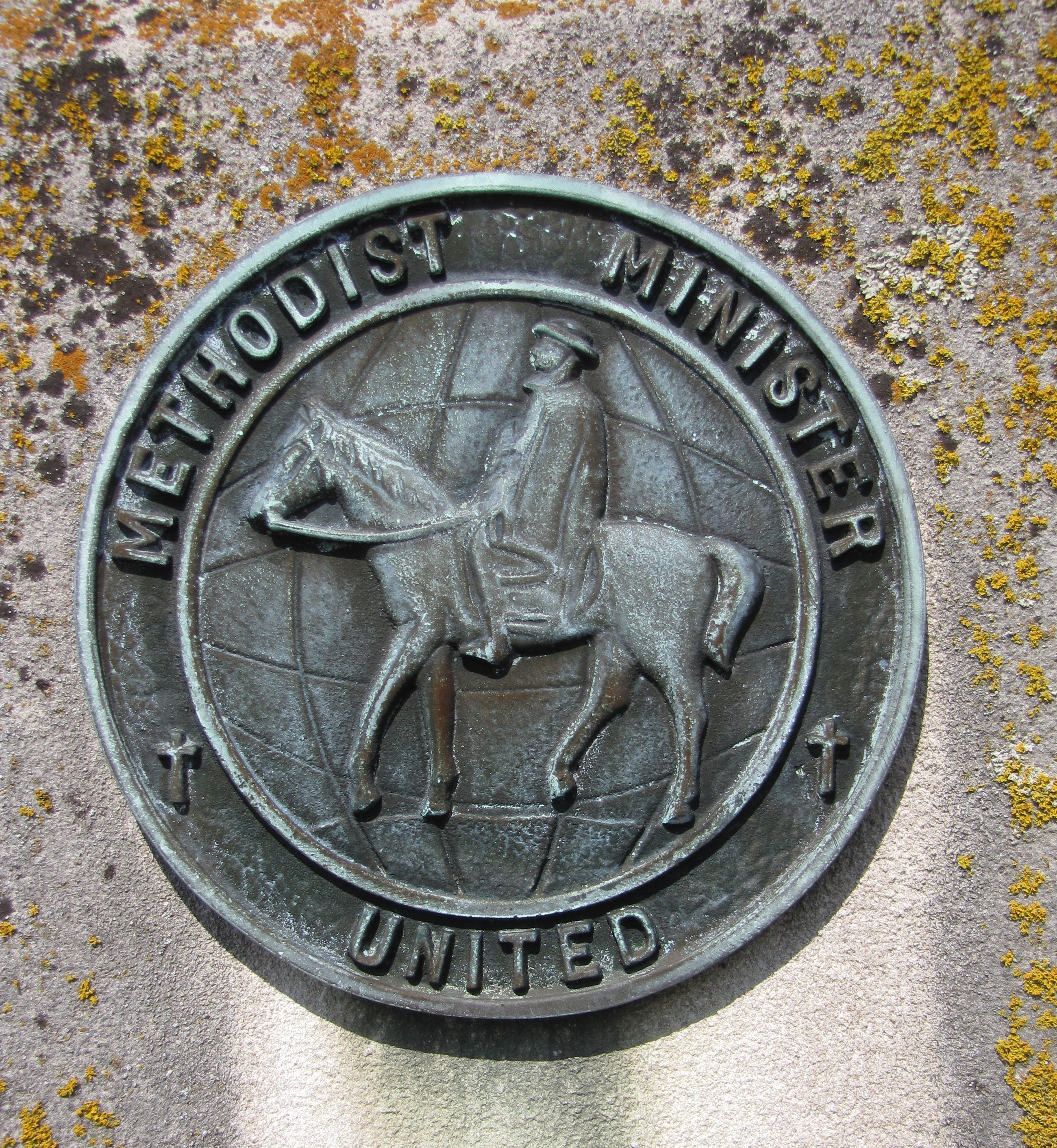
The metal marker affixed to the gravestone shows a minister riding a horse.  The image is an appropriate one, especially for the Methodist clergy.  While many denominations had circuit riding ministers during the settlement of the Frontier, no single church grew at the rate of the Methodist church largely because of the horseback evangelism of the Methodist ministers.  In 1784, only 14,986 people belonged to the Methodist Church but by 1839, over 749,216 people were members.  The number of traveling clergy during that time had grown from 83 circuit preachers or “saddlebag ministers” as they were often called to over 3,500 serving congregants in the far-flung reaches of our new and sprawling country.  The circuit riders rode from village to village and met with people in homes, open fields, country stores, and courthouses, nearly anywhere, so they meet the needs of the people living in remote areas.  The tradition of the travelling clergy as they were officially called by the Methodist Church is gone, but Methodist churches can be found in every corner of the country largely because of the efforts of ministers who were willing to live a lonely life on the back of a horse spreading the Word.

Posted in Metal Markers | 3 Comments

Another Squirrel

Greene County Chapel Cemetery, rural Greene County, Indiana

Even though, they are considered rare, I have come across more squirrels displayed on gravestones, since I first wrote about the image as a funerary symbol.  The carving in the photo above is found in a rural cemetery in Greene County, Indiana.  The squirrel is a delicately-carved, shallow bas-relief on a limestone marker.  Some sources say that if the squirrel is holding a nut, it is a sign of religious meditation and spirtual striving. Clearly this little squirrel is in that prayerful position.

Posted in Symbolism | Leave a comment

The Tasty Morel

The Greene County Chapel Cemetery, rural Greene County, Indiana

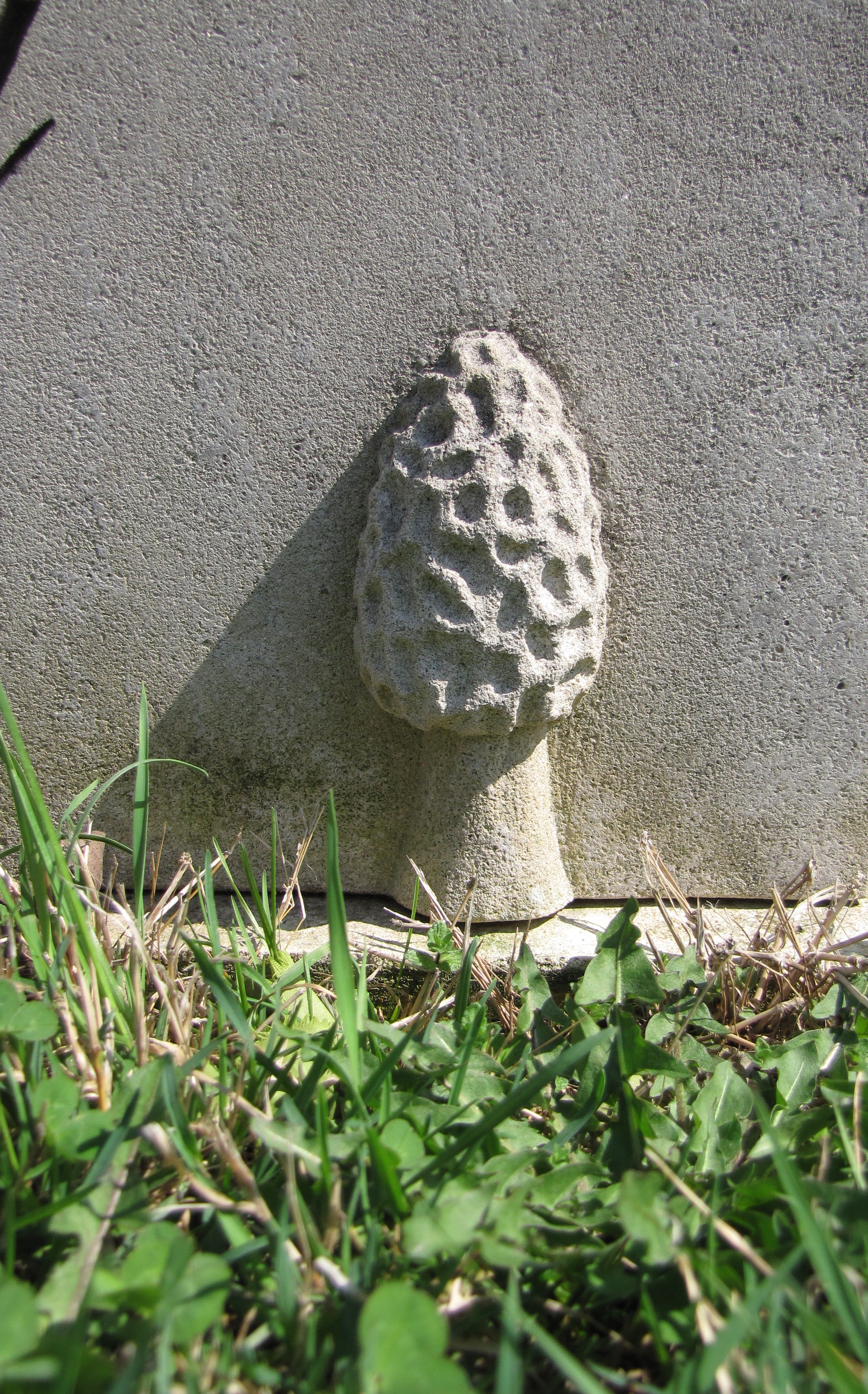
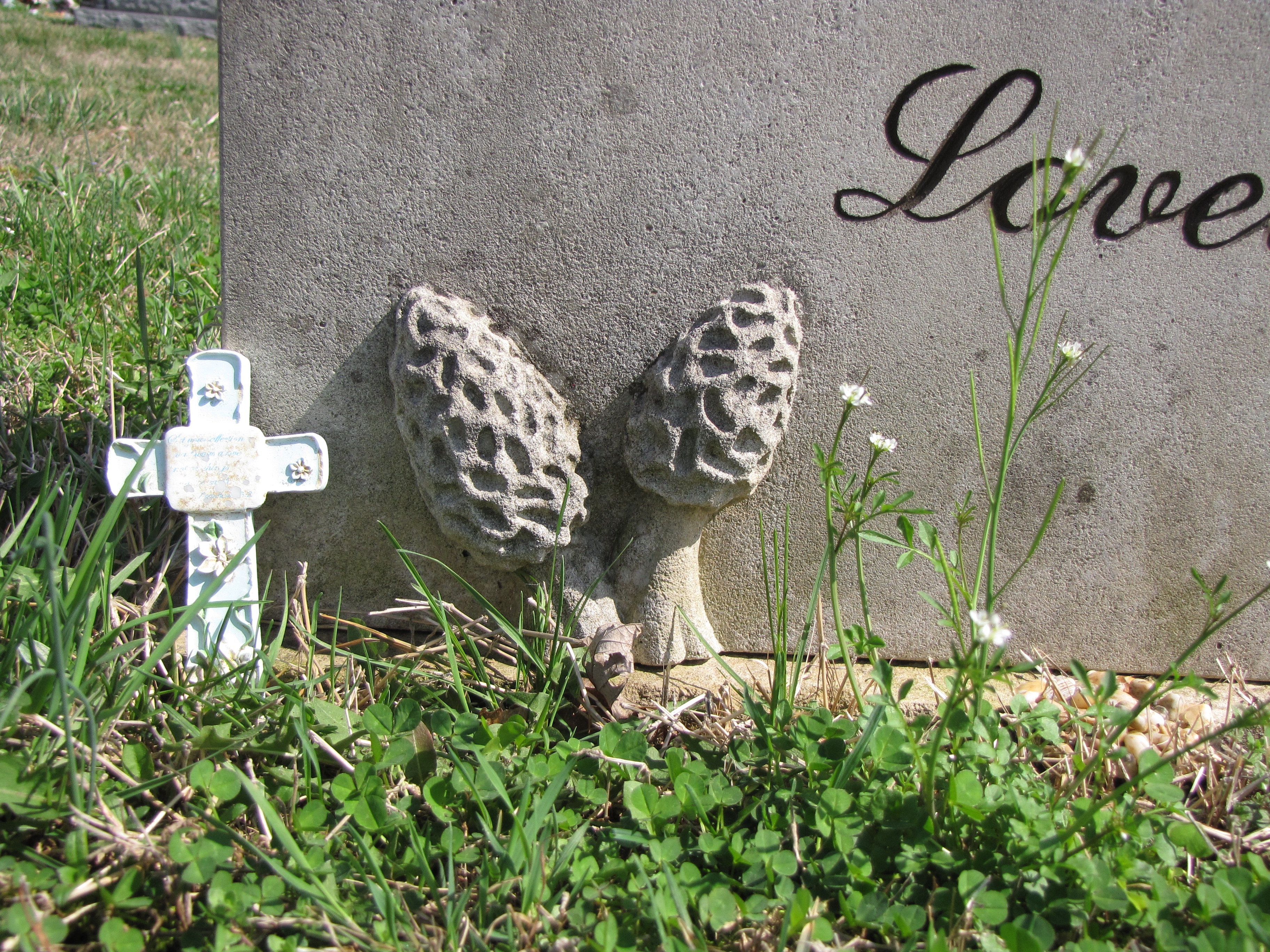
The word morel comes from the Latin word maurus meaning brown and refers to edible mushrooms from the genus Morchella.  Around the country, Morel mushrooms are called many names—molly moochers, dryland fish, sponge mushrooms, hickory chickens, merkels, and miracles—but whatever you call them they are delicious.  These honeycombed sponge-topped tasty morsels pop up in the spring and are sought after by chefs everywhere.  For me, the best way to prepare them is to wash them, lightly flour them and fry them in butter.  Pure delight.

These carved morels on a gravestone in rural Greene County, Indiana, surely marks the grave of a passionate mushroom hunter who enjoyed the search and better yet the reward of a fresh cooked batch of woody tasting delights.

Posted in Uncategorized | Leave a comment

Improved Order of Redmen

Grandview Cemetery, Bloomfield, Indiana

The metal marker above marks the grave of a member of the Improved Order of Redmen, which claims its beginnings with the patriots who were in the Sons of Liberty during the American Revolution.  The society models itself after the Iroquois Confederacy councils.  In fact, some of the metal markers display images of Native Americans because the society based their organization on the rites and rituals of the Native Americans.  Written on the headband of the feathered headress are the initials T.O.T.E which stands for Totem of Eagles.  According to their Website, the IORM “promotes patriotism and the American Way of Life, provides social activities for the members, and supports various charitable programs.”  The different clubs or chapters are divided into “tribes”.

Posted in Metal Markers | Leave a comment

The Clover

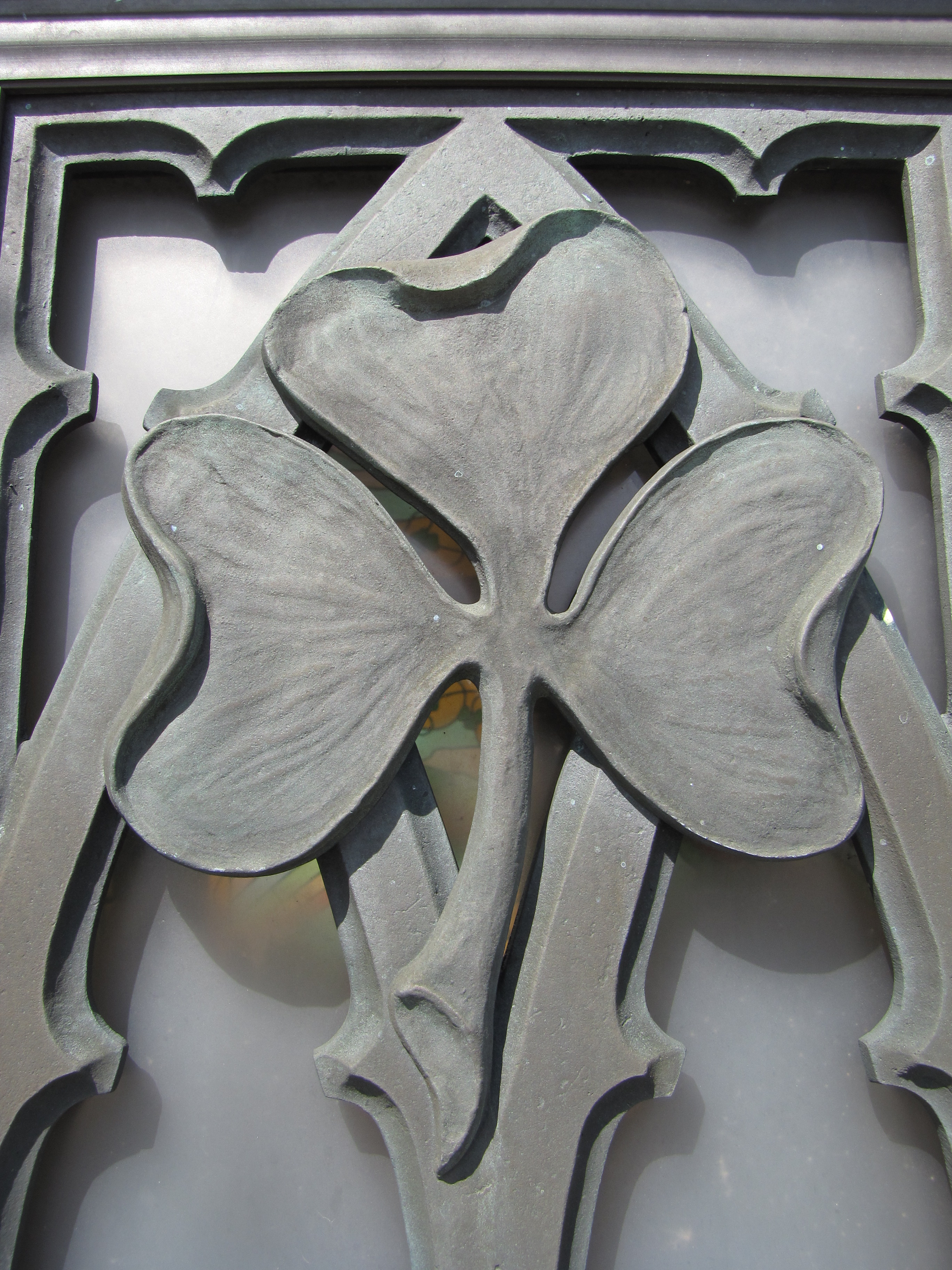
Crown Hill Cemetery, Indianapolis, Indiana

The clover is the symbol of Ireland because legend has it that St. Patrick, the country’s patron saint, brought it to the emerald isle.  The three leaves of the clover represent the Trinity–the Father, the Son, and the Holy Ghost.

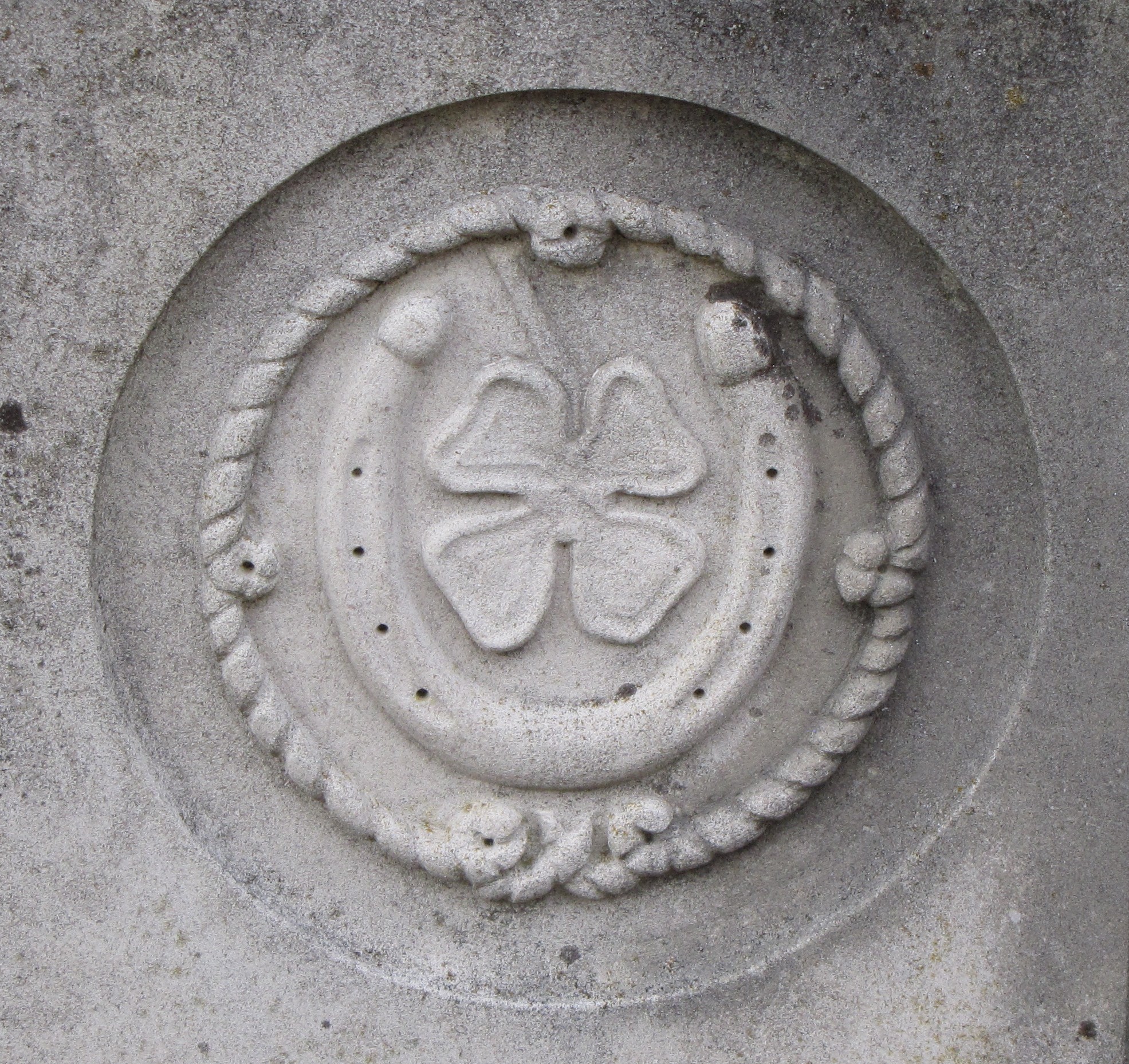
Beech Grove Cemetery, Bedford, Indiana

The four-leaf clover is not a commonly seen gravestone symbol.  The four-leaf clover is universally recognized as a symbol of good luck.

The craving above has the clover tucked inside a horshoe.  To a superstitious person, a horseshoe with the ends pointing up, is viewed as good luck.  These can ususally be found tacked up above a doorway and kept as a talisman.  The claim is that the luck stays in the horseshoe and is bestowed on the owner.  Conversely, some believe that if the horseshoe has the ends pointing down, the good luck will drain from the shoe and be bestowed on those around it.  In gravestone art, however, the horseshoe is a symbol that wards off evil, not as a good luck charm.

Posted in Symbolism | 1 Comment

Military Order of the Cootie

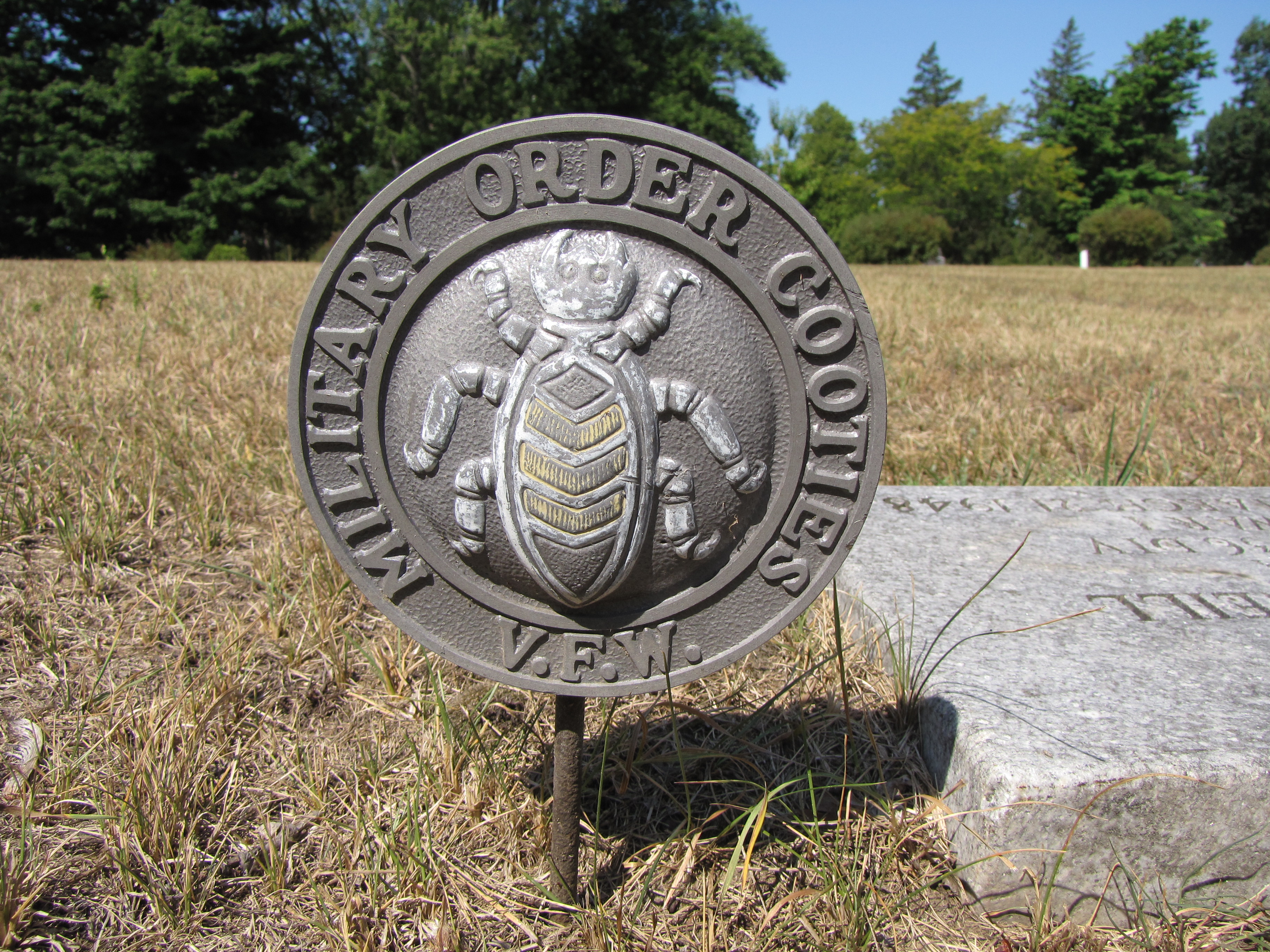
Lakeview Cemetery, South Haven, Michigan. This marker is a replica of the Military Order of the Cootie insignia.

The Military Order of the Cootie (MOC) is the Honor Degree from the Veterans of Foreign Wars (VFW). The origin of the order dates back to the Spanish American War and the Imperial Order of the Dragon.  Founded in 1920 after World War I, the “Cooties” have to be members in good standing of the VFW who have displayed a willingness to work hard for the parent organization.  They have an offbeat humor and apply that to their problem-solving and the services that they deliver.

Since their founding, the MOC have taken on among others, several special projects:

  • Visits hospitalized veterans and residents and entertain them to “Keep ’em Smiling in Beds of White.”  
  • Support of the VFW National Home
  • Fund scholarships for VFW members’ children

Reflective of the sense of humor of this service organization, the cooties take their name from the lice that were found in many of thebattle encampments during World War I.  Today there are 37,000 Cooties organized into 1,000 units which they call “Pup tents”.

The official brightly-colored uniform of the VFW’s Military Order of the Cootie is comprised of red pants with a white stripe running down each side; ruffled white shirt; lace-trimmed red vest emblazoned on the back with a gold-outlined, bug-like creature with flashing light bulb eyes; red, overseas-style cap worn sideways so that the tassels dangle beside the wearer’s ears.

Lakeview Cemetery, South Haven, Michigan

Posted in Metal Markers | 1 Comment