Warren G. Harding

In the great fulfillment, we must have a citizenship less concerned about what the government can do for it and more anxious about what it can do for the nation.”

–U.S. Senator, Warren G. Harding, Republican National Convention, 1916

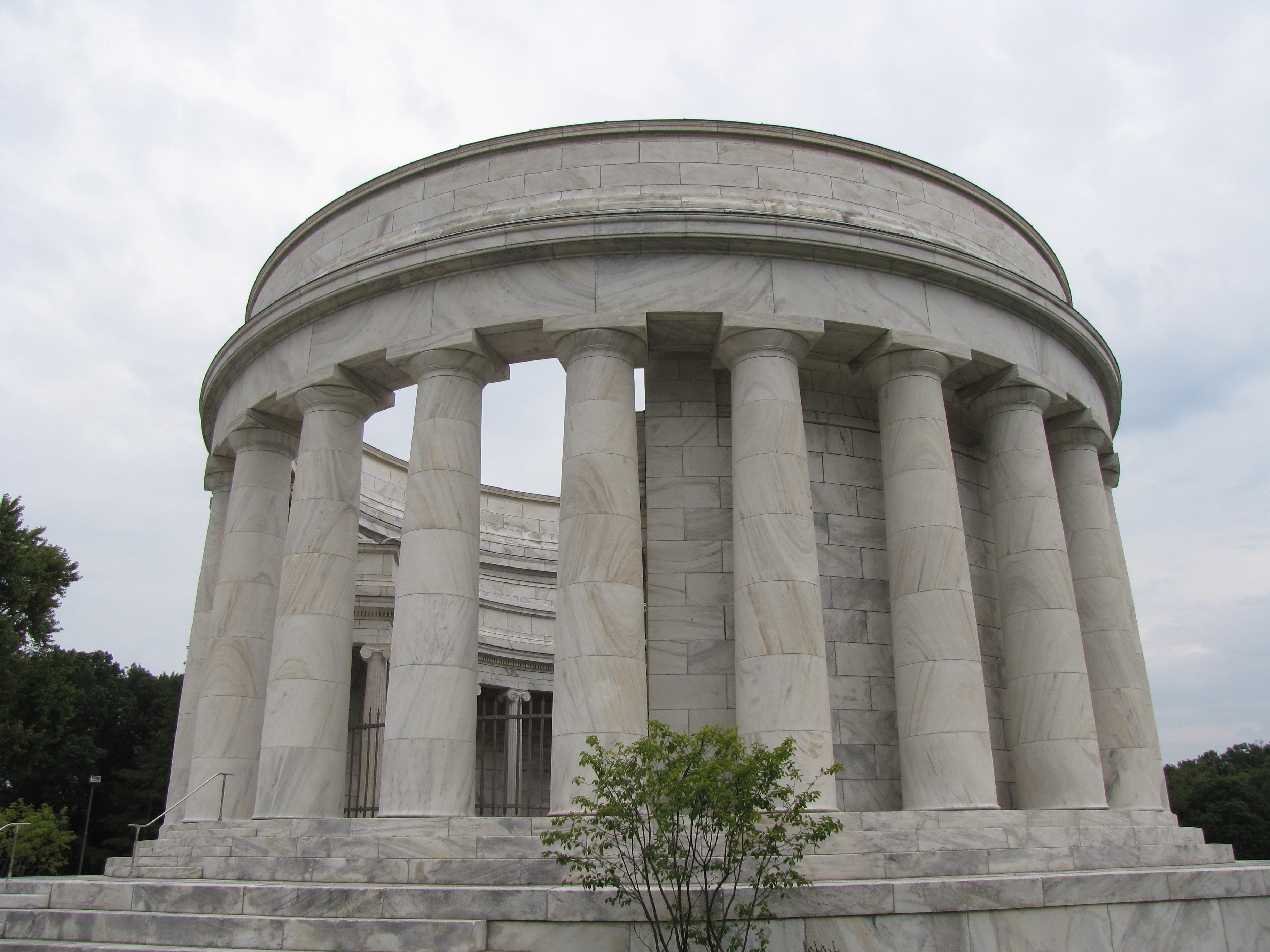
President Warren G. Harding's Tomb, Marion, Ohio

Warren Gamaliel Harding, born November 2, 1865, at Bloomington Grove, Ohio, died August 2, 1923, at San Francisco, California, was the 29th President of the United States.  Harding was a Republican Senator from Ohio who was elected president in 1920 and served from 1921 until his untimely death in 1923.  Even though, his short time in office was scandal ridden, the popularly-elected President Harding was honored with a lavish monument after his death.  The tomb, landscaping, and grounds cost a whopping $783,108, raised by private donations, including pennies contributed by more than 200,000 school children.

President Warren G. and Florence Kling Harding's grave ledgers

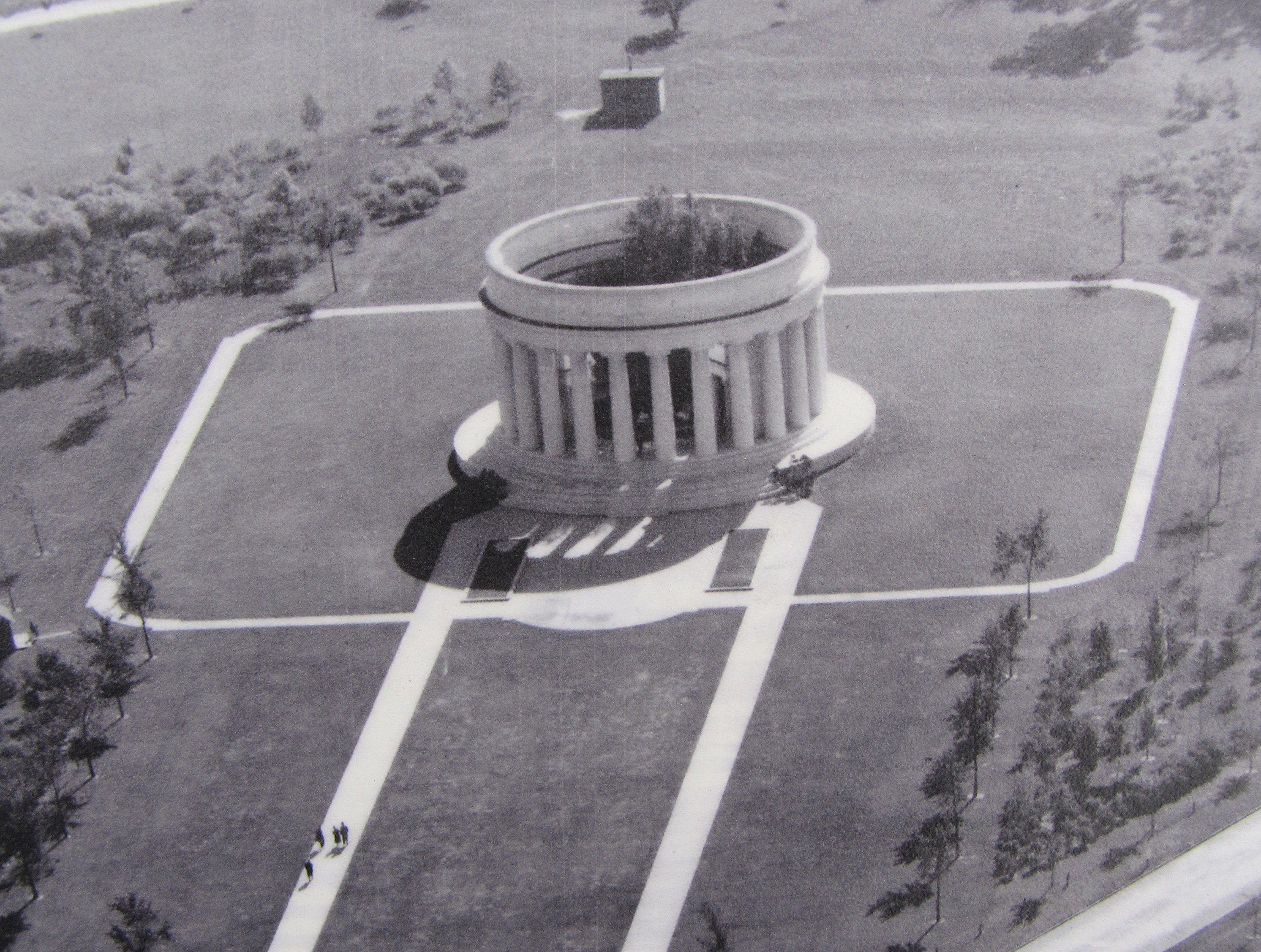
Harding wanted to be buried under the open sky.  Architects Henry F. Hornbostel and Eric Fisher Wood fulfilled Harding’s wish by designing an open space to hold two black granite grave ledgers surrounded by a circular colonnade made of Georgia marble in the tradition of a Greek temple.

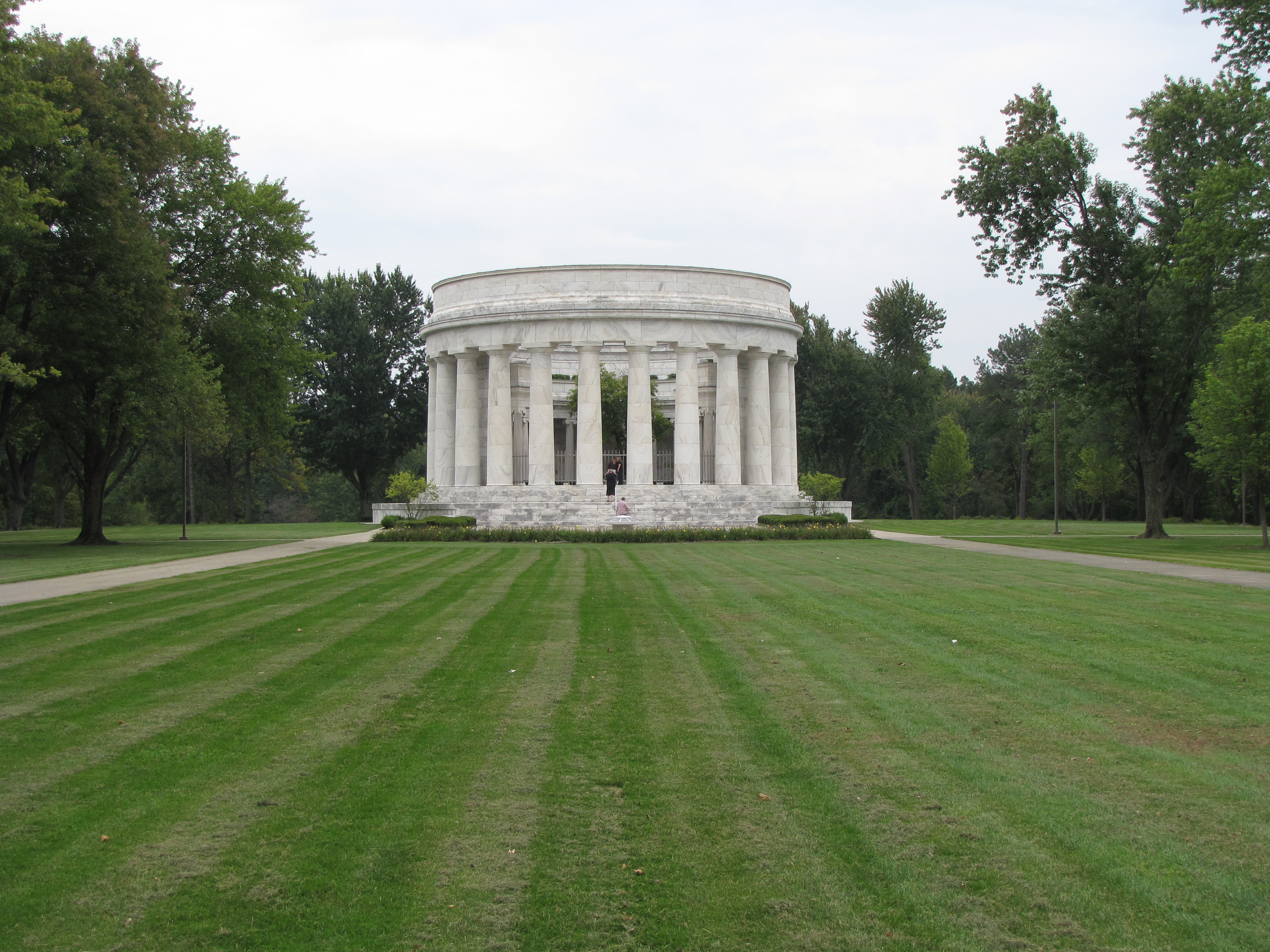
President Warren G. Harding's Tomb, Marion, Ohio

According to the placard at the monument, “The exterior colonnade stands entirely free from the circular wall behind it, while the inner columns support two terraces for a hanging garden inside the structure.  Two black tombstones, surrounded by a bed of ground-covering plants and shaded by a Japanese maple tree, mark the graves of President Harding, left, and Mrs. Harding, right…The 10-acre site’s landscaping is part of the overall design.  Rows of trees form the shape of a Latin cross, with the tomb at the intersection of the arms.”  The tomb is a soaring 53 feet high and 103 feet in diameter and represents the last of the monumental and large presidential tombs.

Aerial view of the President Harding's Tomb

Harding’s words from his Republican National Convention speech in 1916 echoed through history to be paraphrased and heard again in President John F. Kennedy’s innaugural address, “Ask not what your country can do for you, but ask what you can do for your country.”

Posted in Presidential graves | 1 Comment

The All-Seeing Eye of God

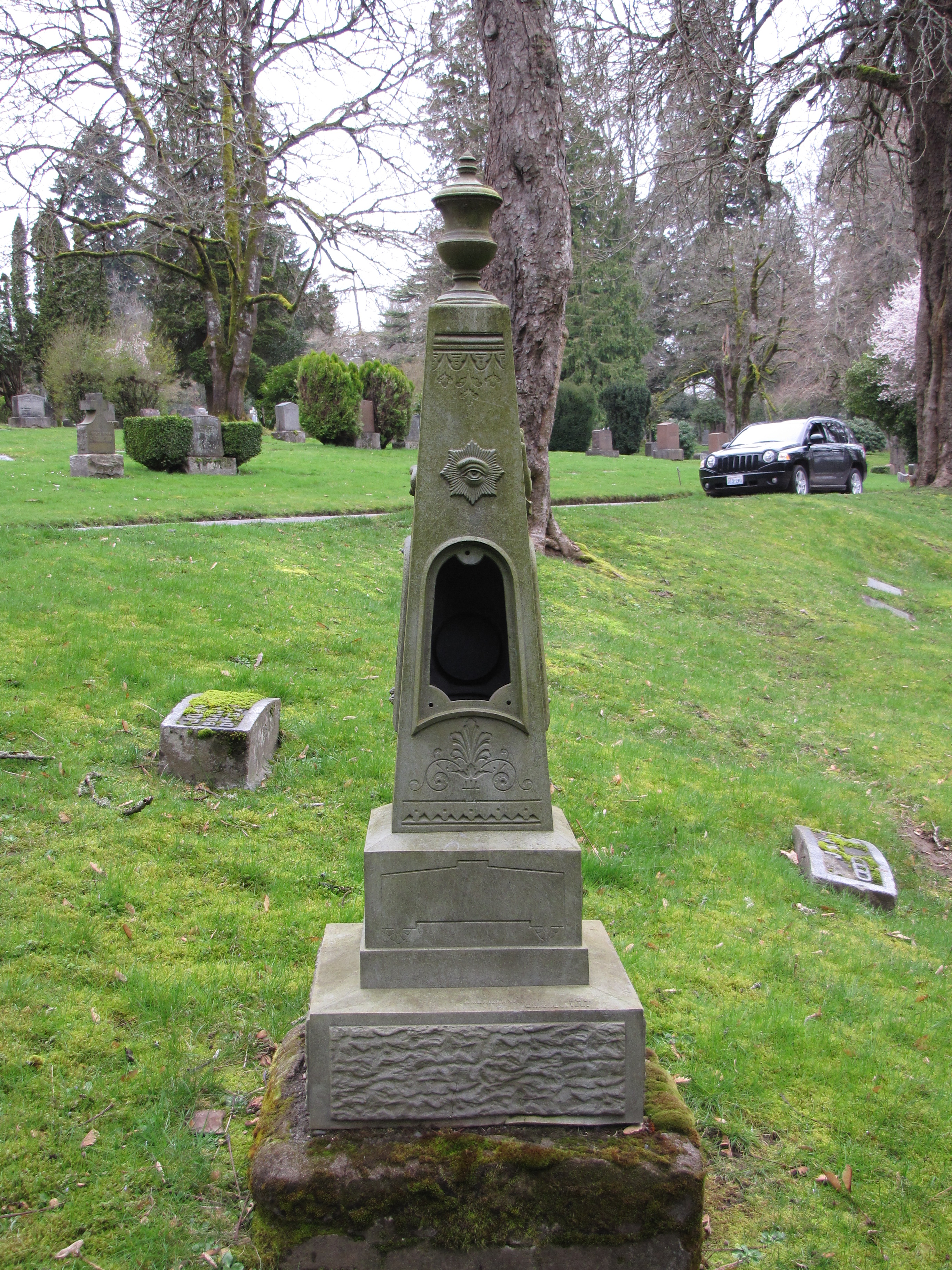
The all-seeing eye of God, also called the Eye of Providence is one of many symbols of Masonic iconography.  This symbol is to remind Masons that all of their actions and deeds are being observed by the watchful eye of the Great Architect of the Universe.  Sometimes the eye is displayed in a triangle.

The all-seeing eye of God is part of the symbolism of the reverse of the Great Seal of America.  The eye is displayed above the pyramid (check it out on the reverse side of a one dollar bill).  Many conspiracy theorists, mistakenly believe that this is proof of the connection between the Masons and the founding of our nation.  After all founding fathers Benjamin Franklin and George Washington were both Masons.  The all-seeing eye of God, however, was not adopted by the Masons as a symbol for use by the society until 14 years after the Great Seal was designed and adopted.

River View Cemetery, Portland, Oregon

Posted in Symbolism | Leave a comment

The Broken Chain

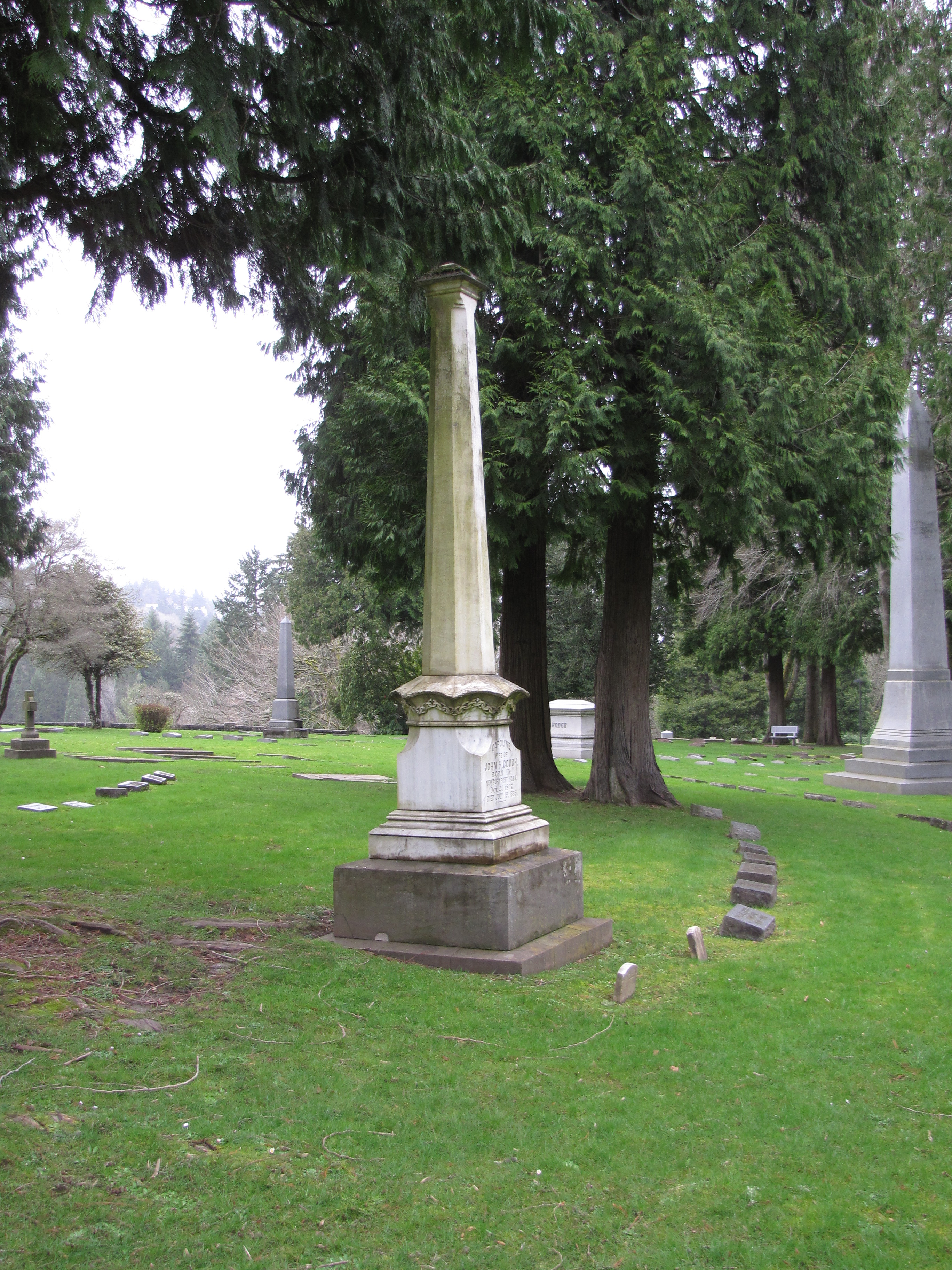
In the cemetery, much of the iconography represents a life ended—the winged death’s head, the hanging bud, the broken wheel, the incomplete circle, the column that is broken.

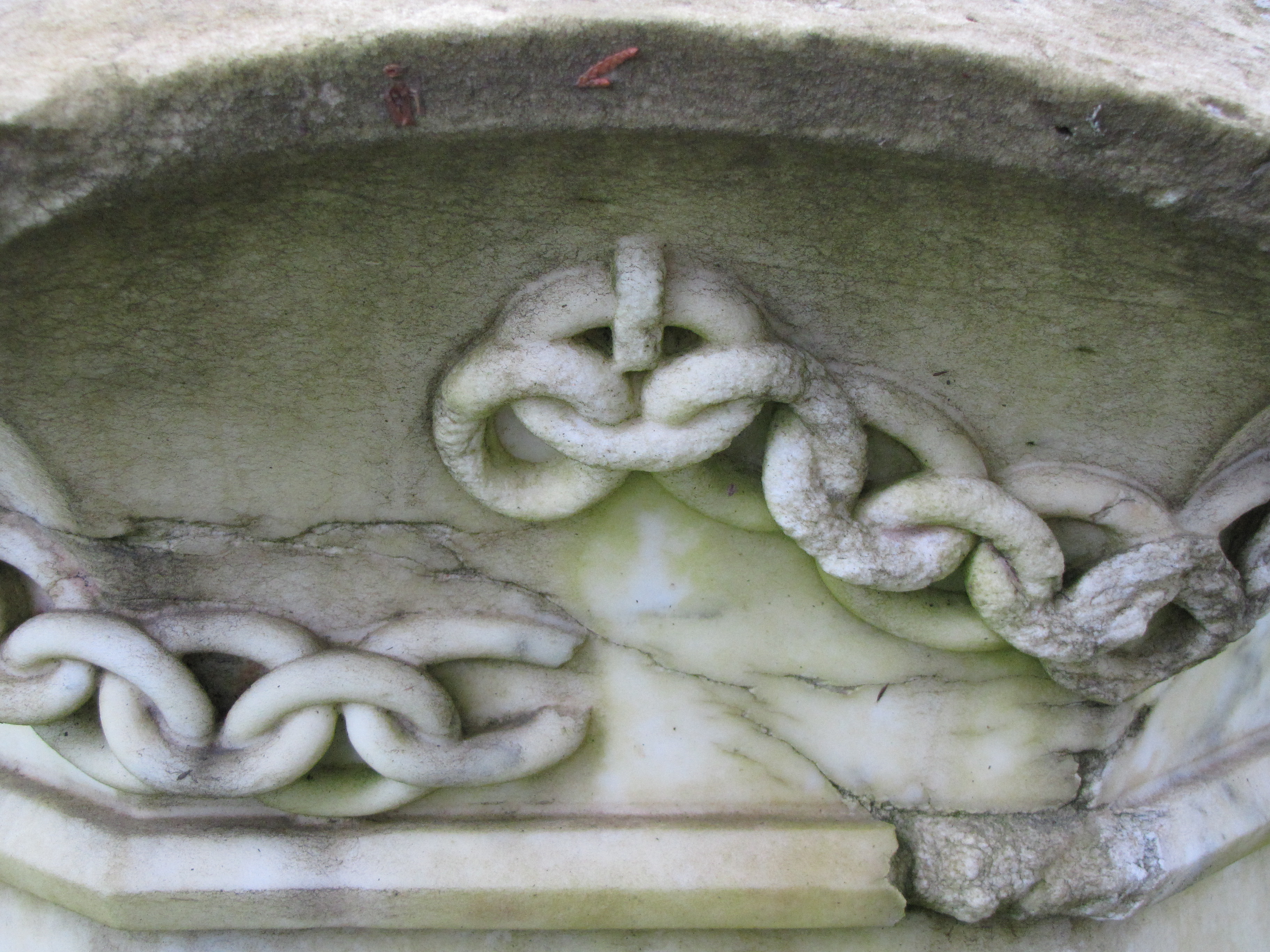
The gravestone below has a broken chain that wraps around the pedestal base of the column.  Like much of the funerary art, the broken link of a chain, too, represents the life that was ended.

This symbolism dates back to Medieval times when people believed that the soul could be held to the body by a golden chain. Once the chain was broken, the soul took flight and rose from the body leaving Earth and ascended to Heaven.

River View Cemetery, Portland, Oregon

Posted in Symbolism | Leave a comment

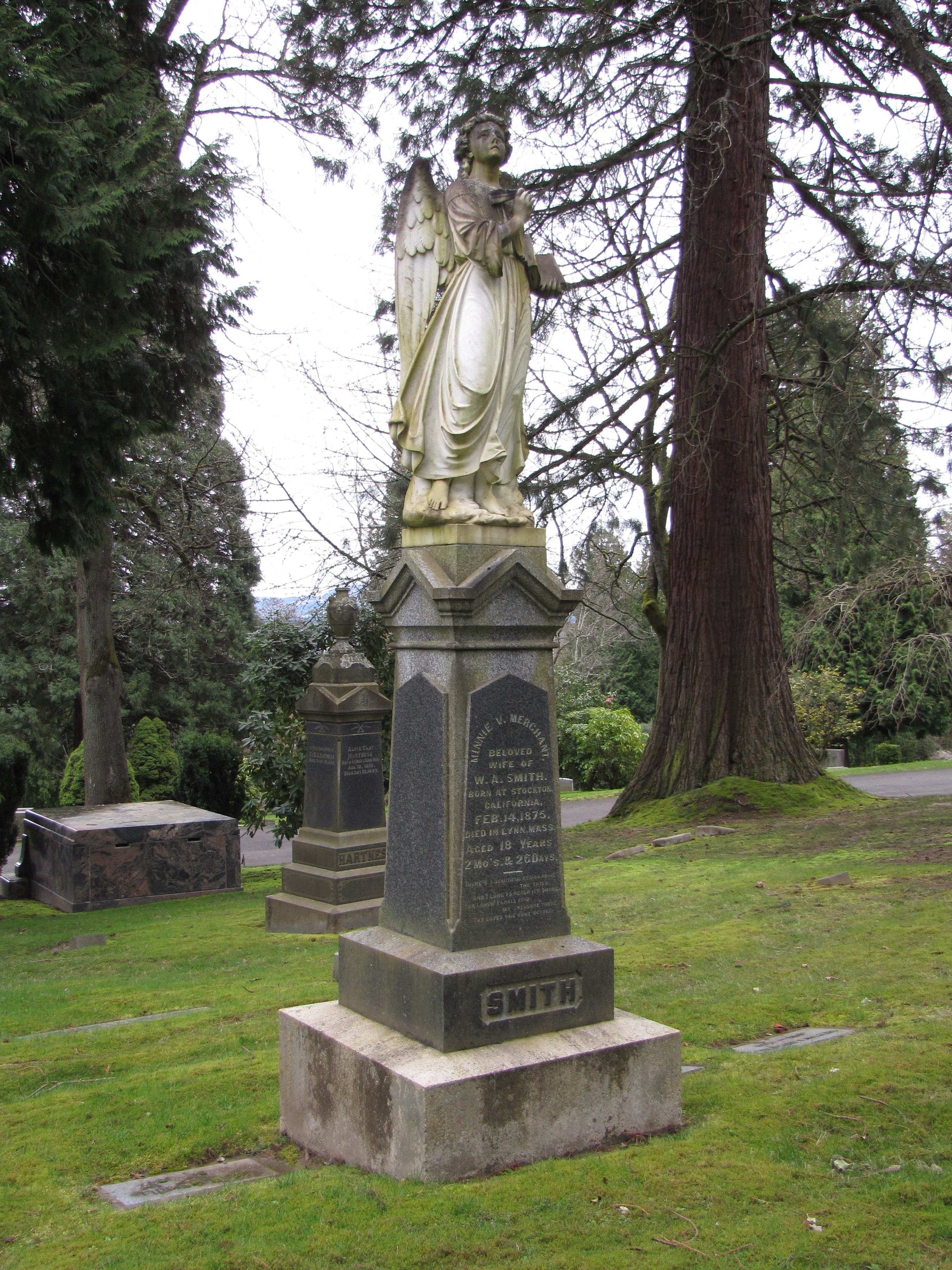
They will meet in Heaven

River View Cemetery, Portland, Oregon

This angel looking toward Heaven is holding an open book and a quill.  The angel is clearly poised to write in the book.  Here the angel is registering the name of the deceased into the Book of Life.  In Judaism and Christianity, the names of the righteous were recorded in the Book of Life; they were assured entry into Heaven.  The Book of Life is referenced many times in the Bible (King James Version), including Revelations, Chapter 12:  “And I saw the dead, small and great, stand before God: and the books were opened: and another book was opened, which is the book of life: and the dead were judged out of those things which were written in the books, according to their works.”

The gravestone also carries an epitaph which expresses the belief that the recently deceased is going to meet her husband who has preceded her in death:

There’s a beautiful region above the skies,

And I long to reach its shore

For I know I shall find my treasure there

The loved one gone before.

Posted in Angels, Epitaphs | Leave a comment

The Hourglass

The soap opera, Days of Our Lives, has as their catchphrase,  “Like sands through the hourglass, so are the days of our lives.” The meaning of that catchphrase is clear–life passes by very quickly.  Life measured by the grains of sand slip through one side of the hourglass to the other in a flash.  The hourglass symbol on a gravestone, often shown with wings, represents the same thought of time fleeting by quickly.

Posted in Symbolism | 1 Comment

Our darling boy

River View Cemetery, Seattle, Washington

Some epitaphs, especially on the gravestones of children, can be heartbreaking.  They tell of the parent’s sorrow and the hopes and dreams that were not realized because of the death of the child like the epitaph below found on the elaborately carved gravestone of a child whose name and birth and death dates, along with much of the Victorian symbolism, have been eroded by time and weather:

Tis a little grave, but O have care.

The worldwide hopes are buried there.

How much of light, how much of joy,

Is buried with our darling boy.


Posted in Epitaphs | Leave a comment

A parent’s lament

The gravestone of three-year old Willie displays a weeping willow shading a resting lamb.  The willow is a traditional symbol of sorrow and morning. The lamb is a symbol of Jesus Christ, first found in the Biblical passage John 1:29 when the Apostle John sees Christ coming toward him and declares,  “Behold the Lamb of God, which taketh away the sin of the world.” 

Only the innocence and purity of the Lord Christ enables Him to wash away the collective sins of mankind.  The symbolism of the lamb being innoncent and representing purity transfer to children, who, by their very nature, embody those virtues.  Thus, the lamb is commonly found on the graves of children, as it is here.

The epitaph for the child is a parent’s lament that speaks to the fleeting nature of life itself, here one moment and suddenly gone the next.

Thy days our Little one were few.

An Angel’s morning visit

That came and vanished with the dew.

Twas here, ’tis gone, where is it.

River View Cemetery, Seattle, Washington

Posted in Epitaphs, Symbolism | Leave a comment

We miss thee

River View Cemetery, Seattle, Washington

Several companies manufactured “white bronze” markers.  They were actually made of zinc and have a blue tint to them when you spot them in a graveyard.  The markers age very well, and often show very few signs of aging or wear.

They came in many sizes, shapes, and gravestone forms and offered the buyers many options for epitaphs that could be chosen from a long list and bolted into place.


Posted in Epitaphs | Leave a comment

The Harp

The light and airy tones that emanate from the harp, etereal and almost mystical, have long been thought of as the sound of Heaven.  The harp has been considered the instrument of angels.

Greenwood Hills Cemetery, Portland, Oregon

Posted in Symbolism | Leave a comment

The Dragon

Lakeview Cemetery, Seattle, Washington

The mythical creature–the dragon–has figured large in literature, movies, and culture, most especially in Eastern cultures.  The view of the dragon between the East and the West could hardly be more polar opposite.  In Western cutlure, the dragon for the most part is the demonic and destructive creature to be slayed.  The mighty knight becomes the hero when he slays the dragon and saves the damsel in distress.  The story line represents the defeat of evil and sin by the heroic and just.

In the east, however, the dragon is a symbol of Imperial Power protecting weaker humans from evil spirits and the danger of the forces of nature, such as the wind and the rain.  The dragon is also an emblem of joy and good health and even fertility.  Because it represents goodness and a protective power, it has been adopted by emperors as symbols of their benevolent strength.

The intricately carved dragon in the photo above is found on the gravestone of an Asian family, which suggests that it represents, in this case, the dragon as a symbol of goodness.

Posted in Symbolism | 1 Comment