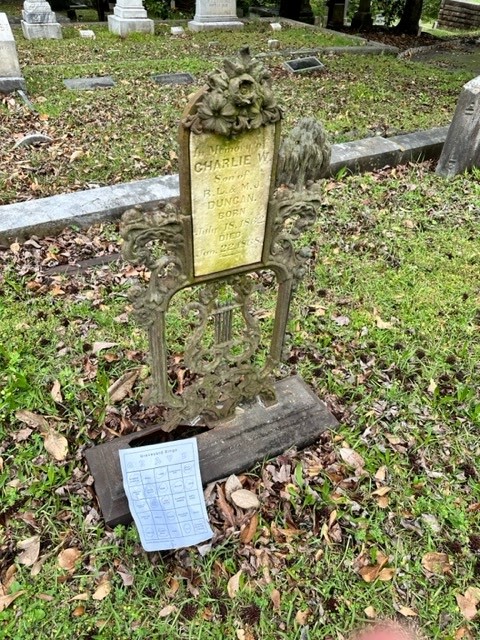
My friend, neighbor, and serious reader of www.gravelyspeaking.com visited her daughter in Decatur, Georgia. While there she and her family visited a small cemetery in the area that was established circa 1836. While there, they played Graveyard Bingo!
In my friend’s note to me, she said, “The bingo game was interesting! We never did see an angel which really surprised us – and the game allowed us to look at a cemetery differently and see new things.” For me, that was about the best endorsement I could have heard.
I do hope other readers will share their bingo cards, too!
There is a small 19-acre cemetery, the Wunder’s Cemetery, in Chicago, named after a German Lutheran minister, Heinrich Wunder, who had been pastor of the First St. Paul’s Evangelical Lutheran Church of Chicago. He had served that congregation for over six decades.
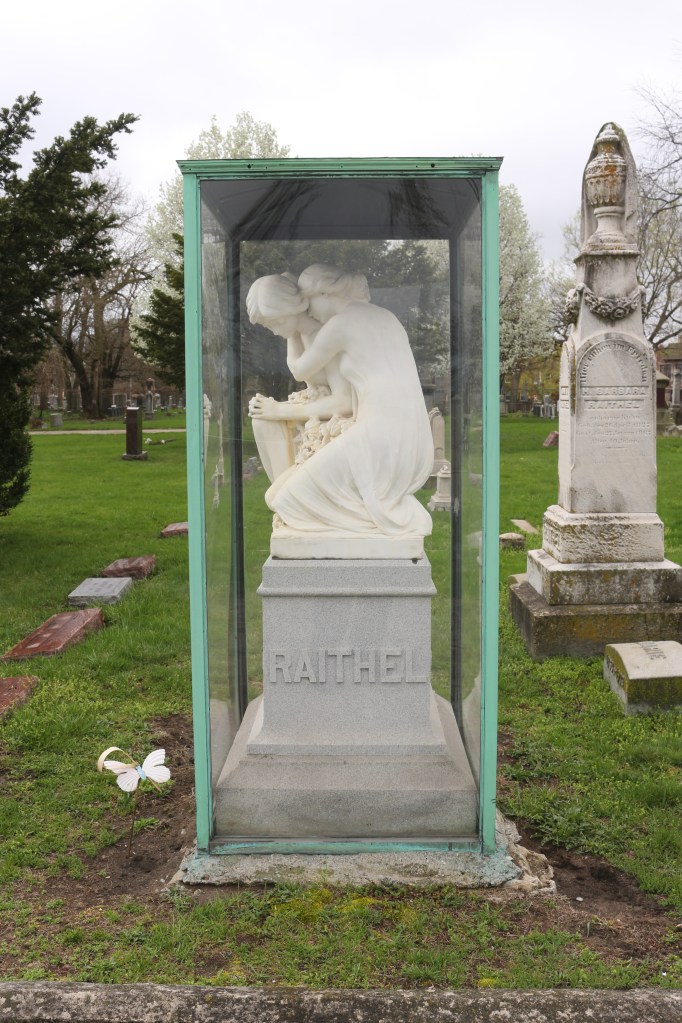
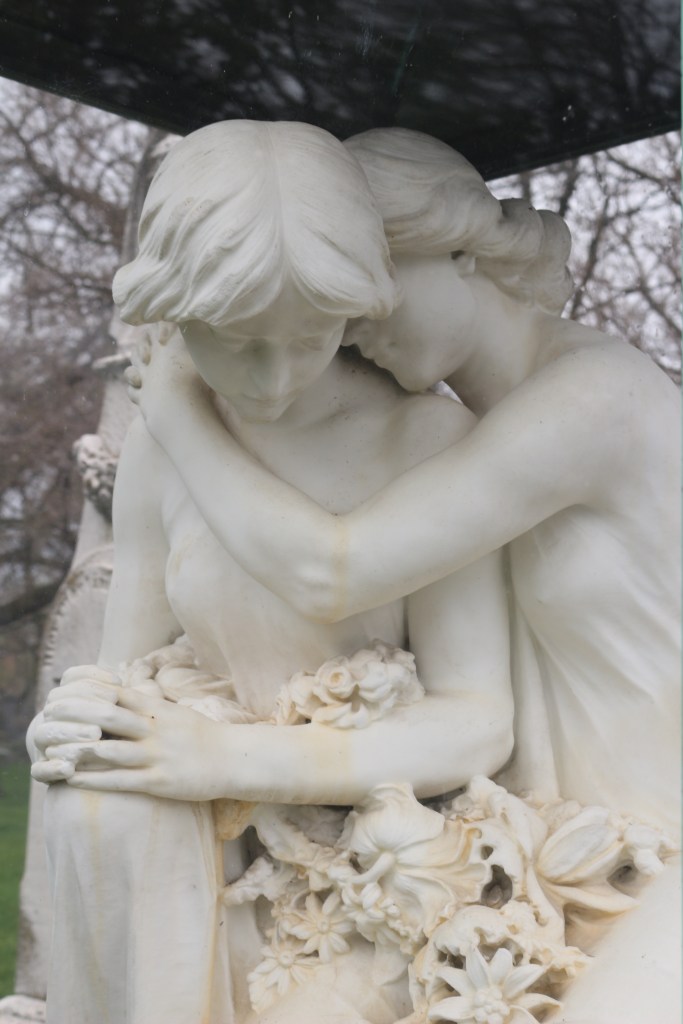
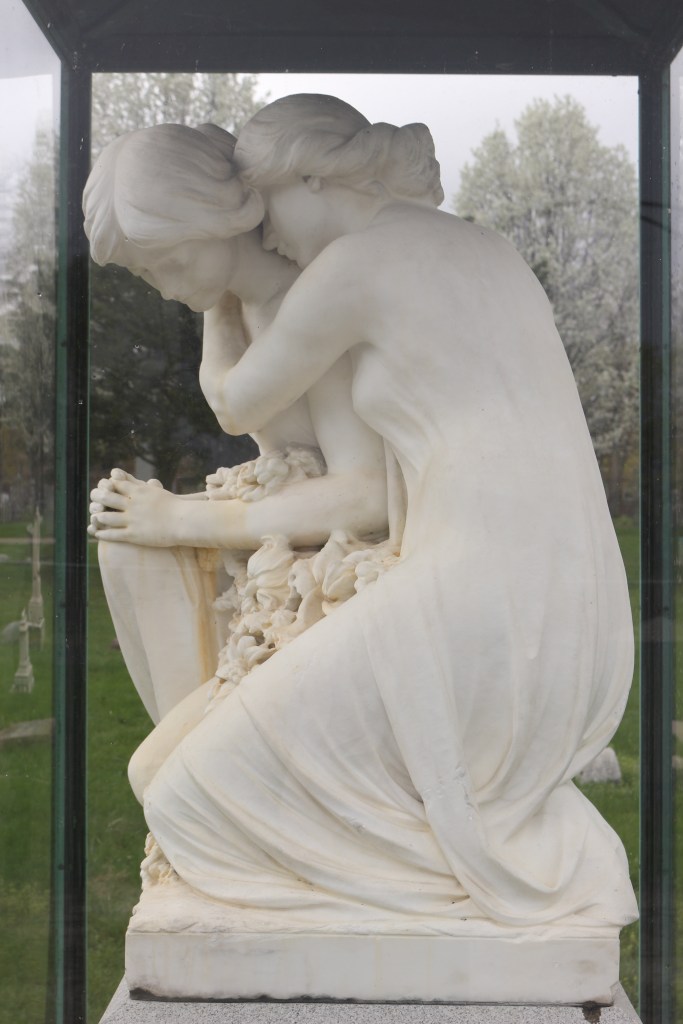
Among the gravestones, large and small, tall and short, obelisks, tablets, and columns is a marble sculpture of two young women embracing. The first time I saw it, the monument was protected in a box with plexiglass. The plexiglass was scratched and stained, obscuring the finely carved details of sculpture. The draped figured have a garland of flowers in their laps.
The last time I saw the monument, the hazy plexiglass had been replaced with clear glass revealing the intricately carved figures—two sisters—Margaret and Marie. After the death of Marie, Margaret had the monument erected to honor her sister and their relationship. The sculpture remains as a monument to sisterly love.
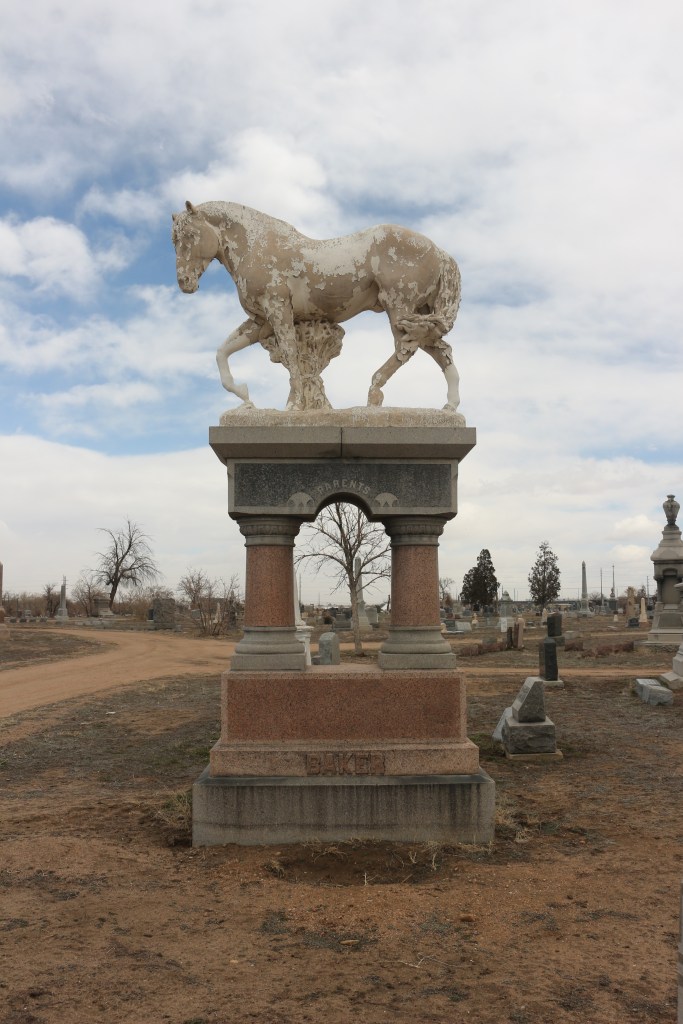
Standing proud in the dusty Riverside Cemetery in Denver, Colorado, is a life-sized replica of an Arabian horse, named Ali. The horse was sculpted by J. A. Byrne. The horse was owned by Colorado homesteader, Addison Baker, who raised cattle and horses and claimed to have the finest stock of anyone in the area.
Baker landed in the Denver area in 1860 on land with a fresh-water spring that later was named for him. The spring water was said to be medicinal and Baker supplied it by the barrel delivering to homes in the area. The spring was also a watering stop for explorers on their way further west with such notables as John Fremont and Kit Carson making stops.
I had a reader tell me to play bingo properly you need different cards. I have played bingo but it was a somewhat traumatic affair and a very very long time ago. We had a game going one winter in sixth grade since it was too cold and snowy to go out to the playground. I won one of the games but the prize was a bag of unsalted peanuts. Alas, I am allergic–not much of a prize.
At any rate, I am supplying more bingo cards. I hope you enjoying playing with your friends and family!
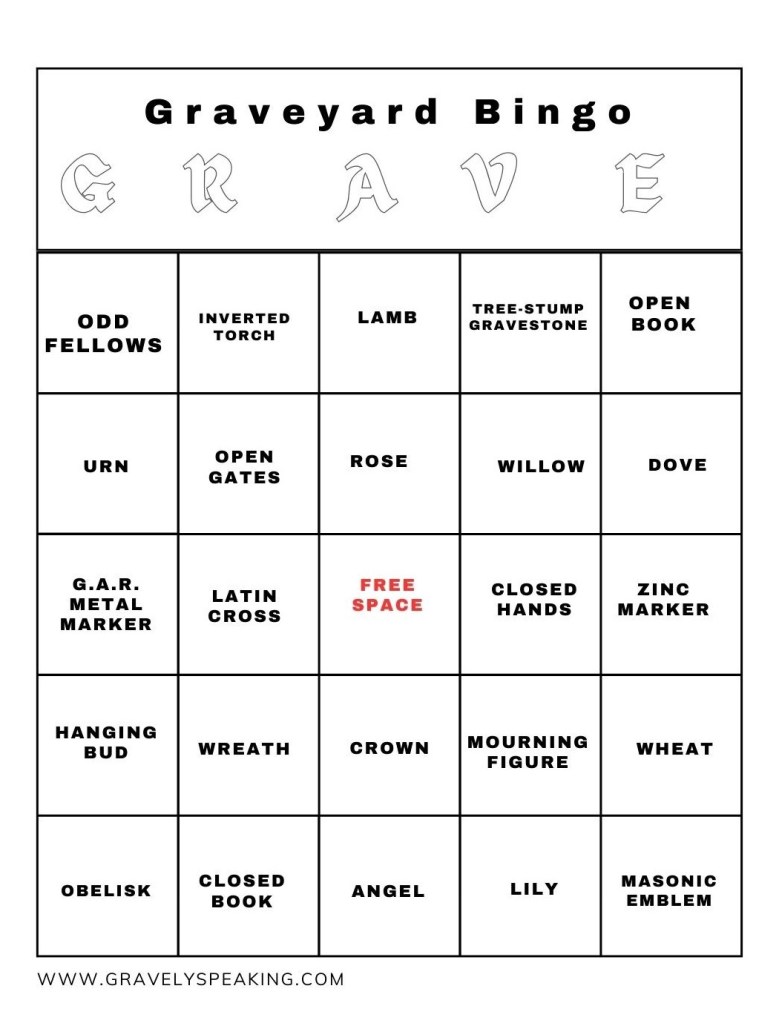
I created a fun way to introduce cemetery symbolism to the uninitiated with this game of Graveyard Bingo. The bingo card has 22 common symbols and a couple types of gravestones like the tree-stump gravestone or a marker made of zinc. Print the cards and the next time you are exploring a cemetery with friends, see who gets a bingo first, or in this case shout out GRAVE.
The polished granite MAY – WASSELL – GIBB Mausoleum in the Oakland Cemetery in Little Rock, Arkansas, has a beautiful stained-glass window depicting a brightly-colored angel sitting next to an empty tomb. The ribbon at the bottom of the scene says, “HE IS RISEN” announcing that the crucified Jesus Christ who had been laid to rest in the tomb was now gone. In the background Calvary Hill with three crosses just outside the walls of the ancient city of Jerusalem, where Jesus was crucified.
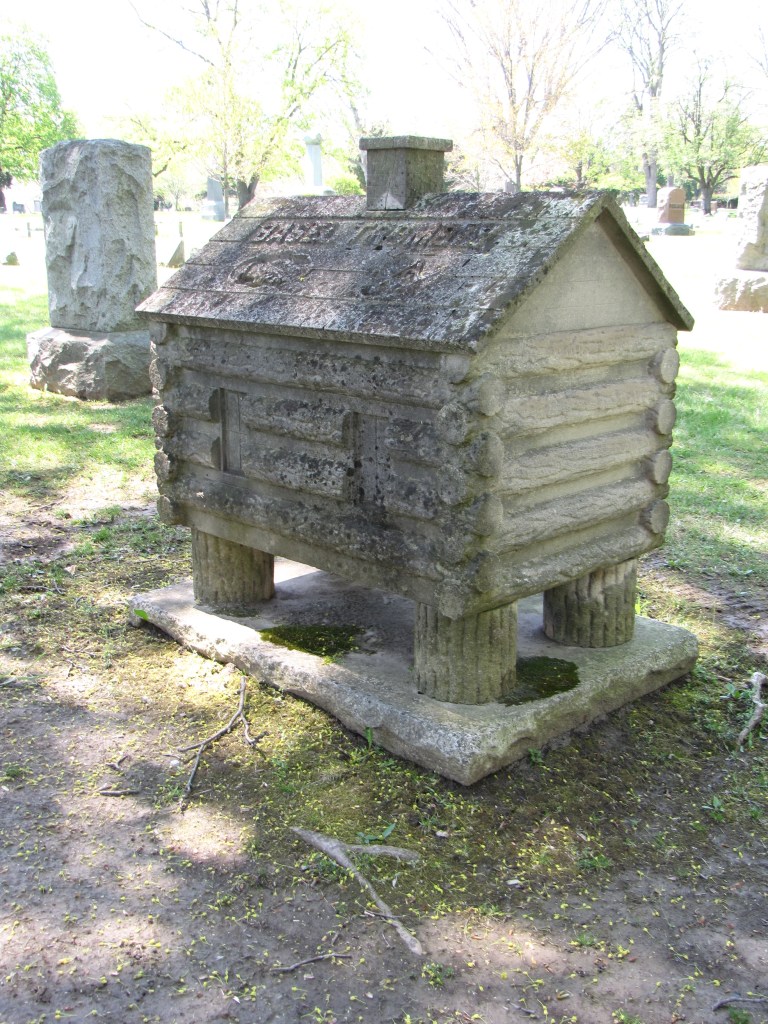
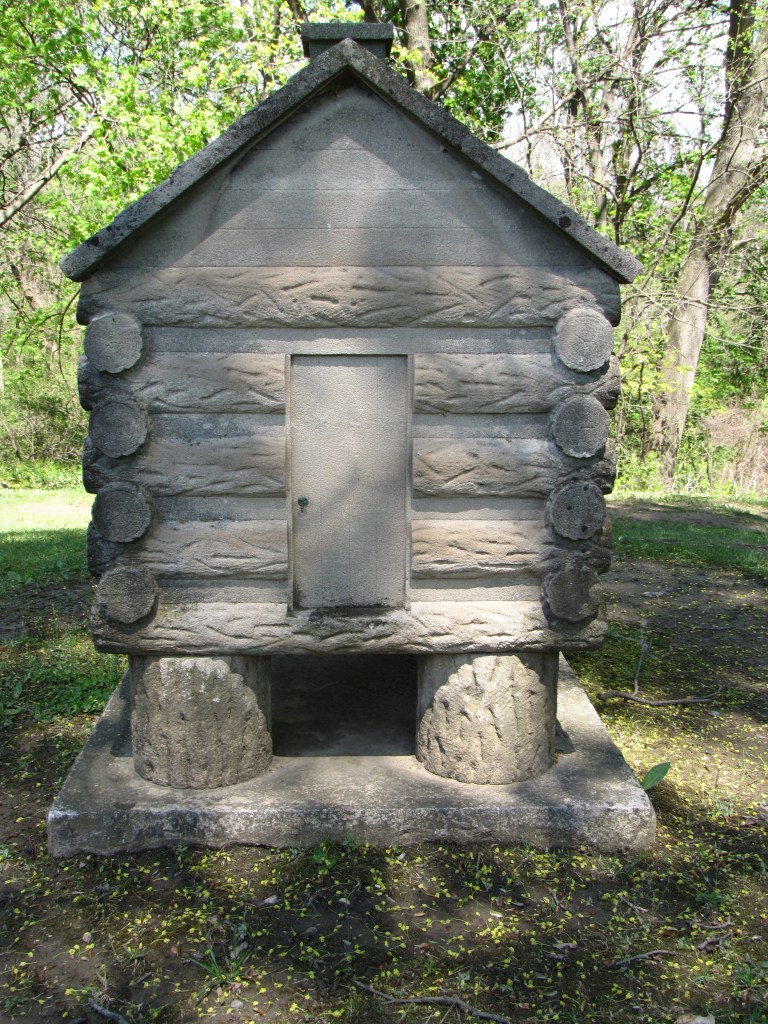
In a shaded area of the Fort Meigs Cemetery in Perrysburg, Ohio, Basel Trombly’s limestone grave marker replicates an intricately carved log cabin.
Basel Trombly’s gravestone has several markings and symbols that give an indication into the life of the deceased buried underneath the stone. Carved on the chimney are the letters “GAR” most likely a nod to Trombly’s proud service as a sergeant in the 100th Ohio Infantry Regiment, Company F.
Two different symbols are carved into the roof of the cabin—clasping hands and the Masonic symbol. The clasping hands can symbolize his marriage to Victoria Bodett Trombly—the last goodbye. It can also represent one of the fraternal organizations, such as the Masons of the Odd Fellows. In addition, the Masonic emblem—the square and compass with the letter “G” in the middle makes it clear that Trombly was a Mason.
The most important symbol is the gravestone itself—the Log Cabin. The Log Cabin pays tribute to the fact that he was a pioneer of the Maumee Valley.
(Note: Basel Trombly’s name is carved into his gravestone as TROMBLY. However, his last name is listed in several sources as TROMBLA.)
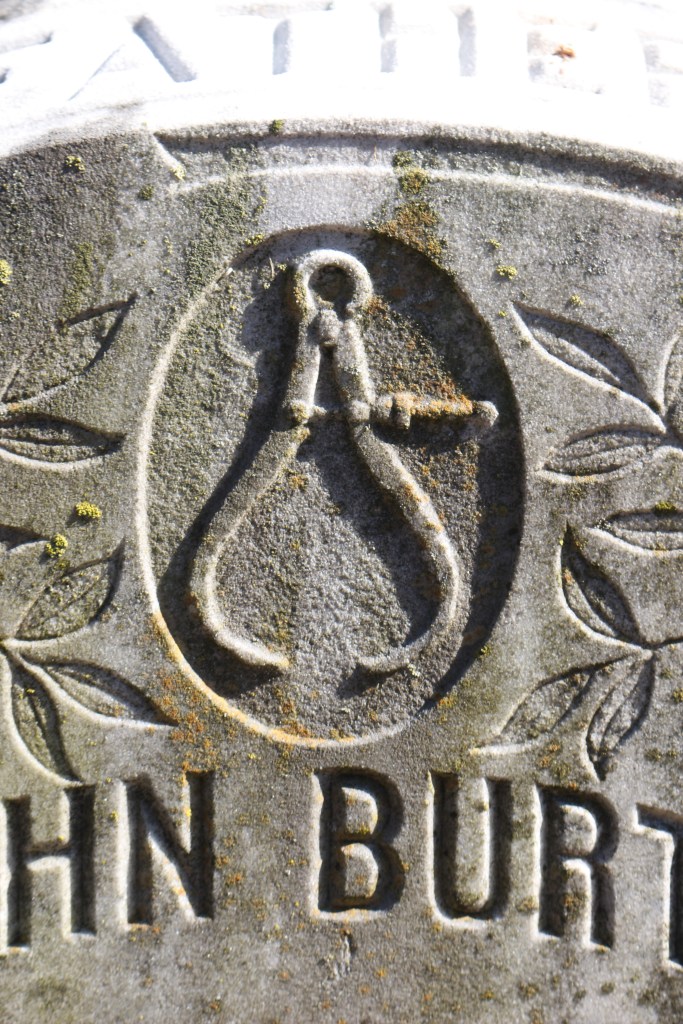
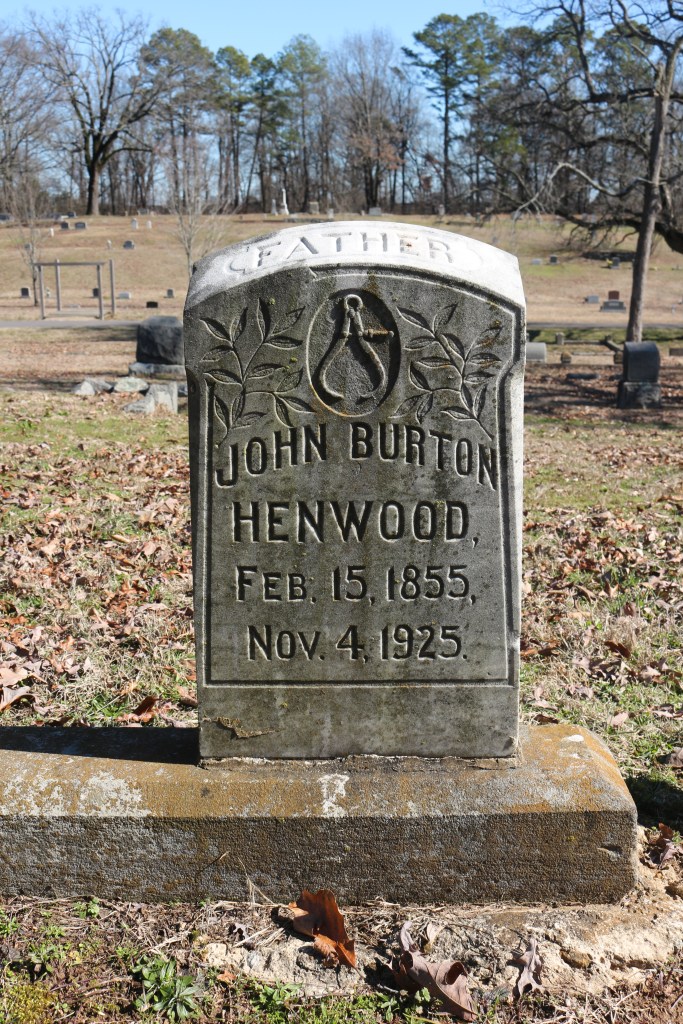
The white marble segmented-top gravestone of John Burton Henwood in the Oakland Cemetery in Little Rock, Arkansas, displays a caliper. Perhaps this is a nod to his profession–but what profession would that be? Any help?
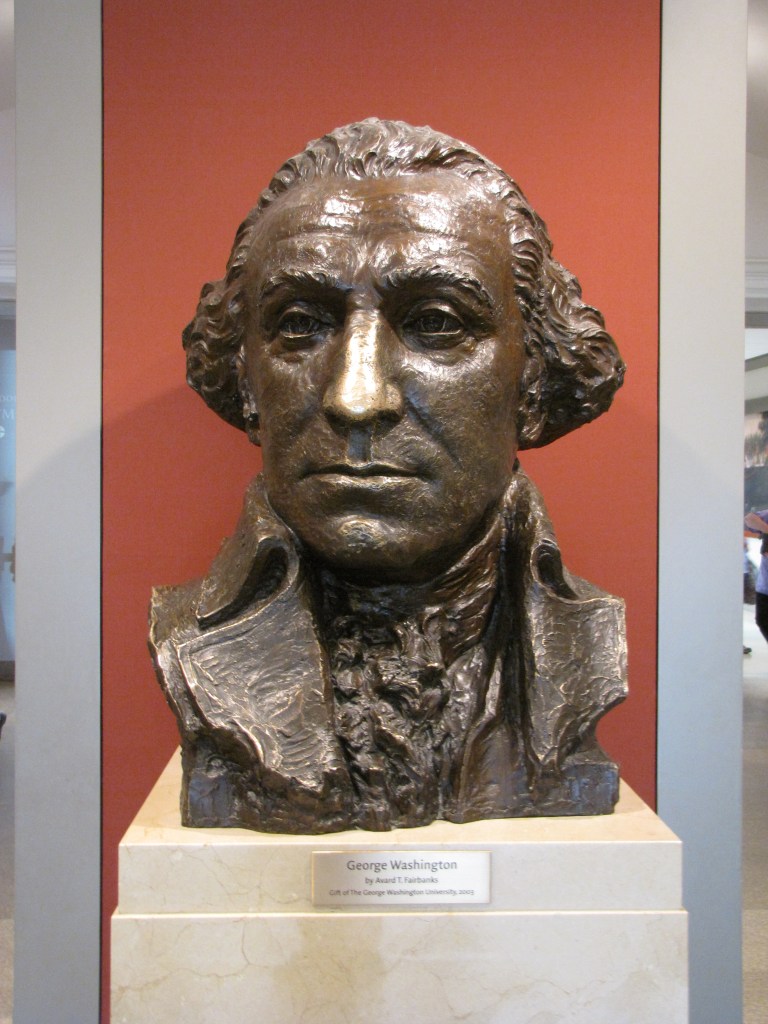
In nearly every public poll, George Washington is listed as either the greatest president or polls in the second spot behind Abraham Lincoln. He was, of course, our first president, and many of those at the Constitutional Convention that drafted the document believed and wanted George Washington as the first president. He was described during those deliberations as the “first character.”
After George Washington’s death in 1799, many communities commemorated his birthday as a tribute to our first president. In 1885, Congress passed a law to recognize and celebrate George Washington’s birthday each February 22.
On June 28, 1968, Congress passed the Uniform Holiday Act (Pub.L. 90—363) and moved four holidays—Memorial Day, Veteran’s Day, Columbus Day, and Washington’s birthday—to the nearest Monday to create more three-day weekends for American workers. The bill took effect on January 1, 1971, though, Veteran’s Day was officially moved back to its original date on November 11, which reverted in 1978.
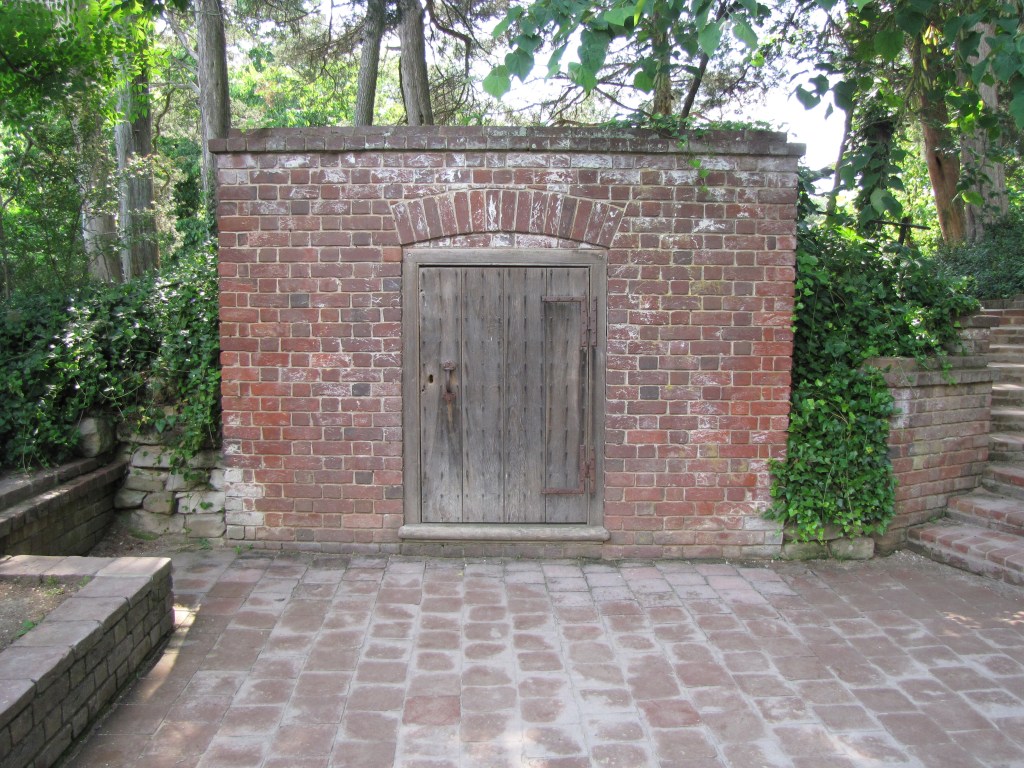
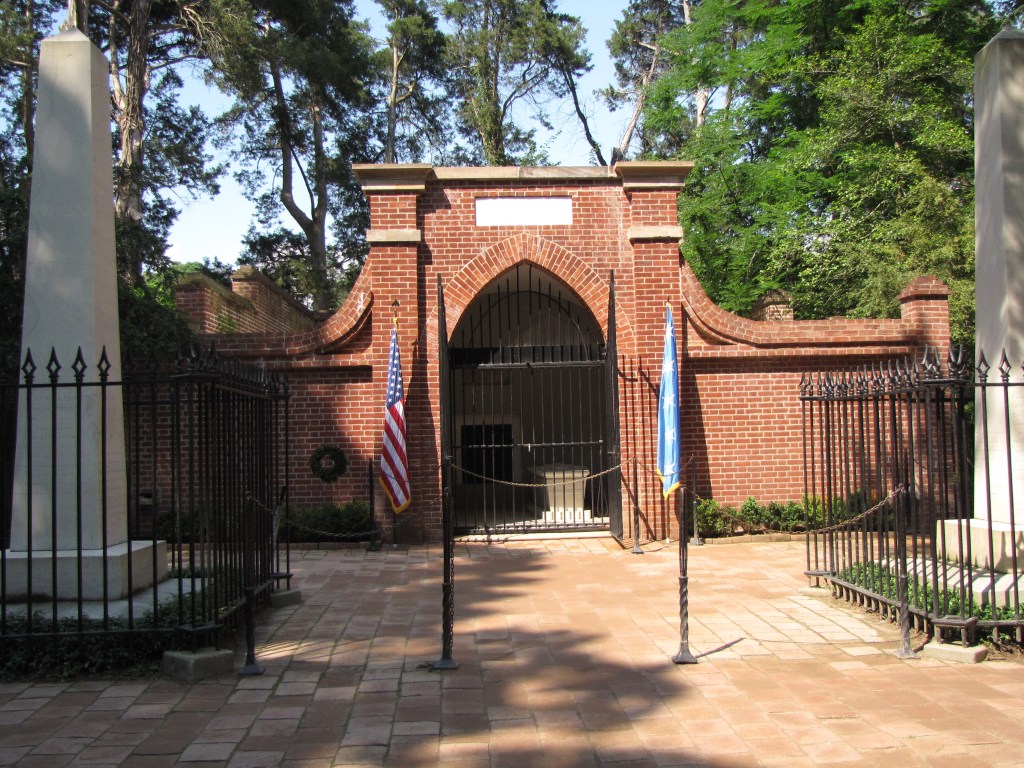
The plain brick tomb above was where George and Martha Washington were first laid to rest.
Though it is a national holiday, it is not referred consistently. For instance, in Alabama it is referred to as George Washington/Thomas Jefferson Birthday, in Arizona it’s Lincoln/Washington/Presidents’ Day. In Arkansas it is called both George Washington’s Birthday and Daisy Bates Day while it is referred to as Washington’s Birthday in Illinois, Iowa, Louisiana, Michigan, Massachusetts, and Michigan. The hodgepodge continues with Maine calling it Washington’s Birthday/President’s Day. Minnesota calls it Washington’s and Lincoln’s Birthday while Montana flips that by referring to the holiday as Lincoln’s and Washington’s Birthday. Ohio combines the two most popular president’s names with Washington—Lincoln Day, as does Utah. California simply calls it “the third Monday in February”, not acknowledging a president at all, while Delaware doesn’t celebrate it at all. Virginia, however, Washington’s home state, simply celebrates it as George Washington Day.
George Washington’s will made a provision for the construction of a new tomb. George and Martha Washington’s remains were moved in 1831 after it was completed.
So, while many people have the misconception that by moving the date of the celebration of Washington’s birthday, that it combined the holiday to include Lincoln’s birthday with Washington’s (since they are both in February) or that the holiday was changed to include all presidents in the holiday. Neither is true. The holiday celebrates George Washington’s birthday and his alone.
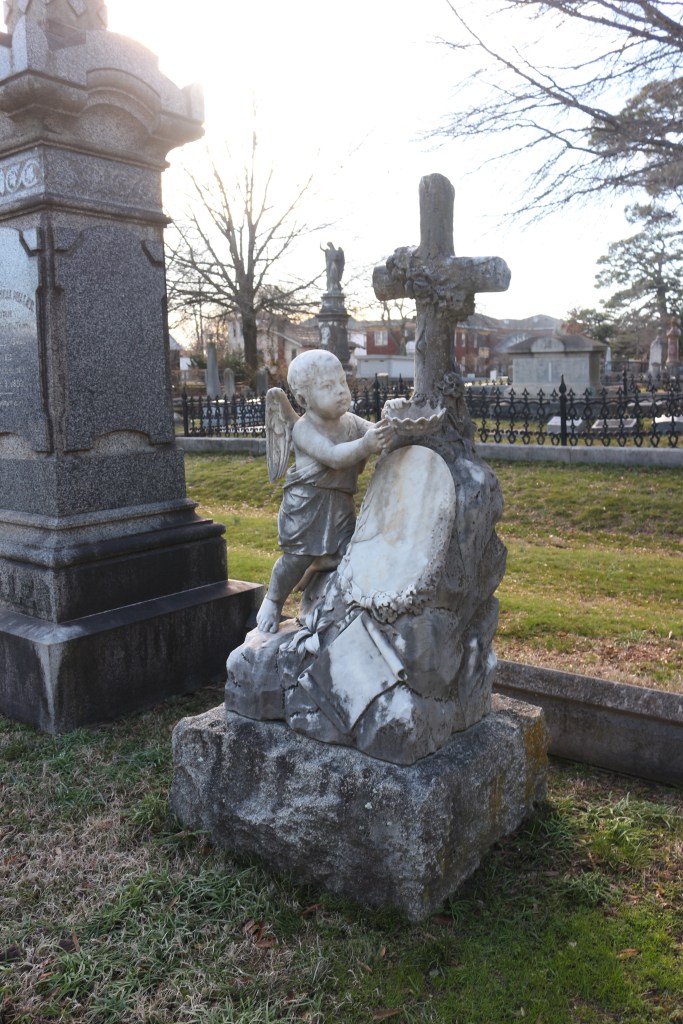
The white marble monument in the Miller Family plot of the Mount Holly Cemetery in Little Rock, Arkansas, is imbued with a profusion of symbolism as is common with many Victorian gravestones.
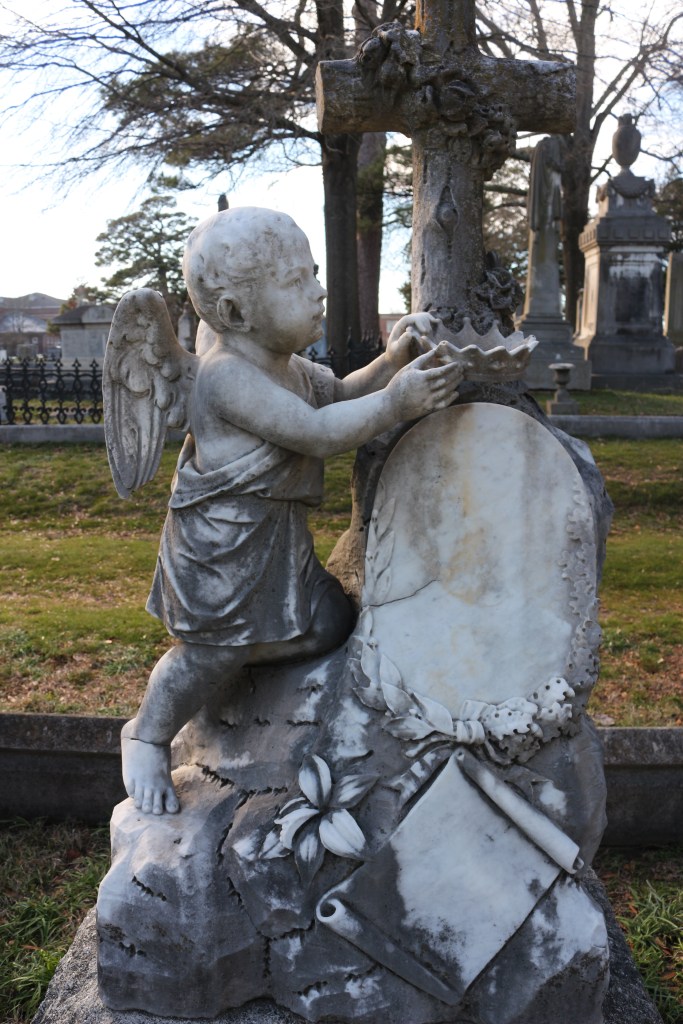
The monument depicts a winged cherub standing on rock base. The cherub is placing a crown above an oval cartouche below a rustic cross decorated with a wreath of flowers. The cartouche has a bow at its base with oak leaves and acorns twining up the right side and laurel leaves up the left, but the oval has no inscription. The oak leaves and acorns are seen as a traditional symbol of strength while the laurel leaves symbolize victory over death. Below the oval is an unfurled scroll, also empty.
The crown is a symbol of glory and victory over death. The reward awaits in Heaven where the victor will receive a crown of victory. The cross represents the suffering of Christ and is a universal symbol of Christianity.







 Gravely Speaking