Same Statue, Different Base

Forest Home Cemetery, Forest Park, Illinois

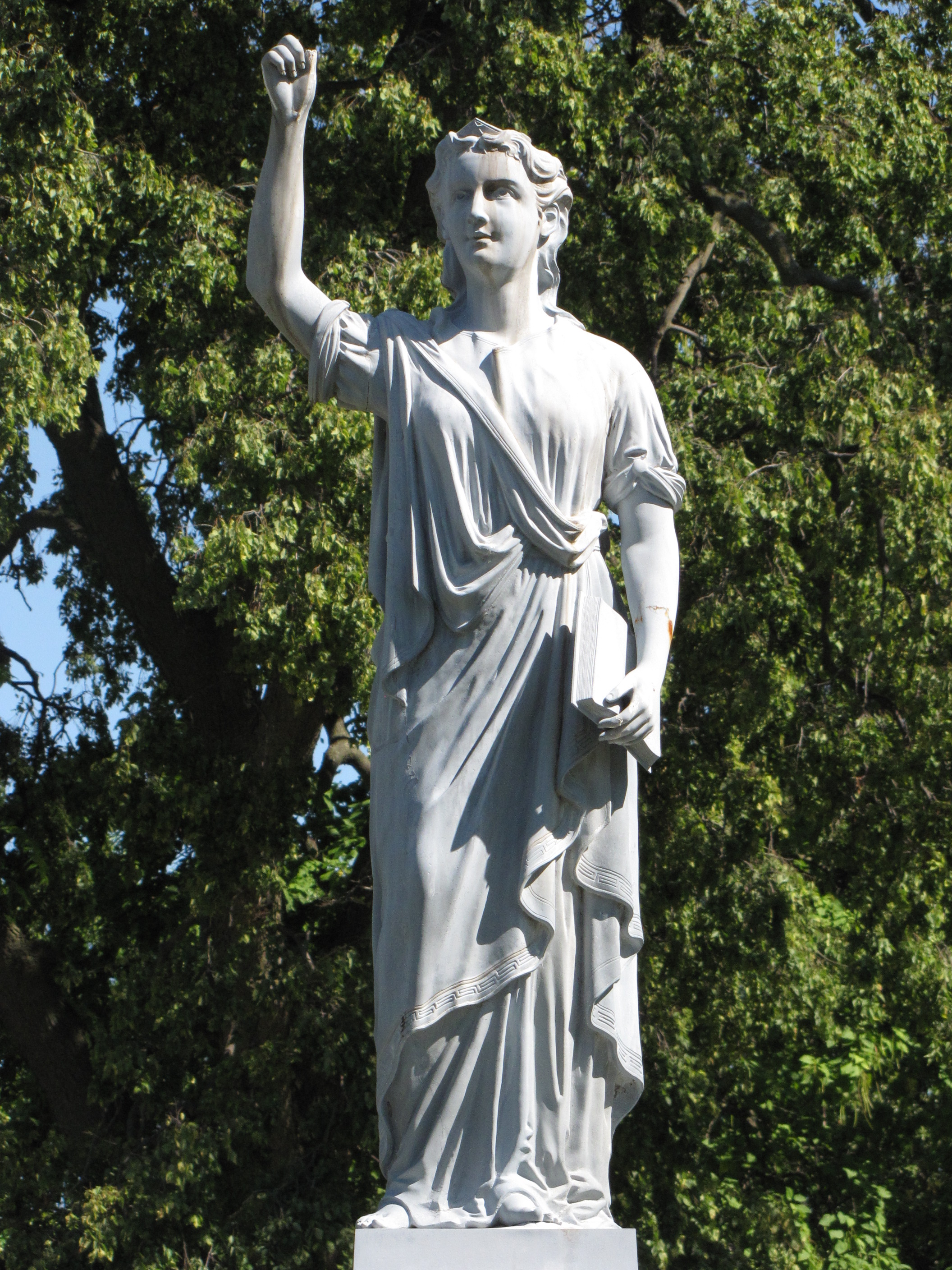
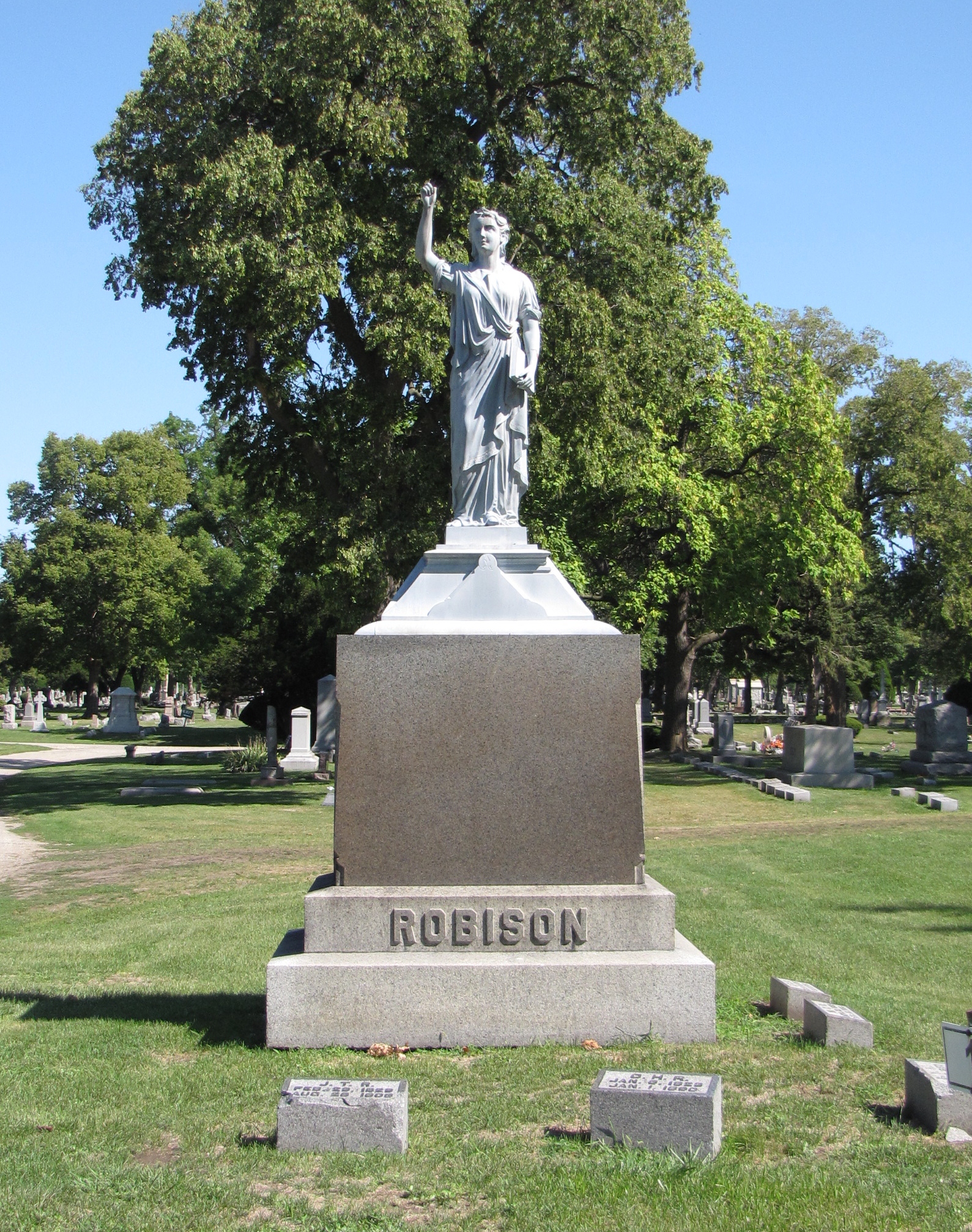
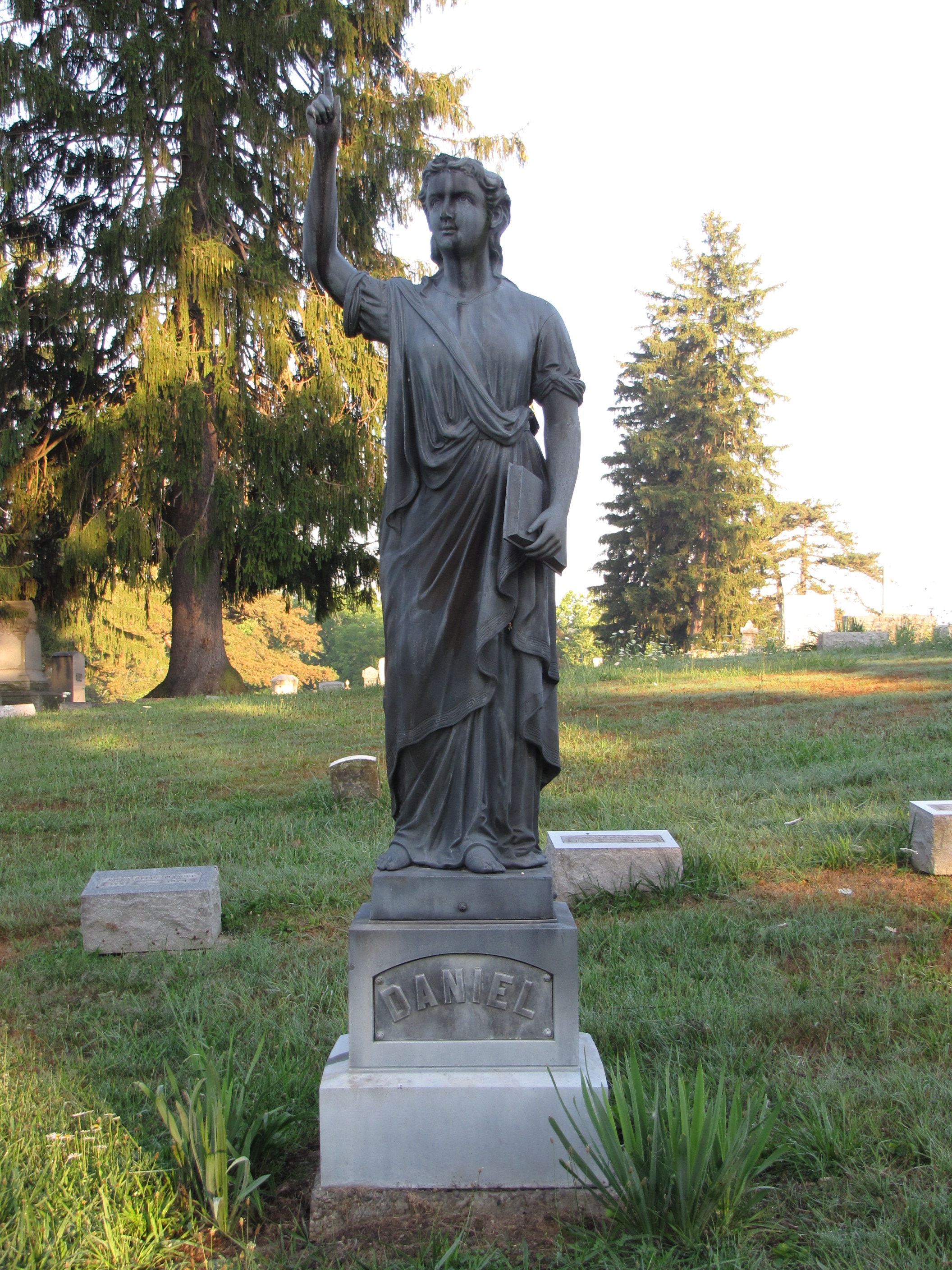
The Monumental Bronze Company of Bridgeport, Connecticut, produced white bronze cemetery markers and monuments to order—none of the monuments were premade.  The customer put together a marker paging through a catalog, choosing the frame, the panels, the epitaph, and the inscription.  After that was done, then the local sales rep sent the order to company where it was made.

Forest Home Cemetery, Forest Park, Illinois

In the two photographs both customers, one at Forest Park, Illinois, and one at St. Clairsville, Ohio, chose the same statue of a woman standing holding an open book in her left hand, with her right hand raised upward with a finger pointing to the Heavens.  But the monument in the Forest Home Cemetery at Forest Park had the statue mounted on a granite base 6 to 8 feet above the ground, while the monument in the Union Cemetery at St. Clairsville is made with a cast zinc base.  Same statue but completely different treatment to order for each base.

Union Cemetery, St. Clairsville, Ohio

Posted in Materials | Leave a comment

Praying child, A closer look

Somerset Cemetery, Somerset, Ohio

KATIE L. McCARTY

DAUGHTER OF E.E. & S.F. McCARTY

DIED AUG. 26, 1882

AGED 13 YRS 4 MOS 19 DYS

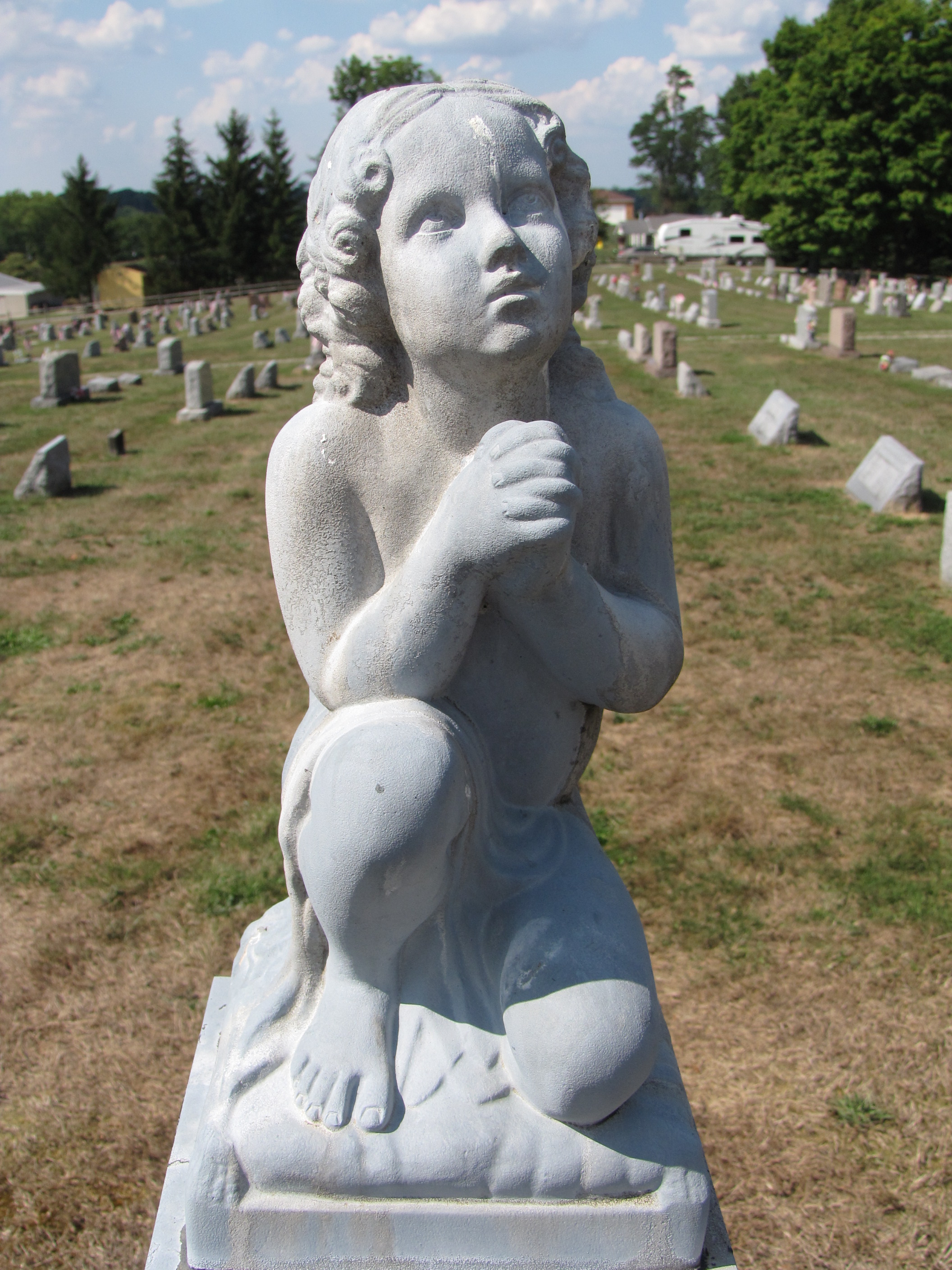
A closer look at the zinc monument of Katie McCarty portrays an innocent young child in image and word. The statue depicts a young child sitting on a pillow, looking upward to Heaven in prayer.  The epitaphs on the two side panels and the back panel speak to her young age at the time of her death, referring to her as a child, a cherub, and a floweret.

WHERE IMMORTAL SPIRITS REIGN,

THERE WE SHALL MEET AGAIN

.

SLEEP ON, MY SWEET ONE!

SLEEP! SO EARLY GONE!

TO EARTH A CHILD IS LOST,

TO HEAVEN A CHERUB BORN.

.

ANGELS GUARD THEE,

‘TILL WE MEET THEE.

.

WE MISS THE BRIGHT EYES

OF OUR DARLING CHILD,

AND THE SWEET, ROSY LIPS

THAT SO OFT ON US SMILED.

.

A FLOWER JUST BLOOMING INTO LIFE,

ENTICED AN ANGEL’S EYE,

TOO PURE FOR EARTH, HE SAID, “COME HOME”

AND BADE THE FLOWERET DIE.

Posted in Epitaphs, Materials | Leave a comment

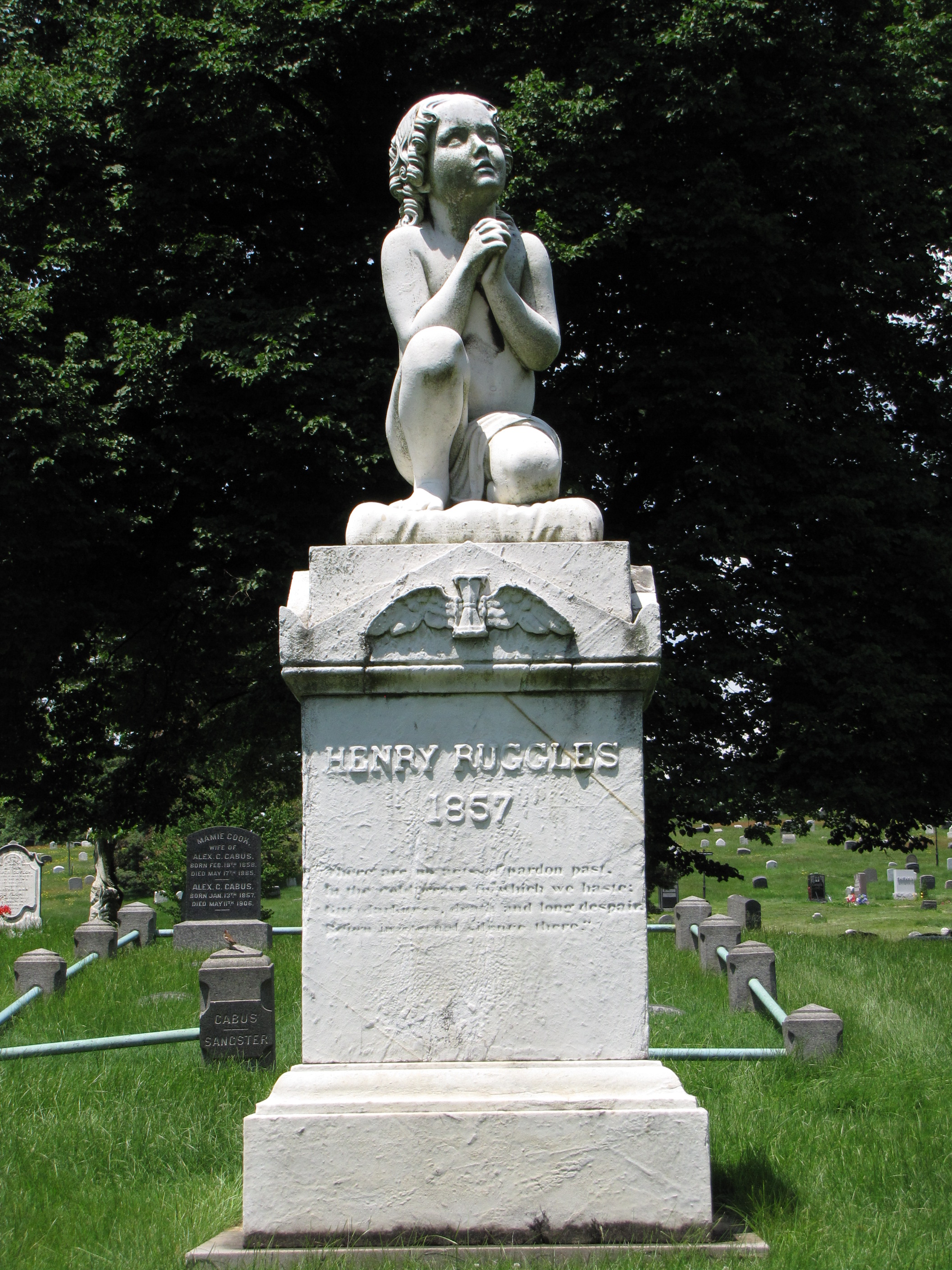
Praying Child

Somerset Cemetery, Somerset, Ohio

The Monumental Bronze Company of Bridgeport, Connecticut, produced white bronze cemetery markers and monuments in a wide assortment of sizes and shapes.  The markers they produced often mimicked the gravestones that were being produced in stone.  What traditional stone carvers created in marble and granite, the Monumental Bronze Company produced in cast zinc. Though the base is quite different on each of these grave markers, there is no mistaking the similarities between the statues of the child.

Green-Wood Cemetery, Brooklyn, New York

Posted in Materials | 1 Comment

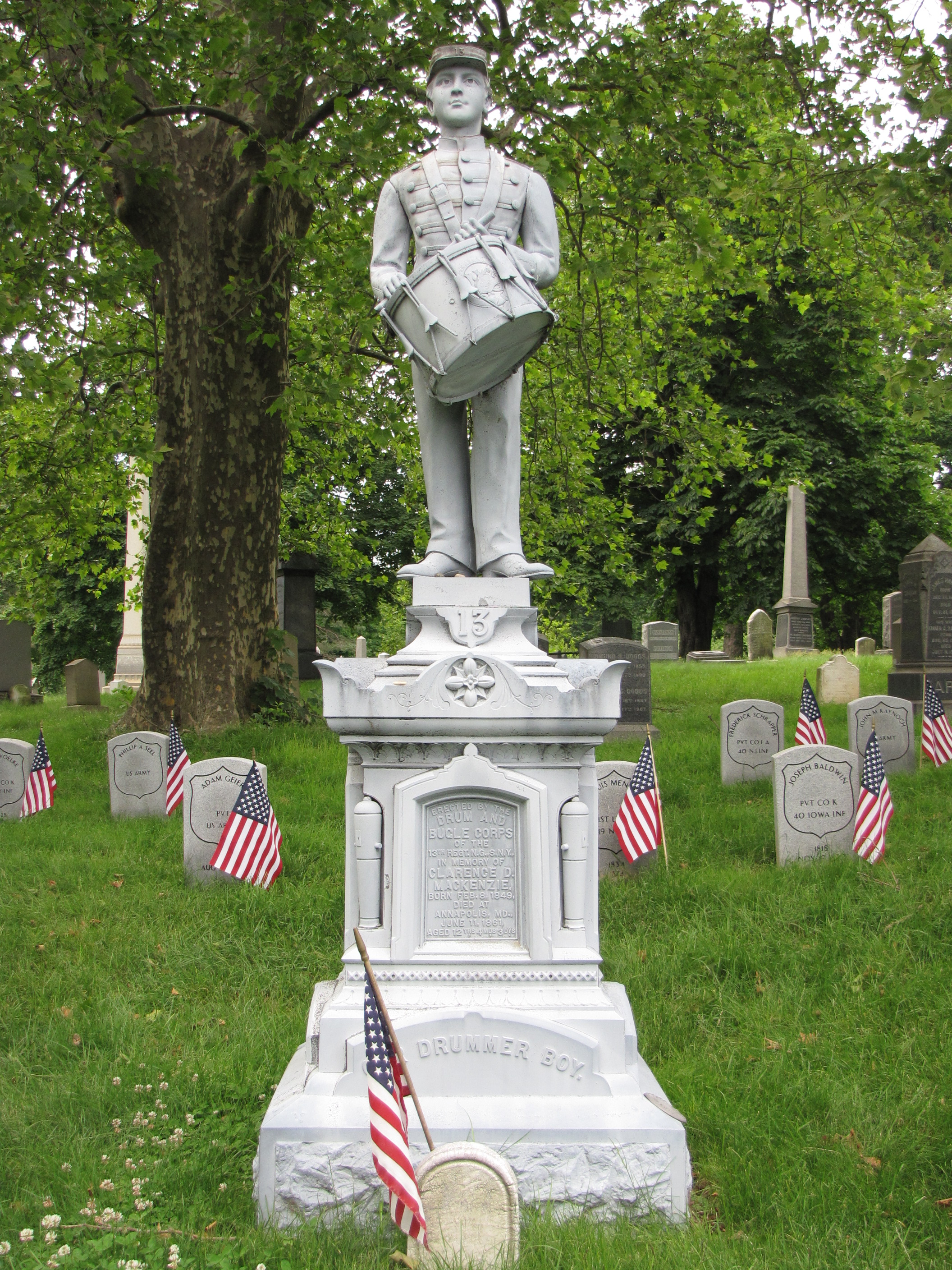
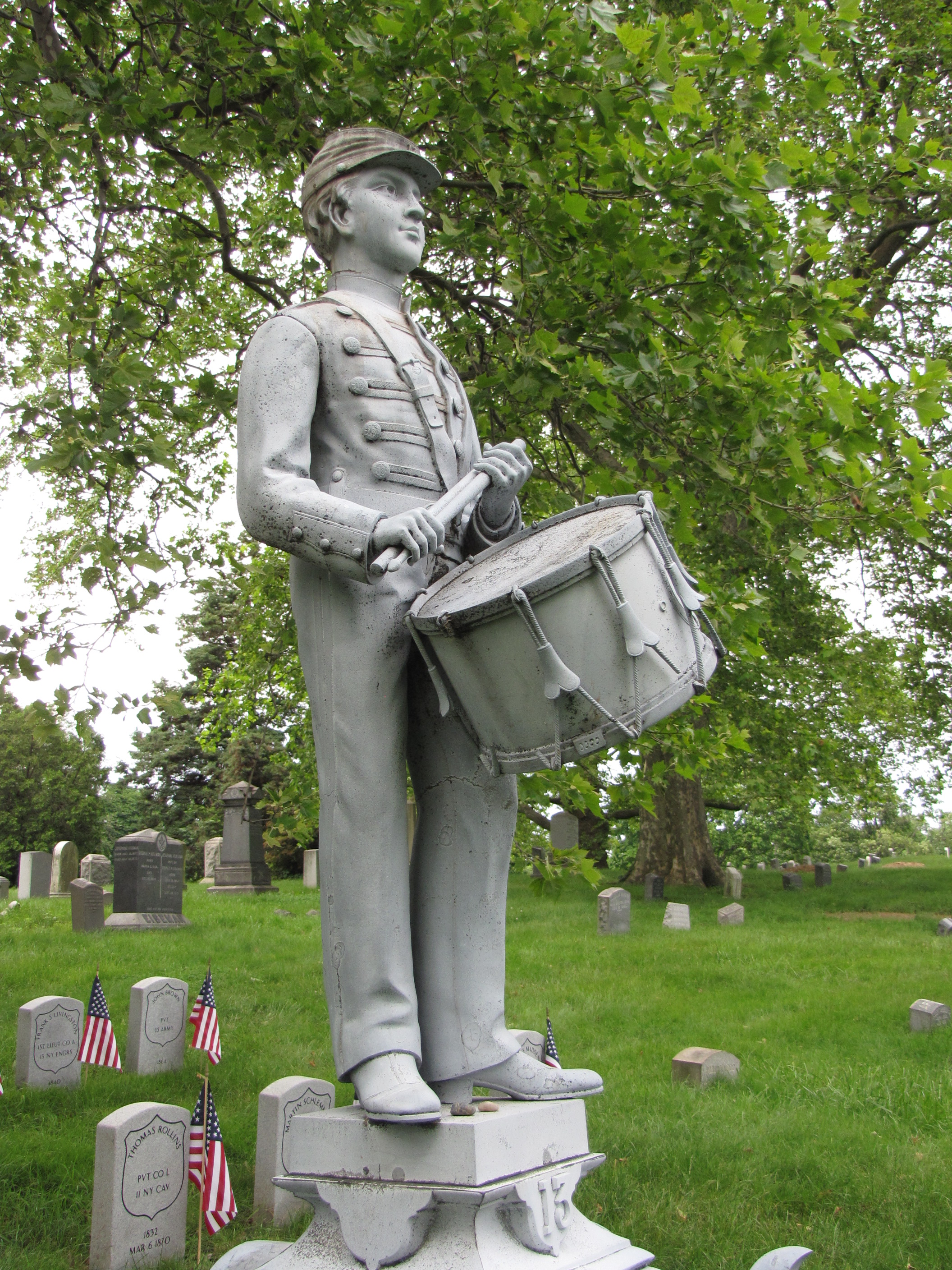
Our Drummer Boy

Green-Wood Cemetery, Brooklyn, New York

The Monumental Bronze Company of Bridgeport, Connecticut, produced “white bronze” cemetery markers and monuments in a wide assortment of sizes and shapes including statues like the one produced for and in the likeness of 12-year old Clarence Mackenzie found at the Green-Wood Cemetery at Brooklyn, New York.

The monument is adorned with symbolism.  The corners display artillery cannons pointed downward.  One panel is emblazoned with the G.A.R. flag ribbon and star while another shows two flags with their staffs crossed.  The number “13” is centered just below his feet representing the regiment in which he served.

The Grand Army of the Republic ribbon and star

The panels tell part of his story.  The drummer boy was shot in his tent by an errant bullet from soldiers practice shooting close by.  Clarence never saw the battlefield and yet was the first casualty of the Civil War from King’s County.

Erected by the Drum and Bugle Corps of the

13th REGT. N.G., S.N.Y.,

In Memory of

CLARENCE D. MACKENZIE,

Born Feb. 8, 1849,

Died at Annapolis, MD., June 11, 1861,

Aged 12 YRS 4 MOS 3 DYS

This Young Life Was the First Offering

From King’s County in the War of the Rebellion

OUR DRUMMER BOY

Posted in Materials | Leave a comment

American Bronze

Forest Home Cemetery, Forest Park, Illinois

The Monumental Bronze Company of Bridgeport, Connecticut, set up their first subsidary in Detroit, Michigan.  Others followed in Philadelphia, New Orleans, St. Thomas, Ontario, Des Moines, and Chicago.  The Chicago subsidary was named the American Bronze Company and the characteristic bluish-gray zinc markers can be found with that name.  Many of the zinc markers do not display a manufacturer’s name.

Contrary to popular beleif, the markers were not carried in the Sears Roebuck catalog.  They were sold by enterprising salesmen who carried a catalog with them to show customers the many styles and price ranges of their product line.  In many cemeteries you can find evidence of highly successful salesmen who sold a large number of the markers.

Posted in Materials | Leave a comment

“White Bronze”

River View Cemetery, Portland, Oregon

The Monumental Bronze Company of Bridgeport, Connecticut, produced what was billed as white bronze cemetery markers from the 1870s until 1912.  The markers are distinguished by their bluish-gray tint.  The markers are not bronze but actually cast zinc.  The zinc is resistant to corrosion but the zinc becomes brittle over time and cracking and shrinking can occur.

These grave markers came in a wide assortment of sizes and shapes and were somewhat like grave marker erector sets.  The more elaborate markers had a shell of sorts and then various panels could be attached according to the tastes of the family ordering the grave marker.  In this way, each marker could be “customized” to the tastes of the individual.  The markers were designed to look like traditional markers and from a distance, except for the tale tale bluish-gray color, they do.  The markers come in many of the shapes and sizes of gravestones that were popular during that time period.  In this example the base is cast to look like rough stone.

This marker has one of the side panels missing. The side panels were affixed with screws in the corner of the opening.

This photograph shows the inside of the marker, the frame, the side panels attached, and the hollow interior.

Posted in Materials | Leave a comment

Lily of the Valley

Greenbush Cemetery, Lafayette, Indiana

On the back of this bluish-gray marker in the Greenbush Cemetery at Lafayette, Indiana, a delicate hand holds a lily of the valley sprig.

The lily of the valley is much like other lilies in funerary art as a symbol of innocence. It also symbolizes happiness, purity, and humility.

HIER RUHT

KATHARINA

WURSTER FRAU

VON

FRIEDRICH

REULE

Greenbush Cemetery, Lafayette, Indiana

Posted in Symbolism | Leave a comment

Shock of Wheat

Green-Wood Cemetery, Brooklyn, New York

Carved on top of this white marble monument for Herman and Elizabeth Aldrich in the Green-Wood Cemetery at Brooklyn, New York, is a great shock of wheat. Wheat’s origins are unknown but is the basis of basic food and a staple in many cultures. Because of wheat’s exalted position as a mainstay foodstuff, it is viewed as a gift from Heaven.

Wheat symbolizes immortality and resurrection.  But, like many symbols found on gravestones, they can have more than one meaning.  For instance, because wheat is the main ingredient of bread, the sheaf of wheat can represent the Body of Christ.  Wheat can also represent a long life, usually more than three score and ten, or seventy years.  In this particular case both Herman and Elizabeth lived a long life, well past 70.

Posted in Symbolism | Leave a comment

President Millard Fillmore

Forest Lawn Cemetery, Buffalo, New York

When John Tyler became the president after the death of William Henry Harrison, he was referred to by the political wags of the day as “His Accidency.”  Millard Fillmore was the second president to ascend to the office upon the death of a president, though, he was not so dubbed.

Fillmore was an influential politician in Buffalo and New York.  In Buffalo, he co-founded the Univerisity at Buffalo and helped found the Buffalo Historical Society, as well as the Buffalo General Hospital.    Fillmore served in Congress representing his district in New York State and later was elected as the state’s first comptroller.

At the Whig Convention in 1848, Millard Fillmore were nominated to run for Vice President.  On the top of the ballot was the famous General Zachary Taylor.  They won.  Two years later, President Taylor died as a result of eating a bad bowl of cherries and sour milk and the ensuing medical treatment.  Fillmore assumed the presidency on July 9, 1850 and served until the end of the term in 1853.  This did not end his political career, he was nominated for the presidency in 1856, just three short years later, on the American Know Nothing Party ticket but came in third.  Though, Fillmore only carried the state of Maryland, the ticket garnered 21.6% of the popular vote, which still represents a highwater mark in third party politcs.

Millard Fillmore died on March 8, 1874 after having suffered a stroke.  He was buried on a plot in the Forest Lawn Cemetery at Buffalo, which he chose.  He grave is marked with a rose-colored granite obelisk.  The placque on the fence surrounding his grave reads:

In Memory

Of

MILLARD FILLMORE

13th President of the

United States of America

Born January 7, 1800—Died March 8, 1874

Dedicated by the Millard Fillmore Republican Woman’s Club

Memorial Day, May 30, 1932

Forest Lawn Cemetery, Buffalo, New York

The two obelisks in the picture to the right mark the graves of Millard Fillmore’s law partners Nathan Hall and Solomon Haven, mirroring the law firm’s stationery–Fillmore, Hall, and Haven.

Posted in Presidential graves | 2 Comments

Tree-stump gravestone: Fireman

Forest Home Cemetery, Forest Park, Illinois

Tree stump tombstones, generally carved from limestone, were a part of the rustic movement of the mid-nineteenth century which was characterized by designs that were made to look like they were from the country. The gravestones are purposefully designed to look like trees that had been cut and left in the cemetery which was part of the movement to build cemeteries to look like parks.  In funerary art, the tree-stump tombstones were varied—the stonecutters displayed a wide variety of carving that often reflected individual tastes and interests of the persons memorialized.

The tree-stump gravestones themselves were imbued with symbolism. The short tree stump usually marks the grave of a person who died young—a life that had been “cut” short.  In this example, Jacob Straman is just 32 years old.  His scroll, which can symbolize the Law or the Word of God, displays his name and birth and death date and the names of two others in his family–Rose and Myrtle.

Sitting atop the tree is a fireman’s hat indicating Jacob’s profession but not the entire story.  Jacob was killed in the line of duty.  He had been called to fight a grain elevator fire.  Shortly after he arrived there was an explosion and part of the elevator collapsed, falling on Jacob and trapping him.  The other firefighters could not reach him because of the intense fire and he died that night.  His ashes were given to his wife, Rose.  The fireman’s hat commerates Jacob Straman’s service in the fire department and memorializes the life he lost in the line of duty.

Posted in Treestump gravestones | Leave a comment