Grant’s Tomb, part 2

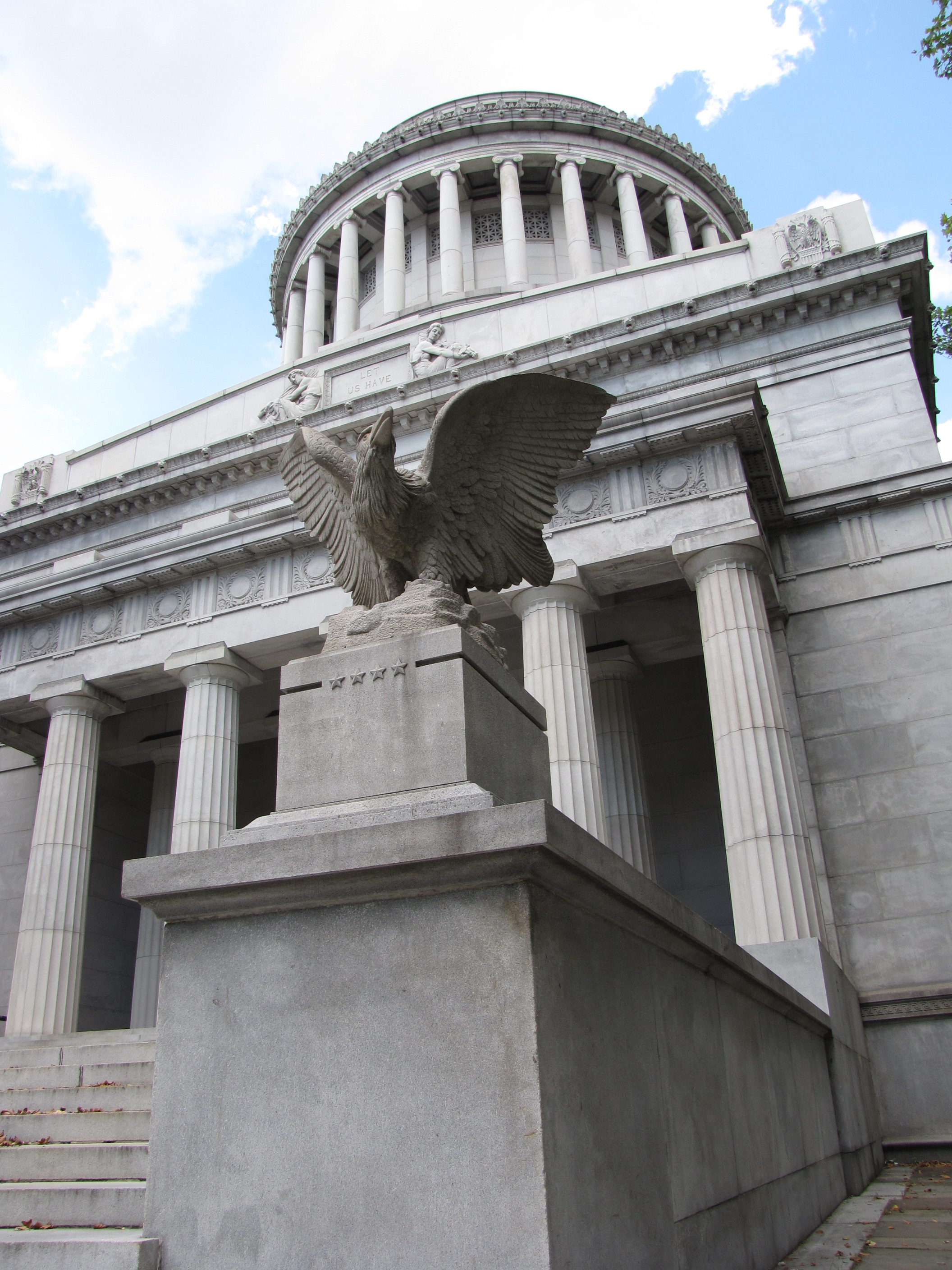
Grant’s Tomb was dedicated on April 27th, 1897, President Grant’s 75th anniversary of his birth.  His mausoleum was to be the centerpiece of Riverside Park.  For many years it was a gathering place.  But by the 1970s the tomb had fallen into disrepair.  The monument had been vandalized and was painted with graffiti.

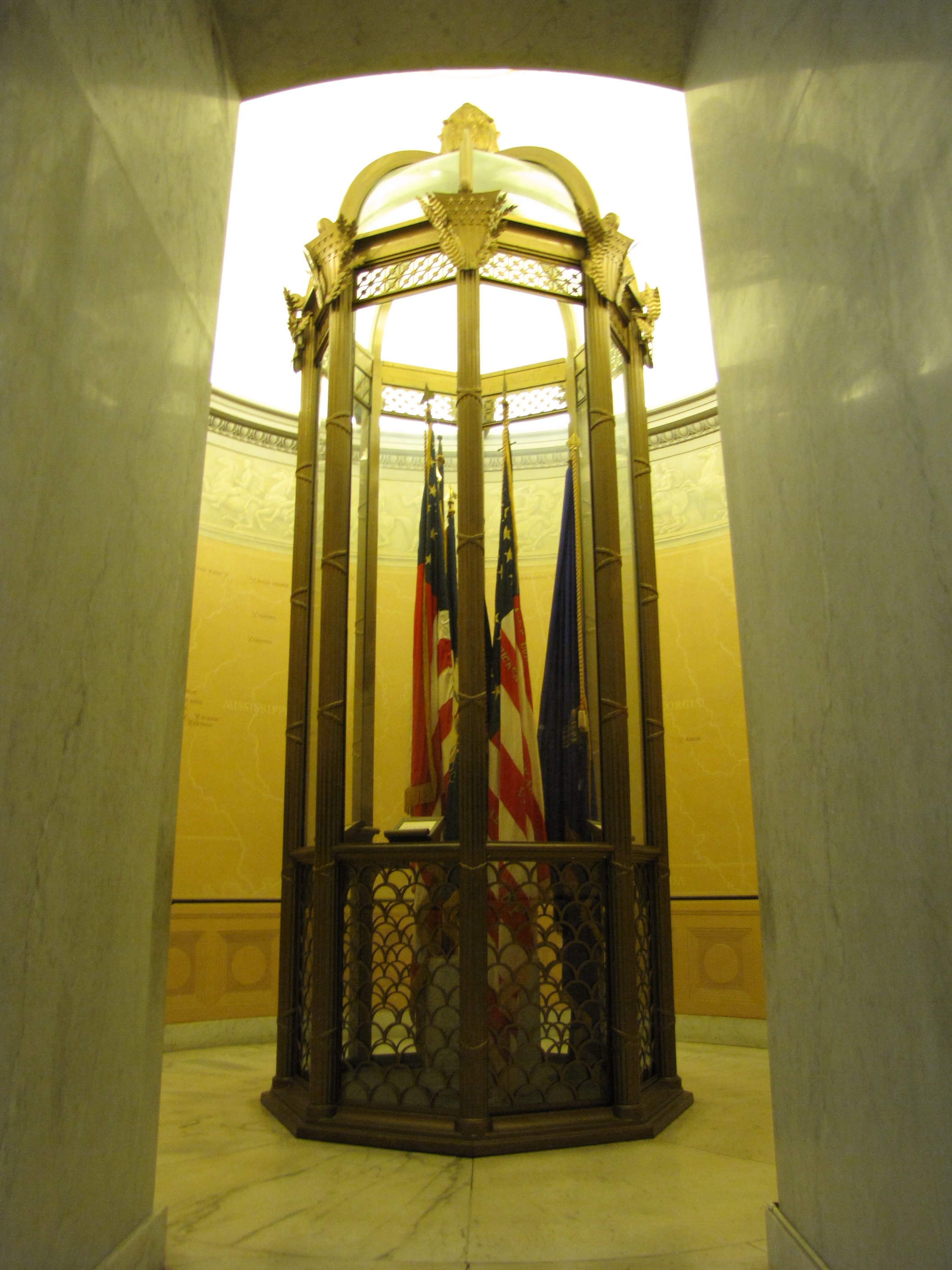
One of two reliquary rooms that display battle flags from the Civil War. The murals on the walls that show the battles in which General Grant fought were restored.

Congress allocated the funds to restore the monument in 1994 and by 1997 the restoration of the tomb had been completed and it was rededicated.

In 1968, The Rolling Bench, designed by artist Pedro Silva and architect Phillip Danzig was built by hundreds of children who lived in the area under the direction of Silva and surrounds the tomb on three sides. The bench, a Gaudi-esque design, was criticized for its incongruity with the Neo-classical monument. The Rolling Bench was restored in 2008.

Posted in Presidential graves | Leave a comment

Grant’s Tomb

Grant’s Tomb, Riverside Park, New York City

President Ulysses S. Grant died of throat cancer July 23, 1885, only 4 days after he finished writing his memoirs, Personal Memoirs of Ulysses S. Grant.  He was mired in debt from financial catastrophes and bad investments, but Mark Twain’s publishing company sold over 350,000 copies of Grant’s two-volume book set which brought his widow, Julia Dent Grant, out of debt and into prosperity.

Grant’s presidency was marred by one scandal after another, though, Grant was never personally implicated.  In spite of that, when he died, Grant was a national hero and one of the most beloved Americans of his day.

Upon his death, his wife made the decision that President Grant would be buried in New York City.  Almost immediately fundraising efforts began.  Soon after a design competition was won by architect John Hemenway Duncan, who designed a towering mausoleum with the exterior modeled after the tomb of King Mausolus, for which the term mausoleum derives.  The mausoleum is one of the largest in North America.  It was built with 8,000 tons of light gray granite.  The tomb symbolically faces South.

Grant’s only wish regarding his death was that he be buried next to his wife Julia.  The twin red-granite coffins containing President and Mrs. Grant can be seen from the circular gallery inside the memorial.

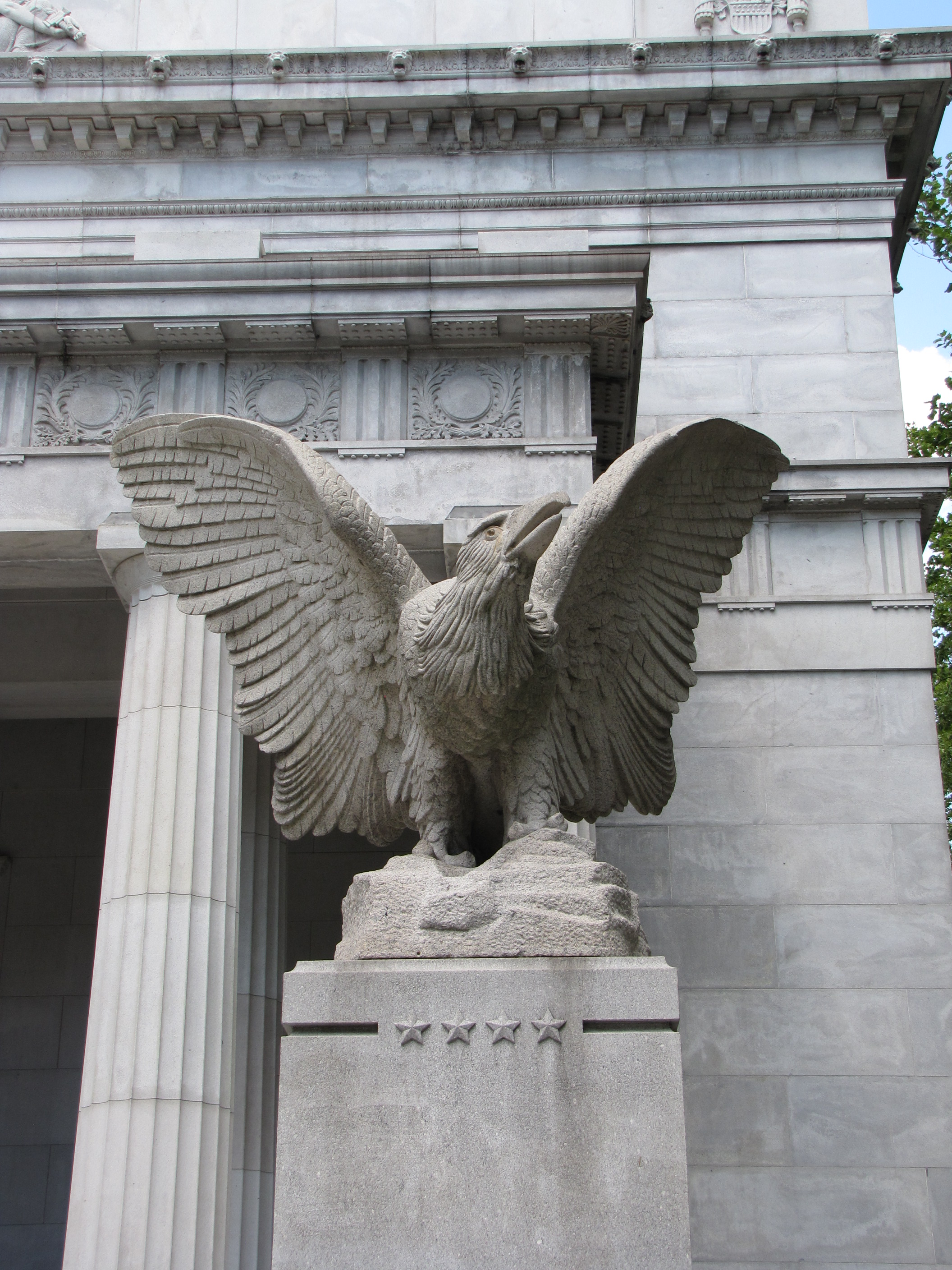
Two large sculptures of eagles flank the entrance to the tomb resting on large blocks that have four stars carved on them denoting Grant’s 4-star ranking.

Posted in Presidential graves | Leave a comment

The Inverted Torch

Union Cemetery, St. Clairsville, Ohio

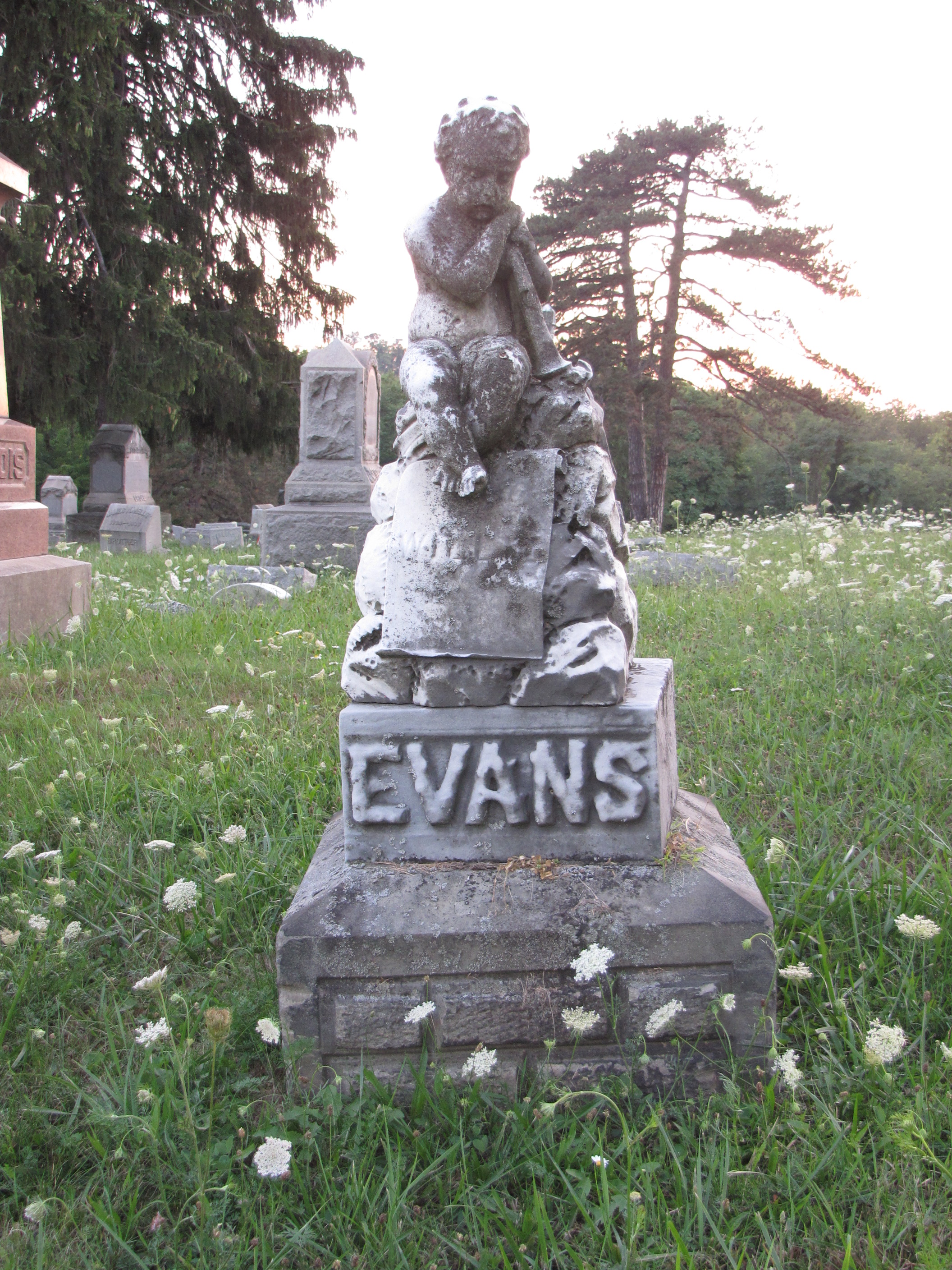
The tombstones in these two photos are both taken in the Union Cemetery at St. Clairsville, Ohio.  In both cases, the tombstones display elaborately carved figures leaning on an inverted torch.

In the example above, a chubby baby boy sits atop a pile of rocks with a scroll at his feet.  The baby leans against the torch with the flames swirling from the bottom. The soft white marble gravestone is eroded and covered with lichens and the inscription is difficult to read, except for his name, “WILL” which is displayed on the scroll and “EVANS” which appears on the base.

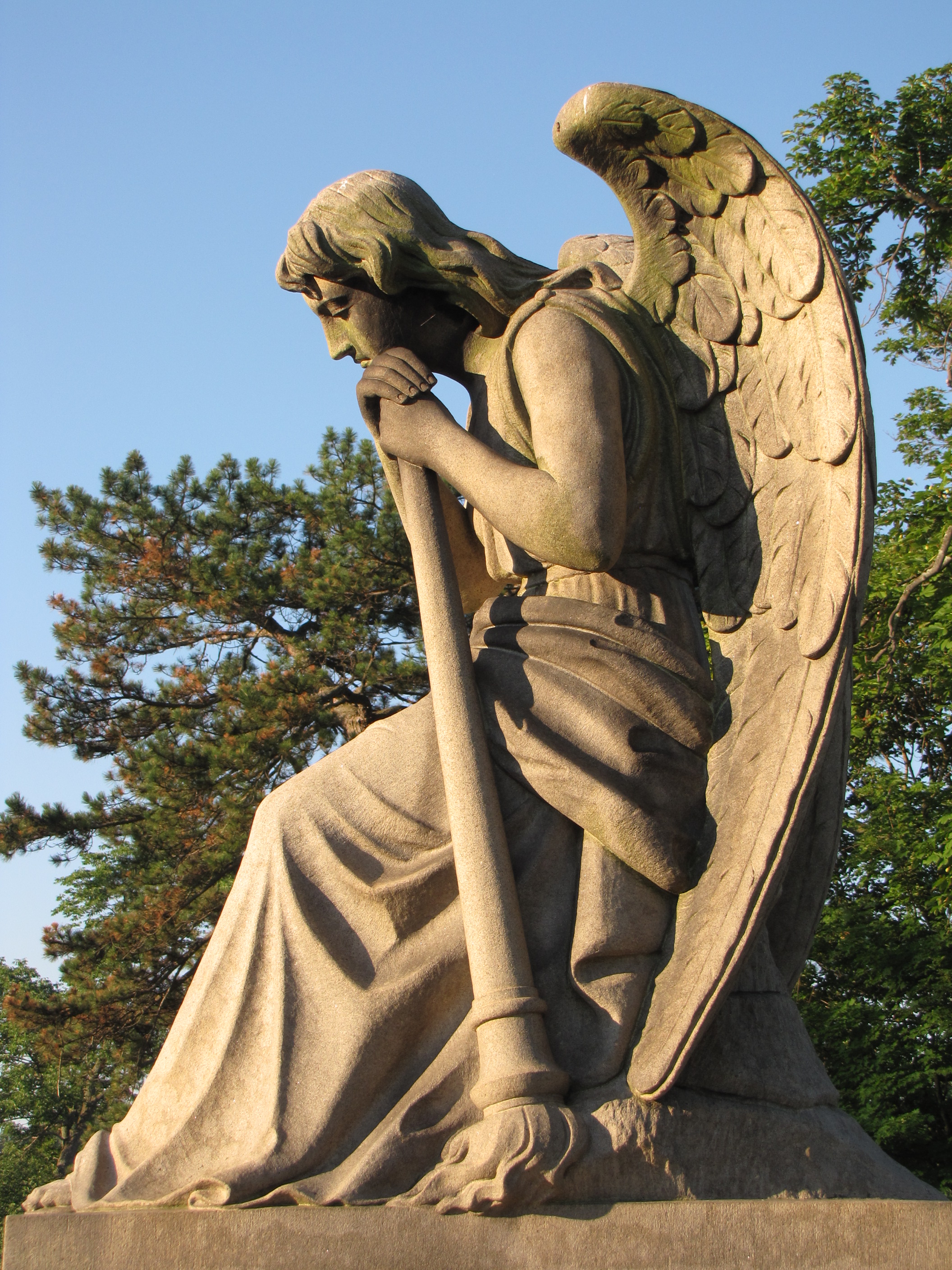
The angel in the photograph below looks downward with an almost wistful expression as she leans against the torch, the flames curling at its base.   The beautifully carved sculpture marks the graves of Richard and Mary Riley, both of whom died in the 1880s.

In both cases, the flame is symbolic of the soul.  The inverted torch represents a life that has been extinguished.

Union Cemetery, St. Clairsville, Ohio

Posted in Symbolism | 6 Comments

A Poem

Because I Could Not Stop For Death, by Emily Dickinson


Because I could not stop for Death,

He kindly stopped for me;

The carriage held but just ourselves

And Immortality.


We slowly drove away, he knew no haste,

And I put away

My labor, and my leisure too,

For his civility.


We passed the school where children strove

At recess, in the ring;

We passed the fields of gazing grain,

We passed the setting sun.


Or rather, he passed us;

The dews grew quivering and chill;

For only gossamer, my gown;

My tippet, only tulle.


We paused before a house that seemed

A swelling of the ground;

The roof was scarely visable,

The cornice in the ground.


Since then ’tis centuries; and yet

Feels shorter than the day

I first surmised the horses’ heads

Were toward eternity.

Posted in Uncategorized | 1 Comment

Among the Dead

Old Dutch Church Burying Ground, Sleepy Hollow, New York

The Old Dutch Church Burying Ground in Sleepy Hollow, New York, is one of the oldest graveyards in America.  Though it was established in 1685, some say that the first burials were much earlier than that.  The cemetery has many examples of gravestones carved out of red sandstone, like the gravestone of Susanna Paulding.  Her gravestone is embellished with a winged face wearing a crown.  The winged face represents the flight of the soul after death.  The crown in this case most likely represents victory over death.  Her epitaph is interesting because it implies while she is among the dead, she is not one of them–she is merely resting.

In Memory of

Susanna Paulding, sen.

who died Nov.r 13th

AD 1790.

Aged Years 8 Months

and 28 Days

Suffic’d with life

My spirits fled,

And I’m at rest

Among the dead.

Posted in Epitaphs | Leave a comment

The Severed Bud

Somerford Cemetery, rural London, Ohio

Cemeteries have many symbols that represent children–shoes, seedpods, cribs, cherubs–but one of the most common is the hanging bud. The broken bud represents the flower that did not bloom into full blossom, the life that was cut short before it had a chance to grow to adulthood.

What is unusual about this gravestone is that the bud is not hanging but completely severed and laying below the leaves.  The other element that is different is that the leaves number 4, instead of the often three-leaf combination, which represents the Trinity—the Father, the Son, and the Holy Ghost.

NAOMI G.

Daughter of

J & R YARDLEY

DIED

July 5, 1849

AGED

5 Y, 2M, & 8 D

A sister reposes underneath this sod

A sister to memory dear, and dear to God

Rejoice, yet shed the sympathetic tear

My little sister lies buried here.

Posted in Symbolism | Leave a comment

Union Deposit Cemetery

The cemetery gate in the photo is of a small cemetery in rural Pennsylvania, just outside Hershey.  The gate is typical of many of the small cemetery gates that are made of iron rod and steel construction.  What struck me was the name of the cemetery: Union Deposit Cemetery.  Deposit?  The name sounds a bit like a the name of a bank, though, the deposits are definitely different.

Posted in Cemetery Gates | Leave a comment

Coffin-shaped Table Top Tomb

Somerset Cemetery, Somerset, Ohio

The coffin-shaped tombstone in the photograph is also a type of gravestone called a table tomb for an obvious reason—it looks like a table. Usually the table tomb has four or six legs supporting a stone tablet which carries the inscription of the deceased. In this case, the coffin-shaped table top is supported by two blocks.  A large medallion carries the inscription on the widest part of the gravestone:

Sacred to

The

Memory of EDITH HAMILTON

Late consort of the Rev. Samuel Hamilton who

Departed this life in joyful expectation of a

Better, on the 29th of March, A.D. 1832 Aged

33 Years, 7 months and 26 days.

Oh, Woman

I with thee did fix my lot.

Willing to undergo like doom.

When death consorted with thee

Death was to me as life

So forcible in my heart I felt

The bonds of nature draw me to

my own.

Note: I first saw the gravestone above on the Website: www.graveaddiction.com.  Beth Santore, the Webmaster gave me great directions to find the cemetery.  I was just in Ohio Monday and snapped some pictures of the gravestone for myself.  I highly recommend her Website, especially for those tramping around Ohio graveyards!

Posted in Symbolism, Tombs | Leave a comment

Coffin-shaped Tombstone, Part 2

Groveport Cemetery, Groveport, Ohio

Coffins come in many shapes and sizes, though, technically, a coffin is a six-sided container or box for burial.  A casket is generally understood to have four sides and be rectangular.

The six-sided coffin tombstone found in the Groveport Cemetery at Groveport, Ohio, pictured above is tapered to widen around the shoulders and then become narrow around the feet.  The coffin-shaped tombstone replicates what many 18th and 19th century coffins looked like.  This funerary motif represents death and mortality.

The gravestone marks the grave of a young wife who died at the delicate age of only 22 years.  The woman was remembered in her inscription as a bride and a daughter, as she was most likely not married for any length of time.   The epitaph paints a picture of a beautiful young woman snatched away by the Icy and Withered Hand of Death.

Sacred to the memory of

Catherine G. consort of John G. Richardson MD

And Daughter of Captain Isaac Bowman

All Natives of Shenandoah County, Virginia

Born December 23, 1787

Departed this Life January 19, 1809 Aged 22 Years

“Oh Fairest Flower Thy Failing Breath is Gone, the Sense to Please No More,

The Icy Withering Hand of Death Has Rifled All Thy Fragrant Store.

Calm Be Thy Rest, Sweet as the Slumbers of a Saint,

And Mild as the Opening Gleams of a Promised Heaven.”

Note: I first saw the gravestone above on the Website: www.graveaddiction.com.  Beth Santore, the Webmaster gave me great directions to find the cemetery.  I was just in Ohio Monday and snapped some pictures of the gravestone for myself.  I highly recommend her Website, especially for those tramping around Ohio graveyards!

Posted in Symbolism, Tombs | Leave a comment

Coffin-shaped tomb

Union Cemetery, Morristown, Ohio

The coffin in cemetery symbolism represents death.  The reasons for that are fairly obvious.  Sometimes the image of the coffin is carved on the gravestone, other times the gravestone itself is carved to look like a coffin.

This white marble coffin-shaped gravestone found in the Union Cemetery at Morristown, Ohio, is intricately carved to look like a coffin.  The gravestone has handles on the side and the exact shape and dimensions of a coffin that are so real it looks as if a coffin was actually set atop the concrete base.  The gravestone is most likely the marker for a small child.  Though the tombstone looks fairly good sized in the photo, it is actually quite small.  Because of the aging and erosion of the soft marble and the lichens on the gravestone, it is not possible to read the inscription.

Note: I enjoy tramping around old graveyards and also Websites dedicated to cemeteries and gravestones.  I first saw the gravestone above on the Website: www.graveaddiction.com.  I asked the Webmaster, Beth Santore, about the gravestone and she gave me great directions to find it.  I was just in Ohio yesterday and snapped some pictures of the gravestone for myself.  I highly recommend her Website, especially for those trapsing around Ohio graveyards!

Posted in Symbolism, Tombs, Uncategorized | 3 Comments