Visions of the Angel of Death

Fairview Cemetery, Council Bluffs, Iowa

Fairview Cemetery, Council Bluffs, Iowa

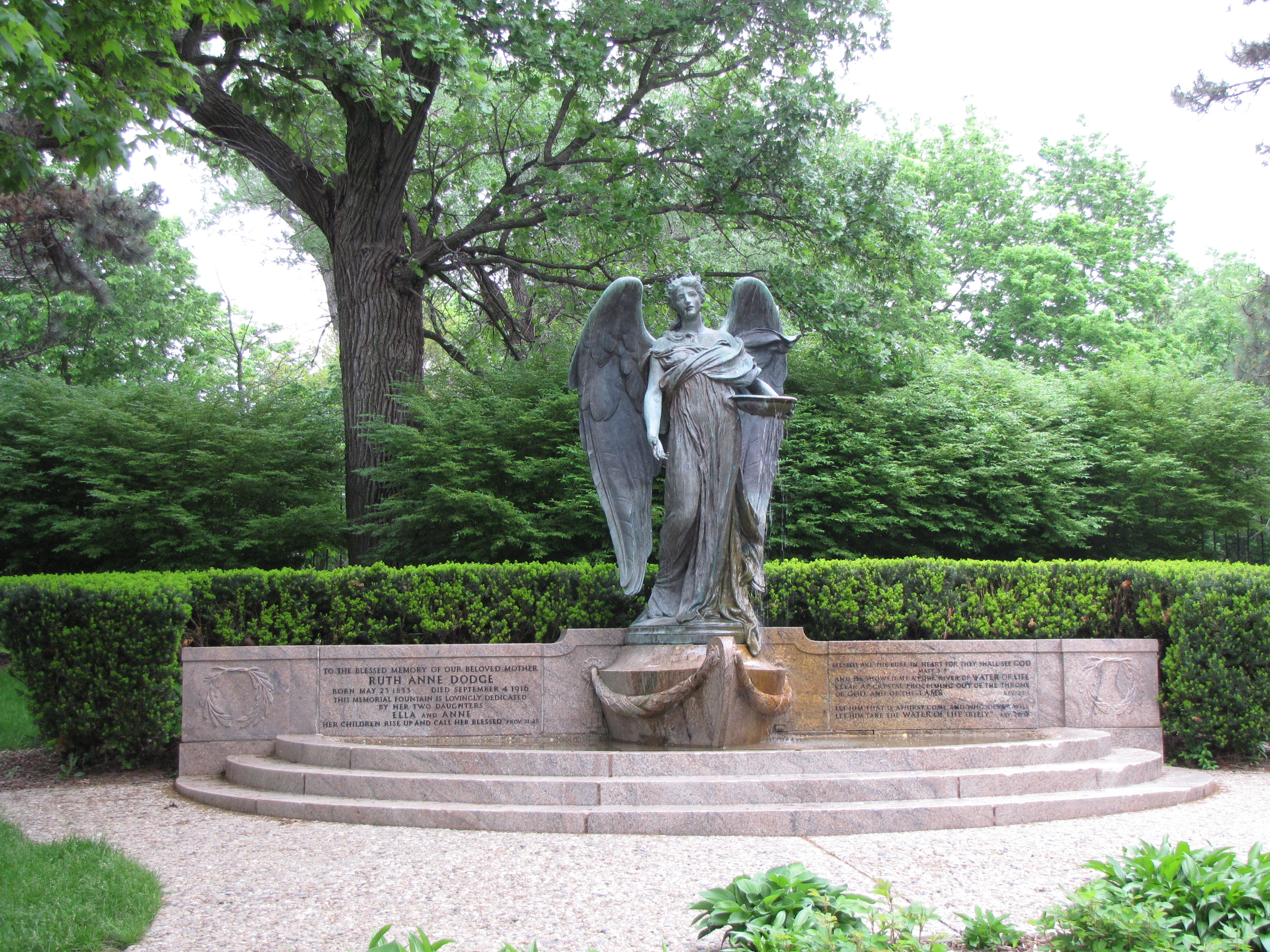
TO THE BLESSED MEMORY OF OUR BELOVED MOTHER

RUTH ANNE DODGE

BORN MAY 23, 1833  DIED SEPTEMBER 4, 1916

THIS MEMORIAL FOUNTAIN IS LOVINGLY DEDICATED

BY HER TWO DAUGHTERS

ELLA AND ANNE

“HER CHILDREN RISE UP AND CALL HER BLESSED PROV. 31:28.

BLESSED ARE THE PURE IN HEART FOR THEY SHALL SEE GOD MATT. 5:8

AND HE SHOWED ME A PURE RIVER OF WATER OF LIFE

CLEAR AS CRYSTAL PROCEEDING OUT OF THE THRONE

OF GOD AND OF THE LAMB  REV. 22:1

LET HIM THAT IS ATHIRST COME AND WHOSOEVER WILL

LET HIM TAKE THE WATER OF LIFE FREELY”  REV. 22:17

There are many accounts in history of famous people describing their visions of death.  Abraham Lincoln, for instance, described a dream that he had about two weeks before his assignation.  He described hearing sobbing.  When he sought out the source of the crying, he was guided to a room with an open casket.  When he asked who had died he was told the president had been killed.  Many believe Lincoln had foreseen his own death.

Carl Jung, too, had visions of death.  Jung’s dream about the death of friend was so vivid that it led him to believe in telepathy.

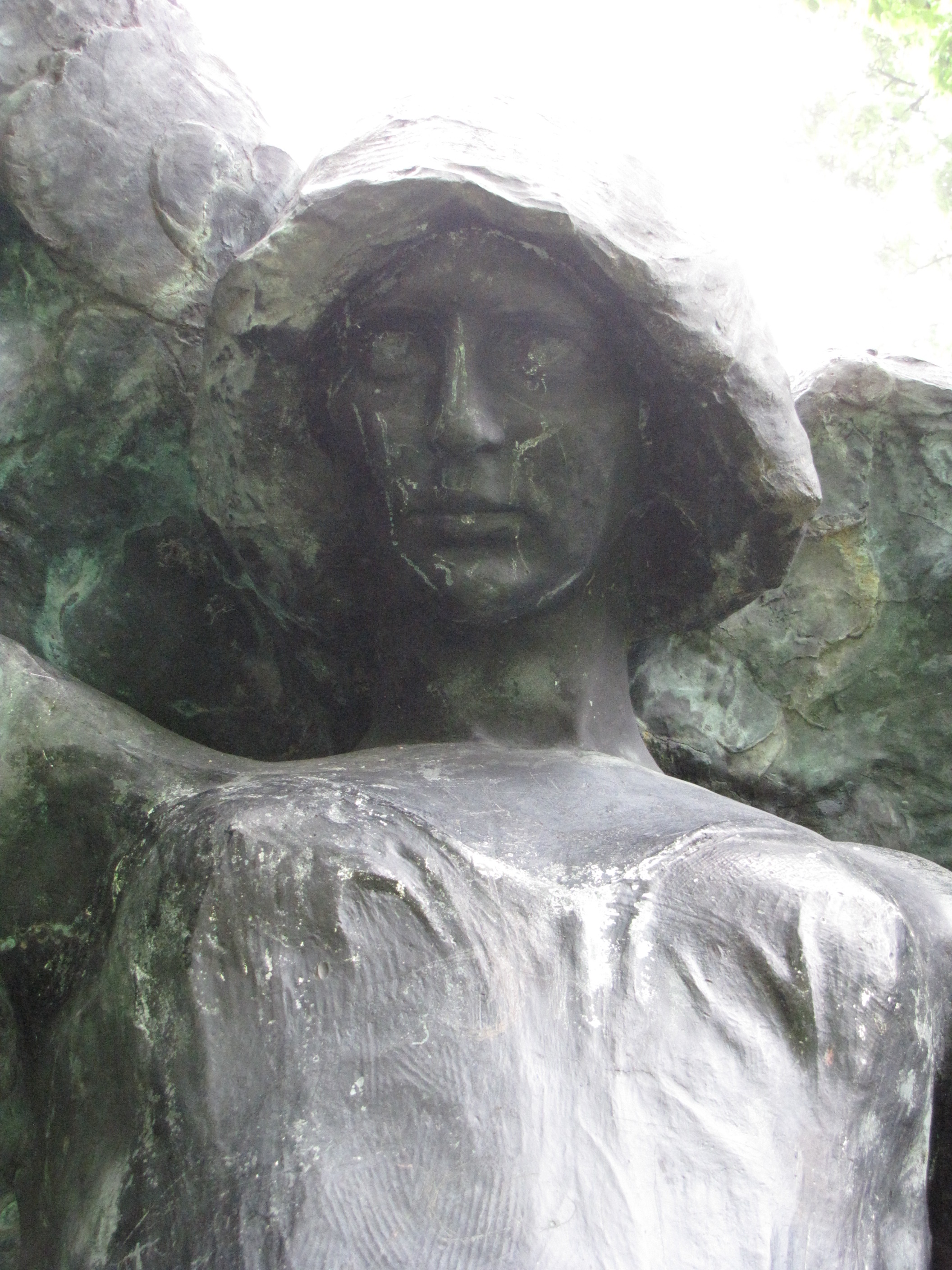
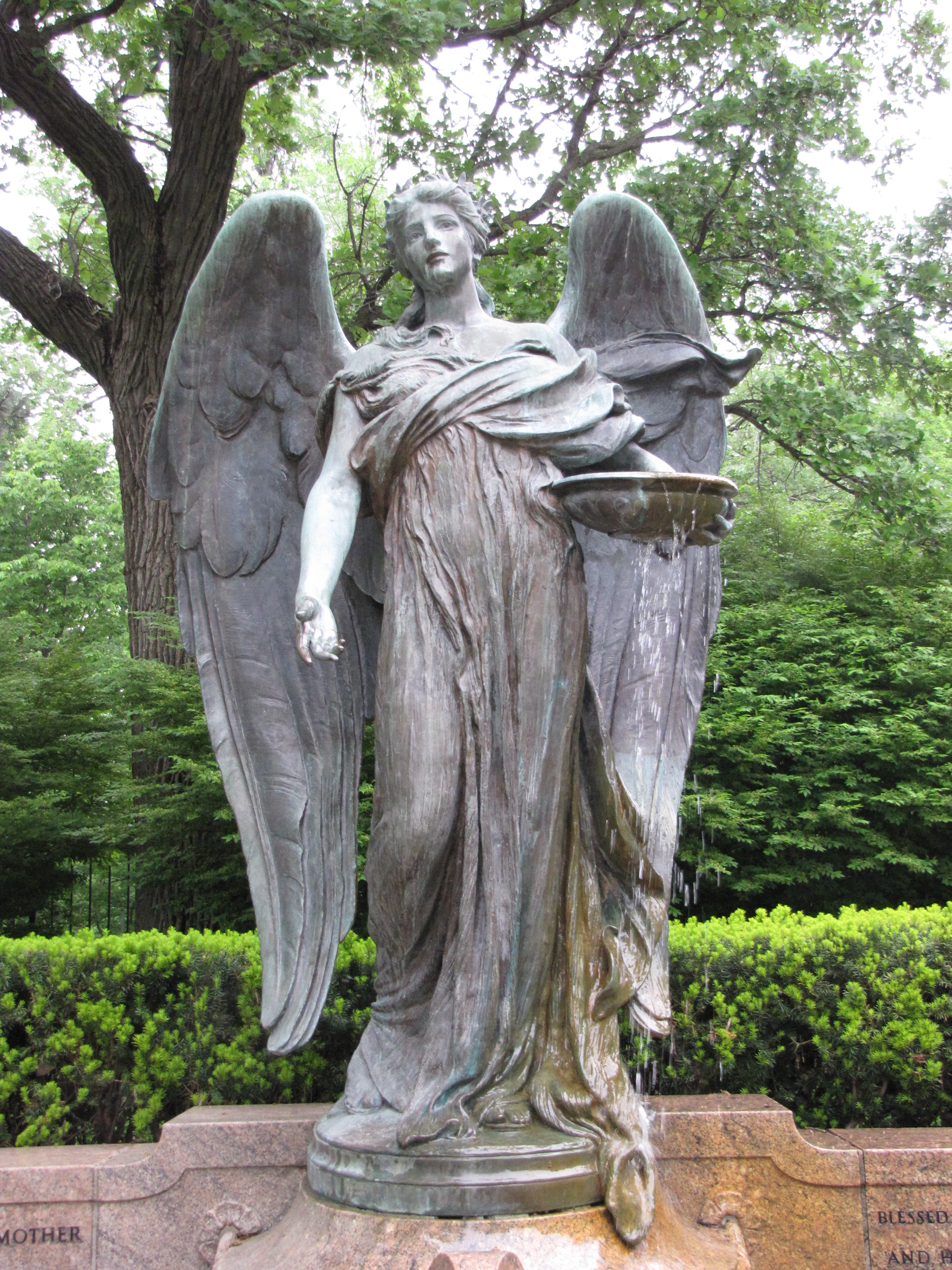
Ruth Anne Dodge was married to General Grenville Dodge, famous Civil War general and railroad magnate.  Ruth Anne’s visions of death occurred to her on three separate occasions.  Each time Ruth Anne was transported to a place unknown to her and each time a specter appeared.  The supernatural being came out of a light mist being carried on a barge of flowers and was draped in a white gown, her hair glimmered as if was made of spun gold, and she carried a Grecian urn that had water shimmering from it as if it were made from thousands of sparkling diamonds.  On the first two occasions the specter told Ruth Anne of the water that flowed from the urn and described it as a blessing.  The angel urged Ruth Anne to drink the water but she was not ready.  During the third dream the angel explained that the water pouring from the urn was the water of life.  Ruth Anne drank of the water and told her two daughters that the water, “gave me immortality.”  She died a few days later.

IMG_0415

The Dodge daughters, Ruth and Eleanor, wanted to commemorate their mother’s dreams in a statue and commissioned the great American sculptor, Daniel Chester French, to recreate the angel as seen in the dreams.  The sculpture he created is cast bronze and turned black with age.  Since its creation after Ruth Anne Dodge’s death in September of 1916, it has become known as the black angel. Oddly, the black angel was erected in the Fairview Cemetery, even though, Grenville and Ruth Anne Dodge are buried in a classically-designed mausoleum in the Walnut Hill Cemetery at Council Bluffs, Iowa.

IMG_0429

Posted in Angels | 5 Comments

Thistle in Zinc

Fairview Cemetery, Council Bluffs, Iowa

Fairview Cemetery, Council Bluffs, Iowa

JOHN G.

RAIN,

SEPTEMBER 19, 1828,

FEBRUARY 18, 1899.

HE DIED AS HE LIVED, A PURE,

UPRIGHT MAN.

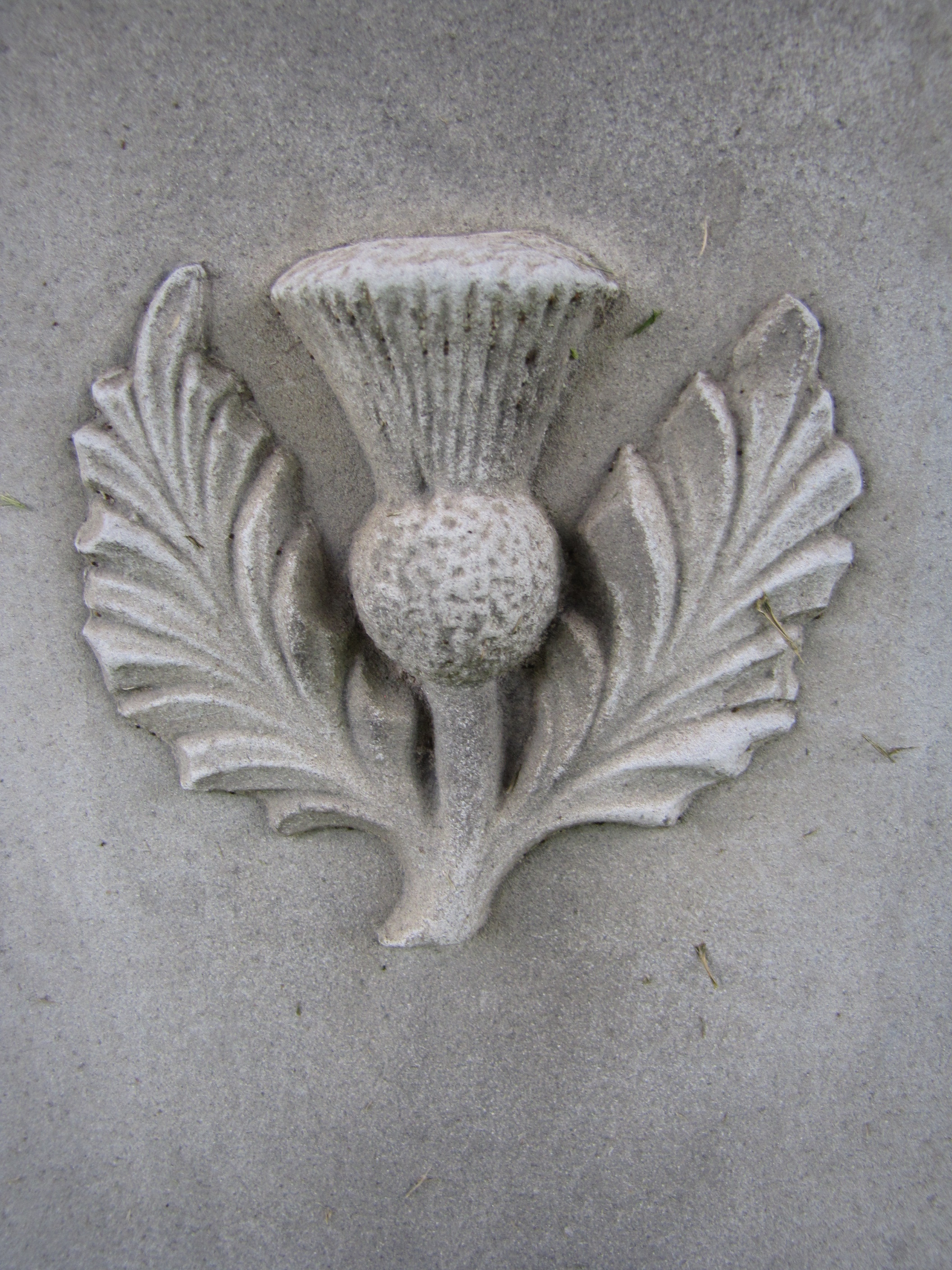
The thistle is characterized by a purple or red flower that rests in a cup-shaped part of the stem and has prickly leaves and thorns that protect it from plant-eating animals. The thistle is in the family Asteraceae.

This flower, like so many symbols in funerary art, represents many different things. For instance, the thistle, with its thorns, can symbolize the Passion of Christ. The thorns on the plant remind the Christian viewer of Christ’s crown of thorns. It is also a symbol of earthly sorrow. After Adam ate of the tree of life, God said to Adam that the ground was cursed to him for disobeying Him and that Adam would eat in sorrow. God said that, “Thorns also and thistles shall it bring forth to thee…”.

The thistle is also the floral symbol of Scotland most likely adopted by the Scots because, as legend has it, a Norse army was about to attack a Scottish army encampment when an opposing soldier stepped on a thistle. The soldier cried out alerting the Scots to the presence of the Norsemen. This legend is also likely to be the origin of the Scottish motto, Nemo me impune lacessit, which is translated as No one attacks me with impunity or No one can harm me unpunished. The motto is a fitting slogan for the thistle, as well, because to eat it or pick it, one has to overcome the thorns.

IMG_0471

Posted in Symbolism, Zinc Markers | Leave a comment

Options in form and design

Fairview Cemetery, Council Bluffs, Iowa

Fairview Cemetery, Council Bluffs, Iowa

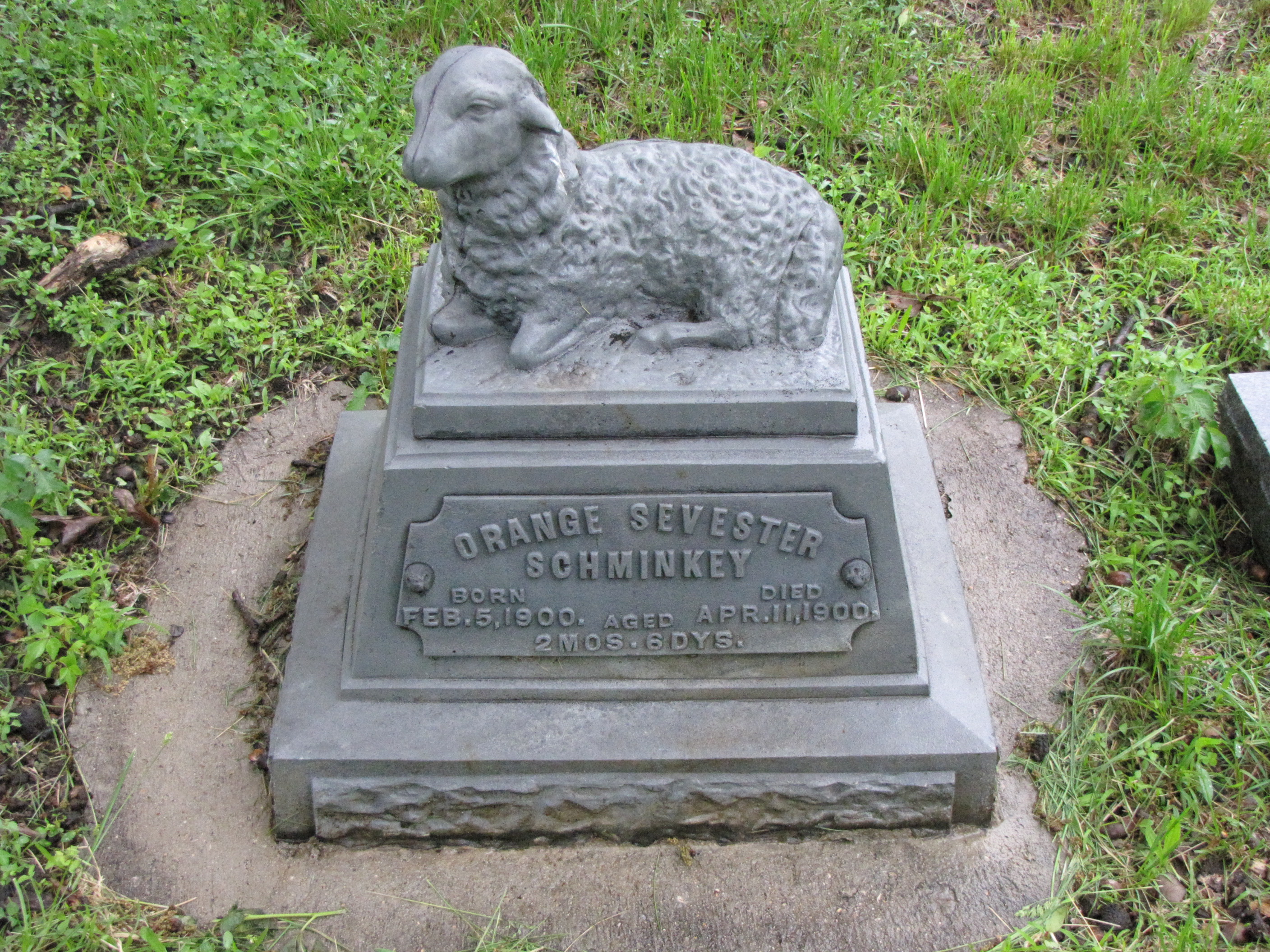
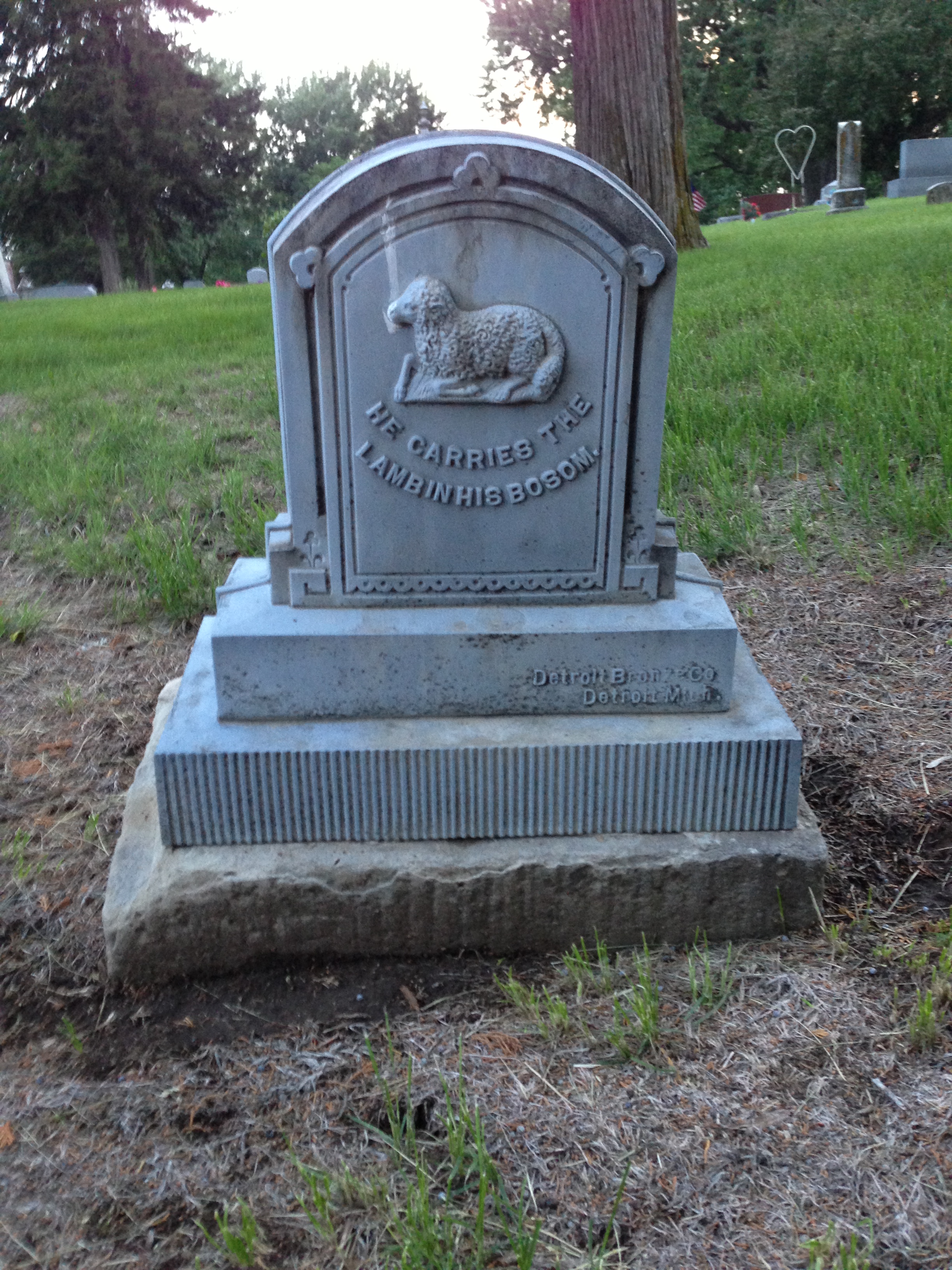
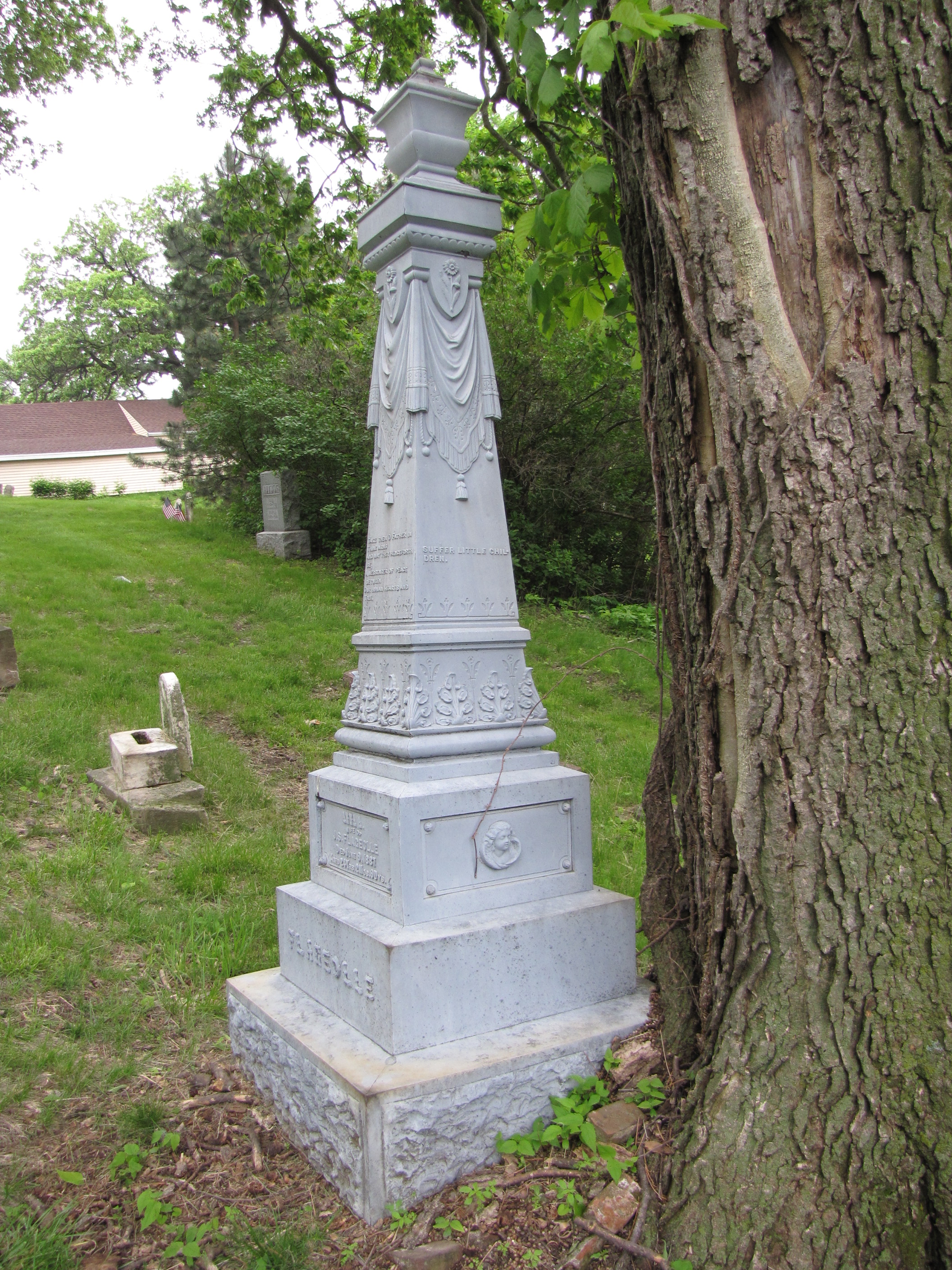
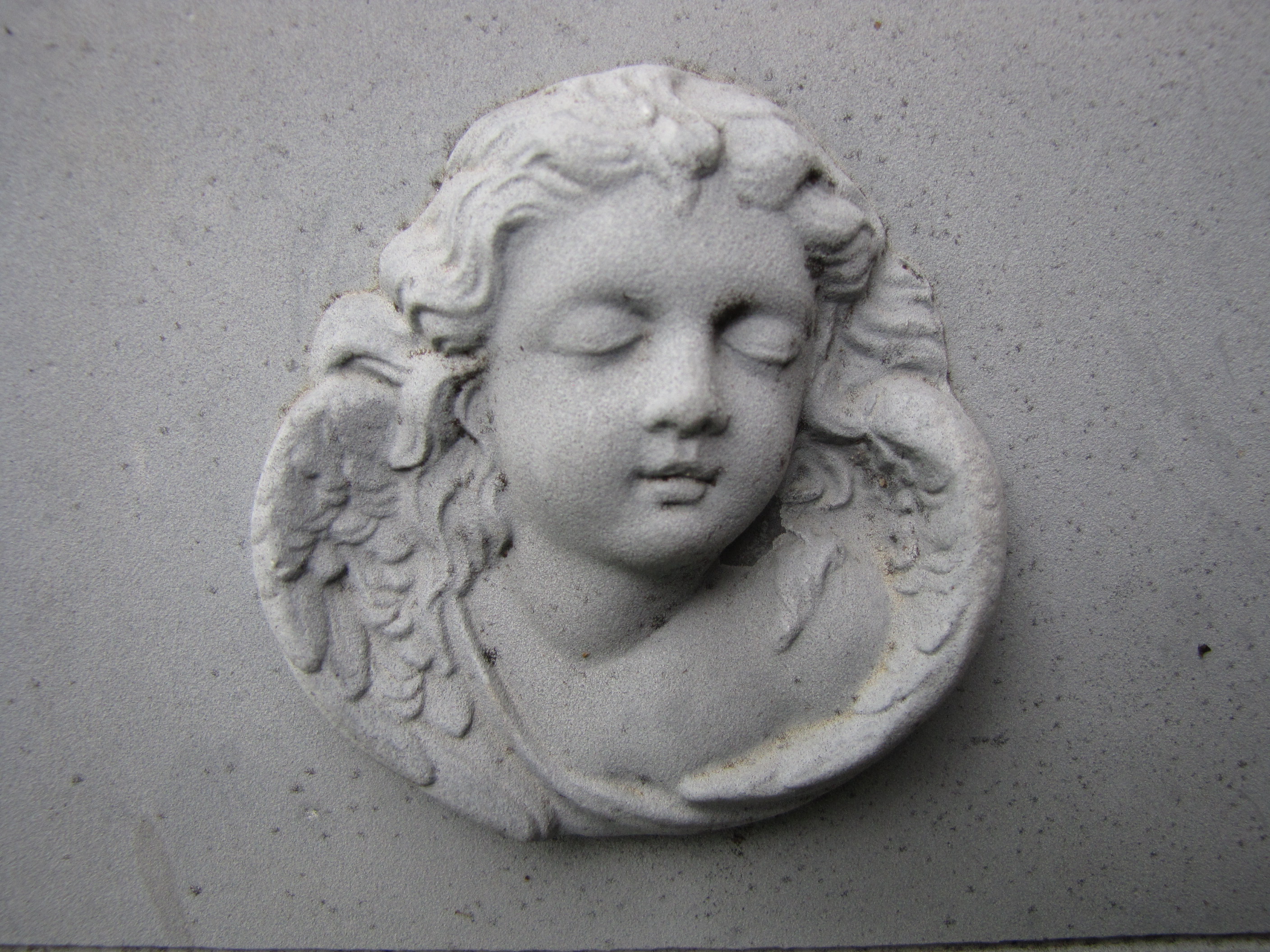
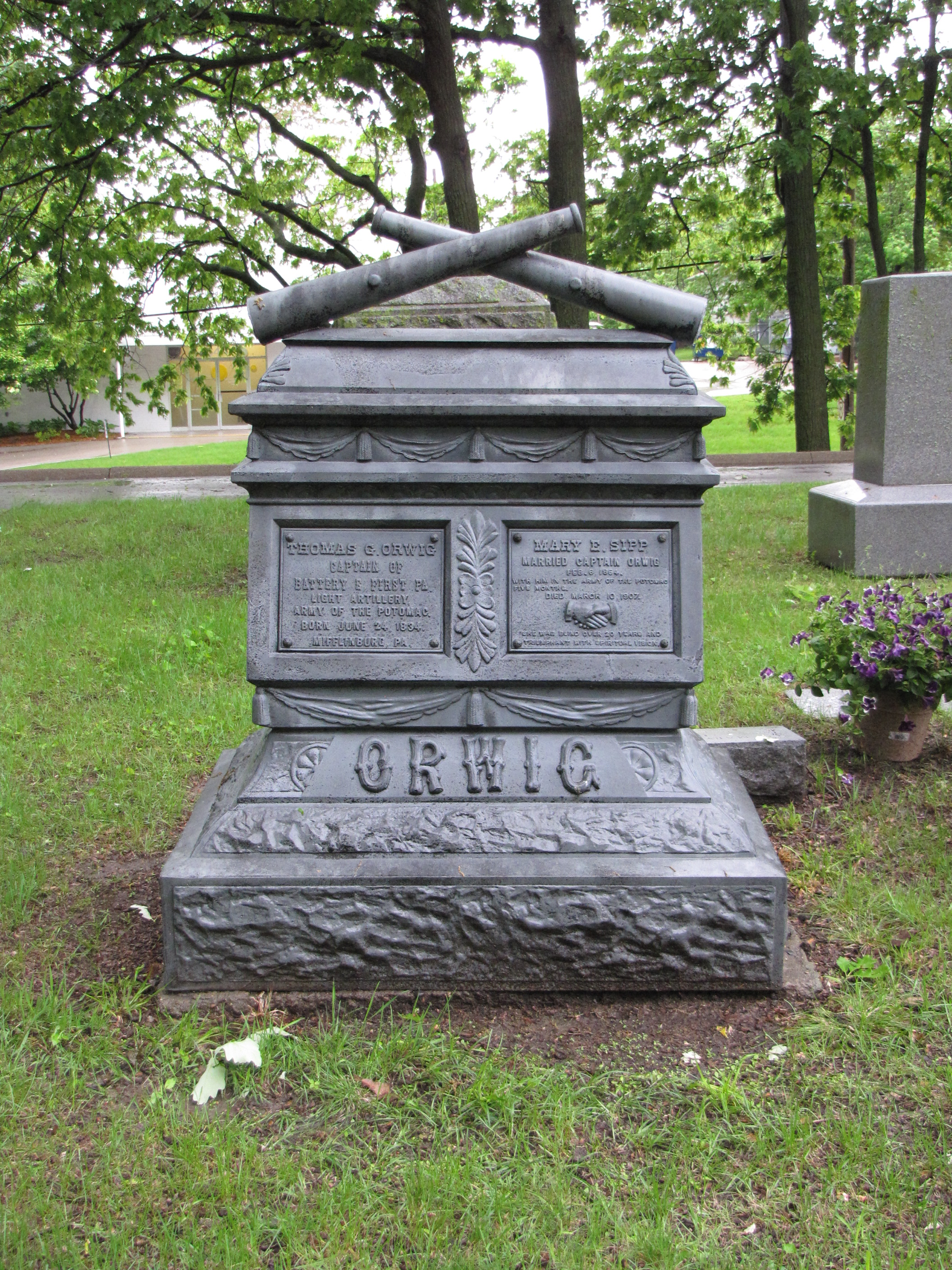
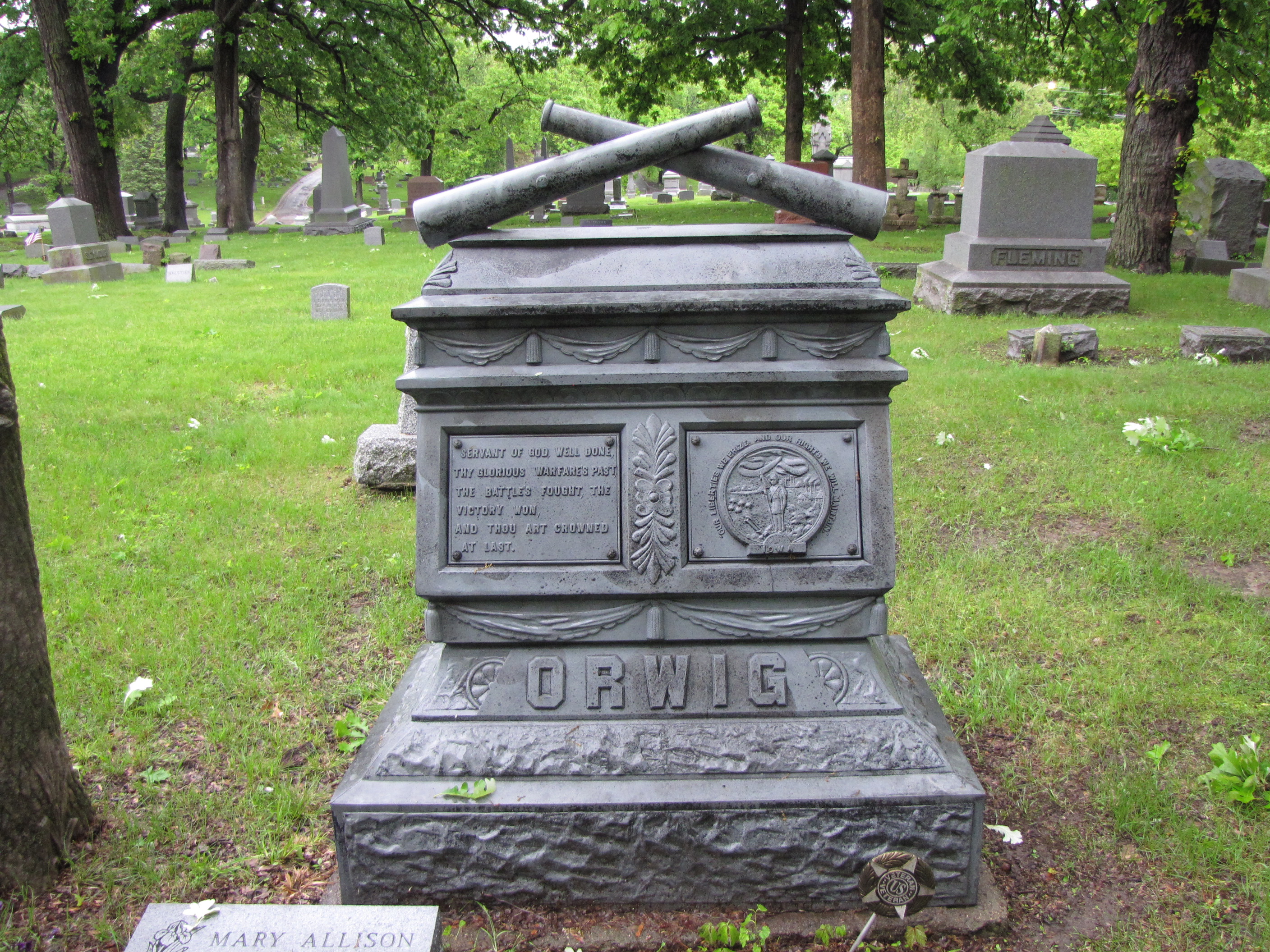
The Western White Bronze Company of Des Moines, Iowa, and the other companies that produced zinc funeral monuments, such as the Monumental Bronze Company of Bridgeport, Connecticut, had a wide range of symbols from which to choose.  The companies produced catalogs that salespeople could carry with them to show prospective buyers the many marker design options and  large array of symbols were available.  The various symbols could be bolted in place on a large number of grave marker styles by special order much the same way that an erector set is bolted together.

Fairview Cemetery, Council Bluffs, Iowa

Fairview Cemetery, Council Bluffs, Iowa

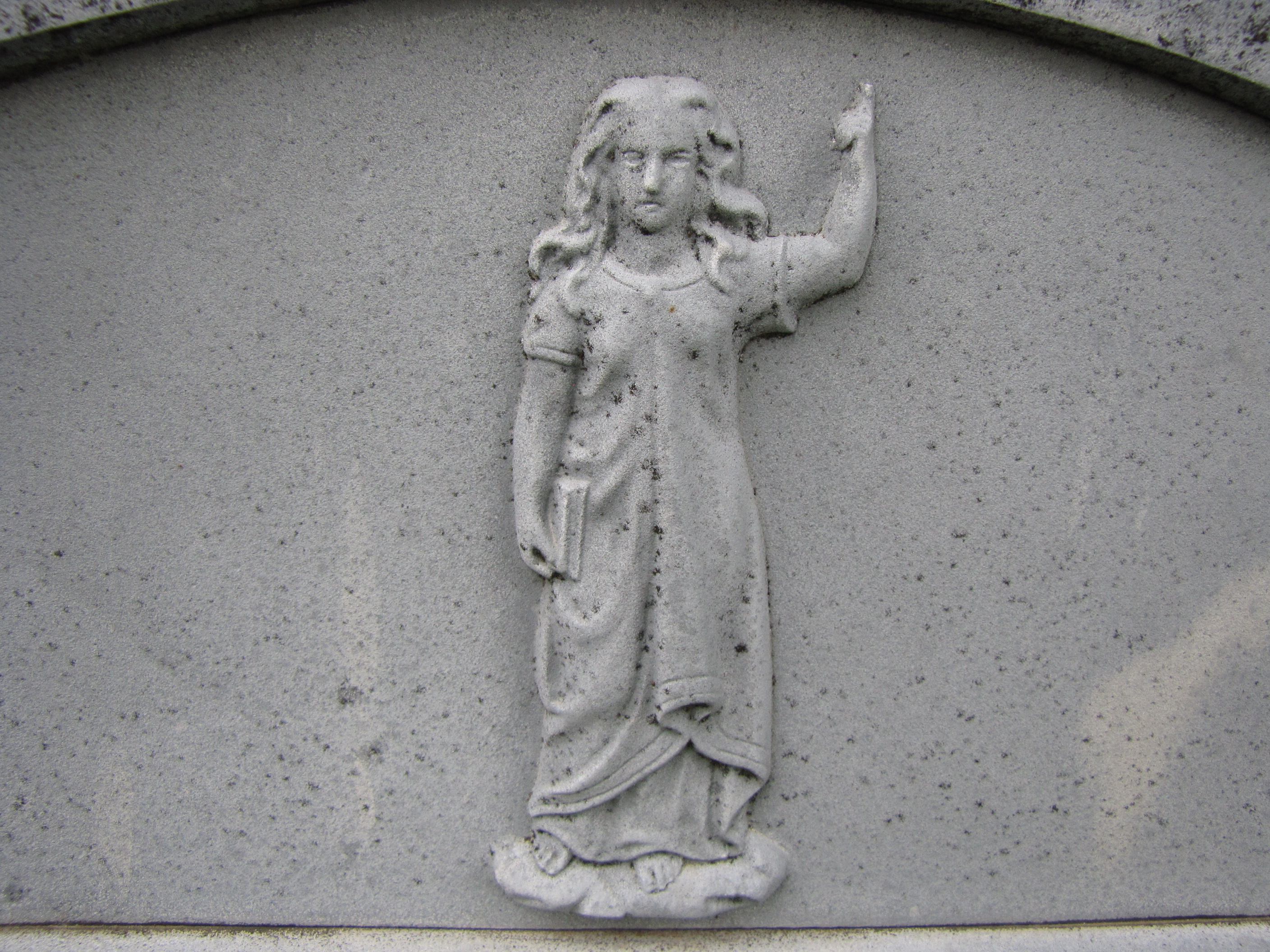
Some popular symbols came in multiple forms. The symbol of the classically dressed woman holding a book in one hand and pointing to the Heavens with the other, for instance, could be ordered as a bas-relief facing upwards or straight ahead–left arm in the air or right–for display on a marker.

The same symbol could be ordered as a full three-dimensional statue.  Bases for the statue could be special ordered, too.  The statue and the grave marker could be made entirely of zinc and could also be mounted on a stone base.

Woodland Cemetery, Des Moines, Iowa

Woodland Cemetery, Des Moines, Iowa

Posted in Symbolism, Zinc Markers | 1 Comment

Schoolhouse

IMG_5300

The inscription on the front of the schoolhouse:

HARRY M. HAYS

1850-1923

EDWIN  (POP) BOWERS

1873-1940

HIS WIFE

LU. NELL BOWERS

1876-1973

The inscription on the front of the schoolhouse:

WM. A. HAYS

APR. 14, 1879,

MAR. 29, 1880.

ALBERT HAYS

JULY 8, 1852,

SEPT. 17, 1877.

The inscription on the side panel of the schoolhouse:

ALEXANDER HAYS

OCT. 30, 1850,

APR.30, 1896.

HARRY BAKER

SON OF E. H. & N. BOWERS

MAY 6, 1895,

APR. 28, 1896.

Side panel of the schoolhouse:

JOSEPHINE BOWERS

JULY 1, 1909

MAR. 15, 1983

ELLA M. BOWERS

MAY 2, 1907

MAY 12, 1987

EDWIN H. BOWERS

NOV. 22, 1905

AUG. 11, 1988

Cave Hill Cemetery at Louisville, Kentucky, has many examples of monumental art.  In this example, the Hays family chose a schoolhouse.  What is unclear is what the significance to the schoolhouse it to the family.

Posted in Uncategorized | 3 Comments

Cherub and the lyre

IMG_5218

CHARLIE,

SON OF

CHRIS & MARY

KLIPPEL

SAFE IN THE ARMS OF JESUS

Cherubim, an order or choir of angels, are usually portrayed as chubby babies with wings and often found on the graves of children.  In the angel hierarchy cherubim are considered to be in the second highest order of the nine orders of angels. The Cherubim were sent to Earth to protect the pathway to the Tree of Life.

Here the cherub is playing the lyre.  The lyre is a symbol of Apollo, the Greek god of music. In Christian symbolism, however, it can represent harmony and Heavenly accord and song in praise of the Lord. In funerary art, the lyre can also represent the end of life.

Posted in Angels | 2 Comments

Variations on a boat theme

Fairview Cemetery, Council Bluffs, Iowa

Fairview Cemetery, Council Bluffs, Iowa

The Western White Bronze Company of Des Moines, Iowa, and the other companies that produced zinc funeral monuments made many variations.  The popular symbols came in multiple forms.  The various symbols could be bolted in place by special order much the same way that an erector set is bolted together.  Sometimes a symbol was available in a bas-relief and sometimes it could be purchased as a statue in the round.  Others such as this boat could be found by itself or with a dove ascending over the boat.

Since ancient times, the imagery of the boat to ferry a soul from one realm to the other has been a part of the symbolism of death.  In Greek mythology, the River Styx wrapped its way around Hades (the Underworld) nine times.  To cross from this life to the next, the dead had to pay with a coin to be ferried from the realm of the living to the realm of the dead.  The toll was placed in the mouth of the deceased to pay Charon, the ferryman.  It was said that if the dead person did not have the coin, he was destined to wander the shores of the River Styx for a century.  The “boat” was one of the images found on Victorian graves to represent the crossing from one world to the next.

In the case of the marker above, it is not Charon ferrying the soul to the other side but a winged angel, whose way is lit by a torch radiating light on the front of the boat.  In the marker below a dove is added.  Many symbols found on gravestones have multiple meanings. The dove is one of those.

Several references in the Bible refer to the dove as a symbol of the Holy Spirit. Matthew 3:16 reads, “And Jesus, when he was baptized, went up straightway out of the water: and, lo, the heavens were opened unto him, and he saw the Spirit of God descending like a dove, and lighting upon him.” In Mark 1:10 the Bible says, “And Straightway coming up out of the water, he saw the heavens opened, and the Spirit like a dove descending upon him.” Again in John 1:32, the Bible reads, “And John bare record, saying, I saw the Spirit descending from heaven like a dove, and it abode upon him.”

Along with the dove symbolizing the Holy Spirit, the dove is also closely associated with peace, often depicted with a sprig of an olive in its beak. This, too, originated in the Bible. After the waters receded in the story of Noah, the dove appears. Genesis 8:11, “And the dove came in to him in the evening; and, lo, in her mouth was an olive leaf pluckt off; so Noah knew that the waters were abated from off the earth.”   It was a sign of God’s forgiveness.

Woodland Cemetery, Des Moines, Iowa

Woodland Cemetery, Des Moines, Iowa

Posted in Symbolism, Zinc Markers | Leave a comment

Bloomers

Fairview Cemetery, Council Bluffs, Iowa

Fairview Cemetery, Council Bluffs, Iowa

The inscription on the original tombstone:

AMELIA JENKS

WIFE OF

D. C. BLOOMER

DIED

DEC. 30, 1894

AGED

76Ys. 7Ms. 3Ds.

A pioneer of woman’s

Emancipation


DEXTER C.

BLOOMER

DIED

FEB. 24, 1900

AGED

83 Ys. 7Ms. 20Ds.


Inscription on the granite block placed later in front of the original tombstone:

IN 1855 THE BLOOMERS CAME TO COUNCIL BLUFFS.  AMELIA WAS ALREADY INTERNATIONALLY PROMINENT FOR HER ADVOCATION OF TEMPERANCE AND WOMEN’S RIGHTS.  IN THE LILY, THE MAGAZINE SHE EDITED AND PUBLISHED, SHE PROMOTED DRESS, REFORM, PUBLICIZING THE BLOOMER GARMENT.  LOCALLY DEXTER HELPED ESTABLISH A BANK AND THE COMMUNITY SCHOOL SYSTEM AND SERVED ON CITY AND STATE SCHOOL BOARDS.  HE WROTE AMELIA’S BIOGRAPHY IN 1895.


Amelia Bloomer’s name has become synonymous with the loose fitting clothing that she advocated women to wear even though it was not her creation.  Elizabeth Smith Miller designed the long baggy pantalettes that narrowed at the ankles to give women more freedom of movement than the floor-length skirts which were popular during the Victorian Era.  Because Amelia Bloomer was a strong advocate of “Bloomers” in her magazine, The Lily, her name became attached to the style. 

Bloomer[1]

But her influence was more far reaching than the reform clothing she advocated.  Her magazine became the voice of the suffragette movement and gave a place for leaders such as Susan B. Anthony and Elizabeth Cady Stanton to share their reform ideas for temperance and women’s suffrage.

The gray-veined white marble tombstone at the Fairview Cemetery at Council Bluffs, Iowa, is badly weathered, the finial that topped the monument is missing and the inscription is faint but legible.  An additional granite block with an inscription has been placed in front of the original tombstone but is not set. 

Posted in Famous graves | 3 Comments

Asleep

Woodland Cemetery, Des Moines, Iowa

Woodland Cemetery, Des Moines, Iowa

Only sleeping


Dear Mother in Earth’s thorny paths,

How long thy feet have trod.

To find at last this peaceful rest,

Safe in the arms of God.


Sleep on sweet babe, and take thy rest,

God calls away when He thinks best.


Asleep in Jesus! Peaceful rest,

Whose waking is supremely blest.


Happy infant, early blest,

Rest, in peaceful slumber, rest.


There is rest in Heaven.


May he rest in peace.


Weep not, he is at rest.


Sleep on brother, thy work is done,

Jesus has come and borne thee home.


Asleep in Jesus!  Blessed sleep,

From which none ever wake to weep!


Alas! She has left us, her spirit has fled,

Her body now slumbers along with the dead.


To a glad dream of slumber, which wakens in bliss,

She hath passed to the world of the holy from this.


Death is but to sleep in Jesus,

When this life is o-er:

And to sorrows, sins, diseases,

Never to awaken more.


She sleeps in the valley so sweet,

But her spirit has taken its flight:

Lo! Her form is but dust ‘neath our feet,

While she is an angel of light.


Asleep in Jesus precious thought!

With peace and life eternal fraught:

He said—whose power upholds the sky—

Believing ye shall never die.


How sleep the brave, who sink to rest,

By all their country’s wishes blest.


Rest, soldier, rest, thy warfare o’er,

Sleep the sleep that knows no breaking,

Dream of battlefields no more,

Days of danger, nights of waking.


He is not dead but sleepth.

He giveth his beloved sleep


Weep not, she is not dead, but sleepth.


Them also who sleep in Jesus will God bring with him.


There are many epitaphs to be found in cemeteries that equate death to sleep and to rest.  Those words are meant to comfort the living.

Sometimes the gravestones themselves convey that metaphor.

IMG_0659

In the Woodland Cemetery at Des Moines, Iowa, the gravestone for three children of Jefferson Scott and Sarah Polk is made to look like a bedstead with three small pillows at the headboard, one pillow for each child.  The gravestone is badly weathered but the names of each of child was carved in an oval on the headboard.  The footboard is carved with their parents’ names, “Children of J. S. & Julia Polk“.

Jefferson Scott Polk was a highly successful Des Moines lawyer and business man.  He and his wife, Sarah Herndon Polk had six children, three of whom died in childhood—Lutie Lee (August 8, 1861-March 10, 1871; Daniel S. (March 8, 1870-March 12, 1871); Mary Blanton “Mollie” (December 22, 1854-May 22, 1863)—are buried next to their parents in the bedstead gravestone.

Note: I first saw the gravestone above on the Website: www.graveaddiction.com.  Beth Santore, the Webmaster, has photographed hundreds of cemeteries in Ohio, as well as, making photo forays into neighboring states.  I highly recommend her Website, especially for those tramping around Ohio graveyards!


Posted in Symbolism | Leave a comment

Budded on Earth

Greenbush Cemetery, Lafayette, Indiana

Greenbush Cemetery, Lafayette, Indiana

HERRMAN REINHARDT

BORN JULY 18, 1866.

DIED MARCH 17, 1887.

WHERE IMMORTAL SPIRITS REIGN

THERE WE SHALL MEET

AGAIN.

Life is fragile, especially young life.  Many funerary motifs represent children–shoes, seedpods, cribs, cherubs–but one of the most common is the hanging bud.  Often this symbol is coupled with the epitaph, “Budded on Earth, To bloom in Heaven”.

The broken rose bud displayed on this zinc monument represents the flower that did not bloom into full blossom, the life that was cut short before it had a chance to grow to adulthood.

IMG_2874

Posted in Children's Graves, Symbolism, Zinc Markers | Leave a comment

In God We Trust

St. Paul's Lutheran Church Cemetery, rural Indiana.

St. Paul’s Lutheran Church Cemetery, rural Indiana.

ROBERT

SON OF

 & E. BURRES

BORN

FEB. 19, 1836

DIED

JUNE 25, 1865.

HE WAS IN CO. D. 80 REG. IND. VOL.

THEN CONQUER WE MUST

FOR OUR CAUSE IT IS JUST

AND THIS BE OUR MOTTO

IN GOD WE TRUST.

This broken rounded-top white marble gravestone commemorating the grave of a Civil War soldier displays a soldier, though, weathered and difficult to discern, and a patriotic and reverential epitaph recognizing the solemn sacrifice for the ultimate cause of freedom.


Posted in Epitaphs | Leave a comment