The Mighty Lion


Graceland Cemetery, Chicago, Illinois

Graceland Cemetery, Chicago, Illinois

COLUMBUS R. CUMMINGS

1834-1897

SARAH C. MARK CUMMINGS

1841-1909

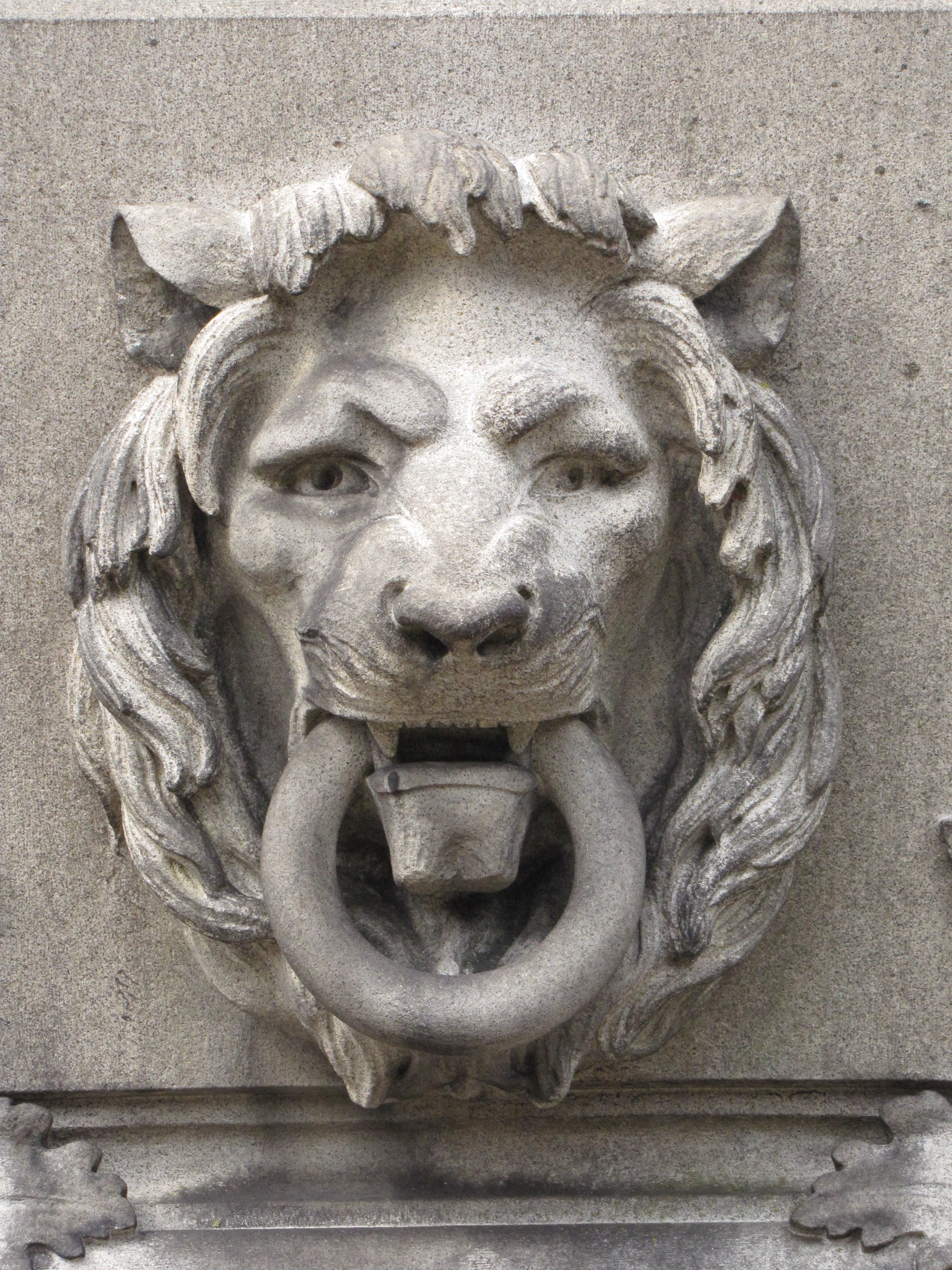
The tombstone of Columbus Cummings, Chicago millionaire rail road magnate, and his wife, Sarah, in the Graceland Cemetery at Chicago features a draped sarcophagus.  The grand unpolished gray granite monument features three symbols: the lion head, the acanthus, and the laurel wreath.

The lion has long been a symbol of bravery, strength, and majesty. In popular culture, the lion is known for its power and is called King of the Jungle and King of the Beasts.

The acanthus

The acanthus leaf on a grave was actually the inspiration for the creation of the Corinthian column capital!  Here, thousands of years later, the acanthus leaf is again found decorating a tomb.  In funerary art, the acanthus represents the difficult journey from life to eternal life.

The laurel wreath

The laurel wreath dates back to Roman times when soldiers wore them as triumphal signs of glory. The laurel was also believed to wash away the soldier’s guilt from injuring or killing any of his opponents. In funerary art the laurel wreath is often seen as a symbol of victory over death.

IMG_9125

The lion

The lion is often used as a royal emblem, found eight times in the Royal Arms for the Queen of England alone!

The lion in funerary art symbolizes the power of God. It is often depicted flanking the entrance of a tomb to guard against evil spirits to the passageway to the next realm. It also represents the courage of the souls the lions guard. There is also a connection of the lion to the Resurrection. It was once believed that lion cubs were born dead but would come to life after three days when the cubs were breathed upon by a male lion. The three days is significant because it is the number of days Jesus was in the tomb before he was resurrected.

Posted in Uncategorized | 2 Comments

Grape Clusters

Oakland Cemetery, Sandusky, Ohio

Oakland Cemetery, Sandusky, Ohio

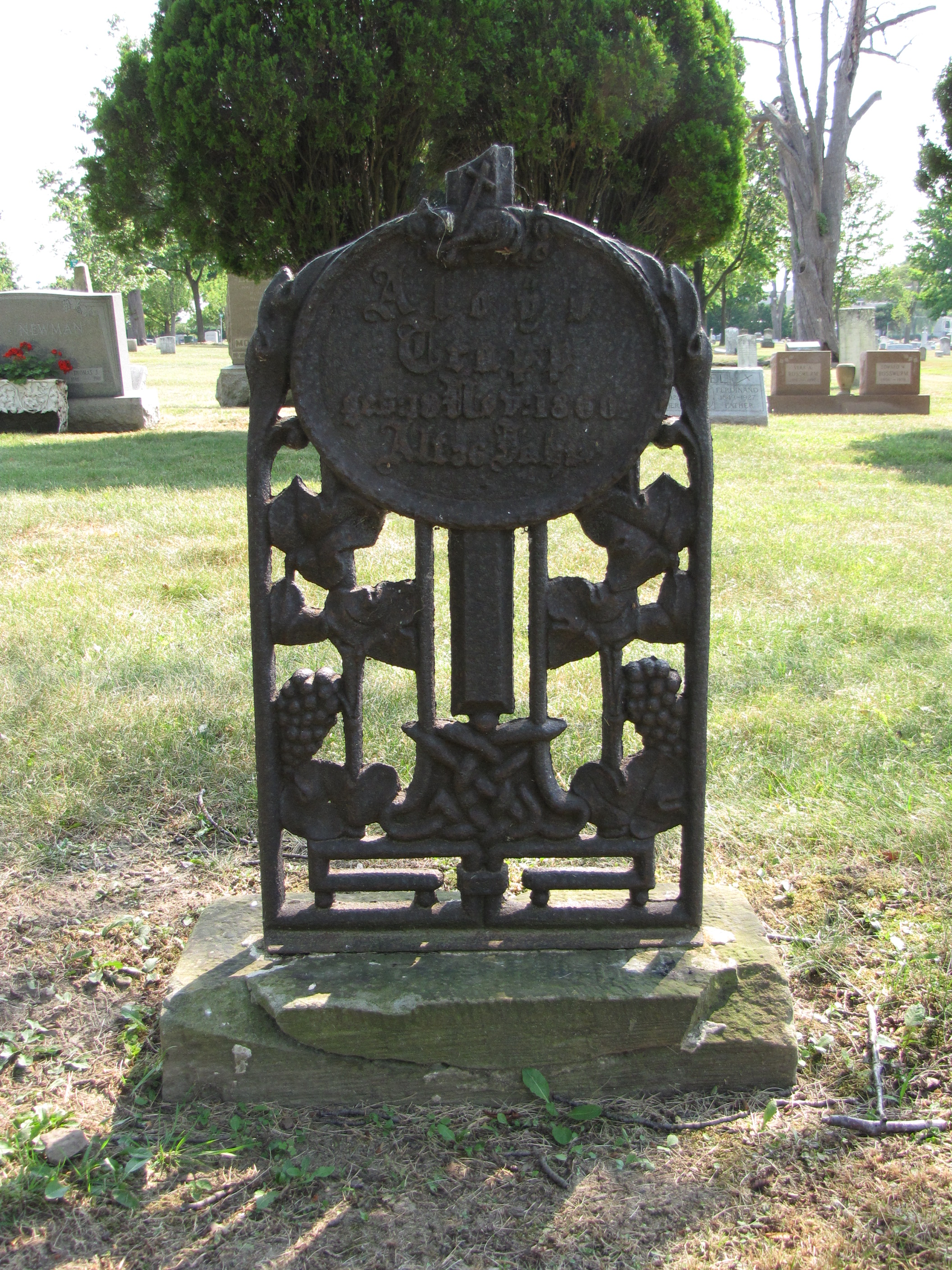
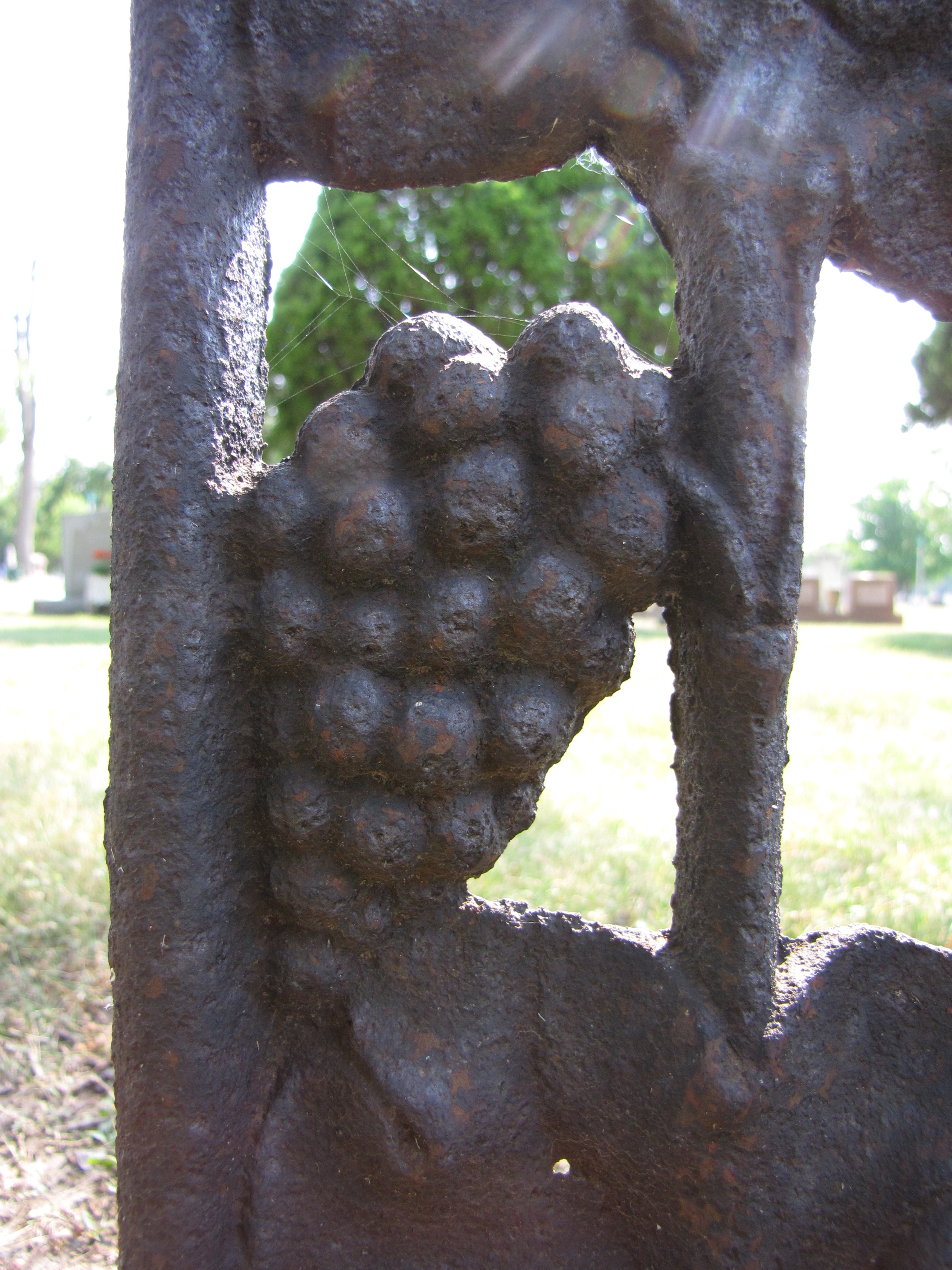
The cast-iron gravestone in the Oakland Cemetery at Sandusky, Ohio, is decorated with  grape clusters and leaves.

In Christianity the Eucharist, which is part of a religious ceremony also called Holy Communion, is a time when Christ’s followers are to do as Jesus instructed at the Last Supper.  Jesus broke bread and said, “This is my body” and drank wine and said, “This is my blood”.  The grape in cemetery symbolism represents the blood of Christ.

IMG_5477

Posted in Symbolism | Leave a comment

Taft’s Gravestone Revisted

Arlington National Cemetery, Arlington, Virginia

Arlington National Cemetery, Arlington, Virginia

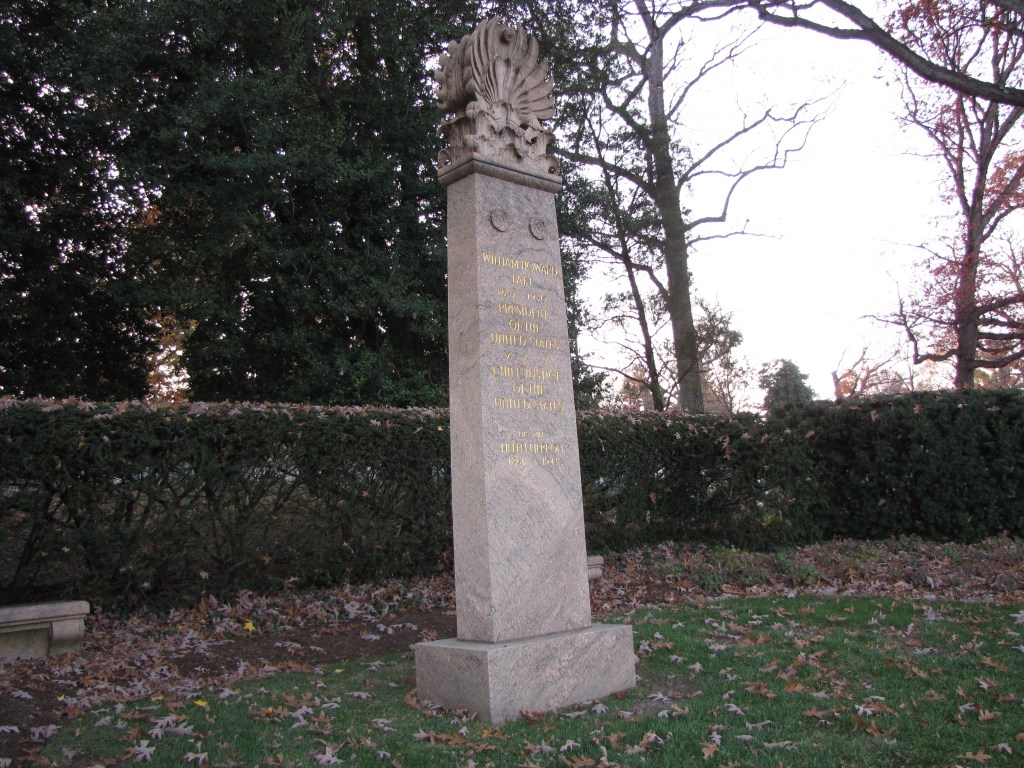
The elegant 14 and a half foot tall Stony Creek granite monument designed by James Earl Frazer marks the graves of United States President William Howard Taft and his wife and First Lady, Helen Herron Taft.  Gold lettering states their names on the marker.

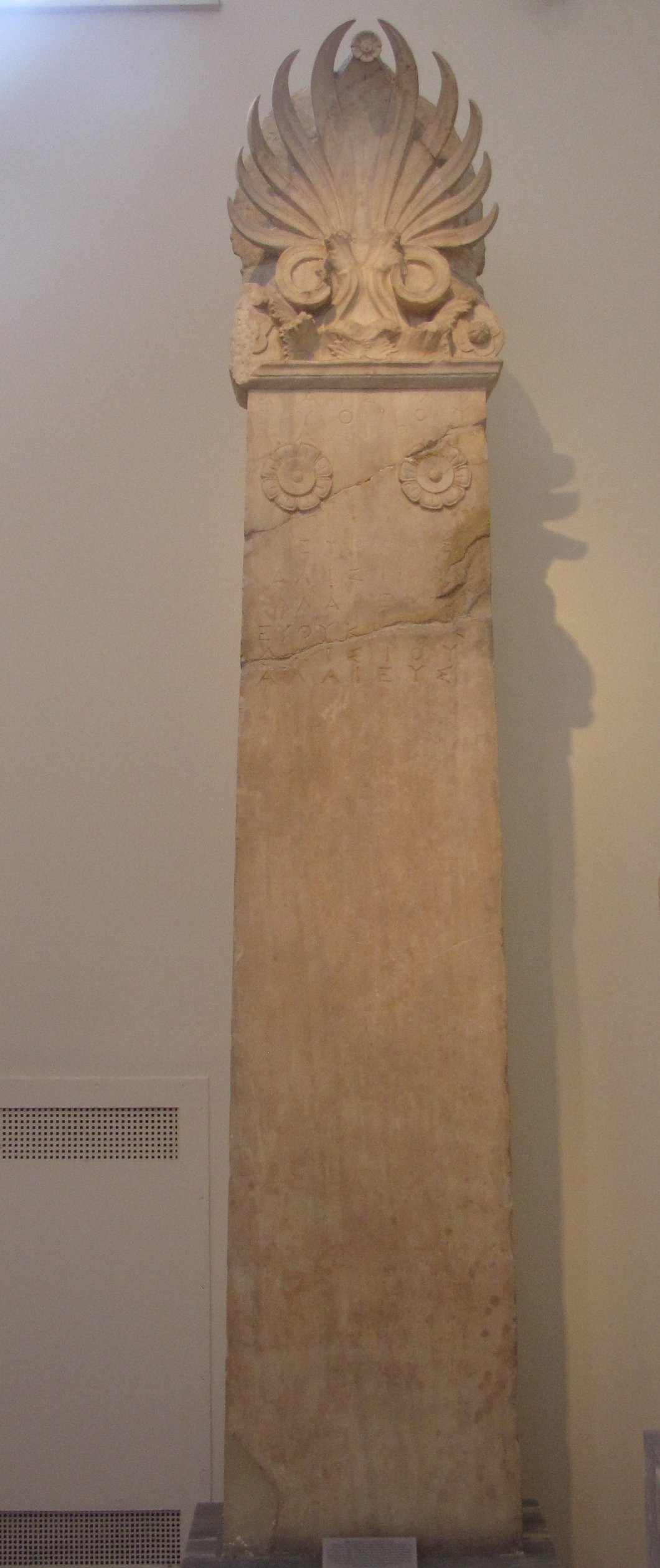
The stele, a stone or wooden slab generally taller than it is wide and designed as a funeral commemorative, dates back many centuries and is one of the oldest forms of gravestones.  Many examples of steles can be found in the National Archaeological Museum of Athens including one that looks remarkably similar to the grave marker designed for President Taft and his wife.

IMG_3715

The Greek Stele found in the museum was created for Daisios, son of Euthias on the east coast of Attica in Southern Greece.  The stele dates to the middle of the 4th Century B.C. and has two rosettes on the shaft and is topped with an acroterion motif just as is the Taft monument.  The acroterion motif is a stylized palm leaf, which can be found on classical Roman and Greek architecture.  The word acroterion comes from the Greek meaning summit.  This motif has its origins in Egyptian art and architecture.

Taft was born into a prominent family of Ohio politicians, and was an accomplished public servant who honorably served the country for over 50 years; the only person in American history to serve in the two most powerful positions in the United States government, as president and as Chief Justice of the Supreme Court.

Posted in Presidential graves | 1 Comment

The Oil Lamp

Greenbush Cemetery, Lafayette, Indiana

Greenbush Cemetery, Lafayette, Indiana

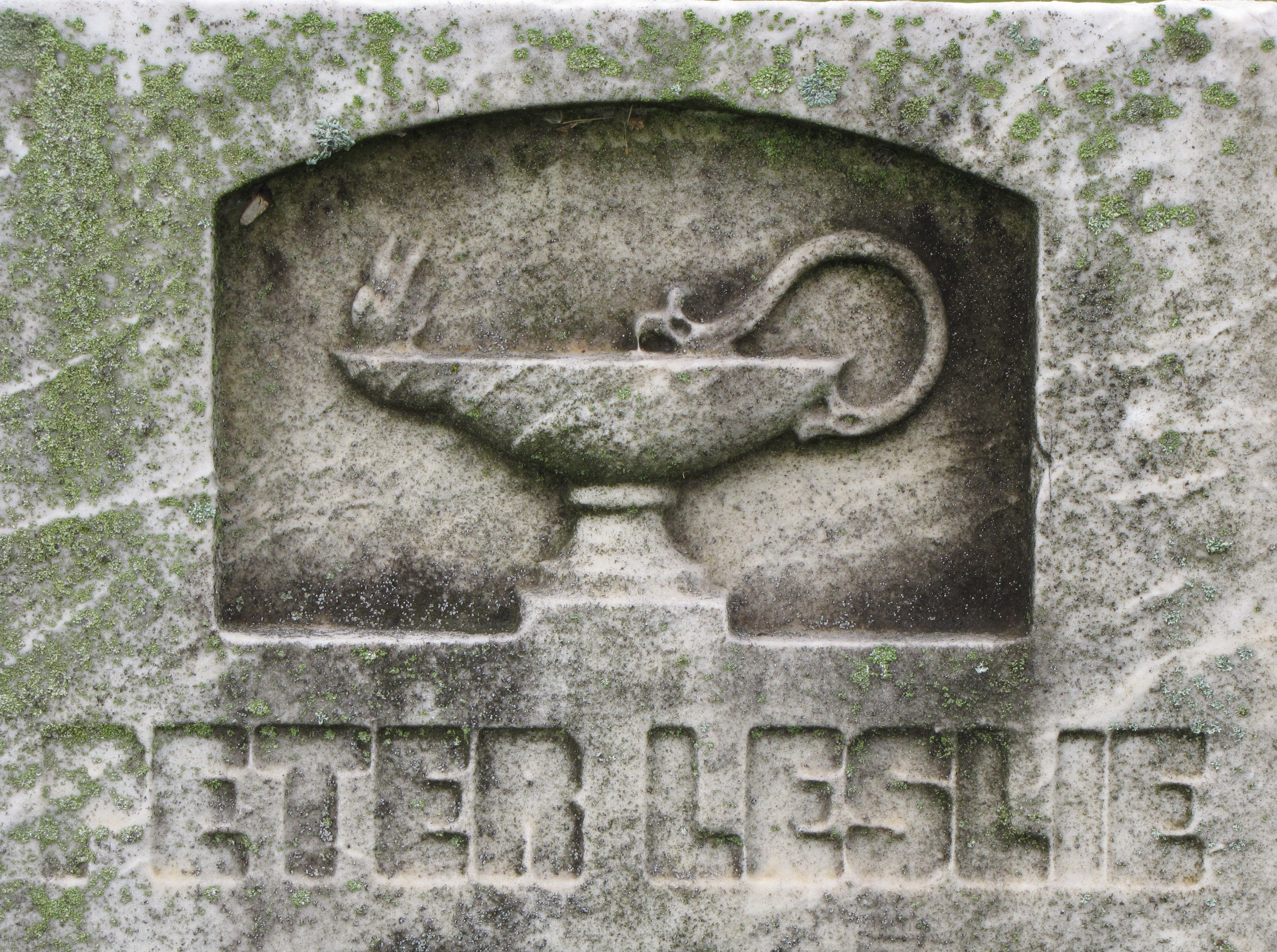
An oil lamp is carved into the top of Peter Leslie’s white-marble tablet gravestone. A flickering flame can be seen coming from the lamp, providing light.

The Bible verse, II Samuel: Chapter 22, verse 29, says, “For thou art my lamp, O LORD: and the LORD will lighten my darkness.”

The light emanating from the lamp represents the pathway to Truth and to Knowledge.

IMG_2849


Posted in Symbolism | Leave a comment

The Black Angel and Co-eds

IMG_0672

EDDIE DOLEZAL


Like a bud just opening,

Commenced my life to be,

But death came without mercy,

without pity

The Lord had sent for me.

I was not granted time to bid adieu.

Do not weep for me, my dear mother.

I am at peace in my cool grave.


RODINA FELDEVERTOVA

NICHOLAS FELDEVERT 1825-1911

TERESA FELDEVERT 1836-


PRO MNE SLUNCE MRAKY

KRYLY GEST BYLA TRNITA NEZ

UTEGHY UBIHALY DNOYE MEHO

ZIYOTA PRAGI SYOJI VYKONALAS

UDZY JEN K DOBRU SUET RUCE

SKLADAS HLAVA KLESA DUGH M

DALKY OKLETA KDE

POSTRASTEGH TEBESTALA

OCEKAYN ODPLATA

According to the Oakland Cemetery Website, this Bohemian inscription translates to:

The sun and clouds stood above my journey

There were tough and joyful days in my life.

You did my work just to make the world better.

You fold your hands and your head goes down.

Your spirit flies away where everlasting reward

Is waiting for you after hardship.


Iowa boasts two black angels.  One is in Council Bluffs at the Fairview Cemetery, erected to the memory of Ruth Anne Dodge and her visions of the angel of death offering her a drink of the water of life.

The second black angel is in the Oakland Cemetery at Iowa City, Iowa.  This black angel has darker stories surrounding it which probably began to swirl when the bright bronze statue turned black.  Instead of oxidation being the reason for the color change, rumors began to emerge about the “mysterious” woman buried beneath the angel.

Teresa Dolezal and her son, Eddie, emigrated from Bohemia to America where she continued her practice as a midwife.  Eddie died at the age of 18 with meningitis and was buried underneath a tree-stump gravestone in the Oakland Cemetery.  After her son’s death, Teresa moved to Eugene, Oregon, where she met and married Nicholas Feldevert.  Not long after their marriage, Nicholas died.  Teresa moved back to Iowa City.

Teresa hired Bohemian artist, Mario Korbel, of Chicago, to create an angel for her husband’s grave.  She also gave instructions that the angel was to hover over the body of her son’s grave, too.  Korbel created the angel with one wing spread open over Eddie’s grave.  Teresa died in 1924 and her ashes were placed underneath the grave ledger next to her husband’s remains.

No one remembers for sure when the angel turned color but that is when the rumors started.  The stories about the reasons why range from fanciful to evil and suggest that the color change was due to the nature of the woman buried beneath the angel.  One story goes that on the dark and stormy night of Teresa’s burial a lightning bolt struck the angel and turned it black instantly.  Another rumor suggests that the angel itself portends of the evil—most graveyard  angels, they say, look upward with their wings lifted toward Heaven, but this one looks downward.  Ominous.

Stories emerged that Teresa had sworn to her husband that she would remain faithful to his memory until his death and that the angel turned black was proof of her infidelity.  Others were more dire even, saying that the angel turned black, because it was not meningitis that killed her son, but Teresa herself even though the records tell a completely different story.  The black angel, then, was a reminder of her deed and a reminder to all of what evil can do.  The black angel was a beacon to remind people to be good.

Leave it to a college town to turn the stories of evil into a reason to challenge the mysterious circumstances behind the color change of the sculpture and even build upon them making it a place for college co-eds to kiss!  The Iowa City college students created even more fanciful myths.  They say that if a college girl is kissed in the moonlight near the black angel, she will die within six months.  They also say that if you kiss the black angel you will die instantly.  Or touching the black angel at the stroke of midnight will bring death within seven years.  They also say if a virgin is kissed in front of the black angel the curse will be lifted and the angel will turn back to its original bright bronze color.  Hawkeye co-eds have performed many experiments of the kissing nature in front of the black angel and the sculpture is still black.  No deaths have been reported either as a result of the efforts of the college students—yet the rumors are retold with vigor and enthusiasm.

IMG_0677

Posted in Angels | 4 Comments

The Masonic Emblem

IMG_0819

The metal marker from the Trinity Church graveyard at New York marks the grave of a Mason.  It is the metal reproduction of what is perhaps the most recognizable emblem of the Freemasons, the square and two compasses.  In this example the letter “G” appears in the middle of the emblem.  Often the emblem is seen without the letter “G”.

Each component of the symbol represents a different Masonic orthodoxy, though, these are not hard and fast:

The compasses represent the boundaries of wisdom a person should have the strength to circumscribe and stay within.

The square symbolizes virtue in all actions, just as the expression “square deal” means treating people with fairness.

The letter “G” seems to have more than one meaning.  It could possibly mean God, as in the creator of the universe; or Gimel, which is the word for the third letter of many Semitic languages.  The number three is significant to many Masonic rituals and beliefs.  Some also believe the “G” may represent geometry.

Posted in Metal Markers | 2 Comments

Two versions of the lamb

Woodland Cemetery, Des Moines, Iowa

Woodland Cemetery, Des Moines, Iowa

The Western White Bronze Company of Des Moines, Iowa, the Monumental Bronze Company of Bridgeport, Connecticut, the Detroit Bronze Company, of Detroit, Michigan, and the other companies that produced zinc funeral monuments, had a wide range of symbols from which to choose.  The companies produced catalogs that salespeople could carry with them to show prospective buyers the many marker design options and large array of symbols were available.

Some popular symbols, such as the lamb, came in multiple forms .  This symbol was offered as a bas-relief and full three-dimensional sculpture.  The lamb is the symbol of the Lord, the Good Shepherd.  It also represents innocence, likely the reason why this motif usually adorns the tombstones of infants and young children.  Most often the lamb is lying down, often asleep and sometimes with a cross behind the lamb.

Rose Hill Cemetery, Missouri Valley, Iowa

Rose Hill Cemetery, Missouri Valley, Iowa

Posted in Zinc Markers | Leave a comment

The Mourning Angel and the Dove

Forest Home Cemetery, Forest Park Cemetery, Illinois

Forest Home Cemetery, Forest Park Cemetery, Illinois

The Baumann Family Monument in the Forest Home Cemetery at Forest Park, Illinois, is adorned with a mourning figure that is carved into the gray granite.  In this case, the mourning figure is an angel.  The Angel’s head is bent in sorrow and she is clasping her hands together, a display of contemplation and grief.   The deeply-carved bas-relief has an almost three dimensional appearance.

To the left of the angel is a dove. Many symbols found on gravestones have multiple meanings. The dove is one of those.

Several references in the Bible refer to the dove as a symbol of the Holy Spirit. Matthew 3:16 reads, “And Jesus, when he was baptized, went up straightway out of the water: and, lo, the heavens were opened unto him, and he saw the Spirit of God descending like a dove, and lighting upon him.” In Mark 1:10 the Bible says, “And Straightway coming up out of the water, he saw the heavens opened, and the Spirit like a dove descending upon him.” Again in John 1:32, the Bible reads, “And John bare record, saying, I saw the Spirit descending from heaven like a dove, and it abode upon him.”

Along with the dove symbolizing the Holy Spirit, the dove is also closely associated with peace, often depicted with a sprig of an olive in its beak. This, too, originated in the Bible. After the waters receded in the story of Noah, the dove appears. Genesis 8:11, “And the dove came in to him in the evening; and, lo, in her mouth was an olive leaf pluckt off; so Noah knew that the waters were abated from off the earth.”   It was a sign of God’s forgiveness.

The dove, with its white color, is also a symbol of purity and innocence and for that reason is often found the tombstones of children.

Thus the dove symbolizes the Holy Spirit, peace, and purity.

Posted in Angels, Symbolism | Leave a comment

Mother and Daughter

Fairview Cemetery, Council Bluffs, Iowa

Fairview Cemetery, Council Bluffs, Iowa

ANNA A.

WIFE OF

J. S. FLAGEOLLE

DIED JUNE 8, 1887

AGED 24 YRS 2 MOS. 9 DYS.


TAKE THEM O FATHER IN

THINE ARMS

AND MAY THEY HENCEFORTH

BE,

A MESSENGER OF PEACE

BETWEEN

OUR HUMAN HEARTS AND THEE.


LEULLA

DAU. OF

ANNA A. & J. S. FLAGEOLLE

DIED AUG. 8, 1883

AGED 8 MOS. 28 DYS.


WE MISS THE BRIGHT EYES

OF OUR DARLING CHILD;

AND THE SWEET ROSY LIPS

THAT SO OFT ON US SMILED.


SUFFER LITTLE CHILDREN.


The Western White Bronze Company of Des Moines, Iowa, produced this draped and decorated column marker out of zinc.  The marker was created for a mother and daughter.  Several different symbols adorn the marker, including a boat and a winged cherub.

The winged cherub was a symbol that became popular in the 18th Century.  Winged cherubs replaced the stark and morbid flying death’s heads from our Puritan forefathers.  The cherubs have a childlike countenance of innocence.  The iconography represents the flight of the soul from the body upward to Heaven and the hope of the resurrection.

IMG_0494

Posted in Symbolism | 1 Comment

Artillery and Young Love

Woodland Cemetery, Des Moines, Iowa

Woodland Cemetery, Des Moines, Iowa

SERVANT OF GOD WELL DONE,

THY GLORIOUS WARFARE’S PAST

THE BATTLES FOUGHT THE

VICTORY WON

AND THOU ART CROWNED

AT LAST.


THOMAS G. ORWIG

CAPTAIN OF

BATTERY E FIRST PA

LIGHT ARTILLERY,

ARMY OF THE POTOMAC,

BORN JUNE 24, 1834,

MIFFLINBURG, PA.


MARY E. SIPP,

MARRIED CAPTAIN ORWIG

FEB. 6, 1864.

WITH HIM IN THE ARMY OF THE POTOMAC

FIVE MONTHS.

DIED MARCH 10, 1907.

SHE WAS BLIND OVER 20 YEARS AND TRIUMPHANT WITH SPIRITUAL VISION.

The monument companies that produced zinc markers had a wide array of styles to select from, including this marker that includes two crossed cannon barrels crowning the top.  The marker is not only a testament to Captain Orwig’s military service to his country in the Pennsylvania artillery unit during the Civil War, but also a testament to the love that Thomas and Mary had for one another.  After they were first married while Thomas in the army, Mary followed him to the battlefield for five months of the war.  Not much of a honeymoon.

The marker not only has the crossed cannons as symbolism but also clasped hands below the inscription for Mary.  The hands in this case represent holy matrimony.  In addition, the Great Seal of Iowa is bolted on the back of the marker, along with the state motto, “Our liberties we prize and our rights we will maintain.”  Even though, Thomas was born and fought for Pennsylvania, he and Mary must have loved their adopted state of Iowa.

Note: I first saw the gravestone above on the Website: www.graveaddiction.com.  Beth Santore, the Webmaster, has photographed hundreds of cemeteries in Ohio, as well as, making photo forays into neighboring states.  I highly recommend her Website, especially for those tramping around Ohio graveyards!

Woodland Cemetery, Des Moines, Iowa

Woodland Cemetery, Des Moines, Iowa

Posted in Symbolism | Leave a comment