Weeping Willows

Somerset Cemetery, Somerset, Ohio

Somerset Cemetery, Somerset, Ohio

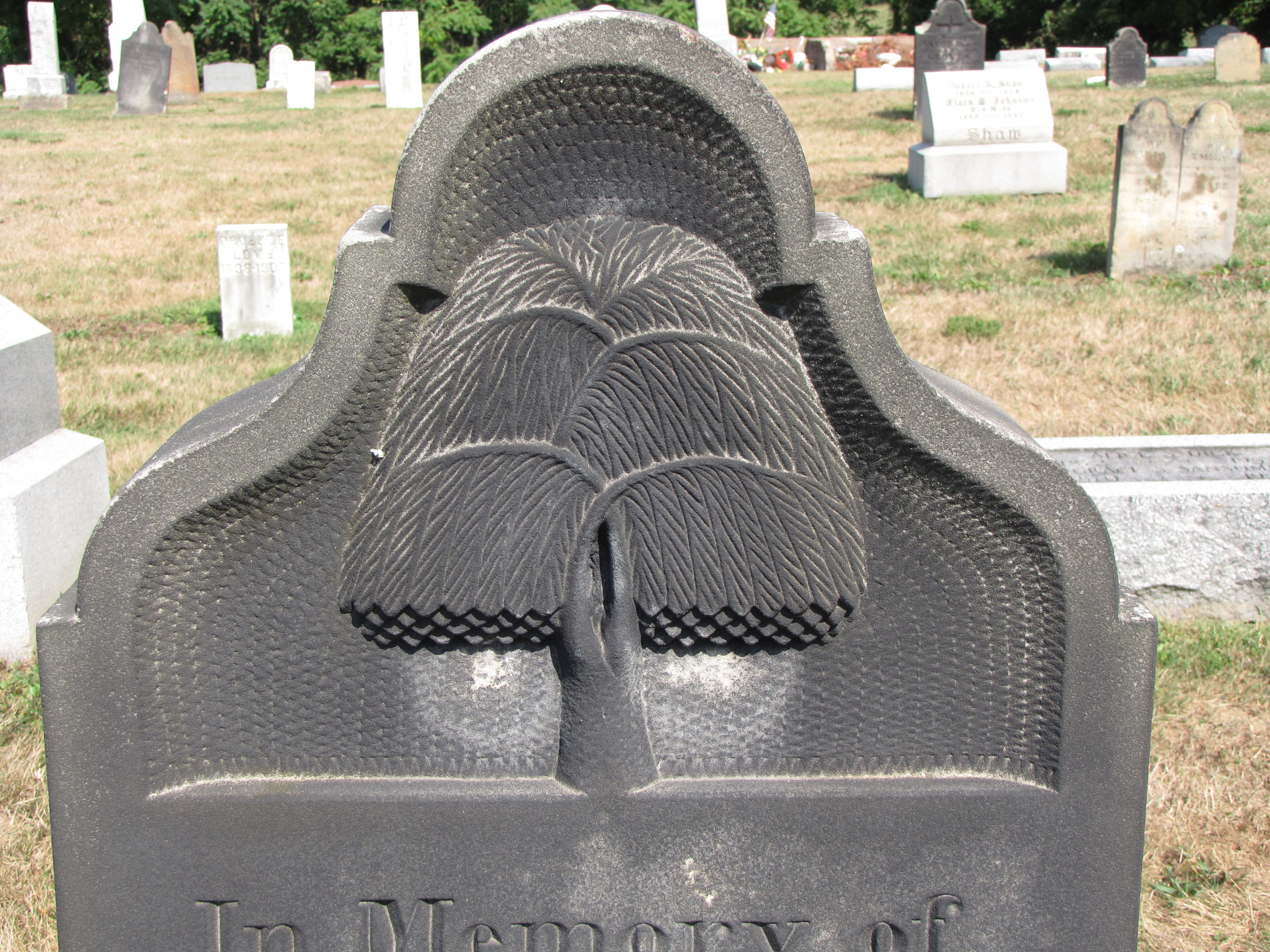
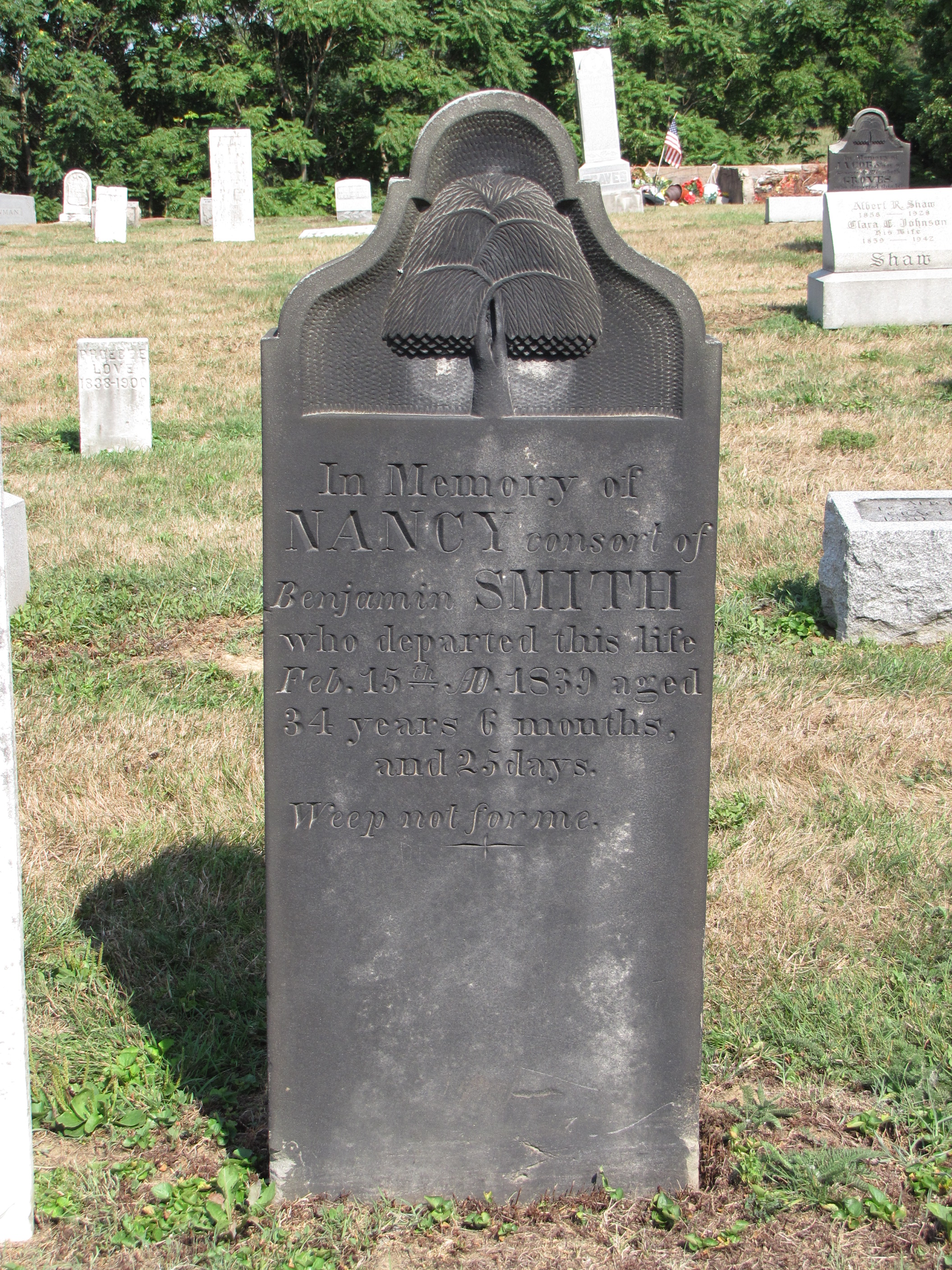
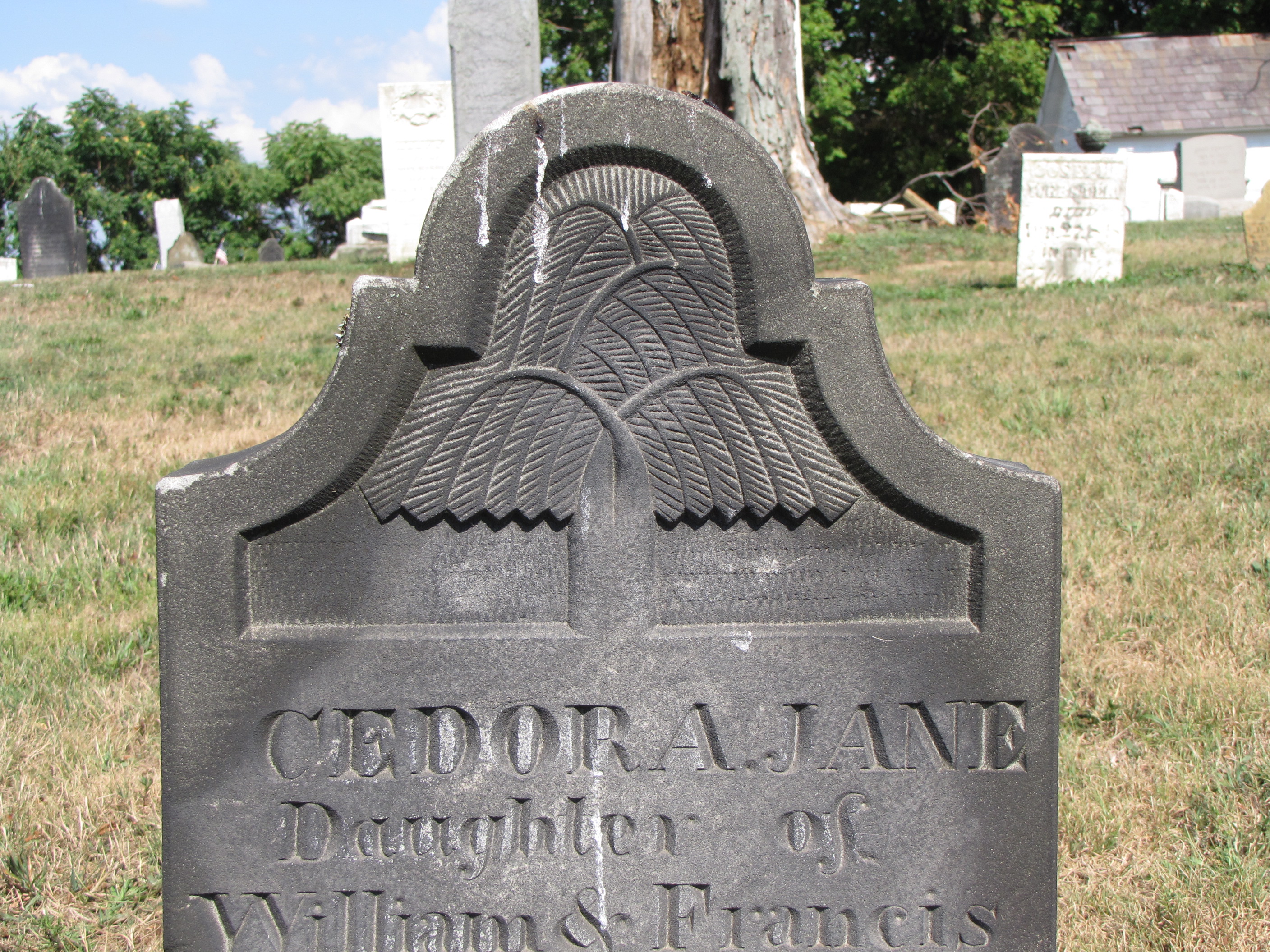
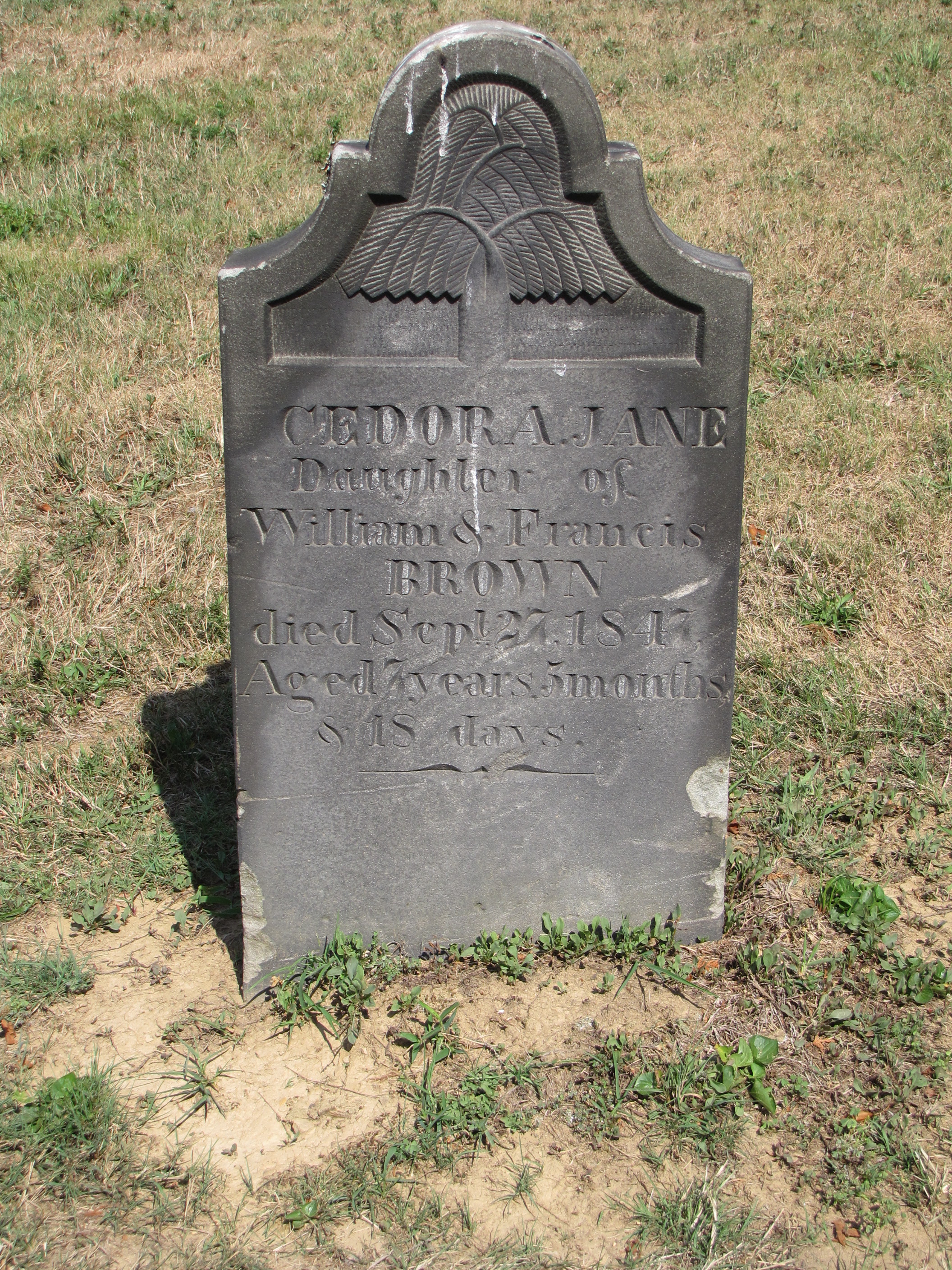
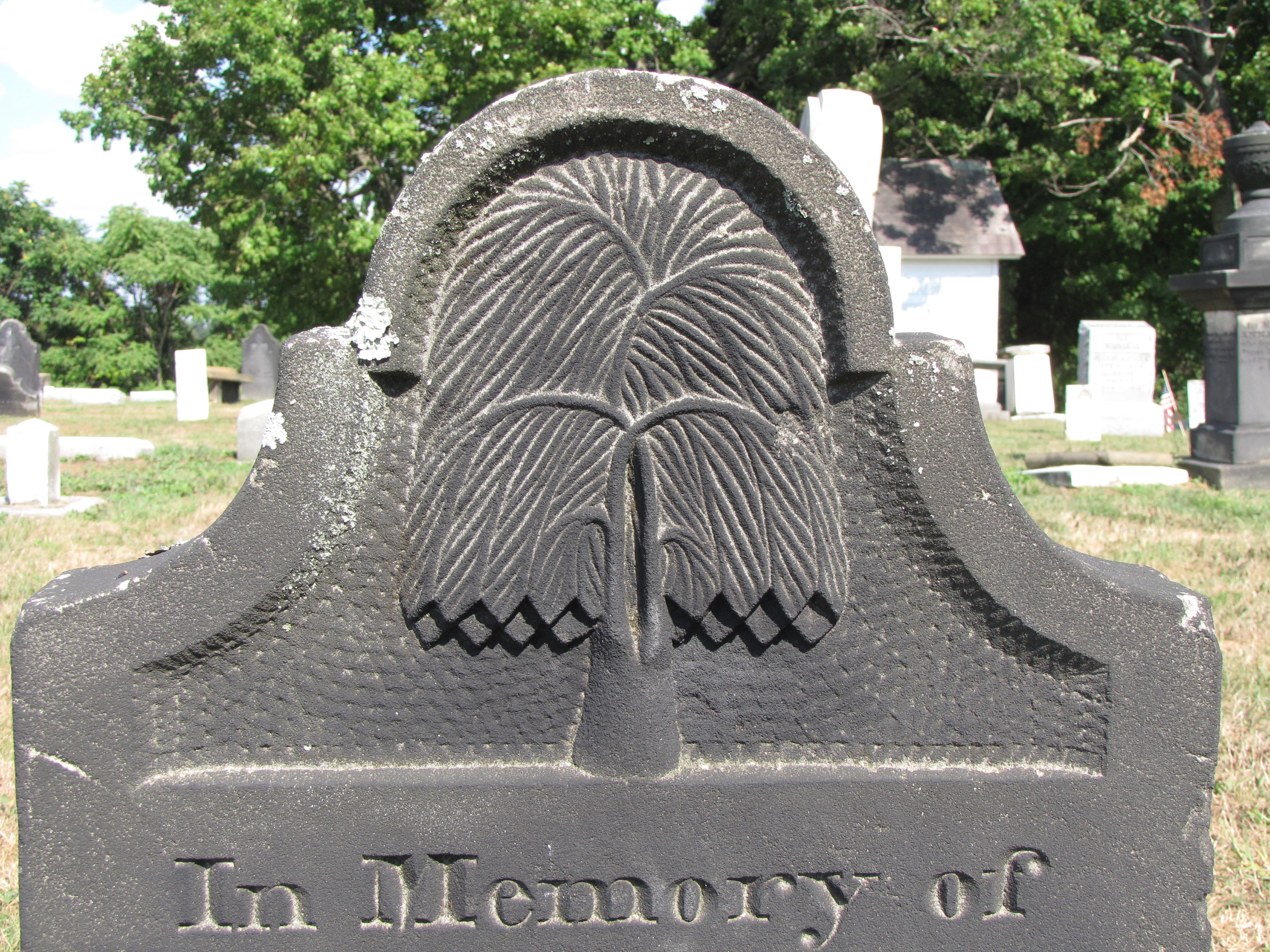
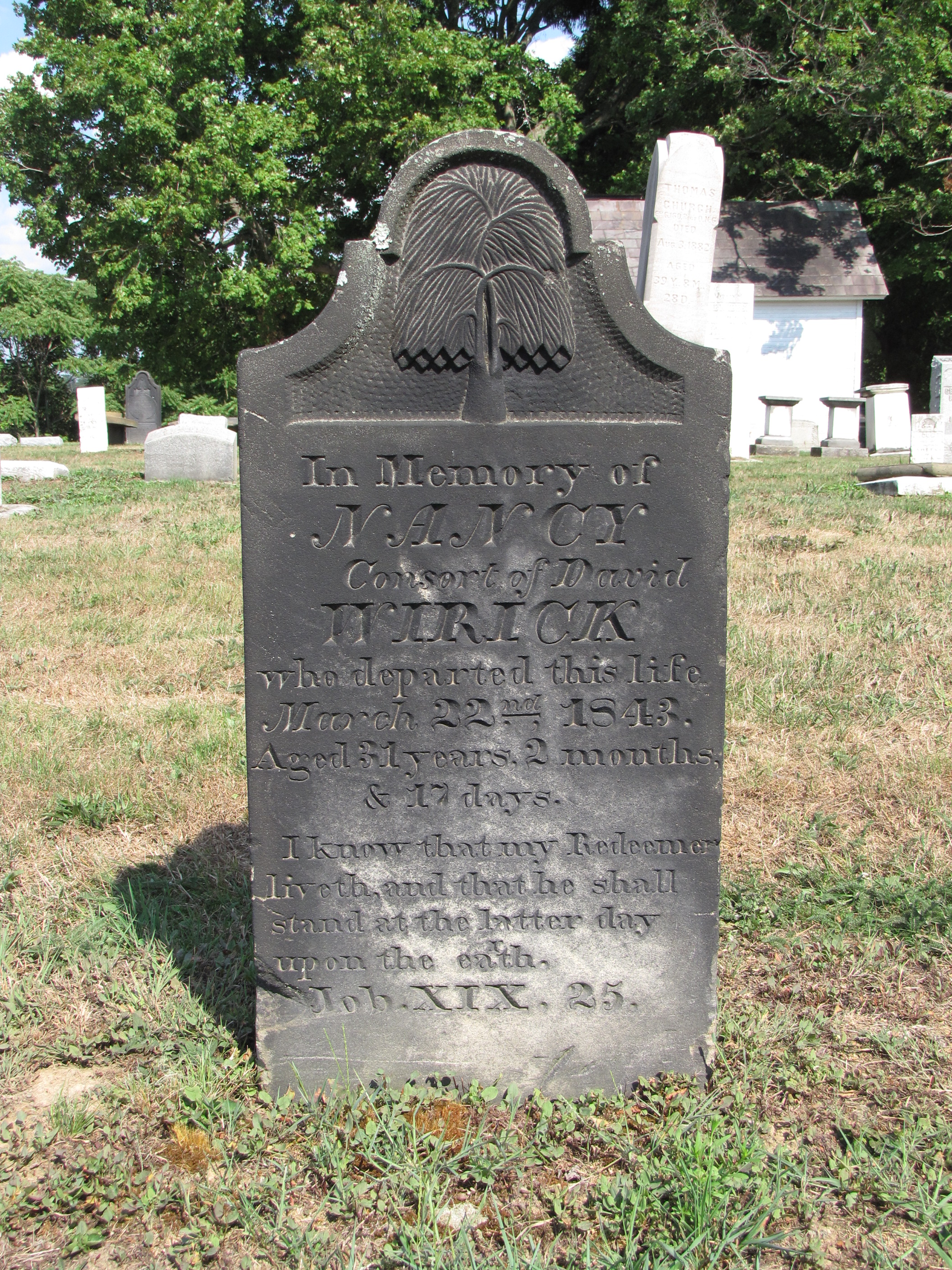
One of my favorite graveyard symbols is the willow.  The Somerset Cemetery at Somerset, Ohio, has many intricately carved examples of gravestones with the willow motif.

The willow as a symbol is sentimental and hints at the human emotions felt during grief.  The willow motif represents what one might expect; sorrow and grief, it is after all a “weeping” willow.

Somerset Cemetery, Somerset, Ohio

Somerset Cemetery, Somerset, Ohio

Another example:IMG_8022


IMG_8021

IMG_7987

IMG_7986

Posted in Uncategorized | Leave a comment

The Lamb and the Little Boy

Cave Hill Cemetery, Louisville, Kentucky

Cave Hill Cemetery, Louisville, Kentucky

Precious Boy

JOHN T.

SON OF

J.H. & K. L. ALDERSON

1894-1897.

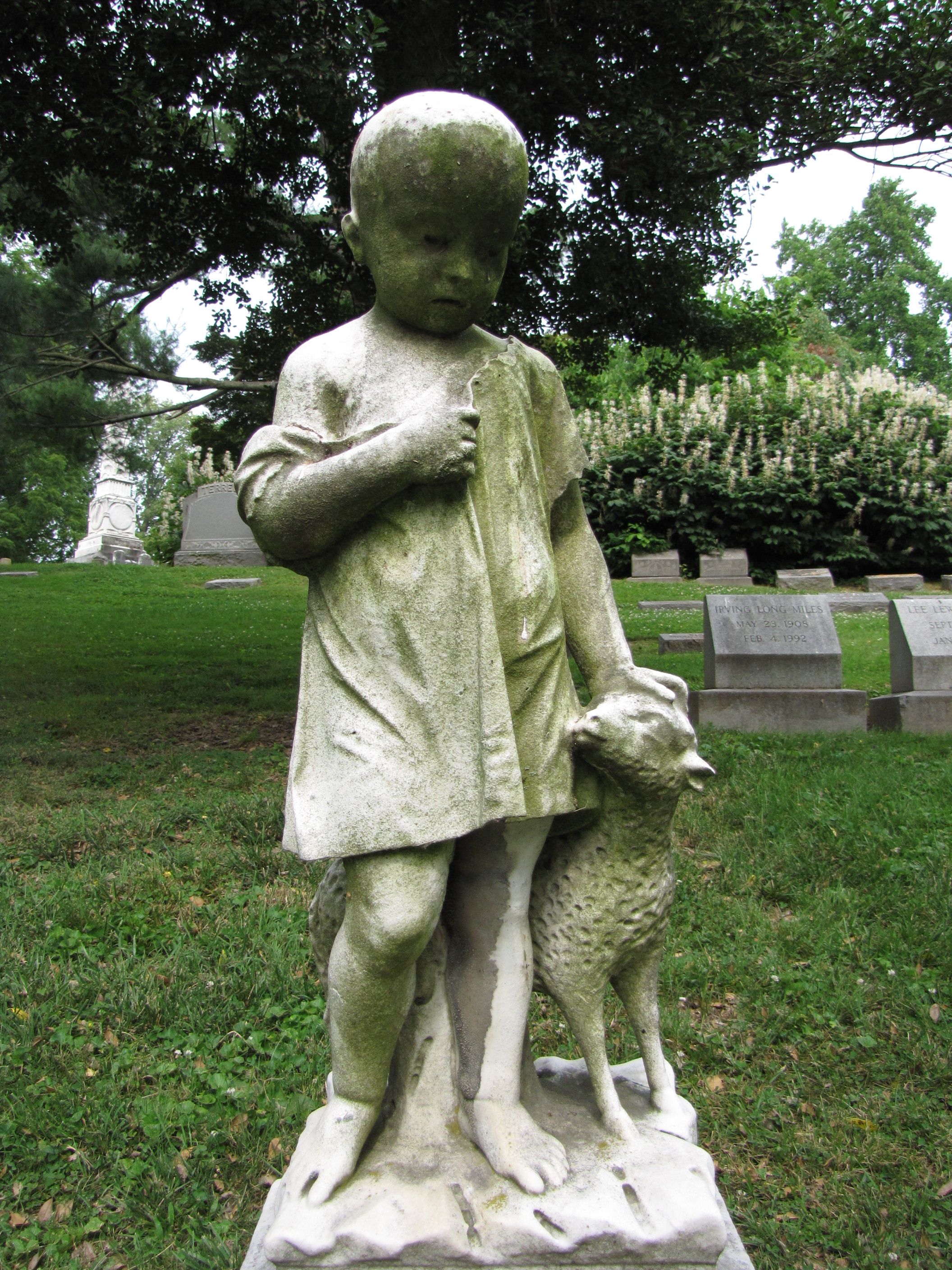
The gravestone of three-year old John Alderson depicts a boy in a dressing gown with his chubby little hand gently touching the head of a small lamb.  The lamb looks up and leans against the child as the boy wistfully looks down as he fidgets with his gown.  There is a sadness to the boy’s countenance, almost as if he is regretting the future lost by his early death.

Life-size representations of children as a funeral motif were common in the Victorian era.  The lamb, common Victorian funerary iconography, is the symbol of the Lord, the Good Shepherd.  The lamb also represents innocence, likely the reason why this motif most often adorns the tombstones of infants and young children, as in this case.  On gravestones where the lamb is a bas-relief it is most often depicted lying down, often asleep and sometimes with a cross behind the lamb.

Posted in Children's Graves, Symbolism | Leave a comment

A Tale of Two Birds

Woodland Cemetery, Des Moines, Iowa

Woodland Cemetery, Des Moines, Iowa

Wm. S. CLARK

MAY 24, 1854

Feb. 7, 1904

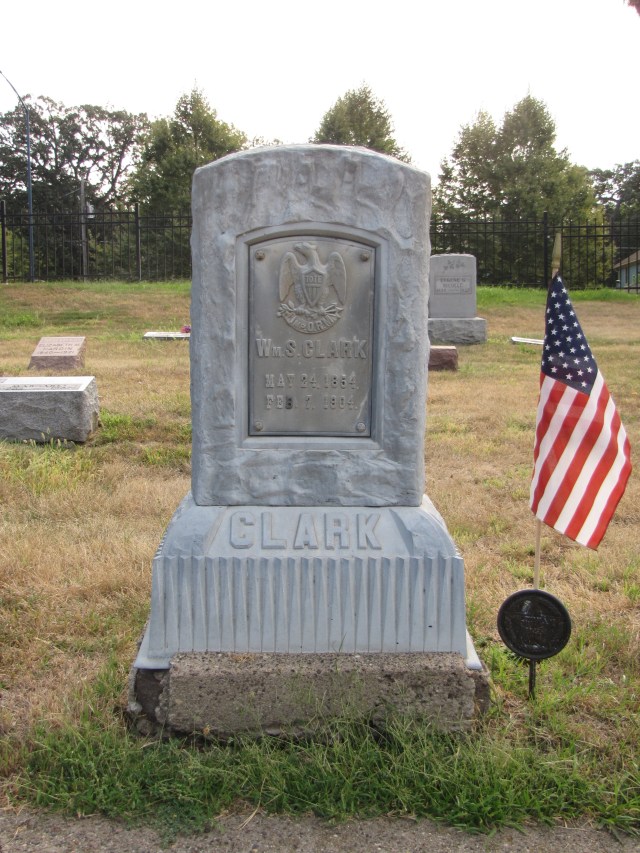
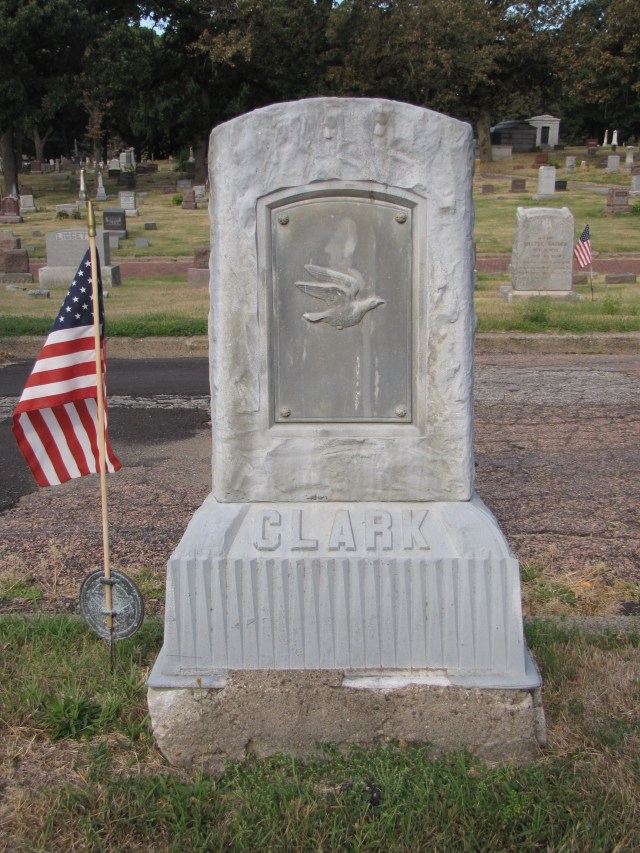
The zinc marker above marks the grave of a William Clark.  His marker is the tale of two birds.  On one side is bolted the eagle and the other a dove.

Clark was a member of the Improved Order of Redmen, which claims its beginnings with the patriots who were in the Sons of Liberty during the American Revolution.  The society models itself after the Iroquois Confederacy councils.  The society based their organization on the rites and rituals of the Native Americans.  Written on the shield on the chest of the eagle are the initials T.O.T.E which stands for Totem of Eagles.  According to their Website, the IORM “promotes patriotism and the American Way of Life, provides social activities for the members, and supports various charitable programs.”  The different clubs or chapters are divided into “tribes”.
IMG_6613

The other side of the zinc marker has bolted on it, the dove.  Several references in the Bible refer to the dove as a symbol of the Holy Spirit. Matthew 3:16 reads, “And Jesus, when he was baptized, went up straightway out of the water: and, lo, the heavens were opened unto him, and he saw the Spirit of God descending like a dove, and lighting upon him.” In Mark 1:10 the Bible says, “And Straightway coming up out of the water, he saw the heavens opened, and the Spirit like a dove descending upon him.” Again in John 1:32, the Bible reads, “And John bare record, saying, I saw the Spirit descending from heaven like a dove, and it abode upon him.”

Along with the dove symbolizing the Holy Spirit, the dove is also closely associated with peace, often depicted with a sprig of an olive in its beak. This, too, originated in the Bible. After the waters receded in the story of Noah, the dove appears. Genesis 8:11, “And the dove came in to him in the evening; and, lo, in her mouth was an olive leaf pluckt off; so Noah knew that the waters were abated from off the earth.”   It was a sign of God’s forgiveness.

The dove, with its white color, is also a symbol of purity and innocence and for that reason is often found the tombstones of children.

Thus the dove symbolizes the Holy Spirit, peace, and purity.

Posted in Uncategorized | Leave a comment

A calm and undisturbed repose

Walnut Hill Cemetery, Council Bluffs, Iowa

Walnut Hill Cemetery, Council Bluffs, Iowa

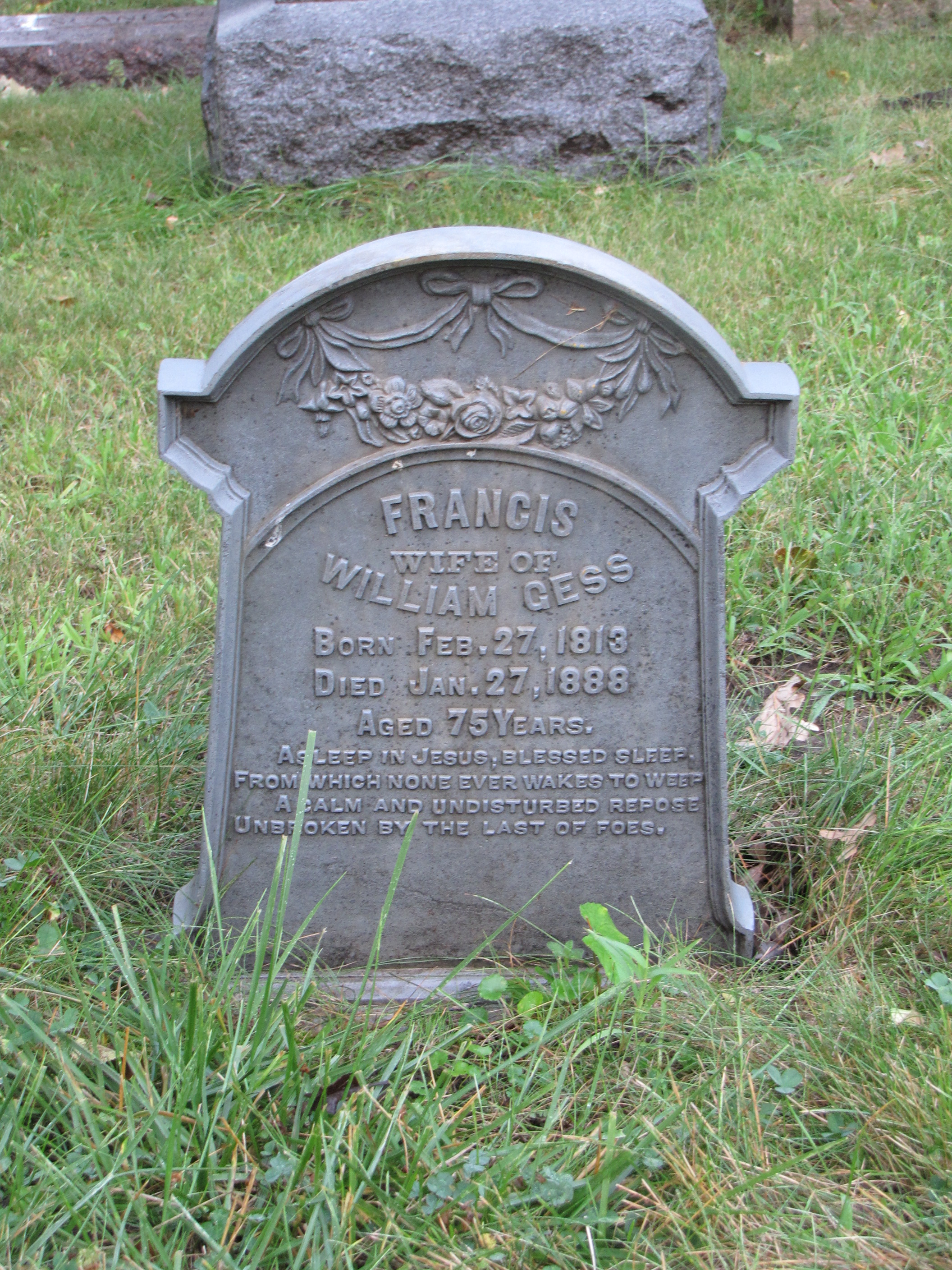
FRANCIS

WIFE OF

WILLIAM GESS

BORN FEB. 27, 1813

DIED JAN. 27, 1888

AGED 75 YEARS


Asleep in Jesus; Blessed sleep.

From which none ever wakes to weep

A calm and undisturbed repose

Unbroken by the last of foes.


Posted in Epitaphs, Zinc Markers | Leave a comment

The G.A.R. Badge

Woodland Cemetery, Des Moines, Iowa

Woodland Cemetery, Des Moines, Iowa

ALEXANDER ST. CLAIR

FEB. 24, 1828.

SEPT. 25, 1900.

2ND. LEUT. CO. I. 43, U.S. C. INF.

16TH. PENN. CAV.

No other event in the 19th Century had a larger affect on America than the Civil War.  It tore the country apart and involved people from every corner before it was over.  Over a million people were wounded and killed–625,000 from the North and over 400,000 from the South.

After the war, The Grand Army of the Republic (G.A.R), a veteran’s organization, was founded April 6, 1866, in Decatur, Illinois.  The organization admitted veteran’s who served honorably in the Union Army, Navy, or Marines between April 12, 1861, and April 9, 1865.

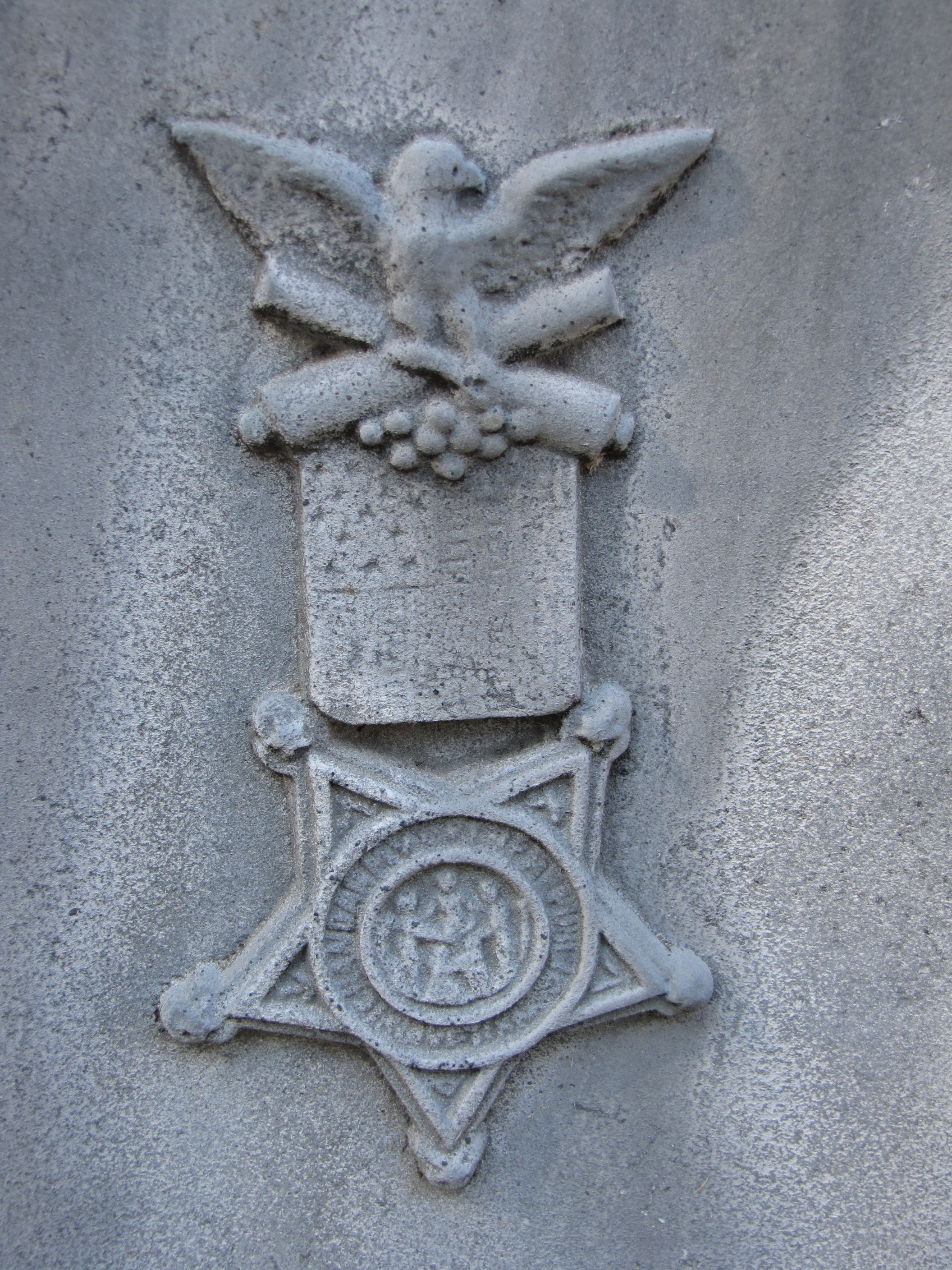
G.A.R. symbolism and markers can be found throughout American cemeteries marking the graves of the men and women who served during the war.  These take many forms.  In this case, the grave zinc marker recreates the G.A.R. badge worn by veterans of the North–the eagle mounted on crossed cannons and cannon balls, followed by a ribbon United States flag and the insignia of the G.A.R., which was a star.  Inside the star was a circle that depicted a sailor and a soldier clasping hands in front of a figure of liberty in the center looking on.

IMG_6761

Posted in Symbolism, Zinc Markers | 1 Comment

Knights of Pythias, Part 3

Woodland Cemetery, Des Moines

Woodland Cemetery, Des Moines

The ornamentation of this mausoleum in the Woodland Cemetery at Des Moines displays the typical Knights of Pythias symbolism that can be found on the metal markers that are found next to the gravestones of the fraternity members.  The symbols in the frieze above the door to the tomb features the three letters, “F”, “C”, and “B”, which stand for their motto, FRIENDSHIP, CHARITY, and BENEVOLENCE.  The circle inside the three triangles display the skull and cross bones.

IMG_6996

Posted in Uncategorized | Leave a comment

Knights of Pythias, Part 2

Fairview Cemetery, Galion, Ohio

Fairview Cemetery, Galion, Ohio

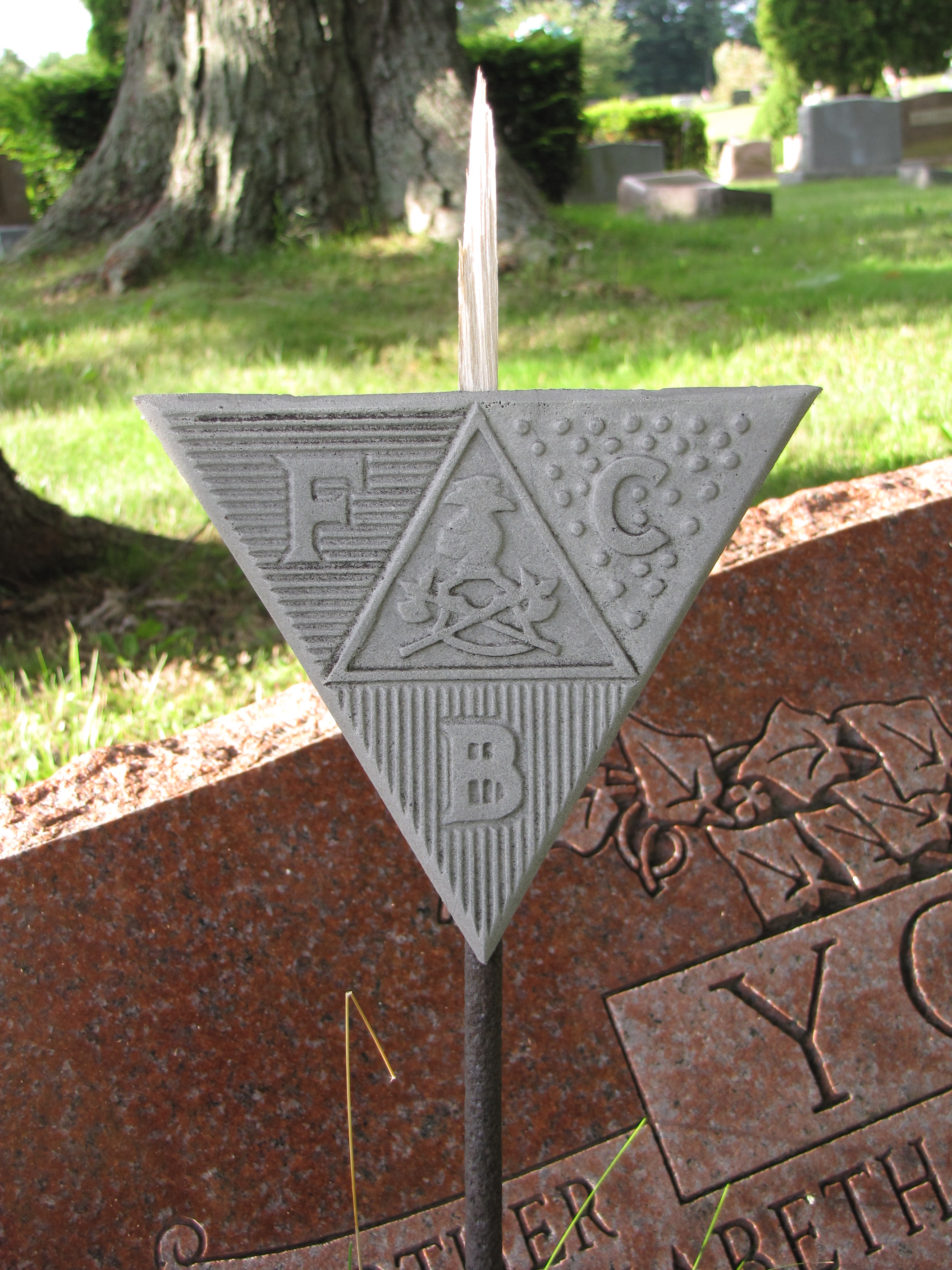
In the center triangle of the metal marker above are featured many of the symbols that are significant to the Knights of Pythias.  The profile of a knight’s helmet, with a falcon (a symbol of vigilance) sits atop a shield surrounded by crossed battle axes, which represents the weapons that were used against their enemies.  In the other three triangles are the three letters, “F”, “C”, and “B”, which stand for their motto, FRIENDSHIP, CHARITY, and BENEVOLENCE, .


Posted in Uncategorized | Leave a comment

The Knights of Pythias in Clay

Union Cemetery, Uhrichsville, Ohio

Union Cemetery, Uhrichsville, Ohio

The Knights of Pythias, a society based on the Greek story of friendship from 400 B. C. between Damon and Pythias, became the very first fraternal organization to receive a charter under an Act of the United States Congress.  The KP symbolism can be found in many cemeteries with their fraternal symbols that come in many forms.

In the small town of Uhrichsville, Ohio, at the Union Cemetery are many gravestones made of red clay.  The town had a tile company and as the story goes a craftsperson in the tile company began fashioning markers out of the clay.  These unique markers are made in the rustic tradition–to look like tree stumps.  The clay certainly helps with that look especially when sprigs of saplings are growing from the tops!  Just as in traditional markers, the clay markers are were created with much diversity in design.

IMG_4841

The symbol in the marker above features many of the symbols that are significant to the Knights of Pythias.  In the shield are three letters, “F”, “C”, and “B”, which stand for their motto, FRIENDSHIP, CHARITY, and BENEVOLENCE.  The circle inside the cross displays the skull and cross bones.

Note: I first saw the gravestones above at the Union Cemetery on the Website: www.graveaddiction.com.  Beth Santore, the Webmaster, has photographed hundreds of cemeteries in Ohio, as well as, making photo forays into neighboring states.  I highly recommend her Website, especially for those tramping around Ohio graveyards!

Posted in Symbolism | 1 Comment

Ancient Classical Designs

IMG_5136

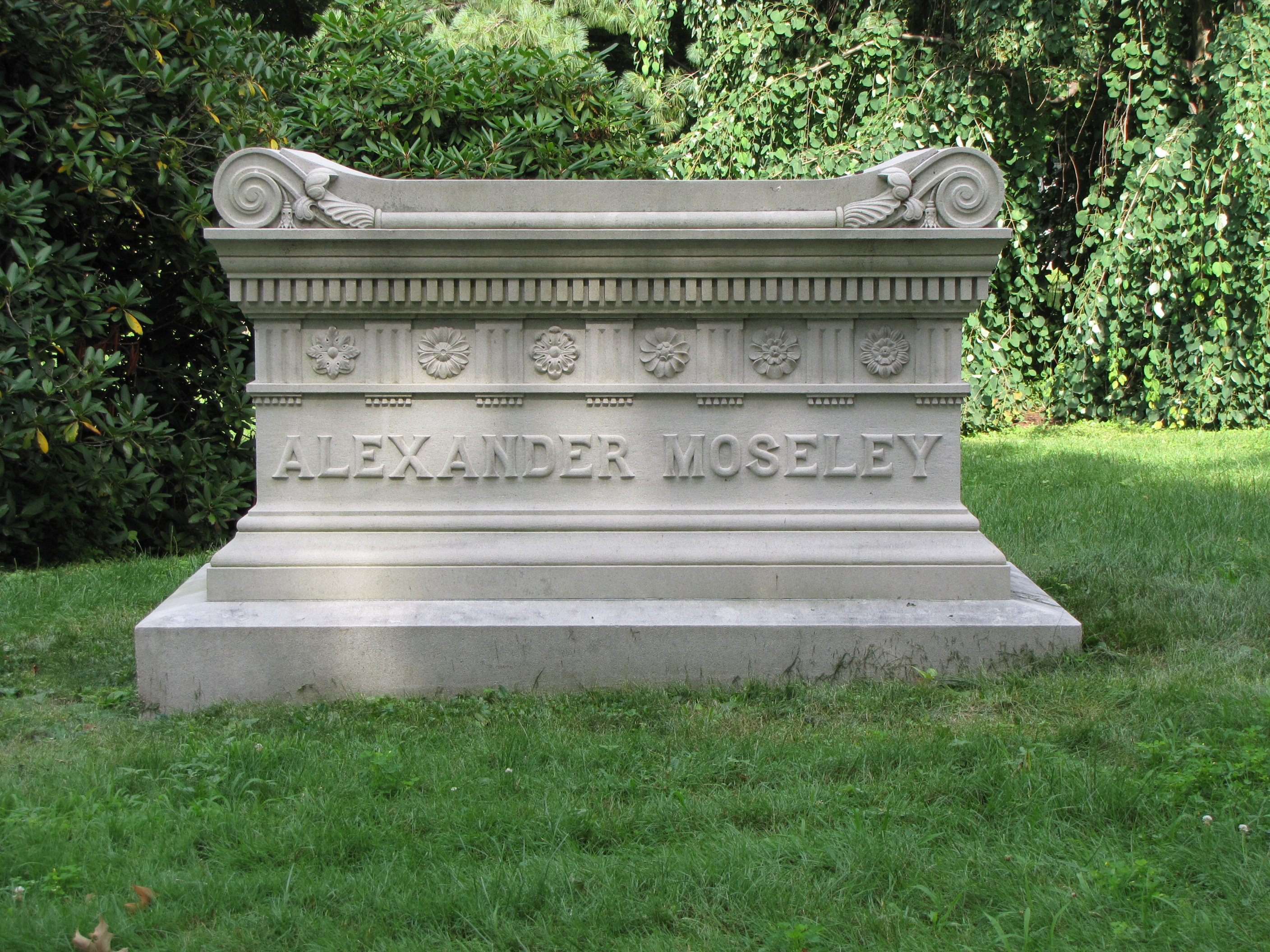
Many ancient classical designs are replicated in modern graveyards.  The sarcophagus of Alexander Moseley (died in 1899) in the Mount Auburn Cemetery at Cambridge, Massachusetts, is modeled after the Roman tomb of Lucius Cornelius Scipio Barbatus, which was erected around 150 BC.  Lucius Cornelius Scipio Barbatus (died c. 280 BC) was one of the two elected Roman consuls in 298 BC. His tomb is now preserved in the Vatican.

Scipio-tomb[1]

Posted in Tombs | Leave a comment

The tree-stump chair

Gilgal Cemetery, Heltonville, Indiana

Gilgal Cemetery, Heltonville, Indiana

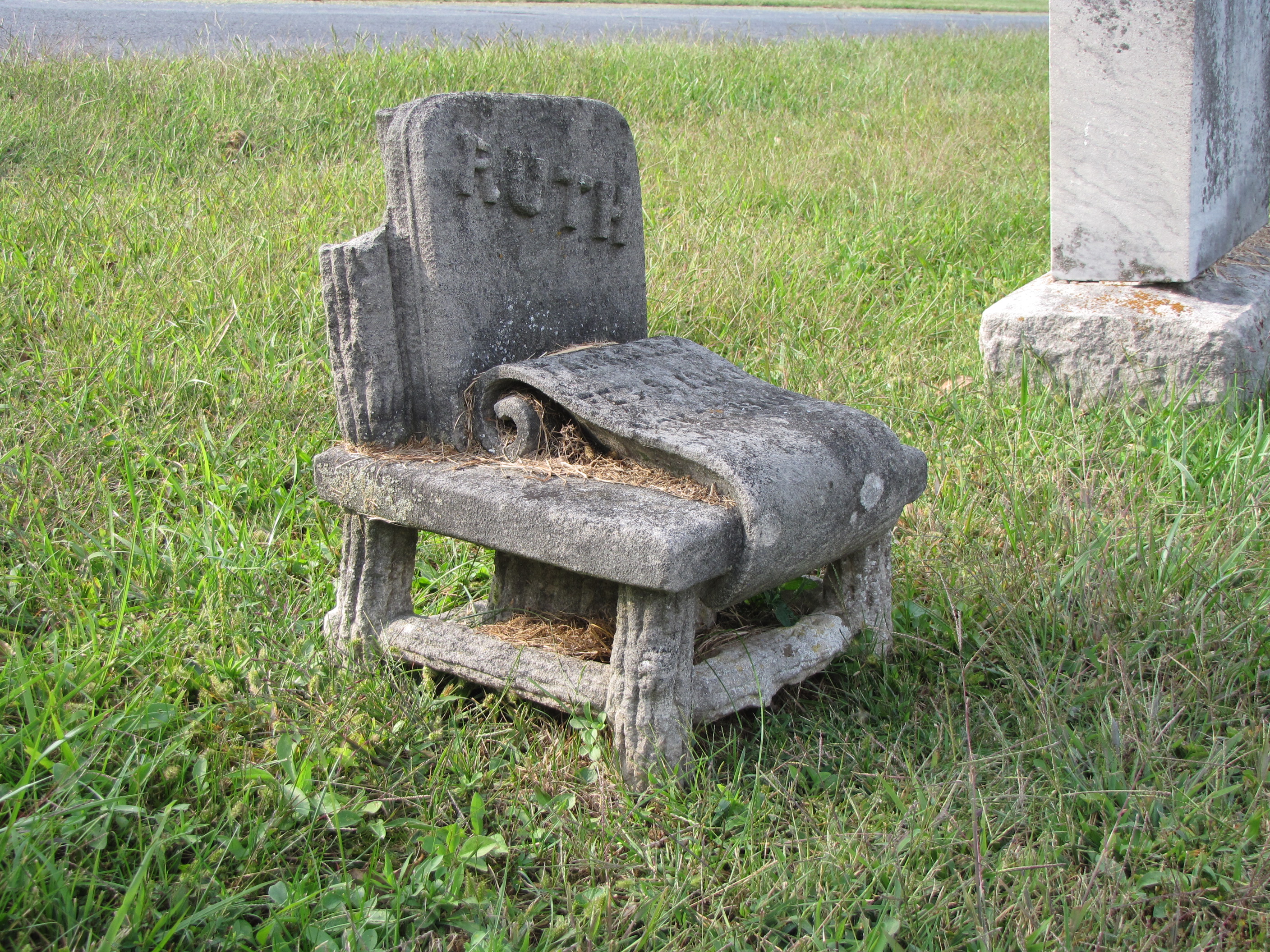
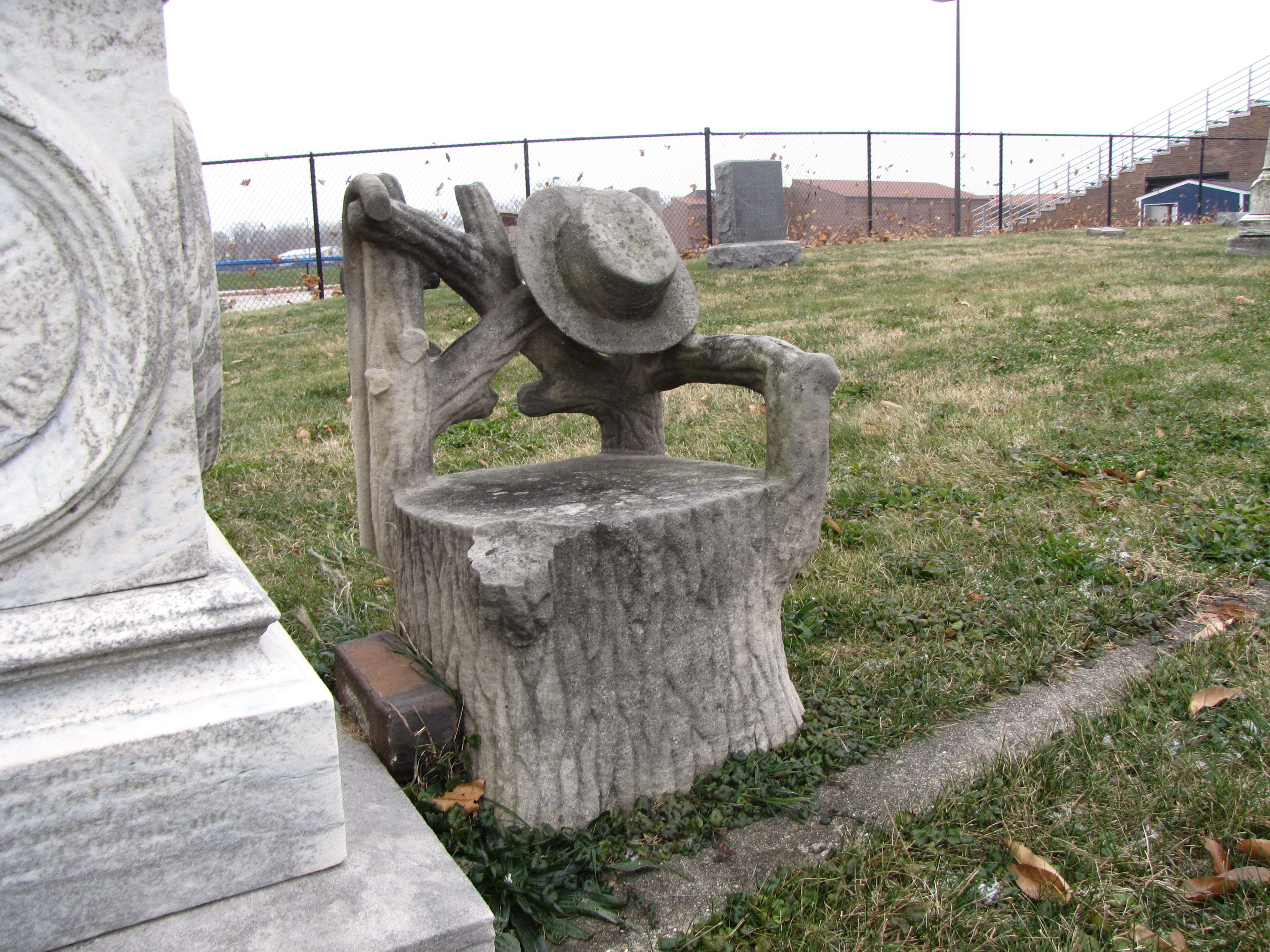
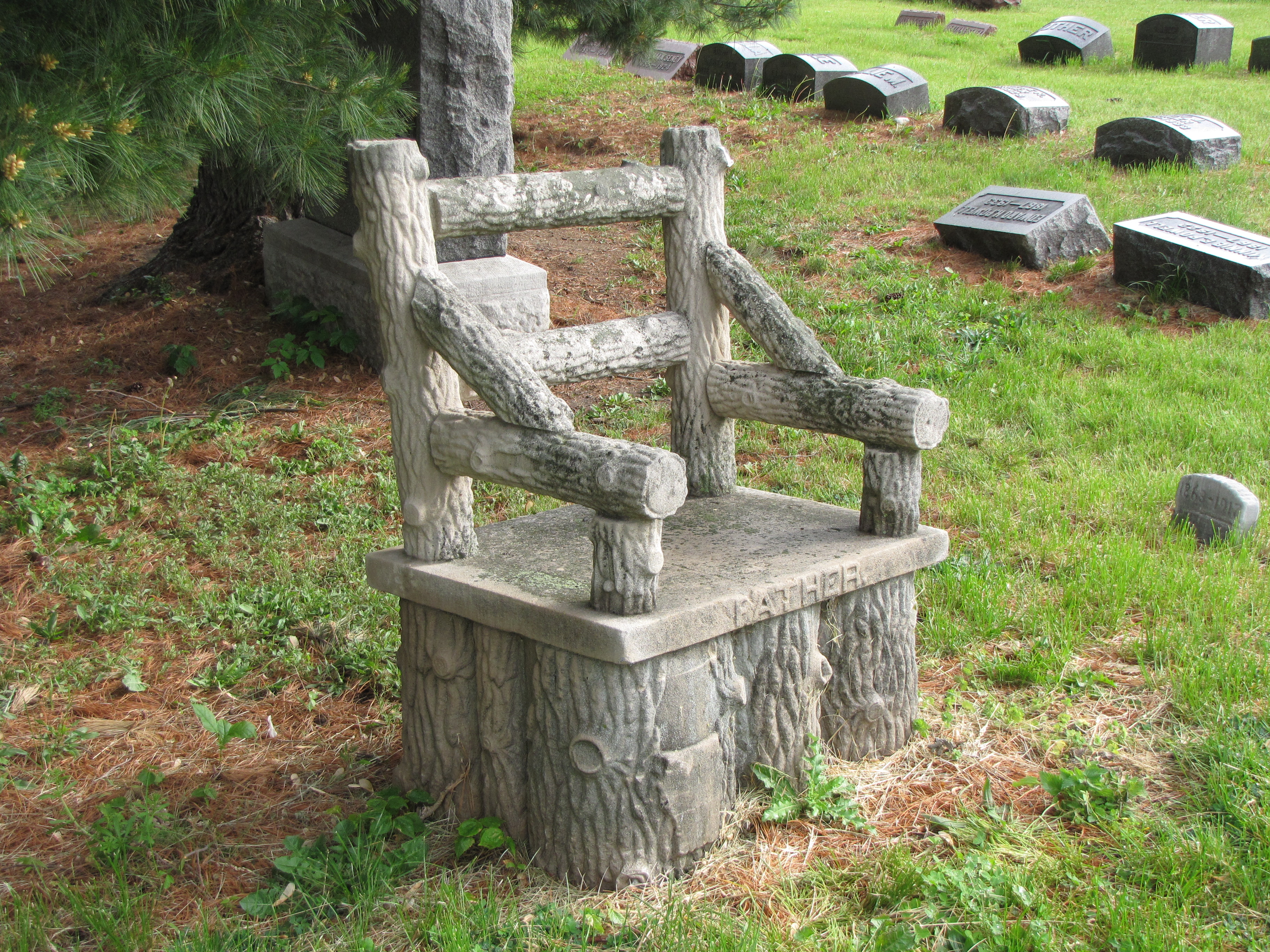
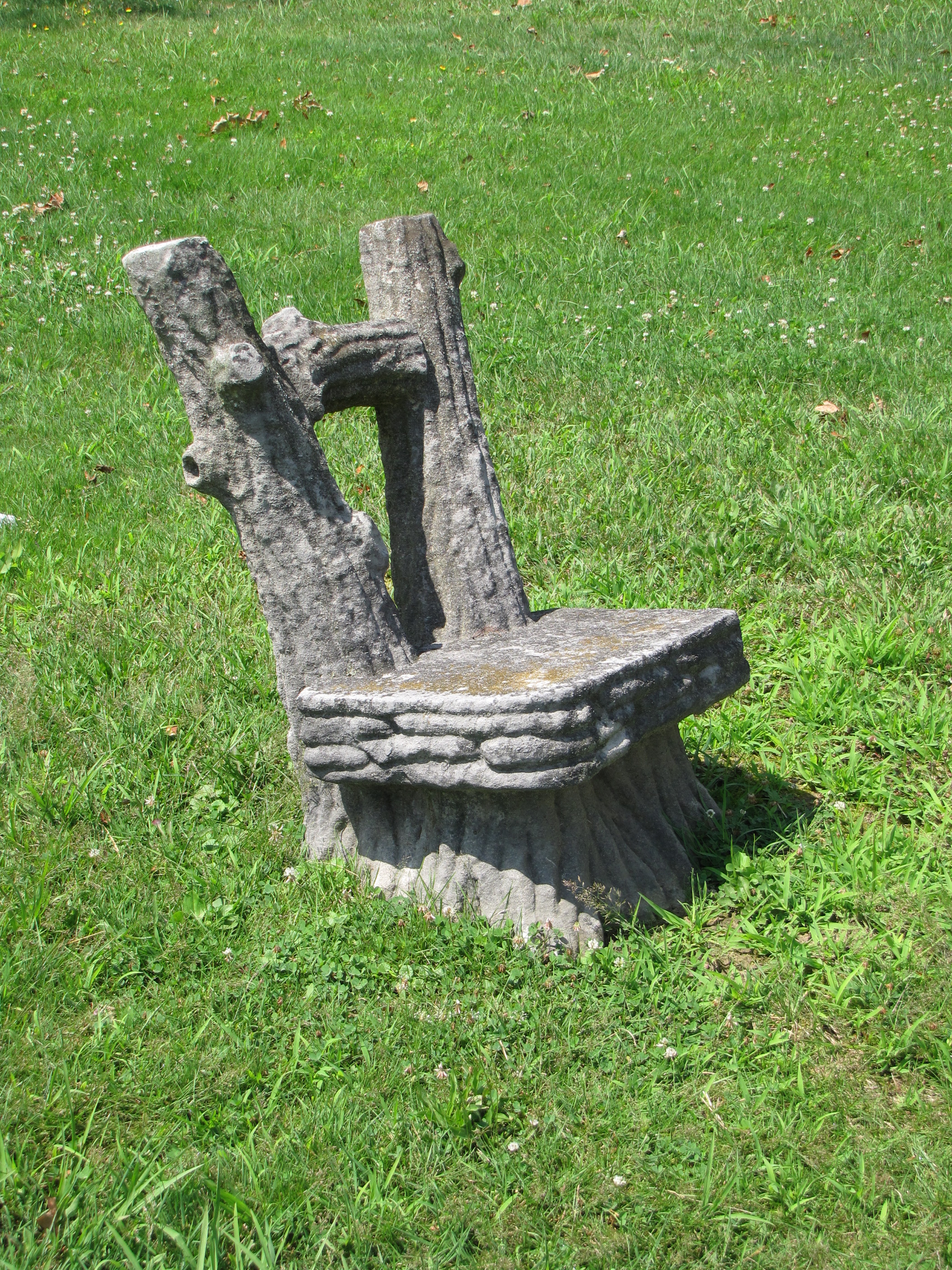
The variety found in the rustic movement tombstones is diverse.  In these three examples of the tree-stump chair, elegant and slim curved lines have given way to the bulkier and heavier forms made from pieces that came directly from the trees often with the bark still intact, eschewing classic designs.

In the example above the chair back is inscribed with the little girl’s name while the scroll on the seat gives her birth and death date.

Calvary Cemetery, Decatur, Illinois

Calvary Cemetery, Decatur, Illinois

Here the tree-stump tombstone is carved into the form of an empty chair.  The chair back and the arms of the chair (one is missing) are formed out of tree branches with the stump forming the base of the chair.  On the back of the chair hangs a man’s hat.  This tombstone depicts a lonely scene.

Greenbush Cemetery, Lafayette, Indiana

Greenbush Cemetery, Lafayette, Indiana

In this example, tree stumps form the base of the chair and the seat bottom has “FATHER” carved on the face of it.  Again, heavy branches with the bark still intact form the seat back and the arms of the chair.

Union Cemetery, Uhrichsville, Ohio

Union Cemetery, Uhrichsville, Ohio

In the example above, the back of the chair is formed from two branches in the shape of a “V”.  The base is the tree stump.  The creativity of the carvers was boundless. Thousands of tree-stump tombstones exist in nearly as many designs.

In funerary symbolism the vacant chair symbolizes the loss of a loved one.

Posted in Symbolism, Treestump gravestones | 1 Comment