Buried Four Times!

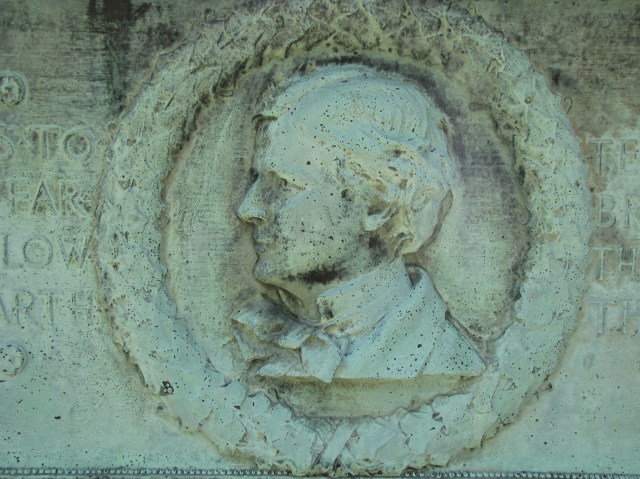
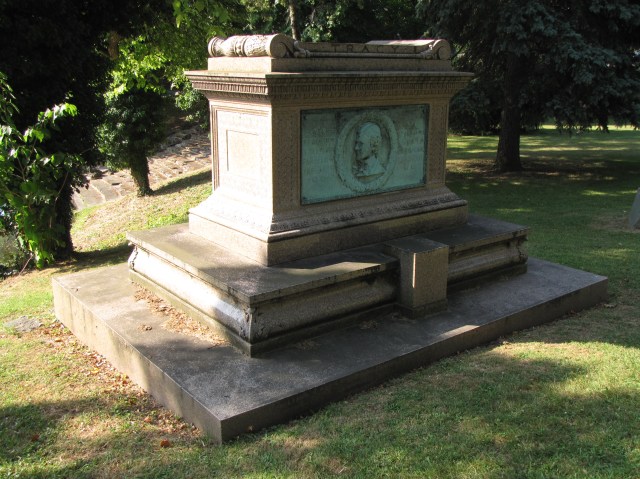
High on a bluff overlooking the Missouri River, just south of what is present-day Sioux City, Iowa, stands the towering monument to Sergeant Charles Floyd, the only person to die during the Lewis and Clark Expedition.

President Thomas Jefferson enlisted William Clark and Merriweather Lewis to put together of team of handpicked frontiersmen to explore the Western part of the North American continent and the newly purchased Louisiana Territory.

On August 19, 1804, after only 98 days into the journey, Sergeant Floyd became violently sick with what Lewis and Clark diagnosed as “Beliose chorlick” or bilious colic.  The following day, August 20, 1804, Sergeant Floyd’s condition worsened.  Weakly he whispered, “I am going” and he slipped away.  Medical experts of today believe what Sergeant Floyd died from was acute appendicitis which most likely ruptured.  At the time, there was no known cure.

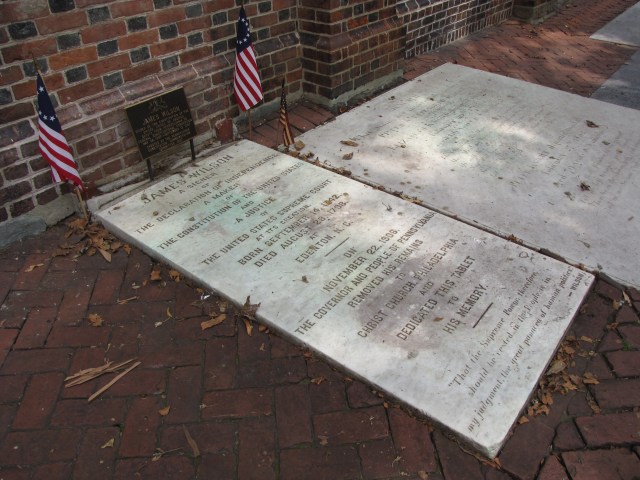
The corps member carried Floyd’s body to the highest bluff in the area and buried him with full military honors.  His grave was marked with a cedar stake painted with his name and date of death.  Two years later, on their return trip the Corps of Discovery stopped on the same spot and found that the grave had been disturbed.  They refilled the grave and finished the remaining leg of the trip to St. Louis.

By 1857, the bluff was being badly eroded and encroaching on Floyd’s grave.  To protect his grave from further erosion, his remains were dug up and moved 200 yards to the east and reburied.

In 1894, Sergeant Floyd’s journal, which had only recently been discovered, was published stirring interest in the Lewis and Clark Expedition and the story of Sergeant Floyd.  Once again his remains were exhumed and reburied in urns.  His grave was marked with a large marble ledger covering his grave.  A committee formed to mark his grave properly.  Congress and the State of Iowa appropriated funds, along with private donations from citizens to build a lasting and fitting memorial to the fallen soldier.

For the fourth and last time, Sergeant Floyd’s remains were unearthed.  They were reburied and placed in the lower courses of the monument.  The dedication of the monument took place on Memorial Day, 1901.

According the plaque at the site, “The monument is an Egyptian obelisk of white sandstone 100 feet high.  Its foundation is 22 feet square at the base, 11 feet, 14 feet square at the top, and made of solid concrete reinforced with 32 lengths of railroad irons.  Poured in one day, this mass weighs 278 tons.  The total weight of the monument is 717 tons.”

Posted in Uncategorized | Leave a comment

The Empty Chair

The gray-marble tufted chair in the Oakland Cemetery in Petersburg, Illinois, has FATHER carved on the front of the upholstered seat cushion.  The highl- elaborate, Victorian-style stone chair gravestone is a memorial for Richard C. Trenary (December 16, 1829 – August 4, 1889), whose large polished gray-granite ornamented obelisk is at the center of the family plot.

This motif gives the feeling that the vacant chair is just waiting for the father, who just stepped out for a moment, to return.  But, it stands empty, never to be sat in again.  In funerary symbolism, the vacant chair symbolizes the loss of a loved one.

Posted in Uncategorized | Leave a comment

Praying Hands and the Rosary

St. Francis Cemetery, Phoenix, Arizona

The Rosary is a prayer to the Mother Mary with a tradition that dates back to St. Dominic in the 1200s.  This symbol, combined with praying hands, is Catholic and predominately found on the gravestones of Catholics.  The Rosary as a gravestone symbol represents devotion to the Virgin Mary but also the unending constant prayers for the deceased.

Posted in Uncategorized | Leave a comment

Praying Hands

Greenwood Memorial Lawn Cemetery, Phoenix, Arizona

Praying hands, which can be found as incised carvings on gravestones or as statues that form a centerpiece in gardens within cemeteries, are a symbol of pious devotion.  Praying hands also symbolize the hope for an eternal life.

St. Francis Cemetery, Phoenix, Arizona

Posted in Symbolism | Leave a comment

The Virgin of Guadalupe

Greenwood Memorial Lawn Cemetery, Phoenix, Arizona

An image that one is likely to come across in cemeteries where there are high populations of Mexican immigrants is the Virgin of Guadalupe, also referred to as Mother of Guadalupe and Our Lady of Guadalupe.  The Virgin of Guadalupe is the Patron Saint to of Mexico.

According to the Catholic Church, the Virgin of Guadalupe was first seen as an apparition the first of four times by Juan Diego on December 9, 1531.  Juan Diego described the woman in the vision as the Virgin Mary dressed in a cloak the color of the clear blue sky.  The cerulean cape was emblazoned with eight point stars and She was standing on top of a crescent moon being carried by a cherubic angel.

Greenwood Memorial Lawn Cemetery, Phoenix, Arizona

The Virgin Mary called out to Juan Diego and introduced herself as “the Mother of a very true deity.”  She asked that a church be built in her honor on that spot on Tepeyac Hill (now a suburb of Mexico City).  The humbled Juan Diego excitedly approached the Archbishop Juan de Zumarraga to tell him of the apparition and of the Virgin Mary’s request.

St. Francis Cemetery, Phoenix, Arizona

Unfortunately the Archbishop did not believe Juan Diego.  A second time the Virgin Mary appeared before him.  Again She made her request.  Juan Diego returned to the Archbishop and pleaded his case and insisted that the vision he had witnessed was real.  The disbelieving Fray Zumarraga instructed Juan Diego to ask this apparition for a sign to prove that She was real.  During his third visit from the Virgin she agreed to supply the proof the very next day.

Boerne Cemetery, Boerne, Texas

Leaving from his uncle’s sick bed, Juan Diego hurried to meet with the apparition.  Upon seeing her for the fourth time, Diego apologized for being late and explained that his uncle was on his death bed and he had attended to him.  She assured him that his uncle had been healed.  The Virgin instructed Diego to go to the spot where he had first seen her to gather flowers.  Impossible, he thought, it was the dead of winter but he followed her instructions and went to the top of Tepeyac Hill where he discovered blooming Castilian roses which he gathered into his winter cloak to show the Archbishop.  When he arrived to show the Archbishop the proof he opened his cloak and the roses fell to the floor and the image of the Virgin of Guadalupe was emblazoned on the fabric of his coat.

Depictions of the Virgin of Guadalupe are varied, sometimes with the Virgin standing on the half-moon carried by a cherub, sometimes shown as carrying the baby Jesus, but always with the cerulean cloak and eight-pointed stars with rays of light behind Her—sometimes as an incised carving on a gravestone, sometimes as a free-standing sculpture.

Boerne Cemetery, Boerne, Texas

Posted in Symbolism | Leave a comment

Odd Fellows Symbolism

The Independent Order of Odd Fellows is a fraternal organization that formed in England in the 1700s as a service organization. The American association was founded in Baltimore, Maryland, on April 26, 1819. According to the I.O.O.F. Website, “Thomas Wildey and four members of the Order from England instituted Washington Lodge No. 1. This lodge received its charter from Manchester Unity of Odd Fellows in England.”

Members of the Odd Fellows, like many other society members, choose to be buried in common burial grounds.  Others, when they are not buried in a common ground, often mark their members’ graves with metal markers denoting membership.  Some of the metal markers are quite, with only the three chain links.   The three links of the chain are the main symbol of the society. Often shown inside the three links are three letters, F L T, which signify the organizations motto: Friendship, Love, and Truth.  However, this metal marker from the Mount Wollaston Cemetery in Quincy, Massachusetts, is quite elaborate.

This metal marker is an elaborate cartouche divided into four quarters with Odd Fellows symbols:

  • The Keys symbolize the financial security of the Order. This symbol is often used on the Treasurer’s badge.
  • The Hourglass represents the shortness of life and the certainty of death. Because time is short, the hourglass also emphasizes the need to assist others quickly and efficiently.
  • The Hand-in-Heart symbol has significance with several organizations and religions, especially the Shakers, but when coupled with the three linked rings, it is associated with the Odd Fellows. The Heart-in-Hand symbol represents charity given with an open heart.
  • The Globe denotes the universal spirit of benevolence in Odd Fellows Order.

The sash that crosses the cartouche carries the letters: I.O.O.F., the initials for the Independent Order of Odd Fellows.  Underneath the acronym are the three linked rings, the most recognizable Odd Fellows motif, symbolizes how much better communities, states, and the country works when working together.

Posted in Metal Markers | 6 Comments

Figli d’Italia

In the last decade of the 19th Century, tens of thousands came to the United States in the largest wave of immigrants to the U.S.  Previous immigrants had come from mostly Northern European countries, such as, England, Wales, Ireland, Germany, and the Scandinavian countries.  But in what is called the “third great wave” the immigrants were from Southern Europe—they were Slavs, Jews, and Italians.  The largest of those groups to emigrate were the Italians—over 3 million poured into the United States between 1900 and 1915.

In 1905, an organization called “Figli d’Italia” or “The Order of the Sons of Italy in America” was founded by Vincenzo Sellaro in New York City.  The aim of the organization was to help ease the transition for the Italian immigrants from their homeland of Italy to their new homeland.  The aid provided included helping newly arrived Italians learn English, find jobs, gain citizenship, get an education, and receive health and death benefits.  Lodges sprang up wherever there were pockets of Italians who needed assistance.

The logo for the organization depicts a striding lion in a circle.  Three words—Liberty, Equality, and Fraternity—are displayed underneath the lion and the name of the organization encircles the illustration.

Found in cemeteries where Italian immigrants and their descendants are buried are bronze metal markers that mimic the Order’s logo with the centerpiece being the lion.  The top of the circle displays the name of the organization and the bottom identifies the individual lodge and location of the lodge.

In this example in the St. Michael’s Cemetery in Jamaica Plains, the name of the lodge—Loggia Filippo Mazzei—and its lodge number –1930—and emblazoned in the bronze medallion standing next to the grave of an Italian immigrant as a testament to the pride of Italian ancestry and to the Order’s philanthropic work.

Posted in Metal Markers | Leave a comment

The Sands of Time

The soap opera, Days of Our Lives, has as their catchphrase, “Like sands through the hourglass, so are the days of our lives.” The meaning of that catchphrase is clear–life passes by very quickly.  Life measured by the grains of sand slip through one side of the hourglass to the other in a flash.

The hourglass symbol found in a graveyard, represents the same thought of time fleeting by quickly.  The stained glass window in the Rose Hill Cemetery Mausoleum depicts the hourglass with wings.  Another interpretation might be, “Time Flies.”

Posted in Symbolism | Leave a comment

St. Anthony of Padua

St. Anthony of Padua (August 15, 1195 – June 13, 1231) depicted in several statues in the Mount Wollaston Cemetery, in Quincy, Massachusetts, is portrayed in monks’ clothing holding the baby Jesus and lilies.  The book he holds is the Bible which is a symbol of how Christ first appeared to St. Anthony as he read the holy book.  St. Anthony is also known to have been very well versed in the Bible, as well as, a good preacher.  The lilies symbolize purity and innocence and when pressed into oil for anointing oil is oft referred to as St. Anthony’s oil.

Joseph is often portrayed similarly.  The difference is that when St. Anthony is holding baby Jesus, Jesus is resting on a book—sometimes open, sometimes closed.  The other difference, of course, is that Joseph does not wear monks’ robes.  You can also discern the difference by looking at the haircuts—Joseph with a a flowing head of hair and St. Anthony with a monk’s cut.

St. Anthony of Padua’s feast day is June 13.  He is the Patron Saint of a long list of items: lost things, including lost people and lost souls and those who are seeking lost things; animals, amputees, fishermen, elderly people, mariners, poor people, travelers, and runts of litters, among others.

Posted in Saints | Leave a comment

St. Dominic

The white marble statue of St. Dominic (August 8, 1170 – August 6, 1221) in the Calvary Cemetery in Erie, Pennsylvania, portrays a prayerful monk holding a book in one hand with the word “VERITAS” carved on the front and holding a cross in the other.  The statue also displays the Rosary, which St. Dominic helped to popularize through his preaching.

St. Dominic is the Patron Saint of astronomers.

Posted in Saints | Leave a comment