
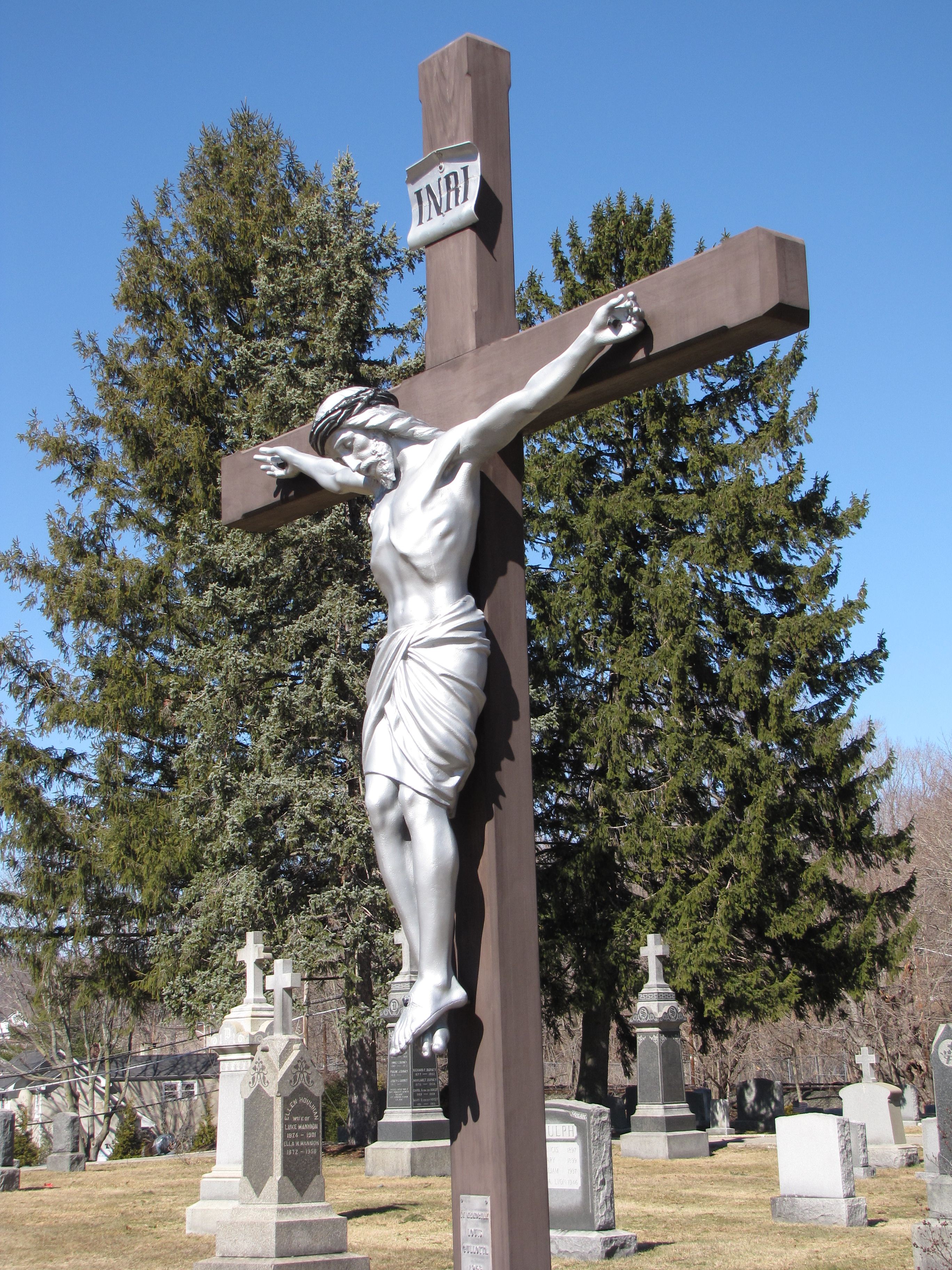
All Souls Cemetery, Holy Innocents Catholic Church, Pleasantville, New York
The crucifixion is the most important symbol in Christianity, ususally found in Catholic cemeteries.
All Souls Cemetery, Holy Innocents Catholic Church, Pleasantville, New York
The crucifixion is the most important symbol in Christianity, ususally found in Catholic cemeteries.
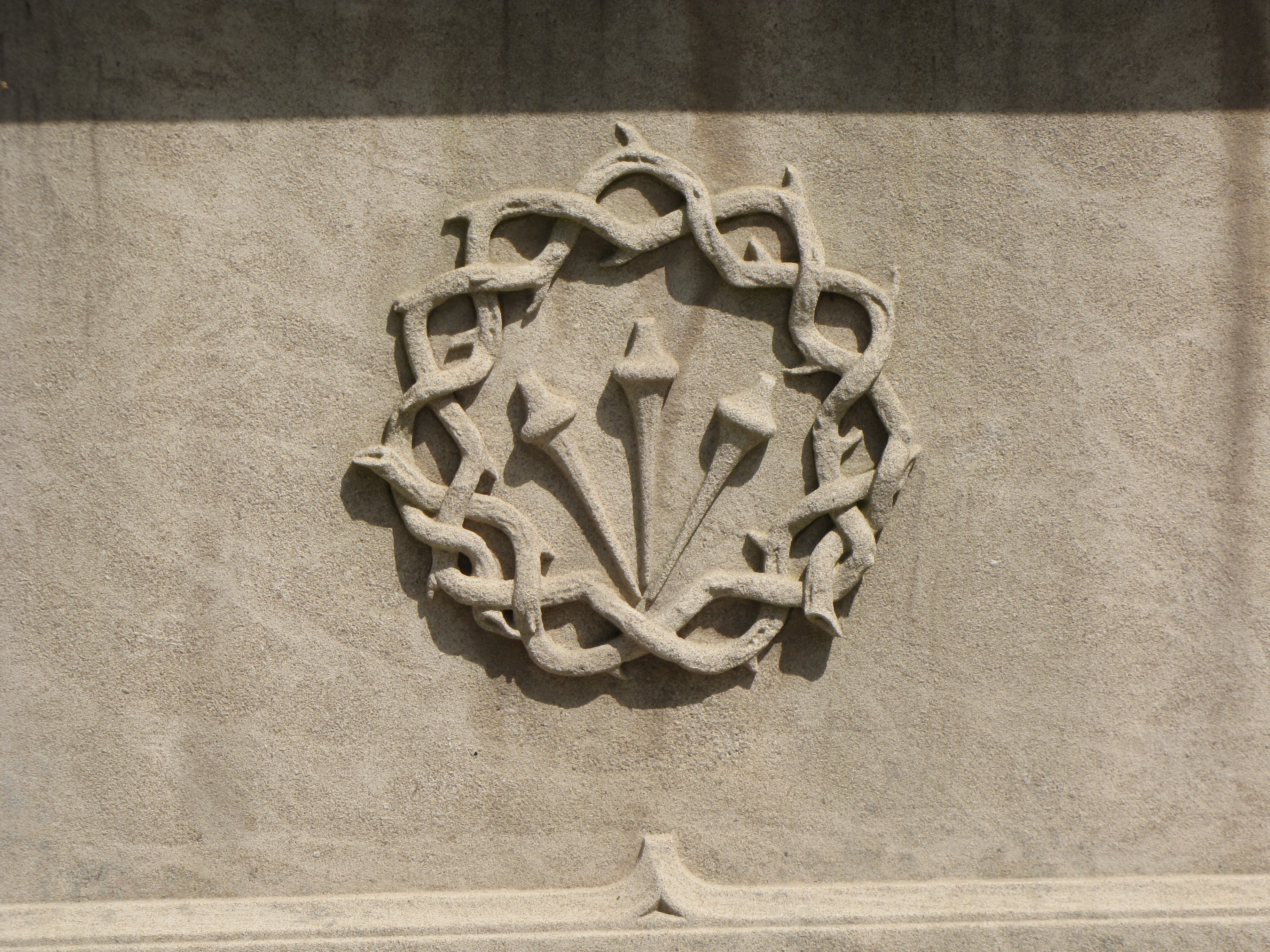
Calvary Cemetery, Nashville, Tennessee

Rose Hill Cemetery, Chicago
GEORGE S. BANGS
Died November 17, 1877
Aged 51 Years 8 months 27 days
His crowning effort The Fast Mail
Some people want to be remembered for who they are, some for what they did. This “treestump gravestone”, so called because it looks like a treestump is the monument of George S. Bangs. If you look closely you can see a rail car entering into a tunnel at the base of the treestump. On the side of the rail car were the words, “UNITED STATES RAILWAY POST OFFICE.”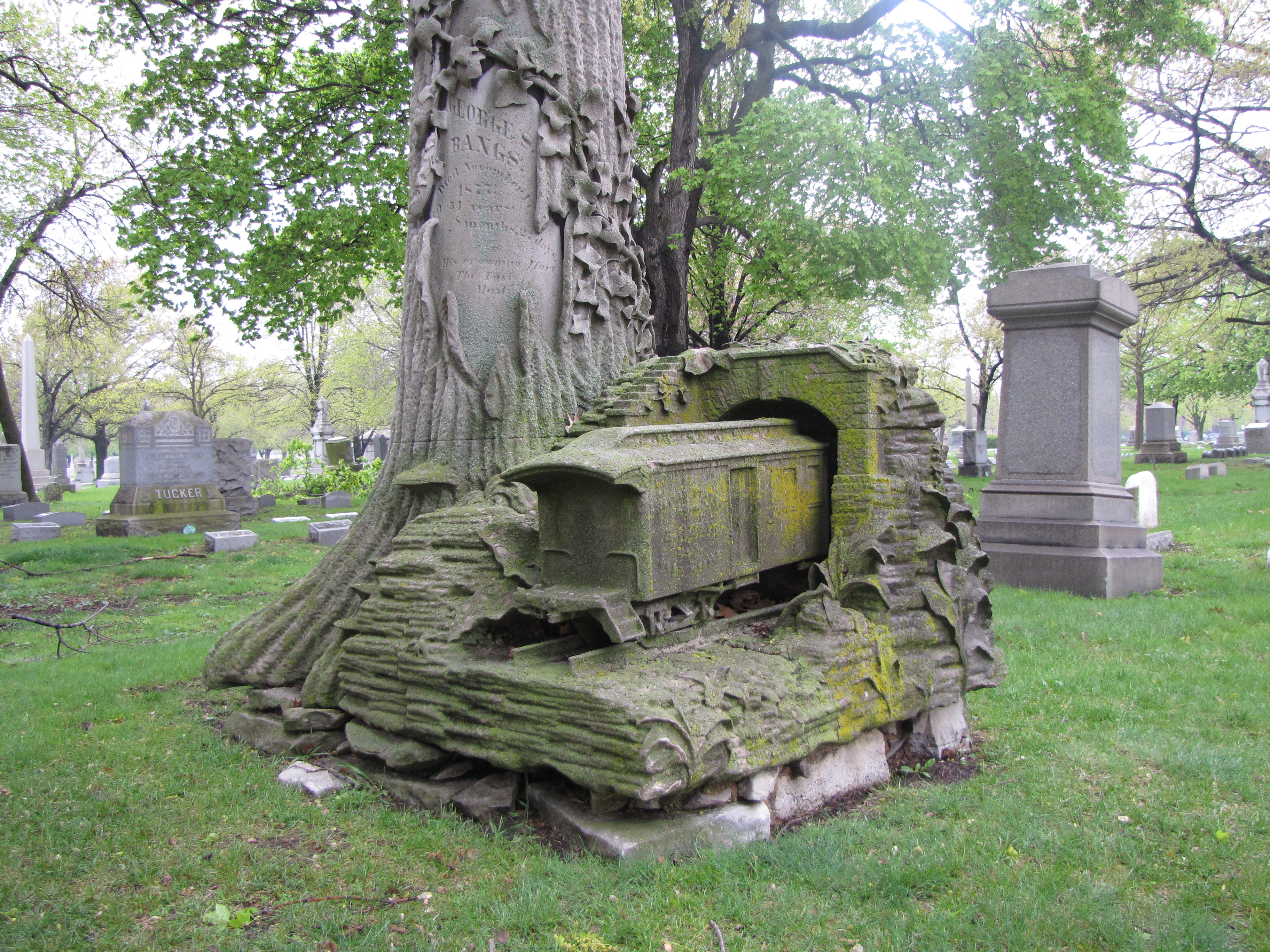
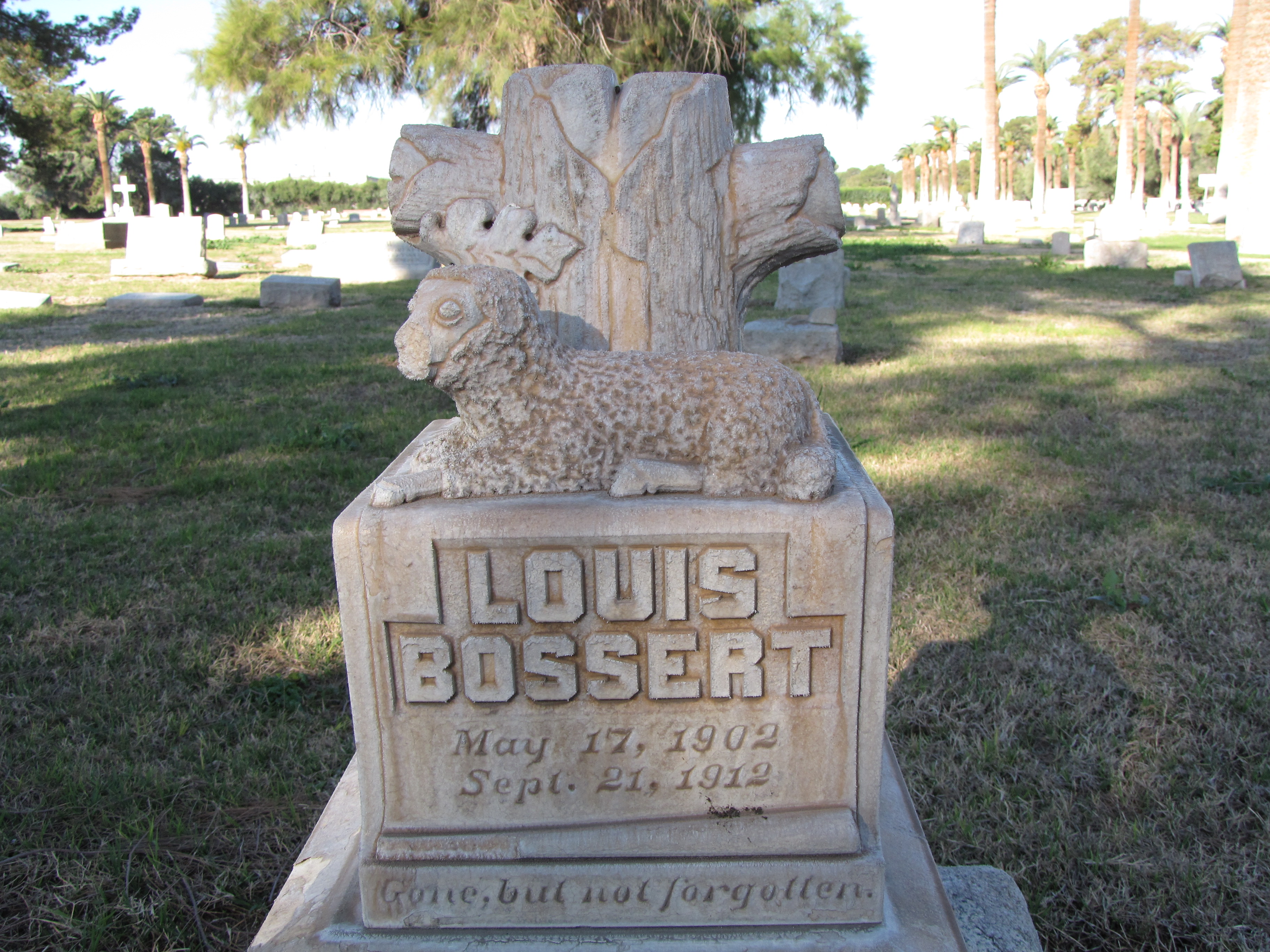
Greenwood Cemetery, Phoenix, Arizona
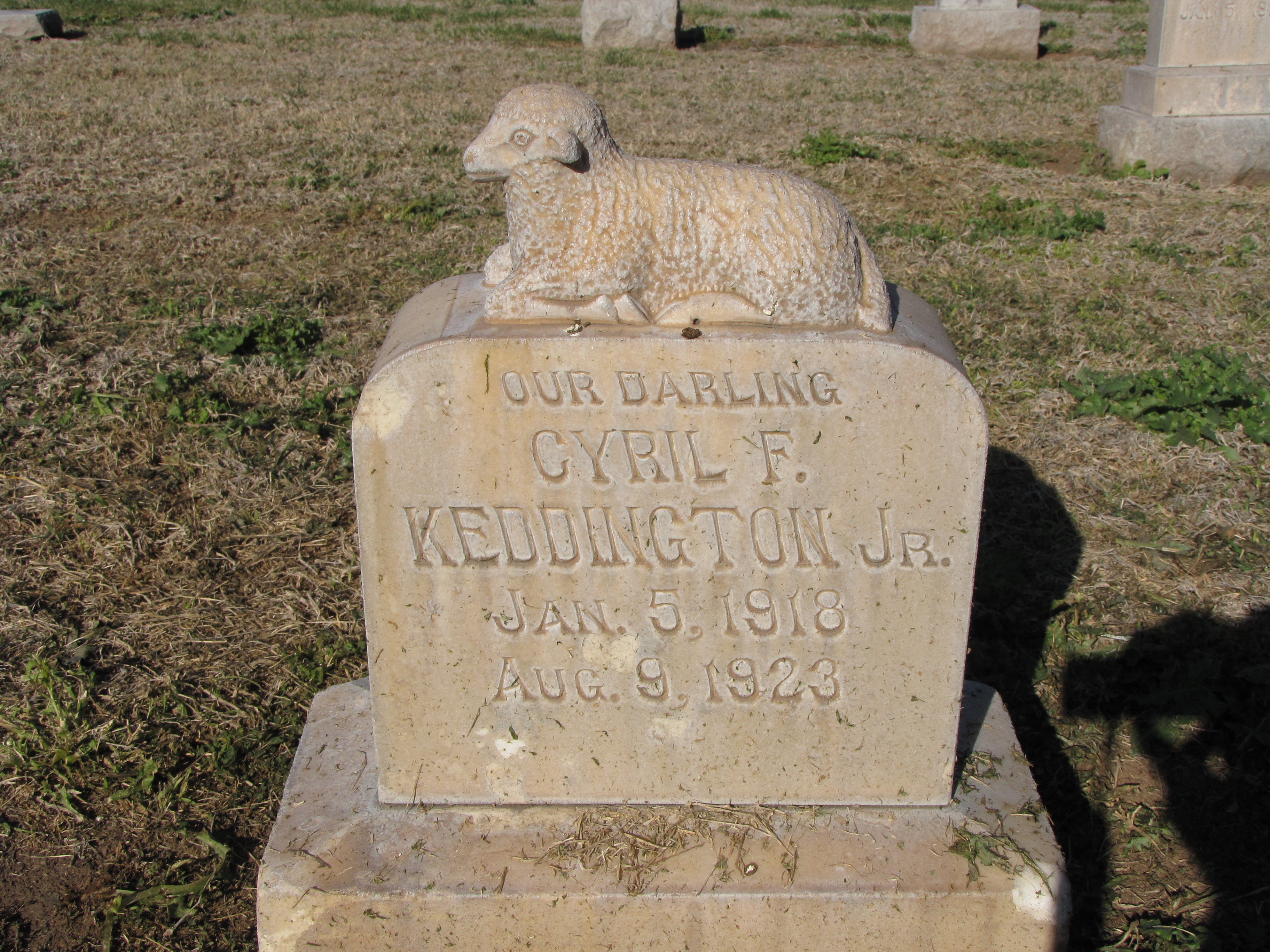
Greenwood Cemetery, Phoenix, Arizona
The lamb is the symbol of the Lord, the Good Shepherd. It also represents innocence, likely the reason why this motif usually adorns the tombstones of infants and young children. Most often the lamb is lying down, often asleep and sometimes with a cross behind the lamb.

Eternal Silence, The Dexter Graves Monument, Graceland Cemetery, Chicago
Lorado Taft was one of the premier sculptors of his day. He was a widely published scholar on the topic and his work was highly sought after. He was commissioned to produce many public works including the The Soldier’s Monument in Oregon, Illinois, The Solitude of the Soul Scupture at the Art Institute of Chicago, and The Fountain of Time in Chicago.
Taft was commissioned in 1909 by Henry Graves, of Chicago, to create a monument for his father, Dexter Graves. The Graves family had long been in America, their first ancestor, Thomas Graves, crossed the Atlantic and settled in Connecticut in 1645. Dexter Graves [1789-1844] himself was a pioneer and was one of the earliest settlers in Chicago who, according to the inscription on the back of the monument, “brought the first colony to Chicago, consisting of 13 families, arriving here July 15, 1831 from Ashtabula, Ohio, on the schooner Telegraph.”
The bronze figure that Taft created is named Eternal Silence, an obvious metaphor for death. The forboding cloaked figure stands against solid black granite–black being the traditonal color representing mourning and death. The figure has his eyes closed and gathers the shroud to his lips preventing him from speaking.
The bronze has an eerie feel to it, in part, because of the way the patina has formed on the statue. The shroud has a greenish blue unnatural color. Except for a highlight on the nose, most of the face has remained dark and recedes from the hood, making it appear more menacing and mysterious.

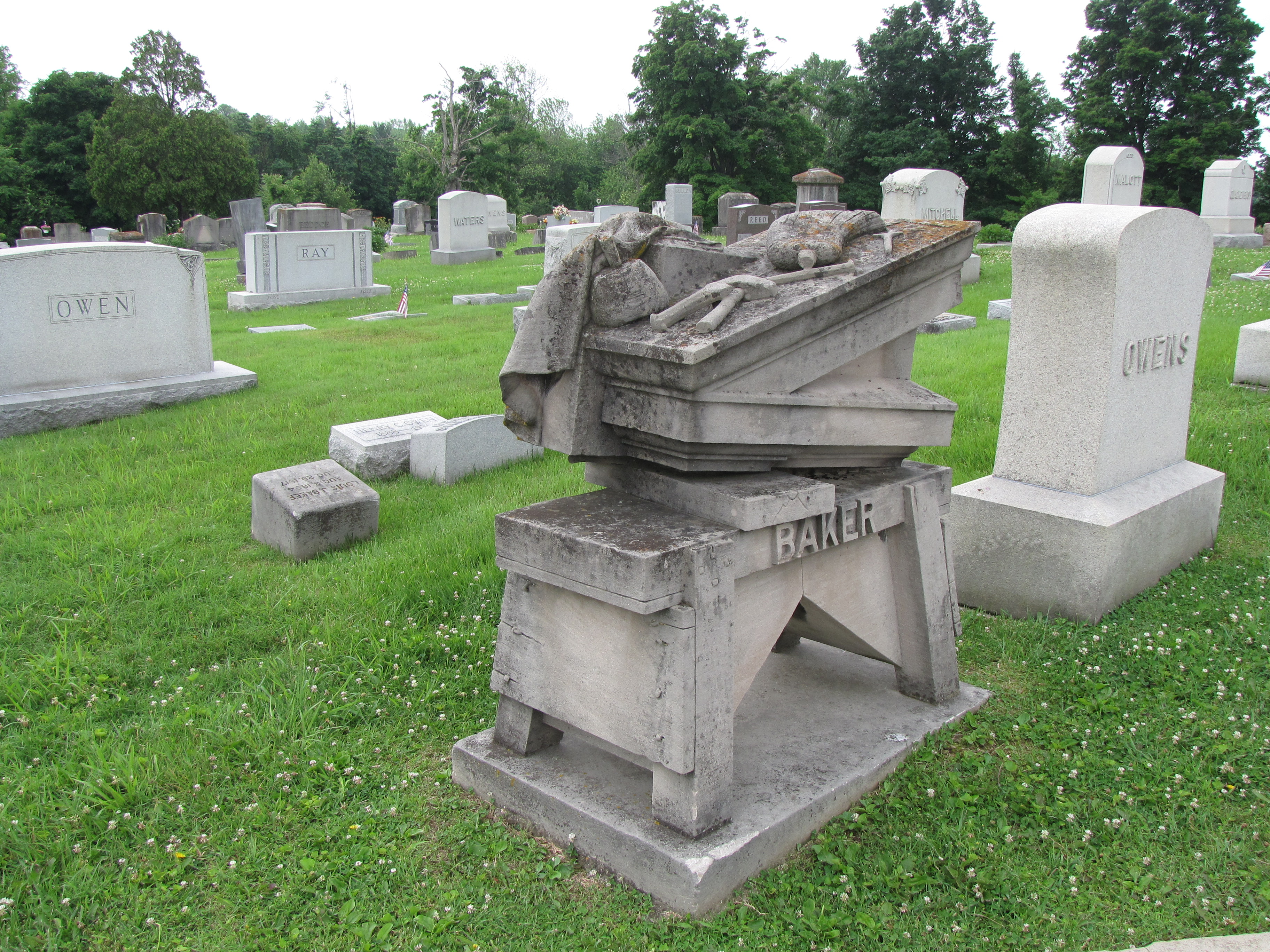
Green Hill Cemetery, Bedford, Indiana
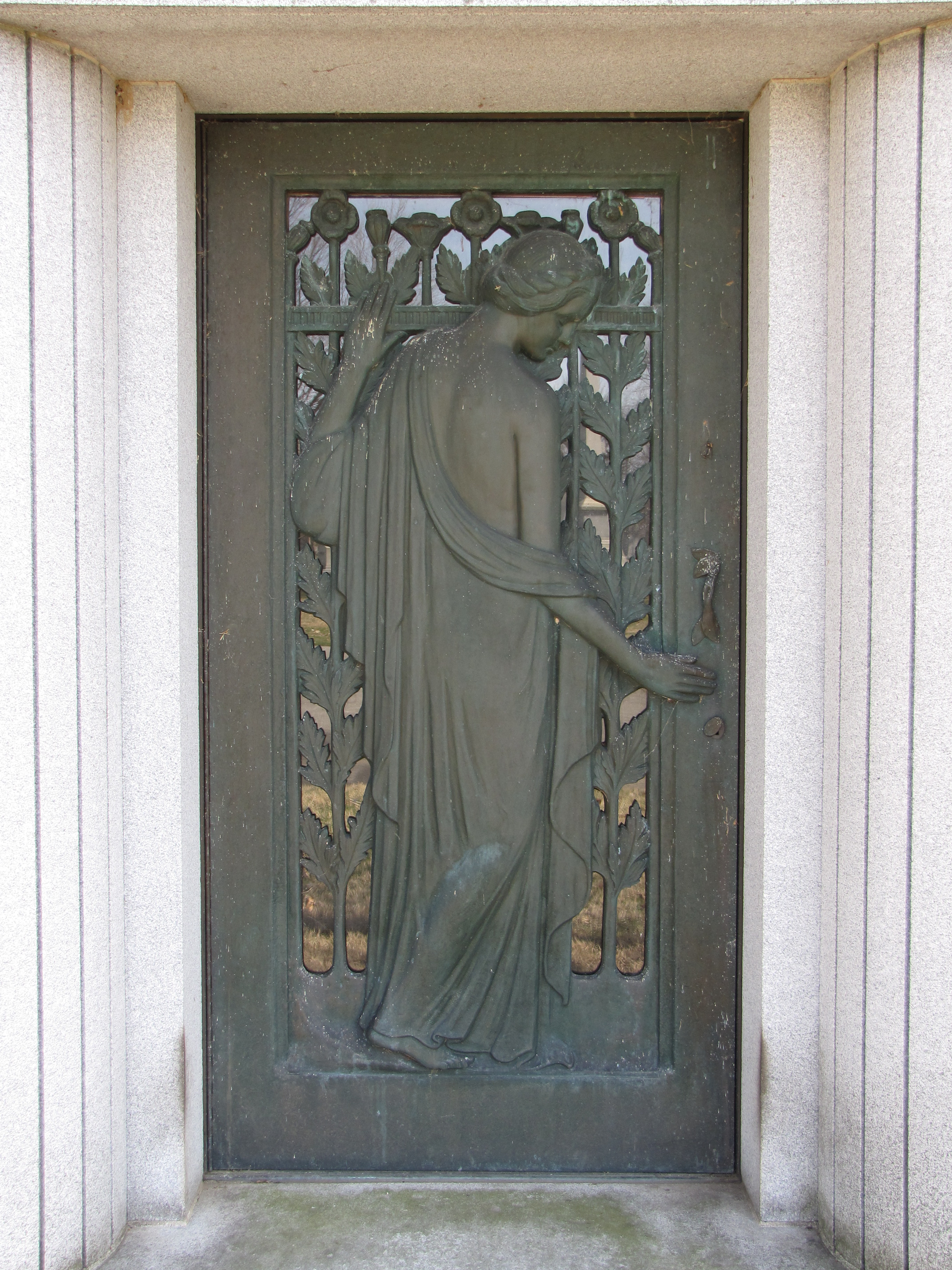
James Irving Holcomb Mausoleum, Crown Hill Cemetery, Indianapolis
When I was a kid there was a game show on telelvision called Let’s Make a Deal hosted by Monte Hall. The game revolved around the contestants wagering that the prize they had in their hand was not as good as one of the prizes behind door number one, two, or three. The great mystery was what was behind the door.
In the same way, the door as a motif in funerary art symbolizes mystery. The door is the pathway from the earthly realm to the next. In Christianity, however, this is almost always viewed with hope, charity, and faith. The next life will be better.

Civil War Monument, Mt. Olivet Cemetery, Hanover, Pennsylvania
No other event in the 19th Century had a larger affect on America than the Civil War. It tore the country apart and involved people from every corner before it was over. Over a million people were wounded and killed–625,000 from the North and over 400,000 from the South.
After the war, The Grand Army of the Republic (G.A.R), a veteran’s organization, was founded April 6, 1866, in Decatur, Illinois. The organization admitted veteran’s who served honorably in the Union Army, Navy, or Marines between April 12, 1861, and April 9, 1865.
Various metal grave markers can be found throughout American cemeteries marking the graves of the men and women who served during the war. These take many forms.


During the rural cemetery movement designers created park-like cemeteries. The first such cemetery was Mt. Auburn, which opened in 1831, at Cambridge, Massachussetts. The ideal was to fuse the utility of having a place to bury the dead but design the cemeteries so they were pleasing to the eye with an open park design. Funerary art and architecture was designed to illicit emotions, such as the finality of death and the Christian ideal of eternity.
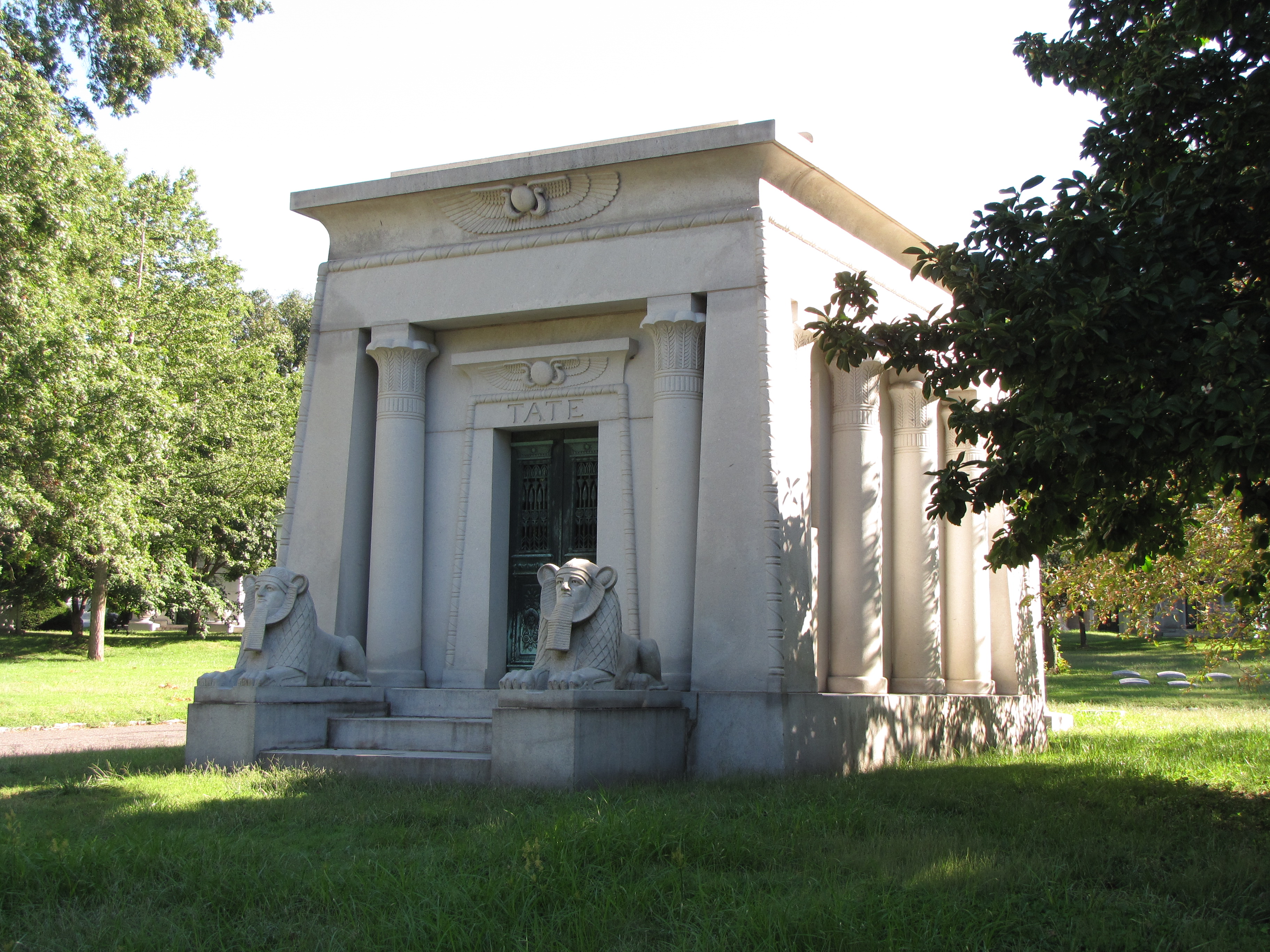
The Tate Mausoleum in the Bellefontaine Cemetery in St. Louis, Missouri, is an example of the Egyptian Revival architecture found in many large urban cemeteries. The mausoleum has many features of Egyptian temples–the cavetto cornice that curves into a half circle at the top of the tomb and above the doorway, the torus molding at the bottom of the cornice, around the door, and the corners of the mausoleum that are designed to emulate long bundled plants, and the heavy columns with the palm leaves at the top.
The Tate Tomb also features two winged globes with uroei. In this example, there are three sets of falcon wings that are a symbol of the king, the sun, and the sky. The globe represents the Egyptian god, Horus. The uroei, snakes, are waiting to strike. They symbolize the king’s ability to ward off evil spirits.
Three steps lead up to a pair of bronze doors that feature lotus flowers and buds, the entryway guarded by two large sphinxes. The massive tomb gives one the sense of solominity and a sense of eternity, just as the temples of the pharaohs.

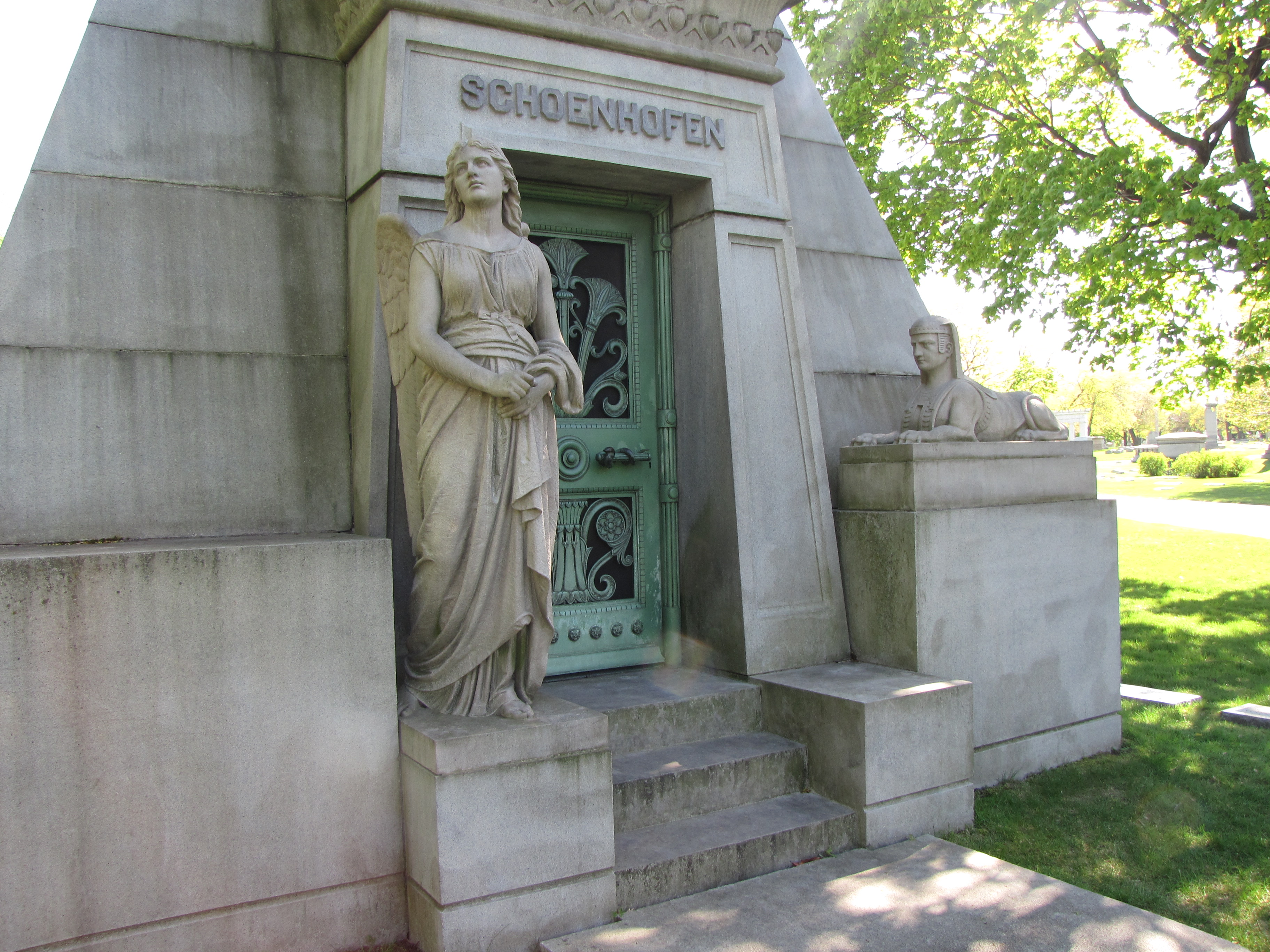
The Schoenhofen Mausoleum in the Graceland Cemetery at Chicago, Illinois, is another grand example of Egyptian Revival Funeary Architecture. The Egyptian and Christian symbolism share an uncomfortable coexistence. The mausoleum displays images of the ancient pharaonic religion including the sphinx, the scarab, and the uroei. Many Christians objected to Egyptian motifs and their non-Christian origins. To soften the impact, designers often included Christian symbolism. In this case an angel looks up toward Heaven opposite the spinx standing guard by the doorway.
 | gravelyspeaking on There is gold in those blue… |
| gravelyspeaking on Father Time |
 | gsb03632 on Father Time |
 | fllwfan on There is gold in those blue… |
| gravelyspeaking on A monument to a boys’… |
 Gravely Speaking