The Egyptian Revival

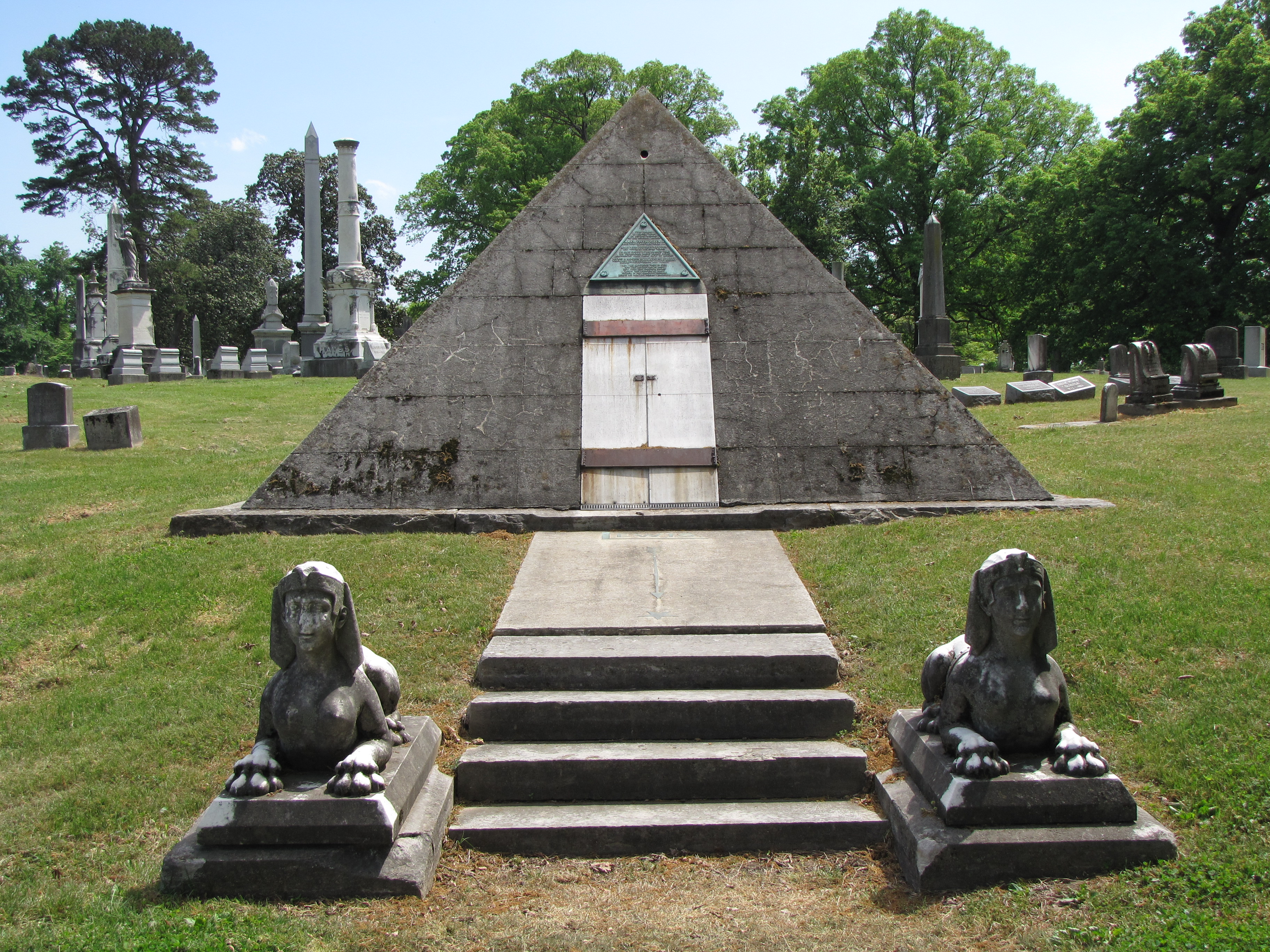
Major Eugene C. Lewis Mausoleum, Mt. Olivet Cemetery, Nashville, Tennessee

After the French and British occupations of Egypt, there was a renewed interest in Egyptian architecture and symbolism.  The Egyptian symbol that is most commonly found in American cemeteries is the obelisk.  And the most famous obelisk in America is the Washington Monument in Washington, D.C. But the pyramid is by far the epitome of Egyptian funerary architecture, the tomb of the pharaohs.  The oldest pyramid is the Pryamid of Djoser built over four thousand years ago from 2630 BC to 2612 BC.  The largest of the Egyptian pyramids is the Pyramid of Khufu at Giza built between 2589 and 2566 BC.

Here Major Eugene C. Lewis is buried in a pyramid.  A sphinx on each side of the sidewalk leading up to the pyramid stands guard.  Lewis was a Nashville, Chattanooga, and St. Louis Railway official who championed the construction of the Parthenon replica for the Tennessee Centennial Exposition of 1897 for the 100 anniversary of the statehood.

THIS TABLET

IS PLACED HERE

IN LOVING MEMORY

OF OUR FATHER

MAJOR EUGENE C. LEWIS

BORN JUNE 21, 1845 DIED FEB. 13, 1917

A MAN WHOM POSTERITY WILL KNOW

AND HONOR BY HIS GOOD WORKS

HE GAVE FREELY OF HIS TALENTS THAT

HIS FELLOWMAN MIGHT ENJOY MORE

ABUNDANTLY GOD’S GREAT GIFTS OF NATURE

HE WAS A LABORER IN HIS BUILDING OF A LIFE

WHICH LED TO THE ATTAINMENT OF THE HIGHEST

IDEALS — TRUTH — HONOR AND PURITY

NOW THE LABORER’S TASK IS O’ER

NOW THE BATTLE DAY IS PAST

NOW UPON THE FARTHEST SHORE

LANDS THE VOYAGE AT LAST

FATHER IN THY GRACIOUS KEEPING

LEAVE WE NOW THY SERVANT SLEEPIING
Posted in Mausoleums, Symbolism | 1 Comment

Draped Urn

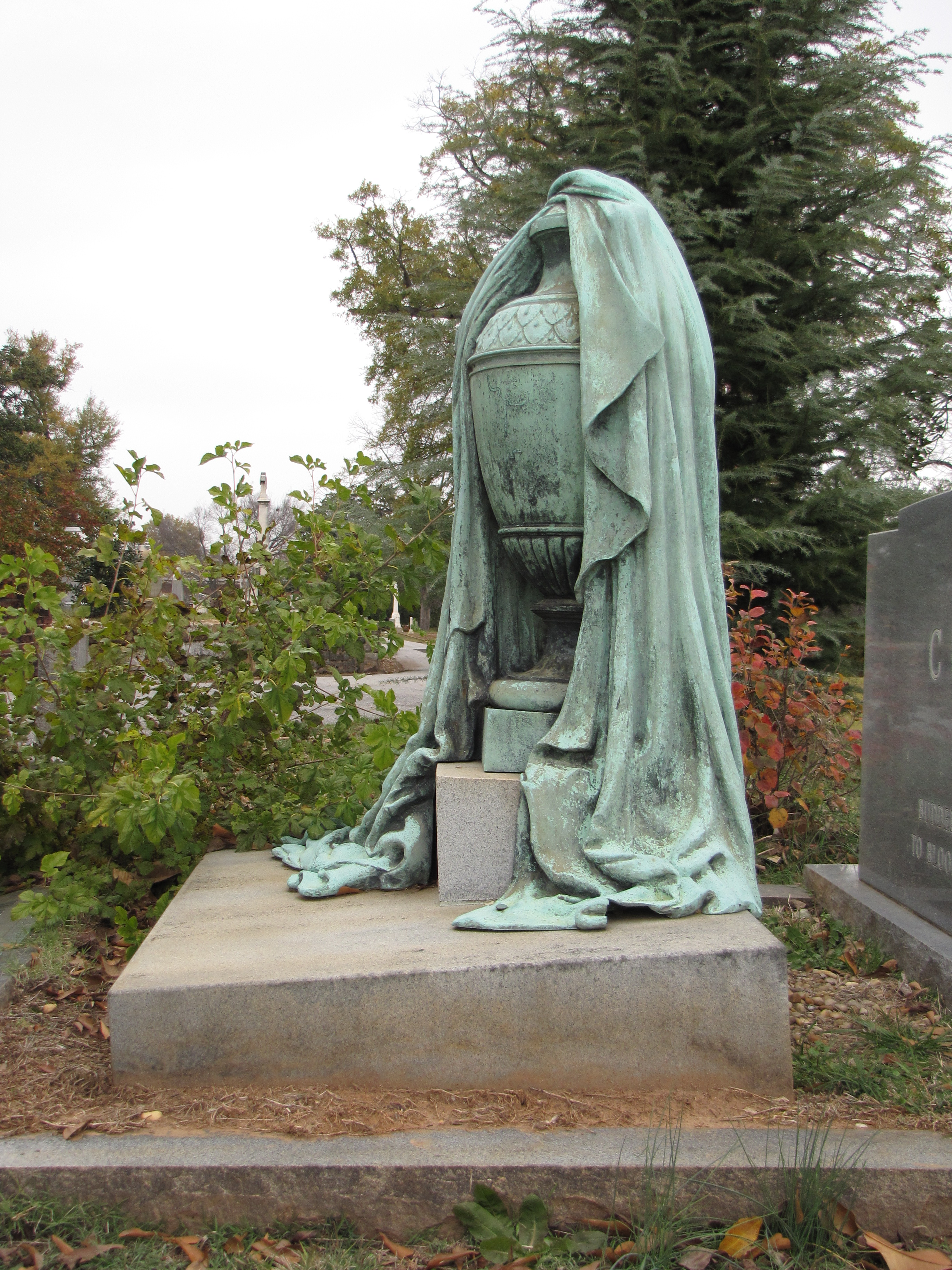
The William Remy Cole Monument, Oakland Cemetery, Atlanta, Georgia

The monument in the photograph is of a draped urn.  This particular urn is a dramatic example of this symbol, cast in bronze and freestanding.  For the most part, the urns are found on top of columns and mausoleums, ornaments. 

The urn, of course, is a container used to hold the ashes or the cremated remains of the dead.  In this case, the urn is draped.  The drapery either represents a shroud representing death and sorrow, or can also be a motif that reperesents a veil that separates the earth and Heaven.  The urn was an almost ubiquitous 19th Century symbol found in nearly every American cemetery. 

The irony is that very few people were cremated during the 19th Century when the draped urn motif was at the heighth of its popularity.  For instance, during the eight years from 1876 until 1884, only 41 Americans were cremated.  Though the number of cremations in the United States slowly increased, by the 1950s only less 4% of our dead were cremated.  Cremation, though, has been increasing each decade: 1960–3.56%; 1970–4.59%; 1980–9.72%; 1990–17.13%; 2000–26.24%; 2010–35.93%.  Some are predicting that by 2025, almost half of our dead will be cremated.  Maybe the urn will re-emerge as a symbol for the 21st Century.

Posted in Symbolism | 2 Comments

The Tree of Life

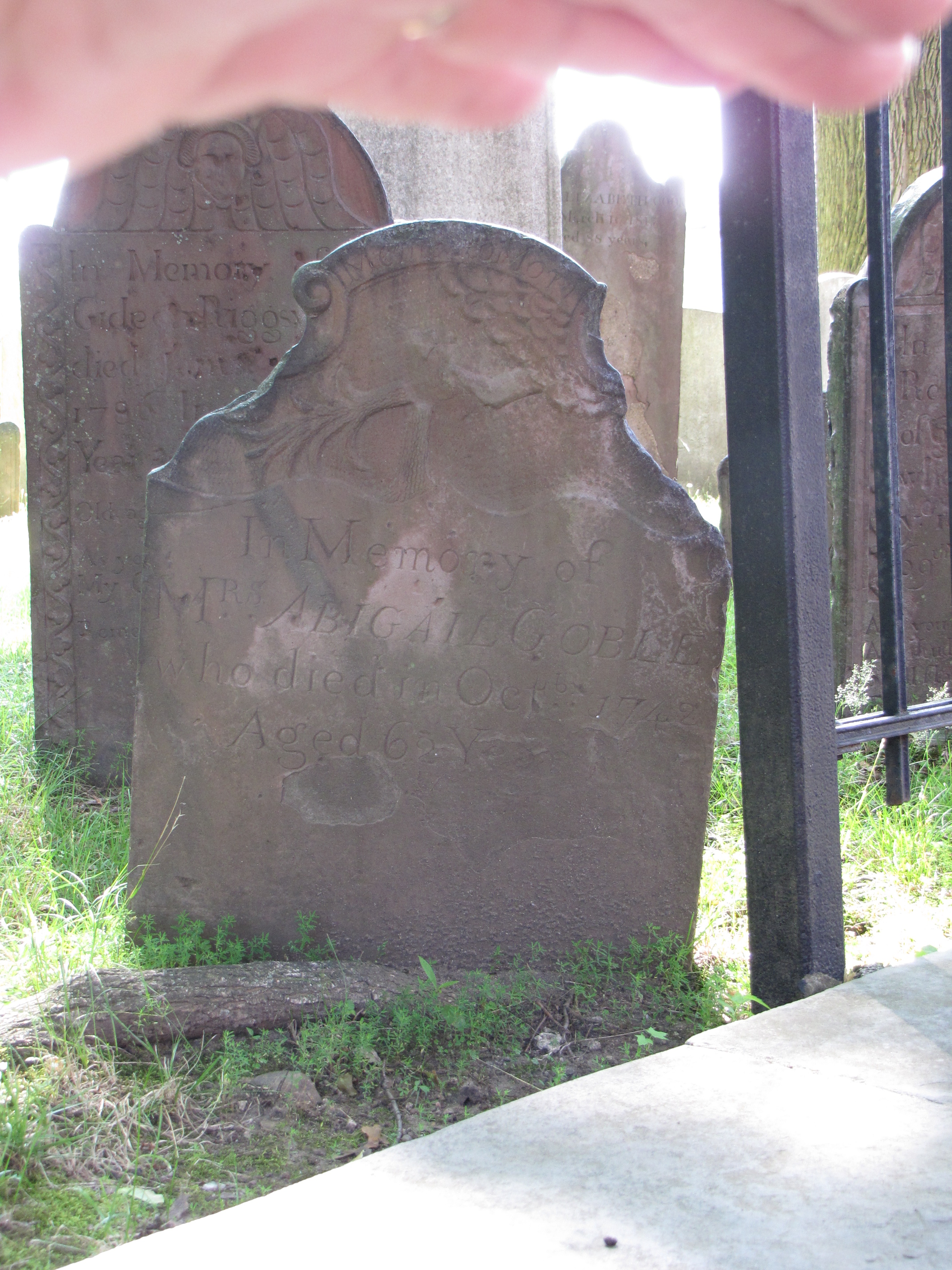
The Burying Ground at the Morristown, New Jersey, Presbyterian Church


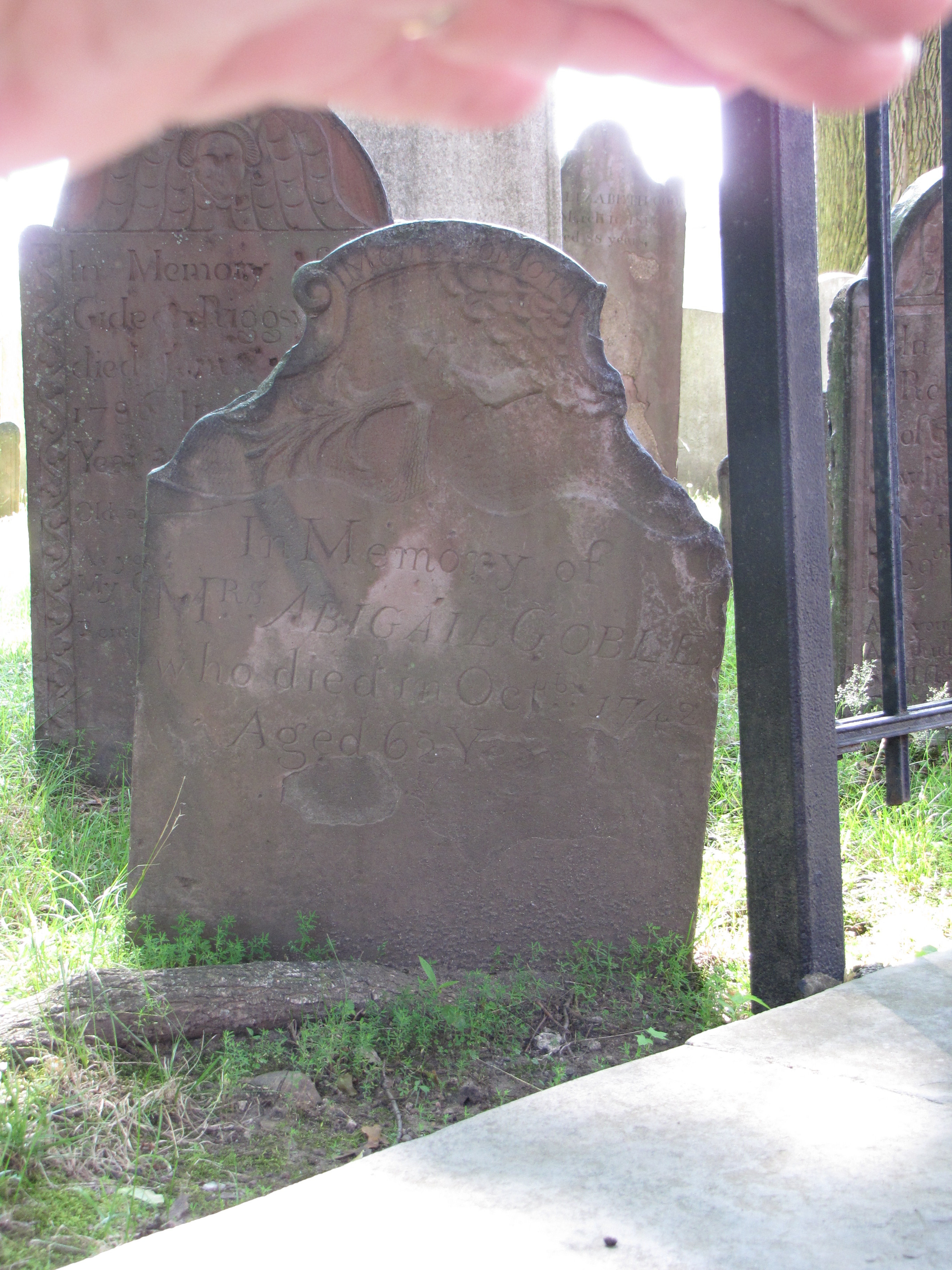
Close up

The Old Burying Ground at the Presbyterian Church at Morristown, New Jersey, is full of red slate gravestones, the most interesting of them by far is the gravestone of Abigail Goble, believed to be the oldest woman buried within the churchyard.  The image is dramatic.  In the right side of the top of the gravestone or the tympanum, out of the sculpted clouds of the Heavens, comes the hand of God weilding a hatchet. God’s axe has felled the Tree of Life!  The Tree is hacked down, life is over.  Over the top of the gravestone are the words “Memento Mori”.  This is a medieval reminder from the depths of the Black Death that swept through Europe to “remember death”.  Death was a constant and one must be prepared to die at any time.

Memento Mori                                                                                                                                  In Memory of                                                                                                                                      Mrs. ABIGAIL GOBLE                                                                                                                     who died in Oct.br 1742                                                                                                                     Aged 62 Y

Posted in Symbolism | 1 Comment

An old expression

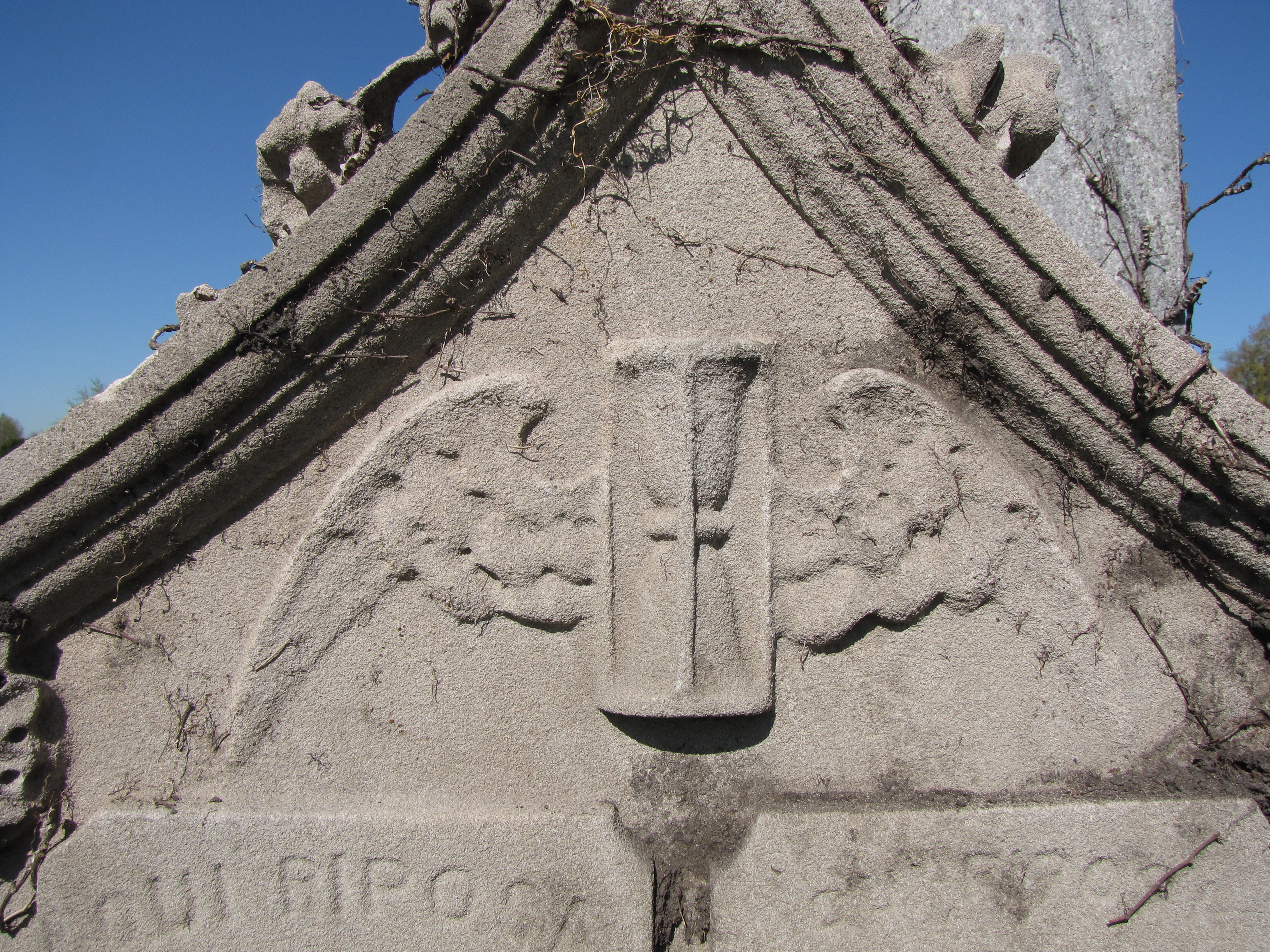
Calvary Cemetery, Chicago, Illinois

Have you ever heard the expression, “Time Flies”?  This symbol, a winged hourglass, brings that expression to life, so to speak.  A reminder in stone that life is short and that time is fleeting, every minute of every day brings one closer and closer to death.

Posted in Symbolism | Leave a comment

President Harrison’s Grave

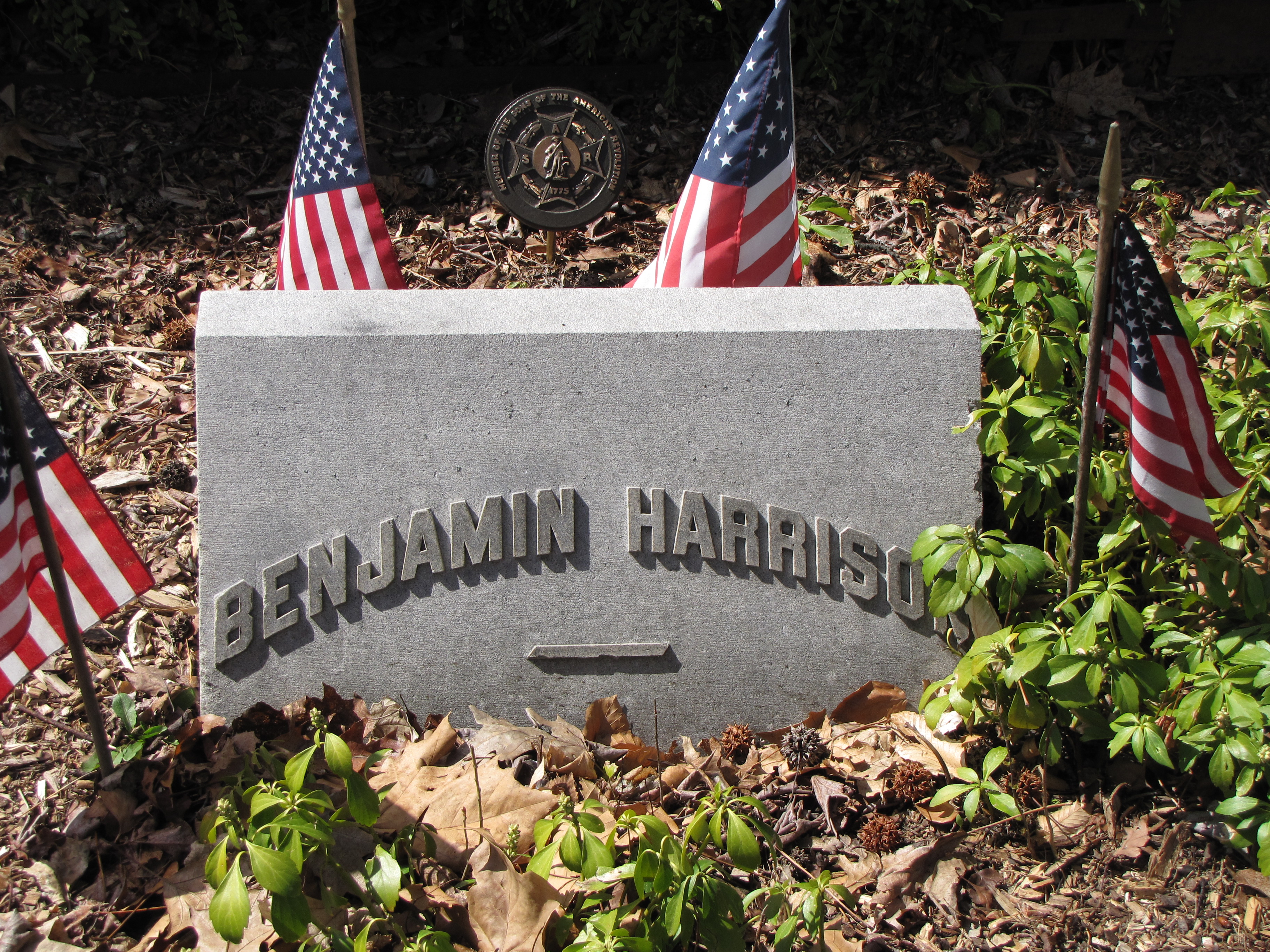
Crown Hill Cemetery, Indianapolis, Indiana

Crown Hill Cemetery is the third largest cemetery in the United States at 555 acres.  It was established June 1, 1864, and now is the burial ground of three Vice Presidents–Charles W. Fairbanks, Thomas A. Hendricks, and Thomas R. Marshall–an infamous bank robber, John Dilliger, Indiana’s own Hoosier poet, James Whitcomb Riley, and the 23rd President of the United States, Benjamin Harrison.

In the latest survey of historians Harrison falls in the fourth quartile ranking at 33 of the 44  men who have had the title of president.  Though Americans don’t remember his service in the Executive Office, Harrison served admirably as a soldier in the Civil War, as a United States Senator, and as President.  Benjamin Harrison was also a highly successful lawyer, perhaps the most successful attorney to serve in our highest office.

One legacy from his 1888 campaign against Grover Cleveland was a phrase that has made it into the common use.  During the political fray, pols rolled a 14 foot ball sporting numerous campaign slogans through the streets.  From this the expression, “Keep the ball rolling!” became popular.

His monument is a large gray granite block and an example of Victorian ornamentation.

BENJAMIN HARRISON

AUGUST 20, 1833 – MARCH 13, 1901

LAWYER AND PUBLICIST

COL. 70th REG. IND. VOL. WAR 1861-1865

BREVETTED BRIGADIER GENERAL 1865 U.S. SENATOR 1881-1887

PRESIDENT 1889-1893

STATESMAN, YET FRIEND TO TRUTH OF SOUL, SINCERE IN ACTION, FAITHFUL

  AND IN HONOUR CLEAR

President Harrison’s Headstone

The metal marker showing Harrison’s membership in the Sons of the American Revolution honoring his ancestor of the same name, Benjamin Harrison, a signer of the Declaration of Independence.

Posted in Presidential graves | 2 Comments

Fading from Memory

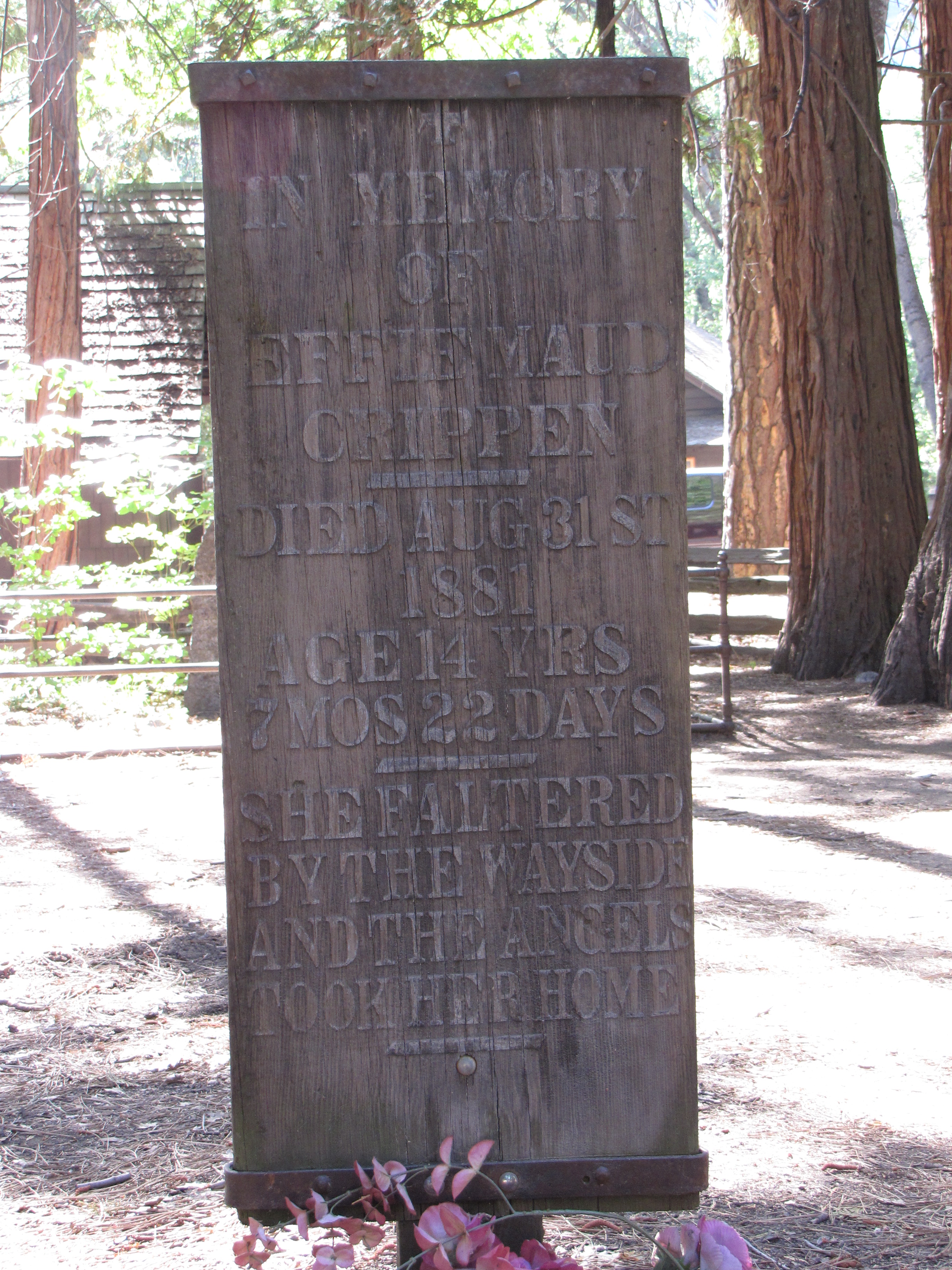
Effie Maud Crippen's wooden marker, Yosemite, California

I was reading Arts in View, a blog, written by my friend and author, Donovan Walling.  He elegantly wrote a blog about googling your own name or someone else’s as confirmation of being alive or having lived.  It got me to thinking about a low tech version of that thought, what about the people who are buried in graves that are unmarked and those whose grave markers are slowly eroding?  It reminded me of Effie Maud Crippen in the Yosemite Cemetery, in the Yosemite Valley of Calfornia.  The wording on her wooden marker becomes more faint with each passing year.  How soon before the words are gone altogether?  Then what becomes of her memory? 

Effie Maud had suffered from a lingering illness and her frail body succumbed, her September 3, 1881, Mariposa Gazette death notice described her untimely passing, “The grim monster, Death holds an impartial respect for persons: blooming youth, as well as the aged, must yield to the sickle, and fall into the swath, which is to be gathered into the fold and gathered with others who have preceded, and those who are soon to follow.”  She died and was buried the next day, followed to the grave by her family, friends, neighbors, and her classmates.  Her epitaph faintly now whispers, “She faltered by the wayside and the angels took her home.” Those who were there that day she was buried are gone along with their memories of Effie.  How long before the grave marker that bears witness to her life fades along with her name?

Posted in Uncategorized | 4 Comments

The Willow

Lucy Ann Seaton, the first person buried in the Crown Hill Cemetery, Indianapolis

Yesteday, the Indiana Chapter of the Association for Gravestone Studies met at the Waiting Station of the Crown Hill Cemetery in Indianapolis, Indiana, organized by Jeannie Regan-Dinius from the Division of Historic Preservation and Archaeology, and Joy Giguere, an history professor at Ivy Tech Community College and the State AGS Chapter Chair.  They did a yeoman’s job of organizing an intersting program that included, Mike McNerney speaking about Discoid Neck Grave Markers, Lillian Green speaking about Warren Township Cemeteries, and Dick Powell speaking about Indiana Materials Used As Grave Markers, among others.  After lectures in the morning, Tom Davis, a cemetery docent gave a tour of some of the historic graves in the cemetery, including the grave of Lucy Ann Seaton, who was buried just days after the cemetery was established. 

LUCY ANN wife of CAPT. JOHN SEATON Born in Halifax, Va. 1830 Died May 30, 1864 AGED 33 Y’rs 7 Mo’s & 10 D’s

Tom Davis noted Lucy’s grave as the Crown Hill’s first.  Lucy’s husband was Captain John Seaton.  The couple had only recently moved to Indianapolis when Lucy died of consumption.  Because they did not know many people, Captain Seaton put a notice in the newspaper.  Locals wanting to show to the honorable captain that city was an hospitable place to live organized several hundred people to attend the funeral.  He also mentioned that the symbol on the marble gravestone, badly weathered, was of a willow tree, which had been a popular symbol but was already becoming less popular by the 1860s–only a few of the graves bear this motif of the hundreds of thousands of graves in the cemetery.  The willow first made its appearance in cemeteries, according to James Deetz and Edwin S. Dethlefsen, in their groundbreaking article, “Death’s Head, Cherub, Urn and Willow” in the early 18th century.  In that article, the motif included an urn with the willow.

Mrs. Polly Loring's gravestone at the King's Chapel Burying Ground, Boston, MA

The willow motif represents what one might expect; sorrow and grief, it is after all a “weeping” williow.  An epitaph found on a grave in Harrison County, Iowa, on a child’s grave speaks of the grief that the parent’s felt:

A light from our household is gone                                                                                                  A voice we love is stilled                                                                                                                      A place is vacant in our hearts                                                                                                         That ne’r can be filled                                                                         

There’s a fresh little mound neath the willow                                                                              Where at evening I wander and weep                                                                                            There’s a dear vacant spot on my pillow                                                                                 Where a little face used to sleep.

Posted in Symbolism | 1 Comment

Broken Bud

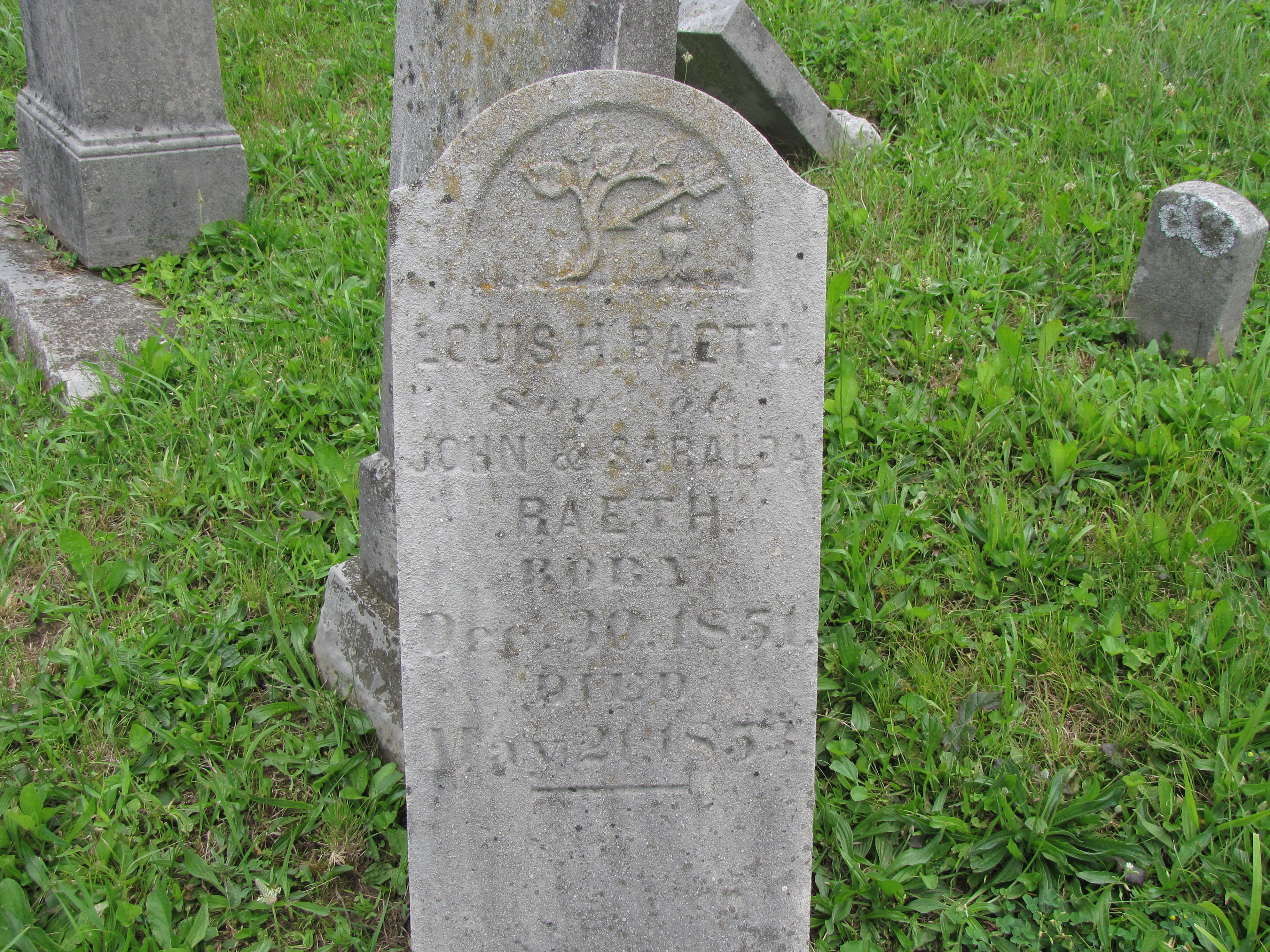
The LOUIS H. RAETH gravestone, Green Hill Cemetery, Bedford, Indiana

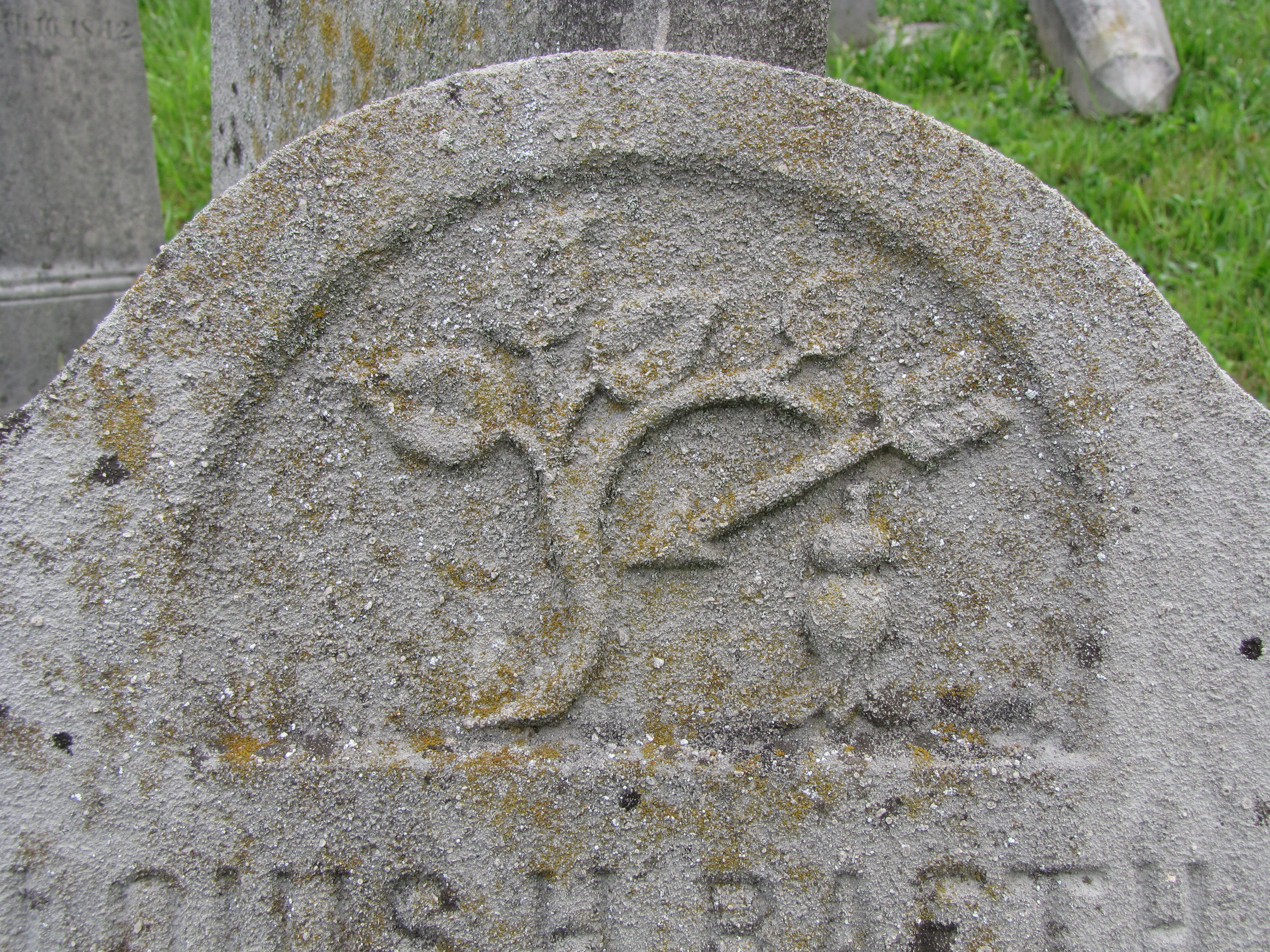
Detail of the top of the LOUIS H. RAETH gravestone

LOUIS H. RAETH                                                                                                                          son of                                                                                                                                            JOHN & SARALDA                                                                                                       RAETH                                                                                                                                        BORN                                                                                                                                               Dec. 30, 1851                                                                                                                                DIED                                                                                                                                               May 21, 1853

As I walk through cemeteries and read the text on the gravestones, the hardest for me are the gravestones of the children.  It always seems unfair to me that these tiny children did not have a chance to fulfill their promise.  It is a reminder of how fragile life is, especially young life.  Often you can see fairly quickly in cemeteries how high infant mortality rates were in frontier America.  There is an old saw that it wasn’t tough to live to 70, the major feat was to live past five. 

Cemeteries have many symbols that represent children–shoes, seedpods, cribs, cherubs–but one of the most common is the hanging bud.  The broken bud represents the flower that did not bloom into full blossom, the life that was cut short before it had a chance to grow to adulthood.  What is unusal about this gravestone is the hanging bud is severed by an arrow, what looks to be an overt action from Heaven.

Posted in Symbolism | Leave a comment

Knights

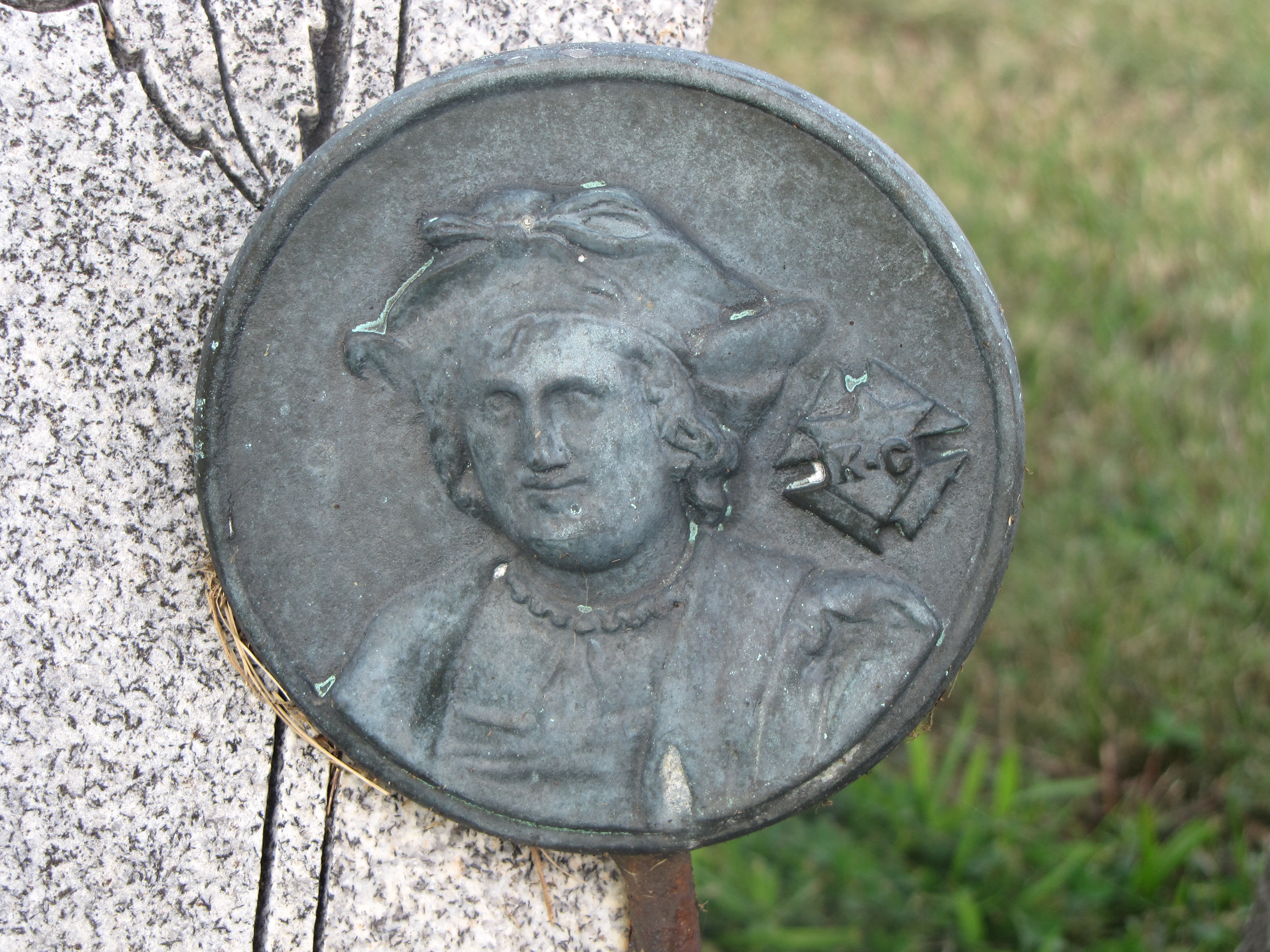
The Knights of Columbus was founded in 1882 as a Catholic fraternal service organization.  The fraternity was founded by Father Michael J. McGivney, an Irish-American priest, from St. Mary’s Parish of New Haven, Connecticut.  Originally founded to provide aid to orphans and widows, it now has an expanded mission to provide insurance, philanthropic, and charitable activities and community services all around the globe. It’s mission is In service to one.  In service to all.

Their are at least two metal markers that can be found in cemeteries that denote membership in the Knights of Columbus.  The marker on the left replicates the offical emblem of the organization, designed by James T. Mullen, which dates back to May 12, 1883.  A knight’s shield, representing knighthood, is overlaid on a stylized cross of Christ or Formee cross.  In the center of the knight’s shield are crossed an anchor, a mariner’s symbol for Columbus, and a sword or short dagger, which were used by knights when they were engaged in merciful acts.  Over the sword and anchor is laid a Roman fasces, a traditional symbol of authority and unity.

The marker on the right, represents the face of Columbus, in whose honor the organization was named and it’s patron.  Also displayed on the face of the marker is a small stylized version of the organization’s emblem.

Posted in Metal Markers | Leave a comment

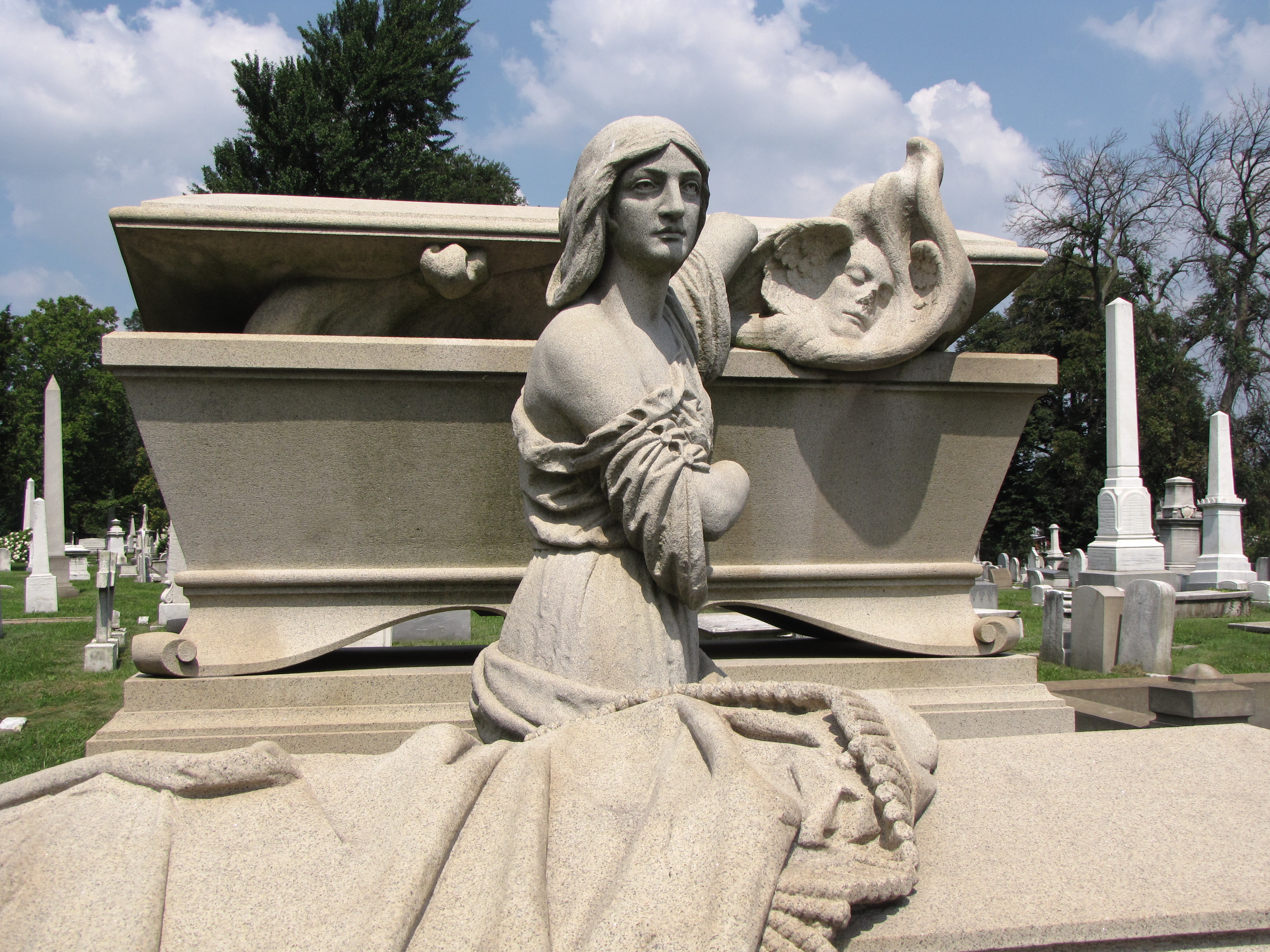
There goes his soul!

The William Warner Monument, Laurel Hill Cemetery, Philadelphia

Alexander Milne Calder, the eldest of the family of Calder artists, gained fame for over 200 landmark sculptures he completed for Philadelphia’s City Hall including the massive sculpture of William Penn on top of the building. 

Calder, like many great artists, earned money from commissioned works including the William Warner Monument, a Victorian masterpiece of funerary art in the Laurel Hill Cemetery in Philadelphia.  The female figure gazes into the distance, stoic and unemotional, as she lifts the lid of the coffin releasing billowing clouds that portray a visible face, presumably Warner’s. The visage swirls upward, with what appears to be faint wings amid the wisps, and is said to be of his soul being released from the grave to Heaven.

Posted in Symbolism | 2 Comments