More Odd Fellows

Fairmont Cemetery, Denver, Colorado

In addition to the metal markers next to gravestones that signify Odd Fellows membership, gravestones are also carved with the symbolism of the association.  On this monument for Stephen and Mary Hoskin in the Fairmont Cemetery in Denver, Colorado, is the all-seeing eye and the three links with the letters F L and T.

Posted in Symbolism | Leave a comment

Odd Fellows

Lakeview Cemetery, South Haven, Michigan

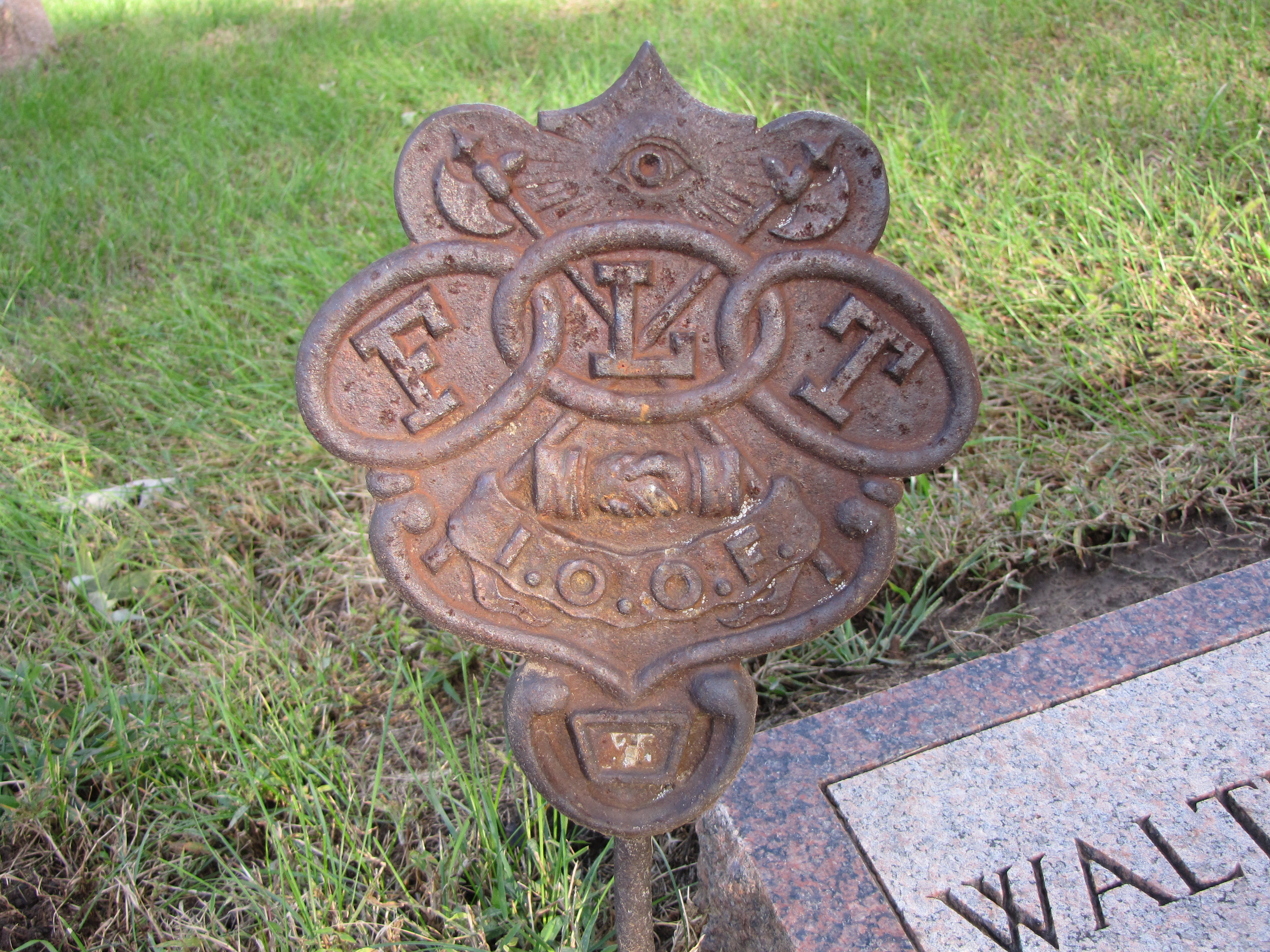
The metal marker above when seen next to a gravestone denotes that the deceased was a member of the fraternal organization of Independent Order of Odd Fellows.  Odd Fellows is an fraternal organization that formed in England in the 1700s as a service organization.  The American association was founded in Baltimore, Maryland, on April 26, 1819.  According to the I.O.O.F. Website, “Thomas Wildey and four members of the Order from England instituted Washington Lodge No. 1.  This lodge received its charter from Manchester Unity of Odd Fellows in England.”

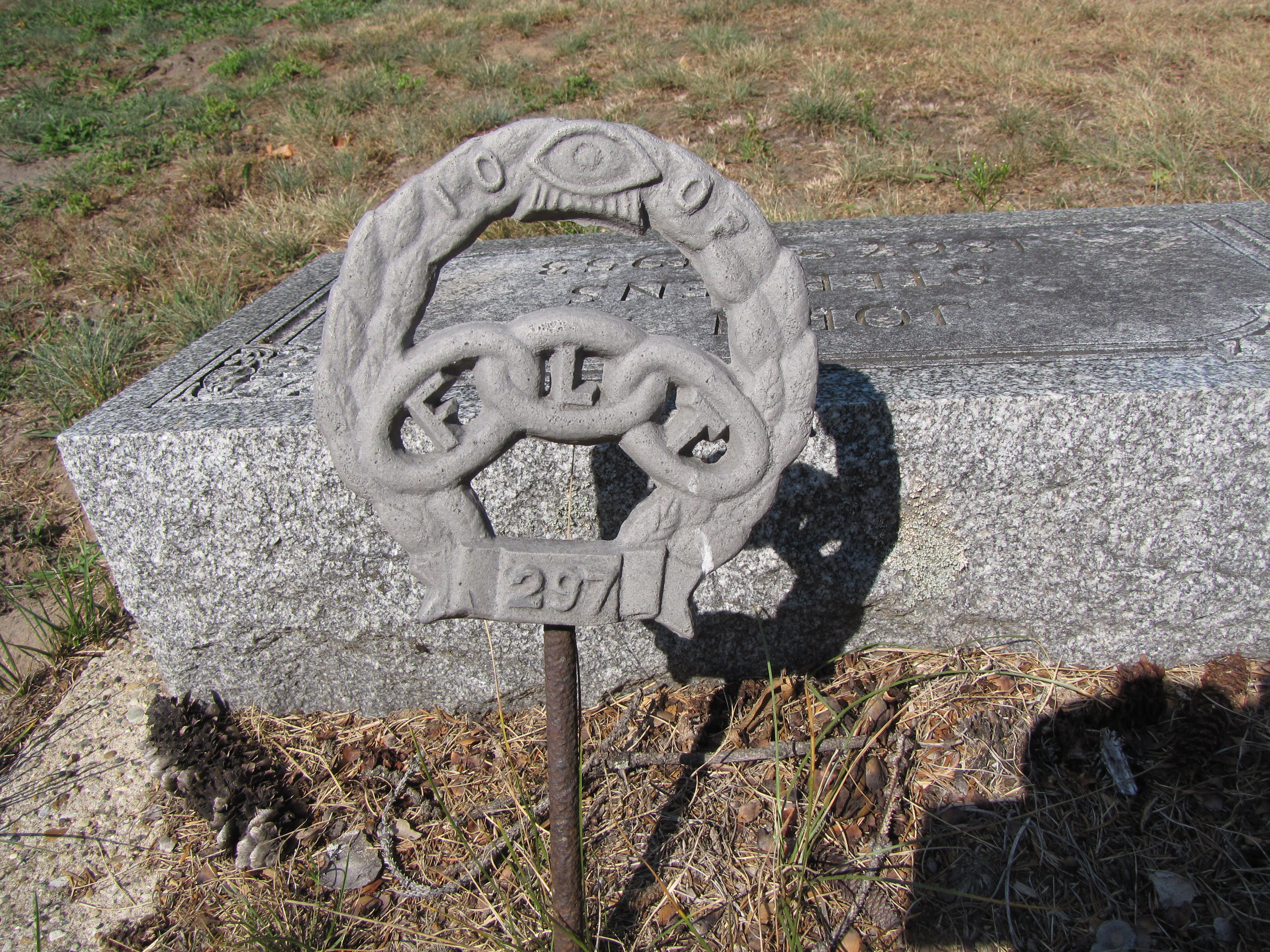
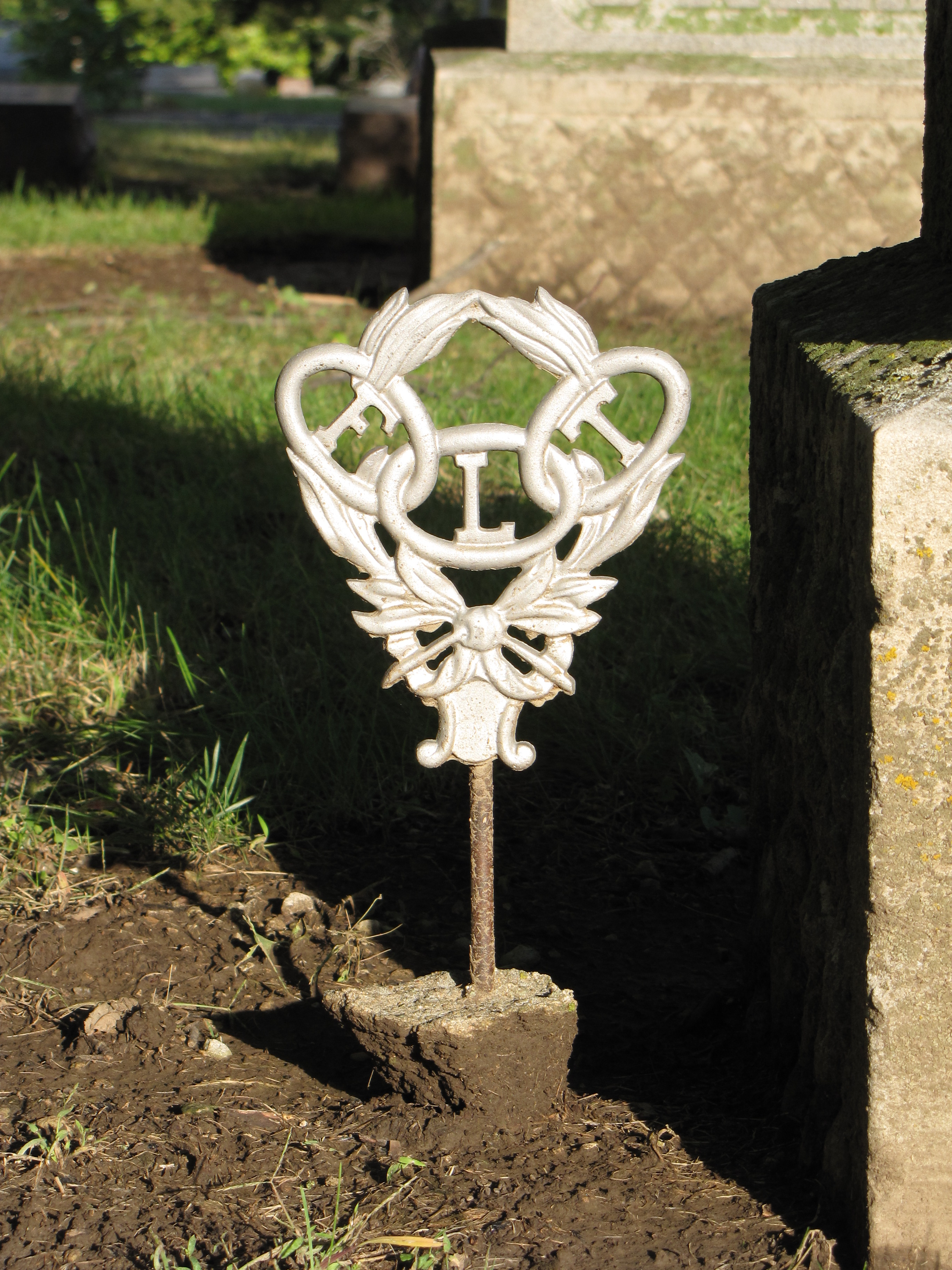
This marker has a number of different symbols contained on it, but the main symbol of the Odd Fellows is the three links of the chain.  Within the three links are three letters,  F  L  T, which signify the organizations motto: Friendship, Love, and Truth.  The top of the metal marker displays the all-seeing eye shown with rays of light emanating from it.  This symbol can be traced back to Egyptian mythology to the Eye of Horus.  The two hands clasping together represent brotherhood.

There are a number of different styles of metal markers that can be found in cemeteries.  Two of the markers have a dove atop them, which symbolizes peace.  The dove on the fifth marker below carries a sprig from a white lilly which represents purity.

West Branch Cemetery, Stowe, Vermont

Posted in Metal Markers | 1 Comment

Winning in Heaven

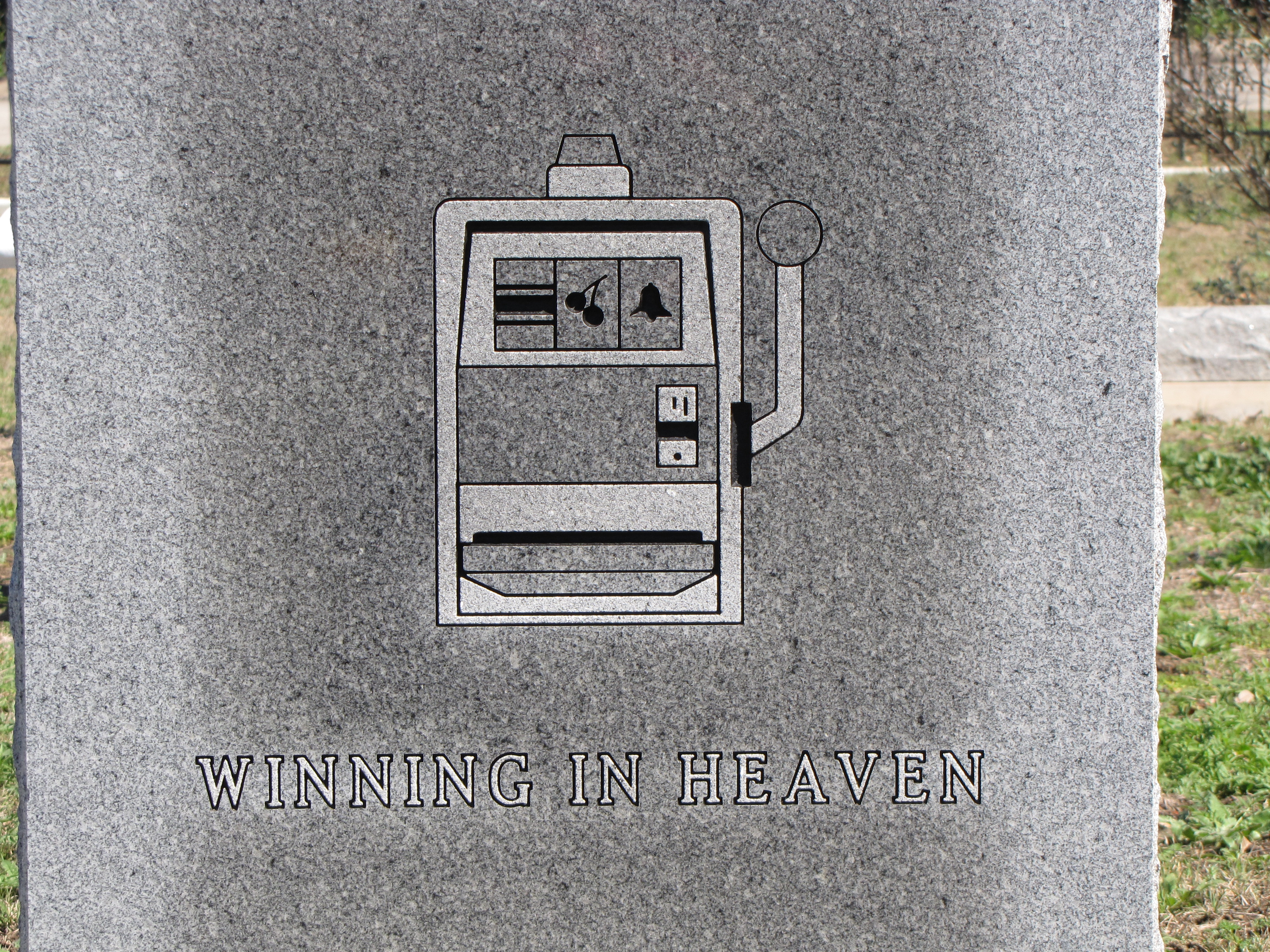
Really?  This is what you want on your gravestone?  I barely know where to begin.  I imagine that this person loved to play the slot machines but “Winning in Heaven”?  There is so much that is wrong with the symbolism on this gravestone.  Not that all has to be solemn and somber but this message is full of contradictions. 

First of all, if this person is winning in Heaven why didn’t he or she pull three cherries?  Or three clouds?  Or three angels? It is not a winning pull.  No coins are being dropped out of the money slot! But more importantly, a nod to gambling and Heaven in the same sentence is sacrilegious.  Even though, the Bible does not specifically call out gambling as a sin, I would imagine most theologians, when not arguing about the number of angels dancing on the head of a pin, would agree that there won’t be any one-armed bandits in Heaven!

Posted in Symbolism | 1 Comment

Goldie

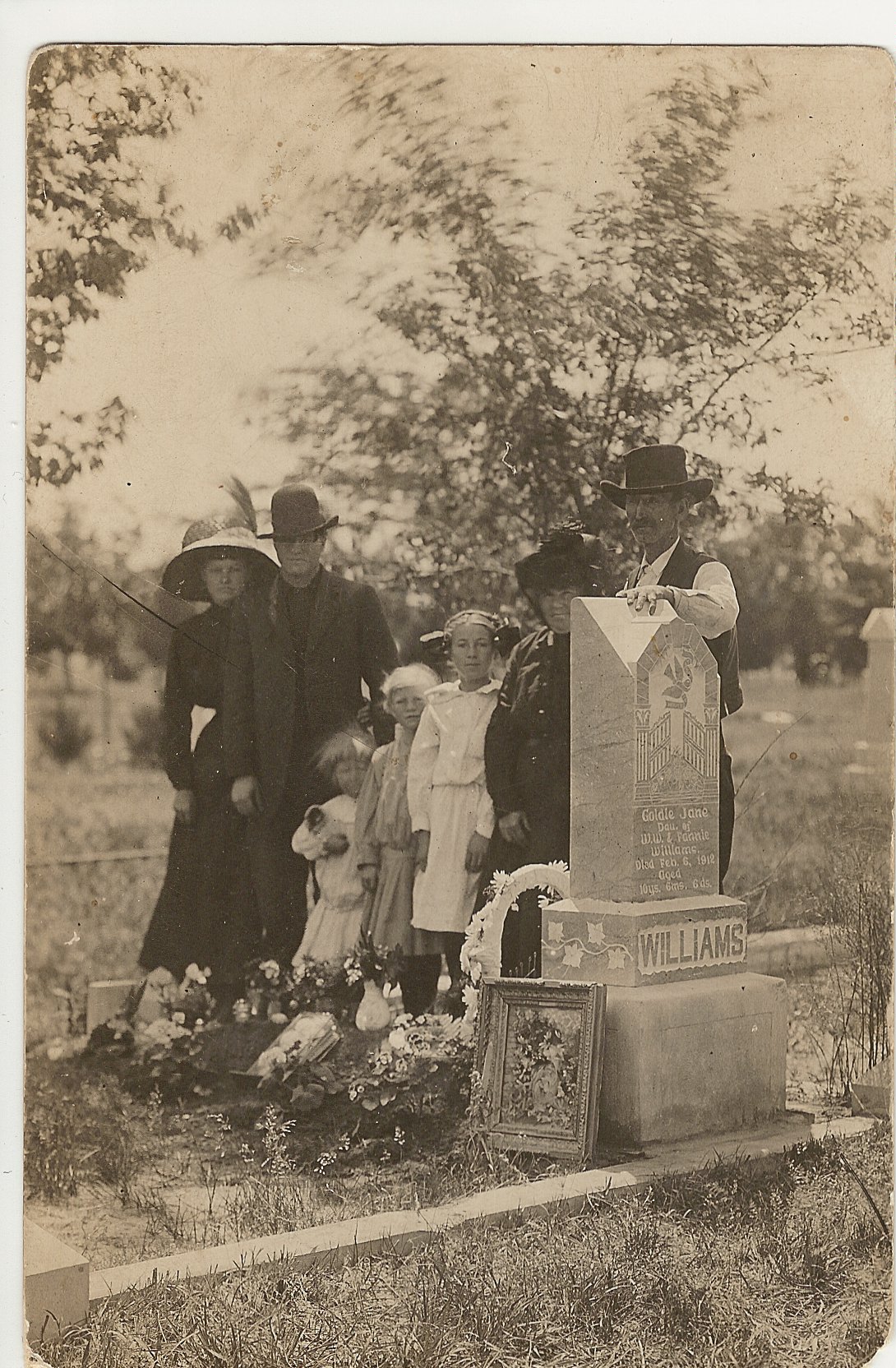
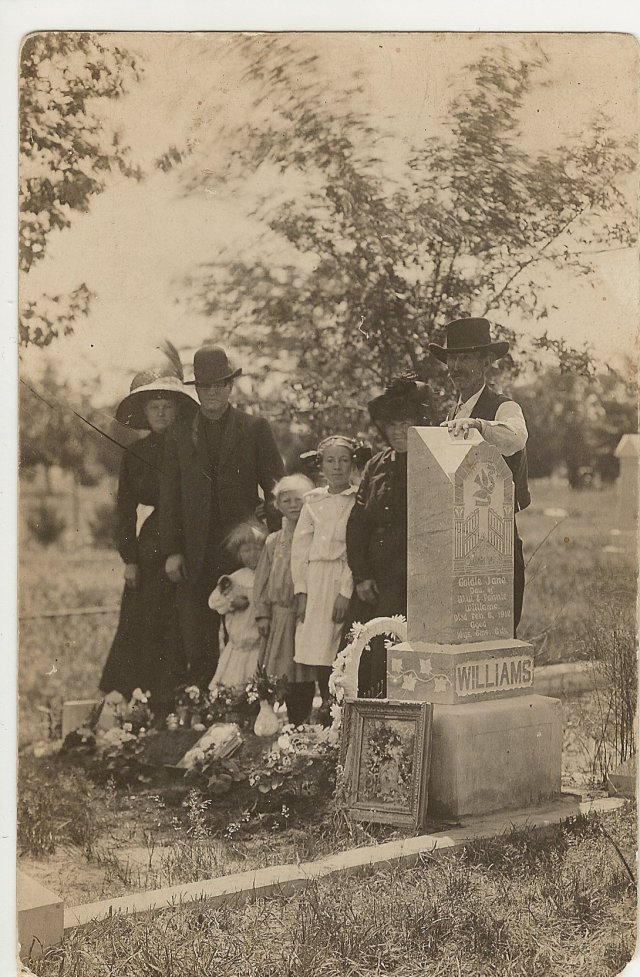
The photograph above is a family photo.  The couple standing next to the tombstone was my great grandmother, Sarah Caroline Anderson’s, sister, Fannie, her husband, Willie Williams, (yes, his name was William Williams) their three daughters and a pair of friends.  They are standing next to their daughter, Goldie’s, tombstone in a cemetery in Grand Island, Nebraska.

Like all parents, the worst fear is that something could happen to one’s child.  The tragedy that befell their family took place in 1912 and the story of it was repeated often in my father’s family as a flash point of grief and sympathy and a cautionary tale to stay away from strangers. 

Goldie was 10 years old, vibrant, fun, and loving.  Like typical kids she was shoe sliding on the February ice on the way home from school.  She was skidding and sliding on the sidewalks and the frozen gutters along the streets when she was approached by a man who noticed she had no skates.  He offered to give her a pair of skates if she would accompany him to his house. 

That was the last time that Goldie was seen alive. 

When Goldie didn’t come home from school at her usual time, her mother, Fannie, went out to look for her and retraced her usual path home.  She traced Goldie’s footprints and the footprints of a man to a shoveled sidewalk and the trail was lost.

A general home-by-home search of Grand Island took place.  On the second day of the search, it was reported that a strange man attempted to lure a second girl into his buggy by the promise of taking her skating.  After a determined struggle, the girl broke free and told her story to the police.  The search intensified.  That afternoon, Goldie’s body was found in an abandoned house, under several sacks of lime.  In spite of several eye witness descriptions of the man, and a $1,000 reward offered by the police, no culprit was found.

Twenty-five years later, Charles Wesley Cox, was arrested for the abduction and murder of Goldie Jane Williams.  A former Grand Island man who had been living in Grand Island at the time of Goldie’s death and had moved to Colorado, remarkably recognized Cox from the day Goldie disappeared.  He notified the police who went to Cox’s apartment.  When confronted by the police and the eye witness, Cox confessed the entire story. 

He told the police that he had lived in Grand Island under the name of Ellis Horn, later changing his name to C. T. Finnerty.  He had lured Goldie to the vacant house where he hit her in the head with a hammer, assaulted her, and stuffed her stocking cap into her mouth to choke her to death.  He then covered her body with mortar.  He picked up his week’s wages from his employer and fled.

Goldie is still remembered in our family as a beautiful toe-headed happy little girl.  She is also a symbol of tragedy and a warning known to all children.

Posted in Uncategorized | 4 Comments

Art Nouveau

Fairmount Cemetery, Denver, Colorado

The Art Nouveau movement was a bridge between Neoclassicism and Modernism and reached it’s popularity from 1890 to 1905.  Luminary artists such as Alphonse Mucha, Gustav Klimt, and Henri de Toulouse-Lautrec; glass designers Rene Lalique and Louis Comfort Tiffany, and Spanish architect Antoni Gaudi among others used long fluid lines inspired from florals and plants in their work.

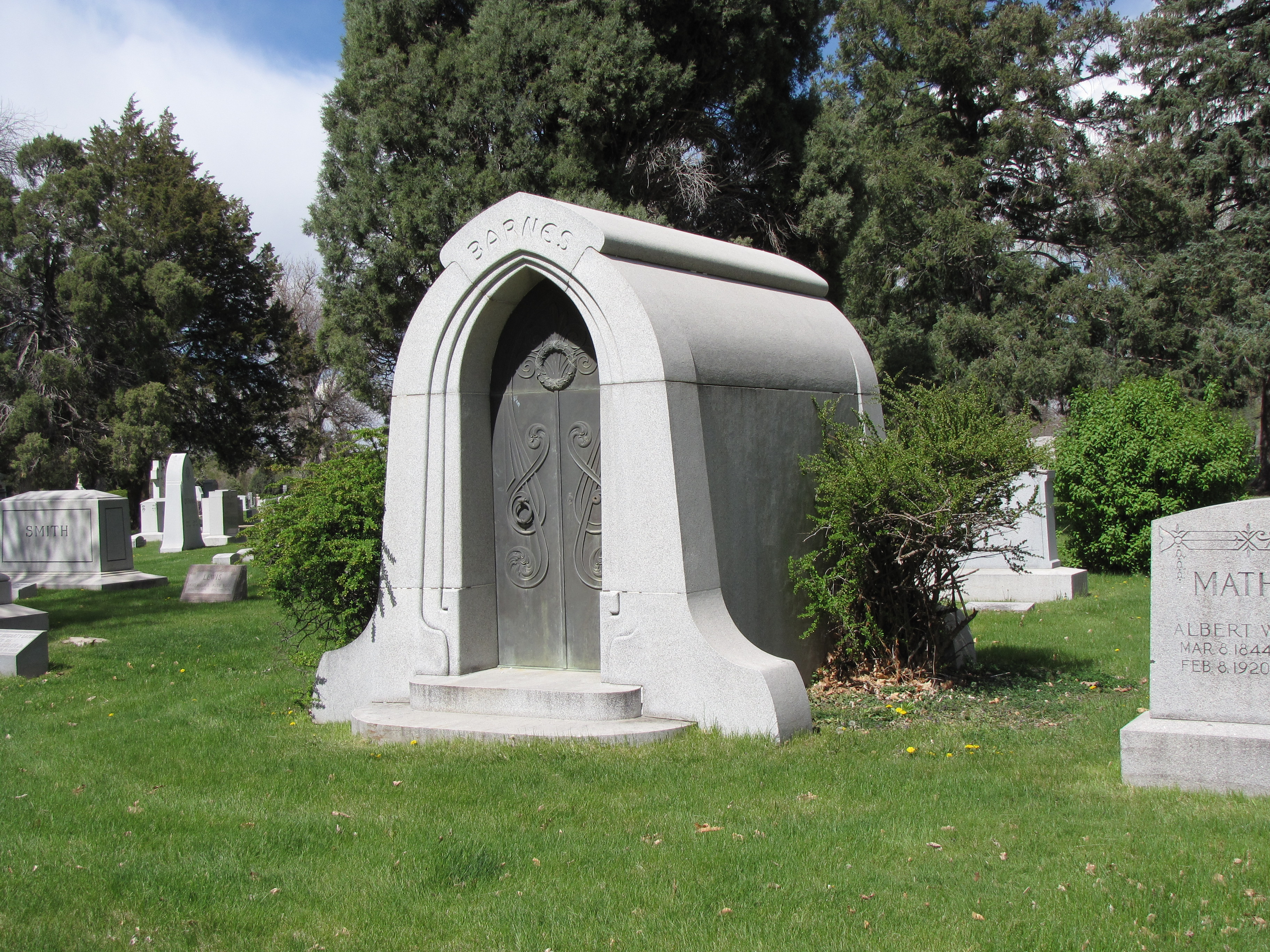
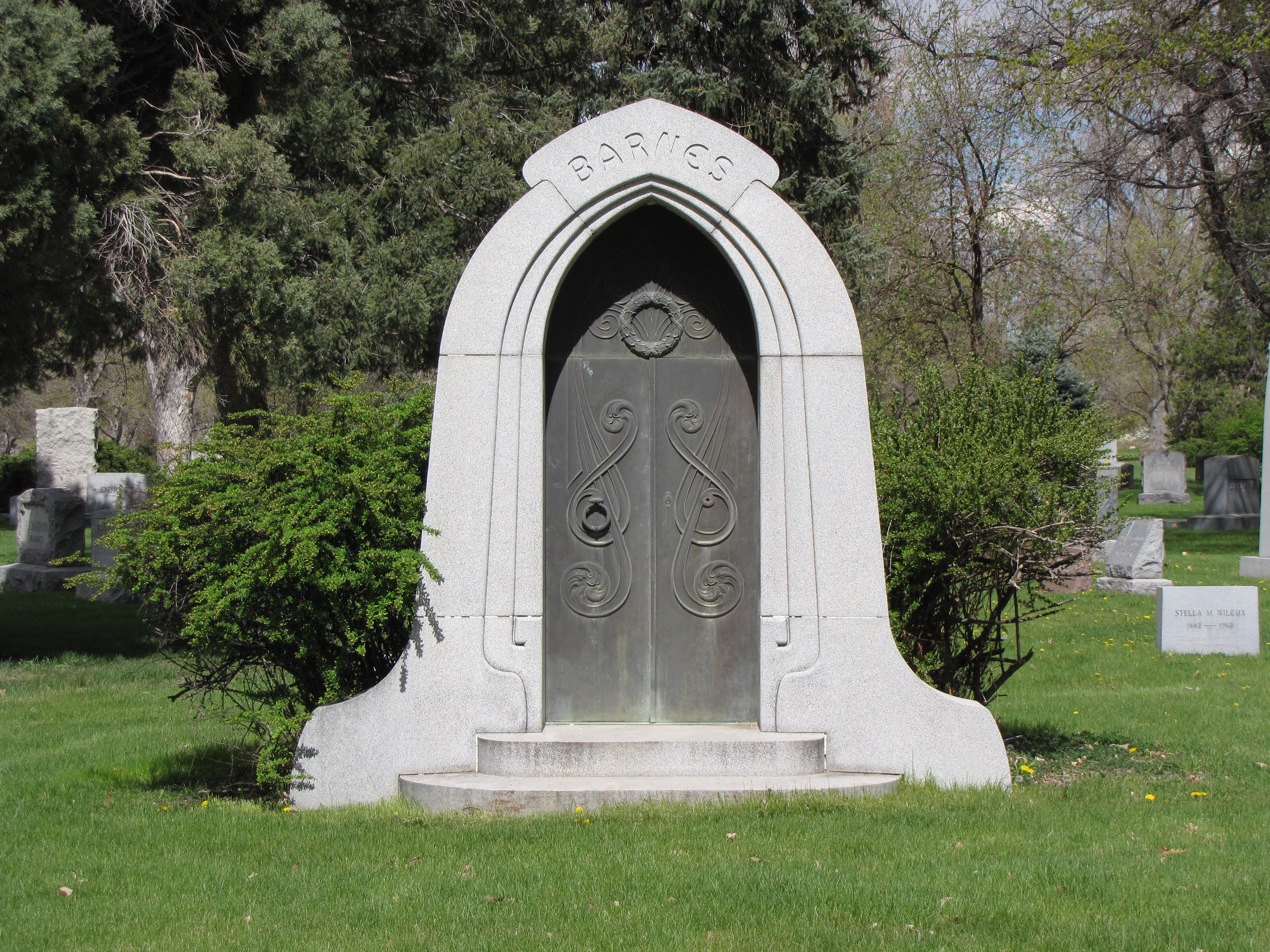
The Barnes Mausoleum in the Fairmont Cemetery in Denver, Colorado, though, fairly simple in design has a curveous outline with the cast bronze doors as it’s focal point.  The flowing design spirals around the doors punctuated with a laurel wreath at the top of the doors–a motif sybolizing victory over death through immortality.

Barnes Mausoleum

Posted in Mausoleums | Leave a comment

Cradle gravestones

Immanuel Cemetery, St. Charles, Missouri

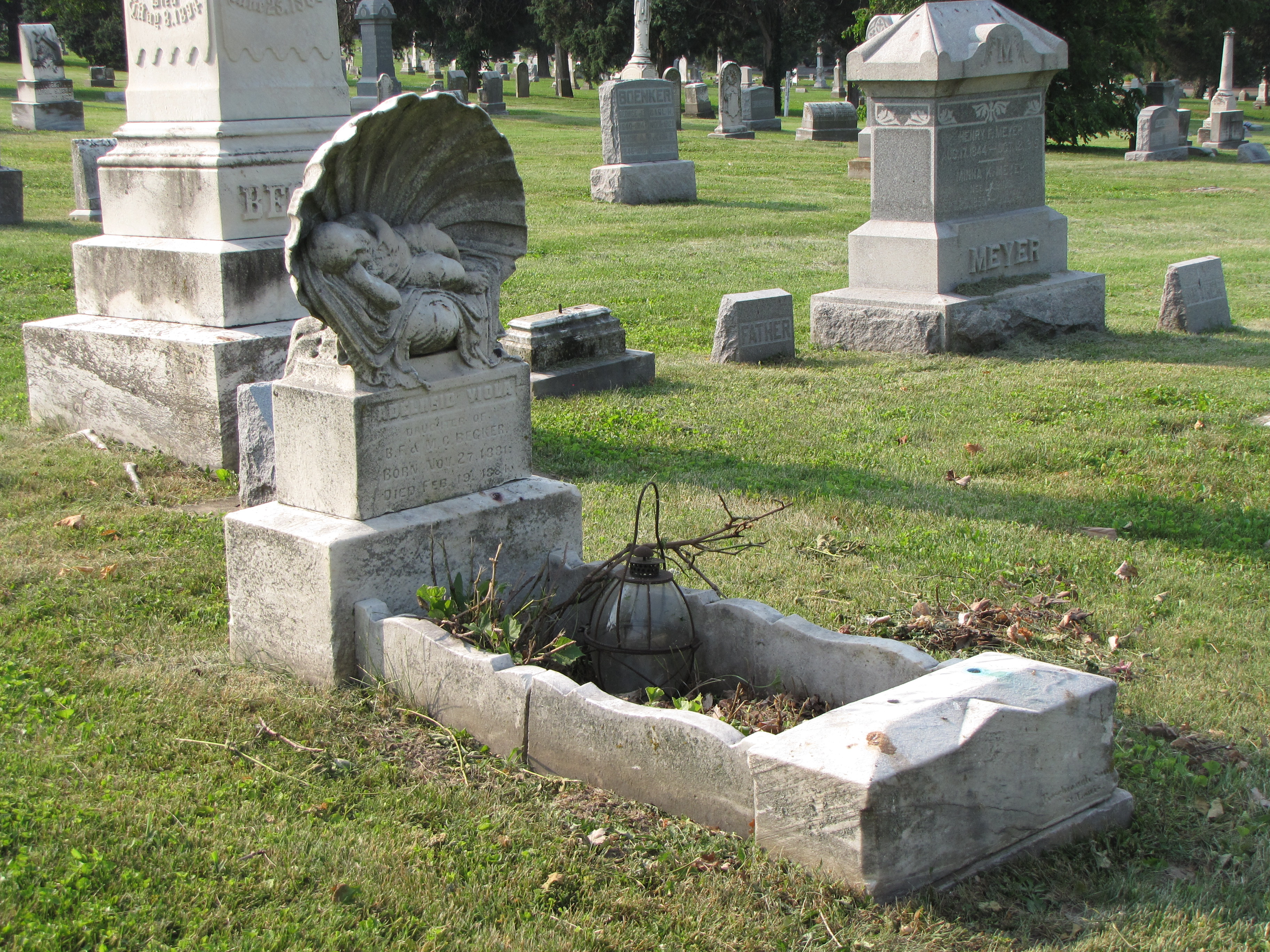
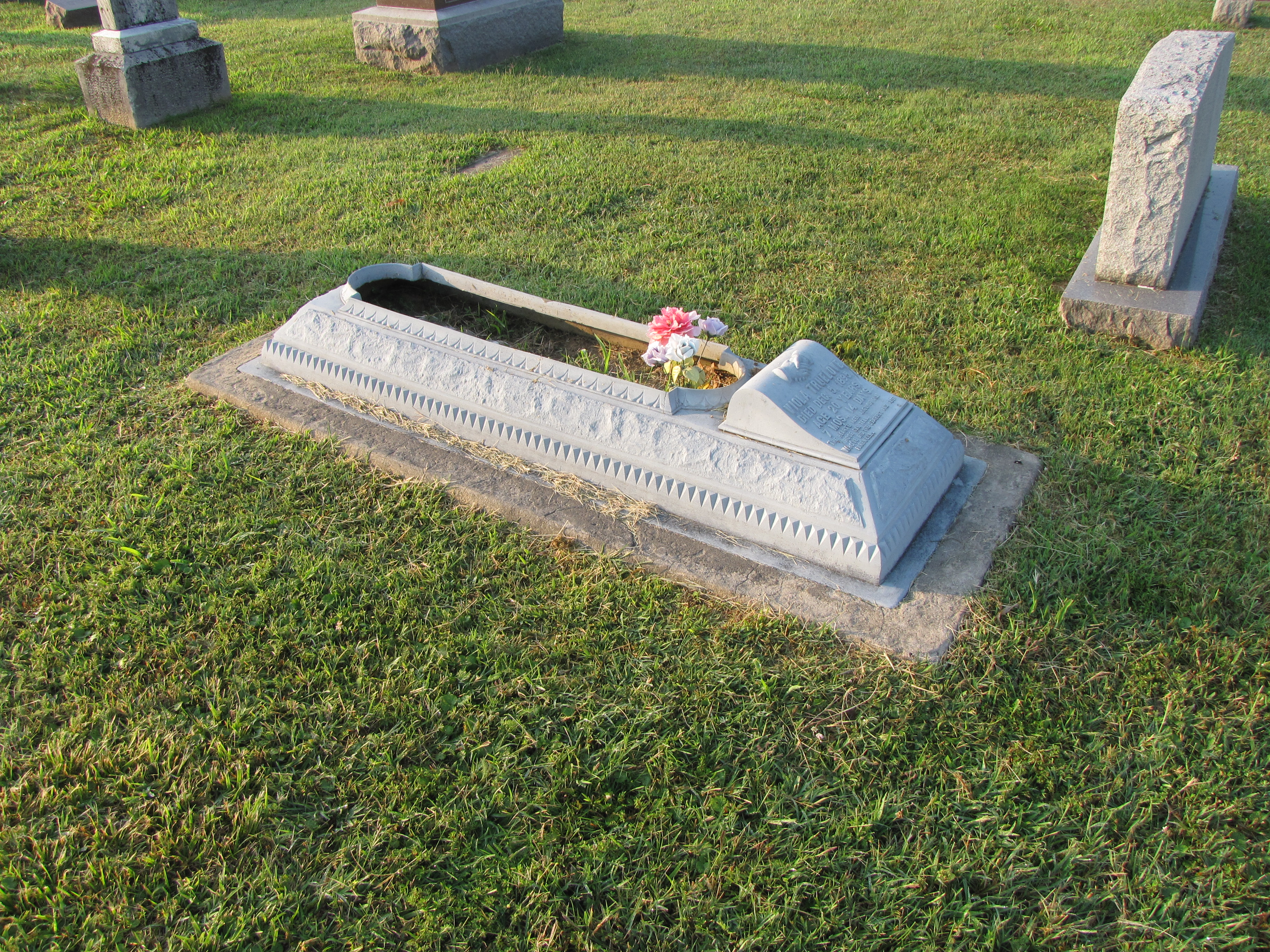
Cradle gravestones frame the plot and look much like a cradle without the legs, which is how they get their name.  The marble gravestone above features a sea shell with a sleeping baby nestled inside.  One end is larger and more prominent, like a headboard and the other end smaller, resembling more of a footboard.

The two cradle gravestones pictured below have a slightly blue-gray cast to them.  They are made of an alloy that includes zinc which was called white bronze by the company that manufactured them.  They are cast metal and resistant to erosion and decay.

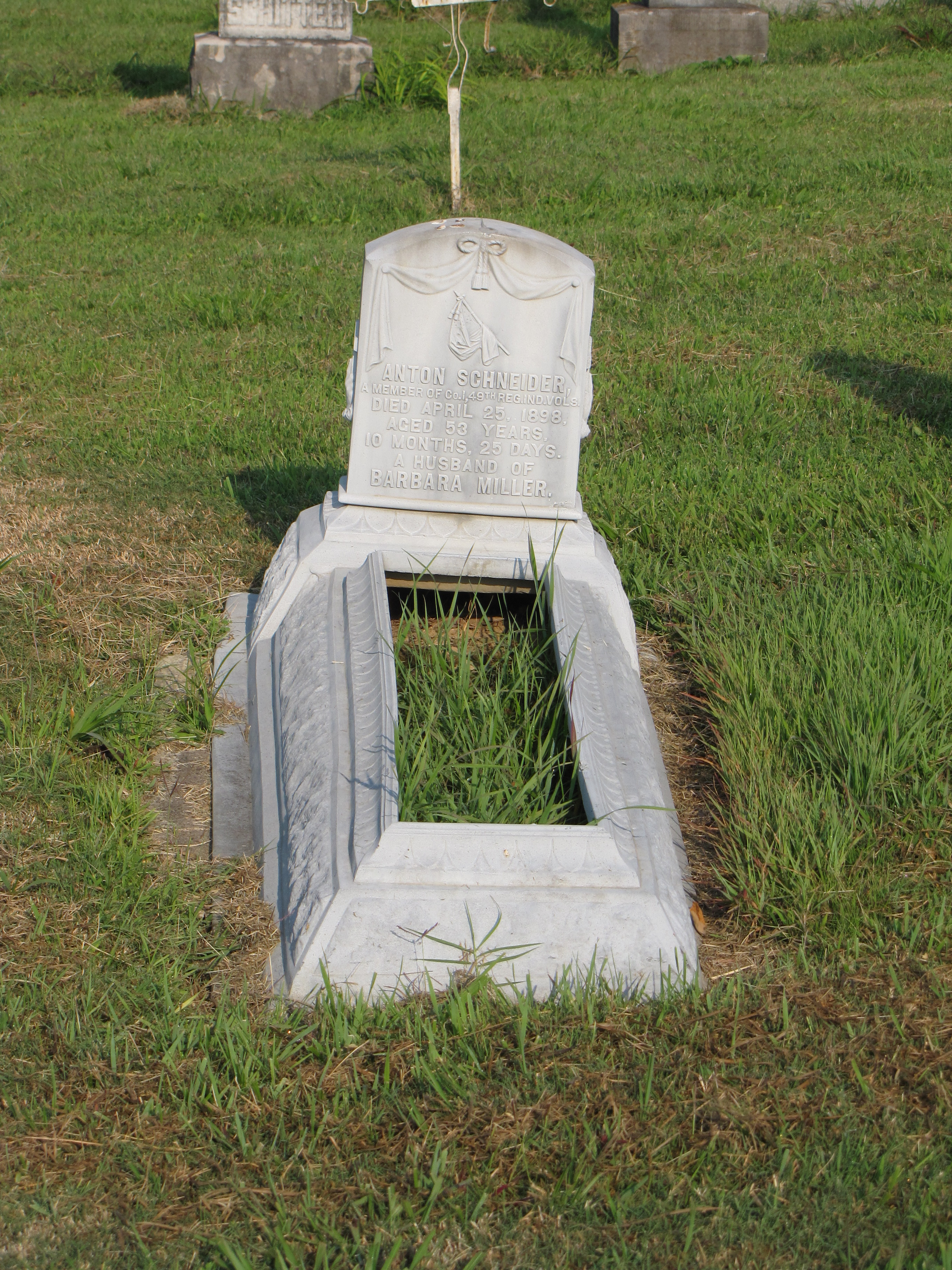
Cradle gravestones were not reserved for children.  Though the gravestone pictured above is the marker for 3-year old Adelheid Viola Becker, the two below mark the graves of adults.  The monument below found in the Truelove Community Cemetery actually marks the grave of a young, 20-year woman named Viola Truleove, no doubt from the family for whom the cemetery is named.  Viola died December 5, 1895.  Her epitaph read: “The heart’s keen anguish only those can tell, Who’ve bid the dearest and best farewell.”  The interior of the cradle gravestone often has flowers planted inside, as demonstrated by the cradle marker below that has a plastic flower bouquet.

Truelove Community Cemetery, Indiana

The marker pictured below marks the grave of Anton Schneider.  Schneider was a member of Company I of the 49th Regiment of Indiana Volunteers.  He died April 25, 1898 and was aged 53 years, 10 months, and 25 days.  His epitaph says, “A Husband of Barbara Miller.”

St. Joseph's Cemetery, Jasper, Indiana

Posted in Uncategorized | Leave a comment

Lamp

Mt. Olivet Cemetery, Hanover, Pennsylvania

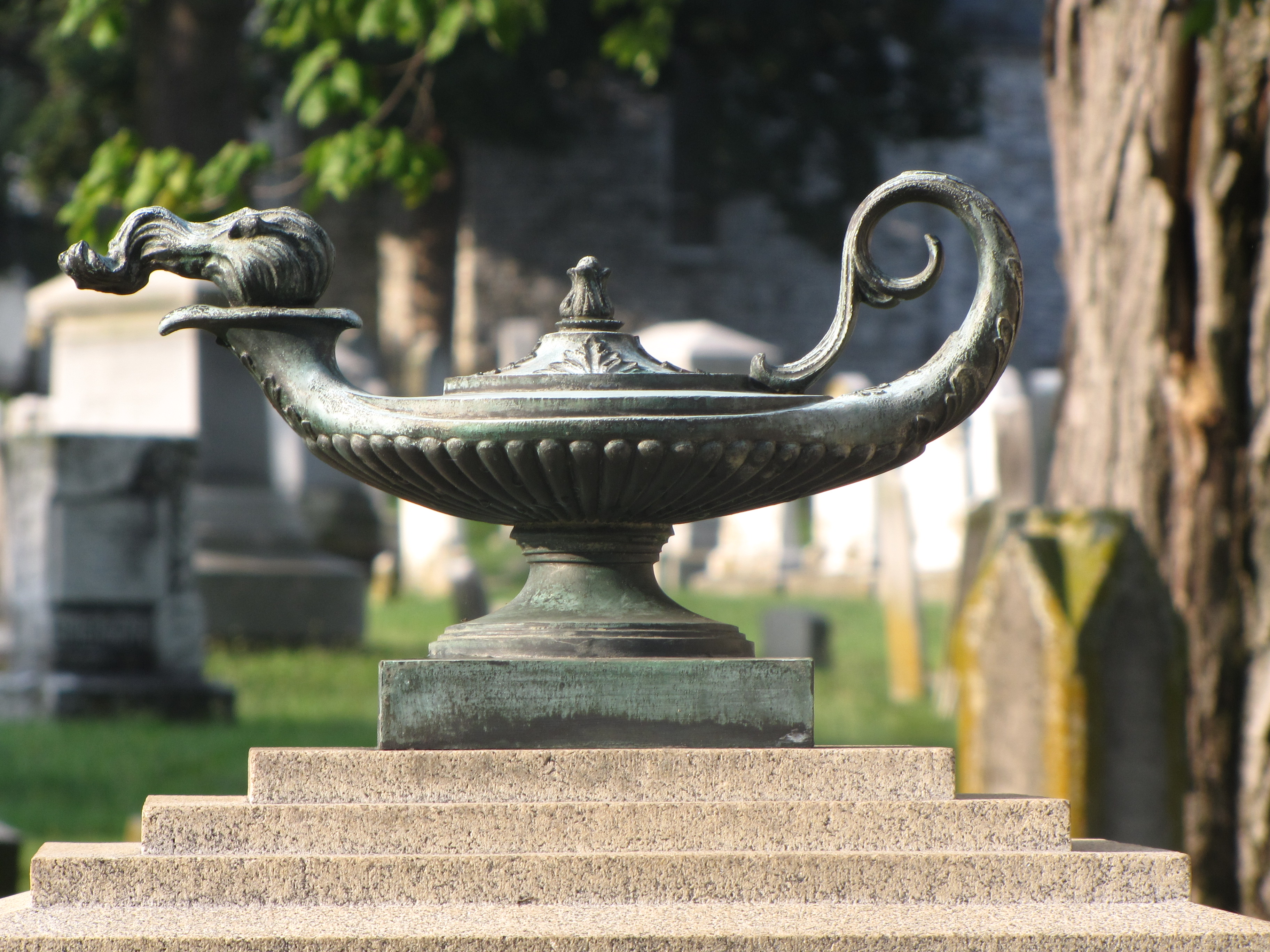
II Samuel: Chapter 22, verse 29, “For thou art my lamp, O LORD: and the LORD will lighten my darkness.”  The light eminating from the lamp represents the pathway to Truth and to Knowledge.

Posted in Symbolism | Leave a comment

Soul Ascending to Heaven and The Mourner

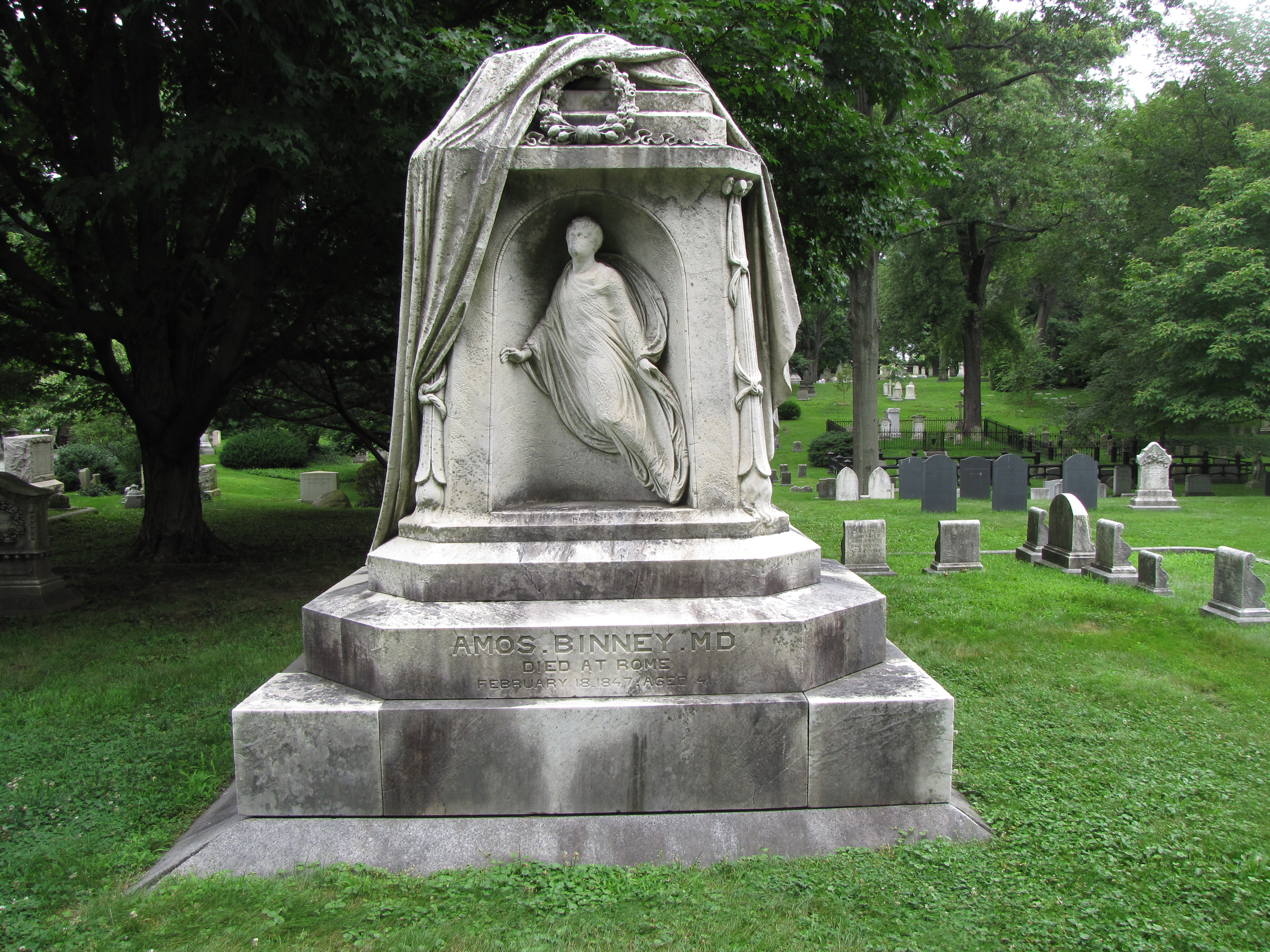
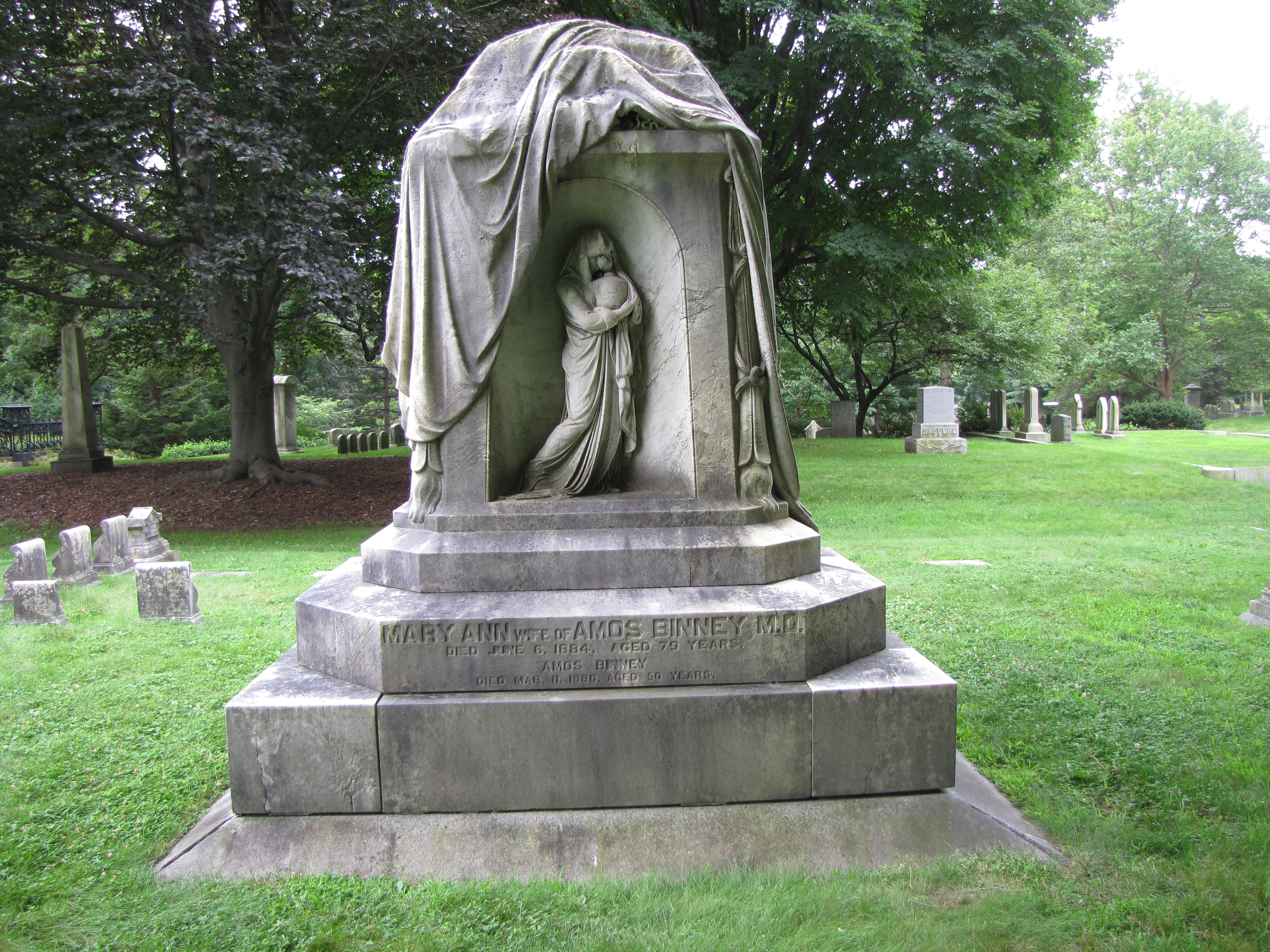
When the Bostonian Brahmin, Amos Binney, died in Rome in 1847, his wife Mary Ann fulfilled a promise she made to him before his death–she would return his body to his beloved homeland.  Mary Ann commissioned Thomas Crawford, an impressive young sculptor who was gaining an international reputation, to create Binney’s sepulcher, a Neoclassical masterpiece, for his final resting place in the Mount Auburn Cemetery, in Cambridge, Massachusetts. 

This monument was sculpted from white Italian marble.  When it was erected, it was polished white and shimmering.  Age, weather, and acid rain has degraded the soft marble, but the magnificence of the scuptures still remain, though many of the details of the sculptures are eroding, pitted and stained.

On the face of the monument shown in the photo above are four symbols:

  • The Laurel Wreath: from ancient Roman times, the laurel wreath represented victory.  In funerary art, it symbolizes victory over death through immortality.
  • Drape: the drape can be seen as a conceit, that is that it hides the contents, but reveals the shape of what is underneath.  Or, it can be representative of the veil between the two realms–earth and heaven.
  • Inverted Torch: symbolizes how even after death, the fire of the soul lives on in the next life.
  • The Soul Ascending to Heaven: this motif was common in European funerary sculpture.  Typically, this figure would be nude, however, to assuage Victorian sensibilities in America, the body of the male, is draped, even though, the masculine frame is still visible.  Symbolically, this scupture represents Amos Binney’s soul ascending to Heaven immediately after his death.

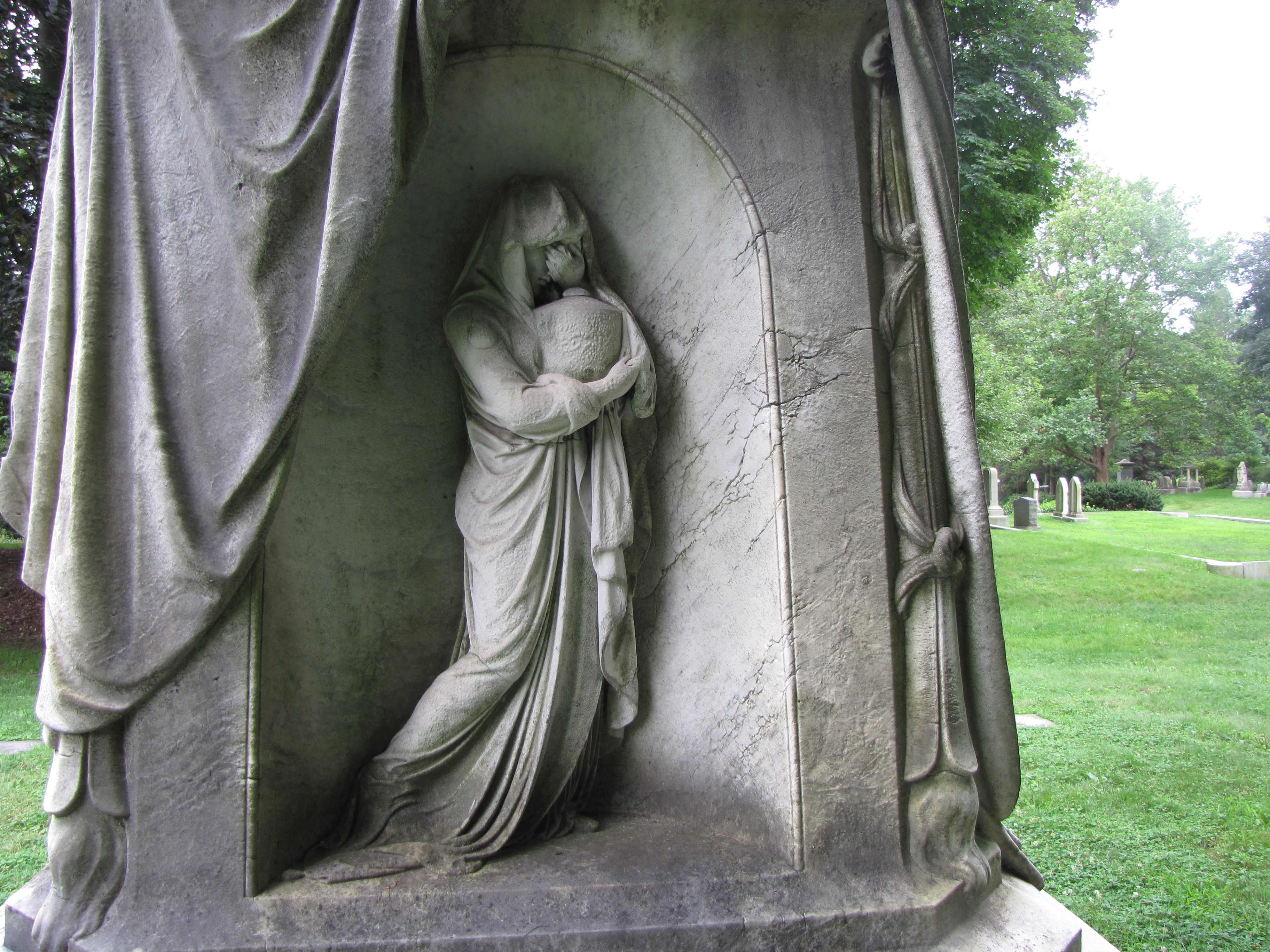
On this side of the monument, the design mimics the other side, except, the laurel wreath is completely hidden by the drapery, with the inverted torches peaking out.  A grieving woman, head cloaked and bent in sorrow.  The mourner is draped in a diaphanous gown that clings to her figure.   In this niche, the draped figure is clearly meant to be the mourning widow, Mary Ann Binney.  She clutches an urn, which symbolically represents the death of her loved one.  On her upper arm, barely visible and corroded by weather, is a sea shell.  The sea shell represents the Baptism of Christ and marks her as a Christian Pilgrim.

For a full and beautiful description of the history of this monument, check out Lauretta Dimmick’s article, “Thomas Crawford’s Monument for Amos Binney in Mount Auburn Cemtery: A Work of Rare Merit” in the Association for Gravestone Studies journal, MARKERS IX, pages 158 thorugh 195.

Posted in Symbolism | 2 Comments

More sea shells

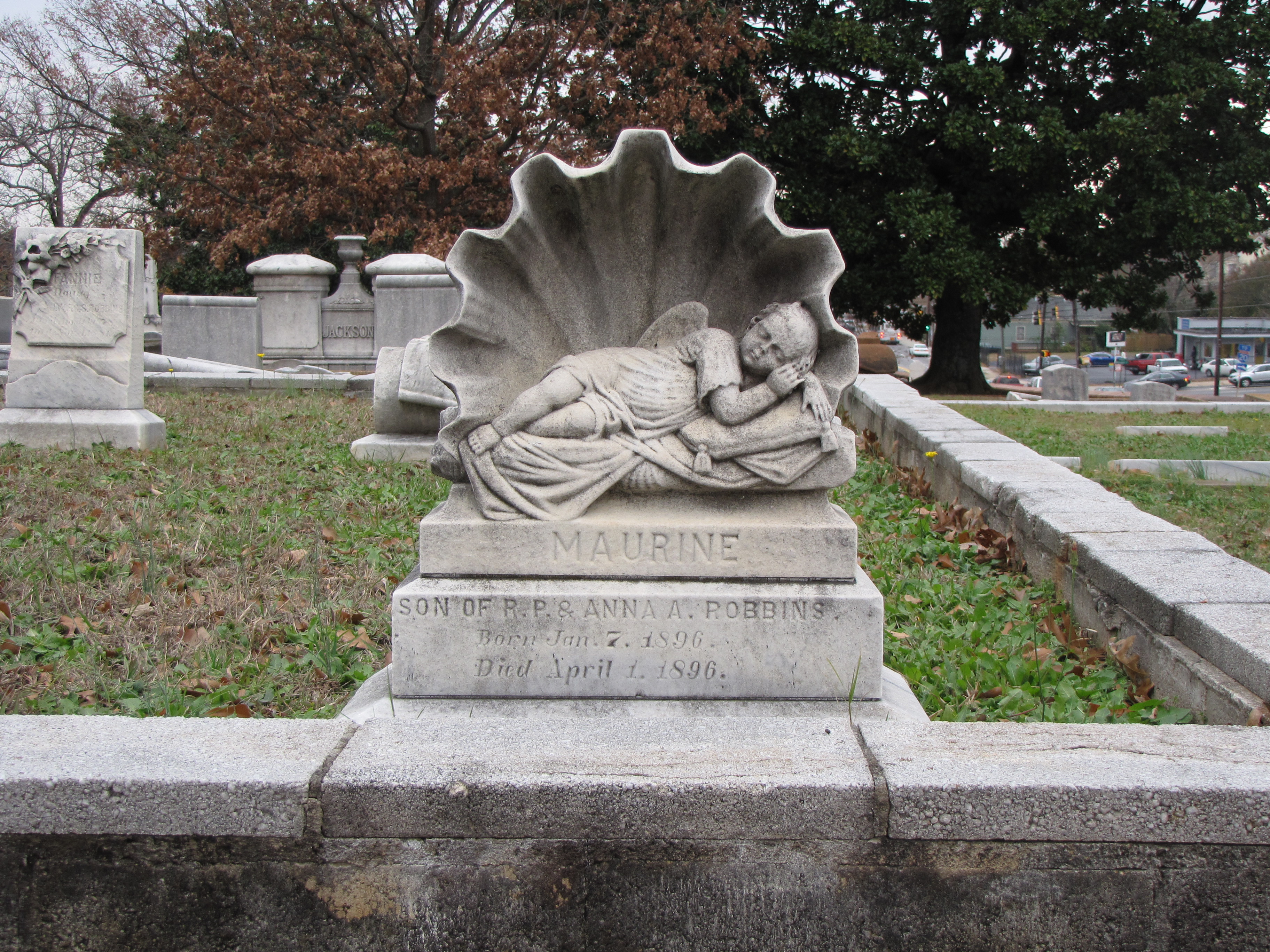
While monuments that portray infants in sea shells are not all that common, you can spot them.  This monument is in the Oakland Cemetery in Atlanta, Georgia.  Baby Maurine, the infant son of R. P. and Anna A. Robbins, was born January 7, 1896, and died April 1, 1896, just three months old.

Oak Hill Cemetery

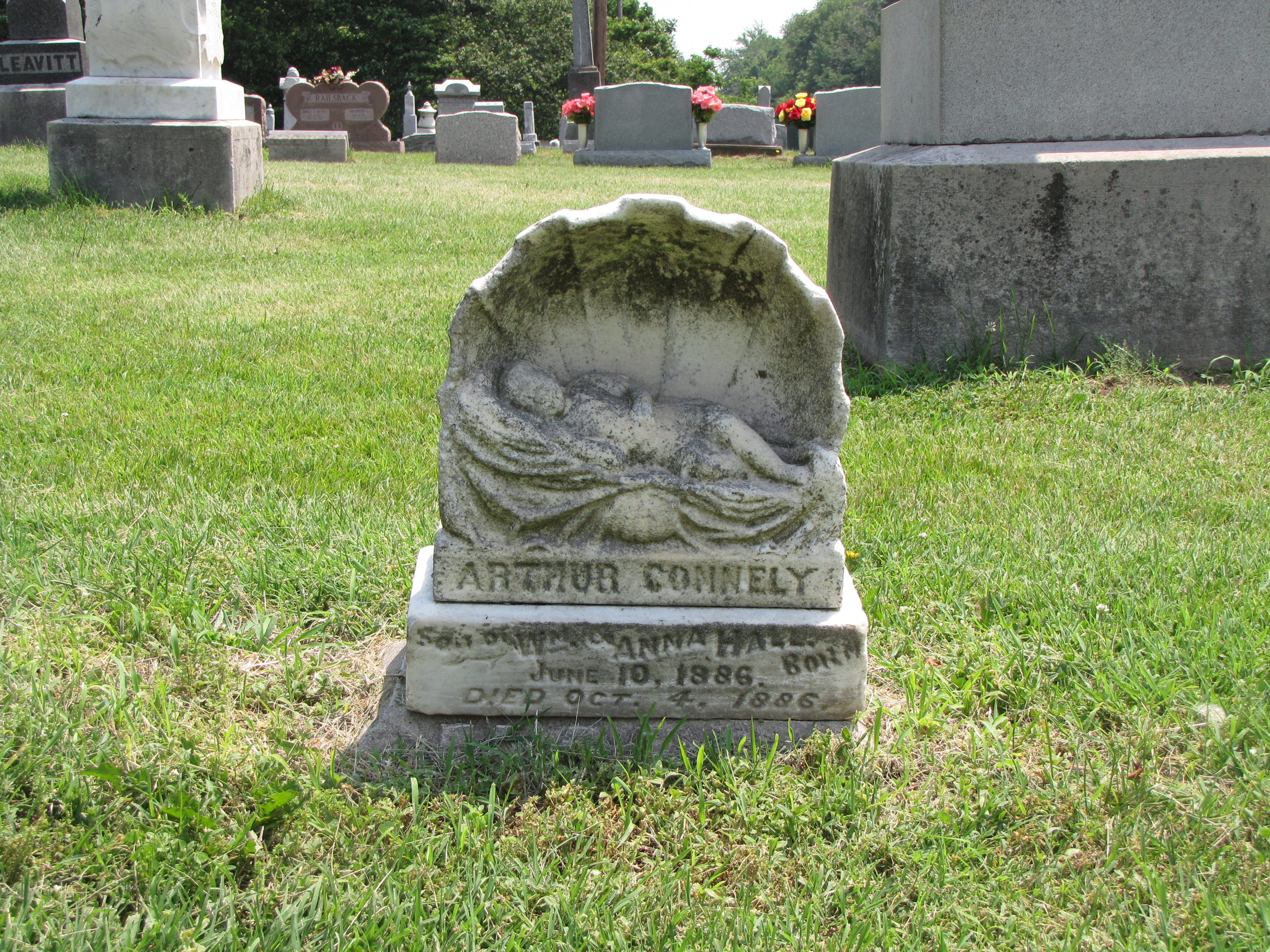
This sea shell gravestone is in the Oak Hill Cemetery on Highway 46 on the way to Terre Haute, Indiana.  It marks the grave of Arthur Connely, the son of William and Anna Hall.  Athur was born June 10, 1886, and died October 4th of the same year.  Again, the baby, not quite four months old, is nestled comfortably into the sea shell, which serves as a bed.

Immanuel Cemetery, St. Charles, Indiana

The image of a sleeping baby most likely offered comfort to the mourning parents of Adelheid Viola Becker, daughter of B. F. & M. C. Becker.  She was born November 27, 1881, and died February 19, 1884, just a few months past her third birthday.


Posted in Symbolism | Leave a comment

Sea Shells

The most poignant and tender gravestones are those for children.  When one wanders through pilgrim and pioneer cemeteries, you notice just how many children’s graves there are.  Infant mortality rates were extremely high. 

In the 1850s, the mortality rates for children under one year, were estimated at over 200 deaths per thousand, with much higher mortality rates for children under 5.  I have heard it said that it was less of a feat to live past 70 than it was to live past 5.

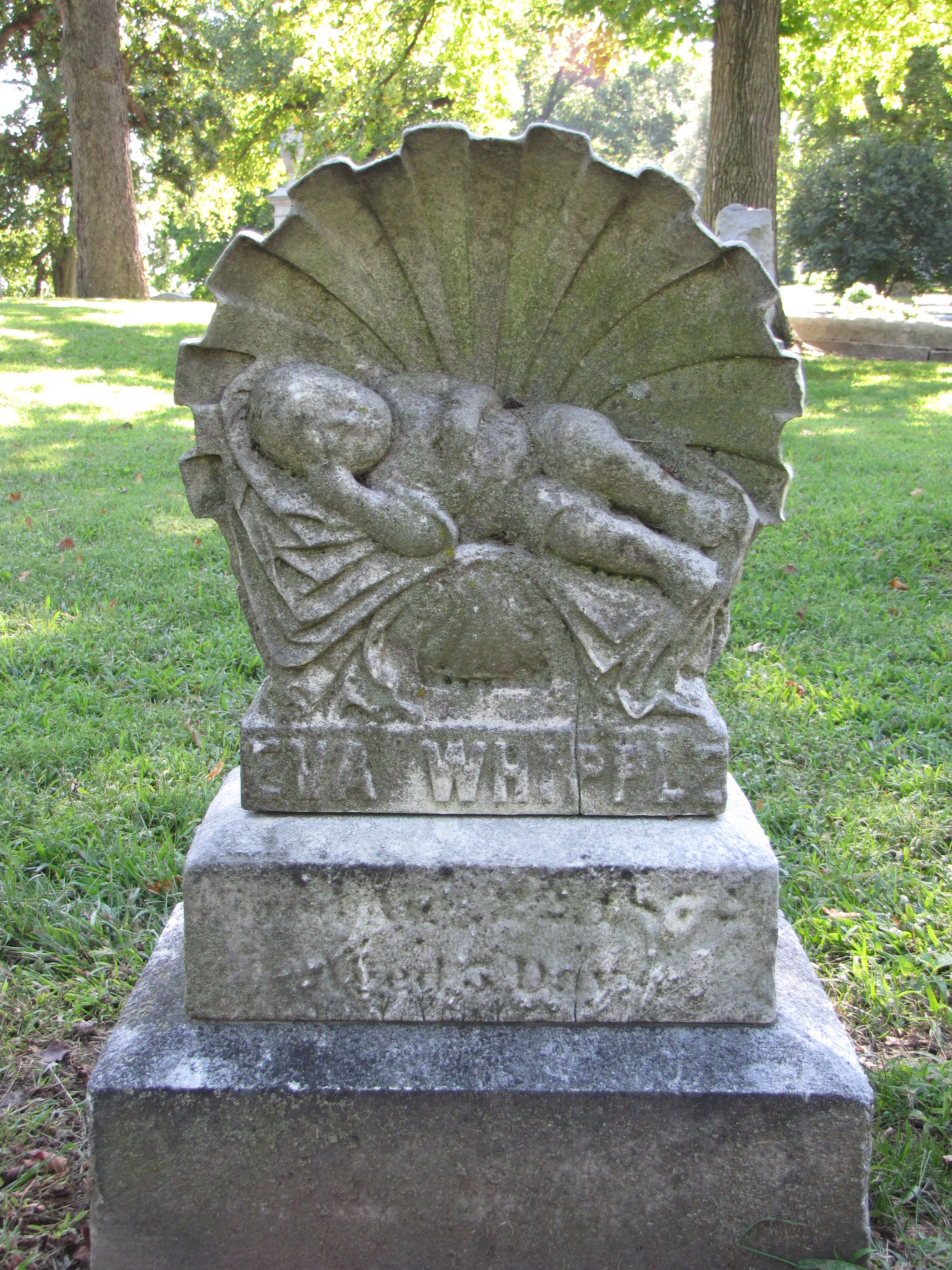
This monument in the Bellefontaine Cemetery in St. Louis, Missouri, shows a sleeping Eva Whipple, aged five days old, nestled into a pillow tucked into a sea shell.  This gravestone very well could be a metaphor for the shell that contains a pearl, the shell that opens and reveals a precious jewel, in this case, this tiny baby girl.  The shell is also a symbol of baptism because of its obvious association to water.  In fact, a shell is often used to scoop up and sprinkle water during the baptismal ceremony.

Posted in Symbolism | Leave a comment