The Humble Bee

Cave Hill Cemetery, Louisville, Kentucky

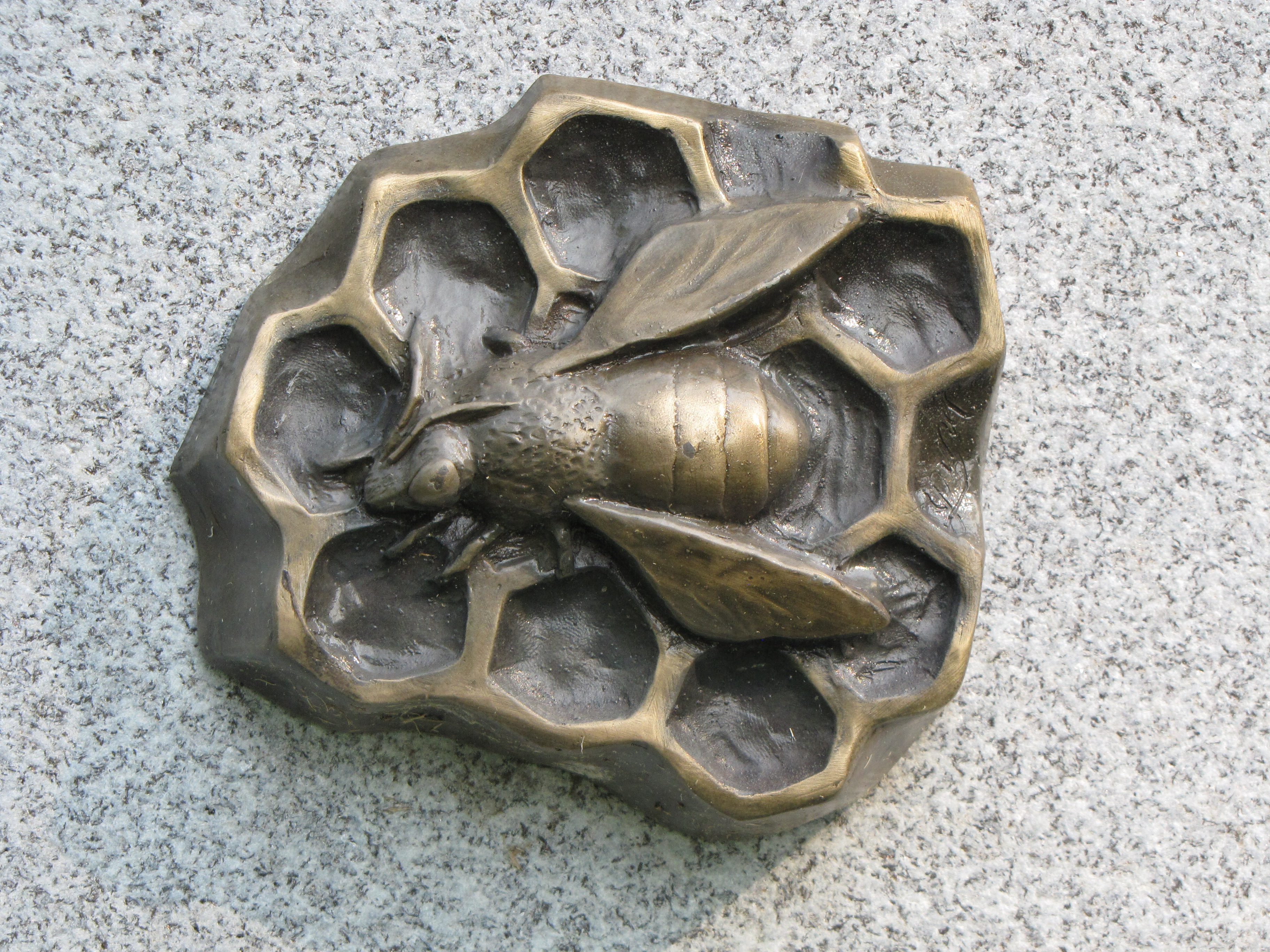
The humble bee is a symbol of industry and orderliness.  The bee society is highly organized and stratified, with each member of the hive charged with a task that it does each day, all day long.  The bees leave the hive and fly from flower to flower returning to the hive with their payload.  Though they largely do their work unheard with only a faint buzzing, they do the work of polinating plants critical to the survival of plantlife.  So important is the work that they do, Albert Einstein predicted that if bees were to disappear, all of mankind would die, as well, within just a few short years.

Many societies have held up the bee as a virtuous little creature.  

  • In Egyptian mythology, the bee was portrayed as a symbol of the soul. 
  • In ancient Greece,  Eleuis, one of the attendants to the goddess Demeter, was referred to as a bee, because it is known that the worker bees are virgins. 
  • The bee was chosen as one of the symbols of the Second Empire of France, and Napoleon adopted the bee as his symbol. 
  • The Freemasons chose the behive as a  symbol for their third degree because of the bees industry and the ability of the society to accomplish together what individuals could not do on their own.

Of course, Christians also adopted the bee to represent many different things:

The bee produces the sweet honey but also posesses a stinger which can sting.  Because of the dichotomy, the bee is an emblem of Christ who delivered a sweet message that stung sinners.

The bee was also a symbol of the Virgin Mary because the bees were thought to be hatched from unfertilized eggs–virgin birth, as it were.  They were seen as pure, moral, and virginal.  Their product, therefore, was pure also which is why candles made from beeswax was pure enough to be burned in the church.

The bee has a bite–its stinger which made it a symbol of the Last Judgment.

Posted in Symbolism | Leave a comment

Knights of the Maccabees

St. Boniface Cemetery, Chicago, Illinois

The metal marker above marks the grave of a member of The Knights of the Maccabees of the World (KOTM OTW).  The marker displays a circle within a circle, with a tent in the inner circle.  The term “tent” signified the post or lodge.

The marker below marks the grave of a member of The Knights of the Maccabees which was formed in 1878 in London, Ontario, Canada. The Knights of the Maccabees was a fraternal organization that provided low-cost insurance to members, as well as, funeral expenses.

The Maccabees of the World was a related but separate organization which merged with The Knights of the Maccabees in 1914 under a shortened title, the Maccabees.  The organization takes its name from the Jewish leader and military genius, Judas Maccabeau, who led his tribe in revolt against Antiochus IV of Syria in the second century B.C.  The founding members of the organization admired Maccabeau’s qualities of steadfastness and perserverence, as well as, his admonition to his soldiers to reserve some of their spoils to be used on behalf of the widows and children of their fallen comrades.

Lakeside Cemetery, Erie, Pennsylvania

The the markers above and below have similar designs, both with a cross in the center of a circle with a cross surrounded by the Latin phrase, in hoc signo vinces, meaning “in this sign you will conquer” which was derived from Constantine I who used the phrase “in this, win” as a motto.

The early Christians adopted it as a symbol consisting of a monogram composed of the Greek letters chi (X) and rho (P), the first two letters in the name Christ. “In later periods the christogram “IHS” both stood for the first three letters of “Jesus” in Latinized Greek and “in hoc signo” from the legend.”

New Oxford Cemetery, New Oxford, Pennsylvania

Posted in Metal Markers | Leave a comment

The Phoenix

Cave Hill Cemetery, Louisville, Kentucky

One of the most famous stories from Greek mythology is the story of the mighty phoenix that is totally consumed when its sets its nest a blaze and hurls itself on the fire.  A newborn phoenix arises from the ashes.  The similarities between this and the resurrection story is not lost on Christians, who adopted the phoenix as a symbol of resurrection.


Posted in Symbolism | Leave a comment

A Salute

The Zachary Taylor National Cemetery, Louisville, Kentucky

Sweet be thy rest O Soldier brave,

Let angels guard thy hallowed grave,

And while the stars in Heaven flame,

Let glory wreath they honored name.

Mikveh Isreal Cemetery, Philadelphia, Pennsylvania

Mt. Auburn Cemetery, Cambridge, Massachusetts

Mt. Olivet Cemetery, Hanover, Pennsylvania

Corpus Christi Cemetery, Pennsylvania

Lakeside Cemetery, Erie, Pennsylvania

Lakeside Cemetery, Erie, Pennsylvania

Lakeside Cemetery, Erie, Pennsylvania

Lakeside Cemetery, Erie, Pennsylvania

Laurel Hill Cemetery, Philadelphia, Pennsylvania

Lakeside Cemetery, Erie, Pennsylvania

Lakeside Cemetery, Erie, Pennsylvania

Posted in Metal Markers, Uncategorized | Leave a comment

Andrew Johnson

Andrew Johnson National Cemetery, near Greeneville, Tennessee

Andrew Johnson was born in Raleigh, North Carolina, on December 29, 1808, to Jacob Johnson and Mary McDonough Johnson.  His father died when he was but three years old and his mother was forced to take in weaving and spinning to make ends meet for the family.  When Andrew was old enough, his mother bound him to apprentice as a tailor.  He taught himself to read and write.  From those humble beginnings, Johnson was elected to the United States House of Representatives, to the Governorship of Tennessee, to the Vice-Presidency of the United States, ascended to be President upon Lincoln’s death, and then was elected to the United States Senate after his presidency. 

His presidency was tumultuous and Johnson became the first president to be impeached largely on partisan grounds.  He was one vote shy of conviction in the Seante and served out his term.  Johnson was elected to the Senate in 1874.  On a trip to Ohio, Johnson made a stop in Elizabethton, Tennessee, to visit his daughter, Mary Stover.  On the first night of his visit, he had a stroke.  A few days later, on July 31, 1875, Johnson died.  His body was wrapped in ice and shipped to Greeneville for the funeral which was held on Tuesday, August 3, 1875.  As per his wishes, he was wrapped in a flag and his head was laid on a copy of the United States Constitution.

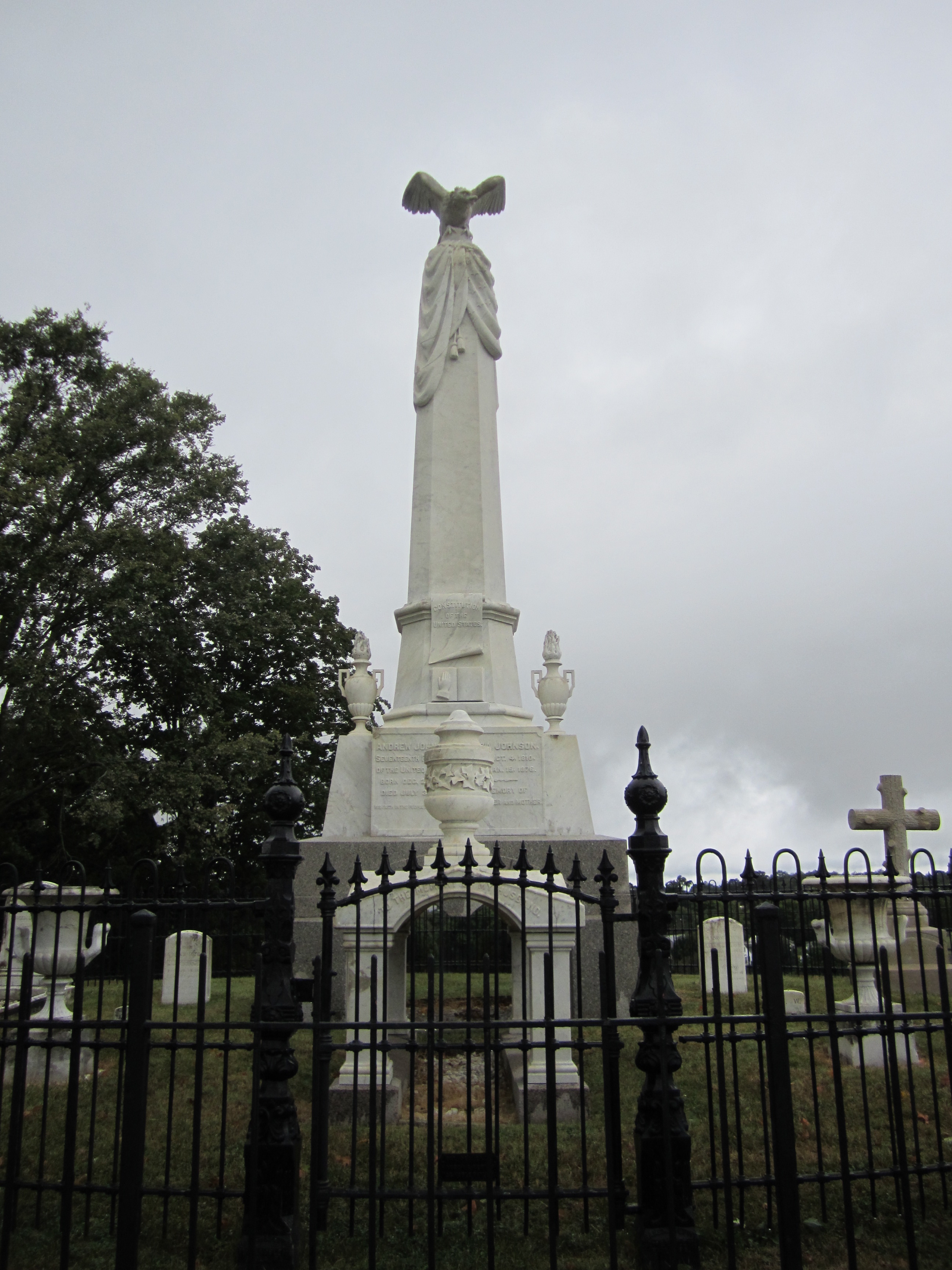
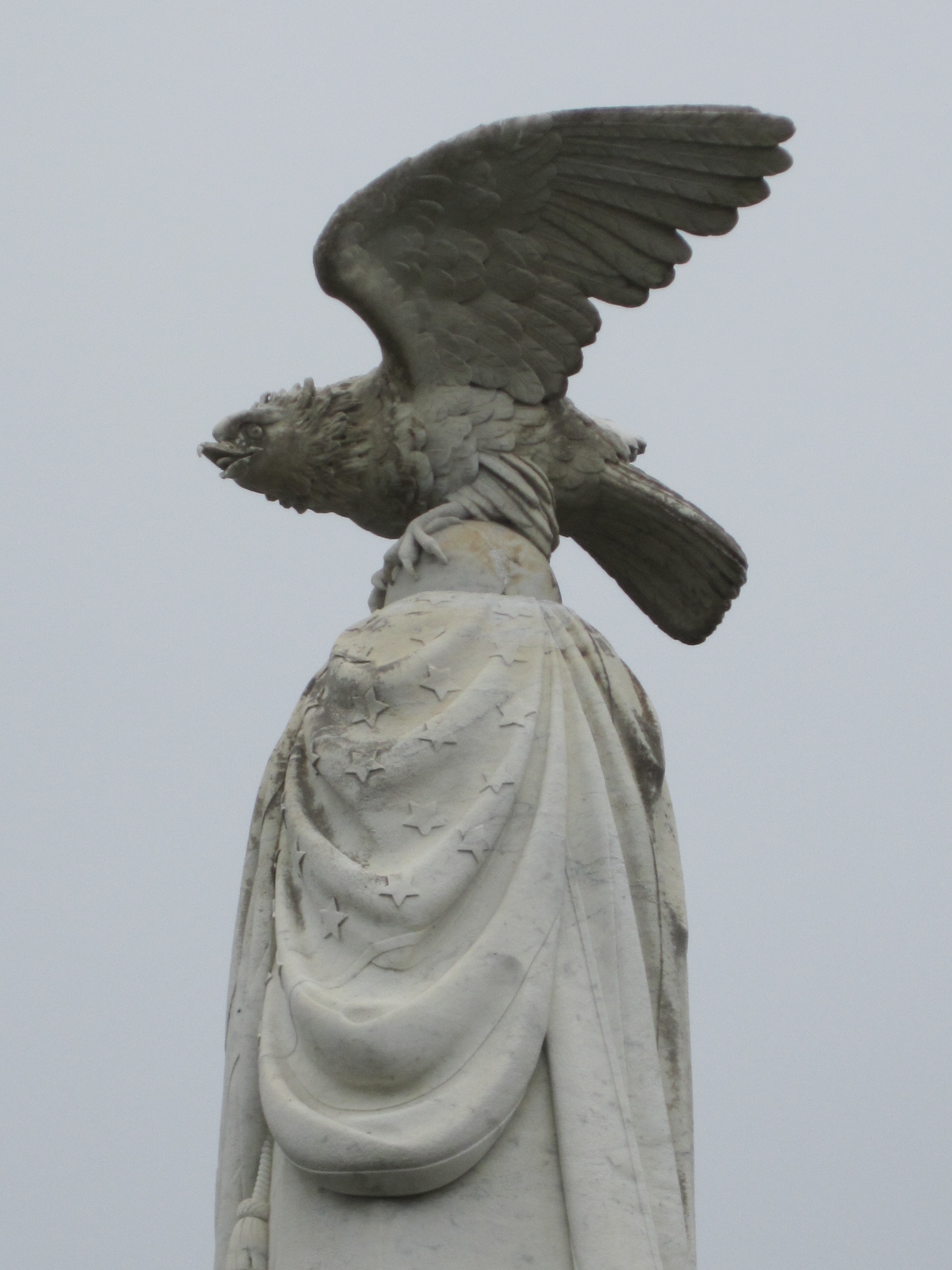
That same symbolism can be seen in his soaring 75-foot white marble monument built by Van Dunden Young and Company of Philadelphia, dedicated on June 5, 1878.  An American eagle pearches on top of a flag draped column.  At the base of the column is a scroll representing the United States Constitution.  Below that is a hand on an open Bible, as if Johnson were taking the oath of office.  On each side of the column is an urn with a flame.  His short epitaph reads, “His faith in the people never waivered.”

The American eagle on top the Andrew Johnson monument

Posted in Presidential graves | Leave a comment

Neither snow nor rain nor …

Lakeside Cemetery, Erie, Pennsylvania

“Neither snow nor rain nor heat nor gloom of night stays these couriers from the swift completion of their appointed rounds”

The inscription above is carved above the entrance to the New York James Farley Post Office.  Though the quote, derived from a passage in Histories written by Herodotus, has come to be known as the motto for the United States Post Office, it actually does not have one. 

According to their Website, the National Association of Letter Carriers was founded in 1889.  The “NALC is the union of city letter carriers employed by the U.S. Postal Service. Letter carriers delivered 170 billion pieces of mail last year, six days a week, to over 151 million homes and businesses in every city, suburb and town in America”.

Posted in Metal Markers | Leave a comment

Saint James the Greater

Trinity Cemetery, Erie, Pennsylvania

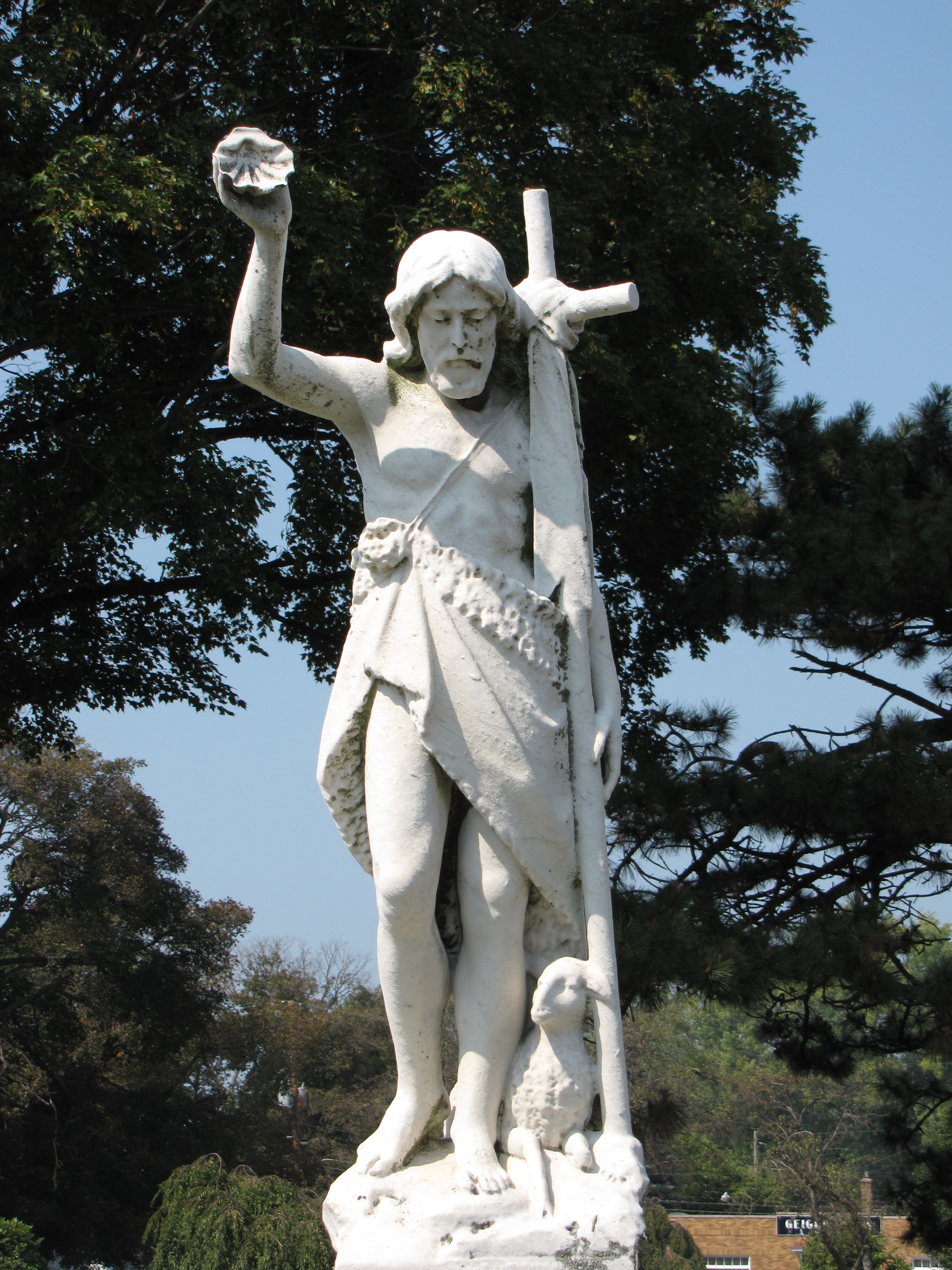
Saint James, somtimes referred to as James the Greater, was one of the Twelve Apostles.  In some church traditions, James’ mother is reported to be the sister to Jesus’ mother, Mary, making Jesus and James first cousins.  Tradition also has it that the remains of the Saint were taken to the Cathedral of Santiago de Compostela in Galacia, which is in the north of Spain. 

Saint James became the patron saint of Spain during the reconquest of the country from the Moors and the Cathedral of Santiago de Compostela became a popular site for Christian pilgrims.  Galacia, noted for delicious seafood, including scallops, drew thousands of Christians pilgrims who often carried a scallop shell back with them as a souvenir of the trip.  Before long, the sea shell became a symbol of Christian pilgrimage.

Trinity Cemetery, Erie, Pennsylvania

Posted in Saints, Symbolism | 4 Comments

The Century Plant

Erie Cemetery, Erie, Pennsylvania

Many Christian symbols have been appropriated because of the qualities of the animal or the plant are held up by the religion.  The peacock, for example, became a symbol of the resurrection because the feathers on the male peacock grow back each year more beautiful than the year before.  It was a symbol of the incorruptibility of the flesh because of a mistaken belief that peacock flesh did not rot.  Just as the peacock became a Chrisitan symbol due to its natural qualities, so, too, did the century plant (Agave americana).  It was mistakenly believed that the century plant lived to 100 years or more.  Because of that, the misnamed “century plant”, which only lives 10 to 30 years, was adopted as a symbol of immortality.

Erie Cemetery, Erie, Pennsylvania

Posted in Symbolism | Leave a comment

The Order of Pythian Sisters

Mt. Olivet Cemetery, Hanover, Pennsylvania

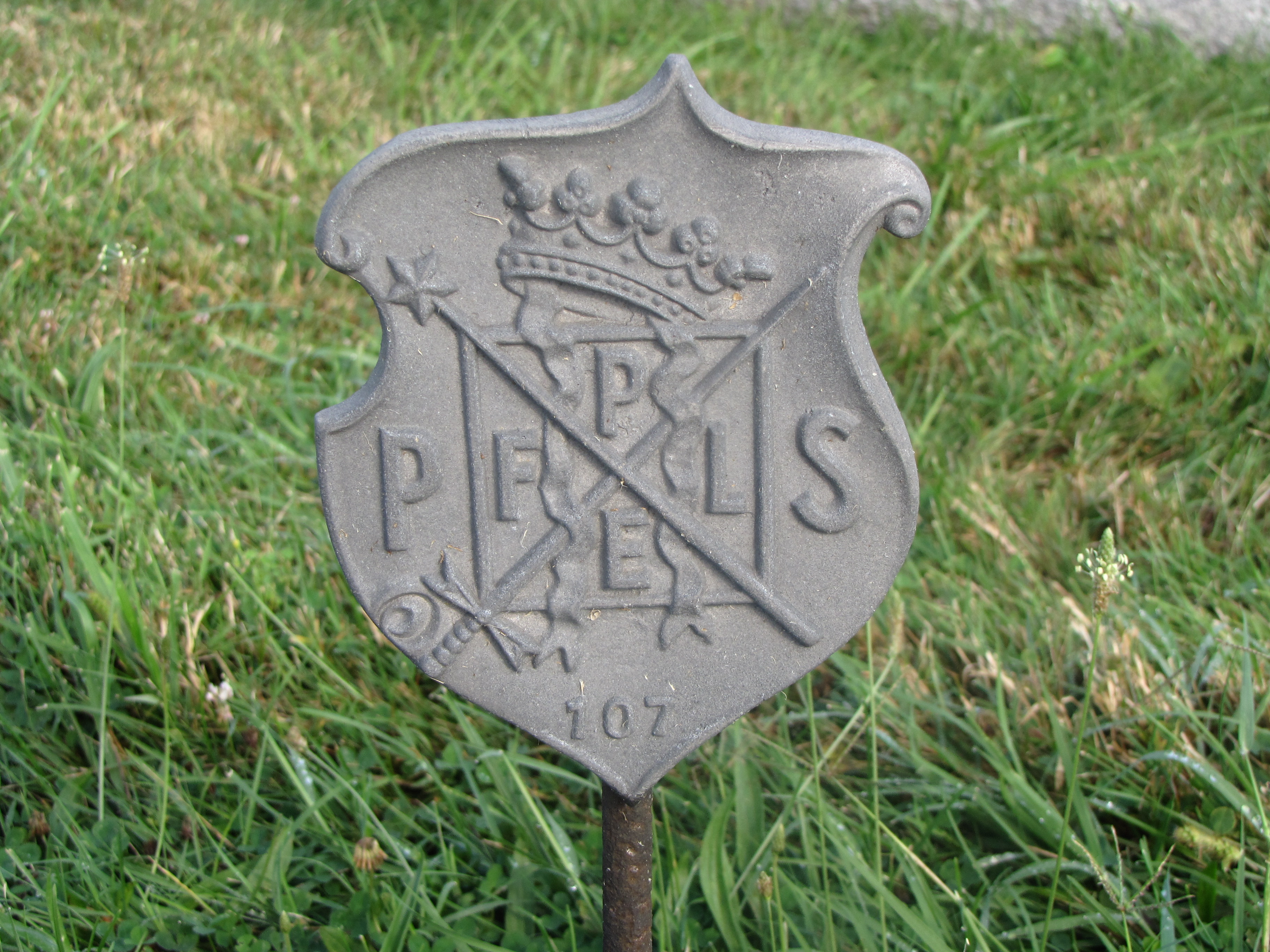
The metal marker above marks the grave of a woman who belonged to the Order of Pythian Sisters.  If you look at the shield you see two letters P and S outside the inner square.  The P and S stand for Pythian Sisters.  The organization is the auxillary organization for the Knights of Pythias.  On October 22-23, 1888, the Order was founded at Warsaw, Indiana, by Pythian Knight, Joseph Addison Hill, of Greencastle, Indiana.  Hill was a master of creating order and ceremony and imbued their symbols with meaning.  Inside the crown-topped square crisscrossed by a rapier and star baton over a shield with four letters, P, L E, and F.  According to their organization’s Website:

The color white represents PURITY the stage reached through honorable, motive action and thought that should be a goal sought by each Pythian Sister to attain.

The color red represents LOVE symolizing service, guidance, trust and tolerance.  Through love they are bound together as a band of Sisters.

The color yellow symbolizing EQUALITY which requires sharing with each Sister all rights and responsibilities.  As Pythian Sisters they are to work together for the good of all.

The color blue represents FIDELITY meaning being faithful, steadfast and loyal to God and to each other.

Posted in Metal Markers | 2 Comments

Modern Architecture

Graceland Cemetery, Chicago, Illinois

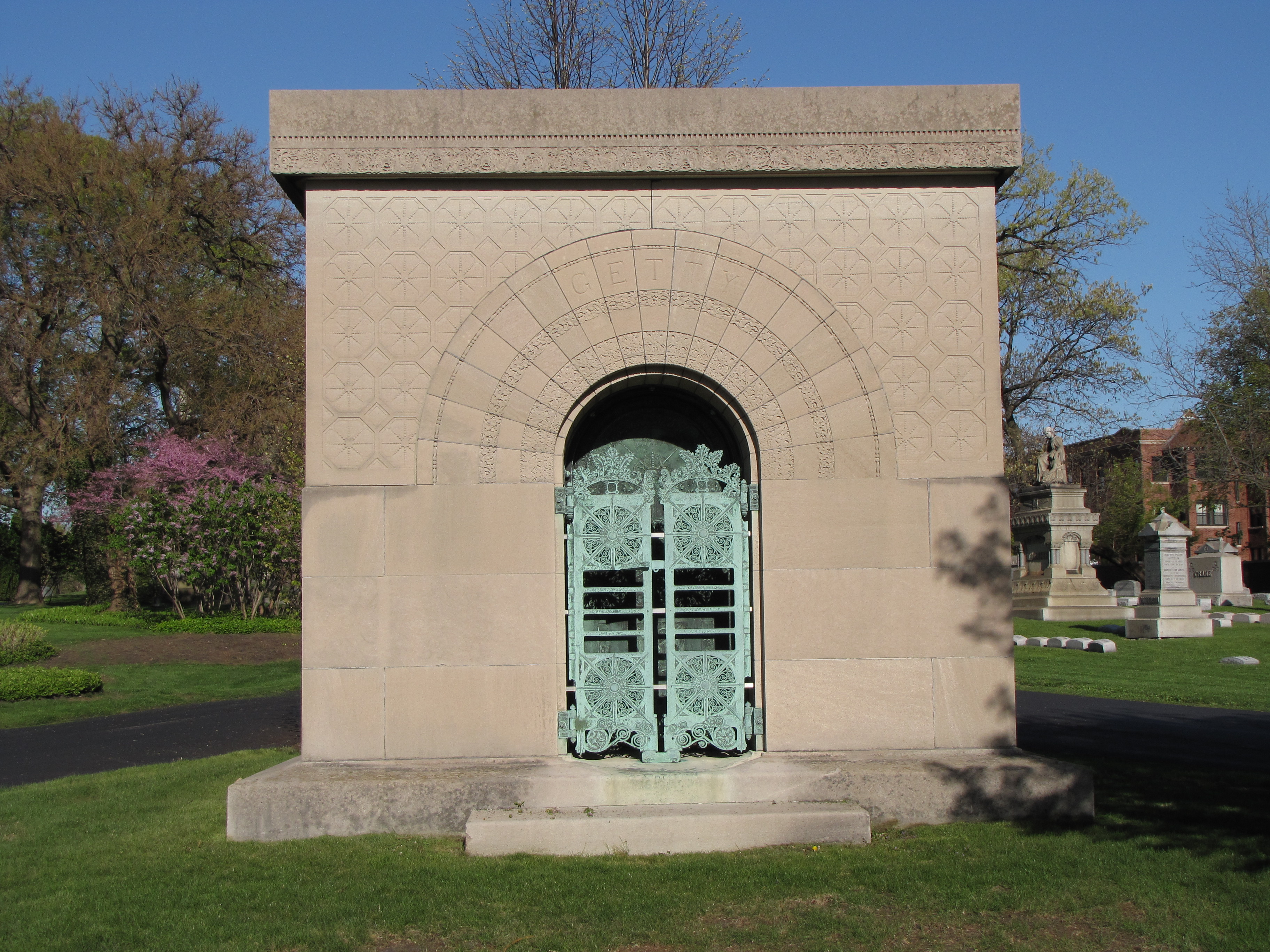
The Henry Harrison Getty Mausoleum in the Graceland Cemetery in Chicago was designed for a lumber businessman in 1890 upon the death of his wife, Carrie Eliza, by the architectural firm of Adler and Sullivan. The Sullivan in the firm was Louis Henri Sullivan, one of the greats in the pantheon of American architects.  Sullivan is credited with developing modernism and is known as the “Father of the Skyscraper”.  The phrase “form follows function” is attributed to Sullivan and has become part of our everyday vernacular.

The breakaway mausoleum design has a “strong geometric massing, detailed with original ornamentation.”  According to Robert A. Wright, author of “Poems in Stone: The Tombs of Louis Henri Sullivan” published in Markers V: Journal of the Association for Gravestone Studies, 1988, page 181, Sullivan often used the block in his designs.  The block, Sullivan believed, represented the “aesthetic and symbolic qualities of the male nude form.”  The image with its massiveness and weight conjures up a feeling of masculinity.

As a counter balance to the masculine element of his design, the choice of the soft-colored Bedford limestone and the ornamentation represent the feminine elements of the mausoleum.  As Wright points out in his article, “The finely-carved ornamental pattern of the upper half of the exterior walls also lightens visually the mass of the tomb.  The tomb’s ornament was Sullivan’s vehicle for beautifcation.”

Jewel Box Bank, Grinnell, Iowa

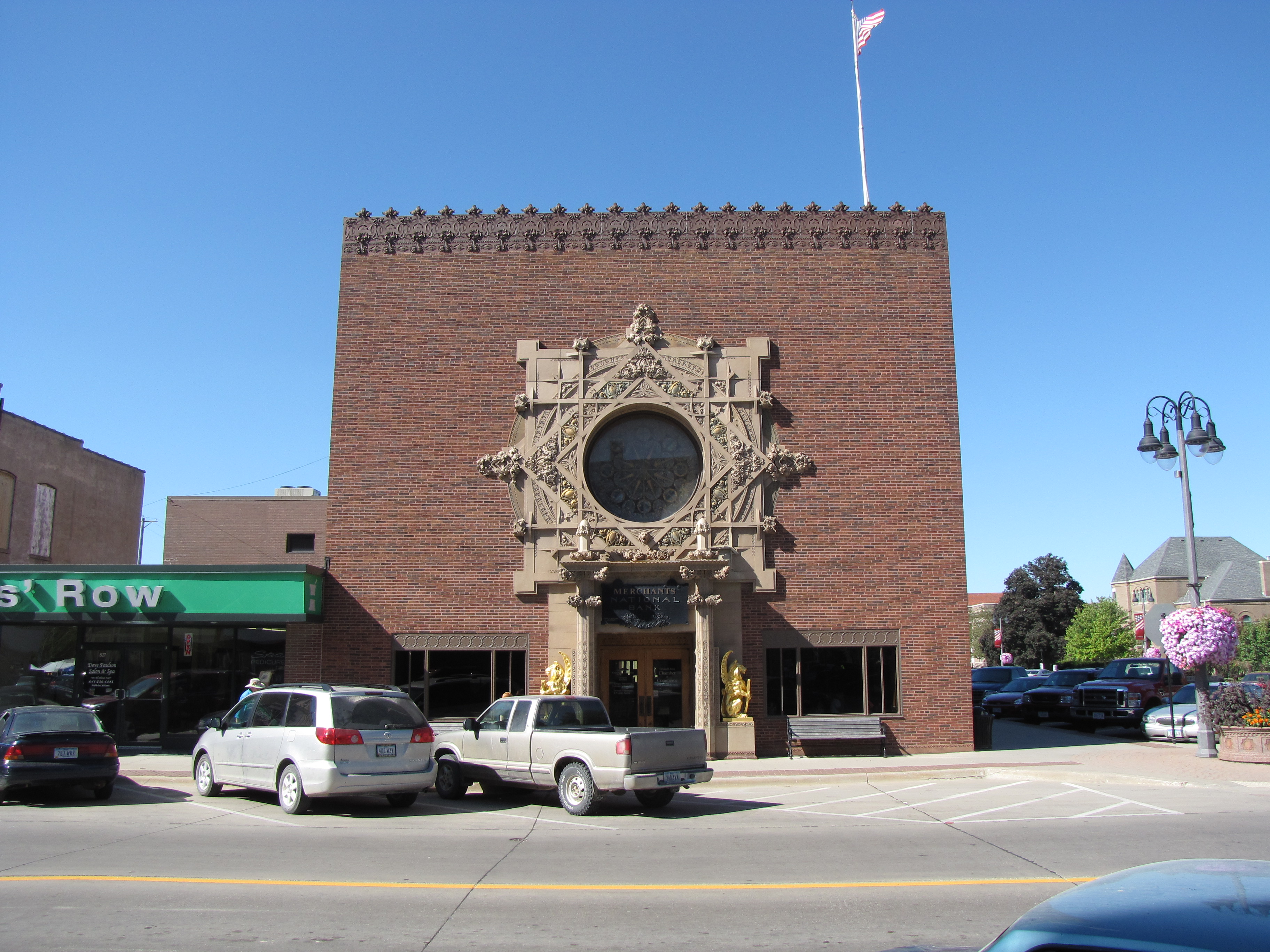
In 1914, the Jewel Box Bank in Grinnell, Iowa, opened.  Many of the same architectural innovations that were found in the Getty Mausoleum can be seen in the bank building, such as the “strong geometric massing, detailed with original ornamentation.”  The massive block is replicated in this design.   As in the mausoleum design, the top of the bank has a repeating design.  The focal point arch is replaced in the bank with the “jewel” above the main entry into the bank which dominates the face of the building.

Louis Henri Sullivan Monument, Graceland Cemetery, Chicago

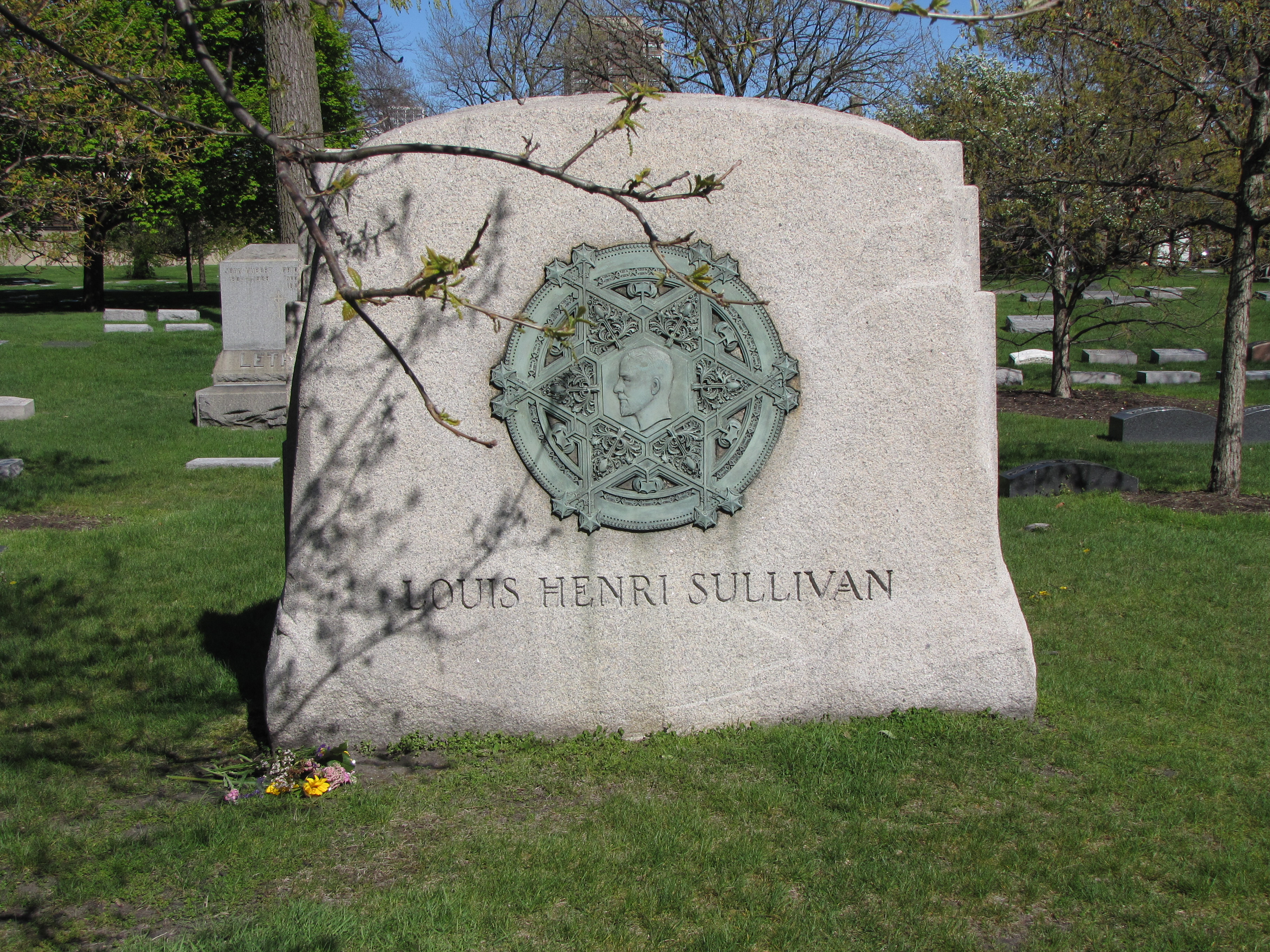
In spite of the fame and success that Sullivan had enjoyed during much of his career, the last decades of his life were in decline, personally and professionally.  He died on April 14, 1924, estranged from his wife, nearly penniless, and alone.  His friends, including Frank Lloyd Wright, paid for his modest monument.  The Sullivan monument mirrors the ornamentation on the Jewel Box Bank.  The focal point on the large block of granite is the bronze “jewel” in the center with the profile of Louis Sullivan.

Posted in Mausoleums | Leave a comment