Archangel Michael

Calvary Cemetery and Mausoleums, Indianapolis, Indiana

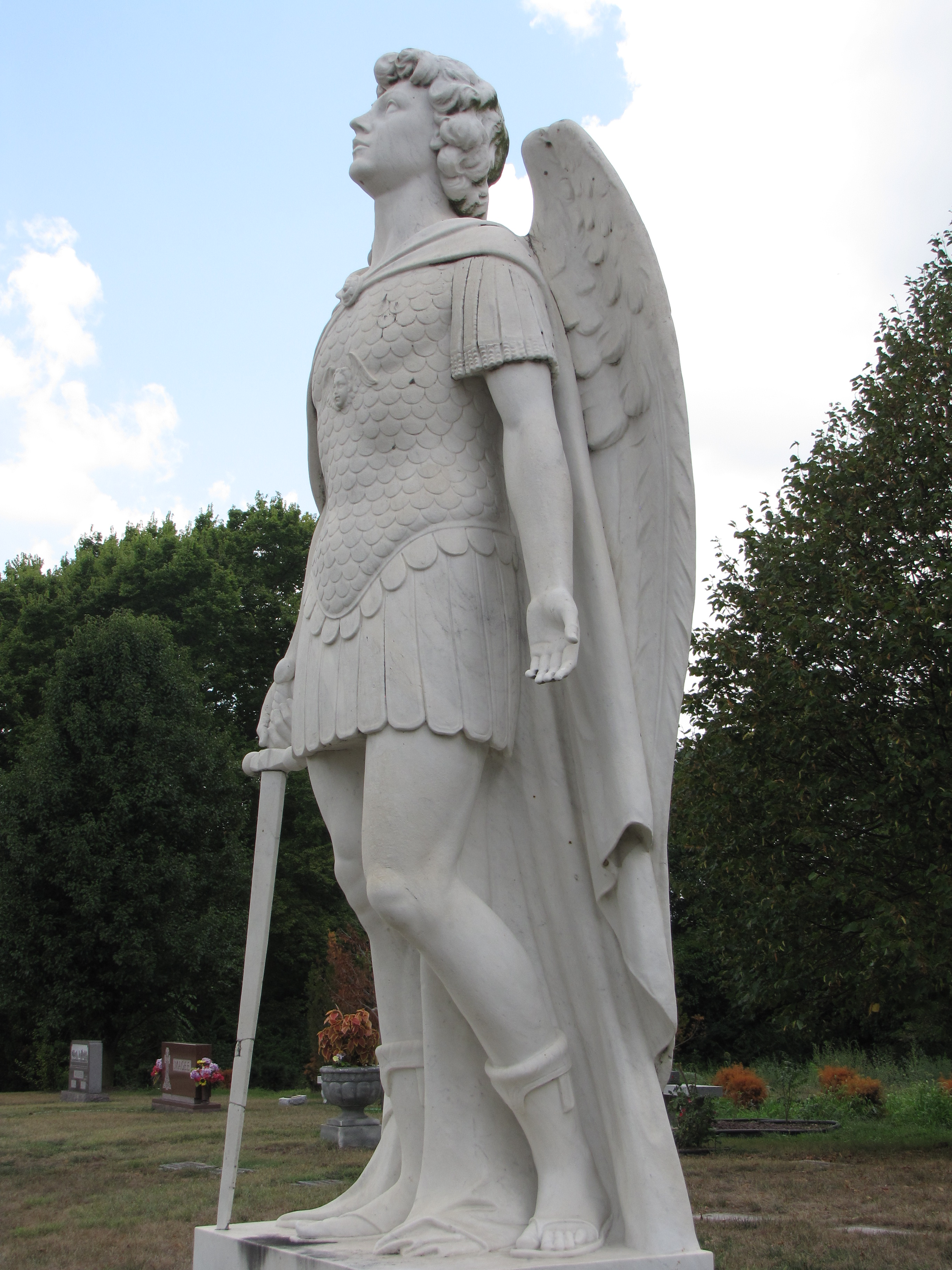
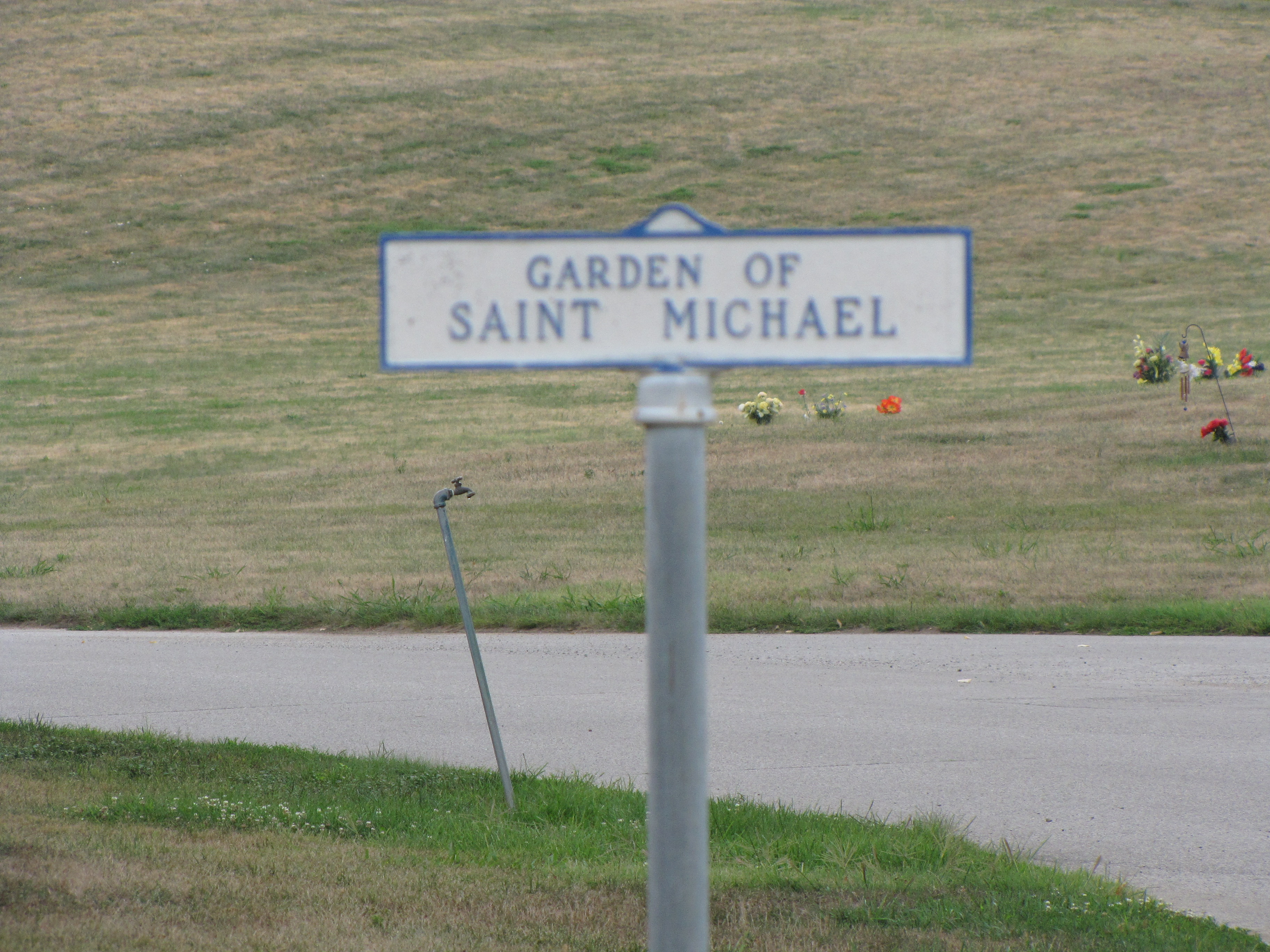
When you are walking through a cemetery and you come across a monument and you don’t understand what it represents, look for clues.  When I saw this monument, I noticed that the statue has wings.  That is a sure sign you are looking at an angel.  Often there are other signs that can lead you to a conclusion of what you are looking at, too.  For instance, there are many types of angels, but not many of them wear armor and carry a sword.  Only the Archangel Michael, one of three angels mentioned by name in the Bible, is clothed in armor.  The sword He carries represents a cross but also a weapon in his war against the devil’s warriors.  Archangel Michael is a Christian soldier fighting Satan’s hordes.  Sometimes when you see the Archangel Michael, he is represented standing on dragon or a worm.  Even though, that is not the case here, the fact that the angel is dressed as a soldier is a sure sign, this is Saint Michael.
 

St. Michael

Sometimes if you look hard enough you can find other clues.

Posted in Angels, Saints | 2 Comments

The Peacock

Calvary Catholic Cemetery, St. Louis, Missouri

Even in the stylized version of the peacock above, one of the first elements that is noticeable are feathers with the “eyes” that surround the body of the peacock, suggestive of the all seeing eye of God.  The feathers are regenerated each year, and each year, the male peacock has larger, more brightly-colored feathers.  Early Christians adopted the peacock as a symbol of the resurrection of Jesus Christ and eternal life because of the peacock’s ability to shed and regenerate its stunning plummage.  Images of the peacock have been found in the catacombs in Rome as early as the Third Century.

Born out of an ancient legend that the peacock’s flesh did not decay, and St. Augustine’s belief in the antiseptic qualities of peacock flesh, the peacock also became a symbol of immortality and the incorruptability of the flesh.

Peacock at the Castelo de St. Jorge, Lisbon, Portugal


Posted in Symbolism | Leave a comment

Rose bud

Calvary Catholic Cemetery, Fresno, California

There are gravestones in which the motif is coupled with the epitaph to help illuminate the meaning of the written word, just as an illustration in a book is often used to reinforce the text.  The rounded-top white marble tablet gravestone of Walter, the son of W.C. and S.A. Reid, found in the Calvary Catholic Cemetery, in Fresno, California, is such an example. 

Walter was born February 11, 1881, and died less than two weeks before his first birthday on January 30, 1882.  To illustrate his “tender” age, three rose leaves and one rose bud is carved into the circle at the top of the tablet.  The three leaves represent the Holy Trinity–the Father, The Son, and the Holy Ghost.  The rose bud symbolizes a young life.  Just as the bud has not “bloomed” into a rose, young Walter has not bloomed into an adult.  His life was cut short by an early death.  The metaphor of the flower representing the little baby boy is further reinforced in the epitaph:

The icy hand of death

Has touched the tender flower

And borne away its breath

Within a fleeting hour.

Walter Reid's gravestone

Posted in Symbolism | Leave a comment

The Arch

Chambersville Cemetery, Chambersville, Indiana

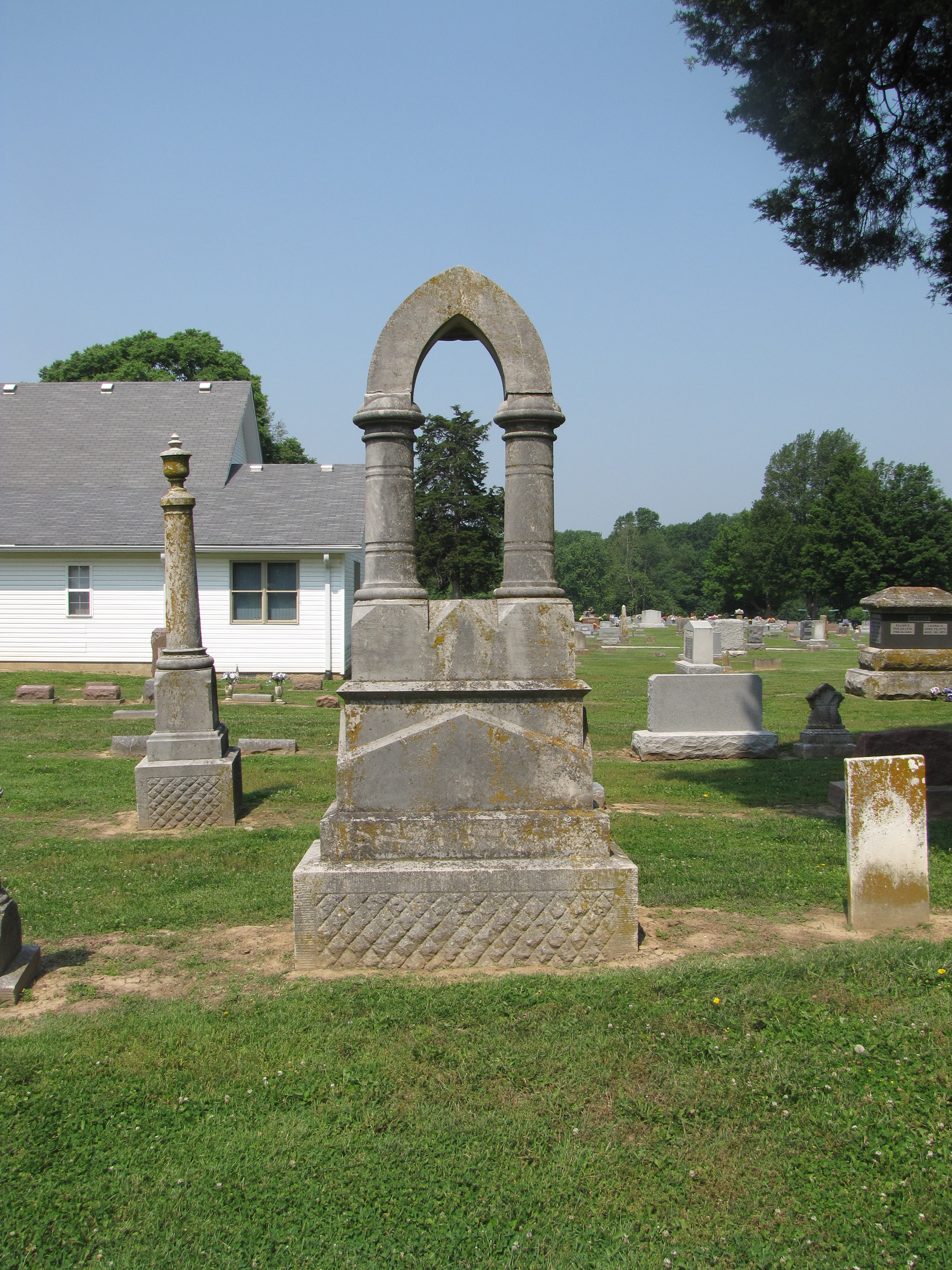
The very shape of some gravestones have meaning.  For instance the obelisk, one of the most common gravestone shapes seen in our cemeteries, is an ancient Egyptian representation of a ray of sun.  The broken column represents a life that has prematurely ended.  The arch represents a triumph of life over death, victory over the darkness of the grave.

The gravestone in the photograph above, displays an open book, the Bible.  The message is most likely victory over death through the Word of God.

Chambersville Cemetery, Chambersville, Indiana

Posted in Symbolism | Leave a comment

Anvil

Clear Creek Christian Church Cemetery, Clear Creek, Indiana

The anvil gravestone pictured above is a near perfect carving of an actual anvil.  It accurately portrays all of the main parts of the anvil, including the level top called the “face” which is depicted with a block of metal and a hammer laying on top.  At the posterior is the “Hardy hole“, which is used by metalsmiths for bending and punching.  The other end shows the “horn” or rounded part of the tool, with a notch cut between the horn and the face called the “step.” 

Anvils have been used for thousands of years and have appeared in literature as early as 800 B.C. in Homer’s Iliad:

He [Hephaestus] cast durable bronze onto fire, and tin,/Precious gold and sliver.  Then he positioned/His enormous anvil up on its block/And grasped his mighty hammer/In one hand, and in the other his tongs./He made a shield first, heavy and huge, /Every inch of it intricately designed./He threw a triple rim around it, glittering/Like lightening, and he made the strap silver.”

Just as a blacksmith uses an anvil to bend and shape metal into objects, the anvil is a symbol of universe being forged and created.  Searches on the Internet also list the anvil as a symbol of martydom. 

Of course, it can also mark the grave of a blacksmith.

Clear Creek Christian Church, Clear Creek, Indiana

Posted in Symbolism | 1 Comment

Daffodil

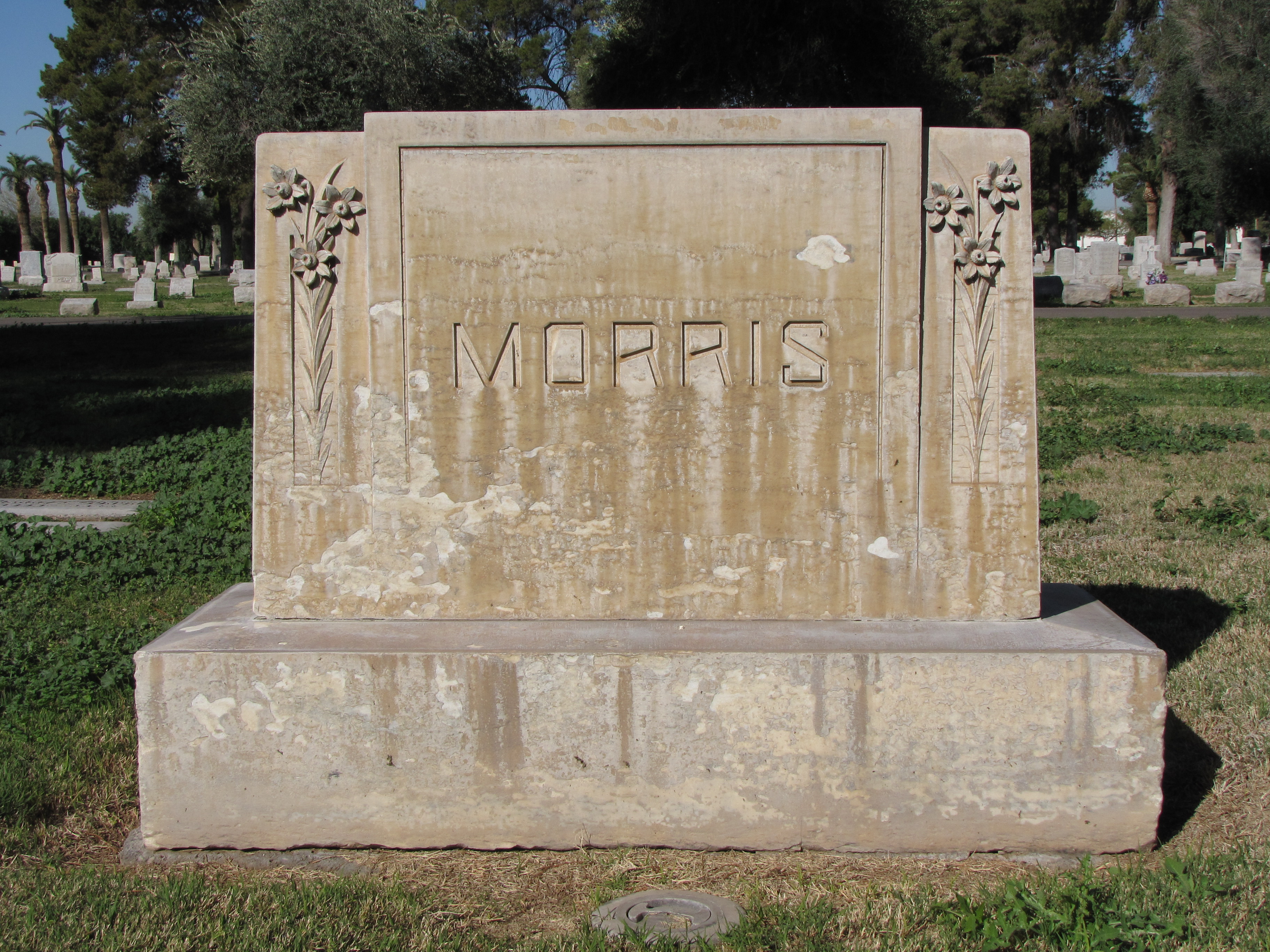
Greenwood Memory Lawn Cemetery, Phoenix, Arizona

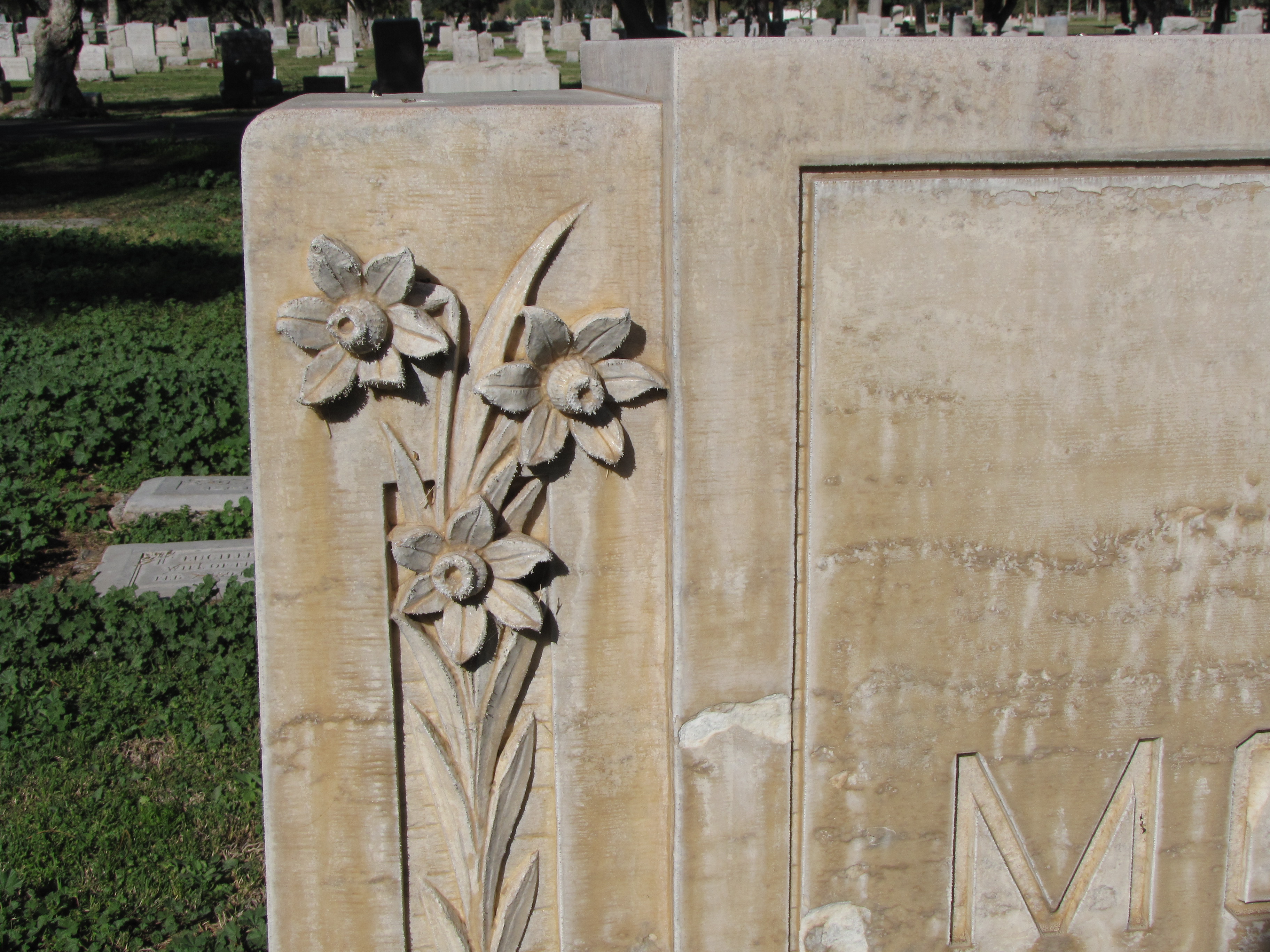
The lovely daffodil sometimes pops up so early that it peaks through the snow as one of the first arrivals in the spring showering the garden with bright hues of gold, yellow, and orange. 

The daffodil is in the genus of Narcissus.  A name which most haven’t heard since our 9th-grade lit class where we were told the Greek story of the handsome young hunter who saw his own reflection in the mirrored waters of a pool.  Narcissus was so enraptured with his own image that he shunned the lithe and beautiful nymph, Echo.  He could not bear to pull away from his reflection and as he drew near to the water in the pool displaying his image, Narcissus fell into the water and drowned, becoming a symbol of self-love.

The daffodil, however, does not represent self-love when it is seen on a gravestone, but instead, the death of youth and beauty. 

Greenwood Memory Lawn Cemetery, Phoenix, Arizona

Posted in Symbolism | Leave a comment

Torches, flame up or flame down

Oak Hill Cemetery, rural Indiana

On the corners of the gravestone above are two inverted torches.  The flames coming from the bottom of the torches are curling toward the center of the gravestone.  The flame or fire is symbolic of the soul.  Here the inverted torch represents a life that has been extinguished.

Fairmont Cemetery, Denver, Colorado

Now turn the torch upright with the flame atop as depicted below on a mausoleum door  and the flame represents life.  The torch is also seen as an instrument that illuminates the darkness representing enlightenment.  It can symbolize zeal, liberty, and immortality.

Washington Street Cemetery, Casey Township, Clark County, Illinois

Posted in Symbolism | Leave a comment

Knights of Pythias

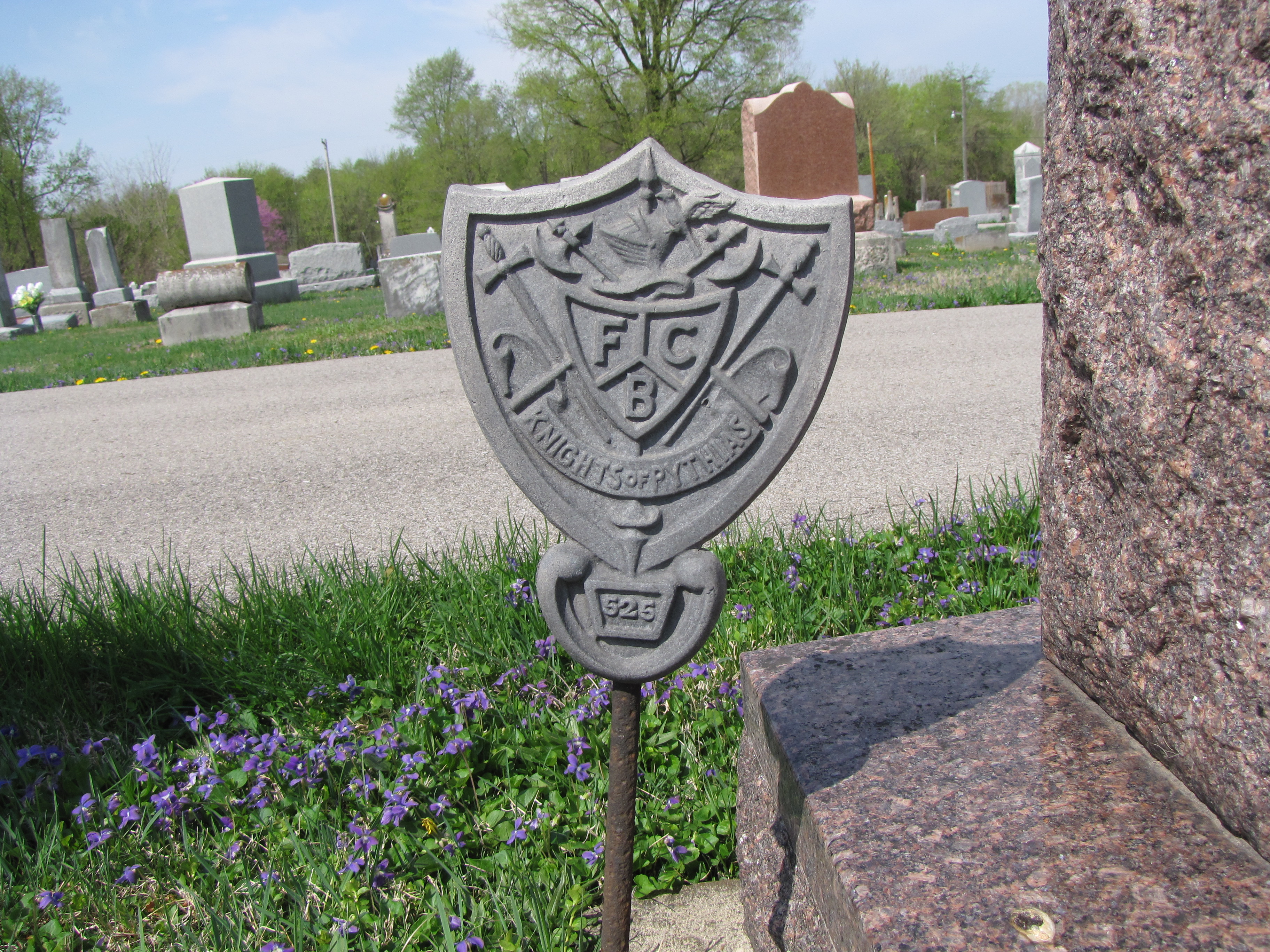
Clear Creek Christian Church Cemetery, Clear Creek, Indiana

On February 19, 1864, the Knights of Pythias, founded by Justus H. Rathbone, became the very first fraternal organization to receive a charter under an Act of the United States Congress.  The society is based on the Greek story of friendship from 400 B. C. between Damon and Pythias, members of a school founded by Pythagoras. 

According to their Website, Pythians: promote cooperation and friendship between people of good will, find happiness through service to mankind, believe that friendship is essential in life, view home life as a top priority, show an interest in public affairs, enhance their home communities, respect and honor the law of the land, and expand their influence with people of like interests and energy.

The metal marker above features many of the symbols that are significant to the Knights of Pythias.  A knight’s helmet, with a falcon (a symbol of vigilance) sits atop a shield with three letters, “F”, “C”, and “B”, which stand for their motto, FRIENDSHIP, CHARITY, and BENEVOLENCE, surrounded by swords, battle axes, and a spear, representing the weapons that were used against their enemies.

The marker below is rusted, pitted, and ravaged by weather, but several of the Knight’s symbols are displayed on a shield, still clearly visable, such as the three letters, “F”, “C”, and “B” and the crossed battle axes.  The marker is also topped with a knight’s helmet.  What is not clear is whether or not the helmet carries the falcon on the crest or a sprig of myrtle which symbolizes love for the Pythians.

There are more than 50,000 members in over 2,000 lodges worldwide.

Ames Cemetery, near French Lick, Indiana

Posted in Metal Markers | Leave a comment

Prepare for Death

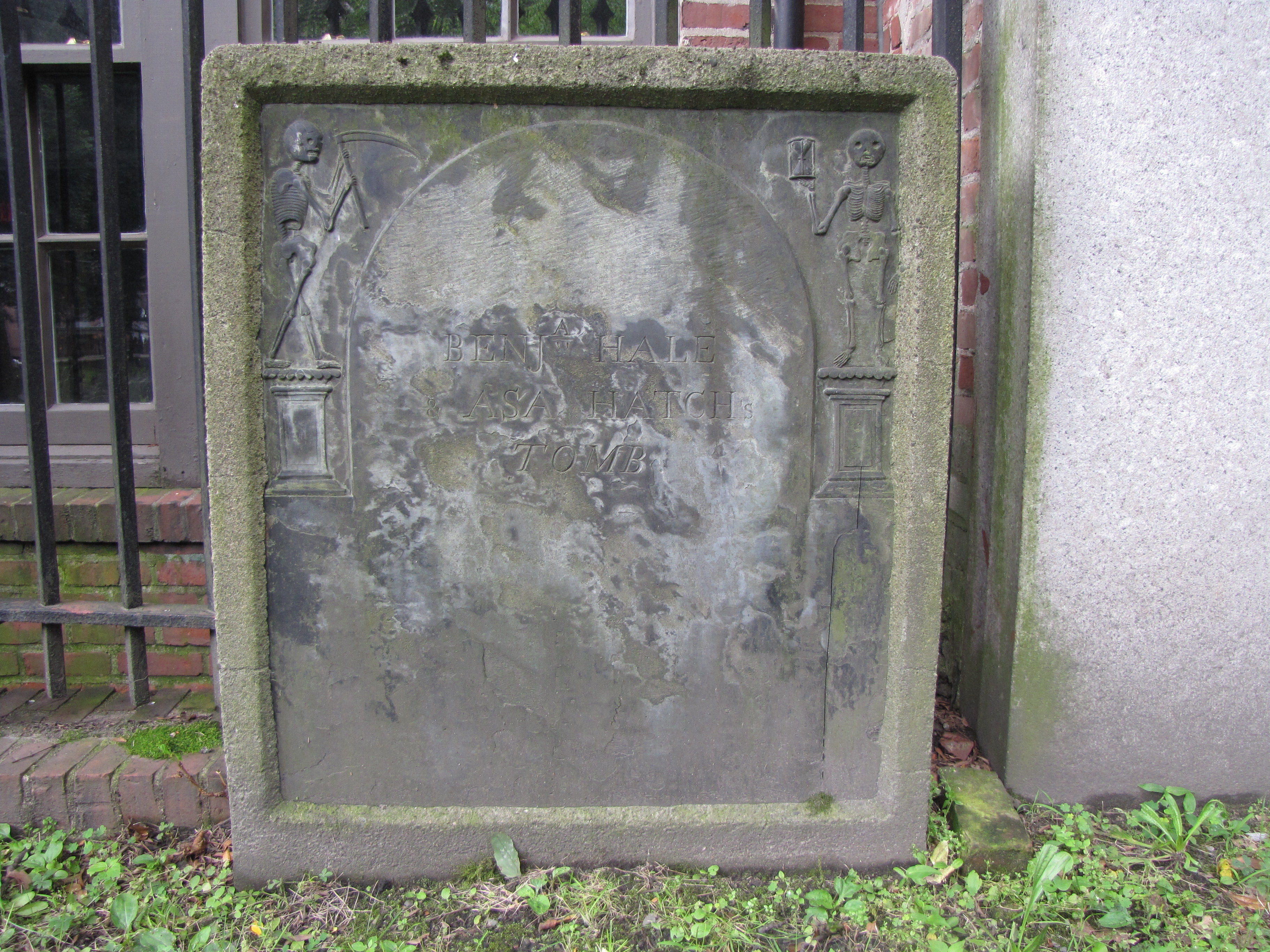
Granary Burying Ground, Boston, Massachusetts

The skeleton is a symbol found on gravestones that is to remind the viewer of life’s brevity and of the decay of death.  The skeleton above is on a tomb in the Granary Burying Ground in Boston, Massachusetts.  The primitively carved skeleton conveys the haunting message to remember death.  It reminds us that our flesh will rot and all that will be left behind will be a skeleton.  This particular skeleton is holding an hour glass, another symbol that represents the idea that life is short. 

There are also many epitaphs that can be found on gravestones to remind the viewer that life is short.  There are many variations of the most common one of these epitaphs: Remember me as you pass by/As you are now, so once was I/As I am now, so you must be/Prepare for death and follow me.  Below are more examples of this theme:

Death is a debt to nature due/Which I have paid & so must you.

Whilst oe’r my grave you stand and see/Remember you must follow me.

Hark from the tomb a dolful sound/Mine Eare attend the cry/Ye living men come view ye ground/Where you must shortly lie.

Such as thou art, sometime was I/Such as I am, such shalt thou be.

Death is a debt/By nature due/I’ve paid my debt/And so must you.

For sudden death/Prepared be/Resign your breath/And follow me.

Behold my friends, in me you all may see/An emblem of what you e’er must be/Remember you like me was form’d of dust/And with the earth unite again you must.

My friends, ime here the first that come/And in this place for you there’s room.

Passenger stop as you pass by/As you are now. so once was I/I had my share of worldly care/As I was living as you are/But God from all has set me free/Prepare for Death and follow me.

Stop my firend! O take another view!/The dust that moulders here/Was once belov’d liek you!/No longer then on future time relay/Improve the present and prepare to die!

He that was sweet to my repose/Now is become a stink under my nose/That is said of me/So it will be said of thee.

Now she is dead and cannot stir/Her cheeks are like a faded rose./Which one of us must follow her/The Lord Almightly only knows.

Learn then, ye living! by these mouths be taught/Of all these sepulchres, instruction true/That, soon or late, dath also is your lot/And the next opening grave may yawn for you!

Time was i stood as thoust dost now/And viewed the dead as thou dost me/Ere long thoult lie as low as I/And others stand and look at thee.

The Benjamin Hale and the Asa Hatch Tomb, Granary Burying Ground, Boston

Posted in Epitaphs, Symbolism | Leave a comment

King of Terrors

The Jona Armitage Tombe, 1738, Granary Burying Ground, Boston

Many symbols in the graveyard are meant to remind passersby that life is short and that all will die.  These images are called Memento Mori and are a call to “remember death“.  The skeleton is one of these symbols.  The skeleton above is carrying a scythe, a weapon with which the lives are cut down in the Divine Harvest.  When the skeleton is depicted with a scythe, arrow, spear, or darts, the figure is referred to as the “King of Terrors”.  Here the King of Terrors is depicted sitting on another skeleton, representing death’s victory over life.

Granary Burying Ground, Boston, Massachusetts

Posted in Symbolism | 1 Comment