The Hoosier Poet

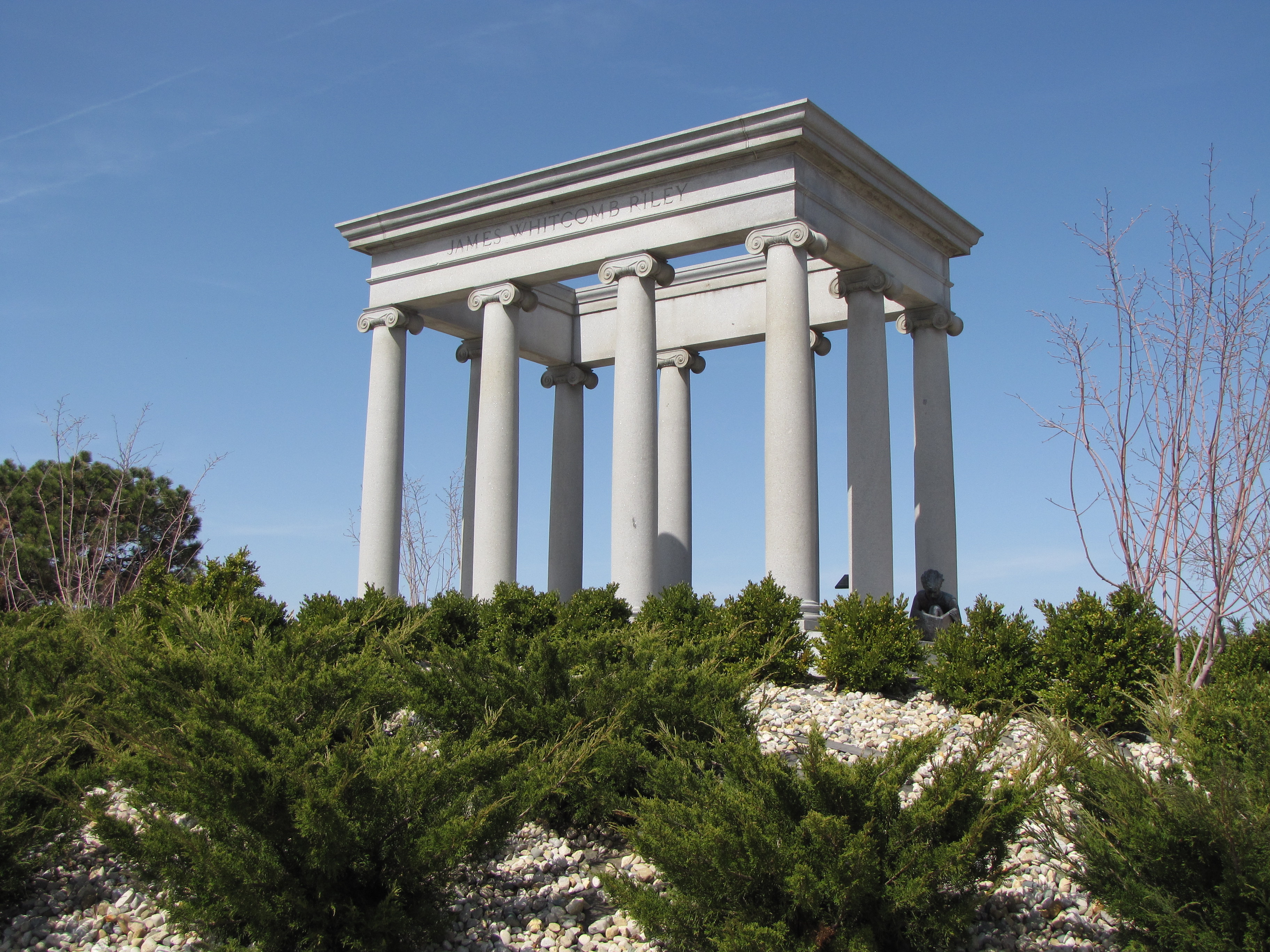
The James Whitcomb Riley Monument, Crown Hill Cemetery

On top of the highest hill in Indianapolis, in the Crown Hill Cemetery, towers the classical monument dedicated to honor, James Whitcomb Riley, known at the “Hoosier Poet” and the “Children’s Poet.”  Riley (October 7, 1849 – July 22, 1916) was the most popular poet of the late 19th Century and early 20th Century made famous for writing poems that appealed to children, such as “Little Orpahnt Annie” and “The Raggedy Man.”  Most of his rhymes and poems were written in dialet, and are considered sentimental.
 
The plaque at the monument reads, “The “Hoosier Poet” was buried here in 1917.  Known and acclaimed internationally for his poetry about life in the heartland.  He is best remembered today for his poems that appeal to children and the child in all of us, such as “Little Orphant Annie” and the “The Raggedy Man”.  He was especially loved by the many local children who were able to enjoy not only his poetry, but also his time and lemonade on the front porch of his Indianapolis home on Lockerbie Street.  After his death children began donating coins to help pay for his memorial.  The tradition of leaving coins on his monument continues today and money collected is donated to Mr. Riley’s legacy, The Riley Hospital for children.”
 

Like bell-bottom pants, pet rocks, New Coke, and 8 Track tapes, Riley’s poetry has not stood the test of time.  Many critics think of his poetry as saccharine and cliched.  Today, in the pantheon of American poetry, James Whitcomb Riley is considered a minor poet.  With his star faded, and fewer visiting his grave, a movement has begun to remove his remains to his birthplace of Greenfiled, Indiana, to a grave he purchased next to his parents.

On the Website, jameswhitcombriley.com, the Webmaster writes, “Recently the fame of this great writer has dimmed.  His humanism and glorification of things Hoosier are not so valued now as in former days.  So is it time to allow him to rest in peace where he intended, in his hometown of Greenfield, Indiana?  Should America’s “Children’s Poet” be allowed to have his remains returned to the empty grave he purchased to house his remains?”  That is a question that remains to be answered.

Crown Hill Cemetery, Indianapolis, Indiana

Away

I can not say, and I will not say

That she is dead. – She is just away!

With a cheery smile, and a wave of the hand,

She has wandered into an unknown land,

And left us dreaming of how very fair

It needs must be, since she lingers there.

And you – O you, who the wildest yearn

For the old-time step and the glad return, –

Think of her faring on, as dear

In the love of There as the love of Here:

And loyal still, as she gave the blows

Of her warrior-strength to her children’s foes. –

Mild and gentle, as she was brave,

When the sweetest love of her life she gave

To simple things: – Where the violets grew

Blue as the eyes they were likened to,

The touches of her hands have strayed

As revently as her lips have prayed:

When the little brown thrush that harshly chirred

Was dear to her as the mocking-bird:

And she pitied as much as someone in pain

A writhing honey-bee wet with rain. –

Think of her still as the same, I say:

She is not dead – she is just away.

Posted in Famous graves | 1 Comment

The Horseshoe

Crown Hill Cemetery, Indianpolis, Indiana

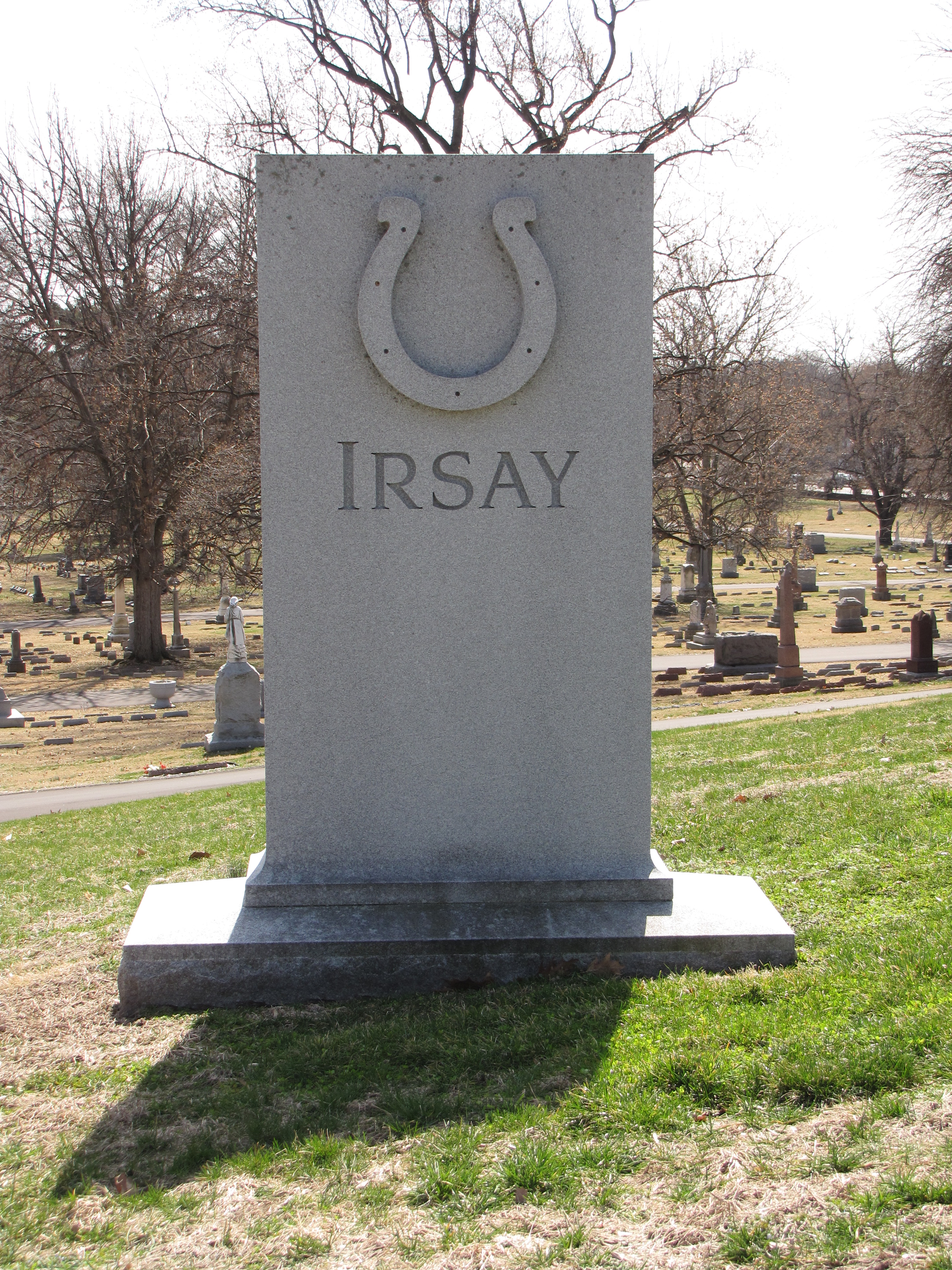
To the ordinary superstitious person, a horseshoe with the ends pointing up, is viewed as good luck.  These can ususally be found tacked up above a doorway and kept as a talisman.  The claim is that the luck stays in the horseshoe and is bestowed on the owner.  Conversely, some believe that if the horseshoe has the ends pointing down, the good luck will drain from the shoe and be bestowed on those around it. 

In gravestone art, however, the horseshoe is a symbol that wards off evil, not as a good luck charm.  The horseshoe can also be found on the graves of people who had a strong passion for horses or even those who had worked with horses, such as trainers, jockeys, horse owners, or just those who loved to ride.

However, if you are not a football fan, you might have missed the meaning of what this particular horseshoe represents.  This steele with the prominent horseshoe, ends up, is the gravestone of Robert Irsay, who was born March 5, 1923 and who died January 14, 1997.  Mr. Irsay purchased the Baltimore Colts and moved the team to Indianapolis in the wee hours of the morning on March 28, 1984.  The move of the team made Robert Irsay a dispised figure in Baltimore and beloved in Indy.  This horseshoe with the ends up and 7 nail holes, most likely a lucky 7, is the symbol of the Indianapolis Colt’s team and can be seen on their helmets, team paraphenalia, and if you look closely, on the belt buckles of the cheerleaders’ uniforms. 


Posted in Symbolism | 2 Comments

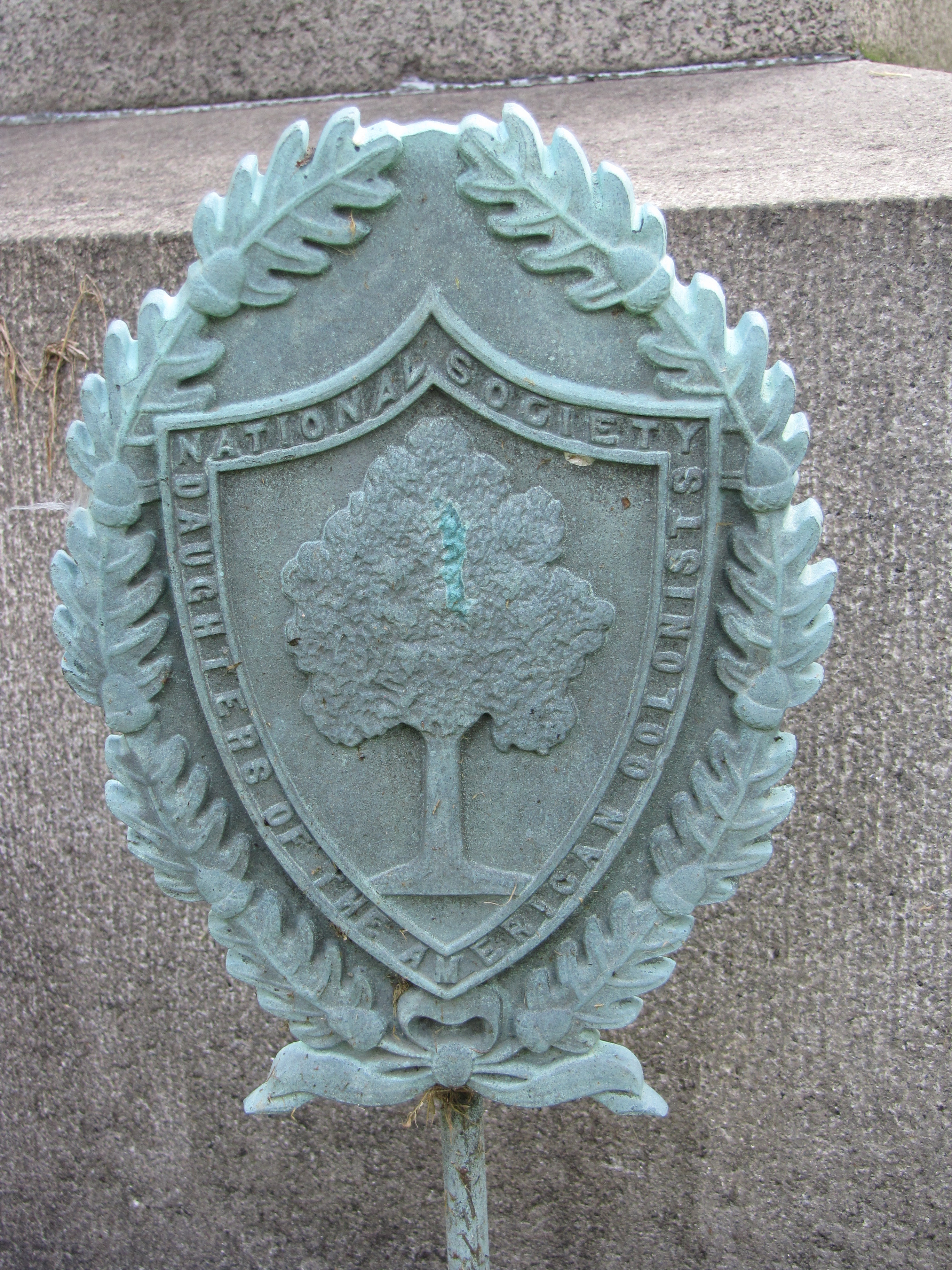
National Society of the Daughters of the American Colonists

Erie Cemetery, Erie, Pennsylvania

This metal marker is a replica of the emblem of the National Society of the American Colonists–a shield with an oak tree in full foliage in the center, surrounded by an open wreath of oak leaves and acorns.  This society was one of many organizations founded to celebrate American ancestry before the American Revolution. 

The organization was founded December 9, 1920 by Sarah Elizabeth Mitchell Guernsey.  All members must be able to prove their lineage goes back before the signing of Declaration of Independence on July 4, 1776.  Their motto is “Past, Present, Future”. 


Posted in Metal Markers | 2 Comments

The Voodoo Queen

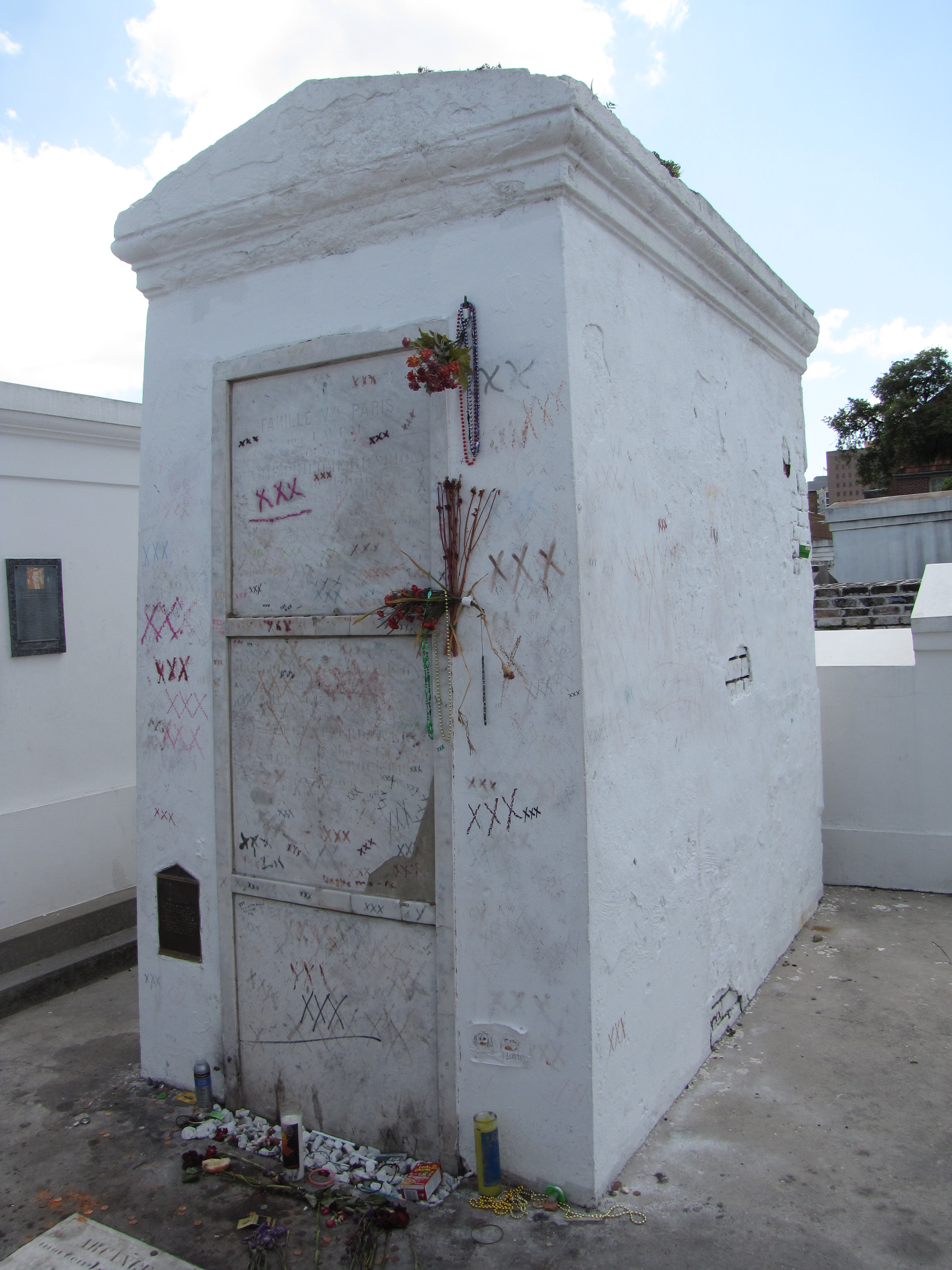
St. Louis Cemetery No. 1, New Orleans, Louisiana

It is fitting on Halloween night, that the post relate a tale about Marie Laveau, known as the Voodoo Queen and one of the most notorious practitioners of black magic.  Born in 1794 in Santo Domingo, Marie was well known thoughout her adopted city of New Orleans for the potions she concocted and the spells she cast.  Marie was a hairdresser by trade, the profession which was her link to the mysteries and the scandals of the city.  The job is intimate, with the stylist becoming close to her clients who open up and reveal their darkest secrets.

Marie lived a long life, giving birth to 15 children, including her daughter and namesake, Marie II, who took over for her mother when she died in 1881, casting spells for the denizens of the dark and believers in the cult.  For years after Marie died people claimed to see apparitions of Marie.  To this day, candles, coins, beads, and other gifts are still left at the crypt that is said to hold the remains of Marie and her daughter, Marie II.

For tales of haunted cemeteries, read, Beyond the Grave: The History of America’s Most Haunted Graveyards, written by Troy Taylor published by Whitechapel Productions Press.  The author promises to take the reader on a “journey to places where the dead still walk!”

Posted in Famous graves | Leave a comment

Angel with trumpet and wreath

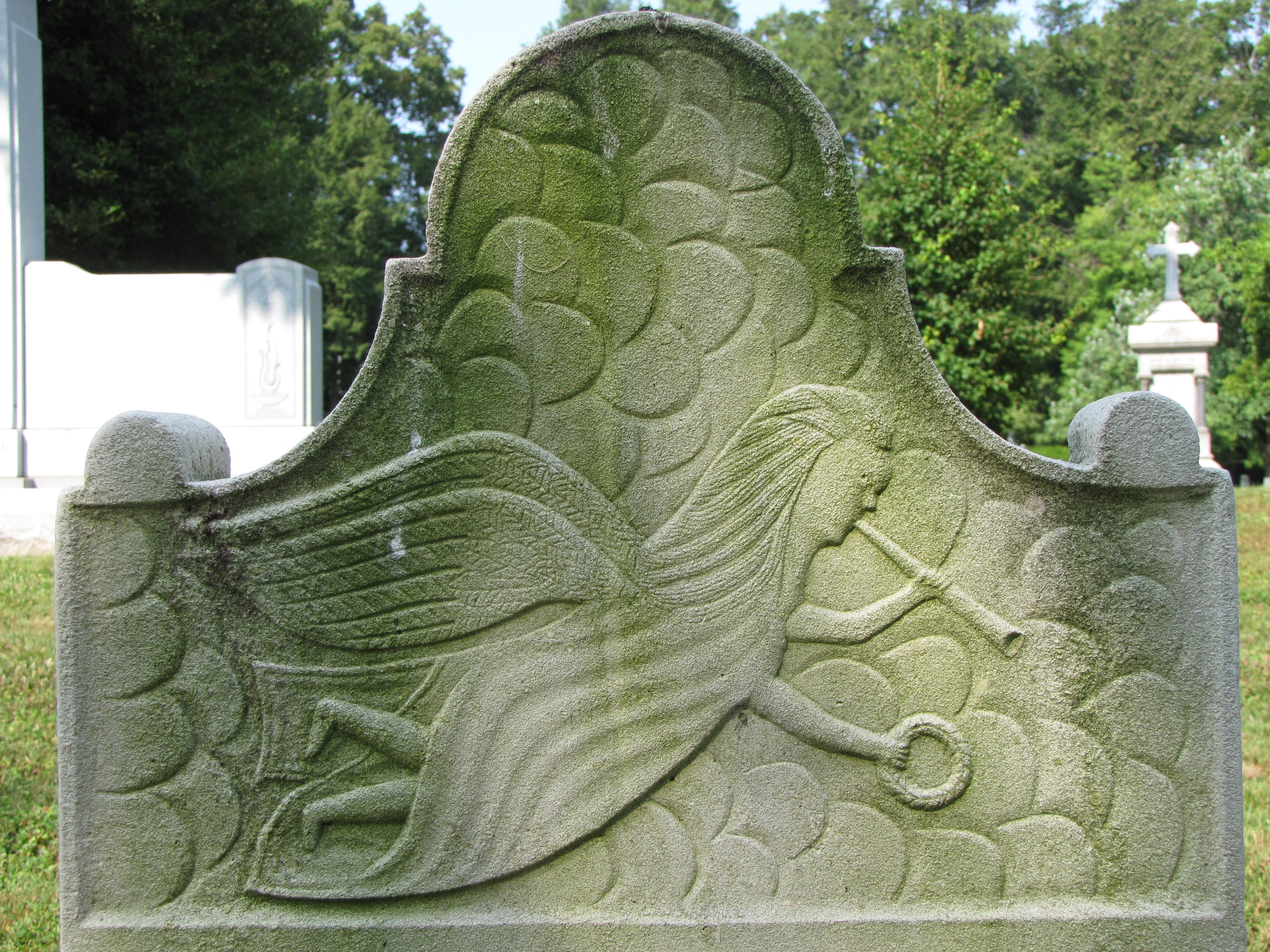
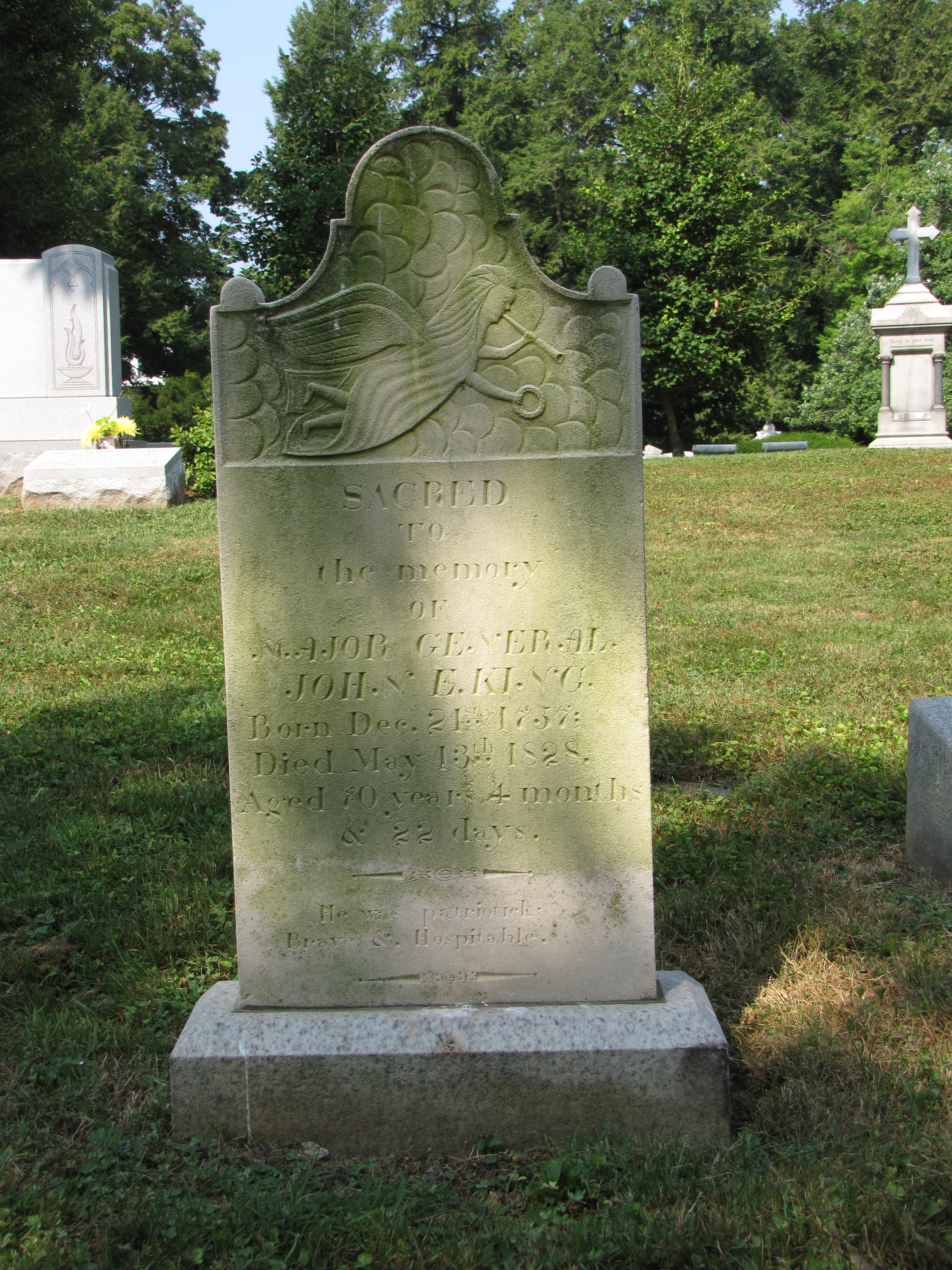
On the top of this gravestone, an angel is depicted flying amid billowing clouds.  The angel is blowing a horn and carrying a laurel wreath.  The angel blows the horn to announce the coming resurrection.  The laurel wreath dates back to Roman times when soldiers wore them as triumphal signs of glory.  The laurel was also believed to wash away the soldier’s guilt from injuring or killing any of his oponents.  In funerary art the laurel wreath is often seen as a symbol of victory over death.  In this case, the angel is carved on the grave of a Revolutionary War soldier and could relate to the glory of the fallen general buried beneath the gravestone.

Cave Hill Cemetery, Louisville, Kentucky

SACRED

TO

the memory

OF

MAJOR GENERAL

JOHN E. KING

Born Dec. 21st, 1737:

Died May 13th, 1828.

Aged 70 years 4 months

& 22 days

He was patriotick:

Brave & Hospitable.


Posted in Angels | 2 Comments

A shot at history

On February 11, 2006, Vice President Dick Cheney shot Harry Whittington, a 78-year old Texas attorney, in the face during a hunting outing on a private ranch in Texas.  Cheney shot Whittington in the face, neck, and chest with bird shot mistaking his hunting companion for a quail. 

Cheney, however, was not the first Vice President to shoot another person.  That honor goes to Vice President Aaron Burr.

Aaron Burr was Vice President serving under President Thomas Jefferson from 1801 to 1805.  After many years of animosity between Alexander Hamilton and Aaron Burr, Burr finally challanged Hamilton to a duel, even though, dueling was outlawed in New York (punishment was death) where they both lived.  Dueling was also outlawed in New Jersey but the punishment was less severe.  So, on July 11, 1804, Burr and Hamilton paddled across the river and met on the riverbank outside of Weehawken, New Jersey. When the smoke cleared, two shots had been fired but only one had hit its target.  Hamilton was mortally wounded.  He was loaded into a small boat and taken to a nearby friend’s house where he died.

Princeton Cemetery, Princeton, New Jersey

In spite of a long public career as a soldier, lawyer, and politican, serving in the New York State Assembly, as the New York State Attorney General, as a United States Senator, and Vice President of the United States, Aaron Burr is largely remembered for dueling and killing his political oponent Alexander Hamilton.

Burr is buried in the Princeton Cemetery, in Princeton, New Jersey.  His father, Aaron Burr, Sr. co-founded the College of New Jersey (which became Princeton University) and was its second president.  His maternal grandfather, Jonathan Edwards, noted American theologian, was the third president of the college, Burr is buried next to Edwards’ grave.  Burr’s gravestone is a plain white marble segmented-top tablet set on a foundation.

AARON BURR

BORN FEB. 6TH, 1756

DIED SEPT. 14TH, 1836

A COLONEL IN THE ARMY OF THE

REVOLUTION

VICE PRESIDENT OF THE UNITED

STATES, FROM 1801 TO 1805.

Posted in Famous graves | 1 Comment

Corn

Congressional Cemetery, Washington, DC

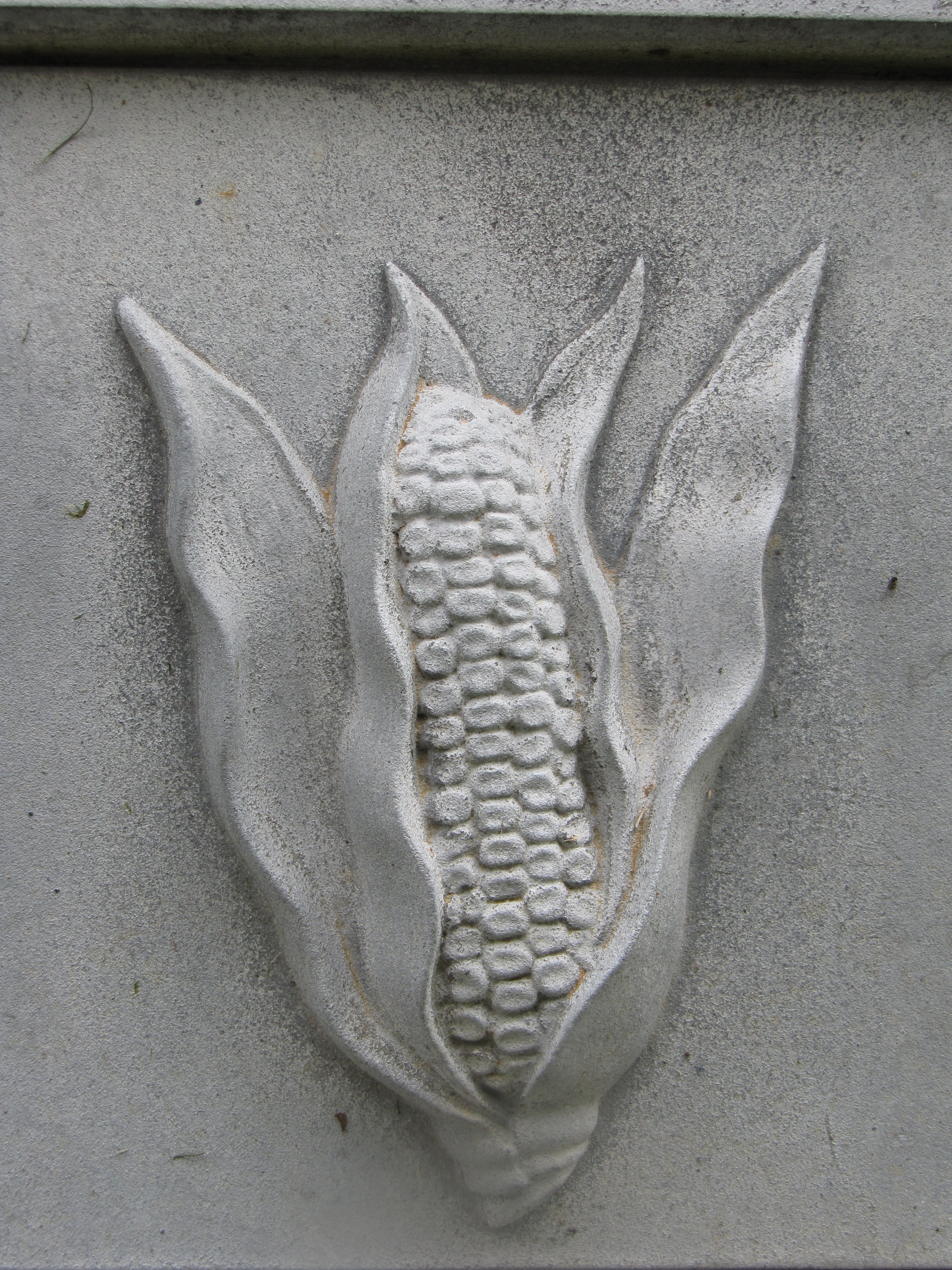
Corn is an ancient American crop that has been exported to all corners of the world.  More than 300,000 million tons of corn are grown in the United States every year.  It is not only ubiquitous in our Midwestern fields but corn syrup is in nearly every food on the grocery store shelf.  It is right and fitting then that corn represents fertility since its abundance is obvious.  It also represents rebirth in funerary art.

Green Hill Cemetery, Bedford, Indiana

Posted in Symbolism | Leave a comment

A Grave in Waiting

Nearly 32 years ago, my father died.  We weren’t prepared for it; in fact, we weren’t even sure where he wanted to be buried.  Dad was irreverent about death, “I don’t care what you do with my body, I’ll be dead.  For all I care you can run my body up a flag pole.”  We didn’t want any trouble with the neighbors, so that really wasn’t an option.

As it turned out, two weeks before Dad died, he told his brother, Fred, he wanted to be buried in the Frazier Cemetery, which was right next to the golf course and country club they both belonged to.  He said, “If a stray ball rolls up to my grave, I might just get up and play a round of golf!”  We bought him a plot and my mother one for good measure—even though my parents were divorced and Mom was very much alive.  We thought we could get them back together in the next life.

I decided the day we buried Dad that I would buy my plots (two just in case I got married, I have always been a hopeful soul).  I met with the cemetery trustee, a woman who was quite elderly, named Bessie.  I told her I wanted the two plots directly in line with my parents.  She carefully wrote my name into a trustee book recording my name and where the plots were that I had just paid for.

Fast forward twenty years.  My Mom went out the cemetery to put flowers on family graves for Memorial Day.  She called me and said, “Douglas, someone is in your spot!”  As it turned out a woman named Luella had been buried in one of my plots, she was in direct line with my father.  I called the cemetery trustee who was now Skip Short, no foollin that was his name, to find out what had happened.  He gave his apologies and told me that Bessie had two sets of books–one that she wrote the sales down in quickly, the other book, where she transferred the information in a very orderly and neat fashion.  Unfortunately, she had gotten behind and had sold some plots three and four times.  My plots were among those.

Skip Short told me that they would find me plots somewhere else in the cemetery.  I told him to pardon the wordplay, but I was going to “hold my ground.”  Luella would have to be moved.  While I sympathized with the situation, I knew that the closer I got to death, the more important it would be for me to be buried next to my parents. 

Skip was understandably quite exorcised and said moving her would be very complicated and costly. If the body was brought above ground, the cemetery would have to pay to have the state coroner to be present.  “Not my problem,” I grumbled, “Luella has got to go.”

The solution was the loop hole.  Don’t bring her above ground, but open the grave she was in and the one next to it and slide her over. 

What saved my perpetual real estate?  I registered the deeds at the courthouse, so when the time comes, I will be in line with my parents and next to Luella for an eternity!

Posted in Uncategorized | Leave a comment

The Happy Shore

Oakland Cemetery, Atlanta, Georgia

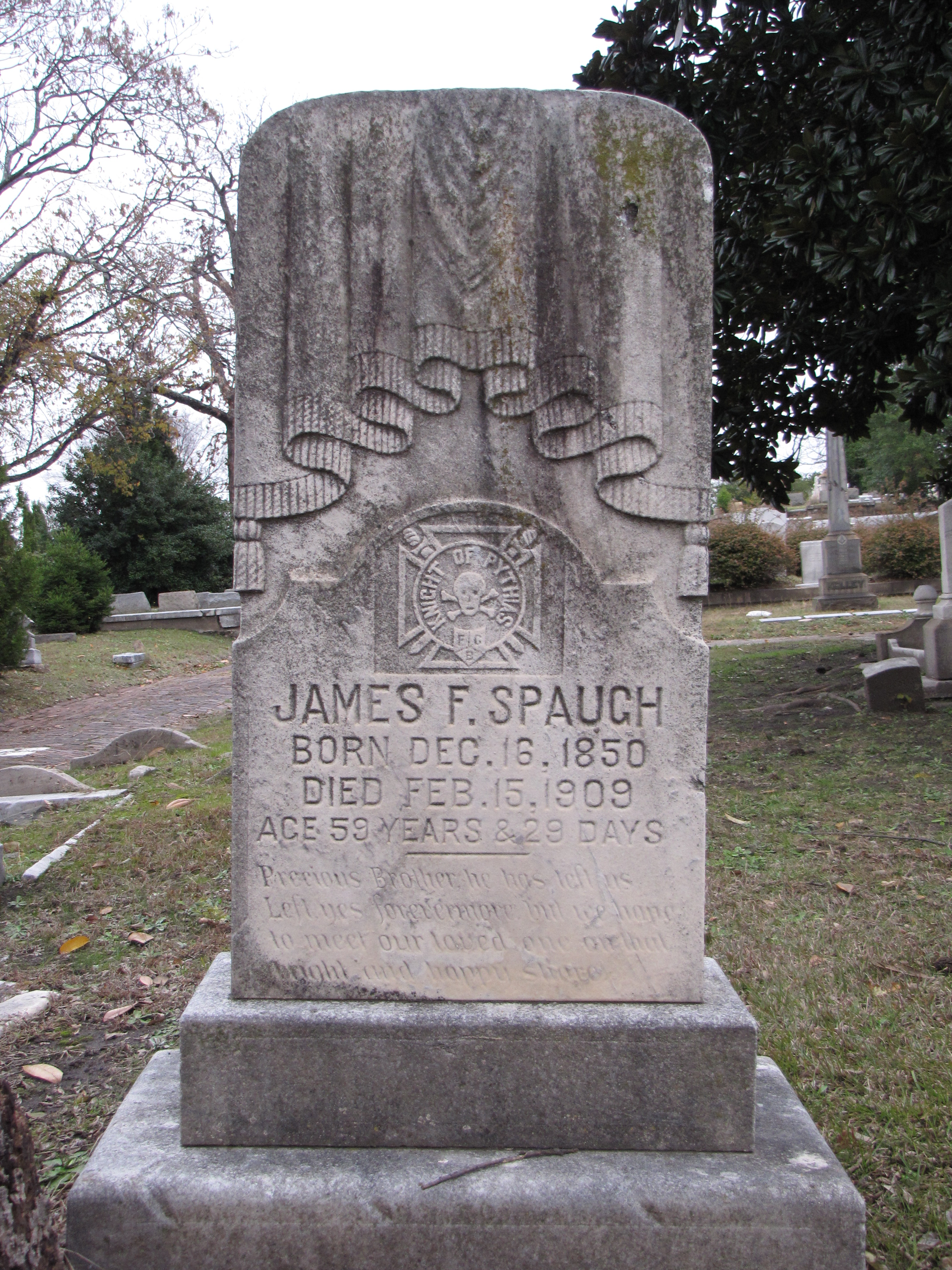
JAMES F. SPAUGH

BORN DEC. 16, 1850

DIED FEB. 15, 1909

AGE 59 YEARS & 29 DAYS

Precious Brother he has left us

Left yes forevermore but we hope

to meet our loved one on that

bright and happy shore.

Posted in Epitaphs | Leave a comment

Types of Cemeteries

 …O paint the gloomy horrors of the tomb;
Th’ appointed place of rendezvous, where all
These travellers meet.–Thy succours I implore,
Eternal King! whose potent arm sustains
The keys of Hell and Death.–The Grave, dread thing!

By Robert Blair, “The Grave”

In Douglas Keister’s book, Forever Dixie: A Field Guide to Southern Cemeteries & Their Residents, he writes about six kinds of cemeteries: Graveyards and City Cemeteries; Churchyards; Garden and Rural Cemeteries; Lawn-Park Cemeteries; Memorial Parks, and Specialty Cemeteries. I would add one more—Military Cemeteries. Each one of the types of cemeteries have distinct characteristics:

 Graveyards and City Cemeteries

Granary Burying Ground, Boston, Massachusetts

Early American graveyards were often in the middle of town. These burial grounds were unorganized and neglected places, with weeds and overgrowth, stones willy nilly, where the dead were buried, sometimes with markers, sometimes not. Often cattle grazed among the gravestones. In William Cullen Bryant’s poem “The Burial Place” he accurately describes the city graveyard:

…Naked rows of graves

And melancholy ranks of monuments

Are seen instead, where the coarse grass, between

Shoots up its dull spikes, and in the wind

hisses, and the neglected bramble nigh…

 Churchyards

Old Brick Reformed Church Graveyard, Holmdel, New Jersey

This type of cemetery is the easiest to describe. The name churchyard, in fact, tells the story. The burials took place in the yard around the church and was reserved for members of the congregation. These dot the countryside and can be found in nearly every community. For the most part, churchyards lack to the large monuments and mausoleums that can be found in garden and rural cemeteries and the gravestones tend be more simple forms—tablets, columns, and block markers.

Garden and Rural Cemeteries
Spring Grove Cemetery, Cincinnati, Ohio

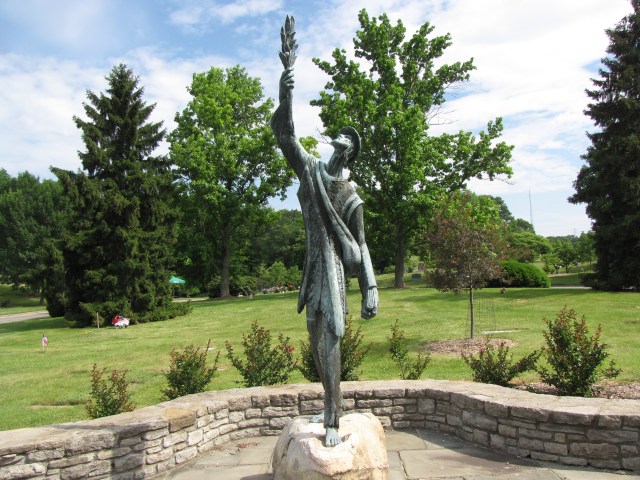
In 1831, Mt. Auburn Cemetery opened in Cambridge, Massachusetts. It was the first garden cemetery to open in the country and represented a new attitude about burying the dead. These cemeteries were designed spaces, with pathways and avenues, and were landscaped to have the look and feel of a public park. In Victorian Cemetery Art, written by Edmund V. Gillon Jr., he writes “The large amounts of space in the Victorian cemetery were to revolutionize cemetery art, and permit the use of sculpture in a way that crowded churchyard had never allowed. Sepulchral sculpture, with it prone effigies and kneeling weepers, had flowered in the past, but only for the rich and powerful.” The opening of Mt. Auburn was the dawning of the rural cemetery movement–the concept of the cemetery as a landscaped space. Cities across America began to open garden cemeteries in their communities—Cave Hill Cemetery in Louisville, Laurel Hill Cemetery in Philadelphia, Spring Grove Cemetery in Cincinnati, Greenwood Cemetery in Brooklyn—to name just a few.

Lawn-Park Cemeteries
Laurel Hill Cemetery, Erie, Pennsylvania

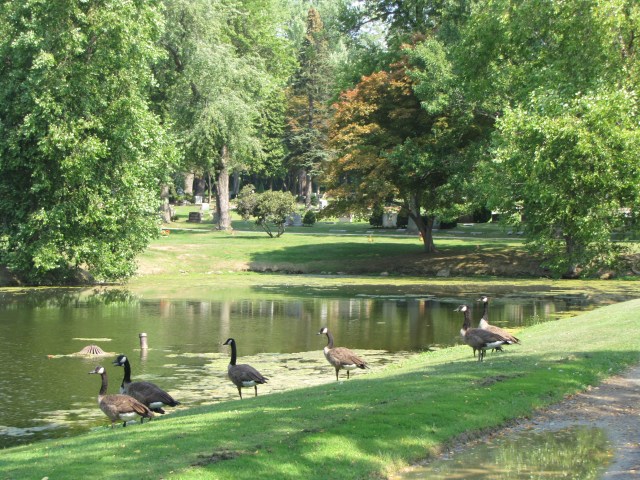
This type of cemetery is really a combination of two types—the garden cemetery and the memorial park. This cemetery has areas for large monuments and mausoleums, as well as, large sections reserved for grass markers. These cemeteries are designed with large avenues and pathways for visitors.

 Memorial Parks
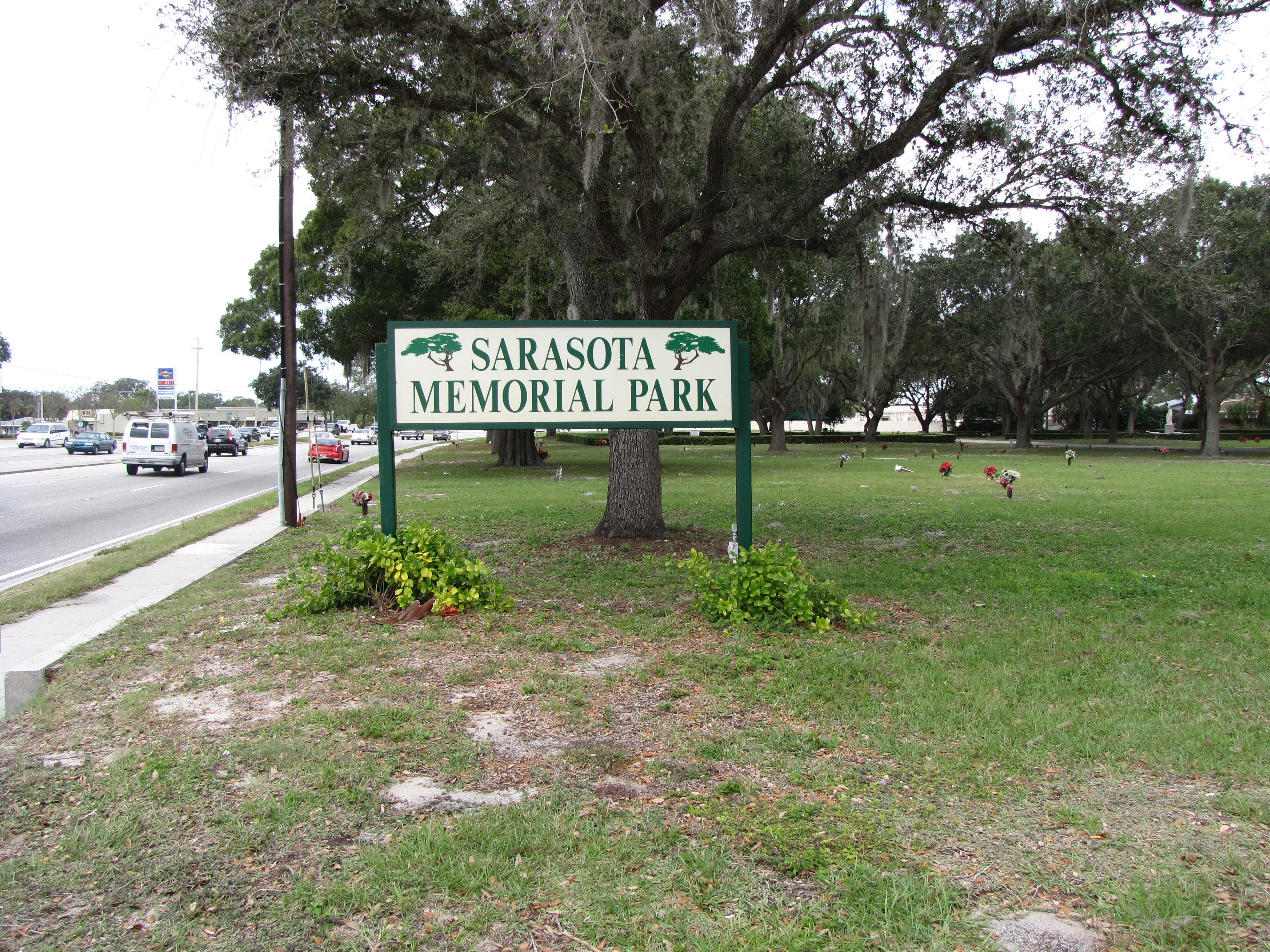
Sarasota Memorial Park, Sarasota, Florida

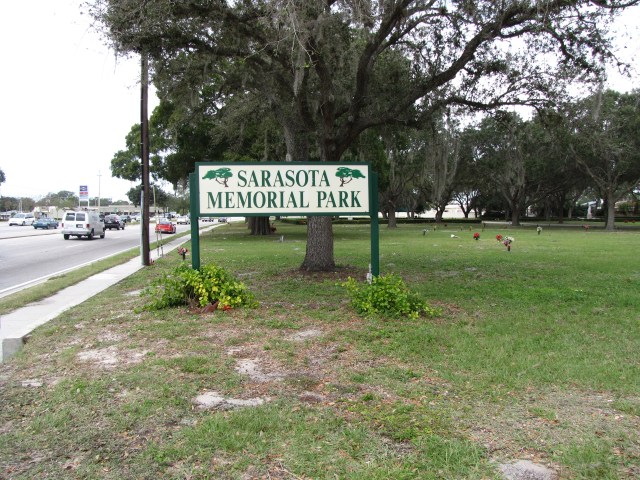
Two of the greatest influences on the design and look of the cemetery in the 20th Century were the cost of labor and the invention of the motorized lawn mower. By designing cemeteries with only grass markers—gravestones that lay flat and level to the ground—groundskeepers could mow large swaths of the cemetery in much less time than it took to push a mower around tombstones and trim the grass growing next to monuments. The improvement in the efficiency of maintaining the cemetery gives way to artistic and expressive aspect of tombstones used to mark the graves of the deceased.

Specialty Cemeteries

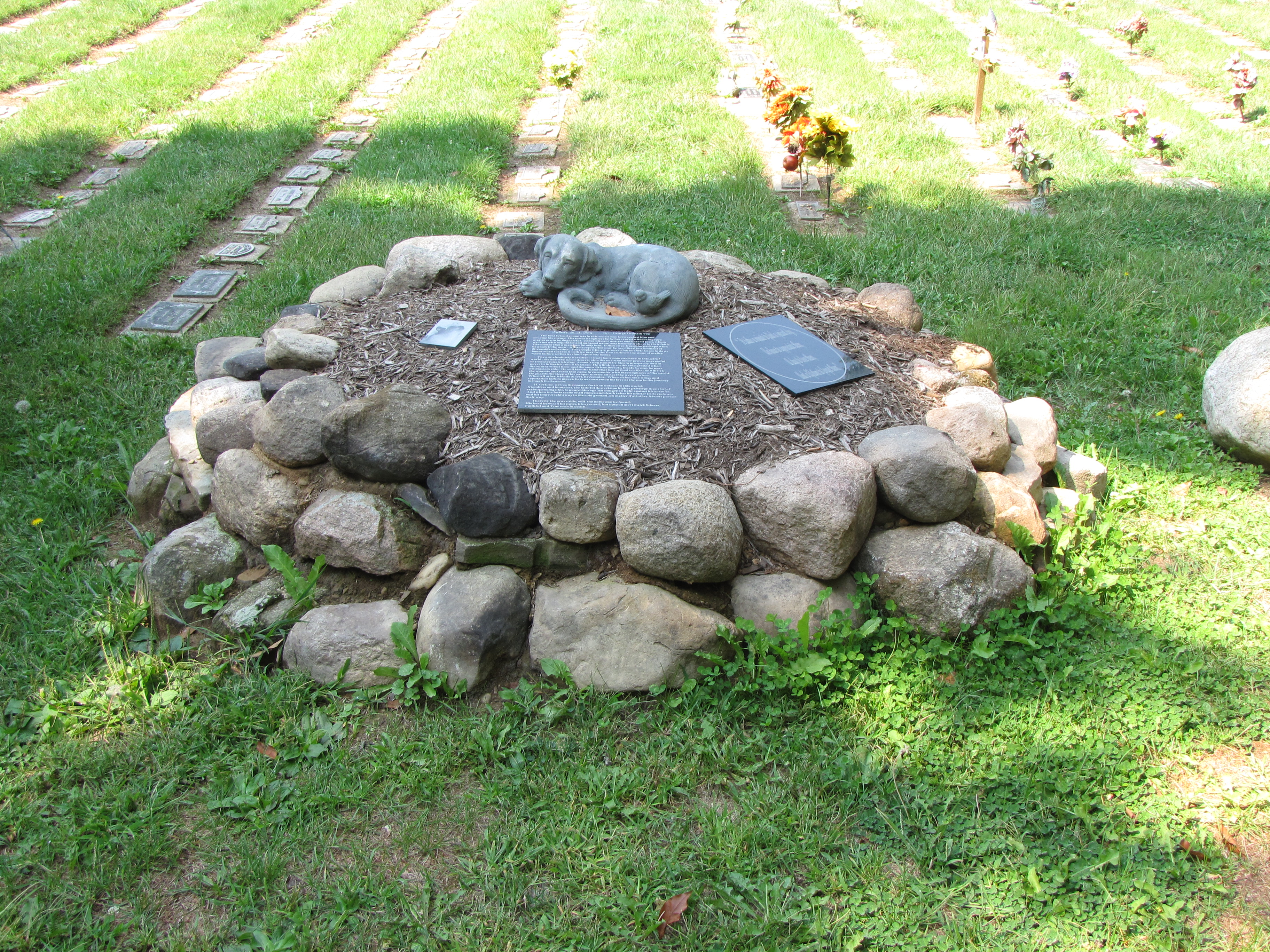
Hearthside Rest Pet Cemetery, Erie, Pennsylvania

According to Keister, this category of cemeteries includes family cemeteries, as well as, cemeteries that are dedicated to members of secret societies. Some of these would include Masonic, Odd Fellow, and Knights of Pythias cemeteries.  This also includes pet cemeteries, which were established in the United States in the late 19th Century.  In 1896, Veterinarian Dr. Samuel Johnson offered to let his friend bury his beloved dog in his apple orchard. Today more than 70,000 pets are buried in what is now the Hartsdale Canine Cemetery, Hartsdale, New York, which became the first and oldest pet cemetery.  Since that cemetery was founded others have dotted the countryside.

Military Cemeteries

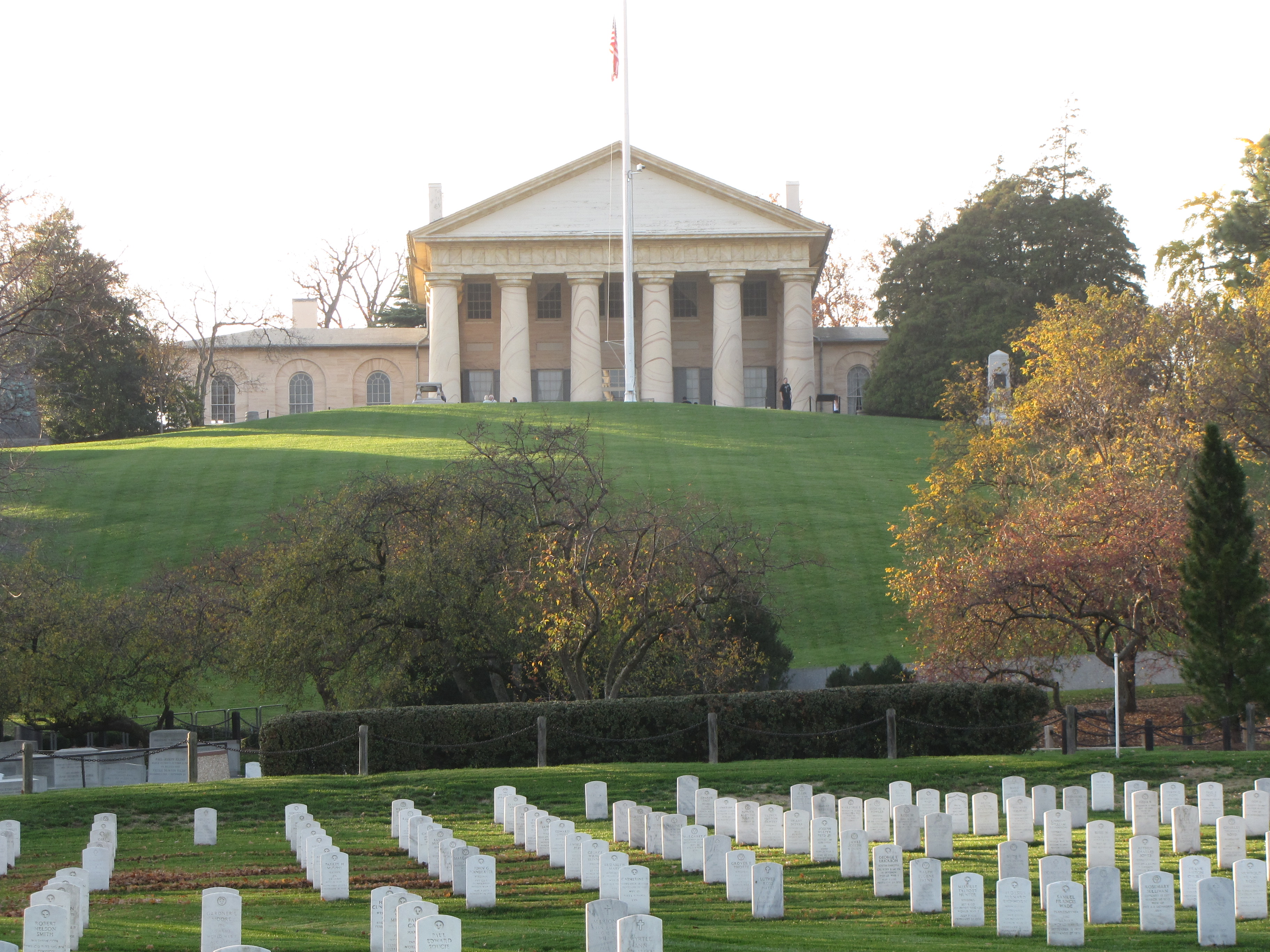
Arlington National Cemetery, Arlington, Virginia

On July 17, 1862, during the Civil War, Congress passed an act that gave the president the power “to purchase cemetery grounds and cause them to be securely enclosed, to be used as a national cemetery for the soldiers who shall die in the service of the country.” That year 14 cemeteries were established:

  • Alexandria National Cemetery, Alexandria, Virginia
  • Annapolis National Cemetery, Annapolis, Maryland
  • Antietam National Cemetery, Sharpsburg, Maryland
  • Camp Butler National Cemetery, Springfield, Illinois
  • Cypress Hills National Cemetery, Brooklyn, New York
  • Danville National Cemetery, Danville, Kentucky
  • Fort Leavenworth National Cemetery, Ft. Leavenworth, Kansas
  • Fort Scott National Cemetery, Fort Scott, Kansas
  • Keokuk National Cemetery, Keokuk, Iowa
  • Loudon Park National Cemetery, Baltimore, Maryland
  • Mill Springs National Cemetery, Nancy, Kentucky
  • New Albany National Cemetery, New Albany, Indiana
  • Philadelphia National Cemetery, Philadelphia, Pennsylvania
  • Soldier’s Home National Cemetery, Washington, D.C.

There are now 146 National Cemeteries in the United States, the most famous being Arlington National Cemetery in Arlington, Virginia, which was created on the grounds of General Robert E. Lee’s ancestral home.

The gravestones found in National Cemeteries are overwhelmingly the segmented-top white marble tablet. These gravestones are 42 inches tall, 4 inches thick, and 13 inches wide. In an article written by Edwin Dethlefsen and Kenneth Jensen, “Social Commentary from the Cemetery”, published in Natural History, June/July 1977, Volume 86, they write, “Another type of gravestone is that provided for veterans by the United States government. This takes the form of a simple granite, marble or bronze tablet and is a specific indicator of what we know to be an important aspect of culture in America—the increasing paternalism of government”.

Posted in Uncategorized | Leave a comment