
HOMER DUANE
Son of
J. & C. CORSAW
BORN
… 1846
IN THE
25th Year of His Age
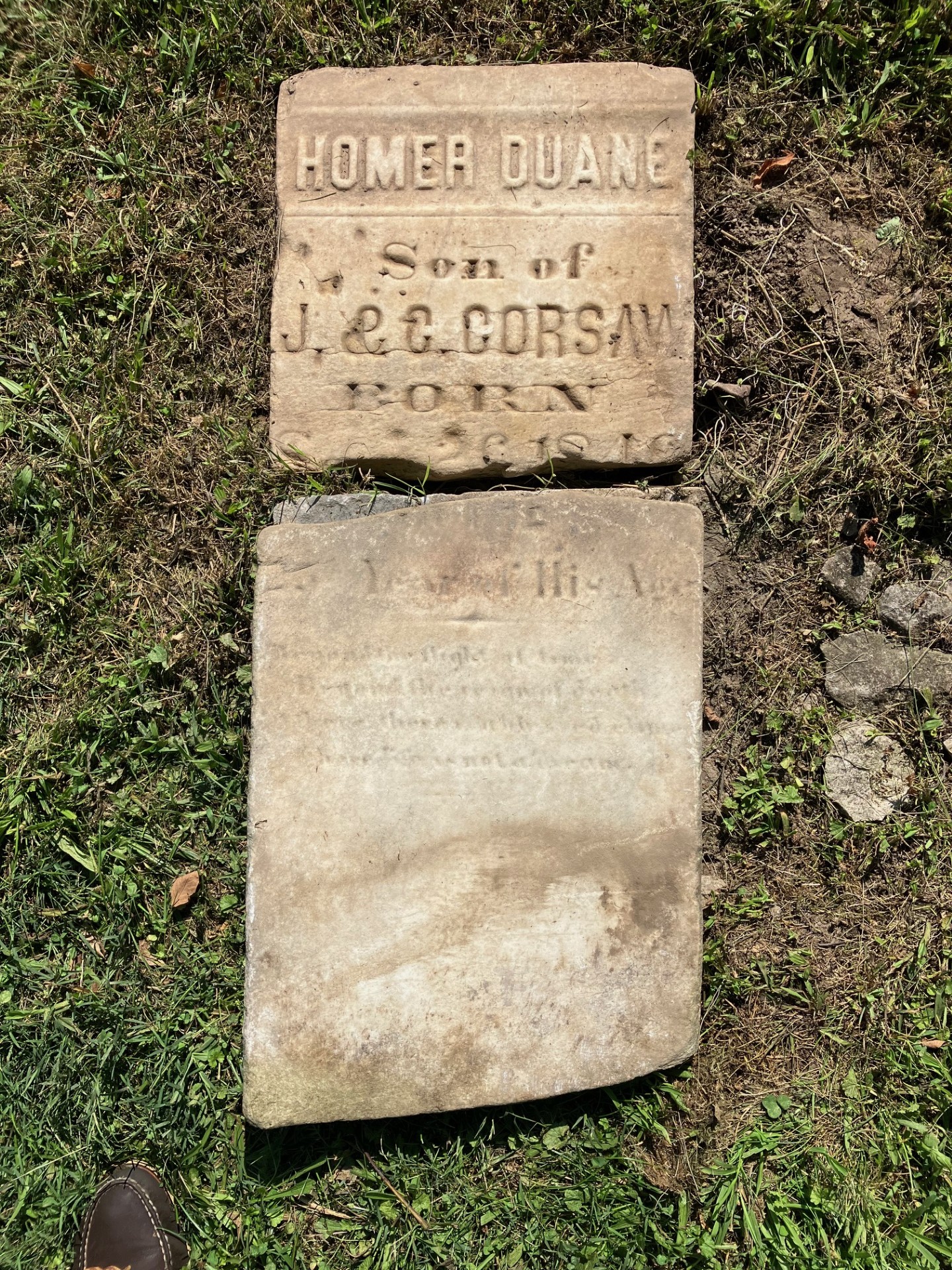
The Rose Hill Cemetery in Bloomington, Indiana, is conducting a survey of the oldest section of the cemetery—gravestone by gravestone. Volunteers log into a database and record names and dates on the markers, and after fixing a GPS location, the gravestone is photographed and uploaded into the database. Then each marker is assessed for the sturdiness of the structure and the condition of the surface for future repairs and cleaning.
As one of the volunteers I have spent hours working on the survey. Today I came across one of the gravestones that had been broken into two pieces. Unfortunately, one of the breaks cuts through the deceased’s death date. In addition, the epitaph is very eroded and was a challenge trying to figure out the lines of the epitaph. I spent quite some time trying to figure out the faded poetry—and then I had it:
Beyond the flight of time,
Beyond the reign of death,
There surely is some blessed clime,
Where life is not a breath
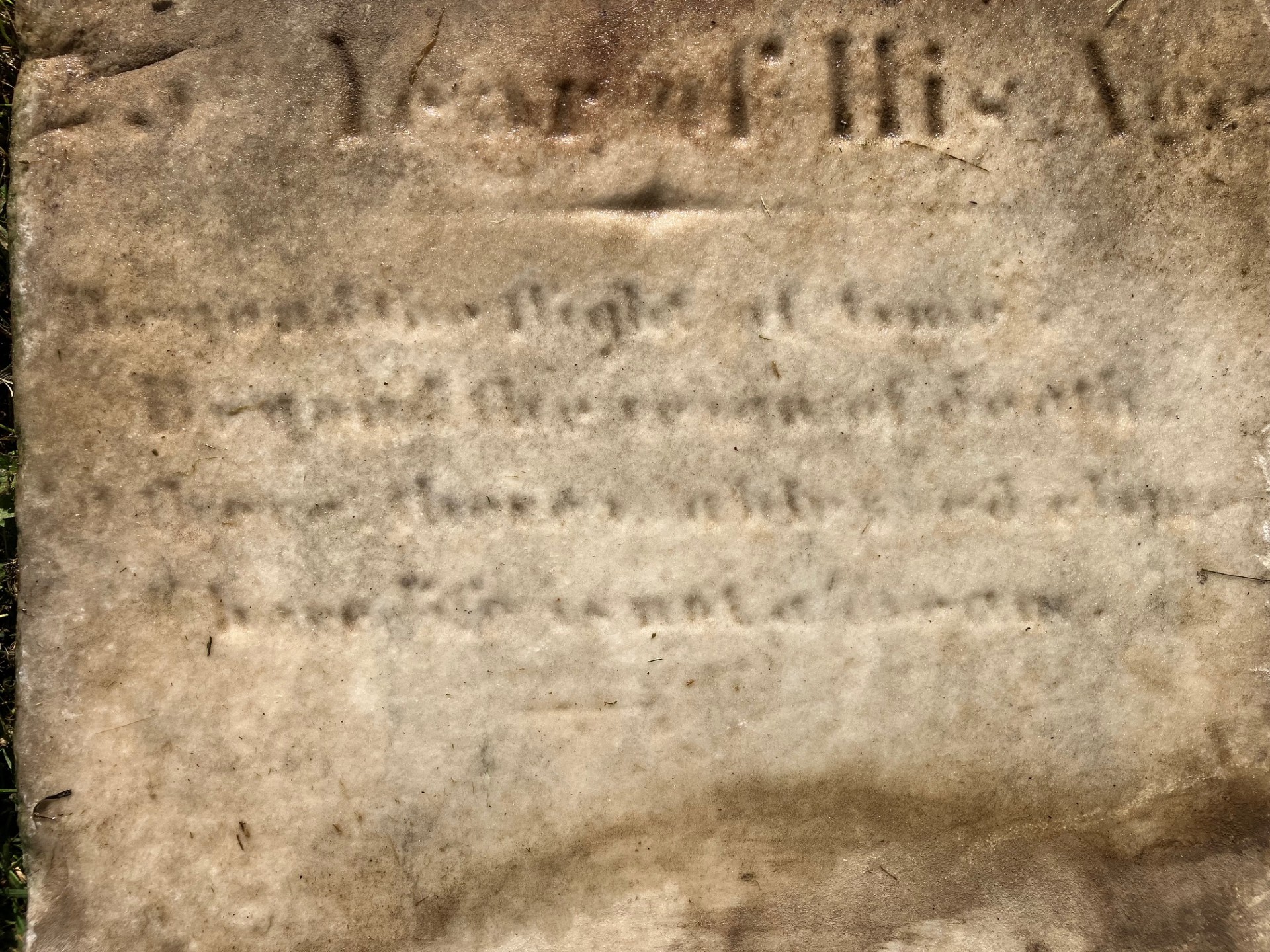
After some online searching, I discovered (thank goodness for the Internet) that the four lines that form Homer Duane Corsaw’s epitaph are four lines from the second stanza of the poem, “Friend after friend departs.” The poem was written by the Scottish poet and hymnwriter James Montgomery and was first published in 1867. Those four lines form an appropriate epitaph as they offer a reflection of the loss of a friend and the grief that follows. The full poem expands on that sentiment of the loss of a friend and the hope of reunion.
Friend after friend departs:
Who hath not lost a friend?
There is no union here of hearts,
That finds not here an end:
Were this frail world our only rest,
Living or dying, none were blest.
Beyond the flight of time,
Beyond the reign of death,
There surely is some blessed clime,
Where life is not a breath,
Nor life’s affections, transient fire,
Whose sparks fly upward to expire.
There is a world above,
Where parting is unknown;
A whole eternity of love
Formed for the good alone;
And faith beholds the dying here
Translated to that glorious sphere.
Thus star by star declines,
Till all are passed away;
As morning high and higher shines
To pure and perfect day;
Nor sink those stars in empty night,
But hide themselves in heaven’s own light.


