
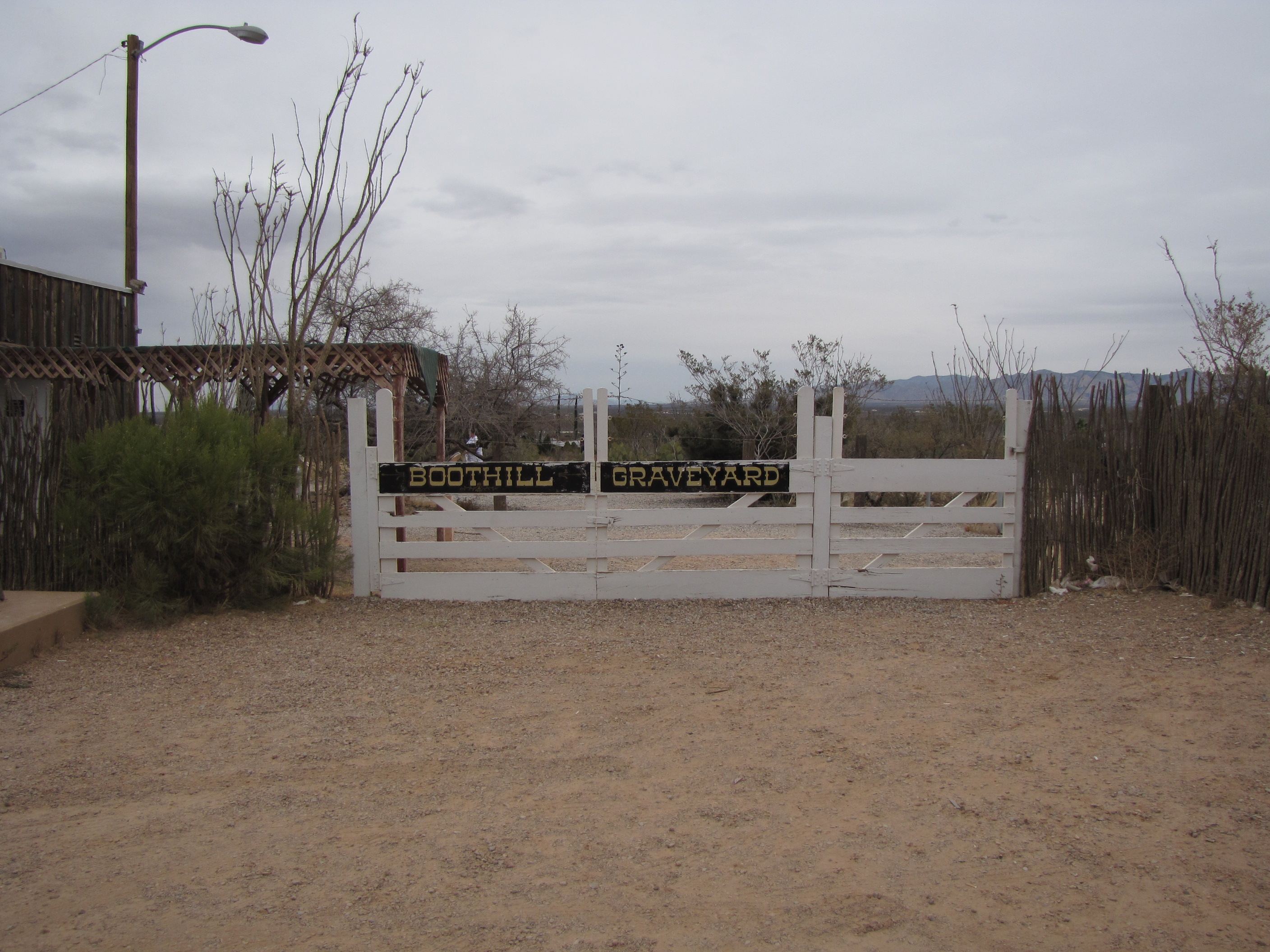
The dusty, rock-laden graveyard in Tombstone, Arizona, was originally called the Tombstone Cemetery—not very creative but accurate and to the point. It was only “active” for five years from 1879 to 1884 and contains about 270 burials. When the Tombstone Cemetery closed burials moved to the newly opened cemetery on Allen Street.
After decades of neglect, Arlington Gardiner, a town booster and secretary of the Tombstone Commercial Club, coaxed a Boy Scout troop to clean up the city cemetery in 1923. Every attempt was made to identify as many graves as possible, as many of the markers were made of wood and in a sorry state of decay. Relatives were contacted and city officials poured over cemetery records to accurately mark the graves of the people buried inside the cemetery.
Though not accurate, the cemetery had gained a reputation over the years as a place where only cowboys, villains, gamblers, and gunslingers were buried, in part because the three men killed in the shootout at the OK Corral are buried there as well as several men who were hanged back of the courthouse. But that reputation helped the cemetery get a “re-boot” of sorts. The cemetery was renamed Boothill, likely after the infamous Dodge City cemetery of the same name, (spelled Boot Hill) after Tombstone’s cemetery was popularized in an article in the Saturday Evening Post by writer Frederick Beckdolt in 1919.
Gradually a tourist trade of sorts began to develop. The notoriety in magazine articles and dime novels helped gin up interest in not only Tombstone but Boothill. This is where myth and marketing combine. Several markers carry epitaphs that are clever and helped build up the reputation of the Old West gunslingers with quick trigger fingers:
HERE LIES
Lester Moore
FOUR SLUGS
FROM A 44
NO LES
NO MORE
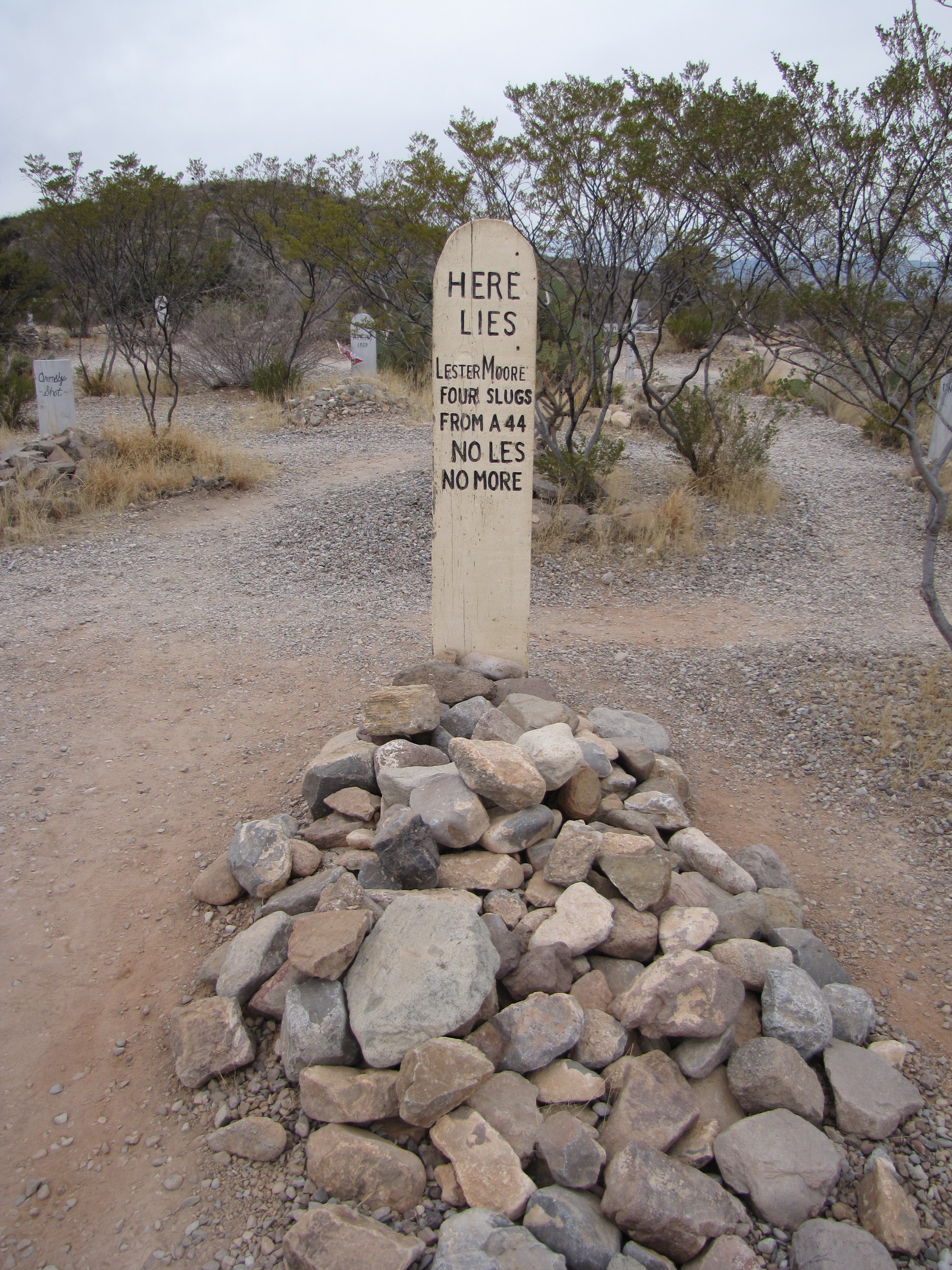
Moore, as the claim goes, worked as a Wells Fargo Station Agent in the tiny town of Naco, Arizona, a little more than 30 miles from Tombstone sitting directly on the U. S.—Mexico border. A dustup occurred when a dissatisfied customer, Hank Dustan, picked up a package. Unfortunately, the packaged arrived at the Wells Fargo Station mangled. Dustan was disgusted by the state of his package and complained loudly. The argument with Moore turned heated very quickly and both men reached for their guns and shots rang out. When the smoke cleared Dustan was killed with a shot to his chest and Moore was mortally wounded, too. Moore’s body was taken to Tombstone for burial at the Boot Hill Cemetery where some wag painted his grave marker with what is perhaps the most famous epitaph in the Old West. The gunslinger’s grave marker “poetry” reads: “HERE LIES Lester Moore, FOUR SLUGS FROM A 44, NO LES, NO MORE.”
HERE
LIES
GEORGE
JOHNSON
HANGED BY
MISTAKE
1882
HE WAS RIGHT
WE WAS WRONG
BUT WE STRUNG HIM UP
NOW HE’S GONE
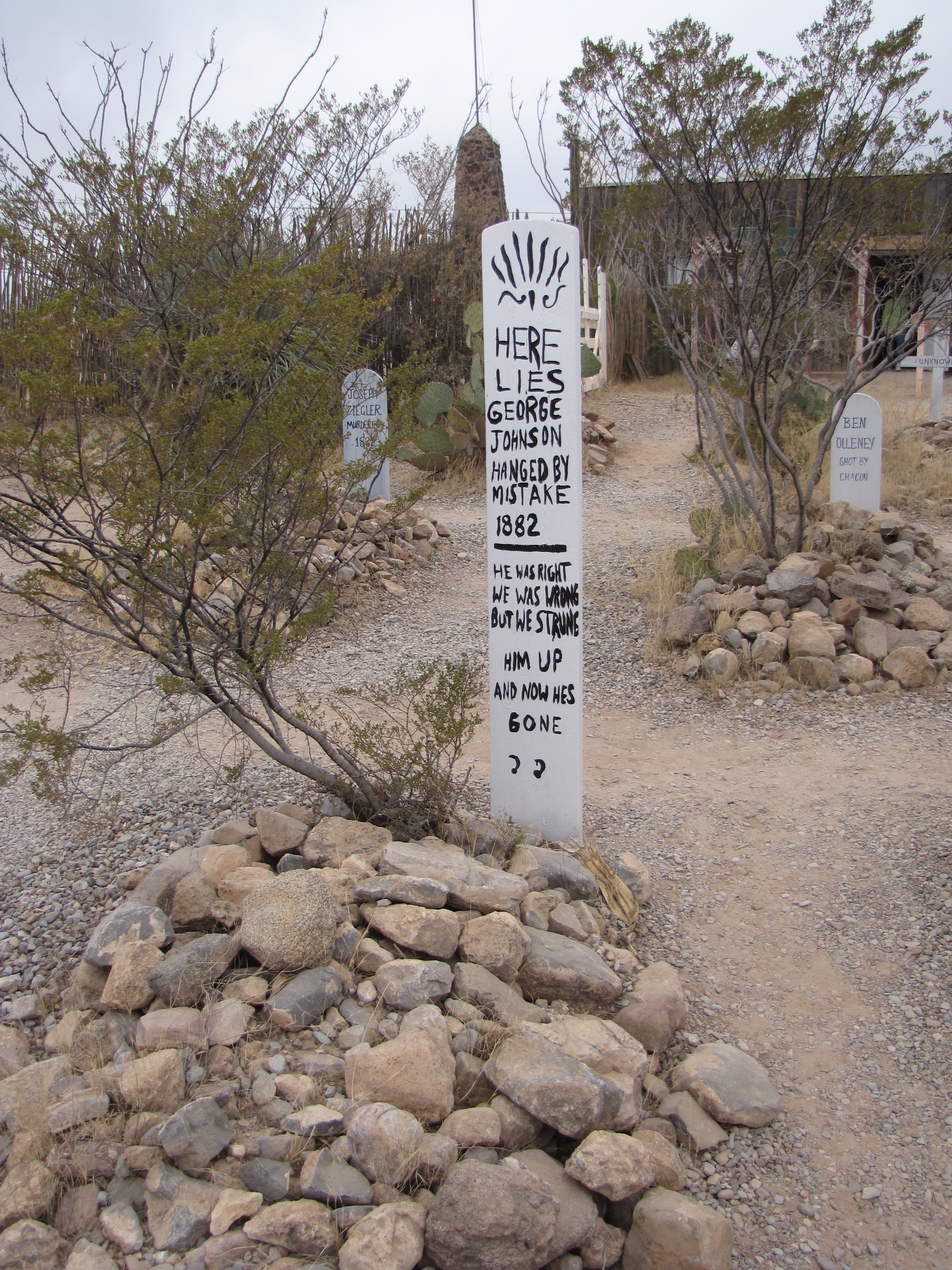
Then there is the story of George Johnson who reportedly purchased a horse that had been stolen. When Johnson was found with the horse he was accused of horse theft, a crime punishable by hanging in the Old West. He was hanged despite making his case that he had not stolen the horse but instead had purchased it. According the the epitaph, mob rule won out. This epitaph is more myth and marketing than true. There is no record of a George Johnson being hanged in Tombstone in the 1880s.
But the myth mixed with a little frontier poetry was great marketing and the tourists still come.


