
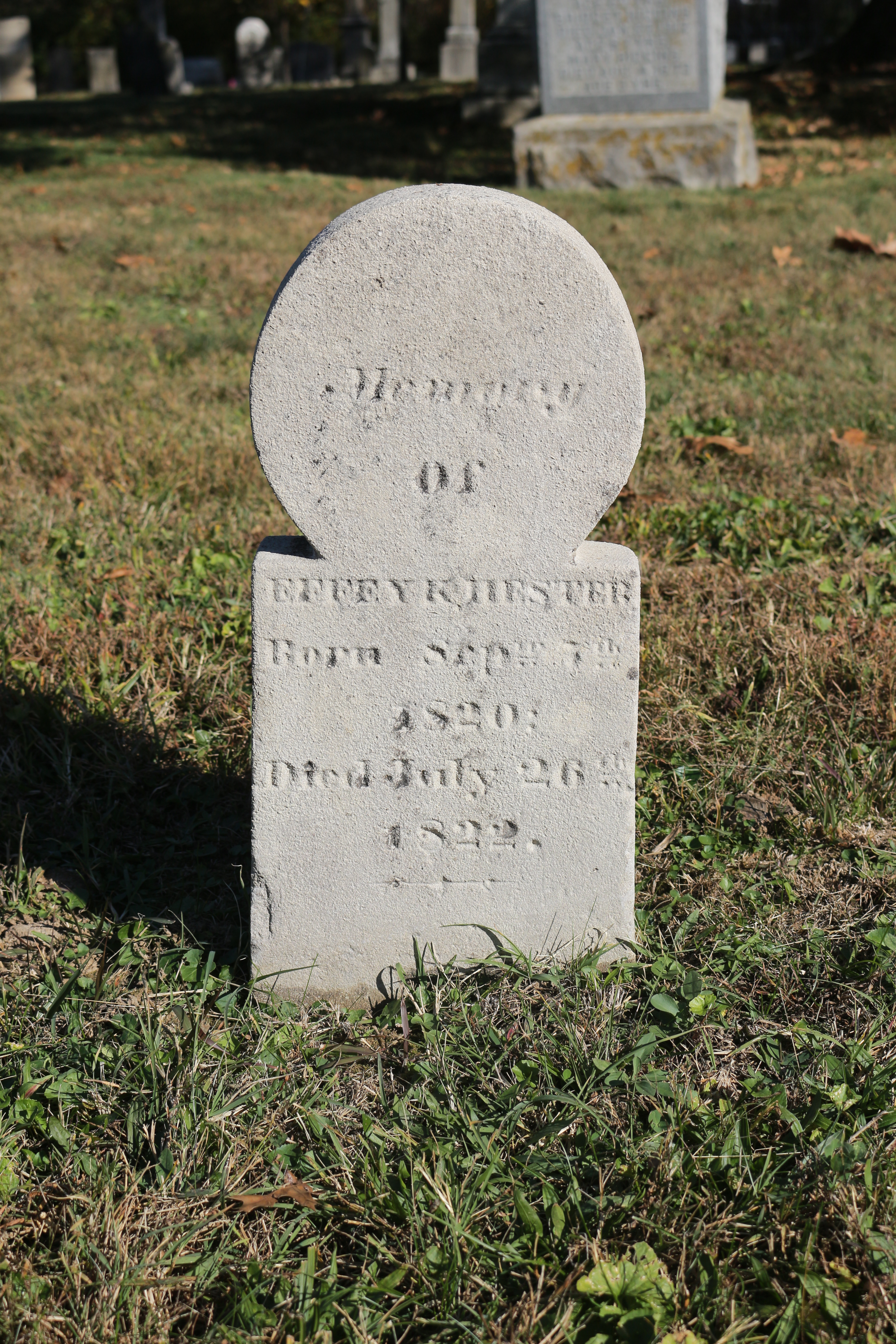
In the Markers XXV article, “Scottish Discoid Gravemarkers: The Origins and Classification of a Rare Type of Mortuary Artifact”* author George Thomson discusses an unusual gravestone form—the discoid. It is unusual because it doesn’t occur very often. However, examples can be found in Europe in places such as the south of France, the Basque region of northern Spain, Portugal, Bulgaria, and northwestern Ireland. In the United States discoid markers can be found in southeastern Connecticut, Illinois, North and South Carolina, Virginia, and in variant forms in Arkansas, Kentucky, Missouri, New Jersey, Tennessee, and Indiana.
Of the tens of thousands of gravemarkers in the Rose Hill Cemetery in Bloomington, Monroe County, Indiana only six such discoid gravemarkers can be found. Five of the discoid gravemarkers belong to one family group—the Hesters—with one other gravemarker outside that family grouping. All six are in the oldest section of the cemetery and their deaths are dated between 1822 and 1841.
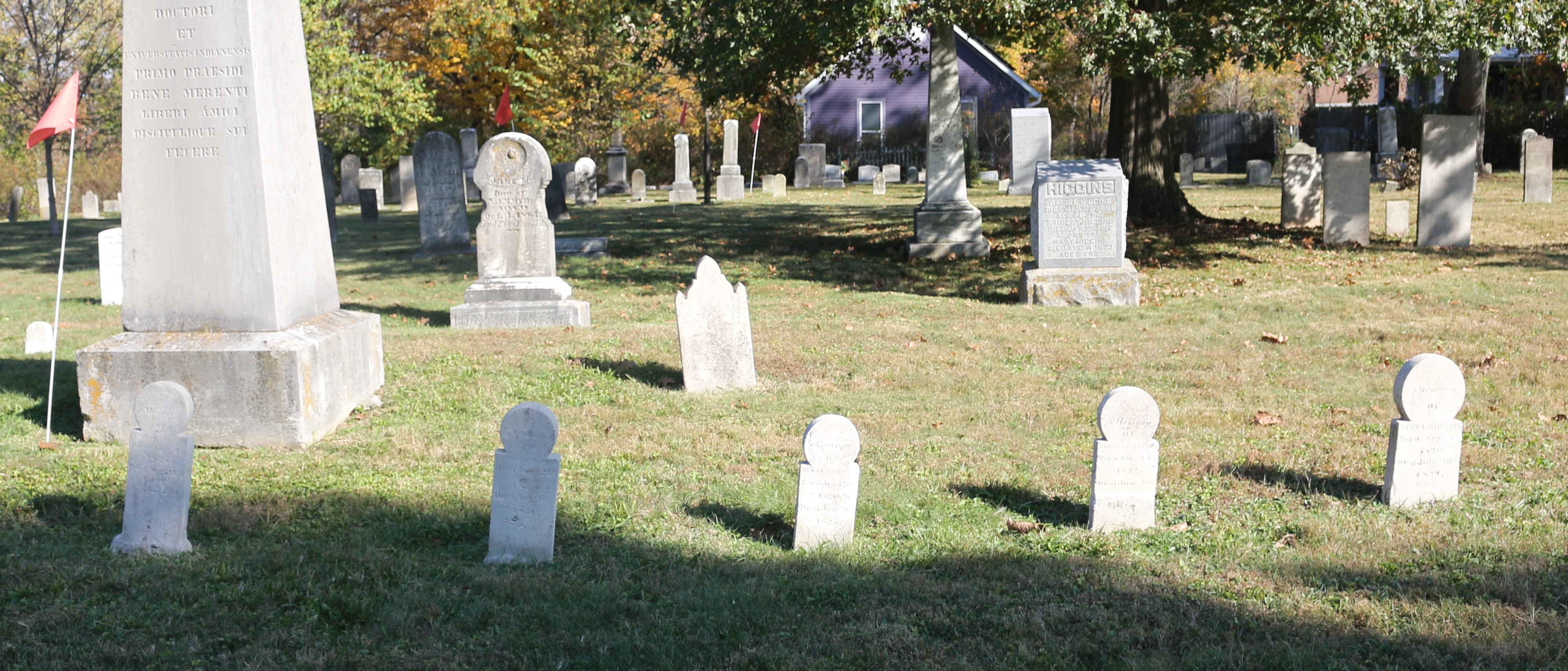
The discoid marker is described as, “usually in the form of a disk surmounting a short shaft, sometimes decorated with iconographic imagery, including mortality symbols, flowers, circles, and more rarely human heads, animals, astronomical signs, arrows, interweaving, as well as many design that are anomalous.” There are variations which the author details including the Disk and Shaft(the discoid gravemarkers in the Rose Hill Cemetery would fall under this category), Necked, Double Discoid, and Ovoid.
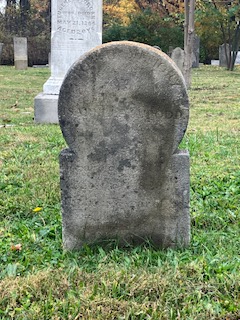
Again, this gravemarker in its various forms is also unusual because its meaning is a mystery. While the shape of the gravemarker might look like a head atop shoulders and a torso, there is no conclusive evidence that this form is anthropomorphic. The meaning of this form has been and is still debated. Some believe that the form may have “associations with sun worship…but this concept is not universally accepted.” Others have suggested that “the discoid 19th Century head and footboards and some headstones in Noth Carolina, some of which even have facial features, must surely be anthropomorphic, perhaps even totemic in concept.” Still, there is no scholarly agreement.
What do you see when you look at them?
*Markers XXV, Annual Journal of the Association for Gravestone Studies edited by Richard E. Meyer & Gary L. Collins, AGS, Greenfield, Massachusetts, pages 45-65.


