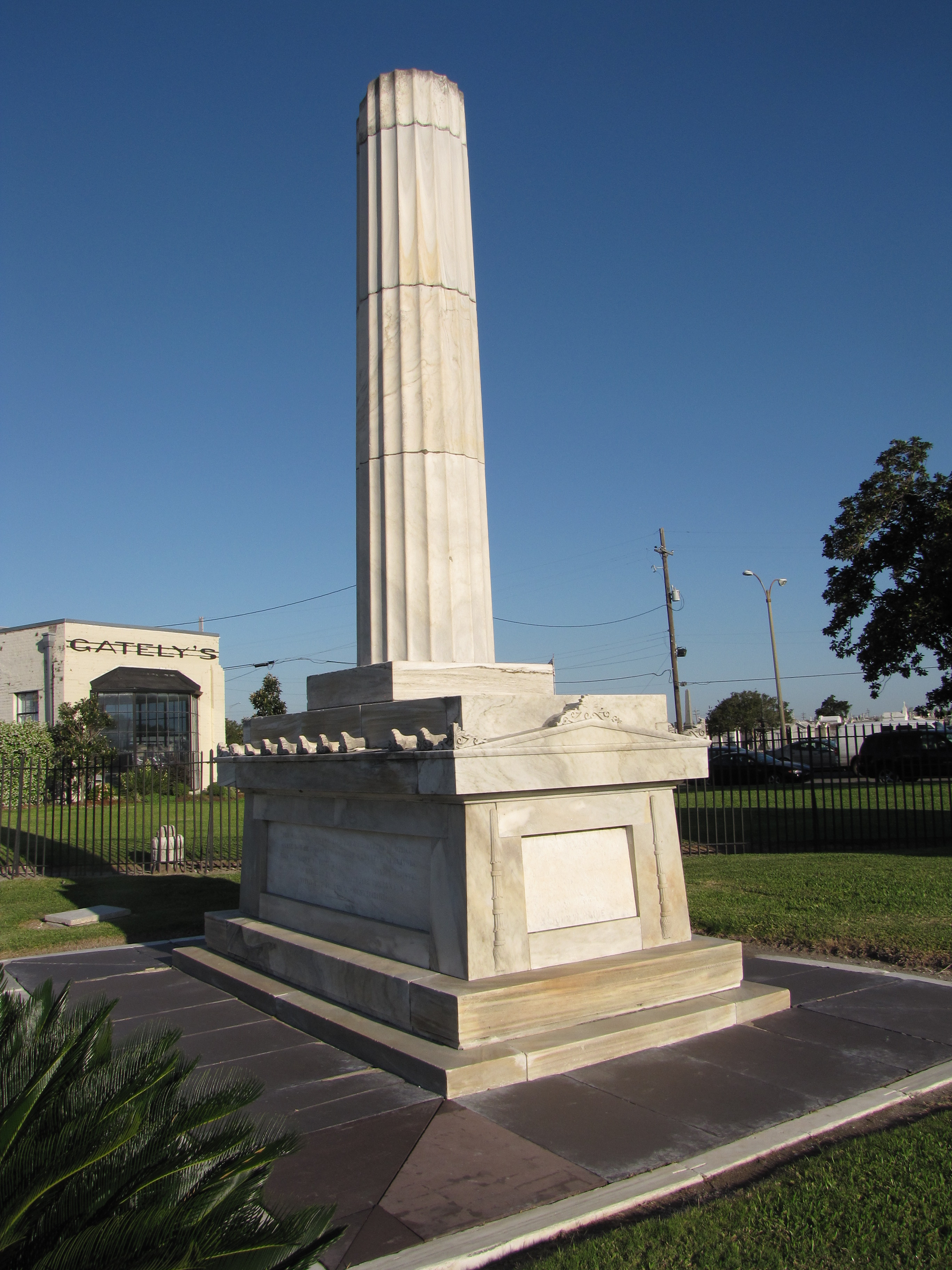
The Fallen Firefighter


Cypress Grove Cemetery, New Orleans, Louisiana

Firefighters have had their bravery memorialized in stone by grateful citizens that have taken many forms.  In the Cypress Grove Cemetery, sometimes known as the fireman’s cemetery because it was founded with funds from the Fireman’s Charitable and Benevolent Association, the first monument erected in the cemetery was built and dedicated to a fallen firefighter.

Designed by J.N. B. Pouilly with a broken column, representing a life cut short, as the main feature, towers over the base of the tomb.  The monument is a classical design, with acanthus and inverted torches decorating the base.

The monument is dedicated to Irad Ferry, who at 36, was battling a fire on New Year’s Day on Camp Street.  During the firefight, Ferry was mortally wounded and died three days later.  He was first laid to rest at the Girod Street Cemetery but his remains were removed to Cypress Cemetery after it was opened.  One of the panels in the monument displays the bas-relief of a pumper of the era.

Dedicated to the memory of

Irad Ferry

Born in Wilton, Connecticut

13 December 1801

Died 4th January 1837

The sacrifice of your life for the safety of others

shall not be forgotten by your grateful survivors.

This monument to perpetuate the glory of your disinter-

estedness is erected by Mississippi Fire Company No. 2

With the 1st and 2nd Municipalities.
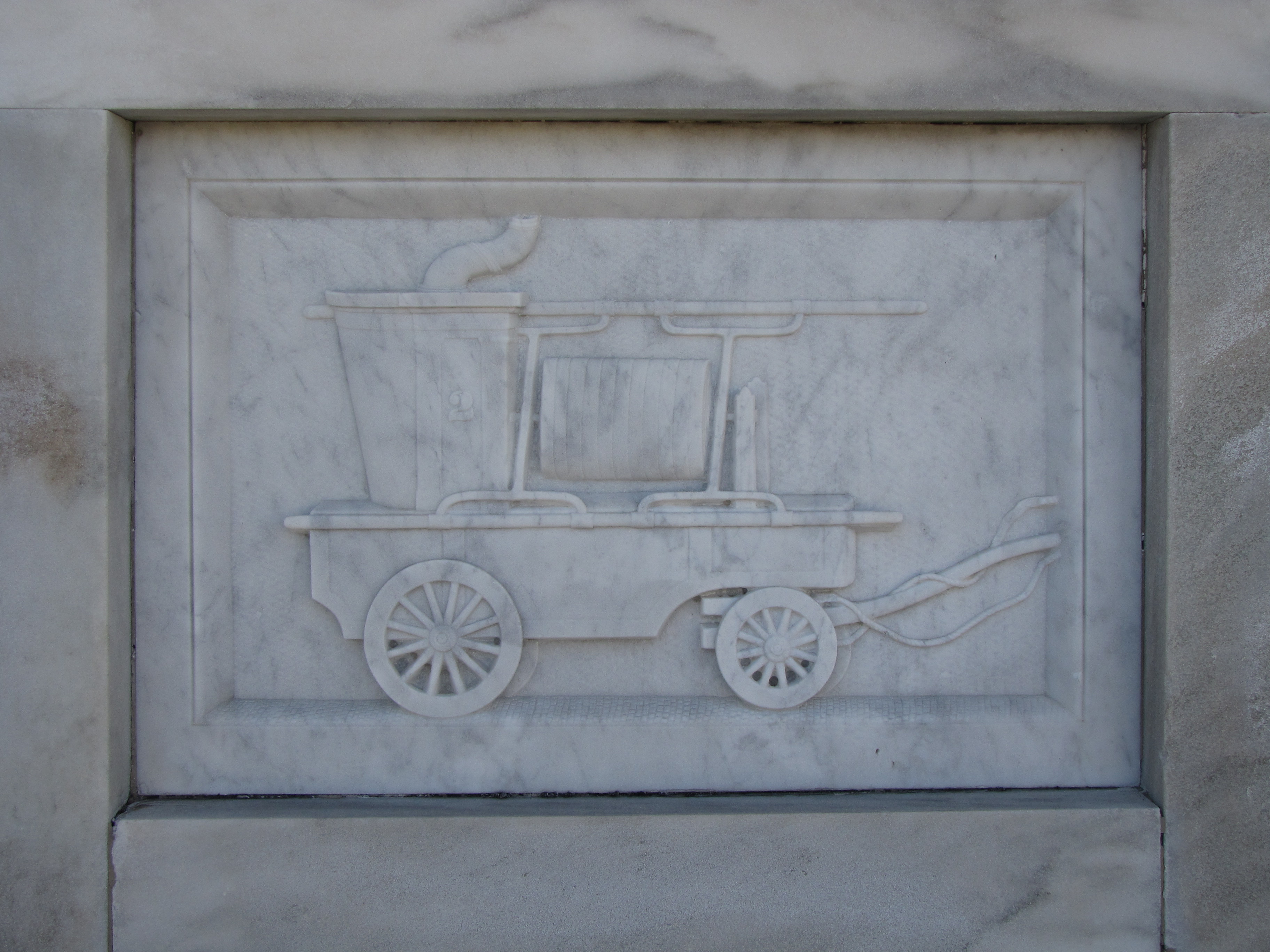
Detail from the Irad Ferry Monument of an early pumper

Posted in Uncategorized | Leave a comment

Home in Heaven

Walnut Grove Cemetery, rural Greene County, Indiana

The epitaph for the 12-year girl tells of the family’s loss and the possible suffering of the little child before she passed away.

A loved one has gone from

our circle. On earth we shall

meet her no more. She has gone

to her home in Heaven. And

all her afflictions are o-er.

Posted in Uncategorized | Leave a comment

First Responders

Forest Lawn Cemetery, Buffalo, New York

There are monuments in cemeteries all across America, like this one in the Forest Lawn Cemetery at Buffalo, New York, that stand as a testament to the bravery of firefighters, police officers, and first responders who have fallen in the line of duty.

On 911, America was attacked by al-Qaeda in a series of suicide airplane attacks–one flew into the Pentagon at Arlington, Virginia, one flight crashed near Shanksville, Pennsylvania, and two flights crashed into the two towers of the World Trade Center.  2,977 Americans were killed and over 6,000 were injured.  Among the dead were 343 New York City firefighters, 23 police officers, 37 Port Authority police officers, and eight EMTs.

Posted in Uncategorized | Leave a comment

The Obelisk

Somerset Cemetery, Somerset, Ohio

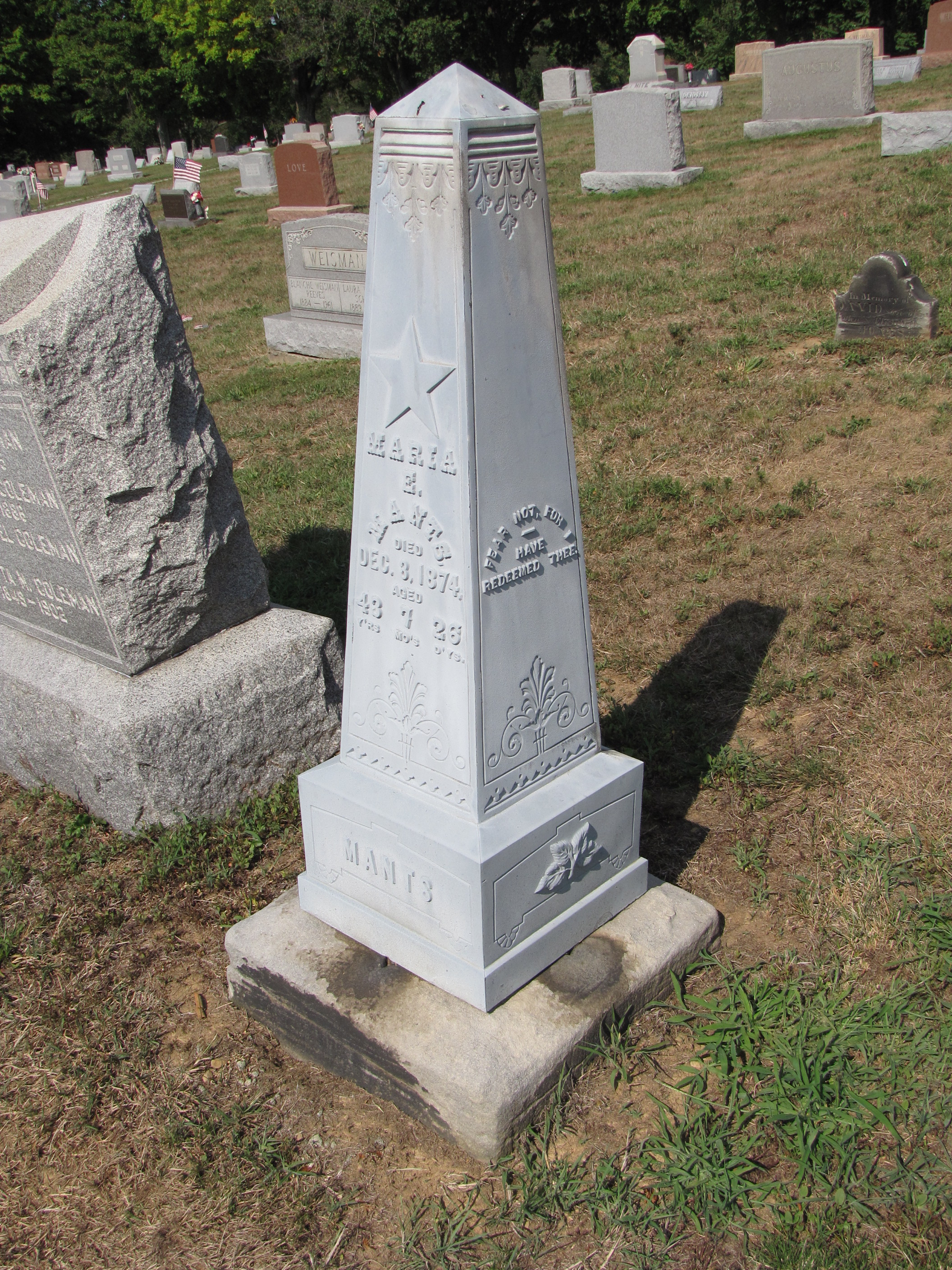
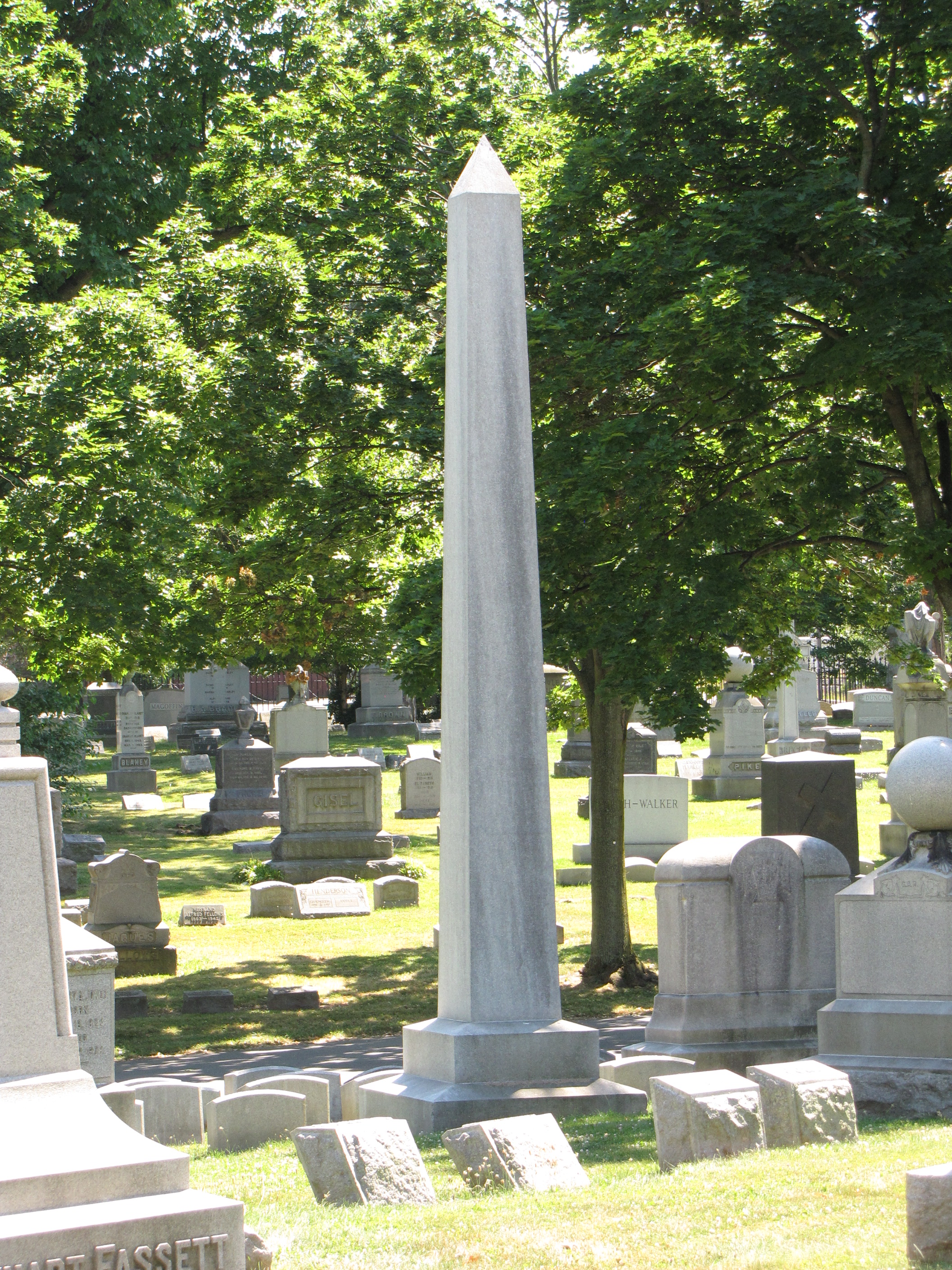
After the French and British occupations of Egypt, there was a renewed interest in Egyptian architecture and symbolism in America, including the obelisk, those tall thin four-sided columns that tapered upward and then end in a pyramid at the top.  The obelisk is a ubiquitous gravestone shape found in American graveyards.  They range from short obelisks like the zinc-cast obelisk in the Somerset Cemetery at Somerset, Ohio, which is only a few feet tall to soaring monuments upwards of 30 to 40 feet like the obelisk in the Forest Lawn Cemetery at Buffalo, New York, pictured below.

The obelisk is said to represent a single ray of sunlight, petrified from sunlight into stone.  It was thought that the Egyptian sung god Ra lived within the obelisks.  These towering monuments were often placed flanking the entrance to temples.

The most famous obelisk and the tallest in the world (standing at 555 feet) is the Washington Monument in Washington, D.C. built to honor George Washington.

Forest Lawn Cemetery, Buffalo, New York

Posted in Uncategorized | 2 Comments

Grape clusters and leaves

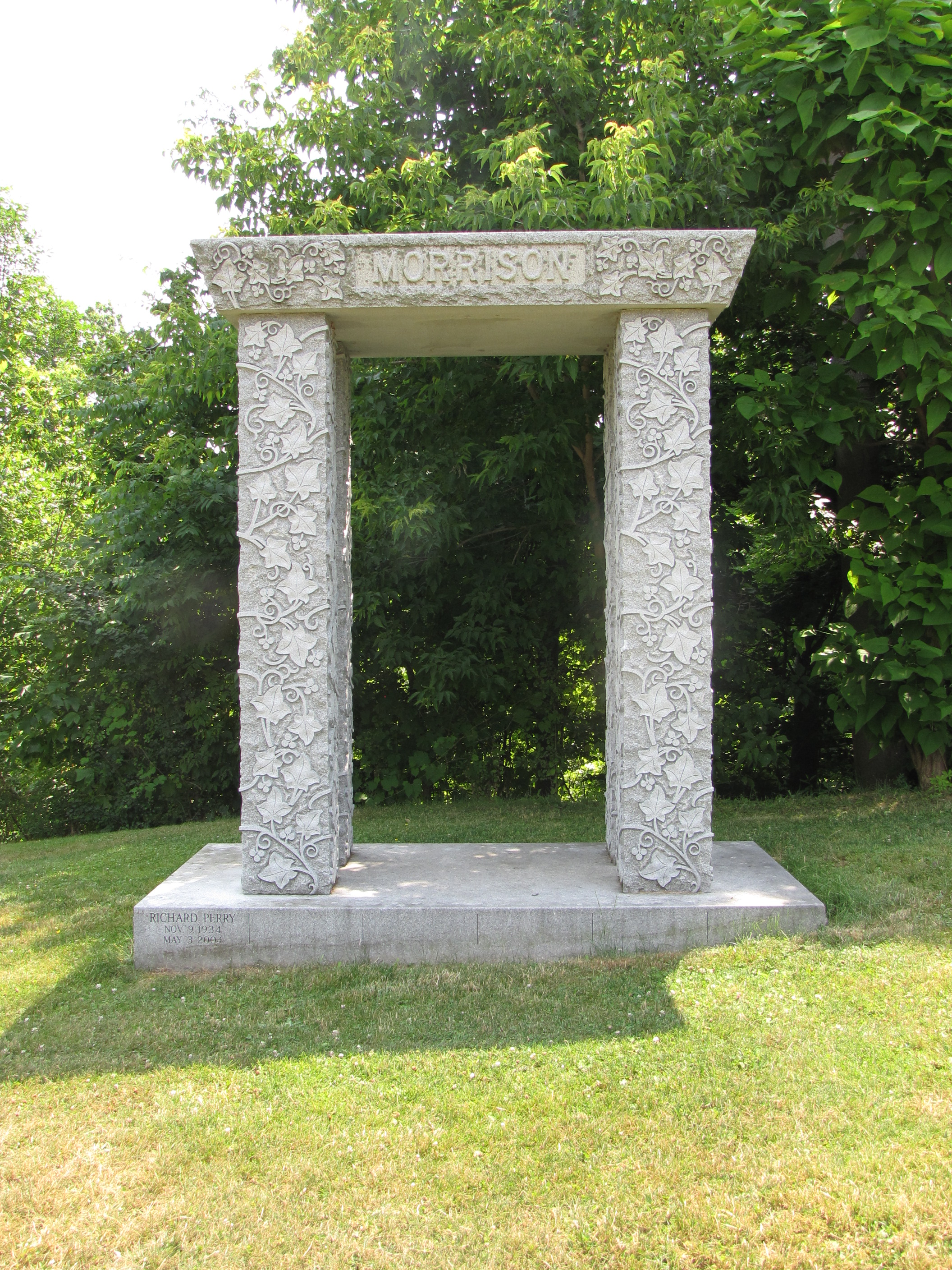
Forest Lawn Cemetery, Buffalo, New York

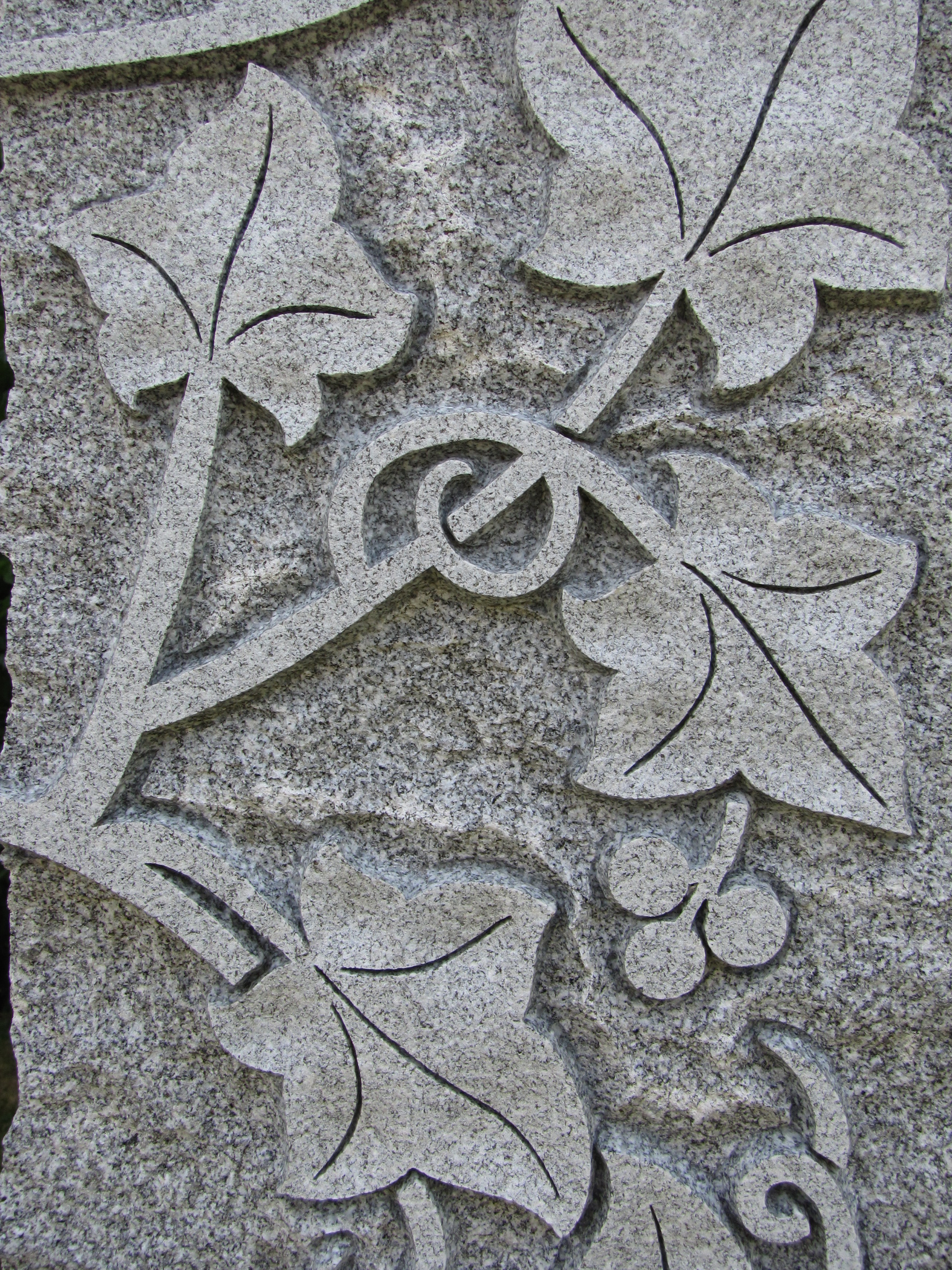
The Richard Perry Morrison Monument in the Forest Lawn Cemetery at Buffalo, New York, above is decorated with grape clusters and leaves.  In Christianity the Eucharist, which is part of a religious ceremony also called Holy Communion, is a time when Christ’s followers are to do as Jesus instructed at the Last Supper.  Jesus broke bread and said, “This is my body” and drank wine and said, “This is my blood”.  The grape in cemetery symbolism represents the blood of Christ.
Posted in Symbolism | 1 Comment

Weeping Willow

Somerset Cemetery, Somerset, Ohio

One of my favorite graveyard symbols is the willow.  Maybe because it is a little sentimental and hints at the human emotions felt during grief.  The willow motif represents what one might expect; sorrow and grief, it is after all a “weeping” williow.  One can almost imagine the pain and the sorrow that George Coolman felt when he lost his 18-year old bride, Mary Ann.  Surely, he wept.

Posted in Symbolism | Leave a comment

American Bronze Company Catalog

Forest Home Cemetery, Forest Park, Illinois

The Monumental Bronze Company of Bridgeport, Connecticut, produced cast zinc cemetery markers billed as “white bronze” beginning in the 1870s. The markers are distinguishable by their bluish-gray tint.

These grave markers came in a wide assortment of sizes and shapes and were somewhat like grave marker erector sets. The more elaborate markers had a shell of sorts and then various panels could be attached according to the tastes of the family ordering the grave marker. In this way, each marker could be “customized” to the tastes of the individual.

The Monumental Bronze Company of Bridgeport, Connecticut, set up their first subsidiary in Detroit, Michigan. Others followed in Philadelphia, New Orleans, St. Thomas, Ontario, Des Moines, and Chicago. The Chicago subsidiary was named the American Bronze Company.

Contrary to popular belief, the markers were not carried in the Sears Roebuck catalog. They were sold by enterprising salesmen who carried a catalog with them to show customers the many styles and price ranges of their product line. In many cemeteries you can find evidence of highly successful salesmen who sold a large number of the markers.

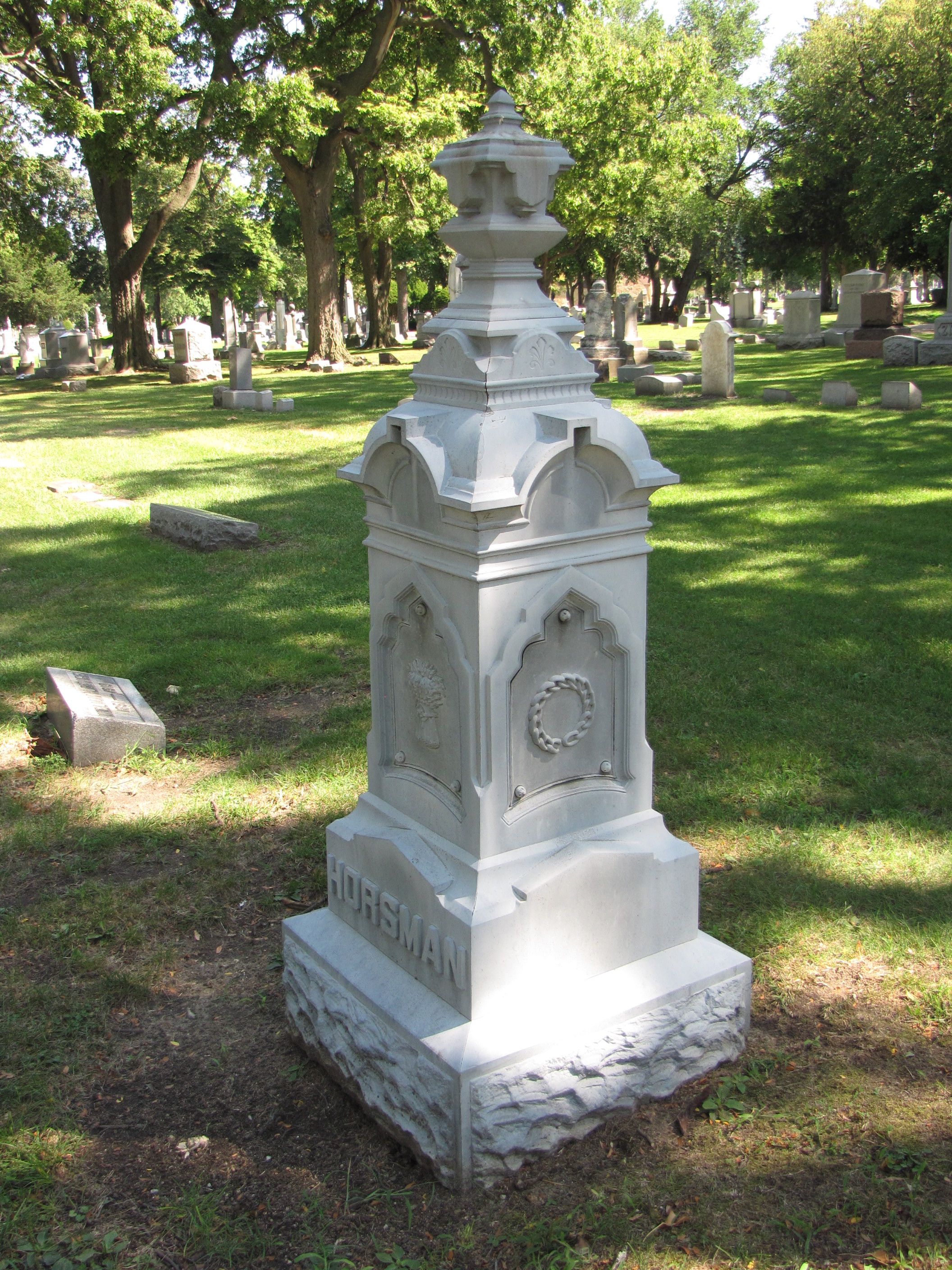
The Horseman monument was featured in an American Bronze Company catalog, the page is below.  Throughout the catalog various monuments were highlighted.

An American Bronze Monument catalog page picturing the Horesman Monument in the Forest Home Cemetery at Forest Park, Illinois

Posted in Materials | 3 Comments

Cherub and the Veil

Oakland Cemetery, Atlanta, Georgia

On this white-marble monument in the Oakland Cemetery at Atlanta, Georgia, memorializing the life of an infant boy just short of his second birthday, a Cherub lifts a drapery upward to reveal a coffin. The lifted curtain or drapery represents the passage from one realm to another; the veil that exists between the Earthly realm and the Heavenly one. The drapery represents the last partition between life and death.  The coffin is a mortality symbol to remind the viewer that life is short and that we will all soon die.

This motif also depicts the Victorian custom of the body laying in state in the family’s parlor. It was also customary that nearly everything in the parlor would have been draped in fringed and tasseled black cloth to express the family’s mourning. The draperies would have been kept in place for quite some time even after the body was removed to the grave. This would allow the family to continue to mourn and to express their sorrow.

HUGH

Son H.T. & J.V.D. Inman

Born Oct. 22, 1879

Died Oct. 11, 1881

Oakland Cemetery, Atlanta, Georgia

Posted in Angels | 1 Comment

Cherub

Oakland Cemetery, Atlanta, Georgia

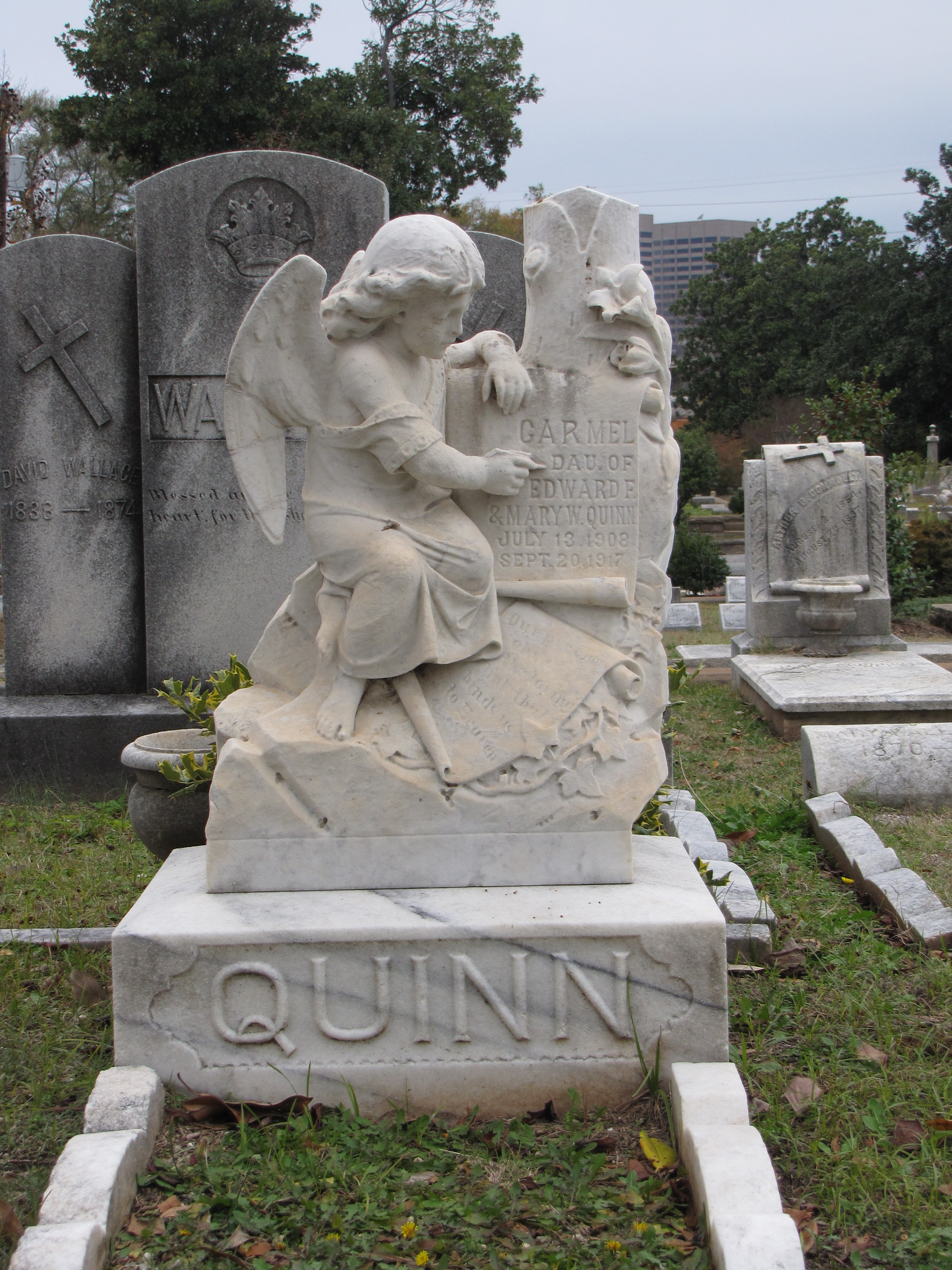
This white marble sculpture of a Cherub is poised to write in the Book of Life, represented here as a scroll attached to a tree stump.  The tree stump, which is not fully matured, symbolizes a life cut short.   The Cherub is holding a quill pen which has been broken from the gravestone.  In Judaism and Christianity, the names of the righteous were recorded in the Book of Life; they were assured entry into Heaven.

The Book is referenced many times in the Bible, including Revelation, Chapter 20:12: “And I saw the dead, small and great, stand before God: and the books were opened: and another book was opened, which is the book of life: and the dead were judged out of those things which were written in the books, according to their works.”

The monument marks the grave of a nine-year old girl:

Carmel

dau. of Edward F.

& Mary W. Quinn

July 13, 1908

Sept. 20, 1917

Posted in Angels | Leave a comment

Cherubim, part 2

Oakland Cemetery, Atlanta, Georgia

Cherubim are one of nine orders or choirs of angels which are organized into three spheres, with three choirs in each sphere.  According to Christian tradition, the first sphere, which is made up of the Seraphim, Cherubim, and the Thrones, are considered the closet to Heaven.  In Ezekiel 10:14, the Cherubim are described as having four likenesses or four faces, “And every one had four faces; the first face was the face of a cherub, and the second face was the face of a man, and the third the face of a lion, and the fourth the face of an eagle.”  Cherubim are most always depicted as chubby babies.

The Cherubim were to be guardian angels.  In two places in the Bible, there role is thus described, first as guardians of the gates at the Garden of Eden and then of the Ark of the Covenant:

Genesis 3:22-24,  [22]“And the LORD GOD said, Behold, the man is become as one of us, to know good and evil:  and now, lest he put forth his hand, and take also of the tree of life, and eat and live for ever; [23]Therefore the LORD GOD sent him forth from the garden of Eden, to till the ground from whence he was taken. [24]So he drove out the man; and he placed at the east of the garden of Eden Cherubims, and a flaming sword which turned every way, to keep the way of the tree of life.”

I Samuel 4;4, “So the people went to Shiloh, that they might bring from thence the ark of the covenant of the LORD of hosts, which dwelleth between the cherubims.”

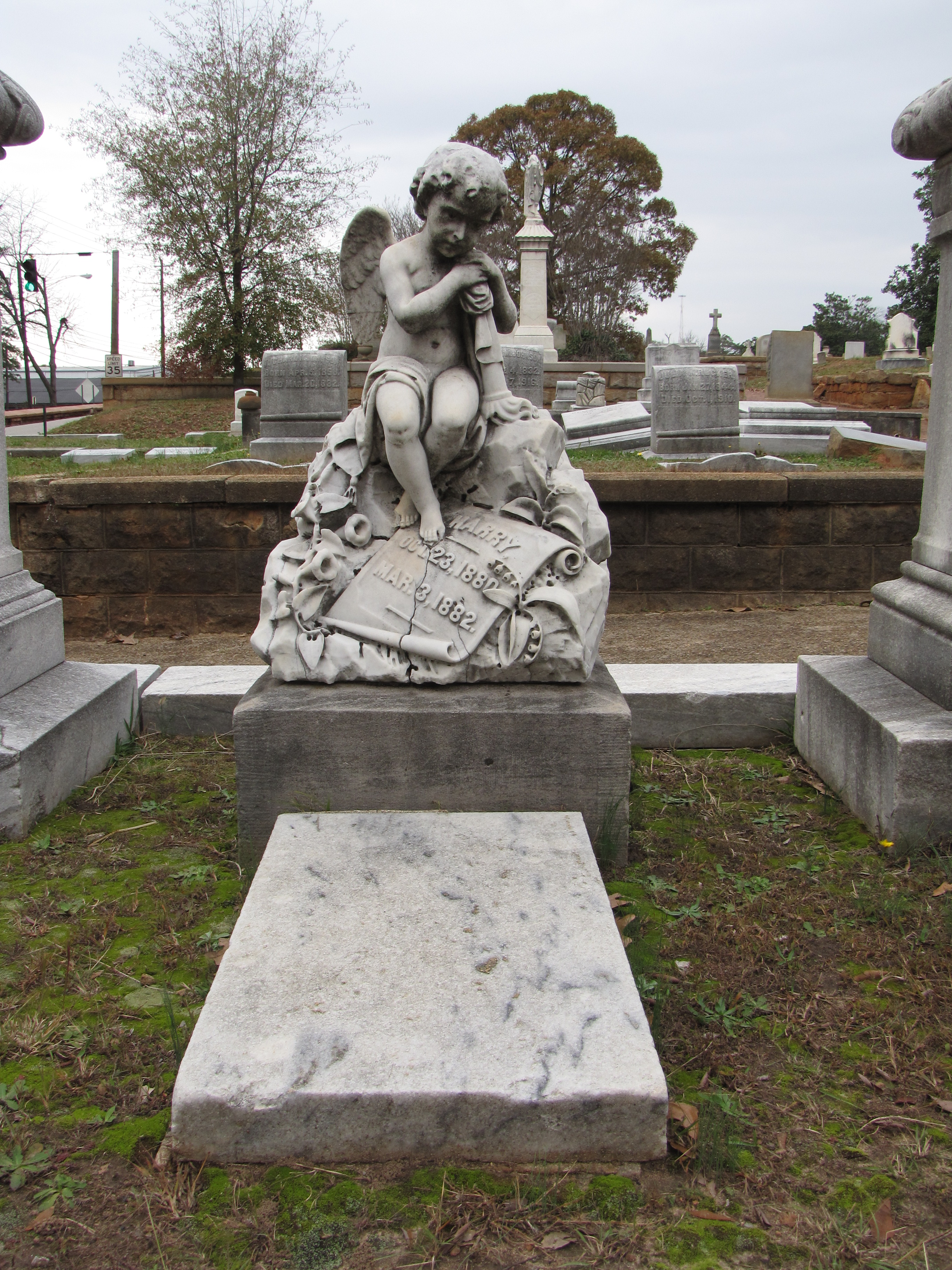
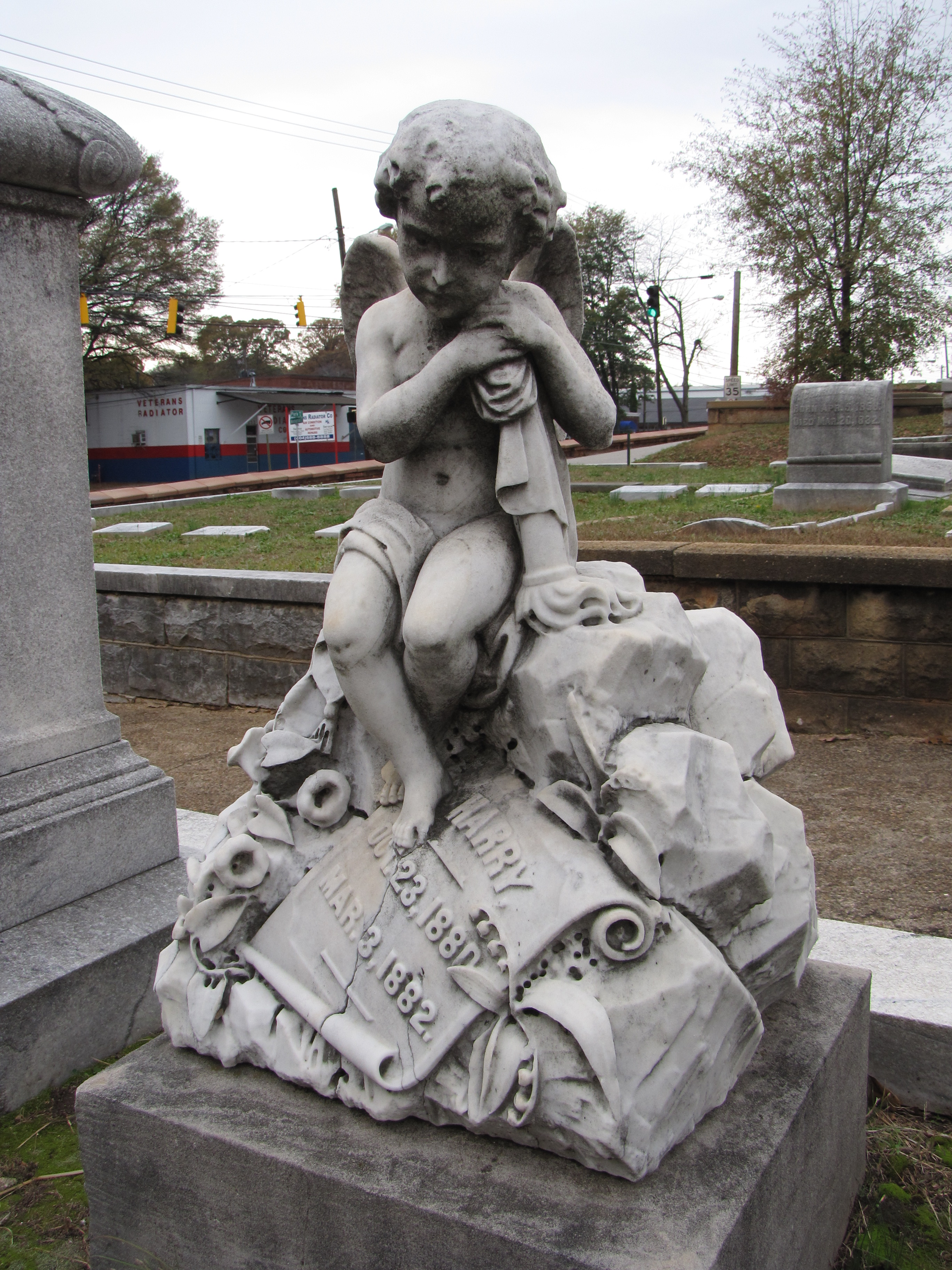
Sculptures of cherubs often adorn the graves of children. Here, the cherub is leaning against an inverted torch. The flames coming from the bottom of the torch look a bit like a mop.  The flame or fire is symbolic of the soul.  The inverted torch represents a life that has been extinguished.  The monument marks the grave of “HARRY” who only lived 17 months.

Oakland Cemetery, Atlanta, Georgia

Posted in Angels | 1 Comment