Knights of Pythias, Part 3

Woodland Cemetery, Des Moines

Woodland Cemetery, Des Moines

The ornamentation of this mausoleum in the Woodland Cemetery at Des Moines displays the typical Knights of Pythias symbolism that can be found on the metal markers that are found next to the gravestones of the fraternity members.  The symbols in the frieze above the door to the tomb features the three letters, “F”, “C”, and “B”, which stand for their motto, FRIENDSHIP, CHARITY, and BENEVOLENCE.  The circle inside the three triangles display the skull and cross bones.

IMG_6996

Posted in Uncategorized | Leave a comment

Knights of Pythias, Part 2

Fairview Cemetery, Galion, Ohio

Fairview Cemetery, Galion, Ohio

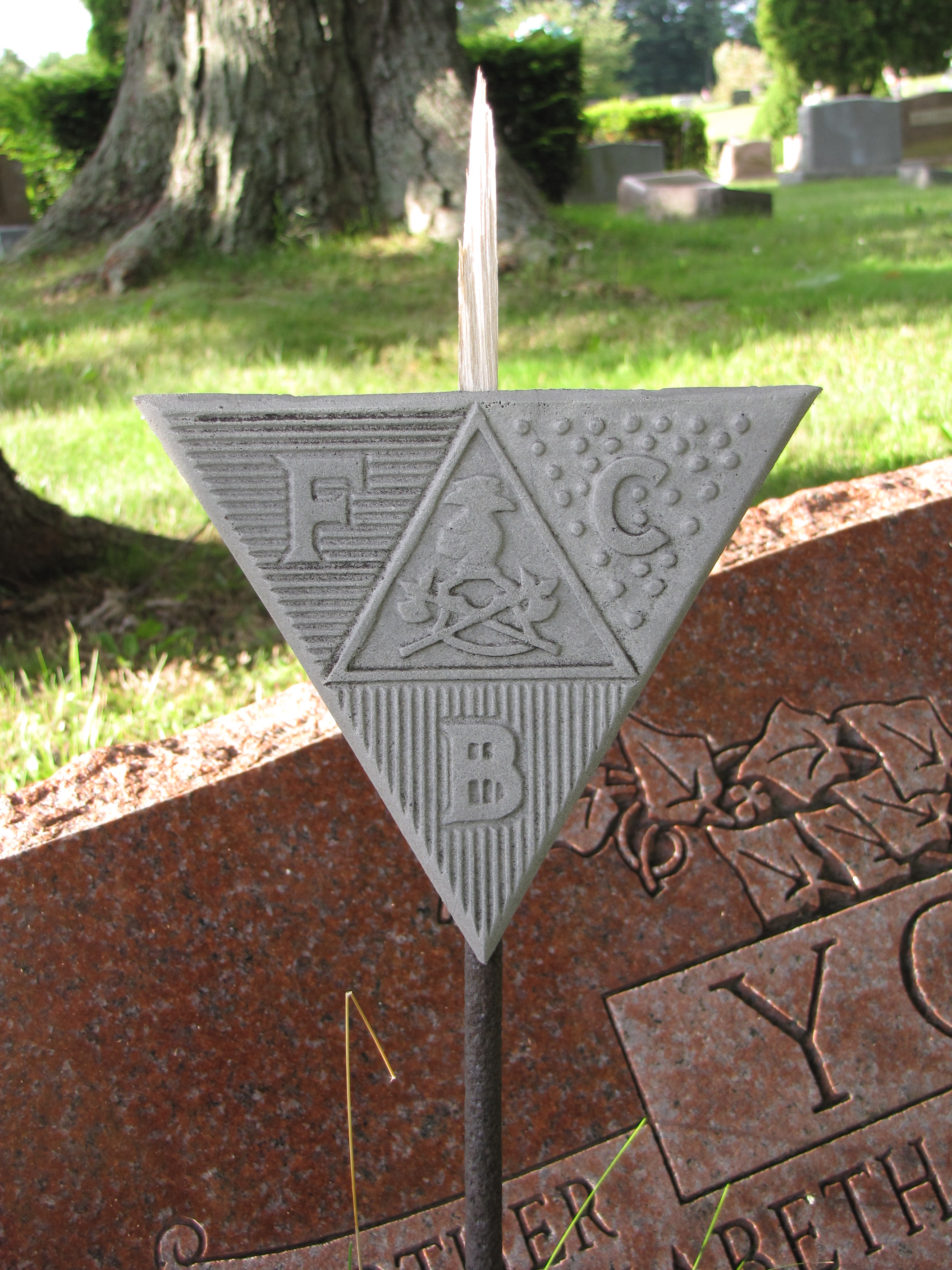
In the center triangle of the metal marker above are featured many of the symbols that are significant to the Knights of Pythias.  The profile of a knight’s helmet, with a falcon (a symbol of vigilance) sits atop a shield surrounded by crossed battle axes, which represents the weapons that were used against their enemies.  In the other three triangles are the three letters, “F”, “C”, and “B”, which stand for their motto, FRIENDSHIP, CHARITY, and BENEVOLENCE, .


Posted in Uncategorized | Leave a comment

The Knights of Pythias in Clay

Union Cemetery, Uhrichsville, Ohio

Union Cemetery, Uhrichsville, Ohio

The Knights of Pythias, a society based on the Greek story of friendship from 400 B. C. between Damon and Pythias, became the very first fraternal organization to receive a charter under an Act of the United States Congress.  The KP symbolism can be found in many cemeteries with their fraternal symbols that come in many forms.

In the small town of Uhrichsville, Ohio, at the Union Cemetery are many gravestones made of red clay.  The town had a tile company and as the story goes a craftsperson in the tile company began fashioning markers out of the clay.  These unique markers are made in the rustic tradition–to look like tree stumps.  The clay certainly helps with that look especially when sprigs of saplings are growing from the tops!  Just as in traditional markers, the clay markers are were created with much diversity in design.

IMG_4841

The symbol in the marker above features many of the symbols that are significant to the Knights of Pythias.  In the shield are three letters, “F”, “C”, and “B”, which stand for their motto, FRIENDSHIP, CHARITY, and BENEVOLENCE.  The circle inside the cross displays the skull and cross bones.

Note: I first saw the gravestones above at the Union Cemetery on the Website: www.graveaddiction.com.  Beth Santore, the Webmaster, has photographed hundreds of cemeteries in Ohio, as well as, making photo forays into neighboring states.  I highly recommend her Website, especially for those tramping around Ohio graveyards!

Posted in Symbolism | 1 Comment

Ancient Classical Designs

IMG_5136

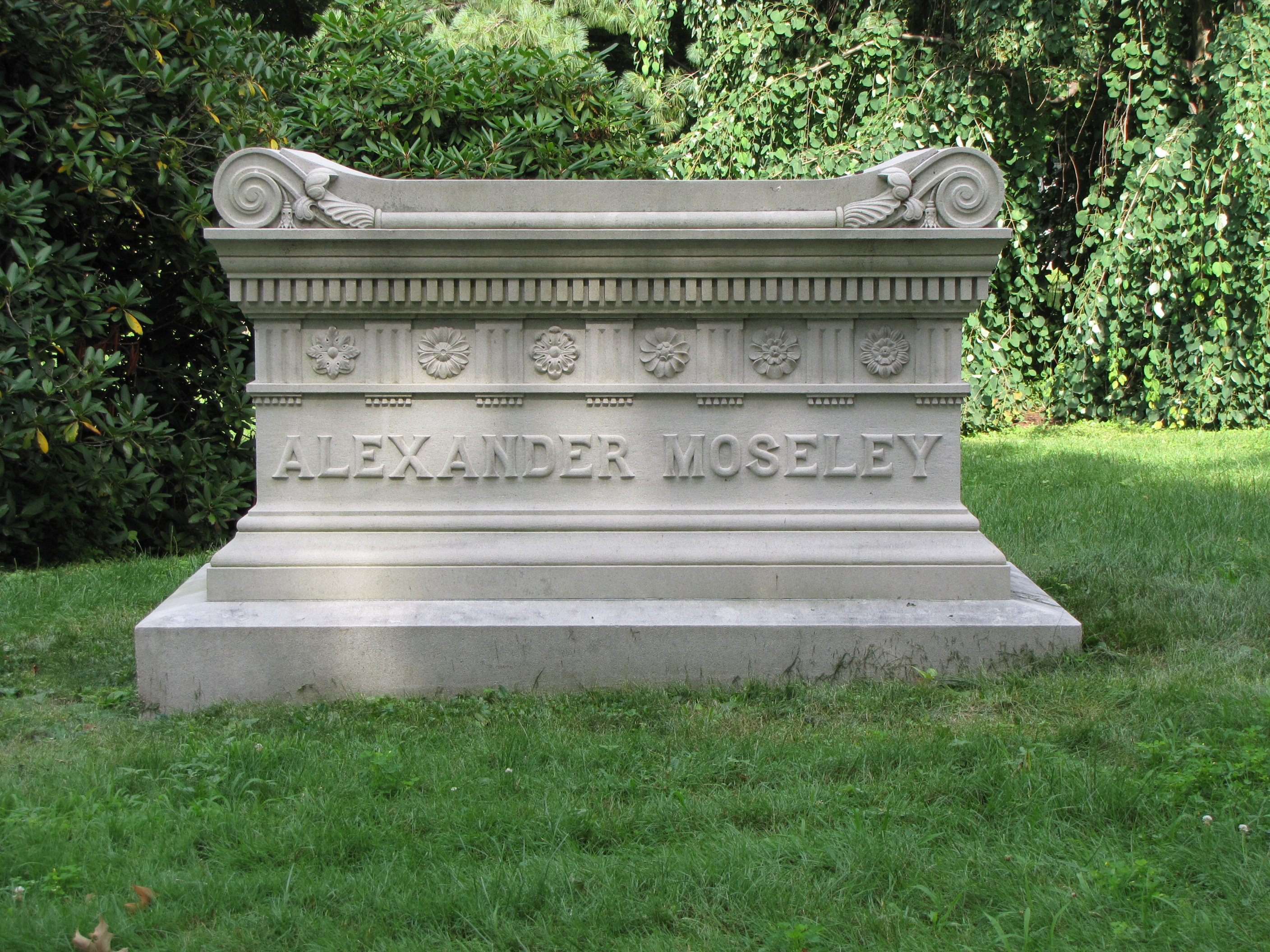
Many ancient classical designs are replicated in modern graveyards.  The sarcophagus of Alexander Moseley (died in 1899) in the Mount Auburn Cemetery at Cambridge, Massachusetts, is modeled after the Roman tomb of Lucius Cornelius Scipio Barbatus, which was erected around 150 BC.  Lucius Cornelius Scipio Barbatus (died c. 280 BC) was one of the two elected Roman consuls in 298 BC. His tomb is now preserved in the Vatican.

Scipio-tomb[1]

Posted in Tombs | Leave a comment

The tree-stump chair

Gilgal Cemetery, Heltonville, Indiana

Gilgal Cemetery, Heltonville, Indiana

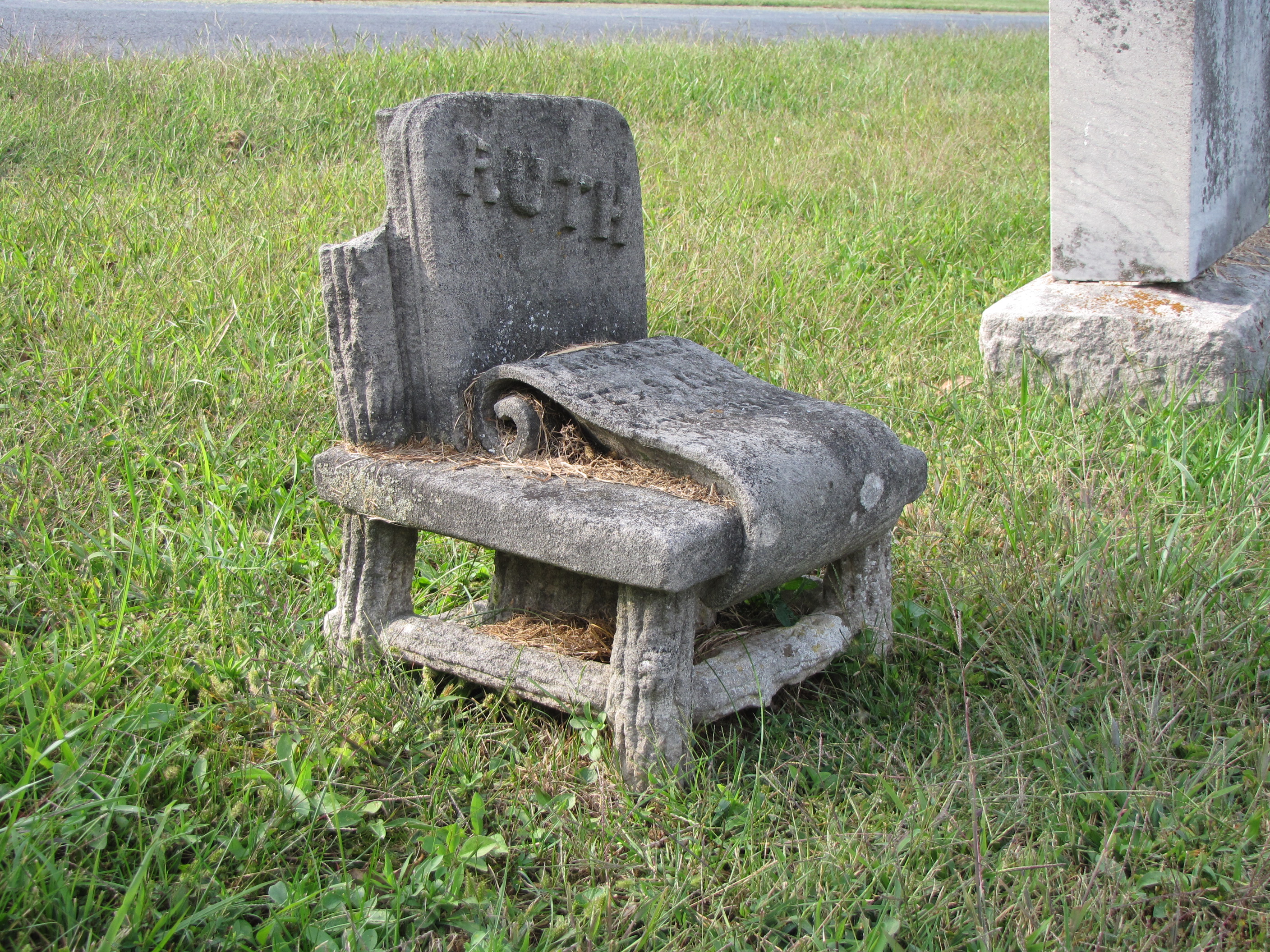
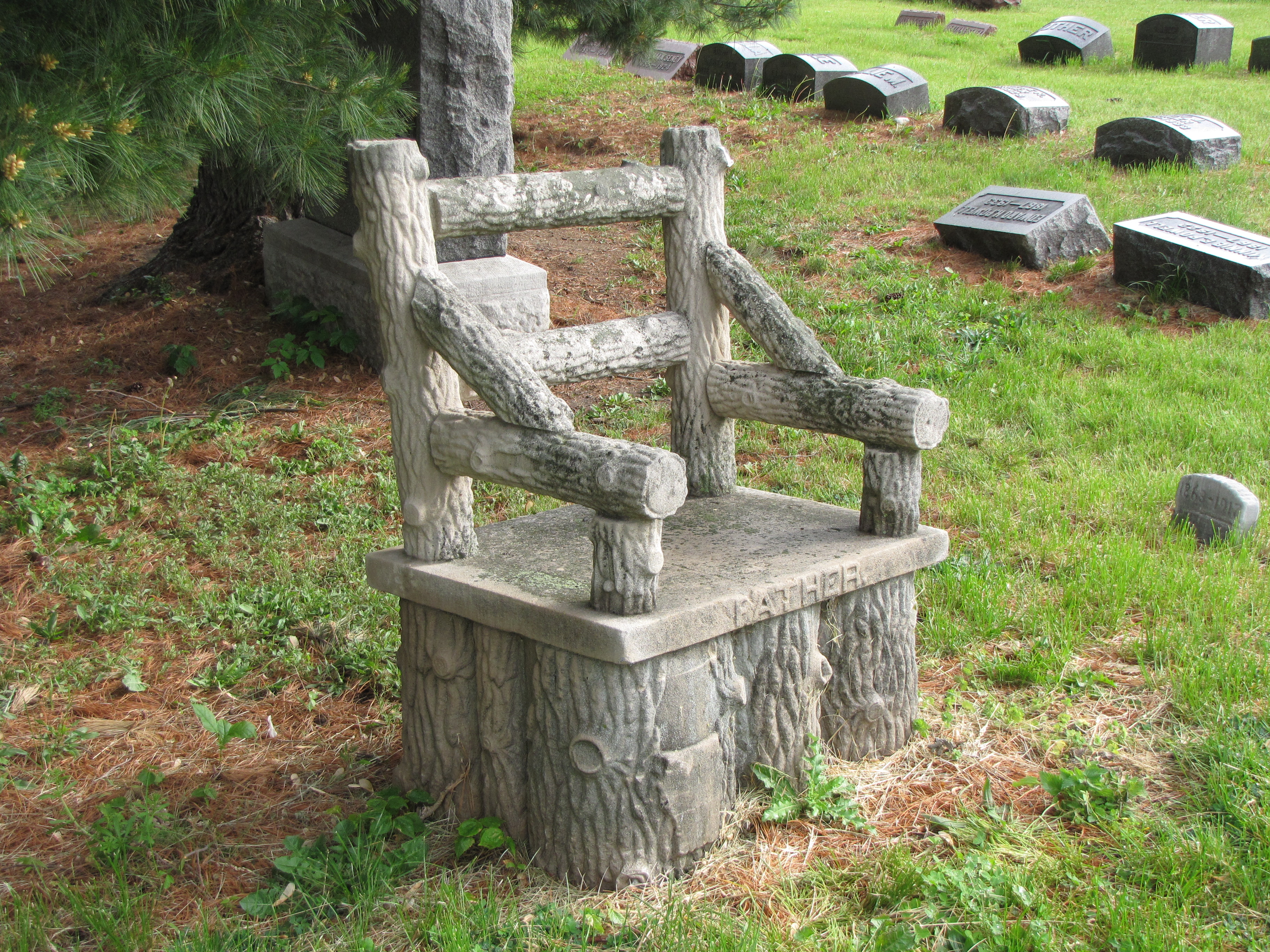
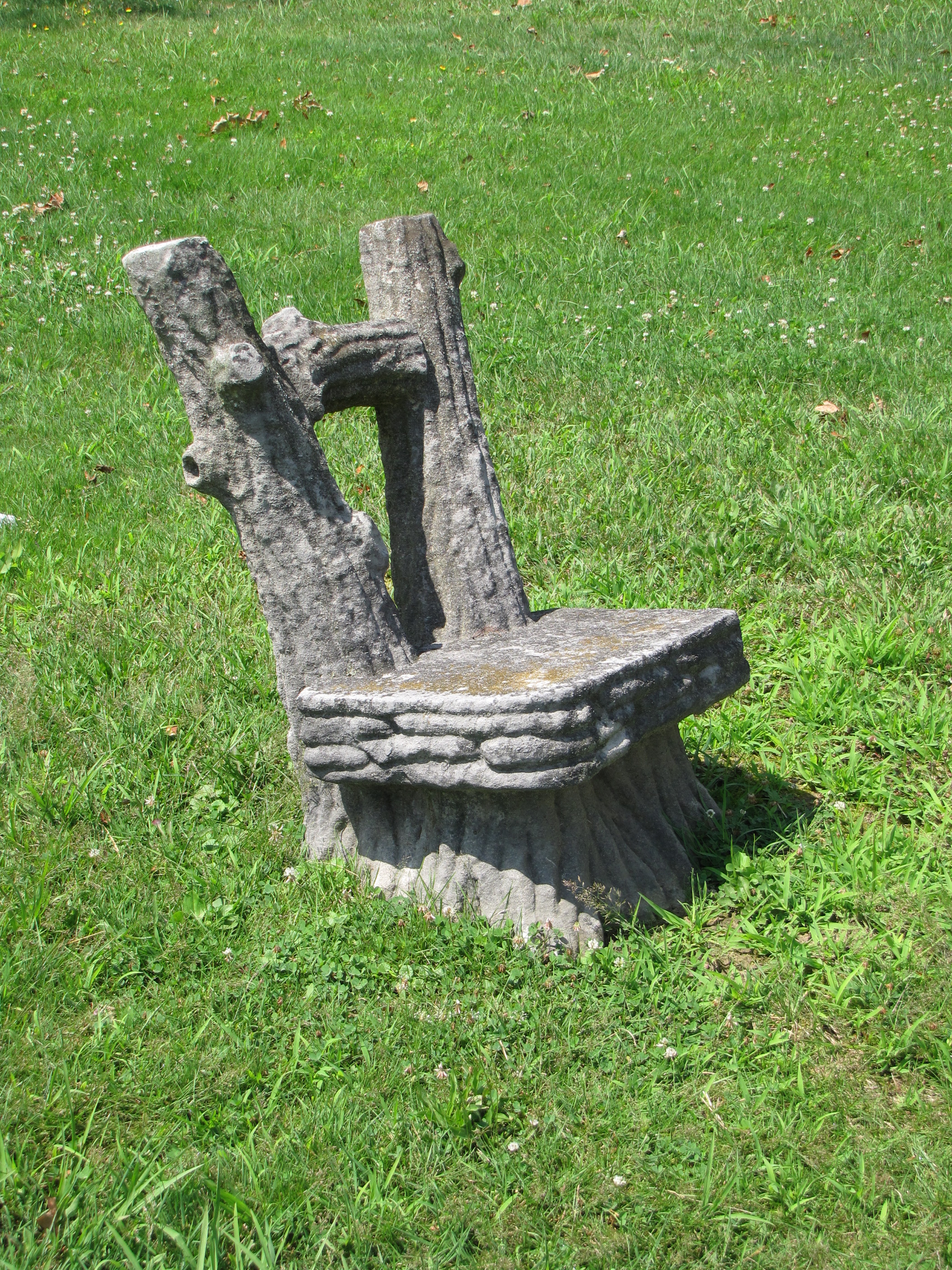
The variety found in the rustic movement tombstones is diverse.  In these three examples of the tree-stump chair, elegant and slim curved lines have given way to the bulkier and heavier forms made from pieces that came directly from the trees often with the bark still intact, eschewing classic designs.

In the example above the chair back is inscribed with the little girl’s name while the scroll on the seat gives her birth and death date.

Calvary Cemetery, Decatur, Illinois

Calvary Cemetery, Decatur, Illinois

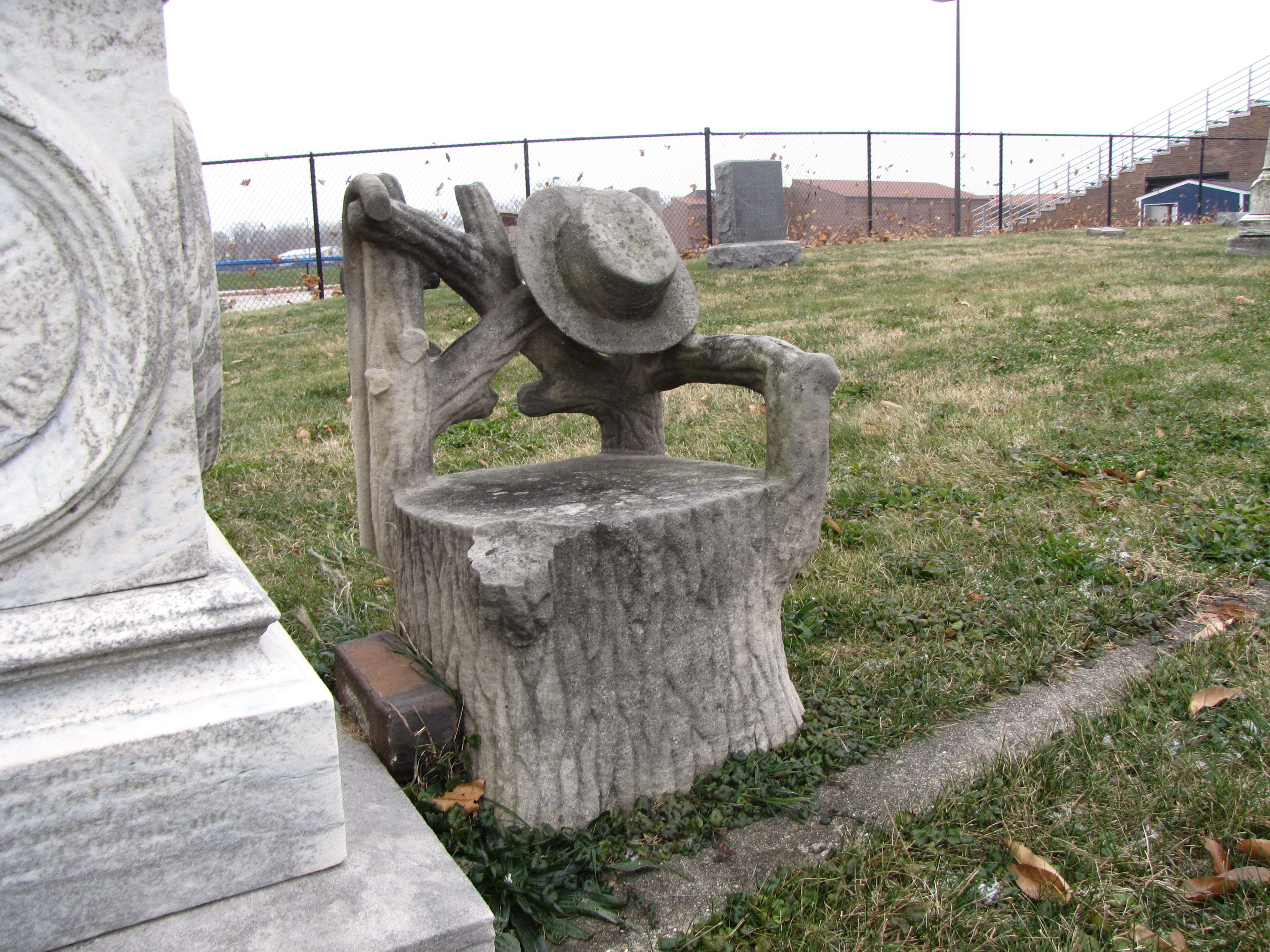
Here the tree-stump tombstone is carved into the form of an empty chair.  The chair back and the arms of the chair (one is missing) are formed out of tree branches with the stump forming the base of the chair.  On the back of the chair hangs a man’s hat.  This tombstone depicts a lonely scene.

Greenbush Cemetery, Lafayette, Indiana

Greenbush Cemetery, Lafayette, Indiana

In this example, tree stumps form the base of the chair and the seat bottom has “FATHER” carved on the face of it.  Again, heavy branches with the bark still intact form the seat back and the arms of the chair.

Union Cemetery, Uhrichsville, Ohio

Union Cemetery, Uhrichsville, Ohio

In the example above, the back of the chair is formed from two branches in the shape of a “V”.  The base is the tree stump.  The creativity of the carvers was boundless. Thousands of tree-stump tombstones exist in nearly as many designs.

In funerary symbolism the vacant chair symbolizes the loss of a loved one.

Posted in Symbolism, Treestump gravestones | 1 Comment

Treestump anvil

Gilgal Cemetery, Heltonville, Indiana

Gilgal Cemetery, Heltonville, Indiana

George Washington Carson

Oct. 4, 1854 – May 14, 1932 

Flora E. Hunter Carson

July 27, 1855 – April 15, 1906 

Tree stump tombstones, generally carved from limestone, were a part of the rustic movement of the mid-nineteenth century which was characterized by designs that were made to look like they were from the country. The gravestones are purposefully designed to look like trees that had been cut and left in the cemetery which was part of the movement to build cemeteries to look like parks.  In funerary art, the tree-stump tombstones were varied—the stonecutters displayed a wide variety of carving that often reflected individual tastes and interests of the persons memorialized.

The tree-stump gravestones themselves were imbued with symbolism. The short tree stump usually marks the grave of a person who died young—a life that had been “cut” short. Often a tree stump tombstone with two trunks was carved for a married couple.  Sometimes the branches intertwine as though the two trunks were hugging each other.  In this case, however, the male side of the tombstone is cut down and on top of the stump is an anvil.  It is likely that George Washington Carson was a blacksmith.

IMG_7526

The anvil gravestone pictured above is a near perfect carving of an actual anvil.  It accurately portrays all of the main parts of the anvil, including the level top called the “face” which is depicted with a hammer laying on top.  At the posterior is the “Hardy hole“, which is used by metalsmiths for bending and punching.  The other end shows the “horn” or rounded part of the tool, with a notch cut between the horn and the face called the “step.”

Anvils have been used for thousands of years and have appeared in literature as early as 800 B.C. in Homer’s Iliad:

He [Hephaestus] cast durable bronze onto fire, and tin,/Precious gold and sliver.  Then he positioned/His enormous anvil up on its block/And grasped his mighty hammer/In one hand, and in the other his tongs./He made a shield first, heavy and huge, /Every inch of it intricately designed./He threw a triple rim around it, glittering/Like lightening, and he made the strap silver.”

Just as a blacksmith uses an anvil to bend and shape metal into objects, the anvil is a symbol of universe being forged and created.  Searches on the Internet also list the anvil as a symbol of martyrdom.

IMG_7521

Posted in Symbolism, Treestump gravestones | 2 Comments

Eagles

Fairview Cemetery, Galion, Ohio

Fairview Cemetery, Galion, Ohio

The Fraternal Order of Eagles metal grave markers come in many shapes and forms, including the one above found at the Fairview Cemetery at Galion, Ohio.  The marker contains the letters F O E representing the words Fraternal Order of Eagles and the letters L T J and E that relates to liberty, truth, justice, and equality found in the organization’s mission statement:

The Fraternal Order of Eagles, an international non-profit organization, unites fraternally in the spirit of liberty, truth, justice, and equality, to make human life more desirable by lessening its ills, and by promoting peace, prosperity, gladness and hope.

Founded February 6, 1898, by six Seattle, Washington, theater owners John Cort, John W. and Tim J. Considine, Arthur Williams, Mose Goldsmith, and Harry Leavitt organized as “The Order of Good Things”.  Within two months, in April of the same year, the fraternal order changed its name to The Fraternal Order of Eagles and adopted the American bald eagle as their emblem.

The Eagles organize local chapters into aeries, (the chapter number is on the center of the marker–859) so named for the nests of eagles which are usually high and difficult to access.  Nearly since their inception, the Eagles have lobbied for causes important to the organization, such as the creation of Mother’s Day in 1904, later in the 30s for Social Security, and in 2006 to keep the two words “under God” in the Pledge of Allegiance.  The Eagles also contribute to many charities, such as, St. Jude’s Hospital, a Disaster Relief Fund, Diabetes Research Center at the University of Iowa, Art Ehrmann Cancer Fund, D. D. Dunlap Kidney Fund, among others.

Posted in Metal Markers | 1 Comment

Woman’s Relief Corps

Woodland Cemetery, Des Moines, Iowa

Woodland Cemetery, Des Moines, Iowa

SARAH

ELIZABETH

WIFE OF

E. P. DRAKE

DIED JUNE 4, 1894, AGED 38 Yrs.

The Western White Bronze Monument Company of Des Moines produced zinc monuments.  The Woodland Cemetery in Des Moines, Iowa, has many of their monuments in all shapes and sizes including the obelisk of Sarah Drake. Sarah Drake was a member of the then fairly new Woman’s Relief Corp.

The Woman’s Relief Corp was founded in 1883 in Denver, Colorado, as the auxiliary group to the Grand Army of the Republic.  Founded as a women’s service group over a century ago, the patriotic organization was formed to, according to their Website:

  • To perpetuate the memory of the Grand Army of the Republic and its heroic dead to assist in every practicable way in preserving, and making available for research, documents and records pertaining to the Grand Army of the Republic and its members;
  • To assist such Veterans of all wars of the United States of America as need our help and protection, to extend needful aid to their widows and orphans, and to assure them of sympathy and friends. To cherish and emulate the deeds of all loyal women who rendered loving service to our country in her hour of peril; and
  • To maintain true allegiance to the United States of America; inculcate lessons of patriotism and love of country among our children and in the communities in which we live; and encourage the spread of universal liberty and equal rights of all.

IMG_6728

Reproduced on the obelisk is the Woman’s Relief Corps Badge.  The badge is a Maltese Cross attached to a bar pin engraved with the F C L for the initials of the words in their motto: Fraternity, Charity and Loyalty.  If the insignia was in color the ribbon would be red, white and blue.

In the circle of the cross is an American Flag encircled in a wreath of stars and depicting five figures: Goddess of Liberty, a soldier, boy, a woman and a child.

According to their Website:

  • The Soldier symbolizes Fraternity because the Comrades created their organization as their Auxiliary in 1883.
  • The Boy is emblematic of the youth and strength of the future life of the Nation.
  • The Woman is emblematic of motherhood, the very source of all civilization throughout the world. She has taught mercy, kindness, and has extended Charity from the beginning of time.
  • The Child is emblematic of the hope of the world, with our patriotic teachings of Loyalty to the nation’s laws and principles, with Freedom and Justice for future generations yet unborn.
Posted in Symbolism, Zinc Markers | 1 Comment

The Mausoleum that the Hot Dog Built

Green-Wood Cemetery, Brooklyn, New York

Green-Wood Cemetery, Brooklyn, New York

Charles Feltman

(November 8, 1841-September 20, 1910)

The Charles Feltman Mausoleum in the Green-Wood Cemetery at Brooklyn is a neo-classical temple honoring the man many consider to be the creator of the American hot dog.  Feltman, a German immigrant, started out as a pie man, selling his wares from a cart at Coney Island.  His pies did not sell well, so he switched to a boyhood favorite of his—a sausage that he wrapped in a bun and sold with mustard and sauerkraut.

IMG_4347

IMG_4348

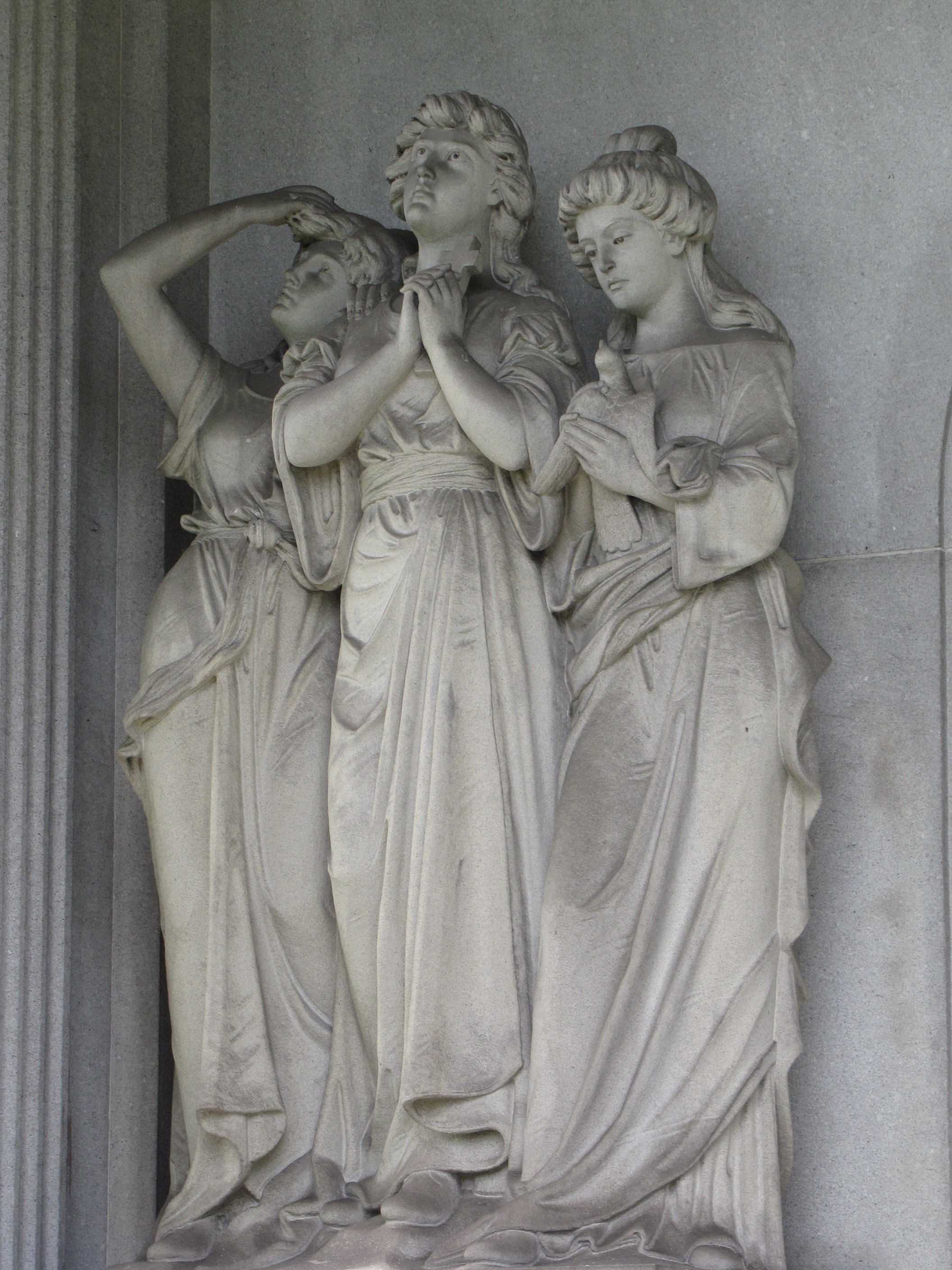
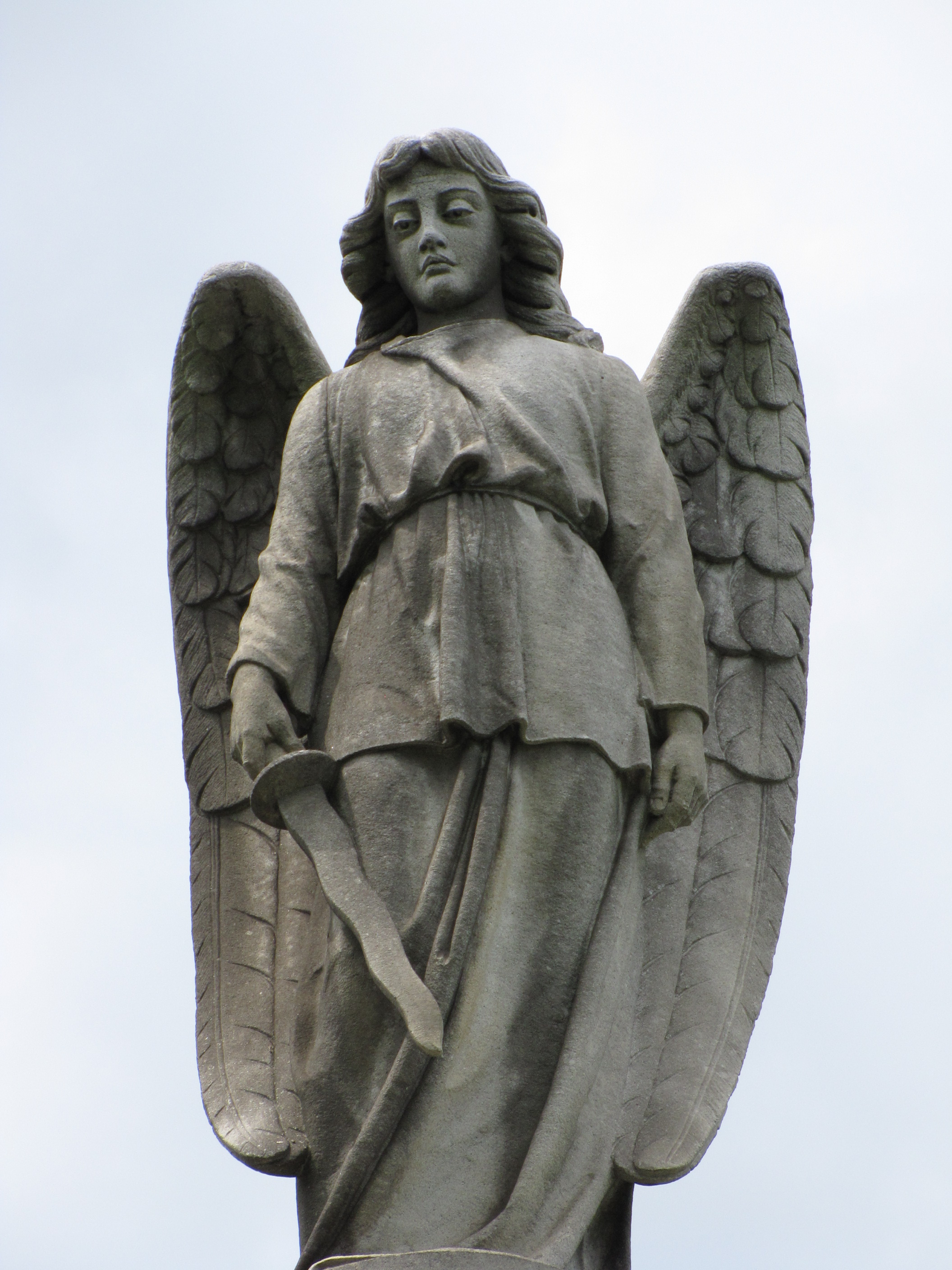
Two large urns flank the steps leading to the mausoleum.  The columns feature Corinthian capitals.  On each side of the doorway is a trio of mourning figures—the left side holding symbols of faith such as the cross and the dove—the right side showing their grief and sorrow. The pediment features two winged cherubs holding a wreath with the initial “F” in the center. The temple is topped with a cupola with the Archangel Michael standing guard.

IMG_4351

Feltman’s most famous contribution to American culinary delights actually came from his protégé Nathan Handwerker, who left the employ of Feltman to start his own hog dog business—Nathan’s, meat-in-a-tube’s most famous creator!

Posted in Mausoleums | 4 Comments

The Sphinx

Spring Grove Cemetery, Cincinnati, Ohio

Spring Grove Cemetery, Cincinnati, Ohio

BENEATH THIS STONE

ARE INTERRED THE REMAINS

MATT’W LAWLER Esq.

OF PHILADELPHIA

BORN JANUARY 1ST 1755

DIED JULY 14TH 1831


MRS ANN LAWLER

HIS CONSORT

BORN JUNE 5TH 1761

DIED MARCH 25TH 1835

THIS MONUMENT WAS ERECTED TO THEIR MEMORY

BY THEIR SON DAVIS B. LAWLER IN JUNE 1850

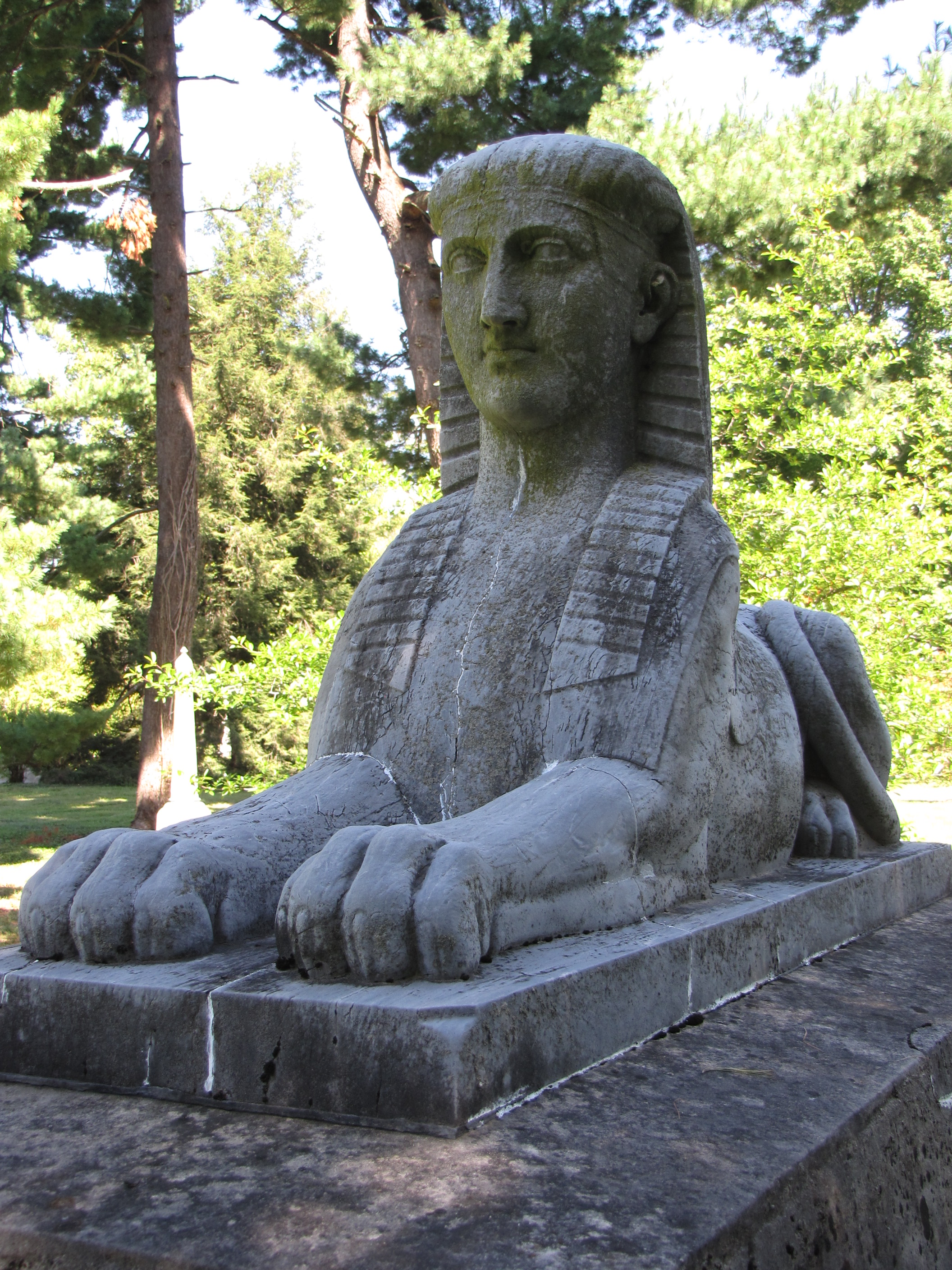
When the enigmatic blue onyx-colored sphinx was installed at the Spring Grove Cemetery at Cincinnati in 1850, it caused a great stir.  The “pagan” iconography of the Egyptian sphinx ruffled the Christian sensibilities of the Victorians; yet, there were those who praised the monument as a break in the monotony of the usual gravestone shapes of neoclassical columns, mourning figures, flowered-adorned markers, obelisks, and Gothic pinnacles.

In the Egyptian tradition the benevolent mythological creature has the head of a man grafted to the body of a lion.  In this example, a couchant sphinx rests atop the Lawler family monument.

The Lawler sphinx was an inspiration to the related Peaslee Family of Louisville, Kentucky.  They were so taken with the monument in the Spring Grove Cemetery that they commissioned a look-alike sphinx for the Cave Hill Cemetery at Louisville.

ELLA HARPER HARBESON PEASLEE

JANUARY 30, 1903 

ELEANORA HARBESON PEASLEE

MARCH 5, 1904 

CHARLES ROWLAND PEASLEE

NOVEMBER 24, 1905


Cave Hill Cemetery, Louisville, Kentucky

Cave Hill Cemetery, Louisville, Kentucky

Posted in Symbolism | Leave a comment