The Latin Cross

memorials_today_for_tomorrow_p34-b_georgia_marble_co-1928_rr

In 1928, the Georgia Marble Company of Tate, Georgia, produced a marketing piece in the form of a book titled, Memorials: To-Day for To-Morrow written by William Henry Deacy. The book was designed to showcase their memorial designs by highlighting them in the book with lush full-color watercolor illustrations of the various memorials. Along with the illustrations the book provided explanations of the symbolism found in the memorials. The book also coupled an architectural drawing of how the memorial is to be made.

memorials_today_for_tomorrow_p36-a_georgia_marble_co-1928_rr

The example here, is of the cross—the plain Latin Cross, universally recognized as the symbol of Christianity. But, while it may look simple to the eye, the symbol is imbued with deep meaning to all Christians. As the book says, “Faith had brought Him to Calvary. The Betrayal, the Trial, the piercing Crown of Thorns, the tortuous road to Golgotha, the cruel weight of the Cross, the hour of Crucifixion—through all these Faith had led Him on. What wonder, therefore, that he Cross of Calvary, instrument of the Passion, has been throughout the ages a memorial of the Faith, the Chosen Symbol?” (page 34).

The Latin Cross, however, is not the only symbolism in the monument, which may be lost on many viewers. In this monument, the cross rests on a foundation of three progressively larger stones as a base. Each represents a different virtue—“Faith in the will of God…Hope for the dawn of that yet more glorious day and Charity toward all men.”
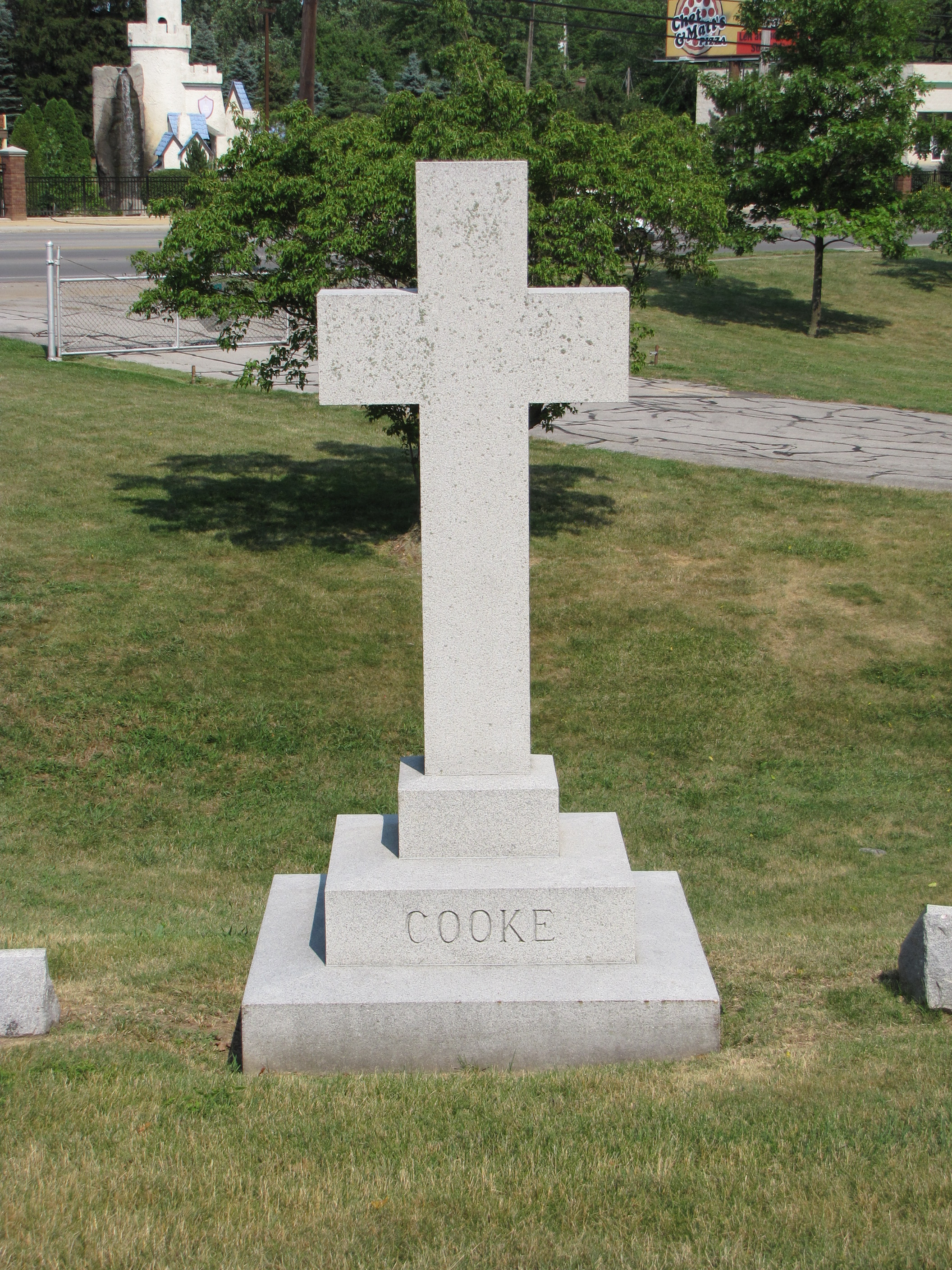
Oakland Cemetery, Sandusky, Ohio

Oakland Cemetery, Sandusky, Ohio

The entire book can be found at the Quarries and Beyond Website: http://quarriesandbeyond.org/cemeteries_and_monumental_art/cemetery_stones.html.

The Quarries and Beyond Website was created by Peggy B. and Patrick Perazzo. It focuses on historic stone quarries, stone workers and companies, and related subjects such as geology. Whenever possible links of finished products are provided on the Website. There is a “Quarry Articles” section that presents articles, booklets, and links from the late 1800s to early 1900s, including the 1856 “The Marble-Workers’ Manual.” The “Cemetery Stones and Monuments” section provides references and resources, including many old monument magazines, catalogs, price lists, and a photographic tour “From Quarry to Cemetery Monuments.”
 

Posted in Symbolism | Leave a comment

Sleeping Children

St. Ambrose Cemetery, Seymour, Indiana

St. Ambrose Cemetery, Seymour, Indiana

IMG_0264

JOHN CLAIR MALONE

BORN OCT 10, 1890

DIED FEB 16, 1894

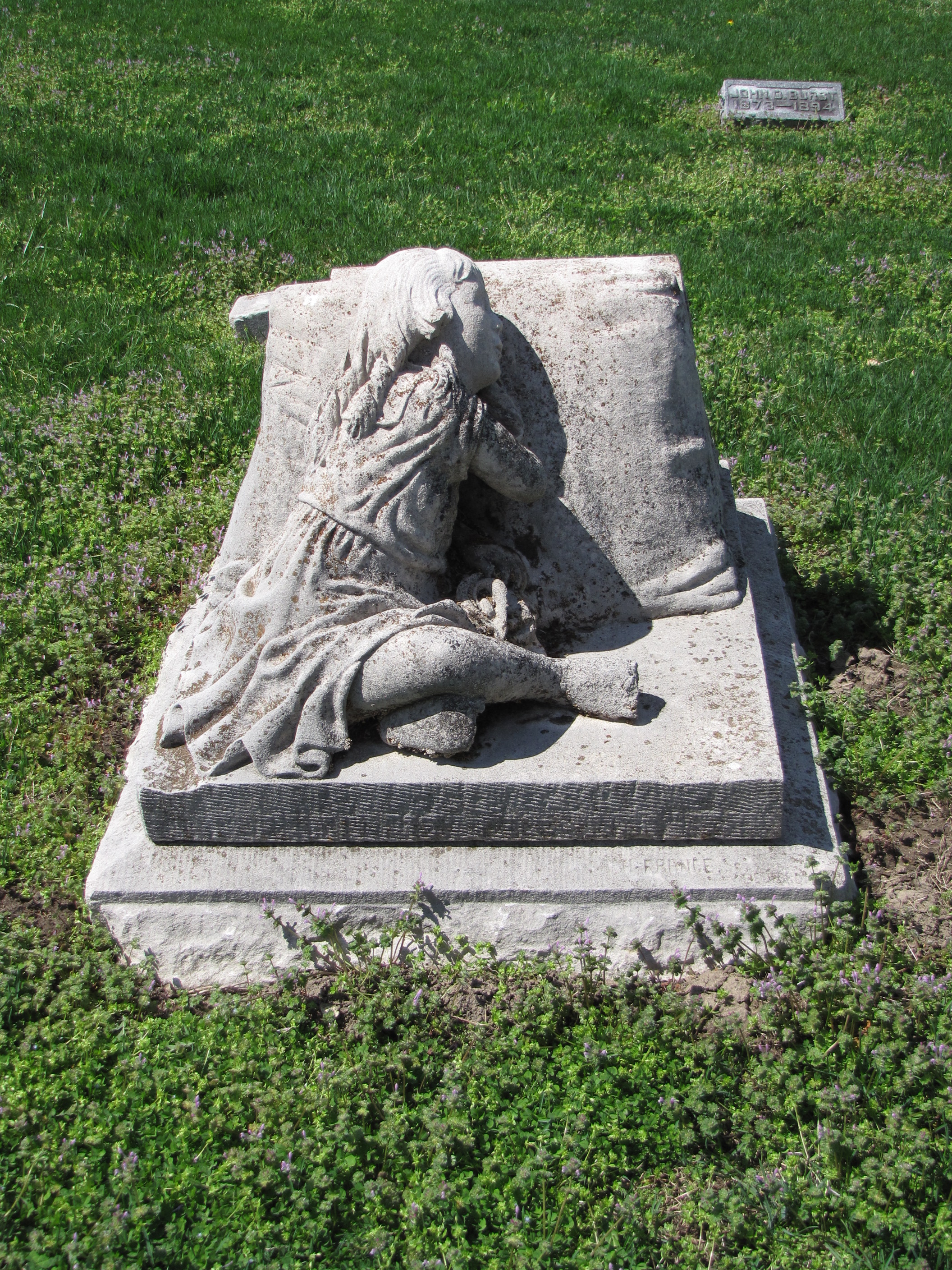
 [This gravestone has a girl resting against a pillow carved on the front of the gravestone but the gravestone marks the grave of four-year old John Clair Malone.  His name and birth and death dates appear on a scroll on the back of the memorial.]

St. Ambrose Cemetery, Seymour, Indiana

St. Ambrose Cemetery, Seymour, Indiana

IMG_0272

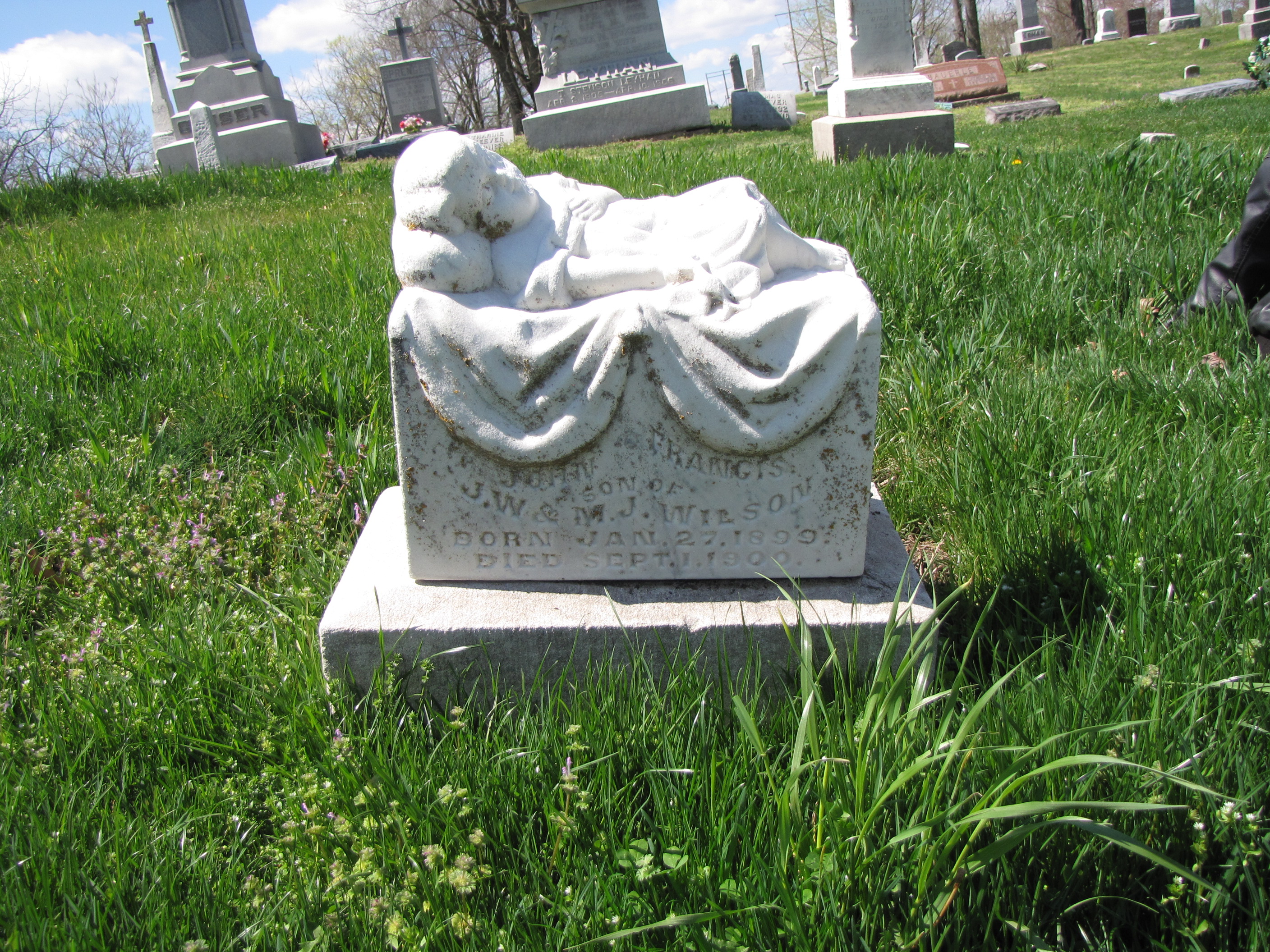
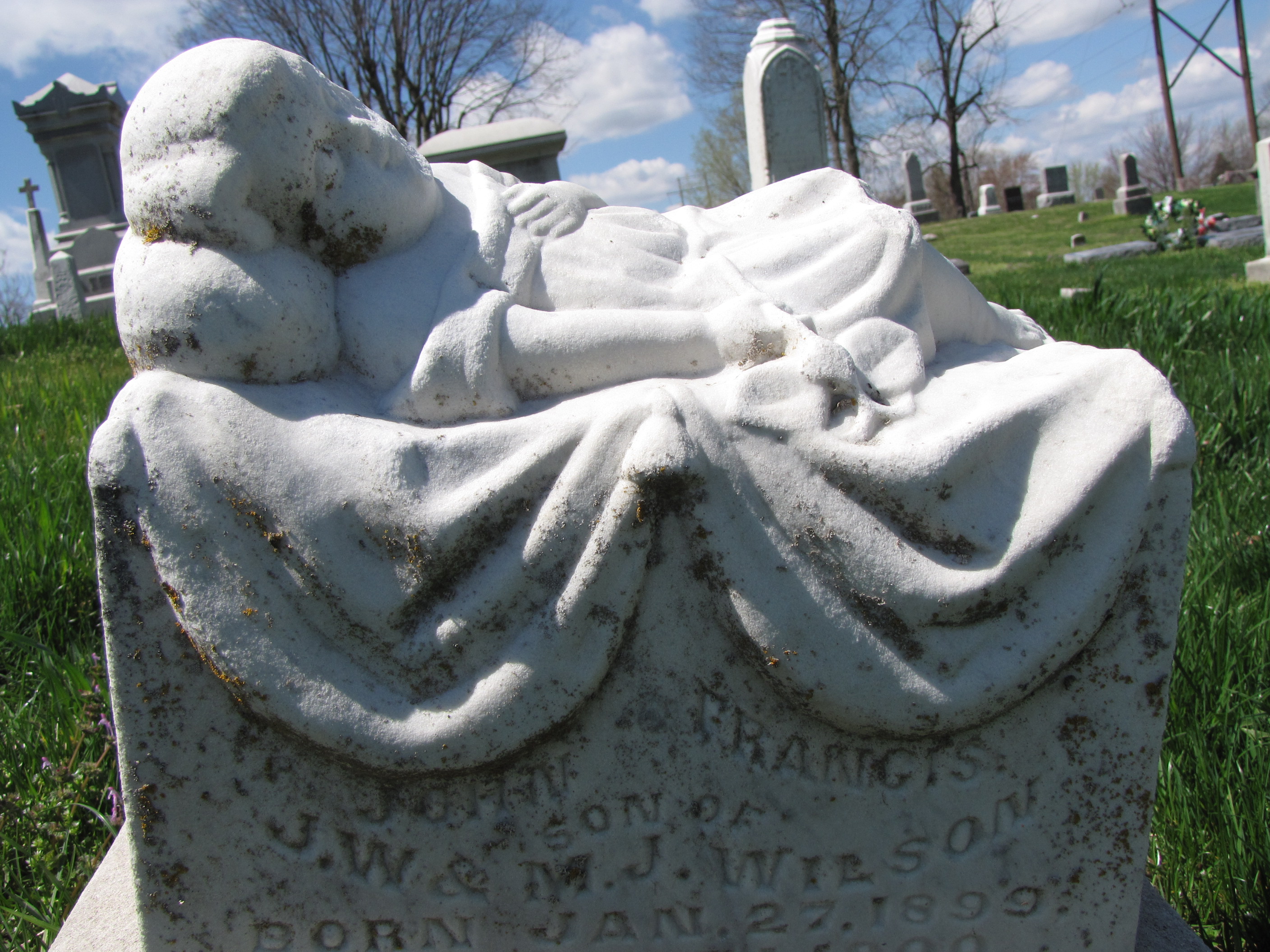
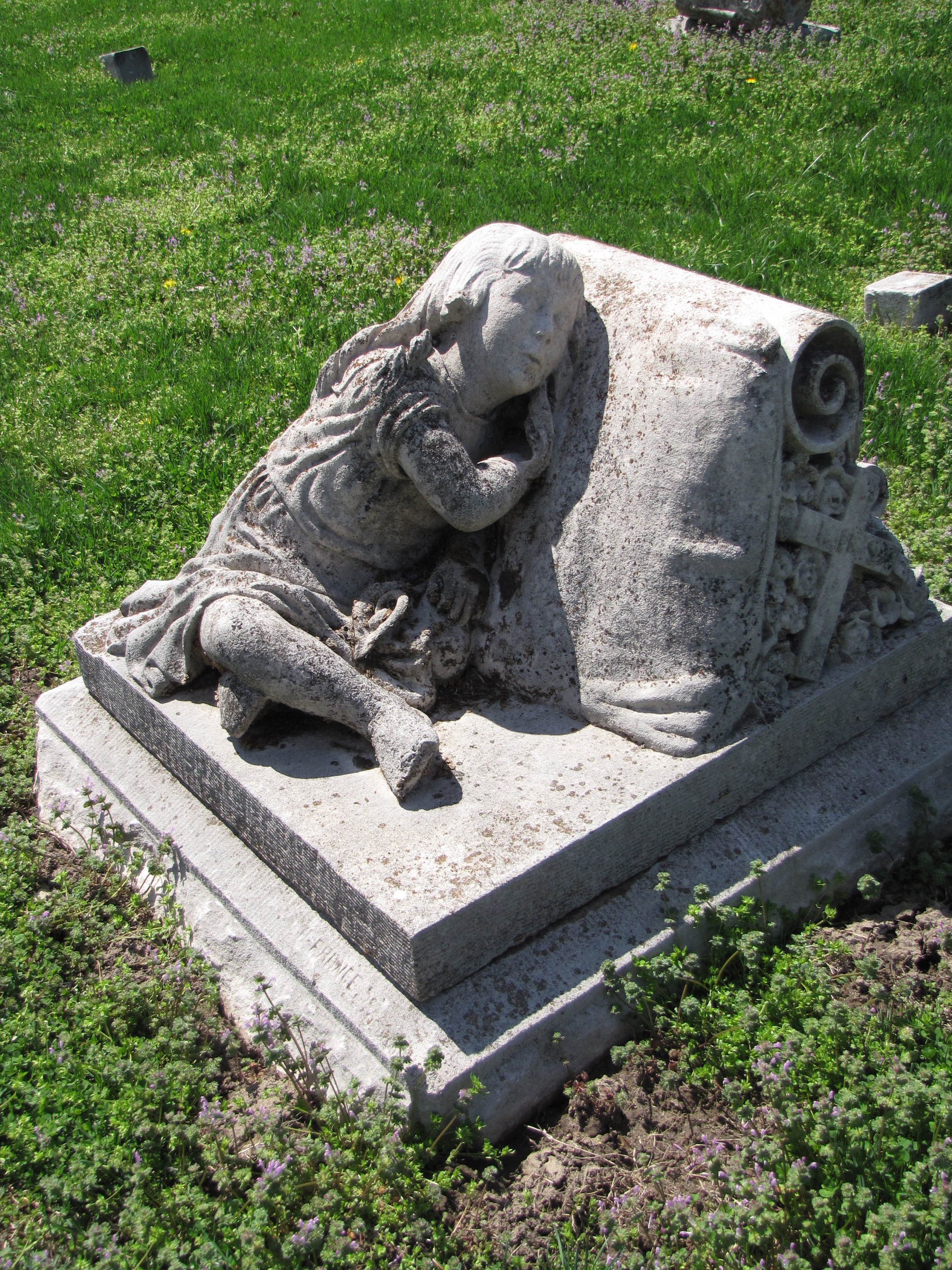
JOHN FRANCIS

SON OF J. W. & M. J. WILSON

BORN JAN. 27, 1899

DIED SEPT. 1, 1900

Those little hands thoult raise no more.

To meet my loving fond caress

For deaths cold blast in passing o’er

Has snatched thee from affections breasts.

 [The epitaph appears on the back of the gravestone.]

St. Ambrose Cemetery, Seymour, Indiana

St. Ambrose Cemetery, Seymour, Indiana

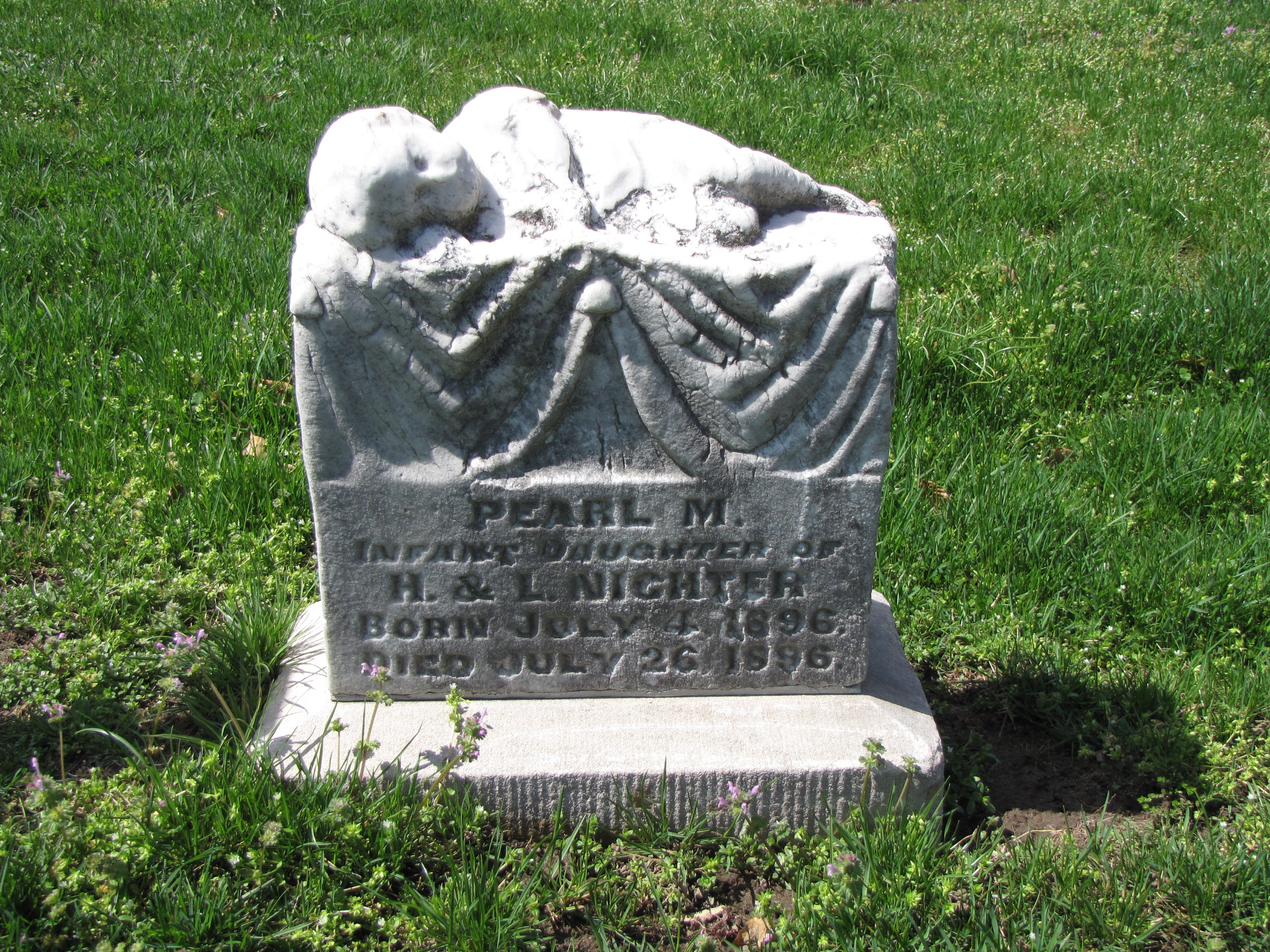
PEARL M.

INFANT DAUGHTER OF

H. & L. NIGHTER

BORN JULY 4, 1896

DIED JULY 26, 1896

[This gravestone has an epitaph on its backside but is faint.]

The most poignant and tender gravestones are those for children.  Mortality rates for children were very high.  In the 1850s, for example, the mortality rates for children under one year were estimated at over 200 deaths per thousand, with much higher mortality rates for children under 5.

All three of these children are buried in the St. Ambrose Church Cemetery at Seymour, Indiana. Each child was under the age of five–they ranged in age  between 20 days old and four years old.

Each gravestone shows a sleeping child.  It has too be more comforting to think of a young child sleeping rather than the alternative.  The sentiment is tender and sad.

Posted in Children's Graves | Leave a comment

Sprouting Wings

IMG_8165

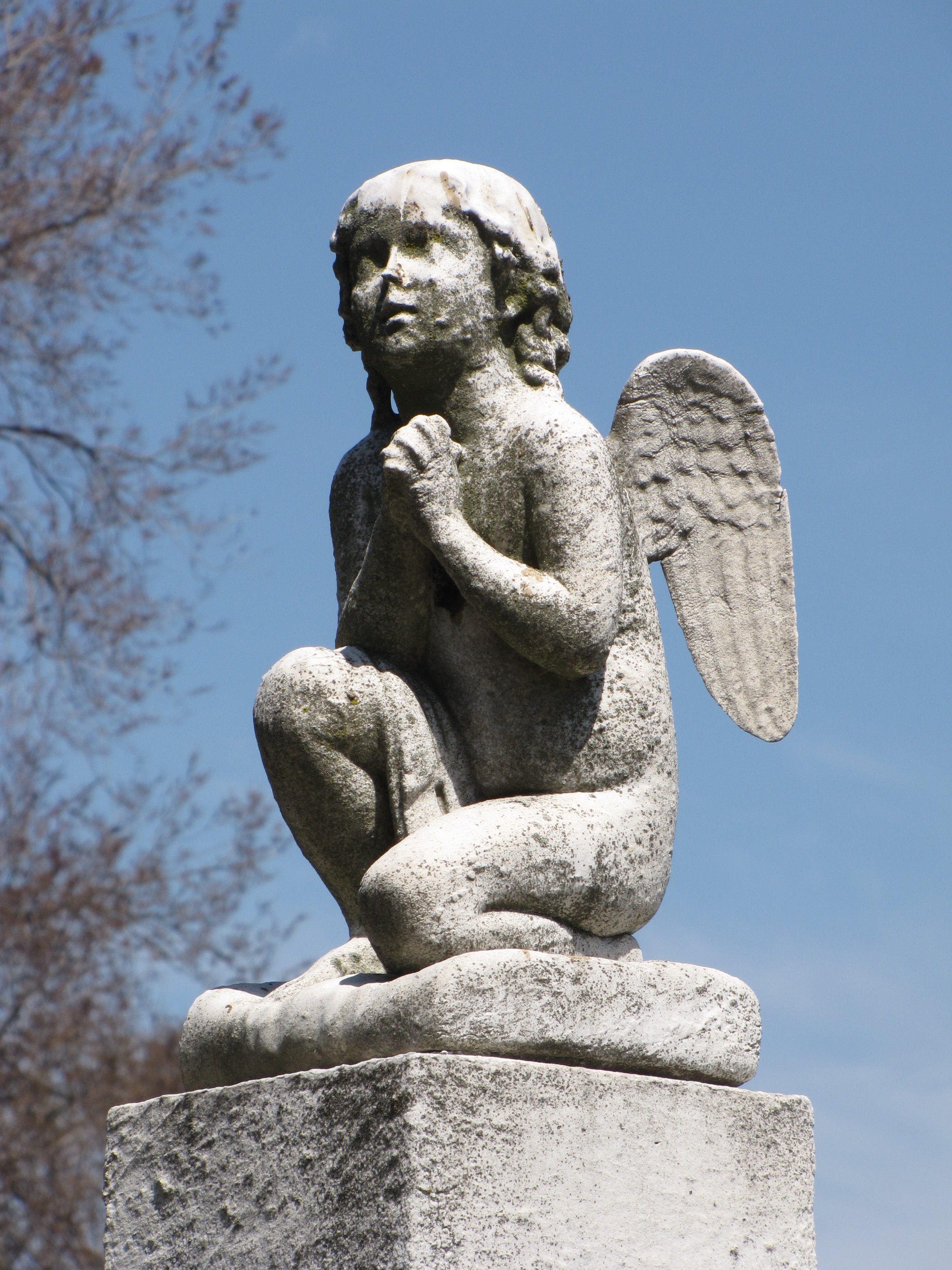
The praying child is a fairly common marker found in many cemeteries.  In fact, it could be ordered from one of the companies that manufactured these markers in zinc, or “white bronze” on different bases. The praying child marker from the Somerset Cemetery at Somerset, Ohio, has an elaborate base with drapery on the top of the pedestal.

Somerset Cemetery, Somerset, Ohio

Somerset Cemetery, Somerset, Ohio

In the example below found in the Lakewood Cemetery at Minneapolis, Minnesota, the zinc marker has a figure of a child praying with a simple, plain base compared to the example at Somerset.  Though the base is quite different on each of these grave markers, there is no mistaking the similarities between the statues of the child.

Lakewood Cemetery, Minneapolis, Minnesota

Lakewood Cemetery, Minneapolis, Minnesota

The praying child gravestone (below) carved in white marble is located in the Green-Wood Cemetery at Brooklyn, New York.  This praying child image could be manufactured in marble or zinc.

Green-Wood Cemetery, Brooklyn, New York

Green-Wood Cemetery, Brooklyn, New York

The example in the Laurel Hill Cemetery at Philadelphia, Pennsylvania, while still portraying the same praying child, sprouted wings and the child is no longer a child but appears as an angel.

Laurel Hill Cemetery, Philadelphia

Laurel Hill Cemetery, Philadelphia

Posted in Angels, Symbolism | Leave a comment

Gone Home


IMG_0209

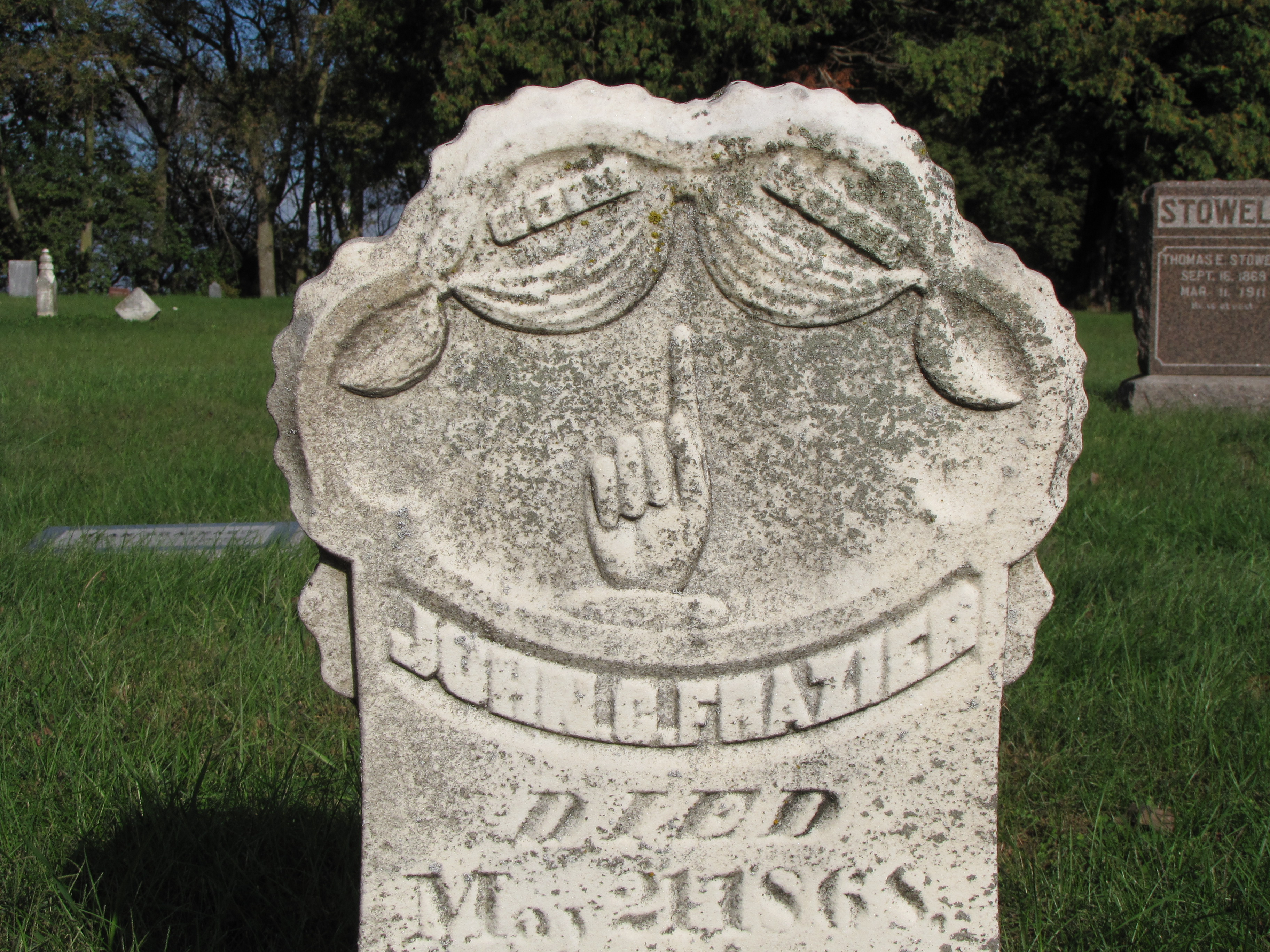
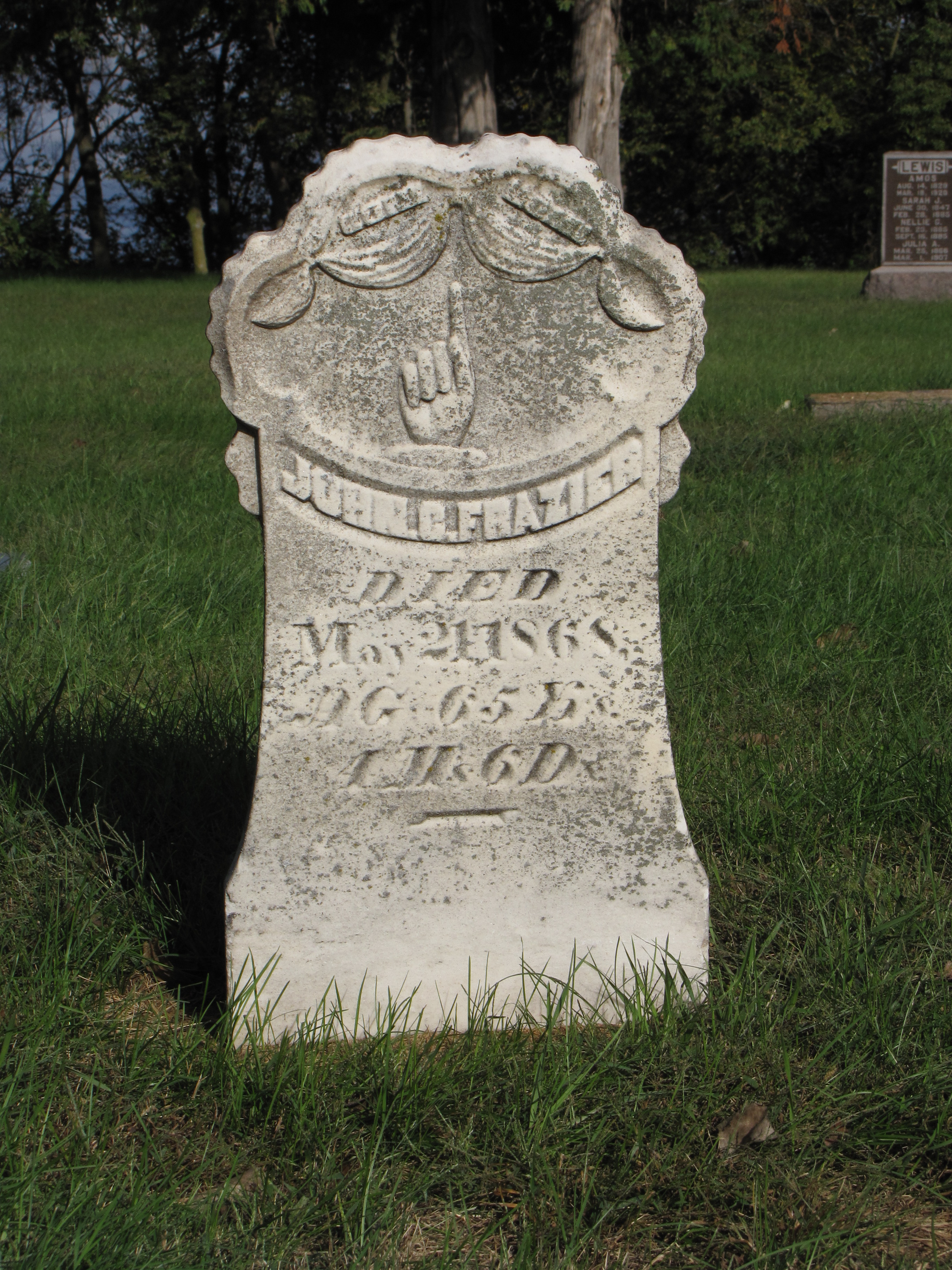
JOHN C. FRAZIER

DIED

May 21, 1868

AG 65 Yr’s

4 Ms 6 Ds

The finger pointing upward, indicates the soul traveling to Heaven, sometimes a presumptuous claim, though hopeful.

In this example, found on an elaborate white marble tablet in rural Iowa, the upward pointing finger is carved into the top of the gravestone, just below draped fabric, most likely representing the veil that separates the Earthly realm from the Heavenly realm.  Just above the drapery are the words “GONE HOME”.

Frazier Cemetery, Harrison County, Iowa

Frazier Cemetery, Harrison County, Iowa

Posted in Symbolism | 1 Comment

Alpha and Omega

Lakewood Cemetery, Minneapolis, Minnesota

Lakewood Cemetery, Minneapolis, Minnesota

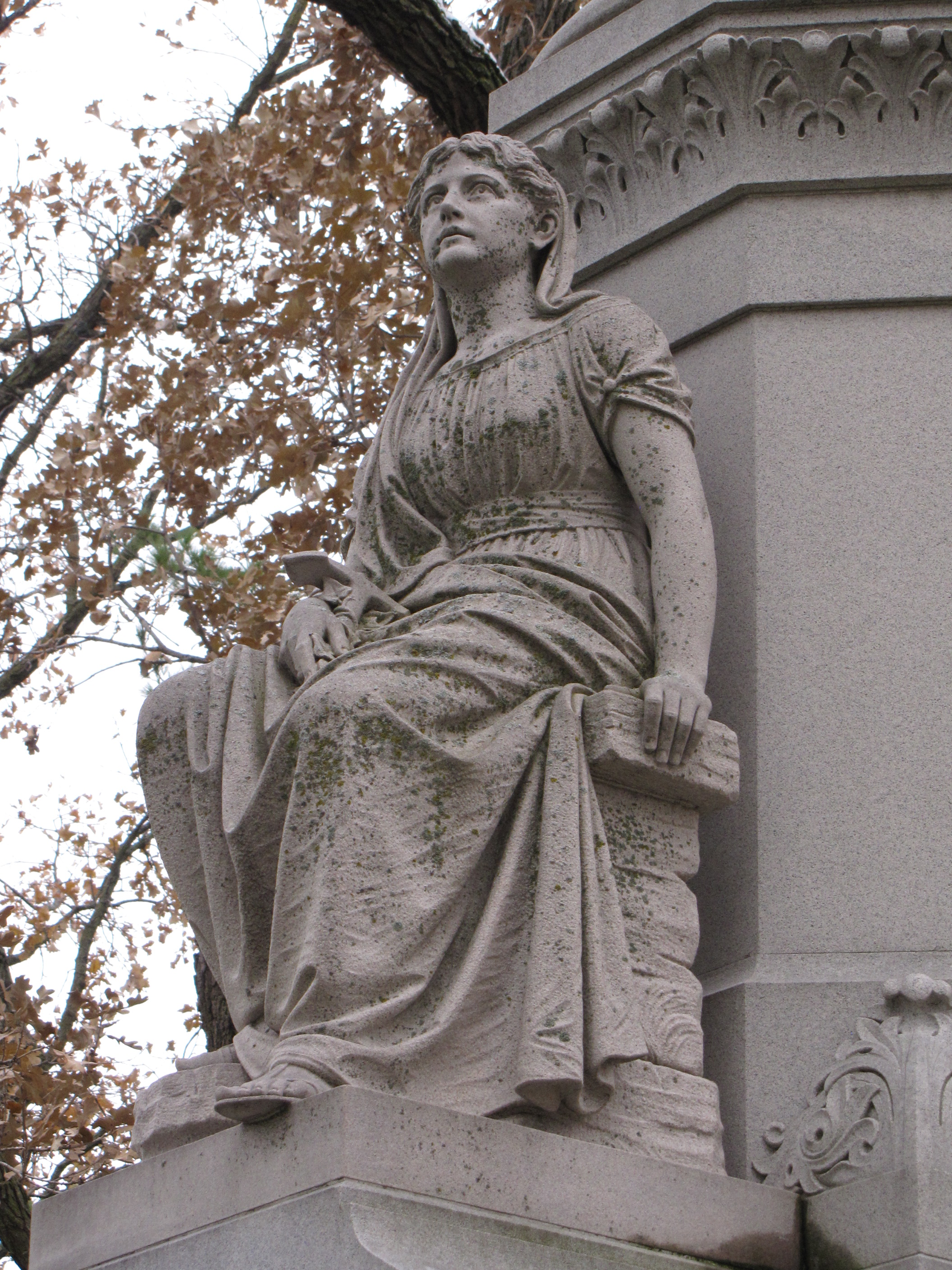
This statue in the Lakewood Cemetery at Minneapolis, Minnesota, shows a woman holding an open book. The open book is a common symbol found on gravestones. The motif can represent the Book of Life with the names of the just registered on its pages or it can symbolize the Word of God in the form of the Bible.

Here, the opposing pages of the spread display Greek letters—alpha on the left and omega on the right. Alpha is the first letter of the Greek alphabet and omega is the last—they are respectively the “A” and “Z”. In this case, alpha and omega are a reference to the Biblical passages found in the Book of Revelation, Chapter 1, Verse 8: “I am Alpha and Omega, the beginning and the ending, saith the Lord, which is, and which was, and which is to come, the Almighty”.

IMG_7588

Posted in Symbolism | Leave a comment

An Artist’s Work


220px-George_Julian_Zolnay_01[1]

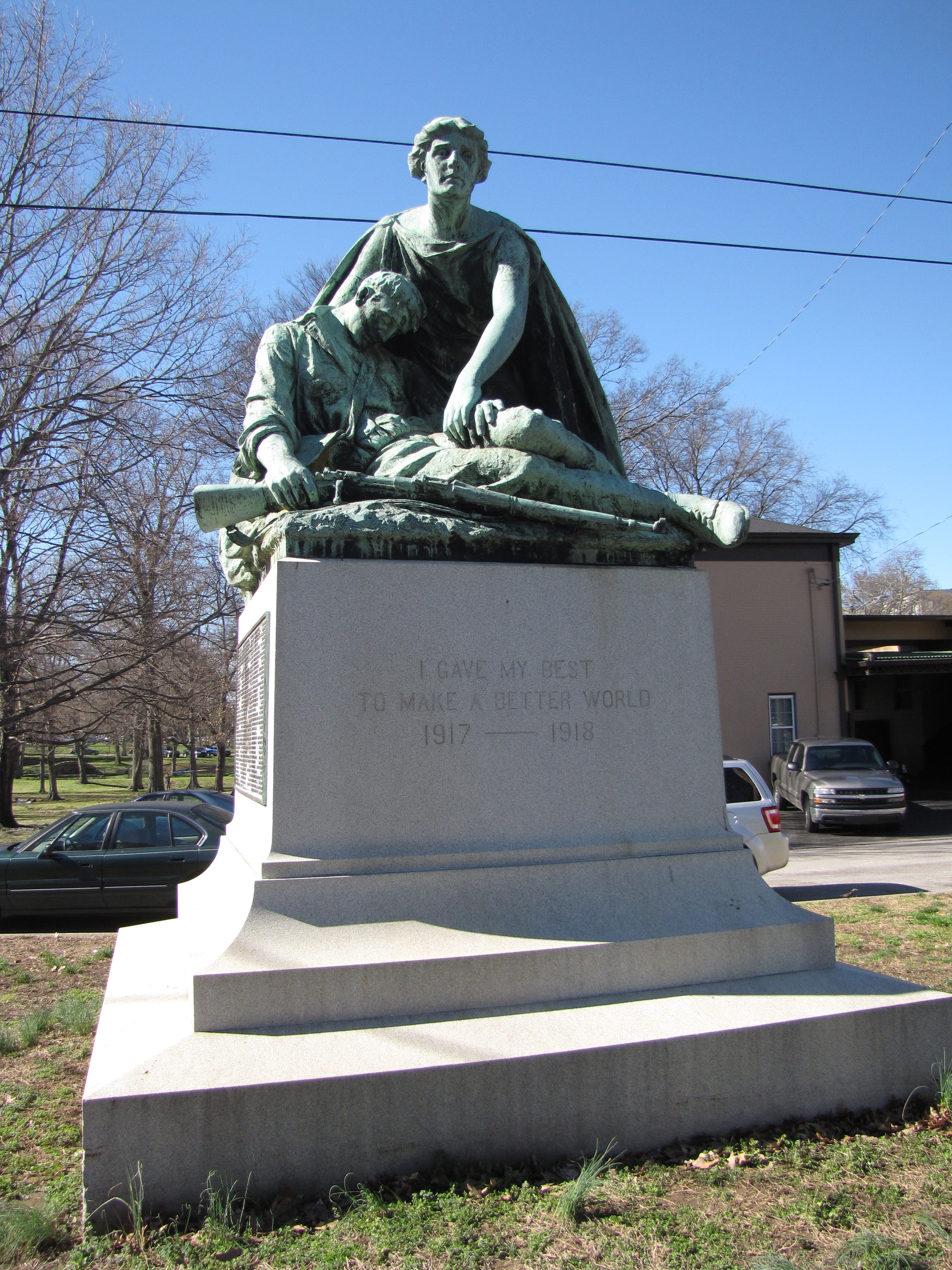
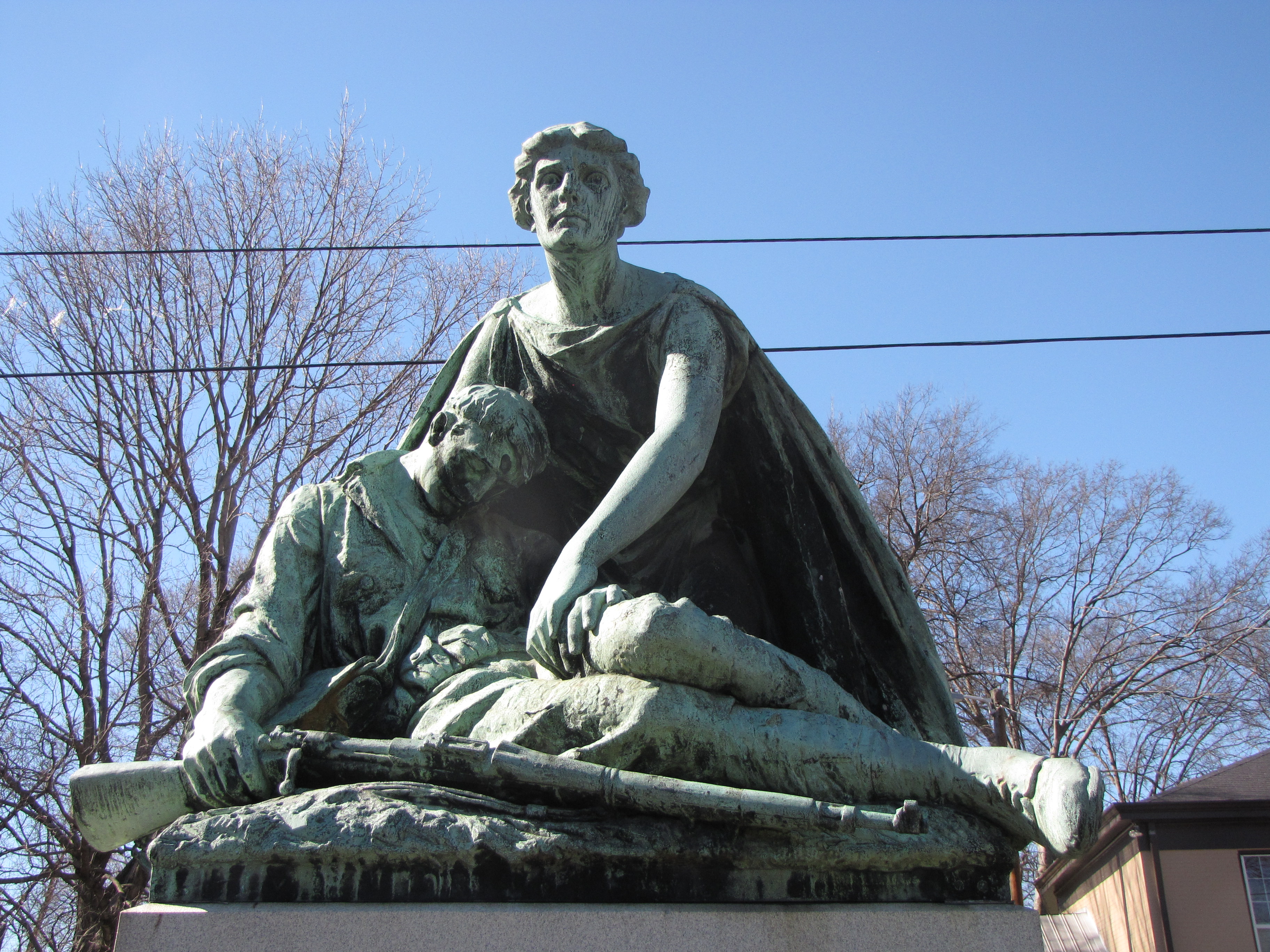
Hungarian-born sculptor George Julian Zolnay (July 4, 1863 – May 1, 1949) created monumental works of arts including the memorial at the edge of Centennial Park in Nashville, Tennessee, for fallen World War I soldiers. This sculpture shows the full force and emotion of his work. A young soldier, still clutching his rifle lies in the lap of a young woman who cradles him as he dies. Her cape covers them.

IMG_7108

IMG_7109

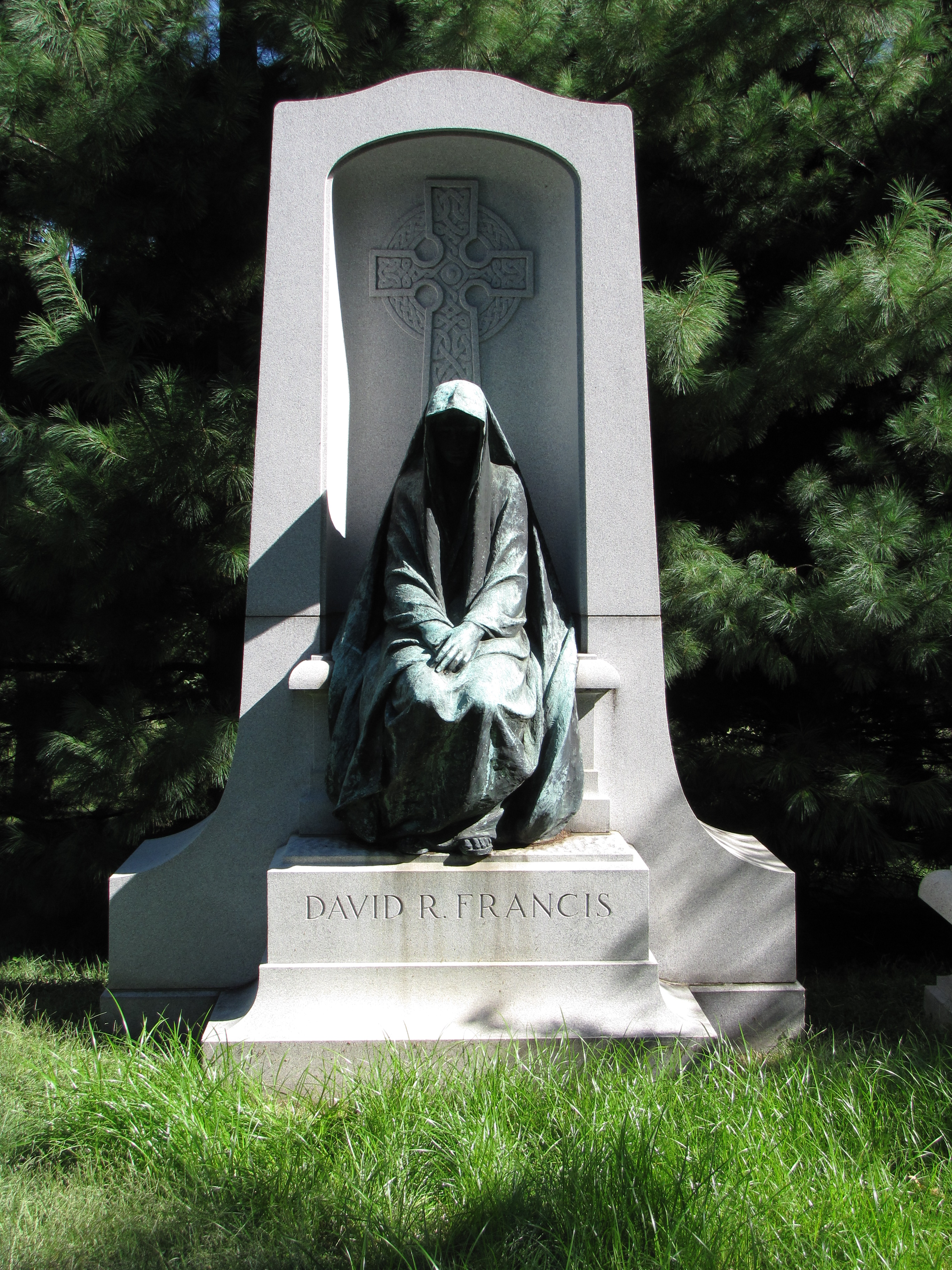
Just like other great artists of the time, Zolnay was commissioned to create cemetery memorials. The seated mourning figure was commissioned by David Rowland Francis (October 1, 1850 – January 15, 1927), who served in various political posts such as, Mayor of St. Louis, Governor of Missouri, United States Secretary of the Interior, and Ambassador to Russia. Zolnay’s mourning figure in the Bellefontaine Cemetery, at St. Louis, Missouri, wears a cloak that casts a shadow over her face giving the statue a haunting look.

IMG_9741

IMG_9743

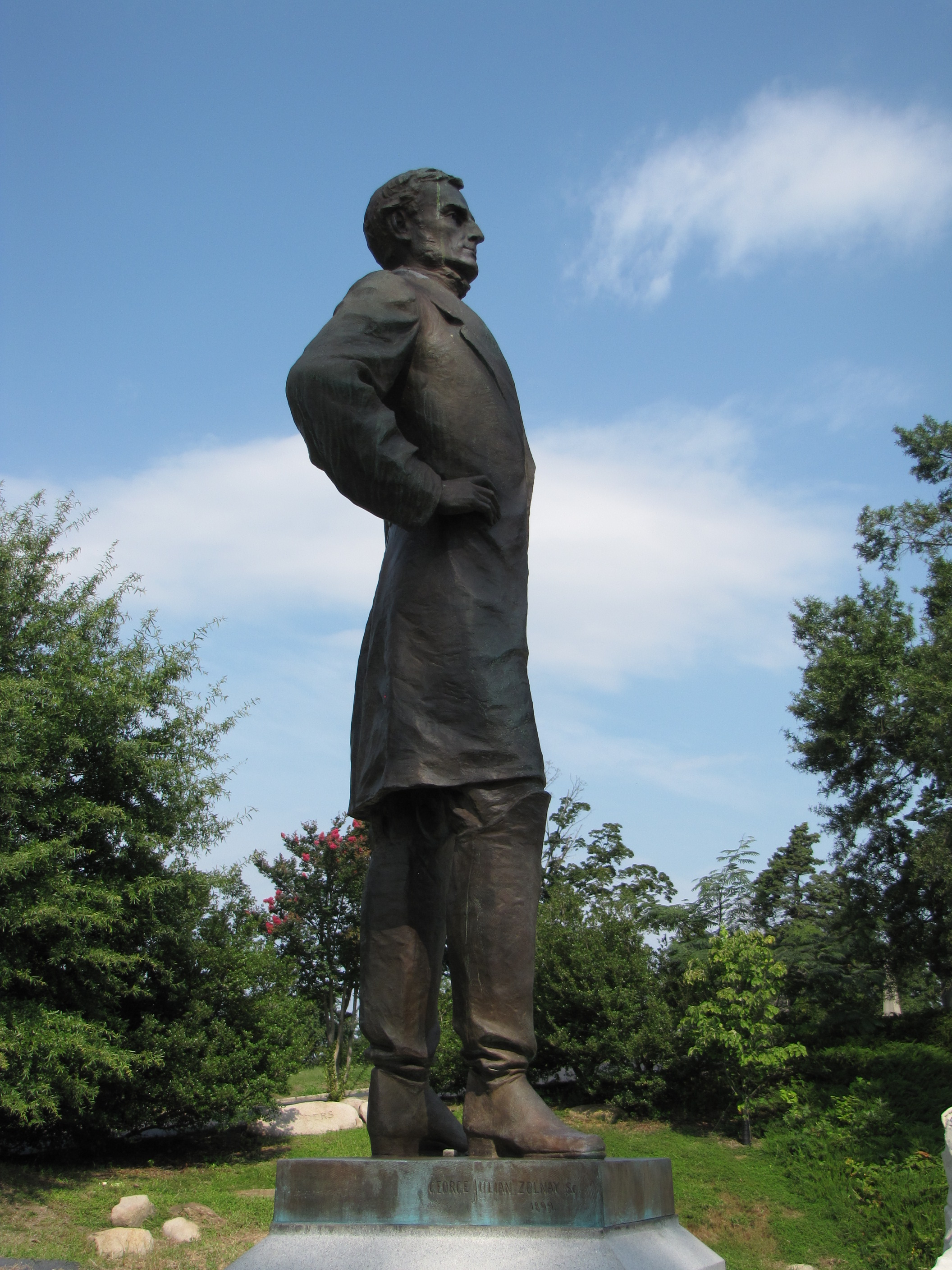
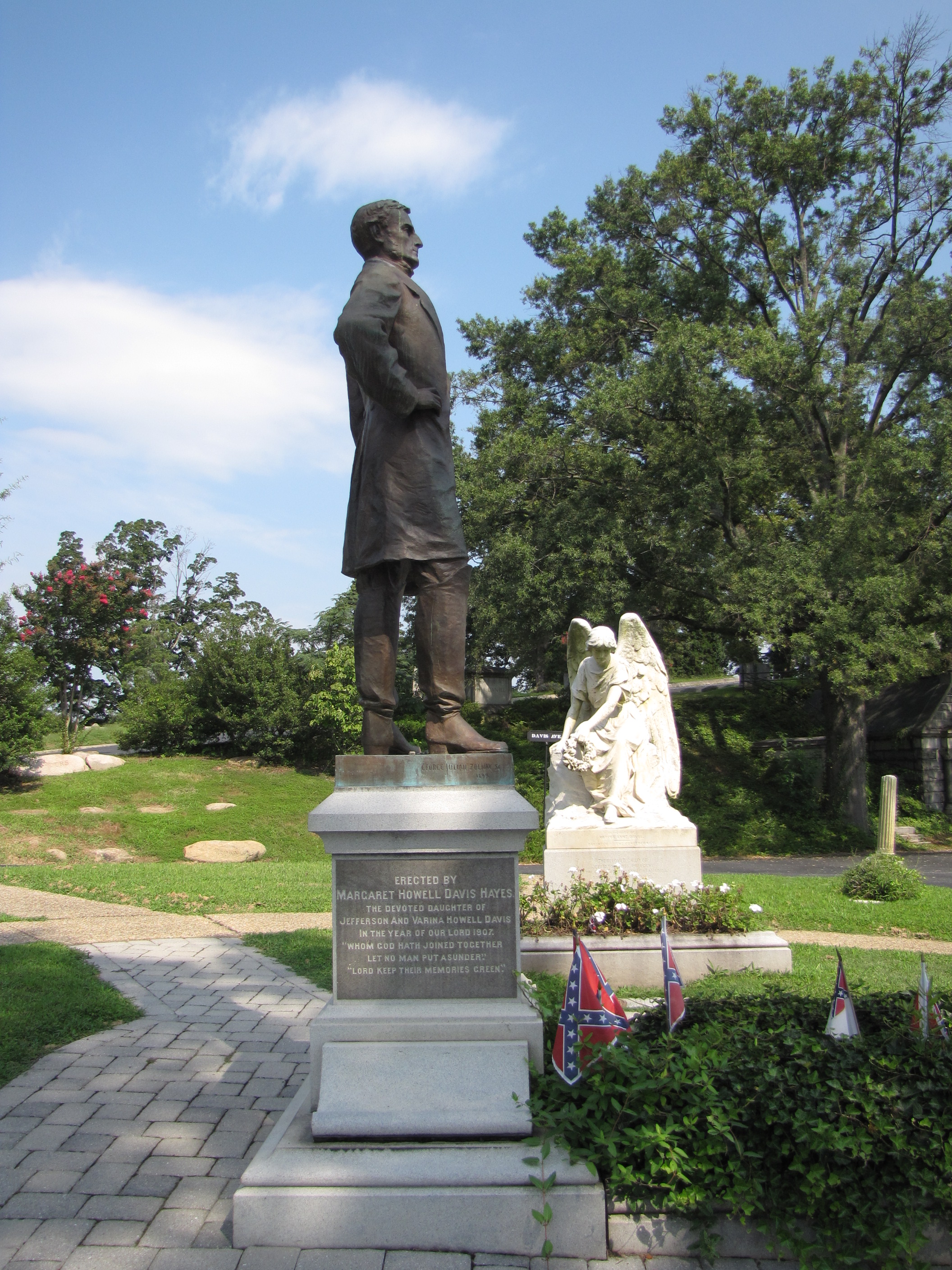
The sculpture Zolnay created for Confederate President Jefferson Davis (June 3, 1807 – December 6, 1889) in the Hollywood Cemetery, at Richmond, Virginia, shows a proud and unrepentant man. Davis was a graduate of the U.S. Military Academy at West Point served six years in the United States Army and fought in the Mexican–American War (1846–1848). From 1853 to 1857 under President Franklin Pierce, Davis served as Secretary of War. He was also elected as the Democratic U.S. senator from Mississippi. But, Davis, a believer in each states’ right to secede from the Union, was inaugurated as the President of the Confederate States of America on February 18, 1861. He became inextricably linked to the Confederacy and a symbol of the lost cause.

IMG_6476

IMG_6475

Posted in Uncategorized | 2 Comments

Hope

Lakewood Cemetery, Minneapolis, Minnesota

Lakewood Cemetery, Minneapolis, Minnesota

The representation of Hope can be easily found in American cemeteries.  Hope is most often portrayed as a woman standing and leaning against an anchor.  In the example above, Virtue is seated and holding a small anchor in her lap.  In the example below, she is standing but again, holding the anchor.

The anchor is an ancient Christian symbol that has been found in early catacomb burials.  The anchor was used by early Christians as a disguised cross.  The anchor also served as a symbol of Christ and his anchoring influence in the lives of Christians.  Just as an anchor does not let a moored boat drift, the anchoring influence of Christ does not allow the Christian life to drift.

Lakewood Cemetery, Minneapolis, Minnesota

Lakewood Cemetery, Minneapolis, Minnesota

Posted in Uncategorized | Leave a comment

The Sundial

Lakewood Cemetery, Minneapolis, Minnesota

Lakewood Cemetery, Minneapolis, Minnesota

The sundial has been a way to measure time since the Egyptians developed them over 3,500 years ago. Historians even believe that the obelisks of ancient Egypt were used to measure time even earlier.

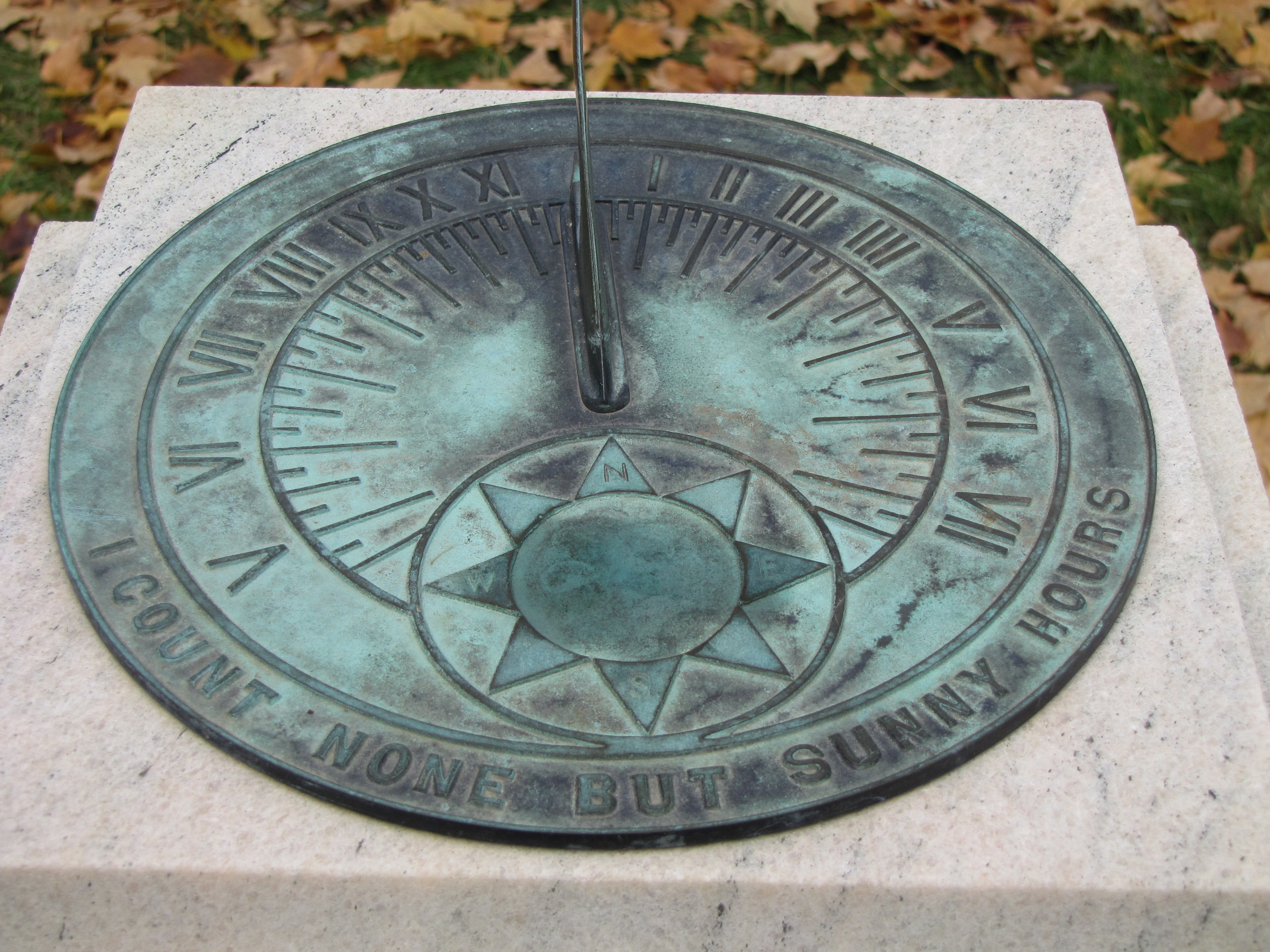
Two sundial monuments in the Lakewood Cemetery at Minneapolis, Minnesota, not only measure time, but also mark the graves of two different families. The sundial marks the passage of time and in funerary art symbolizes the passage of time. The white-marble Ludlum Family sundial above punctuates that point with the symbol of the winged hourglass—a symbol that denotes how quickly life passes by, how fleeting time is.

IMG_7871

Inscribed on the Ludlum sundial is the message, “LIGHT FOLLOWS DARKNESS”.

Lakewood Cemetery, Minneapolis, Minnesota

Lakewood Cemetery, Minneapolis, Minnesota

The coral-colored granite Larson Family sundial, flanked by marble carved to emulate rays of sunlight has the following upbeat but accurate inscription (for a sundial cannot count time in darkness), “I COUNT NONE BUT SUNNY HOURS”.

IMG_7883

Posted in Uncategorized | 1 Comment

Slaying the Dragon

Holy Cross Cemetery, San Diego, California

Holy Cross Cemetery, San Diego, California

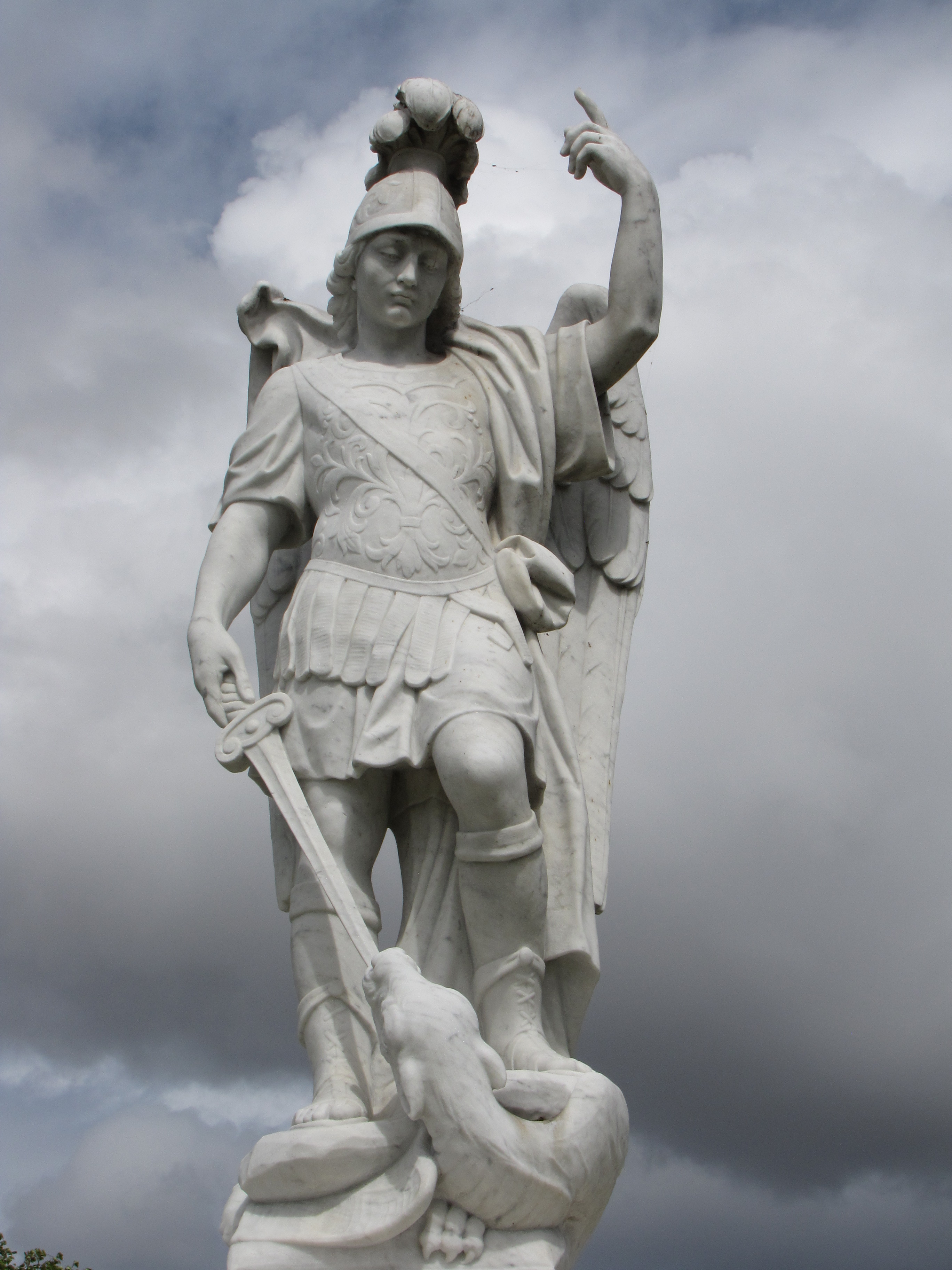
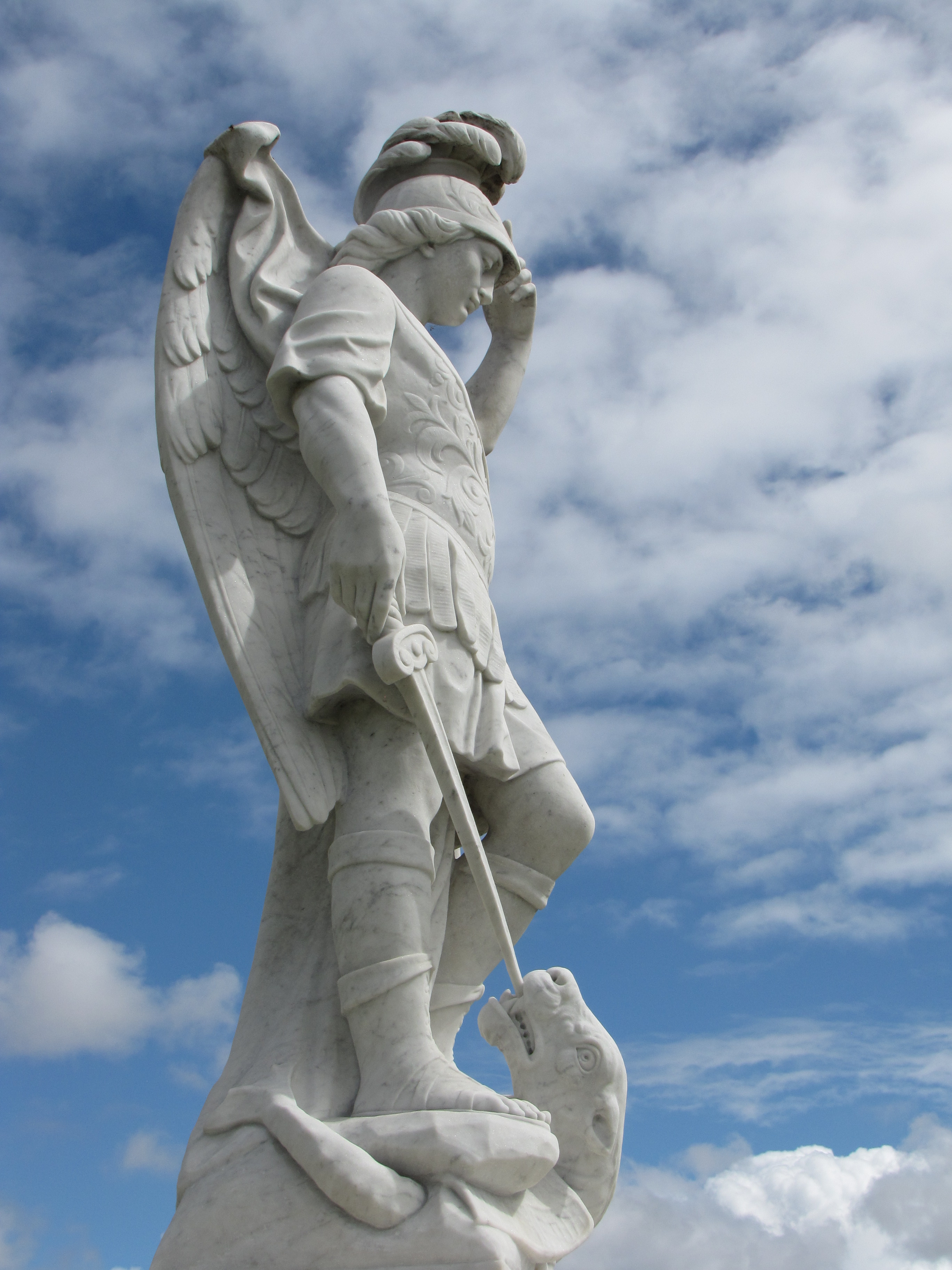
St. Michael is featured in many cemetery sculptures. Only the Archangel Michael, one of three angels mentioned by name in the Bible, is clothed in armor.  The sword he carries represents a cross but also a weapon in his war against the devil’s warriors.

Archangel Michael is a Christian soldier fighting Satan’s hordes.   Archangel Michael is often represented standing on a worm or a dragon.  In dramatic examples such as this one, St. Michael has plunged his sword into Satan’s mouth as he stands on the vanquished enemy.  Satan is depicted as a dragon.

IMG_6811

Posted in Symbolism | 1 Comment

The Woman Who Lives on a Ladder

IMG_8011

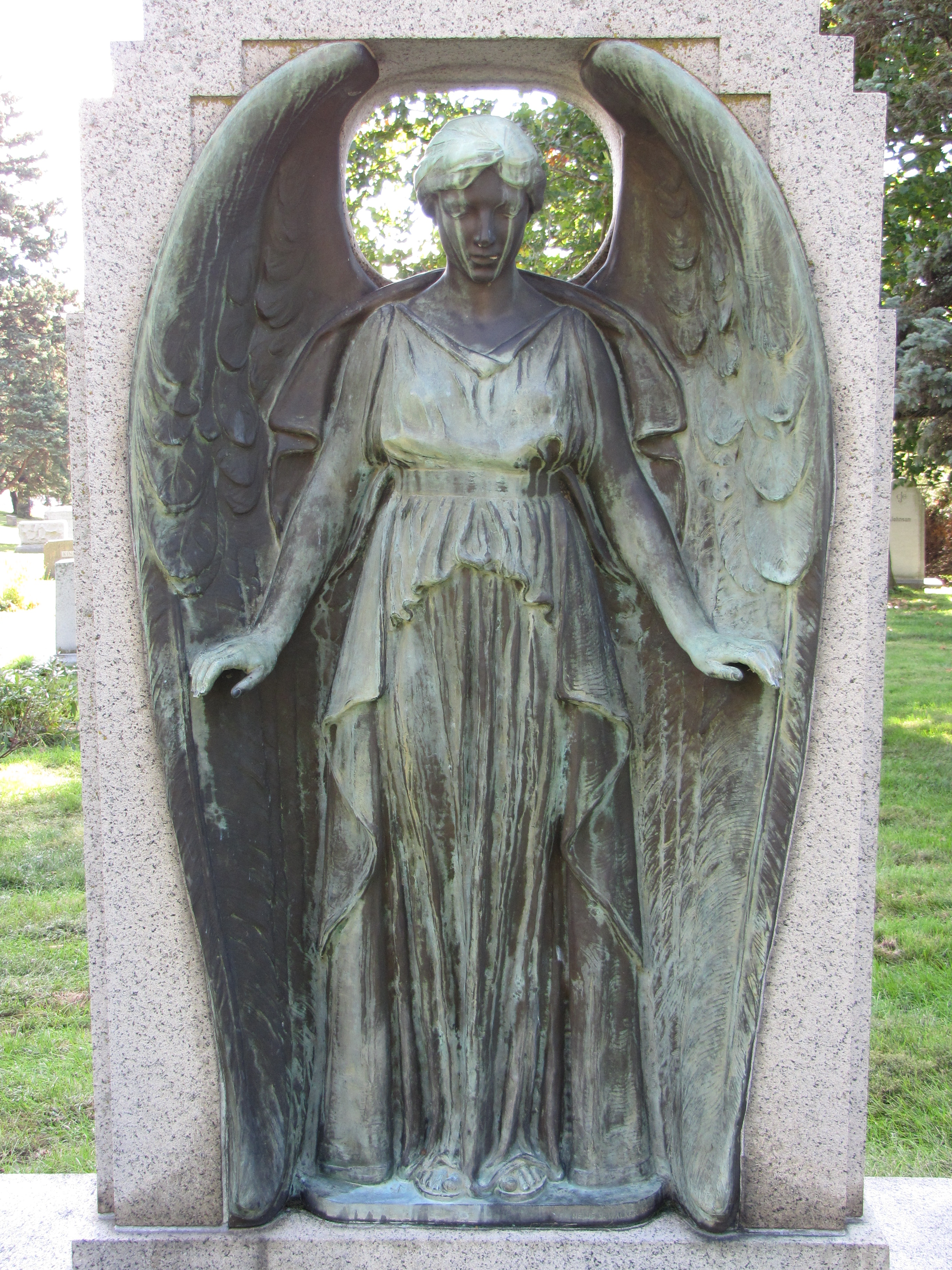
Nellie Verne Walker (December 8, 1874 Red Oak, Iowa – July 10, 1973 Colorado Springs, Colorado) stood a whopping 4 foot 8 inches tall. The diminutive woman was not the image one thinks of when conjuring up a sculptor creating monumental works of art. But she climbed up and down ladders teetering on the steps, leaning in and over her creations to carve sculptures of all sizes earning her the moniker, “the woman who lives on a ladder”.

She first picked up a hammer and chisel in her father’s Moulton, Iowa shop carving gravestones. But by age 17 she carved her first work of art—a limestone bust of President Abraham Lincoln. In a mere 24 days, she had created the bust for the Columbian Exposition being held in Chicago in 1893. Nellie was determined to study art at the Chicago Art Institute and set out on that path in an unlikely place—a secretarial pool as a legal secretary. Within six years she was able to afford tuition where she studied with the famed Lorado Taft with whom she worked until his death in 1936. In fact, when he died, his Herald Square Monument in Chicago which includes statues of George Washington, Robert Morris and Haym Solomon was not completed and Nellie was one of three artist engaged to finish it.

Nellie created famous works, such as, the statue of Senator James Harlan which stands in Statuary Hall in the United States Capitol Building; Chief Keokuk in Rand Park in Keokuk, Iowa; and the Polish War Memorial in Chicago. She also returned, in a way, to her earliest work in her father’s workshop—creating cemetery monuments. But this time, she didn’t carve gravestones but instead created sculptures. Below are three examples of her cemetery commissions.

Milton T. Barlow 1844 – 1930 Forest Lawn Cemetery, Omaha, Nebraska

IMG_0547

IMG_0551

Myron Leslie Learned 1866 – 1928 Forest Lawn Cemetery, Omaha

Mary Poppleton Learned 1873 – 1960 Forest Lawn Cemetery, Omaha, Nebraska

IMG_0544

IMG_0545

Donald Bartley McMullen 1892 – 1966 Lakewood Cemetery, Minneapolis, Minnesota

Helen Diggins McMullen 1892 – 1918 Lakewood Cemetery, Minneapolis, Minnesota

IMG_8003IMG_8007

Posted in Uncategorized | 8 Comments