Stylistic Juxtaposition

Félix_Nadar_1820-1910_portraits_Eugène_Delacroix_restored[1]

Ferdinand Victor Eugène Delacroix (26 April 1798 – 13 August 1863) was a French romantic artist, influenced by the round and plump figures painted by Reubens, is now most famous for a painting he created titled, Liberty Leading the People. The painting portrays a bare-breasted woman, the allegorical figure of liberty, who carries the Tri-color and leads the French peasants in revolt in 1830 against Charles X.  Delacroix’s version of events depicts the peasants as heroic characteristic of his romantic style and in stark contrast to the neoclassical style that was also in vogue at the time.

800px-Eugène_Delacroix_-_La_liberté_guidant_le_peuple[1]

His black granite sarcophagus is modeled after the Roman tomb of Lucius Cornelius Scipio Barbatus. The Scipio sarcophagus was erected around 150 BC.  Lucius Cornelius Scipio Barbatus (died c. 280 BC) was one of the two elected Roman consuls in 298 BC. Scipio’s tomb is now preserved in the Vatican Museum in Rome, Italy. Though Delacroix led the romantic painters into creating a newer style, his tomb is decidedly classical.
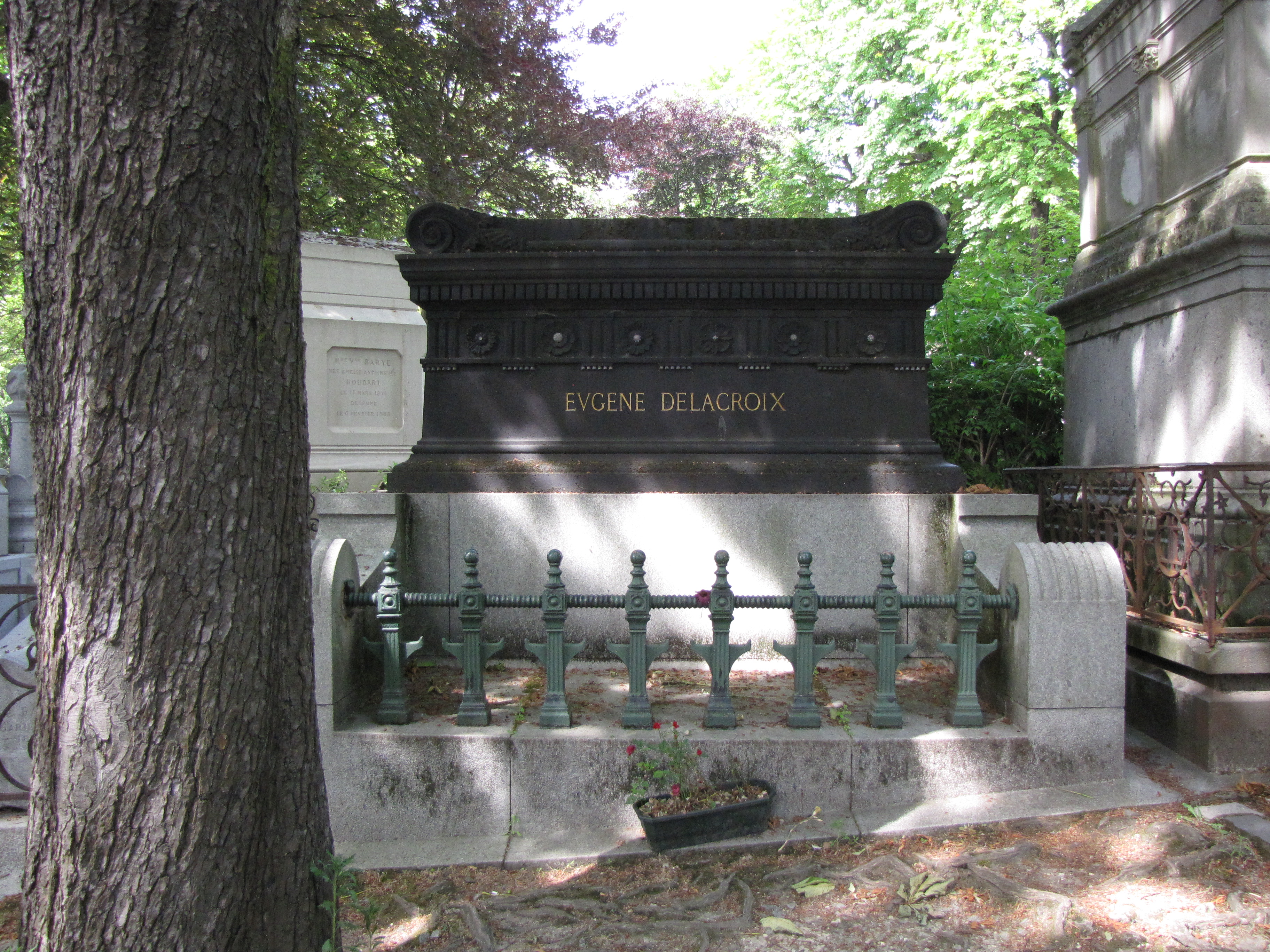
Le Père Lachaise Cemetery, Paris, France

Le Père Lachaise Cemetery, Paris, France

Posted in Famous graves | 1 Comment

A Long Layover in Paris

IMG_9679

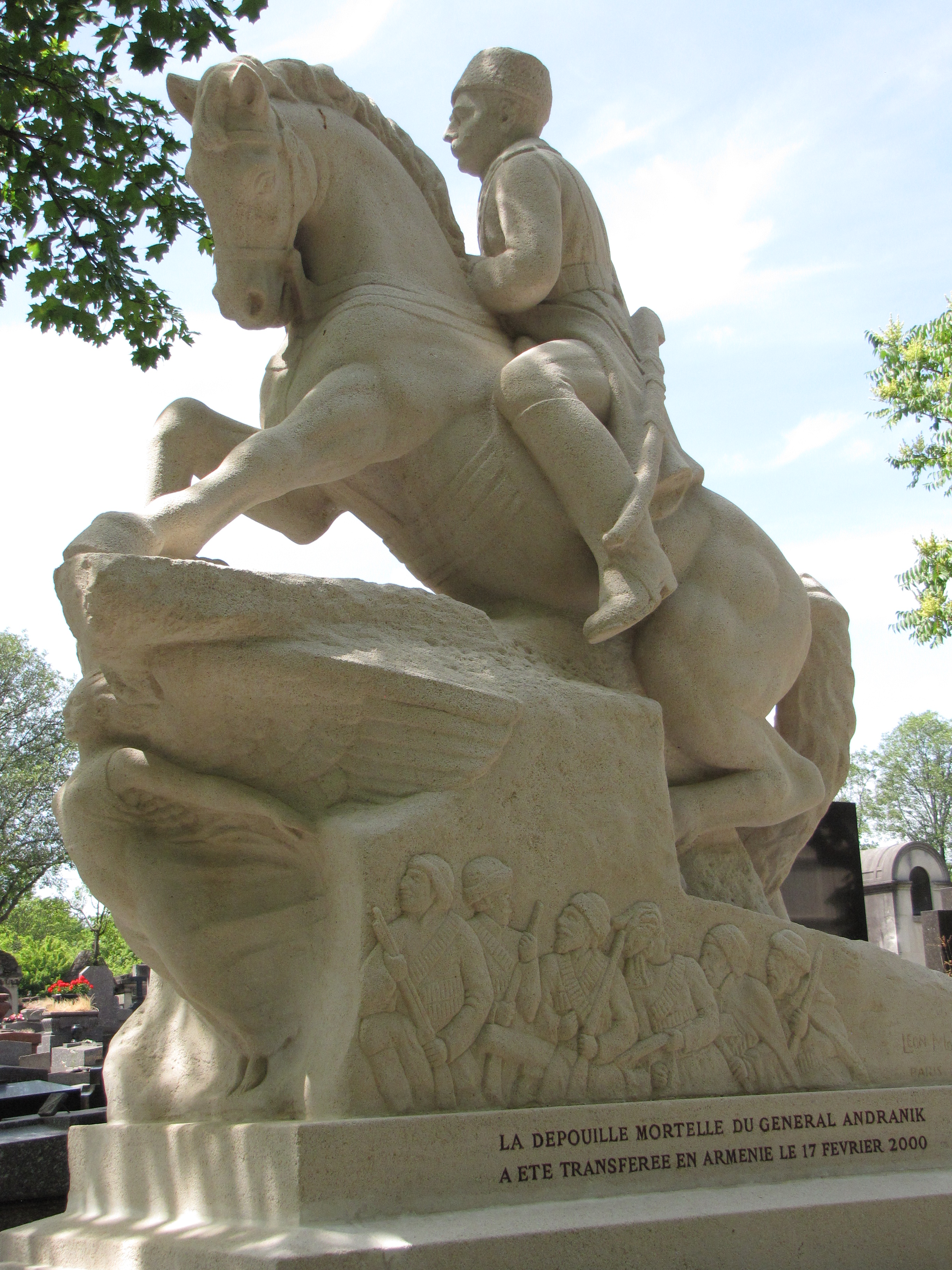
A walk through a cemetery rarely brings you to an equestrian memorial, but Le Père Lachaise is not an ordinary cemetery. In section 94, there it is an equestrian statue that honors General Antranik Ozanian, (February 25, 1865 – August 31, 1927) the great Armenian revolutionary, who ended up years later dying in Fresno, California, and was buried in the Ararat Cemetery in that city.

General_Andranik[1]

That burial was temporary—a short stay on his way back to his Armenian homeland. However, on his way back in the late 20s his body was stopped in Paris because the Russians were not going to allow his body to enter into Armenia. So, Antranik was laid to rest again, this time at Le Père Lachaise on January 29, 1928. He remained buried there until he was re-interred at the military cemetery at Yerevan, Armenia, on February 20, 2000.  The statue remains, though, the tomb is empty, a reminder of his long layover in the storied cemetery.

IMG_9674

Posted in Famous graves | 1 Comment

Pieta

IMG_8796

The Del Duca Family monument in Le Père Lachaise features a bronze sculpture of the Virgin Mary holding the limp dead body of her son, Jesus Christ. In this sculpture Mary is lifting His body down from the Cross. Many of the pieta sculptures show Jesus lying on Mary’s lap, but this dramatic version depicts the moment Jesus was brought down, His suffering and sacrifice over.

IMG_8797

Works of art, usually sculptures, depicting this subject first began to appear in Germany in the 1300s and are referred to as “vesperbild” in German.

Clear Creek Christian Church Cemetery, Bloomington, Indiana

Clear Creek Christian Church Cemetery, Bloomington, Indiana

Images of Mary and the dead body of Jesus began to appear in Italy in the 1400s.  The most famous of these sculptures is Michelangelo’s pieta which he sculpted for St. Peter’s Basilica in the Vatican, carved when he was only 24 years old.

Pieta is Italian for “pity.”

Posted in Symbolism | 1 Comment

The grave can’t hold him

IMG_9998

GEORGES RODENBACH

1855 – 1898

Georges_Rodenbach,_portrait[1]

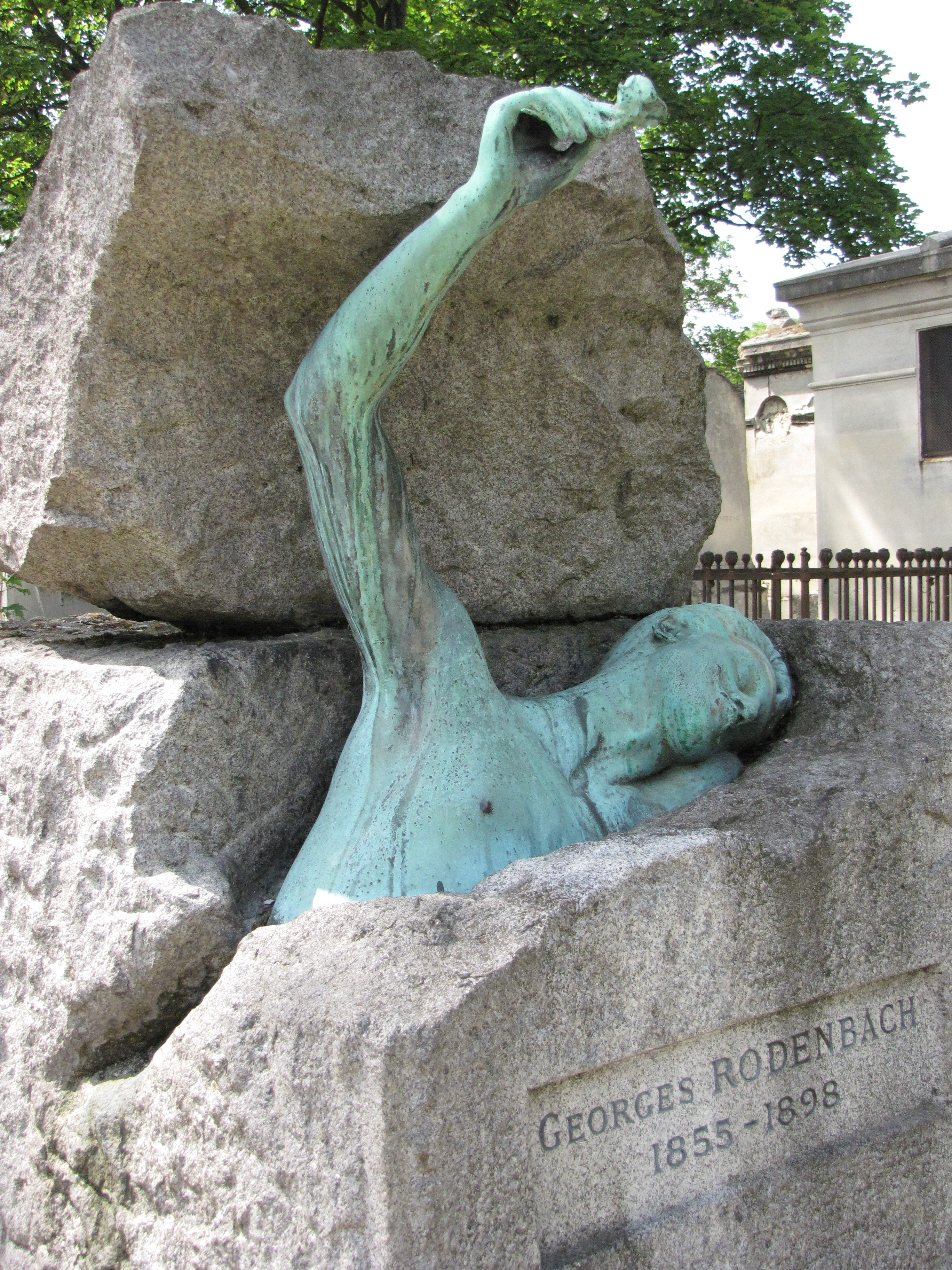
I took pictures of hundreds of gravestones at Le Père Lachaise and I think my favorite is the dramatic tomb of a little known poet and writer—Georges Rodenbach. Rodenbach is best known for his novel, Bruges-la-Morte, a story about a man who walks around the streets of Bruges mourning his dead wife when he spots a woman who is the spitting image of her. This novel is notable for it was the first time a work of fiction used photographs. He wrote other works, including eight volumes of poetry and three other novels, as well as, short stories and essays—all while working as a lawyer in Paris.

The tomb has a sculpture of Rodenbach himself busting out of a large block of rough-cut granite. His tomb is meant to be a symbol of how even the grave cannot hold his spirit. He defiantly holds up a flower in one hand as if he is mocking death.

IMG_9999

Posted in Famous graves | 1 Comment

The Bat

IMG_0184

Today’s post is dedicated to Tom Stryker, a fellow gravestone enthusiast and fan of Le Père Lachaise, the great Paris cemetery. Tom challenged me to write 10 posts about my tour of the cemetery. Not sure I will write that many, but here is my first.

As any devotee of graveyards would do, I spent my entire first day in Paris roaming the avenues of Le Père Lachaise, map in hand, searching for the famous graves of Jim Morrison, Edith Piaf. Oscar Wilde, and others too numerous to list. But it is the ordinary that also claims my attention—the tombs built by ordinary families. One such tomb was built by two families—Lautru and Margot. The tomb is a common one found in Le Père Lachaise—they look like telephone booths—vertical and small, often with a single iron door with some decoration on the front of the door. What is not common, however, is the decoration found on this tomb—a bat.

The bat is a rare graveyard symbol. Like many symbols it represents one thing in Eastern cultures and quite another in the West. To the Eastern cultures the bat is seen as a symbol of good fortune. Not so in the West. Since Medieval times, the bat has symbolized demons and evil spirits. In cemetery symbolism the bat is associated with the underworld. Think how often the bat is used as a Halloween decoration—it is definitely part of all things spooky, creepy, and the macabre.

And here is the bat on top part of the door to this family tomb.

IMG_0185

Posted in Symbolism | 3 Comments

Shakespeare

Statue of William Shakespeare by the River Avon at Stratford-upon-Avon

Statue of William Shakespeare by the River Avon at Stratford-upon-Avon

Ordinarily this space is confined to blog posts about North American graves. But, vacation abroad and a visit to one of the most famous graves in whole of England merits a slight and hopefully memorable change of pace.

A mosaic of Shakespeare above a doorway into a Stratford bank

A mosaic of Shakespeare above a doorway into a Stratford bank

In 1564, in the small village of Stratford-upon-Avon, William Shakespeare was born, the son of John and Mary Shakespeare. John was a prosperous glove maker but his son was destined to become one of the most celebrated playwrights and poets in the whole and long literary history of England.

William Shakespeare's birthplace

William Shakespeare’s birthplace

It is difficult to estimate his influence on drama, the English language, poetry, and the lives of countless high school students worldwide who have read his works and been tested accordingly.

IMG_8658

The sole industry in sleepy Stratford is selling Shakespeare. His image is seen everywhere—selling ice creams, on store fronts, in alcoves, in statuary in the park, on signage of all kinds.     Shakespeare is seen everywhere. Without the Shakespeare birthplace, Ann Hathaway’s cottage, his daughter’s home—Hall’s Croft, his mother’s farm, along with his burial place in Holy Trinity, Stratford would most likely be no bigger than neighboring Henley. It is also the home of the Swan Theater and the Royal Shakespeare Company. But, be sure Shakespeare not only left a mark on sleepy Stratford, but all of literature.

Holy Trinity Church

Holy Trinity Church

In the floor of the chancel at the Holy Trinity Church at Stratford-upon-Avon is the grave of William Shakespeare with what may be the world’s most well-known epitaph:

GOOD FRIENDS FOR JESUS SAKE FOREBEARE,

TO DIGG THE DUST ENCLOASED HEARE.

BLESE BE YE MAN TY SPARE THES STONES,

AND CURST BE HE TY MOVES MY BONES.

Shakespeare's grave in the Holy Trinity Church Chancel at Stratford-upon-Avon

Shakespeare’s grave in the Holy Trinity Church Chancel at Stratford-upon-Avon

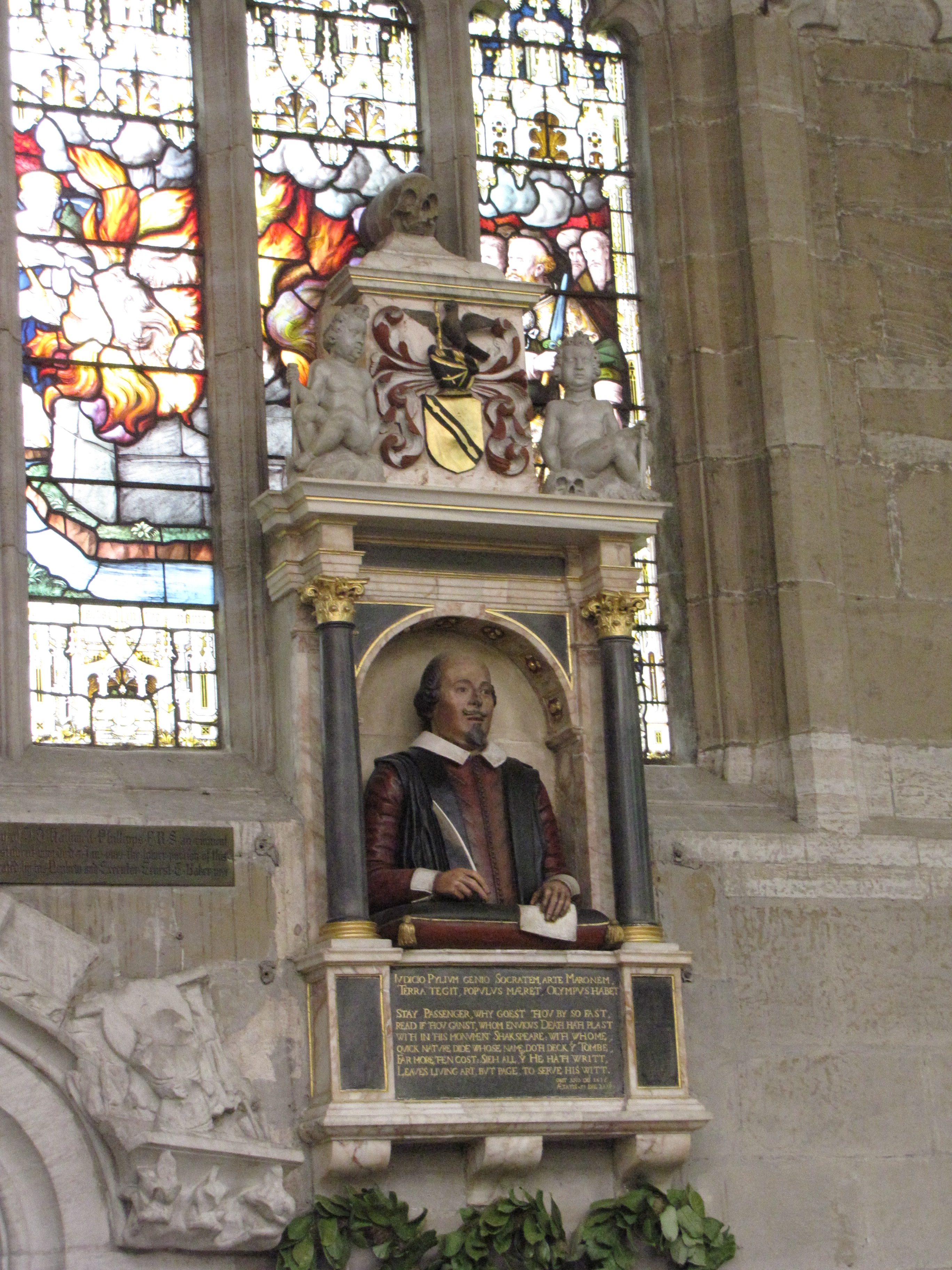
In addition to the grave in the chancel, a memorial bust on the chancel wall honors William Shakespeare, as well.

IMG_8604

Posted in Famous graves | 1 Comment

Lady of Tears

Fairmount Cemetery, Denver, Colorado

Fairmount Cemetery, Denver, Colorado

TRAVIS

BERT W.

1911 – 1989

MILDRED M.

1919 – 1981

Together Forever

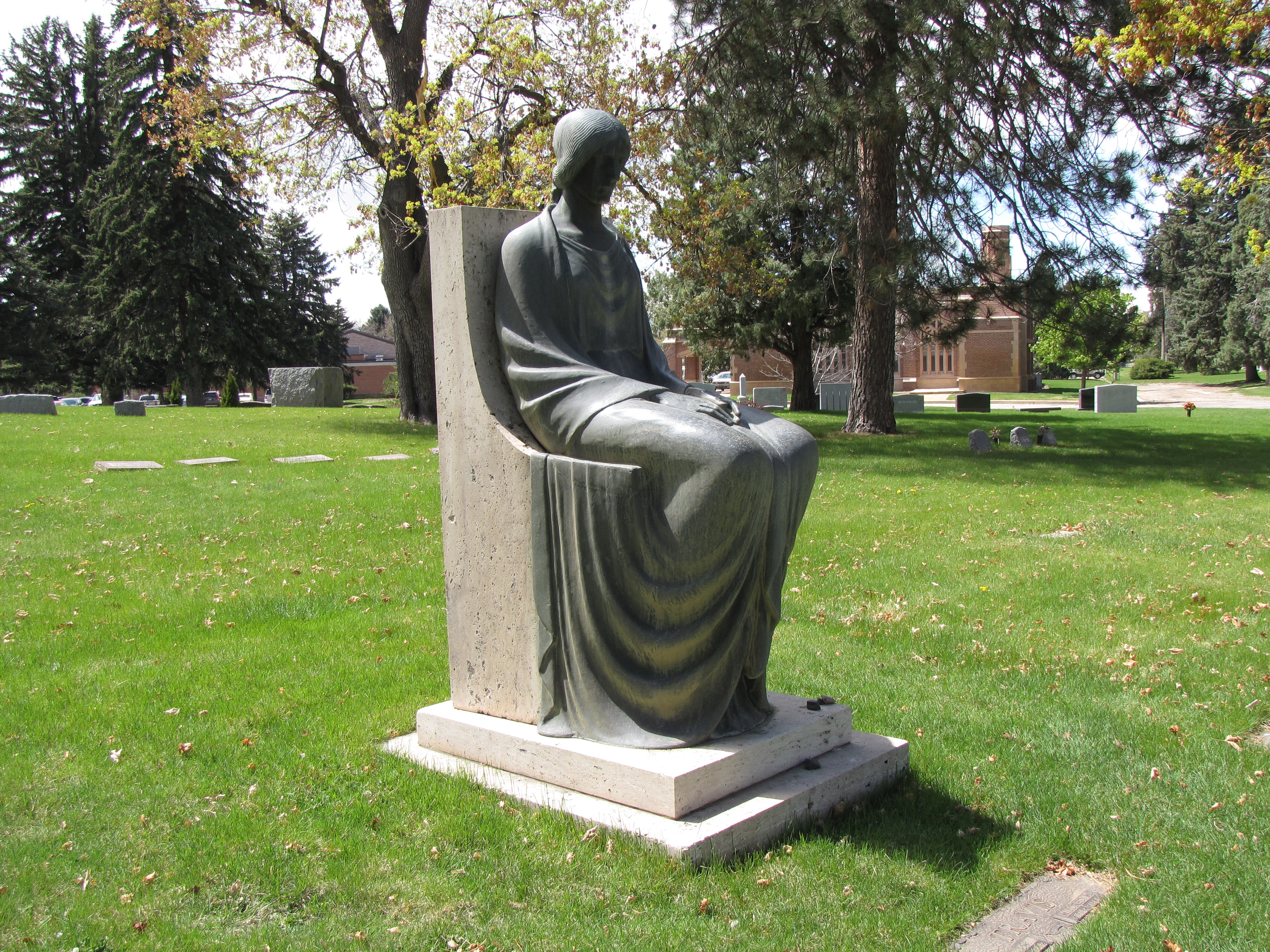
The elegant and sleek mourning figure that marks the graves of Bert and Mildred Travis in the Fairmount Cemetery at Denver, Colorado, sits serenely in a chair, her head slightly bent in sorrow. She clasps her hands together in a display of contemplation and grief.   The patina of the bronze makes it look as if tears have streamed from her eyes which has given way to the name of the statue, the Lady of Tears.

IMG_6666

Posted in Saving Graces | Leave a comment

Keeping up with the Joneses

IMG_6708

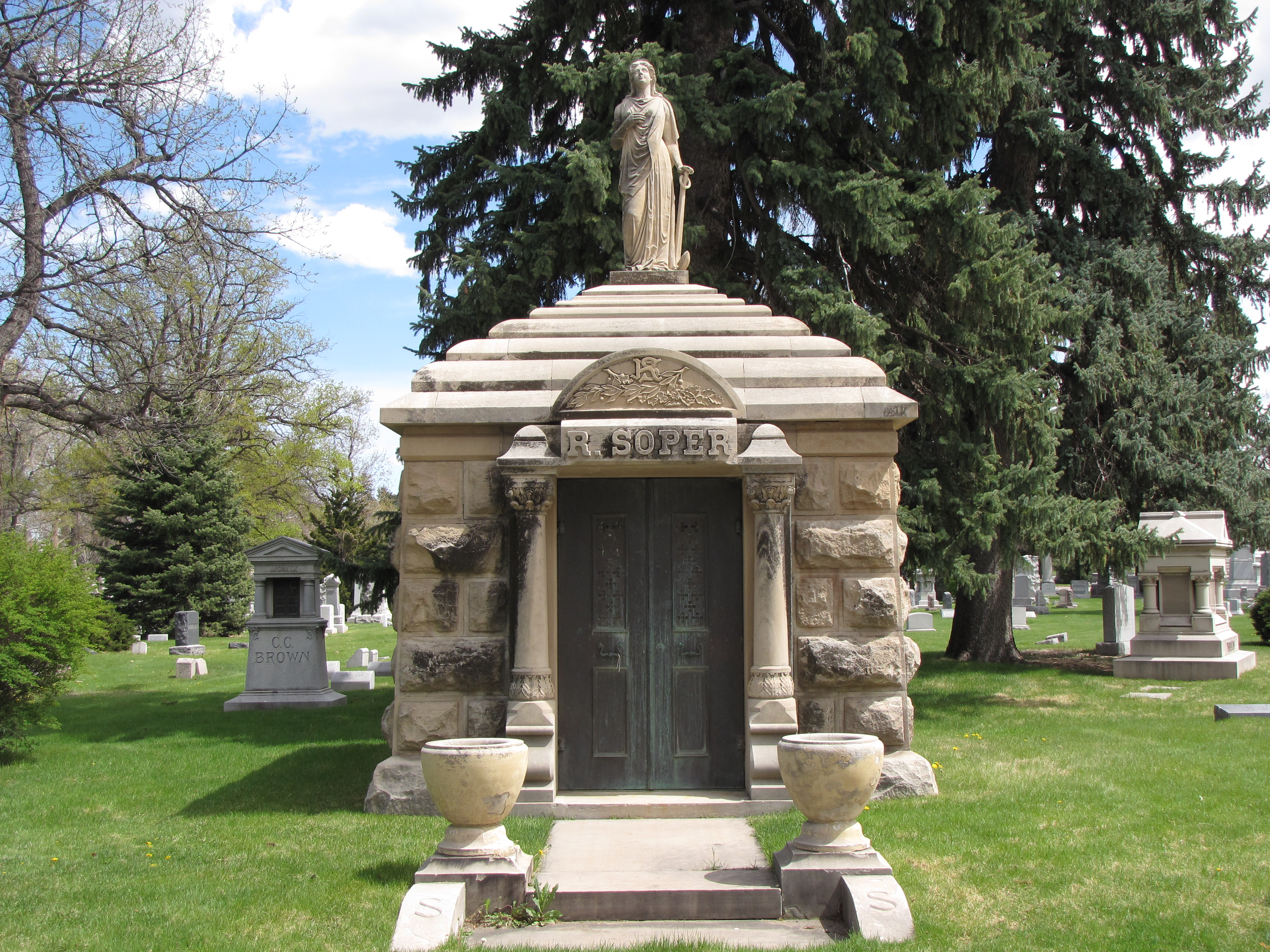
The Soper Mausoleum in the Fairmount Cemetery at Denver, Colorado, was commissioned by Susan Soper in honor of her husband, Roger.  The mausoleum is constructed of rusticated sandstone, that is, the sandstone on the sides of the mausoleum are rough cut as opposed to smooth or polished. Flanking the doorway are Corinthian columns that support an arched doorway with an intricately carved frieze in a half circle. Intertwined in the frieze are laurel leaves, symbolizing victory over death, and acorns and oak leaves, representing strength.

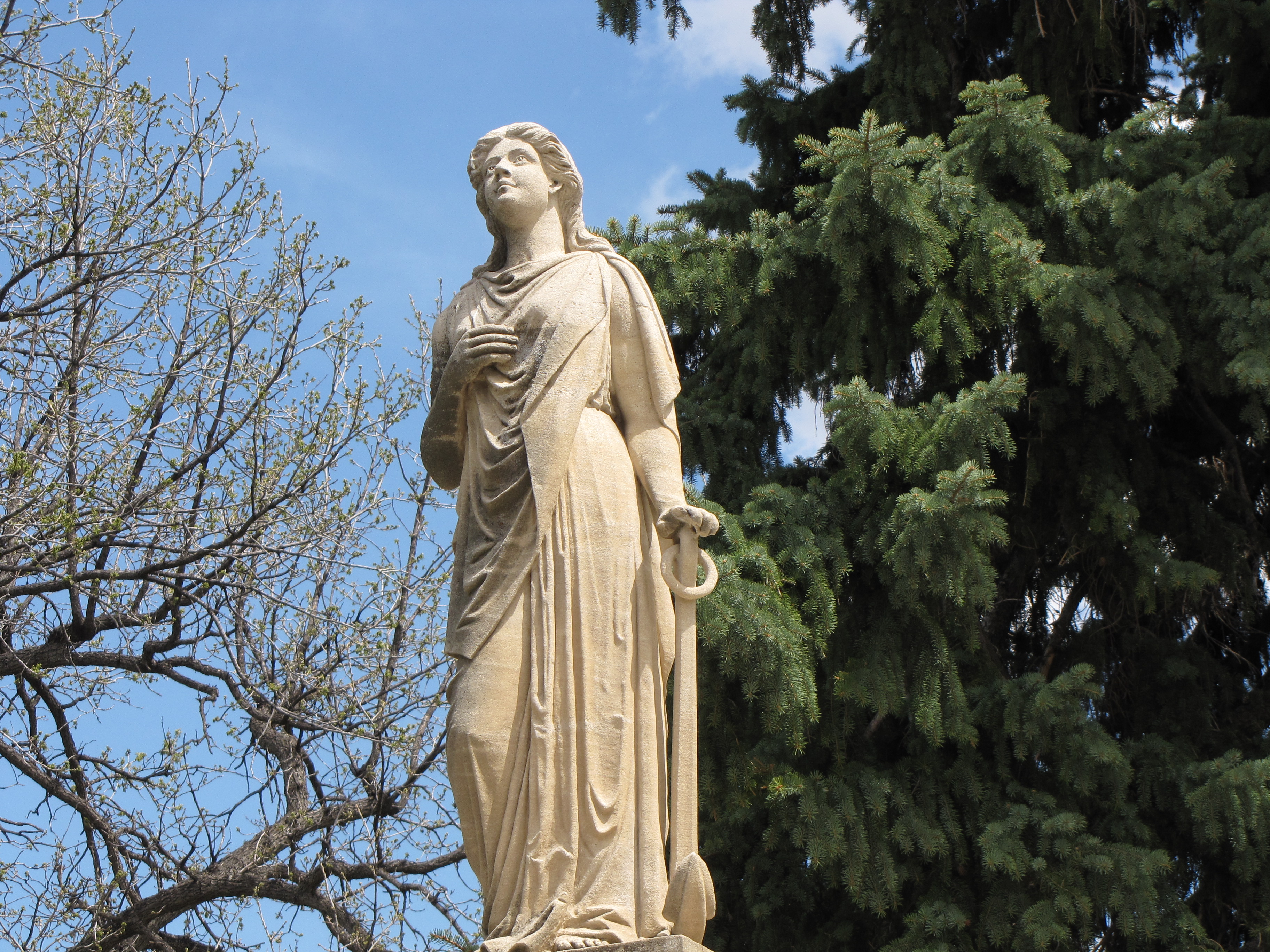
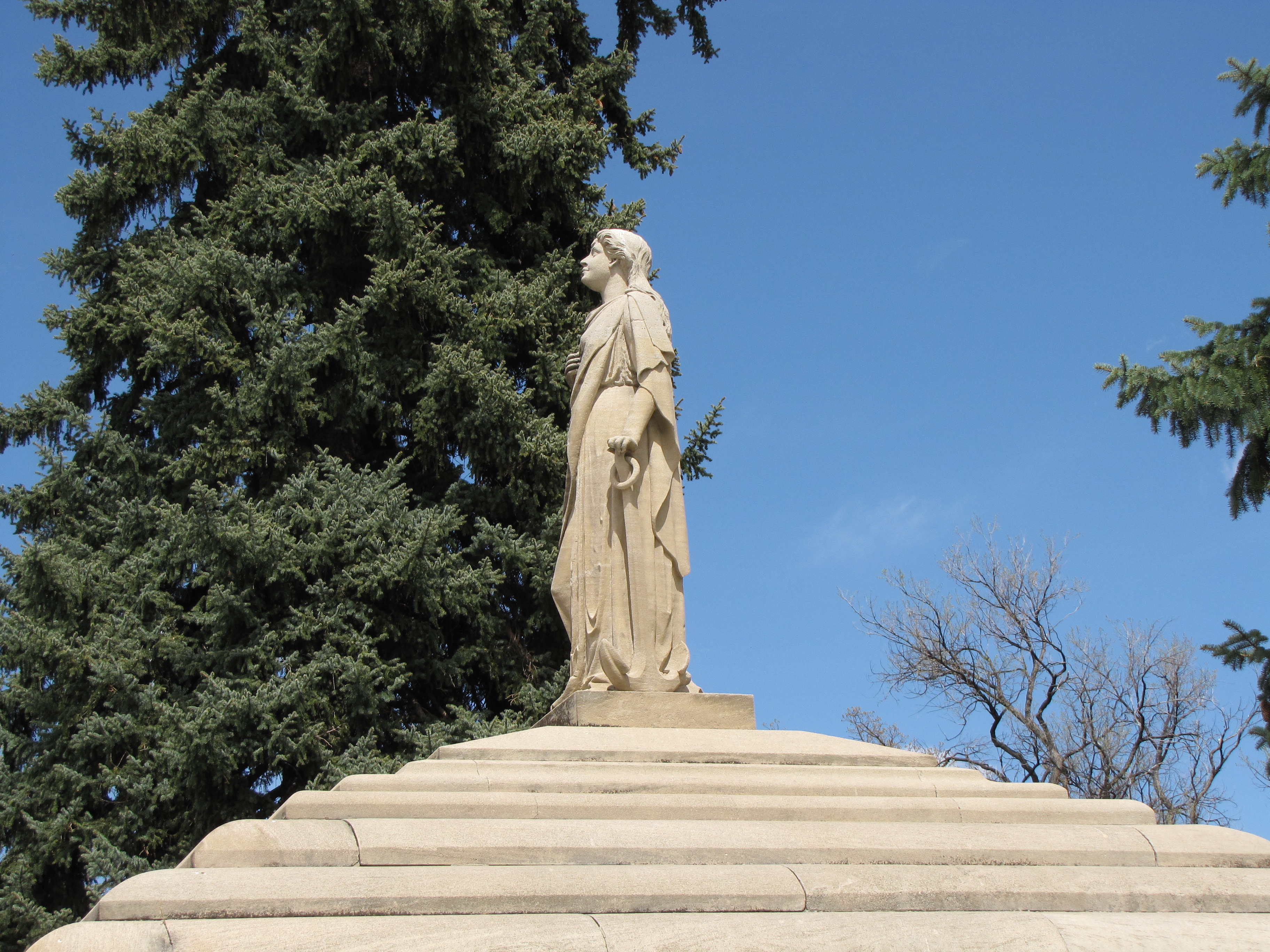
The roof of the tomb is constructed a series of stacked slabs each being smaller than the one before in creating a step pattern. Atop the top step is the life-sized allegorical figure of Hope, common in American cemeteries, leaning on an anchor. Hope looks toward the Heavens clutching her breast. The anchor, one of the earliest Christian symbols, represents faith. The anchor was used by early Christians as a disguised cross.  The anchor also served as a symbol of Christ and his anchoring influence in the lives of Christians.

IMG_6710

According to Pioneer Cemeteries: Sculpture Gardens of the Old West written by Annette Stott, (page 182) the Soper Mausoleum was the first mausoleum built in the Fairmount Cemetery triggering a sort of race to create elaborate and ostentatious displays of grief. It represented a “social competition” among the wealthy women of Denver who were “contemplating tributes to their husbands.” Wealth combined with the Victorian traditions of displaying sorrow in an outward fashion caused ever bigger and more grandiose monuments to be built. Several large and impressive mausoleums were built in Fairmount Cemetery after the Soper tomb that were meant to keep up with the Jones, or in this case the Sopers.

IMG_6711

Posted in Mausoleums, Symbolism | Leave a comment

Tuberculosis

IMG_0114

Dennis O’Leary

Pvt Co. I 23rd Infantry

Died Apl 1, 1901

Age 23 Yrs, 9 Mos.

Marking the grave of Private Dennis O’Leary in the Santa Fe National Cemetery is the hand-carved sandstone gravestone, which O’Leary reportedly carved for himself. Several legends have been told surrounding the soldier’s monument. As one story goes, O’Leary was bored and carved the gravestone including the inscription that states his death date. Then on that date he committed suicide leaving only a note with instructions that he was to be laid to rest underneath his work of art. Another story states that he deserted, carved the gravestone including his death date, turned himself in to the military authorities at Fort Wingate and was summarily hanged on the date he himself had inscribed. Both fanciful stories, however, do not jibe with the military records which cite tuberculosis as the cause of his untimely death.

Private O’Leary was first buried at Fort Wingate, New Mexico.  But, when the fort was decommissioned and closed the soldiers buried there were removed to the Santa Fe National Cemetery.

IMG_0116

The photographs in today’s blog post were taken by my friend, Dan Siburg, who often thinks of me as he passes by a cemetery, as many of my friends do. While I completely understand why they do, on some level it is still a bit disturbing.  I know it is my own fault!

Posted in Uncategorized | 2 Comments

For such is the kingdom of Heaven

Forest Lawn Cemetery, Omaha, Nebraska

Forest Lawn Cemetery, Omaha, Nebraska

Matthew 19:14 King James Version (KJV)

14 But Jesus said, Suffer little children, and forbid them not, to come unto me: for of such is the kingdom of heaven.

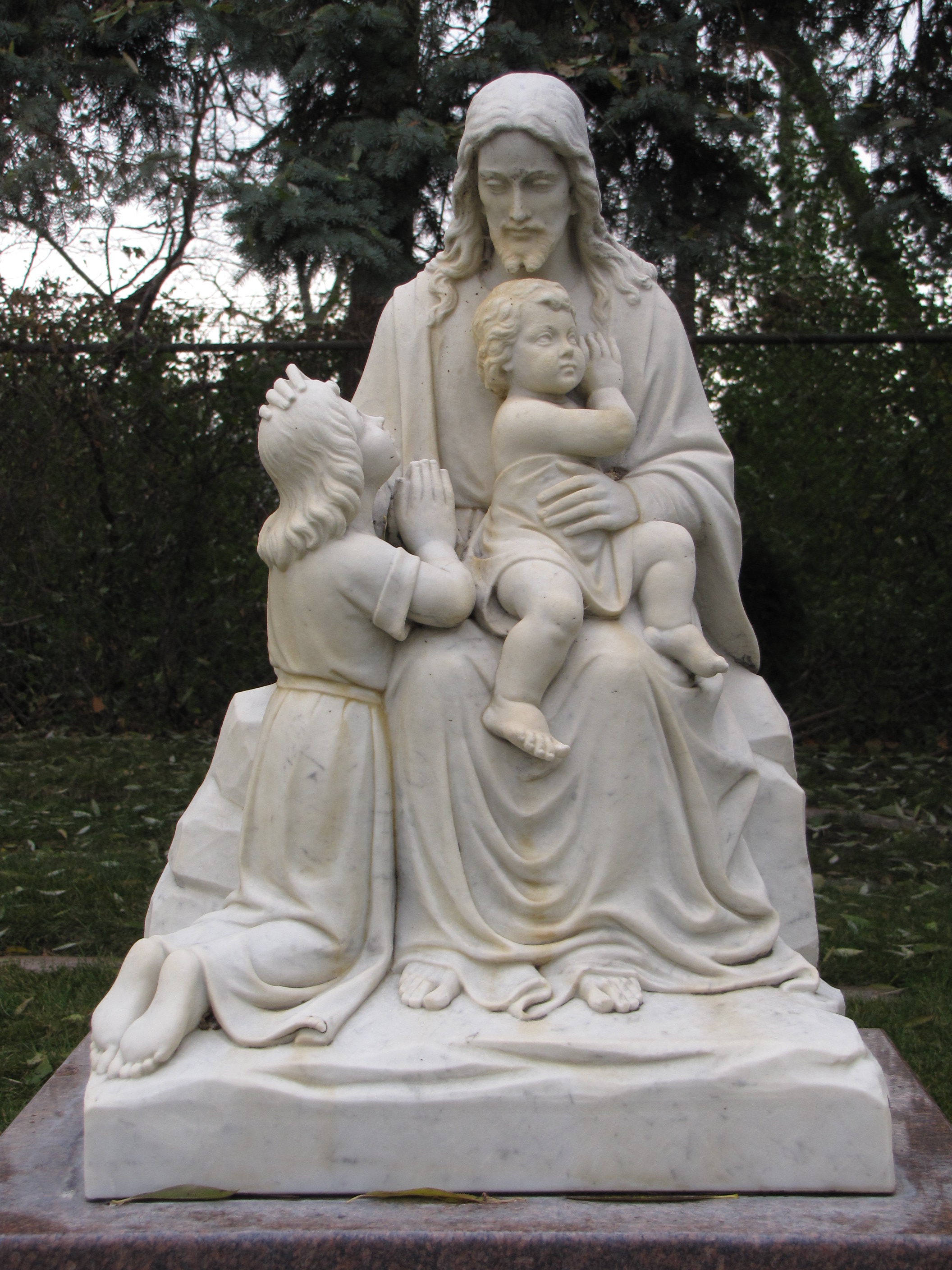
Many cemeteries have sections laid aside for infant burials. Often a feature of these sections is a statue of Jesus with children, a reminder of the Bible verse from Matthew.

IMG_8206

Posted in Uncategorized | 1 Comment