Dreamless Dust

Springdale Cemetery, Madison, Indiana

Springdale Cemetery, Madison, Indiana


Dr. Joseph Barnard (1838-1926) was a Presbyterian minister who plied his craft in Pennsylvania, Iowa, Wisconsin, and Illinois. Joseph and his wife Martha Grey Grubb Barnard (1842-1919) and their children eventually settled in Madison, Indiana, where Barnard served as a minister of the 2nd Presbyterian Church there for over 20 years.

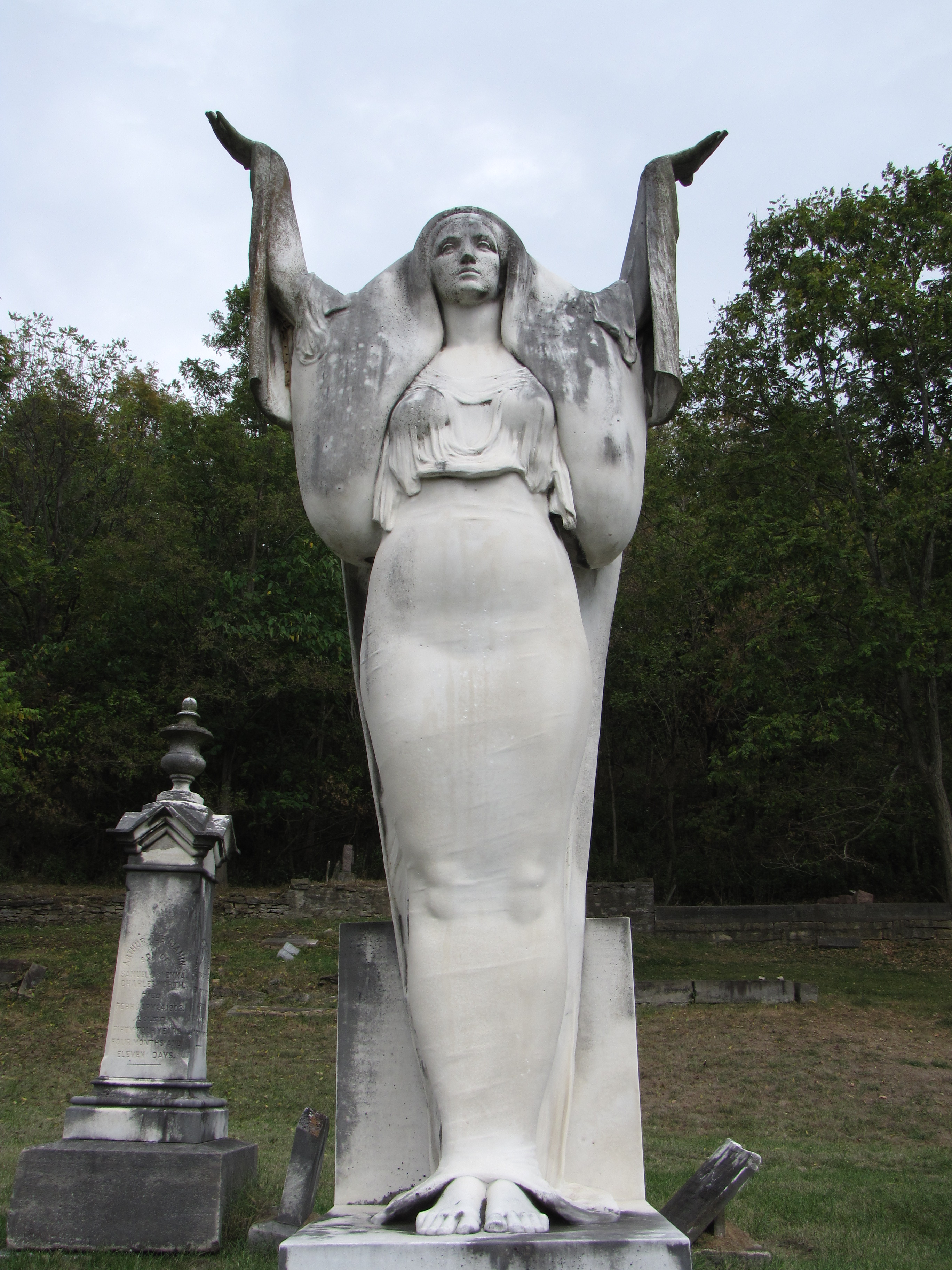
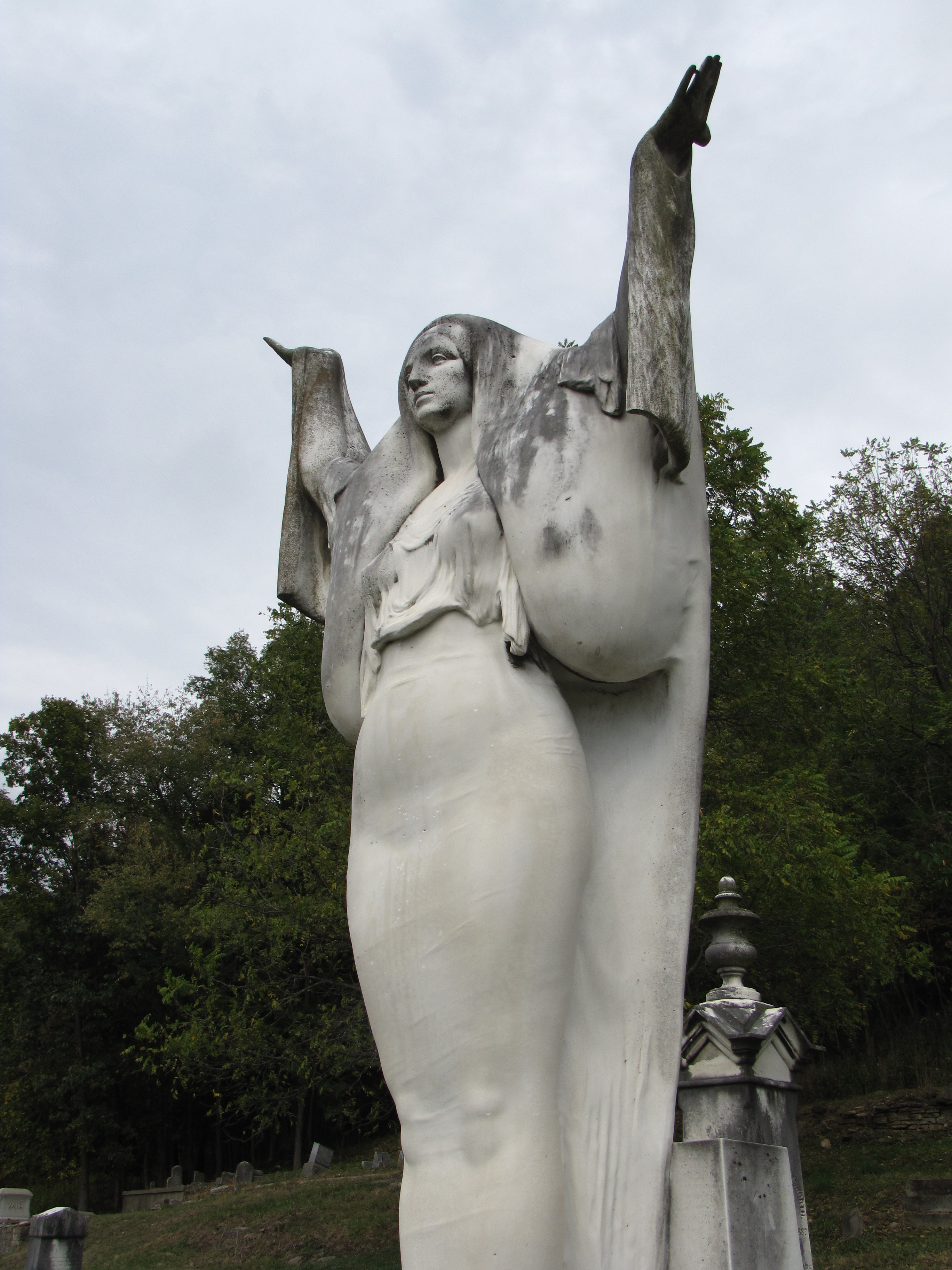
The Birth, by George Grey Barnard

The Birth, by George Grey Barnard

While Barnard was an influential minister in southern Indiana, his son, George Grey Barnard, (1863-1938) gained fame as a noted American sculptor. His works can be found in New York at the Metropolitan Museum of Art, the town of Cairo, Illinois, the state capitol building at Harrisburg, Pennsylvania, among other places, as well as, the Springdale Cemetery at Madison, Indiana, where he sculpted a statue to honor his parents.

IMG_5949

Some sources say the statue was titled, “Let There Be Light” while John Bower’s book, Guardians of the Soul, a book about cemetery sculptures in Indiana, say it was titled “Immortality.” According to the book Barnard’s masterful sculpture was described as “an incomparably beautiful figure of a woman in the matching loveliness of mature perfection and form…the lovely hands are uplifted, parting the veil that encircles the voiceless silence of dreamless dust.”

IMG_5945

Posted in Uncategorized | Leave a comment

KP

Bloomington, Indiana

Bloomington, Indiana

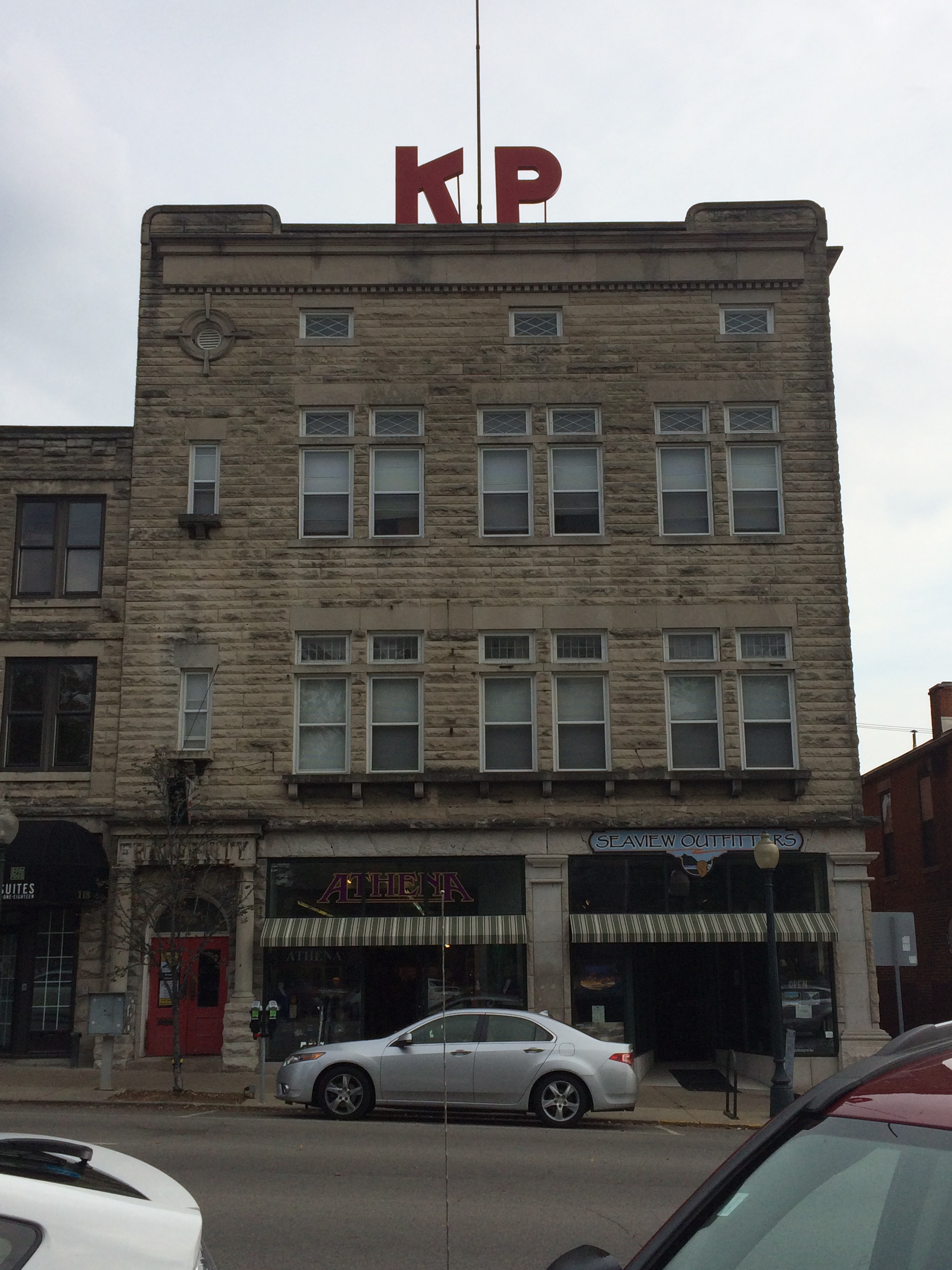
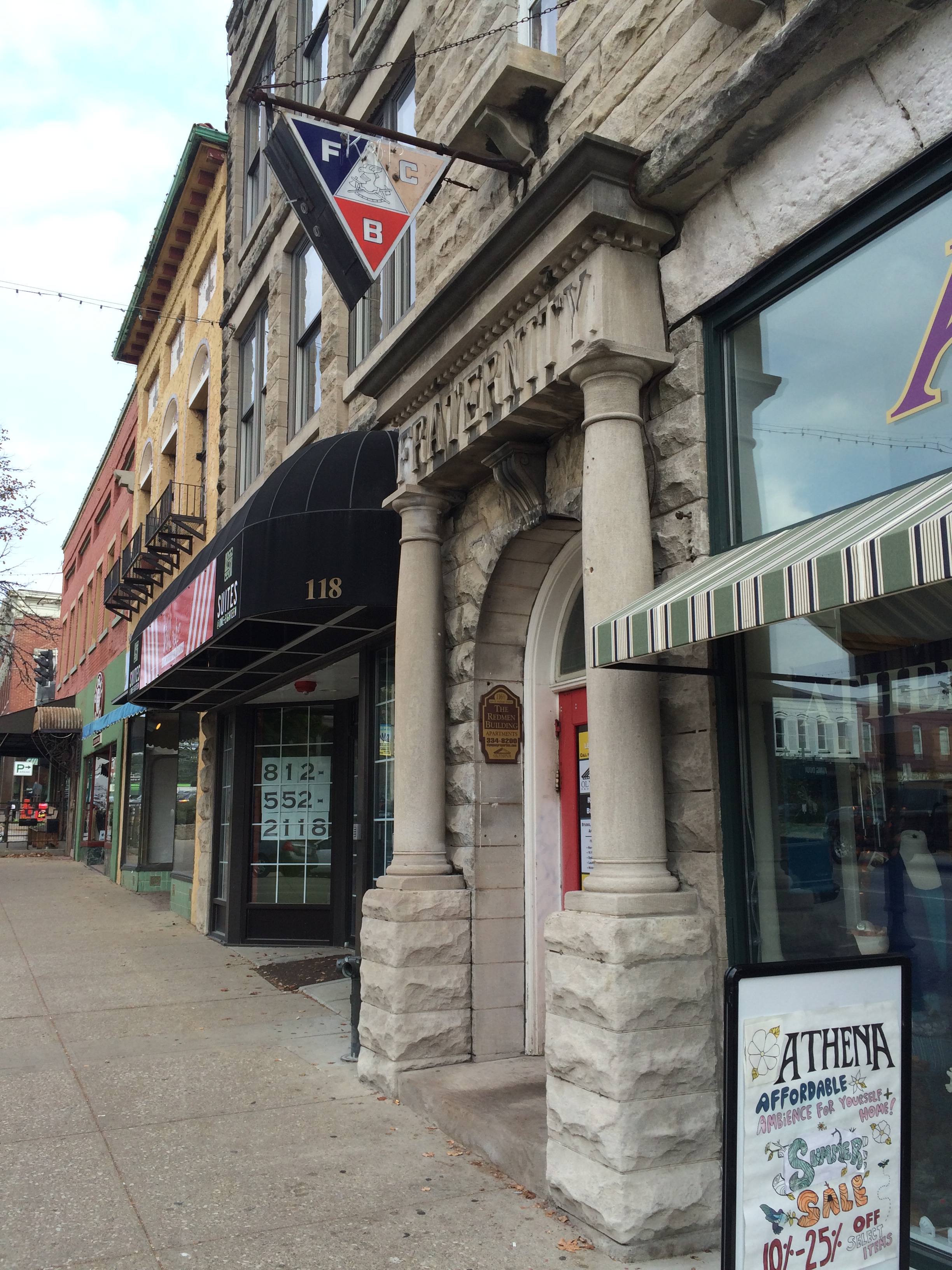
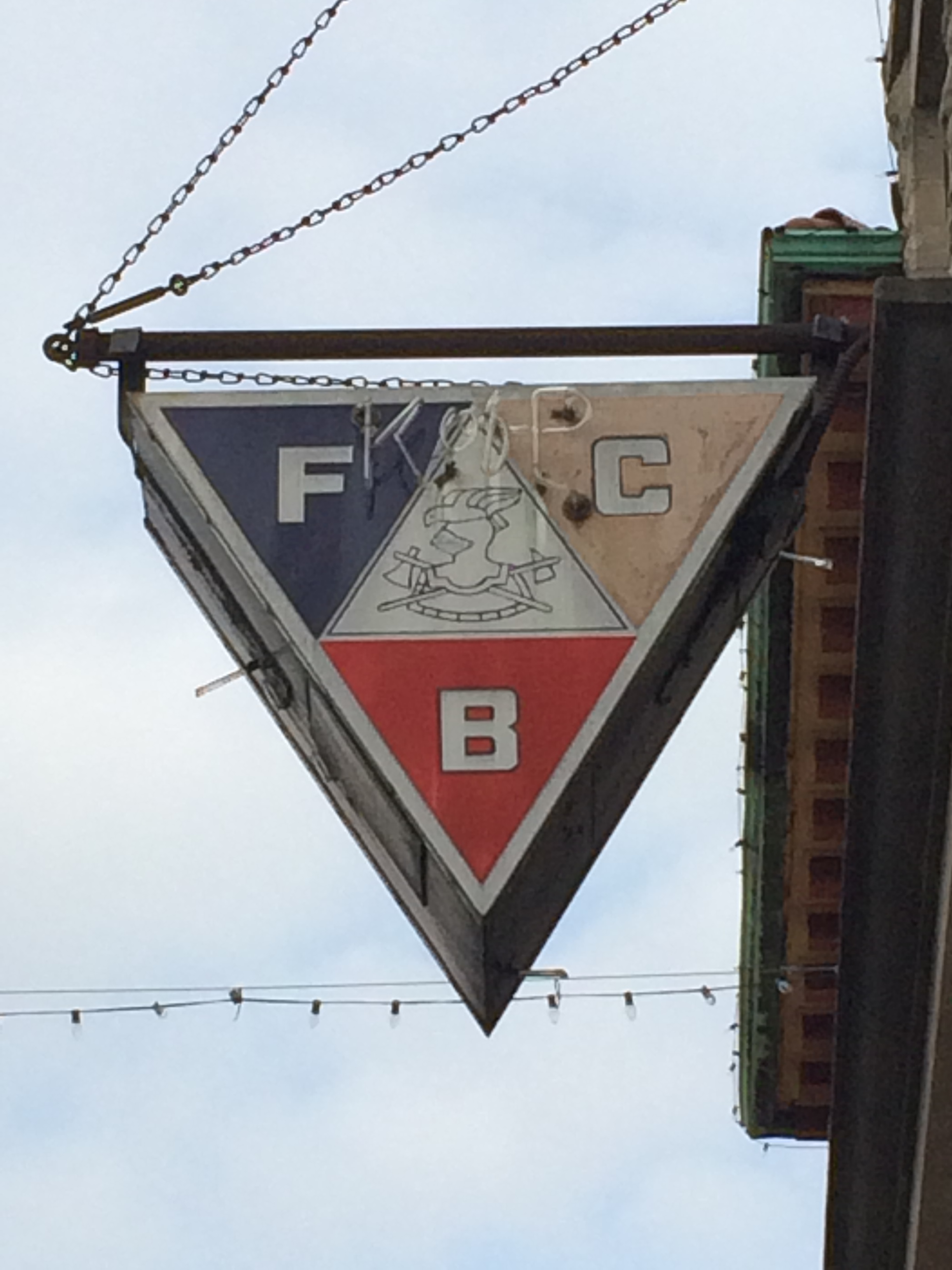
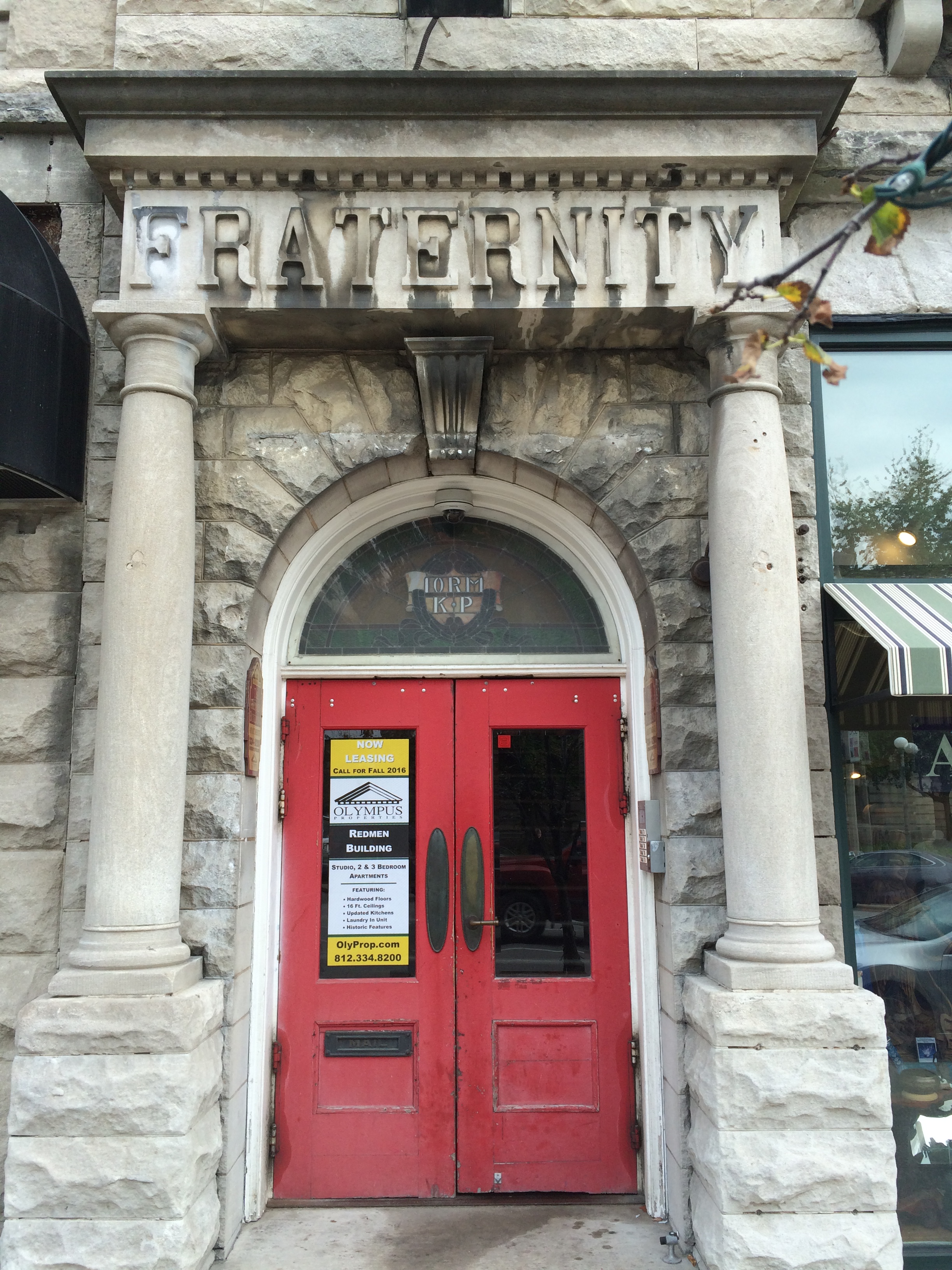
In 1864, the Knights of Pythias was founded by Justus H. Rathbone, making it the very first fraternal organization to receive a charter under an Act of the United States Congress.  Local chapters like the one in Bloomington, Indiana, began to spring up in communities in every state. The building has a large “KP” on top of it, along with a street entrance that leads up to the lodge on the second floor.

IMG_0138

IMG_0139

Above the entrance is lighted triangular sign that features many of the symbols that are significant to the Knights of Pythias:  the silhouette of a knight’s helmet sitting in the middle of a pyramid-shaped shield with three letters, “F”, “C”, and “B”. The three letters stand for their motto, FRIENDSHIP, CHARITY, and BENEVOLENCE.

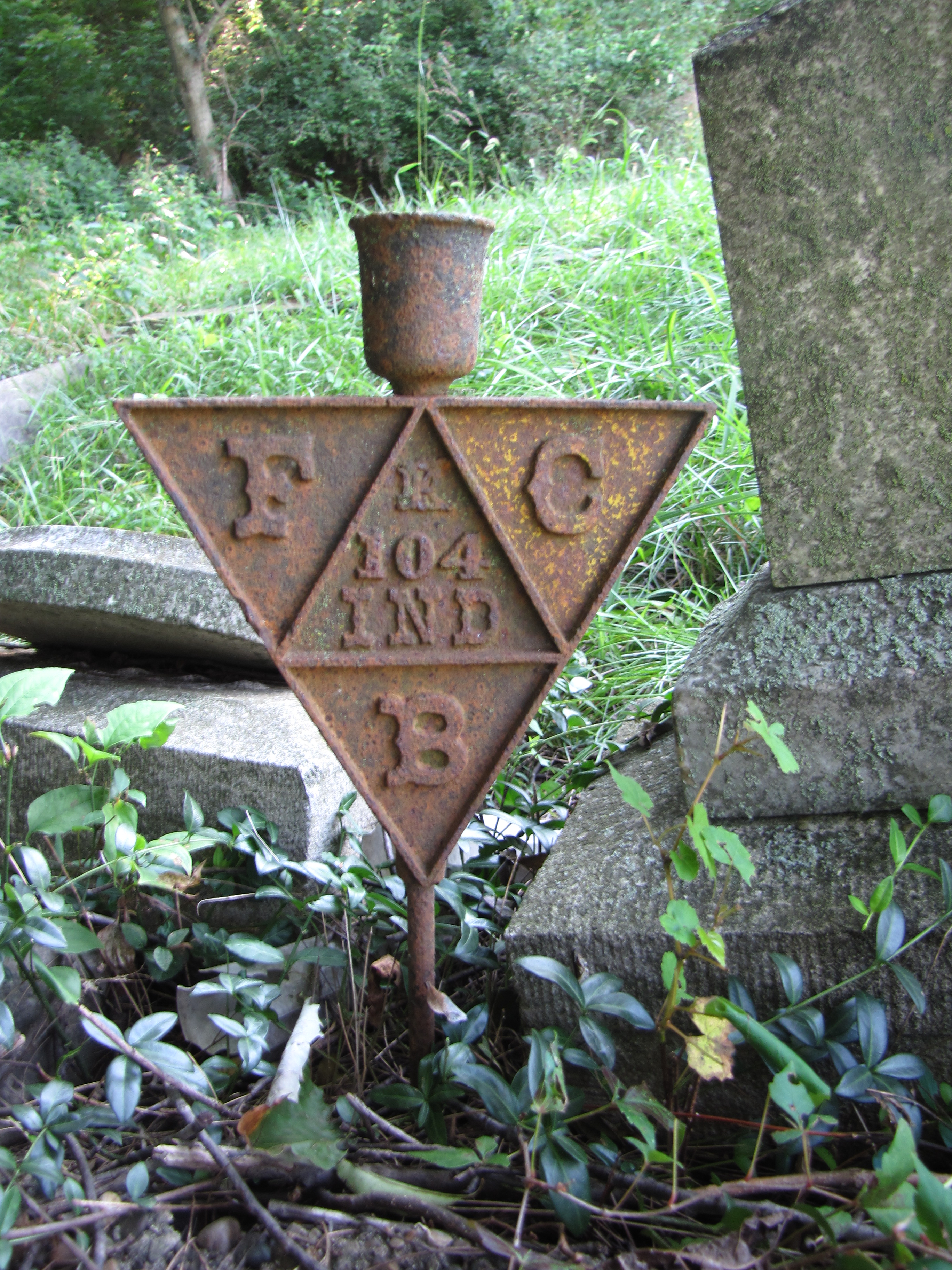
The cast-iron grave marker was manufactured by the organization to mark the graves of members. The small marker displays the three letters “F”, “C”, and “B” and the Lodge Number 104.

Springdale Cemetery, Madison, Indiana

Springdale Cemetery, Madison, Indiana

The society is based on the Greek story of friendship from 400 B. C. between Damon and Pythias, members of a school founded by Pythagoras.

According to their Website, Pythians: promote cooperation and friendship between people of good will, find happiness through service to mankind, believe that friendship is essential in life, view home life as a top priority, show an interest in public affairs, enhance their home communities, respect and honor the law of the land, and expand their influence with people of like interests and energy.

IMG_0137

Posted in Metal Markers, Uncategorized | Leave a comment

Hormonal Elephant Becomes Murderous

Elmwood Cemetery, Charlotte, North Carolina

Elmwood Cemetery, Charlotte, North Carolina

Erected by the

members of

JOHN ROBINSON’S CIRCUS

In memory of

JOHN KING

killed at Charlotte

N.C. September 27, 1880

by the

elephant CHIEF

May his soul rest in peace

The death of animal trainer, John King, is a tragedy that was recounted in many different places. In the book, It Happened in North Carolina, by Scott Kent, the elephant Chief became murderous because of surging levels of testosterone which increase dramatically in the male elephant once a year in a period called musth.

However, the best way to describe the tragedy that took place at the circus is to quote from the Washington Post, Sunday March 3, 1907—27 years after the event. The New Orleans Picayune interviewed Ed Cullen, who had been in the employ of the John Robinson Circus when an elephant named Chief went on a rampage as the following excerpt that the Post ran carrying the Picayune article in all of its lurid and salacious detail:

“Our elephant trainer was a young man named King, thoroughly up to his business and acquainted with all wild animals as few men ever get to be. King loved his charges, and his charges loved him, that is all of them but Chief, and as for Mary, she was just crazy about the man, and would trumpet with delight whenever she saw him approaching.

“Mary was far bigger than Chief, and her weight and power gave her the right to shine in the role of the wife who wears the trousers, but for all Mary’s Amazonian tendencies she was not a flirt, and gave Chief no cause for jealousy. But Chief early took a dislike to King, the trainer, for no other reason, I believe, than that Mary showed great affection for the man, and there were times that if King ever came near Chief the elephant would give unmistakable signs of anger and a dangerous gleam would show in his mean little eyes.

“Once Chief lashed out at King with his trunk when the trainer was sweeping Mary’s sides with a broom, and the swing of the blow just missed the man. King jumped to one side, and as he did so Mary, with a bellow of rage, smashed the smaller elephant a blow on the head with her trunk that brought Chief to his knees. Mary was ready for a charge, her big head lowered to serve as a battering—ram, and Chief would have fared badly that had not King acted promptly. He knew that he could trust Mary. And, springing in front of the big beast, extended both his arms, and cried: ‘Get back, girl: there now!’ His order was obeyed, and Mary, wheeling around, went off quietly to her place, and so a panic in the elephant house was averted.

“Our show was in North Carolina, near Charlotte, when the grim tragedy I am going to tell you of happened. We had been playing a number of little towns with some success, and instead of traveling on the railroads, used our elephants and horses to move the animals and tent wagons from place to place over the hard country roads.

“Mary at this game was of more service to us than a dozen horses or an army of men. She would lead the elephants up and they were all too much afraid of that ever-steady trunk of hers not to follow when she trumpeted the command, and the hulking beasts would shove wagons out of ruts, carry tent poles in their trunks, or do any other manual labor we had for them.

“Chief had been acting very mean, and it was up to Mary to punish him several times before we reached Charlotte, but for all the chastisement he received from his massive wife, the elephant seemed bent on mischief. Indeed, as we afterward found out, the blather was showing on his right temple.

“Let me explain myself, as perhaps few of you are familiar enough with elephants to know what I mean by the blister. Elephants—that is, some elephants, and Chief was included in that class—have periods of madness, but nature has provided the means by which man may anticipate that period, and put the beasts in restraint. The periods are more violent in some elephants than in others, and while in one the mood might reach complete madness, in the majority it only assumes the proportions of marked ill-temper and surliness. You’ve often seen elephants in the circus chained by the leg to a heavy peg, no doubt? Well, they are the surly ones; the keepers tell you they are mankillers, naturally vicious and such rot; that’s only stock talk; the blister has shown on the animals, and they are kept in temporary restraint until the crazy period passes. A week or two before the elephant enters the mean state a swelling, hardly larger than a silver quarter, forms on his temple. The swelling gradually increases in size of a large hickory nut. The experienced showman has the elephant chained by the leg or well hobbled with chains, if the outfit is moving, the minute the swelling shows.

Now, after all this explanation, which is perhaps dry enough, let me get back to my story. The blister was on Chief’s right temple when our show pulled into Charlotte for a one-night stand, but King had not noticed the swelling, so he was off his guard. Chief cut up badly when the Hindoos came to put his howdah on for the grand march, and even when Mary was walked up to bring him to account, he showed a disposition to still be unruly, and appeared willing to fight the queen of the herd. His temper was such that he was left out in the animal tent, only Mary and the other elephants—six in number went on in the entry.

The show passed without incident, and as we could not move over the roads in the dark, we waited until daylight to break camp. With the first light of day, the canvas was down, folded, and on the wagons; the poles were lying piled, and the horses were being harnessed to the cages. King got his elephants in marching order, and followed in the wake of the moving vans, and all went well until the heavy cage in which were confined the four lions stuck fast in the muddy road, a short distance from town. The six horses drawing the cage strained and pulled to no purpose, and as a last resort King was called up and asked to bring one of his elephants.

“King went away and returned in a few minutes with Mary and Chief. Whatever possessed him to bring that mean bull elephant I don’t know; his choice, poor fellow, cost him his life. King spoke to Chief and ordered him forward, and the elephant obeyed, although unwillingly, and as he stepped into the mud, he swung his trunk dangerously from side to side. No amount of prodding with the driver’s hook would prevail on Chief to put his head to the cage, and King, thinking the elephant was frightened or disconcerted by the rumbling roars which came from the imprisoned lions, stepped into the mud and leaned against the van, and made as though shoving.

“Crushed King to Jelly

“Chief’s time had come; he saw the one great chance to fill his cup of vengeance, and turning suddenly strike the cage. The elephant’s bulk crushed into King and jammed him against the cage, and the great beast, throwing all his weight into the effort, smashed that unfortunate trainer as flat as a pancake—pardon the term, but it is the only fitting one I can find. Every bone in King’s body was crushed into a bloody pulp, with what few features that were distinguishable flattened out and twisted as though a stone grinder had passed over them.

“With the act of murder the mad mood claimed Chief entirely, and throwing his great trunk into the air and trumpeting shrilly he dashed wildly down the road, overturning several horses that were in his way.

According to the Charlotte Observer , September 28, 1880, “and the elephant turned and started up the railroad track, the excited crowd fleeing in every direction. The loose elephant got into the main streets of the city, and a crowd was being formed to hunt him down and shoot him when it was learned that the circus people were after the truant beast. “They took the other two elephants, Mary and The Boy, and, driving them rapidly through the streets, overtook The Chief, chained him to the others and finally got him back to the circus grounds.”

John King lingered through the night of the tragedy and died at 11:00 the next morning on September 28th. He was promptly buried that same afternoon. A hearse carried his body drawn by four white circus horses. Mary and the Boy followed his casket.

John King was buried in the Elmwood Cemetery at Charlotte, North Carolina, beneath a five-foot monument donated by his fellow circus workers. On it is carved the image of an elephant and a palm tree carved by the Confederate veteran Billy Berryhill.

elephant

But, that was not the end of the story for the now infamous elephant named Chief. The circus masters decided that Chief was too much for them to handle, so they shipped him to Cincinnati to the Zoological Gardens. Chief remained rogue and reportedly killed two more trainers before he met his fate and was killed.

The January 4, 1891, New York Times published a snippet about what became of, at least part of Chief. “Roast Loin of Elephant From the Hotel Mail, Dec. 27. On the bill of fare of the Palace, Cincinnati, one day last week there appeared the rather unusual dainty, “loin of elephant.” It was, in fact, a part of Chief, the vicious elephant who was shot in the Cincinnati Zoological Garden, and was not bad eating, as some of the force of this office can testify. It was without exception the best roast elephant that any of us had ever tasted.”

And that still was not the last of Chief.

Chief%20as%20jpeg[1]

According to the University of Cincinnati magazine, “Certainly you would have thought your eyes were deceiving you, but a full-size stuffed elephant was, indeed, transported on a horse-drawn cart outside the UC gymnasium in 1902. More surprising, the pachyderm lived on campus until 1998.

Old Chief, a five-ton Asian elephant, was imported to the U.S. in 1872 and performed with the Cincinnati-based Robinson Circus until his demise in 1890. His remains were stuffed and displayed at the Cincinnati Zoo for a decade or so until making the trip to UC.

The skin and stuffing somehow disappeared, but the skeleton stayed on campus until a grant allowed UC to transfer its collection of paleontological specimens — including the behemoth’s bones — to the Cincinnati Museum Center.”

Posted in Uncategorized | 6 Comments

Why Carve the Train into the Gravestone?

Greenlawn Cemetery, Vincennes, Indiana

Greenlawn Cemetery, Vincennes, Indiana


CHARLES F.

SON OF

JAS. & M. E. KING

BORN

AUG. 22, 1866.

KILLED IN WRECK

ON ST. L. A. & T. Ry.

MAY 12, 1893.

DIV. NO. 442

JONESBORO

ARK.

Tree-stump gravestones dot cemeteries all across the Midwest and especially Indiana where the tradition of stone carving was fine art in a state where limestone is plentiful and rich and the stone carvers were and are expert and talented. In funerary art, tombstones took on the look of tree stumps during the rustic movement. These type of gravestones were most popular for a twenty-year period from 1885 to 1905. Thousands of tree-stump tombstones exist in nearly as many designs. The creativity of the carvers was boundless. The gravestones were purposefully designed to look like trees that had been cut and left in the cemetery to mark a grave.

IMG_5104

Many symbols, like the hanging and broken bud, the broken column, and the broken wheel represent the end of life’s journey.  In this case, even the gravestone itself, the tree-stump, symbolizes a life cut short.

IMG_5110

The marker for Charles F. King is no exception, he was but a mere 26 years old—a life cut short. But what is astonishing, is that King’s cause of death, a train wreck, is carved into the front of his gravestone. He was killed in 1893 at Jonesboro, Arkansas, in a train wreck on the St. Louis, Arkansas, and Texas Railway. But a question remains—why carve his cause of death into the gravestone? Would we carve an exploding heart for all those who die from a heart attack? Would we carve a ’48 Studebaker for someone killed in a car accident?

IMG_5107

Posted in Treestump gravestones | Leave a comment

The little girl at the gate

Crown Hill Cemetery, Salem, Indiana

Crown Hill Cemetery, Salem, Indiana

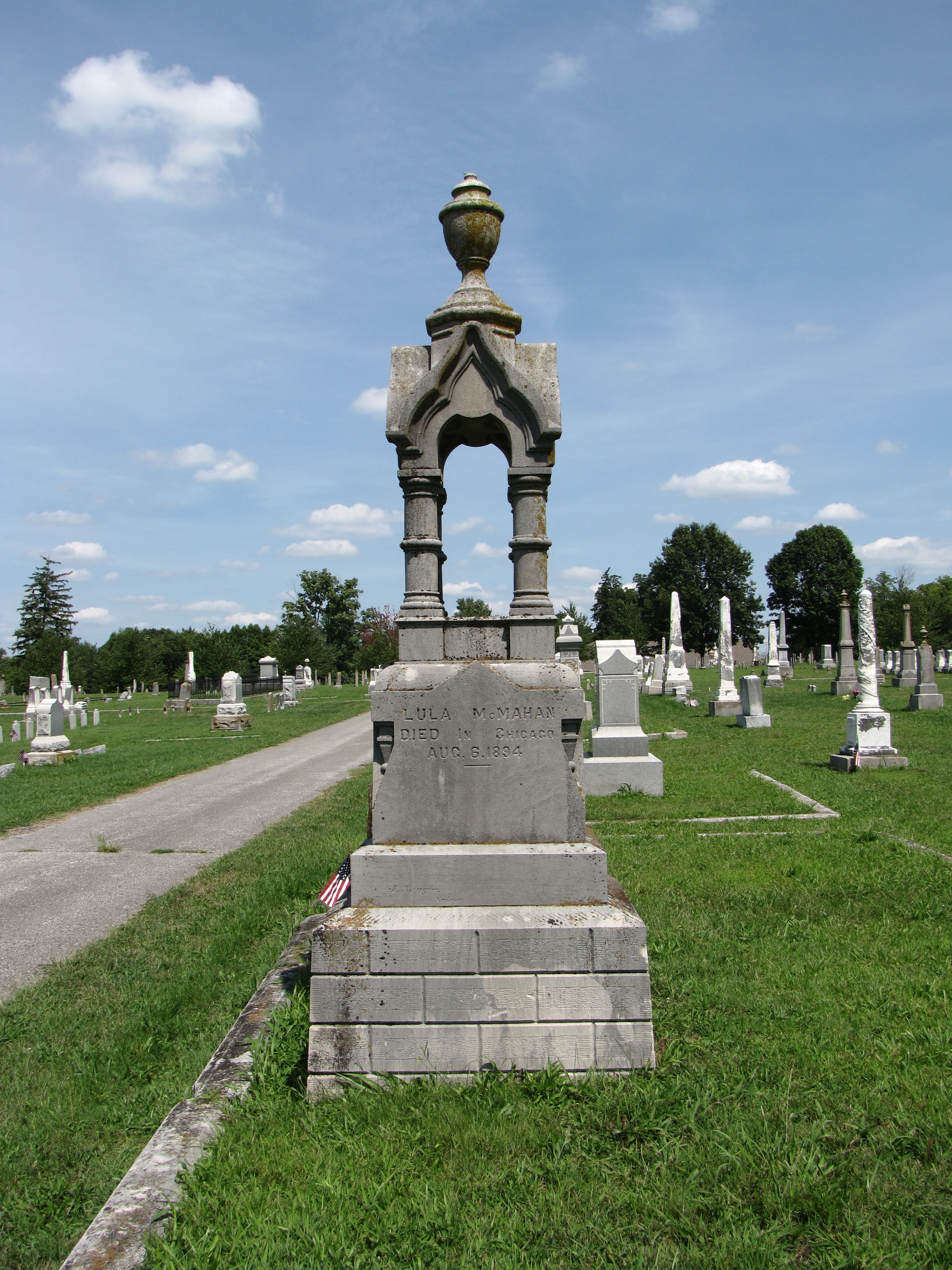
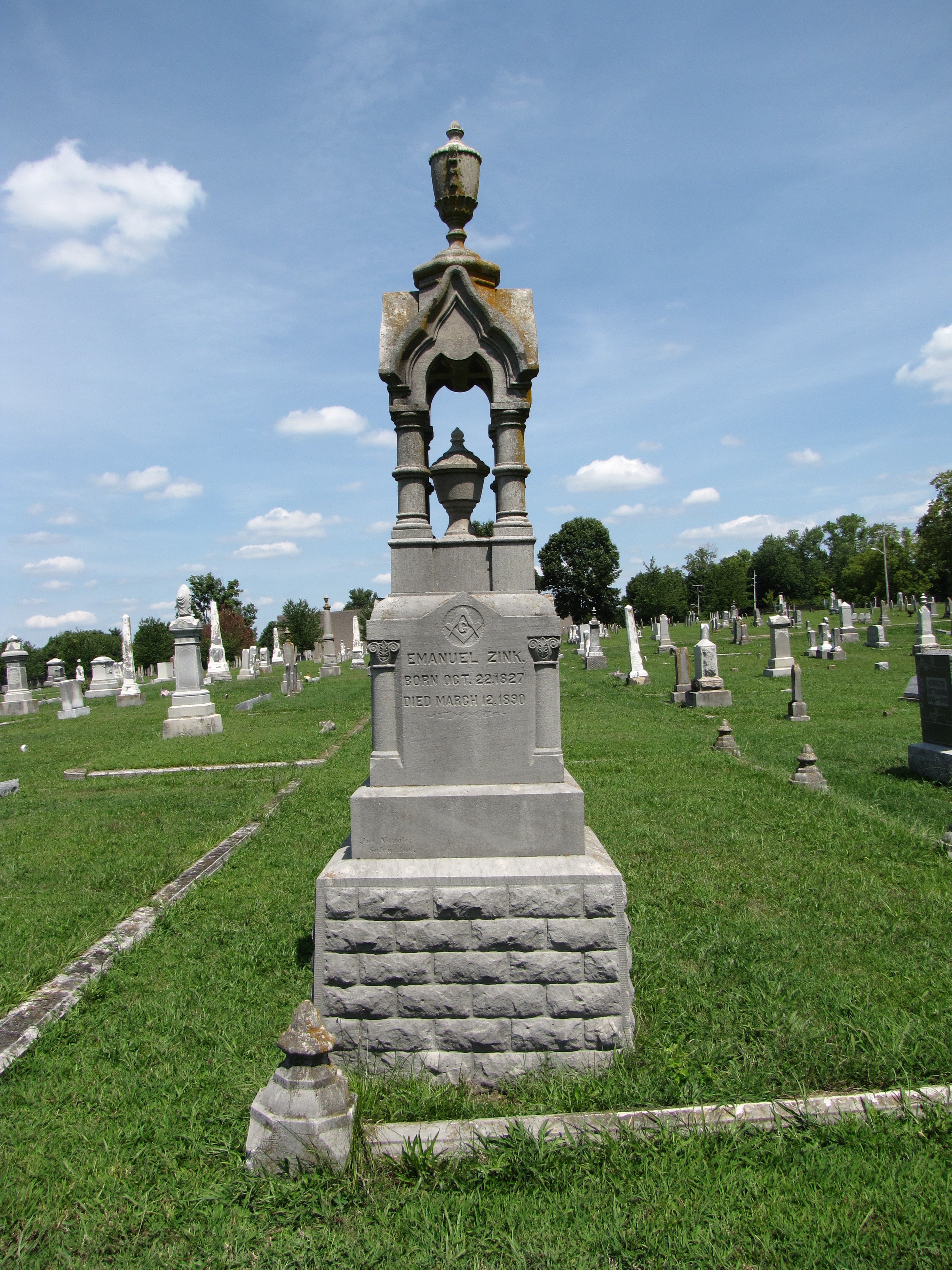
John Naugle was a master carver who plied his trade in the Salem, Indiana, area. Examples of his work can be found in the Crown Hill Cemetery of Salem. Two examples, the Lula McMahan monument and the Emmanuel Zink Monument, demonstrate his talent as a carver. In these examples shown here, Naugle crafted towering monuments that are architectural in nature. They resemble each other in form, but have minor changes in detail and symbolism.

Crown Hill Cemetery, Salem, Indiana

Crown Hill Cemetery, Salem, Indiana

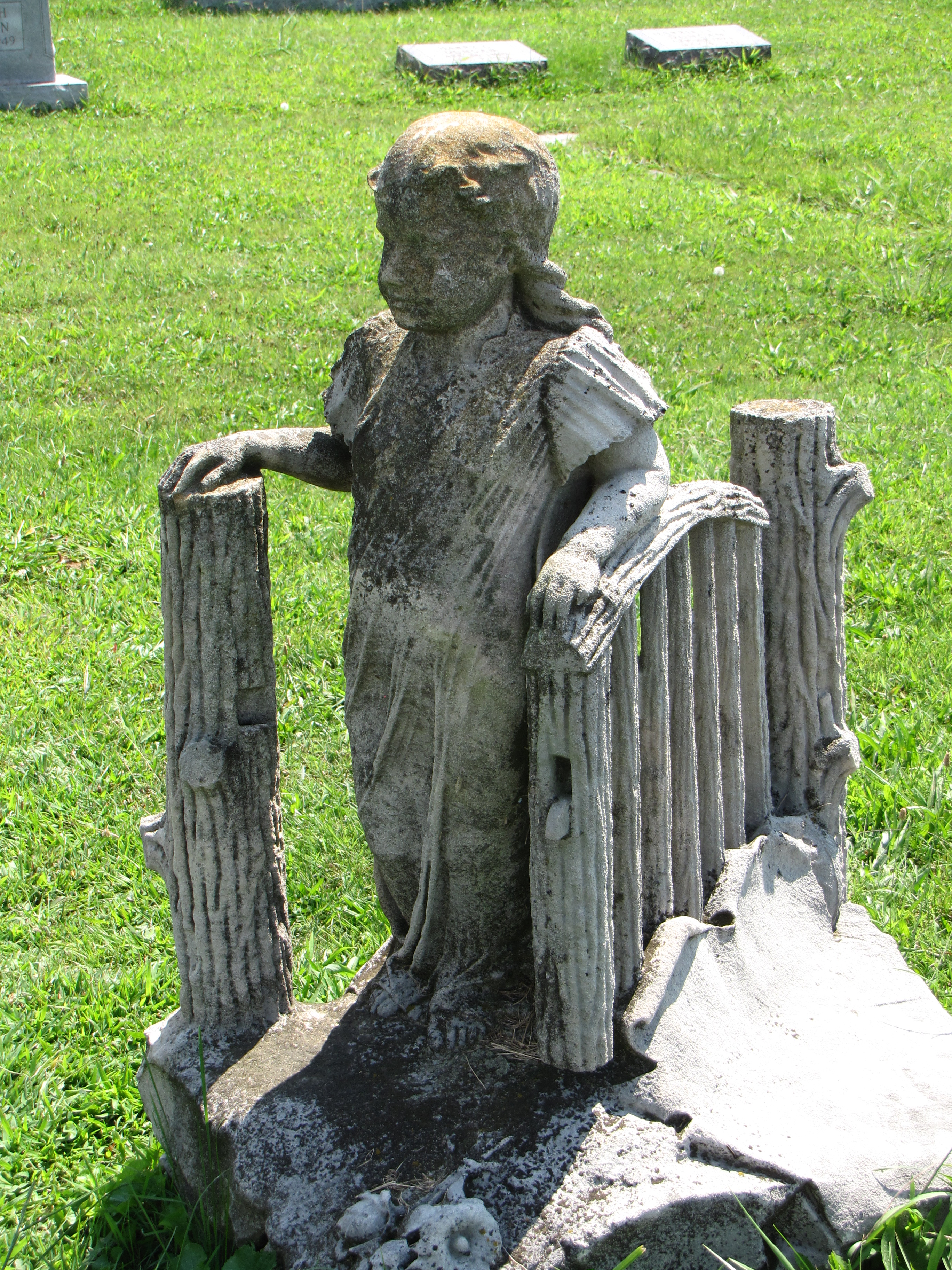
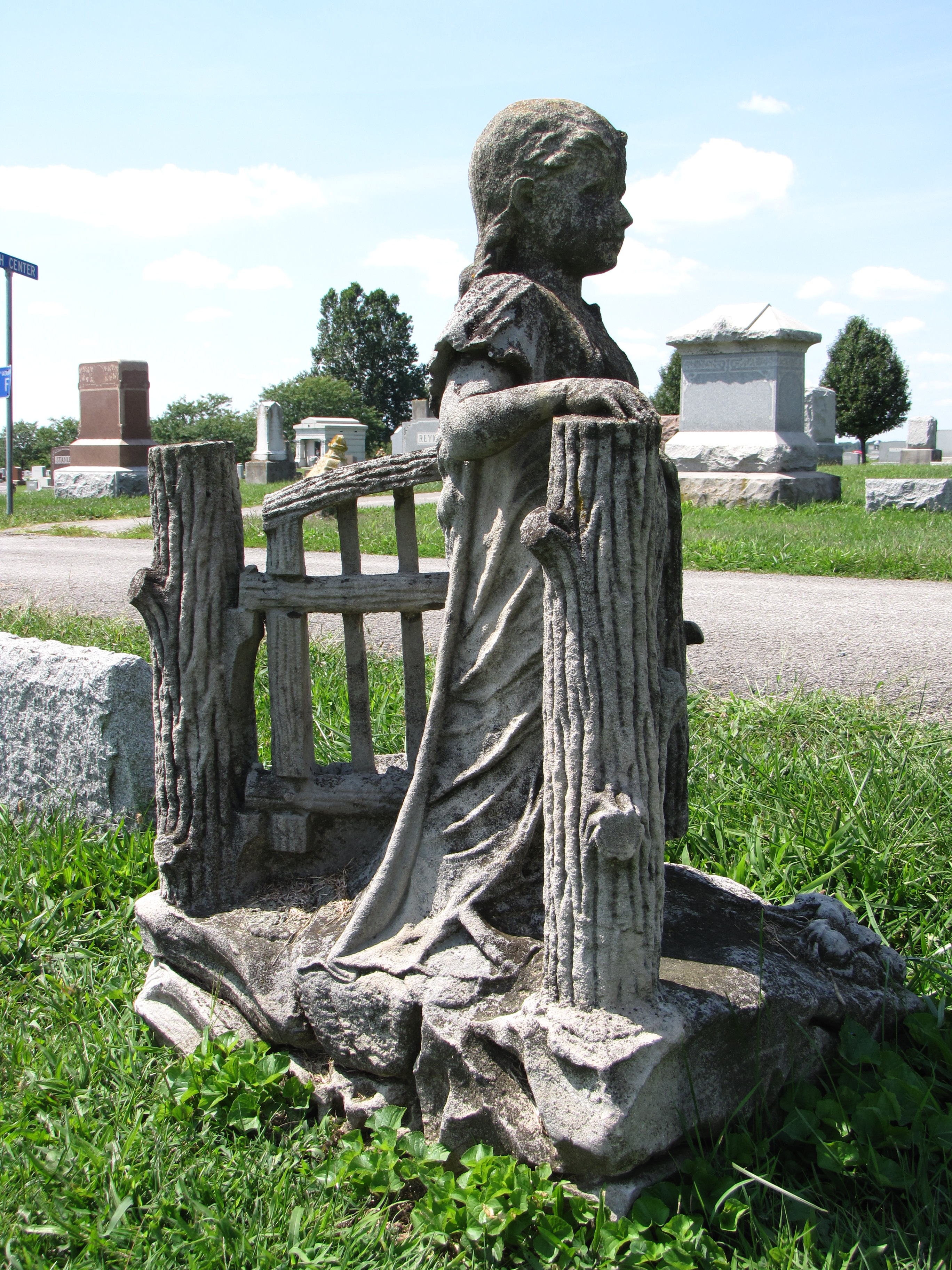
According to all reports he loved his craft and was widely recognized for his talent. But, according to Guardians of the Soul, a book about cemetery sculptures in Indiana by John Bower, one of his greatest joys was at the end of the day when he was met by his four-year old daughter, Caddy, at their garden gate. Tragedy struck when illness befell the little girl and she died a few days later. John Naugle was bereft and unable concentrate at his job and many projects were left undone. According to Bower’s book, “many of his duties were taken over by an itinerant stone mason who just happened to be passing through town.

Crown Hill Cemetery, Salem, Indiana

Crown Hill Cemetery, Salem, Indiana

Not only did this stone carver complete many of the projects that were languishing in the Naugle’s workshop, but he also produced a memorial to Caddy, appropriately, standing at the garden gate, as if she were still waiting for her father. By all accounts, he then disappeared almost as if he had been a ghost.

IMG_2933

Posted in Uncategorized | 5 Comments

The Willow

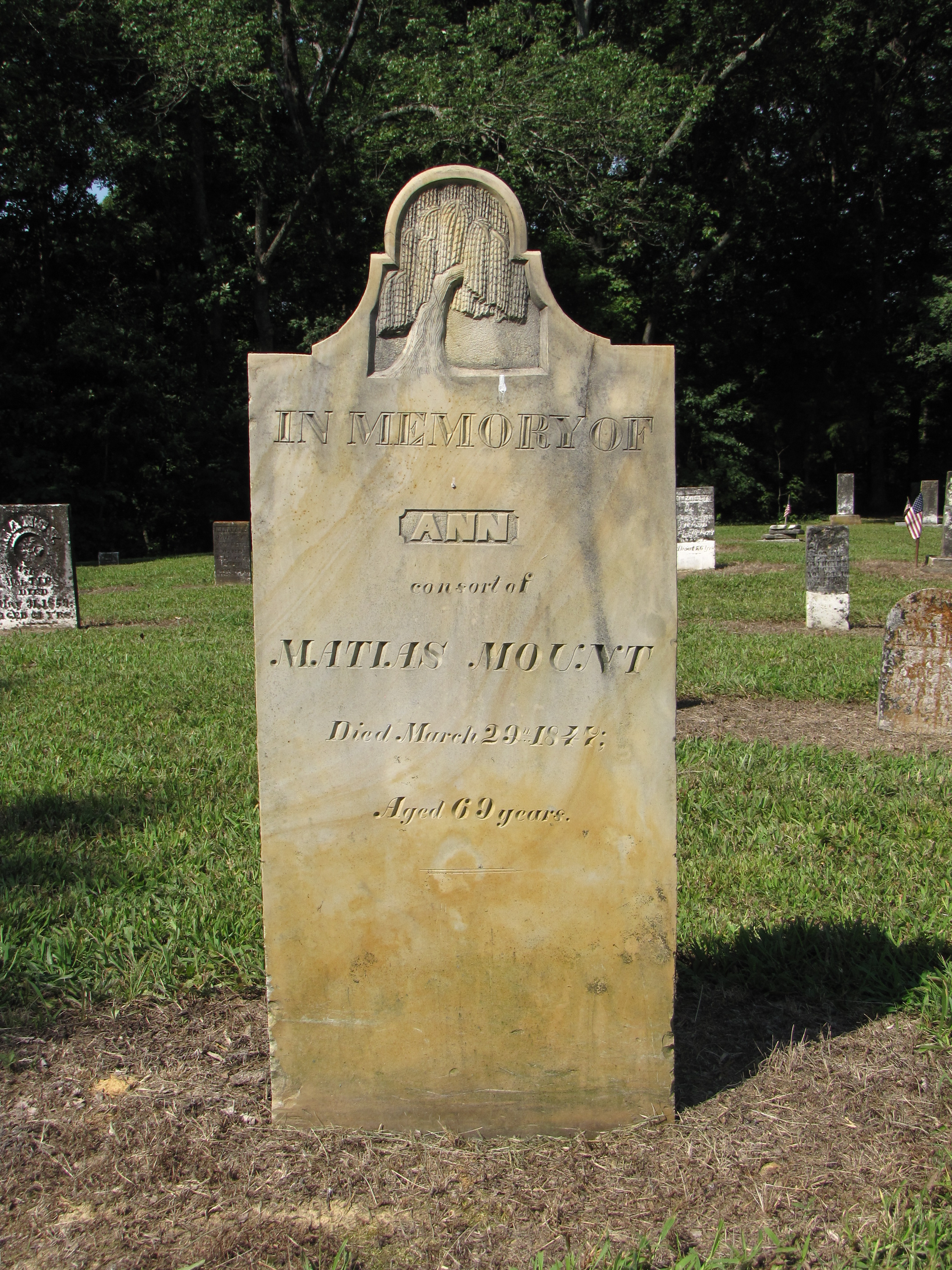
IMG_2888

IN MEMORY OF

ANN

consort of

MATIAS MOUNT

Died March 29th 1847;

Aged 69 years.

IMG_2889

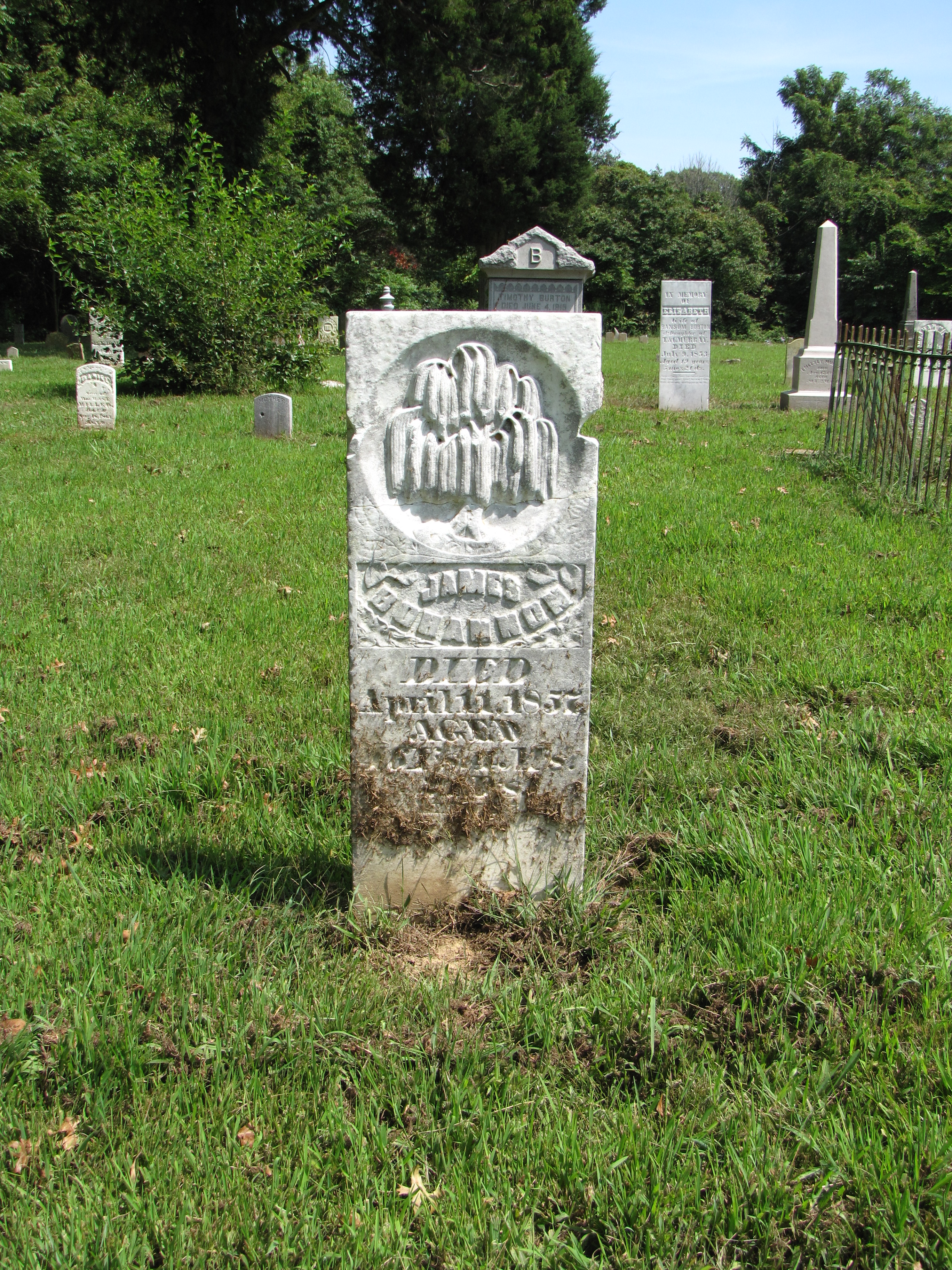
The two examples of gravestones in this post display the willow by itself. In the example above, found in the Mount Cemetery, Little York, Washington County, Indiana, the willow fills the tympanum and is intricately carved, each individual willow branch detailed, along with the tree trunk.

The example below is an example found in the Freedom Cemetery, at Mitchell, Indiana, on a repaired soft white-marble tablet that is quite worn and weathered. Even still the detail carved into the branches of the willow in the medallion at the top of the tombstone is still visible.

IMG_3170

JAMES BOHANNON

DIED

April 11, 1857

Aged 46 Yr’s. 4 M’s.

21 D’s.

IMG_3171

Posted in Symbolism | Leave a comment

The Willow and the Obelisk

Crown Hill Cemetery, Salem, Indiana

Crown Hill Cemetery, Salem, Indiana

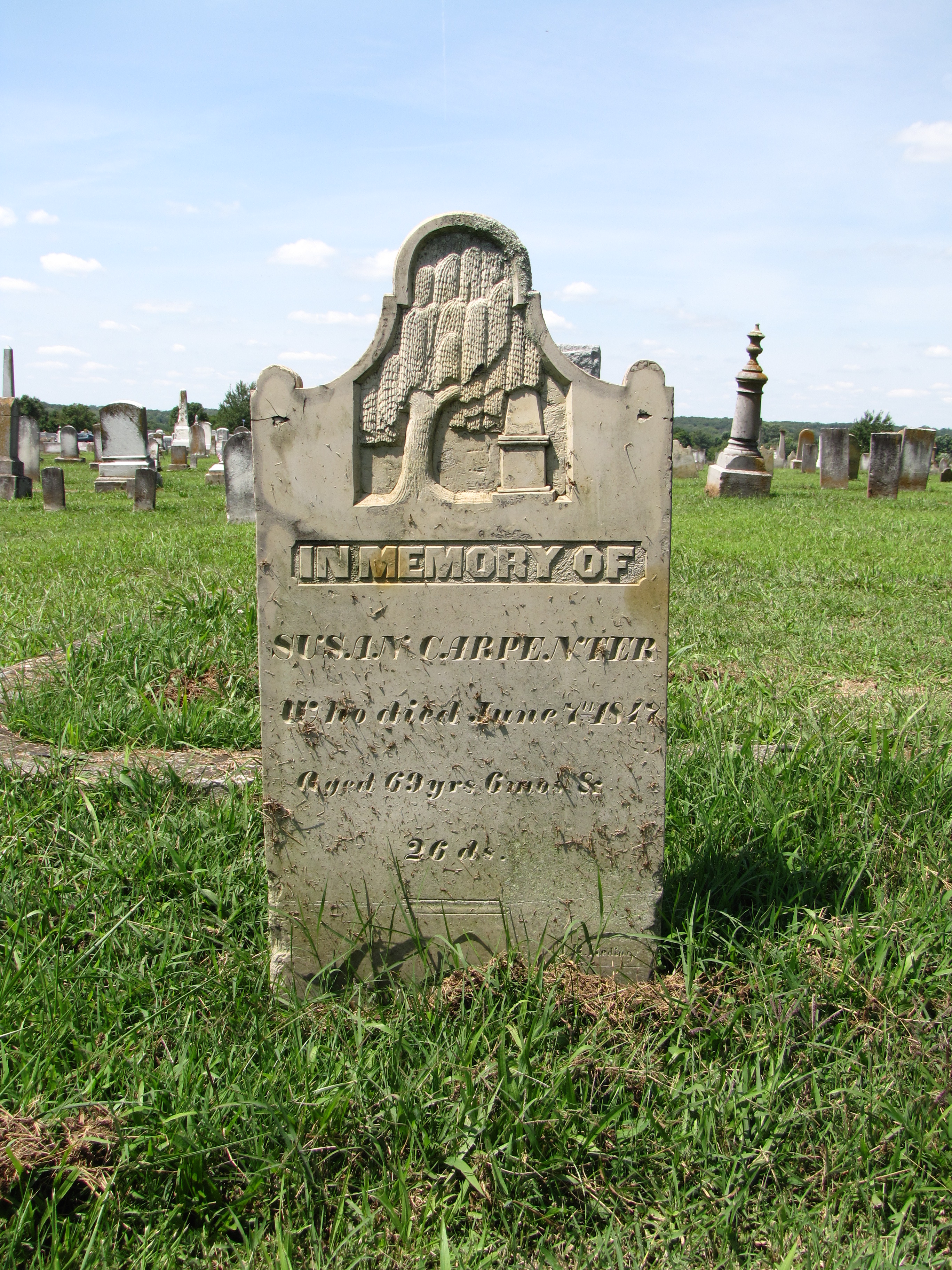
IN MEMORY OF

SUSAN CARPENTER

Who died June 7th 1847

Aged 69 yrs. 6 mos. &

29 ds.

IMG_2993

In the Crown Hill Cemetery at Salem, Indiana, there are good many intricately carved limestone gravestones, such as, the one created for Susan Carpenter in 1847. In the top third of her tombstone is a detailed carving of a weeping willow tree that hangs over and obscures part of an obelisk. The carving is fresh and sharp and looks like it could have been carved that day.  The obelisk is a stone shape that is ubiquitous in American cemeteries and part of the Egyptian Revival Period which was inspired by the French and then the British presence in Egypt in the late 18th and early 19th Centuries. The obelisk is said to represent a single ray of sunlight, petrified from sunlight into stone.  It was thought that the Egyptian sung god Ra lived within the obelisks.  These towering monuments were often placed flanking the entrance to temples.

Here the obelisk is combined with the willow, a traditional symbol of morning and grief.  On this gravestone the obelisk seems to become a symbol grief itself—the death of a loved one and where that person is  buried.

Crown Hill Cemetery, Salem, Indiana

Crown Hill Cemetery, Salem, Indiana

The gravestone of Metilda Amsden is also to be found in the Crown Hill Cemetery at Salem. It is slightly different in that the obelisk on this gravestone is flanked by two trees—the willow and a tree with no branches. Here the two trees not only represent sorrow and mourning but the stripped down tree is a stark representation of death.

IMG_3034

In the top of the Obelisk in the carving it says, METILDA CONSORT of AMON AMSDEN.  The medallion below the willow and obelisk motif carriers the inscription:

In

Memory of

METILDA AMSDEN

Born Dec. 19th, 1814,

Died April 9th. 1838.

& 21 days.

Posted in Symbolism | 3 Comments

The Willow and Two Hearts

Crown Hill Cemetery, Salem, Indiana

Crown Hill Cemetery, Salem, Indiana

SACRED

to the memory of

WILLIAM H. MALOTT

Born in Jefferson County, Ky

May 15th, 1813

and parted this life

November 4th, 1845,

aged 32 years 5 months &

20 days

I never shall return to thee

Don’t let this grieve thy heart

But you shall shortly come to me,

Where we will never part.

IMG_3053

Our deepest emotions are felt in our hearts.  The heart shape, which, by the way, looks nothing like the real human heart, is a symbol of many emotions including joy, courage, and sorrow, but most especially love.  Millions of cards are exchanged every Valentine’s Day with red-heart shapes printed on them, expressions of romance and love.

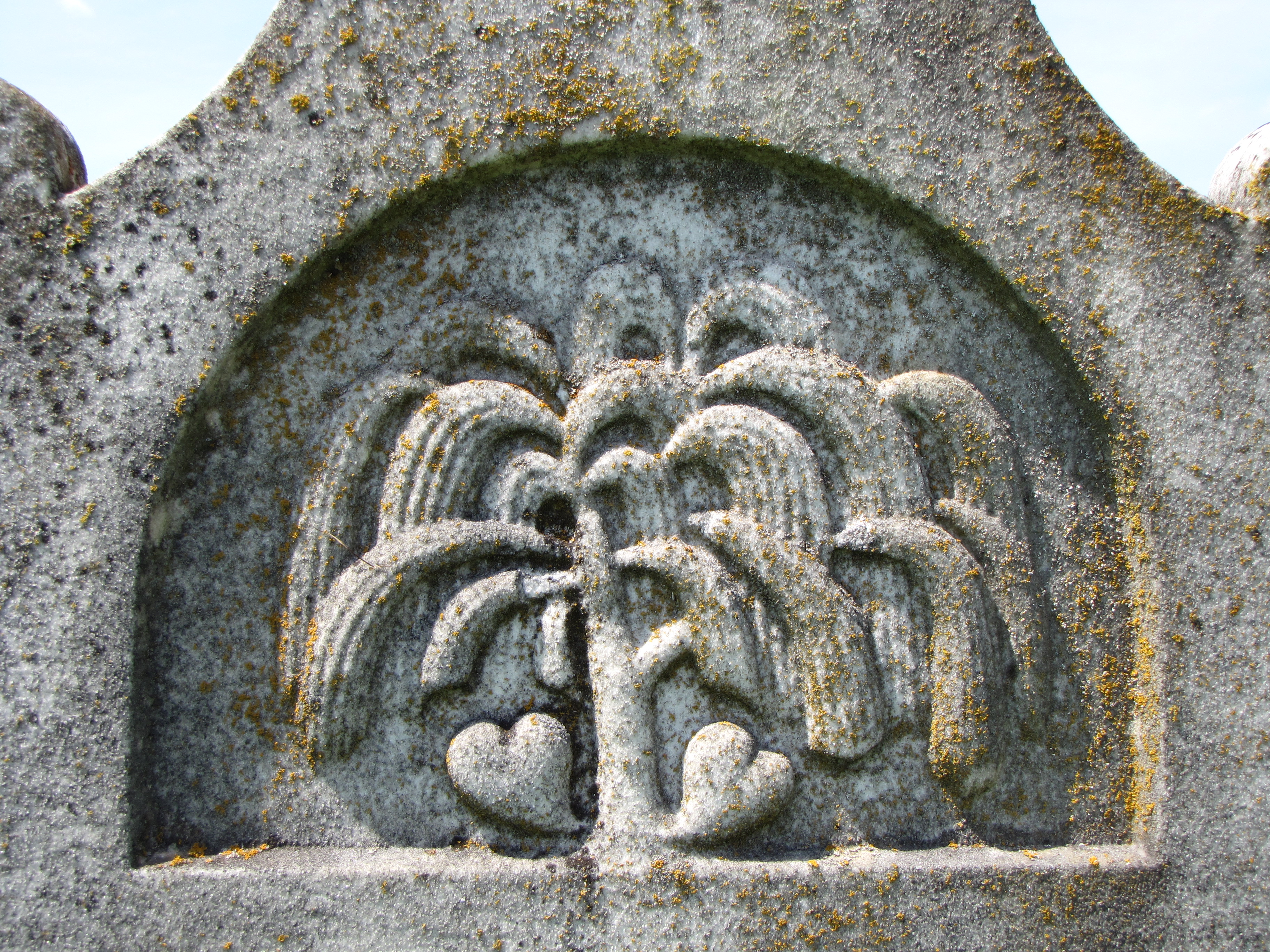
In both examples of today’s blog, the willow is combined with two hearts. Usually, the willow motif is by itself, or often with a lamb, a mourning figure, an urn, or an obelisk. The willow with two hearts is an unusual expression of both grief and love combined into one motif.

The gravestone of William H. Malott in the Crown Hill Cemetery at Salem, Indiana, above, depicts two hearts at the base of the willow. The sentimentality of this symbol combined with the epitaph is touching. The hearts are twining around a traditional symbol of grief, yet, the epitaph written from the perspective of the deceased is telling his wife not to grieve because they would be together soon enough. William married Leah Patterson McKeown, with whom he had five children: Volney, Minerva, Ellen, Mary Catherine, and Eli. His widow, however, remarried two years later on January 19, 1847 in Washington County, Indiana, to John F. Ramsey. Leah (1816-1904) lived nearly 60 more years after William died. She is buried in the Crown Hill Cemetery at Indianapolis, Indiana.

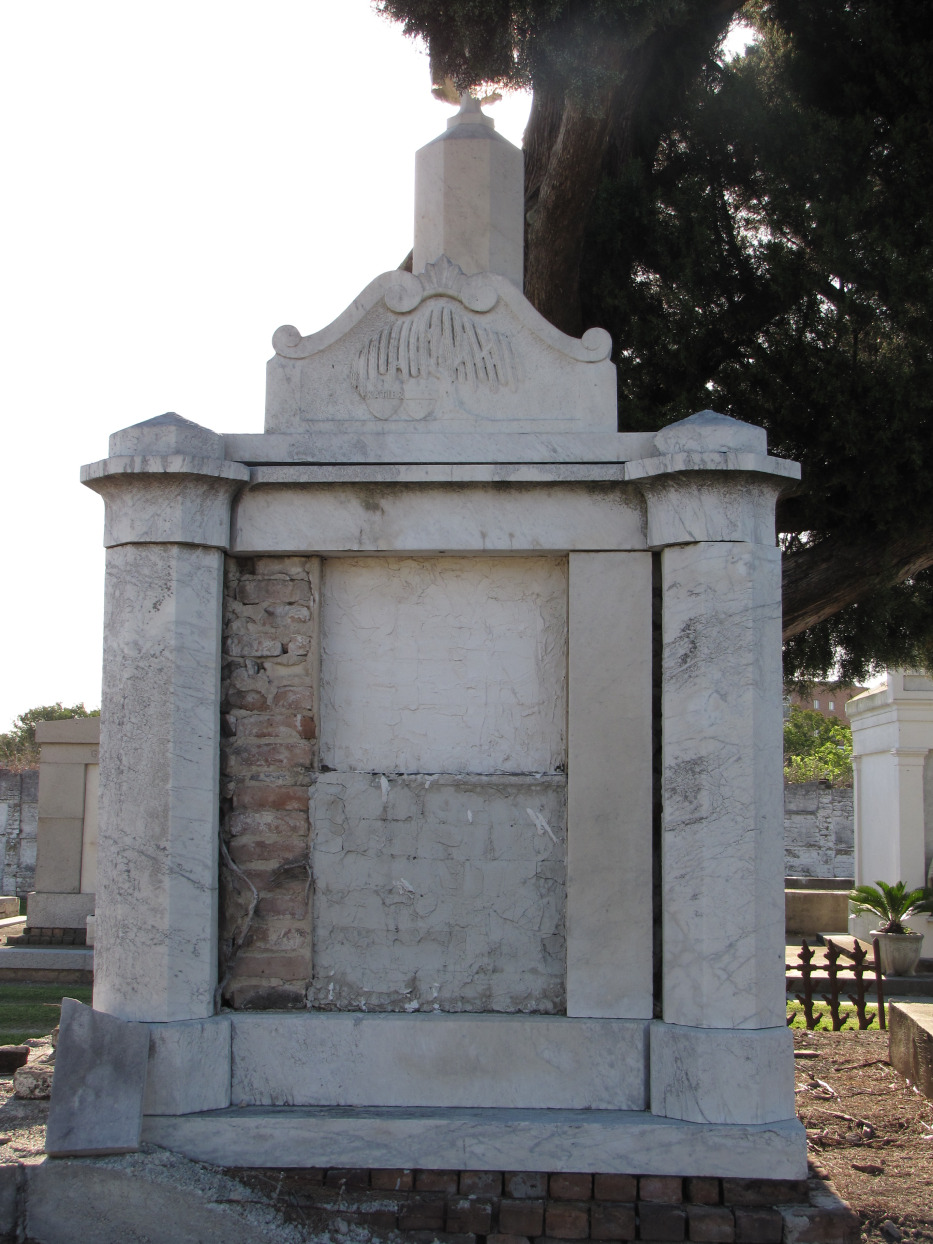
The symbol of two hearts on the tomb in the Cypress Grove Cemetery at New Orleans represents love, as well.  The white marble tomb displays the willow, a traditional symbol of sorrow.   In this carving the willow branches shelter two hearts on the tomb hinting at grief and a tragic story.

Cypress Grove Cemetery, New Orleans, Louisiana

Cypress Grove Cemetery, New Orleans, Louisiana

In 1869, J. Pinkney Smith’s young nineteen-year old wife, Katie McIlheny Smith, died in childbirth.   One heart has Katie’s name carved into it.  The other heart is left nameless in honor of the un-named baby that died as it was born and as its Mother died.  Together their hearts are intertwined in marble.  Desolate and broken, J. Pinkney Smith, husband to Katie, wrote his wife’s epitaph, “Soon as she found the key of life, it opened the gates of death.”

img_2794[1]

Posted in Symbolism | Leave a comment

The Willow and the Urn

Crown Hill Cemetery, Salem, Indiana

Crown Hill Cemetery, Salem, Indiana

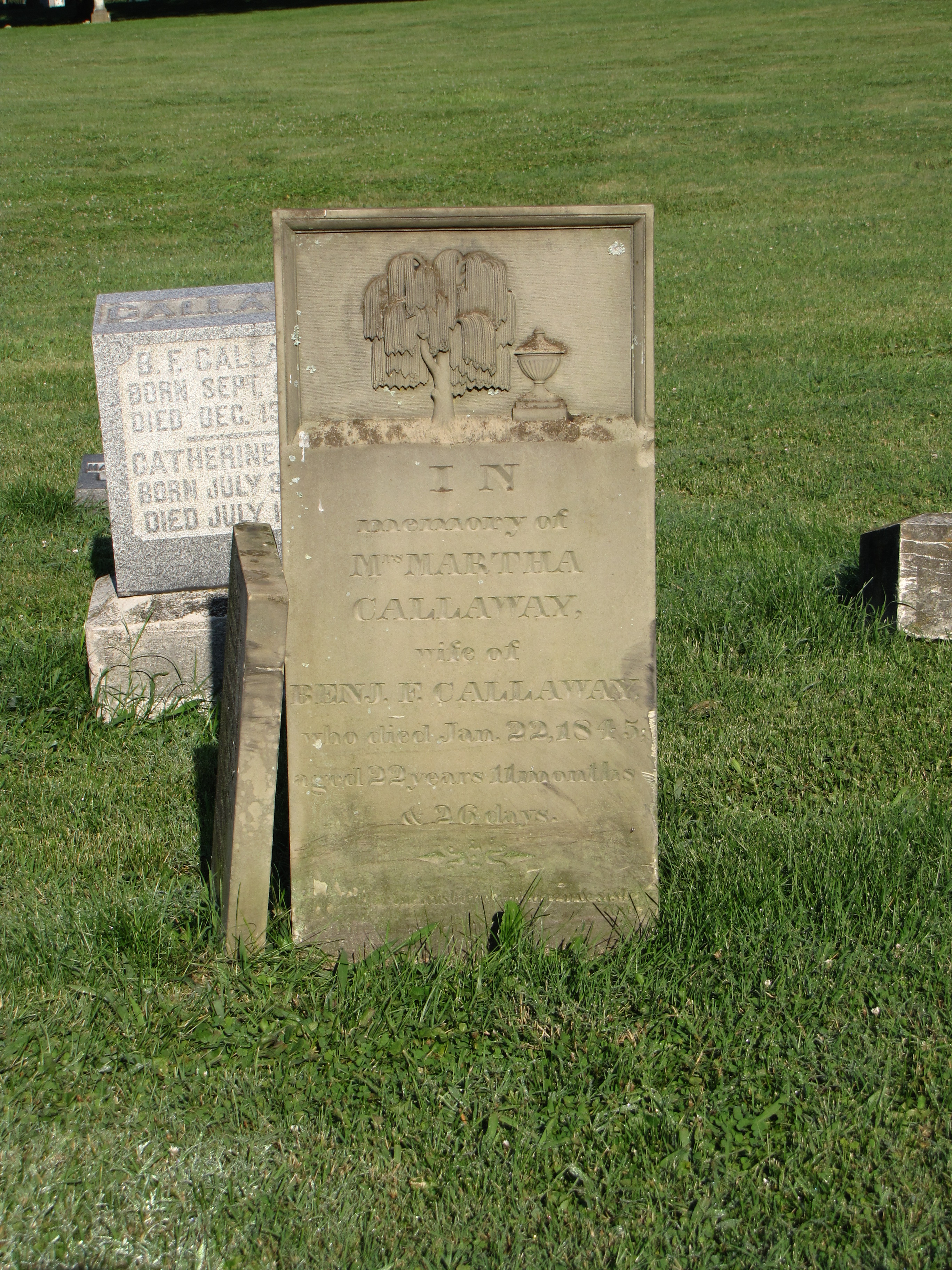
IN

memory of

Mrs. MARTHA

CALLAWAY

wife of

BENJ. F. CALLAWAY

who died Jan. 22, 1845

aged 22 years 11 months

& 26 days

IMG_2585

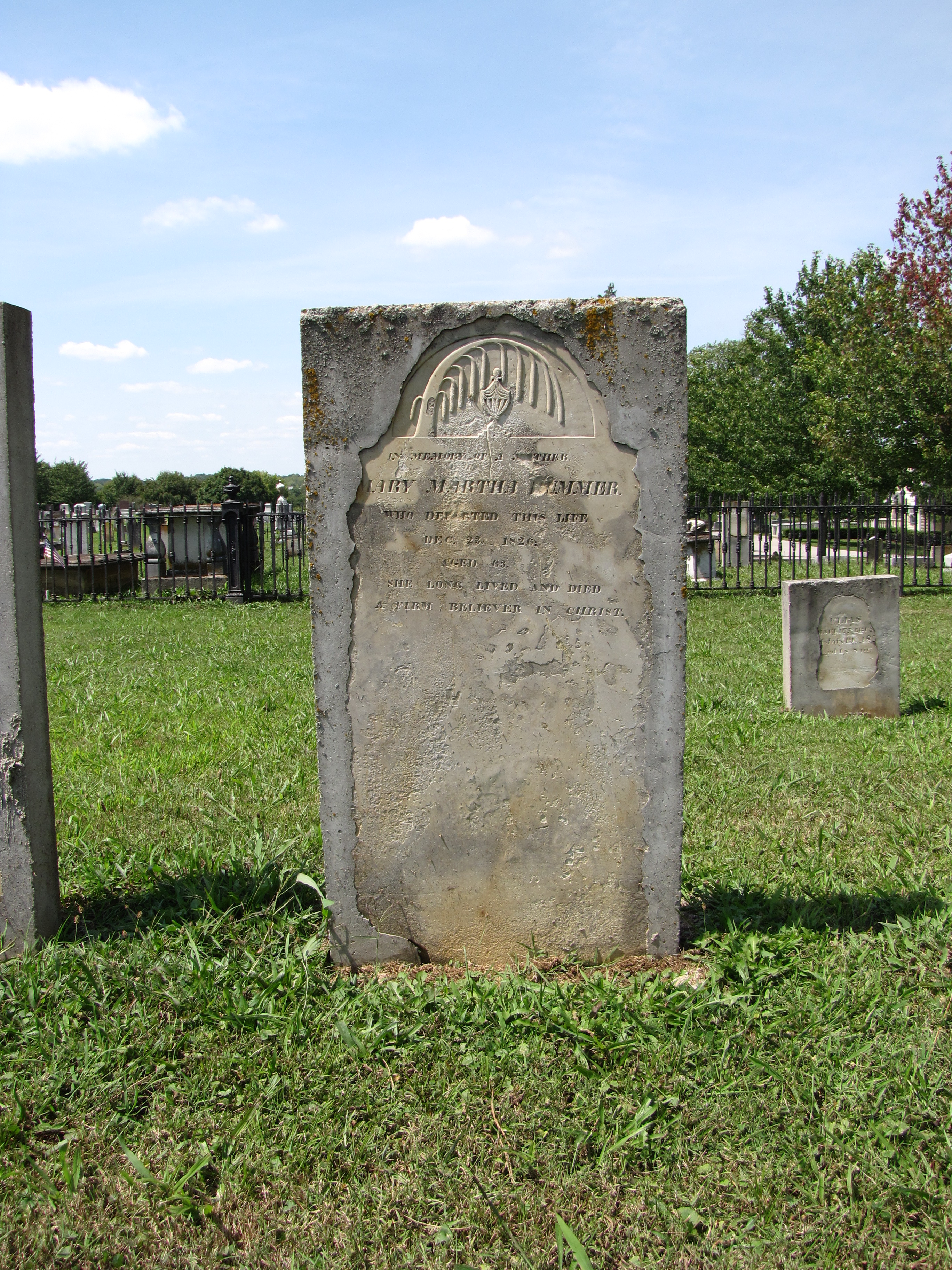
According to James Deetz and Edwin S. Dethlefsen, in their groundbreaking article, “Death’s Head, Cherub, Urn and Willow” the willow first made its appearance in cemeteries in the early 18th century.  The motif represented a break from the stark and cold reminders that death would bring that the Puritans carved into their gravestones—flying death’s heads, skulls and crossbones, and gravedigger’s equipment. In addition to the grim reminders of the inevitability of death Puritan gravestones often accompanied the haunting imagery with blunt words such as, “Here lies the body.” Nothing subtle there. The willow and the urn, however, represented a more sentimental view of death. There was a softening of Puritan views during the Great Awakening and the beginning of the Romantic Era.

Often the willow and urn is accompanied with words like, “In memory of” or “Sacred to the memory of”. This represented a softer approach. Like many symbols found in the cemetery, they can have multiple meanings, or there can be disagreement about the meaning of the motif—the Willow and urn is no exception. Christians saw the ability of the tree to live seemingly no matter how many of the branches were cut from the tree as a symbol of immortality. Others, however, suggest that the willow and urn predate Christianity to Roman times. The urn was used by Romans to store cremated remains and the willow was associated with the Persephone, the goddess of the underworld. Combined they represent the soul’s journey from the Earthly Realm to the Heavenly Realm. This design coincided with a neo-classical revival that took place mid-18th Century in America.

Crown Hill Cemetery, Salem, Indiana

Crown Hill Cemetery, Salem, Indiana

IN MEMORY OF A MOTHER

MARY MARTHA PUMMER

WHO DEPARTED THIS LIFE

DEC. 23, 1826

AGED 63

SHE LONG LIVED AND DIED

A FIRM BELIEVER IN CHRIST.

IMG_3079

Posted in Symbolism | 1 Comment

The Willow and the Lamb

Springdale Cemetery, Madison, Indiana

Springdale Cemetery, Madison, Indiana

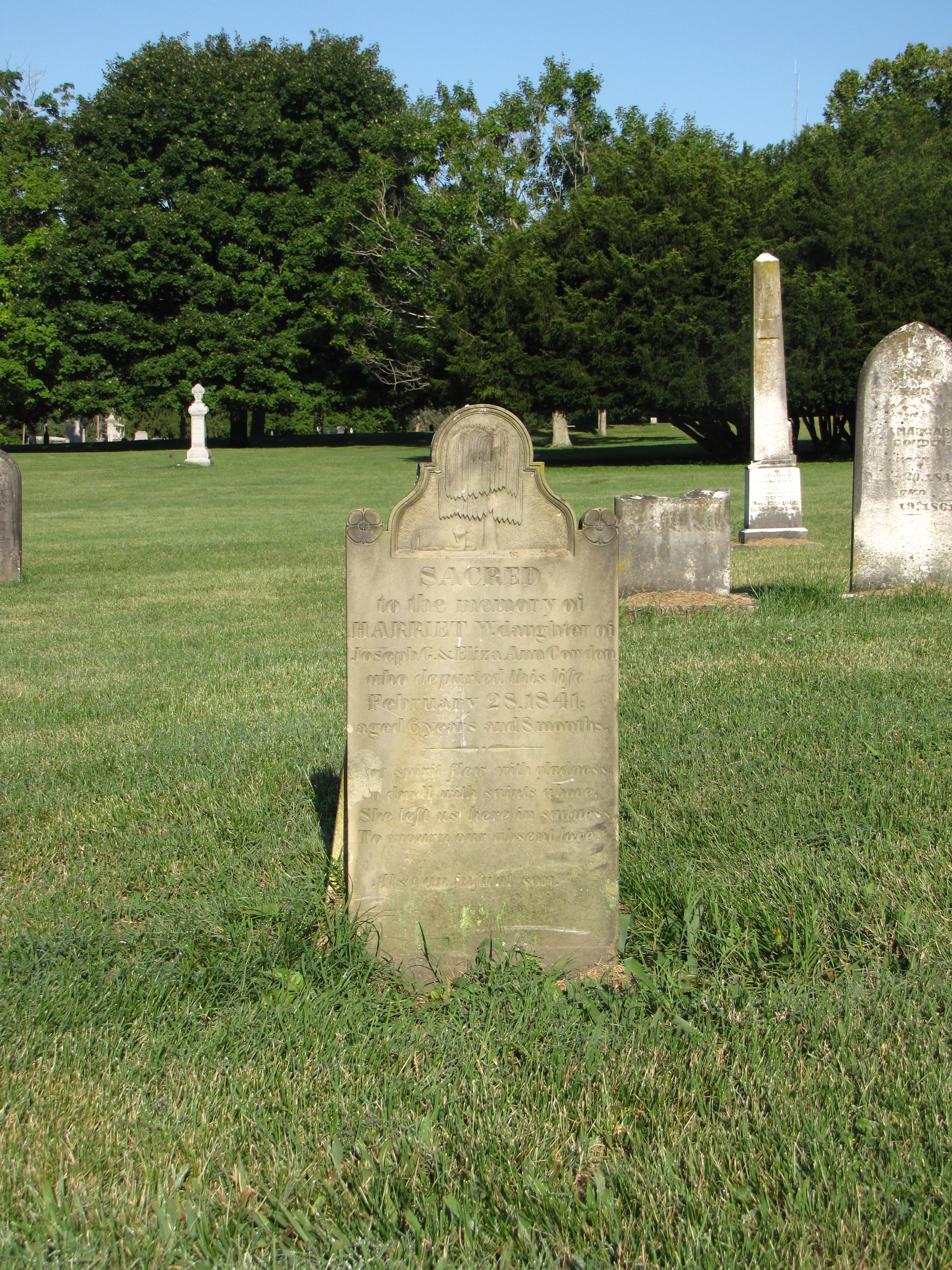
SACRED

To the memory of

HARRIET W. daughter of

Joseph G. & Eliza Ann Cowden

who departed this life

February 28, 1841;

aged 6 years and 8 months.

Her spirit flew with gladness,

To dwell with saints above,

She left us here in sadness

To mourn our absent love.

Also an infant son.

IMG_2580

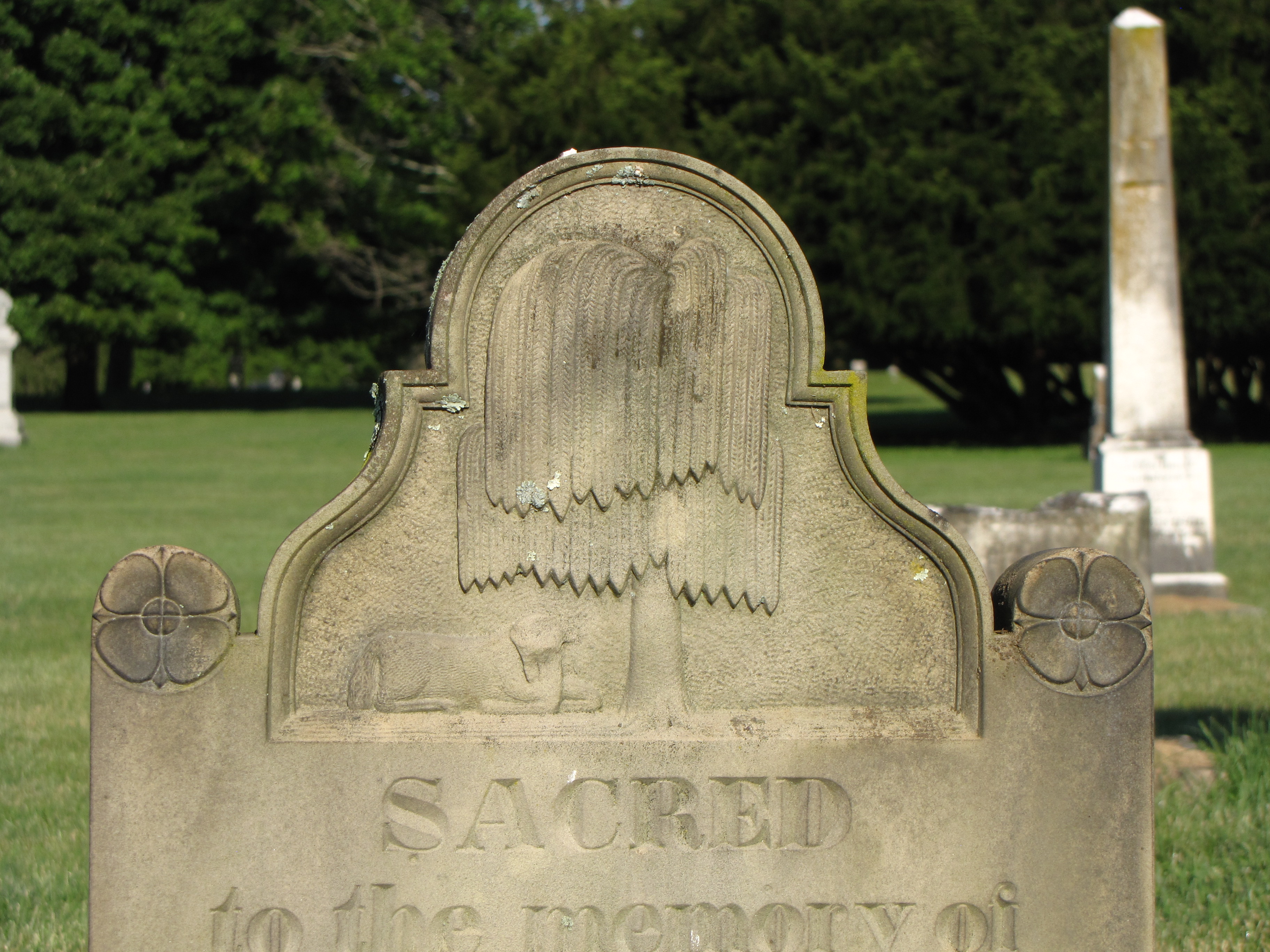
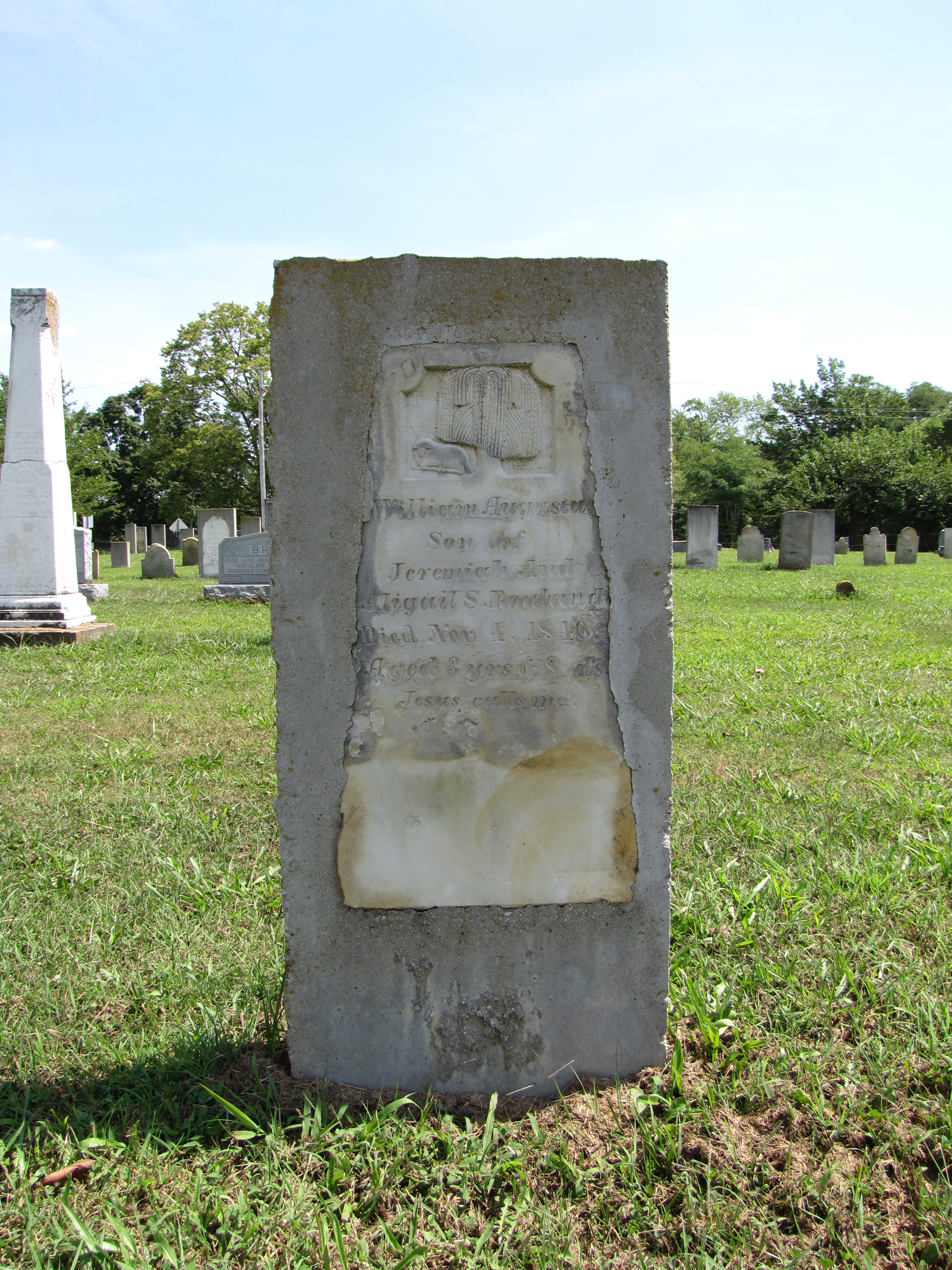
One of my favorite graveyard symbols is the willow.  Maybe because it is a little sentimental and hints at the human emotions felt during grief.  The willow motif represents what one might expect; sorrow and grief, it is after all a “weeping” willow.  In both of these examples, the willow symbol is combined with the lamb, and, both of these gravestones are for children. The lamb is the symbol of the Lord, the Good Shepherd. It also represents innocence, likely the reason why this motif usually adorns the tombstones of infants and young children. Most often the lamb is lying down, often asleep.

Crown Hill Cemetery, Salem, Indiana

Crown Hill Cemetery, Salem, Indiana

William Augustus

Son of

Jeremiah And

Abigail S. Roubound

Died Nov. 4. 1840

Aged 3 yrs. & 8 d’s

Jesus calls me.

IMG_3083


Posted in Symbolism | 1 Comment