Wheat and Ivy

img_4209

LEVI BUCKINGHAM

BORN DEC. 15. 1795.

DIED SEPT. 26. 1857.

ELIZA BUCKINGHAM

BORN APRIL 17. 1802

DIED AUG. 20. 1865.


PETER A. BUCKINGHAM

BORN OCT. 26. 1831.

DIED NOV. 16. 1835.

SALINA BUCKINGHAM

BORN MARCH 13. 1829

DIED AUG. 6. 1836.


MARGARET A. KENDALL

BORN JULY 2. 1819

DIED MARCH 31. 1860.

MATILDA BUCKINGHAM

BORN MARCH 9. 1833.

DIED MARCH 7. 1854.

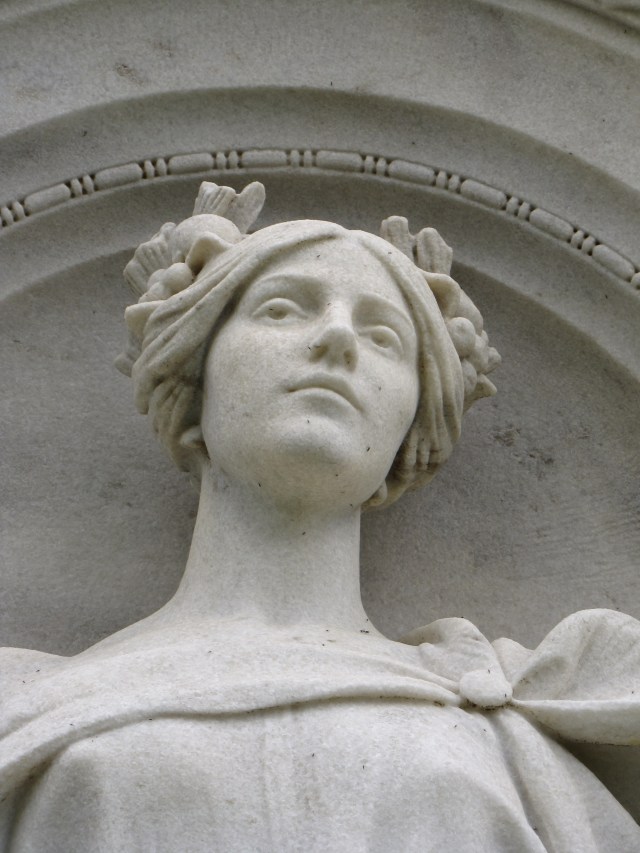
The white marble gravestone of Levi and Eliza Buckingham in the Spring Grove Cemetery at Cincinnati, Ohio, prominently displays their names and birth and death dates on the front of the stone in an elaborate cartouche. Carved into two of the sides of the marker have other names of fallen family members. The cartouche has wheat tucked into the top and the bottom of the stone is adorned with ivy leaves twinning around the gravestone. The ivy traditionally represents friendship.

Wheat’s origins are unknown but is the basis of basic food and a staple in many cultures. Because of wheat’s exalted position as a mainstay foodstuff, it is viewed as a gift from Heaven. Wheat symbolizes immortality and resurrection.  But, like many symbols found on gravestones, they can have more than one meaning.  For instance, because wheat is the main ingredient of bread, the sheaf of wheat can represent the Body of Christ.  Wheat can also represent a long life, usually more than three score and ten, or seventy years.

img_4210


Posted in Symbolism | Leave a comment

Neo-classical design

douglas_12-2-16

WILLIAM EVANS CHAPIN

AUG. 15, 1856 – JAN. 25, 1936

NANNIE NICOLSON CHAPIN

MAY 19, 1880 – APRIL 29, 1912

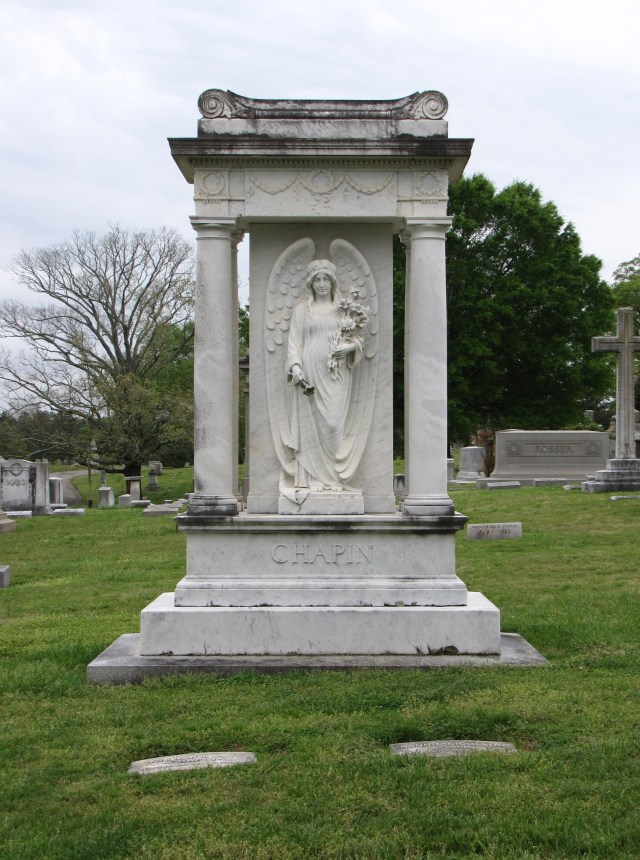
The Chapin monument in the Westview Cemetery at Atlanta, Georgia, is a neo-classical design. Many ancient classical designs are replicated in modern graveyards based on the designs of Greek and Roman temples.  The canopy on the Chapin monument is modeled after the Roman tomb of Lucius Cornelius Scipio Barbatus.

Scipio's tomb

Scipio’s tomb

The Scipio sarcophagus was erected around 150 BC.  Lucius Cornelius Scipio Barbatus (died c. 280 BC) was one of the two elected Roman consuls in 298 BC. His tomb is an example of classical Greek design based on the same design principles used for the Parthenon.  The scroll work, at the top of the canopy represents the Heavens, and also represented a bed. In an article written for “Design Hints” by John Cargill, a designer from the Chicago design firm of Chas. G. Blake & Company, describes the meaning of the scrolls writing, “The scrolls represent a bed; the bed refers to sleep and sleep is a type of death; and to the righteous death is but glorious transport to Paradise.

Cargill described the evolution of the classical architectural design principles, which he writes were conceived from the order that the ancients found in nature, primarily astrological, that were used in Greek architecture to imbue harmony into their structures.

img_0593

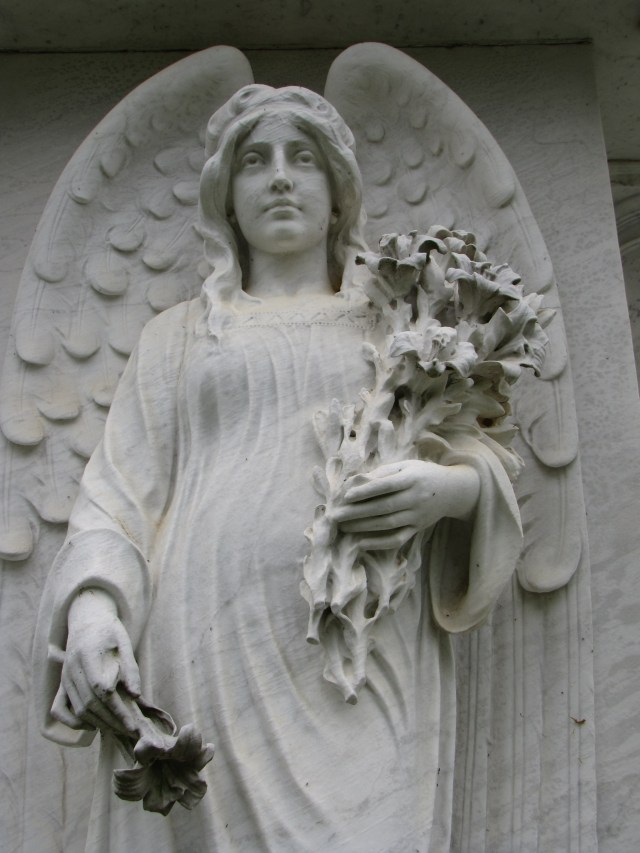
The sarcophagus, as does the Chapin monument, has three distinct planes representing the universe—the base, the middle, and the top. The base is symbolic of the Earth, the middle represented man and the gods, and the top of the sarcophagus where the scroll rests represents the Heavens. In this case, the angel, as the messenger of God, clearly stands in that middle land. An angels stands holding a bouquet of Easter lilies in one arm and a single blossom in the other.
img_0601

The lily, as a funerary symbol, has many meanings including purity, innocence, virginity, heavenly bliss, majestic beauty, and Christ’s resurrection.  Christians believe that the trumpet-shaped blossoms announce the Resurrection of Jesus Christ. If the lilies are white they symbolize the hope of eternal life. The Easter lily has long been associated with the Christian religion, commonly referred to as “White-Robed Apostles of Christ.” Early Christians believed that lilies sprouted where Jesus Christ’s sweat fell to the ground in the Garden of Gethsemane.

img_0602

White has typically been a color associated with virtues of purity and innocence.  Often the lily can be found on the grave of a child, the epitome of purity and innocence.  The white lily is also associated with virginity and marriage, in particular relationship to women.  On one hand, the lily represents virginity and innocence, which is an appropriate symbol for a young unmarried woman.  On the other hand, it is symbolic of majestic beauty and marriage, which makes it an appropriate symbol for all married women regardless of their age.

img_0603

Posted in Symbolism | Leave a comment

The Scroll

img_1903

REYNOLDS DUNN

DIED

JULY 18, 1860

AGED 67 YRS …

PHEBE

WIFE OF

REYNOLDS DUNN

DIED

JAN 22, 1863

SIMEON B.

1822 – 1839

JENNETTE

1831 – 1839

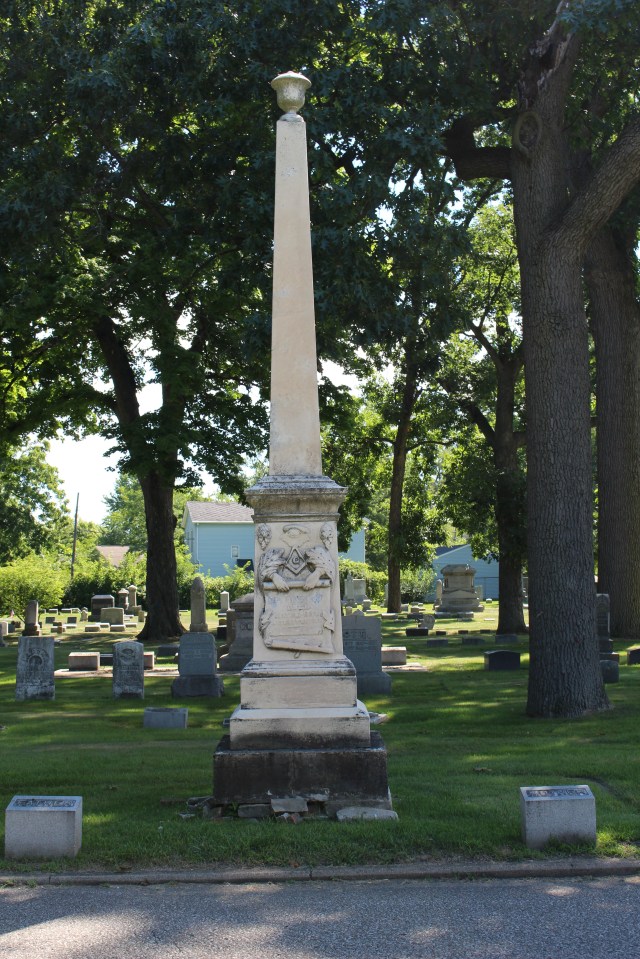
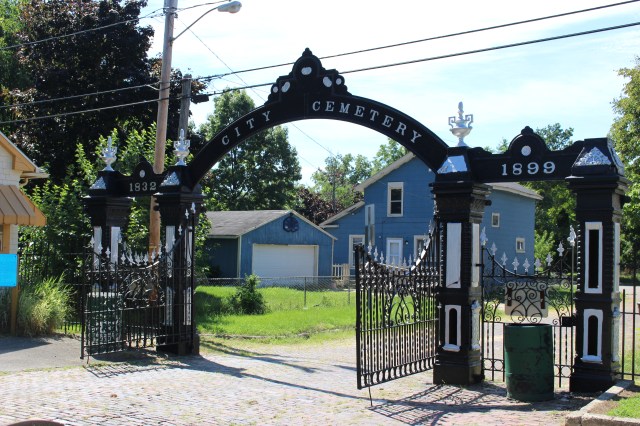
The City Cemetery at South Bend, Indiana, has a very elaborate monument dedicated to Reynolds Dunn and his family. The gravestone is a tall white marble column topped with a small urn resting on a plinth of the same material. The soft marble is slowly being eaten away by the elements, eroding the detail of the wording and the carvings on the market.

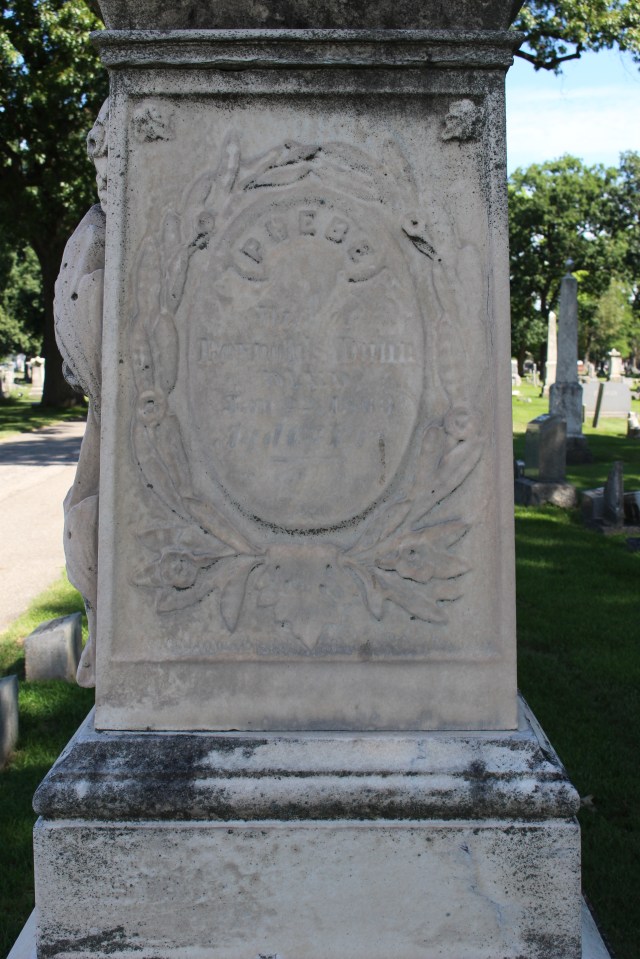
On what appears to be the back side of the marker is a cartouche. Inside that is the name Phebe Dunn, wife of Reynolds Dunn, along with her date of death and her age, though her age is so badly faded and illegible. The side of the plinth has two names carved into it—presumably children of Reynolds and Phebe—Simeon and Jennette, along with birth and death years. The front side is an elaborately carved tribute to Reynolds Dunn.

img_1907

img_1904
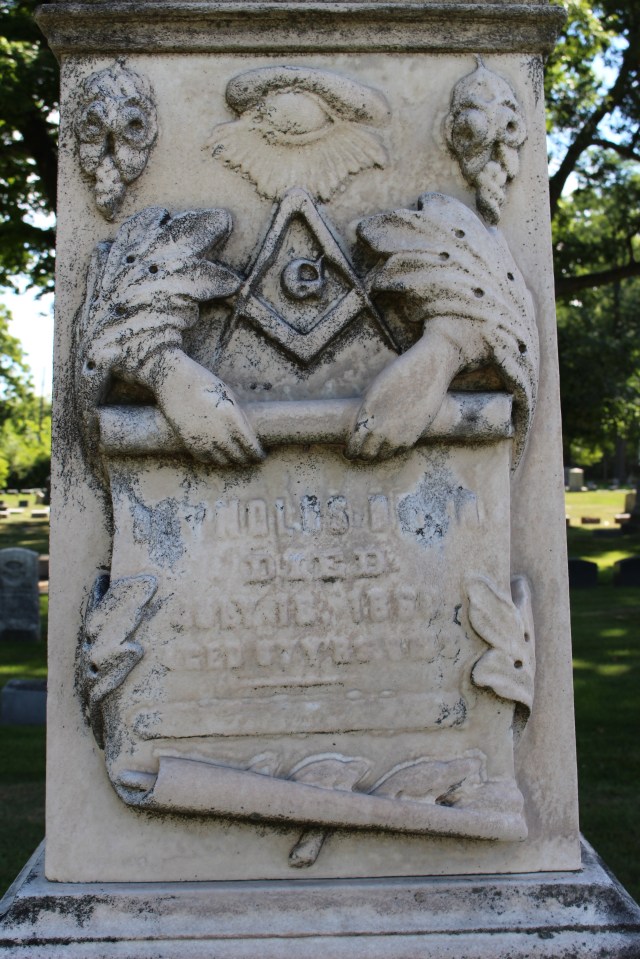
The design features—the “All-Seeing Eye of God” The all-seeing eye of God, also called the Eye of Providence is one of many symbols of Masonic iconography.  This symbol is to remind Masons that all of their actions and deeds are being observed by the watchful eye of the Great Architect of the Universe.  Sometimes the eye is displayed in a triangle.
Just below the All-Seeing Eye of God symbolism is the Masonic emblem—the square and two compasses.  In this example the letter “G” appears in the middle of the emblem.  Each component of the symbol represents a different Masonic orthodoxy, though, these are not hard and fast: The compasses represent the boundaries of wisdom a person should have the strength to circumscribe and stay within. The square symbolizes virtue in all actions, just as the expression “square deal” means treating people with fairness. The letter “G” seems to have more than one meaning.  It could possibly mean God, as in the creator of the universe; or Gimel, which is the word for the third letter of many Semitic languages.  The number three is significant to many Masonic rituals and beliefs.  Some also believe the “G” may represent geometry.
Directly below that are two female hands holding a scroll that look as if it is rolling open at the bottom. The scroll represents both the life of the deceased and the time spent on Earth. In this case, the scroll is being unfurled by two hands, most likely representing the life that is being recorded by the angels.

Though the poem, “Invictus”, was written by William Ernest Henley in 1875, a full 15 years after Reynolds Dunn died, the carving reminds me of the last stanza of the poem:
It matters not how strait the gate,

    How charged with punishments the scroll,

I am the master of my fate,

     I am the master of my soul.

img_1910

Posted in Symbolism | Leave a comment

What to do with leftover turkey?

img_2135

The Pilgrims celebrated the first Thanksgiving in the fall of 1621. They had made it through a harsh New England winter with a little more than half of the original group having survived it. For three days, the Pilgrims and a band of Wampanoag Indians played games and feasted. They likely ate venison, lobster, clams, swan, and other water fowl and probably wild turkey.

Turkey, however, has evolved into the main dish on most Thanksgiving tables in America. In fact, the national Turkey Federation (yes, there is such an organization—and they are not working on behalf of the turkeys) claim that 88% of American households serve turkey on thanksgiving.

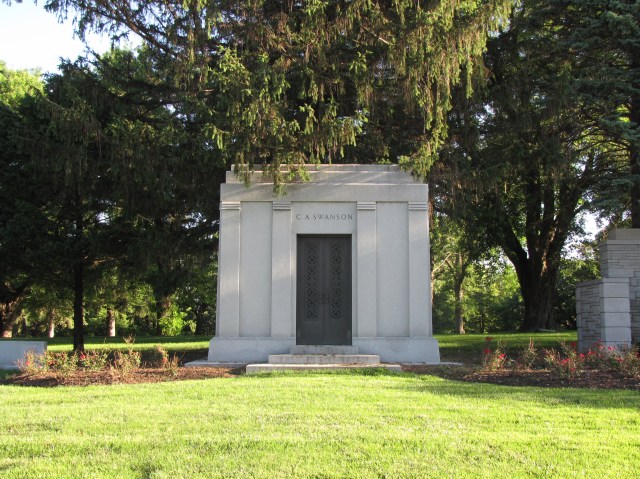
The question usually following Thanksgiving is what to do with the leftover turkey? That was the same question that had to be answered by the Swanson & Sons Corporation in 1953. That year, Swanson ordered too many turkeys and literally tons were left over after the big holiday.

To get rid of the leftover turkey, a Swanson Company executive, Gerry Thomas, suggested producing dinners in aluminum trays—the company cooked up 5,000 dinners of turkey, cornbread dressing, gravy, peas, and sweet potatoes ready for re-heating. At 98 cents a pop, they were a hit. Within one year, over ten million were sold. The TV dinner was born!

Swanson and Sons was founded by Carl Swanson (1879 – 1949). Swanson was a Swedish immigrant in partnership with John O. Jerpe who grew what started as grocery store into a large dairy operation buying eggs and butter from farmers. The company started selling poultry and other meat. Swanson eventually bought the company from Jerpe and renamed C.A. Swanson and Sons. Carl’s sons Gilbert and Clarke joined the business.

All three are buried in the Forest Lawn Cemetery at Omaha, Nebraska. Carl Anton Swanson (1879 – 1949) and his wife Carol Gerock Swanson (1881 – 1952) are buried in a light gray granite mausoleum with straight horizontal and vertical lines in a modern design. His son’s monuments flank his mausoleum.

img_2136

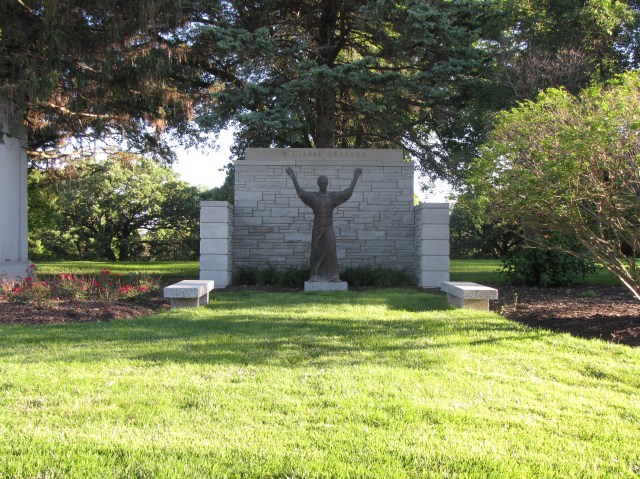
His son Gilbert Carl Swanson (1906 – 1965) and his wife Roberta Epperson Fulbright Swanson (1911 – 1959) have a modernistic monument with two columns split with bonze cross surrounded by delicate ornamental metal work separating the two halves. In the corners of the monument are the initials “G”, “C”, and “S” intertwined.

img_2132

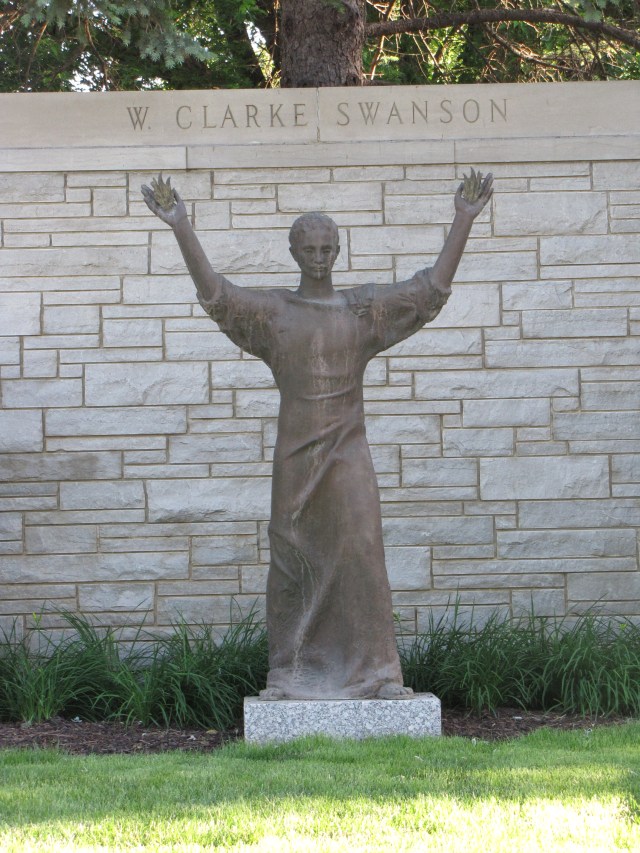
Walter Clarke Swanson (1908 – 1961) has an intriguing monument. It is directly to the right of Carl Swanson’s mausoleum and is a bit of a mystery. The sculpture created in 1963 by famed artist Bruno Innocenti (the statue is signed) of a male figure holding his hands in the air with flames emanating from the palms. The meaning of the statue seems to be unknown to all but the Swanson family.

img_2137

img_2138

img_0506

img_0508

Now what to do about all that leftover turkey? There is always the old standard like a pot pie. Or you could try Melissa d’Arabian recipe for Chicken Pot Pie Turnovers, substituting turkey, of course. A new twist on an old idea. Here is a link to the recipe at the Food Network: http://www.foodnetwork.com/recipes/melissa-darabian/chicken-pot-pie-turnovers-recipe.html

Posted in Famous graves, Mausoleums | Leave a comment

Tribute to a Pilgrim

img_2924

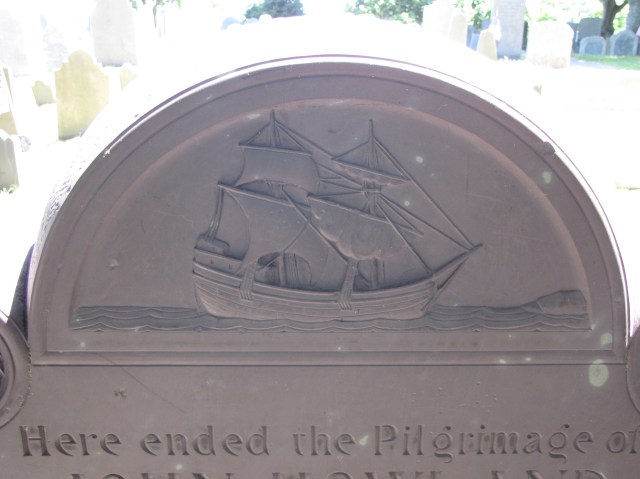
Here ended the Pilgrimage of

JOHN HOWLAND

Who died February 23, 1672/3

aged above 80 years

He married Elizabeth daughter of

JOHN TILLEY

Who came with him in the

Mayflower December 1620

From them are descended a

Numerous posterity.

“Hee was a godly man and an ancient professor in the ways of Christ. He was one of the first comers into this land and was the last man that was left of those that came over in a Shipp called the Mayflower that lived in Plymouth.”        Plymouth Records

It is fitting to remember a Pilgrim on this, our Thanksgiving. The gravestone of John Howland is a replacement stone and it is presumed that he is buried in the Burying Ground at Plymouth as the first grave markers were made of wood and did not survive.

img_2923

John Howland was born in Fenstanton, Huntingdonshire, England, in or around 1592. He was the son of Yeoman Henry Howland and Margaret Howland. John Howland came over on the Mayflower as an indentured servant of Mr. John Carver, who later became the first Governor of Plymouth. Howland’s trip across the Atlantic was a harrowing experience. During a harsh storm, while standing on a deck, a huge wave crashed over the ship and washed Howland into the icy cold waters of the sea. He was able to catch hold of a topsail halyard and hung on until his shipmates fished him back onto the deck to safety.

The Mayflower II, in Plymouth Harbor

The Mayflower II, in Plymouth Harbor

John Carver died and John Howland is thought to have won his freedom upon Caver’s death. John married his fellow passenger, Elizabeth Tilley on New Year’s Day (March 25, 1623—Old Style).

Pilgrim woman statue in Plymouth

Pilgrim woman statue in Plymouth

Elizabeth came over with her parents John Tilley and Joan Hurst Tilley. Her parents died during that first winter in the New World and she became the ward of the Carver’s who died the year after. John and Elizabeth had 10 children—Desire, John, Jabez, Hope, Lydia, Ruth, Hannah, Joseph, Isaac, and Elizabeth.

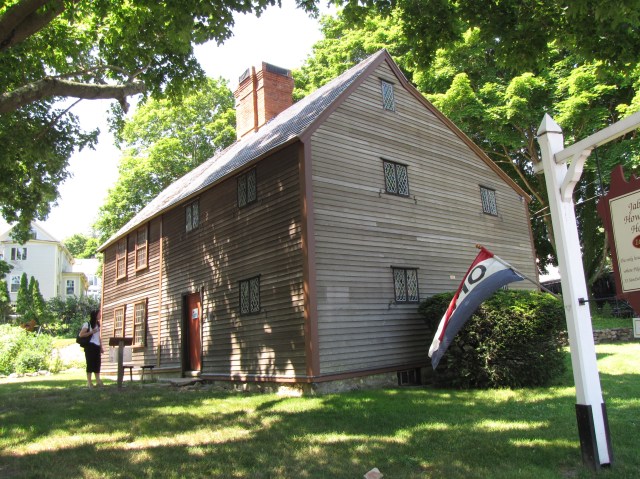
The only house still standing in Plymouth, in which a Pilgrim lived, is the Jabez Howland House. After, John Howland died, his wife, Elizabeth went to live the rest of her life as a resident in her son’s home.

Jabez Howland House, Plymouth

Jabez Howland House, Plymouth

I have recounted the story of John Howland’s crossing and rescue every Thanksgiving for my children. If Howland had not been pulled up on deck and saved, I wouldn’t be here because I can be counted among his “Numerous posterity” now numbering in 12 and 13 generations.


Posted in Famous graves | 1 Comment

I Am the Light of the World

img_1246

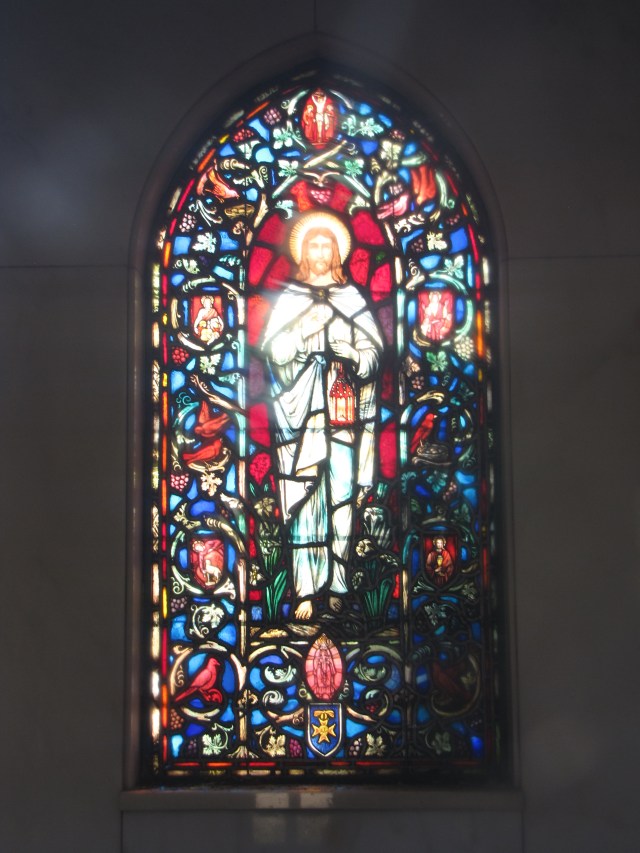
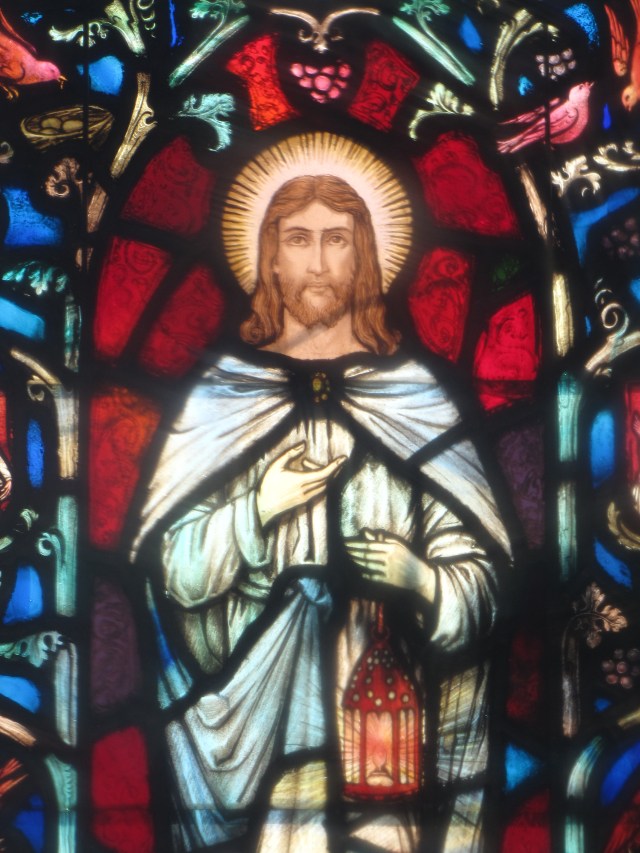
The stained glass mausoleum window in the Westview Cemetery at Atlanta, Georgia, portrays Jesus Christ carrying a lantern. The window is a depiction of the Biblical passage, John 8:12: “Then spake Jesus again unto them, saying, I am the light of the world: he that followeth me shall not walk in darkness, but shall have the light of life”.

The verse is an allegory. It essentially compares the light necessary for life on Earth to the necessity of the light of Jesus to those seeking spiritual truth. Just as the tendrils of the morning glory follow the light of the sun during the day and would die without it, the spiritual light of Jesus allows His followers never to again walk in darkness.

img_1247


Posted in Symbolism | 1 Comment

What’s In a Name?

img_1000

From Shakespeare’s Romeo and Juliet, 1600:

JULIET:

‘Tis but thy name that is my enemy; Thou art thyself, though not a Montague. What’s Montague? it is nor hand, nor foot, Nor arm, nor face, nor any other part Belonging to a man. O, be some other name! What’s in a name? that which we call a rose By any other name would smell as sweet; So Romeo would, were he not Romeo call’d, Retain that dear perfection which he owes Without that title. Romeo, doff thy name, And for that name which is no part of thee Take all myself.

The meaning here, of course, is that it does not matter what we call someone or something. What that someone or something is, is what matters. That is unless you are naming a product, then you want to name to mean something, to have a ring about it, some memorability. There are whole marketing and product development departments devoted to naming products.

One such product that is known the world over is Coca-Cola. The history of the famous soda is fairly well known—Coca-Cola was created by Dr. John S. Pemberton, a chemist and pharmacist in Atlanta, Georgia. Pemberton was experimenting with two main ingredients—coca leaves and kola nuts—trying to produce a medicinal elixir. The concoction he actually created was a refreshing soft drink that would quench the thirst of generations. The drink was first introduced at the Jacobs Pharmacy in May 1886 at Atlanta. It was not an instant hit. The first year, only 25 gallons of the mix was sold.

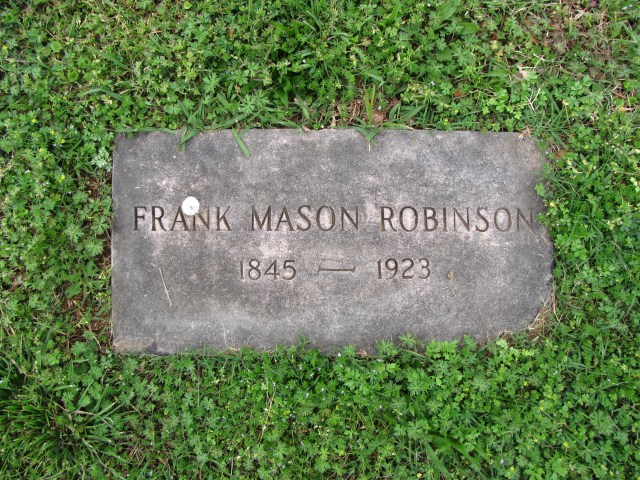
The drink, however, was not named by Pemberton. Pemberton’s business venture was named the Pemberton Chemical Company and had four men in the partnership—Frank Mason Robinson, David Doe, Ed Holland, and Pemberton himself.

It was Robinson, the bookkeeper of the partnership that named the product Coca-Cola. He chose the name because it combined the two main ingredients and was “euphonious.” Not only did the entrepreneurial clerk come up with the name, but also the script used in what is perhaps the most famous logo in the world. The script he used, called Spencerian script, was popular with bookkeepers of his day.
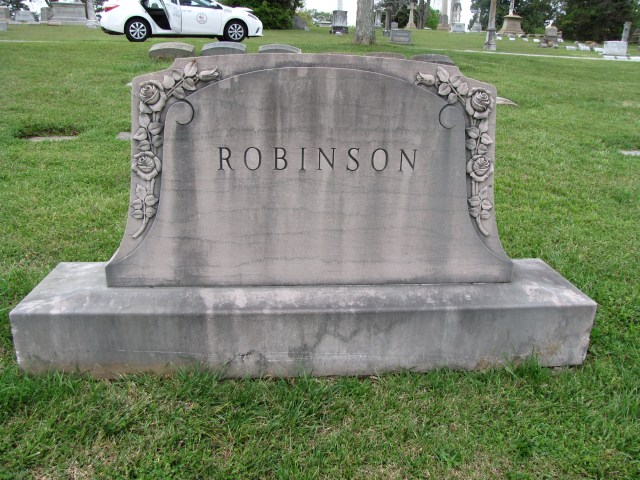
Robinson stayed with the company even after Pemberton sold out his share to Asa Chandler. Mason became the chief marketer for the soft drink and made it a household name. He became known as one of the marketing experts of his day. Though, Frank Mason Robinson became famous and wealthy, he is buried in the Westview Cemetery at Atlanta underneath a grass marker that only has carved on it his name, birth, and death years. There is a modest family marker adorned with roses but no indication of his long and important association with and contribution to Coca-Cola, the name he created for a drink known in every corner of the world. To paraphrase Shakespeare, Coca-Cola: By any other name would it “taste” as sweet! Methinks not.

img_0999

Posted in Famous graves | Leave a comment

Vulcanus Allheart

img_5260

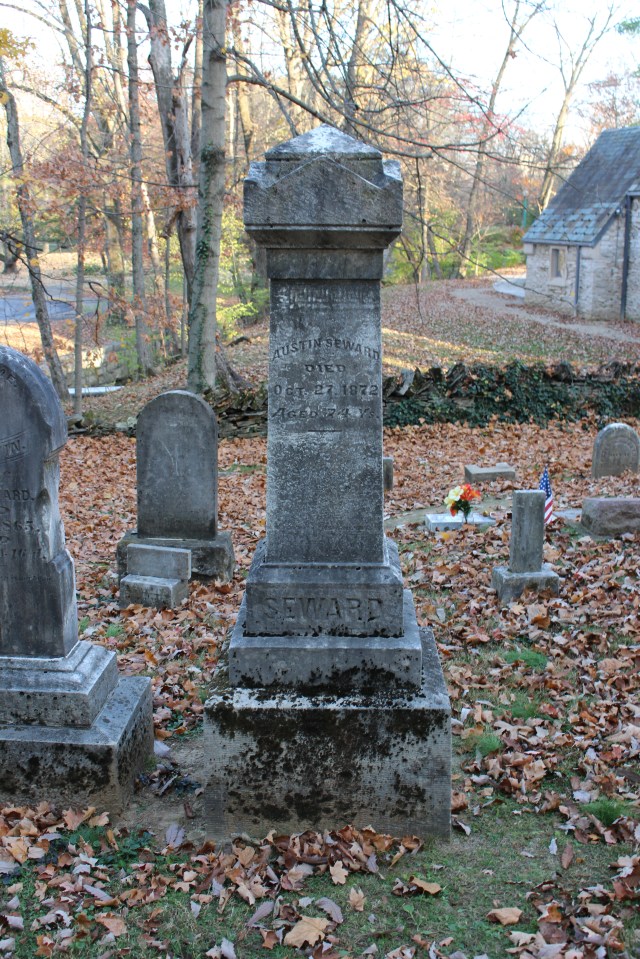
AUSTIN SEWARD

DIED

OCT. 27, 1872

AGED 74 Ys

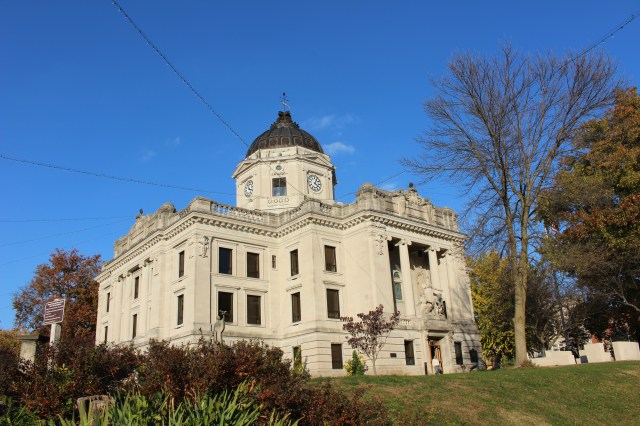
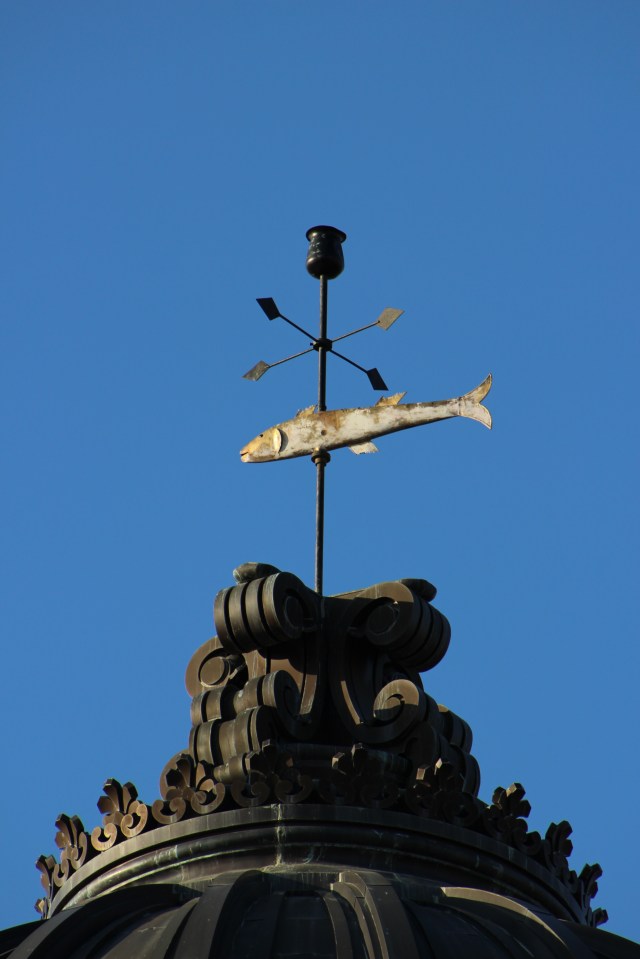
For almost 190 years, except for a brief period when a storm blew it off and when a third courthouse was being built, a 5 foot, 6-inch cooper fish has been atop the Monroe County, Indiana, courthouse. The weathervane was constructed by Austin Seward, one of the first pioneers to settle in Woodville, before our fair city got its current name of Bloomington.

Seward, dubbed Vulcanus Allheart by a local author of an early history of Bloomington, was a blacksmith who founded the Seward Foundry in 1822. Seward produced all sorts of iron and metal items, including plough shares, fencing, and guns. Seward also fashioned  his most famous work, the courthouse fish, out of cooper which was placed on top of the cupola of the second courthouse built in Bloomington in 1826. The exact date the fish went up is still in dispute but most agree it was somewhere between 1826 and 1830—a long time ago. The fish was gilded in 1884 and  sparkled from its perch.

In 1906 a new Beaux Arts-style courthouse designed by the Fort Wayne architectural firm of Wing and Mahurin and built by contractors George W. Caldwell and Lester Drake to occupy the square in the center of the city. The fish was saved and placed into its position of honor on top of the copper dome at the completion of the new building.

img_5249

The fish is a curiosity, especially given that Bloomington is landlocked and not exactly a Mecca for fishing. It is likely, however, that Austin Seward, a Presbyterian church elder, chose the fish because it has been long considered a symbol of Christianity. Jesus Christ was a fisher of men. The fish is also a relatively flat animal and perfect for a weathervane to catch the wind.

Austin Seward (circa 1799 – 1872) a native of Kentucky who moved to Bloomington and opened his foundry in 1822, is buried in the tiny Dunn Cemetery on the Indiana University campus. Seward was notable for being the director of the first Bloomington band, and elder of the First Presbyterian Church, but most remembered for the fish weathervane on the top of the courthouse dome and center of the city square. After nearly 200 years, it is safe to say that his work has stood the test of time.

img_5266

Posted in Famous graves | Leave a comment

Angel of Death, Take Two

img_5099

Adam Edward Burkhardt

April 26, 1845 – November 1917

Emma Amanda Erkenbrecher Burkhardt

April 25, 1851 – September 23, 1916

img_5092

Adam Edward Burkhardt, emigrated from Bavaria to Cincinnati, Ohio, where he founded a company that manufactured furs. Burkhardt was a highly successful furrier and a prominent citizen of Cincinnati. His wife, Emma, was also from a leading family of the city. She was the daughter of Andrew Erkenbrecher, the founder of the Cincinnati Zoo.

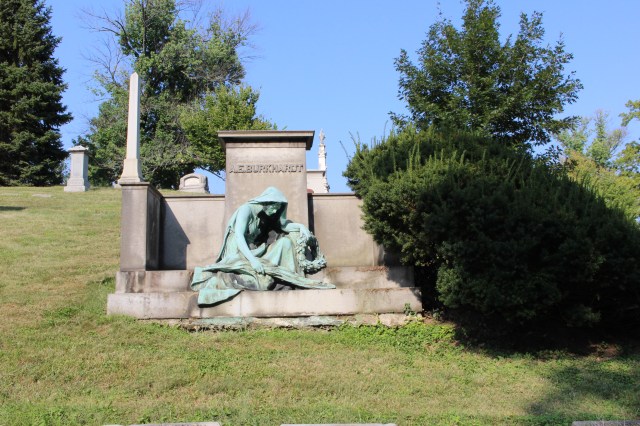
According to Beauty in the Grove: Spring Grove Cemetery and Arboretum by Phil Nuxhall, 2009, Orange Frazer Press, page 44, the bronze statue marking the graves of the Burkhardt family, is referred to as the “Angel of Death.” The shrouded figure is kneeling, holding a wreath in one hand and palm leaves in the other. The palm represents victory over death as does the laurel wreath. The laurel wreath dates back to Roman times when soldiers wore them as triumphal signs of glory.

img_5094

Who is the sculptor?

I contacted Phil Nuxhall, through the Spring Grove Website, who wrote Beauty in the Grove: Spring Grove Cemetery and Arboretum, and he told me that the artist’s name that is carved into the statue is Clement Barnhorn, (January 8, 1957 – August 2, 1935), a noted Cincinnati artist well known during his lifetime for funerary works, statuary, and architectural sculpture.

img_5093

Posted in Symbolism | Leave a comment

The Spirit of Achievement

img_0618

IN MEMORY OF

JESSE PARKER WILLIAMS

BORN IN WAYNE COUNTY

NORTH CAROLINA

DECEMBER 27, 1842

DIED IN ATLANTA GEORGIA

AUGUST 5, 1913

AND HIS WIFE

CORA BEST TAYLOR

FEBRUARY 14, 1860 – MARCH 22, 1924

img_0623

Jesse Parker Williams’s career can be best described as a Horatio Alger rags-to-riches story. After the Civil War, having served in the Confederate Army as a Captain, Williams was left penniless. He moved from job to job, first as a bookkeeper, before he acquired enough capital to set up his own business in the timber industry.

He then opened and successfully ran a large mercantile company in Port Harrelson, South Carolina, which he sold. He made a move to Georgia, where he built a large fortune building and operating the Florida, Georgia, and Alabama Railroad. Jesse Parker and his wife Cora were what we would call today a “power couple.” Upon his death, Cora, became President of the company and ran it successfully until her death in 1924.

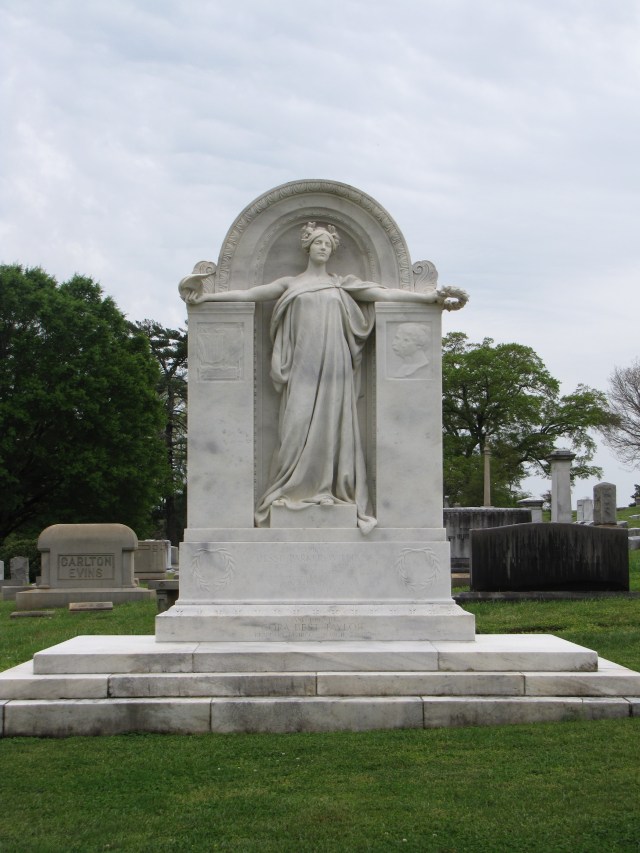
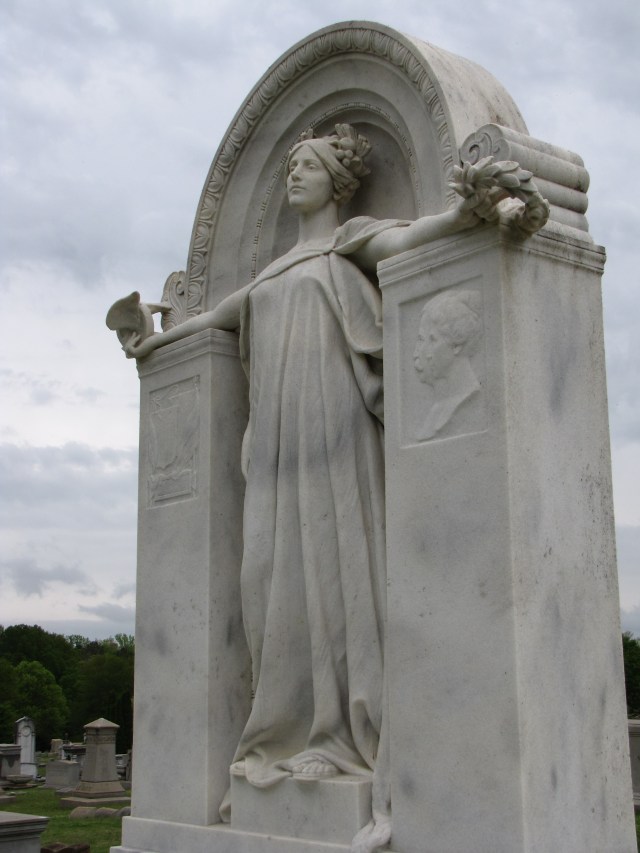
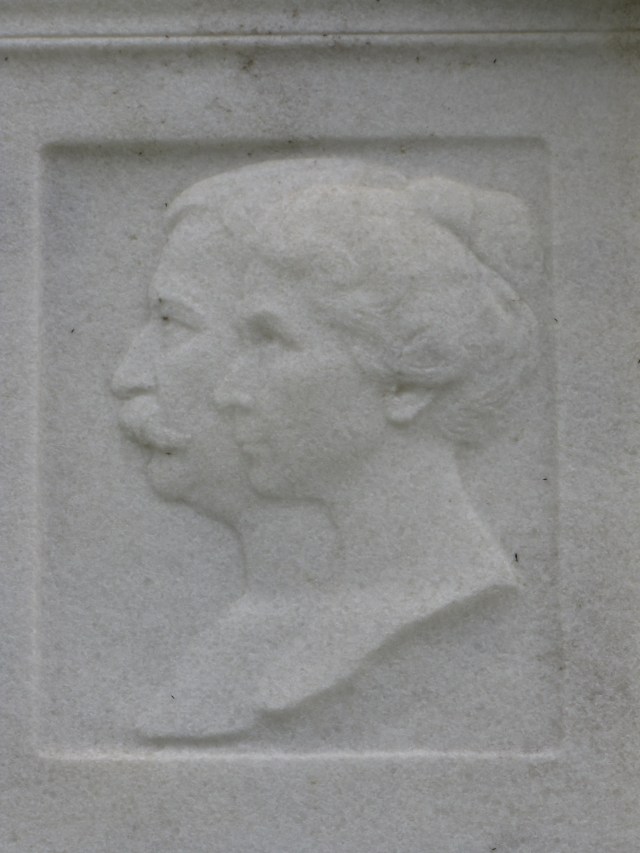
The monument that was built to mark their graves was designed by famed architect Henry Bacon. The allegorical statue, titled “The Spirit of Achievement”, at the center of the memorial was sculpted by Daniel Chester French. A bas-relief of the couple adorns the upper right side of the white marble monument.

img_0624

The Williams’s Memorial in the Westview Cemetery at Atlanta, Georgia, was not the only collaboration by Bacon and French. Their most famous collaboration was the Lincoln Memorial in Washington, D.C. Henry Bacon designed the building and Daniel Chester French designed the statue of President Abraham Lincoln, which was carved by the Piccirilli Brothers.

img_0626

Posted in Famous graves | Leave a comment