Joiners

Ames Cemetery, near French Lick, Indiana
Clear Creek Christian Church Cemetery, near Bloomington, Indiana
Old Tennet Presbyterian Church Cemetery, Tennet, New Jersey
Maplewood Cemetery, Freehold, New Jersey
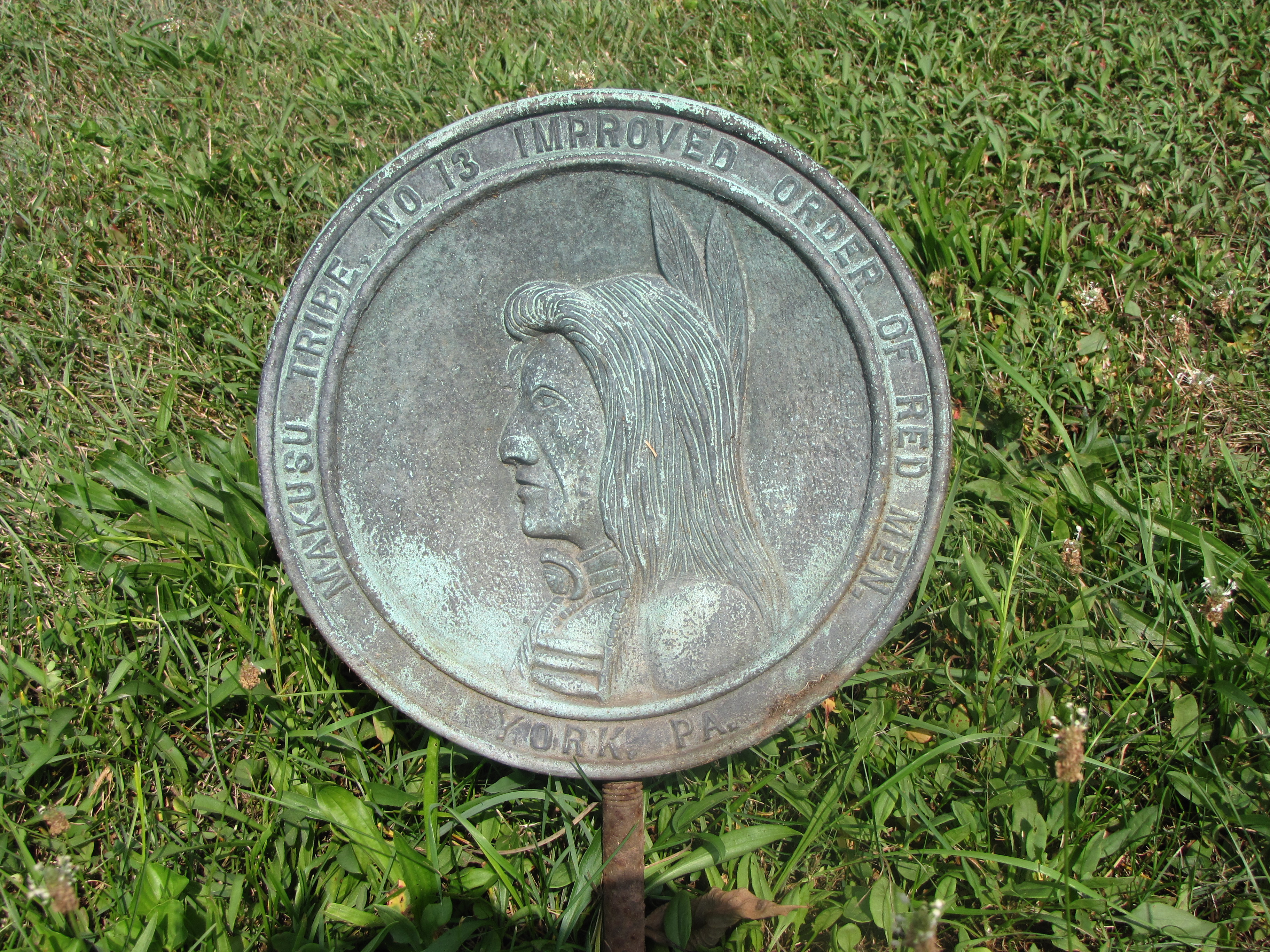
York Cemetery, York, Pennsylvania

As Sociologist W. Lloyd Warner wrote, in his 1959 monograph, The Living and the Dead, “cemeteries are collective representations which reflect and express many of the community’s basic beliefs and values.” Certainly one of the conclusions that can be drawn when looking at cemeteries as reflective of what Americans believe and do is that Americans are joiners.  They join all sorts of organizations–churches, insurance groups, clubs, secret societies, sororities, fraternal organizations.  Look around cemeteries and you will see the organizations that are prevalent in your community or once were.  Look for markings on the gravestone themselves or look for markers next to the gravestone.

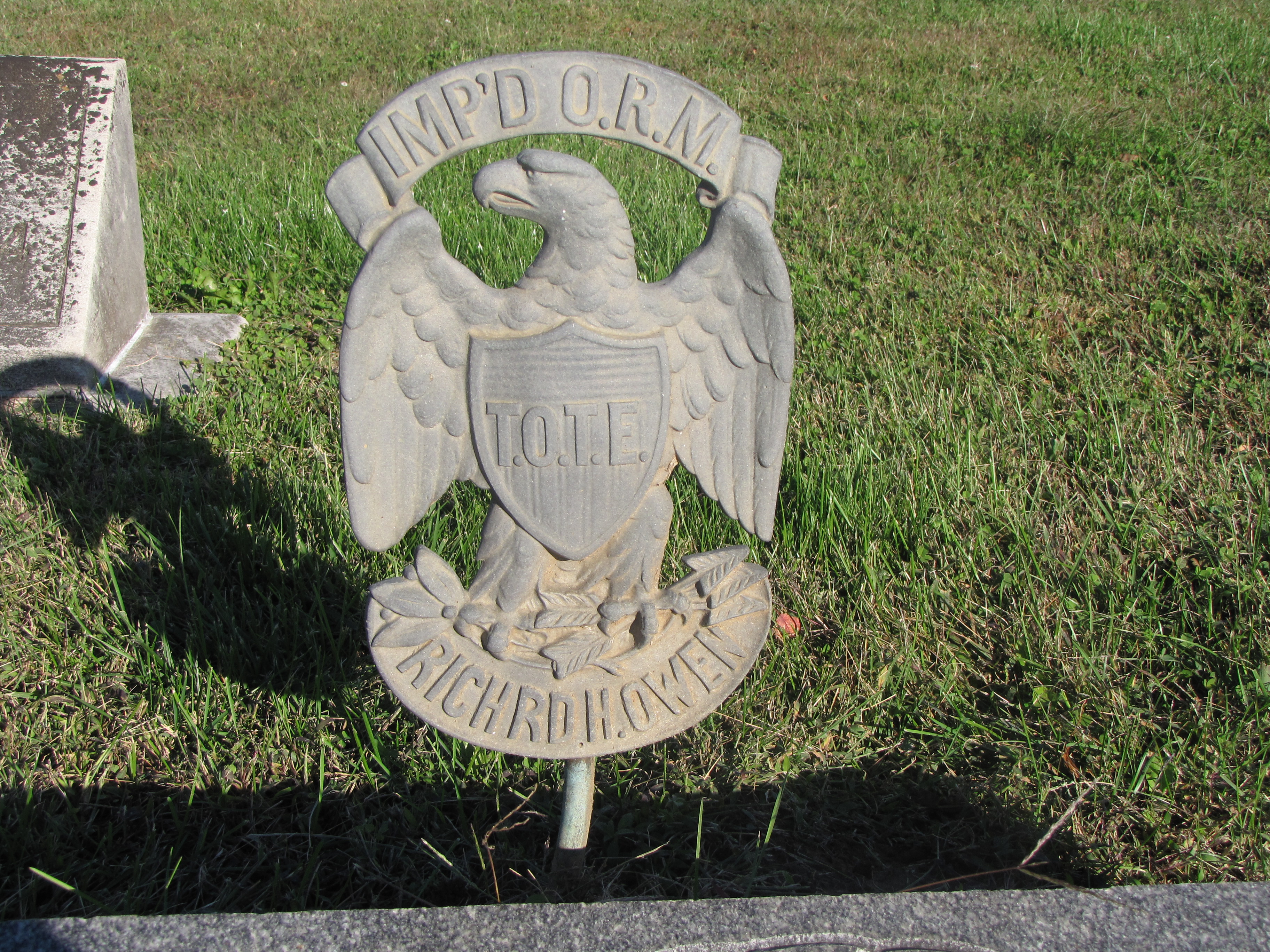
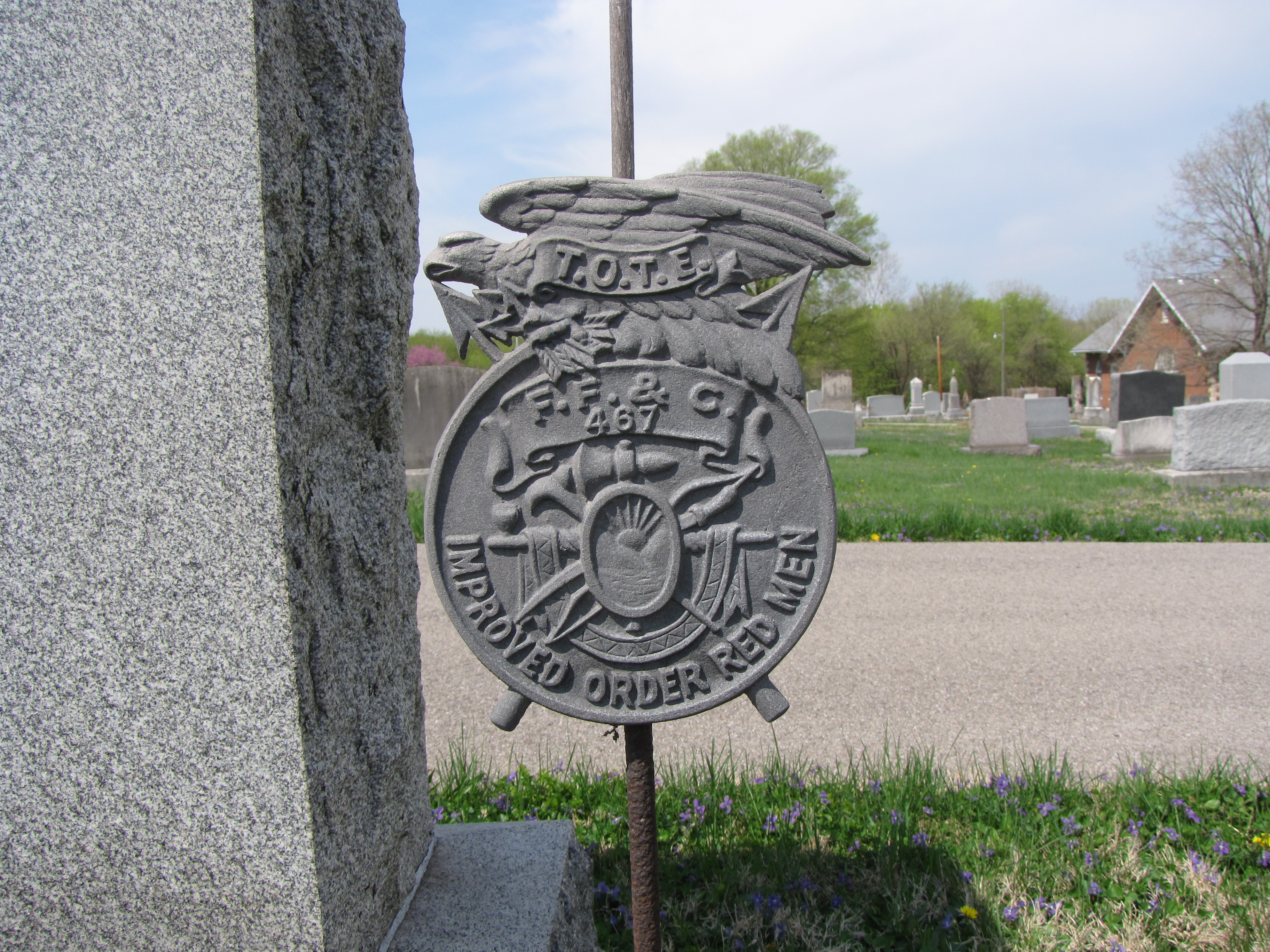
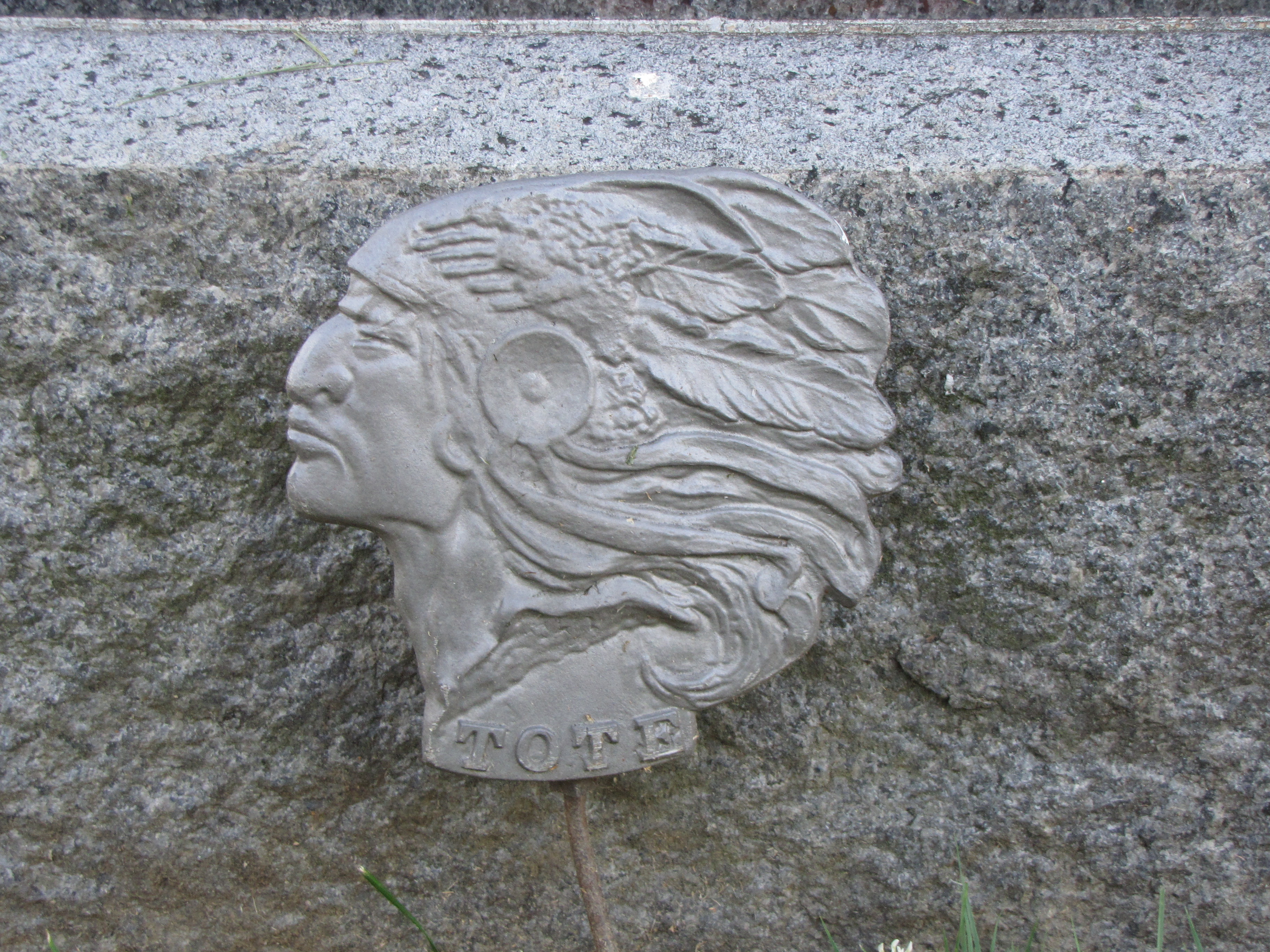
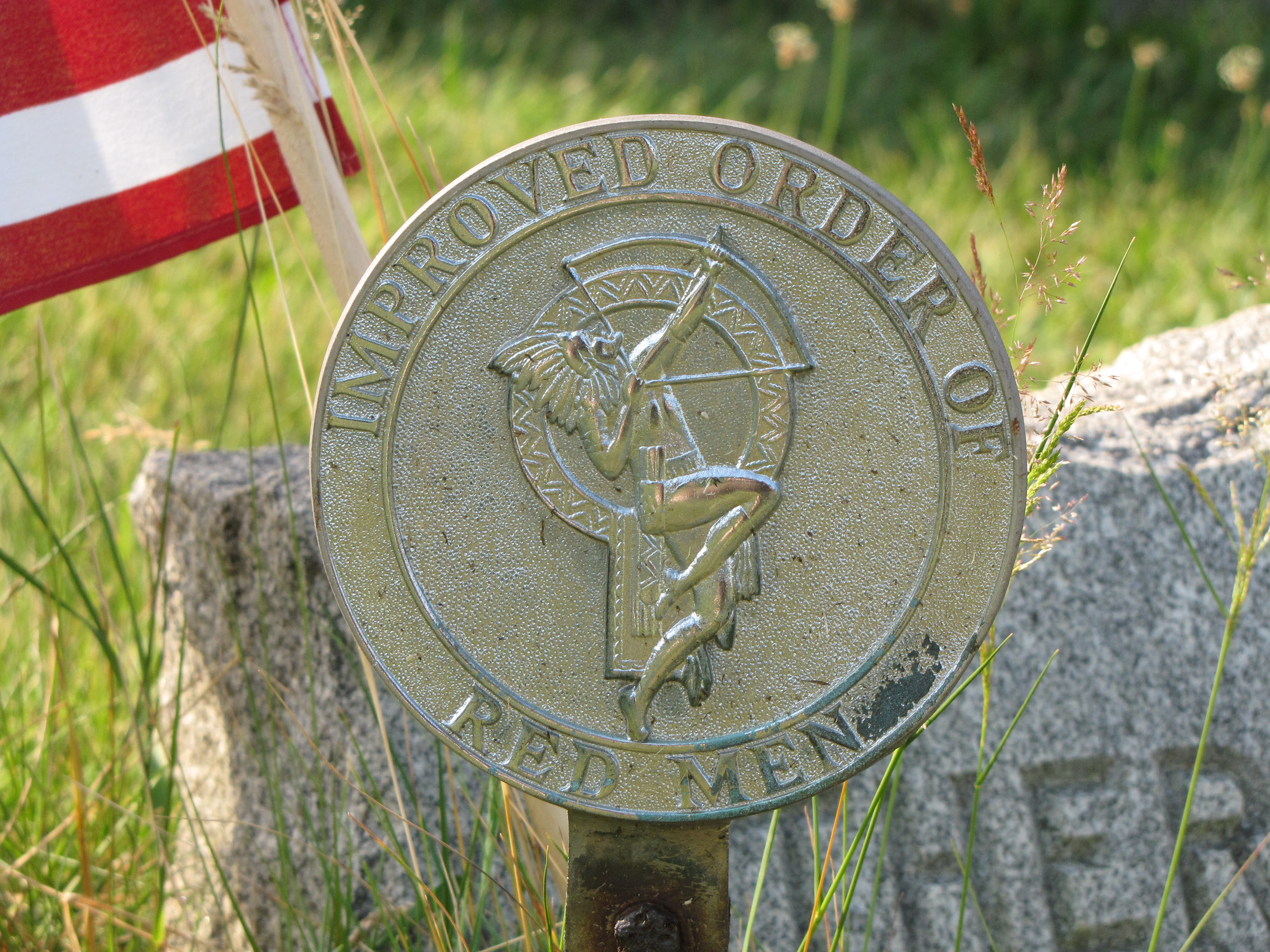
One of the metal markers which comes in several different forms found in many cemeteries is the marker for the Improved Order of Redmen, which claims its beginnings with the patriots who were in the Sons of Liberty during the American Revolution.  The society models itself after the Iroquois Confederacy councils.  In fact, some of the metal markers display Native Americans because the society based their organization on the rites and rituals of the Native Americans.  Other Improved Order of the Redmen metal markers display eagles and the initials T.O.T.E which stands for Totem of Eagles.  According to their Website, the IORM “promotes patriotism and the American Way of Life, provides social activities for the members, and supports various charitable programs.”  The different clubs or chapters are divided into “tribes”.   

The women’s auxiliary of the Order is the Degree of Pocahontas, named for the Native American Princess, Pocahontas, which was founded in New York in 1885.  The auxiliary promotes the virtues of kindness, love, charity, and loyalty to one’s nation.  The cemetery marker has a circle with a shield inside the circle with a bird atop.  The words “Degree of Pocahontas” appear within the circle.
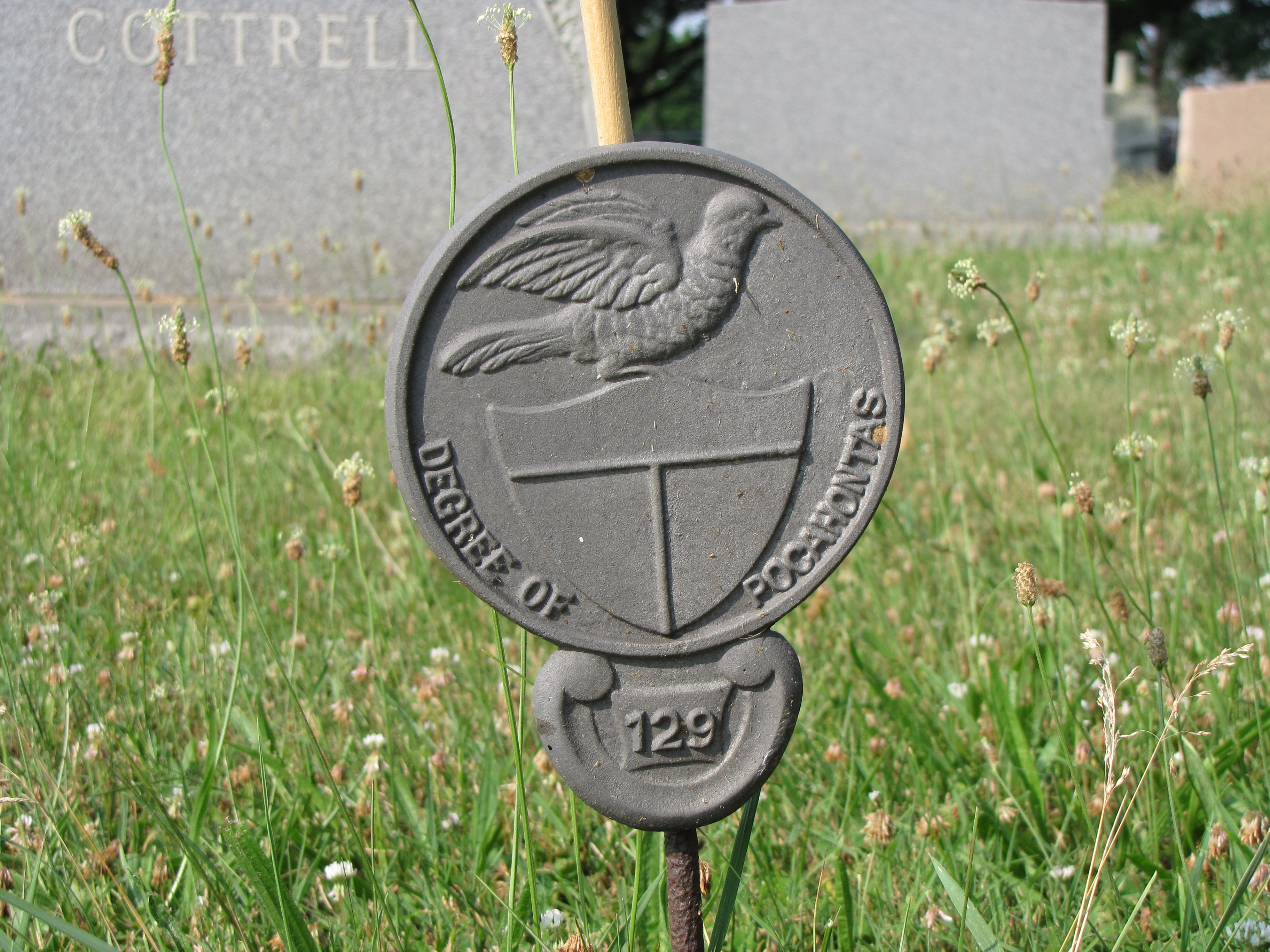
Maplewood Cemetery, Freehold, New Jersey
Posted in Metal Markers | 2 Comments

Broken Wheel

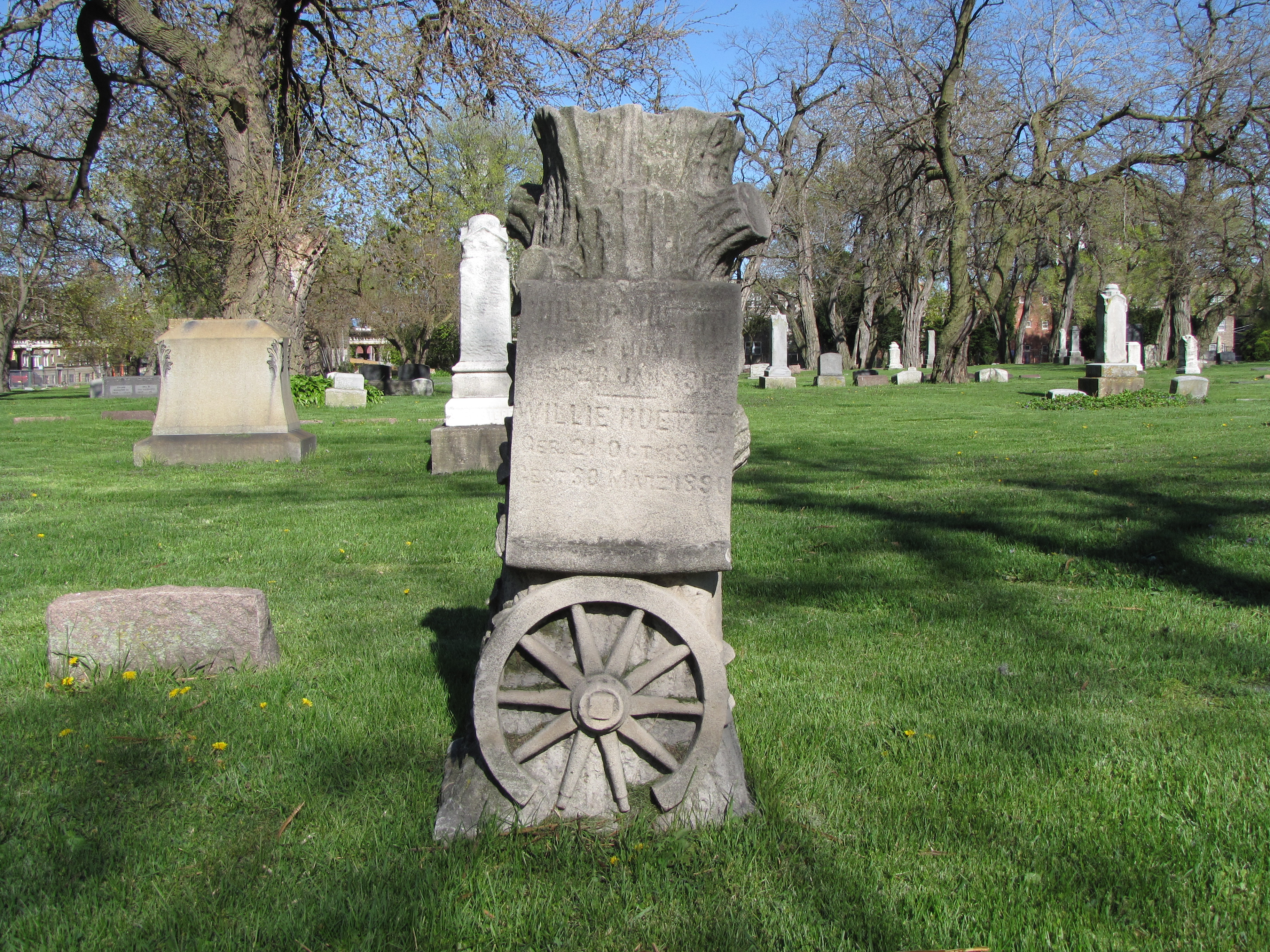
Many symbols, like the hanging and broken bud, the broken column, and the broken wheel represent the end of life’s journey.  This gravestone in Wunder’s Cemetery in Chicago is carved in limestone in the likeness of a tree with a broken wheel leaning against the bottom of the tree.  With a closer look at the wheel one can see that the circle is incomplete at the bottom with two spokes hanging freely.  The wheel is a metaphor for the circle of life which is broken by death.

Posted in Symbolism | Leave a comment

Mansions in the Sky

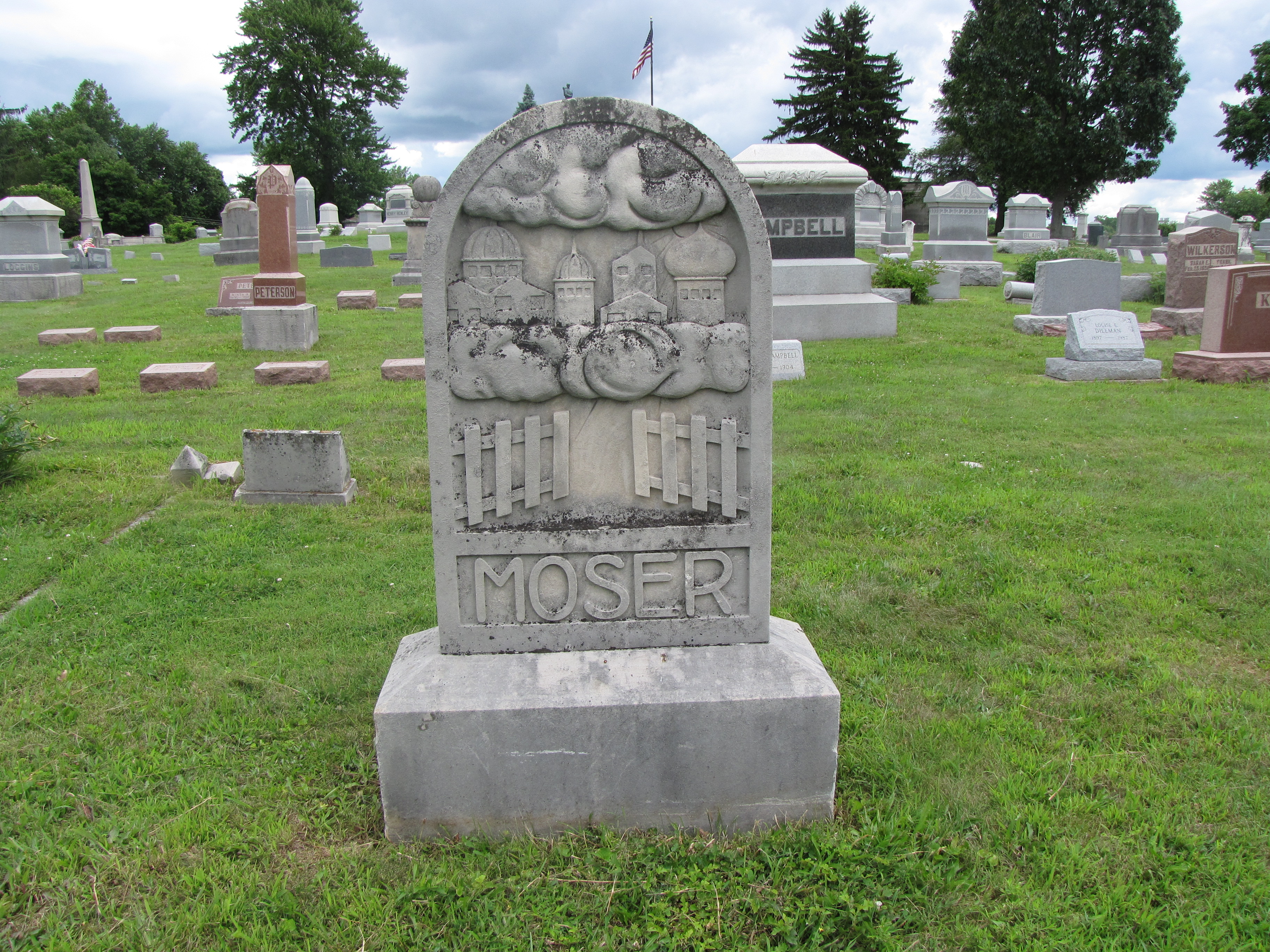
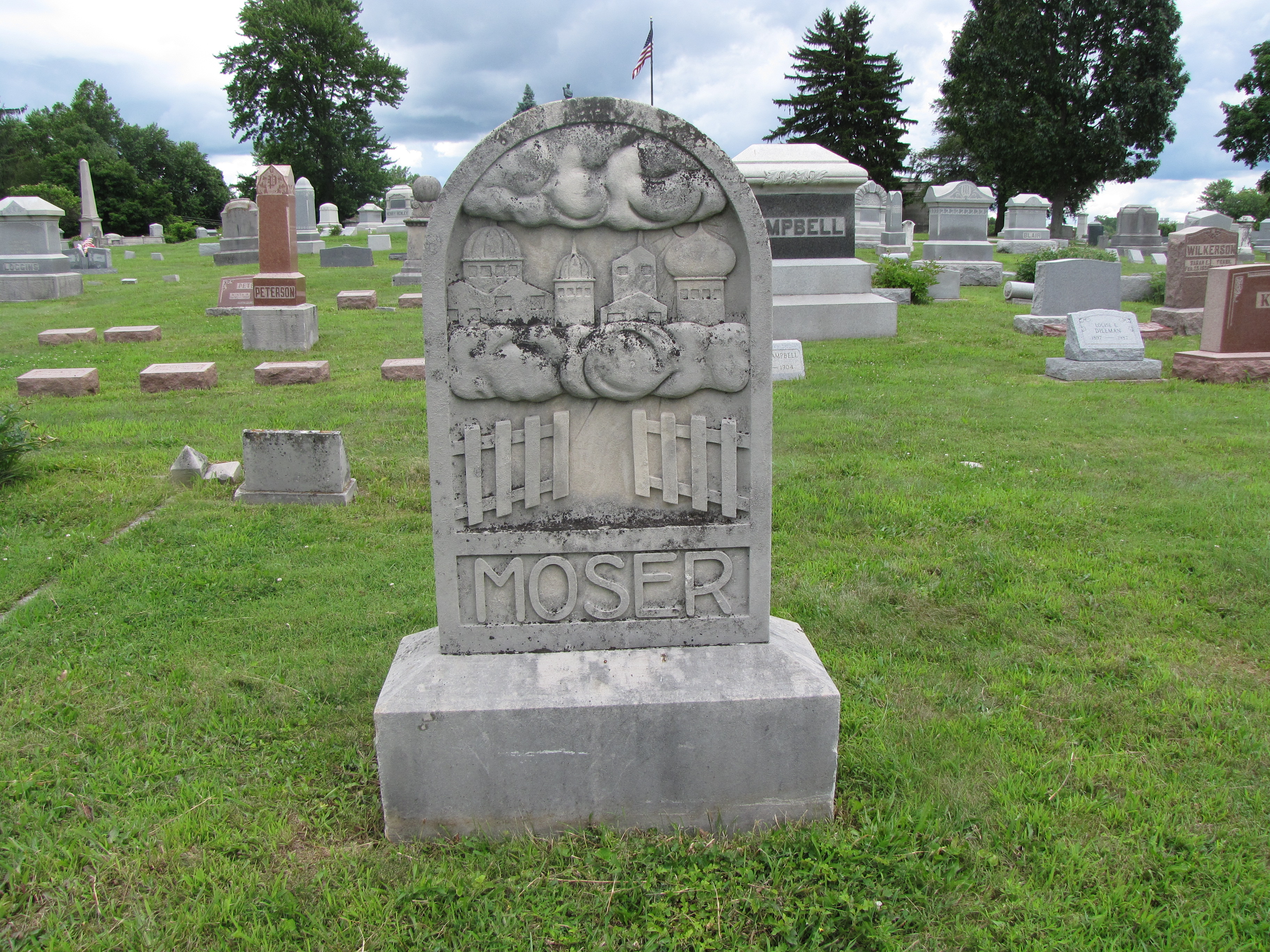
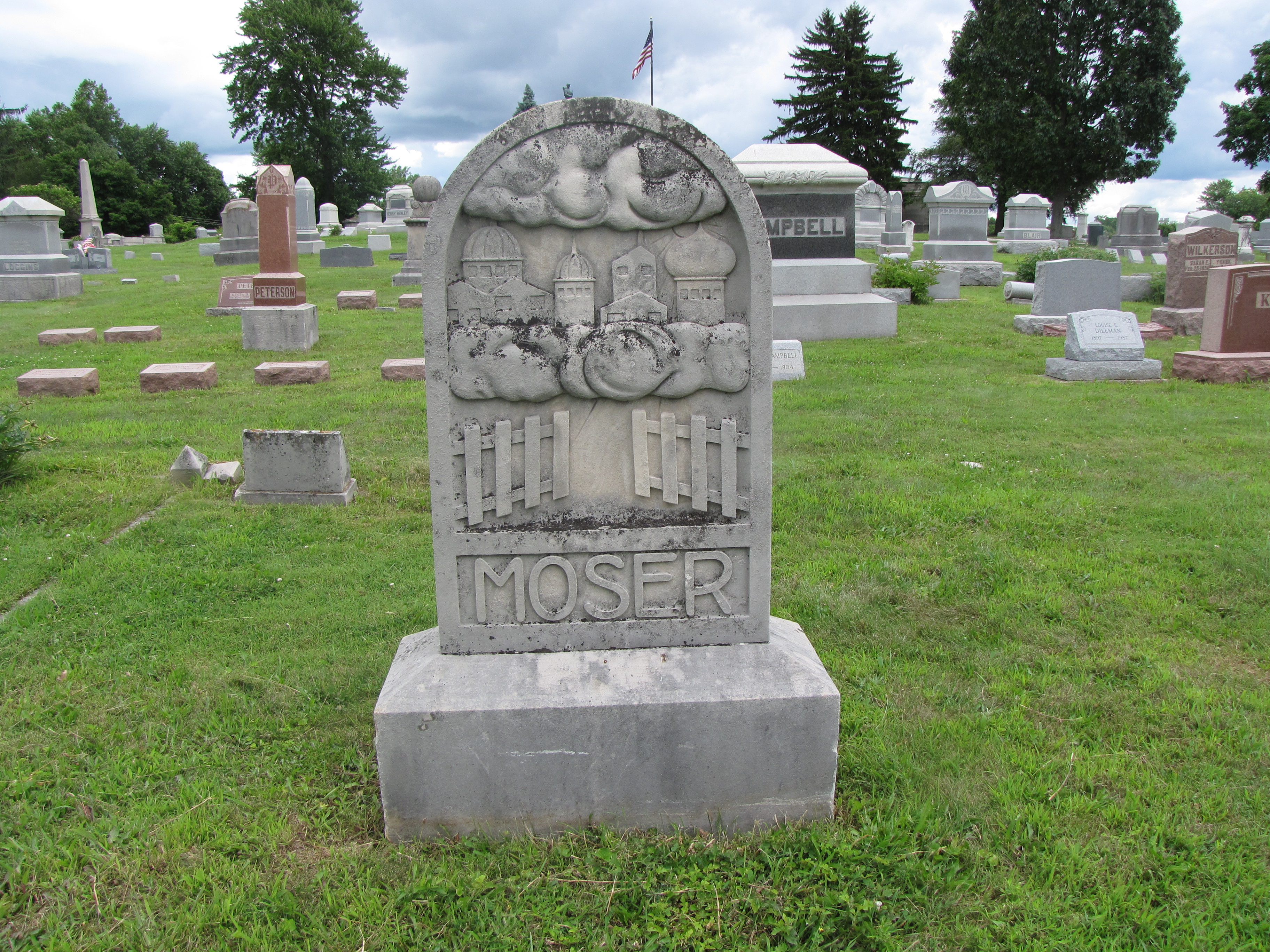
The Rosehill Cemetery in Bloomington, Indiana, has many fine gravestones, including the deeply and elaborately carved Moser family monument.  The gravestone has gates opening up to the Heavens.  Between the clouds is depicted a lavish city of beautifully crafted buildings. 

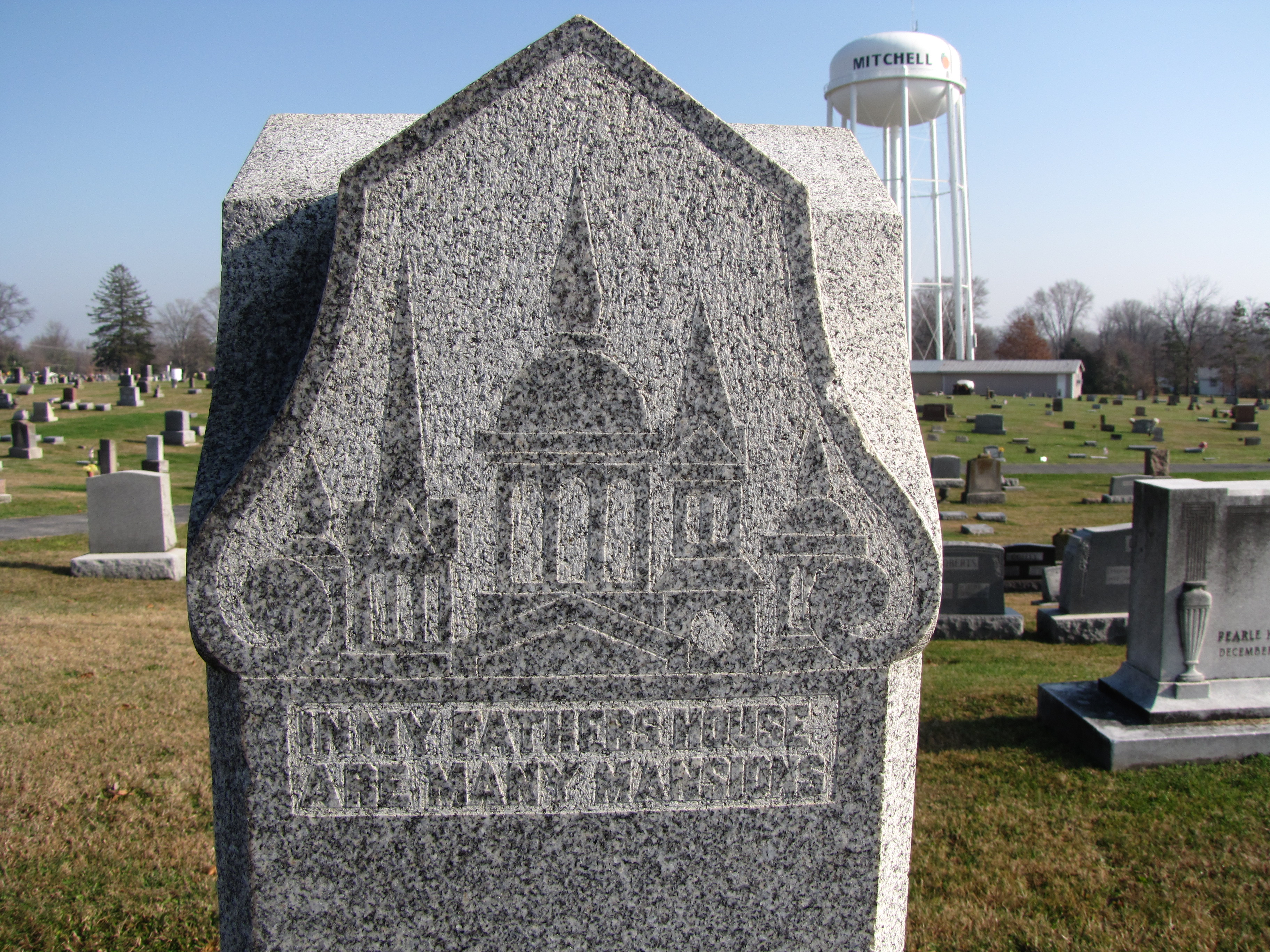
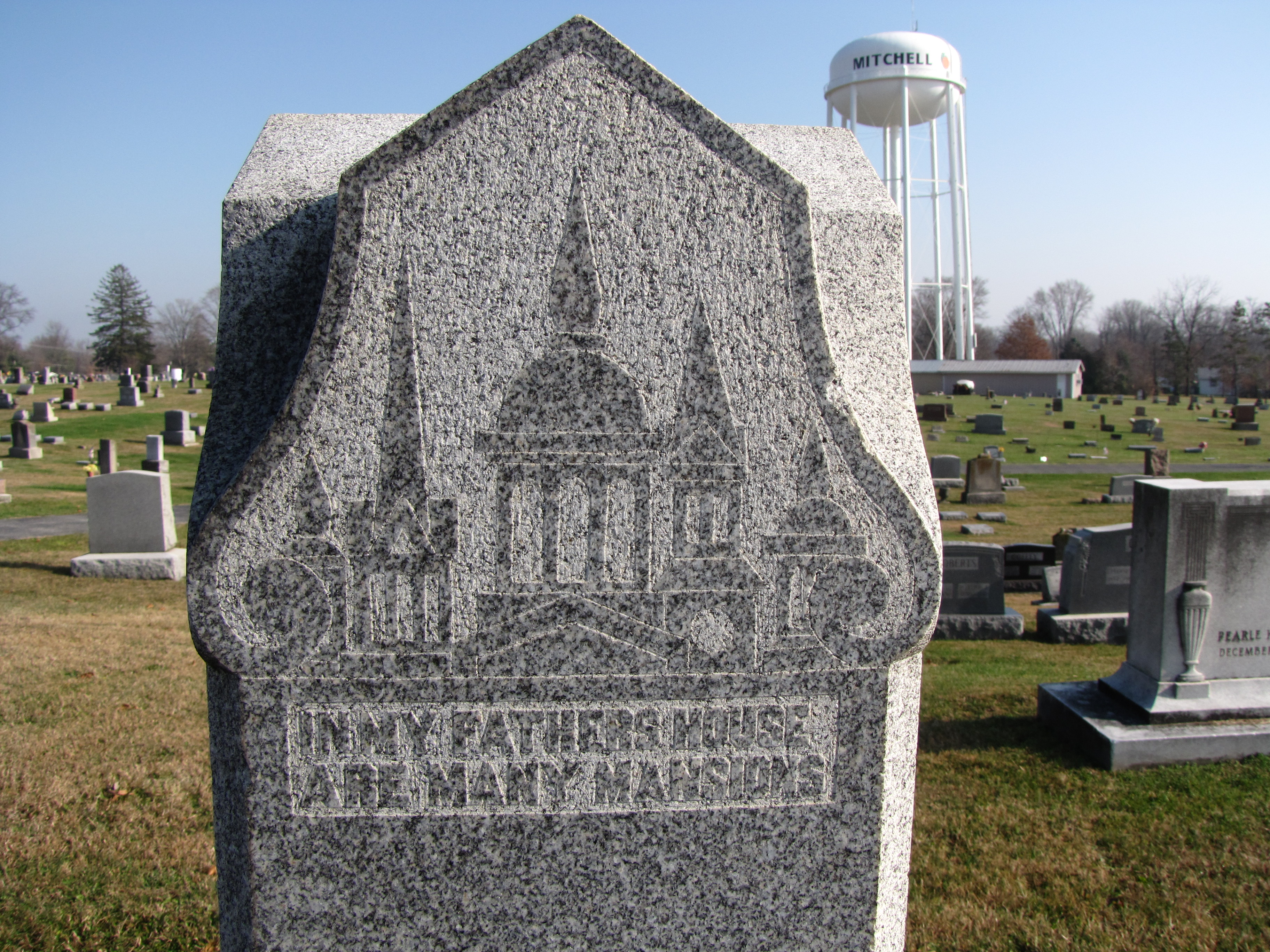
This symbol of mansions or castles-like buildings and clouds has its origin from the Biblical passage John 14.2, “In my Father’s Hose are many mansions; if it were not so, I would have told you.  I go to prepare a place for you.” 

Spotting this symbol in a Midwestern cemetery is not unusual  but seeing it carved like this deep bas-relief is.  Often the symbol is a thinly cut incised design like the example below from the Mitchell Cemetery in Mitchell, Indiana.

Posted in Symbolism | 1 Comment

The Empty Chair

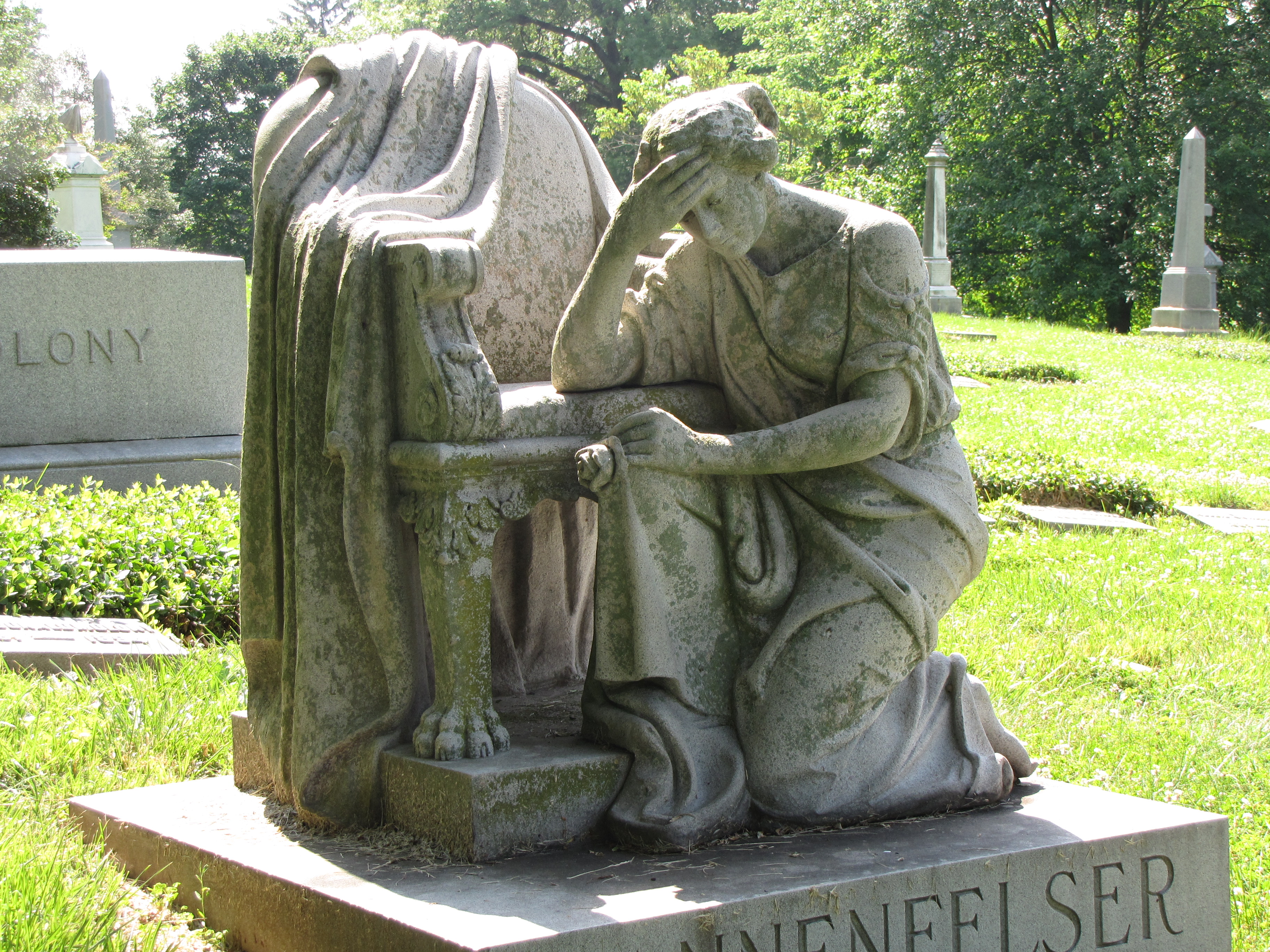
This mourning figure in the Spring Grove Cemetery in Cincinnati kneels next to an empty chair.  Typical of mourning figures, she is barefoot, and expresses her grief with a lowered head that she holds with her hand.  The vacant chair symbolizes the loss of a loved one, often a child.

Posted in Saving Graces, Symbolism | 2 Comments

Lotta sheriffs buried here

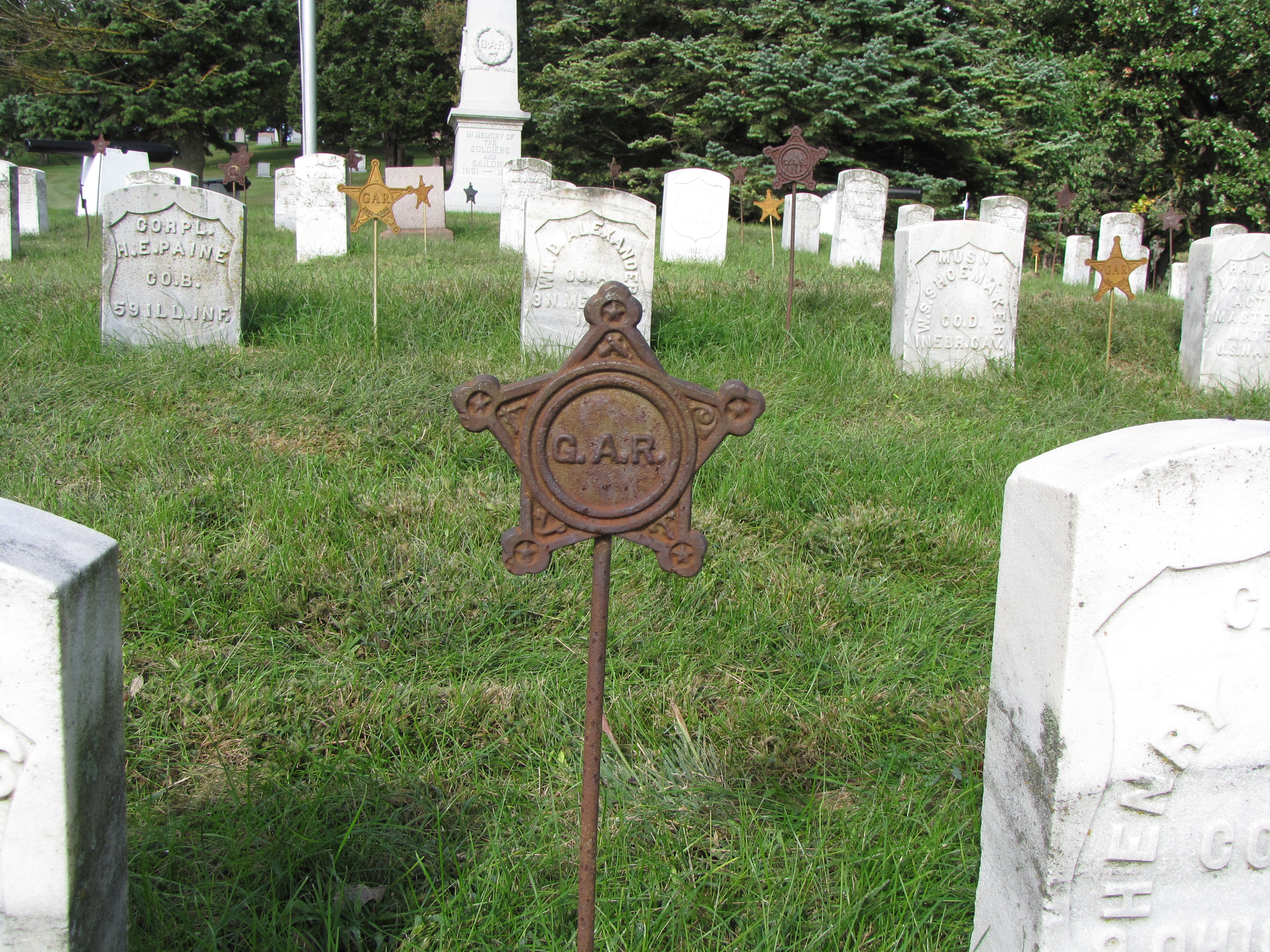
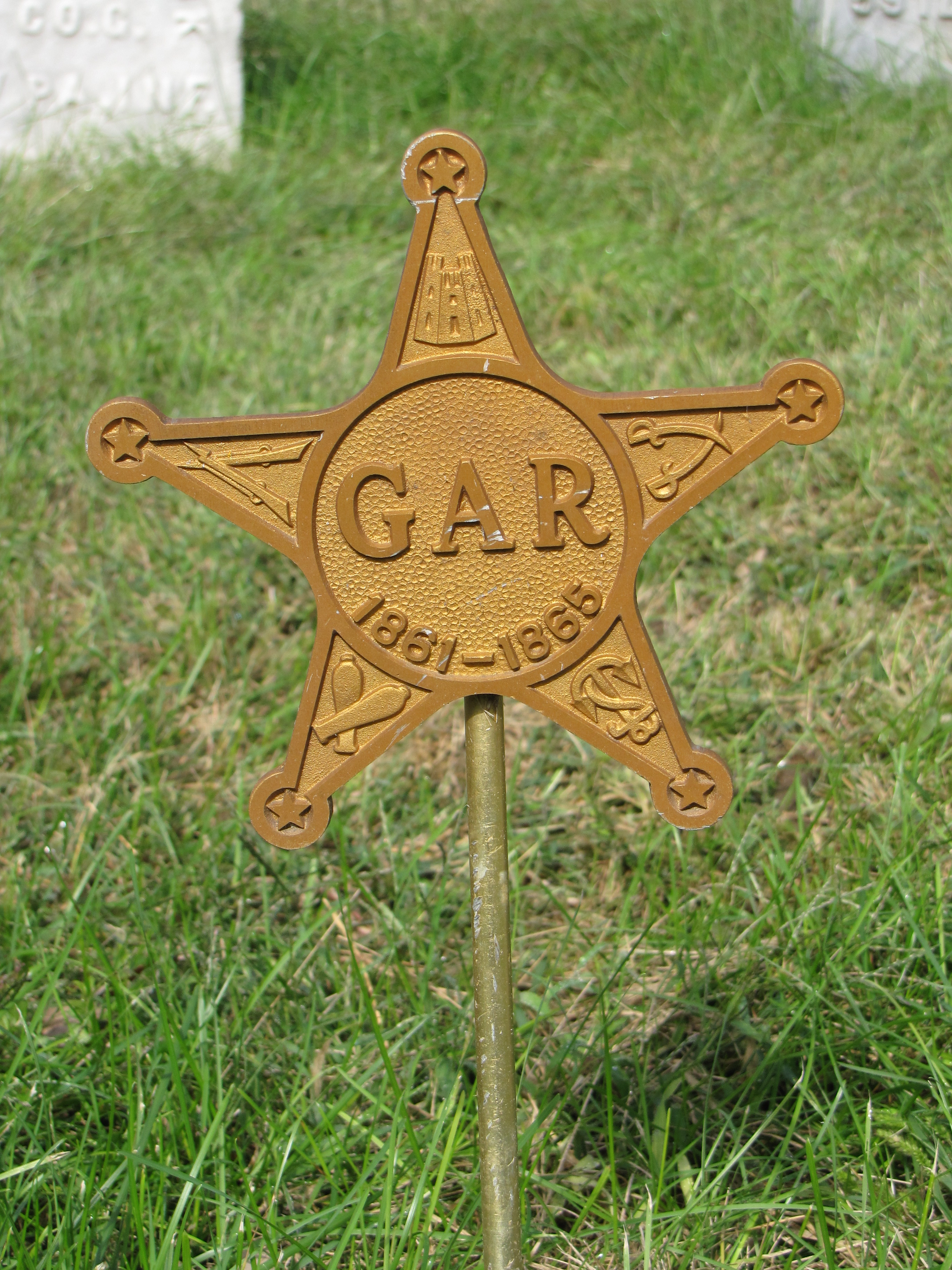
Years ago, my friend, Kathryn Epperson Tupper, told me the story about a visit she made to the Magnolia Cemetery with her son, Philip, when he was about six years old.  They had gone to place flowers on her father’s grave for Memorial Day.  The little boy’s blue eyes darted around the cemetery as he noticed the different shapes and sizes of gravestones, particularly the Grand Army of the Republic metal markers placed next to the Civil War veteran’s graves.  The markers are five-pointed stars made of cast iron with the letters G.A.R. in the middle of the marker and placed next a veteran’s tombstone.  The Magnolia Cemetery is one of the older cemeteries in the county and has a great many Civil War veteran’s graves.  Philip exhuberantly ran from one star-shaped marker to another when he finally squealed with delight, “They sure do have a lotta sheriffs buried here!” 

When she told me the story, I realized that while most adults would not make the mistake regarding the star-shaped marker’s meaning that six-year old Philip made, but many people who walk through a cemetery are most likely unaware that nearly every symbol, and even some of the gravestone shapes have meanings.

In the introduction to Spoon River Anthology, May Swenson writes that Edgar Lee Masters’ collection of poems is about “the citizens of Spoon River–the obscure and ordinary as well as the prominent, the criminal, the eccentric, the elect–on all of whom life had passed its unexceptional sentence and consigned to the same grassy prison.  He has them testify, as if the tombstones had voices…”

I contend that gravestones do have voices.  Not voices that can be heard, but ones that can be measured and recorded.  Voices that can tell us much if we observe carefully.  The symbols, epitaphs, and the gravestones themselves give us clues about how society feels about death, religion, grieving, children, and about all sorts of other things.  All we have to do is observe and educate ourselves.

Posted in Metal Markers | 4 Comments

Jilted

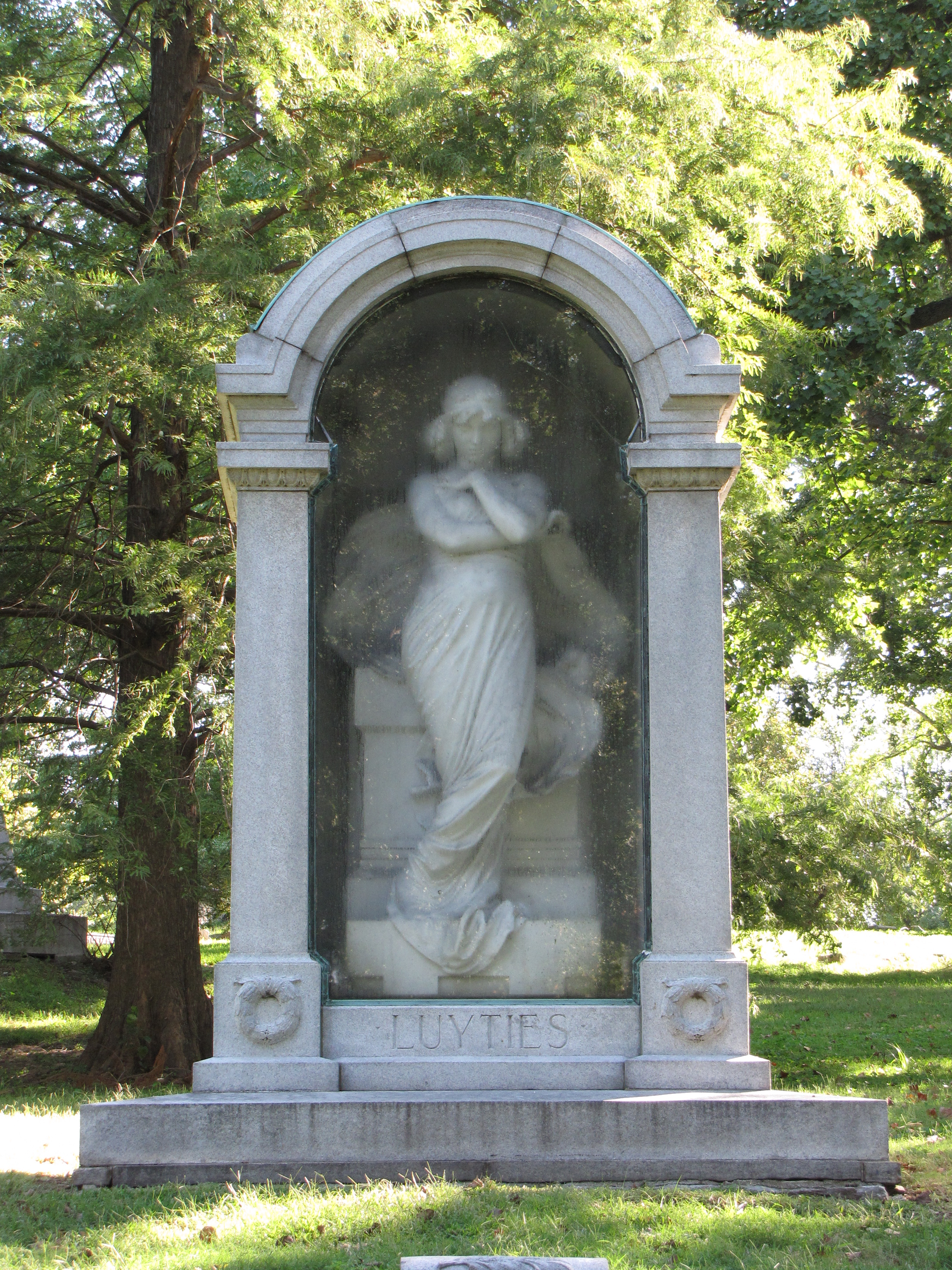
At first glance this might look like another “Saving Grace” or surrogate mourning figure.  But the details of  Herman Luyties’ (1871-1921) monument in the famed Bellefontaine Cemetery in St. Louis is far more interesting than mere graveyard symbolism.  This bodacious beauty is a sculpted marble likeness of an Italian model that Herman met around the turn of the 20th Century while he was touring Italy.  Luyties was a highly successful St. Louis businessman who toured Europe.  While there, he fell in love with the voluptuous Italian and asked for her hand in marriage.  She declined.  He left the country broken hearted and without the love of his life.  But, before Luyties left Italy he commissioned a sculptor to replicate his true love in stone.  The statue that now adorns his grave, first graced the entryway of his home–a constant reminder of unrequited love.  The sculpture, weighing several tons, was moved from his home to the cemetery.  When the sculpture started to weather, Luyties had the monument front glassed in which is how the monument gained the moniker, “the girl in the shadow box.”

Posted in Uncategorized | 2 Comments

Willow Tree and Obelisk

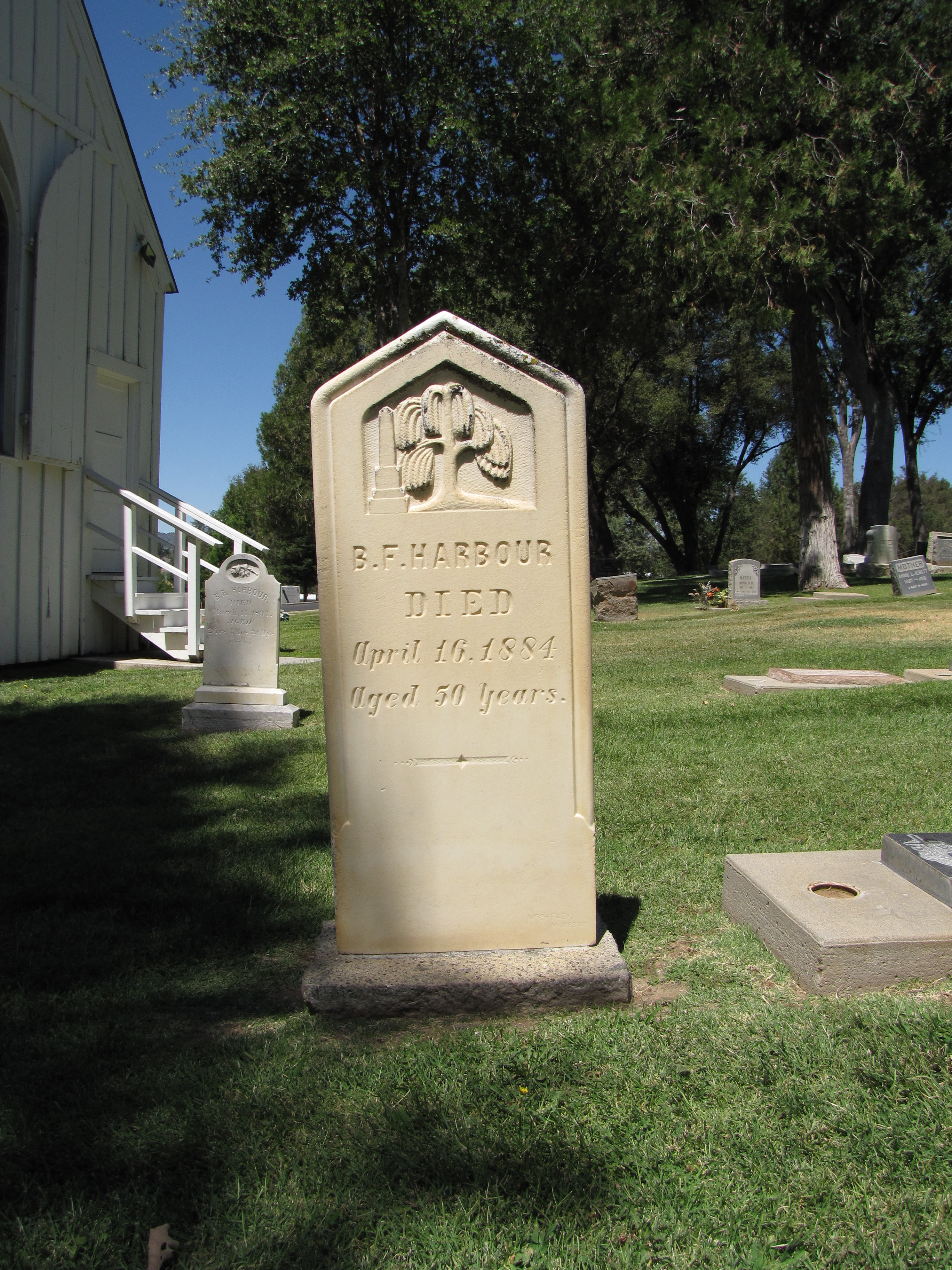
This pointed-top tablet was photographed at the Oak Hill Cemetery in Oakhurst, California.

Last summer on the drive to our vacation in Yosemite, we stopped for a drink at Jamba Juice.  Next to the shop is a small cemetery, the Oak Hill Cemetery.  The churchyard is meticulously kept.  As I strolled through the cemetery I spotted the gravestone with the stylized weeping willow.  The carving looked like it could have been carved that day.  The gravestone in the bas-relief  looks like it could be an obelisk next to the willow.  The obelisk is a stone shape that is nearly ubequitous in American cemeteries and part of the Egyptian Revival Period which was inspired by the French and then the British presence in Egypt in the late 18th and early 19th Centuries.
Posted in Symbolism | Leave a comment

Prepare for Death

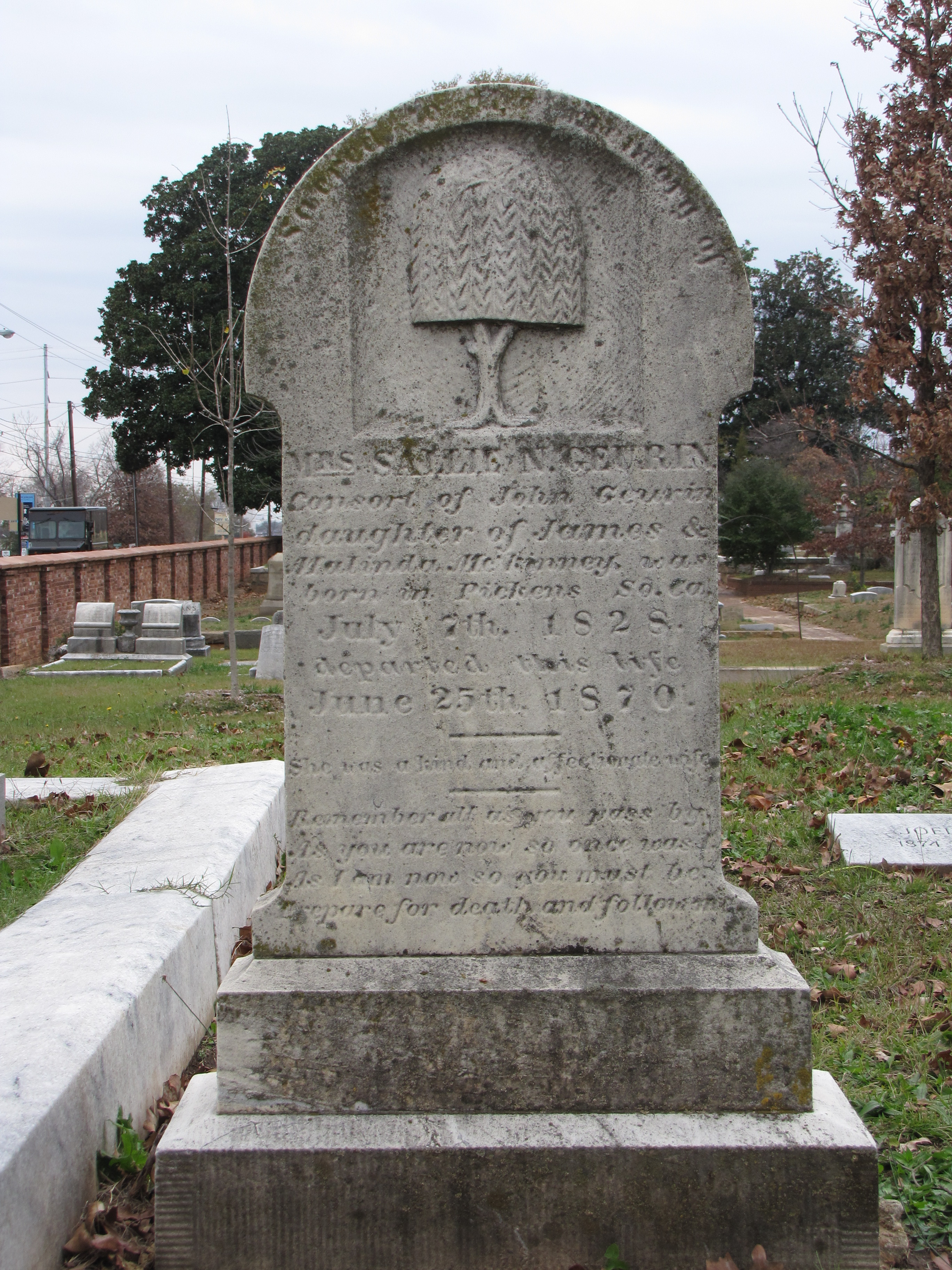
During the last trip I made to Atlanta, I was able to visit the historic Oakland Cemetery.  When I spotted the tombstone I snapped this photo.  It caught my eye for two reasons.  First of all, it contains one of my favorite epitaphs and secondly I was impressed with the stylized image of the tree.  The tree is either a willow tree, a traditional symbol of sorrow and grief, or the tree of life, which represents the three domains of the universe–the heavens, the earth, and the underworld. 

Sacred to the Memory of                                                                                                             Mrs. SALLIE N. GEURIN                                                                                                     Consort of John Geurin                                                                                                                        daughter of James &                                                                                                               Malinda McKinney was                                                                                                                born in Pickens So. Ca.                                                                                                                 July 7th 1828                                                                                                                         departed this life June 25th 1870                                                                            

She was a kind and affectionate wife 

Remember all as you pass by                                                                                                          As you are now so once was I                                                                                                          As I am now so you must be                                                                                                     Prepare for death and follow me.

Posted in Epitaphs, Symbolism | 1 Comment

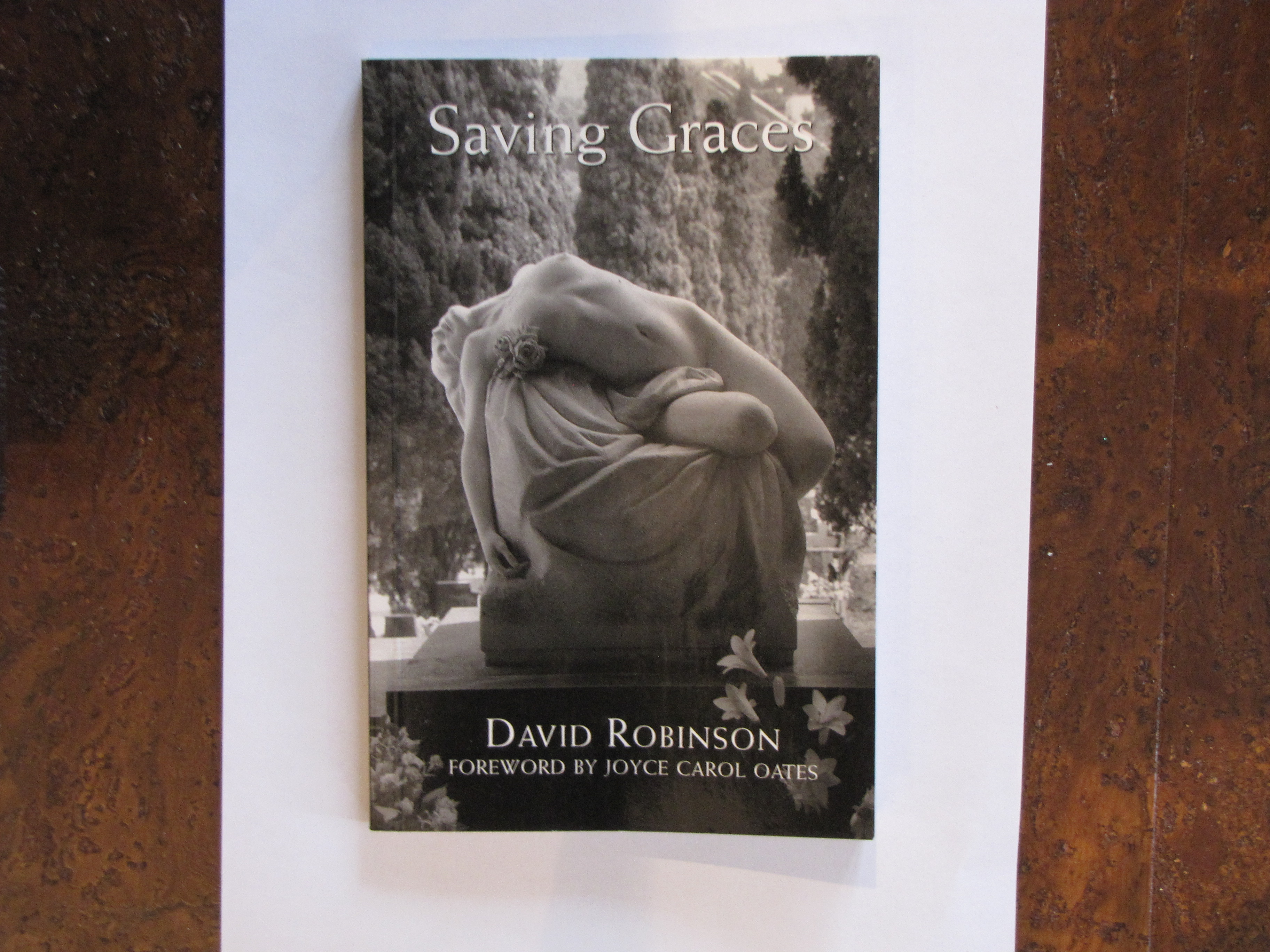
Saving Graces

Photographs by David Robinson

In his book, Saving Graces, published by W. W. Norton & Company in 1995, David Robinson has taken pictures of mourning figures from some of the most beautiful and famous cemeteries in Europe, including Pere Lachaise in Paris and Monumentale in Milan.  The photographs in the book show beautiful, young, and voluptuous women often wearing revealing clothing mourning the dead.  Robinson writes that all of the mourning figures he found were women, not angels, no wings.  Robinson writes that women, in fact, carry out the role of grieving and the artists portray this in sculpted marble and cast bronze. 

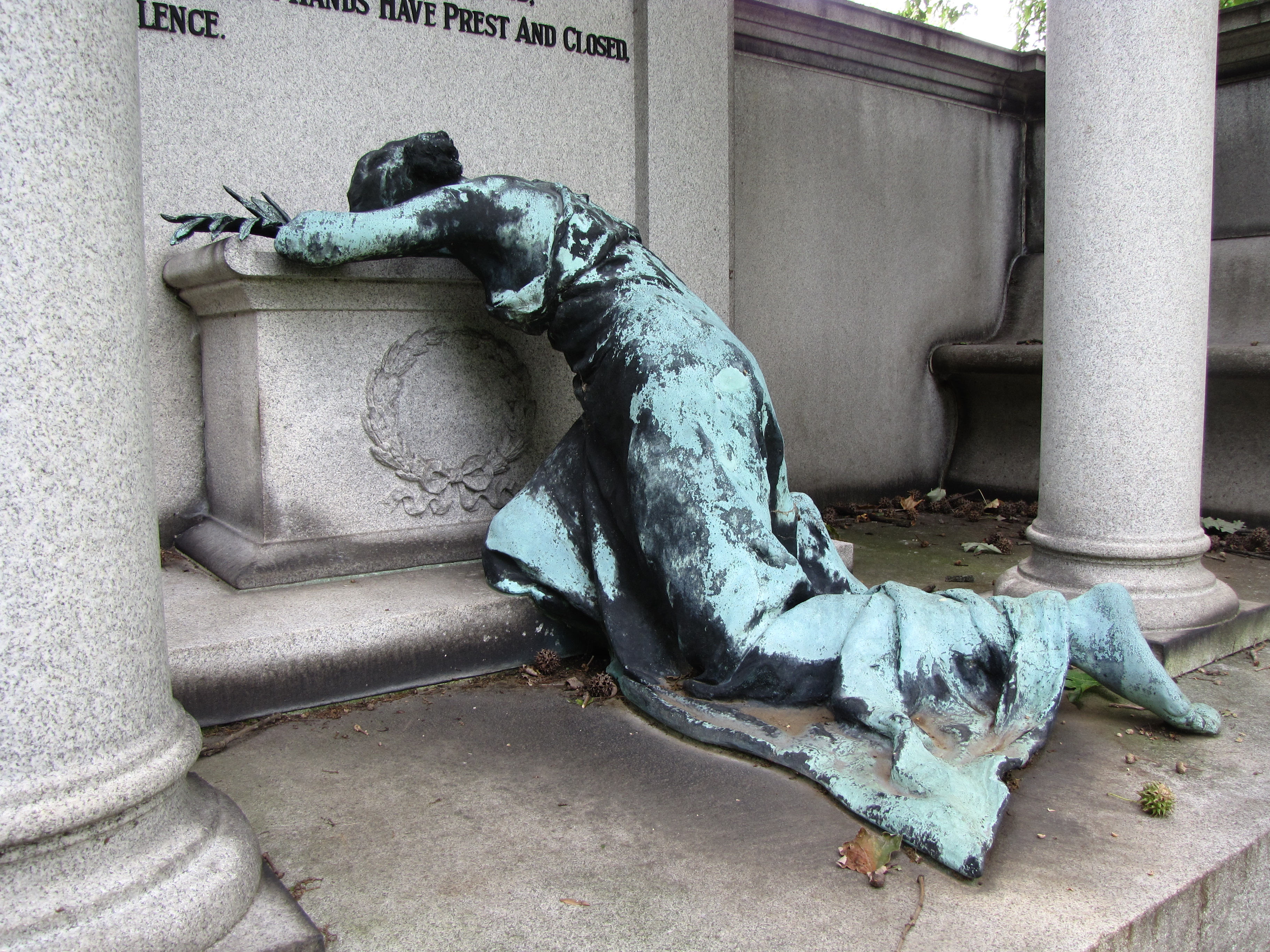
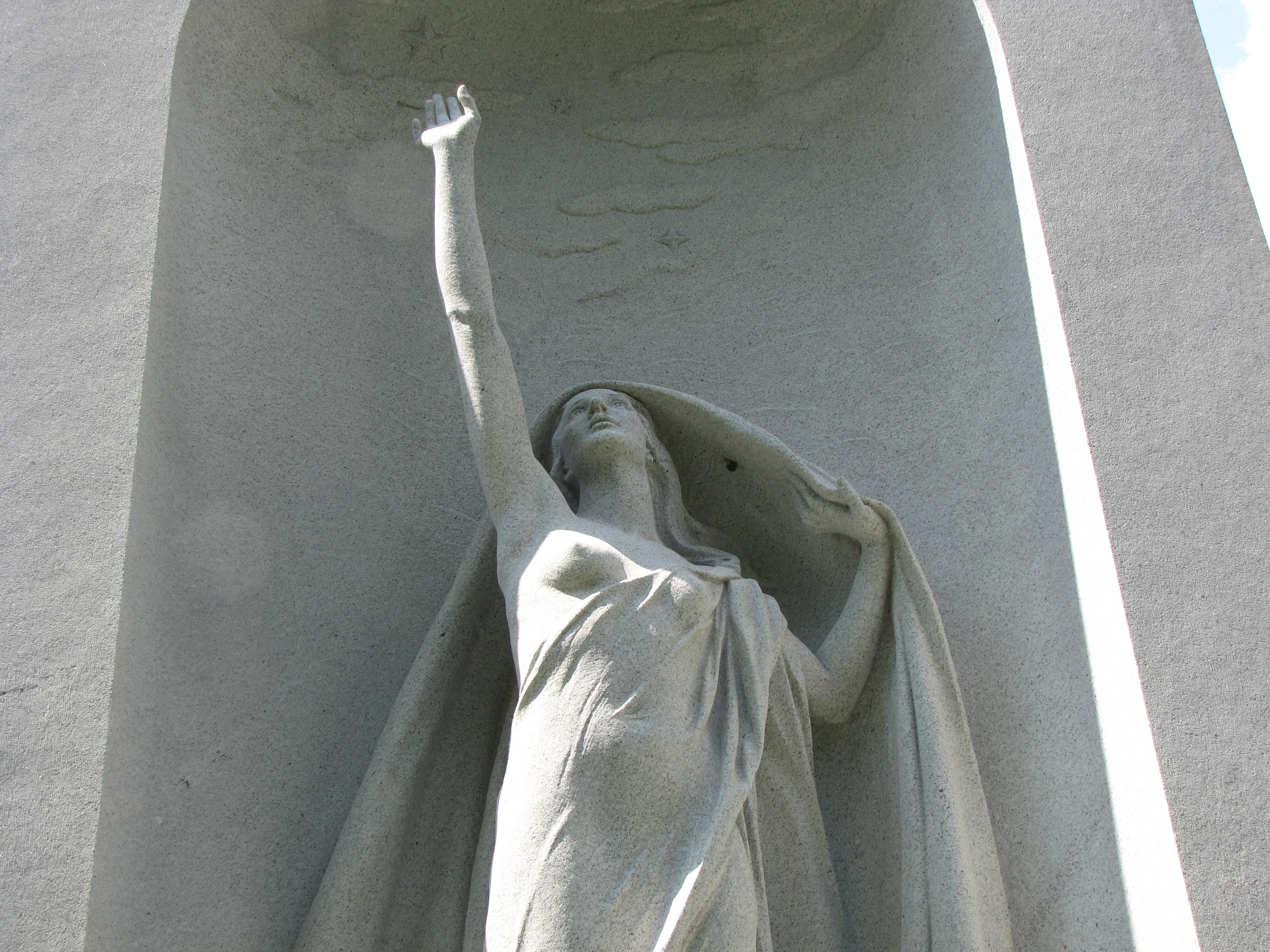
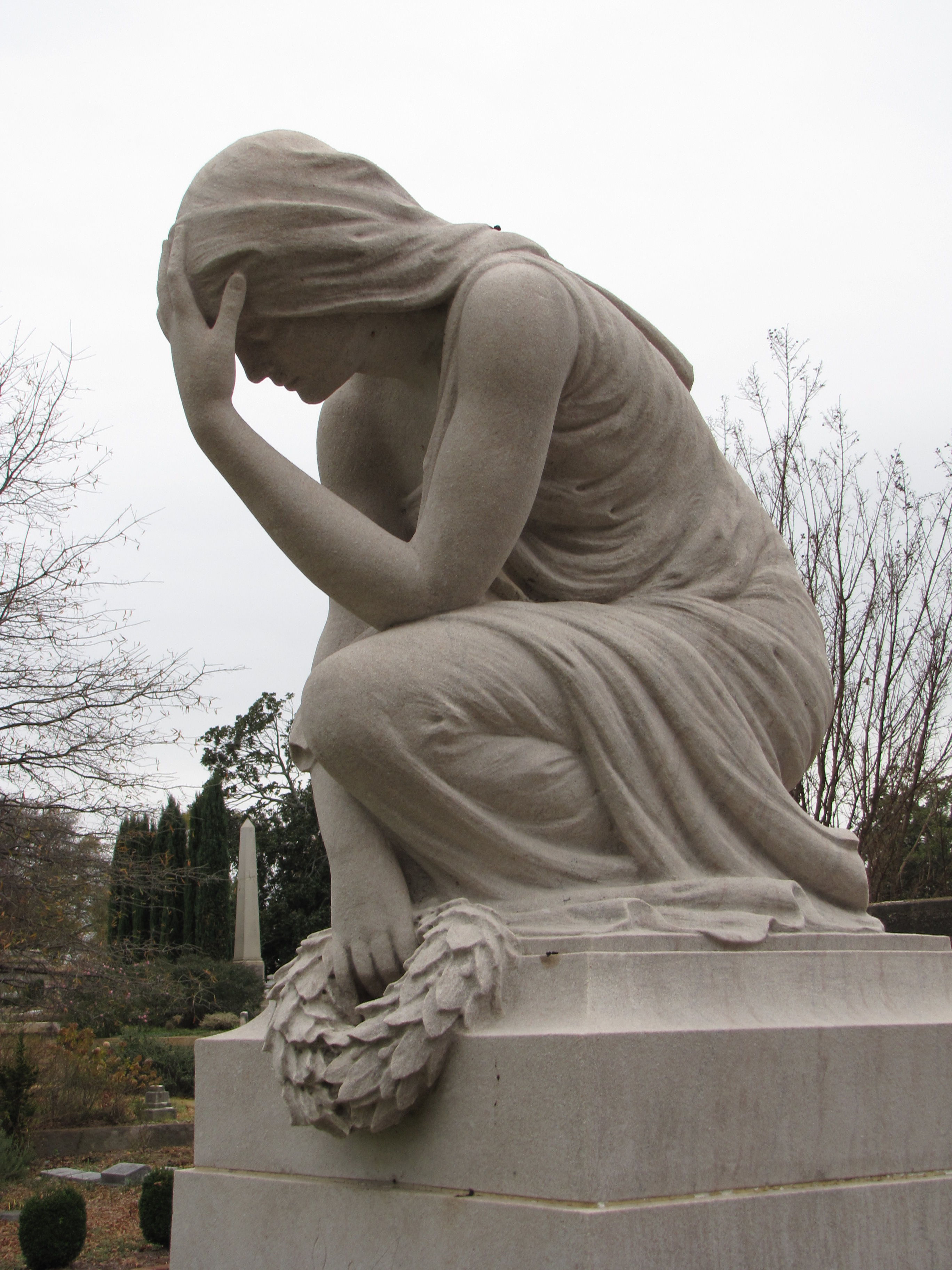
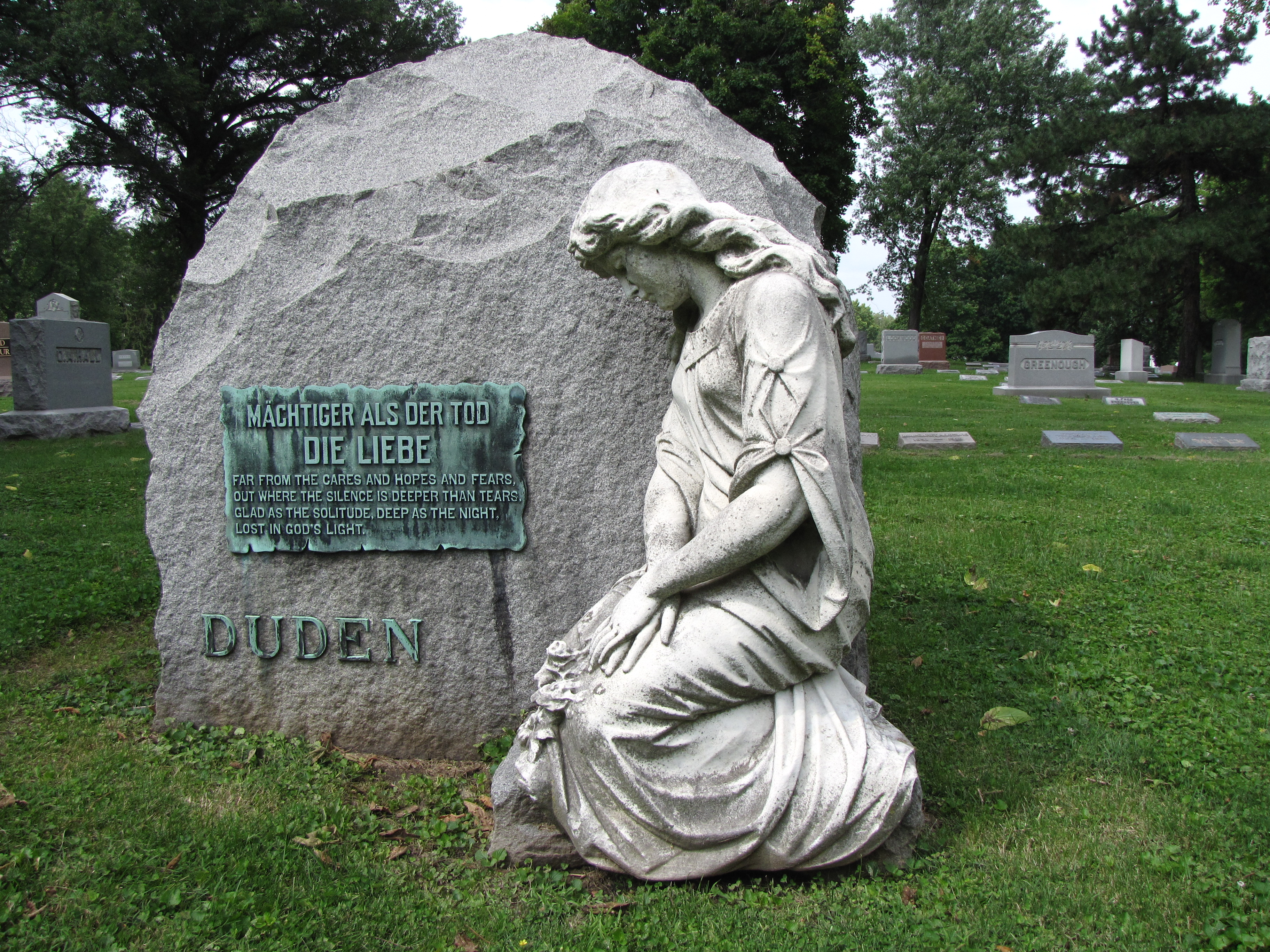
Robinson identified four categories of “Saving Graces”–first, women completely overcome by grief, often portrayed as having collapsed and fallen limp on the grave.  Second are the women who are portrayed reaching up to Heaven as if to try to call their recently lost loved one back to Earth.  Third, are the women who are immobile and grief stricken, often holding their head in their hands distraught with loss.  Lastly, he describes the last category of “Saving Grace” as the mourning figure who is “resigned with the loss and accepting of death.” 

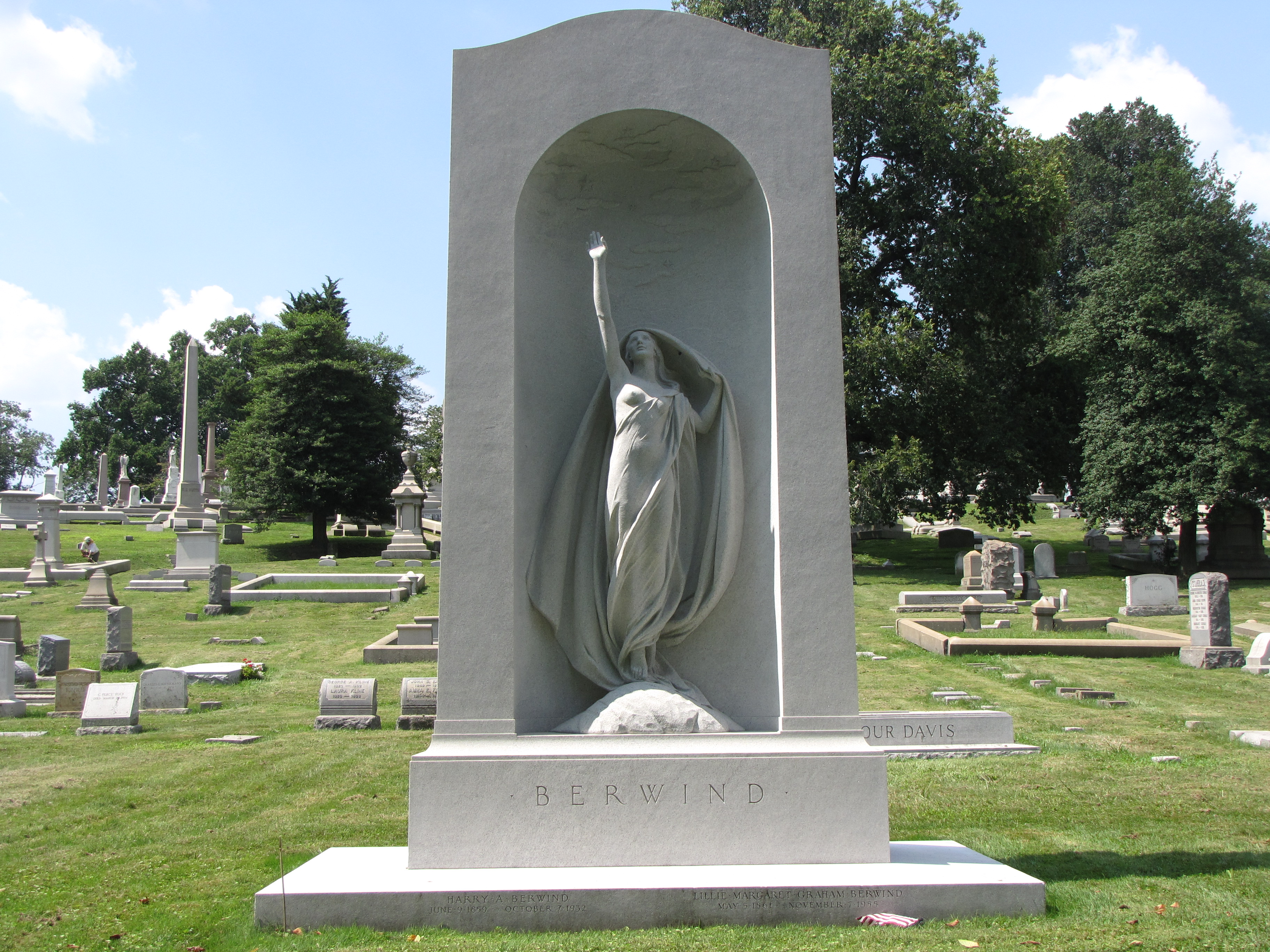
Examples of these mourning figures or “Saving Graces” can be found in American cemeteries, too.  Below I have included examples of the four types.  The first photo is of the Albertina Allen White monument at the Crown Hill Cemetery at Indianapolis.  The surrogate mourning figure is prostrate in grief clutching palm leaves.  In the second example at the Laurel Hill Cemetery at Philadelphia, the “Saving Grace” is lifting the shroud that covers her face as her arm reaches toward the Heavens, which are represented by the clouds and stars delicately carved in the stone behind her.   The third image is of a kneeling mourning figure in the Oakland Cemetery at Atlanta.  She holds her head in grief and also bears a laurel wreath in one hand.  The fourth is also from the Crown Hill Cemetery at Indianapolis.  Her sadness is expressed by looking down as she holds a bouquet of flowers.

Posted in Saving Graces | 2 Comments