A lover’s embrace–tree-stump tombstone style

Clover Hill Cemetery, Harrodsburg, Indiana

Above is the tree-stump tombstone of James and Mary Sears, another example of one of many designs found in the tree-stump tombstone motif.  Their marker displays the name “SEARS” at the base to look like the letters were put together from tree branches.  In the bottom of the gravestone ferns cluster at the base. Ferns represent humility, frankness, and sincerity.  In this example they also add to the country feel of this tree-stump tombstone.  Grape clusters, which represent the blood of Christ, and grape leaves grow at the top of the marker where the two halves come together with two limbs like arms twining around each other like a lover’s embrace, representing the love and marriage of the deceased couple.
Posted in Treestump gravestones | 1 Comment

Woodmen of the World and the Tree-Stump Gravestone

Fairmont Cemetery, Denver, Colorado

Joseph Cullen Root, a prolific founder, founded four fraternal organizations during his lifetime, one of them being the Modern Woodmen of America (MWA).  MWA was founded on on January 5, 1883.  Root was inspired by a Sunday sermon in Lyons, Iowa. During the sermon the pastor extolled the virtues that came from “woodmen” cutting down the forest to build homes and communities. It was then that Root adopted the term Woodmen for his newly formed organization. The tools to clear those forests were adopted as symbols for the organization at the same time– axe, beetle (mallet) and wedge – symbolizing industry, power and progress. 
 
After Root had a falling out with the Woodmen of America, he founded the Woodmen of the World organization on June 6, 1890, at Omaha, Nebraska. He had been a member of several organizations, including the Odd Fellows, but Root wanted this new organization to be beneficial.  He wanted to make sure that after the death of the breadwinner that the family would be protected through a death benefit payout. 
 
In addition to the life insurance benefits, an early program that lasted until the late 1920s, was to provide a marker for each member upon their death. The influence of that early sermon can be seen in many of the tree-stump tombstones, fitting designs for the Woodmen of the World members, with its imagery the axe, beetle, and wedge.

The tree-stump tombstone is also a physical depiction of the cleared forest.  There are many varieties of what these gravestones look like. 

Posted in Treestump gravestones | 13 Comments

Tree-Stump Squirrel

Mitchell Cemetery, Mitchell, Indiana

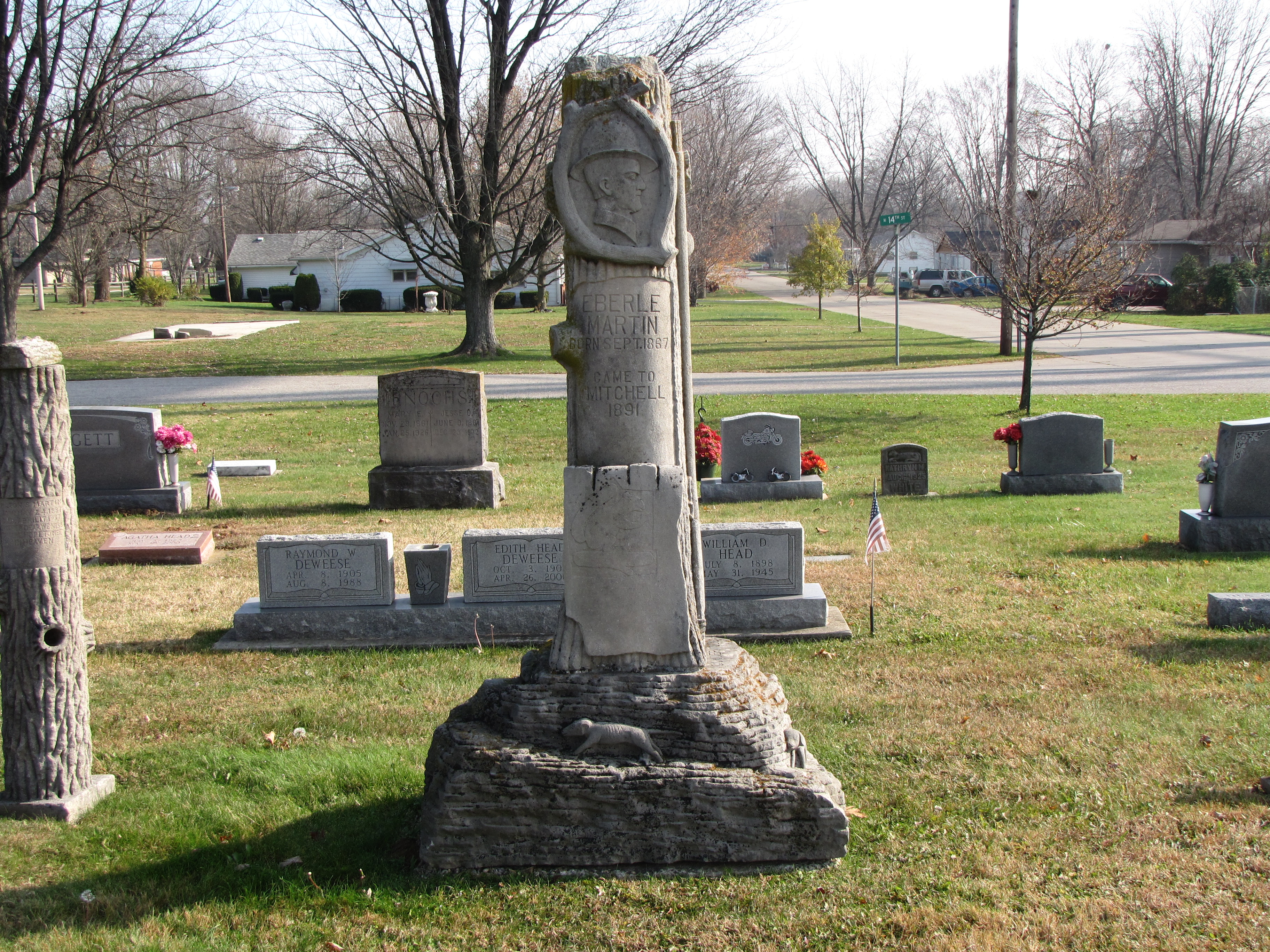
The Eberle Martin tree-stump tombstone in Mitchell, Indiana, is an unique example of this type of marker because of its bas-relief profile of the deceased at the top.

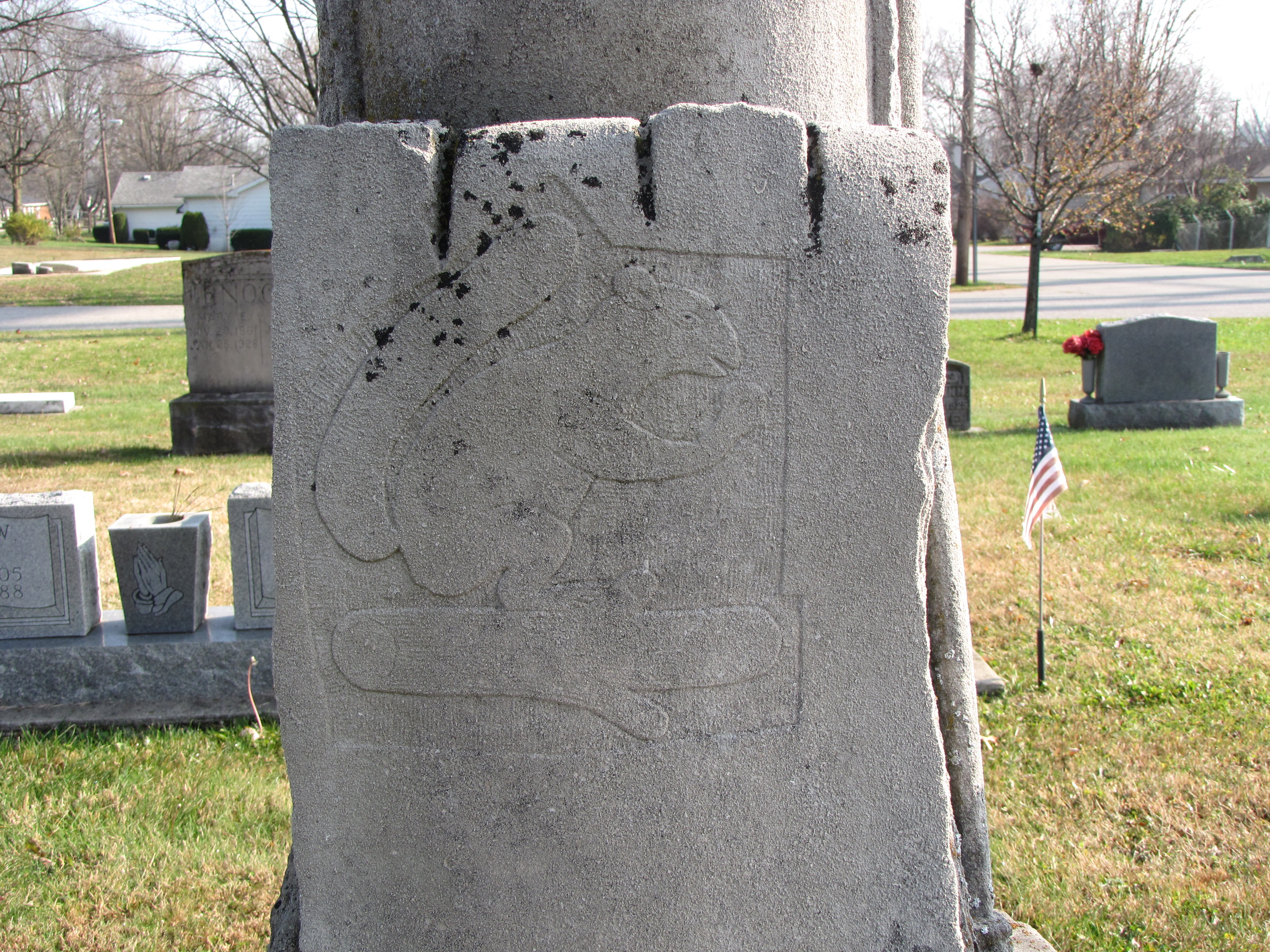
Many of the tree-stump tombstones are carved to appear as if the bark has been peeled back from the tree, done to create a space for the information to be carved into the stone.  On this tombstone, the backside of the peeled bark has an incised carving of a squirrel.  The furry little rodent is sitting atop of a log holding a nut in his tiny little paws in a prayful pose.  The squirrel is not a commonly seen symbol in the cemetery.  The squirrel here is in a religious meditation and represents spiritual striving.

Posted in Symbolism, Treestump gravestones | 5 Comments

Tree-Stump Tombstones

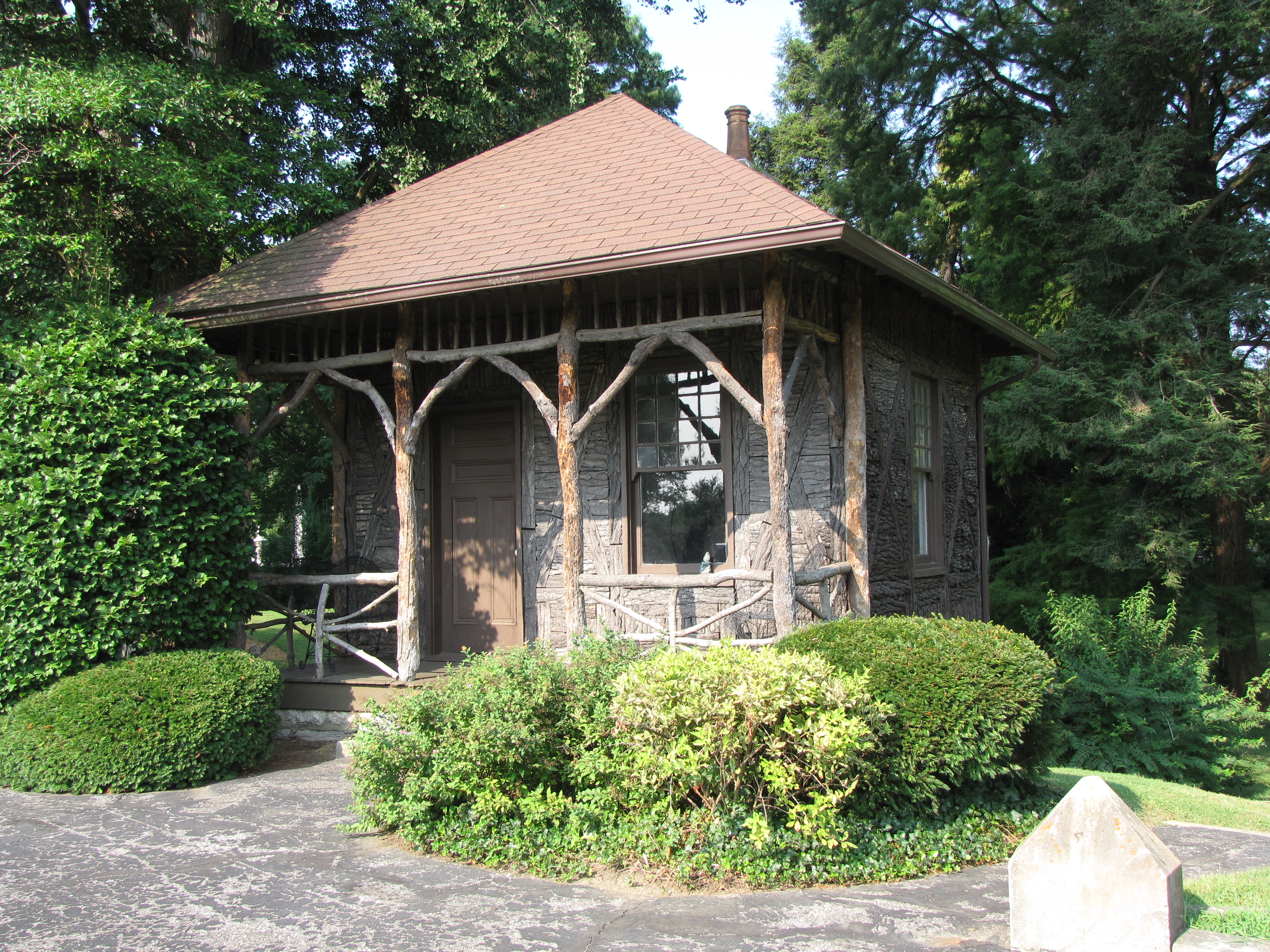
 The rustic movement of the mid-nineteenth century was characterized by designs that were made to look like they were from the country. Elegant and slim curved lines in furniture gave way to bulkier and heavier forms made from pieces that came directly from the trees often with the bark still intact. Homes, cabins, and garden houses were designed in the rustic style eschewing classic designs. In decorative furniture this often took the form of chairs made from rough tree limbs curved to form arms and chair backs, chair legs made from tree roots growing upwards. In cabins, railings and the siding were made from unhewn logs with the bark still in place.

Caretaker's Cottage, Cave Hill Cemetery, Louisville, Kentucky


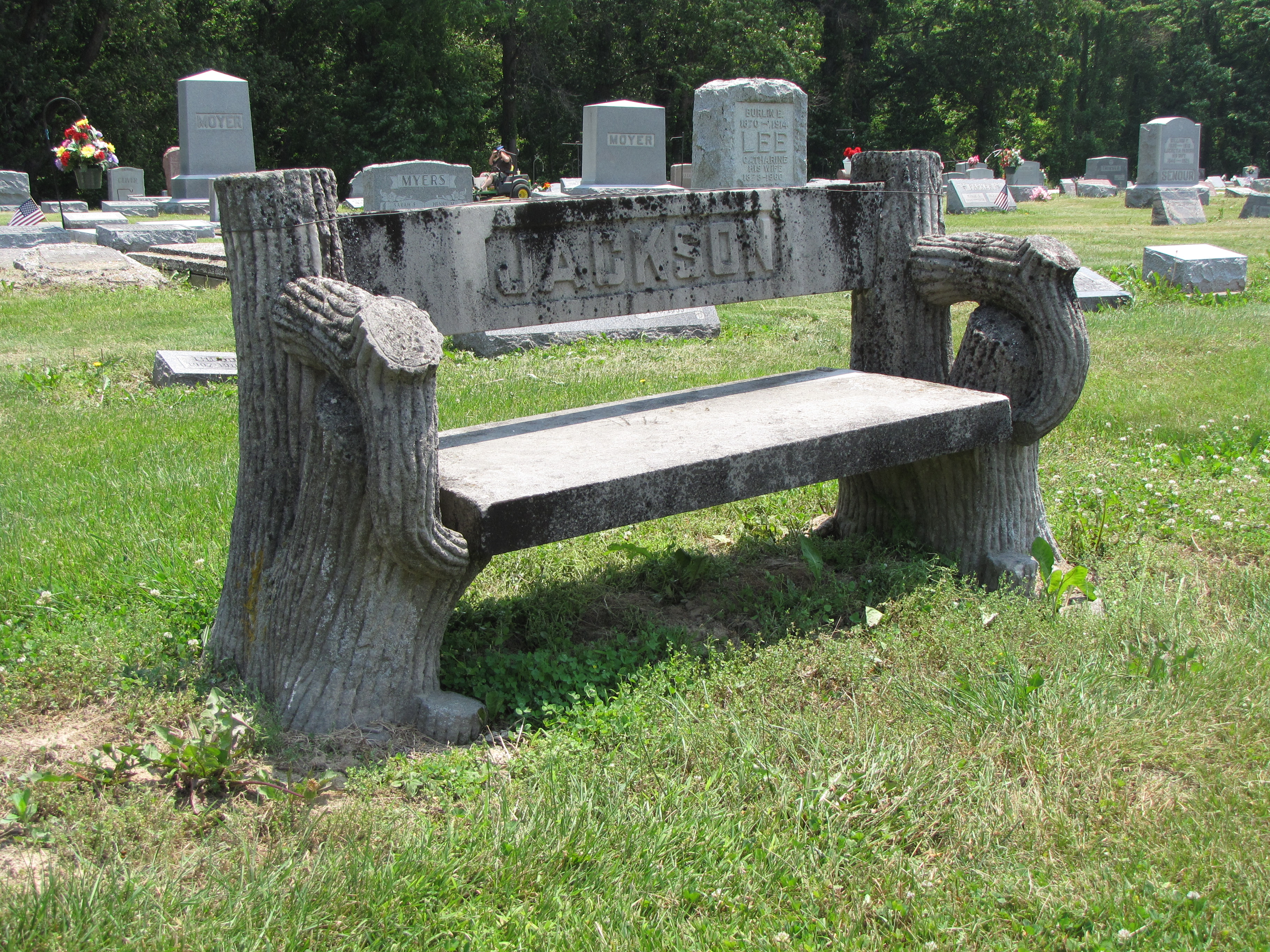
In funerary art, tombstones took on the look of tree stumps. The gravestones were purposefully designed to look like trees that had been cut and left in the cemetery to mark a grave. Most of these tree-stump tombstones were carved from limestone, which is easier to carve, though some are made from marble and even a few from granite. Often, the gravestones were carved to look like rustic furniture. Benches and chairs can be found in many cemeteries. The creativity of the carvers were boundless. Thousands of tree-stump tombstones exist in nearly as many designs.


Cemetery Bench, Oak Hill Cemetery, rural Indiana


The rustic movement coincided with the rural cemetery movement. The rural cemeteries were often located on the outskirts of town and laid out as a park would be—with broad avenues and winding pathways, featuring picturesque landscaping such as ponds, abundant trees, and shrubs. The tree-stump tombstones were a funerary art contrivance mimicking the natural surroundings of the cemetery. The tree-stump tombstones were most popular for a twenty year-period from about 1885 until about 1905.

Chambersville Cemetery and Mausoleum, Chambersville, Indiana

Posted in Treestump gravestones | 4 Comments

Saving Graces, Angel Version

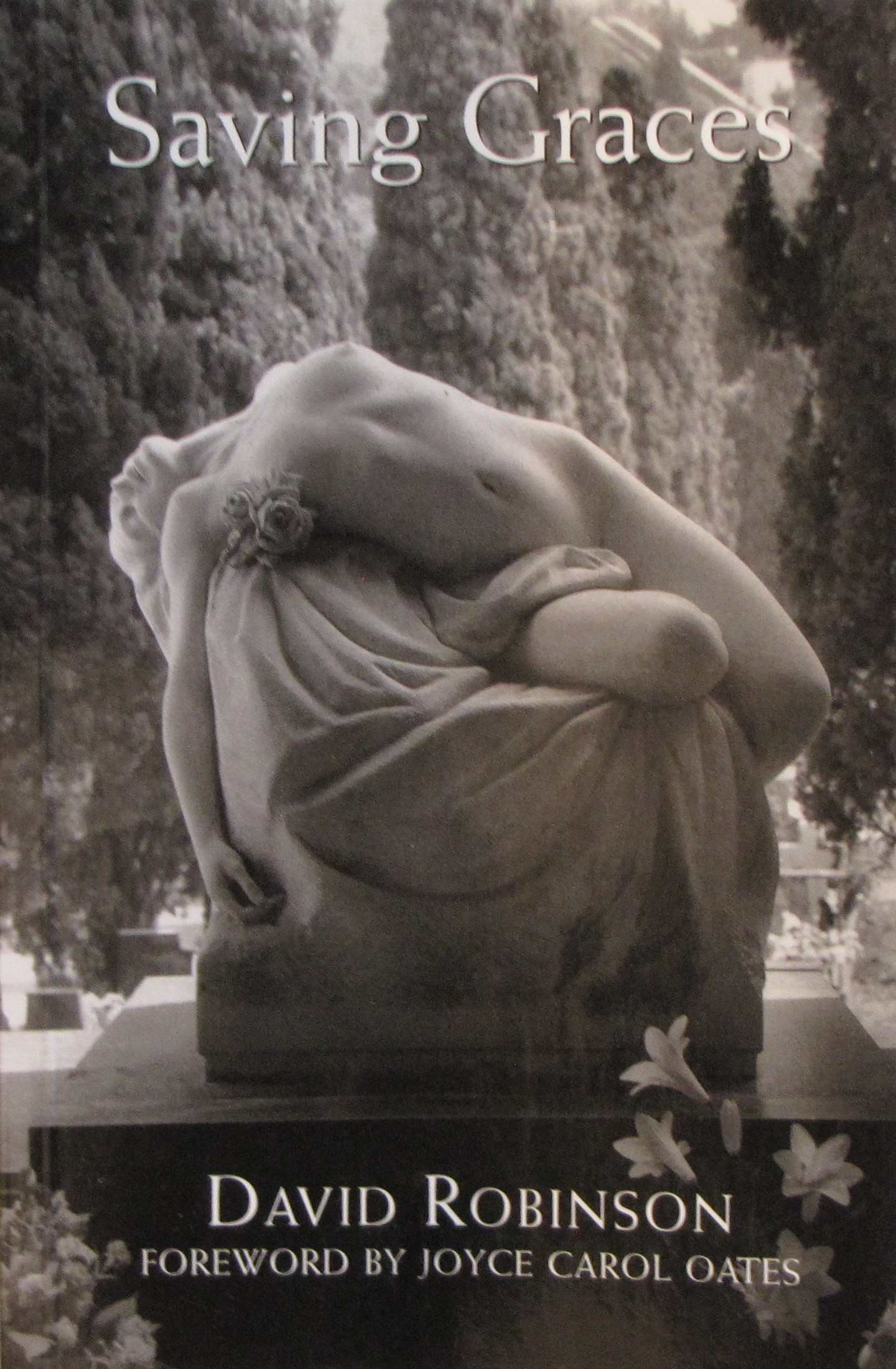
In my very first post, I wrote about the book, Saving Graces, published by W. W. Norton & Company in 1995. In the book, David Robinson has taken pictures of mourning figures from some of the most beautiful and famous cemeteries in Europe, including Pere Lachaise in Paris and Monumentale in Milan.  The photographs in the book show beautiful, young, and voluptuous women often wearing revealing clothing mourning the dead.  Robinson writes that all of the mourning figures he found were women, not angels, no wings.  Robinson writes that women, in fact, carry out the role of grieving and the artists portray this in sculpted marble and cast bronze. 

Robinson identified four categories of ”Saving Graces”–

  1. Women completely overcome by grief, often portrayed as having collapsed and fallen limp on the grave. 
  2. Women who are portrayed reaching up to Heaven as if to try to call their recently lost loved one back to Earth. 
  3. Women who are immobile and grief stricken, often holding their head in their hands distraught with loss. 
  4. The mourning figure who is “resigned with the loss and accepting of death.” 

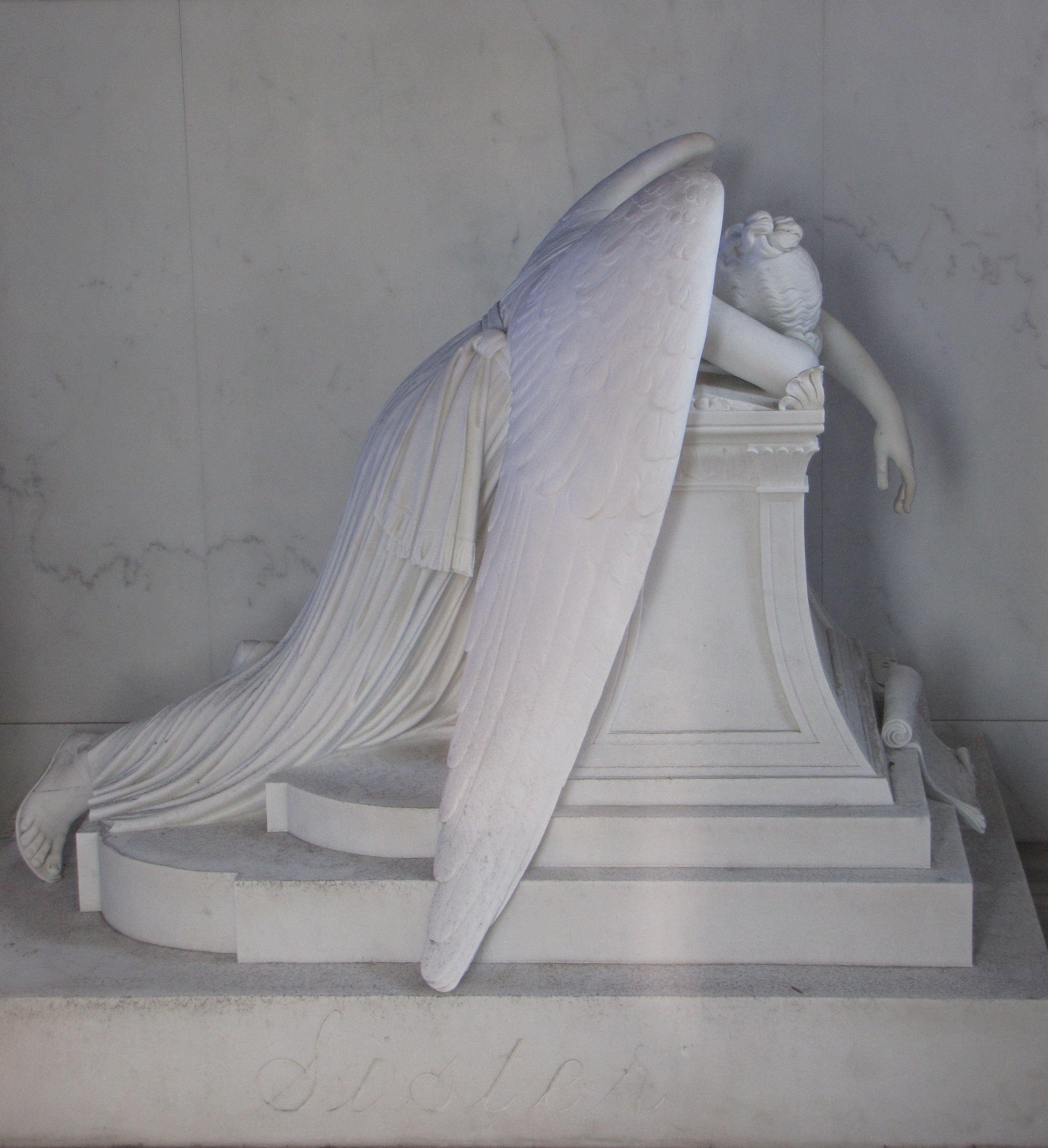
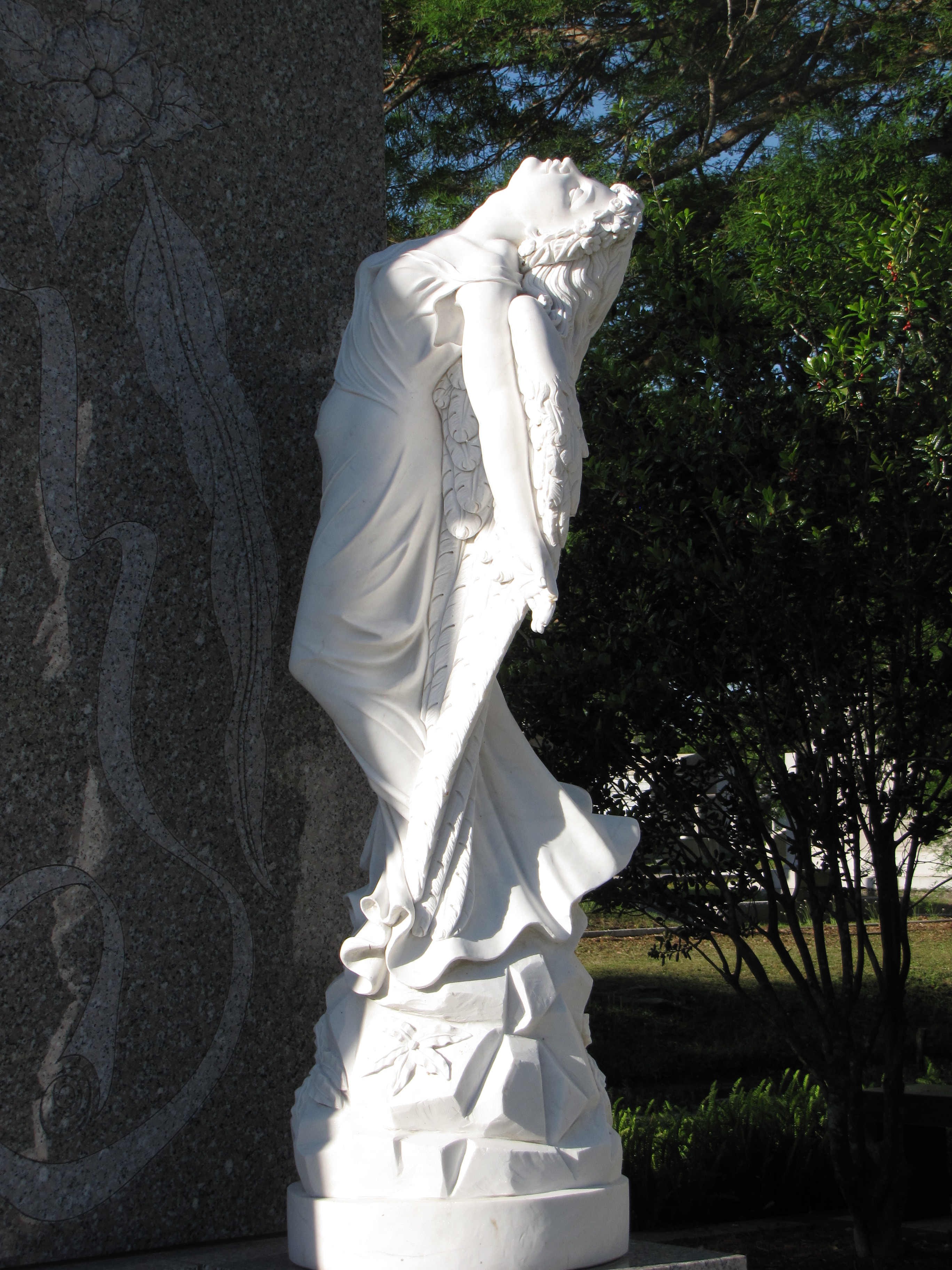
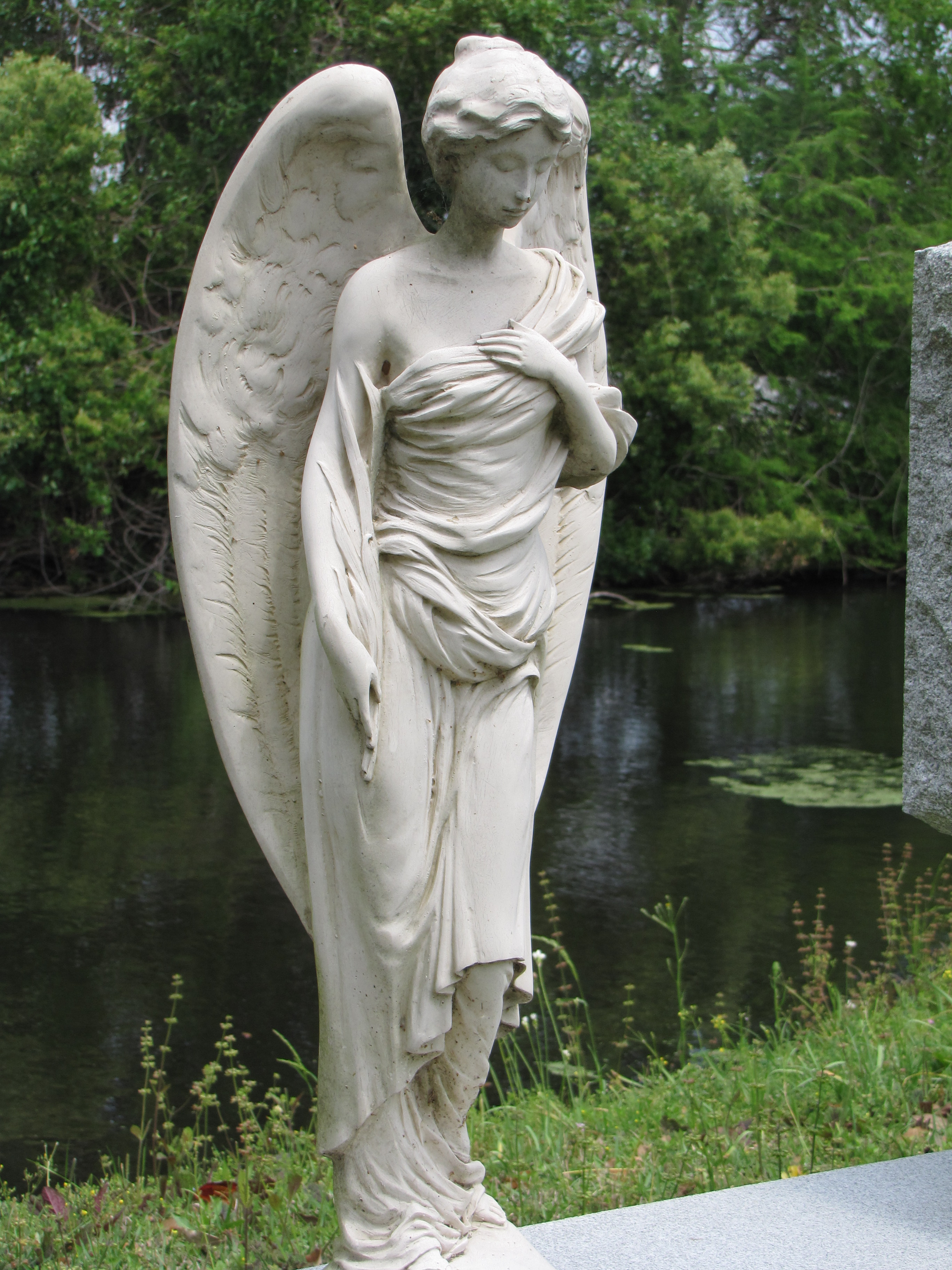
Not only are there examples of these mourning figures in American cemeteries, but there are also examples of these mourning figures depicted as winged angels. As you can see from the photographs, these figures are full bodied, female angels stricken in grief, just as the statues of the women in Robinson’s book. The difference is that these mourning figures are winged angels.

Chapman H Hymans Mausoleum, Metarie Cemetery, New Orleans, Louisiana

In the sculture above, the elagantly draped angel is distraught with grief and completely overcome, collapsed and limp from sorrow. 

The Brown Mausoleum, Metarie Cemetery, New Orelans, Louisiana

This voluptuos angel is portrayed with her head facing the Heavens.
 

Arthur and Ada Mattingly Mausoleum, Metarie Cemetery, New Orleans, Louisiana

This angel’s downward-looking head is resting on one hand, while the other holds a floral wreath. 

Lawrence and Beverly Macaluso Gravestone, Metarie Cemetery, New Orleans, Louisiana

 The angel looks down with resignation.
Posted in Saving Graces | Leave a comment

Grape clusters and leaves

Clover Hill Cemetery, Harrodsburg, Indiana

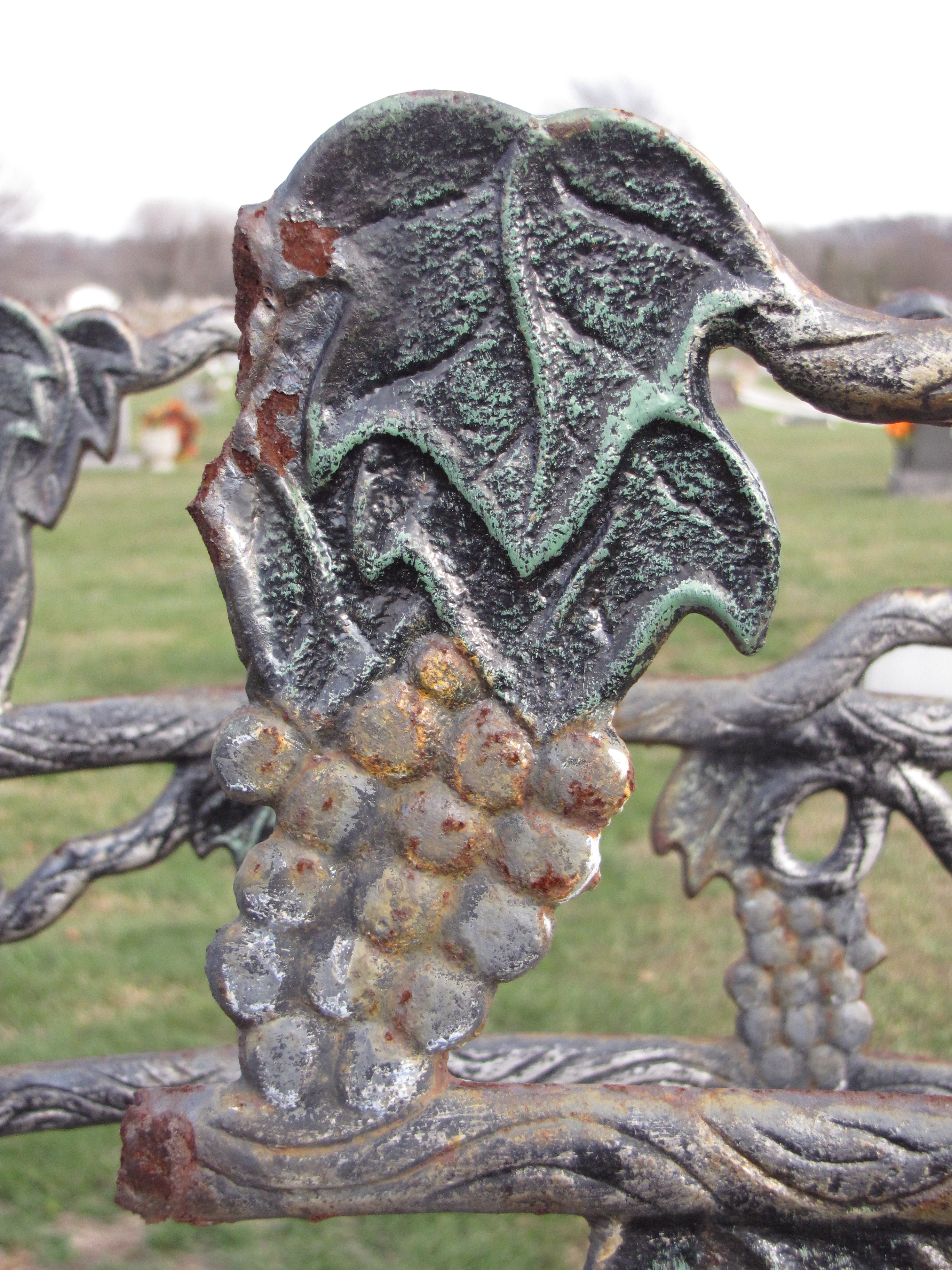
The gravestone above is surrounded by a metal trellis decorated with tinted grape clusters and leaves.  In Christianity the Eucharist, which is part of a religious ceremony also called Holy Communion, is a time when Christ’s followers are to do as Jesus instructed at the Last Supper.  Jesus broke bread and said, “This is my body” and drank wine and said, “This is my blood”.  The grape in cemetery symbolism represents the blood of Christ.
Posted in Symbolism | 2 Comments

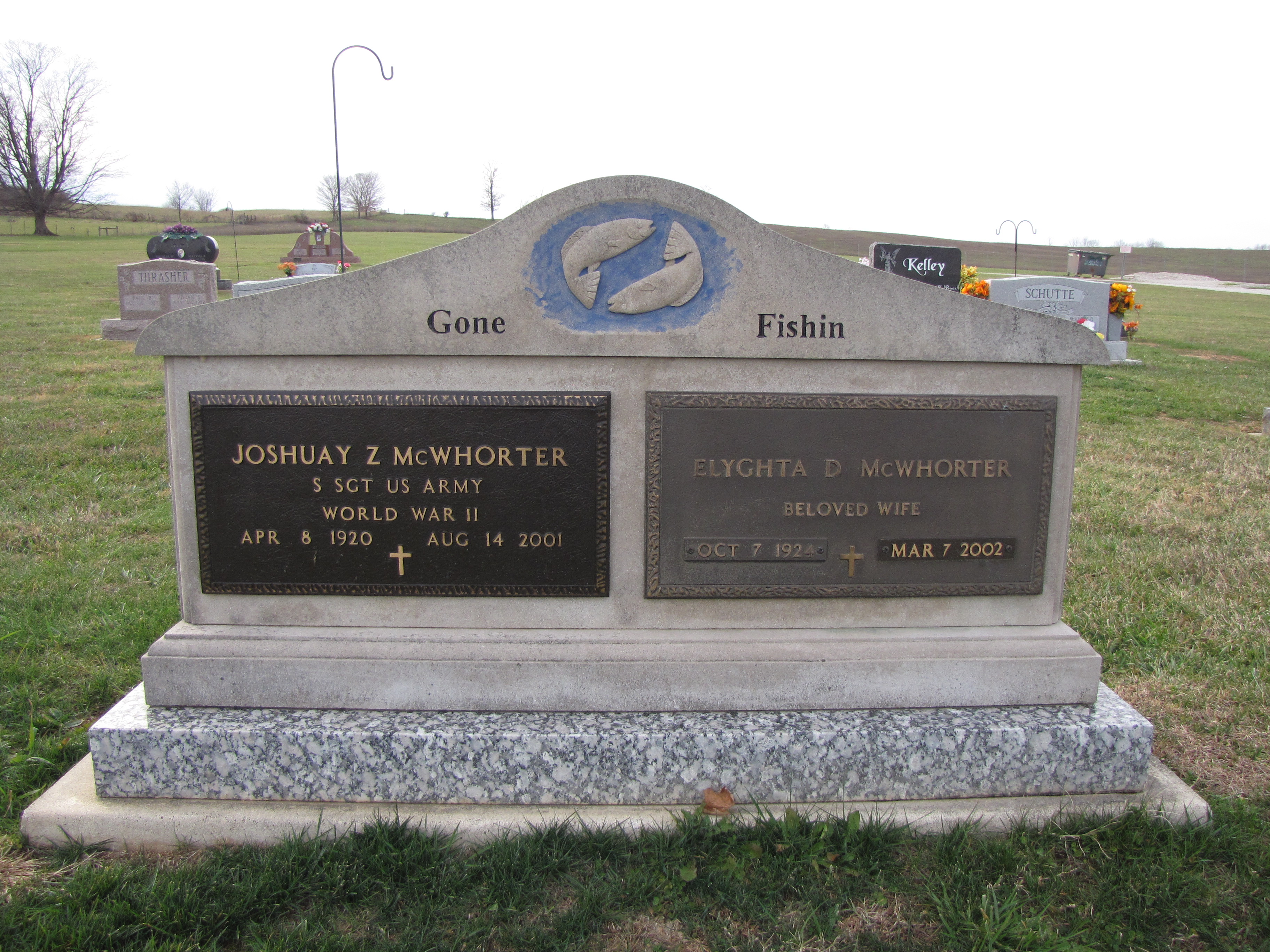
Gone Fishin

Clover Hill Cemetery, Harrodsburg, Indiana

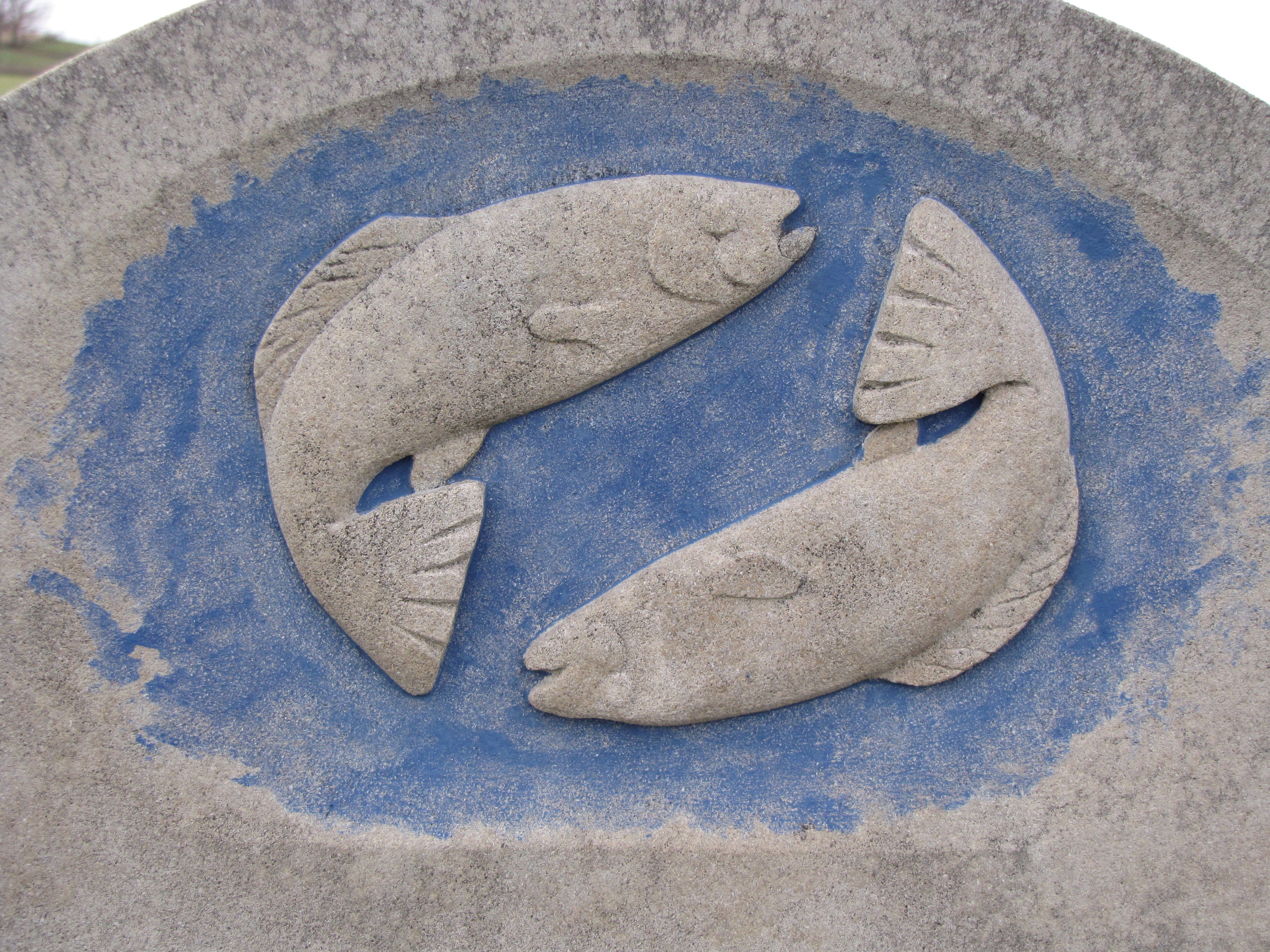
It is estimated that there are 38 million commercial fishermen worldwide and millions more who are recreational.  The sentiment, “Gone Fishin” is most likely an accurate vision of Heaven for many of them.

Clover Hill Cemetery, Harrodsburg, Indiana

Posted in Epitaphs | Leave a comment

The Squirrel

Clover Hill Cemetery, Harrodsburg, Indiana

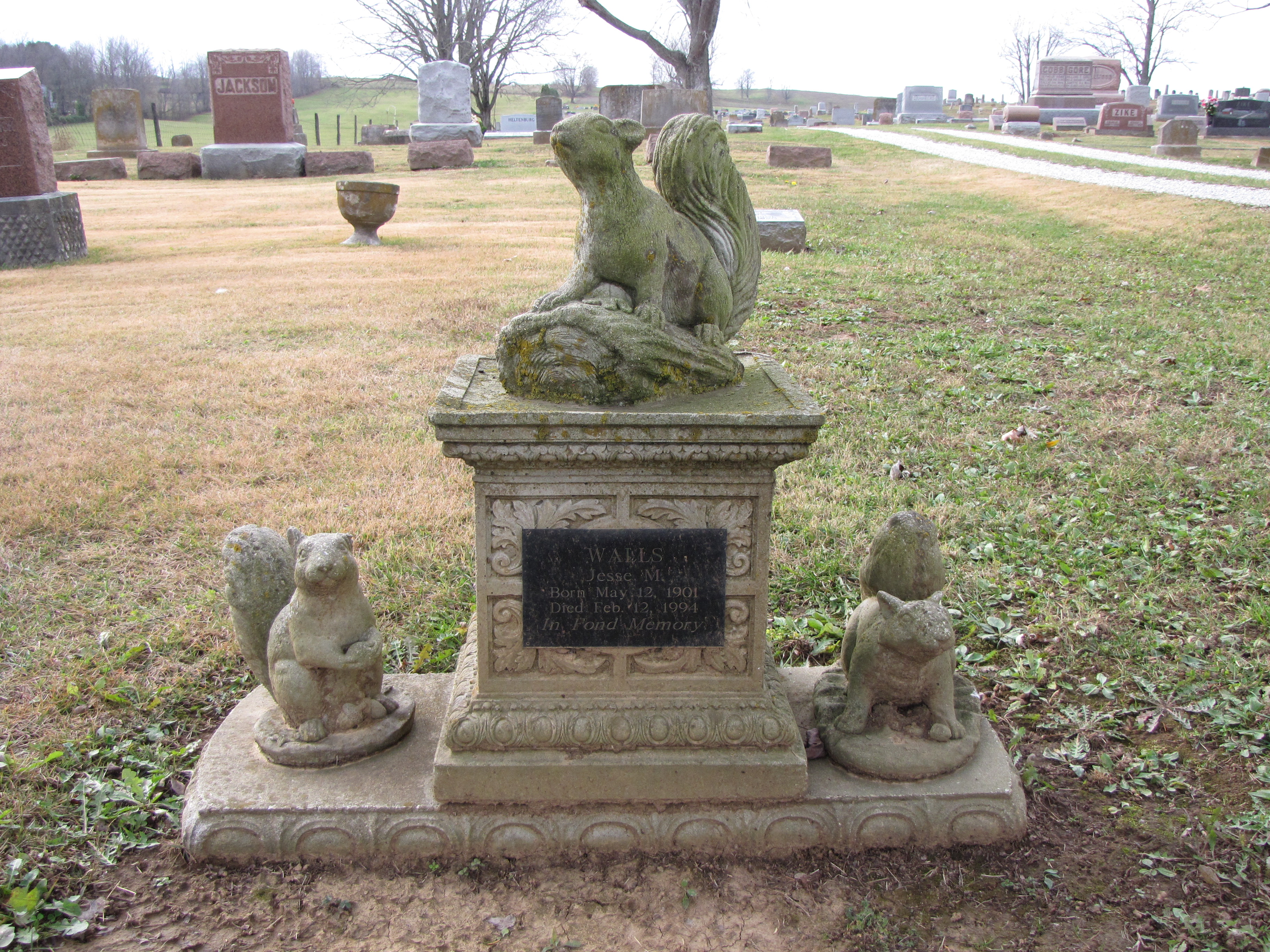
The squirrel is not a commonly seen symbol in the cemetery, even though, the live ones are regular inhabitants.  This intricately carved limestone marker has three squirrels, one on top of the main stone, perched on its haunches, the other two on the base with a stash of acorns.  The symbolism behind the squirrel is a bit confusing.  Some sources say that if the squirrel is holding a nut, it is a sign of religious meditation and spirtual striving.  Other sources say that the squirrel is an animal devoted to the devil, noted by its red color; red–the color of Satan. These squirrels don’t at all look sinister and are most likely in contemplation.  The squirrel in the center, arched back, with its head raised as if looking toward Heaven.

Posted in Symbolism | 2 Comments

The Hoosier Poet

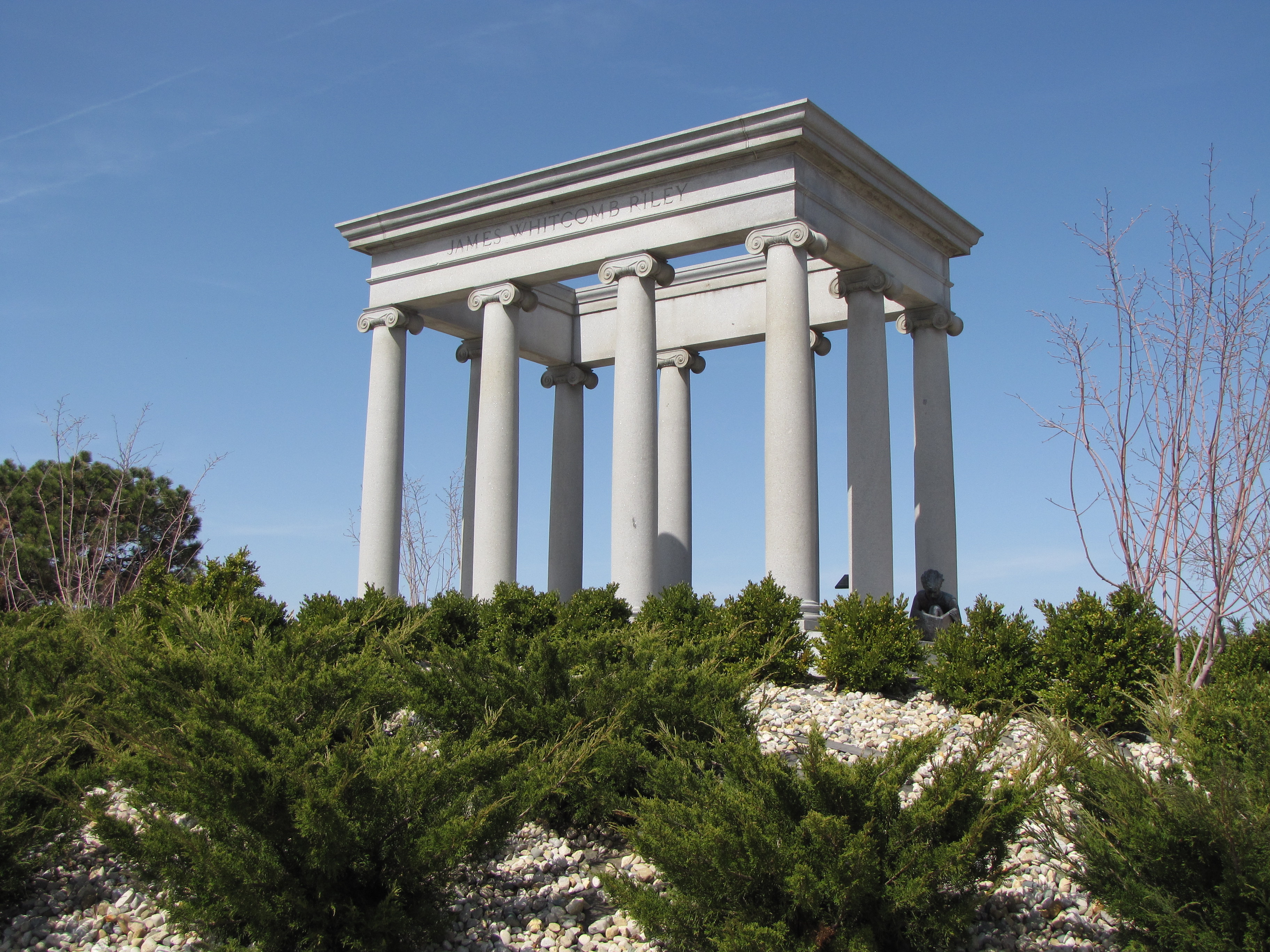
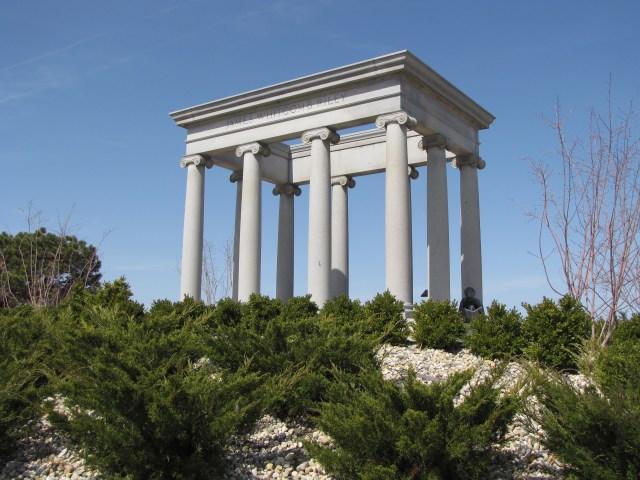
The James Whitcomb Riley Monument, Crown Hill Cemetery

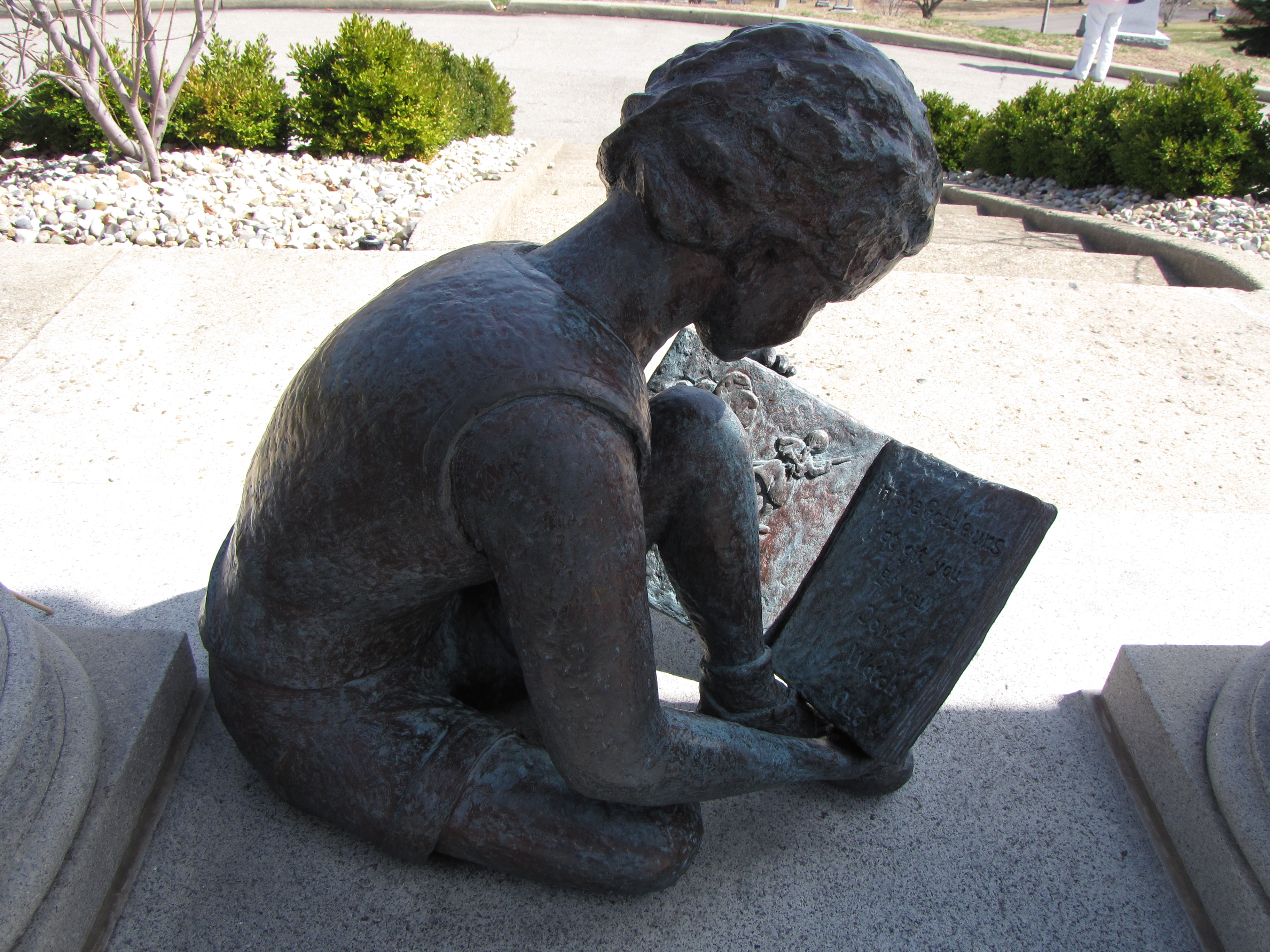
On top of the highest hill in Indianapolis, in the Crown Hill Cemetery, towers the classical monument dedicated to honor, James Whitcomb Riley, known at the “Hoosier Poet” and the “Children’s Poet.”  Riley (October 7, 1849 – July 22, 1916) was the most popular poet of the late 19th Century and early 20th Century made famous for writing poems that appealed to children, such as “Little Orpahnt Annie” and “The Raggedy Man.”  Most of his rhymes and poems were written in dialet, and are considered sentimental.
 
The plaque at the monument reads, “The “Hoosier Poet” was buried here in 1917.  Known and acclaimed internationally for his poetry about life in the heartland.  He is best remembered today for his poems that appeal to children and the child in all of us, such as “Little Orphant Annie” and the “The Raggedy Man”.  He was especially loved by the many local children who were able to enjoy not only his poetry, but also his time and lemonade on the front porch of his Indianapolis home on Lockerbie Street.  After his death children began donating coins to help pay for his memorial.  The tradition of leaving coins on his monument continues today and money collected is donated to Mr. Riley’s legacy, The Riley Hospital for children.”
 

Like bell-bottom pants, pet rocks, New Coke, and 8 Track tapes, Riley’s poetry has not stood the test of time.  Many critics think of his poetry as saccharine and cliched.  Today, in the pantheon of American poetry, James Whitcomb Riley is considered a minor poet.  With his star faded, and fewer visiting his grave, a movement has begun to remove his remains to his birthplace of Greenfiled, Indiana, to a grave he purchased next to his parents.

On the Website, jameswhitcombriley.com, the Webmaster writes, “Recently the fame of this great writer has dimmed.  His humanism and glorification of things Hoosier are not so valued now as in former days.  So is it time to allow him to rest in peace where he intended, in his hometown of Greenfield, Indiana?  Should America’s “Children’s Poet” be allowed to have his remains returned to the empty grave he purchased to house his remains?”  That is a question that remains to be answered.
Crown Hill Cemetery, Indianapolis, Indiana

Away

I can not say, and I will not say

That she is dead. – She is just away!

With a cheery smile, and a wave of the hand,

She has wandered into an unknown land,

And left us dreaming of how very fair

It needs must be, since she lingers there.

And you – O you, who the wildest yearn

For the old-time step and the glad return, –

Think of her faring on, as dear

In the love of There as the love of Here:

And loyal still, as she gave the blows

Of her warrior-strength to her children’s foes. –

Mild and gentle, as she was brave,

When the sweetest love of her life she gave

To simple things: – Where the violets grew

Blue as the eyes they were likened to,

The touches of her hands have strayed

As revently as her lips have prayed:

When the little brown thrush that harshly chirred

Was dear to her as the mocking-bird:

And she pitied as much as someone in pain

A writhing honey-bee wet with rain. –

Think of her still as the same, I say:

She is not dead – she is just away.

Posted in Famous graves | 1 Comment

The Horseshoe

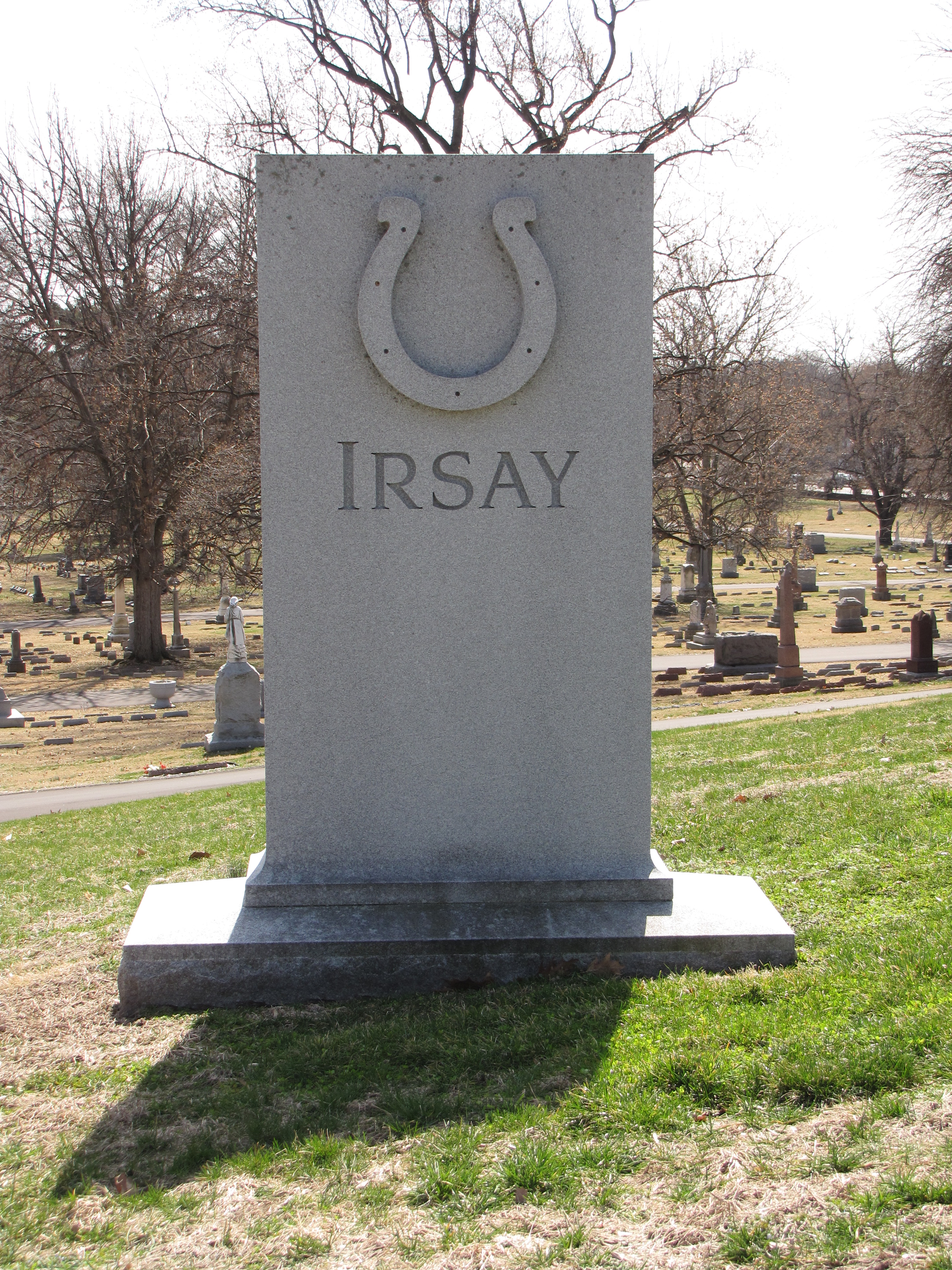
Crown Hill Cemetery, Indianpolis, Indiana

To the ordinary superstitious person, a horseshoe with the ends pointing up, is viewed as good luck.  These can ususally be found tacked up above a doorway and kept as a talisman.  The claim is that the luck stays in the horseshoe and is bestowed on the owner.  Conversely, some believe that if the horseshoe has the ends pointing down, the good luck will drain from the shoe and be bestowed on those around it. 

In gravestone art, however, the horseshoe is a symbol that wards off evil, not as a good luck charm.  The horseshoe can also be found on the graves of people who had a strong passion for horses or even those who had worked with horses, such as trainers, jockeys, horse owners, or just those who loved to ride.

However, if you are not a football fan, you might have missed the meaning of what this particular horseshoe represents.  This steele with the prominent horseshoe, ends up, is the gravestone of Robert Irsay, who was born March 5, 1923 and who died January 14, 1997.  Mr. Irsay purchased the Baltimore Colts and moved the team to Indianapolis in the wee hours of the morning on March 28, 1984.  The move of the team made Robert Irsay a dispised figure in Baltimore and beloved in Indy.  This horseshoe with the ends up and 7 nail holes, most likely a lucky 7, is the symbol of the Indianapolis Colt’s team and can be seen on their helmets, team paraphenalia, and if you look closely, on the belt buckles of the cheerleaders’ uniforms. 


Posted in Symbolism | 2 Comments