
We don’t often think of the classical orders—Doric, Ionic, and Corinthian—as having gender, but the ancients did.
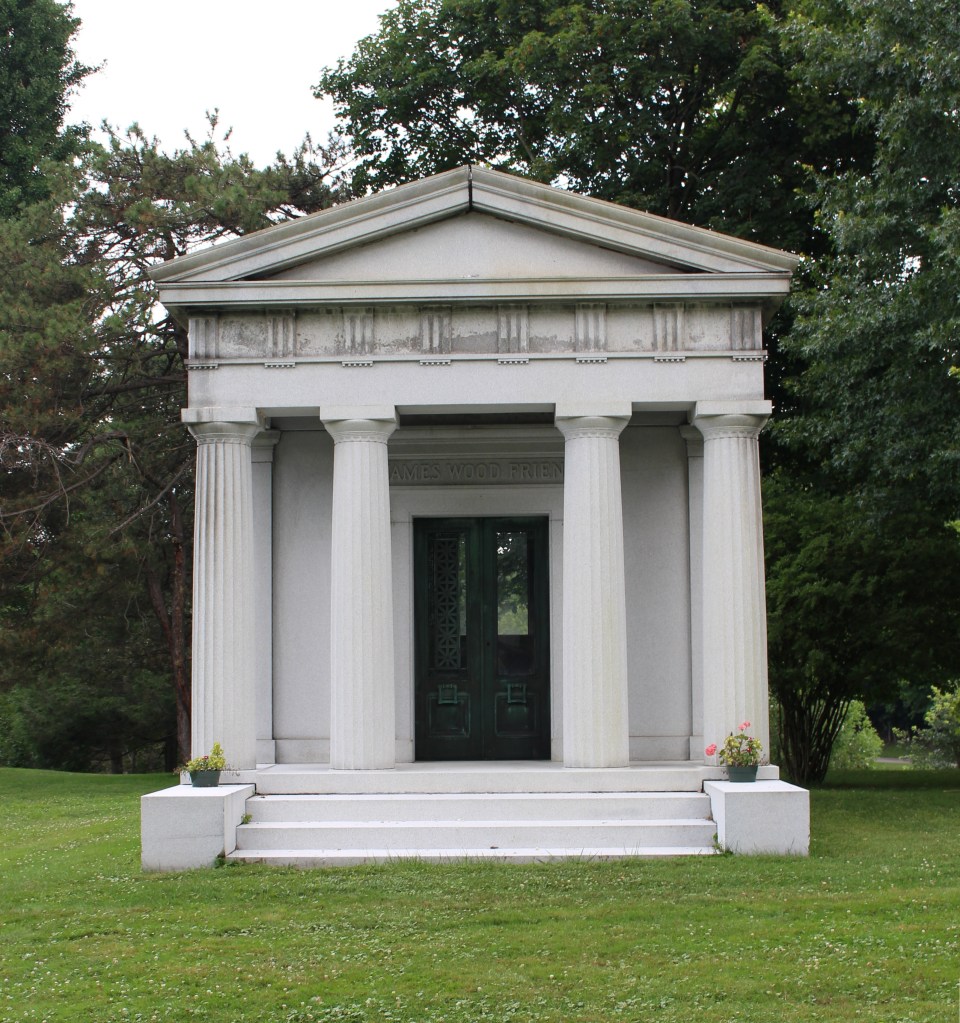
Allegheny Cemetery, Pittsburgh
The Doric Order, associated with the Greek god of Apollo, represents masculinity which can be seen with its sturdy columns. The height to diameter ratio of the column is an average of 7 to 1, giving the column a stout robust appearance. The capital consists of a simple square abacus—top plate—and a rounded echinus which is a cushion shaped element directly below the top plate. The shaft is often plain but if is fluted it traditionally has 20 grooves per column running vertically. The column sits directly on the stylobate without a base.

Crown Hill Cemetery, Indianapolis
The Ionic Order, associated with the Greek goddess Athena, represents femininity which can be seen with its more slender columns. The height to diameter ratio of the column is 9 to 1 giving the column a delicate appearance. The most distinctive feature of the Ionic column is that it is topped with a scroll-shaped volute on either side, connected by a horizontal band called the canalis, often decorated with an egg-and-dart motif. The volutes were inspired by natural forms such as seashells and ram’s horns. The fluted shaft has 24 grooves per column running vertically. Unlike the Doric column, Ionic columns rest on a base.
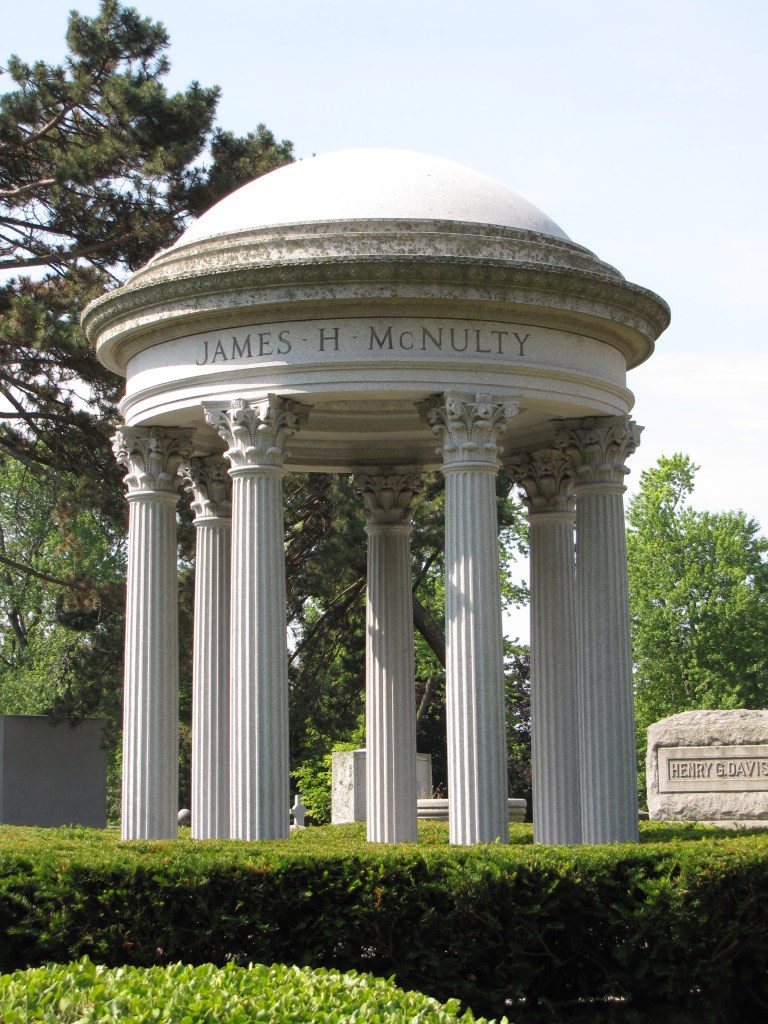
Spring Grove Cemetery, Cincinnati
The Corinthian Order, associated with the Greek god Asclepius, represents the young maiden which can be seen with its even more slender columns. The height to diameter ratio of the column is 10 to 1 giving the column an elegant appearance. The most distinctive feature of the Corinthian column is that it is topped with a highly decorated capital featuring intricately layers of carved acanthus leaves among other floral motifs. The fluted shaft has 24 grooves per column running vertically. Like the Ionic column, Corinthian columns rest on a base.


