Eclectic design in cast iron

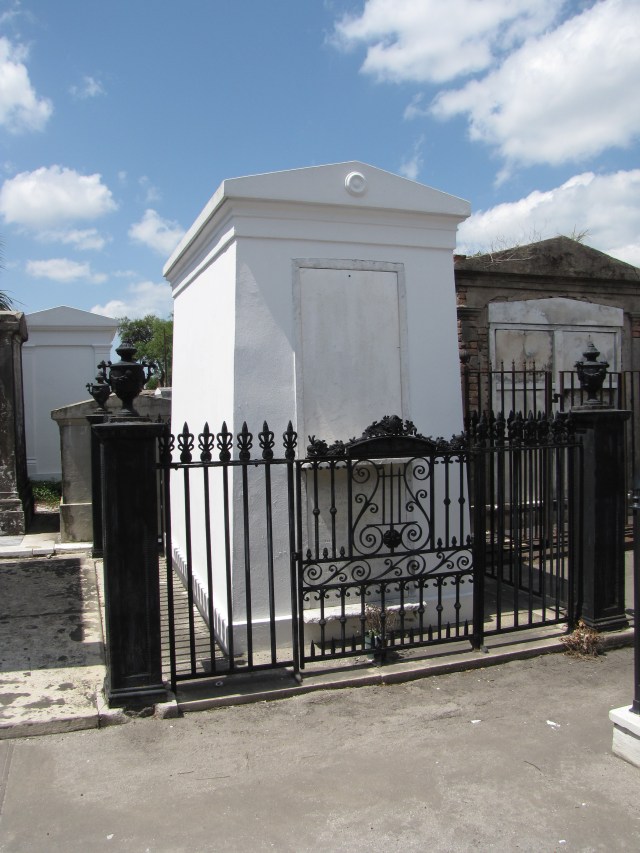
The Reynolds Family Tomb, Metarie Cemetery, New Orleans

The Reynolds Family Tomb, Metarie Cemetery, New Orleans

Cast iron became much less expensive in the second half of the 19th Century coupled with the ease of making more intricate patterns and designs.  Simple wrought iron adorning many of the homes, commercial buildings, and apartment buildings in New Orleans was ripped out and replaced with more intricate cast-iron railings and fencing.

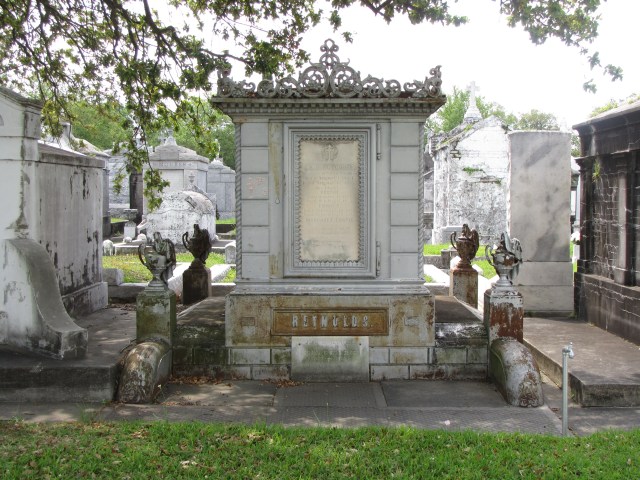
The choice of cast iron for the building instead of marble or granite for the tomb of William H. Reynolds, however, was likely due to the fact that he owned the Reynolds foundry at New Orleans.  His family tomb is the only cast-iron tomb in the Metarie Cemetery.  Built in 1877, the tomb is an eclectic design featuring Byzantine-style twisted corner columns, an Italianate cornice, and a highly-decorative iron work adorning the top.

Also symbolism further decorates the tomb—inverted torches on the sides of the tomb and the draped urns on the four corners of the plot.  Inverted torches with the flames curling out from the bottom are molded into the side panels of the tomb.  The flame or fire is symbolic of the soul. Here the inverted torch represents a life that has been extinguished.

The urn, an almost ubiquitous 19th Century symbol, was found in nearly every American cemetery. The urn is a container used to hold the ashes or the cremated remains of the dead.  The urns surrounding the Reynolds Family Tomb are draped. The drapery represents a shroud symbolizing death and sorrow.  It can also be a motif that represents a veil that separates the two realms—Earth and Heaven.

Wm. H. REYNOLDS

A native of Columbus, Ohio

Born August 1, 1831

Died August 17, 1877

His Children

GEORGE

Born October 17, 1874

Died October 17, 1874

EMMA P.

Born February 12, 1877

Died September 8, 1878

Margaret TORPIE

Wife of Wm. H. Reynolds

Born June 9, 1842

Died June 30, 1885

WILLIAM H. REYNOLDS

1866-1929
Posted in Tombs | Leave a comment

Cast-iron Gothic

IMG_2963

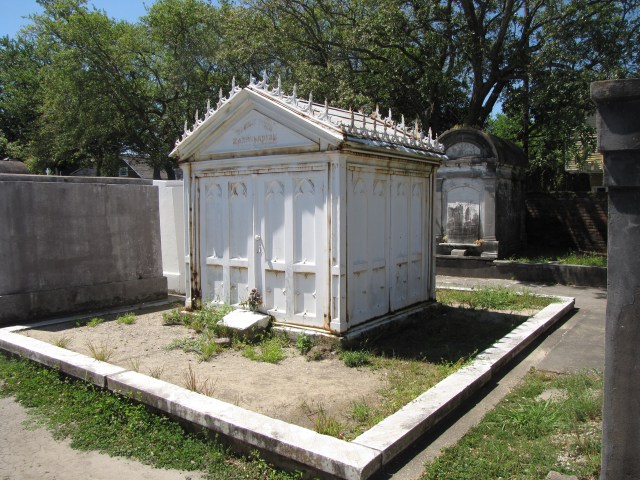
The cast-iron Karstendiek Family Tomb in the Lafayette Cemetery Number 1 at New Orleans is a Gothic Revival style jewel box.  Built in the 1860s it features pointed-arched tracery on the doors and pinnacles on the roof.

Posted in Mausoleums, Uncategorized | 2 Comments

The Griffin

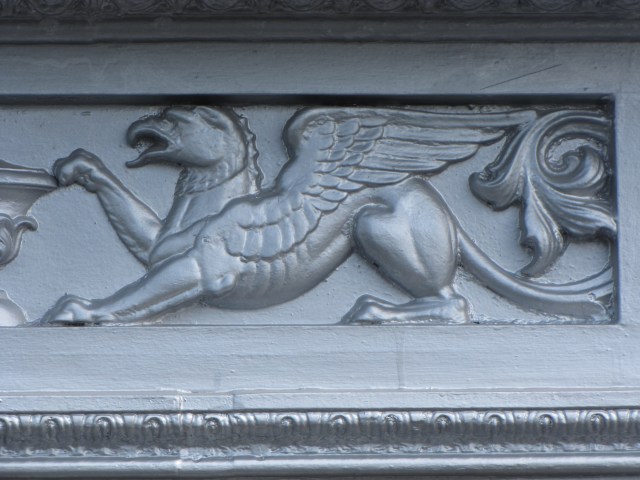
On the Pelton Tomb in the Greenwood Cemetery at New Orleans, Louisiana, the top of the crypt displays urns flanked by two griffins.  The griffin is a mythological beast that has the combined head and wings of the King of the Skies–the eagle–and the muscular body of the King of Beasts–the Lion.  This combination symbolizes the creatures dominance over the Heavens and the Earth.  In Christian symbolism the griffin represents the duality that is Jesus Christ–He is the son of God, a human, but also a part of the Trinity–making him divine.  Christ reigns over the Heavens and the Earth.

IMG_2166

Posted in Symbolism | Leave a comment

Cast-iron tomb

Greenwood Cemetery, New Orelans, Louisiana

Greenwood Cemetery, New Orelans, Louisiana

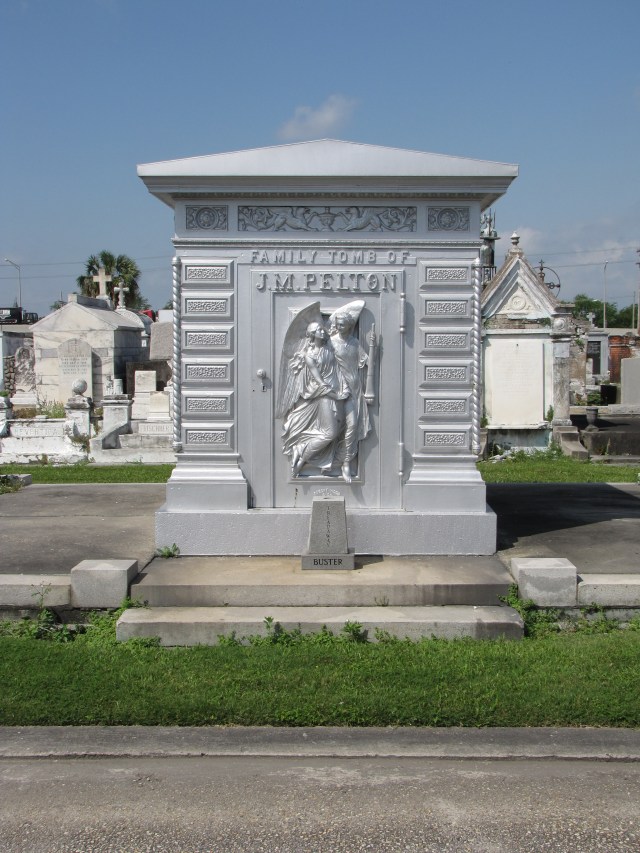
Cast-iron is an oft-used material for fencing in cemeteries but it is also used as a building material for tombs.  The Pelton Family tomb in the Greenwood Cemetery at New Orleans is one of two identical cast-iron tombs in the cemetery.  The tomb was built by the Robert Wood & Co. of Philadelphia, Pennsylvania, and the Miltenberger Foundry of New Orleans.

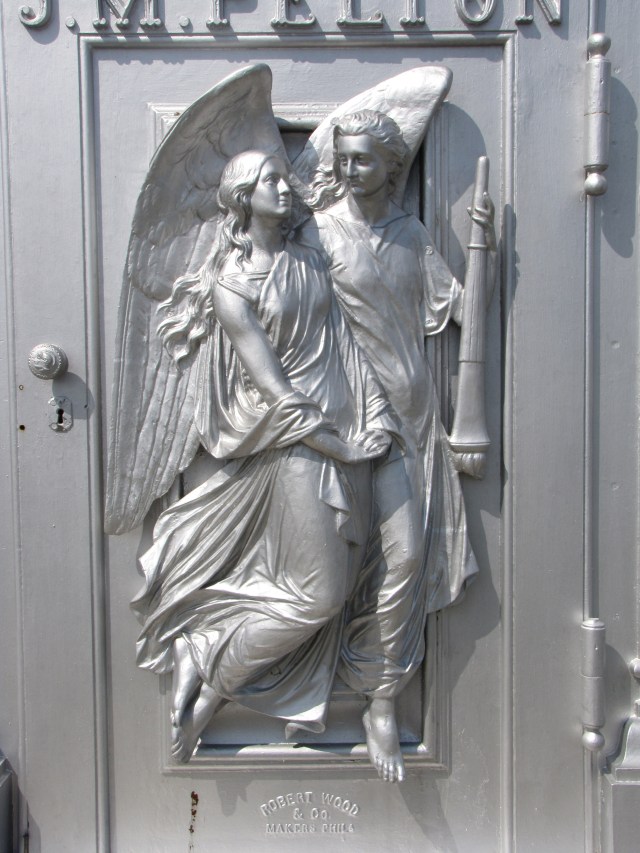
The door to the tomb is adorned with a male angel with an inverted torch in one hand and his arm around a woman.  The symbolism here looks clear that the angel is taking the woman’s soul to Heaven.

IMG_2160


Posted in Mausoleums, Symbolism | Leave a comment

The Pineapple

Saint Louis Cemetery, Number One, New Orleans, Louisiana

Saint Louis Cemetery, Number One, New Orleans, Louisiana

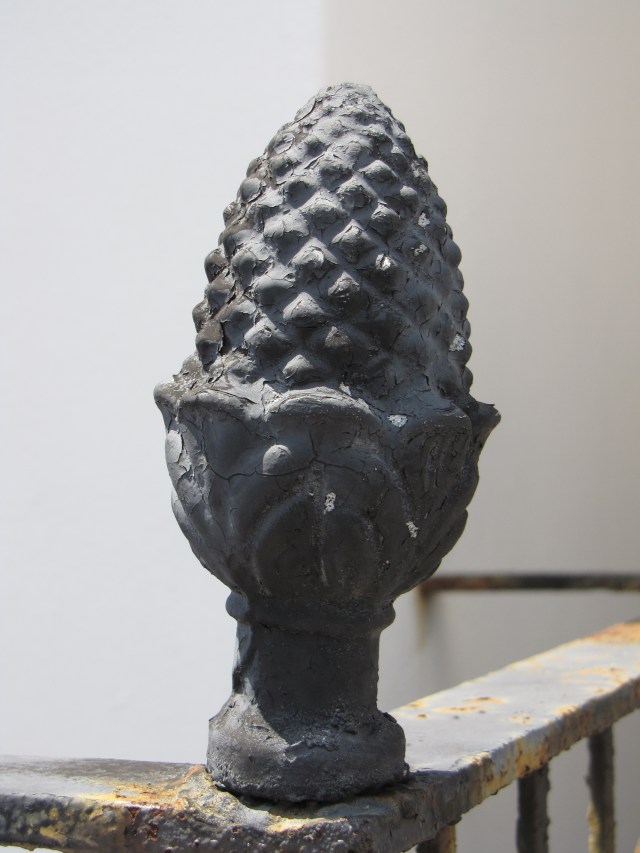
The pineapple won its name because the outside of the fruit looked like a pinecone and the fleshy interior was reminiscent of an apple—hence the name—pine+apple.

Since the early days of Spanish exploration of the Caribbean, the pineapple was recognized as a symbol of welcome if it was placed at the entrance to the village.  In funerary art the pineapple represents hospitality and a good host.

IMG_1988

Posted in Symbolism | Leave a comment

The Lyre

Often symbolism is highly stylized in the metalwork surrounding tombs and crypts. The gate to the Albert Crima Family crypt in the Saint Louis Cemetery, Number One at New Orleans, Louisiana, for example, has a stylized lyre. The lyre is a symbol of Apollo, the Greek god of music. In Christian symbolism it can represent harmony and Heavenly accord and song in praise of the Lord.  In funerary art, however, the lyre can also represent the end of life.

</a

Posted in Symbolism | Leave a comment

The Arrow

Surrounding the Appolinaire Perrault Family Crypt in the Saint Louis Cemetery Number One at New Orleans, Louisiana, is a gate with two arrows crossing. The arrow represents martyrdom and mortality.

Posted in Uncategorized | Leave a comment

Angel in prayer

Saint Patrick Cemetery Number Two, New Orleans, Louisiana

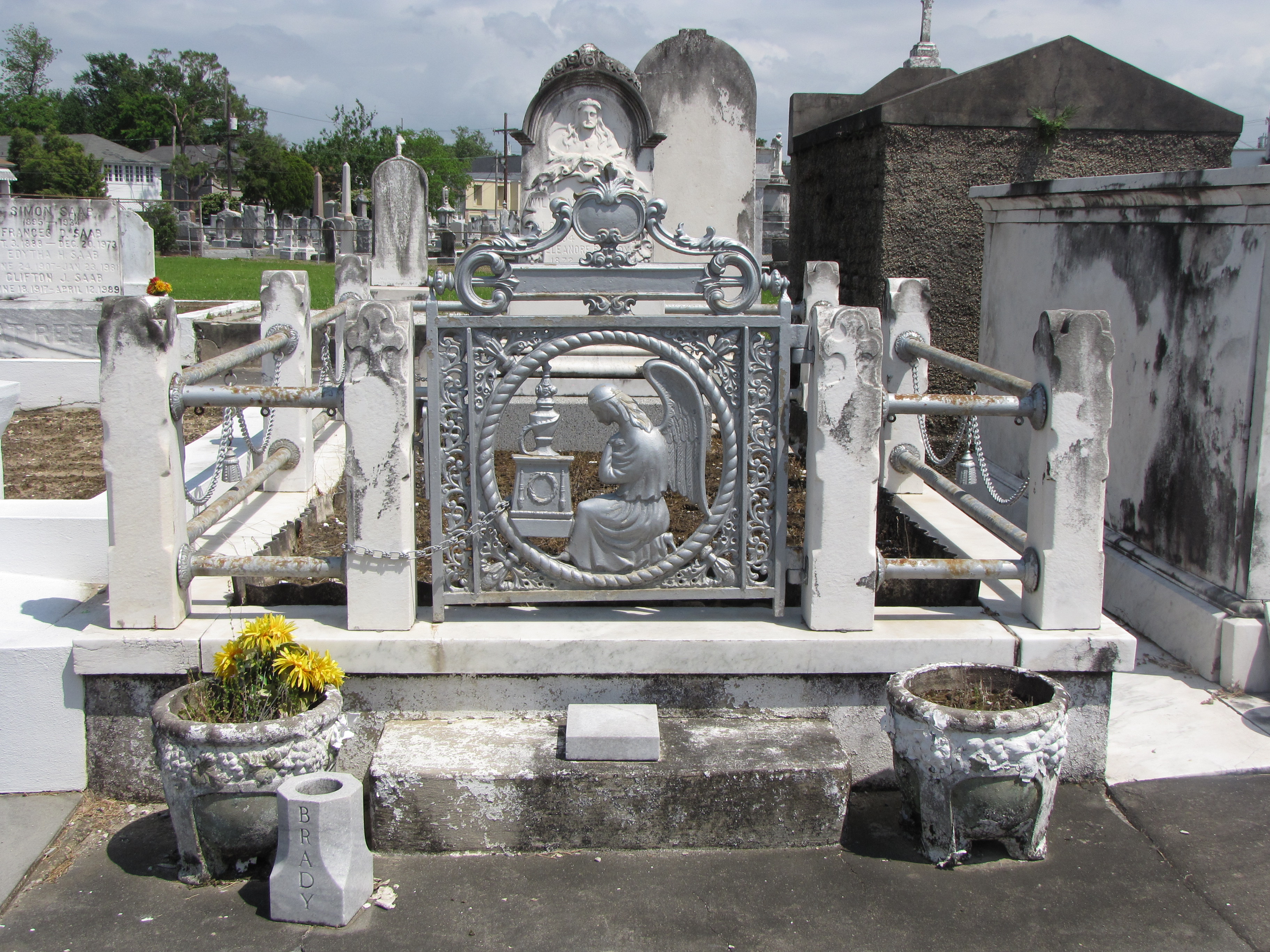
An elaborate fence with marble fence posts and cast iron railings surround the William A. Brady Sr. gravestone within the Saint Patrick Cemetery Number Two at New Orleans.  The cast iron gate is another fine example of the symbolism to be found on the metalwork in cemeteries.

Here an angel on bended knee bows her head with her arms crossed in prayer in front of a tomb topped with a garland-festooned urn with a wreath and two inverted torches.  The imagery is replete with symbolism.  The flames coming from the bottom of the torches are symbolic of the soul. Here the inverted torch represents a life that has been extinguished.  The laurel wreath dates back to Roman times when soldiers wore them as triumphal signs of glory. The laurel was also believed to wash away the soldier’s guilt from injuring or killing any of his opponents. In funerary art the laurel wreath is often seen as a symbol of victory over death.

William A. Brady Sr.

1889-1933

Louise Brady

1904-1922

Eleanore Brady

1872-1957

Posted in Symbolism | Leave a comment

Odd Fellows

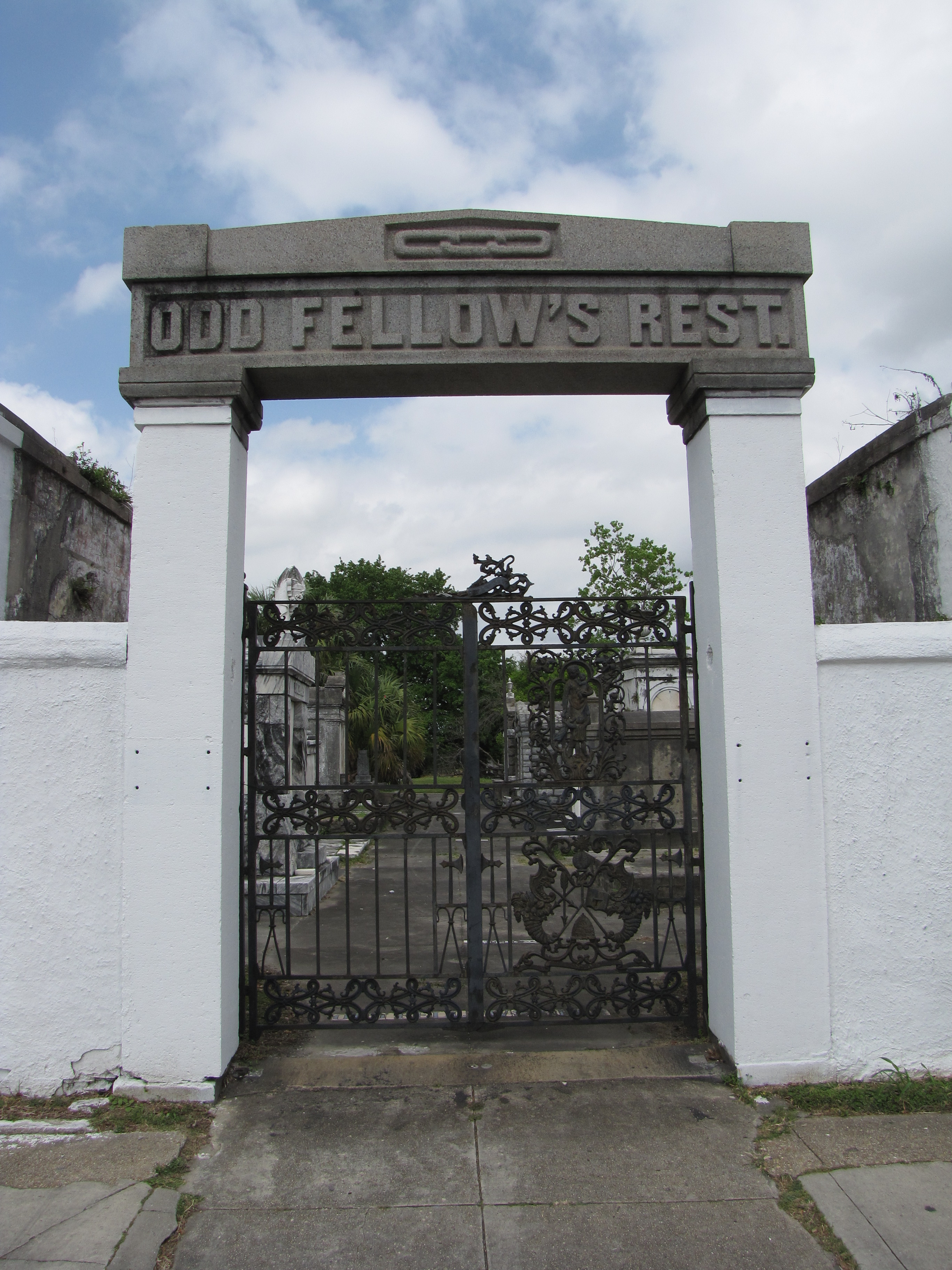
Odd Fellow’s Rest Cemetery, New Orleans, Louisiana

The Independent Order of Odd Fellows is a fraternal organization that formed in England in the 1700s as a service organization. The American association was founded in Baltimore, Maryland, on April 26, 1819. According to the I.O.O.F. Website, “Thomas Wildey and four members of the Order from England instituted Washington Lodge No. 1. This lodge received its charter from Manchester Unity of Odd Fellows in England.”

Members of the Odd Fellows, like many other society members, choose to be buried in common burial grounds.   There are several Odd Fellows graveyards in the United States including the Odd Fellows Rest Cemetery at New Orleans, Louisiana.  Carved into the lentil of the stone entrance to the cemetery are three links of a chain, the main symbol of the society. Often shown inside the three links are three letters, F L T, which signify the organizations motto: Friendship, Love, and Truth.

Unfortunately, much of the intricately manufactured ironwork on the gates to the entrance have been stolen over the years. However, what remains on the right door of the gates exhibits a multitude of symbolism.

Top panel, right gate

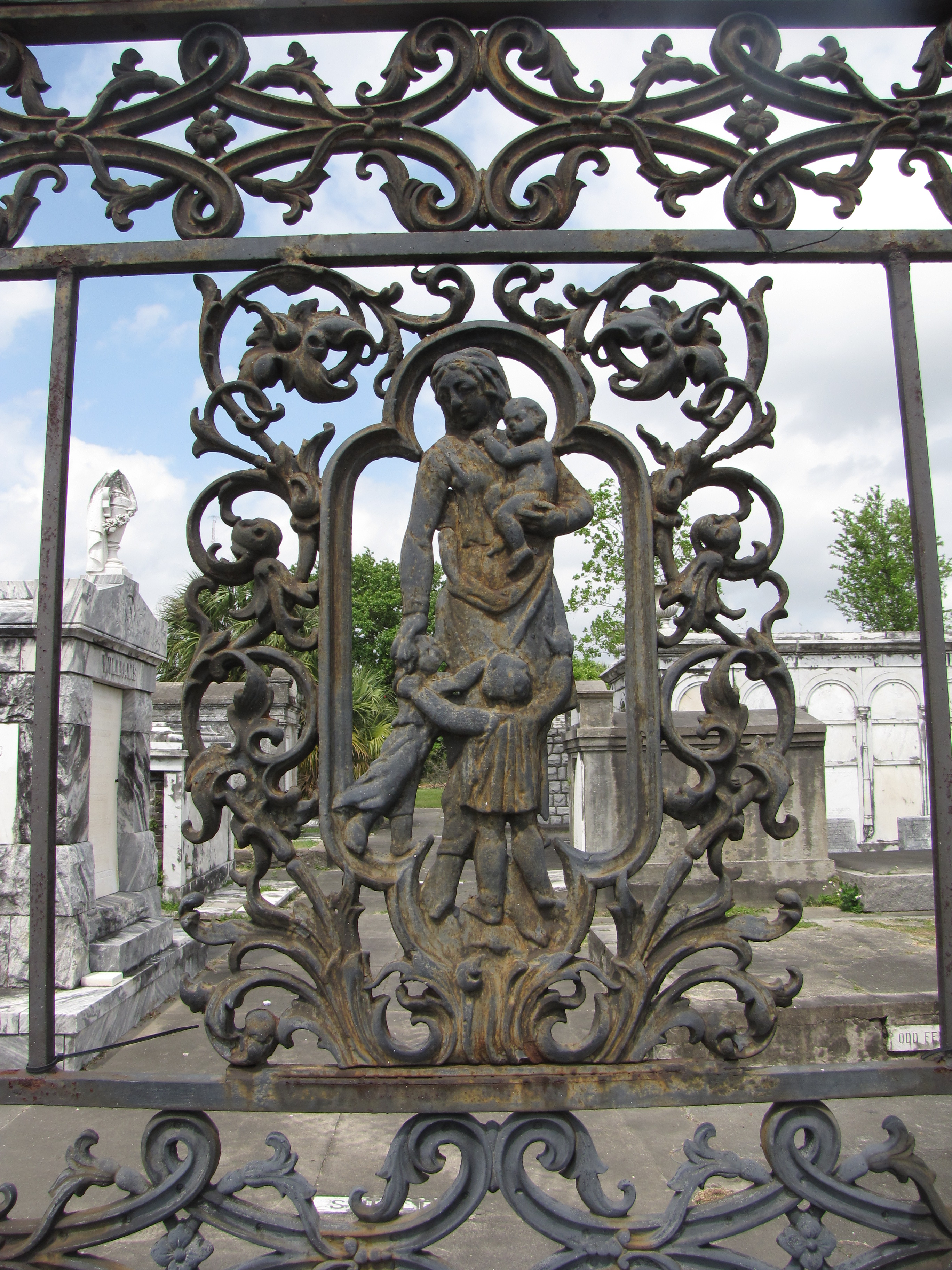
The top panel displays a woman holding a baby with two children cleaving to her skirt, as if they are mourning the loss of a loved one–possibly a member of the Odd Fellows.

Bottom panel

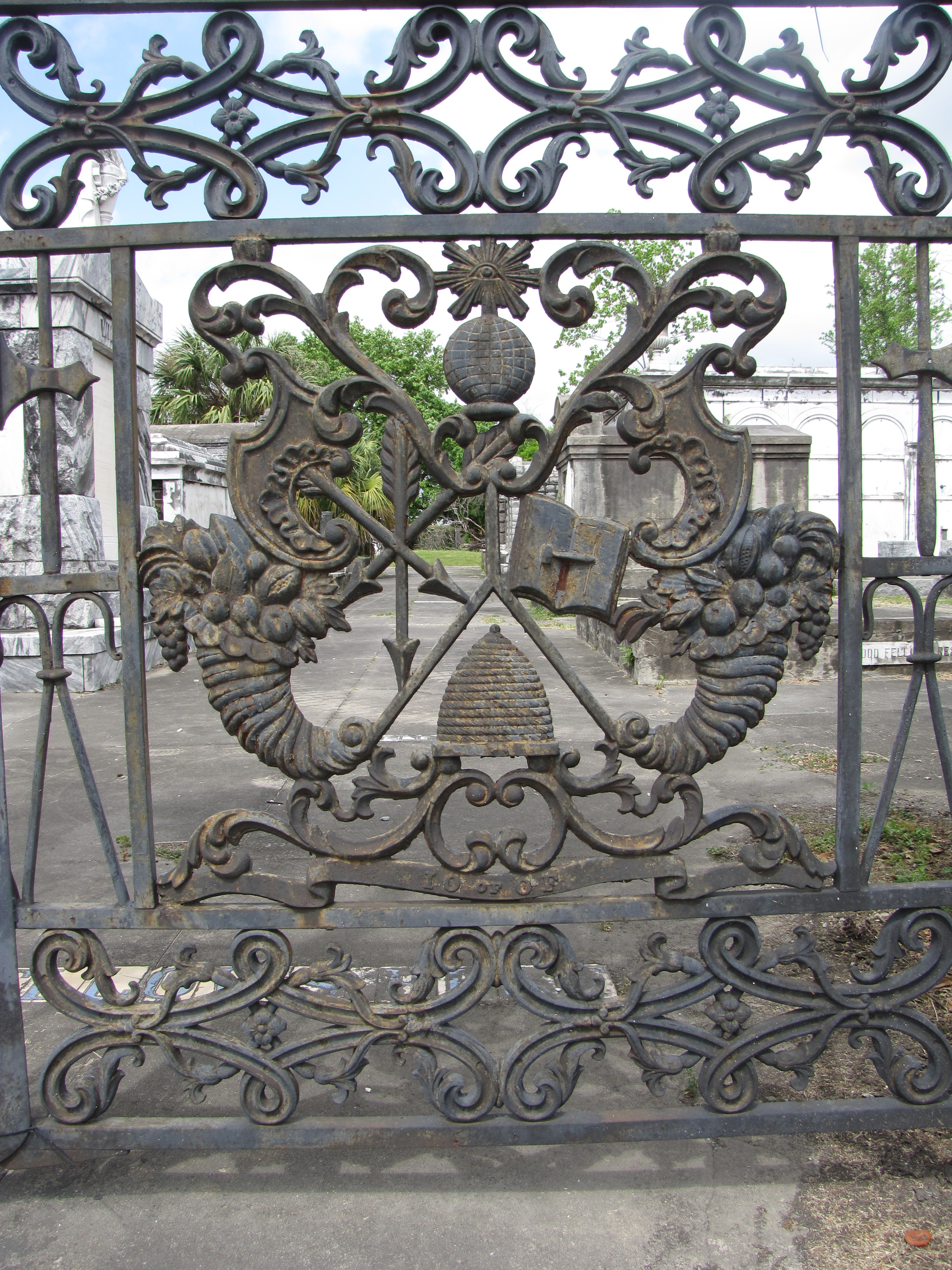
At the top of the bottom panel of the right door, the ironwork displays the All-seeing Eye of God with rays of light emanating over a globe representing the watchful eye of the Deity overseeing the world.  The All-seeing Eye or Eye of Providence can be traced all the way back to the Eye of Horus in Egyptian mythology. On either side of the panel are dual cornucopias which are symbolic of plenty.  Inside the cornucopias are two symbols—the open book with a gavel and the crossed arrows and representing law and order.  At the bottom of the panel is the beehive, well known as a symbol of industry.

Posted in Symbolism | 1 Comment

The Flame

Lafayette Cemetery Number 1, New Orleans, Louisiana

The Taylor Dufilho Family Crypt in the Lafayette Cemetery Number 1 at New Orleans, Louisiana, is topped with a flame rising out of a garland-festooned urn.  Here the ironwork surrounding the crypt is repeating the symbol of the flame in the urns on the corners of the fencing.

The flame, like many Christian symbols, has several different meanings—eternal life, religious fervor, and vigilance.  The flame can also represent martyrdom.

Posted in Symbolism | Leave a comment