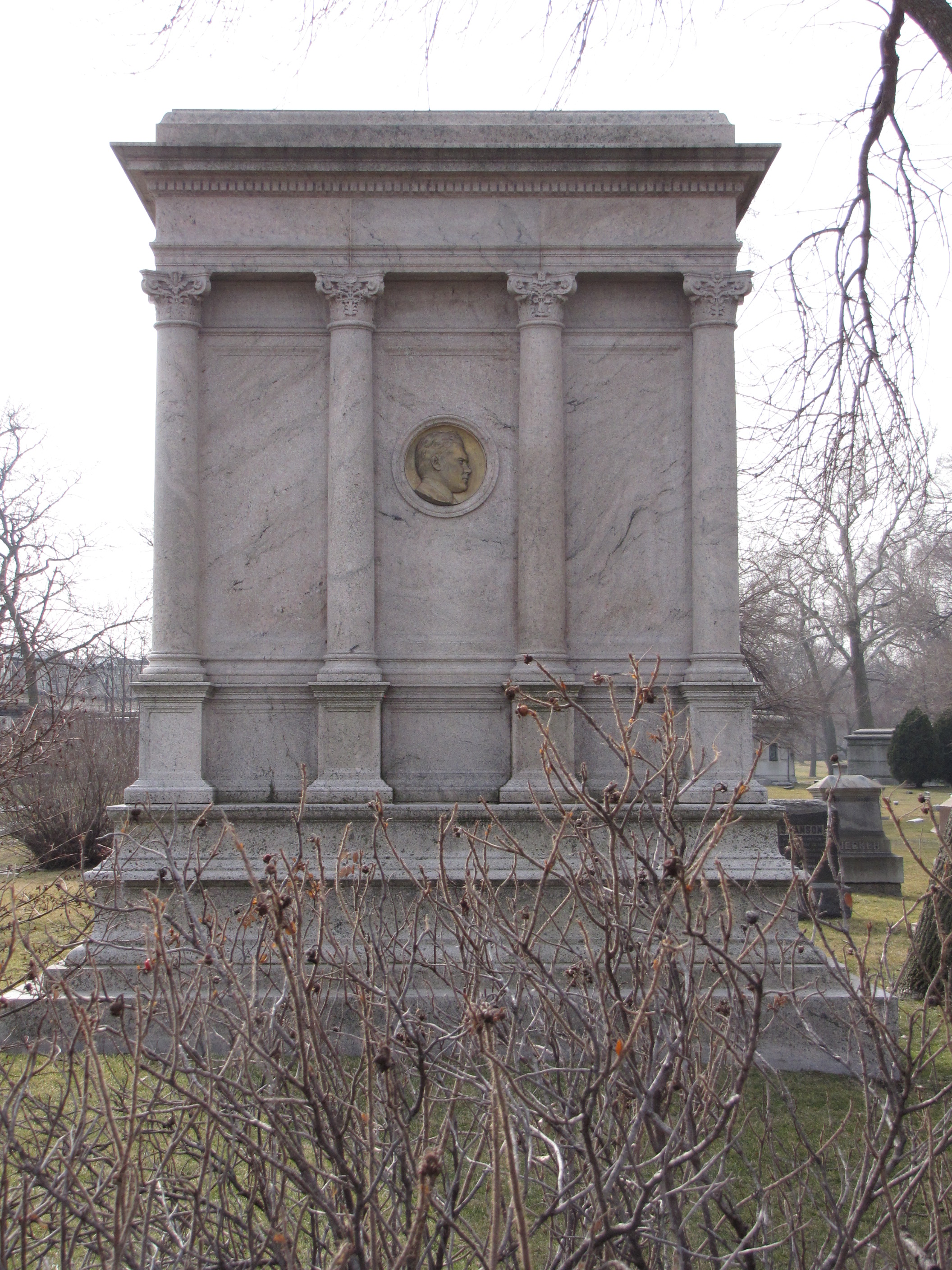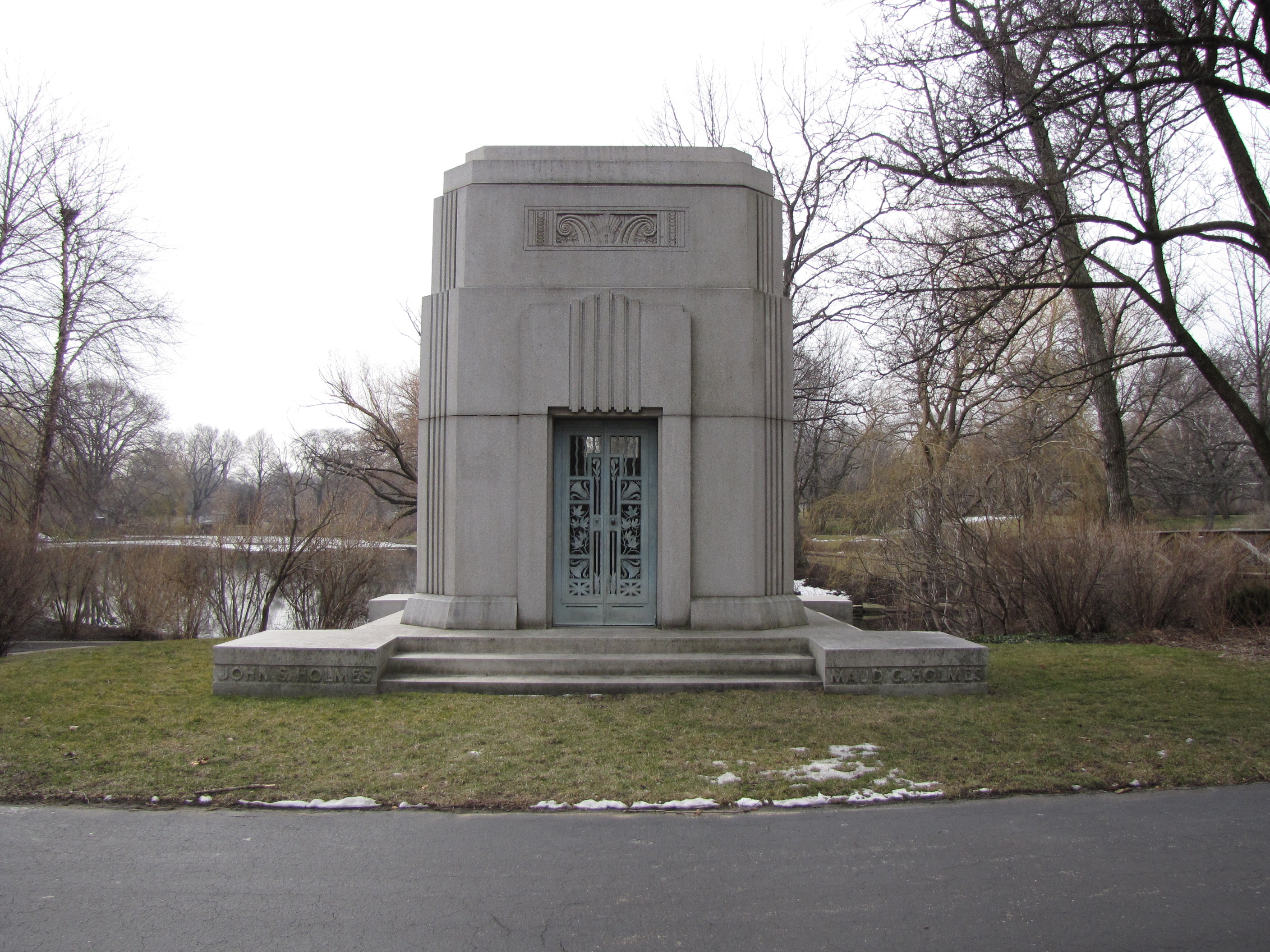
Art Deco John S. Holmes Mausoleum

Graceland Cemetery, Chicago, Illinois

Graceland Cemetery, Chicago, Illinois

Maud G. Kennedy Holmes 1876-1955

John S. Homes 1863-1931

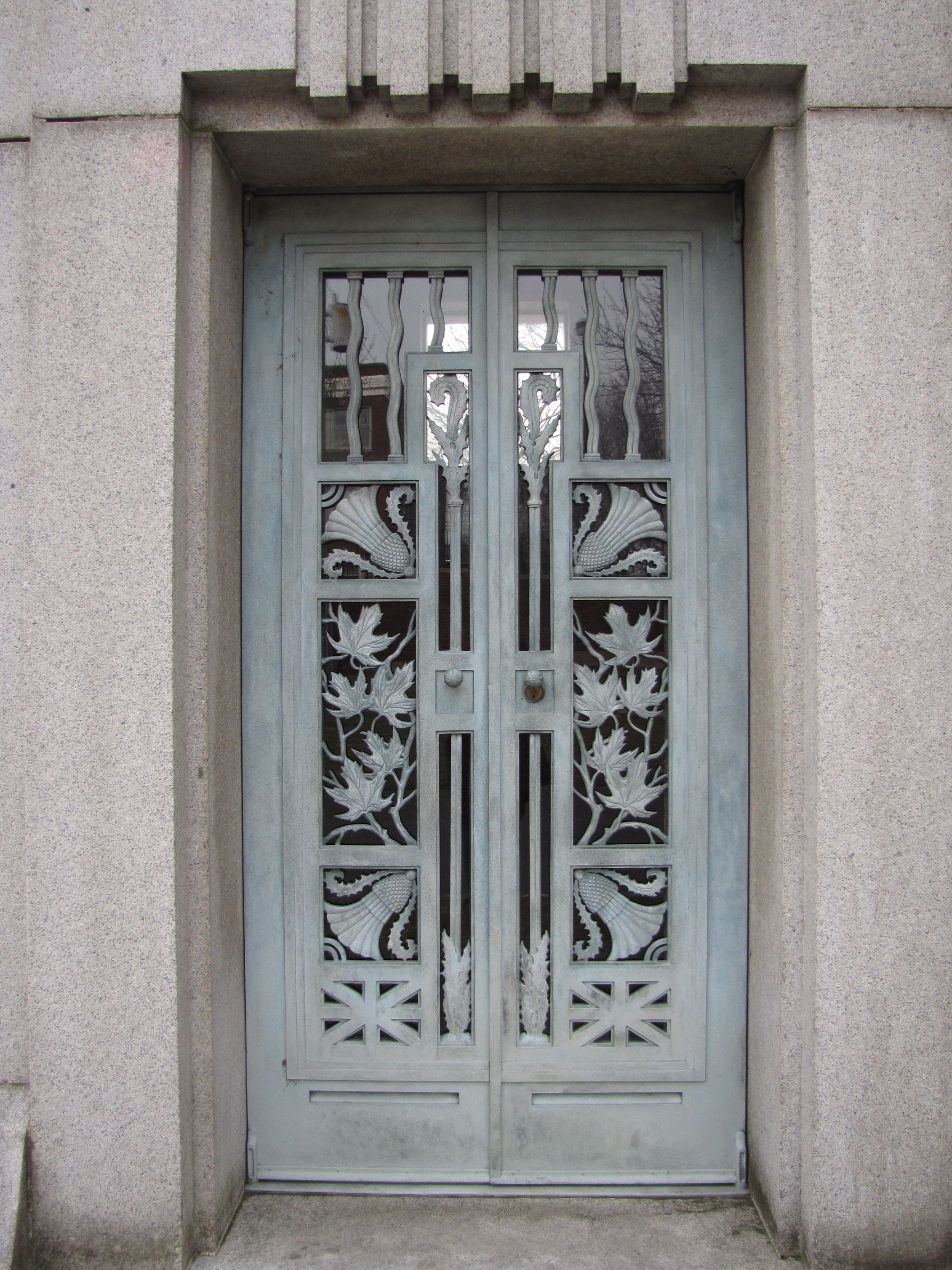
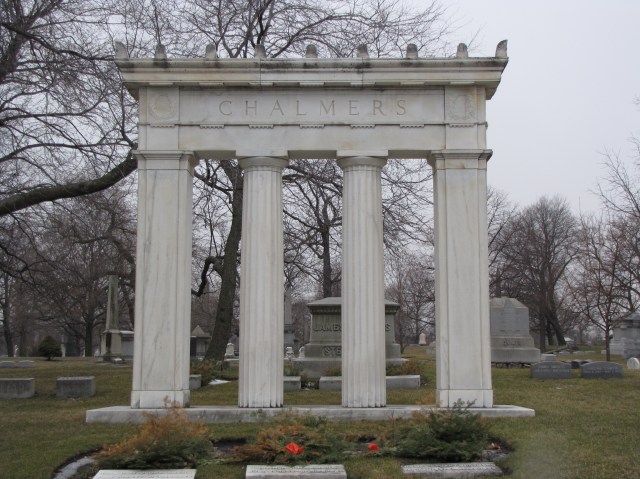
The John Homes Mausoleum, erected in 1934, was designed by the Charles B. Blake Company in the Art Deco style.  The mausoleum was built for Holmes, a successful real estate broker and his wife, Maud.  The horizontal lines and the geometric patterns are characteristic of the style.

Art Deco is a design movement from the 1920s that marked a break from the fluid and flowing Art Nouveau designs of the 1890s. The term ‘Art Deco’ is derived from the Exposition Internationale des Arts Décoratifs et Industriels Modernes, an exhibition of artists that showed their work in Paris in 1925.  Arts Décoratifs was eventually truncated to Art Deco.

IMG_9158

Posted in Mausoleums | Leave a comment

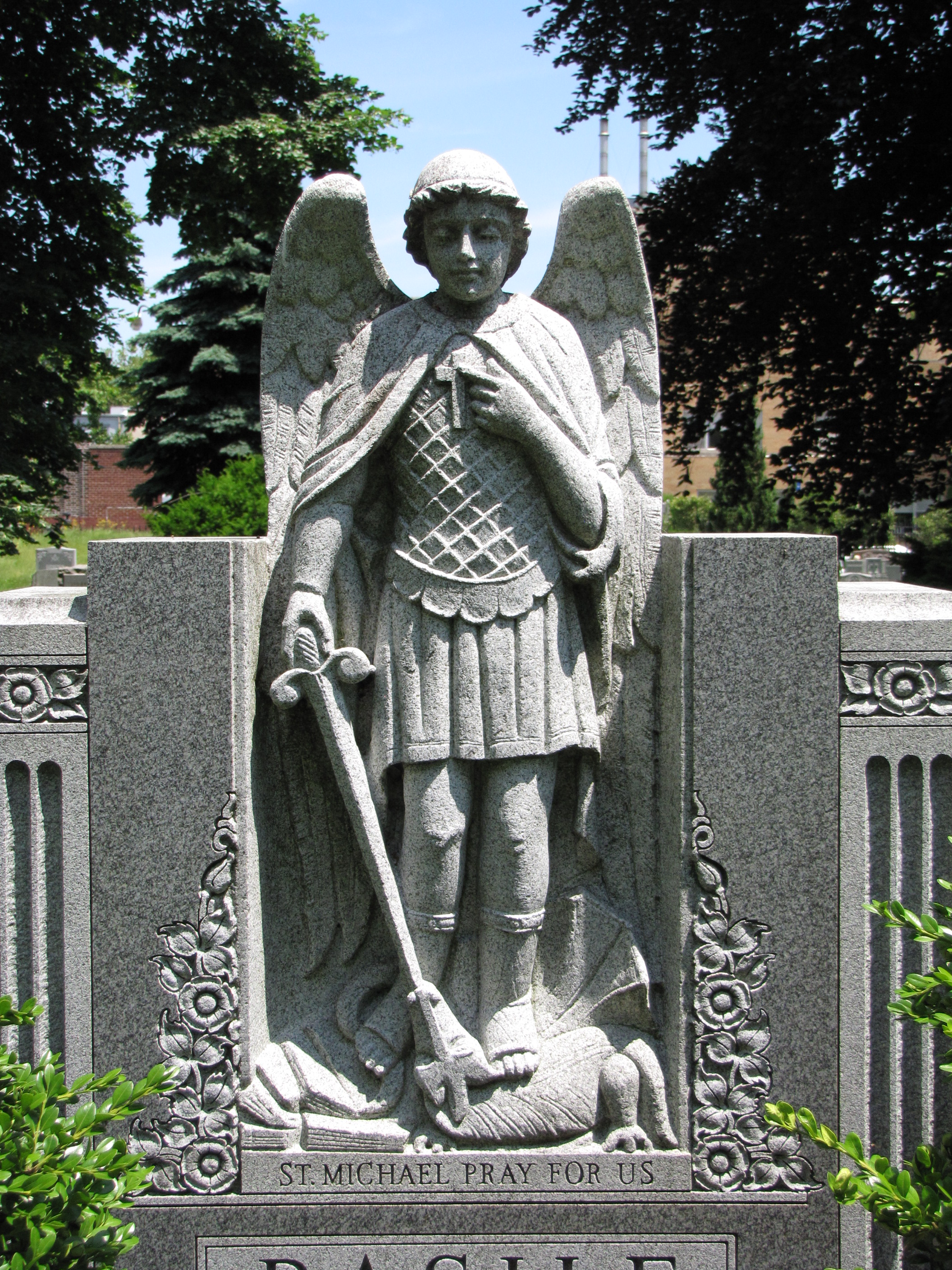
Archangel Michael

Green-Wood Cemetery, Brooklyn, New York

Green-Wood Cemetery, Brooklyn, New York

This gray granite monument in the Green-Wood Cemetery at Brooklyn, New York, features an angel wearing armor and carrying a sword, clues enough to indicate which angel is represented here.  Only the Archangel Michael, one of three angels mentioned by name in the Bible, is clothed in armor.  The sword He carries represents a cross but also a weapon in his war against the devil’s warriors.  Archangel Michael is a Christian soldier fighting Satan’s hordes.   Archangel Michael is often represented standing on a worm, or as is the case in the monument, a dragon.  The Archangel Michael is also considered the guardian of souls.  In the East, however, Michael is the guardian of the sick.

IMG_4025

Posted in Angels | Leave a comment

Green-Wood Cemetery

IMG_3660

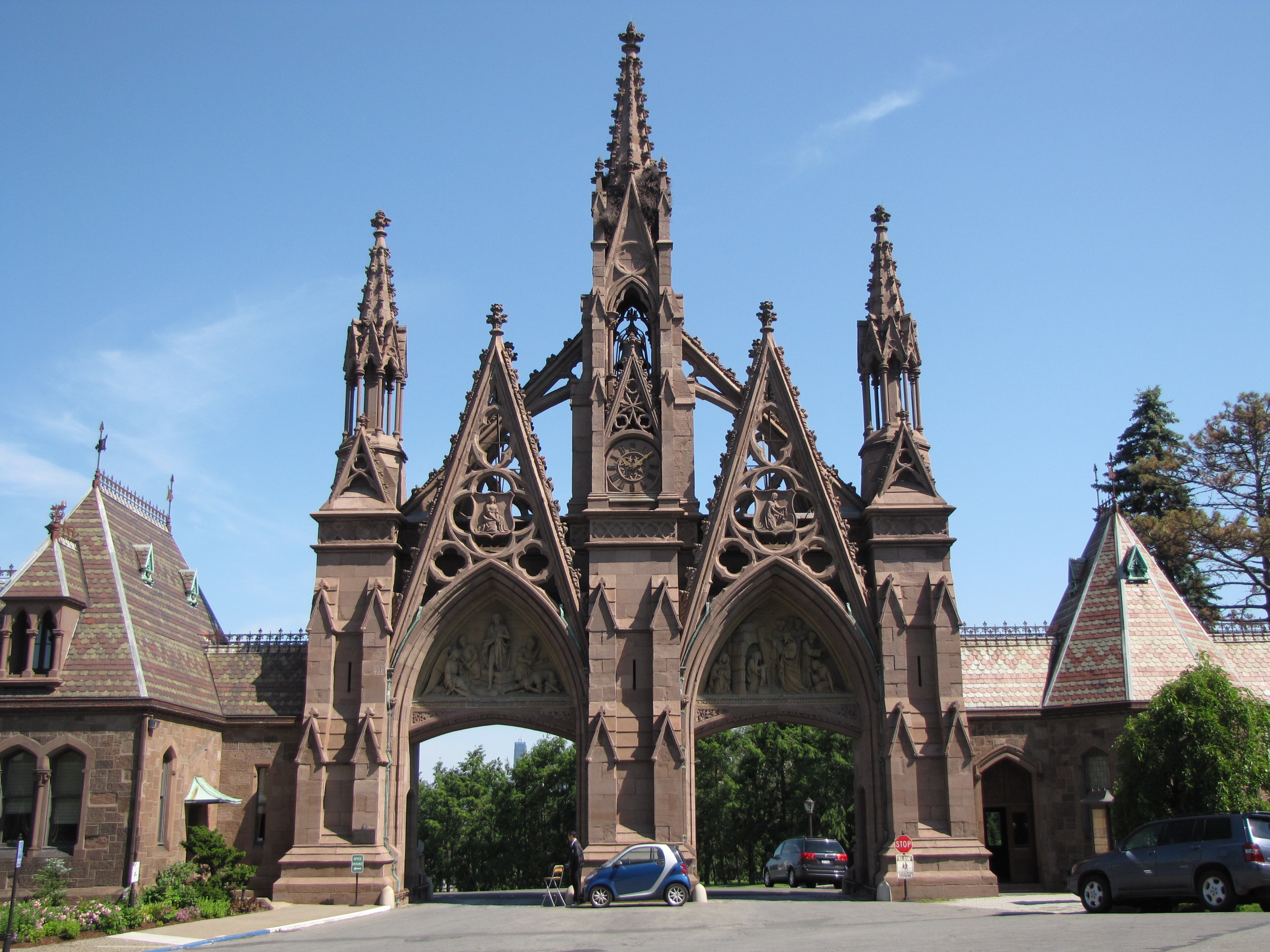
The Green-Wood Cemetery, one the truly great cemeteries in the United States, was founded in 1838, inspired by Mount Auburn Cemetery at Cambridge, Massachusetts, the first cemetery in the United States designed in the rural cemetery style as a park-like setting with broad avenues and paths. Green-Wood Cemetery is nearly 500 acres and has over 600,000 burials within its gates.

The soaring Belleville brownstone gates were designed by Richard Upjohn and constructed in 1861.  The gates are designed in the Gothic Revival style, characterized by pointed arches, steep roofs, and decorative elements such as gargoyles, pinnacles, and tracery.

Raising of Lazarus by

Raising of Lazarus by John M. Moffitt

John M. Moffitt sculpted New Testament scenes that include the Raising of Lazarus, the Biblical story that tells of Jesus raising Lazarus after he had been buried for four days (John 11:1-4).

Posted in Uncategorized | 2 Comments

The Best Woman Ever

Green-Wood Cemetery, Brooklyn, New York

Green-Wood Cemetery, Brooklyn, New York

CLARA RUPPERTZ

WIFE OF FREDERICK A. KOCH

BORN OCT. 31, 1861

DIED JAN. 11, 1918

FREDERICK A. KOCH

BORN DEC. 21, 1845

DIED APRIL 26, 1929

DO UNTO OTHERS AS YOU WOULD

THEY DO UNTO YOU

This monument is dedicated to a husband and wife, Clara and Frederick Koch.  The epitaph reminds viewers of the golden rule to, “do unto others as you would they unto you.”  Though, the neo-classical Greek monument is more of a tribute to Clara in several ways.  Clara’s name comes first.  Then there is the statue of the Victorian woman standing next to the monument that most likely symbolizes Clara.  Lastly, the woman is holding a bronze placard with a portrait of a woman, again most likely Clara, that says, “THE BEST WOMAN THAT EVER LIVED”

IMG_3985

Posted in Uncategorized | 1 Comment

From one artist to another

Green-Wood Cemetery, Brooklyn, New York

Green-Wood Cemetery, Brooklyn, New York

WILLIAM

HOLBROOK

BEARD

1824 – 1900

AMERICAN ARTIST

L’OURS (THE BEARS) SCULPTURE BY DAN OSTERMILLER, Sc.

GIFT OF THE ARTIST 2002

William Holbrook Beard (1825 – 1900) was born in Painesville, Ohio. He was a popular 19th Century American wildlife painter who specialized in characterizing animals as though they were people.  His comical paintings pictured animals as humans dressed in clothing with human expressions.

3955_o_william_holbrook_beard[1]

Beard’s monument in the Green-Wood Cemetery at Brooklyn, New York, is reminiscent of the playful treatment that Beard gave his animals in the paintings that made him famous.  The round and pudgy bear that marks Beard’s grave was sculpted by the great Wyoming-born sculptor, Dan Ostermiller (born in 1956), as a tribute to Beard as an ode to one wildlife artist from another.

IMG_4541

Posted in Famous graves | 3 Comments

Henry Carter aka Frank Leslie

Frank Leslie (March 29, 1821 – January 10, 1880)

Frank Leslie

Frank Leslie

Henry Carter was born a glove maker’s son in Ipswich, England.  His father, Joseph, expected him to learn the family business and apprenticed him to the boy’s uncle.  Young Henry found the glove making business boring and laborious.  In every spare moment he had, Henry found himself sketching to escape the dreary business of his family.  Completely discouraged to pursue his artistic talents, young Henry began surreptitiously contributing illustrations to the Illustrated London News.  To hide his identity from his family, Henry signed his drawings Frank Leslie.  As it turned out, Frank Leslie, as he became to be known, was so talented that he left glove making and was made superintendent of engraving at the paper where he continued to toil as Frank Leslie.

IMG_4778

In 1848, Leslie crossed the Atlantic and settled in Boston.  By 1852, he was working full time as an engraver, where he innovated several processes to speed up illustrations to be ready for print.  By 1853, Leslie was producing engravings for the great showman P. T. Barnum, who owned an ill-fated newspaper.  Leslie eventually went into business producing his own newspaper, Frank Leslie’s Illustrated Newspaper.  In 1857, Henry Carter legally changed his name to Frank Leslie matching the masthead on his illustrated newspaper.

IMG_4780

Leslie was a serial entrepreneur founding several publications: The New York Journal, Frank Leslie’s Ladies’ Gazette of Fashion and Fancy Needlework, The Boy’s and Girl’s Weekly, The Budget of Fun and his flagship, Frank Leslie’s Illustrated Newspaper, which outlived him.  Frank Leslie died in 1880; though, the newspaper survived until 1922.

Leslie was a talented publisher and artist.  His engravings are still highly regarded for their quality and their historical value.  His monument displays an artist palette, a nod to his skill and passion.

Posted in Famous graves | Leave a comment

Art Nouveau Memorial to Henry Villard

Sleepy Hollow Cemetery, Sleepy Hollow, New York

Sleepy Hollow Cemetery, Sleepy Hollow, New York

HENRY VILLARD

BORN

HEINRICH HILGARD

AT SPEIER

RHENISH BAVARIA

APRIL 10TH 1835

DIED AT

THORWOOD DOBBS FERRY

ON HUDSON

NOVEMBER 12TH 1900

IN VIEW OF THIS SPOT

JOURNALIST

CIVIL WAR CORRESPONDENT

SOMETIME SECRETARY

OF THE

AMERICAN SOCIAL SCIENCE ASSOCIATION

EARLY PROMOTER OF CIVIL SERVICE REFORM

COMPLETOR OF THE

NORTHERN PACIFIC RAILROAD

FINANCIER

GENEROUS FRIEND

TO LEARNING SCIENCE AND THE ARTS

TO SUFFERING HUMANITY

HIS BOUNTY WAS BOUNDLESS

AS THE SEA

HIS LOVE AS DEEP

The Henry Villard Monument in the Sleepy Hollow Cemetery at Sleepy Hollow, New York, is an Art Nouveau masterpiece.

The bs-relief bronze of Henry Villard found on the back of his monument

The bs-relief bronze portrait of Henry Villard found on the back of his monument

The Art Nouveau movement was a bridge between Neoclassicism and Modernism and reached its popularity from 1890 to 1905. Luminary artists such as Alphonse Mucha, Gustav Klimt, and Henri de Toulouse-Lautrec; glass designers Rene Lalique and Louis Comfort Tiffany, and Spanish architect Antoni Gaudi among others used long fluid lines inspired from florals and plants in their work.

IMG_7220

Here, Vienna-born American artist Karl Bitter, (1867-1915) sculpted fluid lines of the base of two trees that culminate in rounded tops flanking the statue of a young man depicted holding a sledge hammer, resting against an anvil as he gazes upwards.

Karl Bitter

Karl Bitter

Posted in Uncategorized | 5 Comments

The Veiled Mourning Figure

Mt. Olivet Cemetery, Nashville, Tennessee

Mt. Olivet Cemetery, Nashville, Tennessee

ALEX G. TURNER

BORN

OCT. 8, 1813

DIED

APRIL 27, 1889

Many Victorian cemetery monuments are imbued with a multitude of symbolism. In David Robinson’s book, Saving Graces, mourning figures from some of the most beautiful and famous cemeteries in Europe show sculpted beautiful, young, and voluptuous women often wearing revealing clothing mourning the dead.

Robinson identified four categories of ”Saving Graces”–first, women completely overcome by grief, often portrayed as having collapsed and fallen limp on the grave. Second are the women who are portrayed reaching up to Heaven as if to try to call their recently lost loved one back to Earth. Third, are the women who are immobile and grief stricken, often holding their head in their hands distraught with loss. Lastly, he describes the fourth category of “Saving Graces” as the mourning figure who is “resigned with the loss and accepting of death.”

IMG_5601

In this example from the Mount Olivet Cemetery at Nashville, Tennessee, the monument of Alex G. Turner, displays a young female figure, set upon on column, looking down in reflection and sorrow, her face draped by a veil.  The veil gives the figure an eerie look.  The veil is a motif that represents a separation between Earth and Heaven. The mourning figure leans against a post, her head against the urn set atop the post.  One of her arms interlaced with the urn with a flame billowing out from the top.  In her hand she holds a wreath. This mourning figure seems to be from the last category of mourning figure—sorrowful but resigned.

IMG_5604

The act of placing a wreath is a recurring funerary motif which is designed to remind the viewer that life is short. The urn, of course, is a container used to hold the ashes or the cremated remains of the dead. The urn was an almost ubiquitous 19th Century symbol found in nearly every American cemetery.  The flame, like many Christian symbols, has several different meanings—eternal life, religious fervor, and vigilance. The flame can also represent martyrdom.

Posted in Saving Graces | 1 Comment

Saint-Gaudens’ Angel

Hall Monument, Sleepy Hollow Cemetery

Hall Monument, Sleepy Hollow Cemetery

WRITE:

BLESSED ARE THE DEAD

WHICH DIE IN THE LORD

FROM HENCEFORTH

YEA SAITH THE SPIRIT

FOR THEY REST FROM THEIR

LABORS AND THEIR WORKS

DO FOLLOW THEM

GLORIA IN EXCELSIS DEO

JOHN HUDSON HALL

BORN OCTOBER XV, M-D-C-C-C-XXXVIII DIED MARCH III, M-D-CCC-LXXXXI

IMG_7100

John Hudson Hall (October 15, 1828-March 3, 1891) was a successful paper manufacturer in the mid to late 19th Century.  He was also a patron of the arts.  Augustus Saint-Gaudens, the great Beaux-Arts sculptor, was commissioned to create the Hall Monument in the Sleepy Hollow Cemetery at Sleepy Hollow, New York.  The Hall Monument features an angel dressed in classical clothing holding the Latin phrase “GLORIA IN EXCELSIS DEO” which translates to “Glory to God on the highest.”  The phrase is the name of a hymn known as the Greater Doxology and also the Angelic Hymn.  The angel’s wings sweep upward above her head almost encirculing the Bibical verse, Revelation 14:13, “Write: Blessed are the dead which died in the Lord, from henceforth, Yea, saith the Spirit, for they rest from their Labors and their Works do follow them.”

Below the angel’s feet at the base of the monument is a medallion with a bas-releif portrait of John Hudson Hall with his birth and death dates on either side.

IMG_7098

Augustus Saint-Gaudens (1848-1907) gained fame for his monumental sculptures of Civil War heroes, such as the People’s General, John A. Logan.  He designed the $20 Double Eagle gold piece, thought by many critics to be the most beautiful coin ever minted by the United States Treasury.

1933_double_eagle[1]

Posted in Angels | 1 Comment

De Weldon’s Pieta

IMG_3198

The Edith Allen Clark (1883-1965) polished black granite monument at the Metairie Cemetery at New Orleans, Louisiana, features a large circular bronze sculpture of the Virgin Mary and the dead body of Jesus Christ, known as a pieta, surrounded by more than a dozen cherubs.

Works of art, usually sculptures, depicting this subject first began to appear in Germany in the 1300s and are referred to as “vesperbild” in German.  Images of Mary and the dead body of Jesus began to appear in Italy in the 1400s. The most famous of these sculptures is Michelangelo’s pieta which he sculpted for St. Peter’s Basilica in the Vatican, carved when he was only 24 years old.  Pieta is Italian for “pity.”  The bronze is reminiscent of the sculptures that were first popularized in Germany depicting the Lamentation.

In the Heilbrunn Timeline of Art History (http://www.metmuseum.org/toah/works-of-art/2001.78 (October 2006)) a Bohemian Pieta on display at the Metropolitan Museum of Art is described in details that as easily could apply to the monument in Metairie Cemetery, “Images of the Virgin with the dead Christ reflect late medieval developments in mysticism that encouraged a direct, emotional involvement in the biblical stories… The sculptor exploits the formal and psychological tensions inherent in the composition…Christ’s broken, emaciated body, naked except for the loincloth, offers a stark contrast to the Virgin’s youthful figure, clad in abundant folds.”

IMG_3199

This particular bronze was sculpted by the famed artist Felix Weihs de Weldon (1907-2003), who created over 1200 sculptures that can be found on all seven continents.  He was, however, best known for the great and dramatic 100-ton bronze statue based on the iconic photograph taken by Joe Rosenthal on February 23, 1945, when six soldiers raised the flag over Iwo Jima.  De Weldon was directed to create a realistic memorial.  Three of those soldiers who lifted the flag modeled for De Weldon.  The other three soldiers had died in various actions after the flag was raised, so he created their images from photograpghs.  The sculpture, officially titled, United States Marine Corps War Memorial, pays tribute to the brave soldiers who raised the flag that day at Iwo Jima.

800px-USMC_War_Memorial_2008-06-23[1]

Posted in Symbolism | Leave a comment