The Mystery Girl of Greenlawn

Greenlawn Cemetery, Franklin, Indiana

Greenlawn Cemetery, Franklin, Indiana

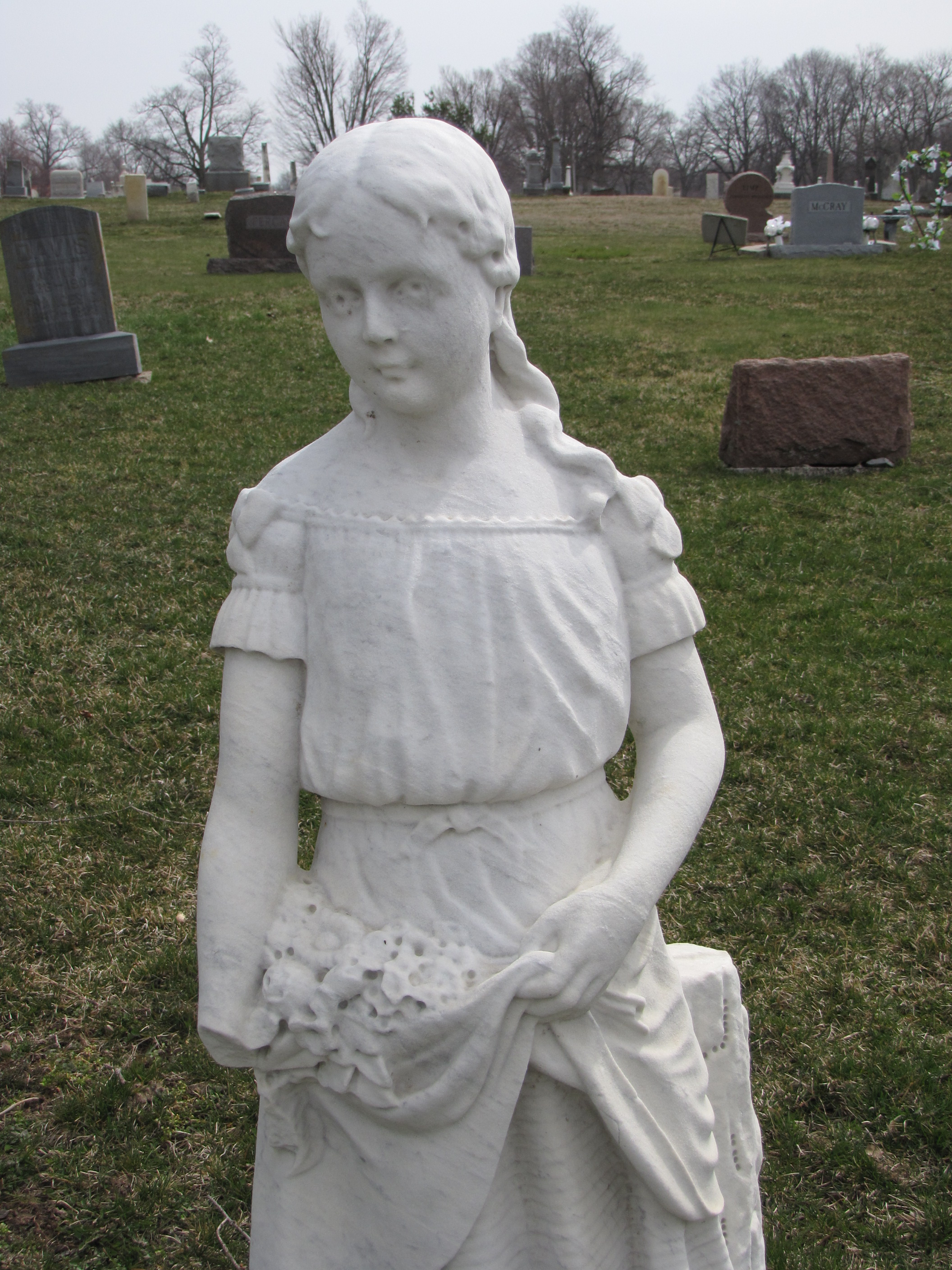
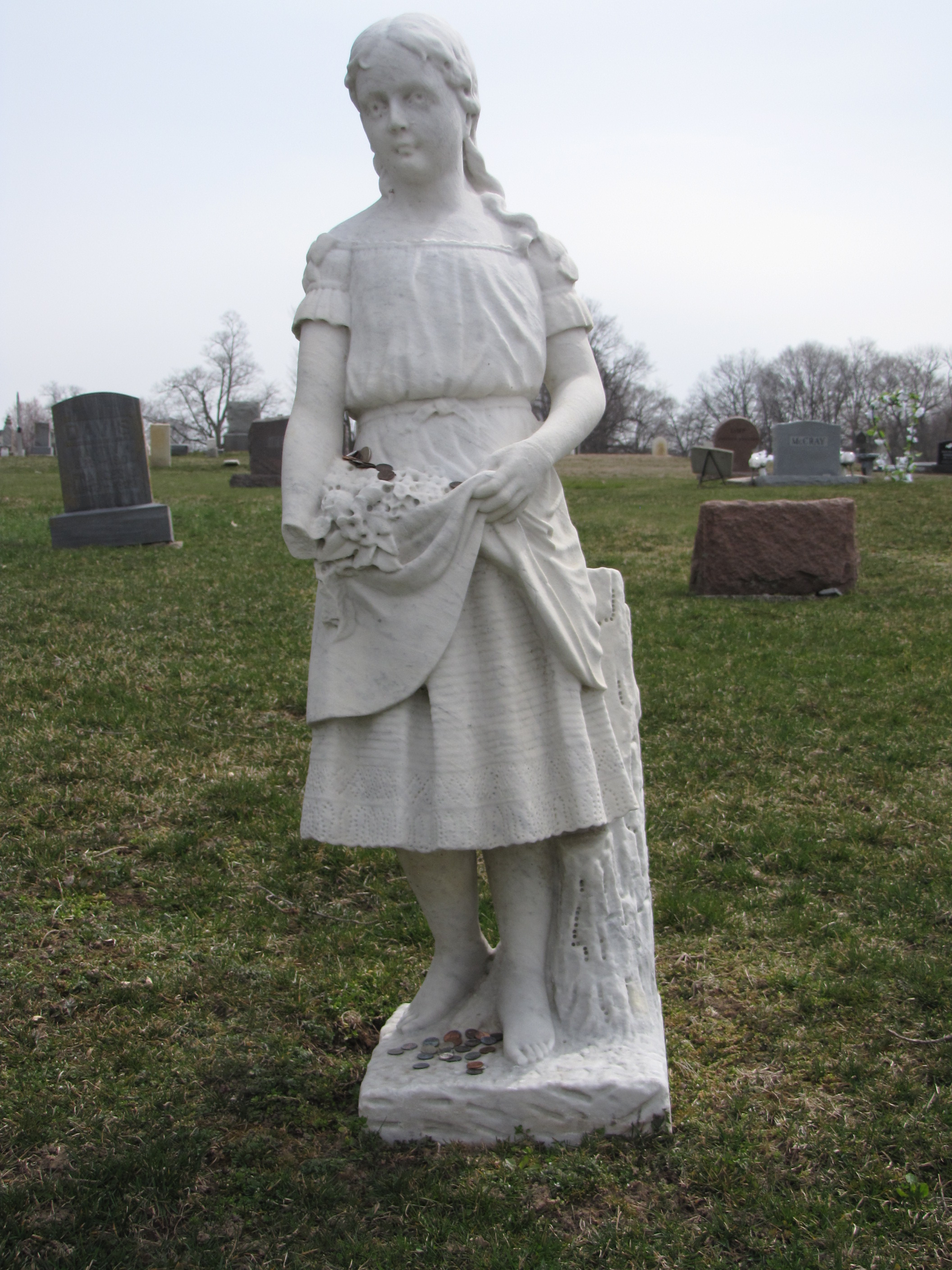
A white-marble memorial sculpture, sometimes referred to as the Girl of Greenlawn, in the Greenlawn Cemetery at Franklin, Indiana, is a mystery.  Brad Manzenberger, Franklin resident and a cemetery preservationist described the history of the sculpture, “She just showed up over seven decades ago.  That is where the story starts and ends because the story is no one really knows the story.  She just appeared.  No one knows who installed it, paid for it, carved it… And there is no one alive that remembers when it wasn’t there. It is believed that the memorial does not mark a grave.”

The sculpture is of the Victorian Era which lasted from about 1832 until Queen Victoria’s death in 1903. The era was an eclectic period in the decorative arts with several styles—Gothic, Tudor, Neoclassical—vying for dominance. The period was marked by ornamentation. This was true in architecture, furniture, and funerary arts. In cemeteries gravestones became taller, ornamented, and sentimental.  Children were often memorialized as life-size sculptures—dressed in their best finery.

In Victorian times, flowers took on significance as a way to send coded messages; this was known as floriography from the Latin combining flora—“goddess of flowers” and graphein—“writing”. Each flower had a meaning that was conveyed to the viewer or receiver of the flower or bouquet of flowers—the lily of the valley represented humility, the coral rose represented desire and passion, the white lily represented purity, and so on.  The sculpted girl is holding an apron full of flowers, unfortunately, weathered, and difficult to discern with certainty. Those clues to symbolic meaning are gone, too.

IMG_9977

Posted in Children's Graves | Leave a comment

Darling Maggie

Rest Haven Cemetery, Edinburgh, Indiana

Rest Haven Cemetery, Edinburgh, Indiana

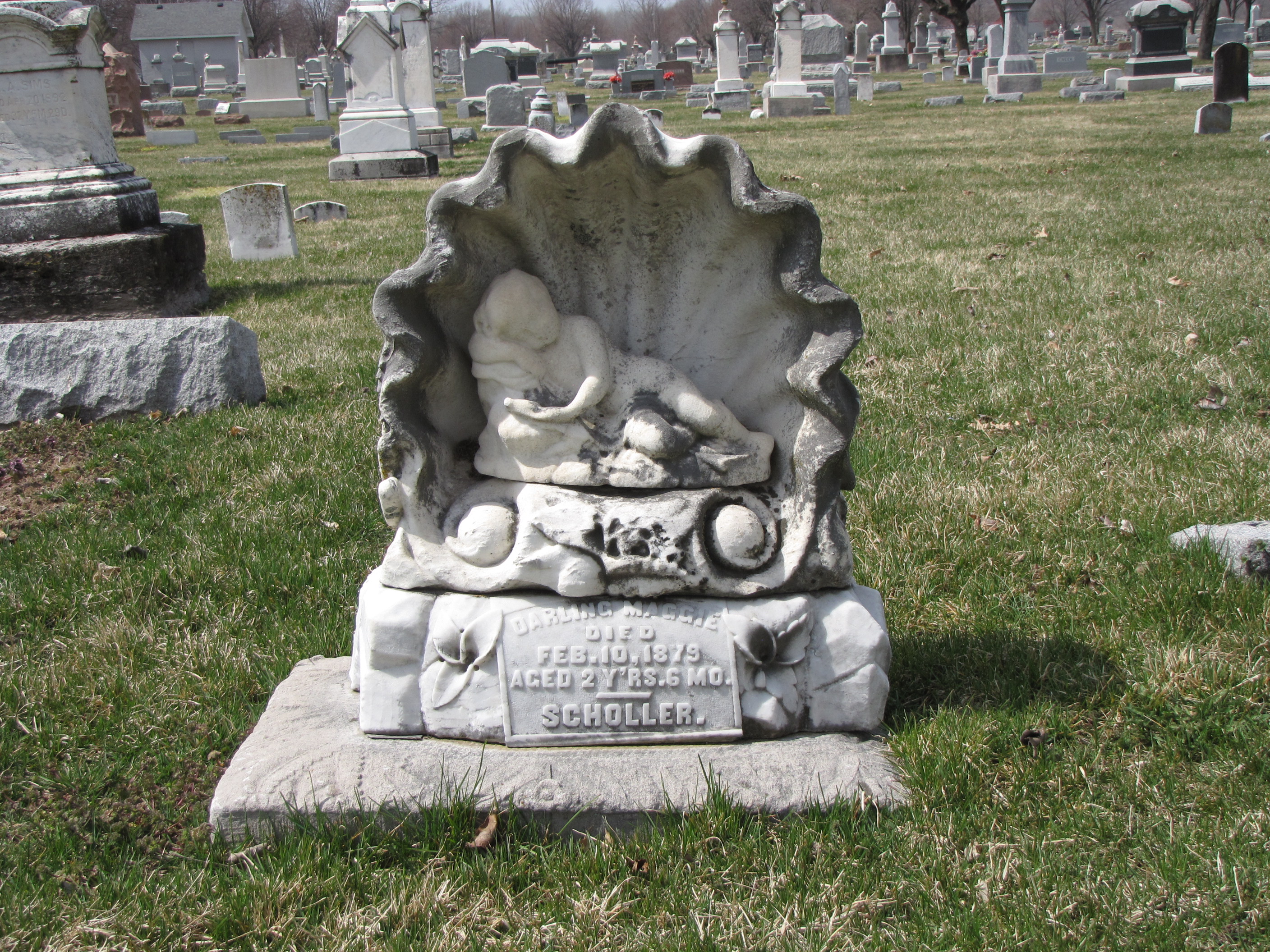
DARLING MAGGIE

DIED

FEB. 10, 1879

AGED 2 Y’RS. 6 MO.

SCHOLLER.

The most poignant and tender gravestones are those for children.  In the 1850s, the mortality rates for children under one year, were estimated at over 200 deaths per thousand, with much higher mortality rates for children under 5.

This monument in the Rest Haven Cemetery at Edinburgh, Indiana, shows a sleeping Maggie Scholler, aged 2 years and 6 months, nestled into a pillow tucked into a sea shell.  This gravestone very well could be a metaphor for the shell that contains a pearl, the shell that opens and reveals a precious jewel, in this case, this tiny baby girl.  The shell is also a symbol of baptism because of its obvious association to water.  In fact, a shell is often used to scoop up and sprinkle water during the baptismal ceremony.

The sea shell is also associated with Saint James, somtimes referred to as James the Greater, was one of the Twelve Apostles.  In some church traditions, James’ mother is reported to be the sister to Jesus’ mother, Mary, making Jesus and James first cousins.  Tradition also has it that the remains of the Saint were taken to the Cathedral of Santiago de Compostela in Galacia, which is in the north of Spain.

Saint James became the patron saint of Spain during the reconquest of the country from the Moors and the Cathedral of Santiago de Compostela became a popular site for Christian pilgrims.  Galacia, noted for delicious seafood, including scallops, drew thousands of Christians pilgrims who often carried a scallop shell back with them as a souvenir of the trip.  Before long, the sea shell became a symbol of Christian pilgrimage.

Posted in Children's Graves | 2 Comments

Glory in the skies

Rest Haven Cemetery, Edinburgh, Indiana

Rest Haven Cemetery, Edinburgh, Indiana

JOHN LEGATE,

DIED

MAY 4, 1857;

AGED

26 Yrs. 11 Mo. &

4Ds.

A little time on earth he spent,

Till God for him his angel sent;

And then on time he closed his eyes

To wake to glory in the skies.

Posted in Epitaphs | Leave a comment

Allan Pinkerton

Graceland Cemetery, Chicago, Illinois

Graceland Cemetery, Chicago, Illinois

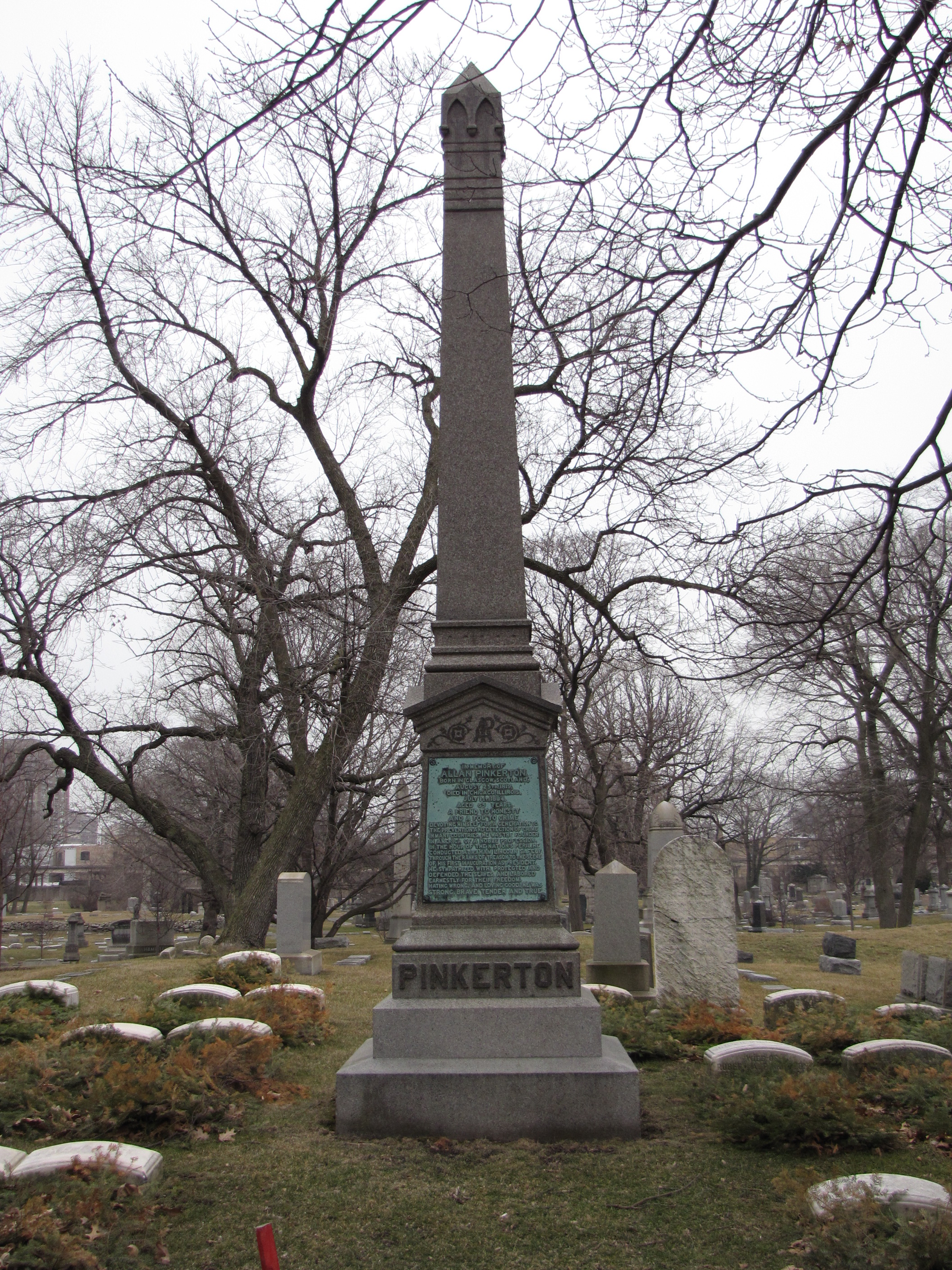
Not far from the Chalmers’ Monument in the Graceland Cemetery at Chicago, Illinois, is a plain obelisk with four bronze plaques, one on each side of the marker, that marks the grave of Allan Pinkerton, his wife Joan, and his two sons, Robert and William.  Allan founded the first detective agency in the world and at the same time created a new profession.  His detective agency’s motto “We Never Sleep” was emblazoned underneath an eye that stared straightforward.

His many accomplishments, for the barrel maker turned private dick, are proudly listed on his tombstone except what may have been his literary legacy—detective story writer.  In his later years, Pinkerton wrote over a dozen books and more than 30 short stories—a ways with the detective as the hero in pulp fiction stories like, “The Hard Life of the Detective” and “A Bit of Detective Office Romance.”

IN MEMORY OF

ALLAN PINKERTON.

BORN IN GLASGOW, SCOTLAND,

AUGUST 25TH, 1819,

DIED IN CHICAGO, ILLINOIS.

JULY 1ST., 1884,

AGED 65 YEARS.

A FRIEND TO HONESTY

AND A FOE TO CRIME.

DEVOTING HIMSELF FOR A GENERATION TO THE PREVENTION AND DETECTION OF CRIME IN MANY COUNTRIES, HE WAS THE FOUNDER IN AMERICA OF A NOBLE PROFESSION.  IN THE NOUR OF THE NATION’S PERIL, HE CONDUCTED ABRAHAM LINCOLN SAFELY THROUGH THE RANKS OF TREASON TO THE SCENE OF HIS FIRST INAUGUARATION AS PRESIDENT.  HE SYMPATHIZED WITH, PROTECTED AND DEFENDED THE SLAVES, AND LABORED EARNESTLY FOR THEIR FREEDOM.  HATING WRONG, AND LOVING GOOD, HE WAS STRONG, BRAVE, TENDER AND TRUE.

Posted in Famous graves | 4 Comments

The Chalmers Monument


IMG_9442

WILLIAM J. CHALMERS    JULY 10, 1852—DEC. 10, 1938

JOAN P. CHALMERS    JULY 22, 1855—JAN. 25, 1940

THOMAS STUART CHALMERS    SEPT. 21, 1881—MAR. 26, 1923

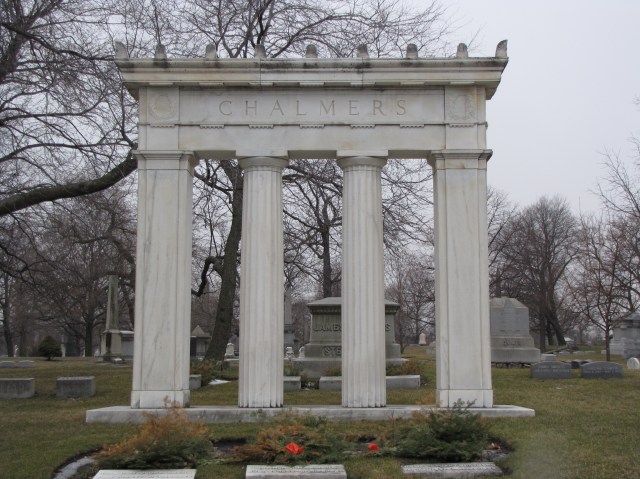
The Chicago-based Graham, Anderson, Probst, & White Architectural Firm, at one time the largest in the United States, took many types of commissions including design work for cemetery monuments.  The Chalmers Monument, in 1924, in the Graceland Cemetery at Chicago, Illinois, is an example of the neo-classical designs that helped make the firm famous.

Many recognize the name Chalmers from the orange tractors that bore the name—Allis-Chalmers.  The Allis-Chalmers tractors came about when Fraser and Chalmers, a manufacturing company that produced mining equipment, merged with Allis Engine Works to produce farm equipment.

The four-column white marble monument is of the Doric order—characterized by the two fluted central columns with no base resting directly on the stylobate, slightly curved and unadorned capital. The architrave (stone panel that traces around the monument just above the column) is truncated and plain, as is the frieze which is generally enhanced with triglyphs and bas-reliefs. The frieze in the Chalmer’s monument is adorned with a wreath on either side. The laurel wreath dates back to Roman times when soldiers wore them as triumphal signs of glory. The laurel was also believed to wash away the soldier’s guilt from injuring or killing any of his opponents. In funerary art the laurel wreath is often seen as a symbol of victory over death.

The monument’s cornice is topped with acanthus stone work called acroterion–a stylized palm leaf motif that can be found on classical Roman and Greek architecture. This motif has its origins in Egyptian art and architecture.

The monument was constructed for William and Joan Chalmers after the death of their son, Thomas.  William was the son of Thomas and Janet Tesler Chalmers, two Scottish-born immigrants to the United States.  Joan was the daughter of the famed private detective Allan Pinkerton and his wife, Joan Carfrae Pinkerton, also Scottish immigrants.

The story, nearly as old as humankind, goes that Joan’s father Allan did not want William and his only daughter, Joan, to get married and vehemently opposed their marriage.  William was described as a dashing and handsome young man and Joan was reported to be a striking brunette, both of them loved music and the arts.  And, as happens in many of these stories—the union between the two young people proceeded in spite of the objections of Joan’s father, October 21, 1878, two years after they had been introduced. The wedding took place at the Third Presbyterian Church with Dr. A. E. Kittredge officiating.

Allan Pinkerton’s prediction that William wouldn’t amount to much was wildly incorrect.  The super sleuth may have been a fine detective but he misjudged the character and drive of William Chalmers, the man who became his son-in-law, who inherited and grew his father’s company, Fraser & Chalmers, was President of the Commercial National Safe Deposit Company, was elected to the Chicago Board of Education, and had a long list of other accomplishments including: Director of World’s Columbian Exposition; President of the Commercial Club of Chicago; Director of the Field Museum of Natural History; Member of the Union League Club, Chicago Athletic Club, Lake Geneva Country Club, Saddle and Cycle Club, and the Engineers Club of New York.

Posted in Famous graves | Leave a comment

Name out of view

Graceland Cemetery, Chicago, Illinois

Graceland Cemetery, Chicago, Illinois

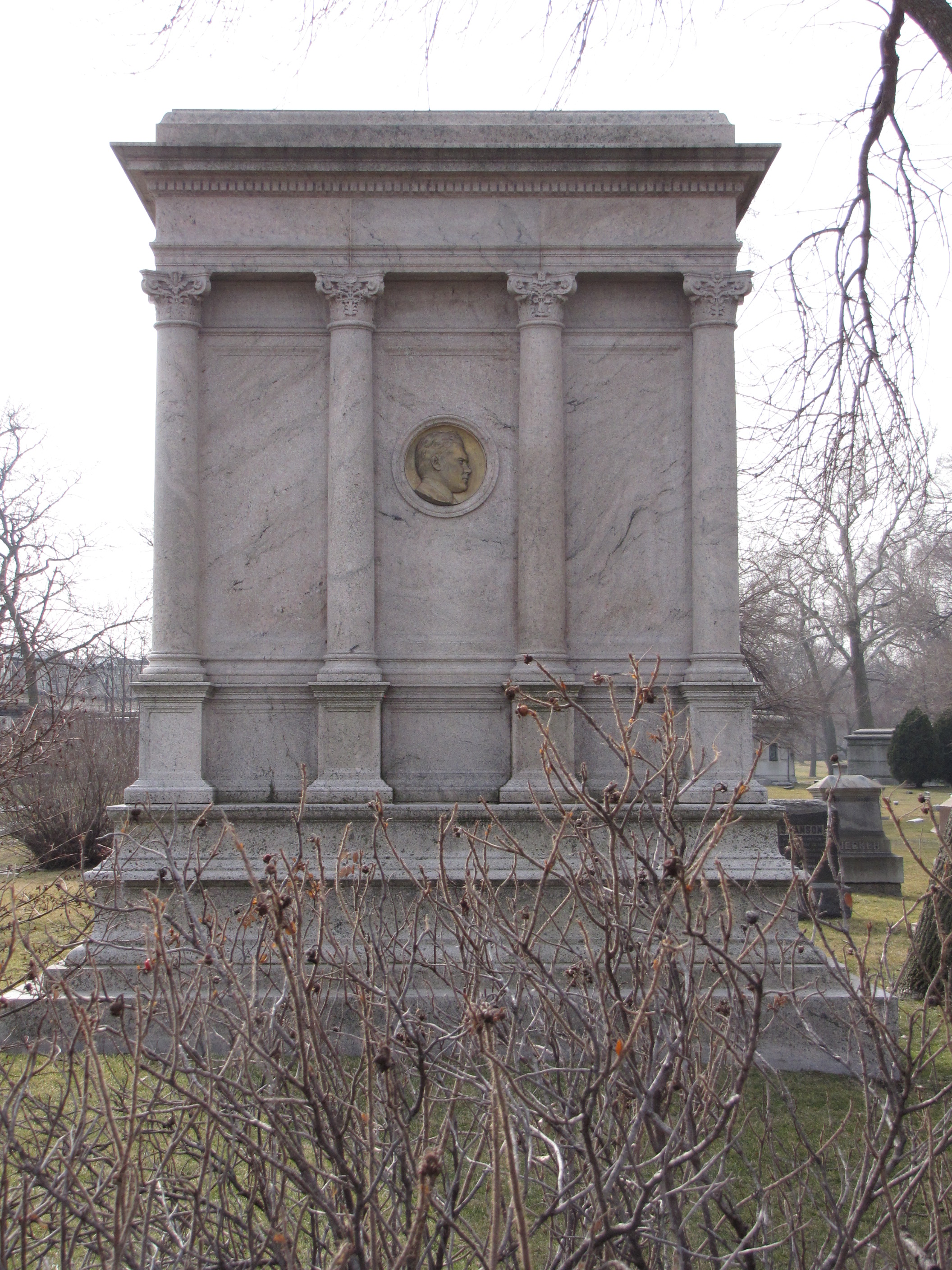
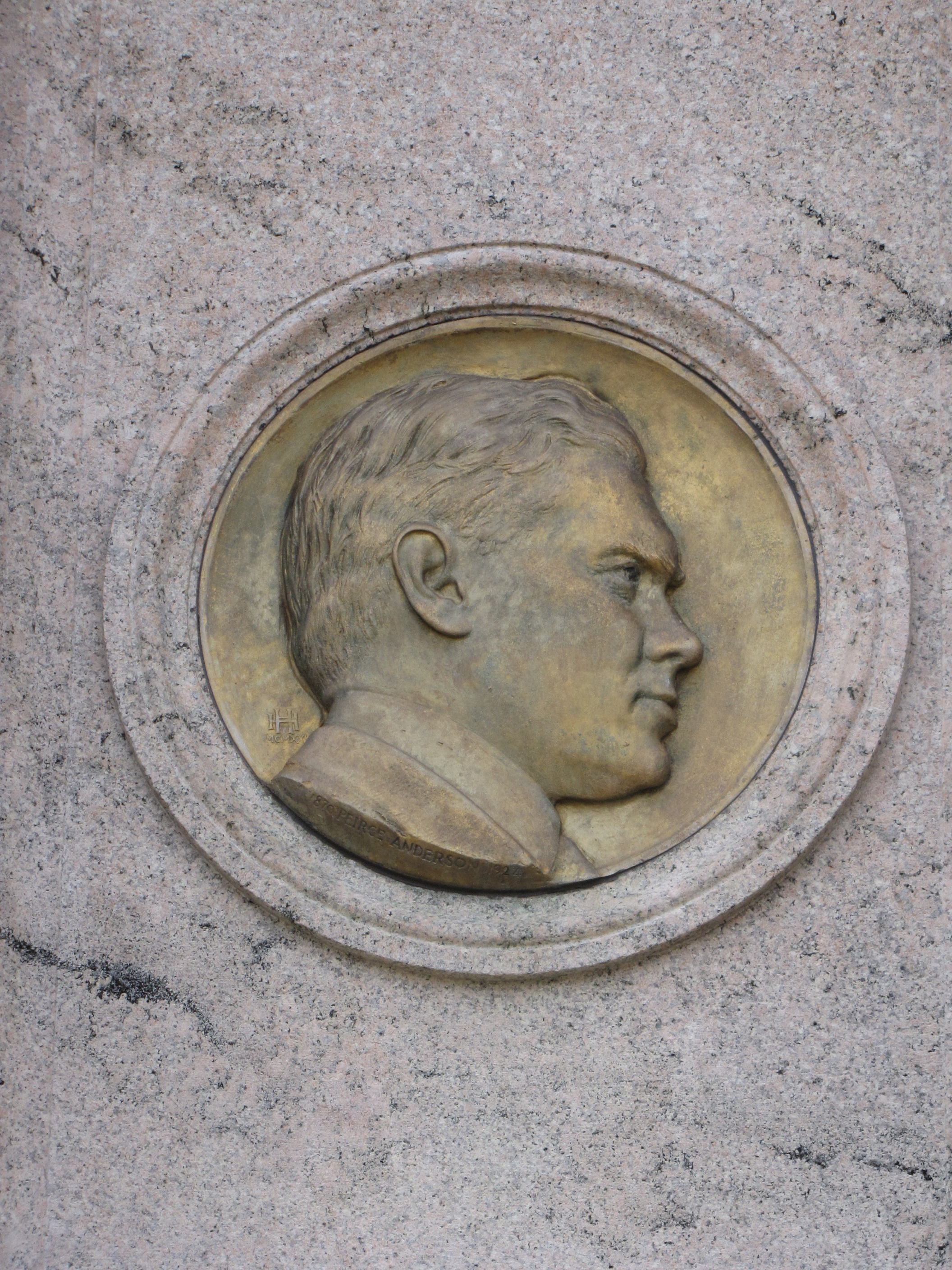
The light rose-colored unpolished granite monument, built to honor William Peirce Anderson, is a bit of an enigma. The large neo-classic monument, with its Corinthian columns very nearly hides who is buried beneath.  The only clue is the bronze medallion in the center of the monument that bears a bas-relief profile of the celebrated Chicago architect.  There is no inscription carved anywhere in the stone.

Anderson was acclaimed for his for his neo-classical designs of some of the most iconic buildings in the city with big shoulders.  Anderson, who dropped William and was known by Peirce, studied at Harvard and the famed Ecole des Beaux Arts in Paris.  Upon his return to the United States, Anderson joined the D.H. Burnham Company in 1900.  His first plumb assignment was the Marshall Field and Company Department Store at State Street and Randolph at Chicago.

IMG_9000

After Daniel Burnham, the principle in D.H. Burnham architectural firm, died in 1912, Anderson joined Graham Burnham and Company as head of design.  He soon made partner at the firm of Graham Anderson, Probst and White which became the largest architectural firm in the United States.  In addition to Marshall Fields, he designed the Union Station and The Field Museum, each considered to be masterpieces.

The neo-classical monument dedicated to honor the famed architect is a fitting monument to Peirce Anderson, who died at age 54, a tribute to his love and ability to design classical buildings that are timeless and have remained beloved buildings in the Chicago cityscape.

If you have very good eyesight you can spot the small letters carved on the underside of the medallion portrait, the inscription reads, “1870 PEIRCE ANDERSON 1924.”

IMG_9054

Posted in Famous graves | Leave a comment

A Somber Mourning Figure

Graceland Cemetery, Chicago, Illinois

Graceland Cemetery, Chicago, Illinois

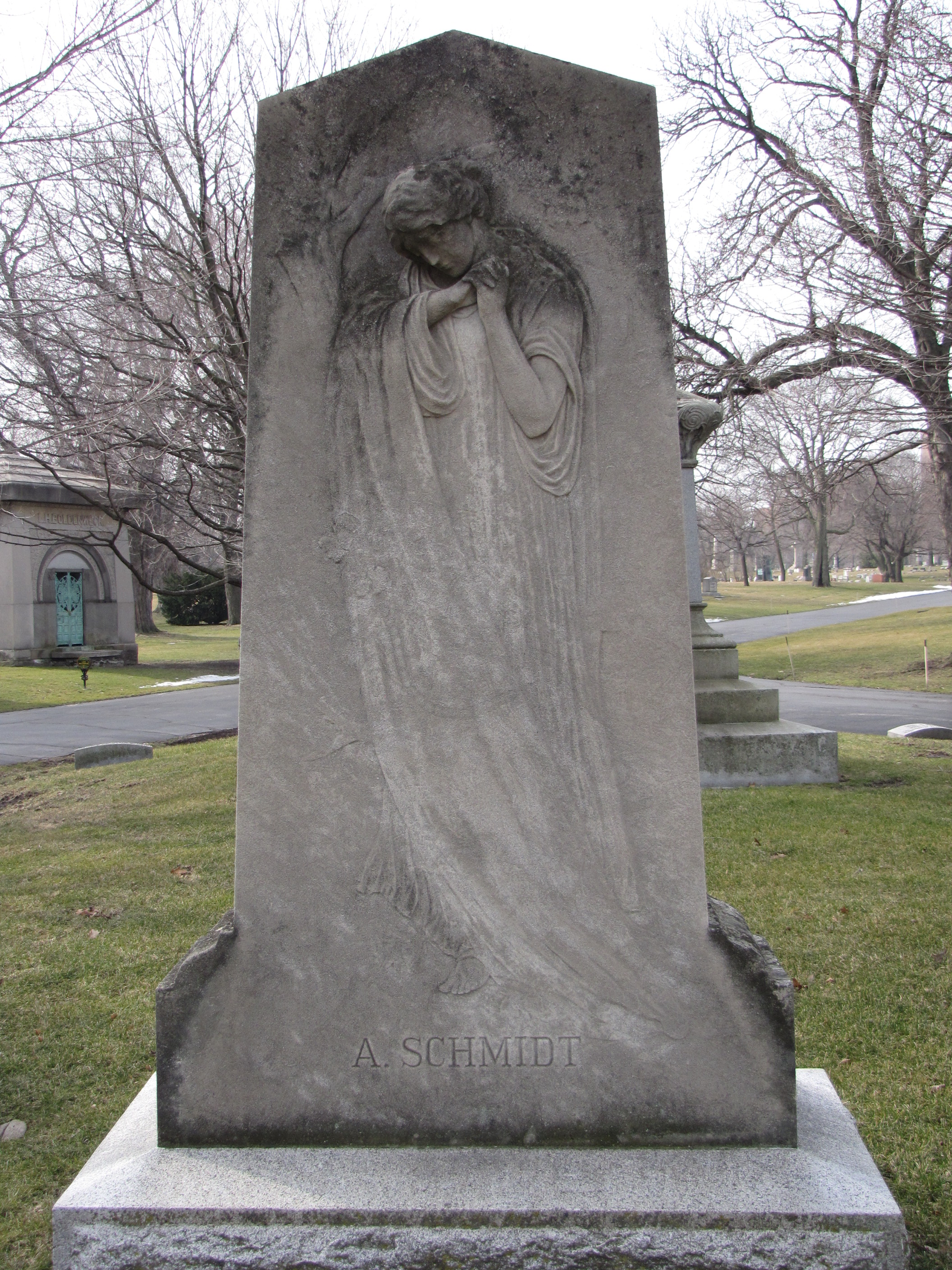
The monument marking the graves of Adolf (1865-1941) and Frieda (1869-1936) Schmidt is a stele (a stone or wooden slab generally taller than it is wide and designed as a funeral commemorative).  The limestone monument in the Graceland Cemetery at Chicago, Illinois, is adorned with a mourning figure that is carved into the limestone.  The mourning figure’s head is bent in sorrow and she is clasping her hands together, a display of contemplation and grief.   The bas-relief is very lightly carved at the base with the features of the figure becoming more three dimentional at the face and shoulders giving the sculpture a ghost-like quality.  The gray skies and the barren winter trees heightened the somber mood of the sculpture.

Posted in Saving Graces | Leave a comment

Art Deco John S. Holmes Mausoleum

Graceland Cemetery, Chicago, Illinois

Graceland Cemetery, Chicago, Illinois

Maud G. Kennedy Holmes 1876-1955

John S. Homes 1863-1931

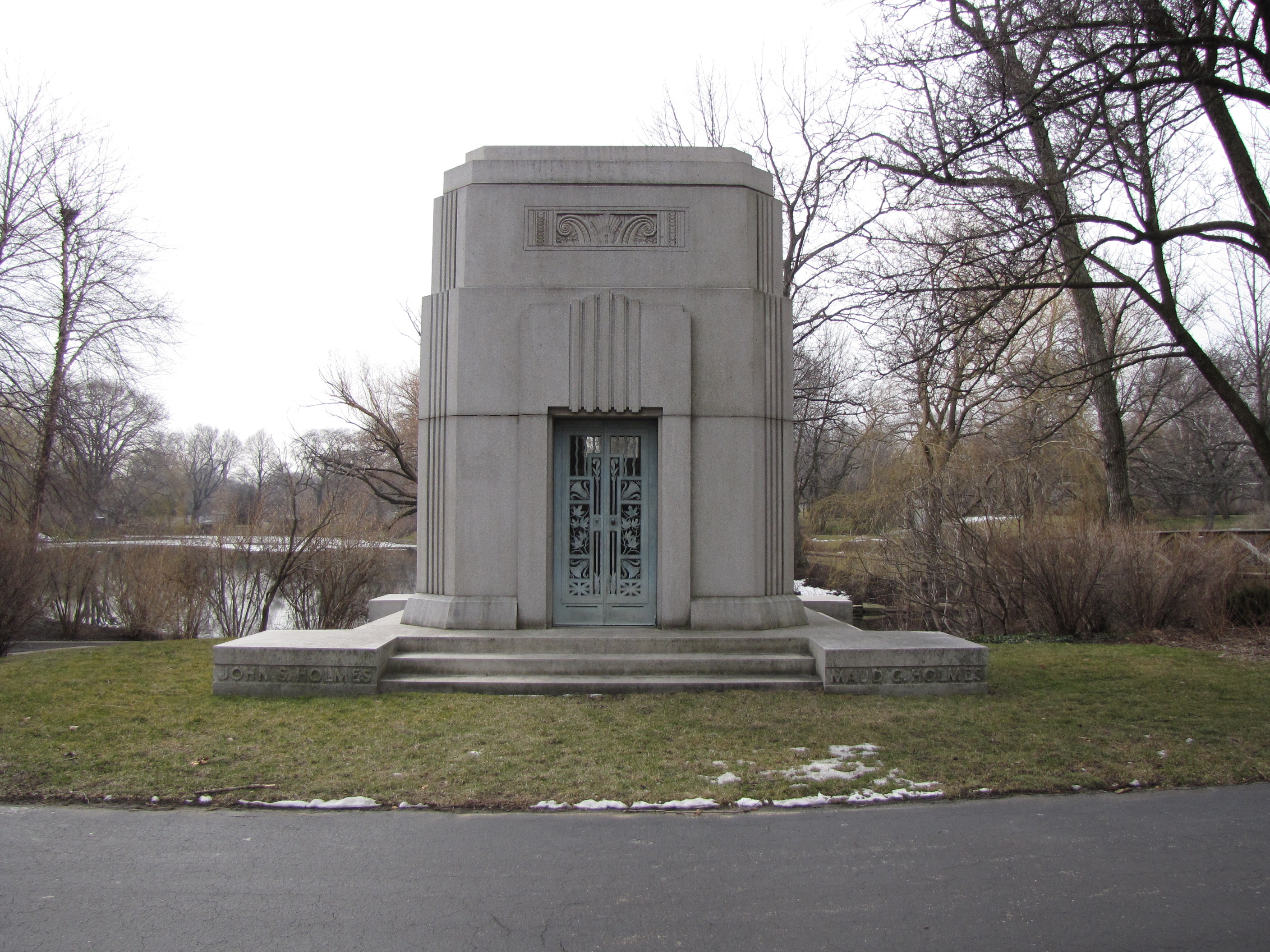
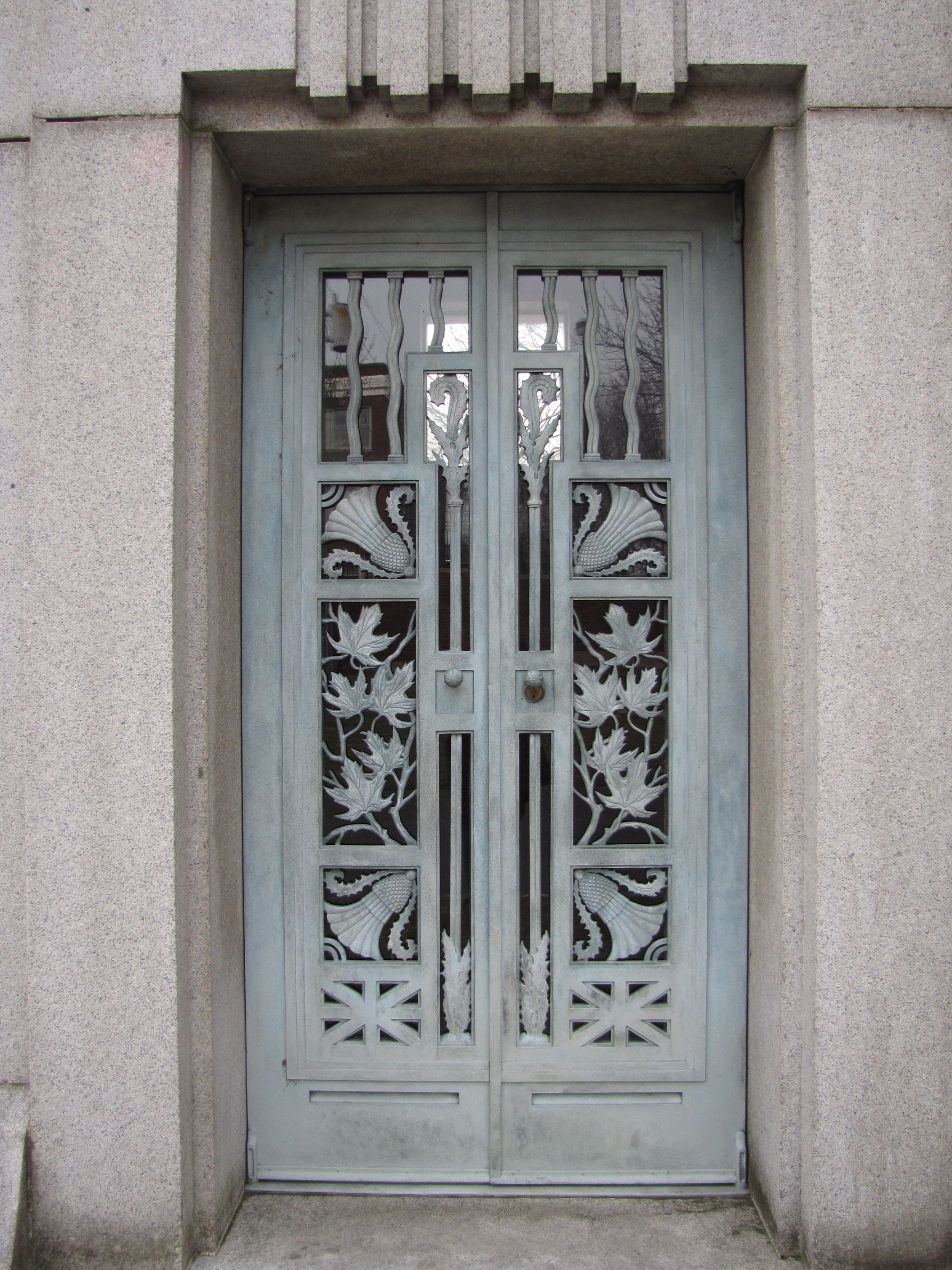
The John Homes Mausoleum, erected in 1934, was designed by the Charles B. Blake Company in the Art Deco style.  The mausoleum was built for Holmes, a successful real estate broker and his wife, Maud.  The horizontal lines and the geometric patterns are characteristic of the style.

Art Deco is a design movement from the 1920s that marked a break from the fluid and flowing Art Nouveau designs of the 1890s. The term ‘Art Deco’ is derived from the Exposition Internationale des Arts Décoratifs et Industriels Modernes, an exhibition of artists that showed their work in Paris in 1925.  Arts Décoratifs was eventually truncated to Art Deco.

IMG_9158

Posted in Mausoleums | Leave a comment

Archangel Michael

Green-Wood Cemetery, Brooklyn, New York

Green-Wood Cemetery, Brooklyn, New York

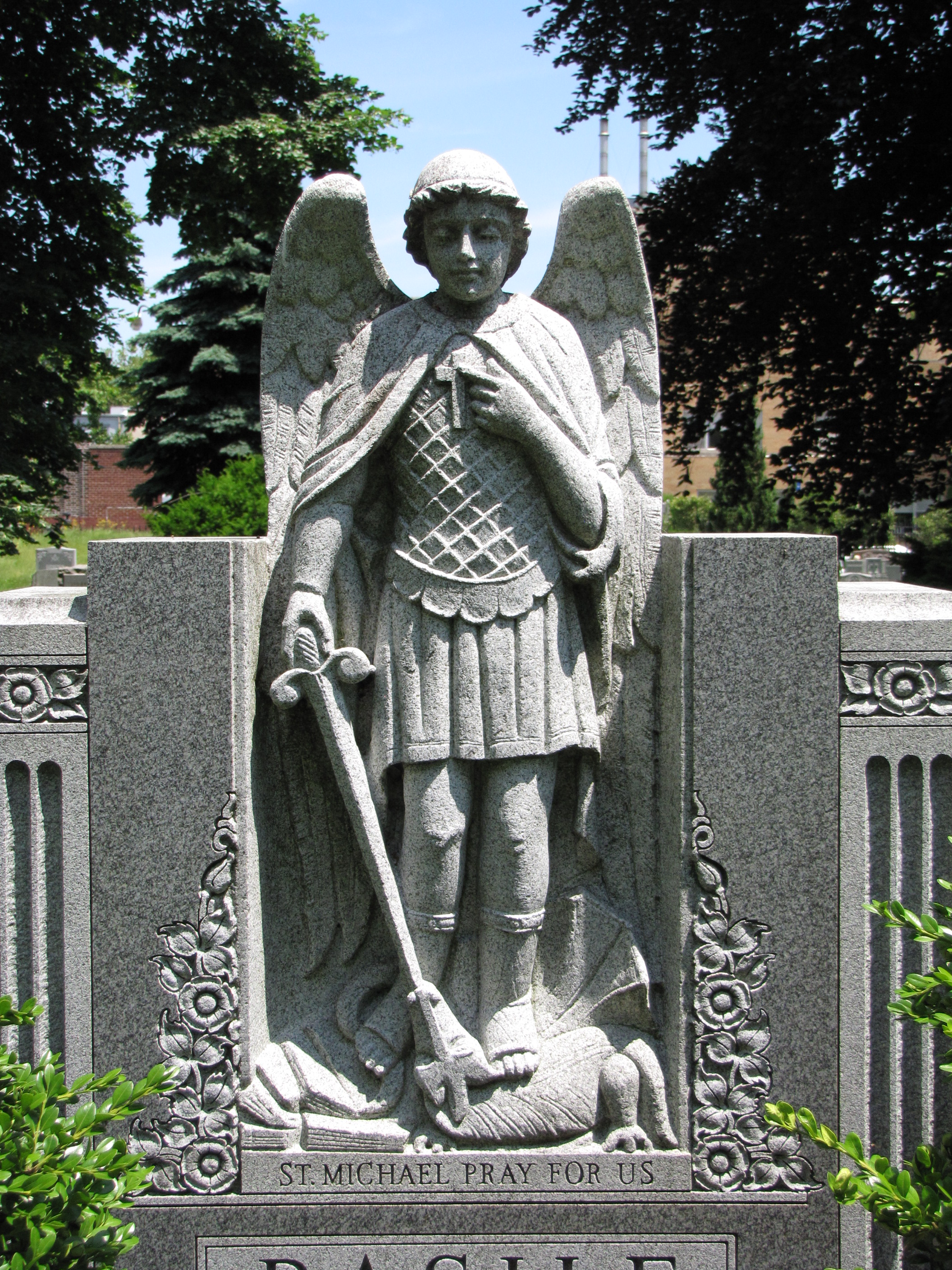
This gray granite monument in the Green-Wood Cemetery at Brooklyn, New York, features an angel wearing armor and carrying a sword, clues enough to indicate which angel is represented here.  Only the Archangel Michael, one of three angels mentioned by name in the Bible, is clothed in armor.  The sword He carries represents a cross but also a weapon in his war against the devil’s warriors.  Archangel Michael is a Christian soldier fighting Satan’s hordes.   Archangel Michael is often represented standing on a worm, or as is the case in the monument, a dragon.  The Archangel Michael is also considered the guardian of souls.  In the East, however, Michael is the guardian of the sick.

IMG_4025

Posted in Angels | Leave a comment

Green-Wood Cemetery

IMG_3660

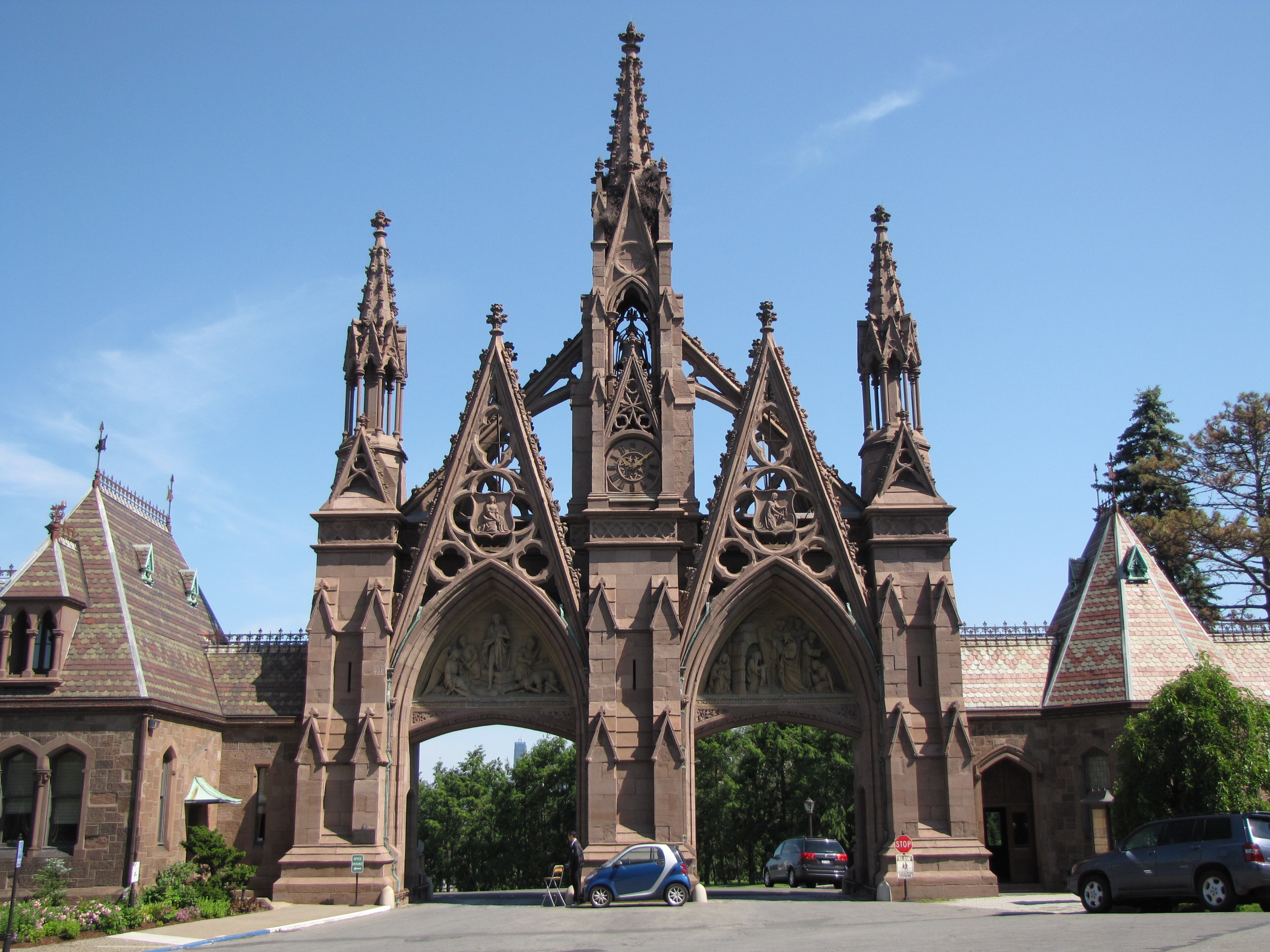
The Green-Wood Cemetery, one the truly great cemeteries in the United States, was founded in 1838, inspired by Mount Auburn Cemetery at Cambridge, Massachusetts, the first cemetery in the United States designed in the rural cemetery style as a park-like setting with broad avenues and paths. Green-Wood Cemetery is nearly 500 acres and has over 600,000 burials within its gates.

The soaring Belleville brownstone gates were designed by Richard Upjohn and constructed in 1861.  The gates are designed in the Gothic Revival style, characterized by pointed arches, steep roofs, and decorative elements such as gargoyles, pinnacles, and tracery.

Raising of Lazarus by

Raising of Lazarus by John M. Moffitt

John M. Moffitt sculpted New Testament scenes that include the Raising of Lazarus, the Biblical story that tells of Jesus raising Lazarus after he had been buried for four days (John 11:1-4).

Posted in Uncategorized | 2 Comments