The Masonic Emblem

IMG_0819

The metal marker from the Trinity Church graveyard at New York marks the grave of a Mason.  It is the metal reproduction of what is perhaps the most recognizable emblem of the Freemasons, the square and two compasses.  In this example the letter “G” appears in the middle of the emblem.  Often the emblem is seen without the letter “G”.

Each component of the symbol represents a different Masonic orthodoxy, though, these are not hard and fast:

The compasses represent the boundaries of wisdom a person should have the strength to circumscribe and stay within.

The square symbolizes virtue in all actions, just as the expression “square deal” means treating people with fairness.

The letter “G” seems to have more than one meaning.  It could possibly mean God, as in the creator of the universe; or Gimel, which is the word for the third letter of many Semitic languages.  The number three is significant to many Masonic rituals and beliefs.  Some also believe the “G” may represent geometry.

Posted in Metal Markers | 2 Comments

Two versions of the lamb

Woodland Cemetery, Des Moines, Iowa

Woodland Cemetery, Des Moines, Iowa

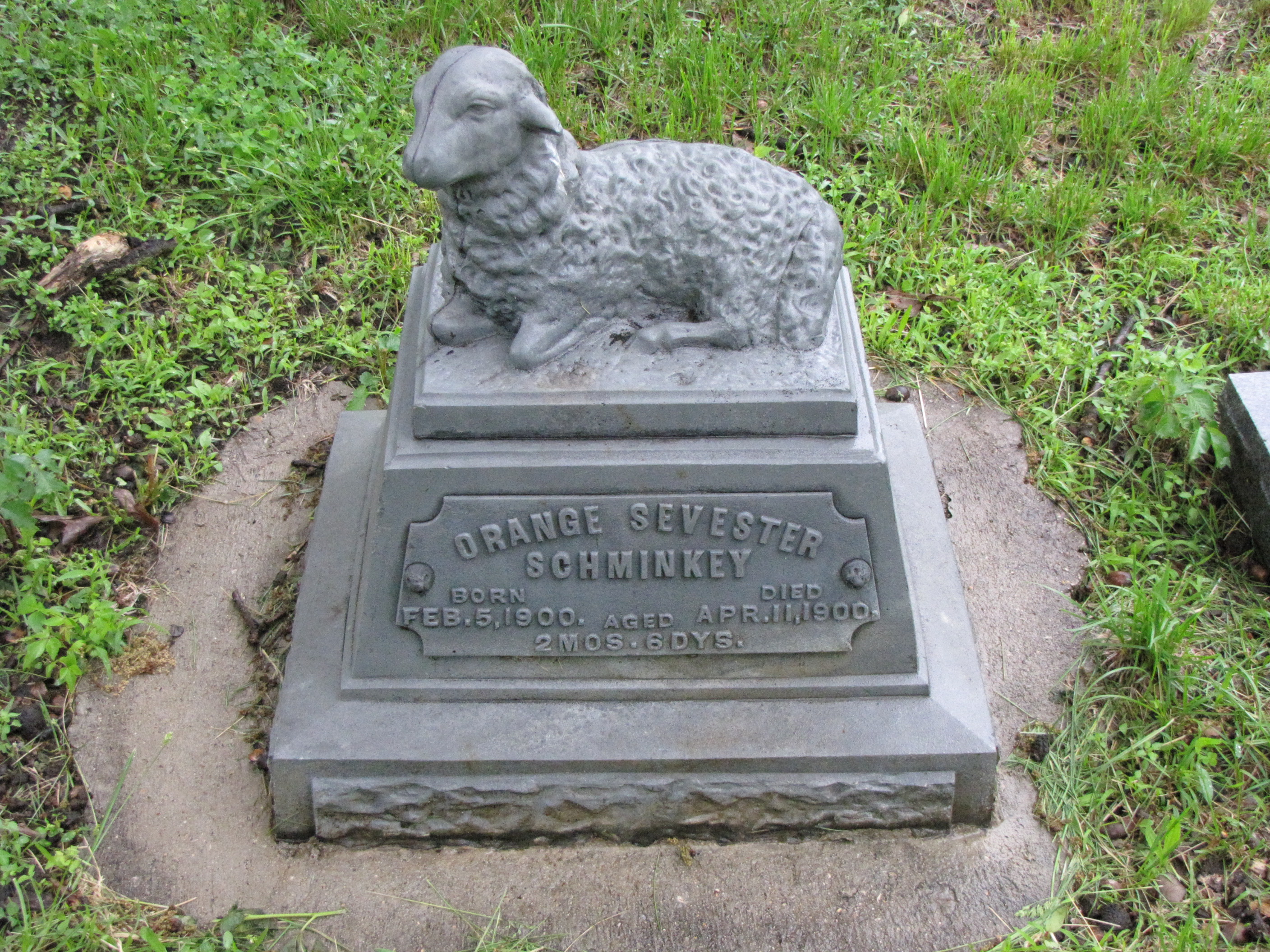
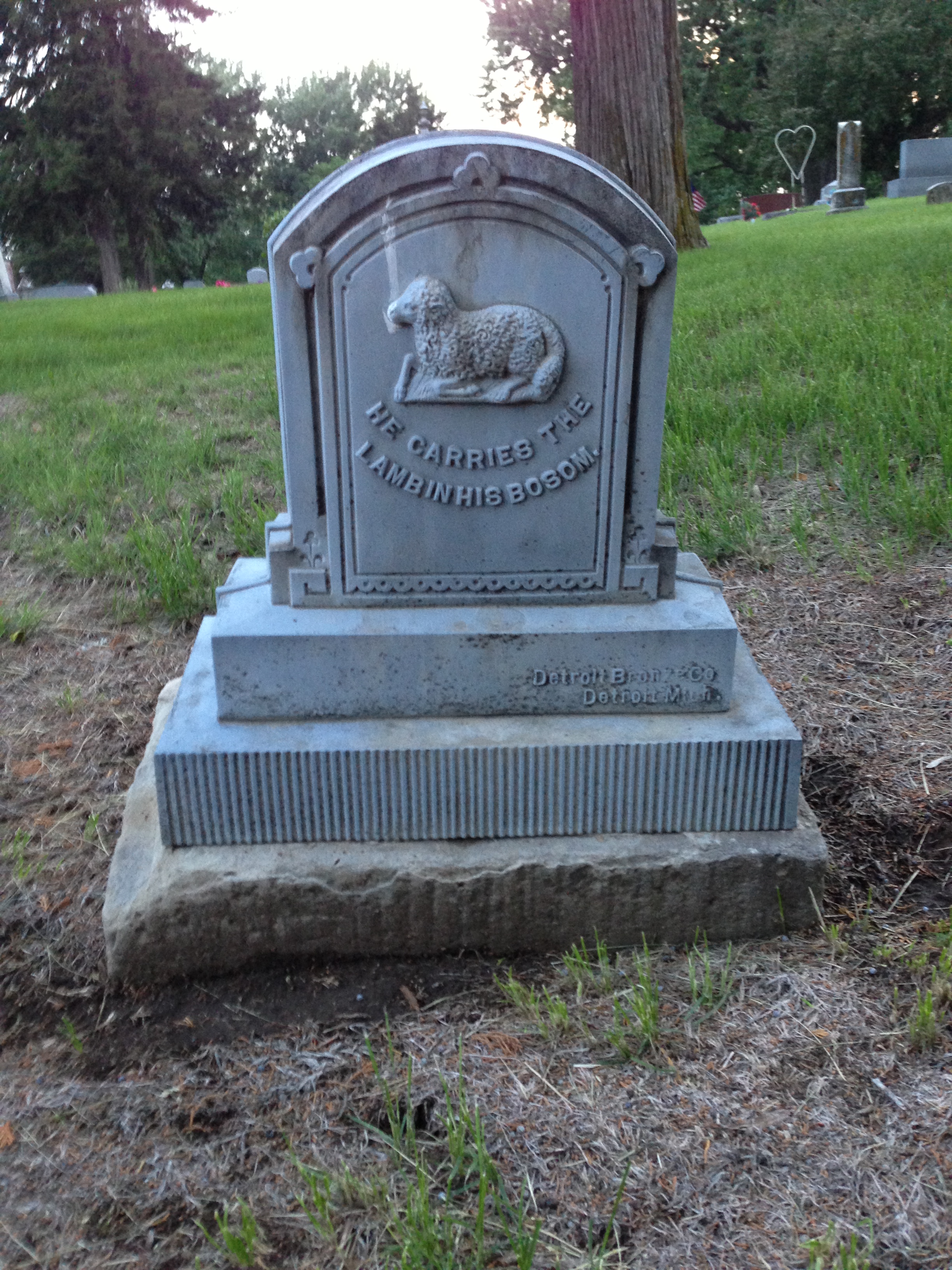
The Western White Bronze Company of Des Moines, Iowa, the Monumental Bronze Company of Bridgeport, Connecticut, the Detroit Bronze Company, of Detroit, Michigan, and the other companies that produced zinc funeral monuments, had a wide range of symbols from which to choose.  The companies produced catalogs that salespeople could carry with them to show prospective buyers the many marker design options and large array of symbols were available.

Some popular symbols, such as the lamb, came in multiple forms .  This symbol was offered as a bas-relief and full three-dimensional sculpture.  The lamb is the symbol of the Lord, the Good Shepherd.  It also represents innocence, likely the reason why this motif usually adorns the tombstones of infants and young children.  Most often the lamb is lying down, often asleep and sometimes with a cross behind the lamb.

Rose Hill Cemetery, Missouri Valley, Iowa

Rose Hill Cemetery, Missouri Valley, Iowa

Posted in Zinc Markers | Leave a comment

The Mourning Angel and the Dove

Forest Home Cemetery, Forest Park Cemetery, Illinois

Forest Home Cemetery, Forest Park Cemetery, Illinois

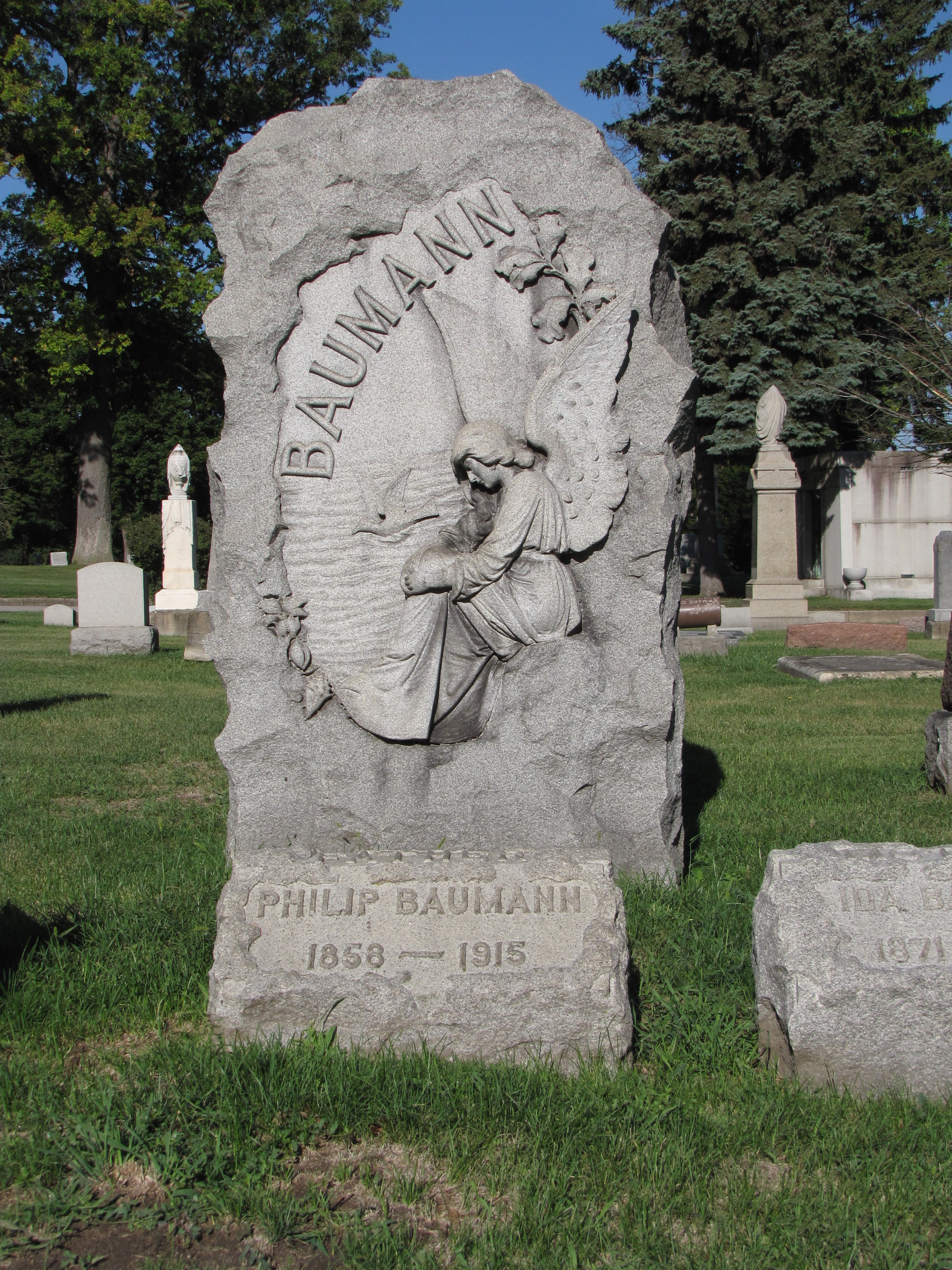
The Baumann Family Monument in the Forest Home Cemetery at Forest Park, Illinois, is adorned with a mourning figure that is carved into the gray granite.  In this case, the mourning figure is an angel.  The Angel’s head is bent in sorrow and she is clasping her hands together, a display of contemplation and grief.   The deeply-carved bas-relief has an almost three dimensional appearance.

To the left of the angel is a dove. Many symbols found on gravestones have multiple meanings. The dove is one of those.

Several references in the Bible refer to the dove as a symbol of the Holy Spirit. Matthew 3:16 reads, “And Jesus, when he was baptized, went up straightway out of the water: and, lo, the heavens were opened unto him, and he saw the Spirit of God descending like a dove, and lighting upon him.” In Mark 1:10 the Bible says, “And Straightway coming up out of the water, he saw the heavens opened, and the Spirit like a dove descending upon him.” Again in John 1:32, the Bible reads, “And John bare record, saying, I saw the Spirit descending from heaven like a dove, and it abode upon him.”

Along with the dove symbolizing the Holy Spirit, the dove is also closely associated with peace, often depicted with a sprig of an olive in its beak. This, too, originated in the Bible. After the waters receded in the story of Noah, the dove appears. Genesis 8:11, “And the dove came in to him in the evening; and, lo, in her mouth was an olive leaf pluckt off; so Noah knew that the waters were abated from off the earth.”   It was a sign of God’s forgiveness.

The dove, with its white color, is also a symbol of purity and innocence and for that reason is often found the tombstones of children.

Thus the dove symbolizes the Holy Spirit, peace, and purity.

Posted in Angels, Symbolism | Leave a comment

Mother and Daughter

Fairview Cemetery, Council Bluffs, Iowa

Fairview Cemetery, Council Bluffs, Iowa

ANNA A.

WIFE OF

J. S. FLAGEOLLE

DIED JUNE 8, 1887

AGED 24 YRS 2 MOS. 9 DYS.


TAKE THEM O FATHER IN

THINE ARMS

AND MAY THEY HENCEFORTH

BE,

A MESSENGER OF PEACE

BETWEEN

OUR HUMAN HEARTS AND THEE.


LEULLA

DAU. OF

ANNA A. & J. S. FLAGEOLLE

DIED AUG. 8, 1883

AGED 8 MOS. 28 DYS.


WE MISS THE BRIGHT EYES

OF OUR DARLING CHILD;

AND THE SWEET ROSY LIPS

THAT SO OFT ON US SMILED.


SUFFER LITTLE CHILDREN.


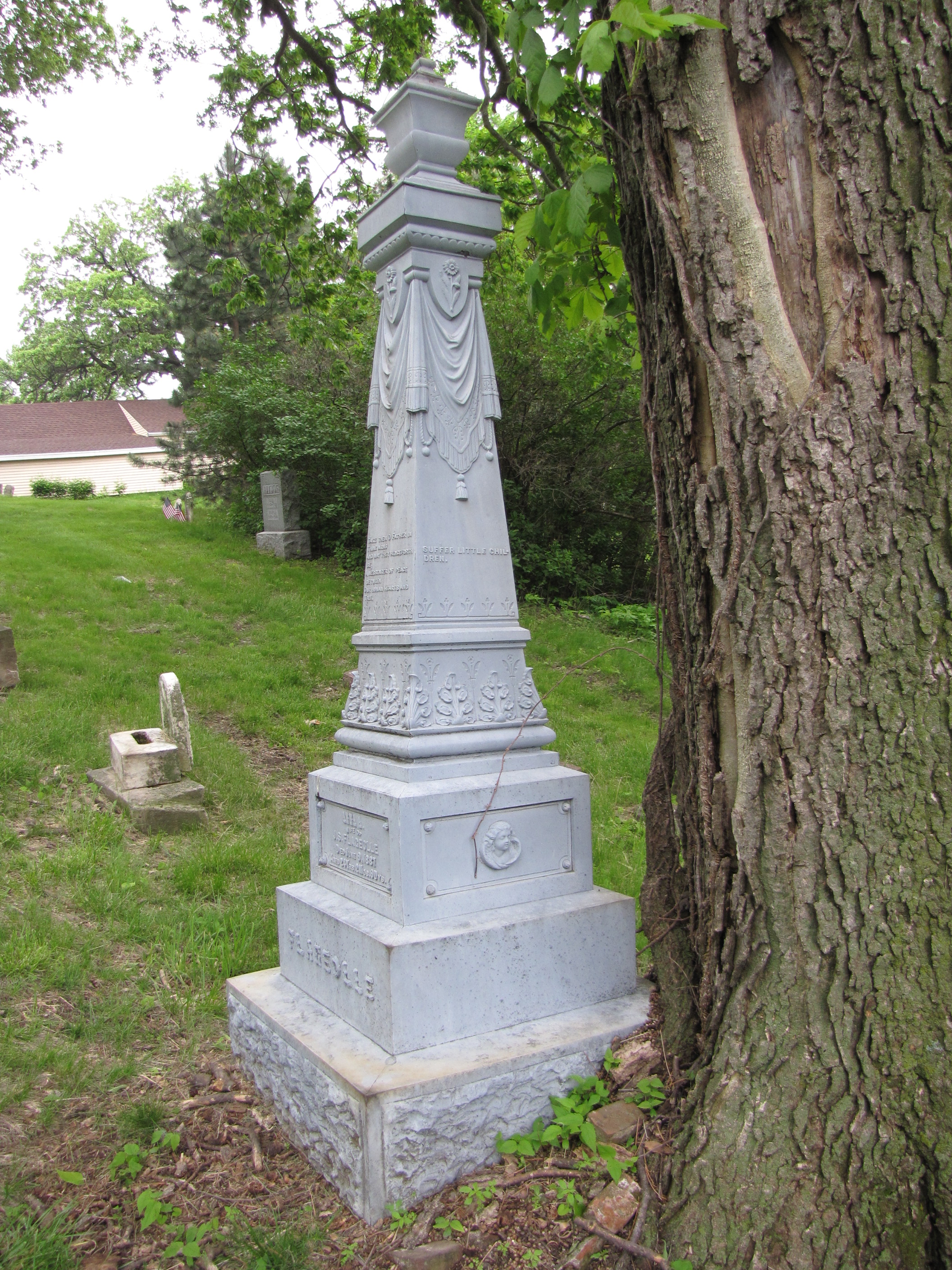
The Western White Bronze Company of Des Moines, Iowa, produced this draped and decorated column marker out of zinc.  The marker was created for a mother and daughter.  Several different symbols adorn the marker, including a boat and a winged cherub.

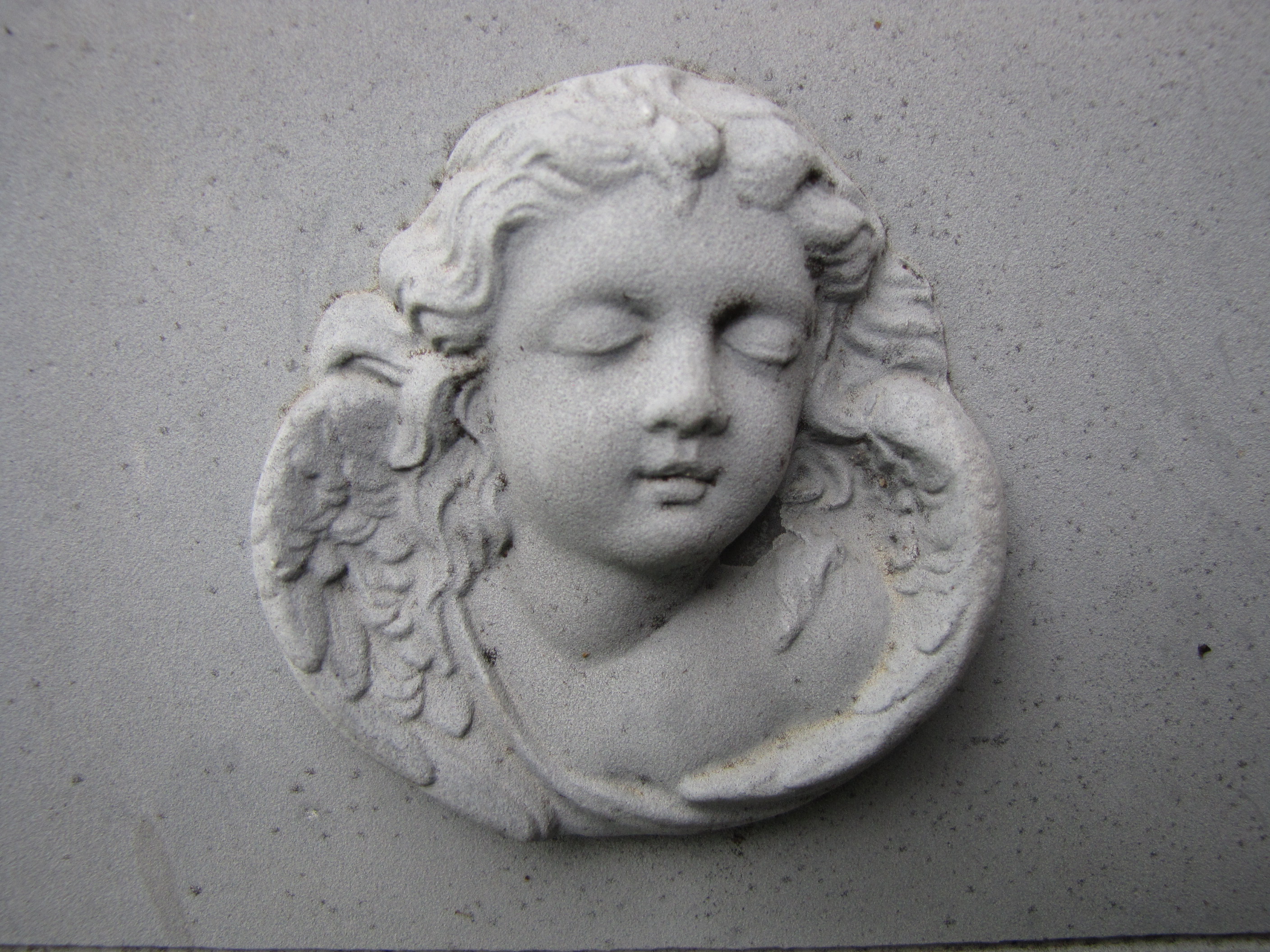
The winged cherub was a symbol that became popular in the 18th Century.  Winged cherubs replaced the stark and morbid flying death’s heads from our Puritan forefathers.  The cherubs have a childlike countenance of innocence.  The iconography represents the flight of the soul from the body upward to Heaven and the hope of the resurrection.

IMG_0494

Posted in Symbolism | 1 Comment

Artillery and Young Love

Woodland Cemetery, Des Moines, Iowa

Woodland Cemetery, Des Moines, Iowa

SERVANT OF GOD WELL DONE,

THY GLORIOUS WARFARE’S PAST

THE BATTLES FOUGHT THE

VICTORY WON

AND THOU ART CROWNED

AT LAST.


THOMAS G. ORWIG

CAPTAIN OF

BATTERY E FIRST PA

LIGHT ARTILLERY,

ARMY OF THE POTOMAC,

BORN JUNE 24, 1834,

MIFFLINBURG, PA.


MARY E. SIPP,

MARRIED CAPTAIN ORWIG

FEB. 6, 1864.

WITH HIM IN THE ARMY OF THE POTOMAC

FIVE MONTHS.

DIED MARCH 10, 1907.

SHE WAS BLIND OVER 20 YEARS AND TRIUMPHANT WITH SPIRITUAL VISION.

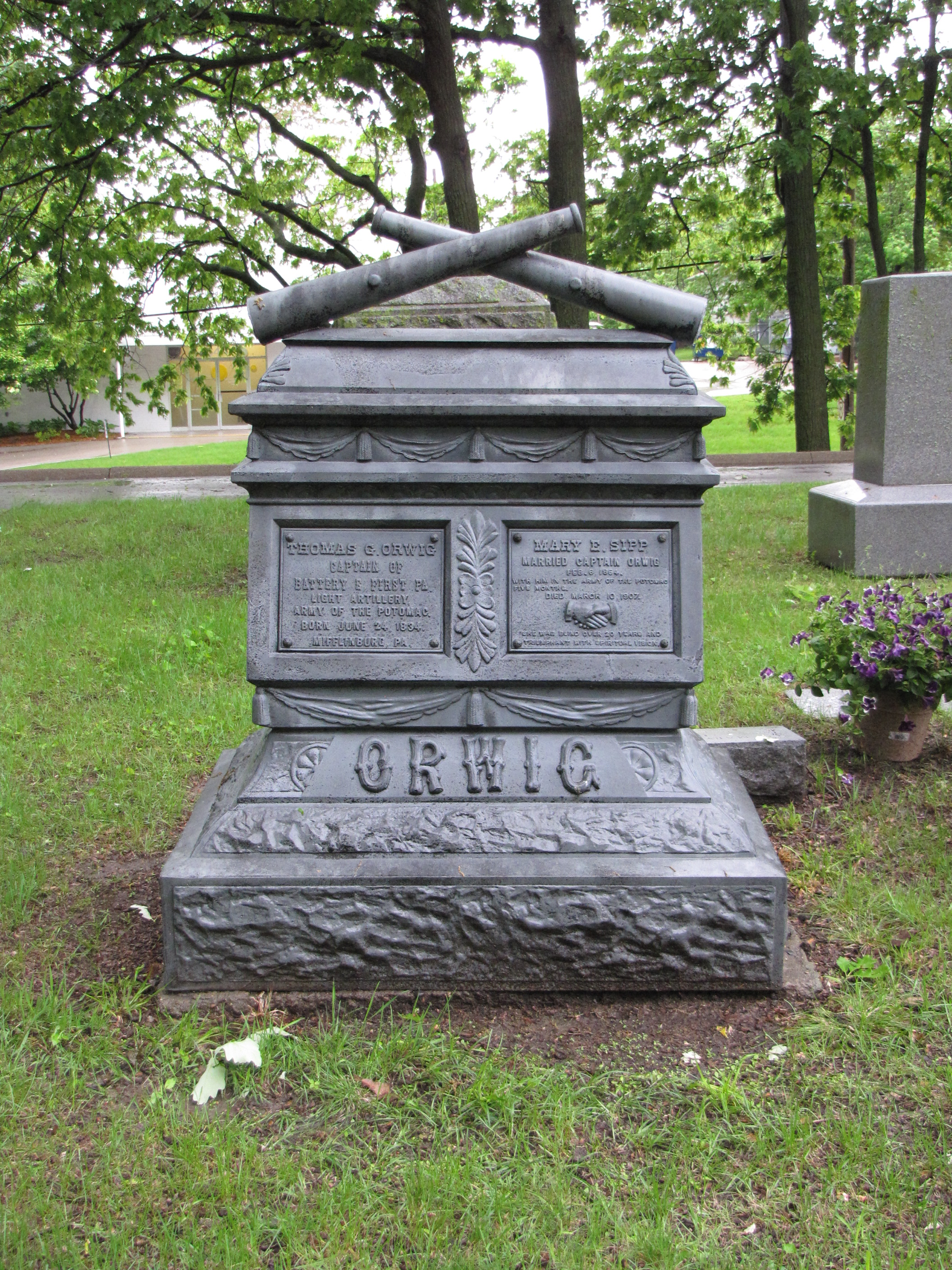
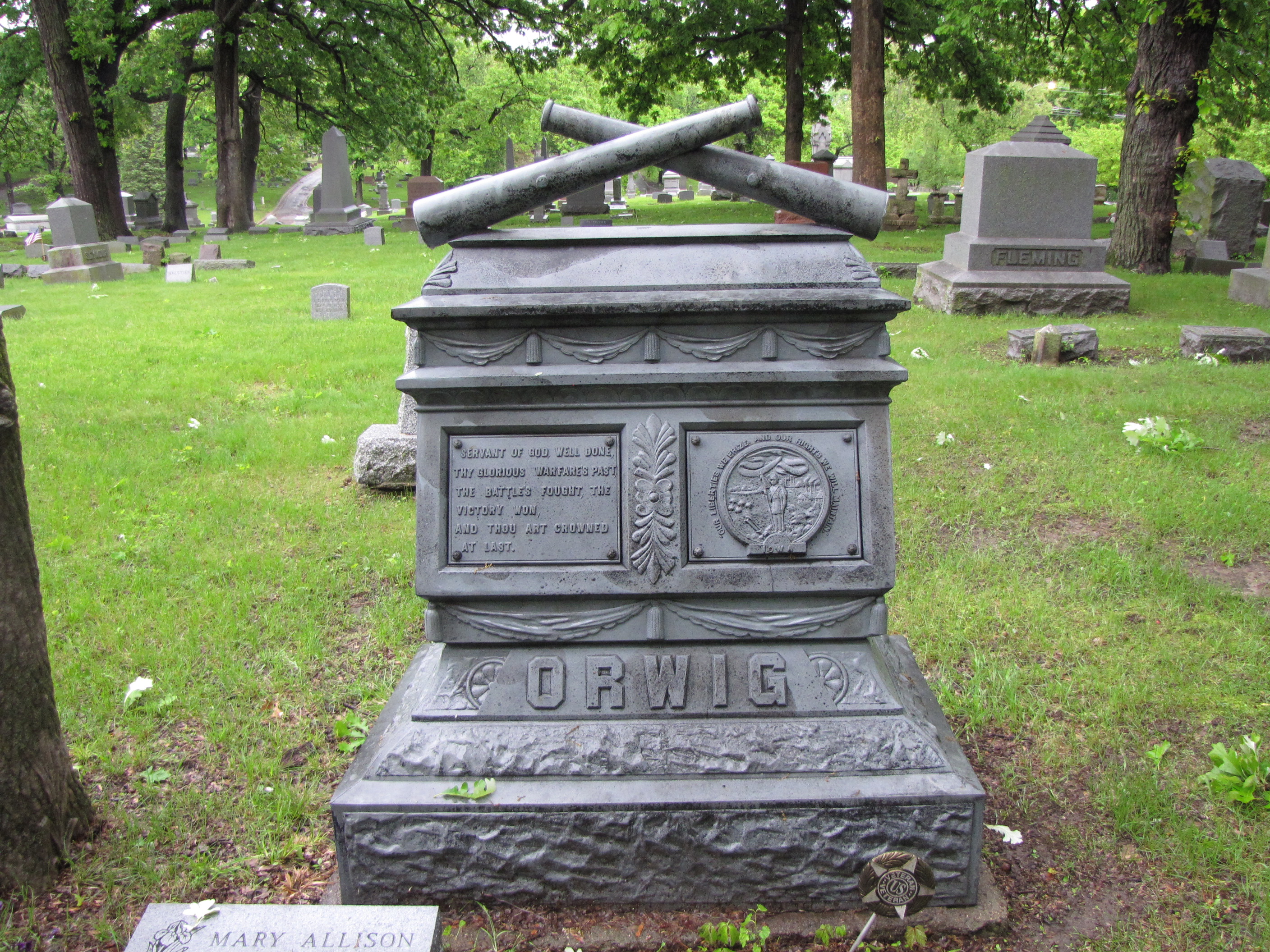
The monument companies that produced zinc markers had a wide array of styles to select from, including this marker that includes two crossed cannon barrels crowning the top.  The marker is not only a testament to Captain Orwig’s military service to his country in the Pennsylvania artillery unit during the Civil War, but also a testament to the love that Thomas and Mary had for one another.  After they were first married while Thomas in the army, Mary followed him to the battlefield for five months of the war.  Not much of a honeymoon.

The marker not only has the crossed cannons as symbolism but also clasped hands below the inscription for Mary.  The hands in this case represent holy matrimony.  In addition, the Great Seal of Iowa is bolted on the back of the marker, along with the state motto, “Our liberties we prize and our rights we will maintain.”  Even though, Thomas was born and fought for Pennsylvania, he and Mary must have loved their adopted state of Iowa.

Note: I first saw the gravestone above on the Website: www.graveaddiction.com.  Beth Santore, the Webmaster, has photographed hundreds of cemeteries in Ohio, as well as, making photo forays into neighboring states.  I highly recommend her Website, especially for those tramping around Ohio graveyards!

Woodland Cemetery, Des Moines, Iowa

Woodland Cemetery, Des Moines, Iowa

Posted in Symbolism | Leave a comment

Visions of the Angel of Death

Fairview Cemetery, Council Bluffs, Iowa

Fairview Cemetery, Council Bluffs, Iowa

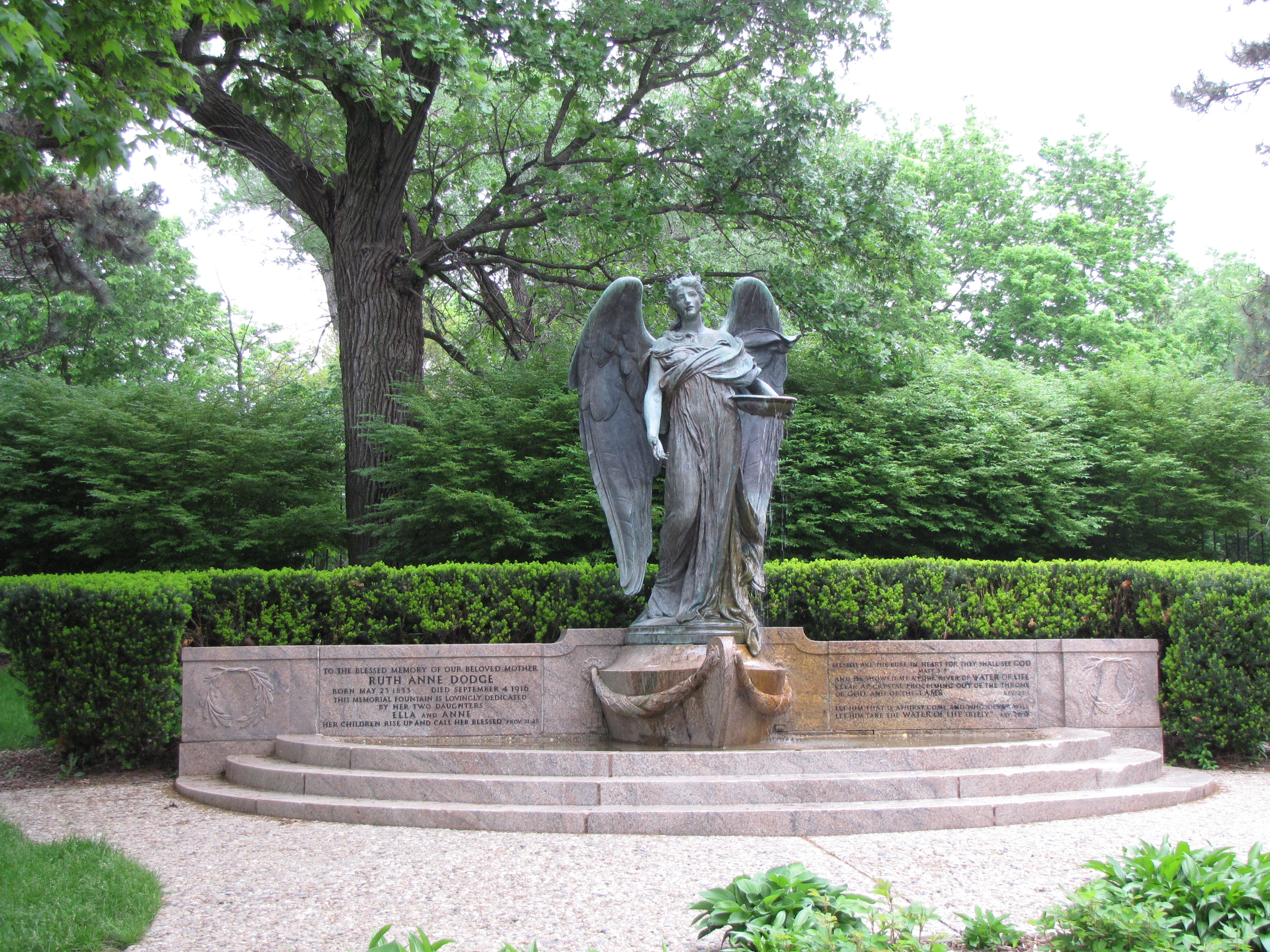
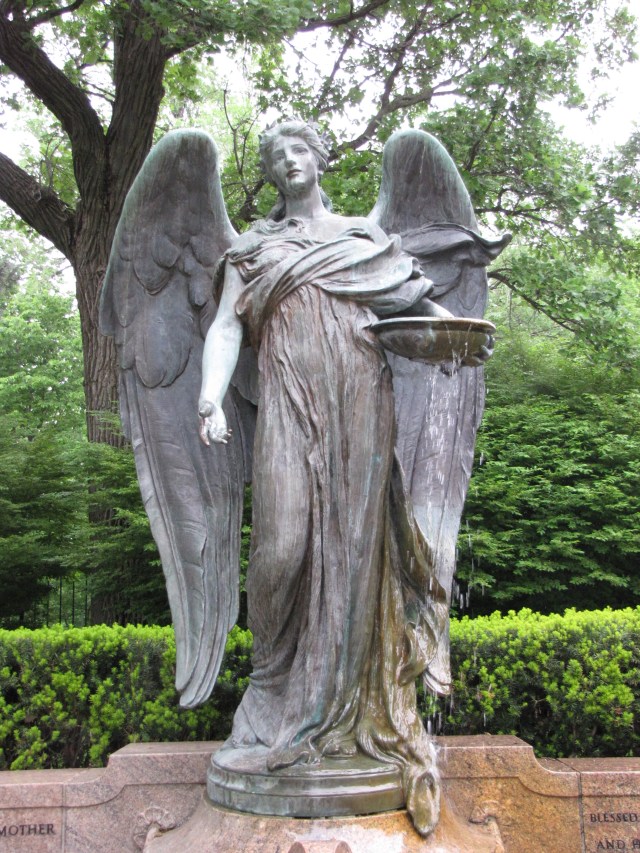
TO THE BLESSED MEMORY OF OUR BELOVED MOTHER

RUTH ANNE DODGE

BORN MAY 23, 1833  DIED SEPTEMBER 4, 1916

THIS MEMORIAL FOUNTAIN IS LOVINGLY DEDICATED

BY HER TWO DAUGHTERS

ELLA AND ANNE

“HER CHILDREN RISE UP AND CALL HER BLESSED PROV. 31:28.

BLESSED ARE THE PURE IN HEART FOR THEY SHALL SEE GOD MATT. 5:8

AND HE SHOWED ME A PURE RIVER OF WATER OF LIFE

CLEAR AS CRYSTAL PROCEEDING OUT OF THE THRONE

OF GOD AND OF THE LAMB  REV. 22:1

LET HIM THAT IS ATHIRST COME AND WHOSOEVER WILL

LET HIM TAKE THE WATER OF LIFE FREELY”  REV. 22:17

There are many accounts in history of famous people describing their visions of death.  Abraham Lincoln, for instance, described a dream that he had about two weeks before his assignation.  He described hearing sobbing.  When he sought out the source of the crying, he was guided to a room with an open casket.  When he asked who had died he was told the president had been killed.  Many believe Lincoln had foreseen his own death.

Carl Jung, too, had visions of death.  Jung’s dream about the death of friend was so vivid that it led him to believe in telepathy.

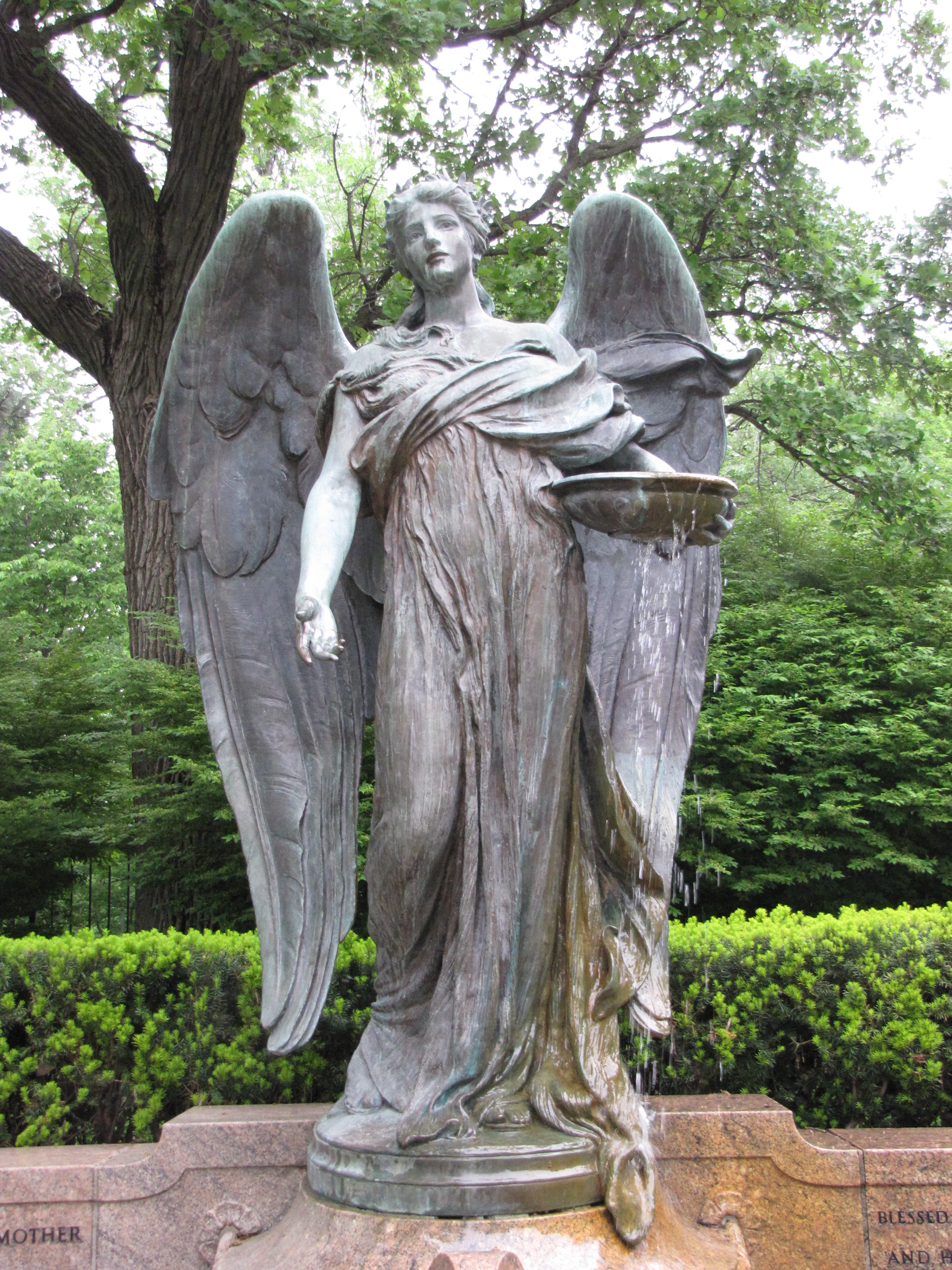
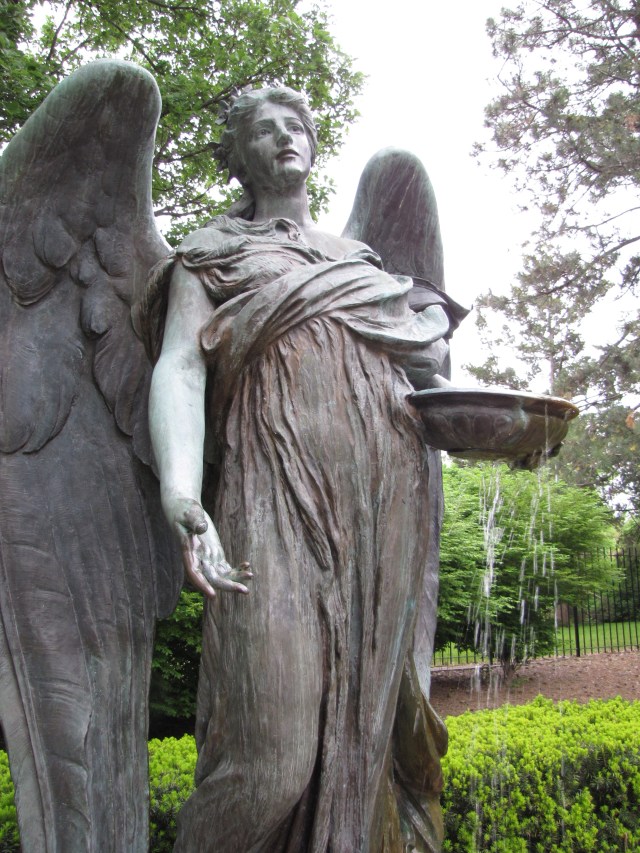
Ruth Anne Dodge was married to General Grenville Dodge, famous Civil War general and railroad magnate.  Ruth Anne’s visions of death occurred to her on three separate occasions.  Each time Ruth Anne was transported to a place unknown to her and each time a specter appeared.  The supernatural being came out of a light mist being carried on a barge of flowers and was draped in a white gown, her hair glimmered as if was made of spun gold, and she carried a Grecian urn that had water shimmering from it as if it were made from thousands of sparkling diamonds.  On the first two occasions the specter told Ruth Anne of the water that flowed from the urn and described it as a blessing.  The angel urged Ruth Anne to drink the water but she was not ready.  During the third dream the angel explained that the water pouring from the urn was the water of life.  Ruth Anne drank of the water and told her two daughters that the water, “gave me immortality.”  She died a few days later.

IMG_0415

The Dodge daughters, Ruth and Eleanor, wanted to commemorate their mother’s dreams in a statue and commissioned the great American sculptor, Daniel Chester French, to recreate the angel as seen in the dreams.  The sculpture he created is cast bronze and turned black with age.  Since its creation after Ruth Anne Dodge’s death in September of 1916, it has become known as the black angel. Oddly, the black angel was erected in the Fairview Cemetery, even though, Grenville and Ruth Anne Dodge are buried in a classically-designed mausoleum in the Walnut Hill Cemetery at Council Bluffs, Iowa.
IMG_0429

Posted in Angels | 5 Comments

Thistle in Zinc

Fairview Cemetery, Council Bluffs, Iowa

Fairview Cemetery, Council Bluffs, Iowa

JOHN G.

RAIN,

SEPTEMBER 19, 1828,

FEBRUARY 18, 1899.

HE DIED AS HE LIVED, A PURE,

UPRIGHT MAN.

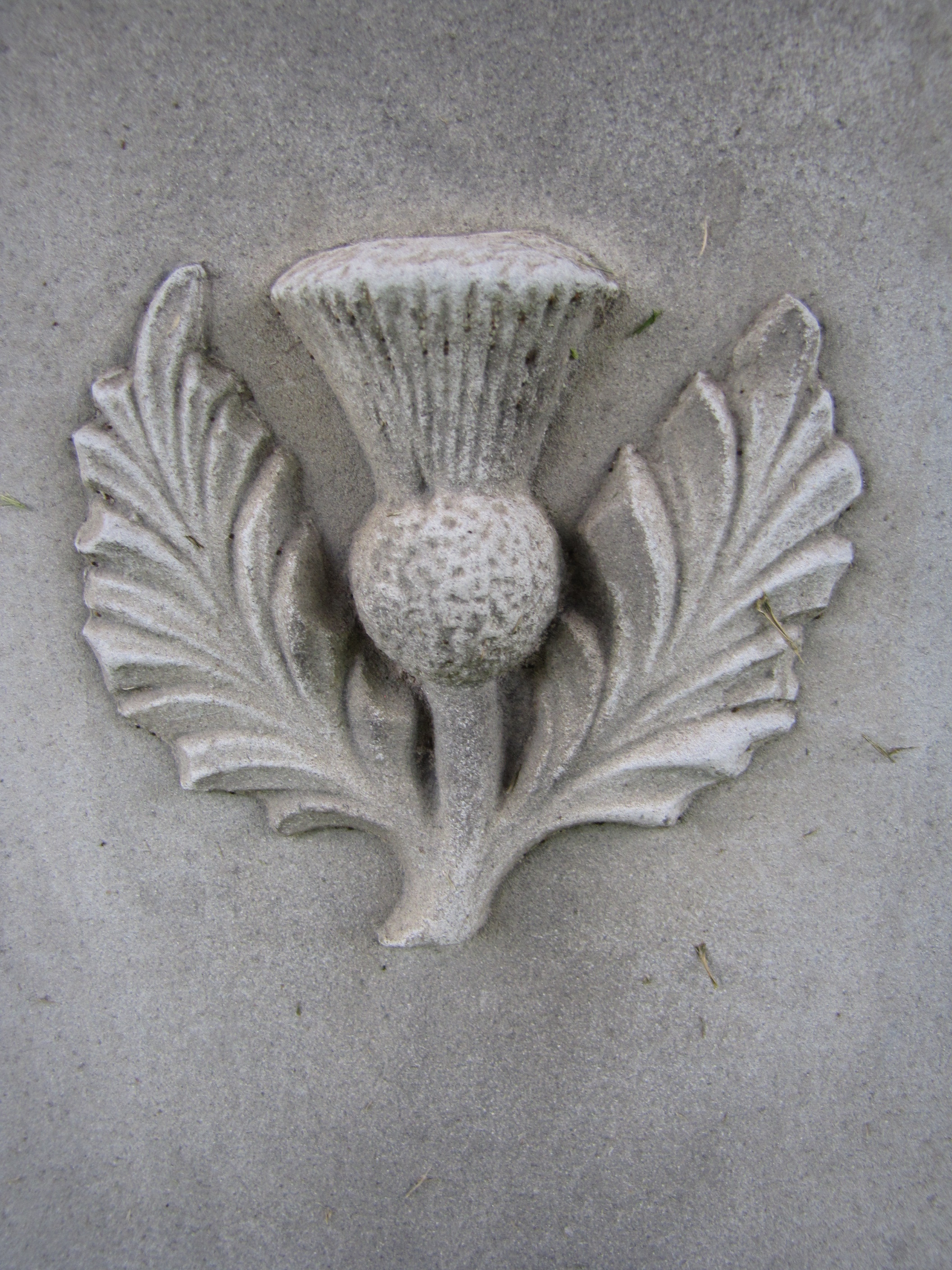
The thistle is characterized by a purple or red flower that rests in a cup-shaped part of the stem and has prickly leaves and thorns that protect it from plant-eating animals. The thistle is in the family Asteraceae.

This flower, like so many symbols in funerary art, represents many different things. For instance, the thistle, with its thorns, can symbolize the Passion of Christ. The thorns on the plant remind the Christian viewer of Christ’s crown of thorns. It is also a symbol of earthly sorrow. After Adam ate of the tree of life, God said to Adam that the ground was cursed to him for disobeying Him and that Adam would eat in sorrow. God said that, “Thorns also and thistles shall it bring forth to thee…”.

The thistle is also the floral symbol of Scotland most likely adopted by the Scots because, as legend has it, a Norse army was about to attack a Scottish army encampment when an opposing soldier stepped on a thistle. The soldier cried out alerting the Scots to the presence of the Norsemen. This legend is also likely to be the origin of the Scottish motto, Nemo me impune lacessit, which is translated as No one attacks me with impunity or No one can harm me unpunished. The motto is a fitting slogan for the thistle, as well, because to eat it or pick it, one has to overcome the thorns.

IMG_0471

Posted in Symbolism, Zinc Markers | Leave a comment

Options in form and design

Fairview Cemetery, Council Bluffs, Iowa

Fairview Cemetery, Council Bluffs, Iowa

The Western White Bronze Company of Des Moines, Iowa, and the other companies that produced zinc funeral monuments, such as the Monumental Bronze Company of Bridgeport, Connecticut, had a wide range of symbols from which to choose.  The companies produced catalogs that salespeople could carry with them to show prospective buyers the many marker design options and  large array of symbols were available.  The various symbols could be bolted in place on a large number of grave marker styles by special order much the same way that an erector set is bolted together.

Fairview Cemetery, Council Bluffs, Iowa

Fairview Cemetery, Council Bluffs, Iowa

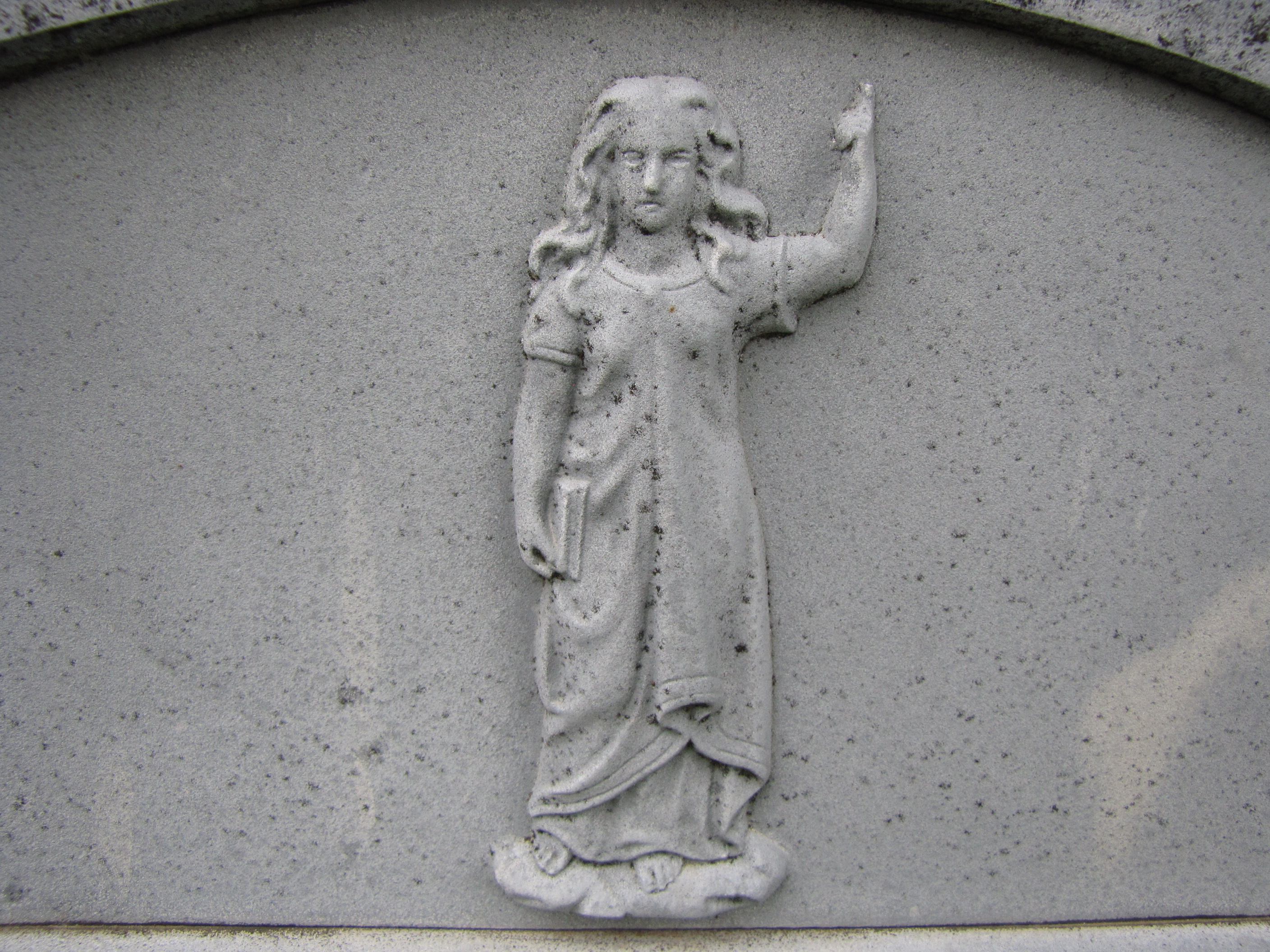
Some popular symbols came in multiple forms. The symbol of the classically dressed woman holding a book in one hand and pointing to the Heavens with the other, for instance, could be ordered as a bas-relief facing upwards or straight ahead–left arm in the air or right–for display on a marker.

The same symbol could be ordered as a full three-dimensional statue.  Bases for the statue could be special ordered, too.  The statue and the grave marker could be made entirely of zinc and could also be mounted on a stone base.

Woodland Cemetery, Des Moines, Iowa

Woodland Cemetery, Des Moines, Iowa

Posted in Symbolism, Zinc Markers | 1 Comment

Schoolhouse

IMG_5300

The inscription on the front of the schoolhouse:

HARRY M. HAYS

1850-1923

EDWIN  (POP) BOWERS

1873-1940

HIS WIFE

LU. NELL BOWERS

1876-1973

The inscription on the front of the schoolhouse:

WM. A. HAYS

APR. 14, 1879,

MAR. 29, 1880.

ALBERT HAYS

JULY 8, 1852,

SEPT. 17, 1877.

The inscription on the side panel of the schoolhouse:

ALEXANDER HAYS

OCT. 30, 1850,

APR.30, 1896.

HARRY BAKER

SON OF E. H. & N. BOWERS

MAY 6, 1895,

APR. 28, 1896.

Side panel of the schoolhouse:

JOSEPHINE BOWERS

JULY 1, 1909

MAR. 15, 1983

ELLA M. BOWERS

MAY 2, 1907

MAY 12, 1987

EDWIN H. BOWERS

NOV. 22, 1905

AUG. 11, 1988

Cave Hill Cemetery at Louisville, Kentucky, has many examples of monumental art.  In this example, the Hays family chose a schoolhouse.  What is unclear is what the significance to the schoolhouse it to the family.

Posted in Uncategorized | 3 Comments

Cherub and the lyre

IMG_5218

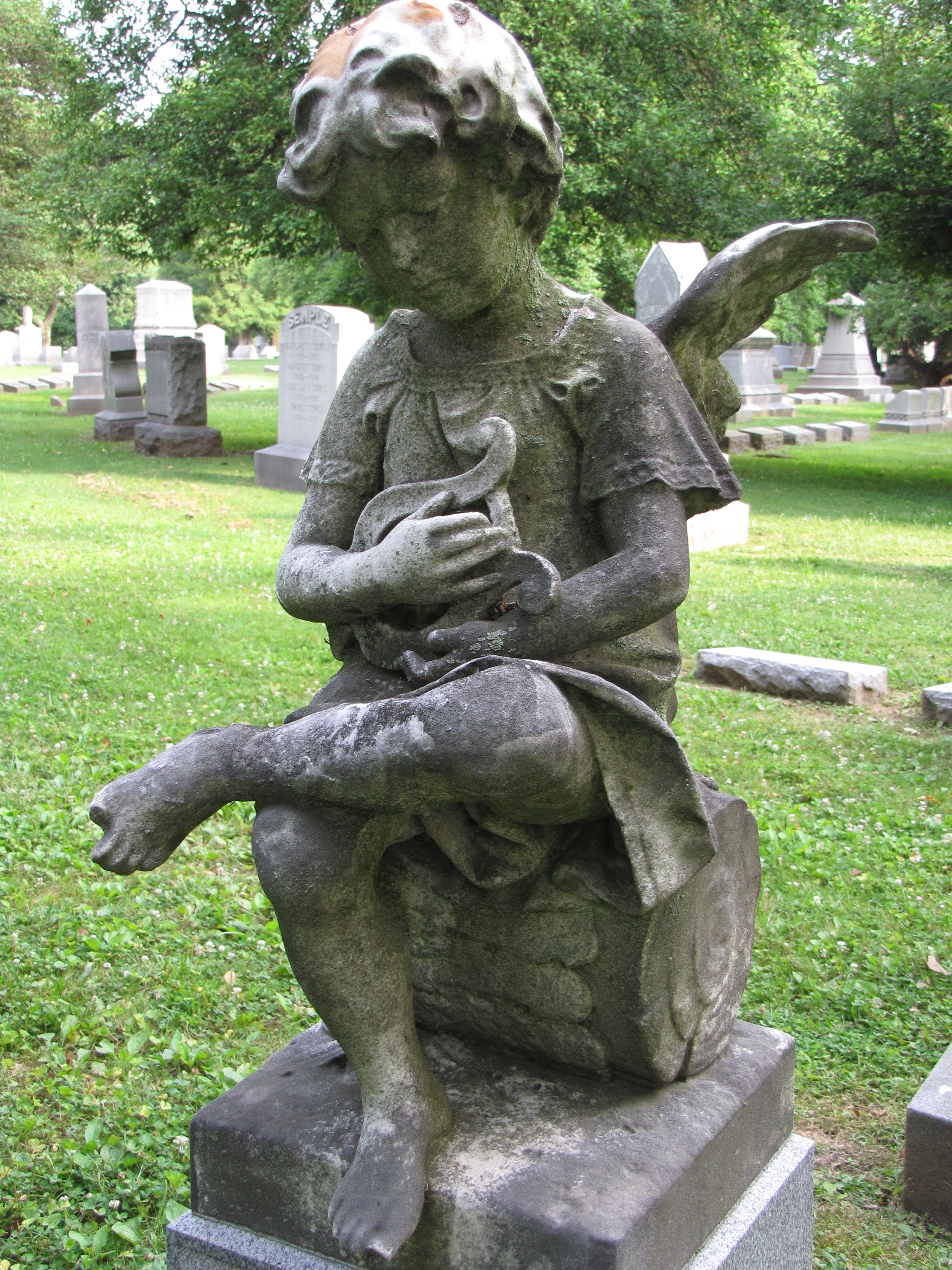
CHARLIE,

SON OF

CHRIS & MARY

KLIPPEL

SAFE IN THE ARMS OF JESUS

Cherubim, an order or choir of angels, are usually portrayed as chubby babies with wings and often found on the graves of children.  In the angel hierarchy cherubim are considered to be in the second highest order of the nine orders of angels. The Cherubim were sent to Earth to protect the pathway to the Tree of Life.

Here the cherub is playing the lyre.  The lyre is a symbol of Apollo, the Greek god of music. In Christian symbolism, however, it can represent harmony and Heavenly accord and song in praise of the Lord. In funerary art, the lyre can also represent the end of life.

Posted in Angels | 2 Comments