The Butterfly

Nashville City Cemetery, Nashville, Tennessee

Nashville City Cemetery, Nashville, Tennessee

Sacred

to the memory

of

NANCY MAYNOR

born 17th of Novbr

1788

departed this life

on the 28th of May

1836

This elaborate gravestone in the Nashville City Cemetery at Nashville, Tennessee, has a delicate butterfly on the face of the pedestal supporting the urn, just under the cartouche displaying the name, birth and death dates of the woman’s whose remains lay beneath the stone.

Like many symbols found in gravestone art, the butterfly has more than one meaning.  The butterfly emerging out of a chrysalis represents the flight of the soul from the body.  The metamorphosis of the butterfly, the change from caterpillar to chrysalis to butterfly, also represents the life, death, and resurrection of Jesus Christ.  Many ancient paintings of Jesus Christ show Him holding a butterfly.

The butterfly is also seen as a metaphor for change.  During the path through life the many twists and turns along the way help the soul morph into a more perfect being.

IMG_1062

Posted in Symbolism | 2 Comments

B.P.O.E.

img_1244[1]

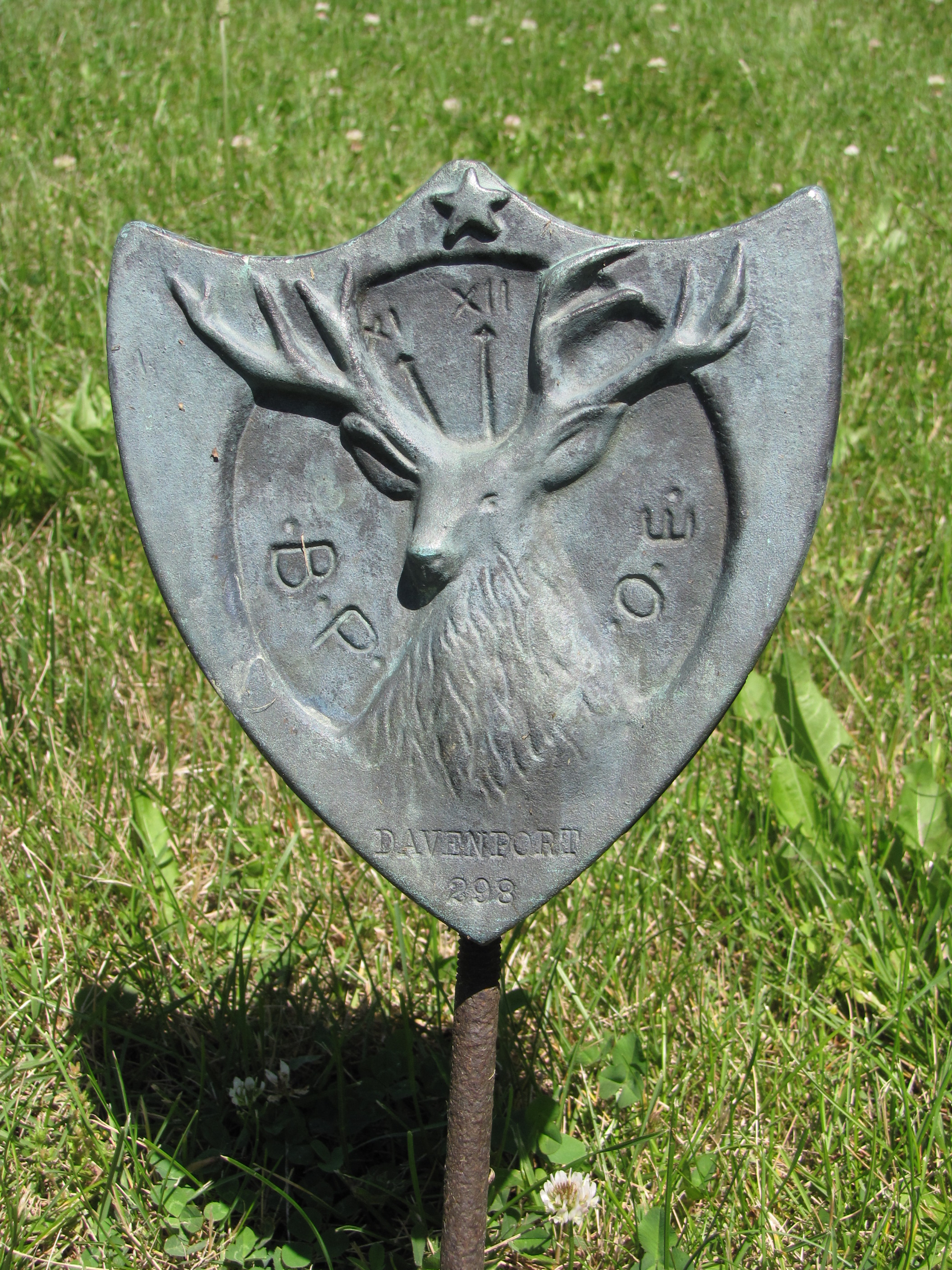
The Benevolent Protective Order of Elks metal markers come in many sizes and shapes.  The metal markers above include the two most significant symbols for the Elks Club members–the Elk, of course, and the clock with the hands frozen at the 11:00 o’clock hour when the Elks traditionally remember their members who have passed away with a solemn toast.  It also carries the words “cervus alces” which is Latin referring to the genus and species for the American Elk.  Below that is a lodge number.

IMG_2231

The metal marker above is similar in style, as it carries the elk and the clock and the lodge number, as opposed to the badge-like marker below, that only has the lodge number.

img_8191[1]

Posted in Metal Markers | 1 Comment

Fighting Satan’s Hordes

IMG_1574

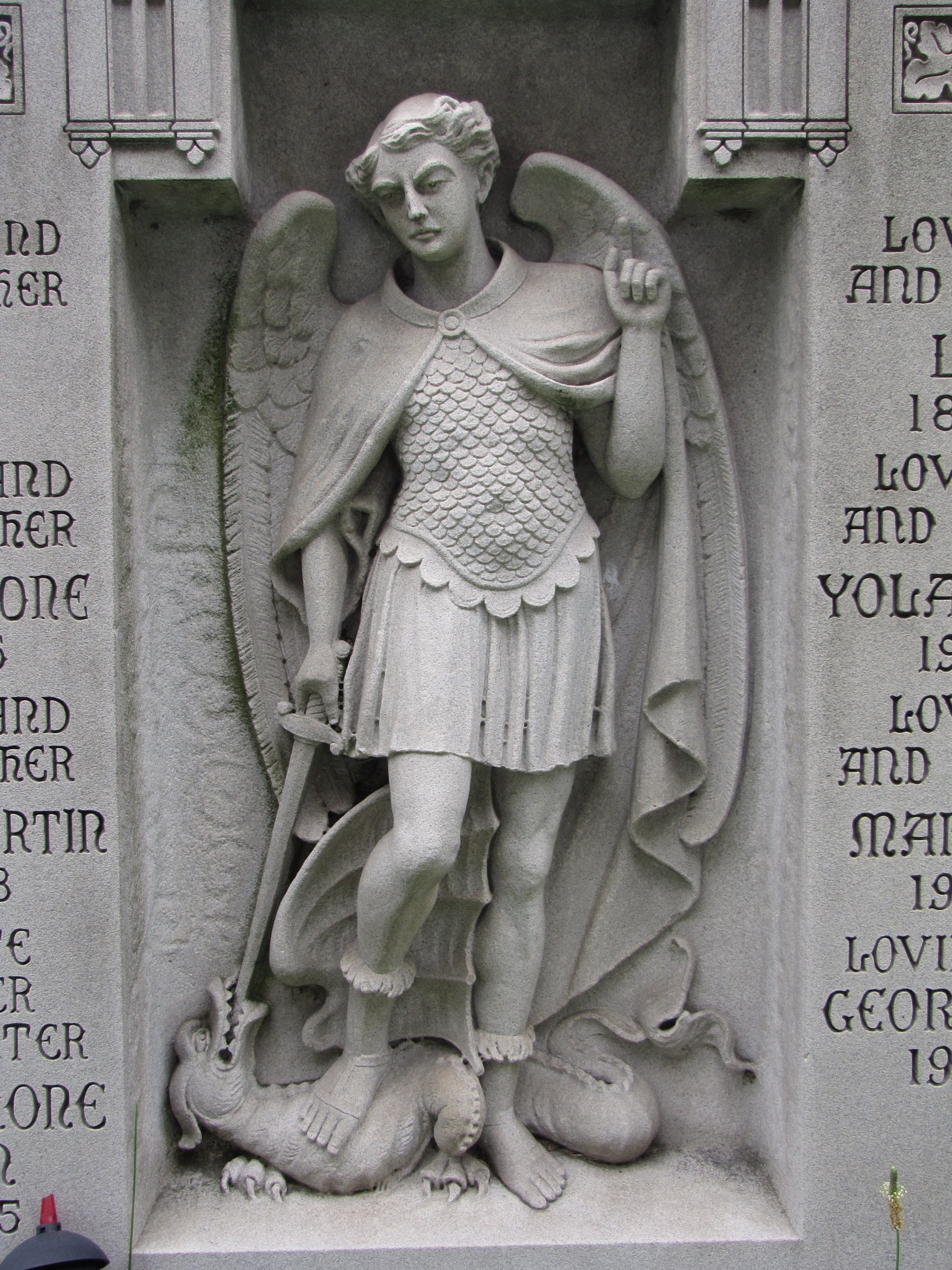
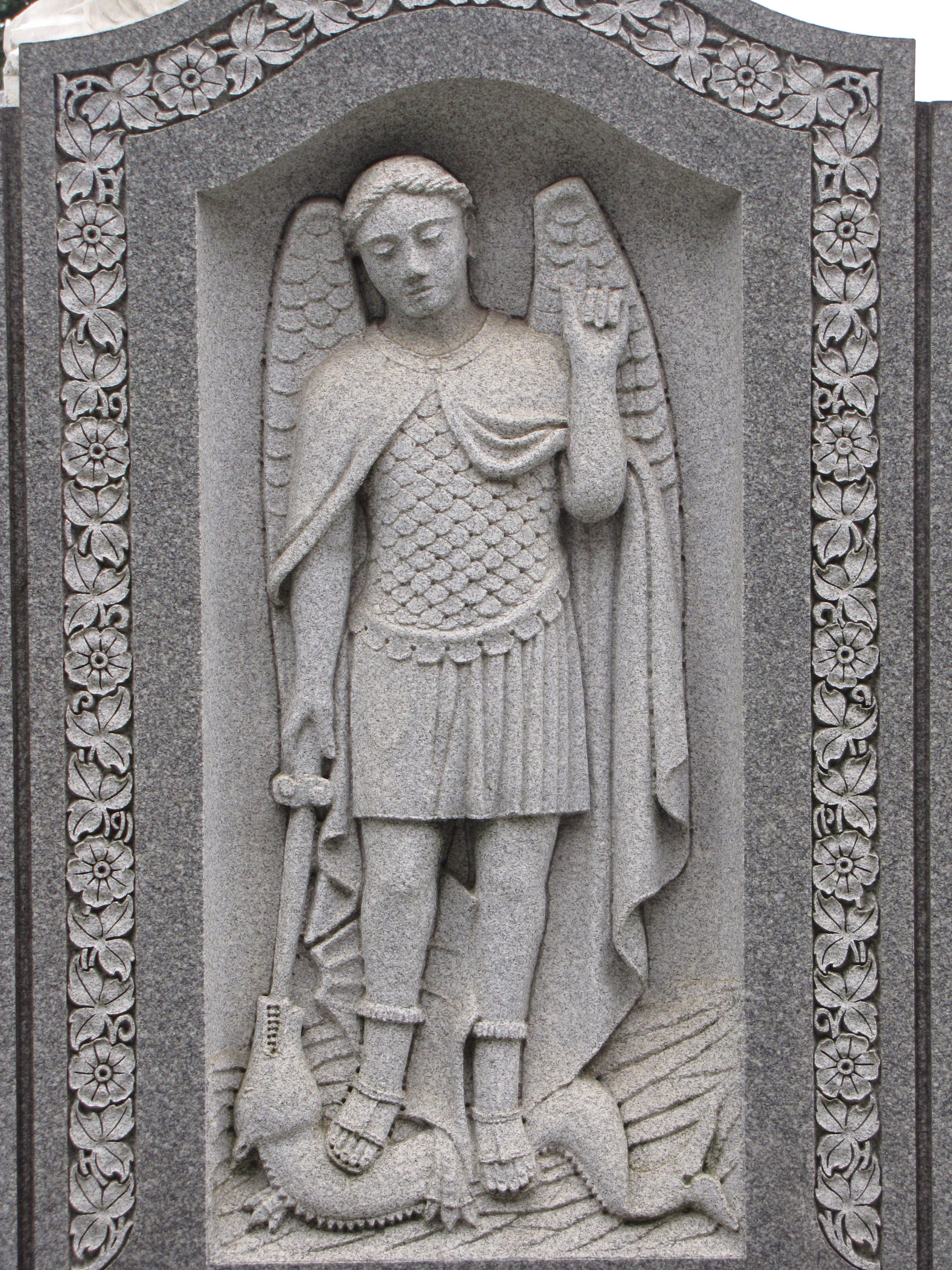
St. Michael is featured in many cemetery sculptures. Only the Archangel Michael, one of three angels mentioned by name in the Bible, is clothed in armor.  The sword he carries represents a cross but also a weapon in his war against the devil’s warriors.

IMG_1364

Archangel Michael is a Christian soldier fighting Satan’s hordes.   Archangel Michael is often represented standing on a worm or a dragon.  In dramatic examples, St. Michael has plunged his sword into Satan’s mouth as he stands on the vanquished enemy.  Satan is depicted as a dragon.

img_7645[1]

The Archangel Michael is also considered the guardian of souls.

IMG_1562

Posted in Angels, Symbolism | Leave a comment

Memorial for a Mother and Infant

Sleepy Hollow Cemetery, Sleepy Hollow, New York

Sleepy Hollow Cemetery, Sleepy Hollow, New York

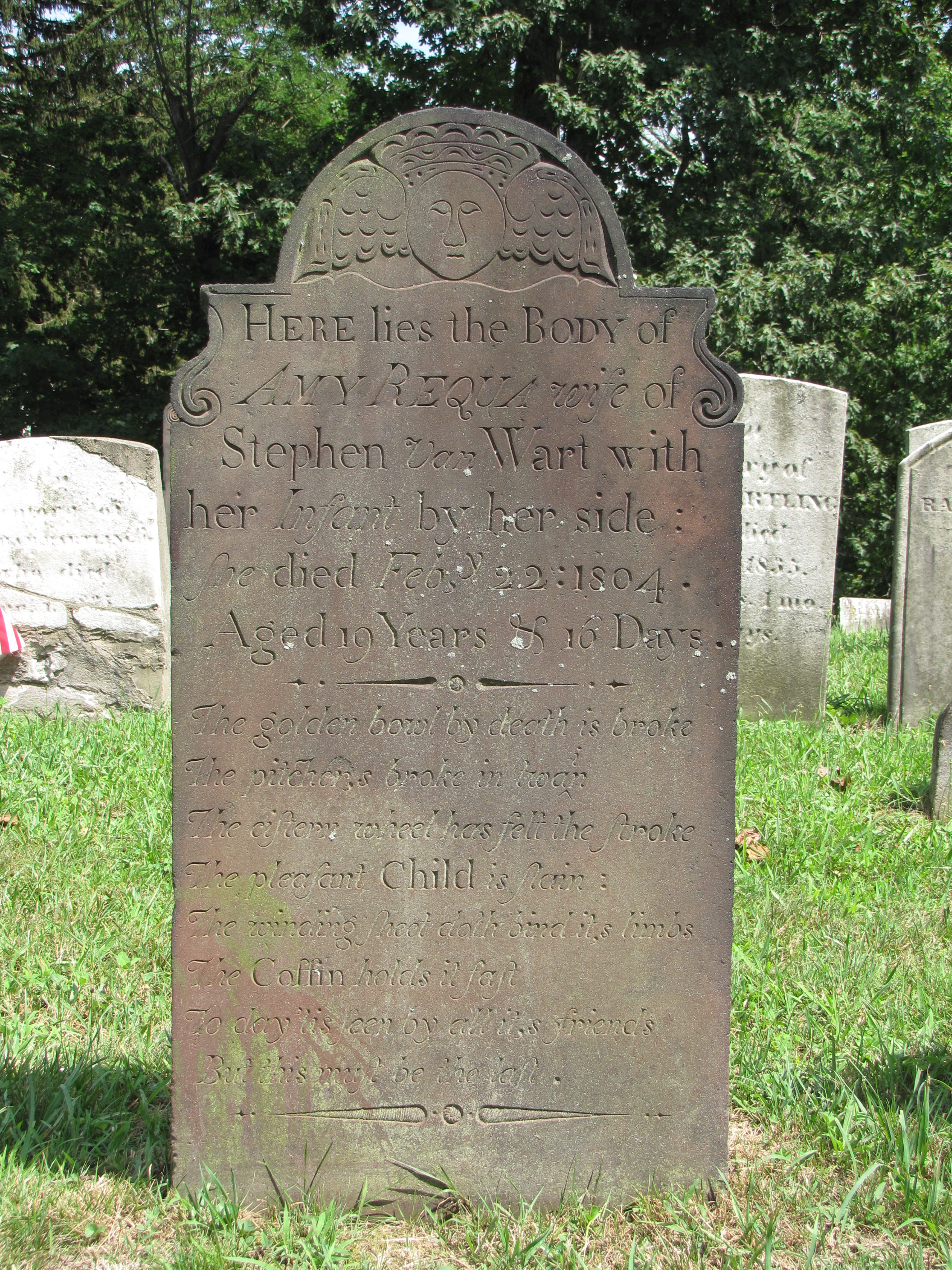
HERE lies the BODY of

AMY REQUA wife of

Stephen Van Wart with

Her Infant by her side:

She died Feb,y 22 : 1804 .

Aged 19 Years & 16 Days.

The golden bowl by death is broke

The pitchers broke in twain

The cistern wheel has felt the stroke

The pleasant Child is Slain :

The winding sheet doth bind it’s limbs

The Coffin holds it fast

To day tis seen by all it’s friends

But this must be the last .

Posted in Uncategorized | Leave a comment

Wheat

Walnut Hill Cemetery, Council Bluffs, Iowa

Walnut Hill Cemetery, Council Bluffs, Iowa

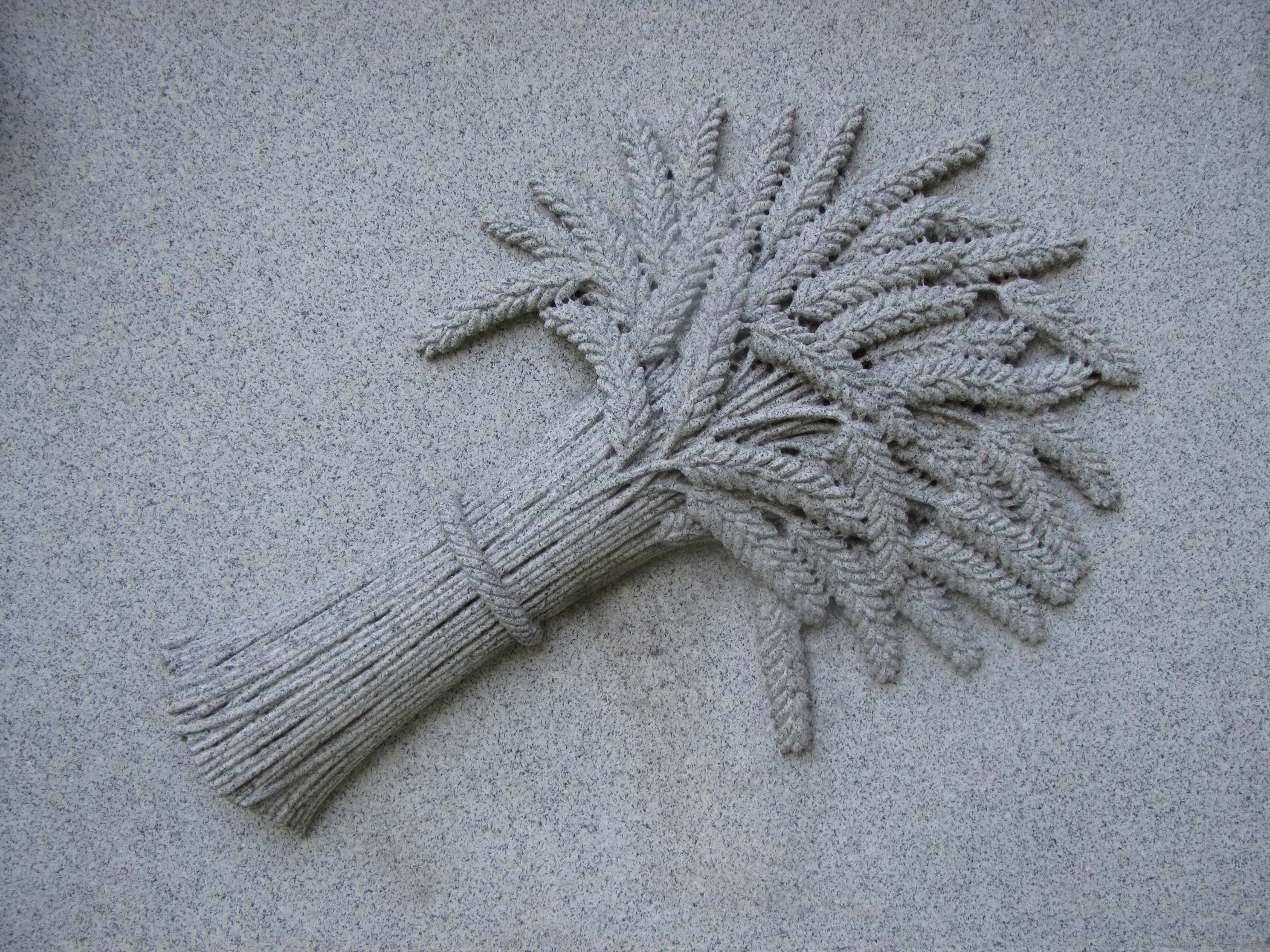
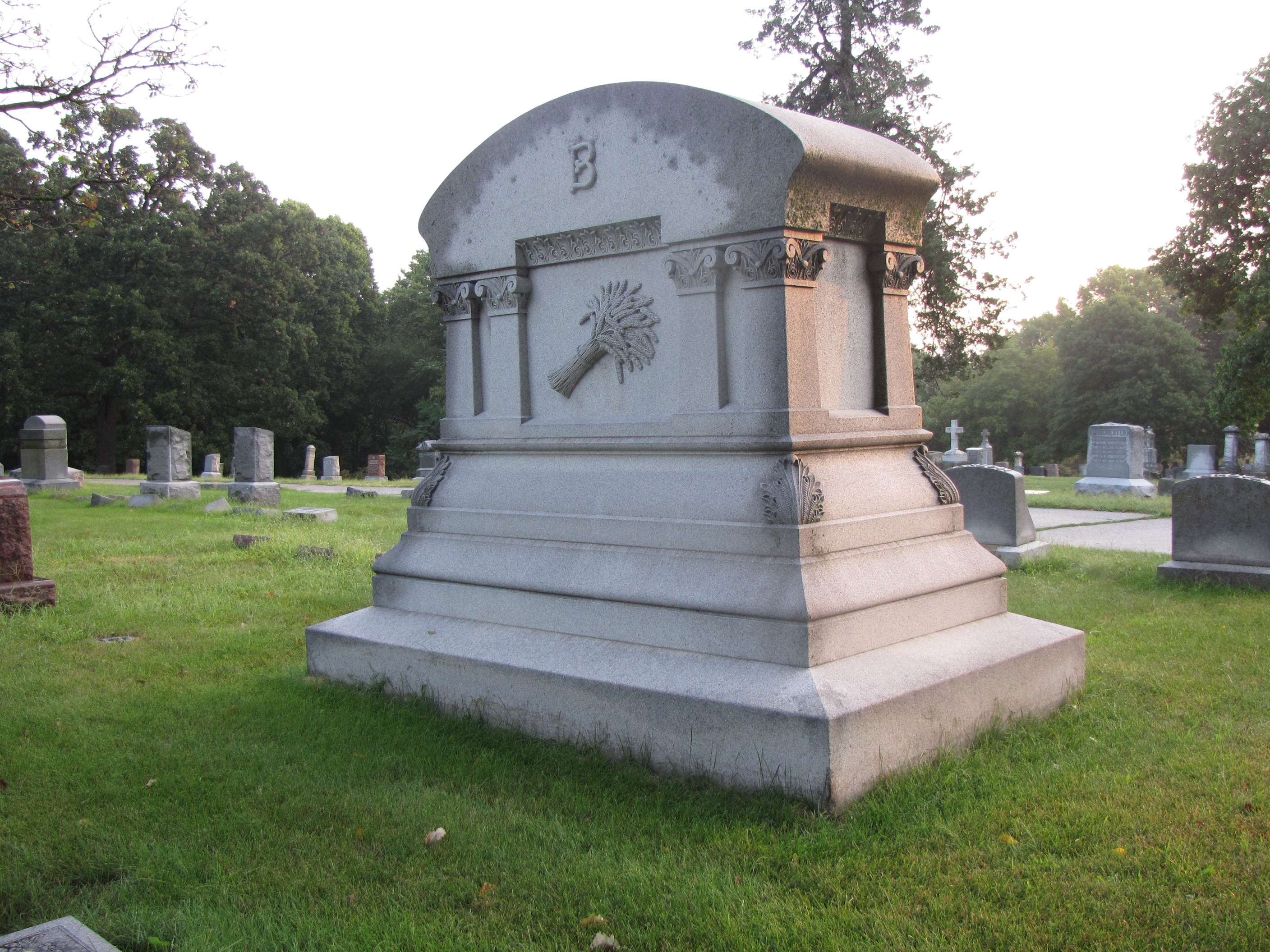
On the reverse side of the Bone Family Monument in the Walnut Hill Cemetery at Council Bluffs, Iowa,  is carved a sheaf of wheat.

Wheat’s origins are unknown but is the basis of basic food and a staple in many cultures. Because of wheat’s exalted position as a mainstay foodstuff, it is viewed as a gift from Heaven.

Wheat symbolizes immortality and resurrection.  But, like many symbols found on gravestones, they can have more than one meaning.  For instance, because wheat is the main ingredient of bread, the sheaf of wheat can represent the Body of Christ.  Wheat can also represent a long life, usually more than three score and ten, or seventy years.

IMG_7257

Posted in Uncategorized | 1 Comment

Death and Mortality

Nashville City Cemetery, Nashville, Tennessee

Nashville City Cemetery, Nashville, Tennessee

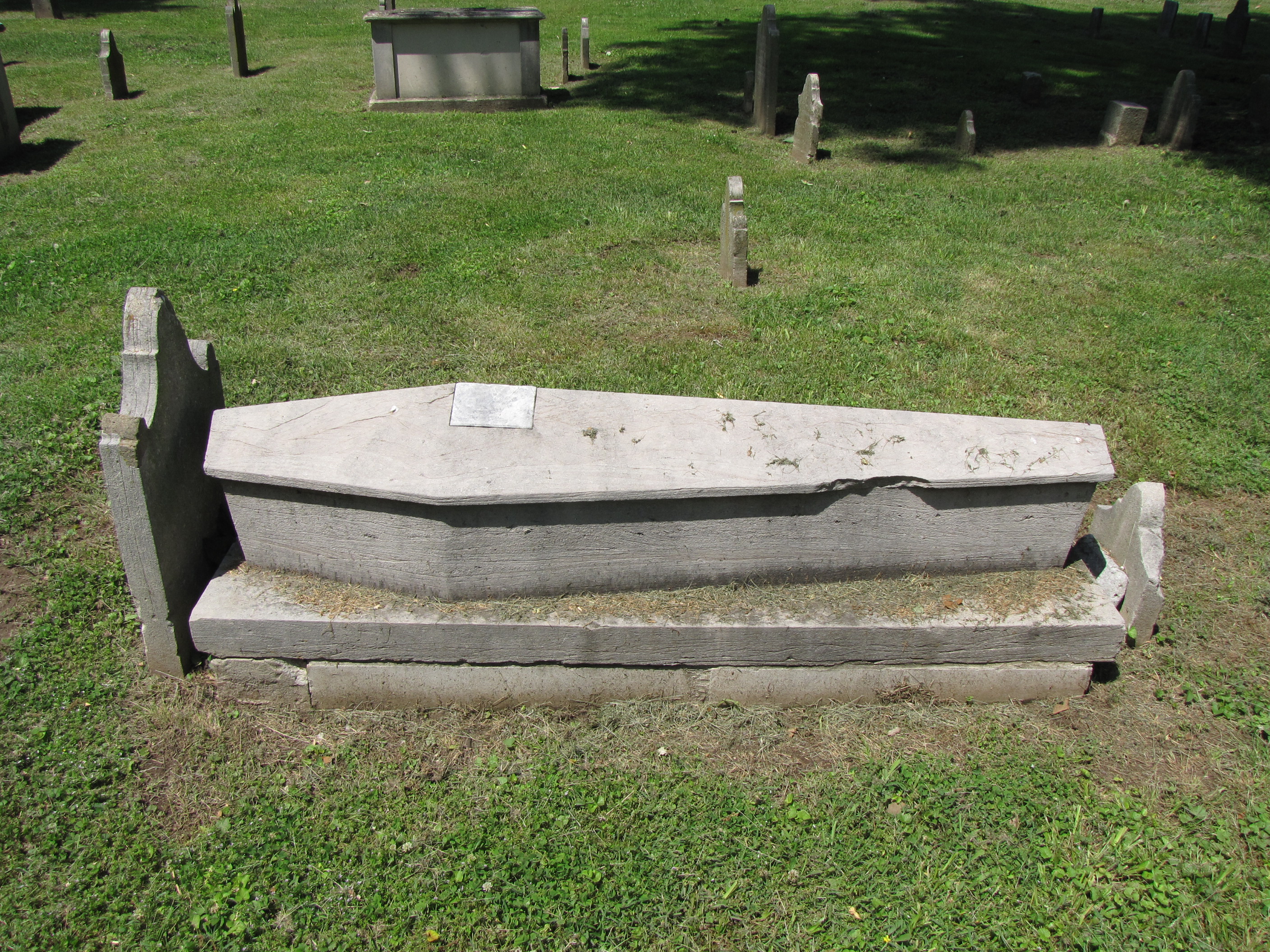
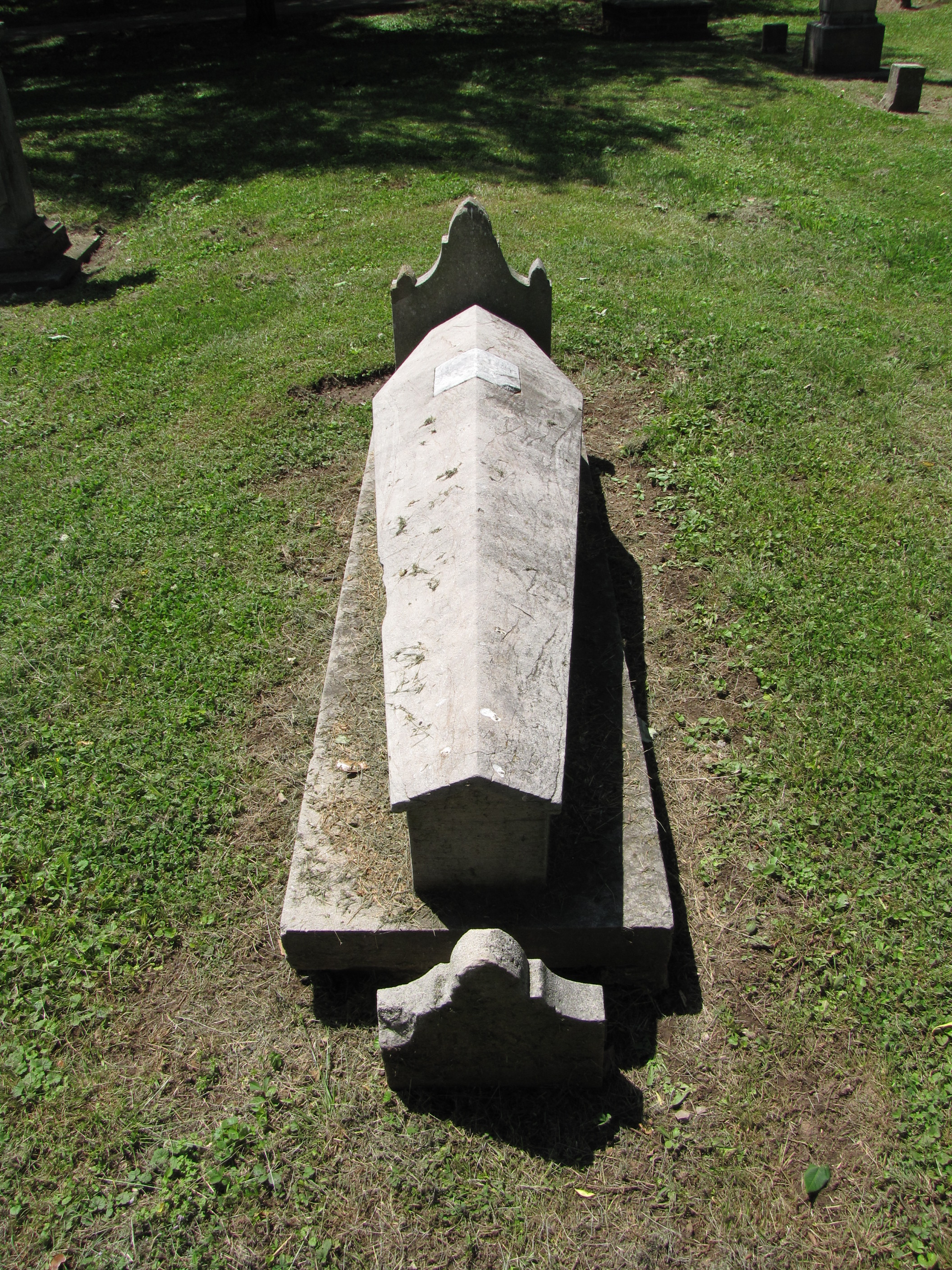
Coffins come in many shapes and sizes, though, technically, a coffin is a six-sided container or box for burial.  A casket is generally understood to have four sides and be rectangular.

The six-sided coffin tombstone found in the Nashville City Cemetery, Nashville, Tennessee, pictured above is tapered to widen around the shoulders and then become narrow around the feet.  The coffin-shaped tombstone replicates what many 18th and 19th century coffins looked like.  This gravestone is faded and the inscription on the gray-marble inset in the center of the coffin-shaped tombstone is illegible. It is flanked by a headstone and a footstone.

This funerary motif broadcasts its meaning: death and mortality.

IMG_1115

Posted in Uncategorized | Leave a comment

Venetian Gothic

Cavehill Cemetery, Louisville, Kentucky

Cavehill Cemetery, Louisville, Kentucky

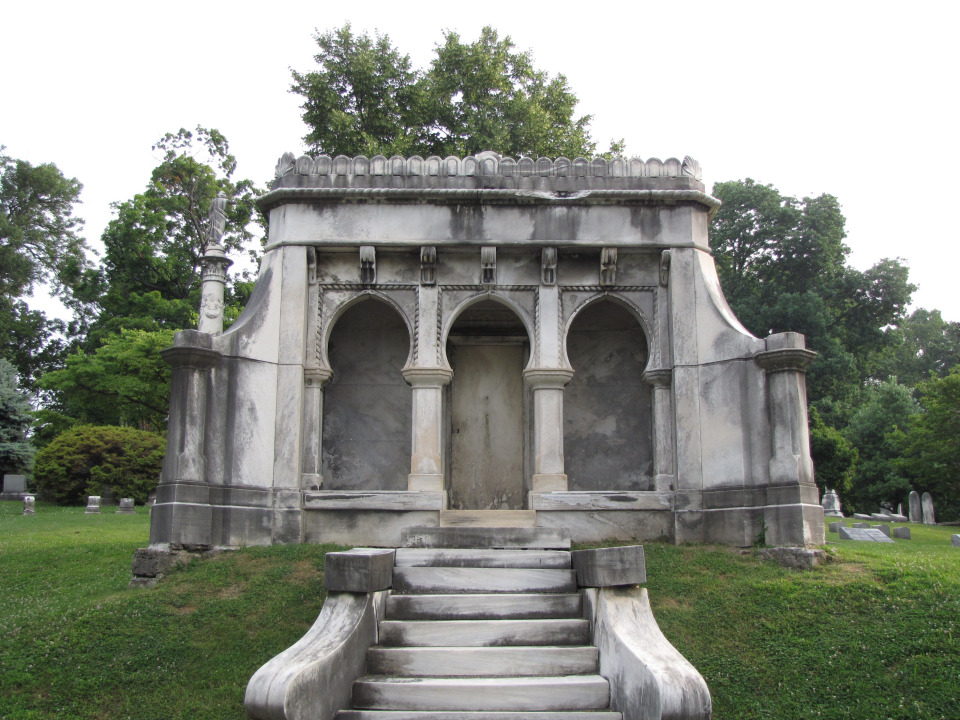
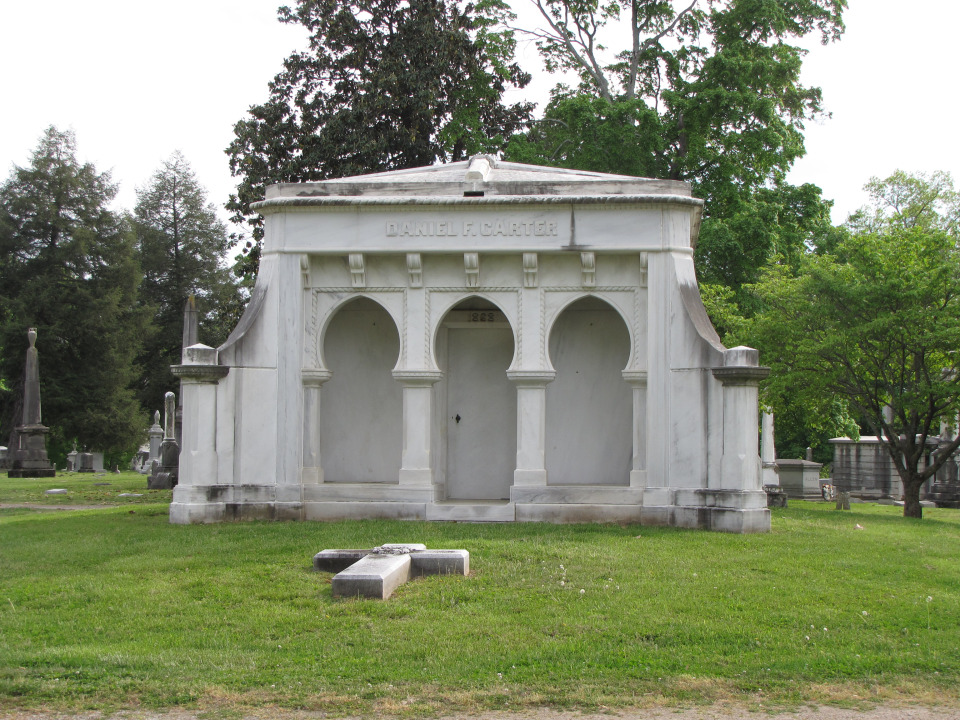
With the exception of the ornamentation on the top of the Spotts Mausoleum, two nearly identical mausoleums, one in the Cave Hill Cemetery at Louisville, Kentucky, and the other in the Mt. Olivet Cemetery at Nashville, Tennessee, were designed and built in the Venetian Gothic style.

Owner of the St. Nicholas Hotel and Steamboat Captain Harry Innes Spotts was laid to rest in a mausoleum (above) designed by John Baird (1820-1894) who was the proprietor of the Steam Marble Works at Philadelphia which cut marble with steam power.   Baird’s shop gave customers standard designs to pick from.  Daniel Franklin Carter (1808-1874), a prominent Nashville banker, was buried in a mausoleum in the Mt. Olivet Cemetery at Nashville, Tennessee.

Mt. Olivet Cemetery, Nashville, Tennessee

Mt. Olivet Cemetery, Nashville, Tennessee

Both mausoleums are designed in the Venetian Gothic style.  Venetian Gothic architecture combined several architectural styles—Moorish, Gothic, and Byzantine—into a single style reminiscent of the building designs that brought a confluence of cultures together to create a flourish and lightness to the canals of Venice.  During the Victorian era, several architects drew from the Venetians for creative building designs that was part of a larger revival that intertwined several styles into one pleasing to the eye.

When the Spotts Mausoleum was erected in the Cave Hill Cemetery the local newspaper, the October 14, 1866 issue of the Louisville Daily Democrat wrote, “It is of Moorish style architecture…this mausoleum is one of the most permanent and tasteful structures yet erected in our far-famed ‘city of the dead.’”

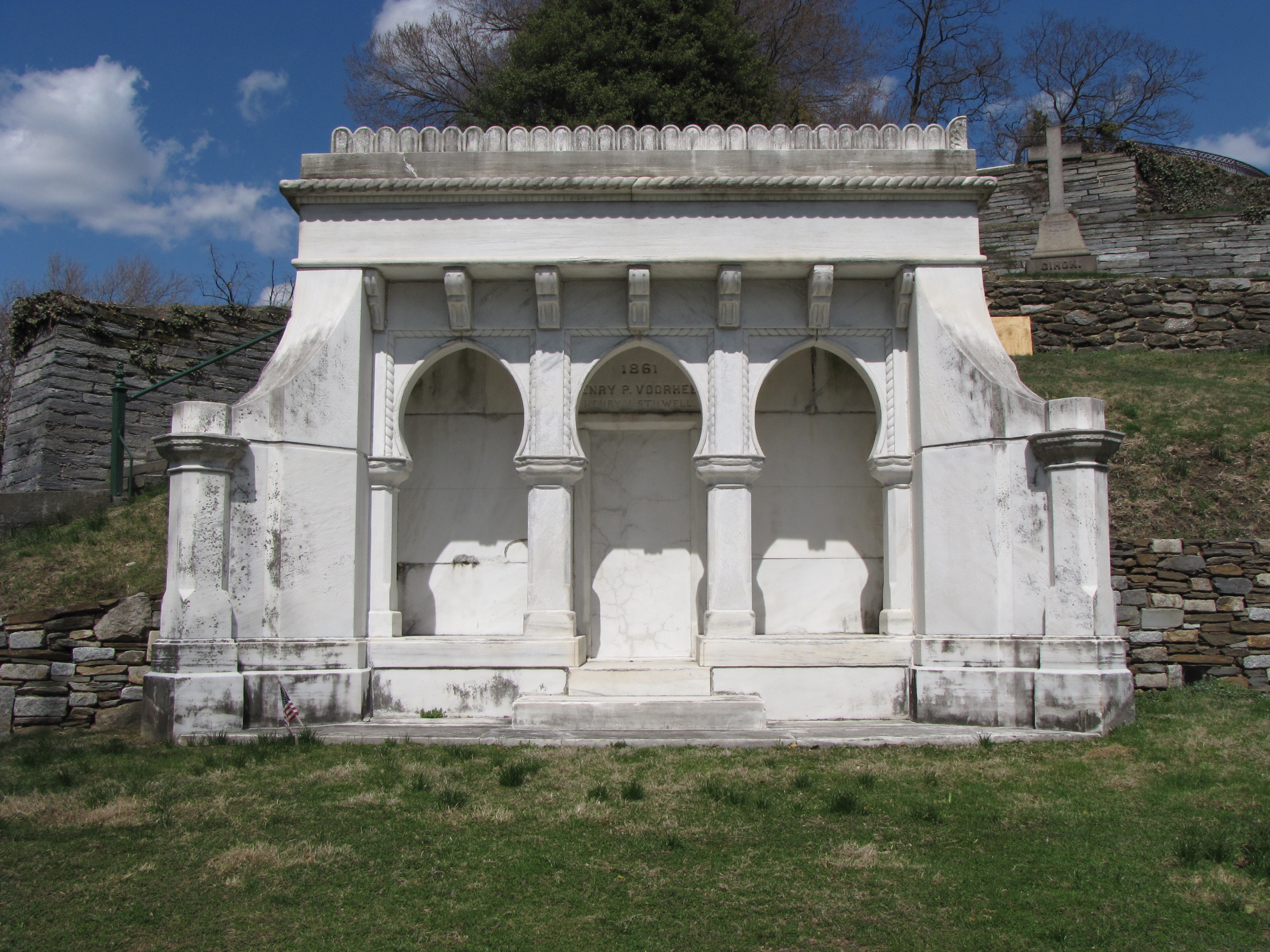
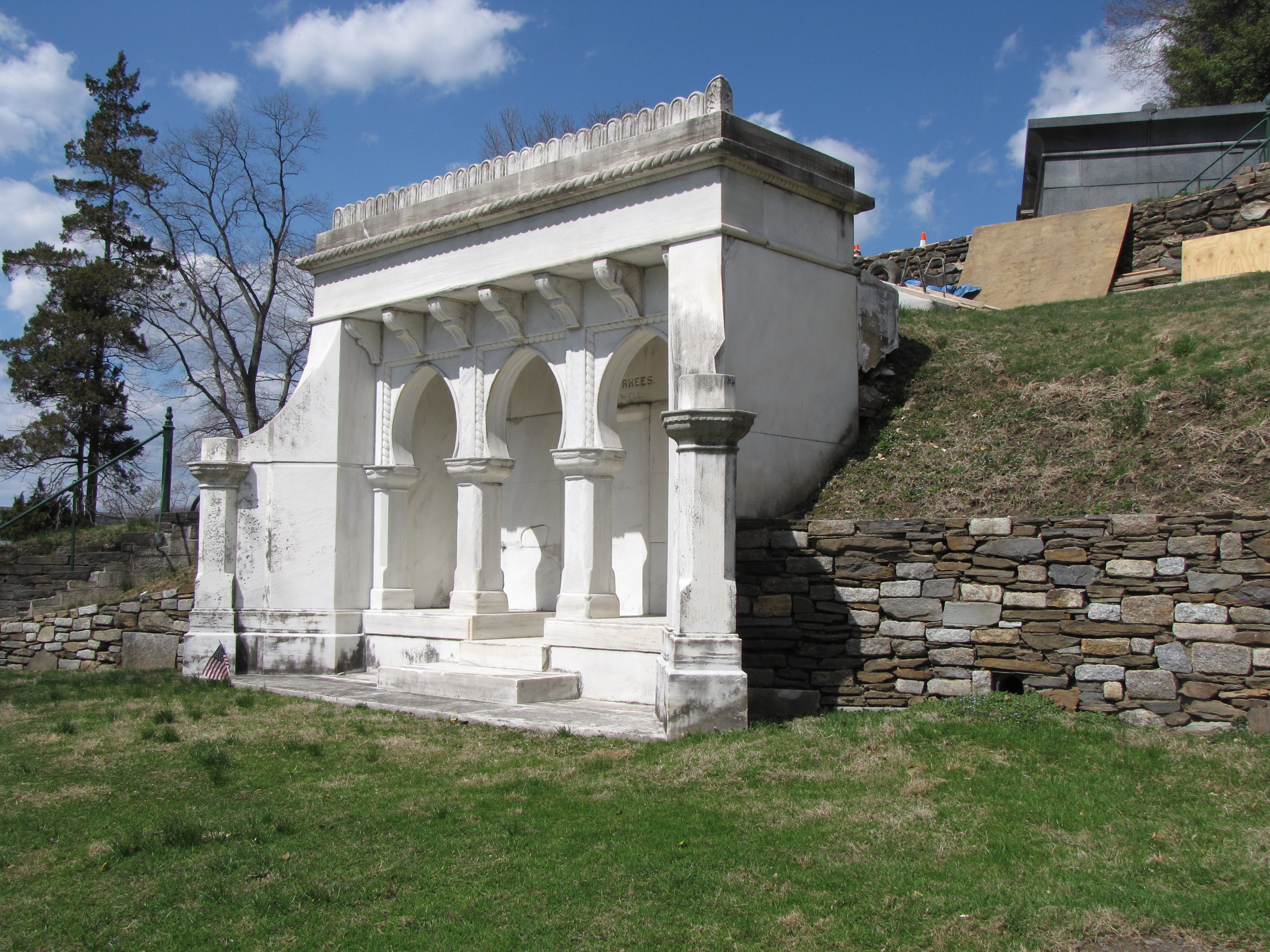
In addition to the two mausoleums found in Nashville and Louisville, this same design is found in two mausoleums in the Laurel Hill Cemetery in Philadelphia. The difference, however, is that with each of these two mausoleums are not free-standing.   That is, the façade is designed and constructed in the same Venetian Gothic style, but most of the tomb in underground. It is likely that in both cases of these two mausoleums are constructed and built by the Steam Marble Works in Philadelphia. The Vorhees Tomb is ornamented just like the Spotts Tomb in Louisville and the Carter Tomb in Nashville.

Laurel Hill Cemetery, Philadelphia

Laurel Hill Cemetery, Philadelphia

IMG_9784

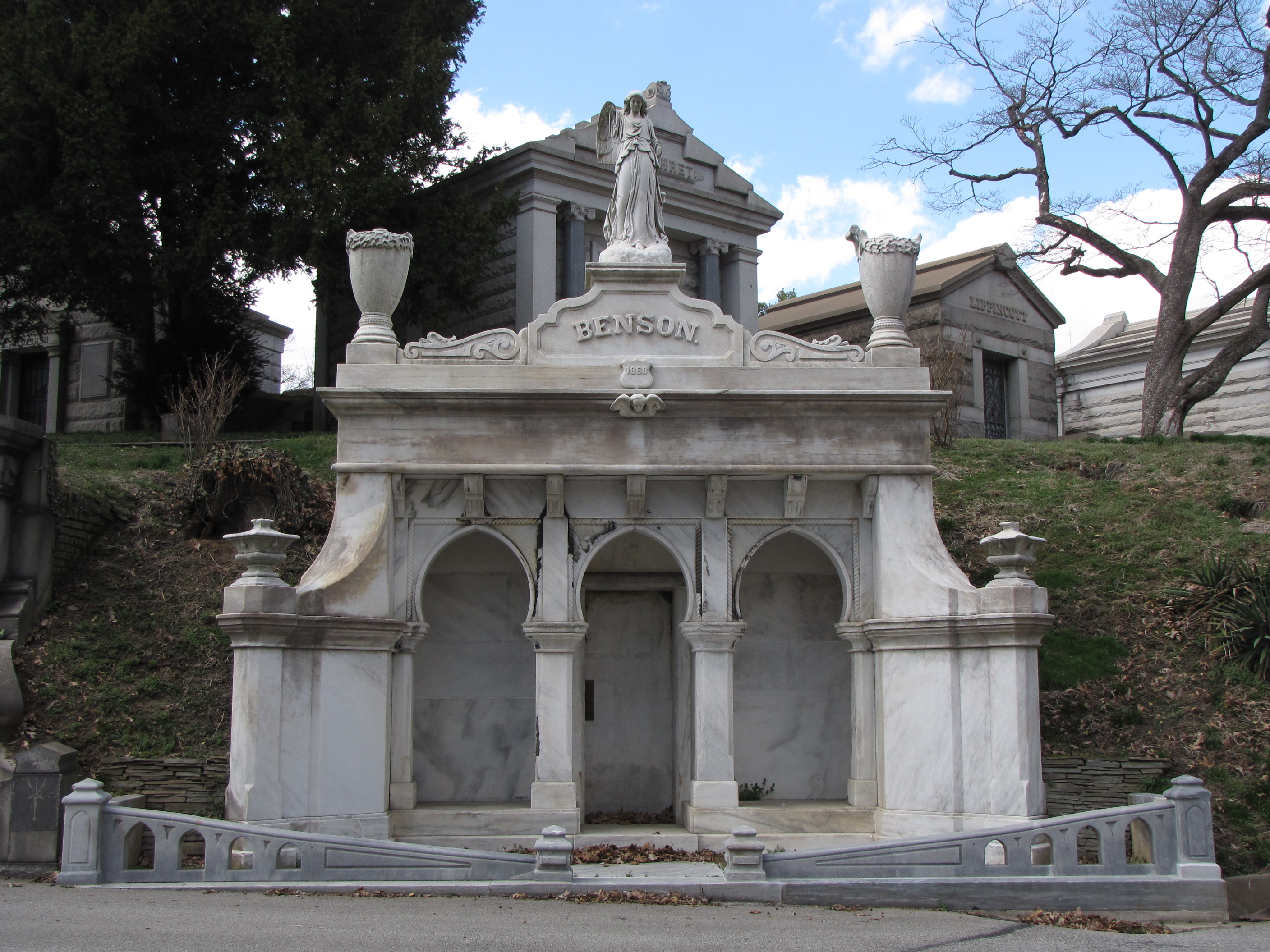
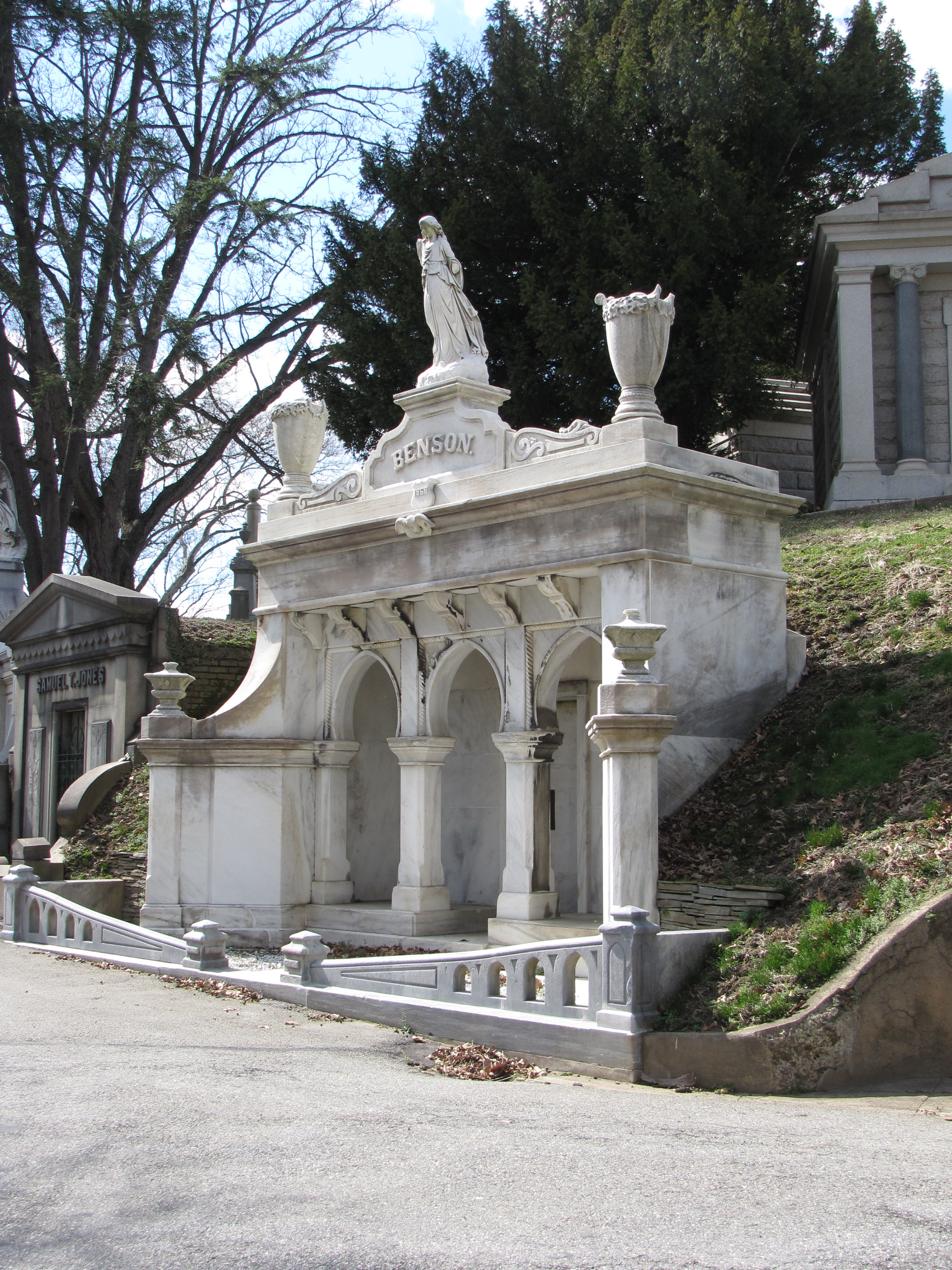
The Benson Tomb, is in the same architectural style, but is highly ornamented—with two large urns on the corners of the top of the tomb, and an angel in the center. In addition there are square urns on the “wings” of the mausoleum and a winged cherub under the date the mausoleum was built.

Laurel Hill Cemetery, Philadelphia

Laurel Hill Cemetery, Philadelphia

IMG_9914

What this appears to demonstrate is that though one could order the Venetian Gothic Mausoleum from the Steam Marble Works Company, one could also have this design customized to suit the tastes of the family.

Posted in Mausoleums | Leave a comment

Crown and Open Gates

Woodlawn Cemetery, Las Vegas, Nevada

Woodlawn Cemetery, Las Vegas, Nevada

JOHN W. MEYERS

1865 – 1941


The gravestone pictured above displays an incised carving of open gate, a very common symbol found in American cemeteries.

In this example, the open gates, which are central to the Last Judgment, have above the gates a crown.

The gates represent a passageway, the gates are the portal for saved souls to make their passage from the Earthly realm to Heaven upon Christ’s return.

The crown is a symbol of glory and reward and victory over death.  The reward comes after life and the hard-fought battle on Earth against the wages of sin and the temptations of the flesh.  The reward awaits in Heaven where the victor will receive a crown of victory.  The crown also represents the sovereign authority of the Lord.

IMG_9599

Posted in Symbolism | 1 Comment

LUX AETERNA

Mount Auburn Cemetery, Cambridge, Massachusetts

Mount Auburn Cemetery, Cambridge, Massachusetts

LUX AETERNA

1819 – PHILIP HOWES SEARS – 1898

1835 – SARAH PRATT SEARS – 1911

WITH THEE IS THE FOUNTAIN OF LIFE

IN THY LIGHT SHALL WE SEE LIGHT

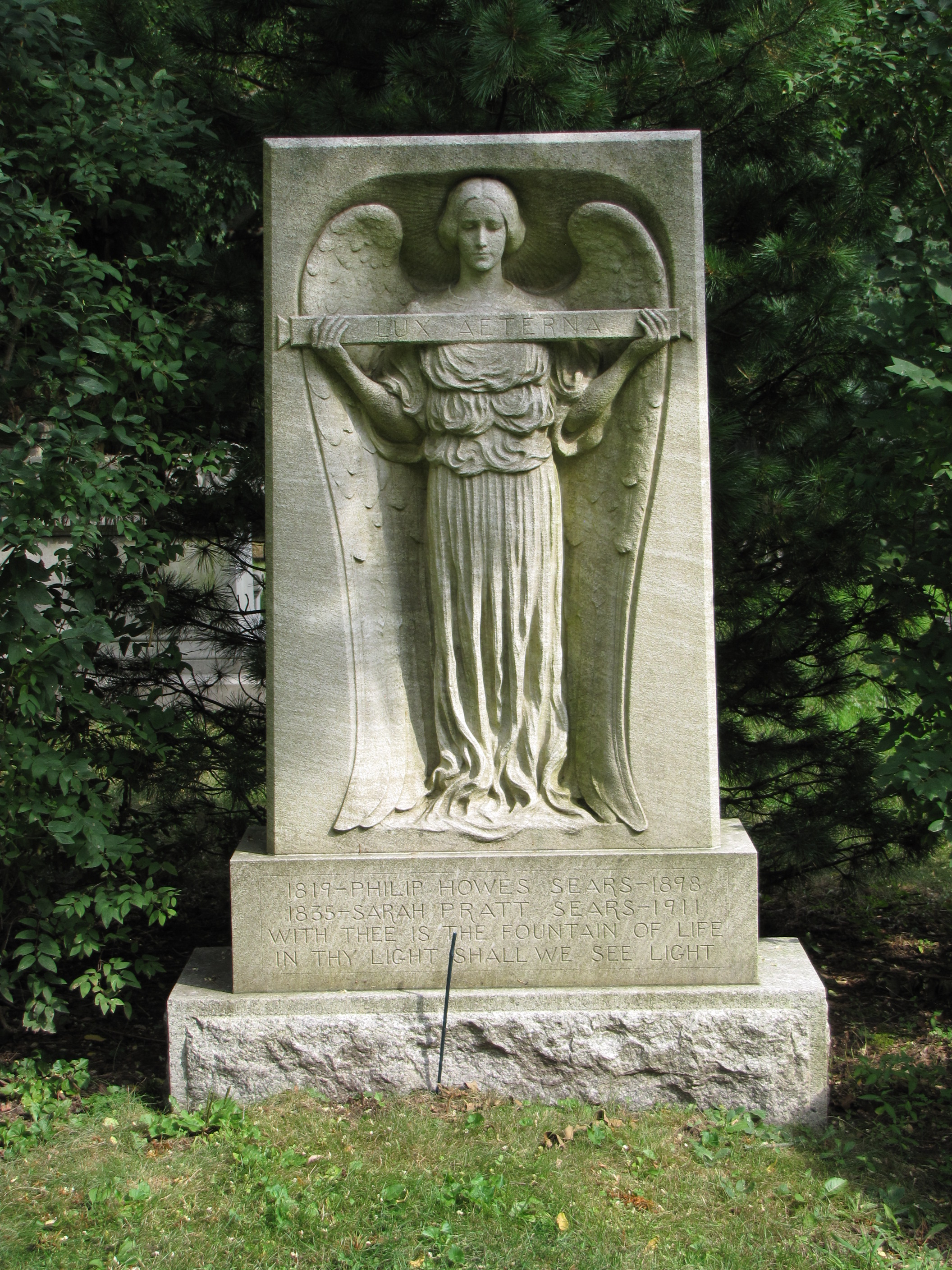
When we see a winged figure in a cemetery, we instantly recognize it as an angel–a messenger of God.  However, Christian art did not depict angels with wings until the fourth century.  Before then, angels were represented in several different forms–sometimes in human form, but also represented as a dove, or even just as a hand reaching down to Earth from the Heavens.  Beginning with the reign of Constantine, angels began being depicted with wings, as this angel is portrayed here on the Sears monument in the Mount Auburn Cemetery at Cambridge, Massachusetts.

This angel, dressed in billowing gossamer that forms cloud-like folds on her bodice, holds a ribbon with the words, “LUX AETERNA”, Latin for “Light Eternal.” This is most likely a reference to the Biblical verse John 8:12, “Then spake Jesus again unto them, saying, I am the light of the world: he that followeth me shall not walk in darkness, but shall have the light of life.”  The reference is continued in the second line of the epitaph, “IN THY LIGHT SHALL WE SEE LIGHT“.

IMG_5269

Posted in Angels, Symbolism | 1 Comment

Time Takes Flight

Mount Auburn Cemetery, Cambridge, Massachusetts

Mount Auburn Cemetery, Cambridge, Massachusetts

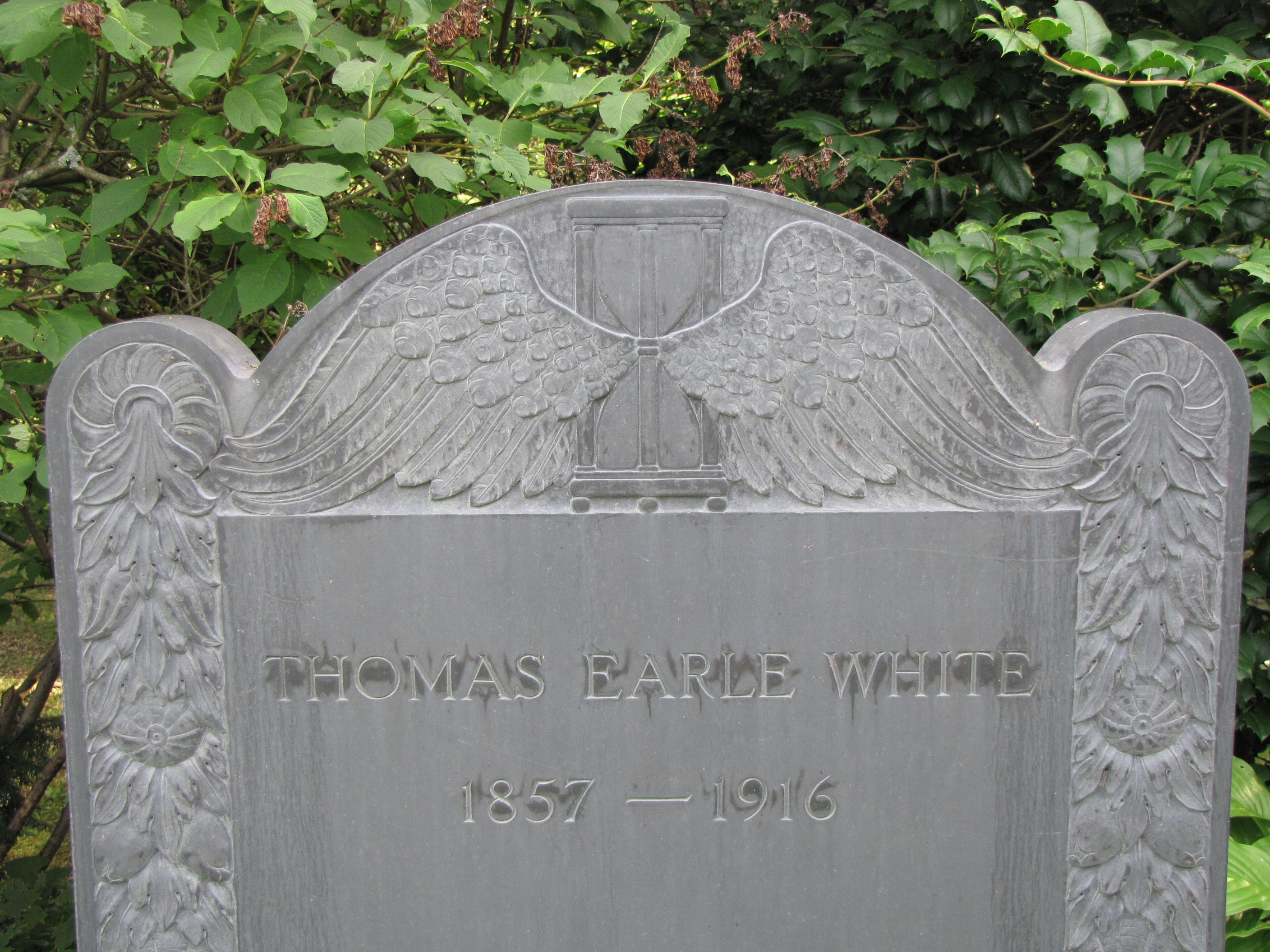
Thomas Earle White

1857 – 1916

There are several expressions in the American lexicon that express how fleeting our time on this Earth is, how this temporal life is short. The grand old soap opera, Days of Our Lives, has as their catchphrase, “Like sands through the hourglass, so are the days of our lives.”  Life measured by the grains of sand slip through one side of the hourglass to the other in a flash.

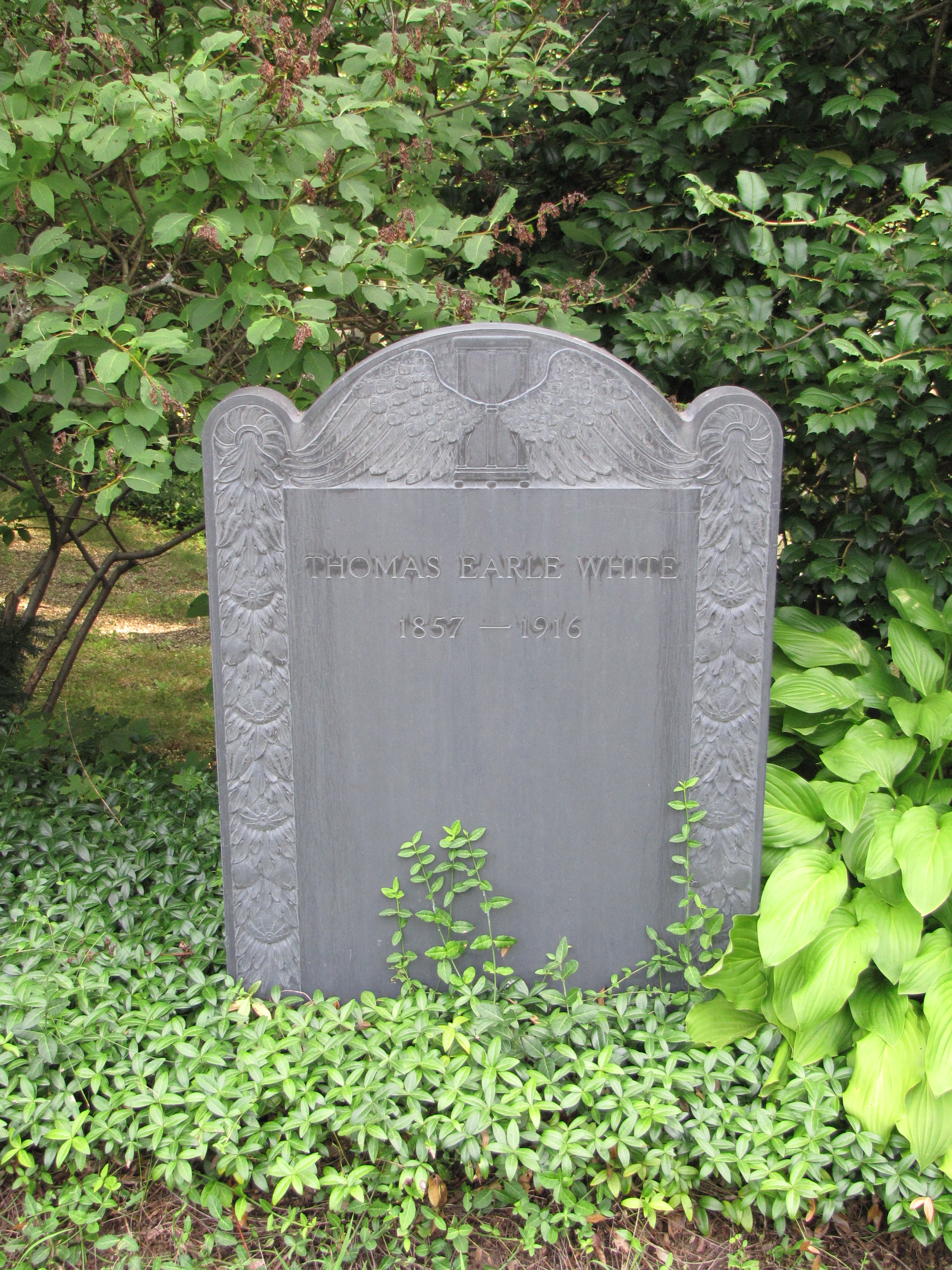
The hourglass symbol on a gravestone, often shown with wings, as it here, represents the same thought of time fleeting by quickly reminding us of the expression “Time Flies”.  This symbol, a winged hourglass, brings that expression to life, so to speak.

A reminder in stone that life is short and that time is fleeting, every minute of every day brings one closer and closer to death.

It is also an admonition to us NOT to put off making that phone call to an ailing parent, sending that letter to a distant friend, mailing that birthday card even if it’s a day late, getting that present purchased and wrapped to celebrate an anniversary, or the simple act of telling those who you love that you do before it is too late and time has taken flight.

IMG_5534

Posted in Symbolism | 7 Comments