The Beehive

Greenwood Cemetery, Phoenix, Arizona

Greenwood Cemetery, Phoenix, Arizona

Wm LOSSING

1848 – 19 8

(It appears as if the “1” on the tombstone has been chiseled off)

The beehive is often found on the graves of members of the Independent Order of Odd Fellows or the Freemasons. To the Masons, the beehive represented a feat that not a single bee could accomplish, but the industry of many bees.  Masons were to work hard when working so they could live with a free conscience on their holidays or non-working days.

The Mormons also adopted the tiny bee and the beehive as a symbol of community.  Again, they could build a tabernacle or an entire community by employing the talents and skills of many that could not be accomplished by a few.  The Great Seal of the State of Utah has at its center, a beehive with the word “INDUSTRY” written above the image of the beehive.

491px-Seal_of_Utah.svg[1]

The beehive, like the great pyramids, represent a hierarchy in society, suggesting an organized community.  The beehive has long been a symbol for human industry. The cliché, busy as a bee, reinforces the idea of the bees being industrious.  It also represents faith, education and domestic virtues.

IMG_8597

Posted in Uncategorized | 4 Comments

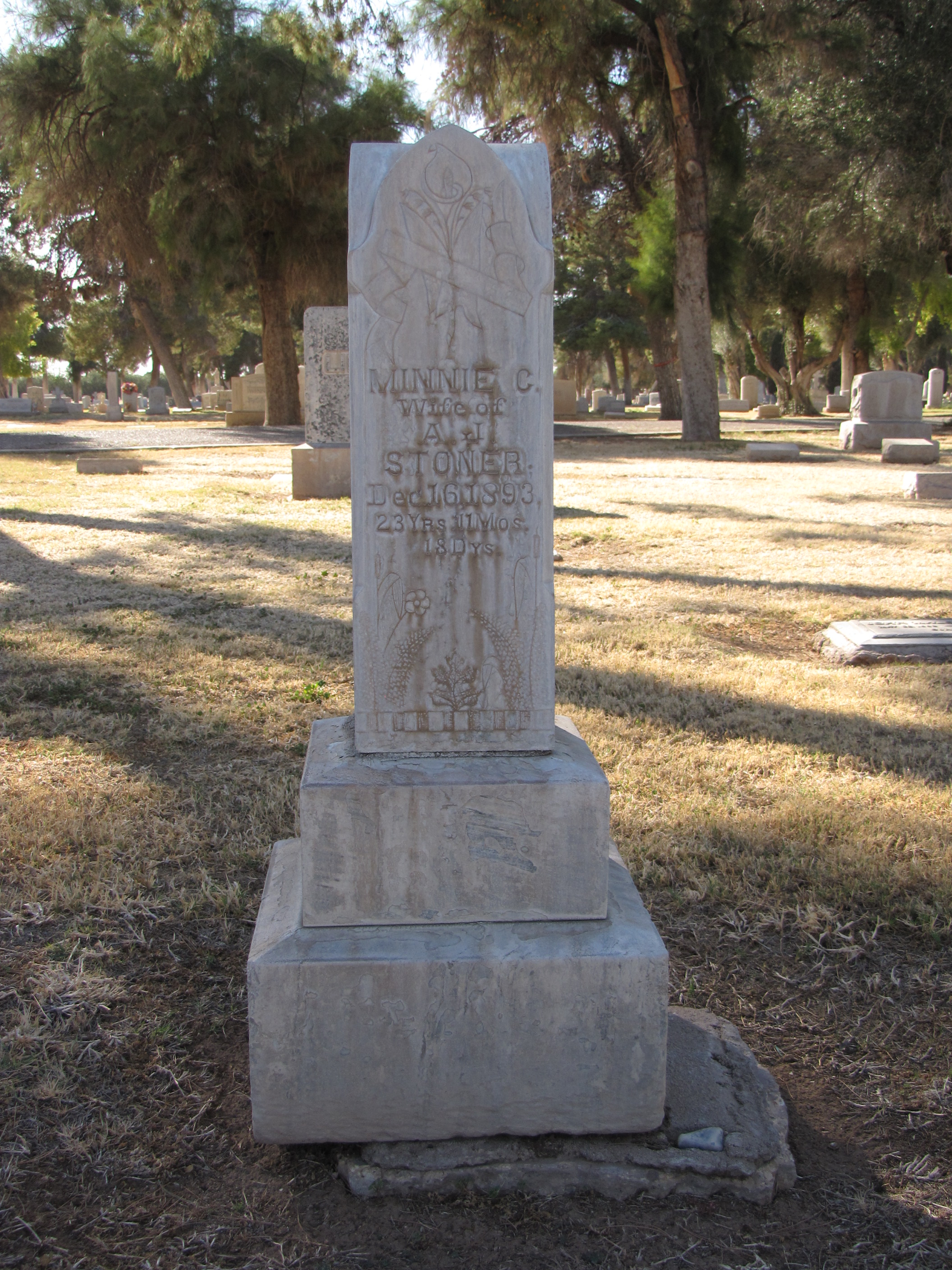
Cattails

Greenwood Cemetery, Phoenix, Arizona

Greenwood Cemetery, Phoenix, Arizona

MINNIE C.

Wife of

A. J.

STONER

Dec. 16, 1893

23 Yrs 11 Mos.

18 Dys

The Victorian Era lasted from about 1832 until Queen Victoria’s death in 1903.  The era was an eclectic period in the decorative arts with several styles—Gothic, Tudor, Neoclassical—vying for dominance.  The period was marked by ornamentation.  This was true in architecture, furniture, and funerary arts.  In cemeteries gravestones became taller, ornamented, and sentimental.

In Victorian times, flowers took on significance as a way to send coded messages; this was known as floriography from the Latin combining flora—“goddess of flowers” and graphein—“writing”.  Each flower had a meaning that was conveyed to the viewer or receiver of the flower or bouquet of flowers—the lily of the valley represented humility, the coral rose represented desire and passion, the white lily represented purity, and so on.

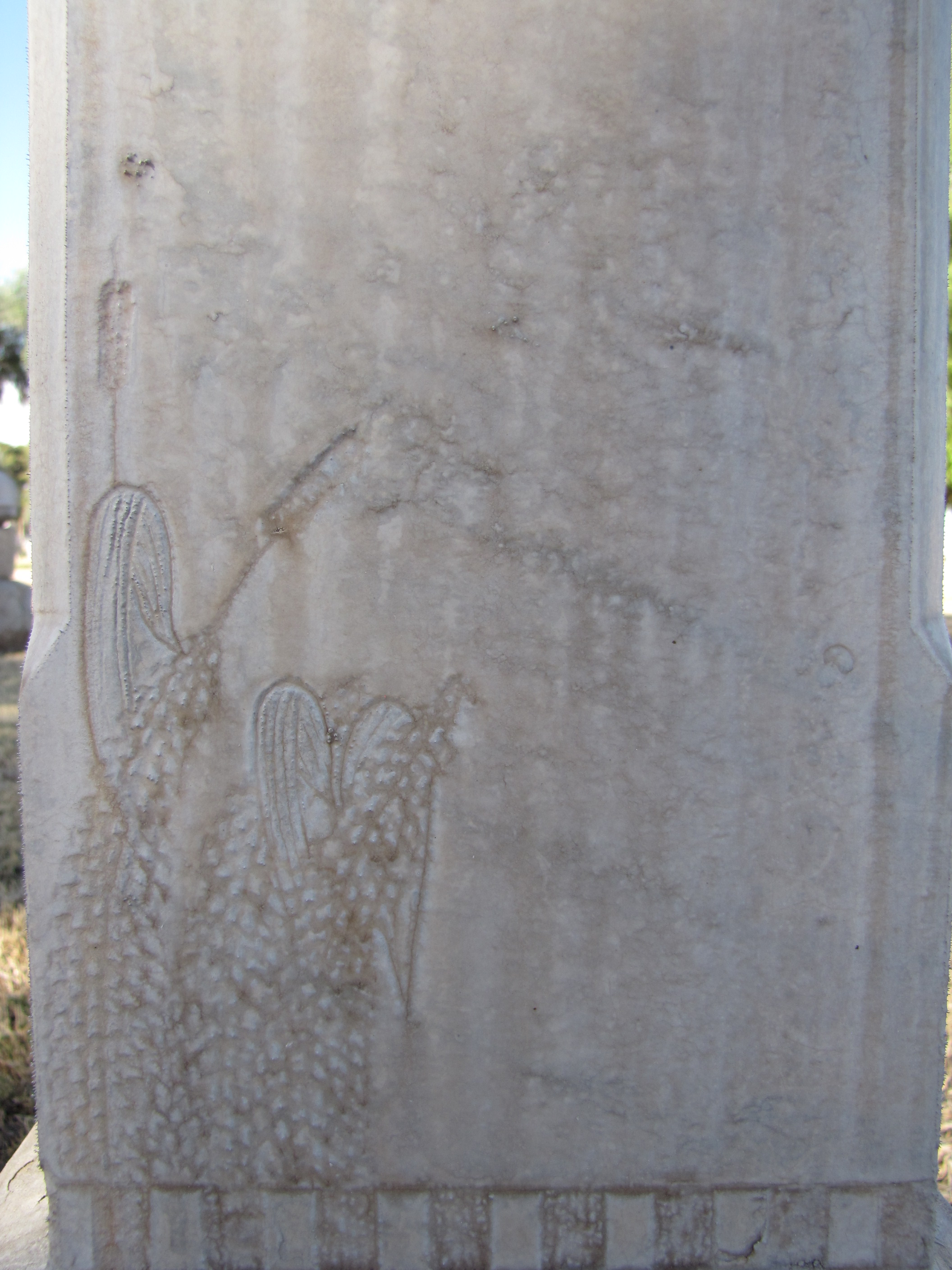
Here on this gravestone in the Greenwood Cemetery at Phoenix, Arizona, lightly incised into the four sides are cattails.  Cattails are found in marshes and at the pond’s edge.  The cattail is a plain plant, a common plant that flourishes next to the water.  In Christianity, the great prophet—the infant Moses—was found floating in a tiny basket woven of bulrushes and among the cattails.  Cattails, therefore became connected to a place of Salvation.  And because cattails only thrive with “wet feet” faithful Christians see it as a plant that is connected to the source of living waters—the teachings of the Church.  Cattails are a metaphor for the humble servants of the Lord who live a life of humble obedience.

A common epitaph found on many gravestones uses the imagery of the water’s edge to describe the place where loved ones will meet in the hereafter, a place of Salvation:

Our darling one

Has gone before

To greet us

On the blissful shore.

IMG_8686


Posted in Uncategorized | Leave a comment

Sunburst

IMG_8735

SCOTT JAMIESON

1878 – 1909

until the morning

of the resurrection.

Occasionally a gravestone is fashioned in a way so that the symbolism is matched to the epitaph, as is the case.  Here, an incised carving shows curtains being drawn to the sides to reveal the sun rising over the clouds–the rising sun, a symbol of the resurrection.  This matches the epitaph on the gravestone and leaves little doubt what message the gravestone is trying to convey.  In addition to that, the open book on the top of the gravestone most likely represents the Bible.  This further the religious message of the marker–God’s Word is the way to Heaven.

IMG_8737

Posted in Uncategorized | Leave a comment

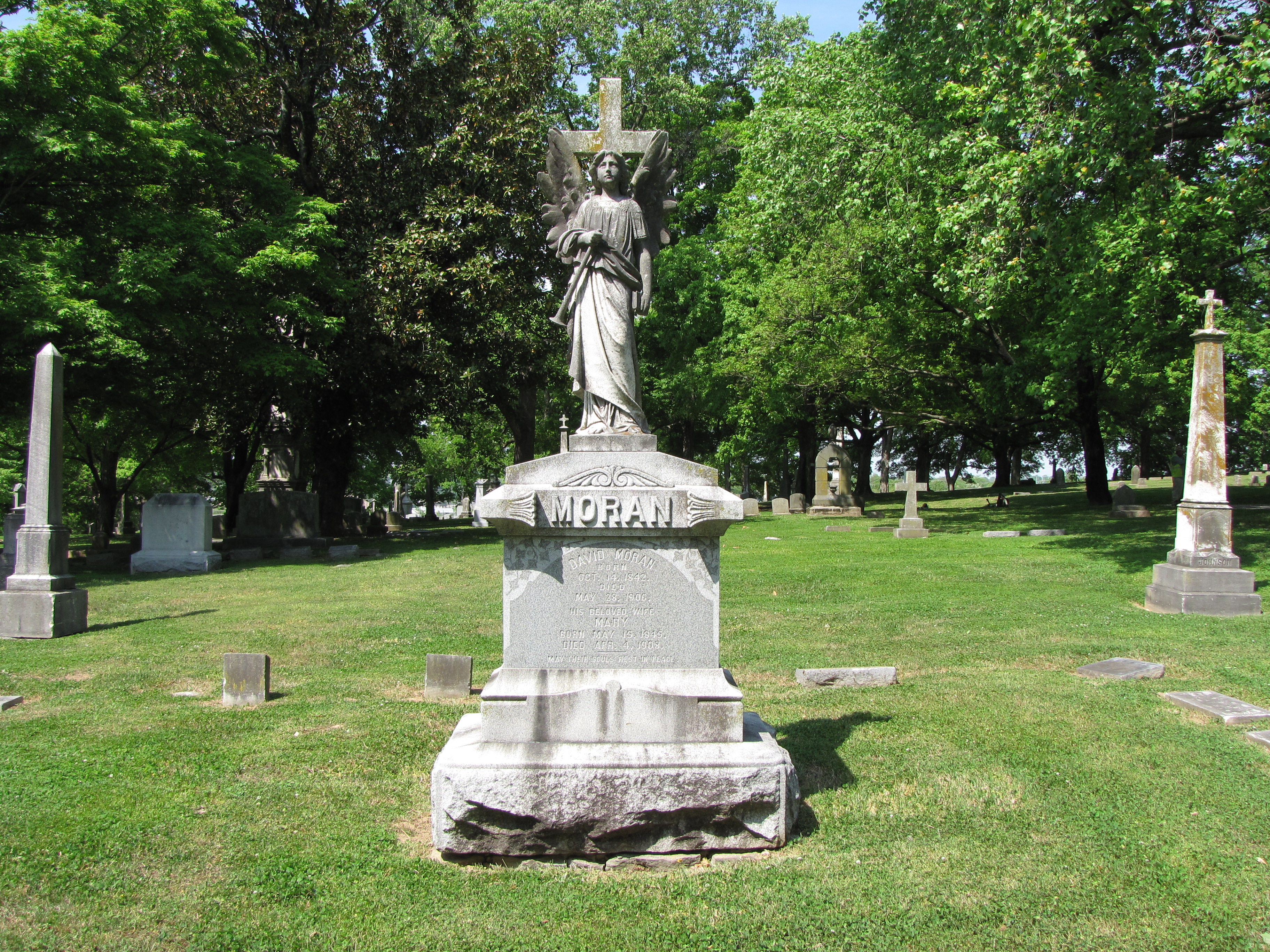
The Trumpet and the Book

Mount Olivet Cemetery, Nashville, Tennessee

Mount Olivet Cemetery, Nashville, Tennessee

DAVID MORAN

BORN

OCT. 14, 1842.

DIED

MAY 28, 1906.

HIS BELOVED WIFE

MARY

BORN MAY 15, 1845.

DIED APR. 4, 1908

MAY THEIR SOULS REST IN PEACE

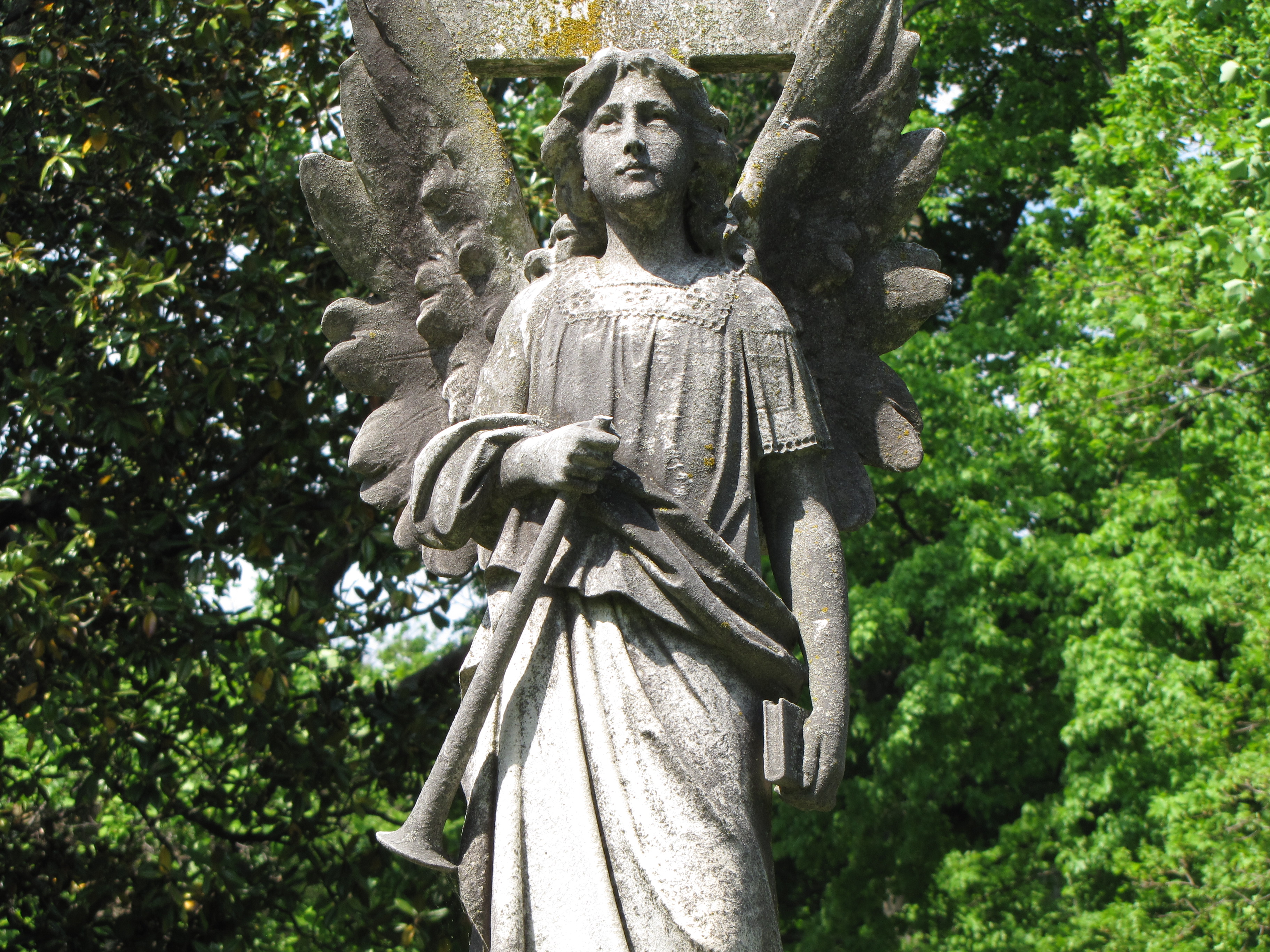
On the top of this gravestone, a youthful angel is looking upward toward the Heavens and clutching a trumpet in one hand and a book in the other.  The trumpet announces the Day of Judgment and the Call to Resurrection.  The closed book is often a metaphor for the end of life, the story has been told and the end of the story has come.  After the book is complete, and the book is closed, the author lay in the grave.

IMG_5452

Posted in Symbolism | Leave a comment

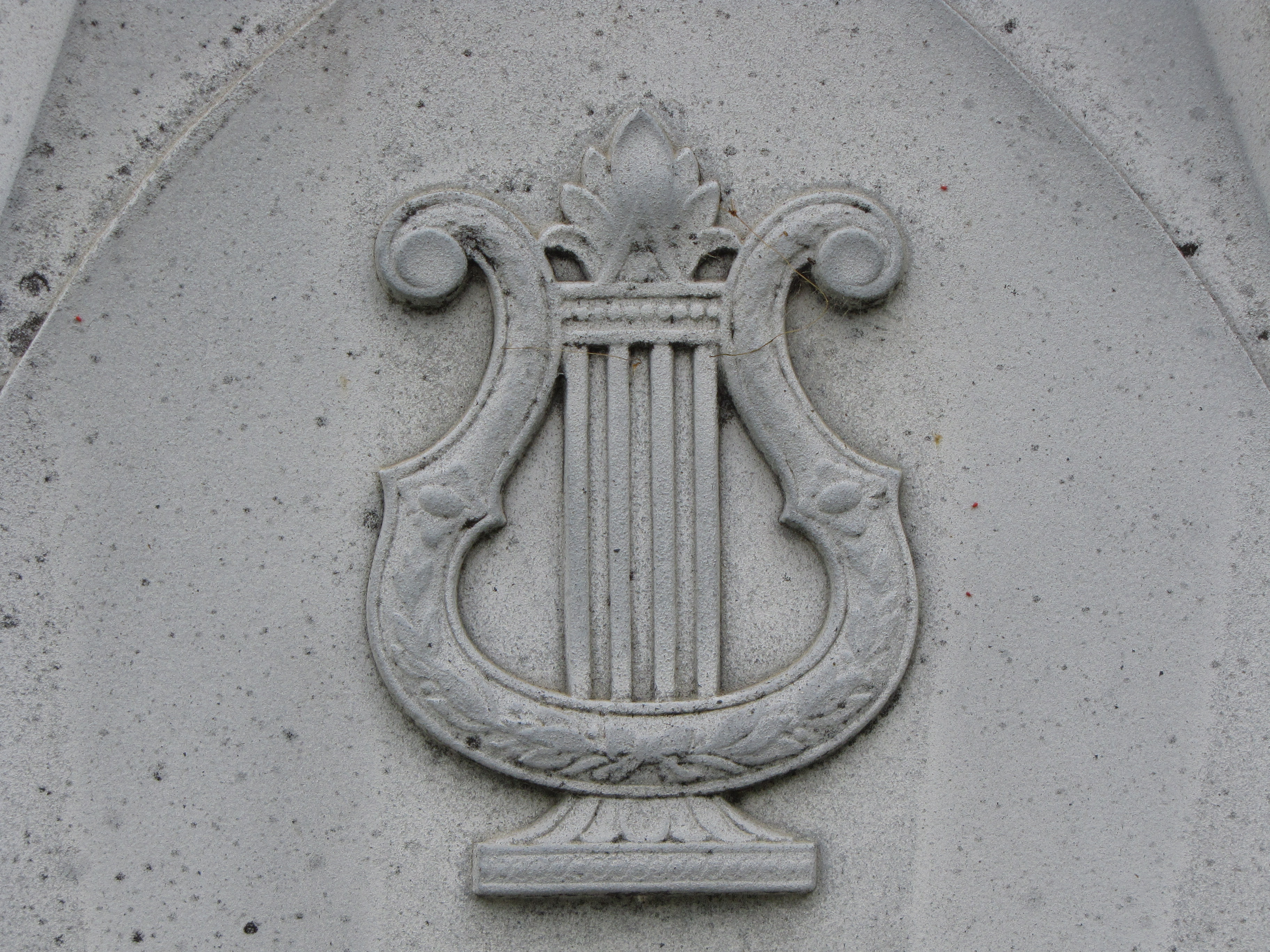
Lyre


Mt. Oliver Cemetery, Nashville, Tennessee

Mt. Olivet Cemetery, Nashville, Tennessee

Some of the most clear examples of symbolism can be found on the zinc markers found in nearly every graveyard.  Here, is an example of a lyre traditionally seen as a symbol of Apollo, the Greek god of music. In Christian symbolism it can represent harmony and Heavenly accord and song in praise of the Lord.  In funerary art, however, the lyre can also represent the end of life.

Posted in Symbolism | 2 Comments

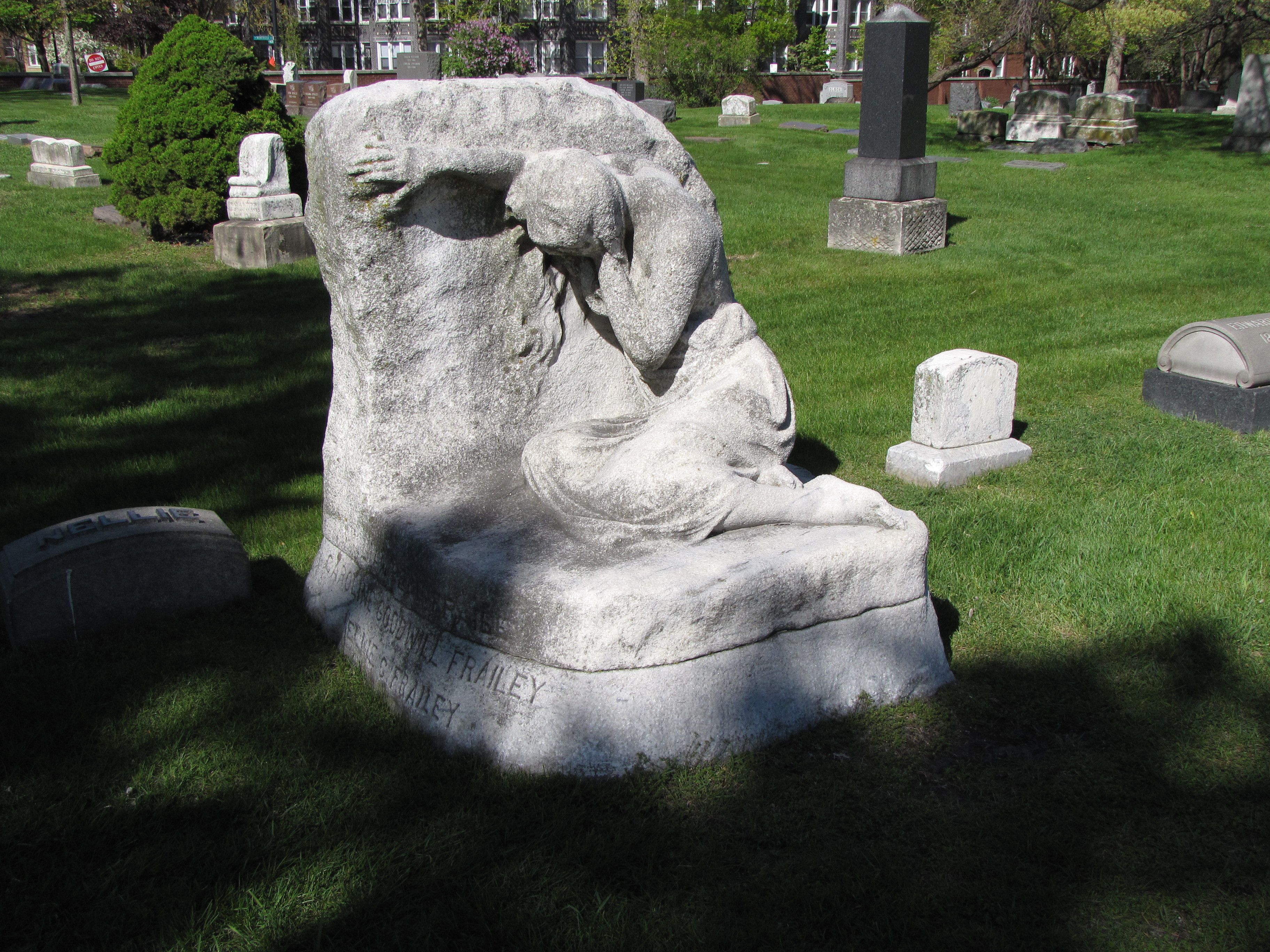
Sorrow

Graceland Cemetery, Chicago, Illinois

Graceland Cemetery, Chicago, Illinois

In the poem, On Another’s Sorrow, by William Blake, the poet asks:

Can I see another’s woe,

And not be in sorrow too?

Can I see another’s grief,

And not seek for kind relief?

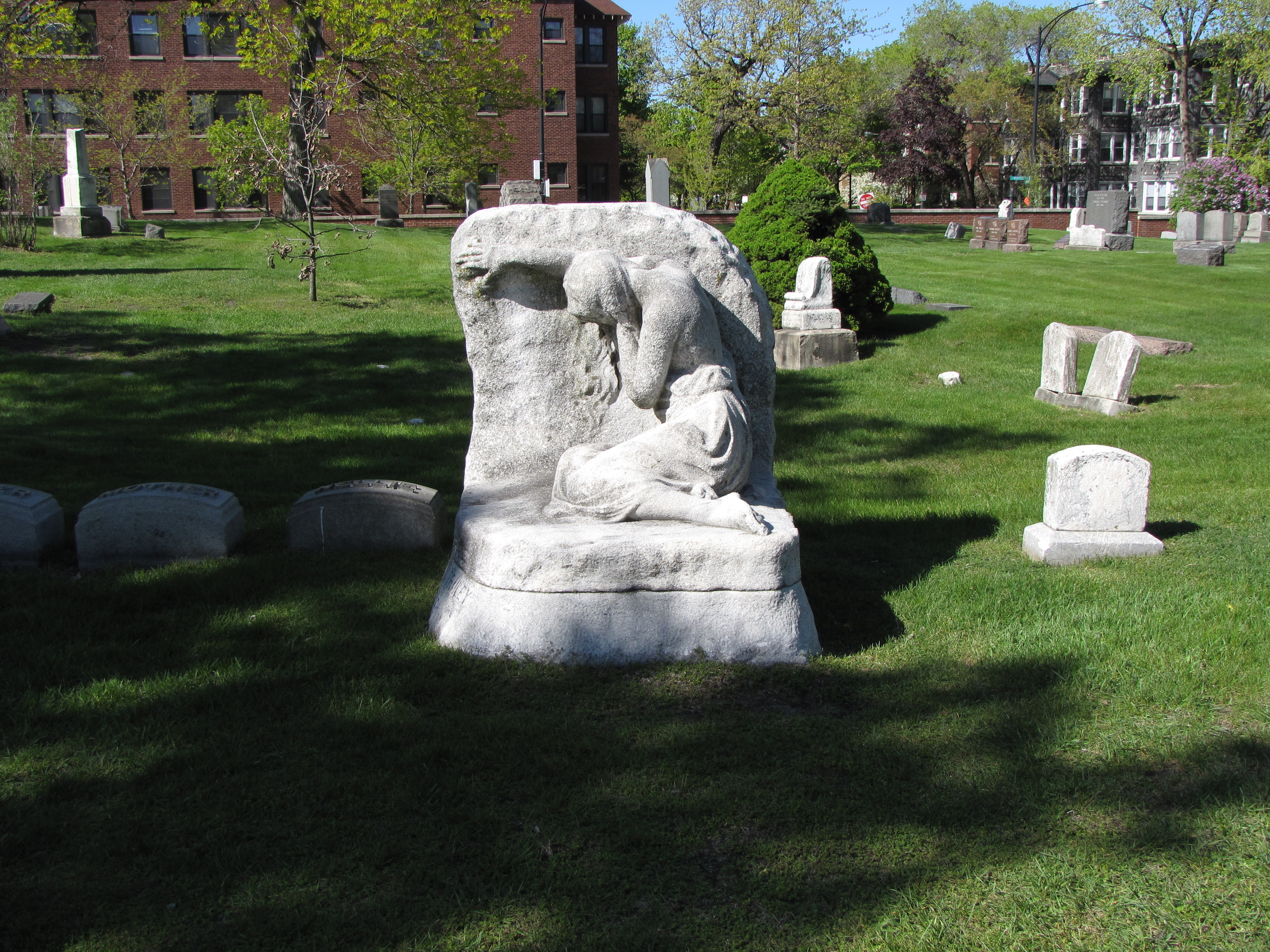
A mourning figure is carves into the gray granite monument in the Graceland Cemetery at Chicago, Illinois, marking the graves of William Penn Frailey, Caroline Goodwill Frailey, and Nellie C. Frailey.

The mourning figure looks as if it has collapsed against the back of the monument.  Its head is bent in sorrow, a display of contemplation and grief.

Just as in the poem, it is difficult to look at the gravestone and not be moved by the expression of grief represented by the mourning figure and feel the loss and sorrow of the family who erected the stone.

IMG_6360

Posted in Symbolism | 1 Comment

Hands

Calvary Cemetery, Chicago, Illinois

Calvary Cemetery, Chicago, Illinois

Mary Crawford’s white marble tombstone in the Calvary Cemetery at Chicago, Illinois, is a Victorian mélange of symbolism, typical for the age.  The Victorians knew how to do funerals and all things death.

The top of the stone depicts swirling clouds with two hands coming downward presumably from the Heavens.  Typically, a hand pointed downward on a gravestone represents the hand of God, and symbolizes mortality and death, often sudden death.  In this case, the hands look welcoming, almost like they are inviting the soul up to Heaven.

The tableau on which the hands are displayed is set like a stage with two curtains drawn to the sides.  These often represent funeral drapes, a symbol of mourning and grief. However, they could also represent the veil between one realm and the other—the passage of the soul from the Earthly Realm to the Heavenly realm.

At the base of the scene is a dove. Many symbols found on gravestones have multiple meanings. The dove is one of those.

Several references in the Bible refer to the dove as a symbol of the Holy Spirit. Matthew 3:16 reads, “And Jesus, when he was baptized, went up straightway out of the water: and, lo, the heavens were opened unto him, and he saw the Spirit of God descending like a dove, and lighting upon him.” In Mark 1:10 the Bible says, “And Straightway coming up out of the water, he saw the heavens opened, and the Spirit like a dove descending upon him.” Again in John 1:32, the Bible reads, “And John bare record, saying, I saw the Spirit descending from heaven like a dove, and it abode upon him.”

Along with the dove symbolizing the Holy Spirit, the dove is also closely associated with peace, often depicted with a sprig of an olive in its beak. This, too, originated in the Bible. After the waters receded in the story of Noah, the dove appears. Genesis 8:11, “And the dove came in to him in the evening; and, lo, in her mouth was an olive leaf pluckt off; so Noah knew that the waters were abated from off the earth.”   It was a sign of God’s forgiveness.

The dove, with its white color, is also a symbol of purity and innocence and for that reason is often found the tombstones of children.

Thus the dove symbolizes the Holy Spirit, peace, and purity.  Here the dove sits atop a tilted cross.  The cross, of course, is the universal symbol of Christianity.

Posted in Symbolism | 1 Comment

Open Book


Greenlawn Cemetery, Franklin, Indiana

Greenlawn Cemetery, Franklin, Indiana

LAURA A.

DAUT. OF

J.F. & M.A. BROWN

DIED

January 17, 1875

AGED

16 YRS. 1 MO. 13 Ds.

The white marble tombstone in the Greenlawn Cemetery at Franklin, Indiana, is topped with an open book that has a mourning drape complete with tassels laid over the top.

The medallion in the middle of the gravestone displays the name and death date of the young teenage girl buried here.

The open book is a common symbol found on gravestones. The motif can represent the Book of Life with the names of the just registered on its or it can symbolize the Word of God in the form of the Bible.

Greenlawn Cemetery, Franklin, Indiana

Greenlawn Cemetery, Franklin, Indiana

Posted in Uncategorized | Leave a comment

Doppelgangers

The Gray Family Monument, Oakland Cemetery, Atlanta, Georgia

The Gray Family Monument, Oakland Cemetery, Atlanta, Georgia

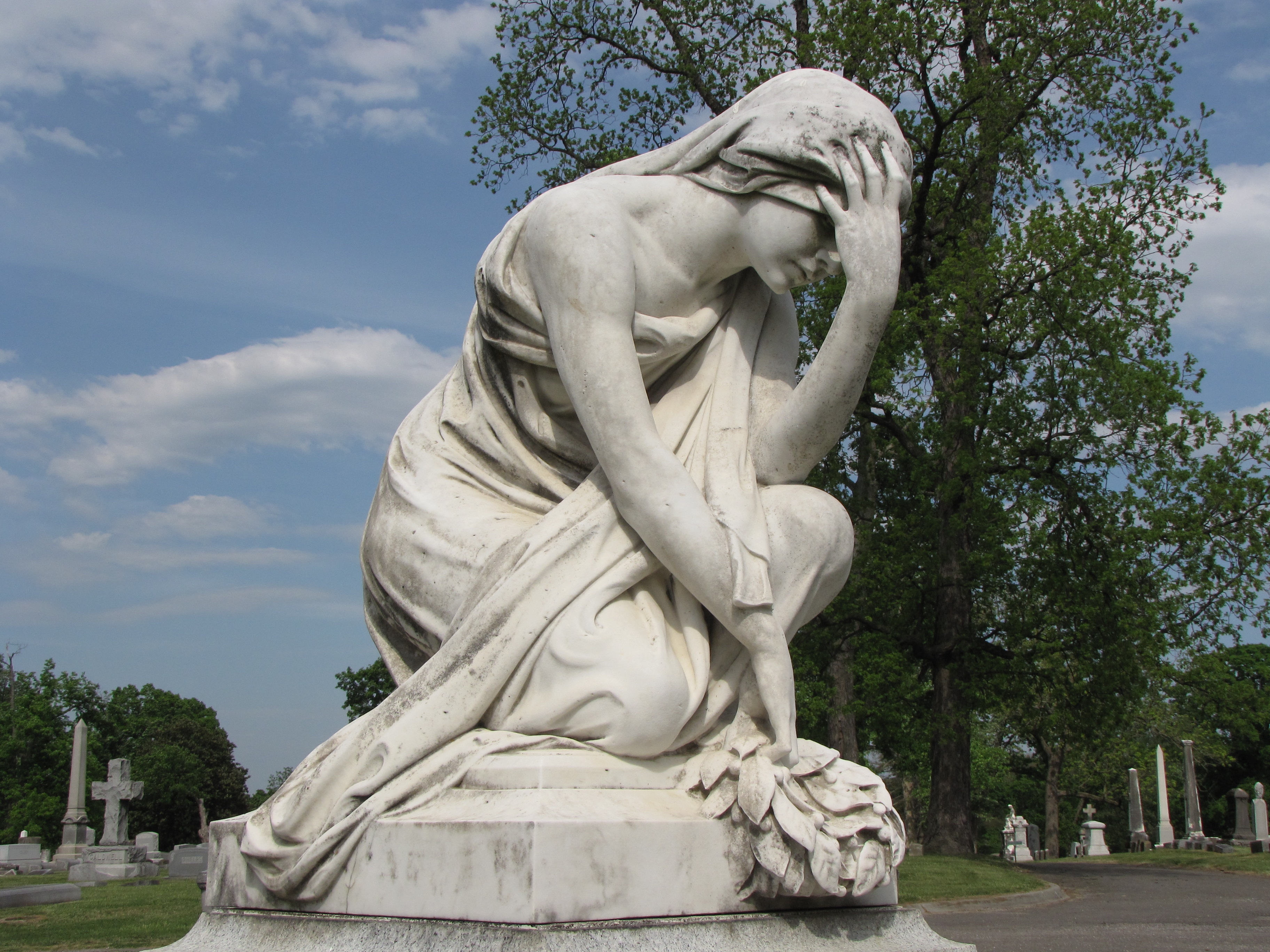
Doppelganger is a word that refers to two people who look the same.  Look a likes.   It is a German word that translates to “double goer”.  Popular television shows run photos next to each other showing actors and actresses together to show look a likes, such as, Christina Hendricks and Jessica Rabbit, Katy Perry and Zooey Deschanel, Morgan Freeman and Kofi Annan, Margot Robbie and Jaime Pressly, or Stephen Colbert and Bob Saget to name a few.  To poke gentle fun, some sites also match the faces of dogs to their look alike actors’ faces.

In this case, two gravestone sculpture doppelgangers—the Gray Family Monument at the Oakland Cemetery at Atlanta, Georgia and the Haggard monument at the Mount Olivet Cemetery at Nashville, Tennessee, are strikingly similar.

James Richard Gray – September 30, 1859-June 25, 1917

May Inman Gray – March 6, 1862-January 6, 1940

The Gray Family Monument, Oakland Cemetery, Atlanta, Georgia

The Gray Family Monument, Oakland Cemetery, Atlanta, Georgia

Haggard Family Monument, Mount Olivet Cemetery, Nashville, Tennessee

Haggard Family Monument, Mount Olivet Cemetery, Nashville, Tennessee

MARY LAURA CHAMPE-HAGGARD July 11, 1920

WILLIAM HAGGARD M.D. October 17, 1826 January 25, 1901

JENNIE DOUGLAS HAGGARD February 11, 1840 November 16, 1914

According to a book about the Oakland Cemetery, the Gray Family Monument is adorned with a magnificent white-marble sculpture of the Niobe, the Greek mythological Queen of Thebes. Niobe had fourteen children (the Niobids) and taunted Leto, who only had two children, Apollo and Artemis. In his rage he sent his two children to avenge the slight done to him by Niobe striking out at what was most dear to her.

Niobe, became the symbol of mourning when Apollo slaughtered her seven sons and Artemis killed her seven daughters. As one version of the story goes, upon seeing his dead fourteen children, Amphion, the King of Thebes, committed suicide. Niobe was so stricken with grief that she fled to Mount Siplyus, Manisa, Turkey, where she turned to stone. Her grief was so powerful that tears flowed ceaselessly from her forming the River Acheloos.

So, Oakland’s Niobe, a symbol of mourning, has a doppelganger in Nashville.

Haggard Family Monument, Mount Oliver Cemetery, Nashville, Tennessee

Haggard Family Monument, Mount Oliver Cemetery, Nashville, Tennessee

Posted in Uncategorized | Leave a comment

Open Gates

Lakewood Cemetery, Minneapolis, Minnesota

Lakewood Cemetery, Minneapolis, Minnesota

The red granite block marker above has an opening cut into it.  The opening has two bronze gates slightly open and set into it.  Open gates are a common symbol found in American cemeteries.

IMG_7940

Most often the open gates symbol is found carved into a gravestone–not in 3D.

Rest Haven Cemetery, Edinburgh, Indiana

Rest Haven Cemetery, Edinburgh, Indiana

The open gates, which are central to the Last Judgment, are opened to a banner above that reads “AT REST”.  The gates here represent a passageway from one realm to the next.  The gates are the portal for saved souls to make their passage from the Earthly realm to the Heavenly realm upon Christ’s return.

Rest Haven Cemetery, Edinburgh, Indiana

Rest Haven Cemetery, Edinburgh, Indiana

Posted in Symbolism | 1 Comment