Rock-Faced Monuments


rock-faced_monuments_by_harry_a_bliss_1919_p9In 1919, publisher Harry A. Bliss produced Rock-Faced Monuments: Illustrations and Descriptions of Some of the Best Examples of Rock-Faced Memorials. The book was published in Buffalo, New York. The book’s focus and purpose was to extoll the beauty of rock-faced memorials and gravestones—examples fill the book. Rock-faced refers to “rough-cut” gravestones and memorials that do not have a polished finish.

In the introduction to the book Bliss writes, “Because of the natural beauty of the unfinished rock, there are many people who prefer it. It expresses certain commendable qualities such as, naturalness, love of the out-of-doors, and ruggedness of character.”

One of the many examples found in the book is a photograph of an angel standing in front of a rock-faced Latin cross. The text at the bottom of page 9 reads, “An angel figure, symbolic of Peace, as used on a monument is always appropriate, but when rock face is used as a background, the smooth lines of the figure are shown to double advantage and it stands out in a manner unattainable on a smooth monument. The rustic lettering fits well with the general scheme of the memorial.”

Many variations and examples of memorials of this kind can be found in cemeteries throughout the United States.  In the example below, a lily of the valley replaces the palm leave from the example displayed in the book about rock-faced memorials.  The lily of the valley was a symbol of purity, innocence, and virginity–which makes this flower a perfect choice for wedding bouquets.  Princess Grace of Monaco and Princess Catherine (Kate Middleton) both chose lily of the valley to carry down the aisle at their weddings.

Laurel Hill Cemetery, Philadelphia, Pennsylvania

Laurel Hill Cemetery, Philadelphia, Pennsylvania

The entire booklet can be found at the Quarries and Beyond Website: http://quarriesandbeyond.org/cemeteries_and_monumental_art/cemetery_stones.html.

The Quarries and Beyond Website was created by Peggy B. and Patrick Perazzo. It focuses on historic stone quarries, stone workers and companies, and related subjects such as geology. Whenever possible links of finished products are provided on the Website. There is a “Quarry Articles” section that presents articles, booklets, and links from the late 1800s to early 1900s, including the 1856 “The Marble-Workers’ Manual.” The “Cemetery Stones and Monuments” section provides references and resources, including many old monument magazines, catalogs, price lists, and a photographic tour “From Quarry to Cemetery Monuments.”
Posted in Angels | Leave a comment

Italian Model or Angel?

Bellfontaine Cemetery, St. Louis, Missouri

Bellefontaine Cemetery, St. Louis, Missouri

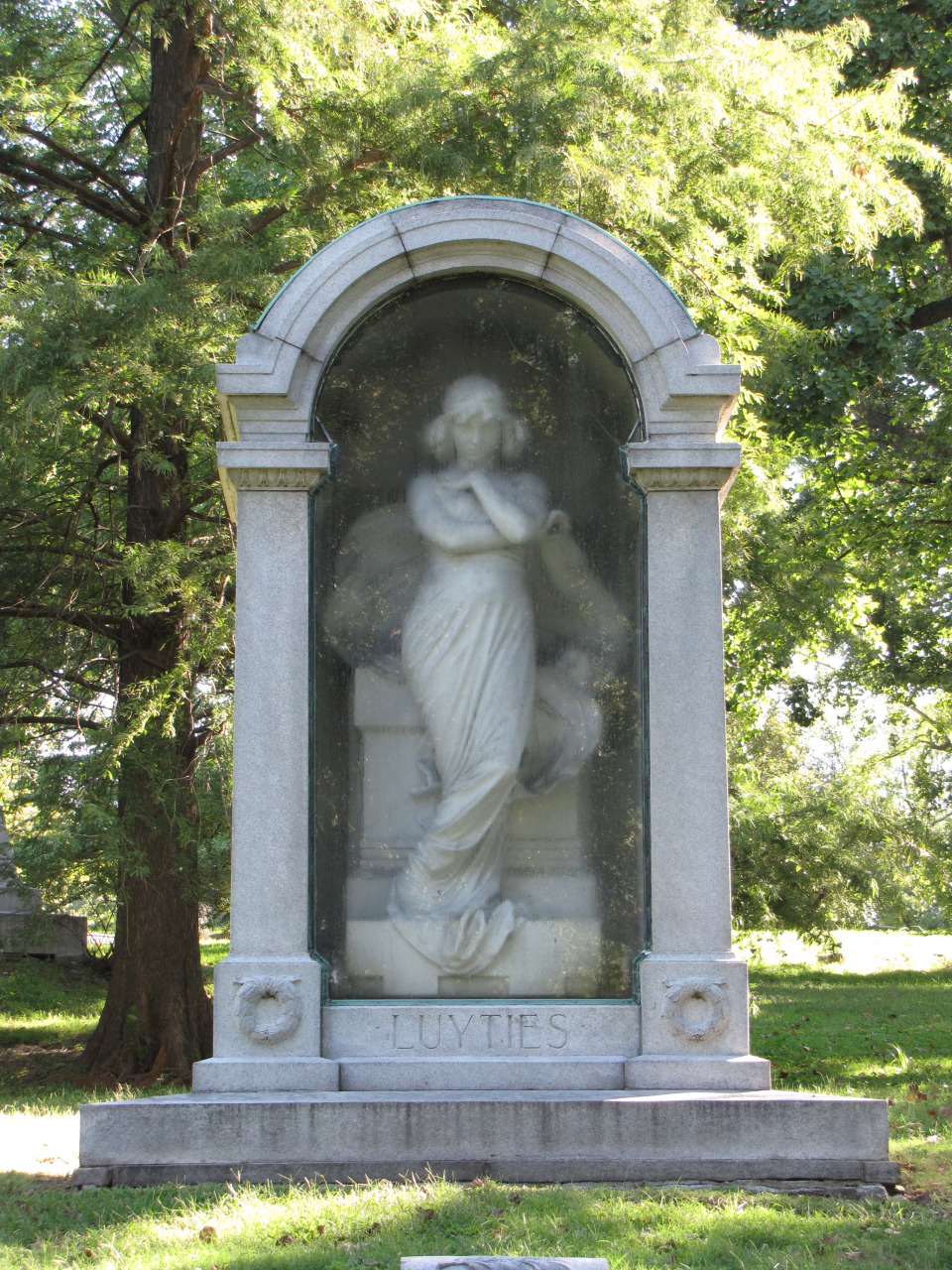
There is a story about “the girl in the shadow box”. It is an ancient story told and re-told of unrequited love that is also told about this statue. According to local St. Louis lore, the Herman Luyties’ (1871-1921) Monument in the famed Bellefontaine Cemetery displays the bodacious beauty sculpted marble likeness of an Italian model. As the story goes, Herman met her around the turn of the 20th Century while he was touring Italy.

Luyties was a highly successful St. Louis businessman who toured Europe.  While there, he fell in love with the voluptuous Italian and asked for her hand in marriage.  She declined.  He left the country broken hearted and without the love of his life.

But, before Luyties left Italy he commissioned a sculptor to replicate his true love in stone.  The statue that now adorns his grave, first graced the entryway of his home–a constant reminder of unrequited love.  The sculpture, weighing several tons, was moved from his home to the cemetery.  When the sculpture started to weather, Luyties had the monument front glassed in which is how the monument gained the moniker, “the girl in the shadow box.”

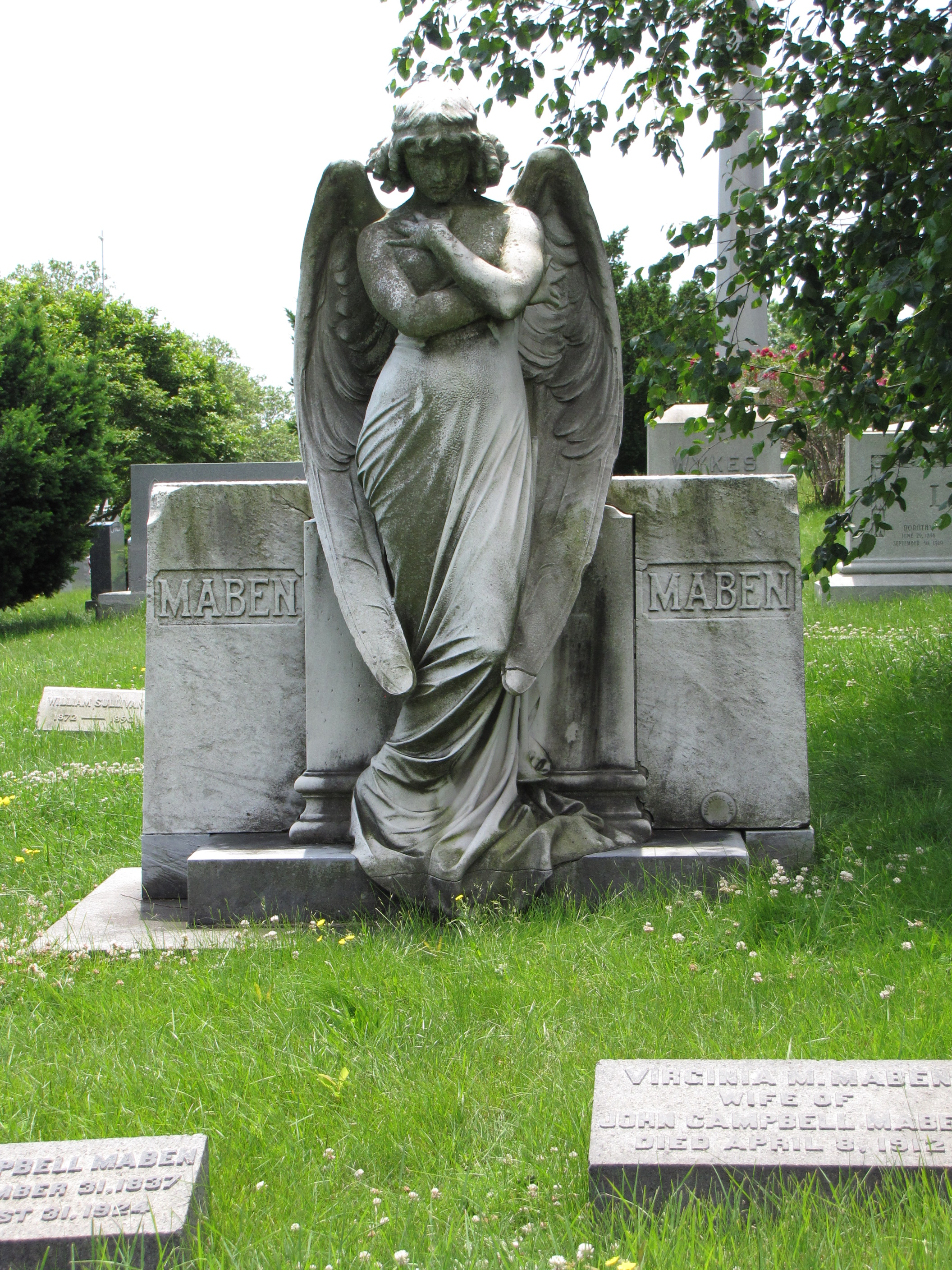
The image of the woman at the center of this story can also be found in the Green-Wood Cemetery at Brooklyn, New York, in the form of an angel–the hair, that body, even the drapery falls in the same way.  The statue that is strikingly similar marks the graves of John Campbell Maben (1837-1924) and Virginia Maben (died 1912) which raises the question about the Luyties story from St. Louis—was she real? Or is this figure the 1920s archetype graveyard female? Head tilted downward in sorrow, bobbed hair with a headband, and a pose of false modesty partially covering up her full body.

The John and Virginia Maben Monument in the Green-Wood Cemetery at Brooklyn, New York

The John and Virginia Maben Monument in the Green-Wood Cemetery at Brooklyn, New York

Posted in Uncategorized | 1 Comment

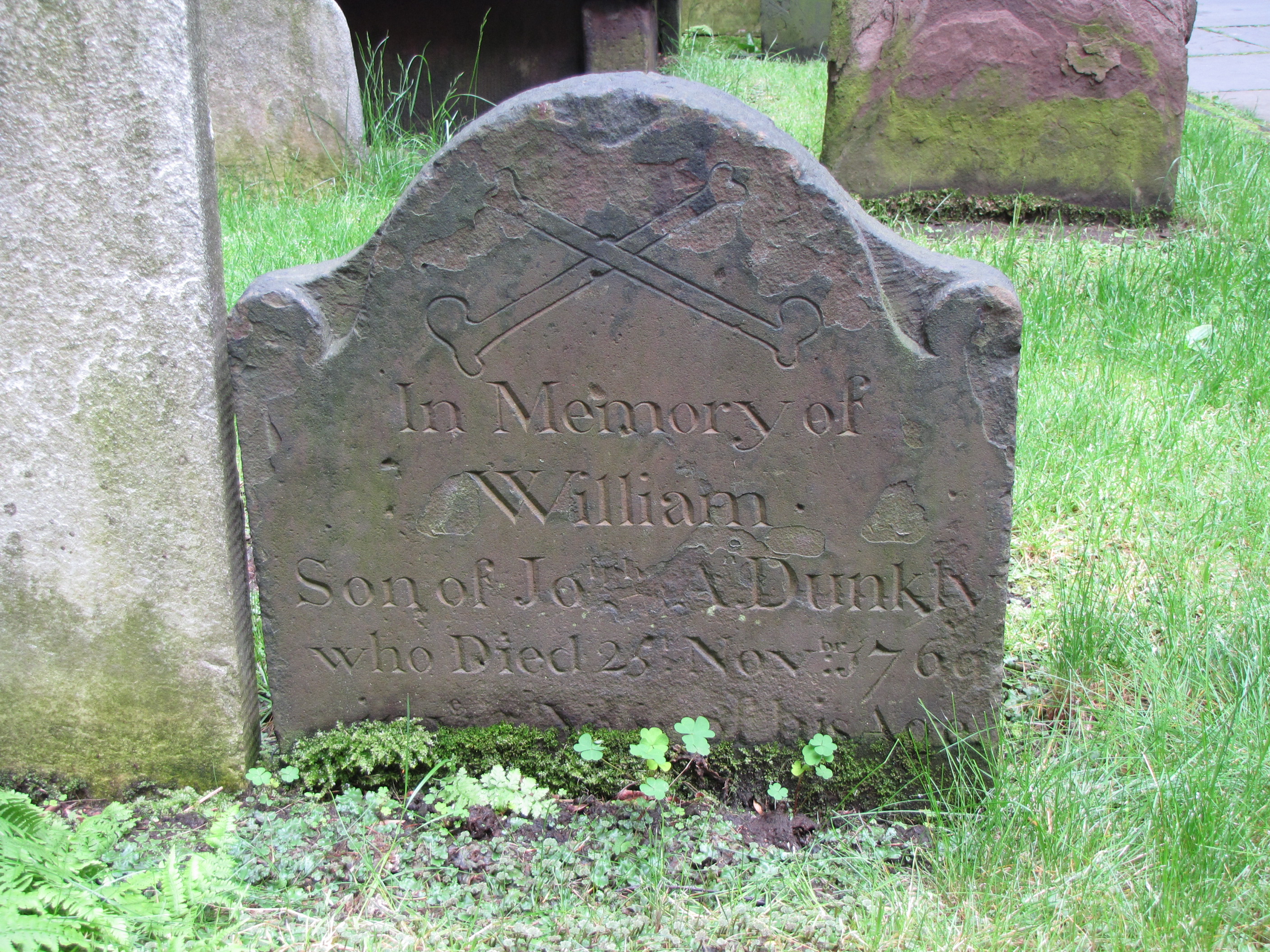
Bones

Trinity Churchyard Cemetery, New York, new York

Trinity Churchyard Cemetery, New York, new York

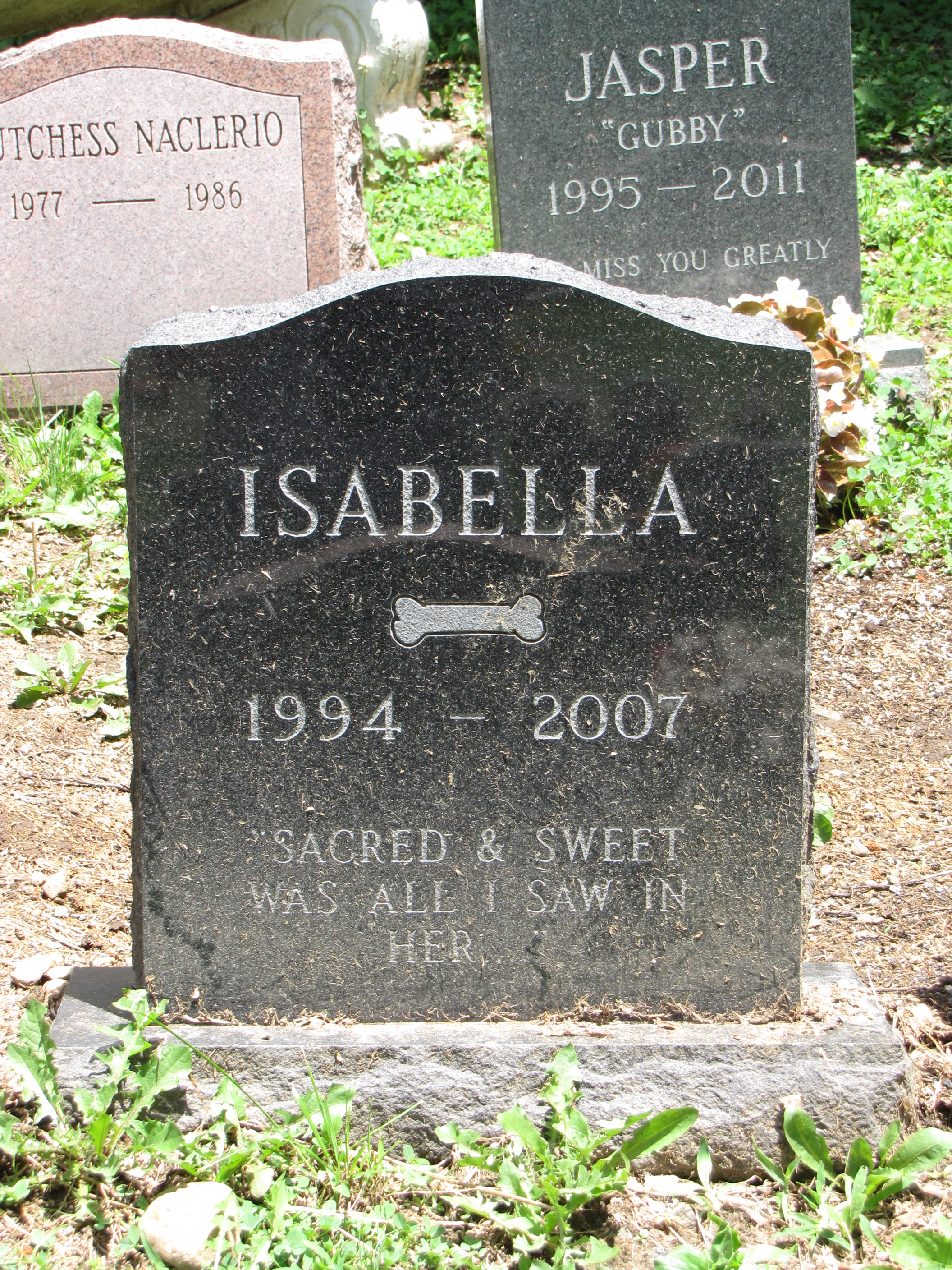
As I walked through the Hartsdale Canine Cemetery at Hartsdale, New York, I noticed so many similarities between the gravestones of humans and animals. Of course, the gravestones for the dogs and cats are chosen by those humans that loved them, so it is only natural that there would be so much sameness in terms of the stone shapes, the materials for the gravestones, even some of the symbolism, but I also noticed what I believe are some fundamental differences in symbolism.

For instance, bones carved into a gravestone for a human in the 18th Century has a completely different meaning than the bone found on the gravestone for one of our four-legged friends! In the former, it is a symbol if decay and rot. It is to remind us that our bodies are temporary and that death is always with us, a constant creepy companion that will meet up with us eventually.

The bone, however, found on the gravestone of a dog, like Isabella in the photo below, is a reminder of what a dog loves—to gnaw on a bone, to fetch a bone. It is a joyful item and a reminder of a playful puppy with something yummy!

A world of difference in perspective!  One is all about Heaven and one isn’t.

Hartsdale Canine Cemetery, Hartsdale, New York

Hartsdale Canine Cemetery, Hartsdale, New York

Posted in Symbolism | Leave a comment

In the Dog House

IMG_2445

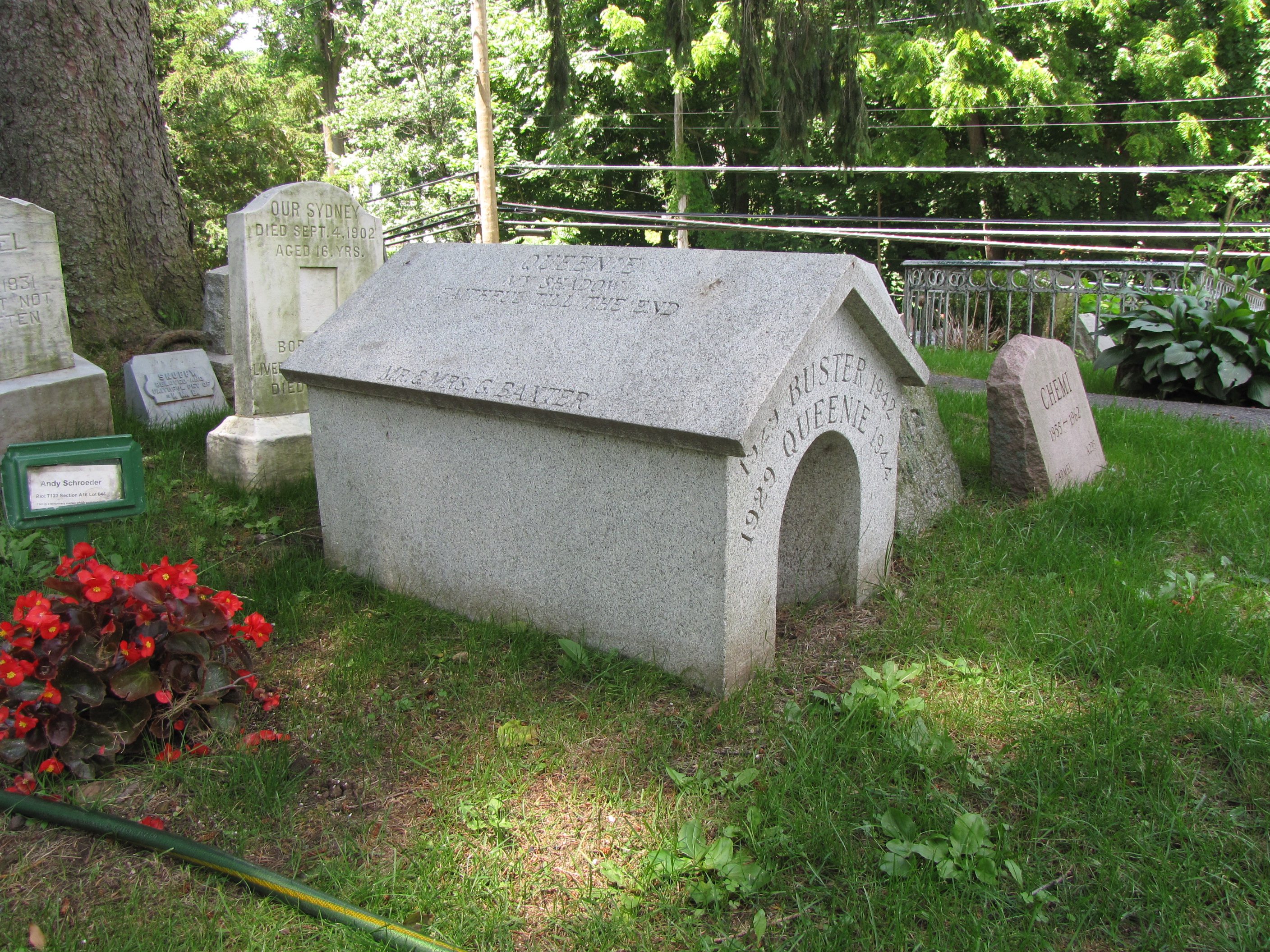
Dogs have been kept as pets since a pharaoh ruled Egypt, where they were kept in mud brick kennels. Their digs over the years evolved and, for the most part, our dogs either live inside our homes with us, or outside in a small pitch-roofed building resembling a tiny house. The memorial for Buster and Queenie in the Hartsdale Canine Cemetery at Hartsdale, New York, mimics the typical modern dog house.

IMG_2444

Posted in Uncategorized | Leave a comment

Our furry family members

Hartsdale Canine Cemetery, Hartsdale, New York

Hartsdale Canine Cemetery, Hartsdale, New York


Mt. Auburn Cemetery, Cambridge, Massachusetts

Mt. Auburn Cemetery, Cambridge, Massachusetts

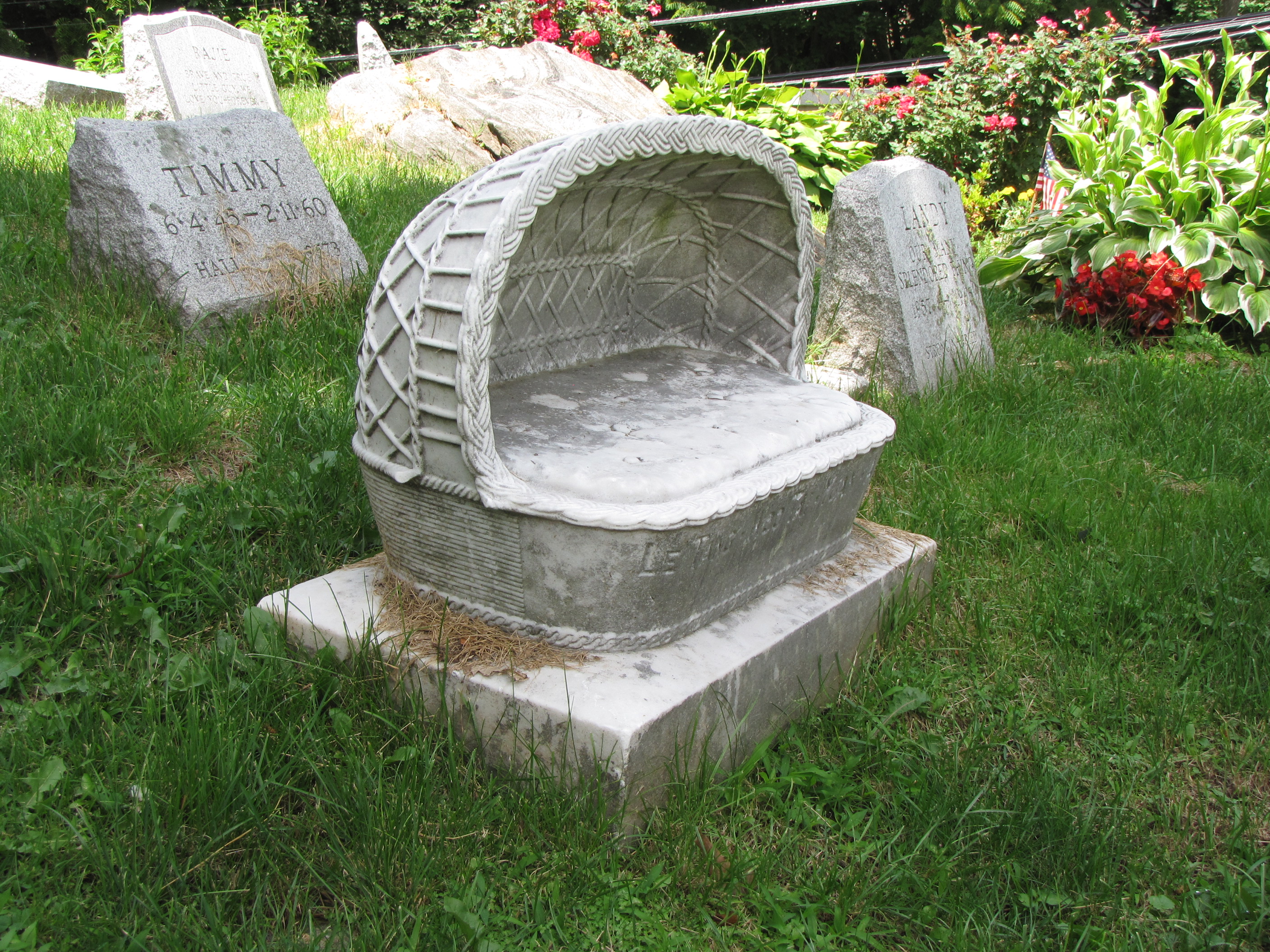
When I write about our furry family members, I am not referring to those males in the family with hair on their backs, but instead, our little four-legged family members—our dogs and cats. As it turns out, with the exception of how much room is between gravestones, those who bury their pets choose much the same symbolism and gravestone choices as we do with our two-legged family members.

In the example above, the empty bassinet, represents the emptiness that is felt by the loss of the dogs buried underneath. It is much like the empty bassinet gravestone that marks the intricately-carved white marble gravestone of Mary Wigglesworth, who died just shy of her first birthday, her inscription on the pillow.  The symbolism is obvious.  The marker is clearly for a child but also represents the emptiness and sadness from the loss.

IMG_2491

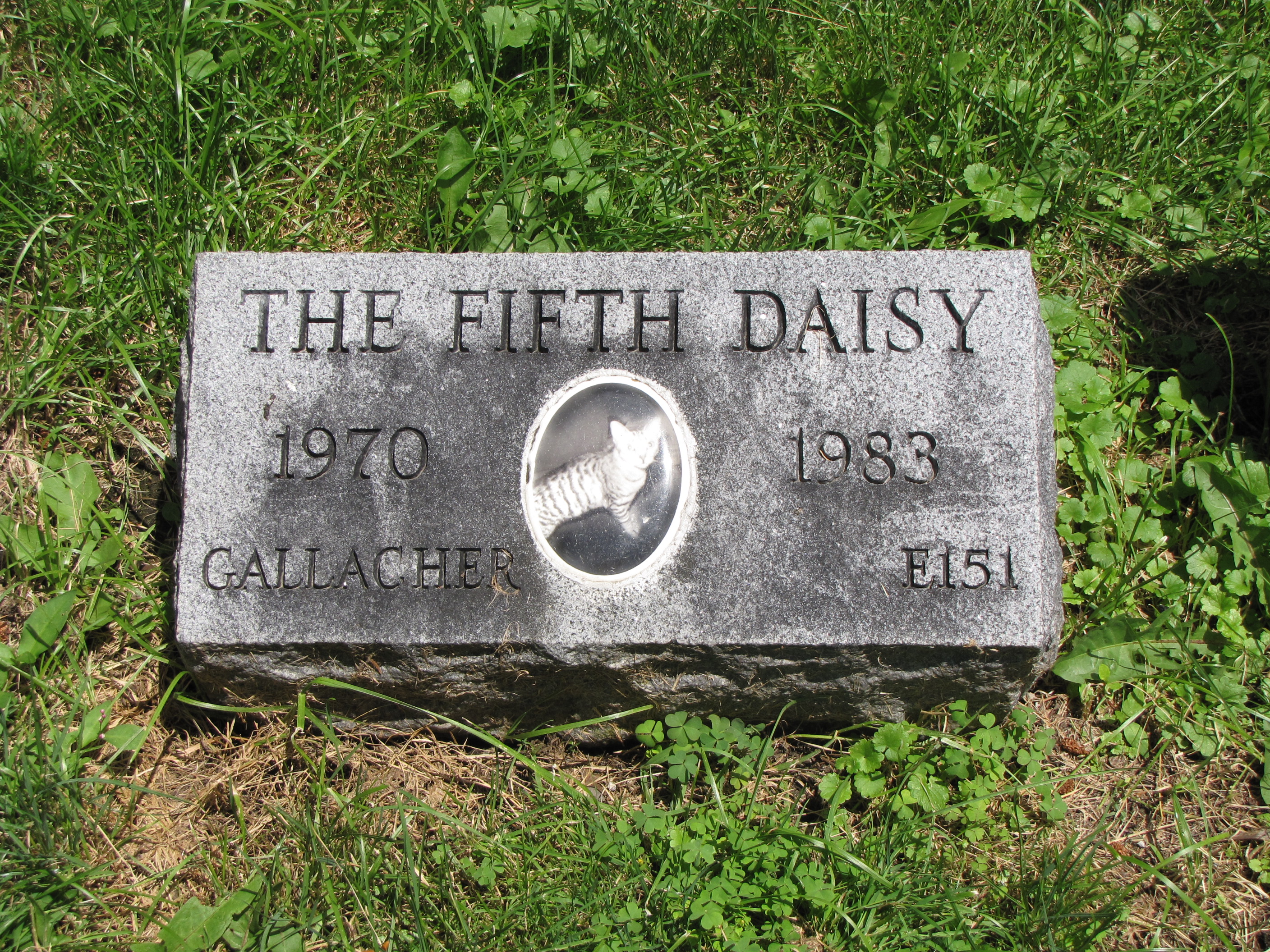
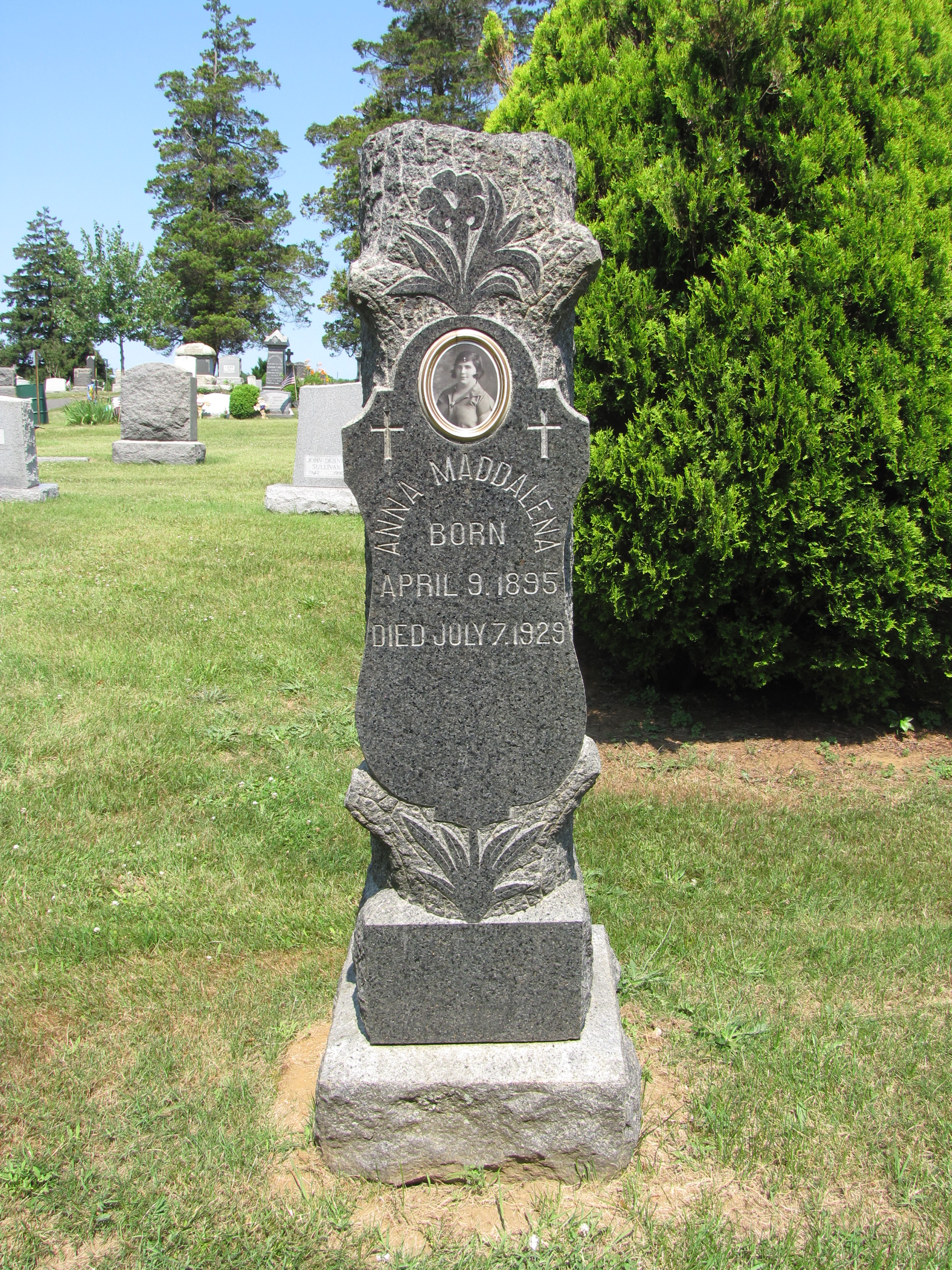
Many gravestones also display a photo on the face of the gravestone. That is common in the Hartsdale Canine Cemetery in Hartsdale, New York, too.  The gravestone above displays a photo of a cat named, the Fifth Daisy, while the gravestone below displays the photo of 34-year old Anna Maddalena.

Mt. Olivet, Red Bank, New Jersey

Mt. Olivet, Red Bank, New Jersey


Posted in Symbolism | Leave a comment

Puppy Love

Our puppy, Doodle

Our puppy, Doodle

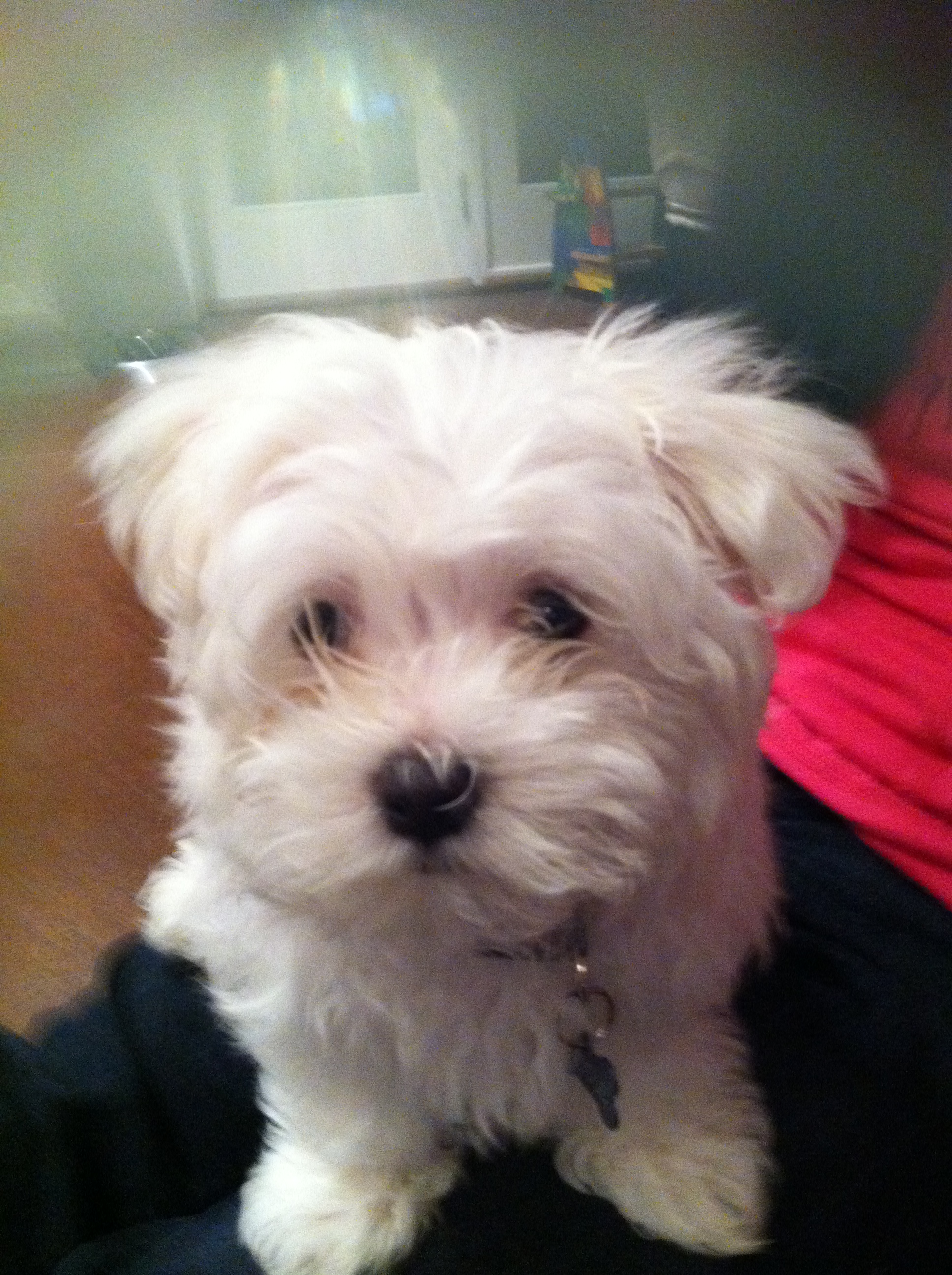
Dogs have long been considered man’s best friend! In fact, way back in 1821, the New York Literary Journal ran a poem that extolled just that. According to the latest pet ownership statistics from 2012, 36.5% of American households (43,346,000) own an average of 1.6 dogs. That adds up to a whopping 69,926,000 dogs living with families in the United States. (Incidentally, fewer households own cats, but each of those households own more—2.1 per household for a total of 74,059,000 cats.)  Given that love for our dogs, it is no wonder that some dog owners want to bury their pets.

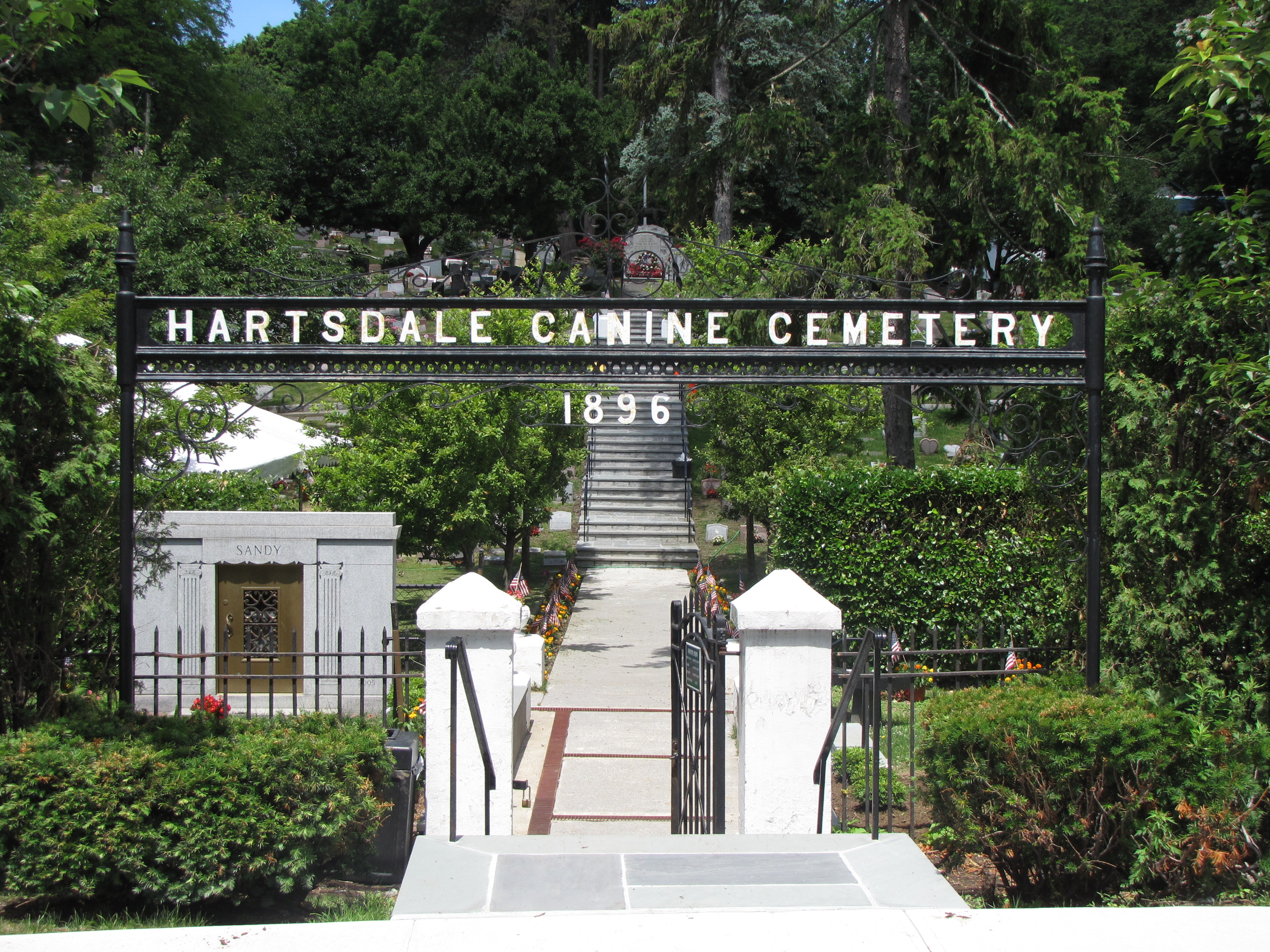
In 1896, Veterinarian Dr. Samuel Johnson offered to let his friend bury his beloved dog in his apple orchard. Today more than 70,000 pets are buried in what is now the Hartsdale Canine Cemetery, Hartsdale, New York, which became the first and oldest pet cemetery in the United States and perhaps the world.

IMG_2407

Posted in Uncategorized | 1 Comment

It is just a “fair view”

Fair View Cemetery, Red Bank, New Jersey

Fair View Cemetery, Red Bank, New Jersey

The biggest cemetery in Red Bank, New Jersey, is named Fair View which strikes me as funny. The name chosen is damning by faint praise—the view isn’t bad, it isn’t great, it is just “fair”. But what’s in a name? The cemetery is beautiful, set in a neighborhood on gently rolling hills and landscaped in the tradition of some of the first rural cemeteries.

At any rate, Fair View Cemetery has several mausoleums within its gates, including the the Proal Family Mausoleum. The mausoleum is fairly modest, built in a rustic rough-hewn style. The exceptional feature of the crypt is the stained glass window on the back wall.   Adorning the window in shimmering blues, purples, greens, and cocoa is a glass angel depicted holding a crown, as if it is going to be offered to a recently arrived soul to Heaven.

IMG_2652

The crown is a symbol of glory and reward and victory over death.  The reward comes after life and the hard-fought battle on Earth against the wages of sin and the temptations of the flesh.  The reward awaits in Heaven where the victor will receive a crown of victory. The crown also represents the sovereign authority of the Lord.

IMG_2653

In the angels other hand, the angel holds a palm leaf. This symbol is most closely associated with Easter, and Jesus’ spiritual victory over death. The palm frond is also a symbol of eternal peace.

Posted in Symbolism | Leave a comment

Ouroboros Orphis

Glendale Cemetery, Akron, Ohio

Glendale Cemetery, Akron, Ohio

On the massive bronze doors of the Bertram Work Neo-Classical Mausoleum in the Glendale Cemetery, at Akron, Ohio, are several repeating images, one of which is the Ouroboros. The Ouroboros is an ancient symbol depicting a snake eating its tail. The word, Ouroboros, is Greek—oura meaning tail; vora meaning eating, and ophis meaning serpent or snake. In ancient Egypt, the Ouroboros represented the daily passage of the sun.  The snake eating its tail in cemetery symbolism represents the cycle of life—birth and death—and eternity.

IMG_3706

Posted in Symbolism | Leave a comment

Stylized Tulips

IMG_2308

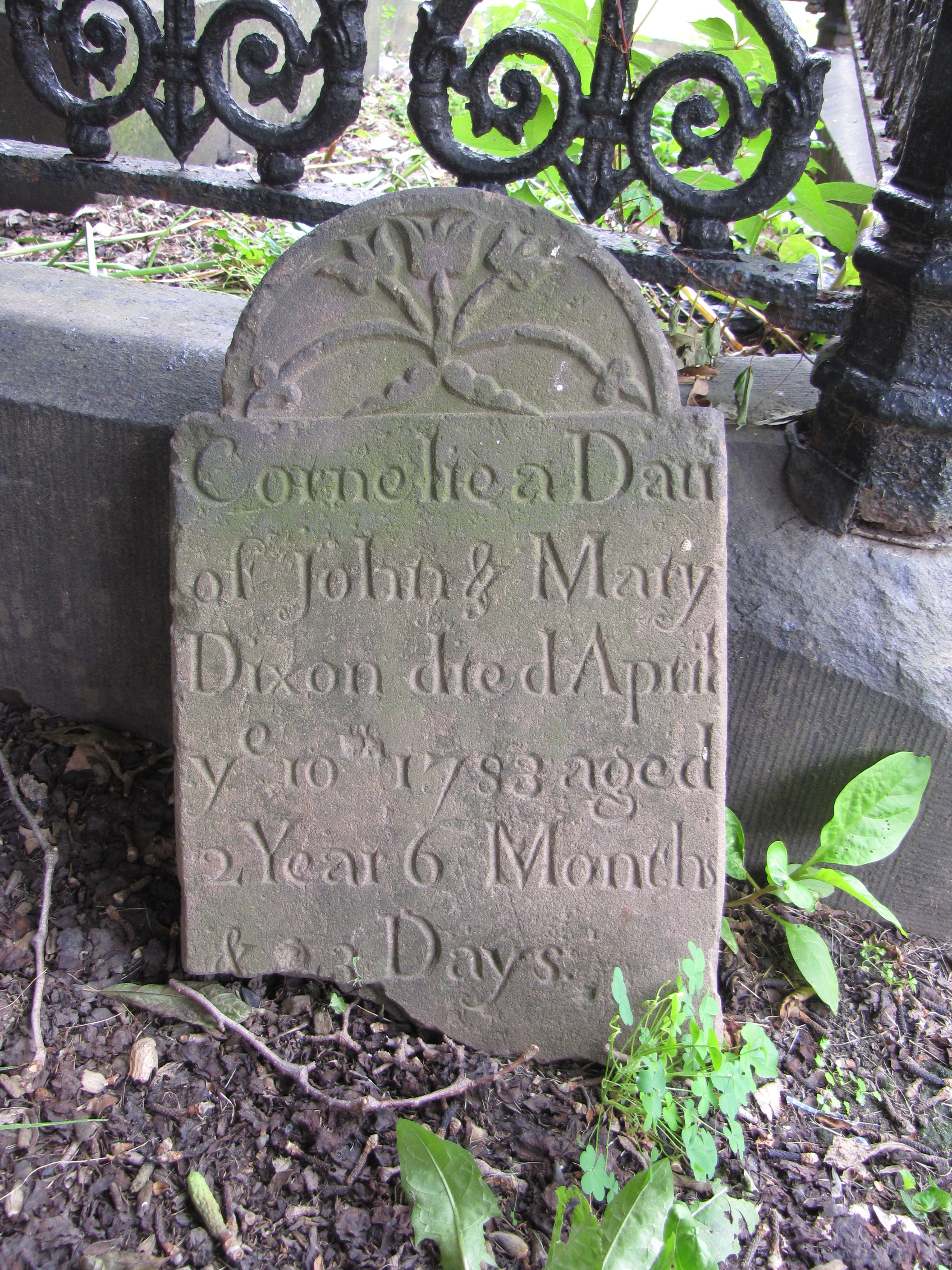
Corneliea Dau

Of John & Mary

Dixon died April

Ye 10 1788 aged

2 Year 6 Months

& 23 Days

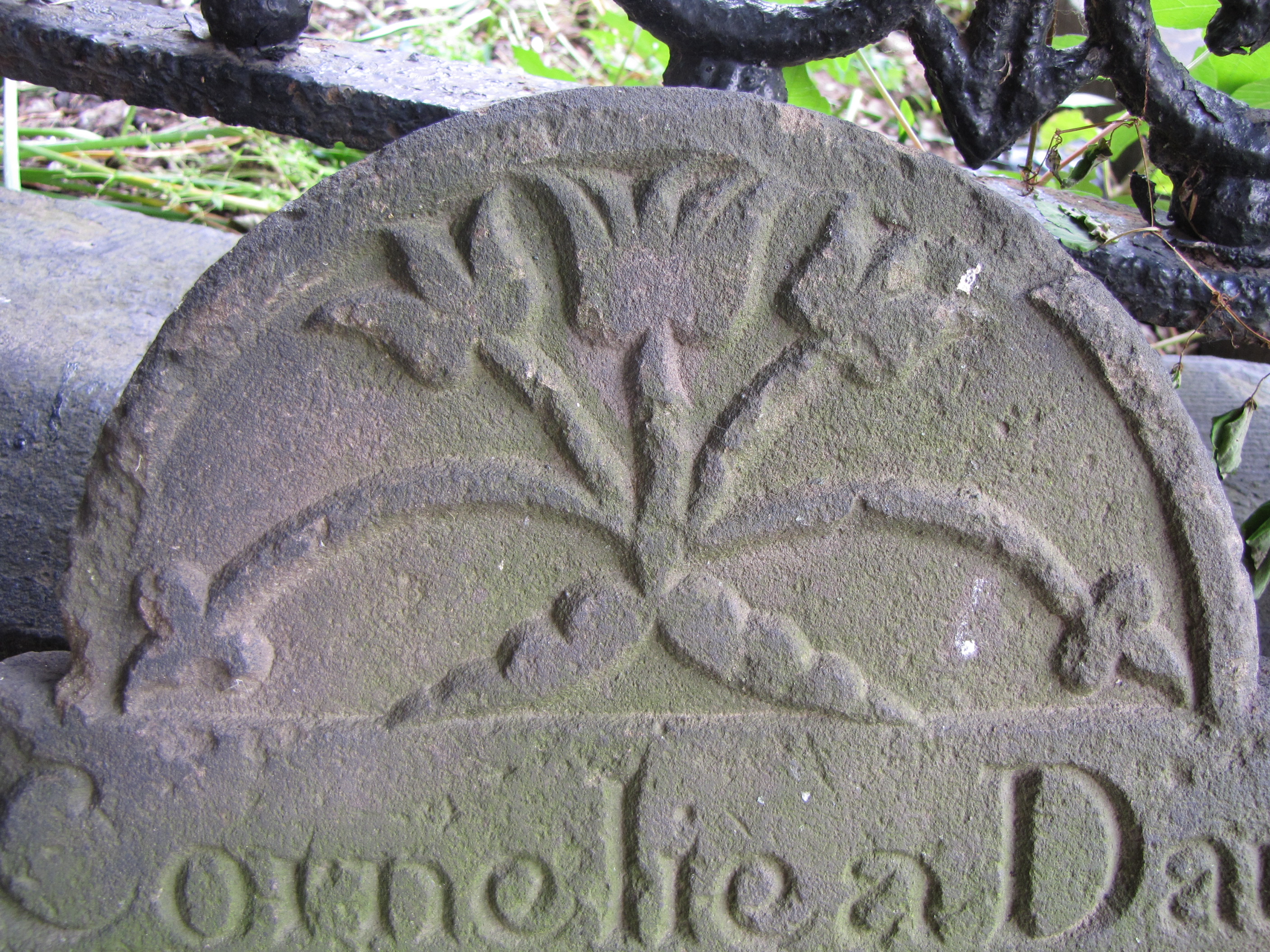
Tulips have long been a symbol found in the graveyard, including on the gravestone of two and a half year old, Corneleia Dixon, found in the First Presbyterian Church Cemetery at Trenton, New Jersey. The tulips on this gravestone are highly stylized, yet still recognizable.  Tulips are a symbol of love and passion but since this symbol is on a child’s gravestone it most likely represents eternal life.

IMG_2307

Posted in Symbolism | Leave a comment

Tip Toe through the Tulips

Sleepy Hollow Cemetery, Concord, Massachusetts

Sleepy Hollow Cemetery, Concord, Massachusetts

LIDIAN

Wife of Ralph Waldo Emerson

Daughter of Charles & Lucy (Cotton) Jackson.

Born September 20th 1802, close by

Plymouth Rock as she loved to remember.

Died November 13th 1892 in Concord.

In 1968, in a quivering falsetto, singer musician Tiny Tim released a song titled, “Tip Toe through the Tulips”. Accompanied by his ukulele, the unlikely song by the quirky singer became a hit. Tiny Tim appeared on such shows as Rowan and Martin’s Laugh In and the Tonight Show with Johnny Carson.

The song was written by Al Dubin (lyrics) and Joe Burke (music) in 1929 and had its first burst of popularity that year holding the number one spot on the charts for ten weeks. The song is a plea to meet in a garden of tulips to seal away for a kiss in the moonlight.

Whether the original songwriters or Tiny Tim knew the symbolism of the tulip or not is unclear. But in the Victorian language of flowers and in funerary symbolism, the tulip represents love and passion. What sets this flower apart from the rose as a symbol of love is that it is thornless. It is also unusual in that, after the tender flower is cut, it continues to grow. Because of this, it is often associated with eternal life.

Lakewood Cemetery Mausoleum, Minneapolis, Minnesota

Lakewood Cemetery Mausoleum, Minneapolis, Minnesota

Tiny Tim (Herbert Khaury) died in Minneapolis after a heart attack while giving a performance to a woman’s club. He is buried in the Lakewood Cemetery Mausoleum, Minneapolis, Minnesota, in a plain white-marble crypt. Even the lettering on the face of his crypt belies the flamboyant and eccentric musician who amused and entertained audiences.

KHAURY

HERBERT B

TINY TIM

1932 1996


Posted in Famous graves, Symbolism | Tagged , , | 2 Comments