Temple of Love

Cave Hill Cemetery, Louisville, Kentucky

Cave Hill Cemetery, Louisville, Kentucky

PRESTON POPE

SATTERWHITE

SEPTEMBER 28TH 1867

DECEMBER 27TH 1948

BUT THANKS BE TO GOD

WHICH GIVETH US

THE VICTORY

THROUGH OUR LORD

JESUS CHRIST


FLORENCE BROKAW

SATTERWHITE

NOVEMBER 1ST 1857

MAY 1ST 1927

HER WAYS ARE WAYS

OF PLEASANTNESS

AND ALL HER PATHS

ARE PEACE

 IMG_7146

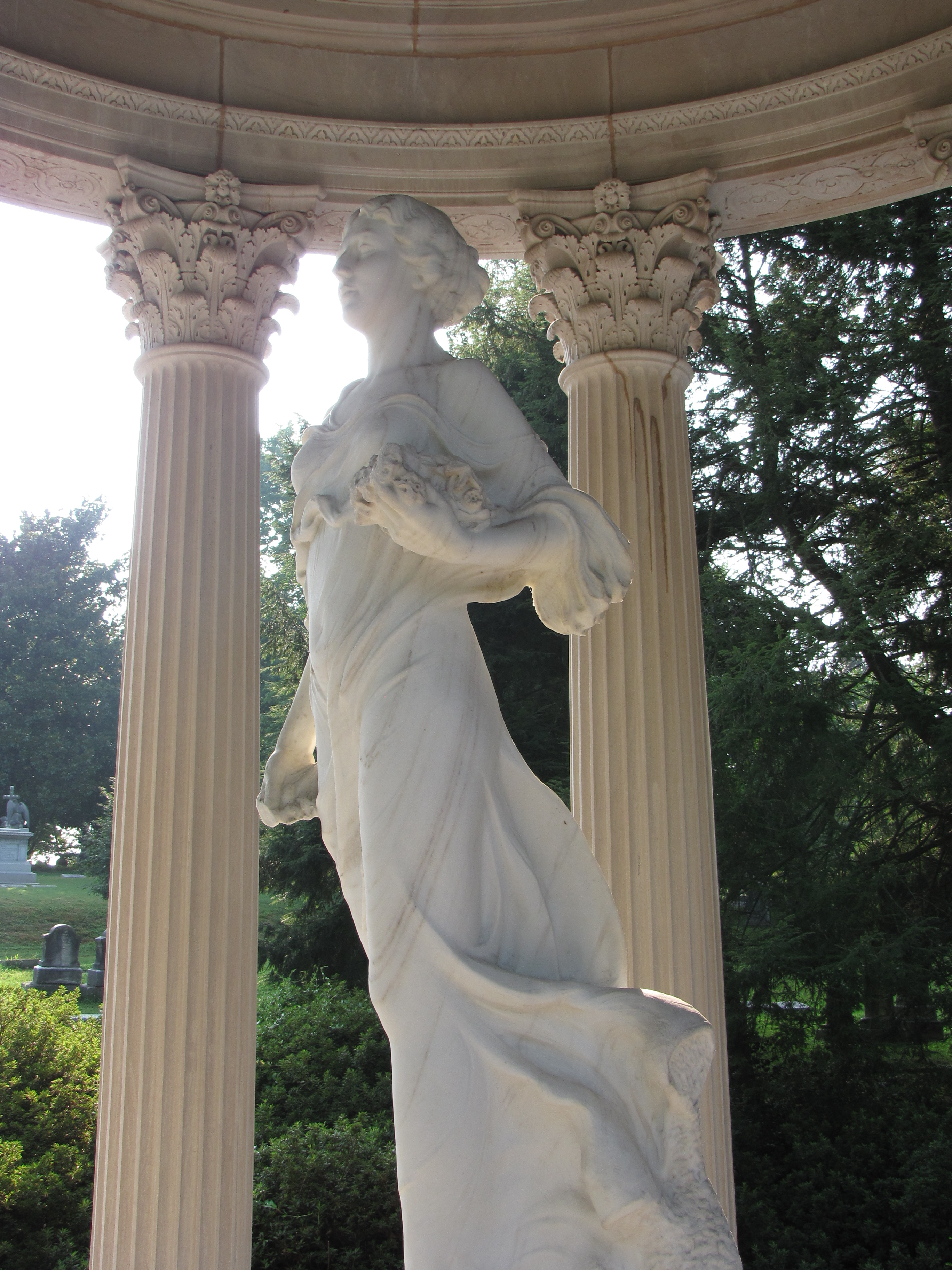
Horace Trumbauer, noted Philadelphia architect, was hired by the prestigious Dr. Preston Pope Satterwhite of Louisville, Kentucky, to design a memorial for his late socialite wife, Florence Brokaw Martin Satterwhite.

Trumbauer based his design on the Temple of Love at the Palace of Versailles created by Richard Mique specifically for Marie Antoinette.  Mique oversaw the building of the last of the monuments at the Palace before the French Revolution and the fall of King Louis XVI.  For his part in what was thought to have been a conspiracy to save Marie Antoinette, Mique and his son were found guilty by a tribunal and sentenced to death—three weeks before the end of the Reign of Terror.

The statue inside the memorial was created by Sally James Farnham, the same artist who created the Vernon and Irene Castle memorial at Woodlawn Cemetery at Bronx, New York.

Farnham was well known for her heroic 15-foot statue of Simon Bolivar in Central Park.  Unlike the delicate Castle commission, this statue is commanding and large. The centerpiece of the temple is the statue of Flora, indicated by the bouquet of flowers she holds in her left arm.  Farnham designed the statue and it was sculpted in marble by Robert A. Baillie.

What is also remarkable is that Sally was entirely self-taught—she had no formal training, and yet, created magnificent sculptures that show range from the massive equestrian statue of Bolivar to the tender and delicate collapsed dancer to the centerpiece of Satterwhite memorial.
IMG_7149

Posted in Famous graves | Leave a comment

Collapsed Dancer

Woodlawn Cemetery, Bronx, New York

Woodlawn Cemetery, Bronx, New York

MY BELOVED HUSBAND

VERNON CASTLE BLYTH

BORN MAY 2, 1887

WAS KILLED FEB. 15, 1918

IN THE SERVICE OF HIS COUNTRY

CROIX DE GUERRE


IRENE CASTLE

MCLAUGHLIN ENZINGER

HUMANITARIAN

BORN APRIL 7, 1893

DIED JANUARY 25, 1969

Vernon and Irene Castle were one of the most famous dance couples of the 20th Century.  They were HUGE. Today they would be called superstars.  They became famous for their versions of trots—the Turkey Trot and the Foxtrot—among other dances they helped popularize.

Vernon and Irene Castle

Vernon and Irene Castle

Both were dancers in a dance troupe.  They went on tour in France and became the toast of Paris.  When they returned to the United States in 1912, they starred in Broadway musicals, vaudeville, and movies, eventually opening their own dance studio, where they were in high demand to teach dance.

At the height of their stardom, Vernon, a native of Great Britain, joined the Royal Flying Corps.  Vernon flew over 300 missions downing two enemy aircraft.  He was awarded the Croix de Guerre, a French military decoration awarded to French and Allied service men.  He was transferred to the United States to train American flyers.  On February 15th, 1918, at the Benbrook Airfield near Fort Worth, Texas, Vernon was killed in a training accident.

IMG_4999

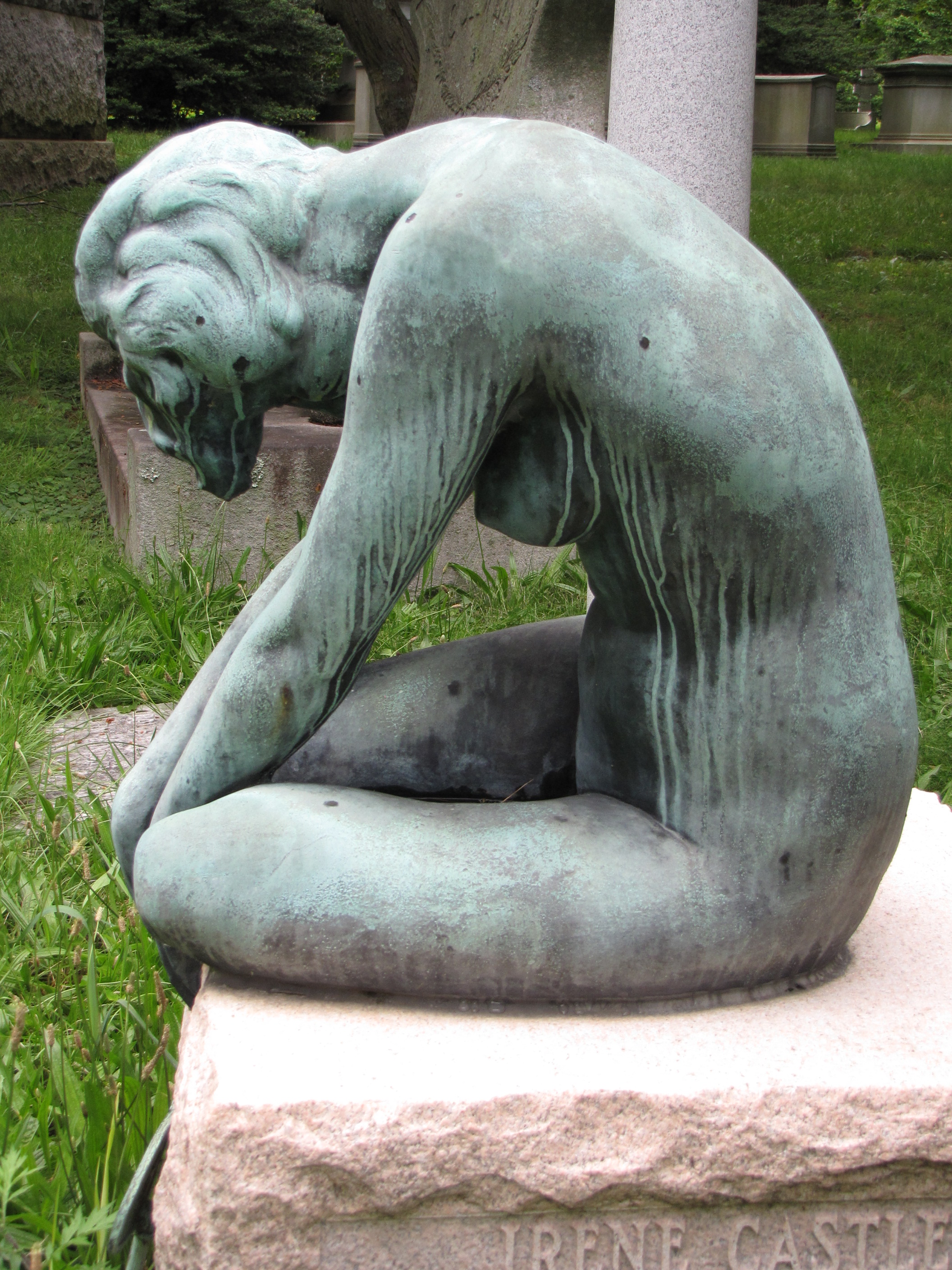
Irene had seen a small bronze sculpture of a tired ballet dancer titled, End of the Day, created by artist Sally James Farnham.  The statue depicts a nude dancer who is coiled into a ball after an exhausting day of dance practice.  The statue was recreated for a memorial for Vernon’s grave—and became the image of a distraught and weeping mourning figure collapsed in grief framed by a Doric colonnade.

IMG_5001

Posted in Famous graves, Saving Graces | 4 Comments

Worldly Achievement

IMG_4546

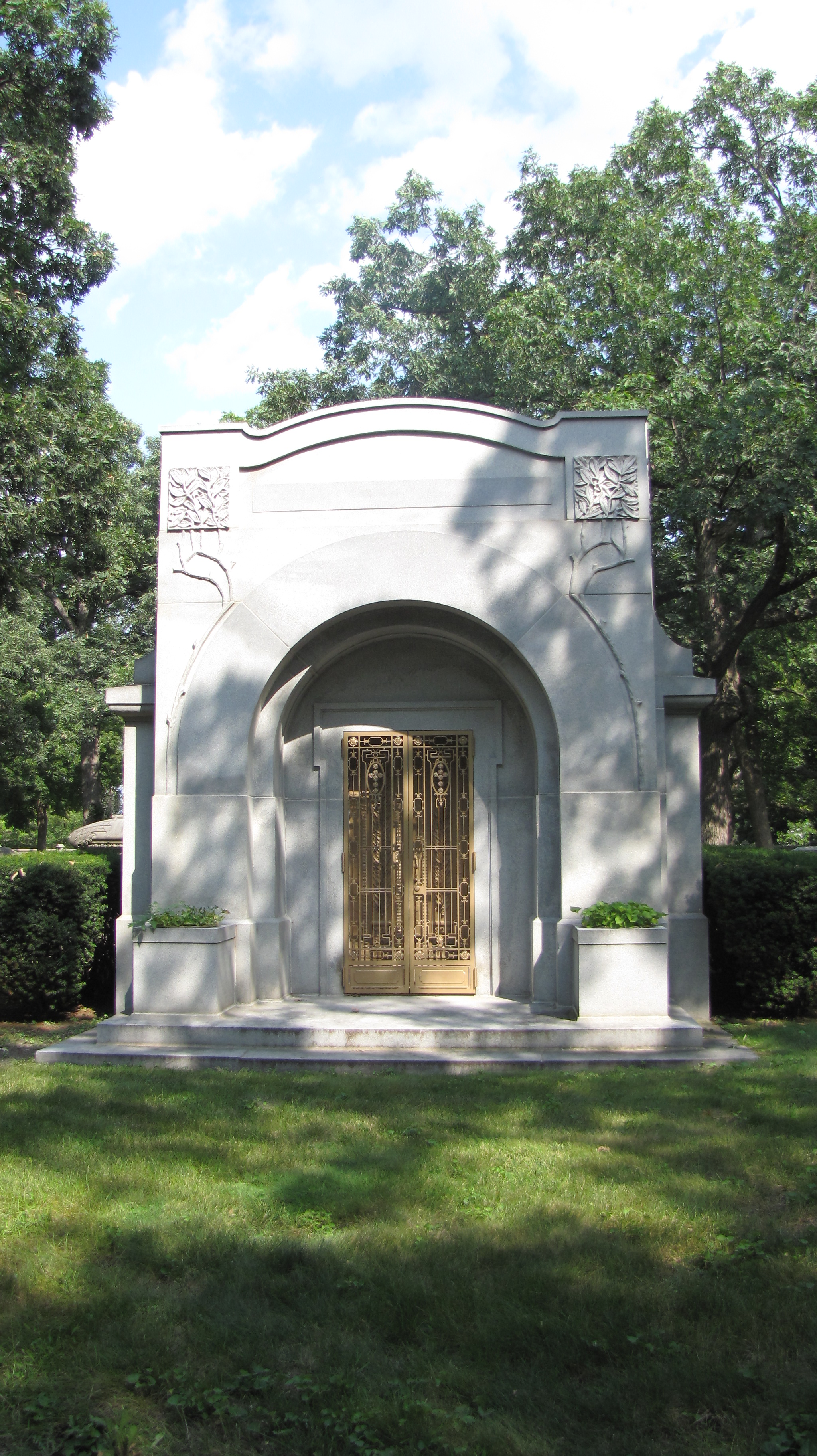
The modern Romanesque mausoleum in the Rosehill Cemetery at Chicago has carved on it the laurel leaf. The vine starts half way up the rounded arch and leads to the top of the mausoleum where it culminates in a square on either side featuring the leaves of the plant. The laurel leaf represents special achievement—success and a triumph of worldly accomplishment. The mausoleum itself is a sign of worldly achievement but underscored by the symbolism of the laurel leaf.

IMG_4547

Posted in Mausoleums, Symbolism | Leave a comment

Disguise

IMG_6275

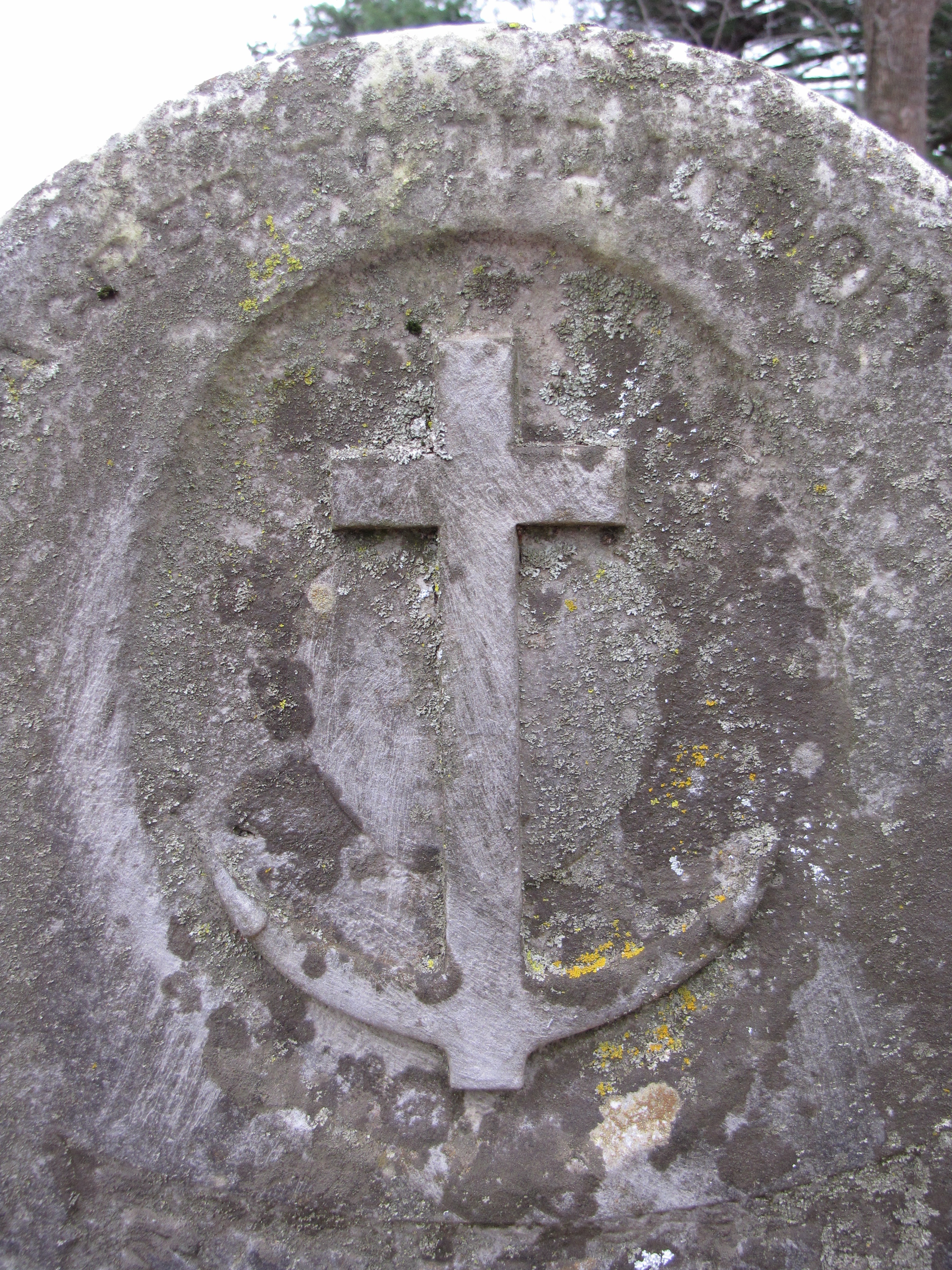
On this plain rounded-top white marble tablet in the Springhill Cemetery at Nashville, Tennessee, the anchor cross is carved into the oval inset at the top of the gravestone. The anchor cross is an ancient Christian symbol that has been found in catacomb burials as early as the First Century and as late as the Third Century.  Romans persecuted early Christians—feeding them to the lions, forcing them battle to the death in the arenas, or burning them at the stake. The Christians who hid in the catacombs and practiced their religion in secret left messages of hope carved next to the anchor cross symbols.  In this way, the anchor was used by early Christians as a disguised cross.

Some Church historians believe that the anchor cross was adopted when Emperor Trajan had Saint Clement tied to an anchor and thrown into the sea for proselytizing and converting Romans to Christianity. Others believe it was a clever way to disguise the most Christian of symbols—the cross.

Over time, the anchor served as a symbol of Christ and his anchoring influence in the lives of Christians.  Just as an anchor does not let a moored boat drift, the anchoring influence of Christ does not allow the Christian life to drift. The anchor cross is also called the Mariner’s Cross. It is viewed as a symbol of hope. It can also represent a “fresh start”.

IMG_6274

Posted in Symbolism | Leave a comment

Slight Variations on a Theme: The Door

IMG_1954IMG_1921

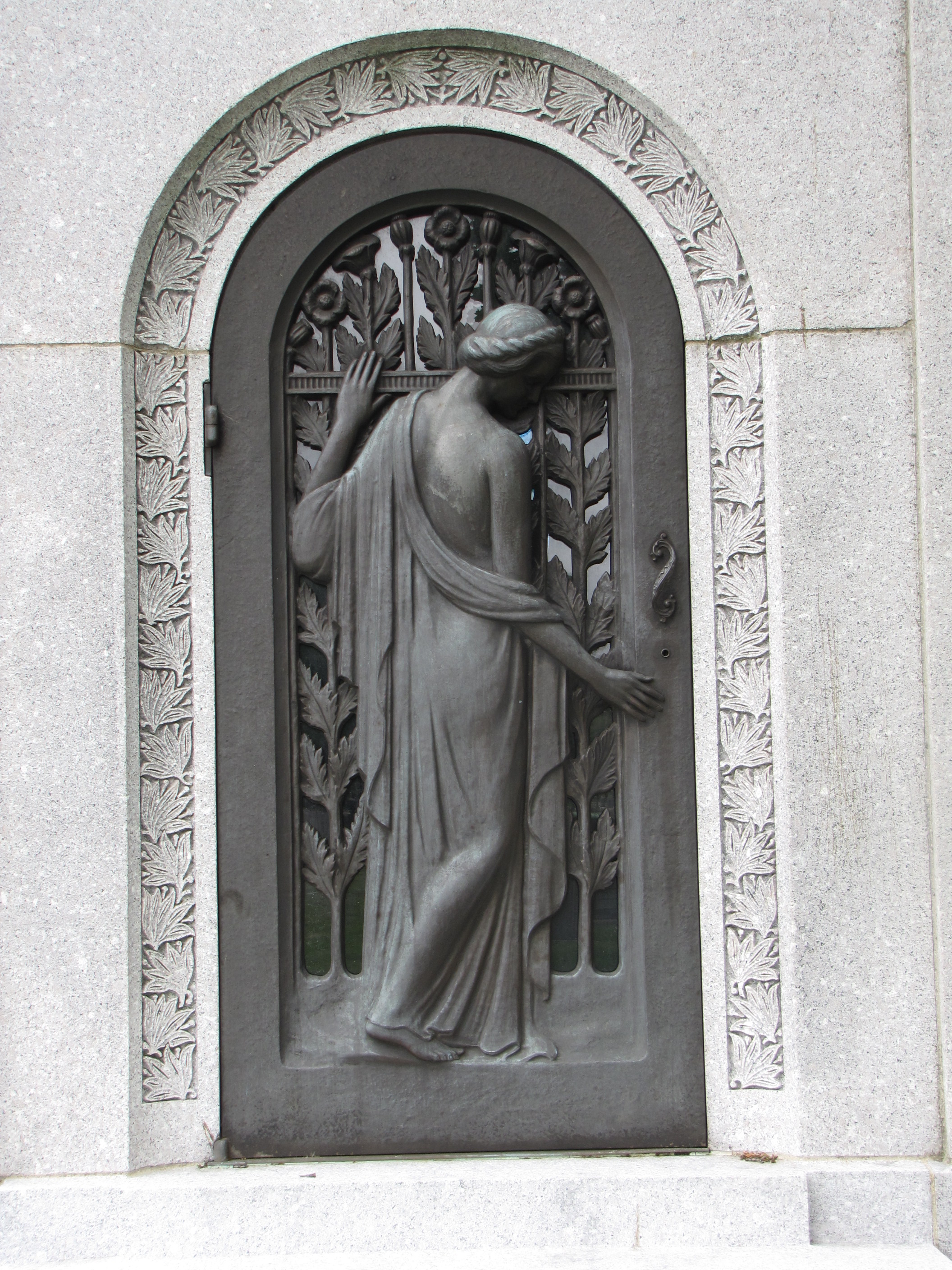
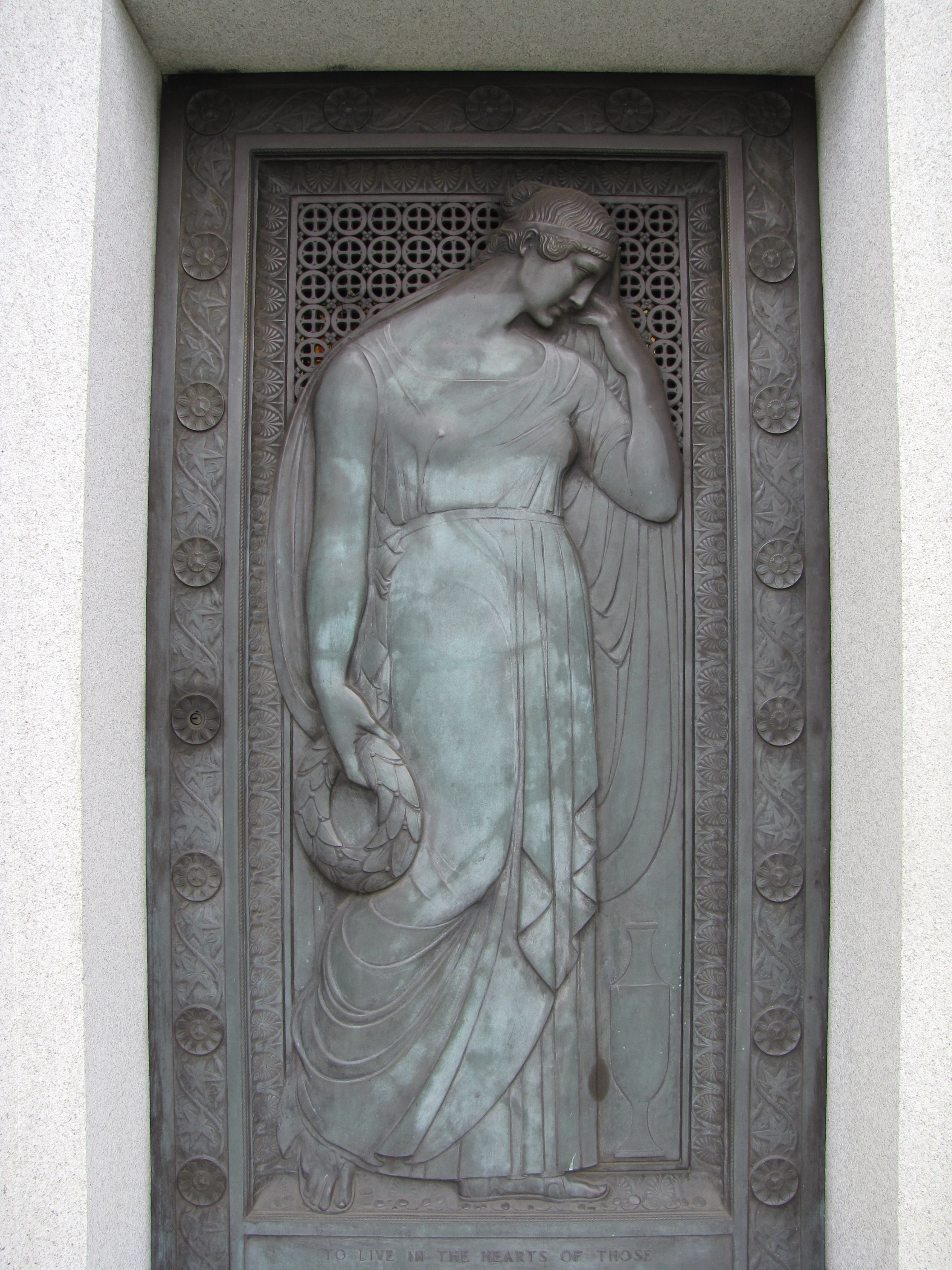
The door as a motif in funerary art symbolizes mystery.  The door is the pathway from the earthly realm to the next.  In all five examples from mausoleum doors, a mourning figure waits at the door.  In some cases her hand is close to door, almost as if she is hesitating to pass through.  In another case, the mourning figure holds a laurel wreath–the traditional symbol of victory over death.  In one case, she hold an Easter lily, the symbol of resurrection.  In Christianity, however, the door is usually viewed with hope, charity, and faith.  The next life will be better.

IMG_2017

IMG_2014

IMG_1898

Posted in Symbolism | 1 Comment

Sacred Heart

IMG_1301

In the late Seventeenth Century, a humble French nun, Marguerite Marie Alacoque (1747 to 1790), had a vision of a conversation with Jesus Christ. In her vision, Jesus reminded the young woman of her vow, given upon a sick bed from rheumatic fever, that she would devote her life to the Church. Marguerite had forsaken the vow in her early 20s.   She, with the encouragement of her Mother had entered society with the notion of becoming married. Jesus revealed Himself to her and admonished her for forgetting her vow. Marguerite decided then to enter the convent with the intension of becoming a nun.

Later, after Marguerite had entered the convent, she again had a vision of Jesus, this time He revealed His heart to her as the most important communication link between Him and the faithful and made it known to her that she should dedicate her life to His sacred heart. In Marguerite’s visions, which occurred over the period of two years (1773 to 1775), she described the heart of Jesus. His heart was topped with flame surmounted with a cross. The body of the heart had a vine of thorns wrapped around the center. Upon seeing this vision, she knew then she would dedicate her life to the sacred heart of Jesus Christ.

Sister Marguerite Marie Alacoque shared her vision with others but was at first rebuffed. But slowly her vision was recognized by the Catholic Church as real. Not long after her death, the Bishop of Marseille, dedicated his church and diocese to the Sacred Heart when the plague was raging in that area of France. Miraculously the region was spared. Soon the Sacred Heart was adopted by Catholics as a symbol of piety and charm.

In 1864, Sister Marguerite Marie was beatified. For those non-Catholics reading this blog, that simply means that the Church recognized her as being blessed. The most significant part of this recognition is beatification is the third step in being canonized or recognized as a Saint. Pope Pius, in his encyclical, Miserentissimus Redemptor, stated that Jesus Christ had shown himself to Sister Marguerite Marie. In 1920, The Church recognized her as a Saint.

Today the symbol of the sacred heart is a popular and universally recognized. It is a widely practiced devotion in the Catholic Church and is symbolic of the compassion that Christ has for humanity and His suffering on behalf of saints and sinners alike. The devotion is so popular, in fact, that The Basilica of the Sacred Heart of Paris, commonly referred to as Sacré-Cœur is named for it. The Basilica was built on Montmartre, the highest point in the City.

The sacred heart itself combines several symbols: flame represents the divine light of the Word of God, the thorns represent the way of Christ’s death and His suffering, and the cross is the universal symbol of Christianity. Often the sacred heart is represented without the cross atop of the heart. This symbol is commonly found in cemeteries, especially Catholic cemeteries—in stone and in glass.

IMG_1891


Posted in Symbolism, Uncategorized | 1 Comment

The Legend of St. George


Montrose Cemetery, Chicago, Illinois

Montrose Cemetery, Chicago, Illinois

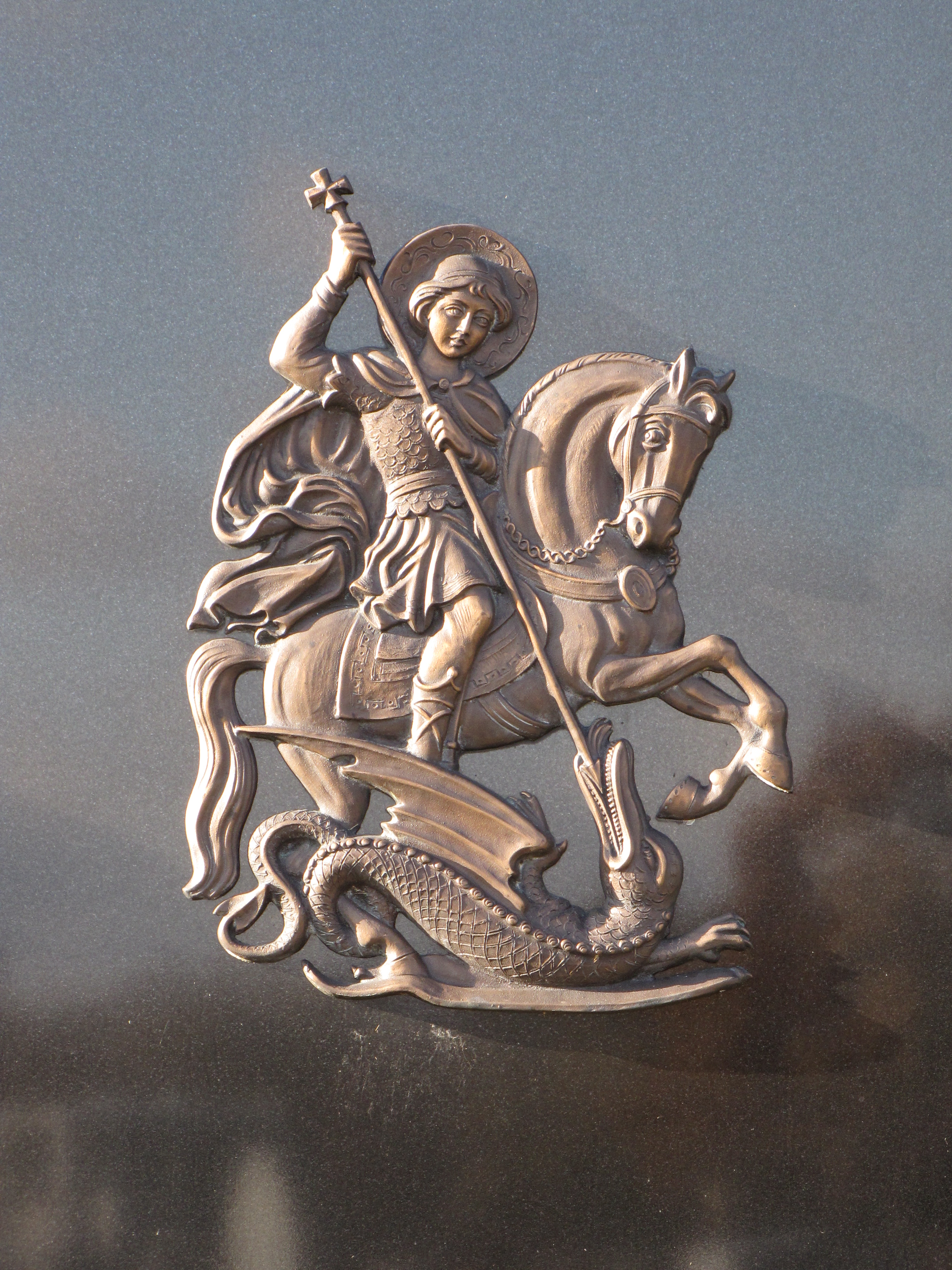
This metal applique to a gravestone in the Montrose Cemetery at Chicago, Illinois, depicts St. George, one of the most popular saints in the Eastern Orthodox Church, in glorious victory over the dragon. In this case, the dragon represents Satan.

In the legend of St. George, a dragon situated himself at the head of the source of water for a village. Every day the villagers had to distract the dragon with an offering—sometimes a sheep, sometimes a maiden. The maiden was chosen by drawing lots. When the King’s daughter was chosen, the King begged for her release and substitution but to no avail. St. George appeared, proclaimed his Christianity by making the sign of the cross before he went to battle the dragon. When St. George heroically slayed the dragon, the villagers rejected Roman gods and professed their belief in Christ.

Saint George Killing the Dragon painted by Catalonian artist Bernat Martorell circa 1434

Saint George Killing the Dragon painted by Catalonian artist Bernat Martorell circa 1434

In early representations of this icon, there is often a maiden in the background watching the victorious St. George. In those paintings, the maiden represents the wife of Diocletian, who converted to Christianity, when her husband tortured and eventually had St. George beheaded for not renouncing Christianity and paying tribute to the Roman gods.

Posted in Symbolism | 1 Comment

Tiffany and Company, Part II

Cave Hill Cemetery, Louisville, Kentucky

Cave Hill Cemetery, Louisville, Kentucky

Tiffany and Company is well known for design and exquisite workmanship. That same workmanship can be seen in the memorial vase commissioned for Fanny Short Butler (1864-1930) in the Cave Hill Cemetery at Louisville, Kentucky.  Delicately carved Easter lilies adorn the sides of the vase.

The lily, as a funerary symbol, has many meanings including purity, innocence, virginity, heavenly bliss, majestic beauty, and Christ’s resurrection.  Christians believe that the trumpet-shaped blossoms announce the Resurrection of Jesus Christ.

The Easter lily has long been associated with the Christian religion, commonly referred to as “White-Robed Apostles of Christ.” Early Christians believed that lilies sprouted where Jesus Christ’s sweat fell to the ground in the Garden of Gethsemane.

White has typically been a color associated with virtues of purity and innocence.  Often the lily can be found on the grave of a child, the epitome of purity and innocence.

The white lily is also associated with virginity and marriage, in particular relationship to women.  On one hand, the lily represents virginity and innocence, which is an appropriate symbol for a young unmarried woman.  On the other hand, it is symbolic of majestic beauty and marriage, which makes it an appropriate symbol for all married women regardless of their age.


Posted in Symbolism | 1 Comment

Tiffany and Company

Forest Home Cemetery, Forest Park, Illinois

Forest Home Cemetery, Forest Park, Illinois

ELLEN MERRILL CUMMINGS

JUNE 14 1842 – July 1 1924

EDMUND AUGUSTUS CUMMINGS

NOV 29 1842 – Aug 23 1922


Started as a stationery and fancy goods store in New York City in 1837, Tiffany’s became known for creating high-end silverware, glassware, and, of course, jewelry. It became the premier purveyor of that special gift that comes in a light blue box often given on bended knee.

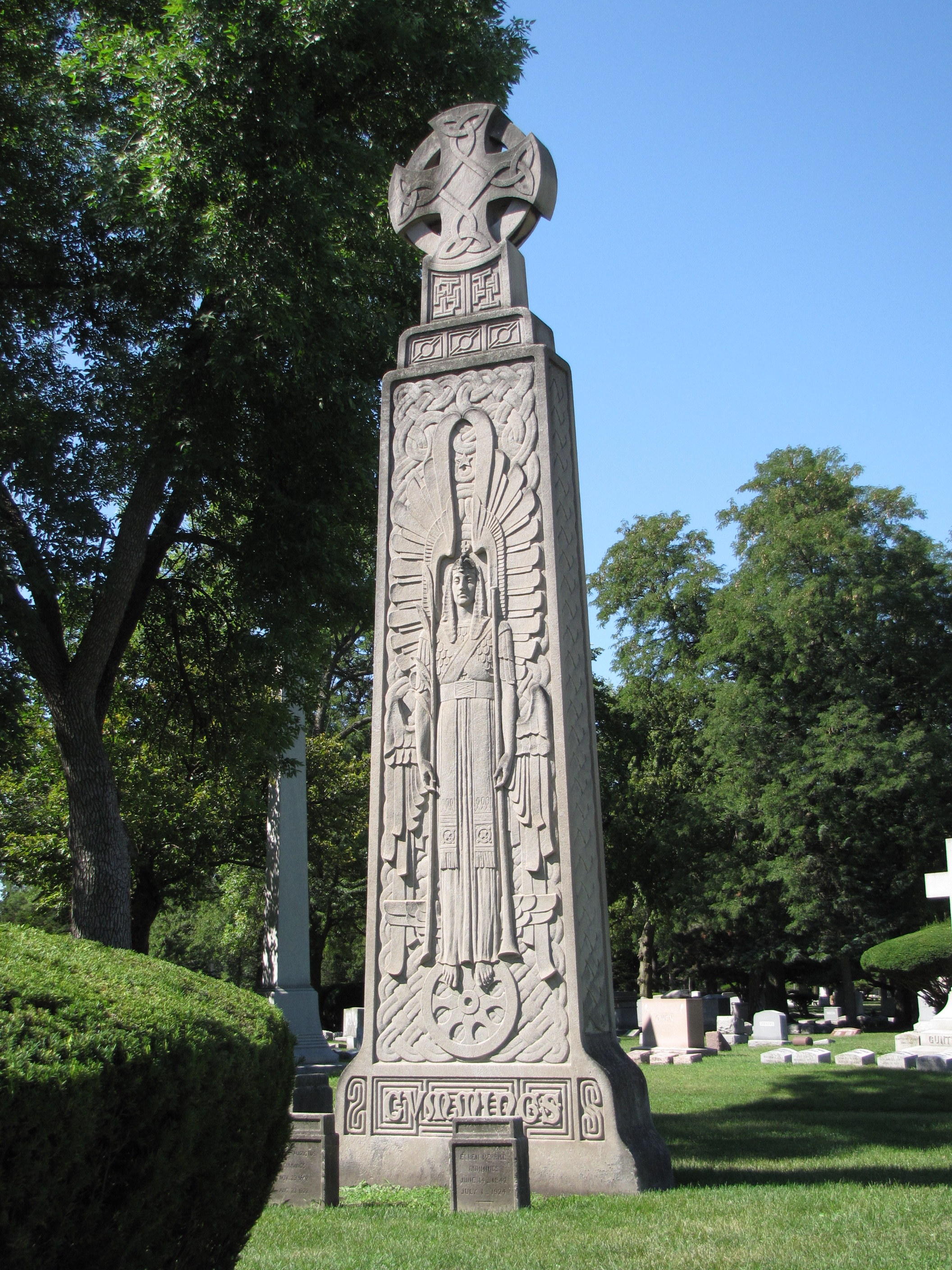
But Tiffany’s also created funerary monuments. One example of their work can be found in the Forest Home Cemetery at Forest Park, Illinois. The commission was created for Edmund and Ellen Cummings. Edmund Cummings served in the Civil War, serving under General Ulysses Grant and General William Tecumseh Sherman. After the war Cummings moved to Chicago where he founded a highly successful real estate company. In 1889, he and his brother founded an electric streetcar line, the Cicero & Proviso Street Railway Company.

IMG_8425

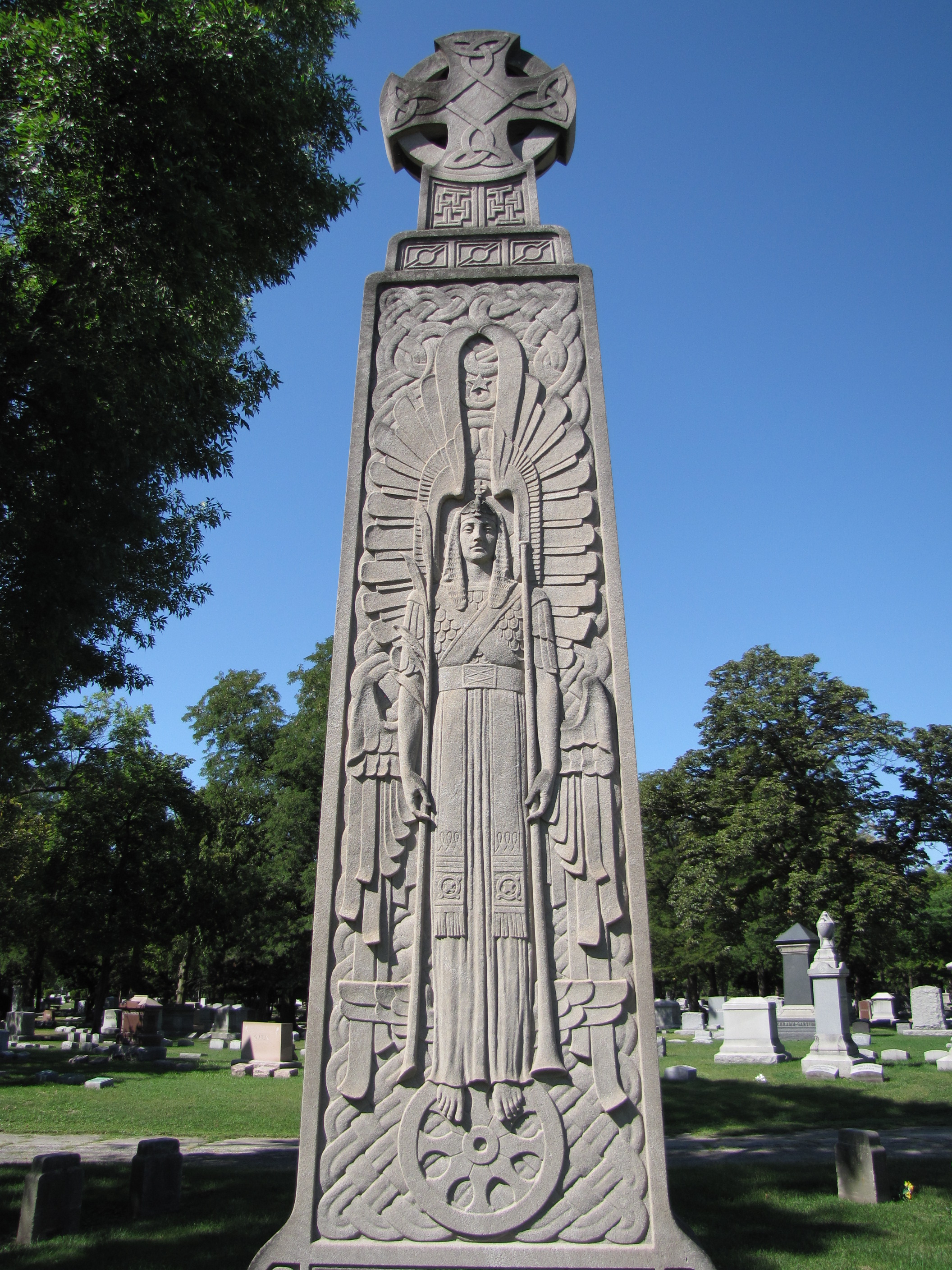
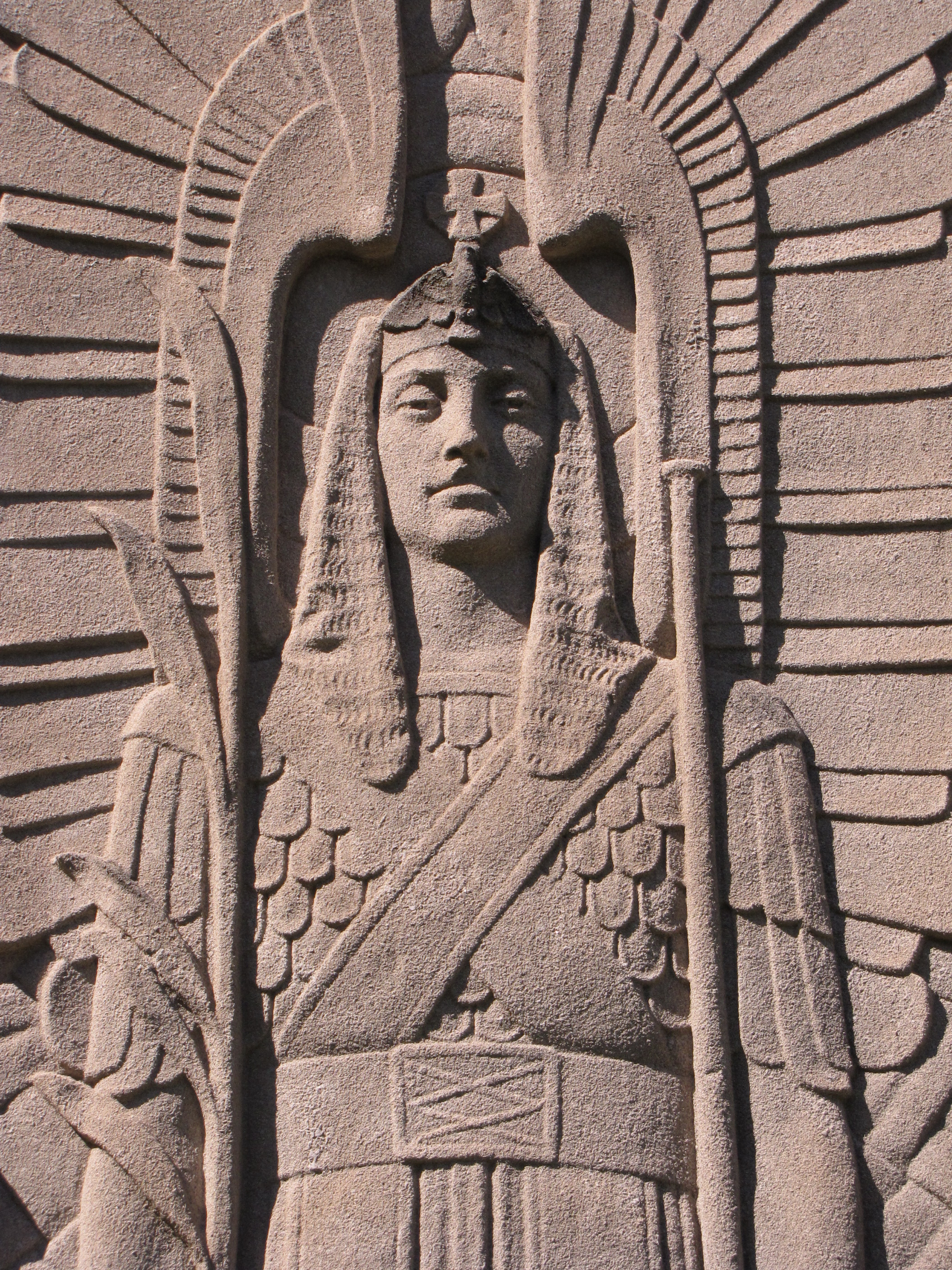
The bas-relief angel carved into the soaring Celtic cross marks the graves of Edmund Cummings and his wife, Ellen. The monument is a testament to Edmund’s success as a Chicago businessman. This Art Deco design with the angel standing on a wheel may be a reference to Ezekiel’s vision described in the Bible:

The appearance of the wheels and their workings was like the color of beryl, and all four had the same likeness. The appearance of their workings was, as it were, a wheel in the middle of a wheel.” (Ezekiel 1:15 – 16)

And when I looked, there were four wheels by the cherubim, one wheel by one cherub and another wheel by each other cherub . . . (Ezekiel 10:9)

IMG_8427

Posted in Symbolism | 1 Comment

She Weeps

Bohemian National Cemetery, Chicago, Illinois

Bohemian National Cemetery, Chicago, Illinois

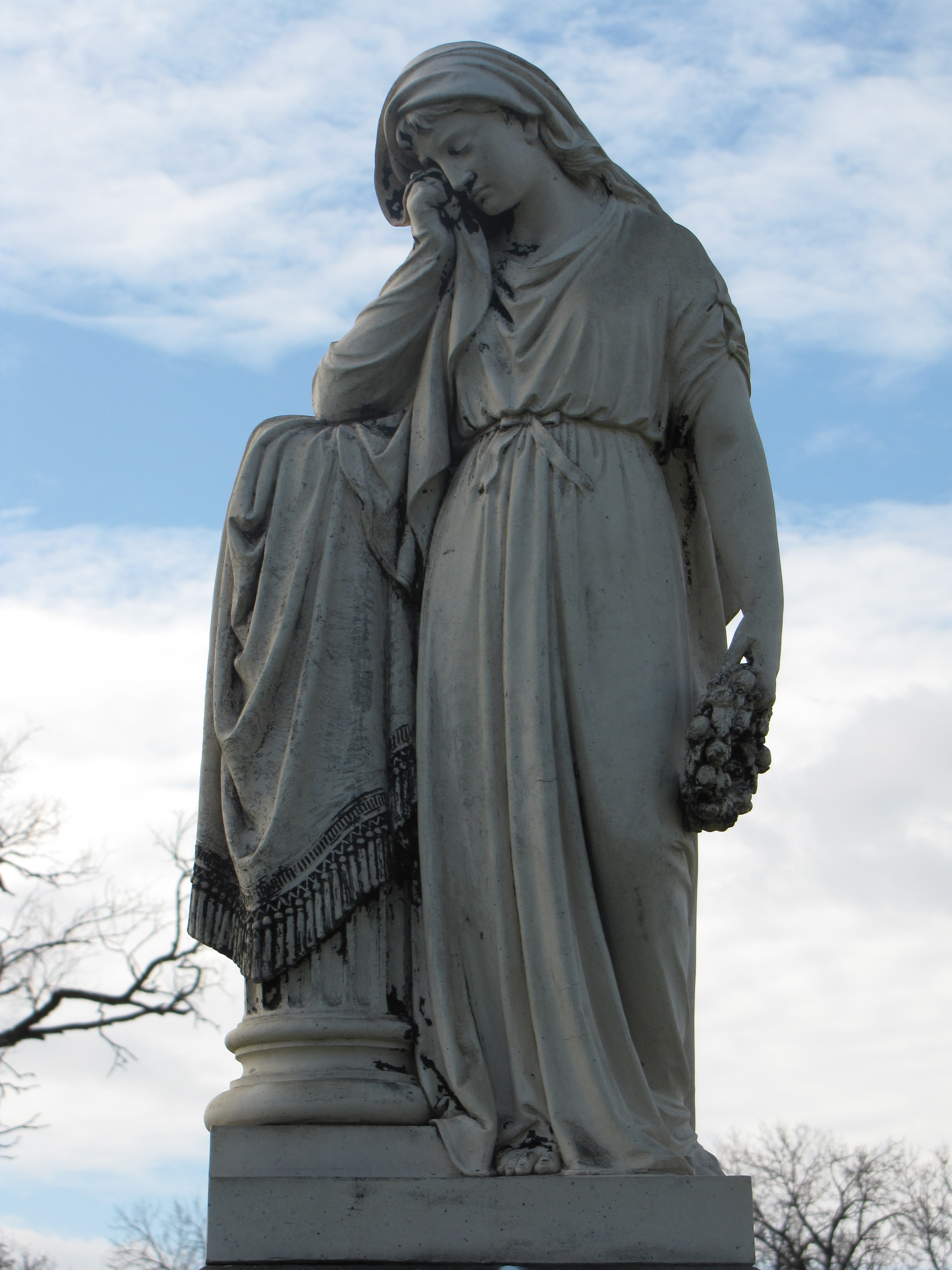
This statue in the Bohemian National Cemetery at Chicago, Illinois, is replete with rich symbolism. The mourning figure tenderly wipes her eye with the corner of the funeral pall in a sign of grief. She gently leans against a broken column in sorrowful resignation. The column represents a noble life cut short and the drapery represents a shroud symbolizing death and sorrow. The drapery can also be a motif that represents a veil that separates the Earth and Heaven.  In her other hand she holds a wreath which can be traced back to ancient Roman times representing victory.  In funerary art, it symbolizes victory over death through immortality.

Posted in Saving Graces, Symbolism | Leave a comment