The Crown Hill Cemetery Gates

IMG_1257

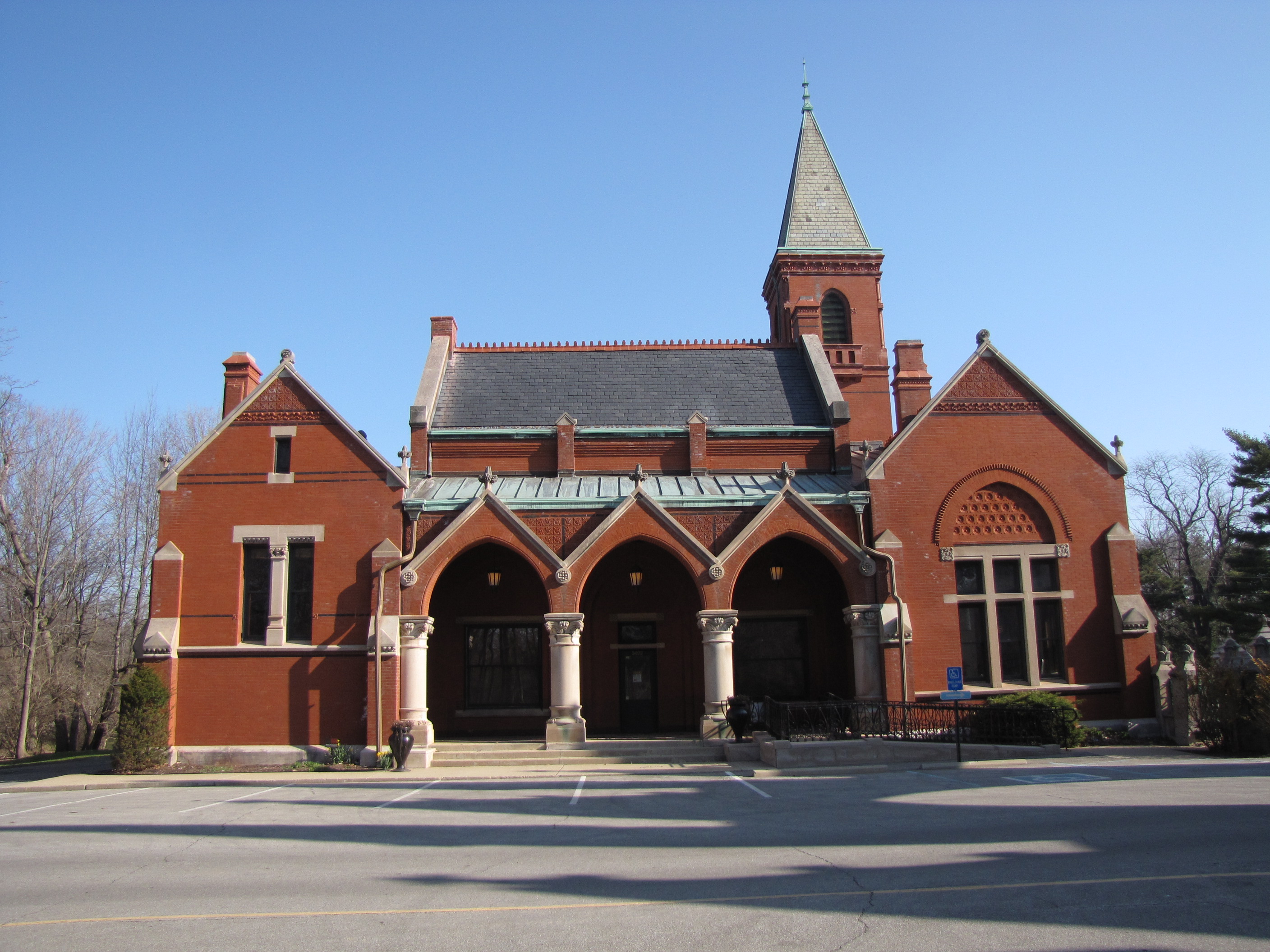
The gates and the waiting station at the Crown Hill Cemetery at Indianapolis, Indiana, were designed by Adolph Scherrer in 1885—a busy year for him, as he was also supervising the construction of the Italian Renaissance-style Indiana Capitol building.

The gates are Gothic Revival. Gothic is a term that was adopted during the Renaissance to describe the architectural style that dominated European church construction from about 1150 to 1500 A.D. Italian writer Giorgio Vasari first used the term as a pejorative. He believed that architectural style was vulgar and blamed the “Goths” for destroying much of the ancient and classical buildings for the newer “Gothic” style buildings.

The Gothic-styled churches were meant to give the viewer a sense of height.  The long thin pinnacles, the vaulted ceilings, and the pointed arches stretch upward toward the Heavens to touch the face of God.  This was extreme architecture meant to be awe inspiring.

IMG_9656

Here the gates mimic that sense of height and grandeur with elements found in traditional Gothic architecture. The pointed arch, a characteristic Gothic design was part of the transformation away from the Romanesque rounded arch and heavy design. It gives the gates a light airy feeling. Another feature common to Gothic architecture is the tracery decorating the arch. The triangles above the arches display quatrefoils—A Latin word that translates to four leaves, another common element in Gothic-style architecture.

The red brick building, built that same year, is the waiting station. Before everyone travelled in individual cars, they could ride a trolley to the cemetery. There they would wait for the rest of the funeral party to gather before entering the cemetery and following the casket together to the grave. The waiting station is trimmed in limestone with repeating Gothic arches framing the porch.

IMG_9498

Posted in Cemetery Gates | 4 Comments

Public Enemy #1 betrayed by the Lady in Red or was it Orange?

Crown Hill Cemetery, Indianapolis, Indiana

Crown Hill Cemetery, Indianapolis, Indiana

John H. Dillinger Jr.

1903 – 1934

The most notorious Hoosier is undoubtedly John Dillinger, infamous for a year-long crime spree from 1933 to 1934.  Dillinger was born at Oak Hill, an Indianapolis neighborhood but mostly raised in neighboring and rural Mooresville.

At age 31, John Dillinger was wanted by the Division of Investigation, the precursor of the FBI, and was given the moniker Public Enemy #1 by none other than J. Edgar Hoover.  Others had dubbed him “jackrabbit” because of his ability to pull off fast escapes, leaving the pursuing cops in his dust.   In a spree that eluded the police in 4 states, Dillinger and a gang of criminals robbed a number of banks netting over $300,000 in withdrawals.  Many people at that time, the peak of the Depression, sympathized with Dillinger because banks had gone bust and millions of people lost their life savings.  Stories of Dillinger’s exploits fed the newspapers with headlines of daring escapes and robberies.

Dillinger had been jailed in Indiana for a grocery store robbery when he was only 24.  He spent the next 9 years in prison—getting to know many of the hardened criminals who were  serving sentences at the same time.  Within a few months of his release Dillinger and his accomplices had robbed 5 Indiana banks and 4 in Ohio.  Dillinger was captured in Ohio but his gang sprung him loose.  He was captured again in Arizona and sent back to Crown Point, Indiana, to be tried and sentenced.  Dillinger, on March 3, 1934, however, escaped by using a “gun” that he had carved out of a piece of wood and stained black with shoe polish.  To the chagrin and embarrassment of the local sheriff, Lillian Holley, Dillinger used her new Ford as his getaway car!

On July 22, 1934, after more close calls and robberies, Dillinger, was laying low and staying with his girlfriend, Polly Hamilton at Chicago.  Her landlady was Romanian-born Anna Cumpanas Sage.  Sage had been running a brothel and had deportation proceedings started against her.  When she realized that Polly was dating Dillinger she contacted her boyfriend, a Chicago policeman, to see if she could cut a deal for the reward and a promise that the she would not be sent back to Romania.  To escape the stifling July heat, Dillinger planned to go to the air conditioned Biograph Theater to see the latest Clark Gable movie, Manhattan Melodrama.  Sage tipped off the police and they laid in wait for the threesome to leave the theater after the movie ended.  When they left the theater at 10:30 the police were lying in wait.  Anna was wearing an orange dress, which in the glint of the theater lighting looked red.  The police began the chase and when Dillinger drew his gun he was shot—four times.

The Dillinger Family had a plot in the Crown Hill Cemetery at Indianapolis and made arrangements to have their son’s body interred at the cemetery.  Many people who had family members buried at Crown Hill Cemetery, objected to John Dillinger being buried there.  But the cemetery officials stated that the Dillinger family had a right to bury their son with the other family members and the cemetery must “do its duty”.  The day of the funeral, July 25, Crown Point Cemetery closed the gates to onlookers but the family plot was close to the fence and nearly 5,000 gawkers gathered to see the burial.  As Dillinger’s wooden casket was being lowered into the ground a summer squall darkened the skies and rained on the small family funeral huddled underneath the funeral tent.

Rumors circulated that Dillinger had pulled off the hoax of a lifetime—that he was not actually dead after all and someone else was buried in the Crown Hill plot.  In addition to that, the Dillinger family had been offered a great sum of money for John Dillinger’s body which was wanted for a traveling exhibit in a sideshow.  Fearing grave robbery, John Dillinger Sr. arranged to have scrap metal and concrete poured over his son’s casket, as well as, four reinforced cement slabs.  The family also delayed marking the grave for over two years for fear of discretion.

The small gray granite gravestone has been chipped away by souvenir seekers and the stone has been replaced several times.  And even though a president and several vice presidents and many other notables are buried at Crown Hill Cemetery, Dillinger’s grave is one of the most visited.

In fact, the day I visited the grave to snap the picture of his grave a very young couple was there ahead of me.  Out of curiosity, I asked them why they came to the grave.  The young man said that his grandfather had owned the same model car as Dillinger and was about the same age and build when after one of his Indiana bank robberies, the police pulled his grandfather.  After a couple of hours of detention they realized Dillinger had given them the slip and they had the wrong man.

Posted in Famous graves | 2 Comments

An oddly-shaped pearl

Spring Grove Cemetery, Cincinnati, Ohio

Spring Grove Cemetery, Cincinnati, Ohio

Jacob Burnett

February 22, 1770 – May 10, 1853

Rebecca Wallace Burnet

August 23, 1778 – January 3, 1867

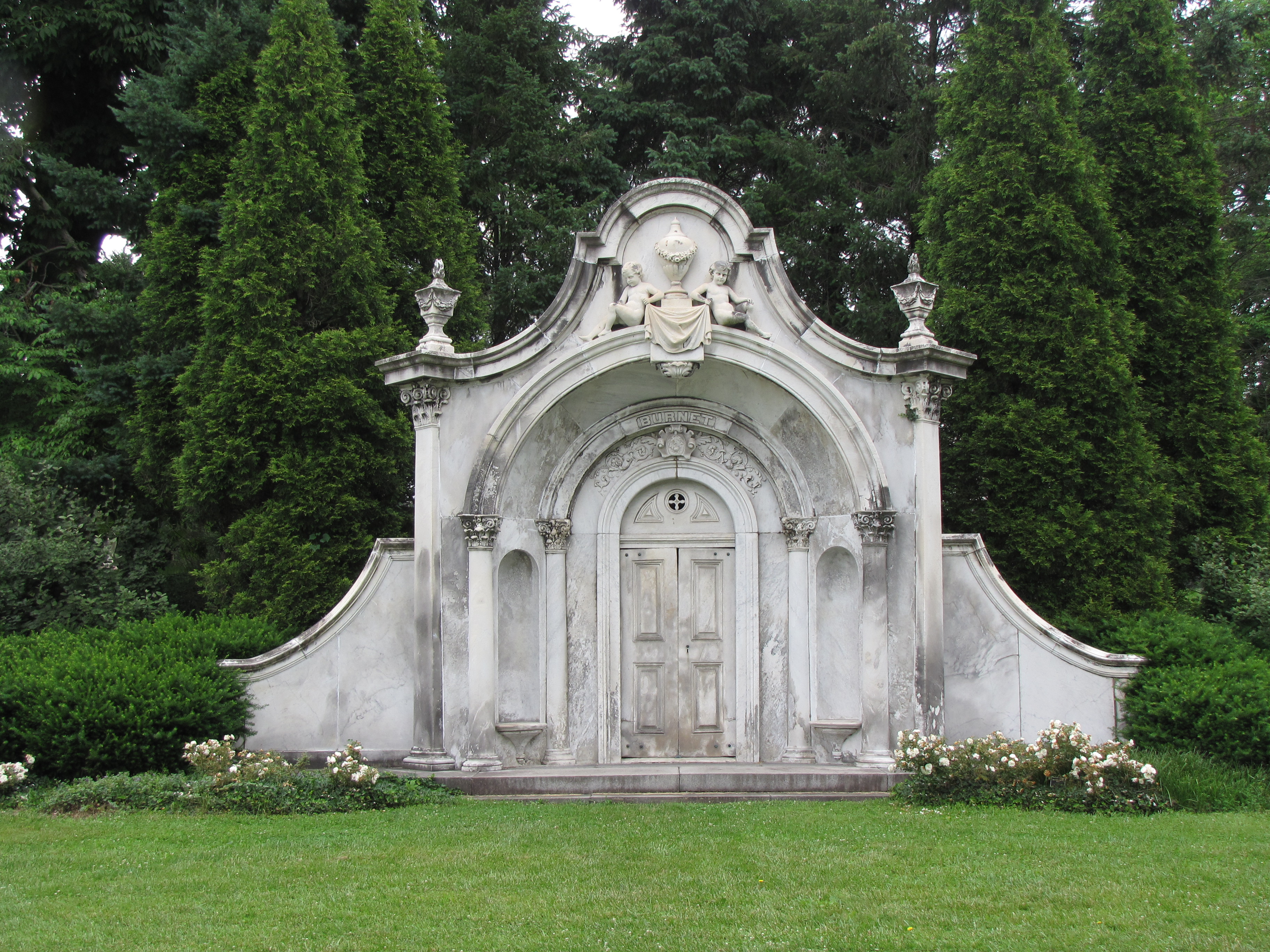
Jacob Burnet was a prominent citizen and early leader in Ohio, serving in various elected and appointed posts including, serving on the Territorial Council in 1799, elected to the Ohio House of Representatives, appointed to the state’s Supreme Court, and appointed to fill the Senate seat William Henry Harrison vacated when he was elected President.  He also authored the state’s first constitution.

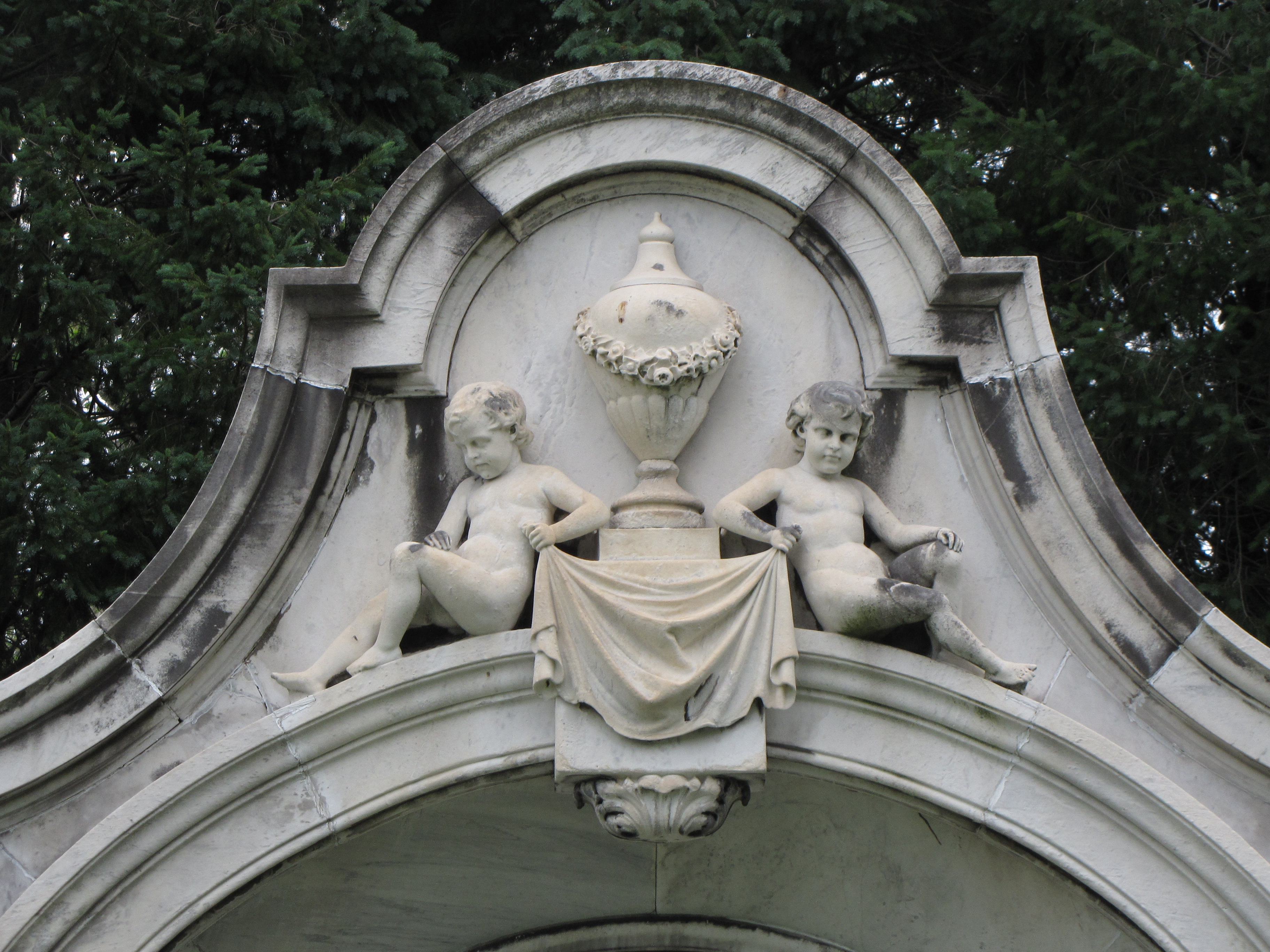
He and his wife Rebecca are buried in the highly ornate white Italian marble mausoleum in the Spring Grove Cemetery which was designed by Cincinnati architect Charles Rule.  The sweeping lines, the flowing architecture and the high ornamentation are examples of Baroque architecture which was popular in the late seventeenth Century.  “Baroque” was a Spanish term for pearls that were oddly shaped.  The term was commandeered to describe architecture that was designed to have a feeling of movement, almost as if it was undulating and lyrical.  Judge Burnet was originally buried in the Presbyterian churchyard but was moved in 1865 when the mausoleum his wife had designed and built was completed.

IMG_7414

Posted in Mausoleums | Leave a comment

Lysicrates

Spring Grove Cemetery, Cincinnati, Ohio

Spring Grove Cemetery, Cincinnati, Ohio

Joseph Earnshaw

September 16, 1831 – January 13, 1906

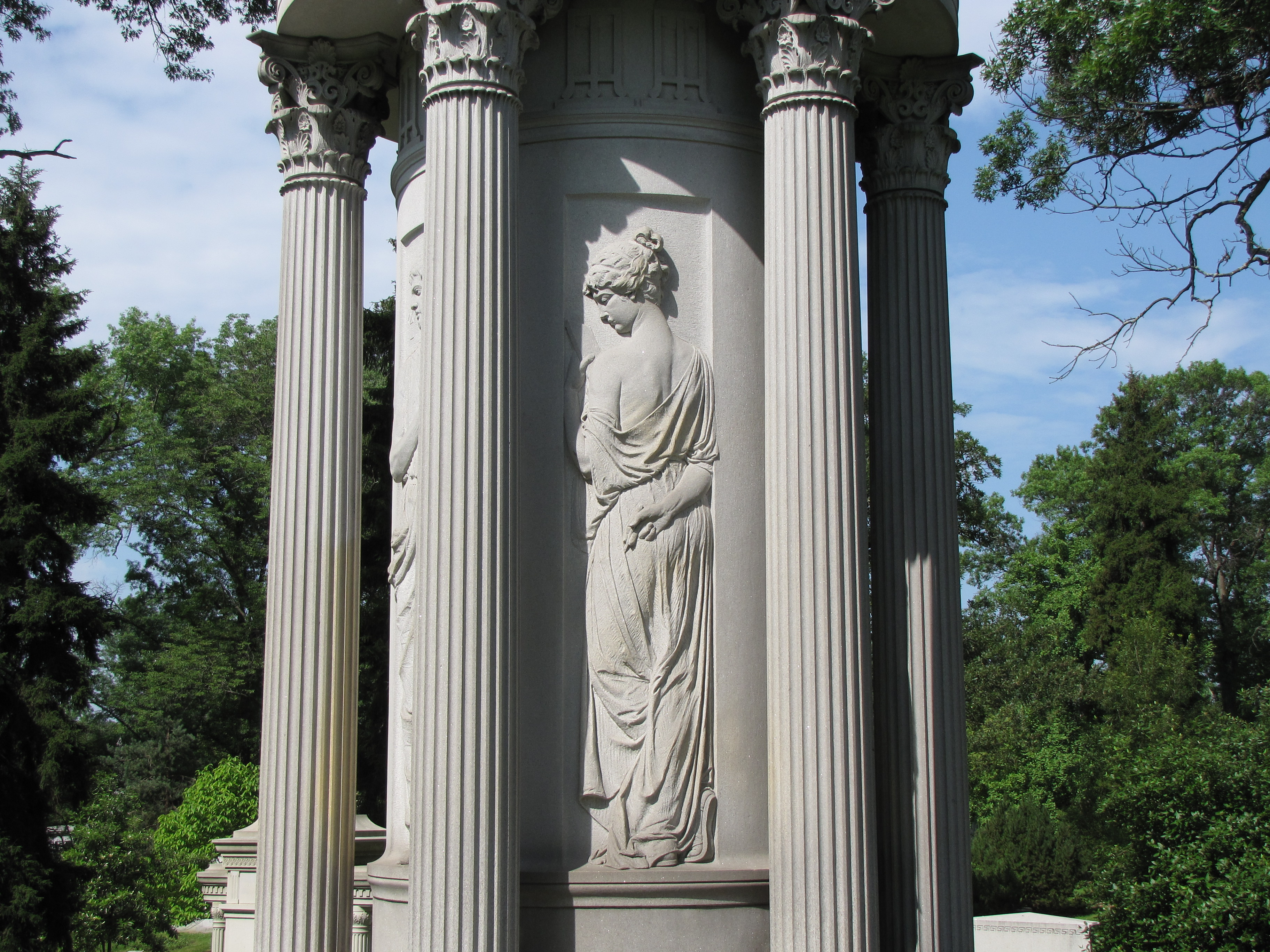
Neoclassical designed monuments can be found in many large urban cemeteries in the United States, including Spring Grove Cemetery at Cincinnati, Ohio.

IMG_7566

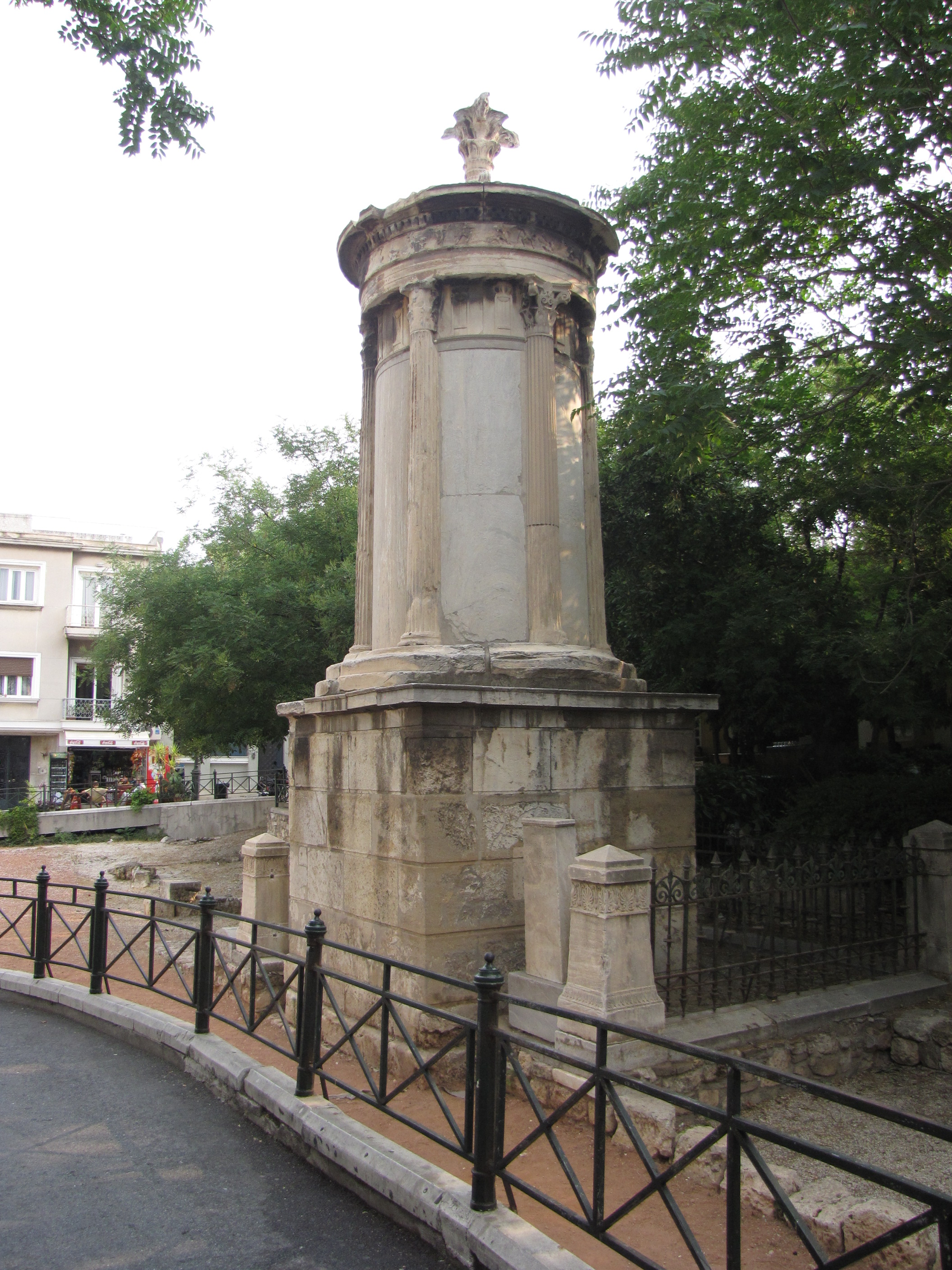
The Joseph Earnshaw Grecian Corinthian-style monument was based on the Choragic Monument of Lysicrates which is located at the base of the Acropolis at Athens, Greece.  The Lysicrates monument was the first building to have Corinthian columns on its exterior.  The building was built by Lysicrates a wealthy patron of musical performances in the Theater of Dionysus.

The Choragic Lysicrates Monument, Athens, Greece

The Choragic Lysicrates Monument, Athens, Greece

Posted in Uncategorized | Leave a comment

Death’s dusky hand

Spring Grove Cemetery, Cincinnati, Ohio

Spring Grove Cemetery, Cincinnati, Ohio

Andrew Erkenbrecher

July 4, 1821

January 3, 1885

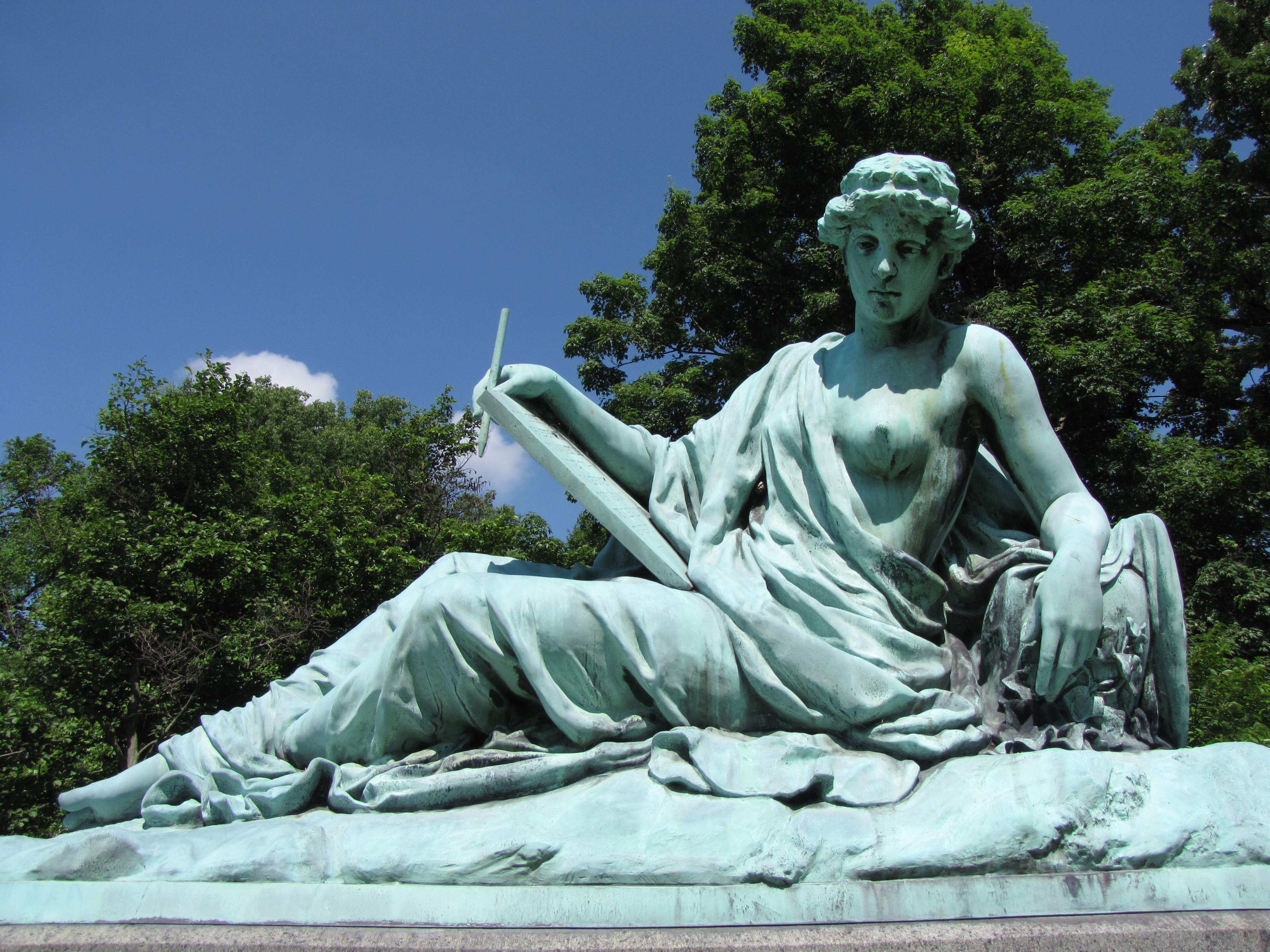
Andrew Erkenbrecher was a German immigrant who came to America with his parents when he was a child.  He was quite industrious and worked in a series of jobs until he founded his own company.  Andrew opened a starch factory and grain mill.  It was the starch, though, that made his fortune.  When Cincinnati was struck by a caterpillar plague in the late 1800s, Erkenbrecher imported birds to combat the caterpillars.  He treasured the birds and imported exotics of all kinds which later became  a focal point as an exhibit in the Cincinnati Zoo, which he helped found.

Andrew Erkenbrecher’s cast bronze monument in the Spring Grove Cemetery at Cincinnati, Ohio, features a woman leaning back on a pillow while holding a tablet in her right hand.  The lines of a poem by the German poet Friedrich Ruckert are inscribed on the tablet which seem to extoll the virtues of death and the prize it brings:

“Though Death ends well all life’s distress.  Yet life still shudders at Death’s approach

Life only sees Death’s dusky hand.  And not the shinning cup it bears”.

IMG_7667

Posted in Symbolism | Leave a comment

Light the Way

Green-Wood Cemetery, New York

Green-Wood Cemetery, New York

The door as a motif in funerary art symbolizes mystery.  The door is the pathway from the earthly realm to the next.  In this example, the mystery seems to be lifted—here the mourning figure appears to leading the way to the next realm with her oil lamp.

The Bible verse, II Samuel: Chapter 22, verse 29, says, “For thou art my lamp, O LORD: and the LORD will lighten my darkness.”

The light emanating from the lamp represents the pathway to Truth and to Knowledge.

IMG_4275

Posted in Symbolism | Leave a comment

Coming Apart at the Seams

Lakewood Cemetery, Minneapolis, Minnesota

Lakewood Cemetery, Minneapolis, Minnesota

SARAH ELLIS

DAUGHTER OFJ.A. & S. B.

LAURIE,

DIED FEB. 12, 1879

AGED

19 YRS, & 3 MOS.


TAKE THEM O FATH

ER IN THINE ARMS

AND MAY THEY

HENCEFORTH BE

A MESSENGER OF

LOVE BETWEEN,

OUR HUMAN

HEARTS AND THEE.


GEORGE MANN

FISKE

SON OF

REV. J.A. & S.B.

LAURIE,

DIED APR. 14, 1882

AGED

3 YRS. & 3 MOS.


“White bronze” or zinc cemetery markers were manufactured from the 1870s until 1912.  The markers are distinguished by their bluish-gray tint.  The markers are not bronze but actually cast zinc.  The zinc is resistant to corrosion but the zinc becomes brittle over time and cracking and shrinking can occur.

In this example found in the Lakewood Cemetery at Minneapolis, Minnesota, the zinc marker has a figure of a child praying. It is clear that the seam is separating, and in fact, it looks as if a repair or patch has been attempted.

IMG_8165

The praying child zinc marker is not an uncommon marker and, in fact, could be ordered from one of the companies that manufactured these markers on different bases. The praying child marker from the Somerset Cemetery at Somerset, Ohio, has the same figure with a different and more elaborate base.

Somerset Cemetery, Somerset, Ohio

Somerset Cemetery, Somerset, Ohio

These grave markers came in a wide assortment of sizes and shapes and were somewhat like grave marker erector sets.  The more elaborate markers had a shell of sorts and then various panels could be attached according to the tastes of the family ordering the grave marker.  In this way, each marker could be “customized” to the tastes of the individual.  The markers were designed to look like traditional markers and from a distance, except for the tale-tale bluish-gray color, they do.  The markers they produced often mimicked the gravestones that were being produced in stone.  What traditional stone carvers created in marble and granite, the Monumental Bronze Company produced in cast zinc. Though the base is quite different on each of these grave markers, there is no mistaking the similarities between the statues of the child. The praying child gravestone carved in white marble is located in the Green-Wood Cemetery at Brooklyn, New York.

Green-Wood Cemetery, Brooklyn, New York

Green-Wood Cemetery, Brooklyn, New York

Posted in Zinc Markers | 2 Comments

The Anchor and the Cross

Cave Hill Cemetery, Louisville, Kentucky

Cave Hill Cemetery, Louisville, Kentucky

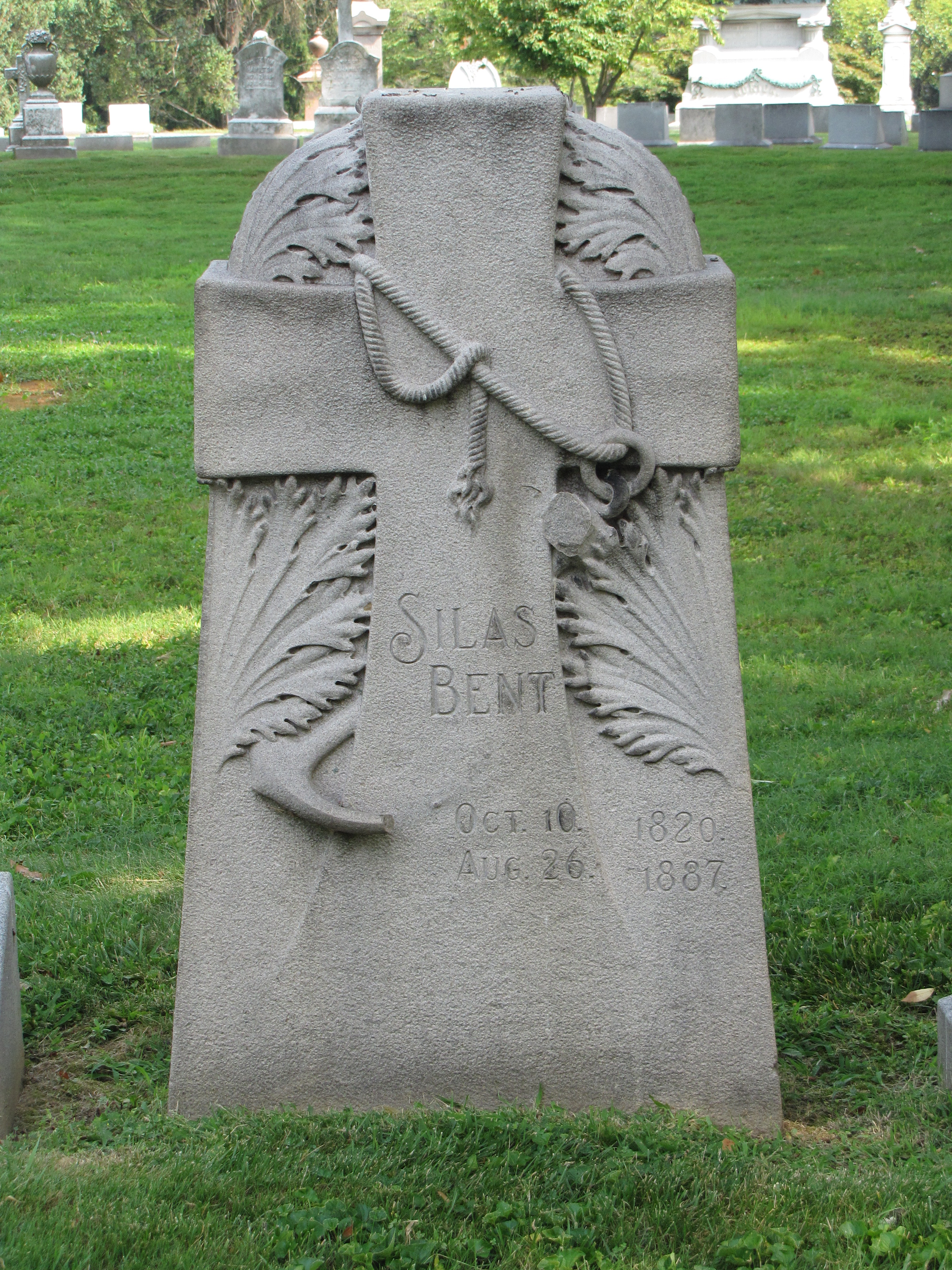
Often when found on a gravestone, the anchor represents an ancient Christian symbol. Early Christians used the symbol in catacomb burials beneath the city of Rome.  There it was used as a disguised cross.  The anchor also served as a symbol of Christ and his anchoring influence in the lives of Christians.  But, sometimes the anchor is an anchor, representative of a profession, rather than a religious symbol.

The gravestone of Silas Bent Sr. displays a cross with an anchor tied to it. The anchor in this case is symbolic of Bent’s time as a sailor in the United States Navy. According to Bent Family in America: Being Mainly a Genealogy of the Descendants of John Bent who settled in Sudbury, Mass., in 1638, with Notes upon the Family in England and Elsewhere, Silas Bent was born in South St. Louis, Missouri, on October 10, 1820. “His education was received at the U.S. Naval Academy, Annapolis, Maryland. He became a midshipman July 1, 1836, master in 1849, and lieutenant August 1, 1849.” This lead to a life on the seas and many adventures, including assisting in the surveying of the Japanese coast.

The cross on his tombstone is likely a nod to his role as senior warden of the Christ Church at St. Louis.  Bent married Ann Eliza Tyler, who was from a family from Louisville, Kentucky, which explains why this St. Louis man was buried in the Cave Hill Cemetery at Louisville.

Posted in Symbolism | Leave a comment

Temple of Love

Cave Hill Cemetery, Louisville, Kentucky

Cave Hill Cemetery, Louisville, Kentucky

PRESTON POPE

SATTERWHITE

SEPTEMBER 28TH 1867

DECEMBER 27TH 1948

BUT THANKS BE TO GOD

WHICH GIVETH US

THE VICTORY

THROUGH OUR LORD

JESUS CHRIST


FLORENCE BROKAW

SATTERWHITE

NOVEMBER 1ST 1857

MAY 1ST 1927

HER WAYS ARE WAYS

OF PLEASANTNESS

AND ALL HER PATHS

ARE PEACE

 IMG_7146

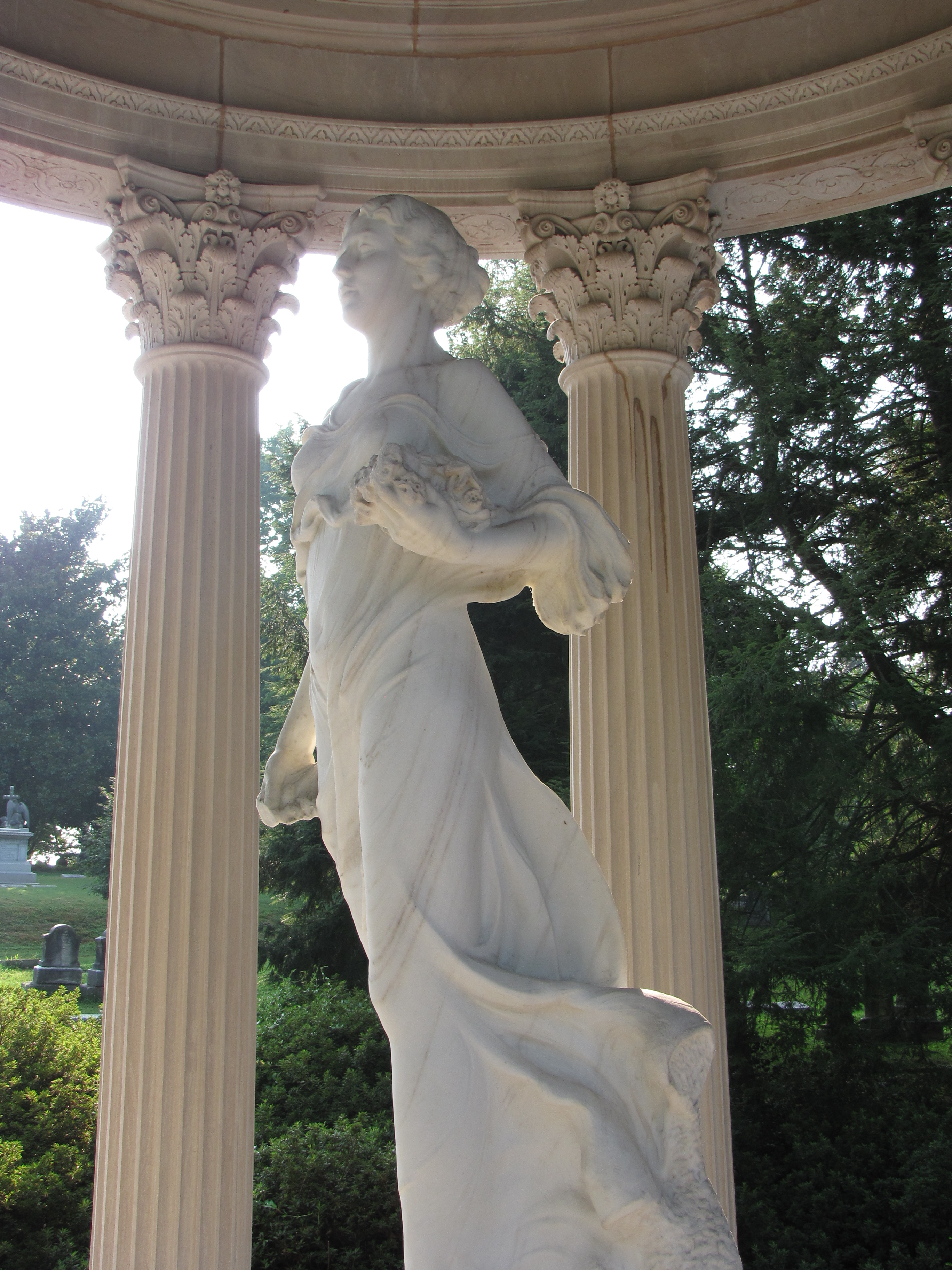
Horace Trumbauer, noted Philadelphia architect, was hired by the prestigious Dr. Preston Pope Satterwhite of Louisville, Kentucky, to design a memorial for his late socialite wife, Florence Brokaw Martin Satterwhite.

Trumbauer based his design on the Temple of Love at the Palace of Versailles created by Richard Mique specifically for Marie Antoinette.  Mique oversaw the building of the last of the monuments at the Palace before the French Revolution and the fall of King Louis XVI.  For his part in what was thought to have been a conspiracy to save Marie Antoinette, Mique and his son were found guilty by a tribunal and sentenced to death—three weeks before the end of the Reign of Terror.

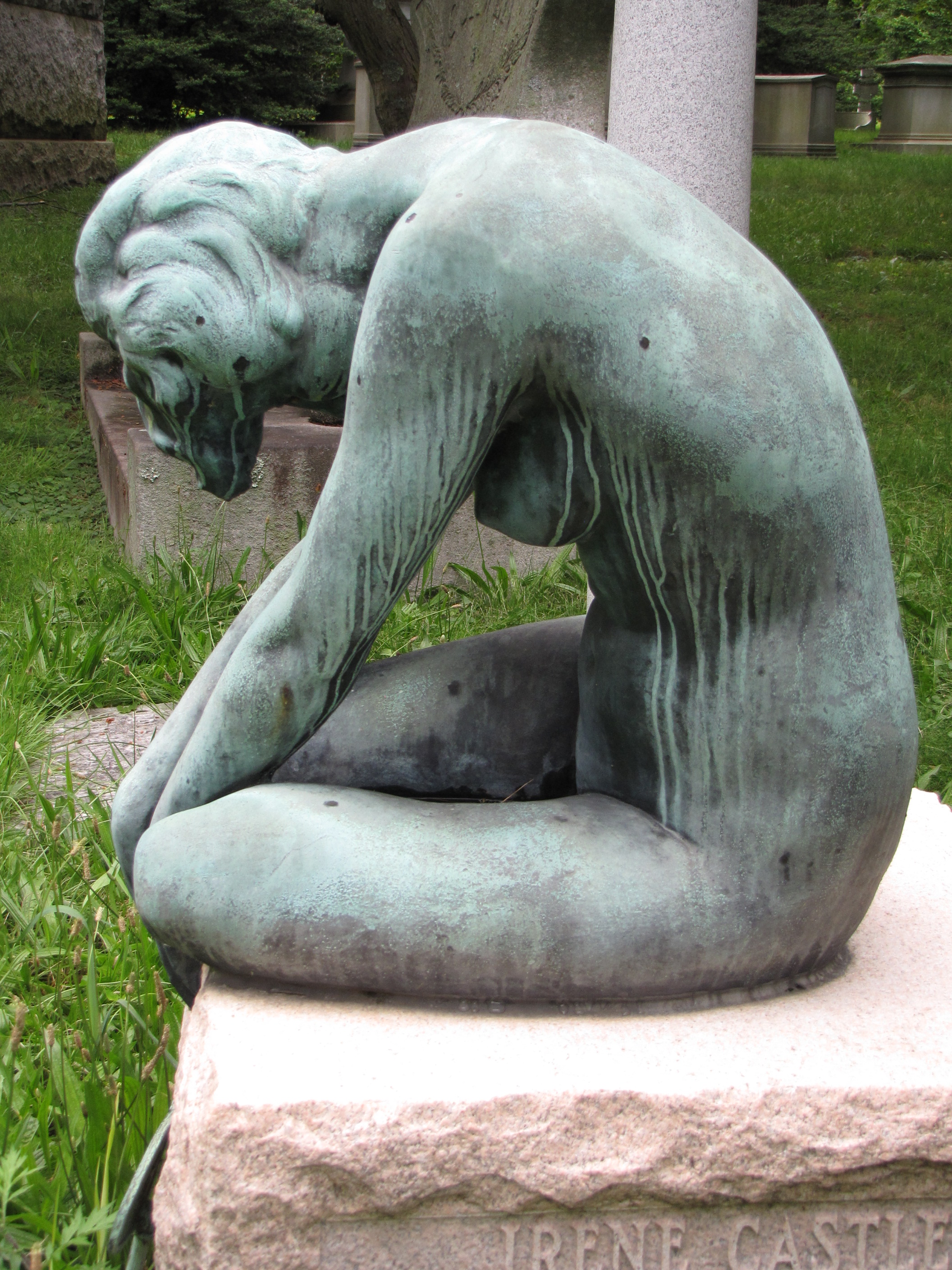
The statue inside the memorial was created by Sally James Farnham, the same artist who created the Vernon and Irene Castle memorial at Woodlawn Cemetery at Bronx, New York.

Farnham was well known for her heroic 15-foot statue of Simon Bolivar in Central Park.  Unlike the delicate Castle commission, this statue is commanding and large. The centerpiece of the temple is the statue of Flora, indicated by the bouquet of flowers she holds in her left arm.  Farnham designed the statue and it was sculpted in marble by Robert A. Baillie.

What is also remarkable is that Sally was entirely self-taught—she had no formal training, and yet, created magnificent sculptures that show range from the massive equestrian statue of Bolivar to the tender and delicate collapsed dancer to the centerpiece of Satterwhite memorial.

IMG_7149

Posted in Famous graves | Leave a comment

Collapsed Dancer

Woodlawn Cemetery, Bronx, New York

Woodlawn Cemetery, Bronx, New York

MY BELOVED HUSBAND

VERNON CASTLE BLYTH

BORN MAY 2, 1887

WAS KILLED FEB. 15, 1918

IN THE SERVICE OF HIS COUNTRY

CROIX DE GUERRE


IRENE CASTLE

MCLAUGHLIN ENZINGER

HUMANITARIAN

BORN APRIL 7, 1893

DIED JANUARY 25, 1969

Vernon and Irene Castle were one of the most famous dance couples of the 20th Century.  They were HUGE. Today they would be called superstars.  They became famous for their versions of trots—the Turkey Trot and the Foxtrot—among other dances they helped popularize.

Vernon and Irene Castle

Vernon and Irene Castle

Both were dancers in a dance troupe.  They went on tour in France and became the toast of Paris.  When they returned to the United States in 1912, they starred in Broadway musicals, vaudeville, and movies, eventually opening their own dance studio, where they were in high demand to teach dance.

At the height of their stardom, Vernon, a native of Great Britain, joined the Royal Flying Corps.  Vernon flew over 300 missions downing two enemy aircraft.  He was awarded the Croix de Guerre, a French military decoration awarded to French and Allied service men.  He was transferred to the United States to train American flyers.  On February 15th, 1918, at the Benbrook Airfield near Fort Worth, Texas, Vernon was killed in a training accident.

IMG_4999

Irene had seen a small bronze sculpture of a tired ballet dancer titled, End of the Day, created by artist Sally James Farnham.  The statue depicts a nude dancer who is coiled into a ball after an exhausting day of dance practice.  The statue was recreated for a memorial for Vernon’s grave—and became the image of a distraught and weeping mourning figure collapsed in grief framed by a Doric colonnade.

IMG_5001

Posted in Famous graves, Saving Graces | 4 Comments