The Transformation of Mary

IMG_9432

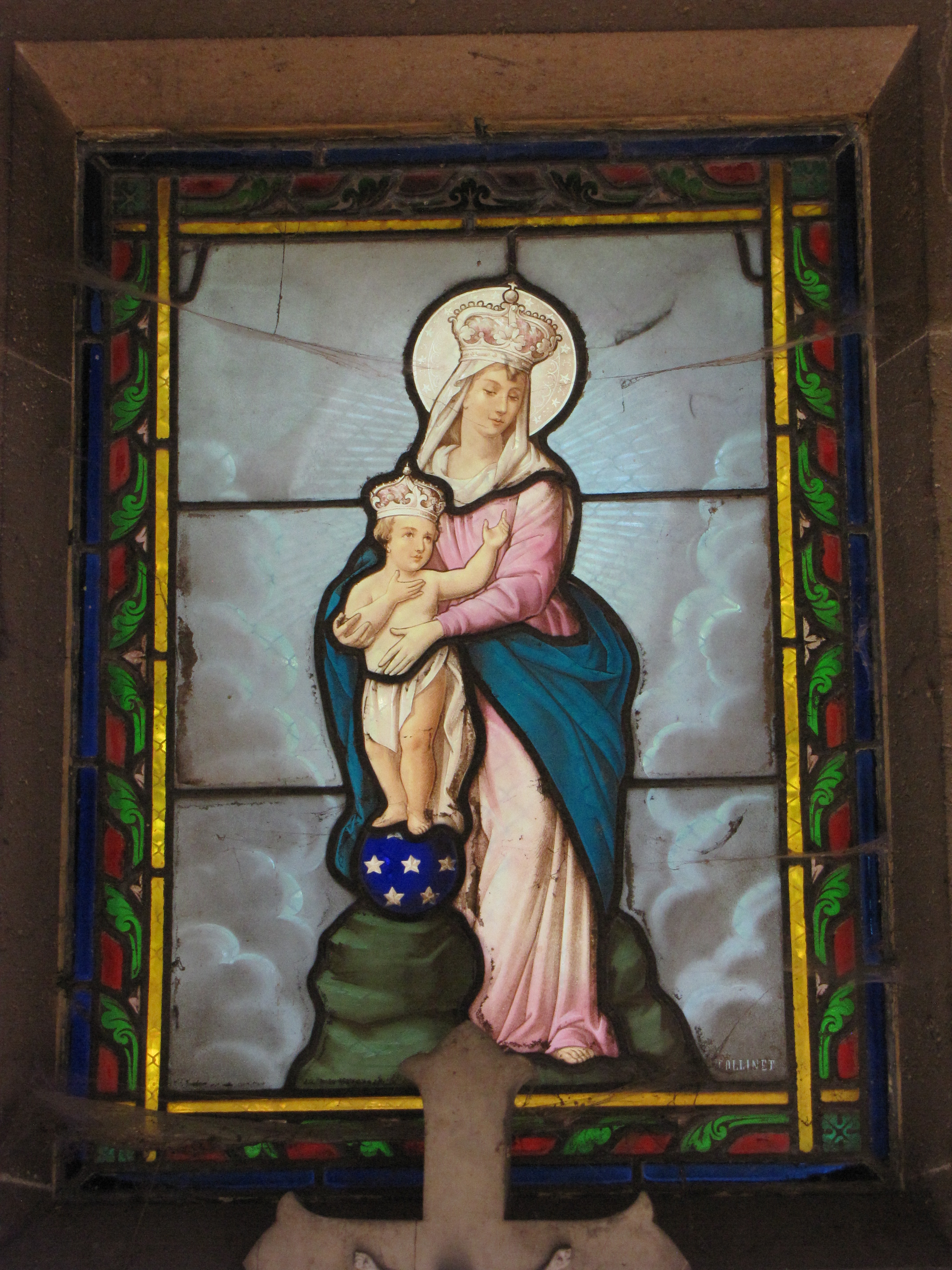
Many of the small mausoleums in Le Père Lachaise Cemetery have a window in the rear part of the tomb—often made of stained glass. Many of these windows are hand painted works of art, most often depicting religious figures. Two such windows depict the Virgin Mary but they are very different in nature. These two windows shown in this blogpost illustrate the evolution of Mary as Queen of Heaven to Mary as Mother.

Recently an art exhibition of paintings of the Virgin Mary displayed over 60 works Italian art, depicting Mary that explained the transformation of Mary in the Middle Ages to the Renaissance. An article in the December 11th issue of the Economist reviewed an art exhibition titled, “Picturing Mary: Woman, Mother, Idea”, that opened at the National Museum of Women in the Arts in Washington, DC. All of the paintings were of the Mary, Mother of Jesus, who until the 18th Century was the most painted woman in the art world.

Part of the article focused on the evolution of Mary as Queen of Heaven to the approachable Mary as Mother, the same difference found in the two stained glass windows.
IMG_9433

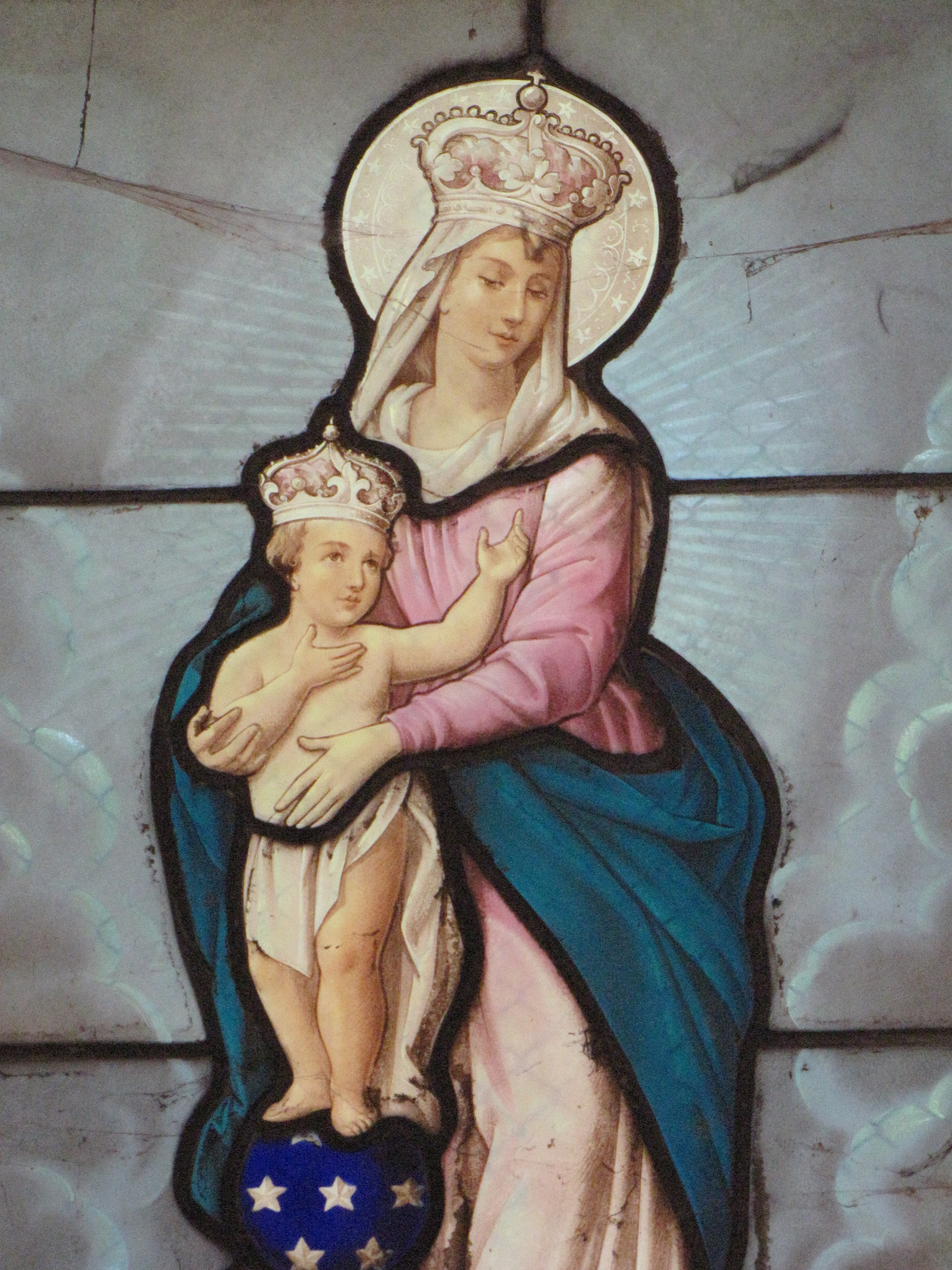
According to the article, the “Pre-Renaissance Mary is represented as queenly: ennobled, enthroned, surrounded by angels and engulfed in celestial light.” The stained glass window from the Riviere Family tomb shows Mary as the Queen of Heaven, with a bright halo surrounding her head. She stiffly holds haloed baby Jesus, who is standing on a starred representation of the world—Kind of Kings, Lord of Heaven and Earth. This is a majestic, unapproachable depiction of Mary.

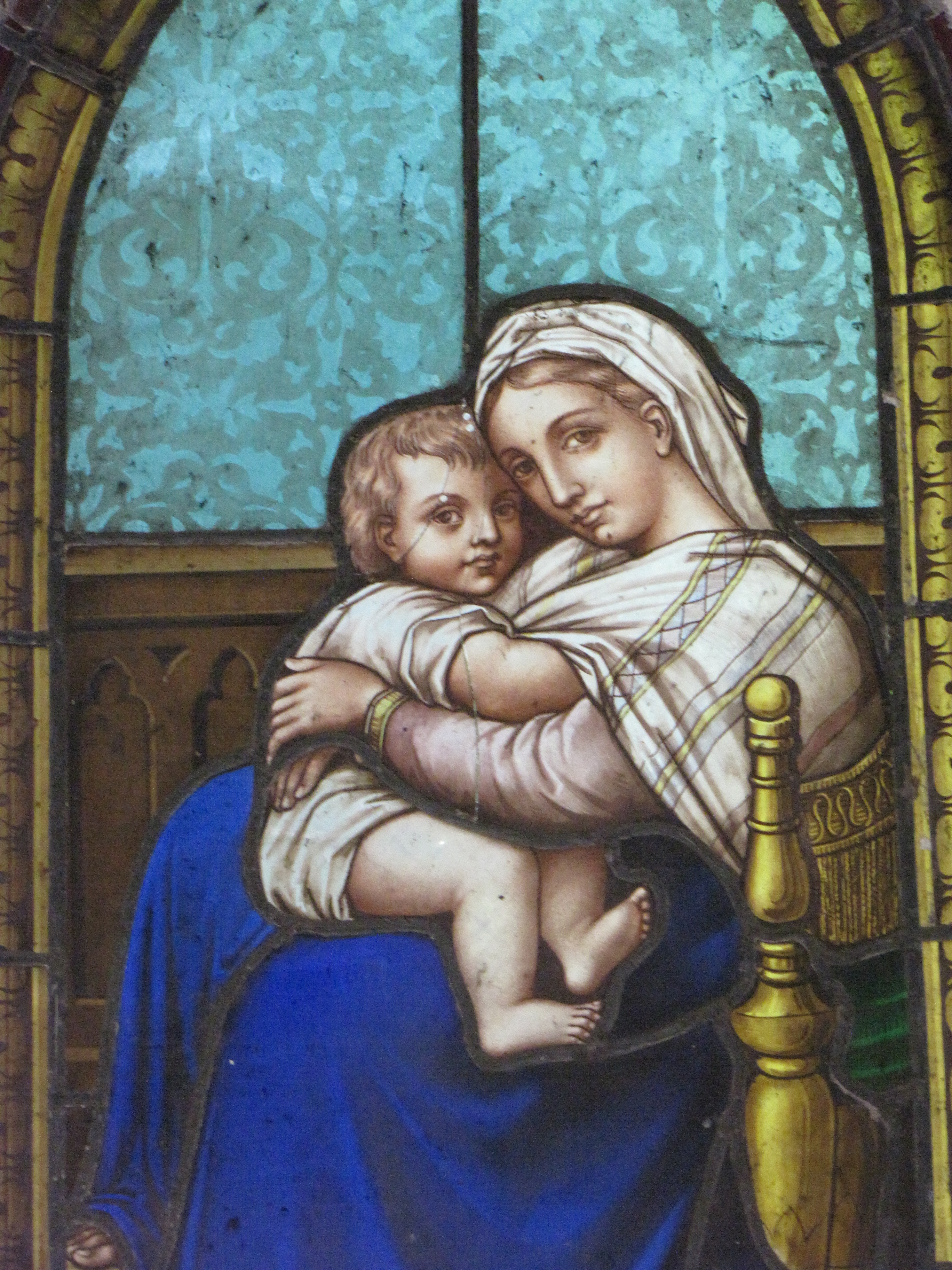
The second window from the Demonneanx Family tomb depicts a very different Virgin Mary. Here she is wearing the ordinary clothing leaning back and holding Jesus on her lap in what is almost a foretelling of the pieta.

IMG_9256

According to the art historian writing for the Economist, it was “in the late Middle Ages she becomes more approachable, appearing more often in the garb of an unassuming peasant. The humanist conception of Mary gained further traction in the Renaissance: she is less empress of heaven, more mother—sewing, nursing and playing with the infant Jesus. It is a representation that is crucial to the doctrine of Jesus’s “authentic humanity”: Mary is his link to human nature and earthly experience. Engaged in these quintessentially female activities, she also provides the archetype of Christian womanhood”.

There is another difference in these two depictions. In the first Mary looks down, a show of her humility. In the second, Mary looks directly at the viewer. In the exhibit, there are few examples of Mary gazing directly at the viewer. “Her eyes are invariably downcast, suggesting solemnity, a soul turned inward, and the tragic foreknowledge of her son’s fate”. There was also a notion that a woman’s direct gaze was impure.
IMG_9257

Posted in Symbolism | 3 Comments

Broken

IMG_1663


JOHN EMMERT

FEBRUARY 8, 1831

NOVEMBER 22, 1882


CATHERINE S. WIFE

APRIL 18, 1835

OCTOBER 20, 1903


LEONARD J. EMMERT

MAY 11, 1871

OCTOBER 22, 1938


GEORGE EMMERT

APRIL 4, 1858

APRIL 25, 1859


CHRISTOPHER EMMERT

DECEMBER 25, 1863

SEPTEMBER 26, 1864


JOHN H. EMMERT

DECEMBER 11, 1865

SEPTEMBER 22, 1927

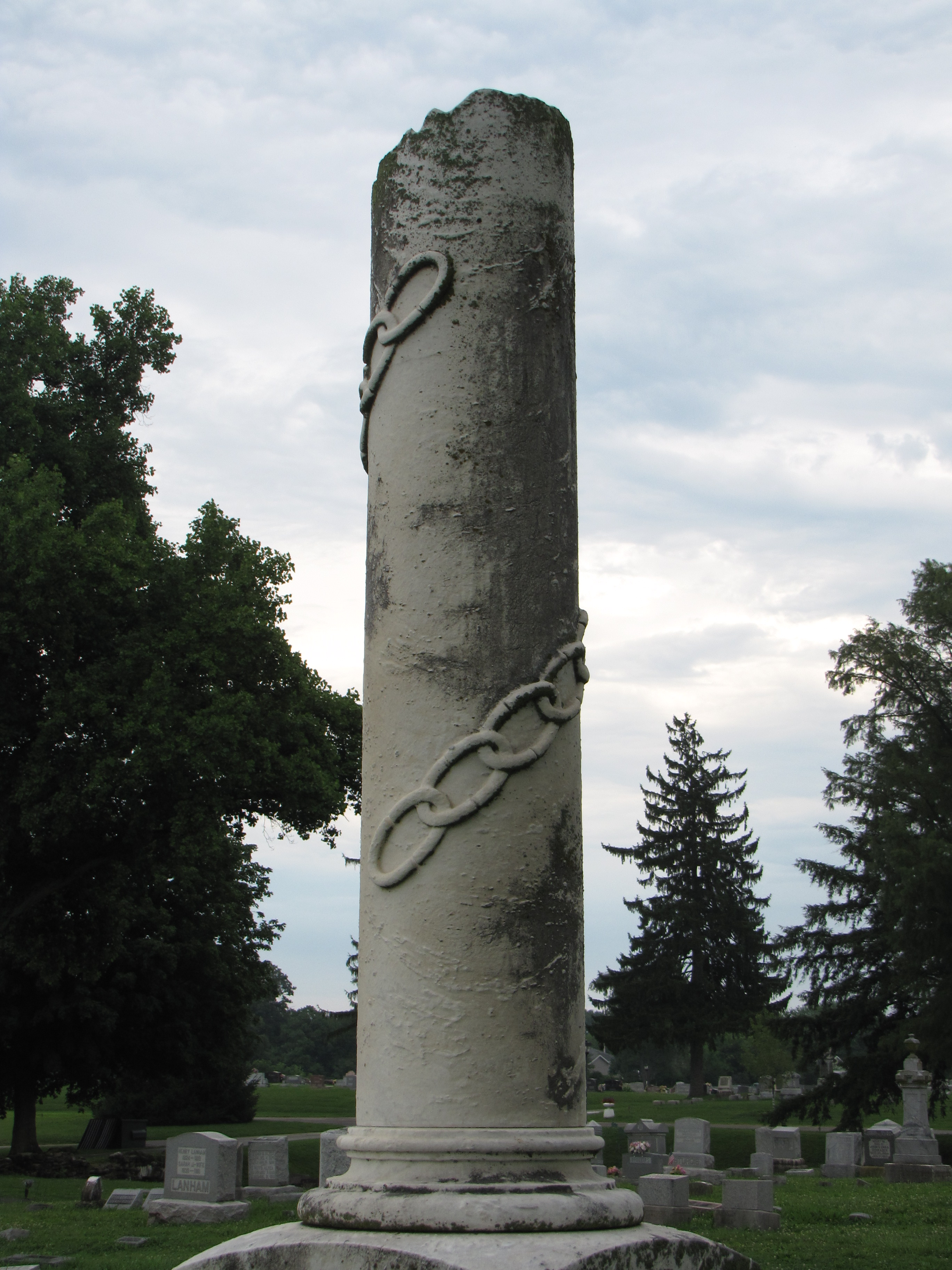
In the cemetery, much of the iconography represents a life ended—the winged death’s head, the hanging bud, the broken wheel. This gravestone in South Park Cemetery at Greensburg, Franklin County, Indiana, combines two such symbols—the broken column and the broken chain. The white marble monument has a broken chain that twines around the broken column.

IMG_1665

The broken column symbolizes a life cut short. Some sites say that it represents the loss of the head of the family—others that it represents the life cut down in its prime.

This broken chain symbolism dates back to Medieval times when people believed that the soul could be held to the body by a golden chain. Once the chain was broken, the soul took flight and rose from the body leaving Earth and ascended to Heaven.

Posted in Symbolism | Leave a comment

The Fraternal Order of Eagles

IMG_1682

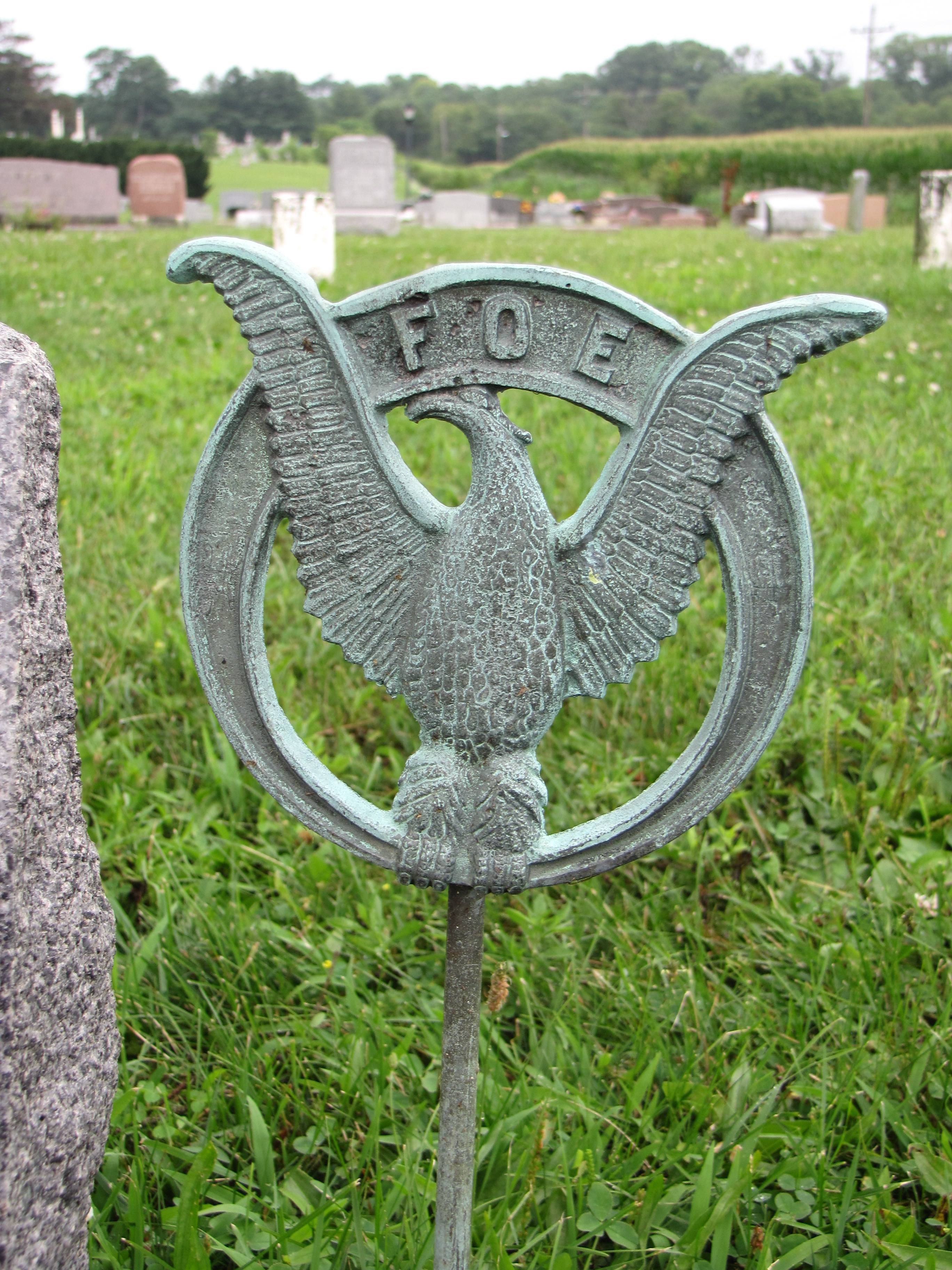
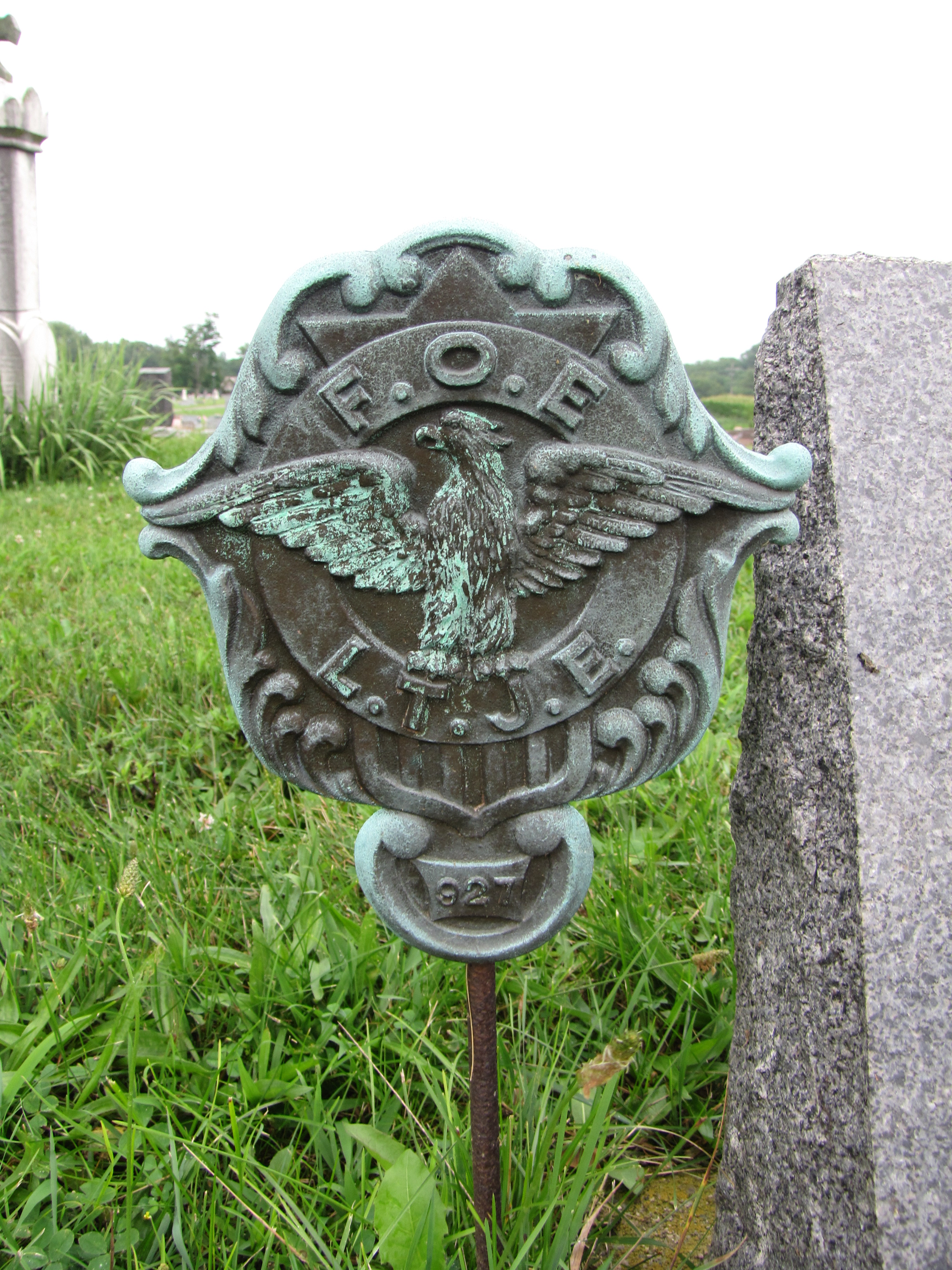
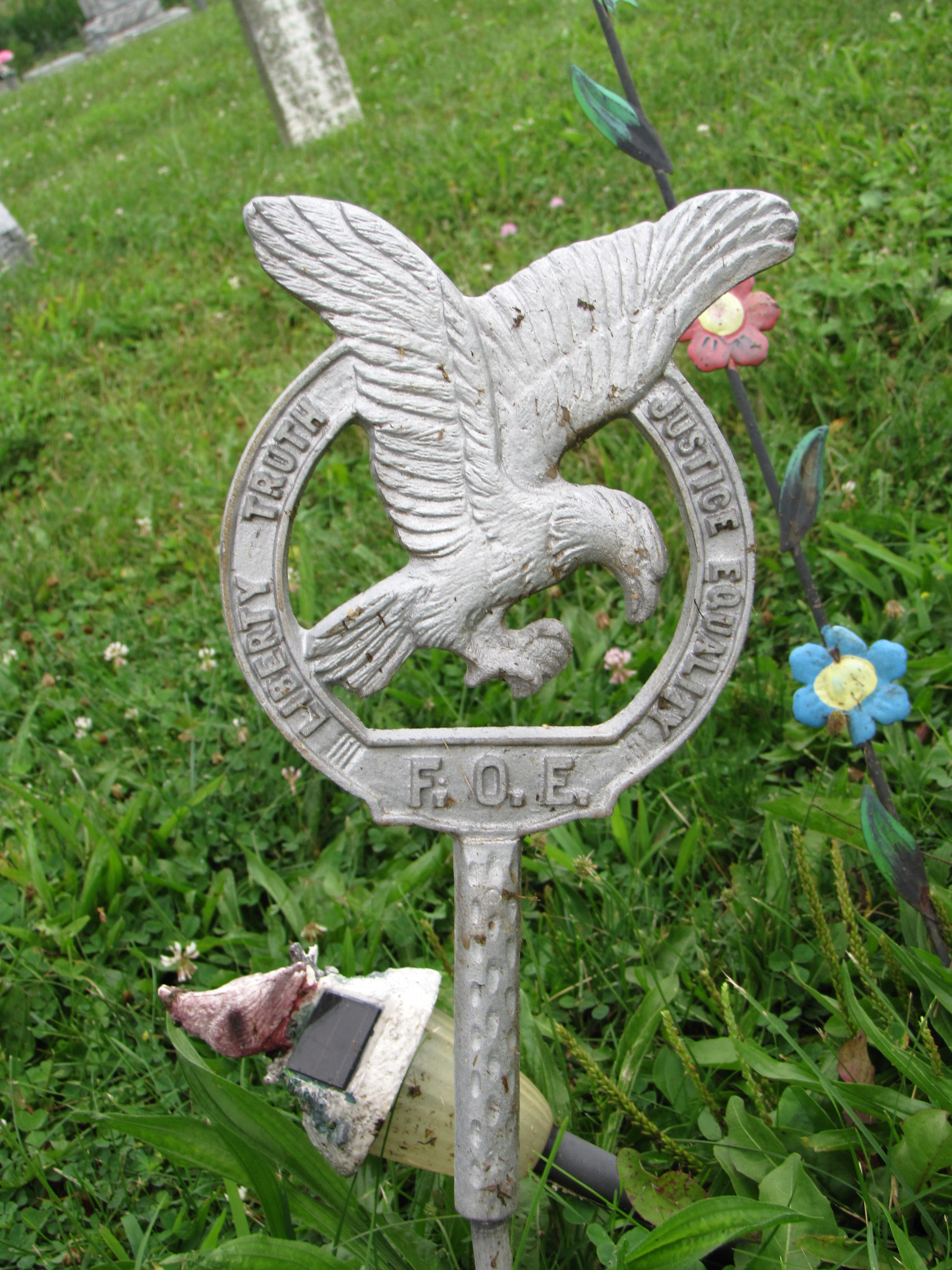
The Fraternal Order of Eagles metal grave markers come in many shapes and forms, including the various iterations found in the South Park Cemetery at Greensburg, Decatur County, Indiana.  Each marker version contains the letters F O E representing the words Fraternal Order of Eagles and some contain the letters L T J and E that relates to liberty, truth, justice, and equality found in the organization’s mission statement:

The Fraternal Order of Eagles, an international non-profit organization, unites fraternally in the spirit of liberty, truth, justice, and equality, to make human life more desirable by lessening its ills, and by promoting peace, prosperity, gladness and hope.

IMG_1697

Founded February 6, 1898, by six Seattle, Washington, theater owners John Cort, John W. and Tim J. Considine, Arthur Williams, Mose Goldsmith, and Harry Leavitt organized as “The Order of Good Things”.  Within two months, in April of the same year, the fraternal order changed its name to The Fraternal Order of Eagles and adopted the American bald eagle as their emblem.

IMG_1684

The Eagles organize local chapters into aeries, (the chapter number is on the center of the marker–859) so named for the nests of eagles which are usually high and difficult to access.  Nearly since their inception, the Eagles have lobbied for causes important to the organization, such as the creation of Mother’s Day in 1904, later in the 30s for Social Security, and in 2006 to keep the two words “under God” in the Pledge of Allegiance.  The Eagles also contribute to many charities, such as, St. Jude’s Hospital, a Disaster Relief Fund, Diabetes Research Center at the University of Iowa, Art Ehrmann Cancer Fund, D. D. Dunlap Kidney Fund, among others.

IMG_1680

Posted in Symbolism | Leave a comment

Satan’s Defeat

IMG_1414

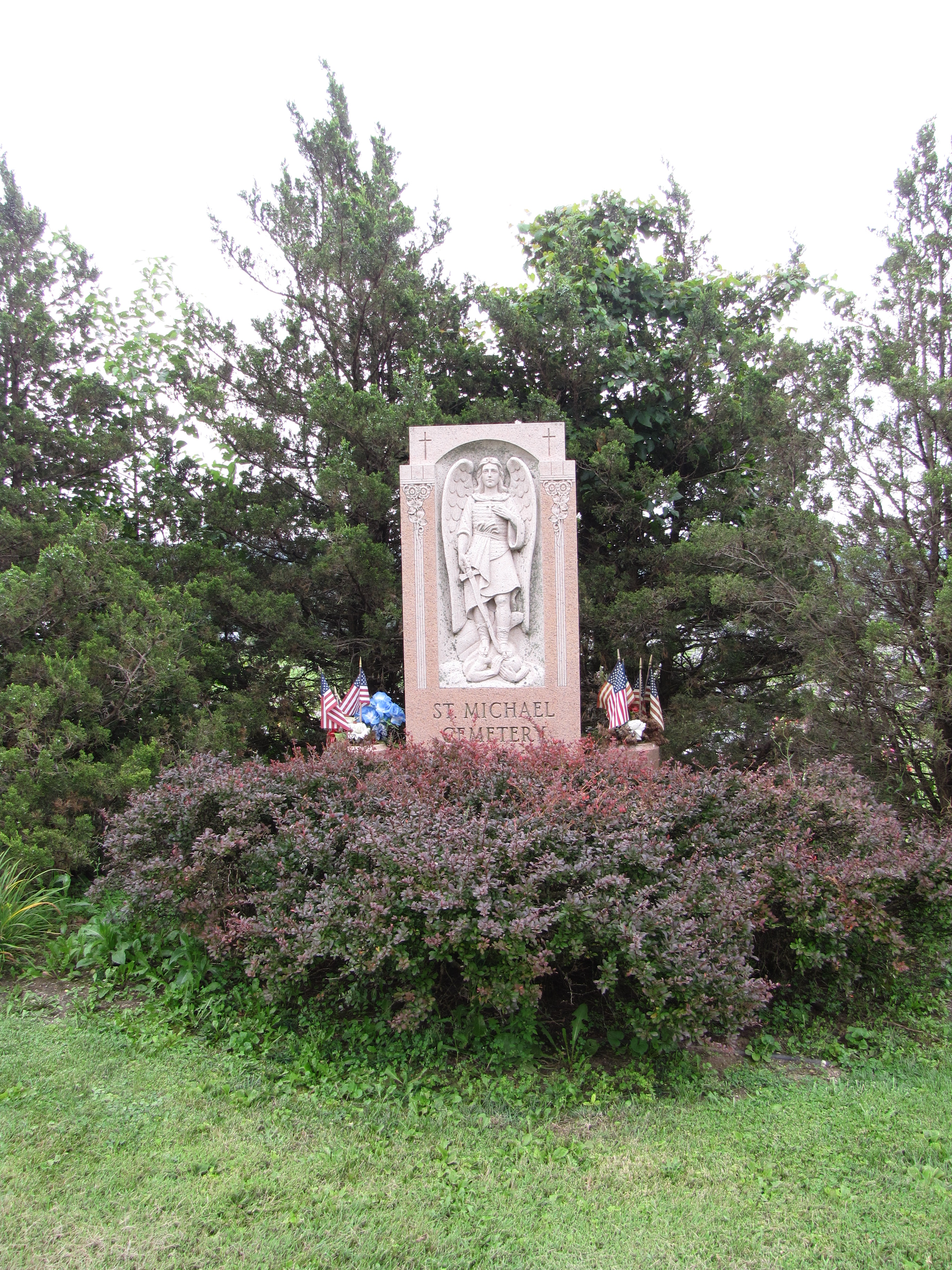
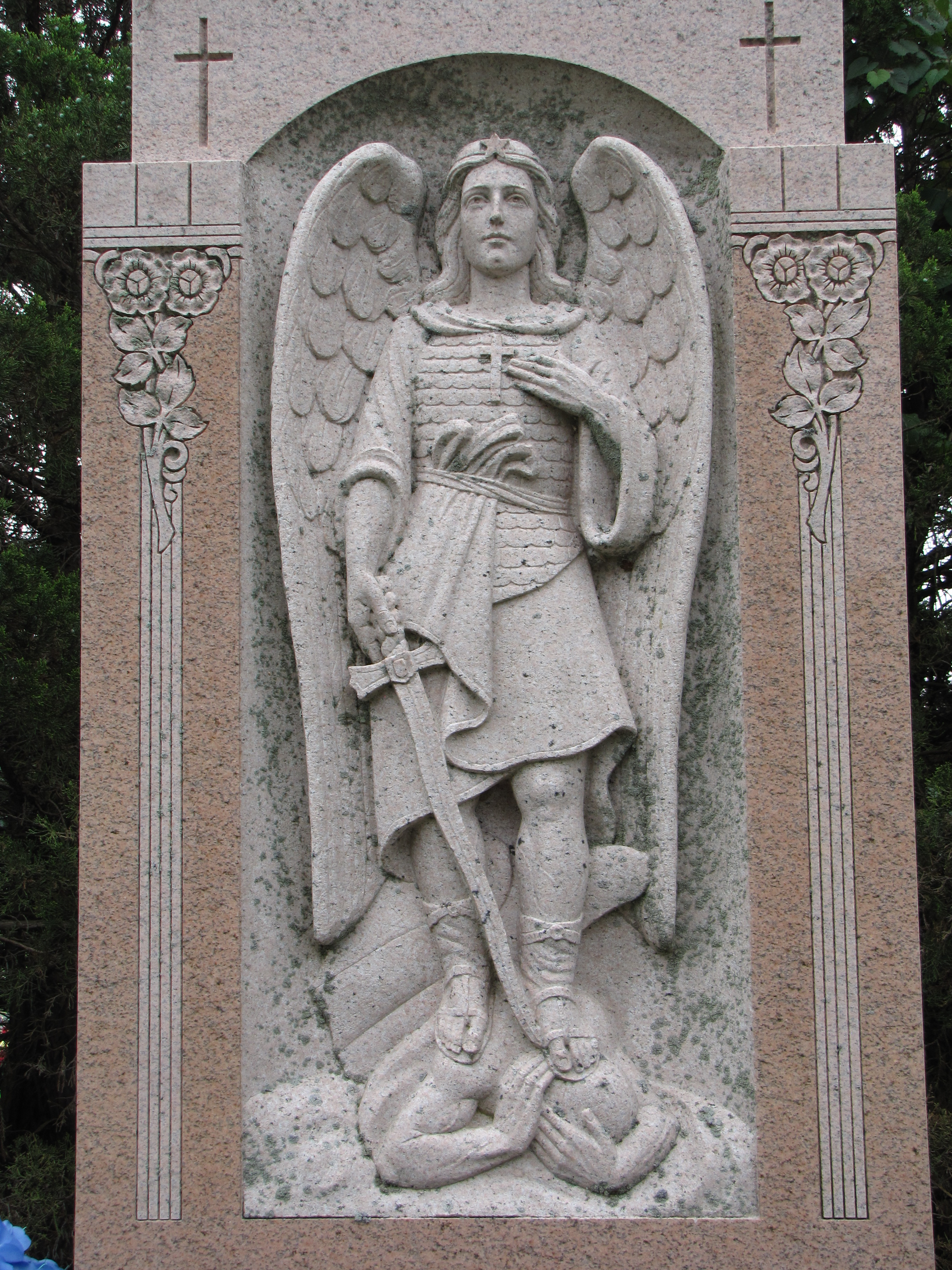
St. Michael’s Cemetery in Brookville, Indiana, features two sculptures of St. Michael. The deep bas-relief statue at the entrance of the cemetery is made of a polished and unpolished red granite giving the statue a duo-tone effect.  Here St. Michael stands on the back of the devil himself who is holding his head in agony.  This statue represents the triumph of good over evil.

IMG_1416

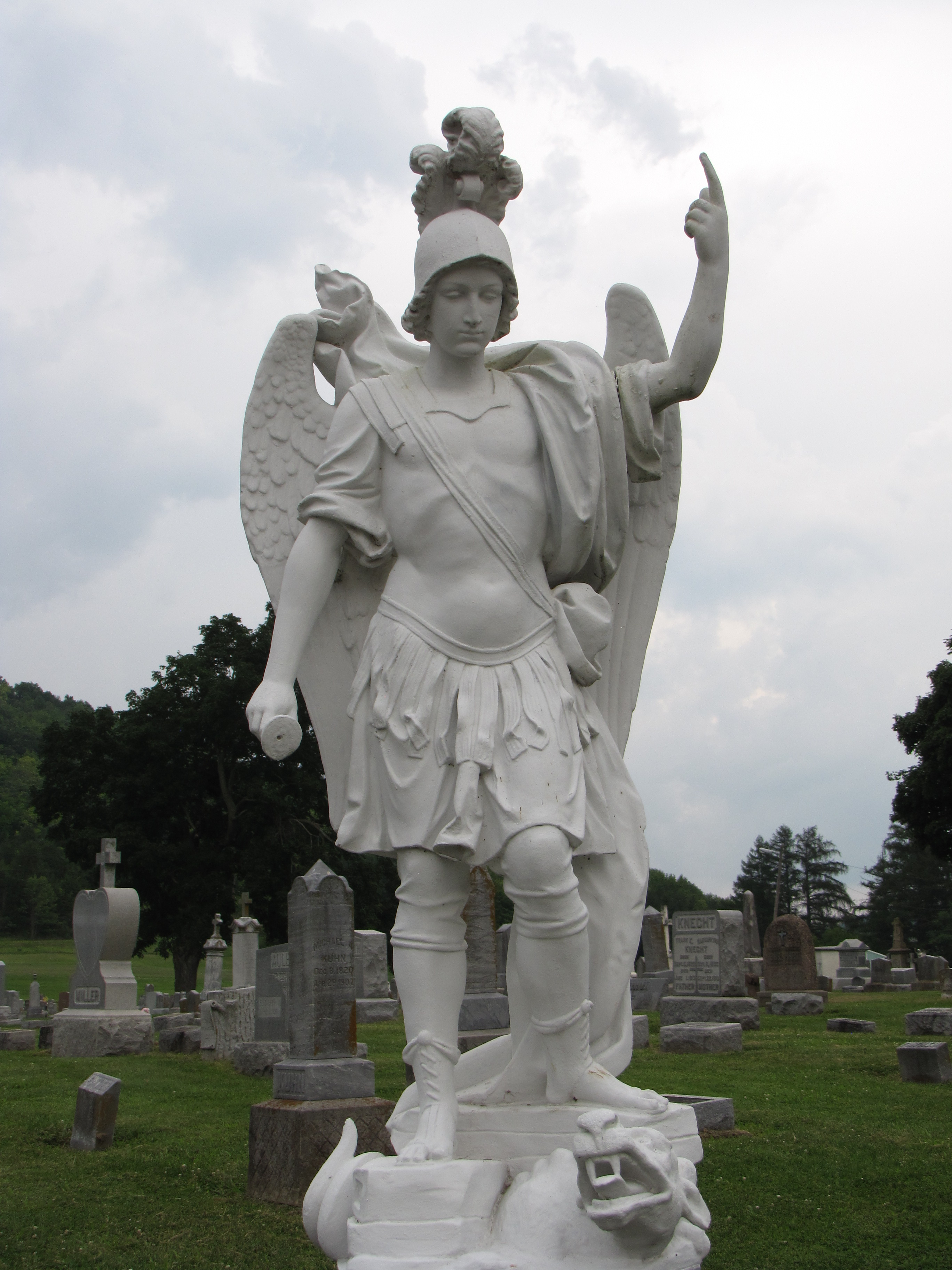
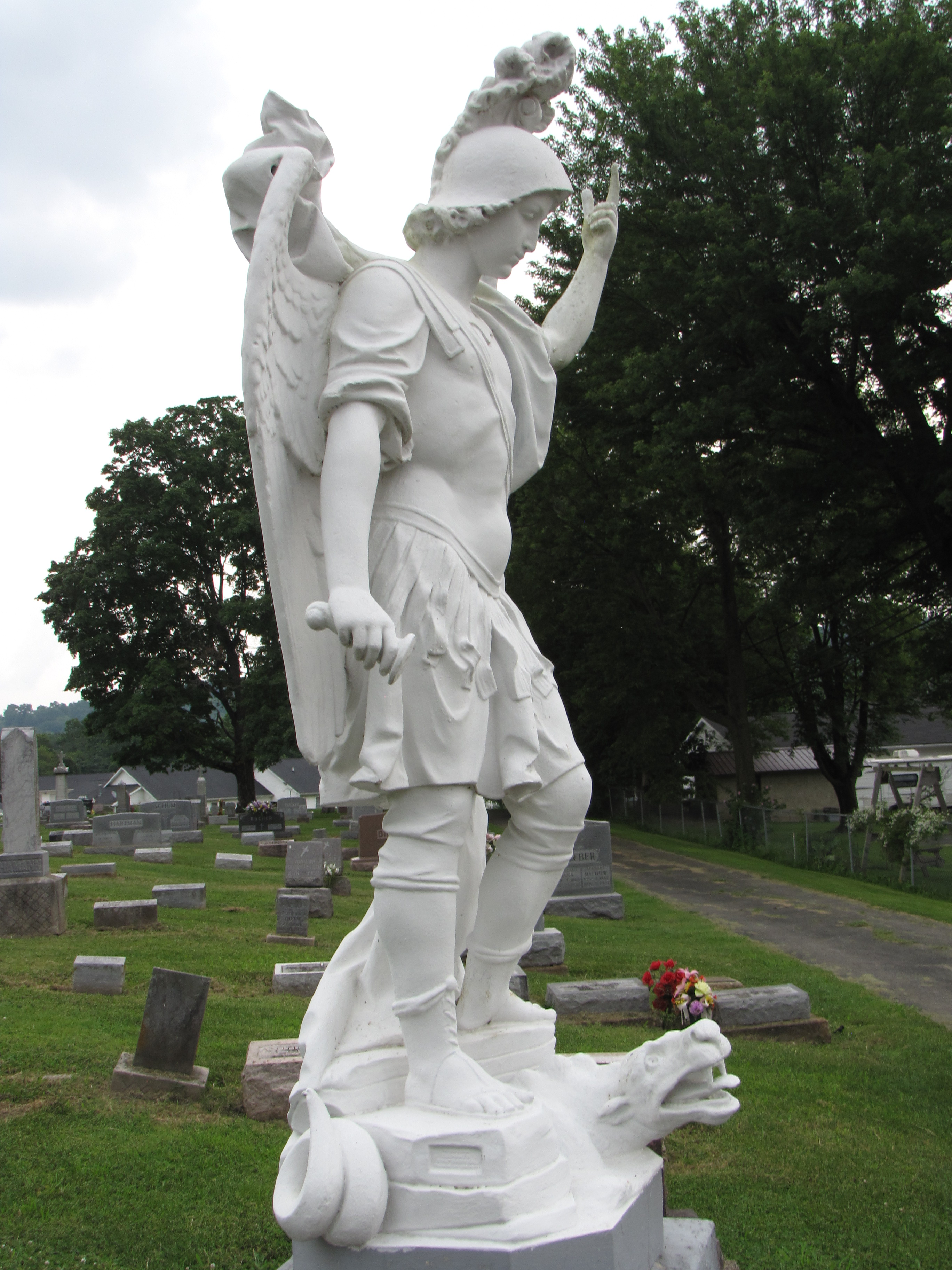
The statue at the rear entrance is painted stone.

IMG_1424

Both statues depict St. Michael ready with sword. This sculpture shows Him wearing a plumed helmet, and an armor breastplate, his sword blade broken off. Here he is standing on a dragon representing Satan. Again, this statue symbolizes good over evil. St. Michael points to the Heavens to show the source of victory.

IMG_1420

St. Michael is a favorite found in many Catholic cemeteries. Only the Archangel Michael, one of three angels mentioned by name in the Bible, is clothed in armor.  The sword he carries represents a cross but also a weapon in his war against the devil’s warriors.


Posted in Symbolism | 1 Comment

The Good Shepherd

IMG_1285

ANGELINE

CLARK

DIED

AUG 28, 1854

AGED 3 Y’S,

5 M’S, 16 D’S.

The lamb is the symbol of the Lord, the Good Shepherd, which comes from the Bible passage, Psalm 23:1-6.

The lamb also represents innocence, likely the reason why this motif usually adorns the tombstones of infants and young children such as this one for Angeline Clark buried in the Melott Cemetery in rural Brown County, Indiana.  Most often the lamb is lying down, often asleep and sometimes with a cross behind the lamb. Here the lamb in accompanied by a little girl, presumably the visage of little Angeline.

IMG_1284

~Psalms 23:1-6~

The LORD is my Shepherd, I shall not want.

He makes me lie down in green pastures,

He leads me beside quiet waters,

He restores my soul.

He guides me in paths of righteousness for His name’s sake.

Even though I walk through the valley of the shadow of death, I will fear no evil, for You are with me;

Your rod and Your staff, they comfort me.

You prepare a table before me in the presence of my enemies.

You anoint my head with oil; my cup overflows.

Surely goodness and love will follow me all the days of my life, And I will dwell in the house of the LORD forever.

Amen.

Posted in Symbolism | Leave a comment

Pain

IMG_0144

A LA MEMOIRE

DE LEON PHILIPPE BECLARD

COMMANDEUR DE LA LEGION D’HONNEUR

DECEDE A TANGER LE 7 MARS 1864

DANS SA 43EME ANNEE

LEONIE MARIE BECLARD DECEDEE A UN AN

MARIE BECLARD NEE DE KATARGI

DECEDEE LE 10 APRIL 1867 DANS SA 28EME ANNEE

PAUL BECLARD

ANCIEN SOUS LIEUTENANT DE CAVALERIE

DECEDE LE 14 AVRIL 1893

A L AGE DE 30 ANNEE

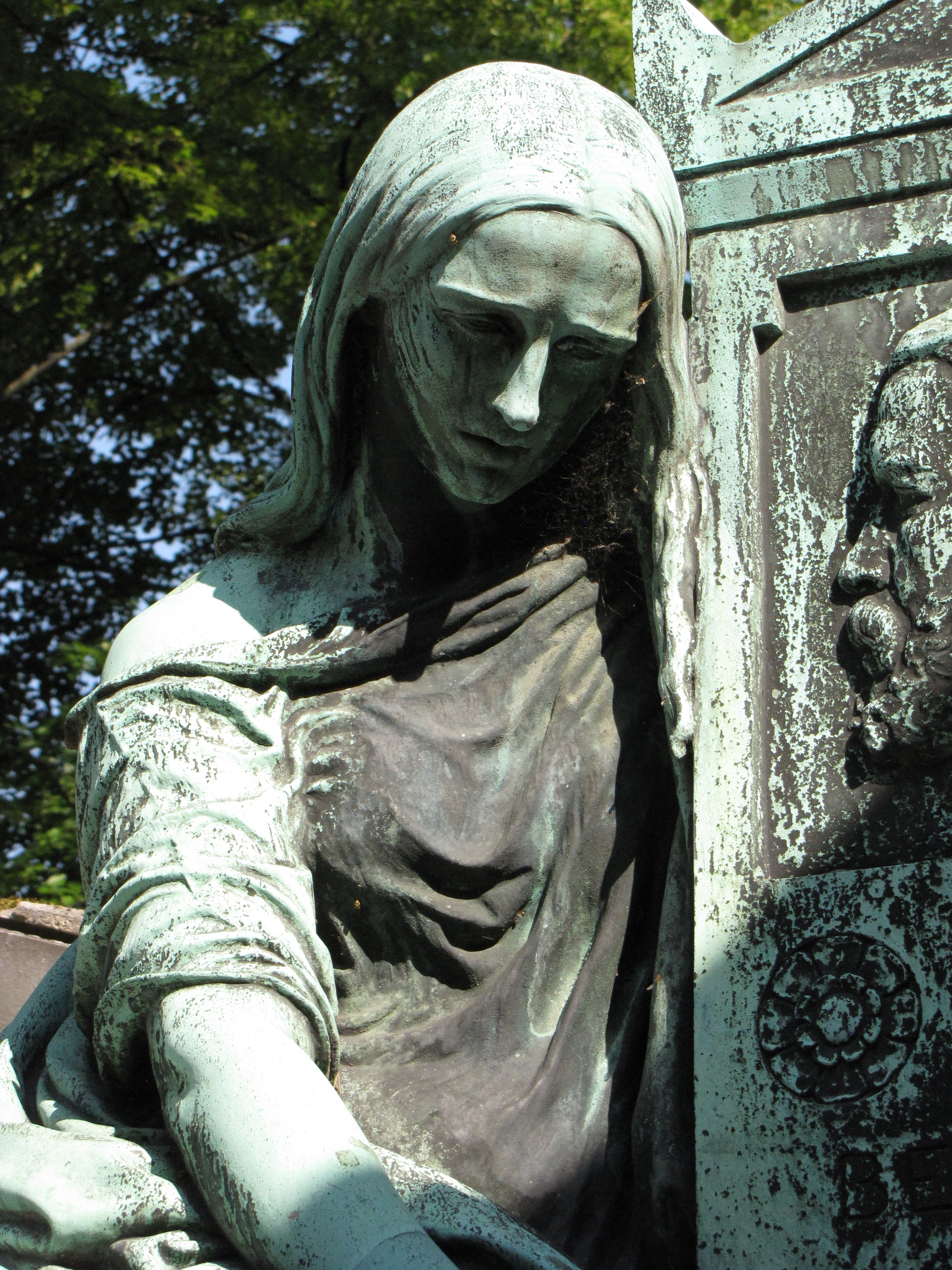
Minister Plenipotentiary and also Minister of Finance to Emperor Napoleon III Philippe Leon Beclard (born in 1820) died in Tangier. His tomb in Le Père Lachaise Cemetery was created by famed French artist, Gustave Désiré Adolphe Crauk.

IMG_8713

The tomb features a mourning figure common in many Victorian cemeteries. The mourning figures are nearly always beautiful, young women overcome by grief, limp from sorrow. Here the mourning figure, her head lowered and resigned with loss, accepts the reality of death as she clutches a stele with the bas-relief of the deceased. The name of the sculpture atop the tomb says it all; it is called Pain.

IMG_0146

Posted in Saving Graces, Symbolism | Leave a comment

Eternal Silence

IMG_8894

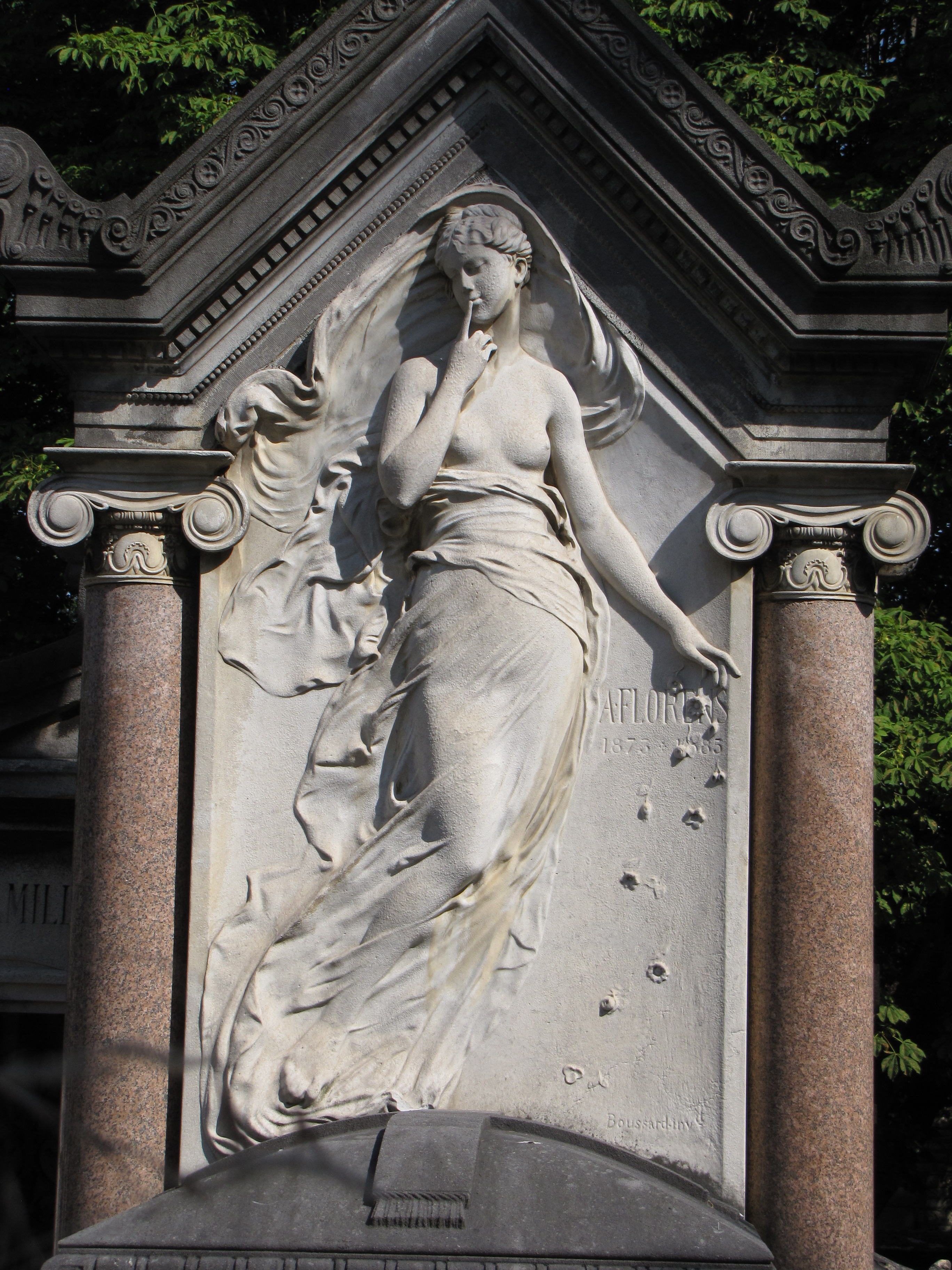
The elaborate monument of A. Florens (1873-1885) in the Le Père Lachaise Cemetery honors a 12-year old child. The tomb, replete with symbolism, features a small limestone sarcophagus that sits in front of a sculpture flanked by two Ionic columns of pink granite holding up a decorative cornice that frames the top of the tomb.

IMG_8892

The centerpiece of the monument is a white-marble bas-relief of a bare-breasted mourning figure half covered in billowing drapery who appears to be floating above the child’s sarcophagus. She holds one finger to her lips almost as if she is warning passersby to be quiet as the young child sleeps.  This also can be a sign of eternal silence.

She gently drops delicate flowers with her other hand. This act is a recurring funerary motif designed to remind the viewer that life is short.  Many funerary symbols from that time period expressed the transitory nature of life–how one could be strong and vital one day and dead the next. The sculpture of the young woman placing flowers on graves recreates a tradition begun by the ancient Greeks and Romans that we practice to this day.

IMG_8893

Posted in Children's Graves, Symbolism | Leave a comment

DIY

IMG_0015

FAMILEE ALLOUARD

MARIE MARADAN NEE CARSON 54 ANS

ANTOINE ALLOUARD 1815 – 30 DECEMBRE 1891

MARIE ALLOUARD NEE DAON 1843 – 1920

HENRI ALLOUARD 1844 – 1929

 IMG_0017

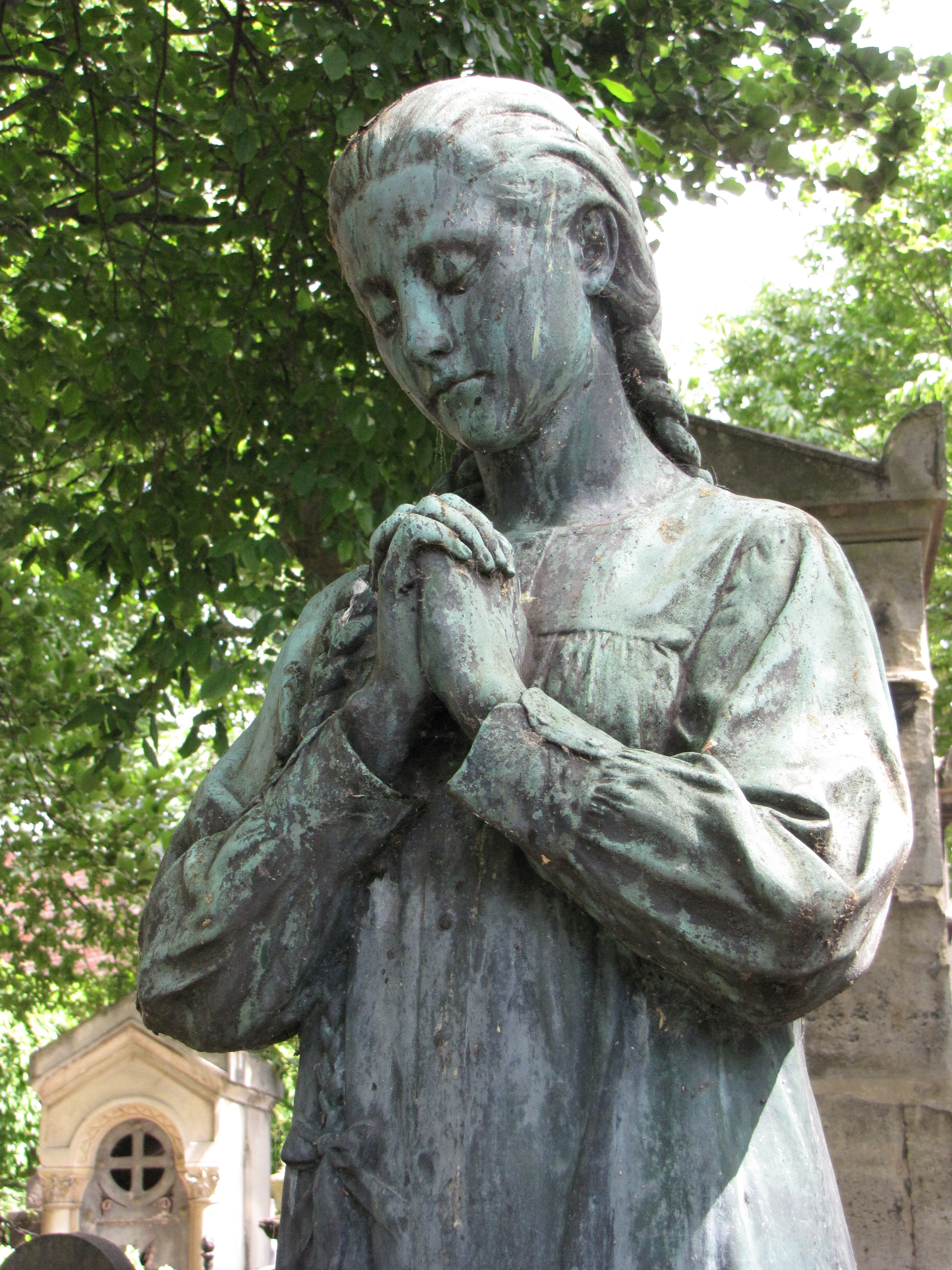
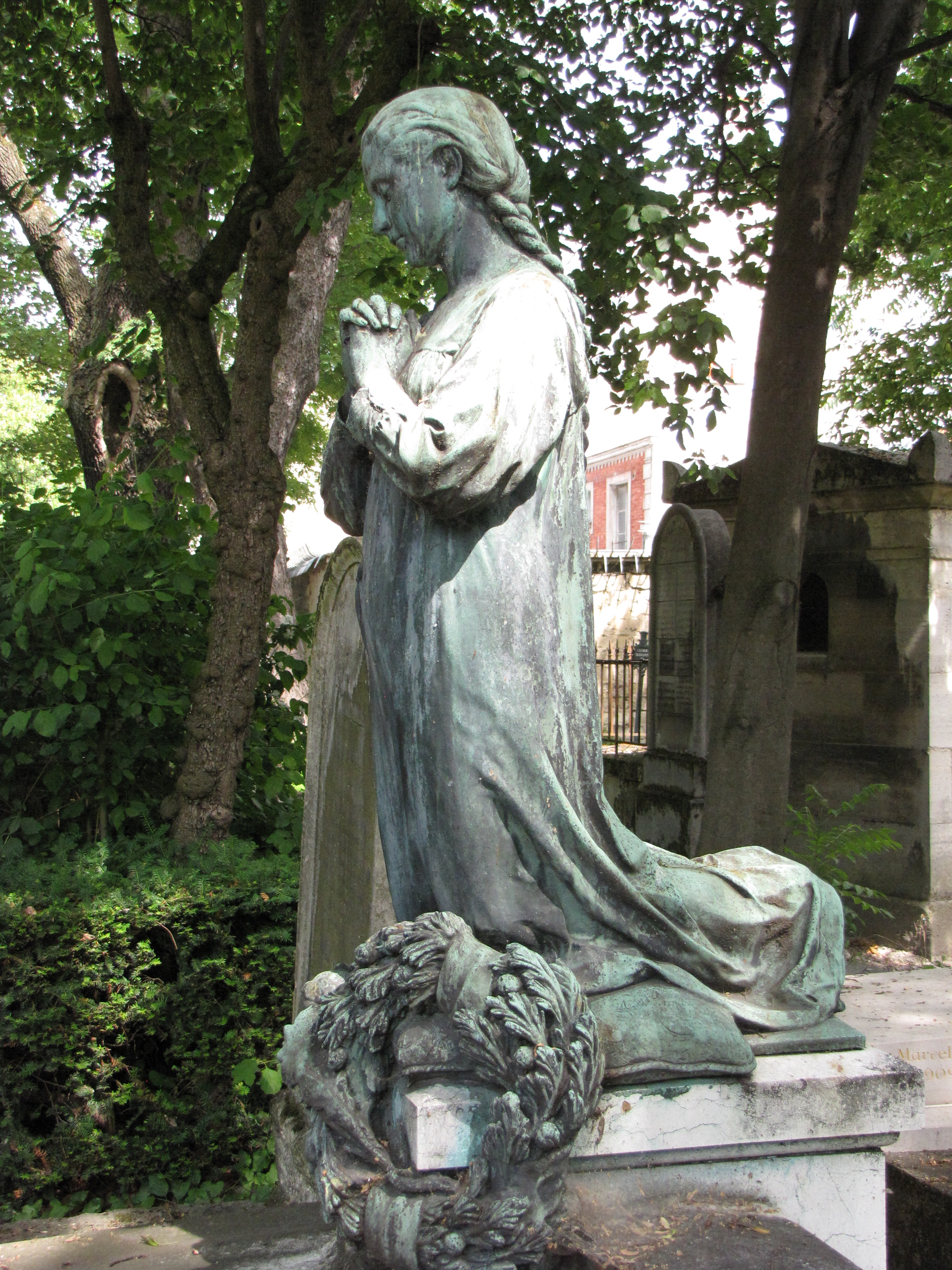
The best way to assure that you get what you want on your tombstone is, of course, to do it yourself, which is exactly what famed French sculptor Henri Emile Allouard did. He sculpted a magnificent bronze of a young girl dressed in a sleeping gown kneeling on a pillow as she prays. There is a wreath that drapes the end of the pillow. The bronze is atop of his family tomb in Le Père Lachaise at Paris, France.

Allouard was best known for sculptures that combined materials such as colored marble and bronze into one work of art. He was a prize-winning artist receiving a gold medal at the Exposition Universelle. His tomb sculpture demonstrates the maturity and skill of his talent.

IMG_0025

Posted in Famous graves, Uncategorized | 2 Comments

Race to the Finish

IMG_9839

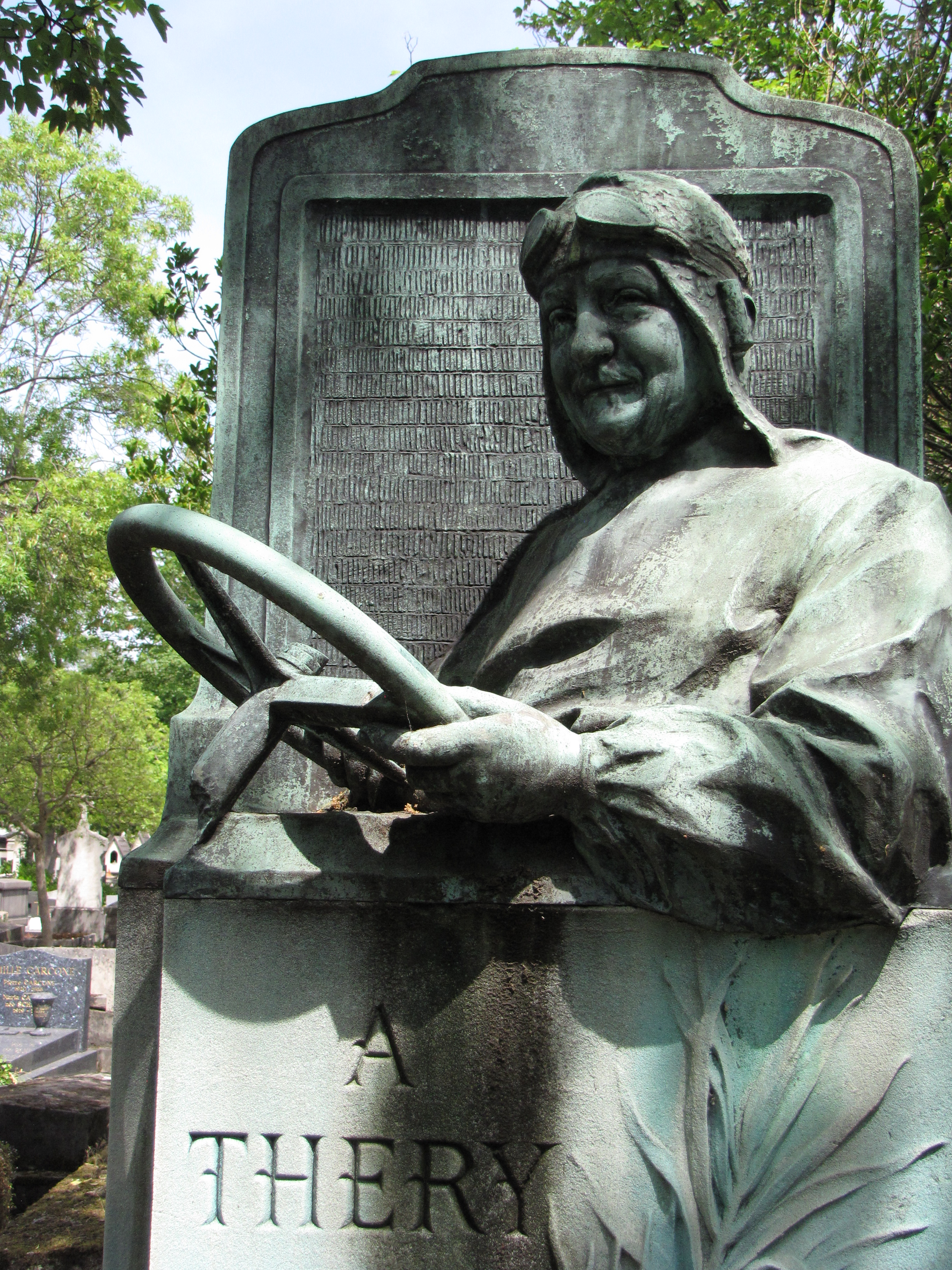
Before the Indy 500, and before the Grand Prix, there was the Gordon Bennett Cup, Europe’s first great car race which ran for 6 years from 1900 until 1905. For the last two years of the race, 1904 and 1905, Leon Thery (16 April 1879 – 8 March 1909), a mechanic and race car driver, won the competition.

800px-Gordon_Bennett_1904[1]

Thery’s first big race occurred in 1899—the Bordeaux to Paris Race. He drove a tiller-steered Decauville a whopping 19 miles per hour to come in second on the 351 mile course arriving exhausted, delirious, and suffering from amnesia. These early days of racing were hair raising with cars careening around mountains on unpaved roads, dodging pedestrians, other racing cars, and farm animals. However, occasionally, the drivers were befallen with bad luck. In 1902, a brake failure around a mountain pass and the misfortune of Thery hitting a hog going full speed ended his hopes for winning the Ardennes Cup.

IMG_9841

In spite of Thery’s early misfortunes, he continued on and eventually won the Gordon Bennett Cup, not once but twice, driving a Richard-Brasier to the finish line and becoming a French Race Car hero. Though Thery continued to race he never again won a race. He died at 29 of tuberculosis and was buried at Le Père Lachaise with a monument that honors his racing career.

IMG_9842

Posted in Famous graves | Leave a comment

Rub it

For single Parisian women who are yearning to get married or married women who are wanting a better sex life there is one monument in Le Père Lachaise that can help, or so the legend goes….

IMG_9805

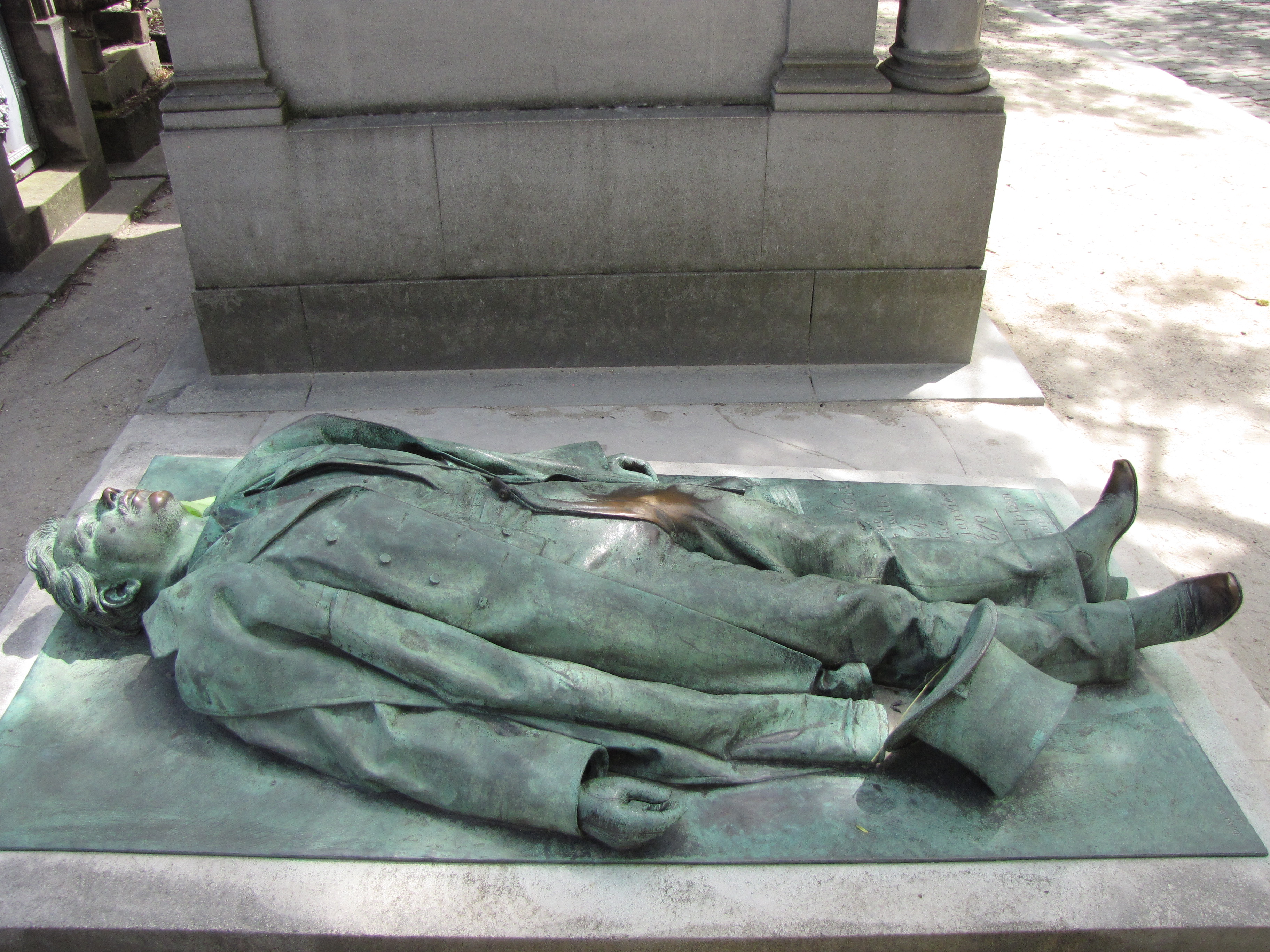
Yvan Salmon was born July 27, 1848 in Attigny, Vosges, France. Yvan adopted the pen name of Victor Noir and moved to Paris to work as a journalist for the La Marseillaise newspaper. La Revanche and L’Avenir de la Corse, two newspapers on the tiny island of Corsica became embroiled in a duel of words which eventually spilled out into the streets of Paris. The Paris newspaper that Victor worked for La Marseillaise sided with La Revanche which had printed incendiary criticisms of Napoleon I. Prince Bonaparte wrote to the offending editor of the newspaper and called them cowards. The imbroglio eventually involved Parschal Grousset who was challenged to a duel by Prince Bonaparte. Grousset sent Victor Noir and Ulrich de Fonvielle as his seconds to work out the details of the duel—time, place, etc. But instead of working it out with the Prince’s seconds as custom would have dictated, the two men went to the Prince’s home to speak to him directly. Something happened at the Prince’s home, the details are disputed, but Victor Noir ended up dead, shot by the Prince. Those against King Napoleon III’s unpopular regime were outraged and saw the Prince’s actions and acquittal as royal privilege.

IMG_9806

January 11, 1870 in Paris, this little known newspaperman became a cause celeb—thousands of Republicans followed his casket to his first grave in a cemetery in Neuilly, France.

IMG_9802

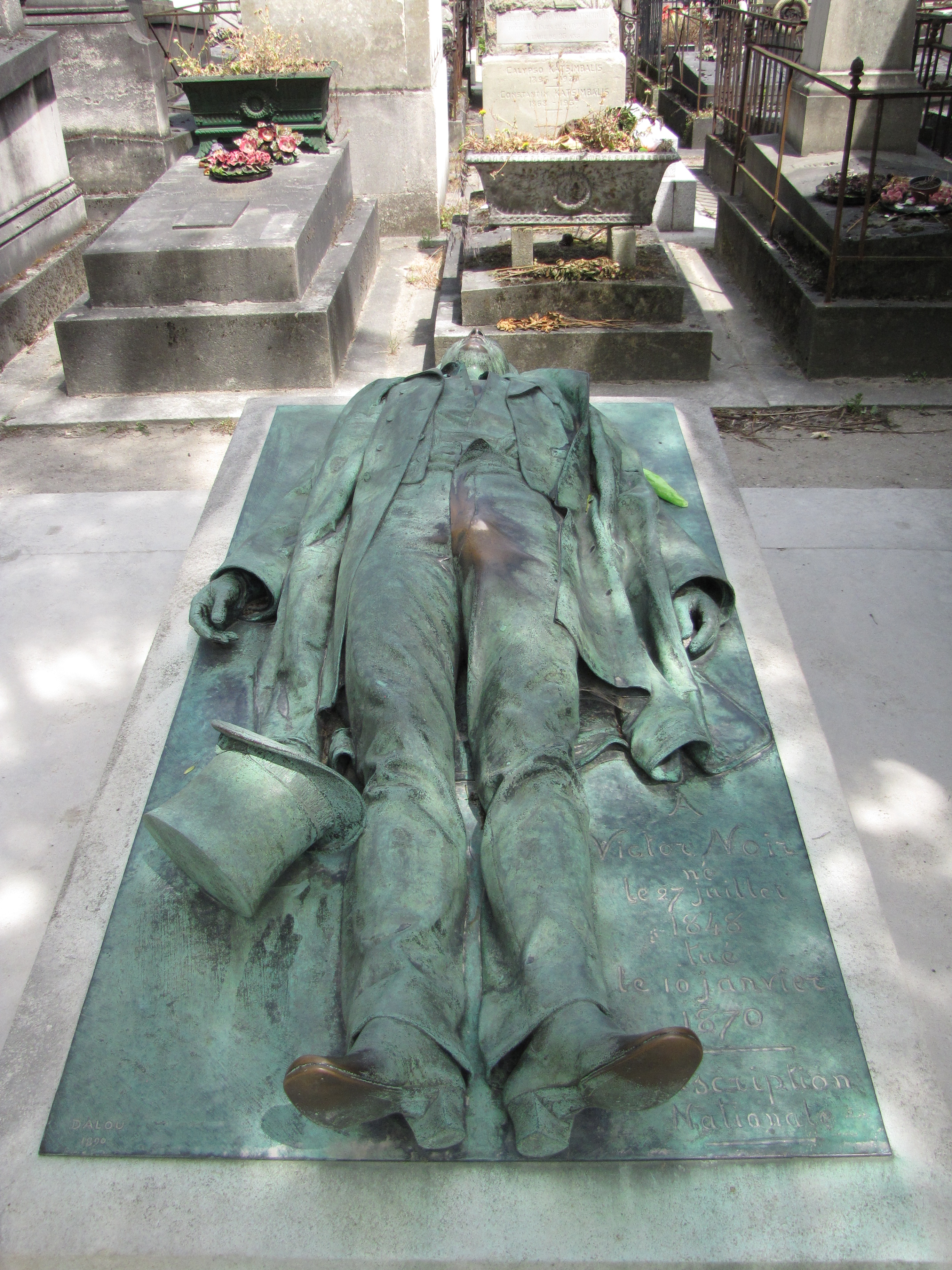
That September the King was overthrown and eventually France established a Republican government. In 1891, Noir, not forgotten by the Republicans, commissioned Jules Dalou, the great French sculptor, to create a bronze statue to honor the fallen journalist and his body was moved to Le Père Lachaise.

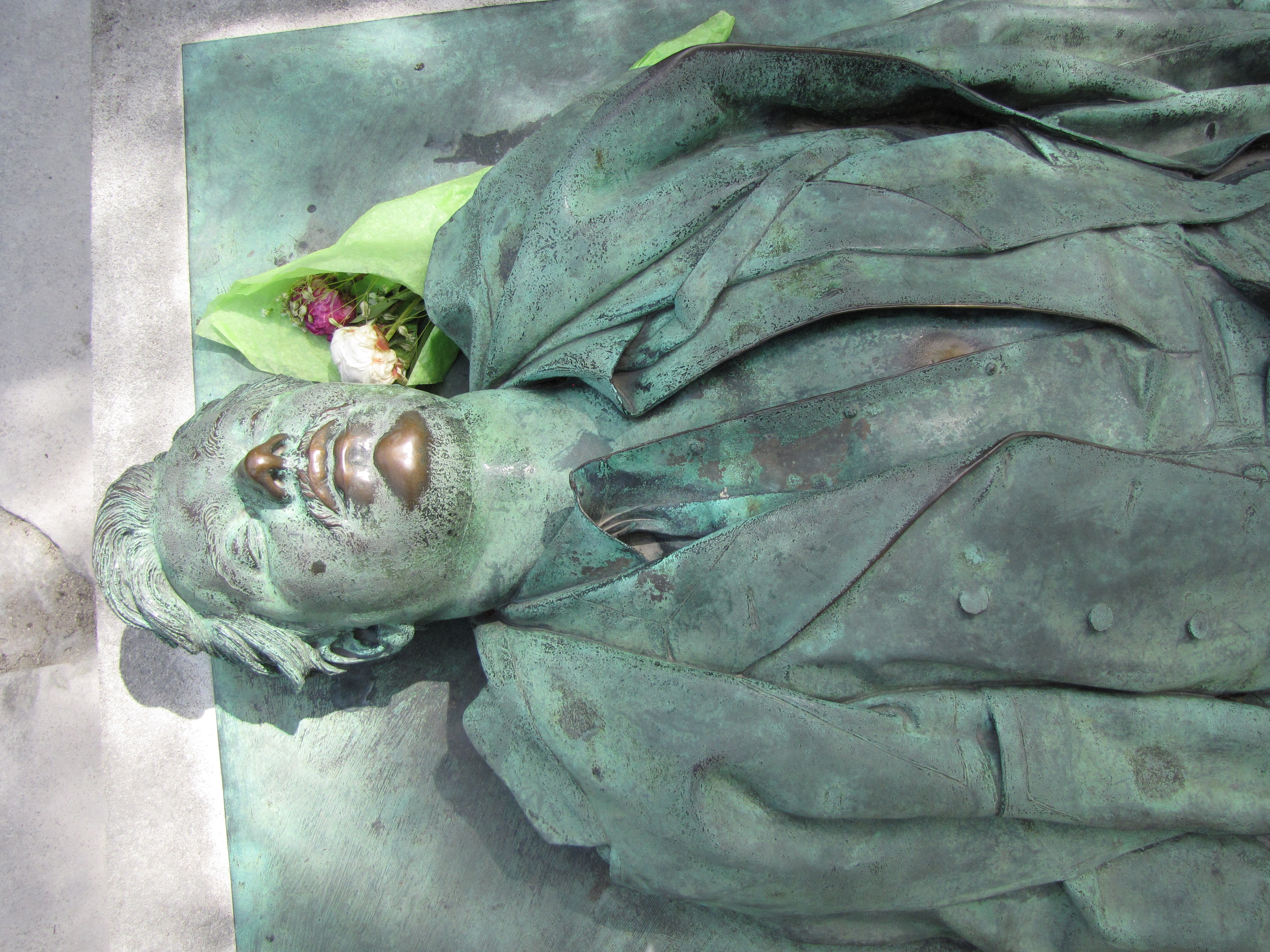
The monument to the fallen hero is that of a fallen man. Victor Noir is depicted laid out flat, top hat next to him. Dalou sculpted Noir, as was his practice, very realistically. But the folds in Victor’s trousers make it appear as if he has an erection or at the very least, is a very well-endowed man. A myth grew up around the statue that if a woman kissed his lips and rubbed his “talisman” they would be rewarded with fertility and a better sex life. Some versions of the myth promise single women marriage within a year if the women also leave a flower in his hat.

The myth became so popular that for a time the cemetery officials fenced Victor’s statue to preserve it. But the outcry was so great the fence was removed and women once again made the pilgrimage to Victor’s grave. It is clear from the burnished parts of the monument where the patina has been rubbed off that the myth is alive and well.

IMG_9809

Posted in Famous graves | Leave a comment