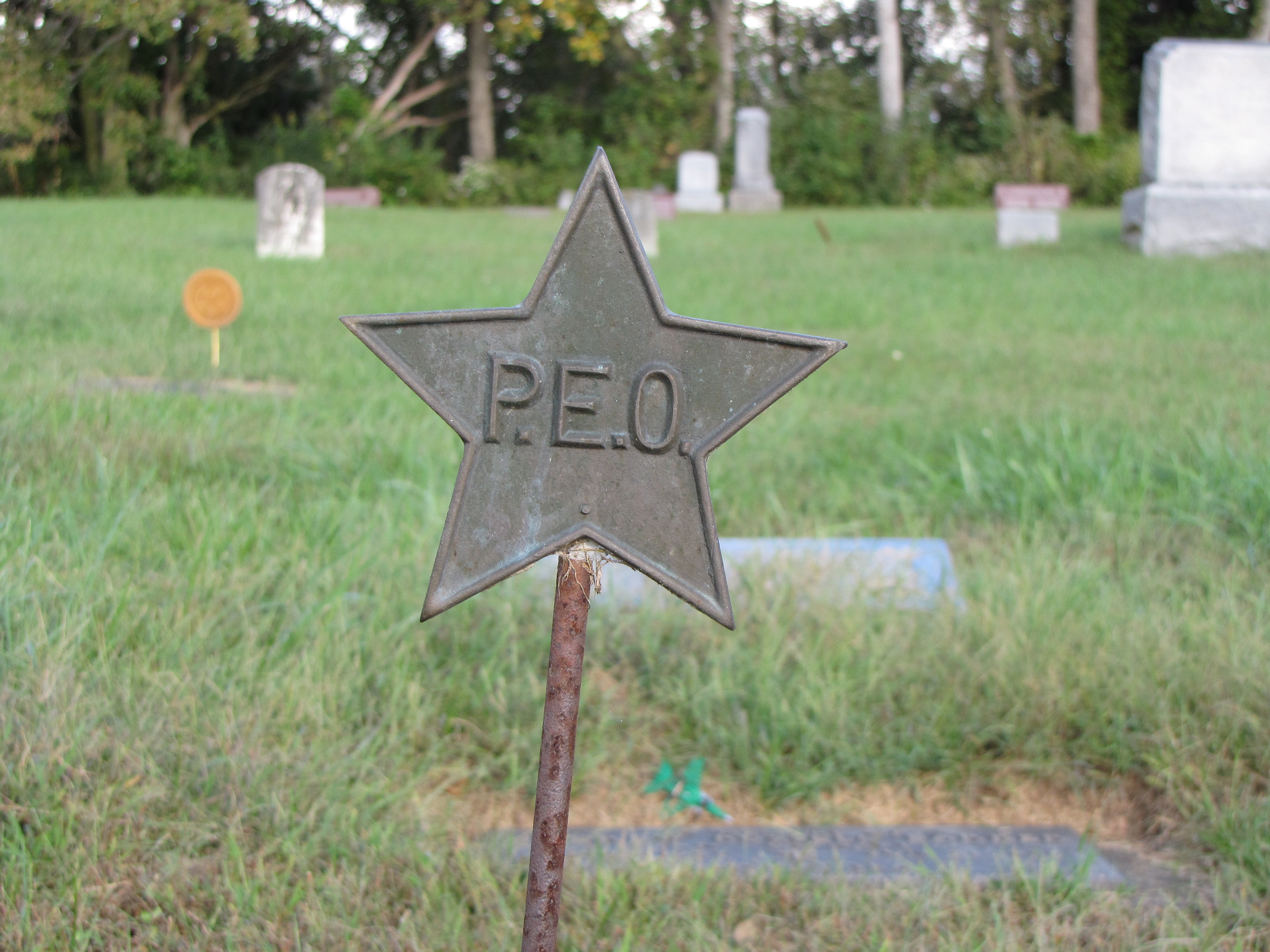
The P.E.O. Star

Frazier Cemetery, Harrison County, Iowa

Ordinarily a post like this would attempt to unlock the mystery of the marker.  In this case, the letters P.E.O. are to remain a secret, the members of the organization are not to devulge what the letters stand for.  After some research on several Websites and blogs several theories were floated.  One blogger wrote that her mother’s P.E.O. meetings were on Wednesday nights and because her father had to cook on those nights, her father handily nicknamed the organization “Papa Eats Out“.  Other bloggers suggested less tongue-in-cheek names, such as, “Protect Each Other” and “People Educating Others“.

Though the meaning of the letters isn’t clear, what is known is that P.E.O is a philanthropic educational organization that was founded by seven Iowa Wesleyn College women students–Mary Allen Stafford, Ella Stewart, Alice Bird Babb, Hattie Briggs Bousquet, Franc Roads Elliott, Alice Virginia Coffin, and Suela Pearson Penfield–at Mount Pleasant, Iowa, on January 21, 1869.  P.E.O was the second sorority established in the United States. 

P.E.O. has grown to 250,000 members with chapters around the United States and Canada now headquartered in Des Moines, Iowa.  The P.E.O. International Website lists six endeavors that the organization funds, as their Website states, to help “women reach for the stars“.   

P.E.O. funds the Educational Loan Fund for women who need financial assistance; International Peace Scholarship for women from around the world pursuing an higher education degree who want to study in the United States or Canada; Program for Continuing Education to provide need-based grants to women the who have had their education interrupted and are returning to support themselves and their families; Scholar Awards to provide merit-based scholarships for women pursuing doctorial degrees or post-doctoral research; Star Scholarships which grants $2,500 awards to graduating women on their way to college; and Cottey College, a liberal arts college established by P.E.O in 1927, at Nevada, Missouri.
Posted in Metal Markers | 6 Comments

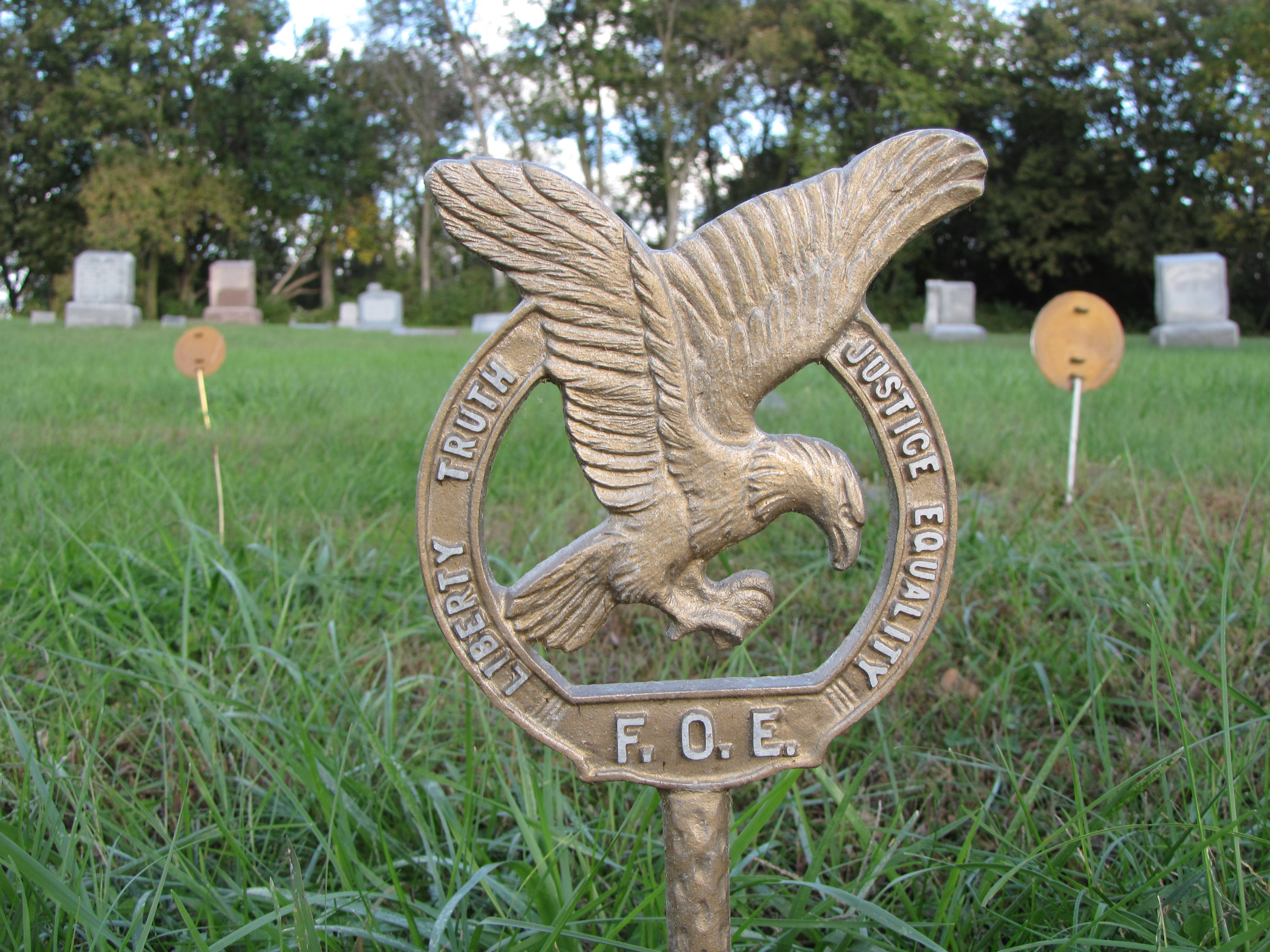
Fraternal Order of Eagles

Frazier Cemetery, Harrison County, Iowa

The mission statement of the Fraternal Order of Eagles reads:

The Fraternal Order of Eagles, an international non-profit organization, unites fraternally in the spirit of liberty, truth, justice, and equality, to make human life more desirable by lessening its ills, and by promoting peace, prosperity, gladness and hope.

Founded February 6, 1898, by six Seattle, Washington, theater owners John Cort, John W. and Tim J. Considine, Arthur Williams, Mose Goldsmith, and Harry Leavitt organized as “The Order of Good Things”.  Within two months, in April of the same yer, the fraternal order changed its name to The Fraternal Order of Eagles and adopted the American bald eagle as their emblem.

The Eagles organize local chapters into aeries, so named for the nests of eagles which are usually high and difficult to access.  Nearly since their inception, the Eagles have lobbied for causes important to the organization, such as the creation of Mother’s Day in 1904, later in the 30s for Social Security, and in 2006 to keep the two words “under God” in the Pledge of Allegiance.  The Eagles also contribute to many charities, such as, St. Jude’s Hospital, a Disaster Relief Fund, Diabetes Research Center at the University of Iowa, Art Ehrmann Cancer Fund, D. D. Dunlap Kidney Fund, among others.

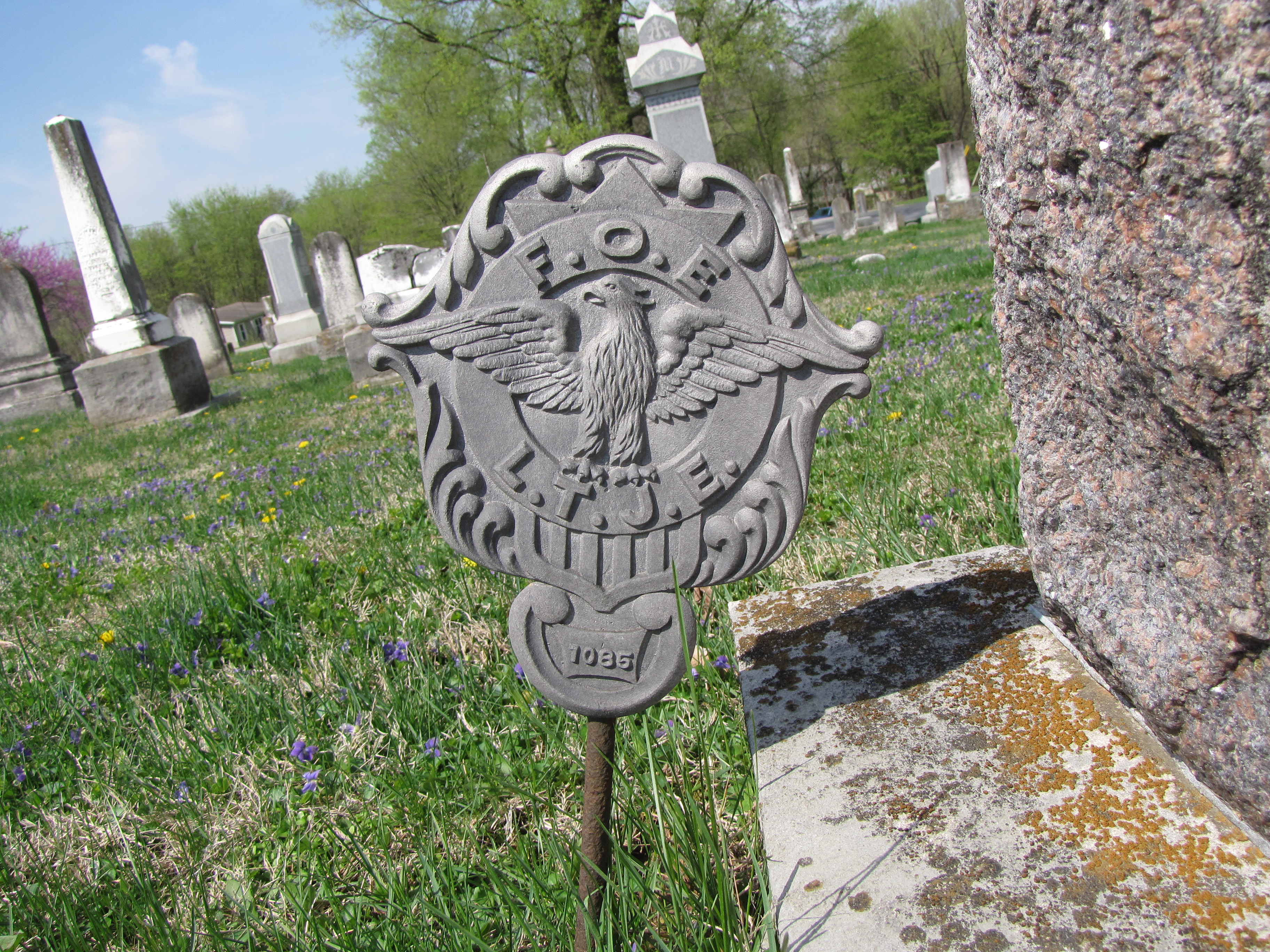
Clear Creek Church Cemetery, Bloomington, Indiana

 Women’s groups of Eagles began forming as early as 1927, the first in Pittsburg, Kansas.  By the time The Fraternal Order of Eagles officially passed bylaws creating The Ladies Auxillary in 1951, hundreds of them already existed.

Frazier Cemetery, Harrison County, Iowa

Posted in Metal Markers | Leave a comment

The Grim Reaper

Cave Hill Cemetery, Louisville, Kentucky

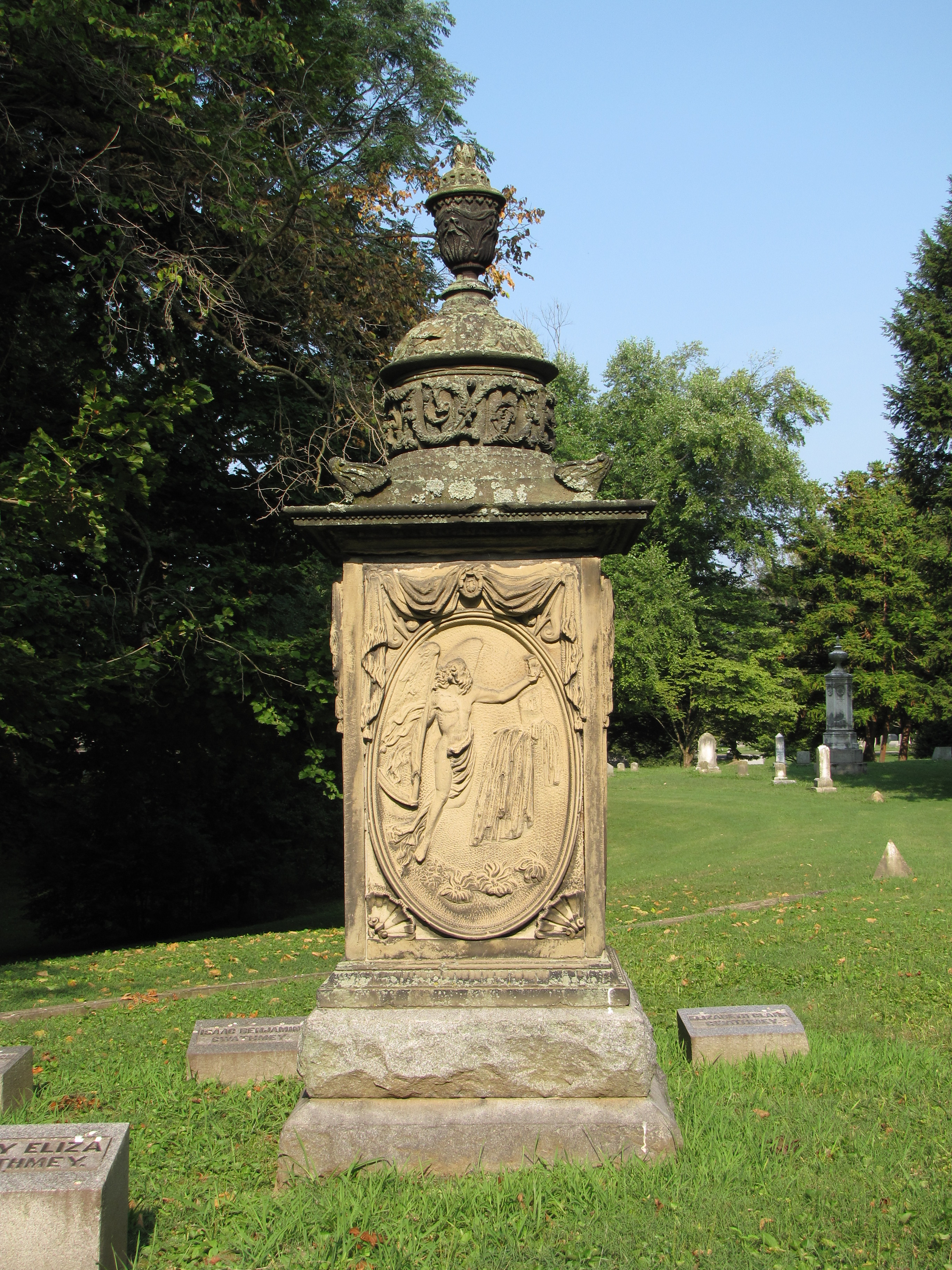
The neo-classical limestone monument that marks the graves of Owen and Ann Cwathmey in the Cave Hill Cemetery, in Louisville, Kentucky, features a bas-relief sculpture of the Grim Reaper in an oval medallion.   The dark figure is characterized by his long beard and carrying a scythe for harvesting souls.  In this sculpture the Grim Reaper is depicted holding up an hour glass as he gazes upon it.  The hourglass is a reminder that our time on this Earth is short.

The Owen and Ann Cwathmey Monument at Cave Hill Cemetery


Posted in Symbolism | Leave a comment

Daughters of Rebekah

Lakeview Cemetery, South Haven, Michigan

The Daughters of Rebekah metal marker above depicts the dove resting on the three links of the chain with the letters F, L, and T, in the center of the links above the letter R nested inside the crescent moon with seven stars.

The women’s auxiliary organization for the Independent Order of Odd Fellows was founded September 20, 1851, and originally called the Daughters of Rebekah, later changed to Degree of Rebekah.  The organization’s main symbols are:

  • The Beehive represents collective industry
  • The Moon and Seven Stars represents the order of the universe of God and nature, and the value of regularity in all worthy undertakings
  • The Dove represents peace
  • The Lily, an emblem of purity, symbolizes the purity of character, of thought, of word, and of action

On the metal marker below, appears the crescent moon with the seven stars and the dove, a sprig of a white lily, with the letters D and R woven together.

Lakeview Cemetery, South Haven, Michigan

On the metal marker below, the crescent moon with the seven stars cradles a dove over an entire white lily, instead of a sprig, with the letter “R” signifying Rebekah to the right.

Waterbury Cemetery, Waterbury, Vermont

Below is the spartan Daughters of Rebekah metal marker that displays encircled the three links over the letter “R”.

Eldridge Cemetery, Burlington, Vermont


Posted in Metal Markers | 4 Comments

Clasping Hands

Washington Street Cemetery, Clark County, Illinois

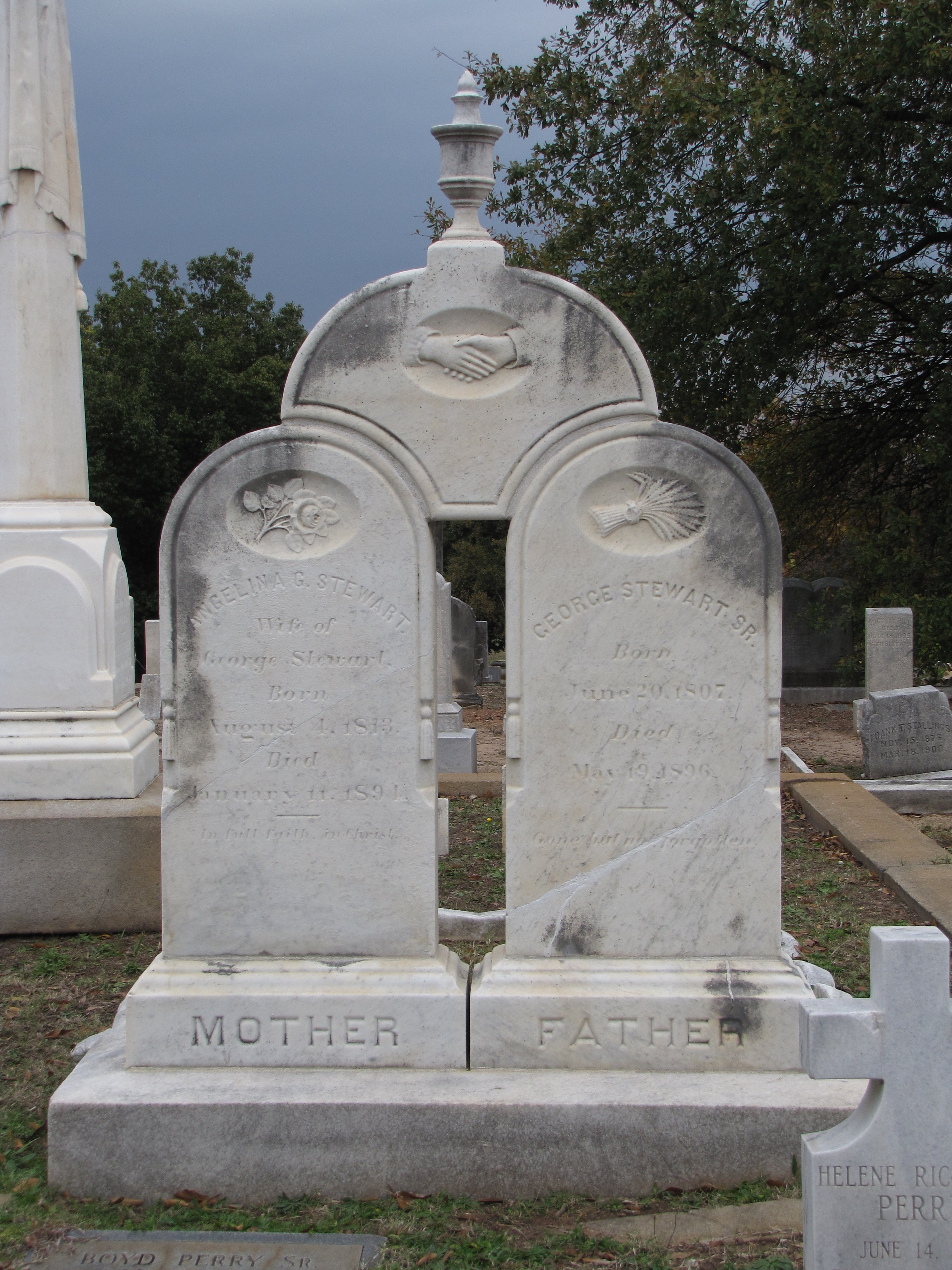
The clasping hands above represent holy matrimony.  This motif symbolizes the holy union between a man and a woman.  The hand on the left side of the motif is clearly the hand of the female, her cuff is lace and ruffle.  The hand on the right side is the male’s, with a shirt’s cuff complete with a cuff link shown from underneath a suit jacket.

Green Hill Cemetery, Bedford, Indiana

This pair of clasping hands, even though, there is clearly a female and a male hand, represents the brotherhood of the union.  It symbolizes the brethren of workers clasped in the making of something together, sharing their labor bonded by common work.  This carving is found on the Bedford Stonecutters Association Monument in the Green Hill Cemetery in Bedford, Indiana, the heart of the Indiana limestone stonecutting industry.

The Bedford Stonecutters Association Monument

Mt. Olivet Cemetery, Nashville, Tennessee

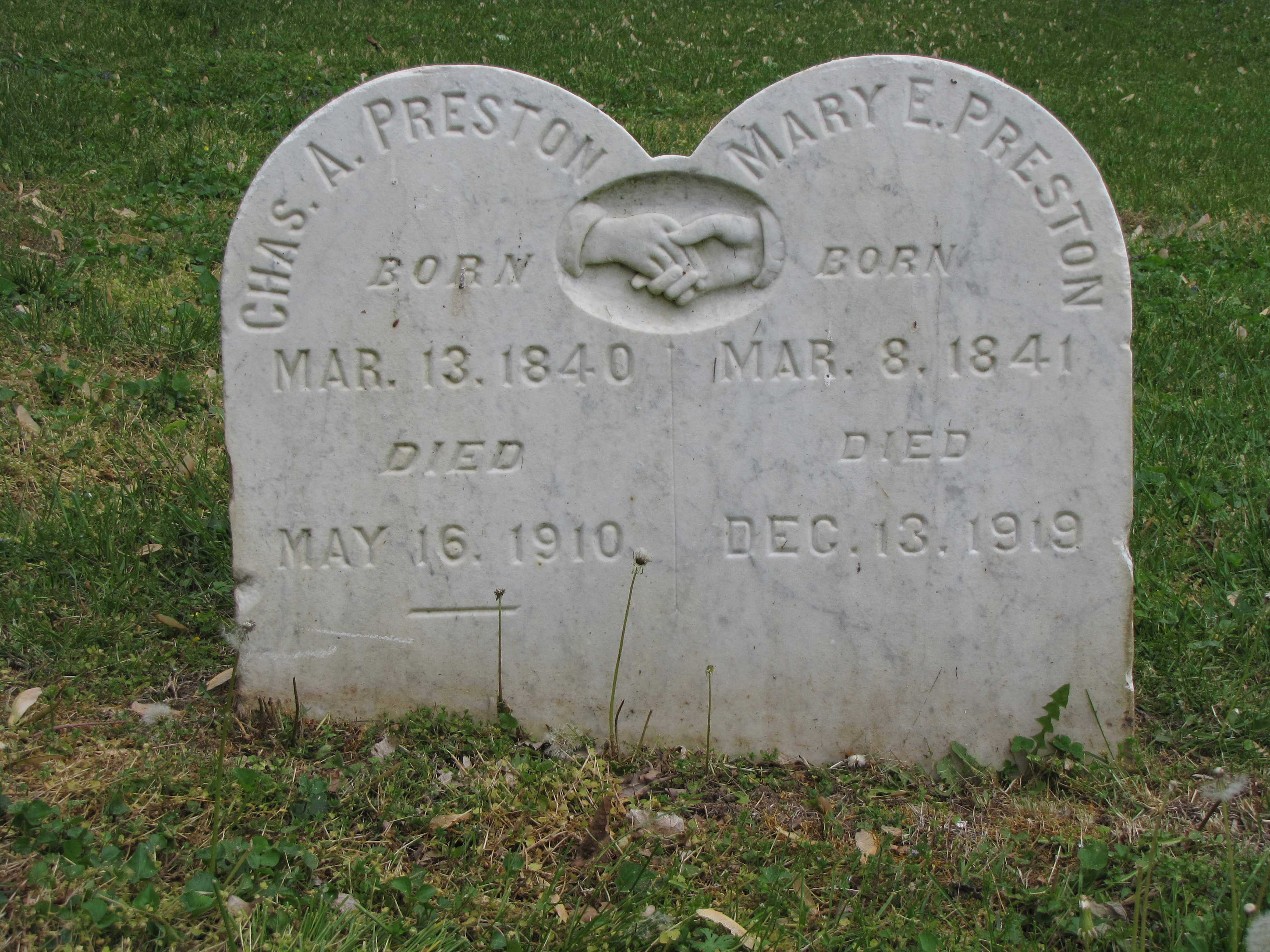
The clasping hands from this gravestone is on the grave of a brother and sister which is faintly indicated in the cuffs, the hand on the left has scolloped cuffs, while the hand on the right has cuffs that are straight punctuated by a large round masculine button.  Clearly this does not represent holy matrimony.  This is the end of their young lives and depicts a farewell handshake to their life on earth.  It also represents the welcome to Heaven, leaving behind what they have known on earth for the sublime pleasures of Heaven. 

Often this motif is shown with gender neutral hands with no indication of male or female on the cuffs.

Mt. Olivet Cemetery, Nashville, Tennessee

Posted in Symbolism | 2 Comments

President Taylor: A Case of Bad Cherries or Murder?

Zachary Taylor National Cemetery, Louisville, Kentucky

Zachary Taylor was born September 24, 1784, in Orange County, Virginia, though, he grew up in Kentucky.  He joined the military and gained a reputation as an Indian fighter.  When the Mexican-American War broke out he served as a field commander.  Because of his unkempt appearance, his troops referred to him as “Old Rough and Ready.”  The war made him a national hero.  He was nominated by the Whigs for president, won, and became the 12th president.  But, like the other Whig president and war hero, William Henry Harrison, he did not serve out his term.

In 1850, Taylor attended the Fourth of July groundbreaking ceremony for the Washington Monument.  The day was scorching hot.  To counteract the heat and quench his thirst, Taylor consumed large amounts of water, drank iced milk, and downed a bowl of cherries.  Soon after the suffering began with severe abdominal pain.  The doctors were called the next day and they began their treatment of what was diagnosed as cholera.  They prescribed a regiment of calomel, opium, ipecac, quinine, and ice.  For good measure, the doctors also bled him and blistered him.  His discomfort turned into vomiting and diarrhea.

By July 9th, the President was very weak.  Taylor’s last words predicted his own death, “I am about to die–I expect the summons soon–I have endeavored to discharge all my official duties faithfully–I regret nothing, but I am sorry that I am about to leave my friends.” 

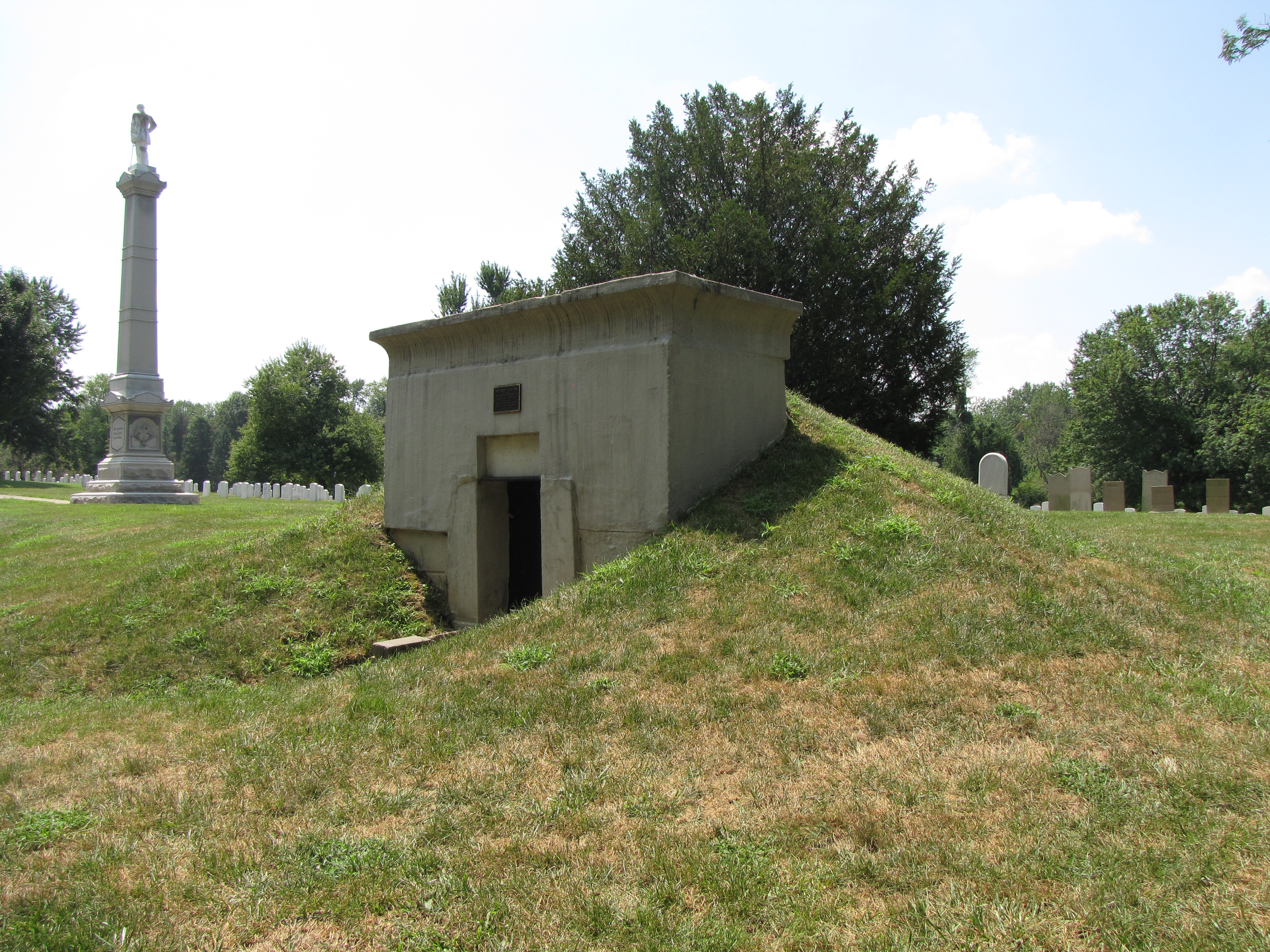
Taylor’s body was first removed to the Congressional Cemetery in Washington, D.C.  In 1852, his remains were laid to rest in the tomb above alongside his wife, Margaret Smith Taylor, who died that year. 

In 1883, Kentucky erected a 50-foot monument topped with a life-sized statue of Zachary Taylor.

President and First Lady Taylor’s remains were later moved to the mausoleum below on May 6, 1926.

Fast forward to June 1991.  Florida author Clara Rising theorized that Taylor had NOT died from eating tainted cherries and drinking foul water but had been murdered. She believed the primary suspects were his chief political oponent, Henry Clay, or even possibly his own Vice President, Millard Filmore, because of Taylor’s stand against slavery and secession.

Super sleuth Rising convinced Taylor’s descendants to have Taylor’s body exhumed so it could be examined for traces of arsenic poisoning.  After hair fibers, bone, and dried flesh were examined by George Nichols, Kentucky’s chief medical examiner, it was determined that although low doses of arsenic were found, they were too low to have killed Taylor and were “natually occuring.”  Foul play was ruled out. The doctor’s report stated that the death was caused by “any myriad of natural diseases which could have produced the symptoms of gastroenteritis.”

One historian, Samuel Eliot Morison, concluded that the oppresive Washington summer heat and scandalous treatment by quack doctors killed Taylor.  Morison was convinced that if Taylor had been left to suffer without the care of his doctors, he would have fully recovered on his own.  Morison charged the doctors with medical assassination.

Zachary Taylor Crypt, Zachary Taylor National Cemetery, Louisville, Kentucky

Posted in Presidential graves | 1 Comment

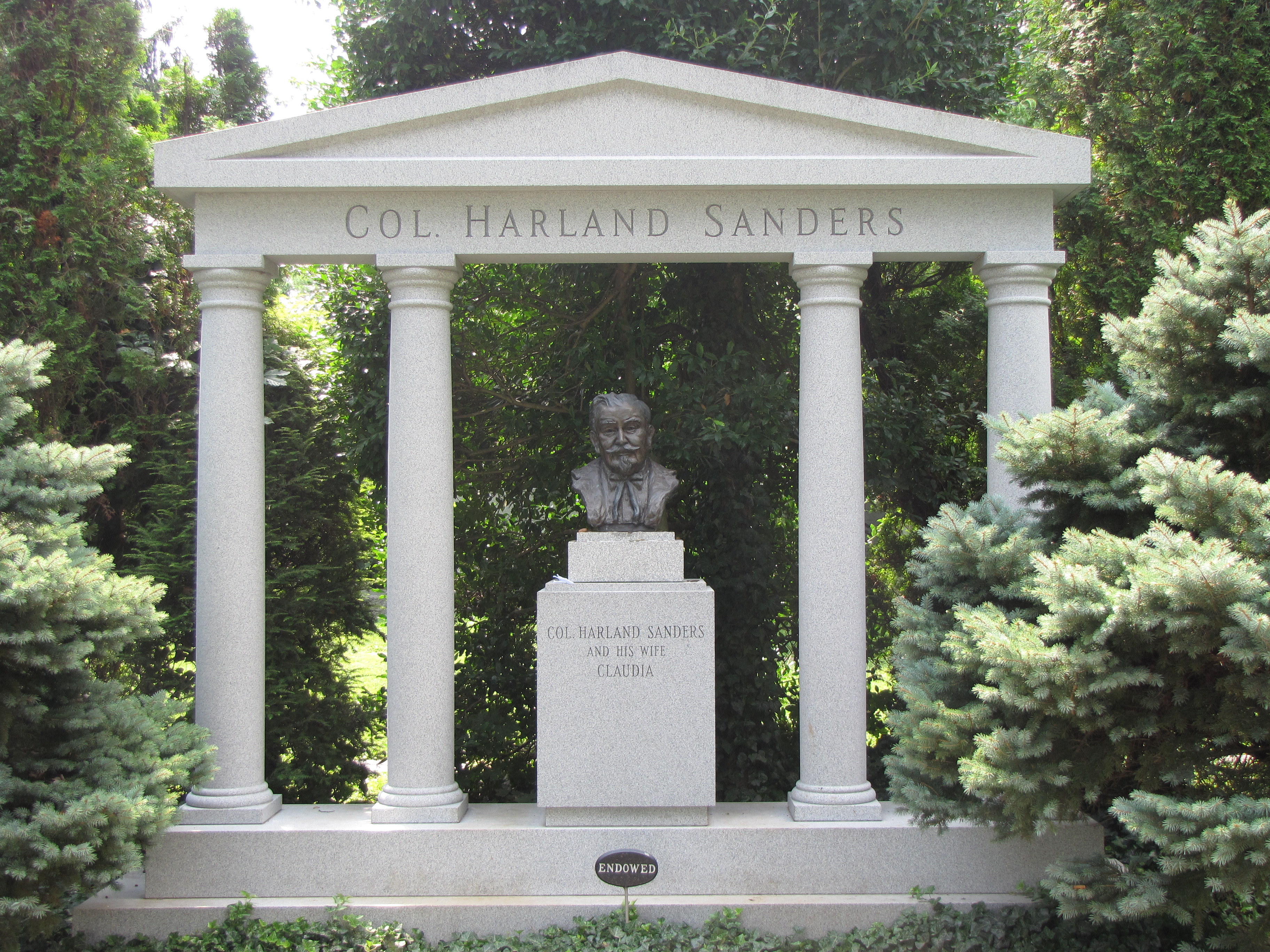
Kentucky Fried

Cave Hill Cemetery, Louisville, Kentucky

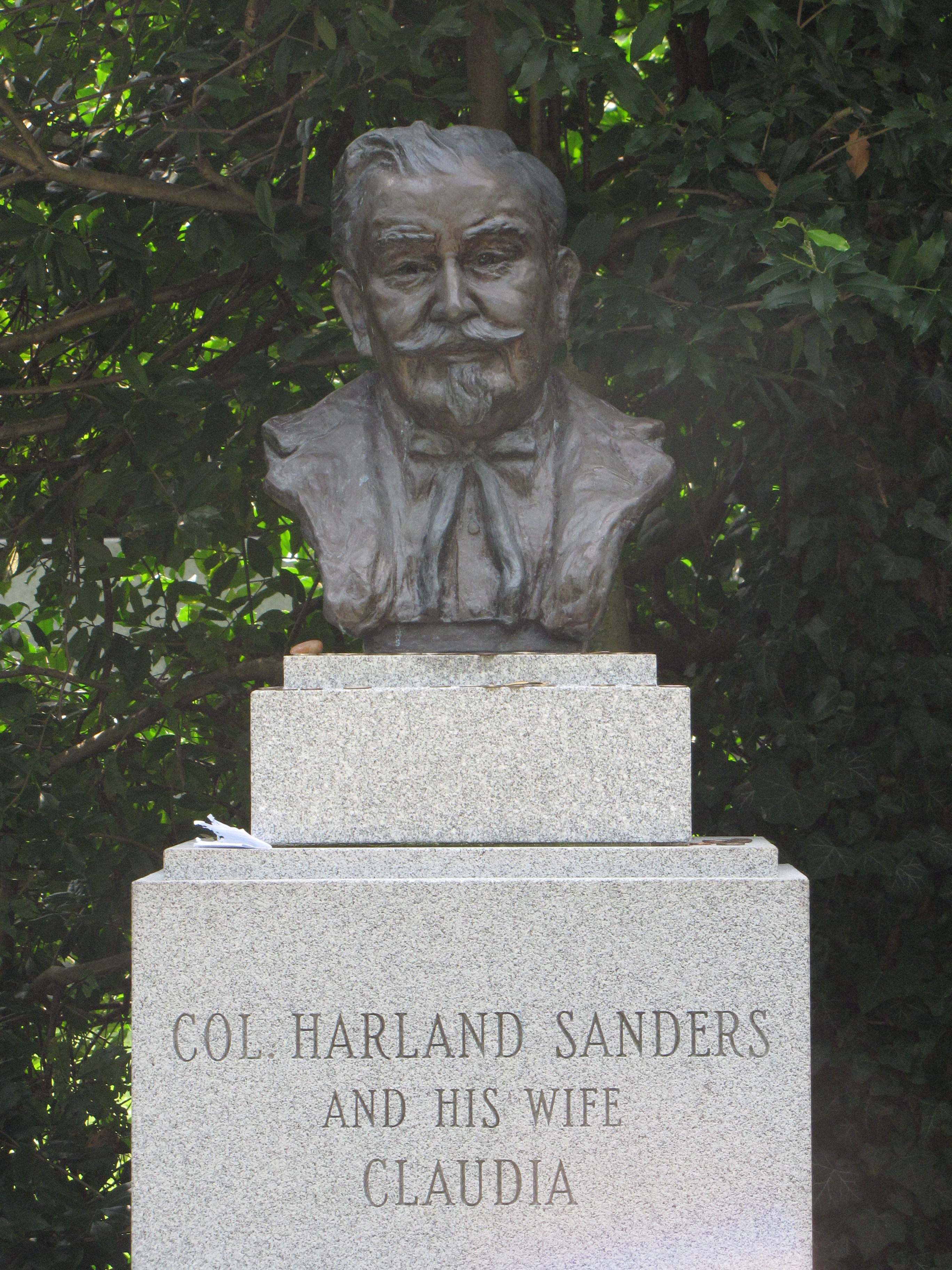
Colonel Harland Sanders, born near Henryville, Indiana, September 9, 1890                           Founder of the Kentucky Fried Chicken Empire                                                                        Died Louisville, Kentucky, December 16, 1980                                      

His Beloved Wife, Claudia Ellen Sanders, born near London, Kentucky, September 7, 1902  Truly “The Colonel’s Lady” and Co-Worker in His Enterprises                                            Died Shelbyville, Kentucky, December 31, 1996

Colonel Harland David Sanders was an Horatio Alger story, albeit rags to riches as a late bloomer.  He grew up poor from a broken home, Sanders kept trying his hand at business until, at the age of 65, he hit upon success using a fried chicken recipe he perfected to make him a fortune.  In the process, he became a beloved American icon sporting his trademark goatee and white suit, appearing in hundreds of television commercials to promote Kentucky Fried Chicken and its “secret recipe.”

The Colonel’s monument, with a pediment on top of four Doric columns framing his bust, gives the visitor a sense that Colonel Sanders is greeting them on the front porch of his plantation. 

On my visit today to his grave at the Cave Hill Cemetery, in Louisville, Kentucky, fans left pennies, nickels, and dimes to mark their visit to this venerable fried chicken perfectionist’s grave.  It is said that often ketchup packets and KFC buckets have been left behind, too. 

On this day, one fan left him a note that said, “Dear Colonel, I really don’t like your chicken, but I admire the fact that you left your mark on the world.”

Posted in Famous graves | Leave a comment

Sheaf of Wheat

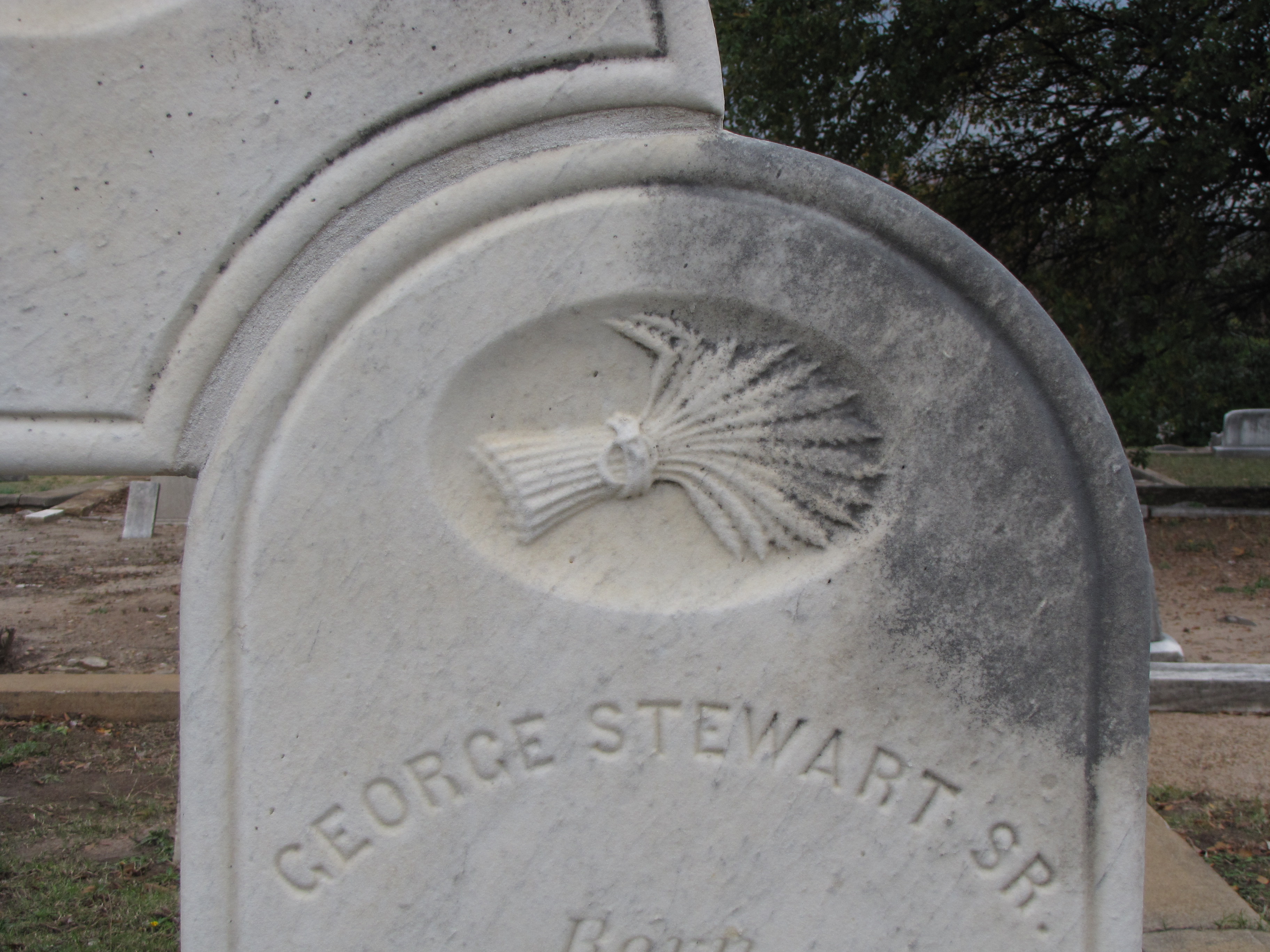
Oakland Cemetery, Atlanta, Georgia

Wheat’s origins are unknown but is the basis of basic food and a staple in many cultures and as such is viewed as a gift from Heaven.  It symbolizes immortality and resurrection.  But, like many symbols found on gravestones, they can have more than one meaning.  For instance, the sheaf of wheat can represent the Body of Christ.  Wheat can also represent a long life, usually more than three score and ten, or seventy years. 

Oakland Cemetery, Atlanta, Georgia

Posted in Symbolism | 2 Comments

Junior Order of United American Mechanics

Old Brick Reformed Church Cemetery, Holmdel, New Jersey

Motto: Our Country                                                                                                                 Creed: Principals, Not Men

The Junior Order of United American Mechanics, founded May 17th, 1853, in the Germantown neighborhood of Philadelphia, had its origins in a faternal group called The United American Mechanics, which was founded in 1845.  The JOUAM became independent in 1885.  It was a secret and political organization formed to combat the influence of the wave of Irish Roman Catholic immigrants into the labor market. All members were to be male, white, between the ages of 16 and 50, favored a separation of church and state, supported a free and public education, and professed a belief in a supreme being. 

Eventually, the organization began to open up membership to a diverse population including women, African Americans, Jews, and Roman Catholics.  They also began issuing insurance to protect workers who were injured or to pay death benefits.  The organization had a membership of over 200,000 at its zenith at the beginning of the twentieth century.

Nearly from the beginning of the organization’s founding, the Junior Order of United American Mechanics set out to support charities, especially those for children.  In the late 1890s JOUAM built an orphanage in Tiffin, Ohio, and a second one in Lexington, North Carolina, in 1929.  Today, JOUAM supports many charities foused on Lupus, Cerebral Palsy, and scholarship programs.

The primary symbols are an arm holding an hammer, the square and the compass set in the center of a shield. 

Mitchell Cemetery, Mitchell, Indiana

Posted in Metal Markers | Leave a comment

Homesick

Rose Hill Cemetery, Bloomington, Indiana

As I  walked through the Rose Hill Cemetery in Bloomington, Indiana, I was surprised to see “LOST ON THE TITANIC” carved into a large granite monument.  There in front of me was a part of one of the most dramatic stories of the early part of the twentieth century.  

On April 14, 1912, the White Star Line ship named, Titanic, for it’s enormous girth of 46,328 tons of steel, lurched forward on that fateful and foggy night, hit an iceberg in the icy waters of the Atlantic Ocean.  At 11:30 p.m. the massive luxury liner began to take on water.

The story of that night is legendary.  The individual stories, though, are often lost in the telling of the BIG STORY about the notable ocean liner that was reported to be unsinkable.  Because of a shortage of lifeboats, 1,513 of the 2,244 people on the ship were lost.  In this case, John Bertram Crafton of Indiana, affectionately dubbed the “stone king” because of his success in the Indiana limestone business, had gone to bathe in the healing spa waters of Europe to cure his rheumatism. 

As it turned out, a case of homesickness caused Crafton to change his plans from sailing back on the German ocean liner Kaiserin Auguste Victoria to book a week earlier on the Titantic.  That decision sealed his fate.  J. B. Crafton was lost on the Titanic and his body was never recovered.

The monument in the Rose Hill Cemetery is a cenotaph.  It was erected to commemorate the life and death of a person who is not buried under the tomb.  The word cenotaph originates from the Greek word kenotaphionKenos means empty and taphos tranlsates to tomb–together they form “empty tomb.”

Posted in Famous graves | Leave a comment