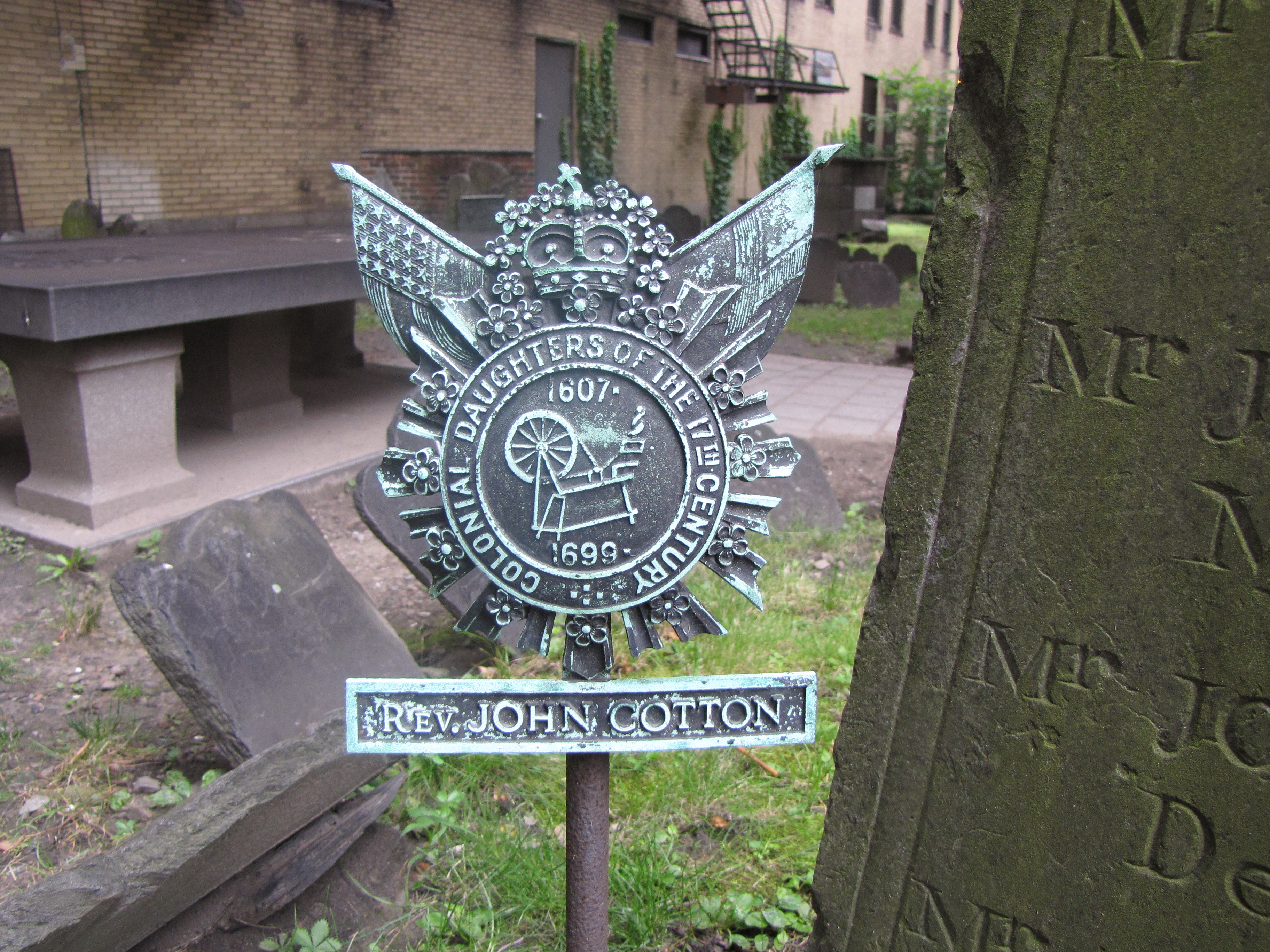
National Society, Colonial Daughters of the Seventeenth Century


King's Chapel Cemetery, Boston, Massachusetts

Many organizations were founded in the later part of the 19th Century that required the prospective members demonstrate that their ancestors had been in the United States before a certain date or that their ancestors had served in a war.  Examples of these organizations are Sons of the American Revolution (1889), The Daughters of the American Revolution (1890), The Daughters of the War of 1812 (1892), The Order of the Founders and Patriots of America (1896), The National Society, Colonial Daughters of the Seventeenth Century (1896), The Mayflower Society (1897), and The National Society of the Colonial Dames of America XVII (1915).

The National Society, Colonial Daughters of the Seventeeth Century was founded by Mrs. Harlan P. Halsey in 1896 in Brooklyn, New York.  The Society admits women of good moral character over the ages of eighteen who can prove they are descended from an ancestor who rendered service in one of the American Colonies from 1607 to 1699.

The organization is still active with twenty-one chapters supporting the Society’s aims through their providing  scholarships at Lincoln Memorial University; granting  awards to honor graduates at military academies; maintaining historical displays; has restoring and preserving important Colonial papers and documents; and establishing a publishing program.
Posted in Symbolism | Leave a comment

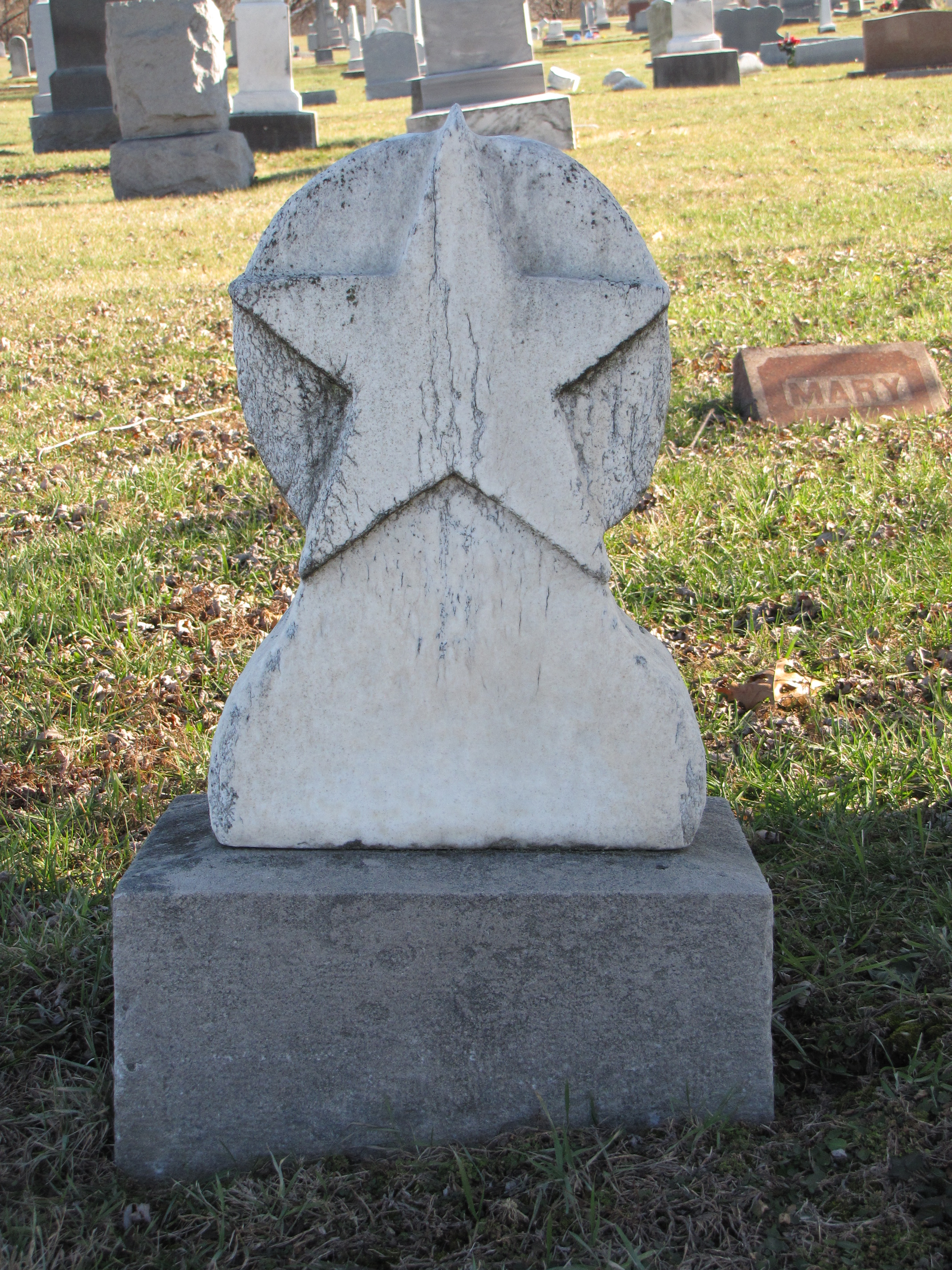
Star

Holy Cross St. Joseph Cemeteries, Indianapolis, Indiana

The star can represent the life of Christ and the Five Holy Wounds of Christ–one wound in each hand, a wound in each foot, and one in his side where Jesus was pierced to check to make sure he was dead.

Presbyterian Cemetery, Ellettsville, Indiana

The gravestone above from the Presbyterian Cemetery in Ellettsville is a star design in the round.  From any direction, the star design stands out. 

Presbyterian Cemetery, Ellettsville, Indiana

Posted in Symbolism | Leave a comment

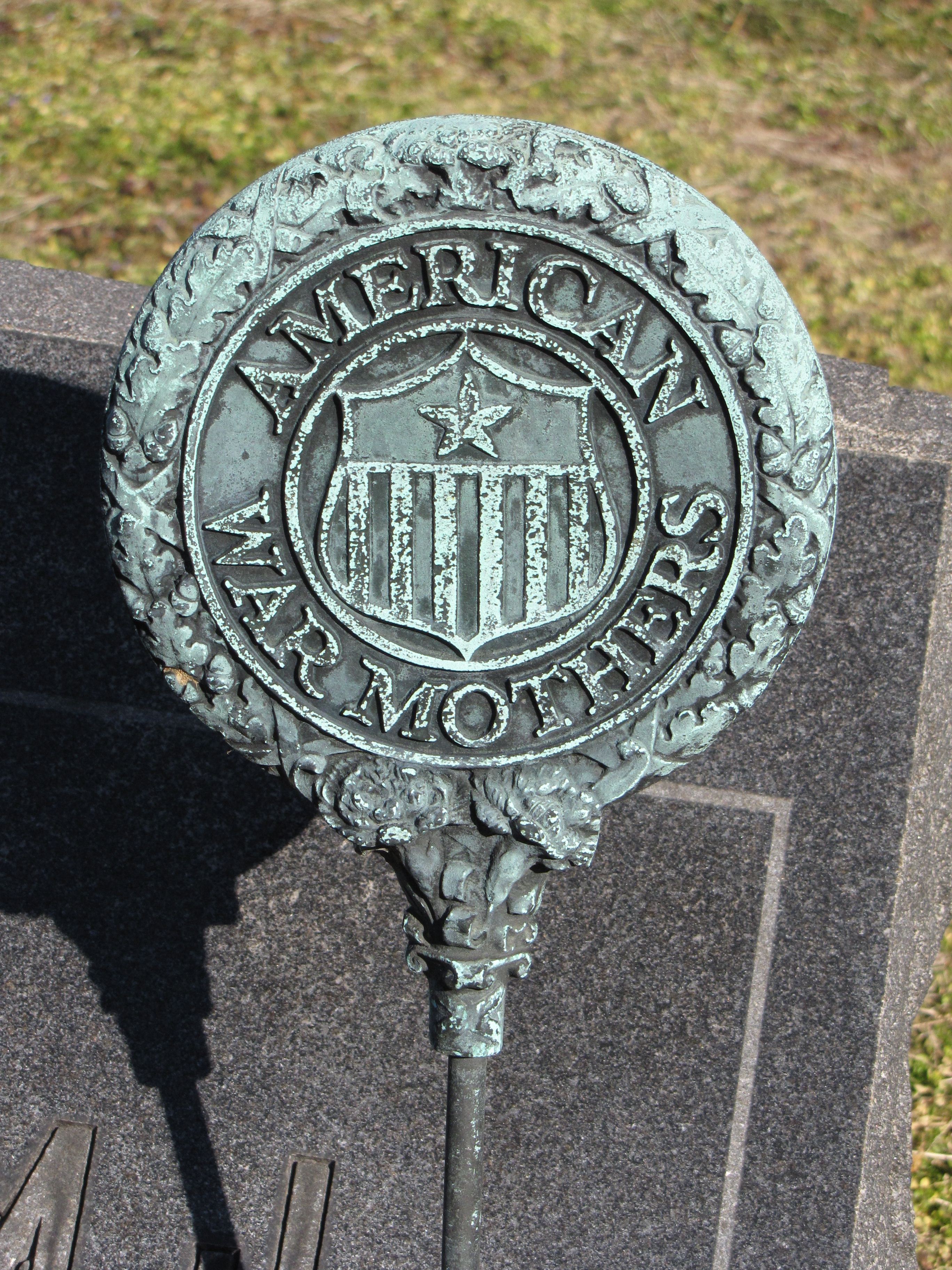
War Mothers

Columbus City Cemetery, Columbus, Indiana

During World War I also called the Great War and the War to End All Wars two American organizations were founded by mothers of soldiers–The American War Mothers and The Gold Star Mothers.  The American War Mothers was founded September 29, 1917, limited to mothers whose sons and/or daughters served in the Armed Forces between April 6, 1917 to November 11, 1918.  The charter of the organization was amended several times to include sons and daughters who served in World War II, the Korean War, and then soldiers of any future wars.  The Gold Star Mothers was  founded by Grace Darling Seibold whose son, First Lieutenant George Vaughn Seibold, was killed in World War I in August of 1918. Nearly 117,000 American service people were killed during the war.  The Gold Star Mothers did volunteer work and served and functioned as a support network for one another.

Laurel Hill Cemetery, Philadelphia, Pennsylvania

Posted in Metal Markers | 1 Comment

Candle Snuffing

King's Chapel Cemetery, Boston

The gravestone of Boston shopkeeper, Joseph Tapping, who died in 1678 at the age of 23, is one of the most famous in the city.  Just inside the gates fo the King’s Chapel Cemetery is his elaborate carved tombstone.
 
In the top of the gravestone is the winged skull representing the fleeting nature of life the soul with the admonition “Memento Mori”, “remember death”.  Above the winged skill is the hourglass symbolic of time running out.
 

The top of the Joseph Tapping gravestone

The incised gravestone carving was created by the unnamed carver known simply as “the Charlestown Stonecutter”.  In the scene on the face of the tombstone is carved the epic struggle between the death pictured as a skeleton armed with a candle snuffer and an arrow.   In this timeless fight, a bearded Father Time is trying to hold Death back and save death for another day.  

King's Chapel Cemetery, Boston

Posted in Symbolism | 4 Comments

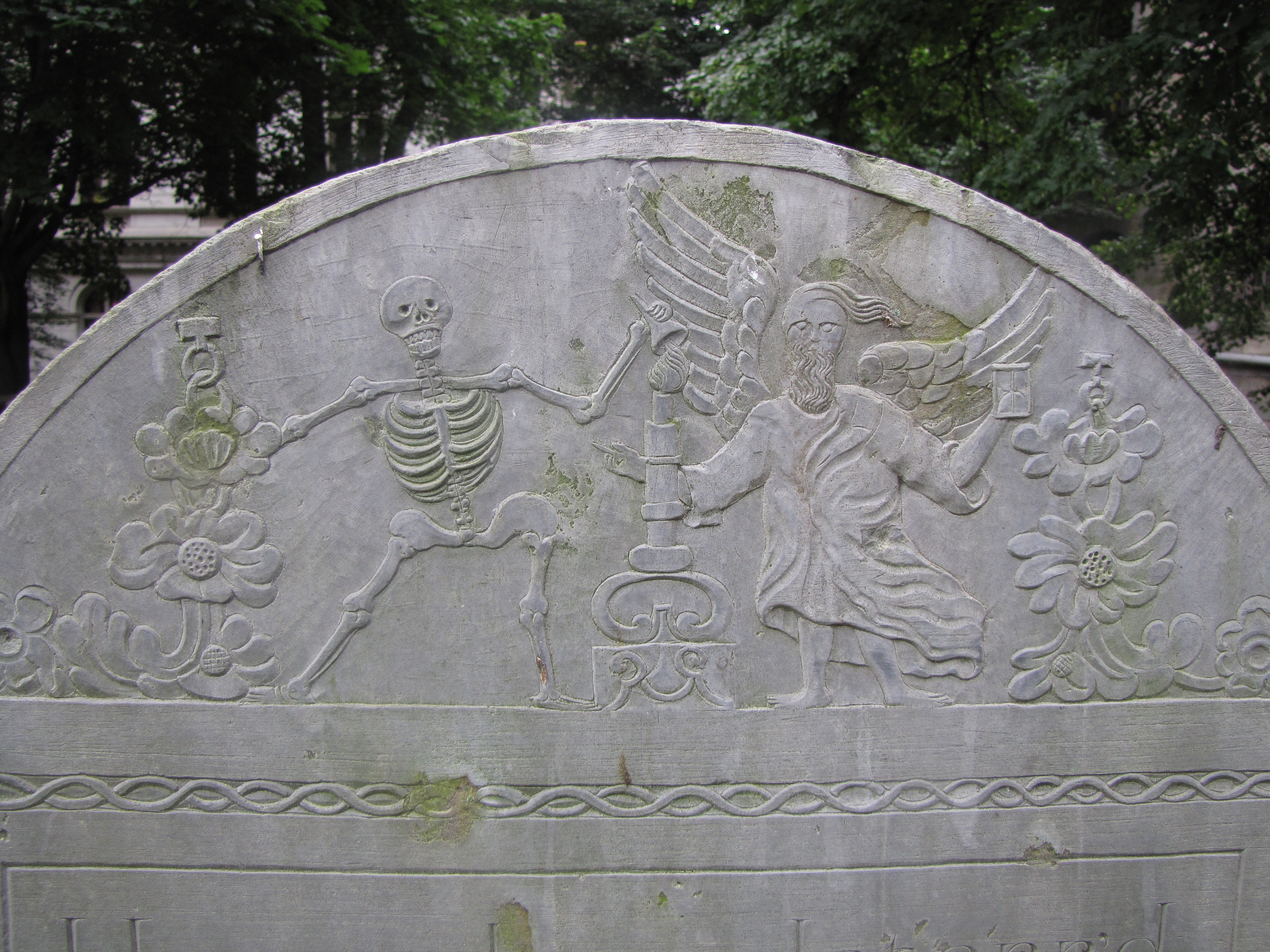
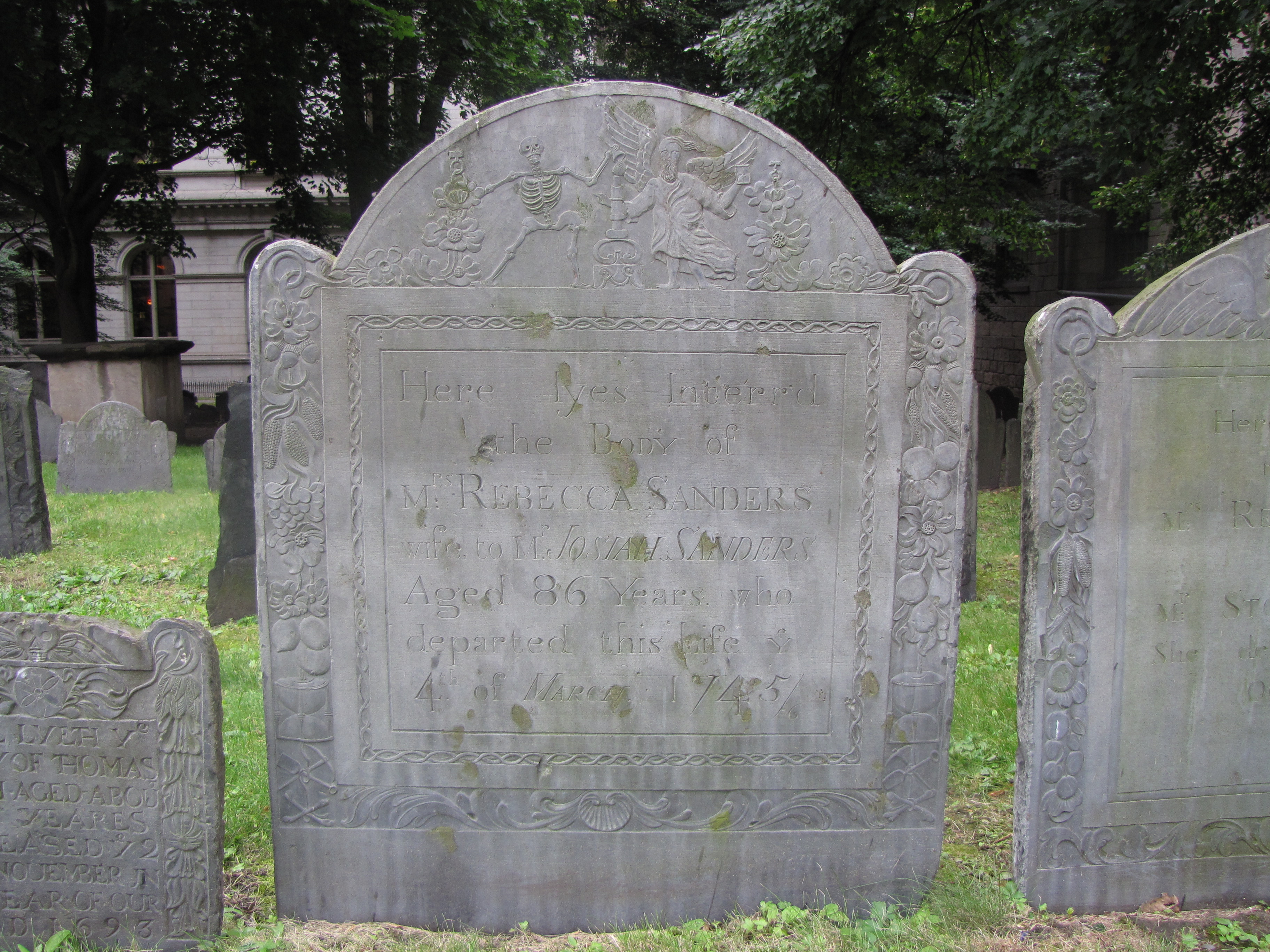
Candle

King's Chapel Cemetery, Boston

On the 1745 gravestone of Rebecca Sanders at the King’s Chapel Cemetery in Boston, Massachusetts, a skeleton and Father Time circle around a candle, with the figure of death, the skeleton, ready to snuff out the flame.  The symbolism is clear, the candle represents the spirit and the soul of the person.  When the flame is snuffed out the smoke circles toward the sky, just as the spirit leaves the body when it dies and the soultakes flight toward Heaven.
 
Elton John’s song, “Candle in the Wind”, written to honor Marilyn Monroe and Princess Diana, also uses this symbolism.  A line of the song refers to their early deaths when he sings, “Your candle’s burned out long before your legend ever will.”  The flame of each of their candles have been snuffed out, their souls taken flight but the memory of both of them are still with us.
 

King's Chapel Cemetery, Boston, Massachusetts

Posted in Symbolism | Leave a comment

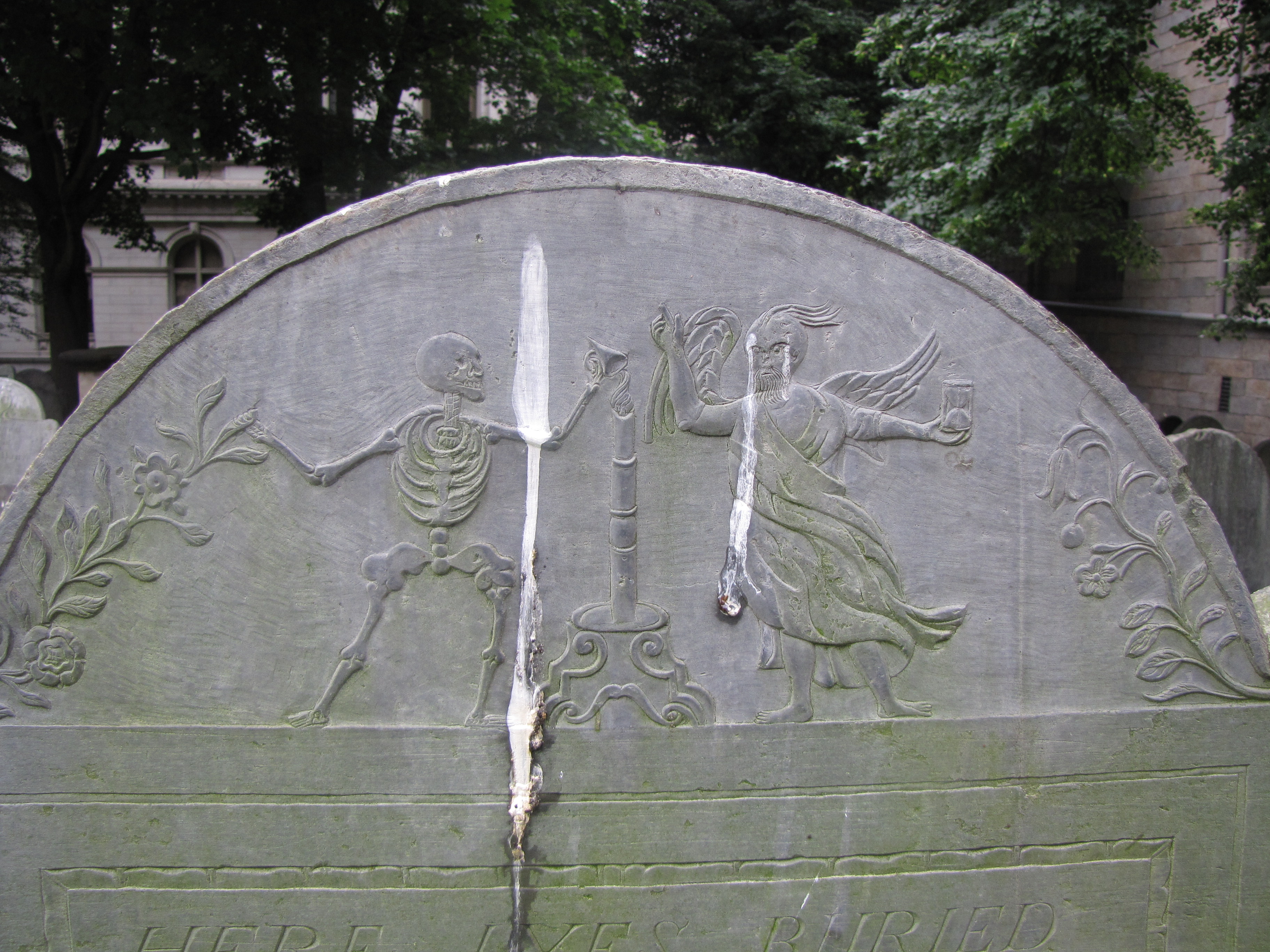
Pay no attention to the bird poop!

King's Chapel Cemetery, Boston, Massachusetts

This strafed gravestone is the obvious target of a large Kamikaze bird with some gastrointestinal problems.  Unfortunately for me, and you the viewer, I was not equiped on my visit to the King’s Chapel Cemetery in Boston to wipe it clean before I snapped this.  But, the imagery on the 22-year old Rebecca Gerrish’s gravestone is spectacular.  Here a candle is being snuffed out by a skeleton holding the snuffer and a winged Father Time holding an hourglass trying to stop the inevitable.  The symbolism is hard to miss.  The flame on the candle being put out represents a young life that is over.  Father Time reminds us that life is short and the visage of the skeleton calls to the viewer to remember that death is always near.
 

King's Chapel Cemetery, Boston

Posted in Symbolism | 1 Comment

Country Gates

Calhoun Cemetery, rural Harrison County, Iowa

Marking the portal to many country cemeteries are simple gates made of metal letters stretched between two metal poles.  In this case the date of the first burial is commemorated above the cemetery name along with cut-out crosses and upright crosses.
 
Posted in Cemetery Gates | 1 Comment

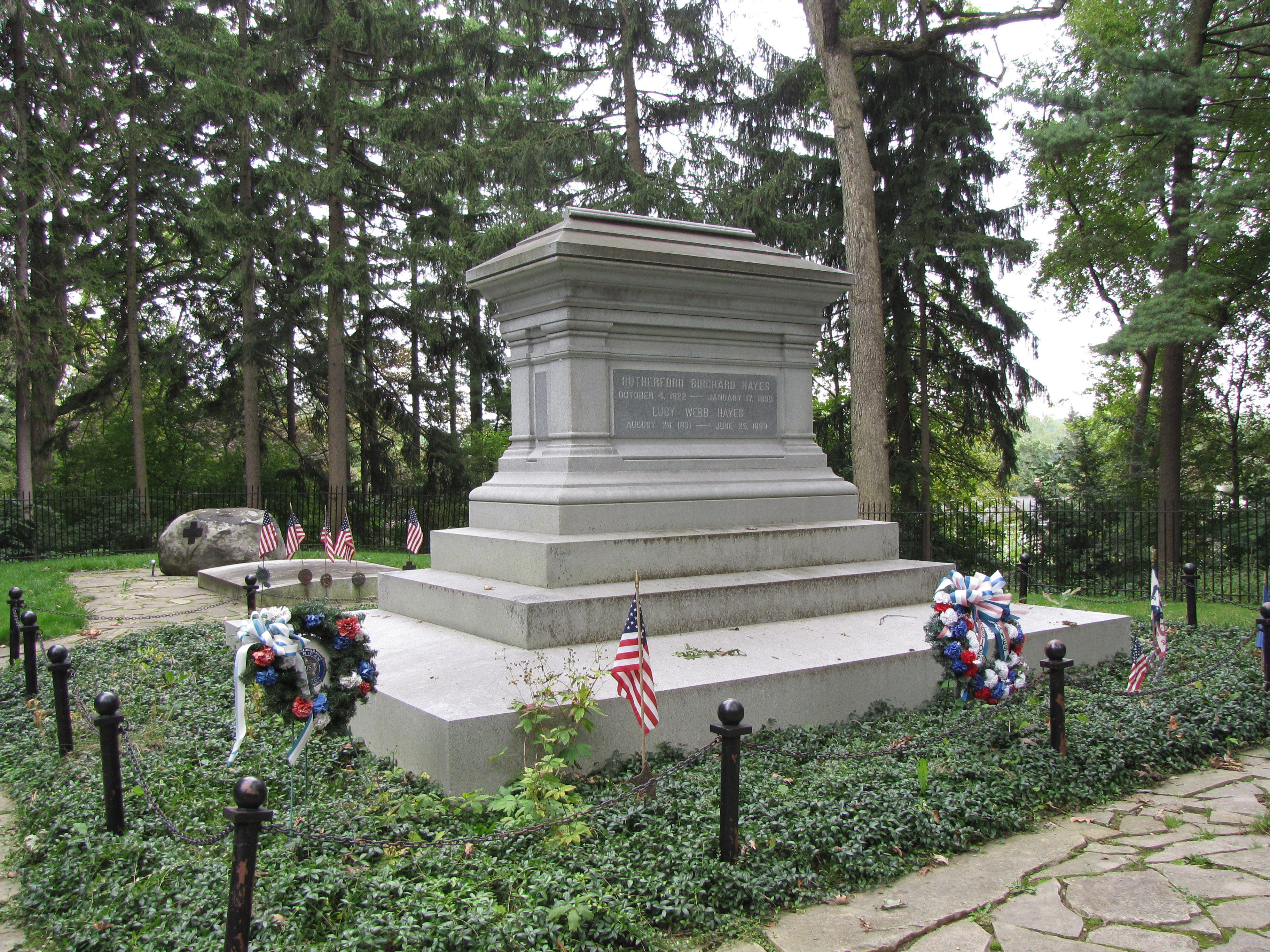
Rutherford B. Hayes

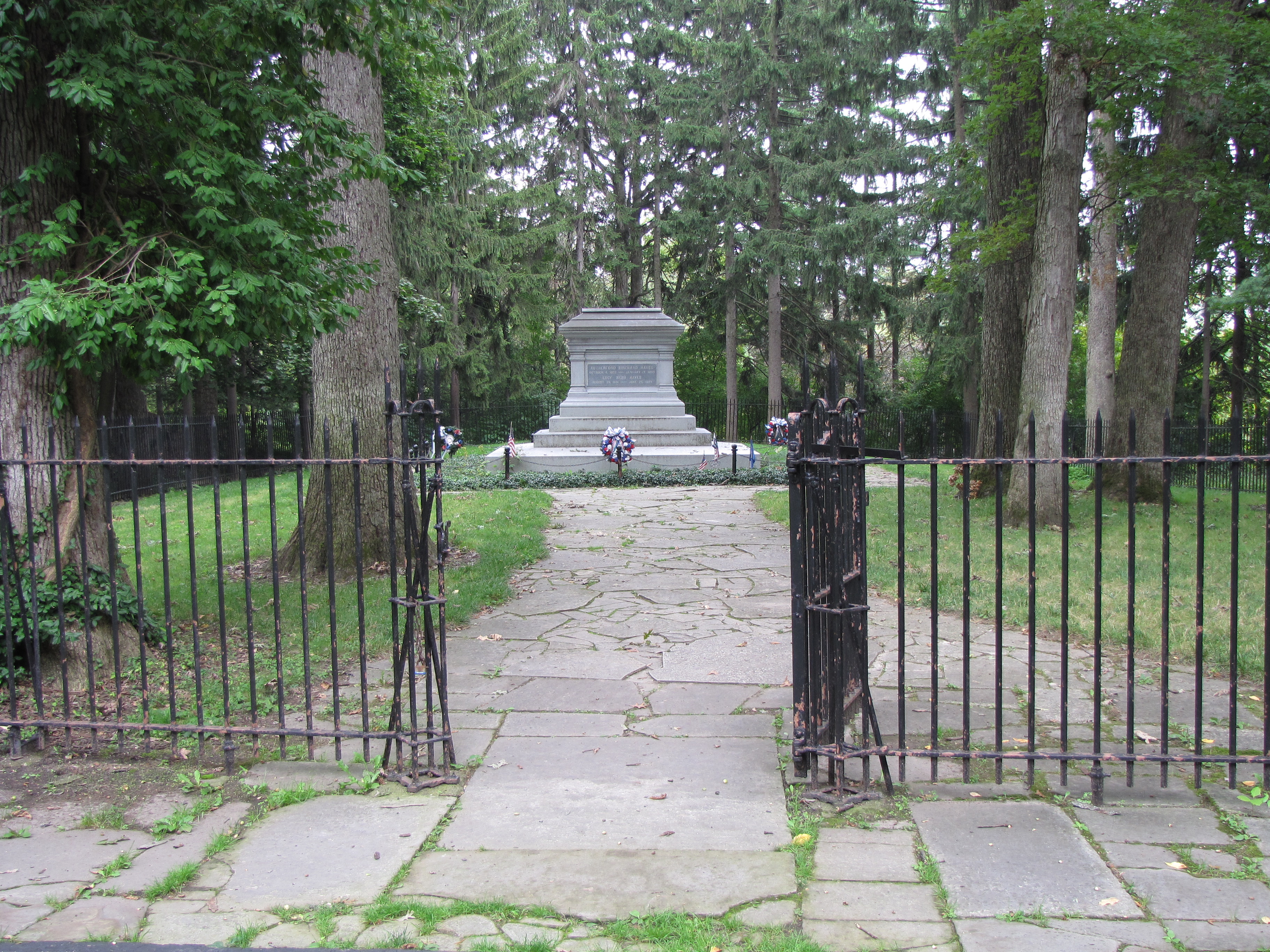
The Hayes Tomb, Fremont, Ohio

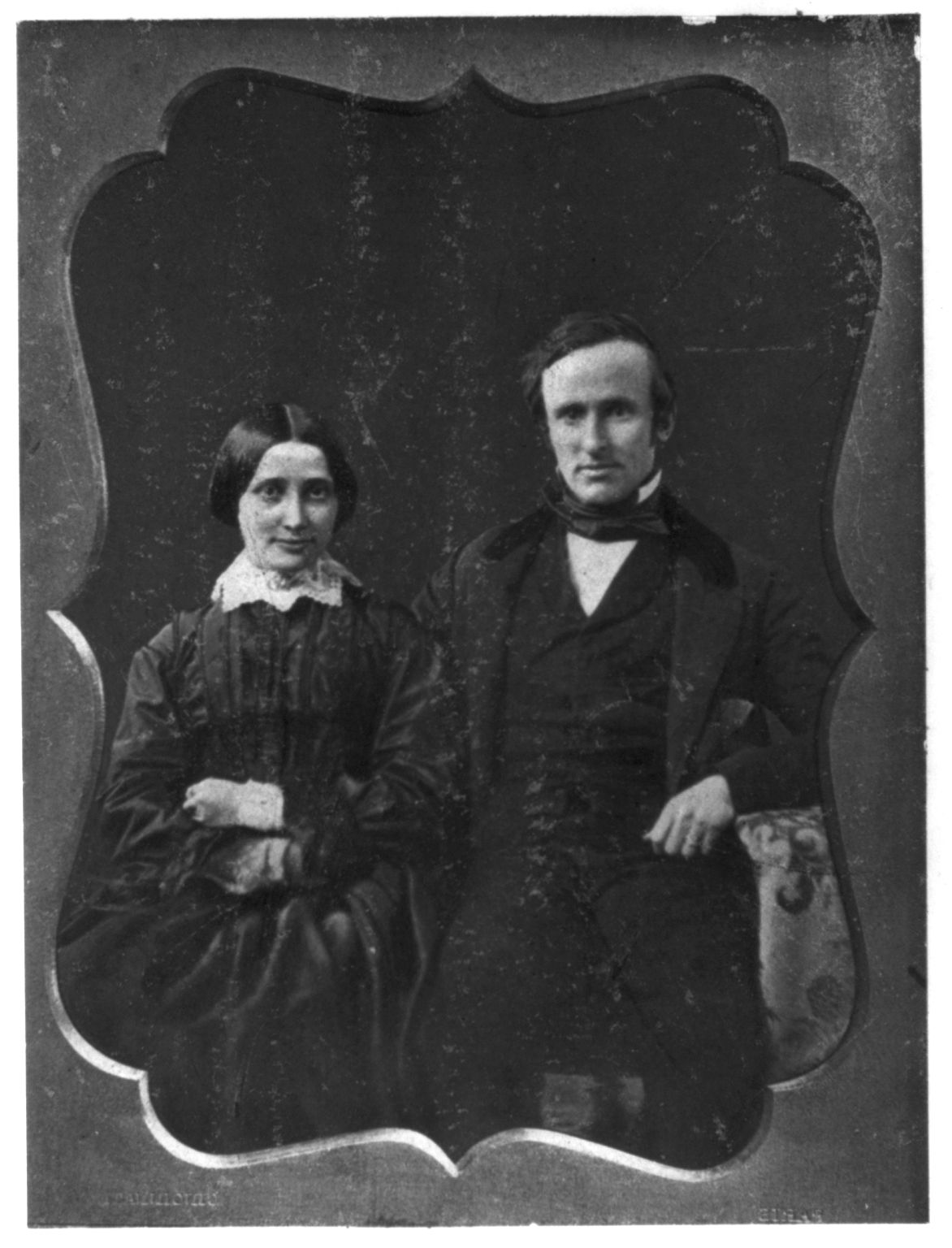
 Lucy Webb Hayes served as hostess.  What she did not serve, however, was wine.  Lucy, a Methodist and teetotaler, became known as “Lemonade Lucy.”  One wag remarked after one festive event at the Executive Mansion, that the “water flowed like wine!” 

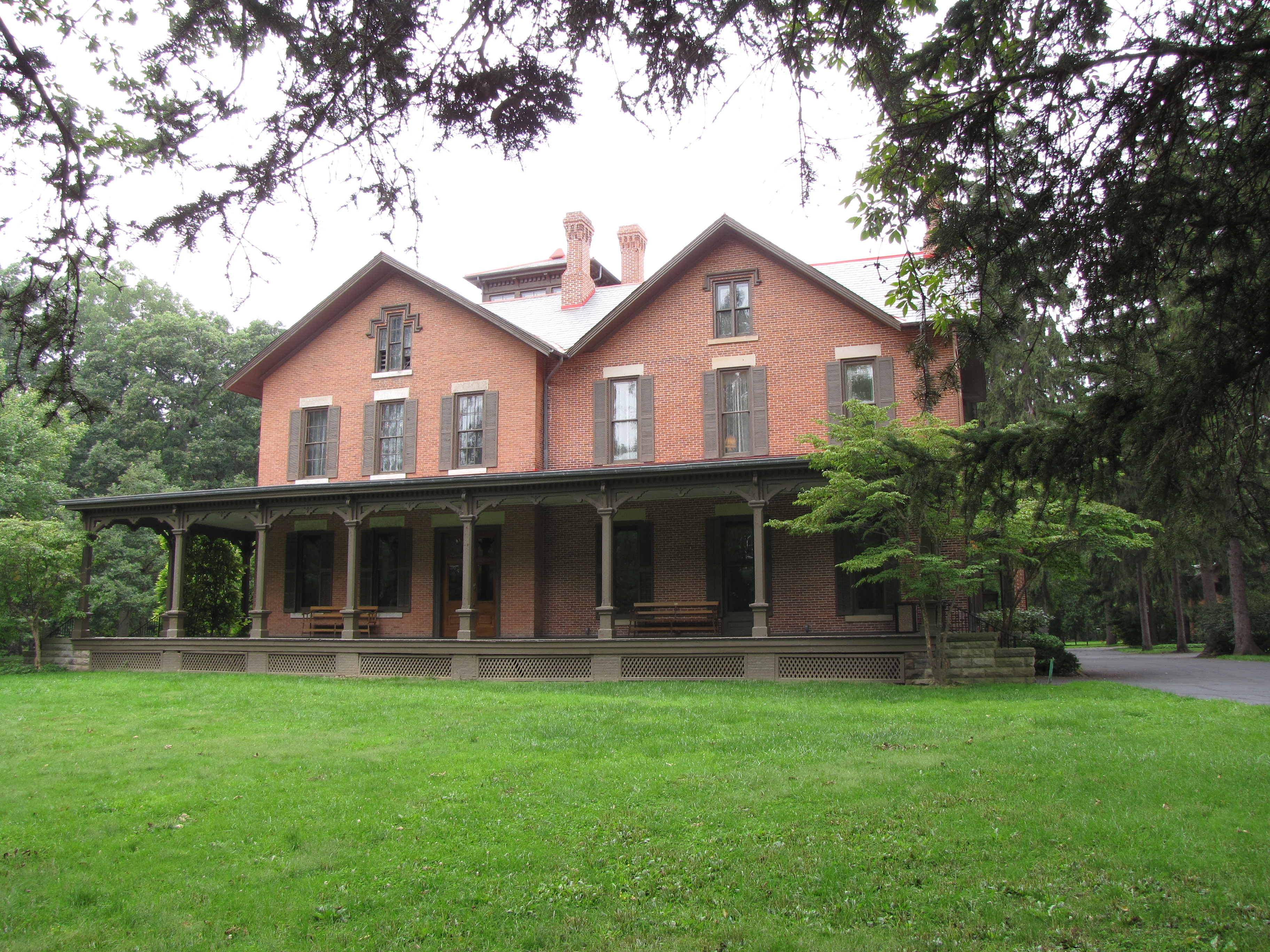
The Hayes tomb is located at Spiegel Grove, the Hayes’ home that was donated to the State of Ohio after the death of Lucy andPresident Hayes.  The tomb at Spiegel Grove was actually their second burial site.  Lucy Webb Hayes died in 1889, Rutherford in 1893.  Both had been buried in the Oakwood Cemetery at Fremont.  In 1915, both were re-interred at Spiegel Grove.  In 1916, the Hayes Commemorative Library and Museum opened becoming the first presidential library.