The Hourglass

The soap opera, Days of Our Lives, has as their catchphrase,  “Like sands through the hourglass, so are the days of our lives.” The meaning of that catchphrase is clear–life passes by very quickly.  Life measured by the grains of sand slip through one side of the hourglass to the other in a flash.  The hourglass symbol on a gravestone, often shown with wings, represents the same thought of time fleeting by quickly.

Posted in Symbolism | 1 Comment

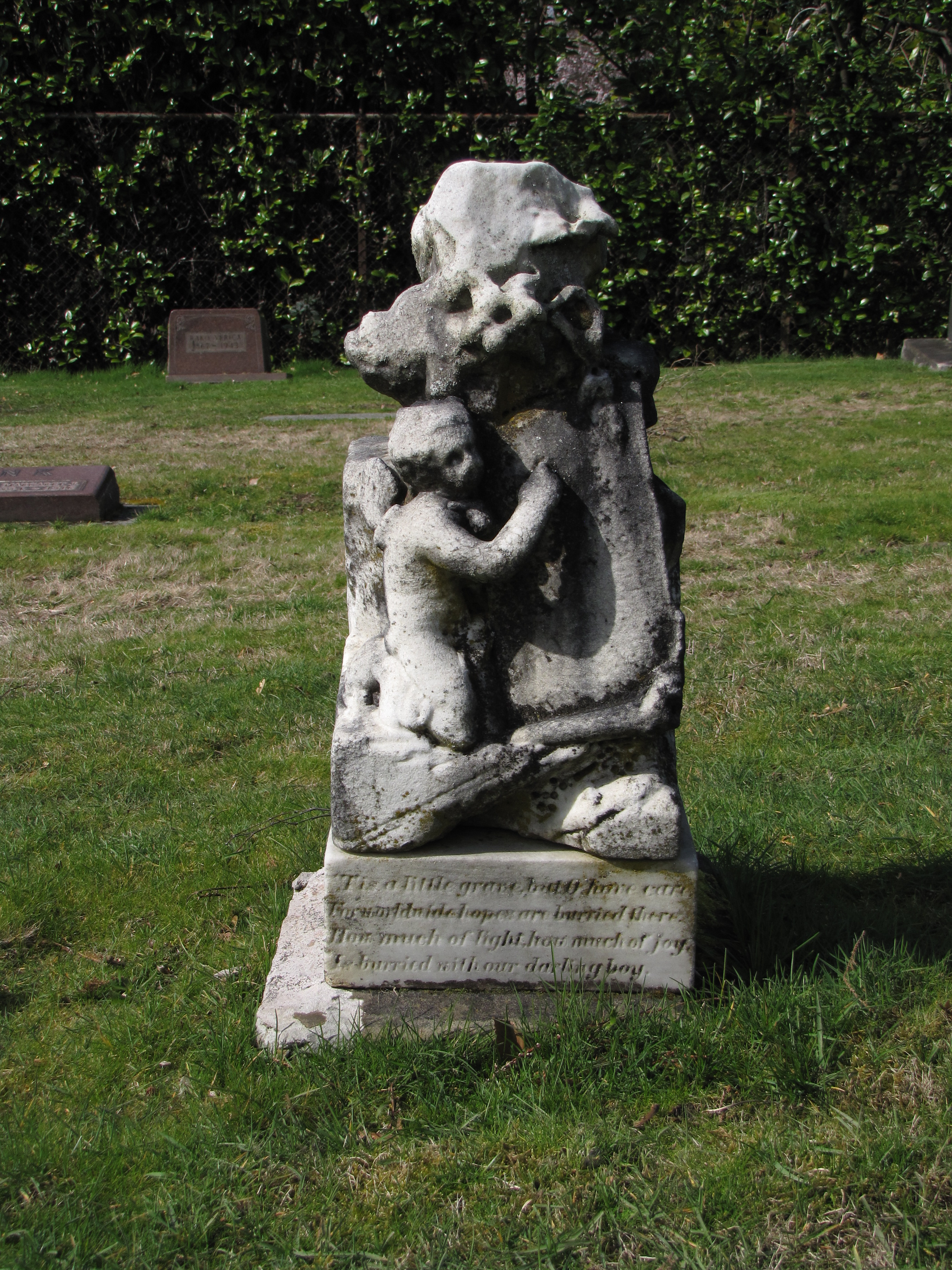
Our darling boy

River View Cemetery, Seattle, Washington

Some epitaphs, especially on the gravestones of children, can be heartbreaking.  They tell of the parent’s sorrow and the hopes and dreams that were not realized because of the death of the child like the epitaph below found on the elaborately carved gravestone of a child whose name and birth and death dates, along with much of the Victorian symbolism, have been eroded by time and weather:

Tis a little grave, but O have care.

The worldwide hopes are buried there.

How much of light, how much of joy,

Is buried with our darling boy.


Posted in Epitaphs | Leave a comment

A parent’s lament

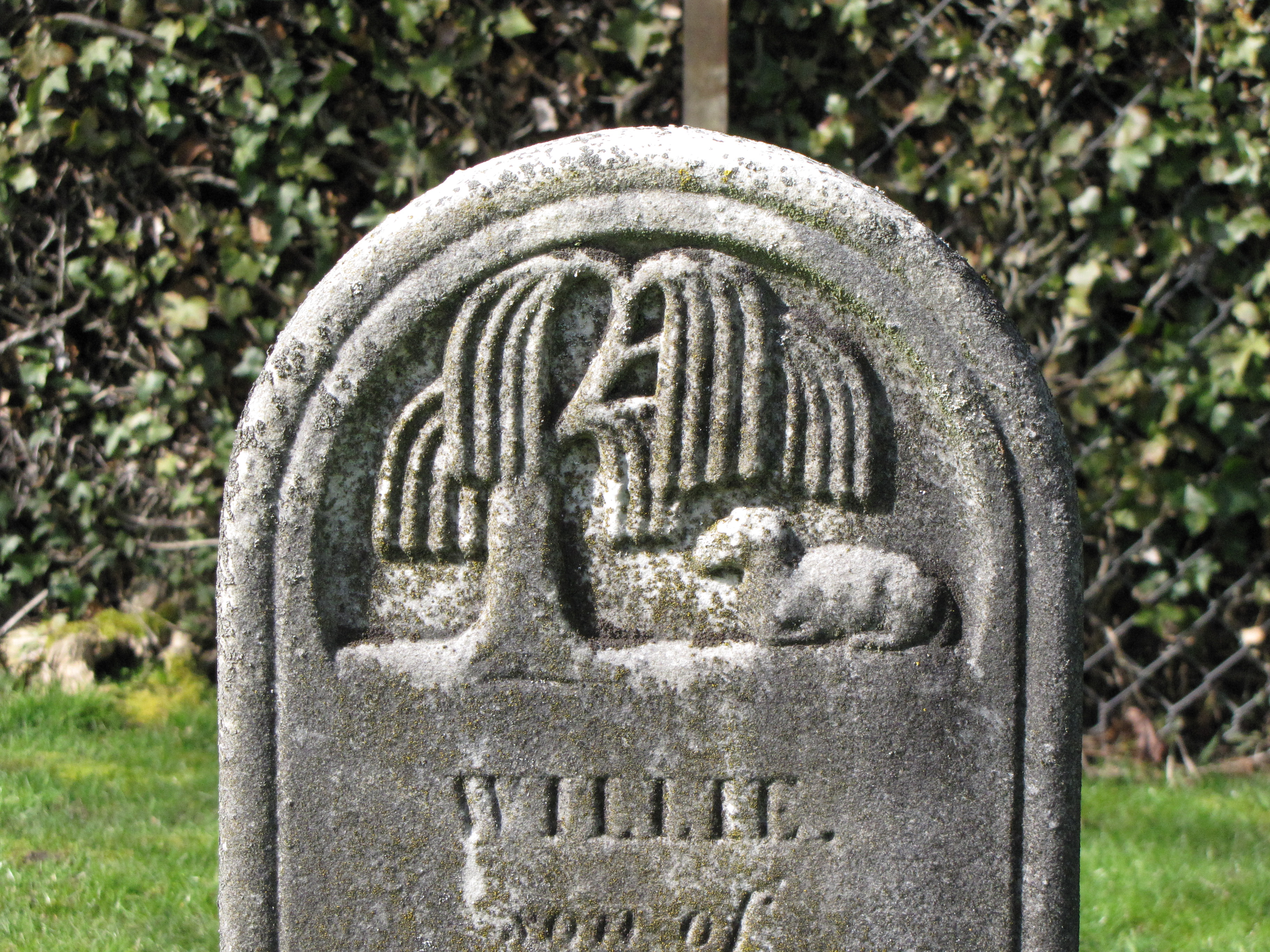
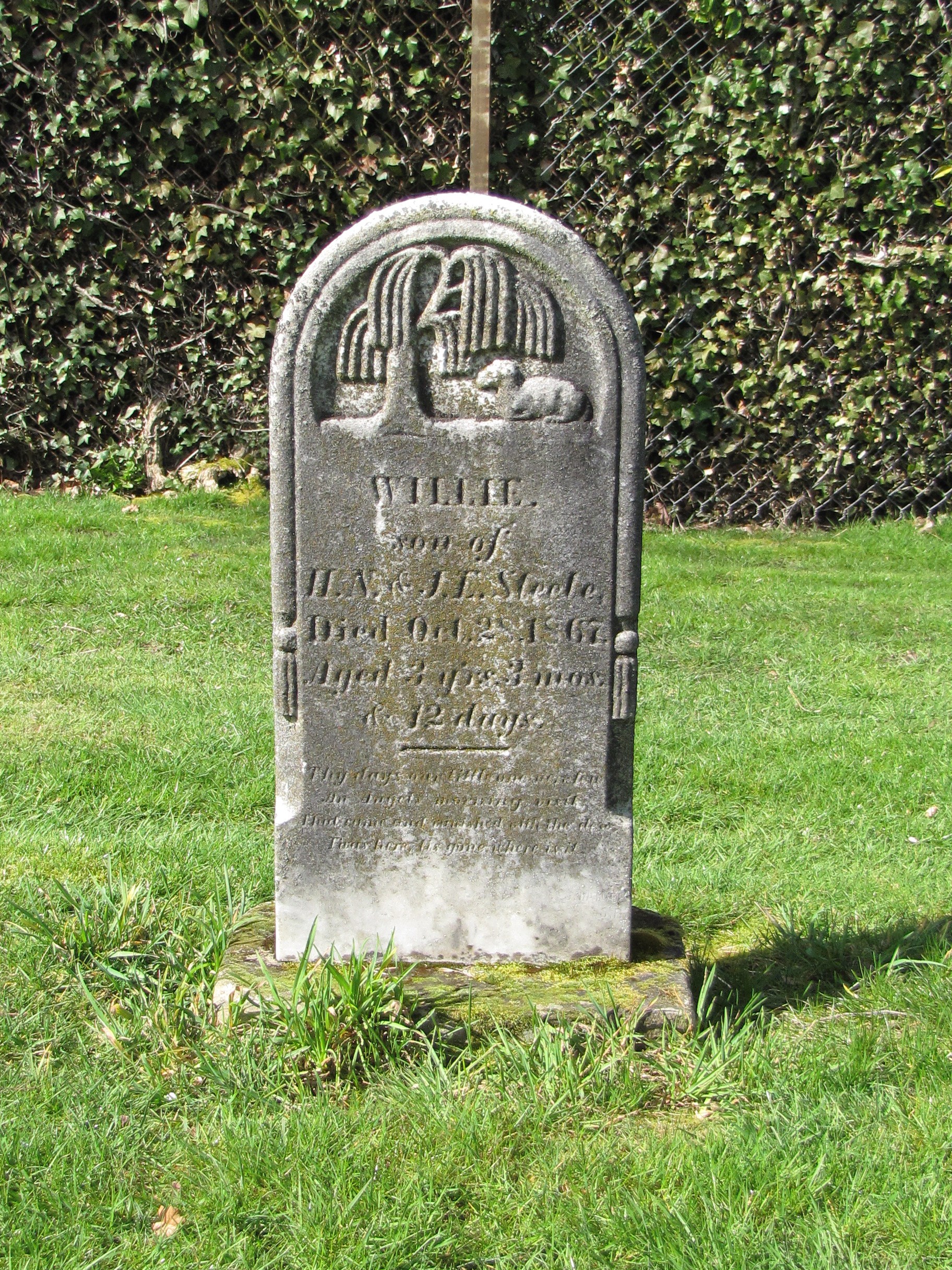
The gravestone of three-year old Willie displays a weeping willow shading a resting lamb.  The willow is a traditional symbol of sorrow and morning. The lamb is a symbol of Jesus Christ, first found in the Biblical passage John 1:29 when the Apostle John sees Christ coming toward him and declares,  “Behold the Lamb of God, which taketh away the sin of the world.” 

Only the innocence and purity of the Lord Christ enables Him to wash away the collective sins of mankind.  The symbolism of the lamb being innoncent and representing purity transfer to children, who, by their very nature, embody those virtues.  Thus, the lamb is commonly found on the graves of children, as it is here.

The epitaph for the child is a parent’s lament that speaks to the fleeting nature of life itself, here one moment and suddenly gone the next.

Thy days our Little one were few.

An Angel’s morning visit

That came and vanished with the dew.

Twas here, ’tis gone, where is it.

River View Cemetery, Seattle, Washington

Posted in Epitaphs, Symbolism | Leave a comment

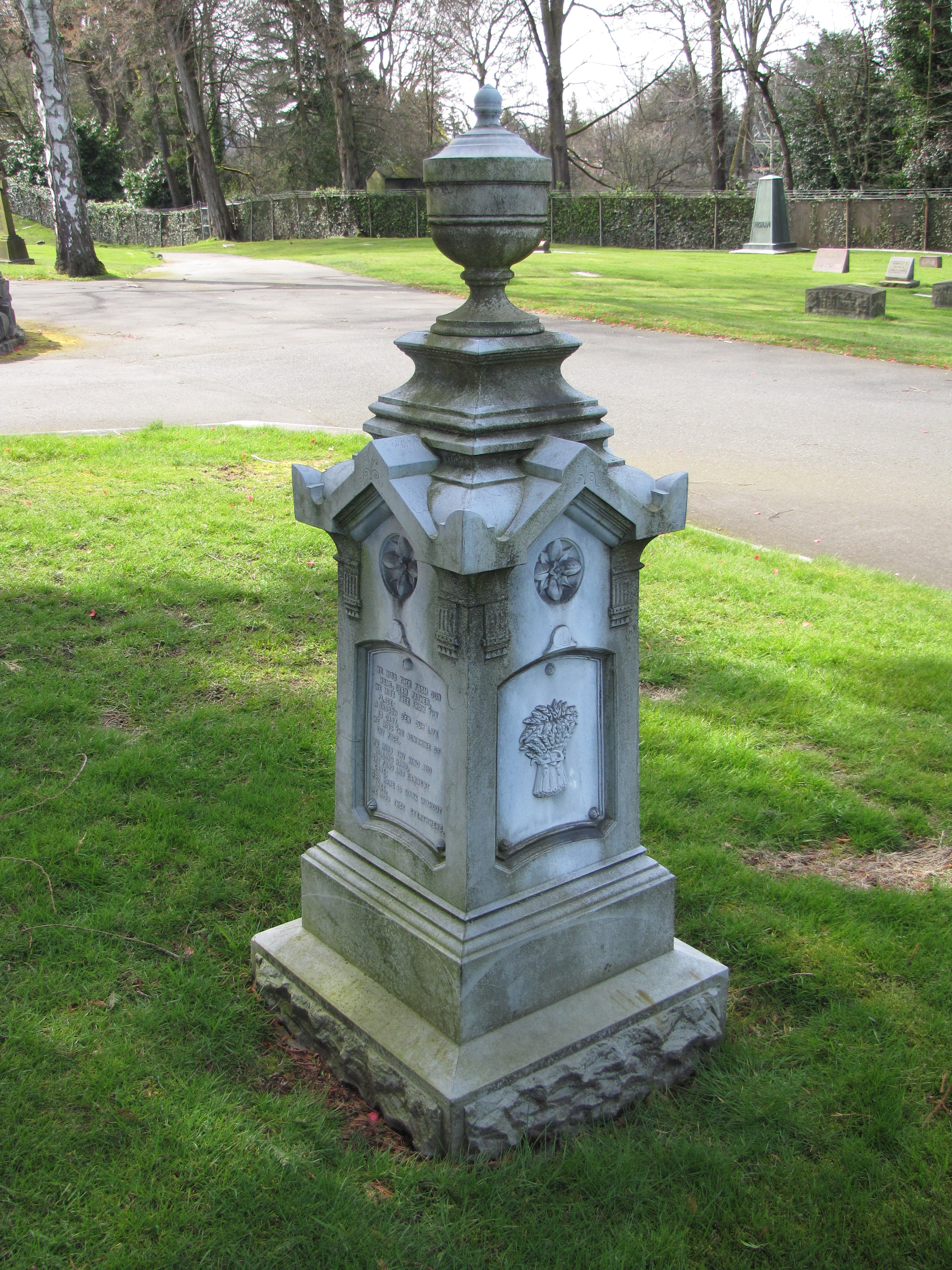
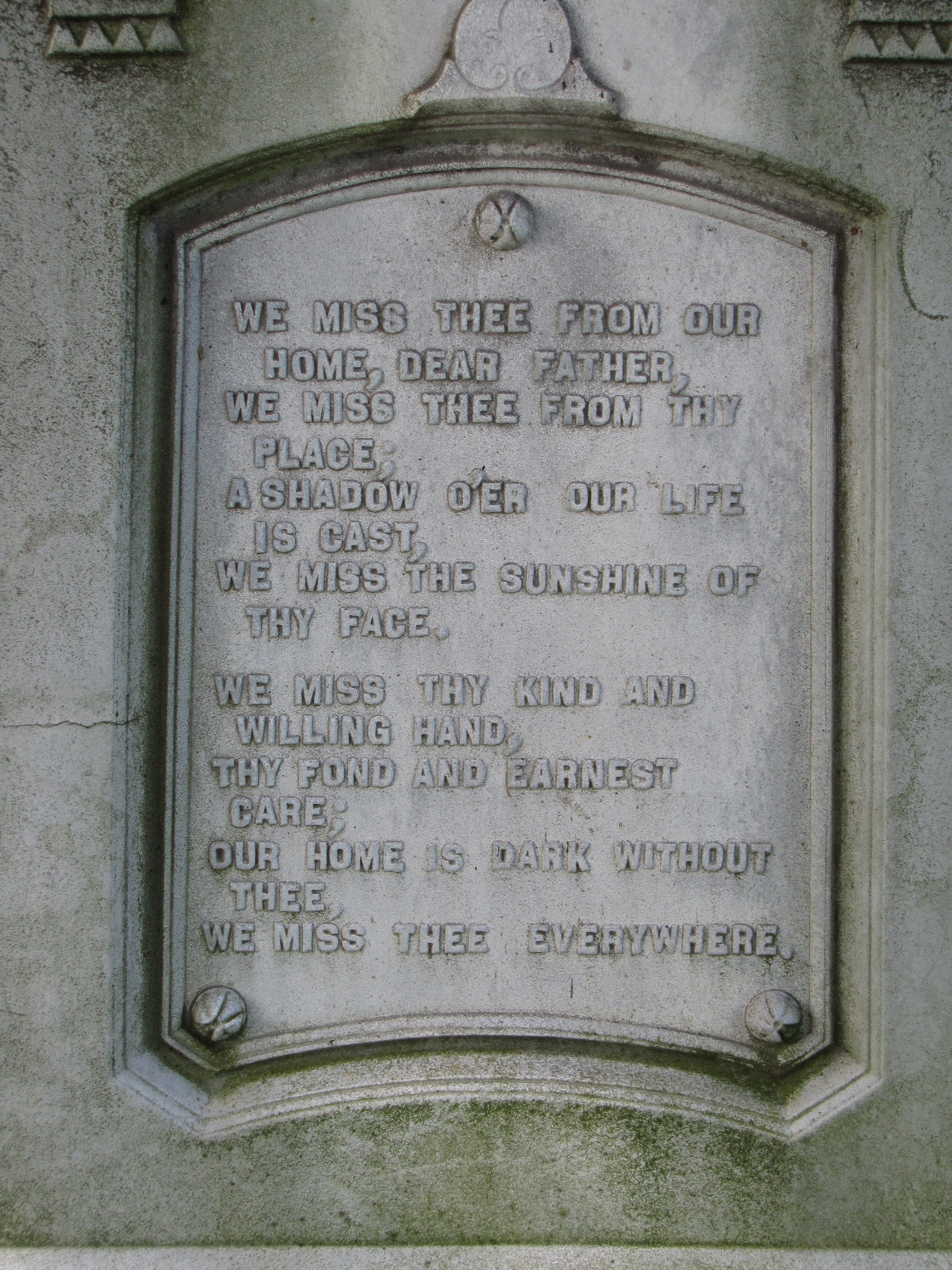
We miss thee

River View Cemetery, Seattle, Washington

Several companies manufactured “white bronze” markers.  They were actually made of zinc and have a blue tint to them when you spot them in a graveyard.  The markers age very well, and often show very few signs of aging or wear.

They came in many sizes, shapes, and gravestone forms and offered the buyers many options for epitaphs that could be chosen from a long list and bolted into place.


Posted in Epitaphs | Leave a comment

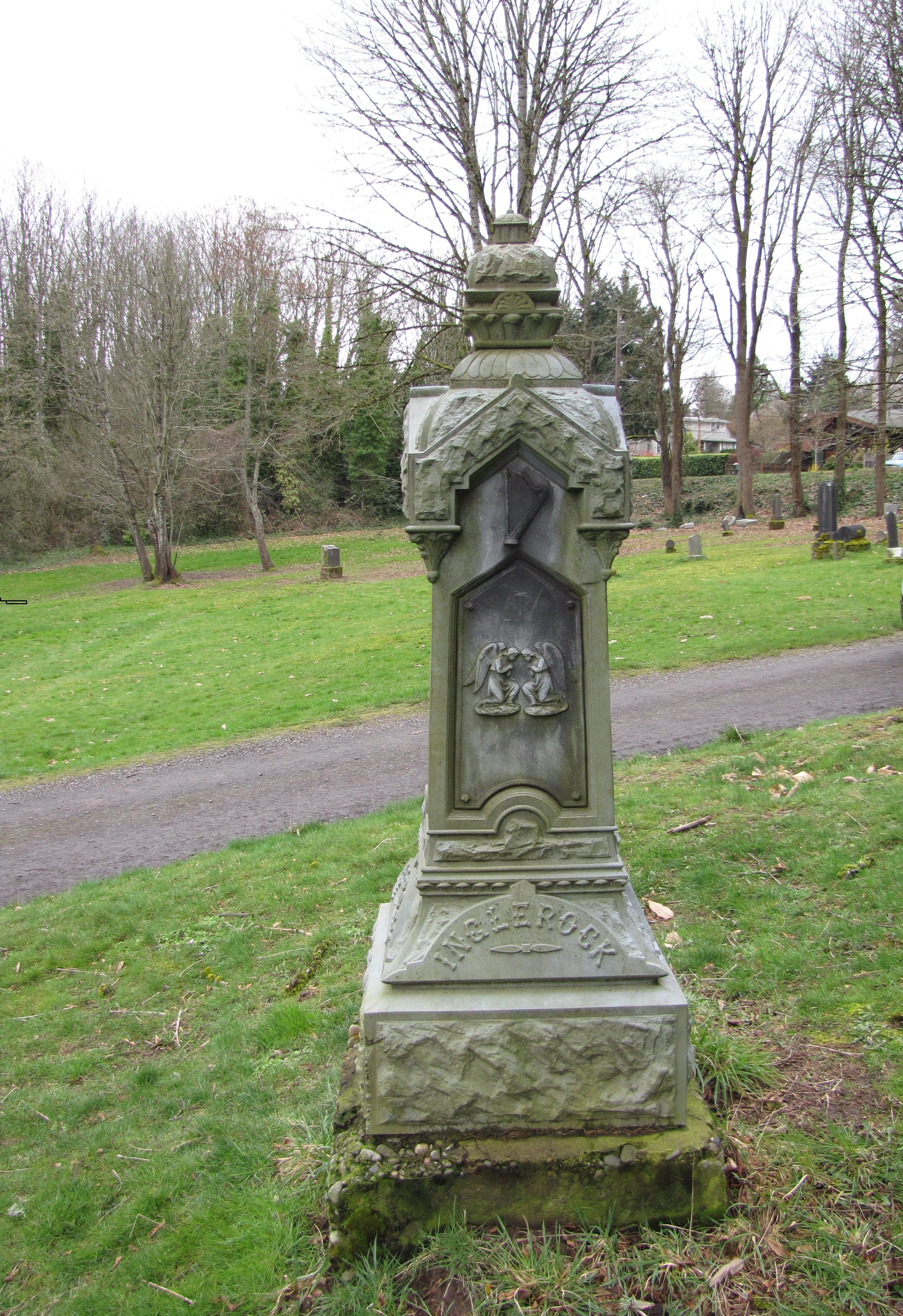
The Harp

The light and airy tones that emanate from the harp, etereal and almost mystical, have long been thought of as the sound of Heaven.  The harp has been considered the instrument of angels.

Greenwood Hills Cemetery, Portland, Oregon

Posted in Symbolism | Leave a comment

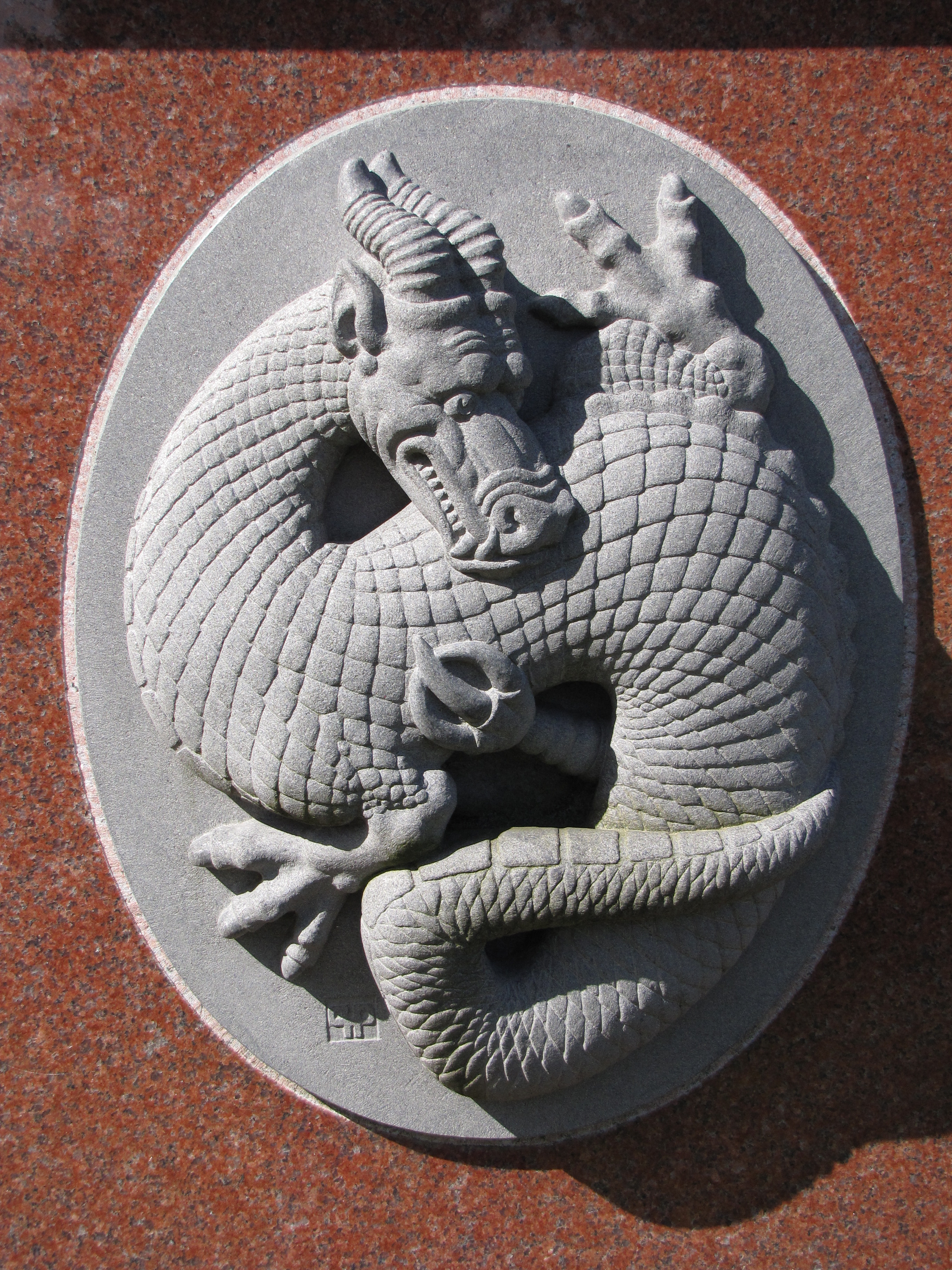
The Dragon

Lakeview Cemetery, Seattle, Washington

The mythical creature–the dragon–has figured large in literature, movies, and culture, most especially in Eastern cultures.  The view of the dragon between the East and the West could hardly be more polar opposite.  In Western cutlure, the dragon for the most part is the demonic and destructive creature to be slayed.  The mighty knight becomes the hero when he slays the dragon and saves the damsel in distress.  The story line represents the defeat of evil and sin by the heroic and just.

In the east, however, the dragon is a symbol of Imperial Power protecting weaker humans from evil spirits and the danger of the forces of nature, such as the wind and the rain.  The dragon is also an emblem of joy and good health and even fertility.  Because it represents goodness and a protective power, it has been adopted by emperors as symbols of their benevolent strength.

The intricately carved dragon in the photo above is found on the gravestone of an Asian family, which suggests that it represents, in this case, the dragon as a symbol of goodness.

Posted in Symbolism | 1 Comment

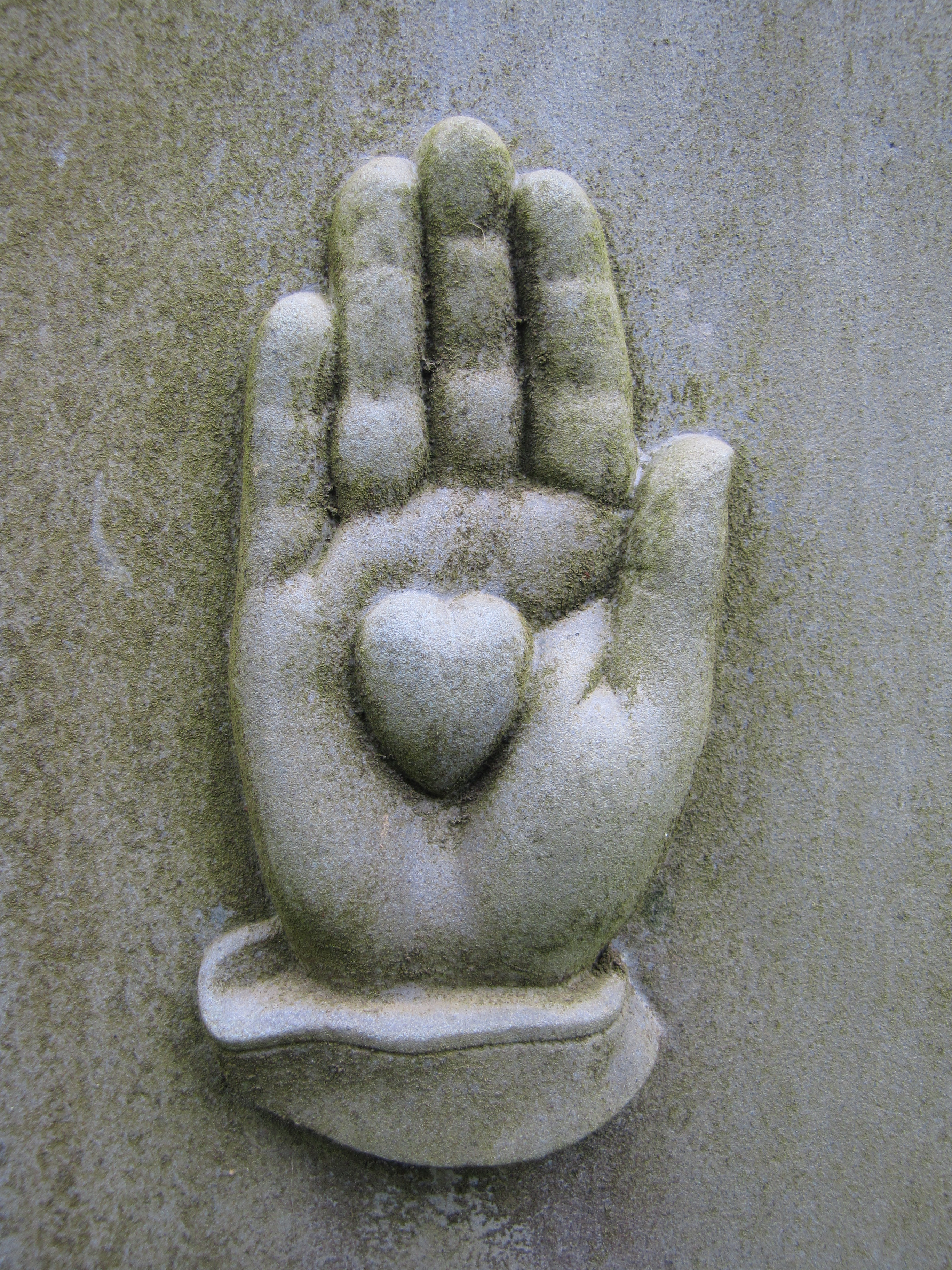
Heart-in-Hand

Riverview Cemetery, Portland, Oregon

When I walk around cemeteries, I look for symbols I have not seen and, of course, stellar examples of funerary art.  I have written before about the the Heart-in-Heart symbol but was struck by the pristine condition of the symbol found on this white bronze “zinc” marker.  The Heart-in-Hand symbol has significance with several organizations and religions, especially the Shakers, but when coupled with the three linked rings, it is associated with the Odd Fellows.  (The three rings symbol is also found on the gravestone of the Heart-in-Hand symbol.)

As you can see, the heart rests in the center of the palm.  The Heart-in-Hand symbol represents charity given with an open heart.

Posted in Symbolism | 3 Comments

Supreme Council of the Royal Arcanum

The crown with the initials V. M C. is a symbol representing the Supreme Council of the Royal Arcanum, a membership organization founded by John A. Cummings and Dr. Darius Wilson in Boston on June 23, 1877.  The State of Massachusetts granted the society a charter on November 5th of that year.

The Royal Arcanum is a fraternal benefit society founded to deliver insurance to its members.  Their mission from the start was to provide benefits to its members that would improve the lives of the membership and those of their families.  The society was founded on their expressed values found on their insignia—V for Virtue, M for Mercy, and C for Charity.

According to their official Website, the objectives of the society are to:

  • Unite all eligible male and female persons of sound bodily health and good moral standing, who are socially acceptable.
  • Give moral and material aid in its power to its members and those dependent on them.
  • Teach morality without religious distinction, patriotism without partisanship, and brotherhood without creed or class.
  • Educate the members socially, morally and intellectually.
  • Assist the families of deceased members.
  • Establish funds for the payment of Death Benefits, Educational Loans and Annuities.

The society is alive and well today still delivering benefits long after many other organizations of the same kind have long since ceased to operate.

Greenwood Hills Cemetery, Portland, Oregon

Posted in Uncategorized | Leave a comment

KP

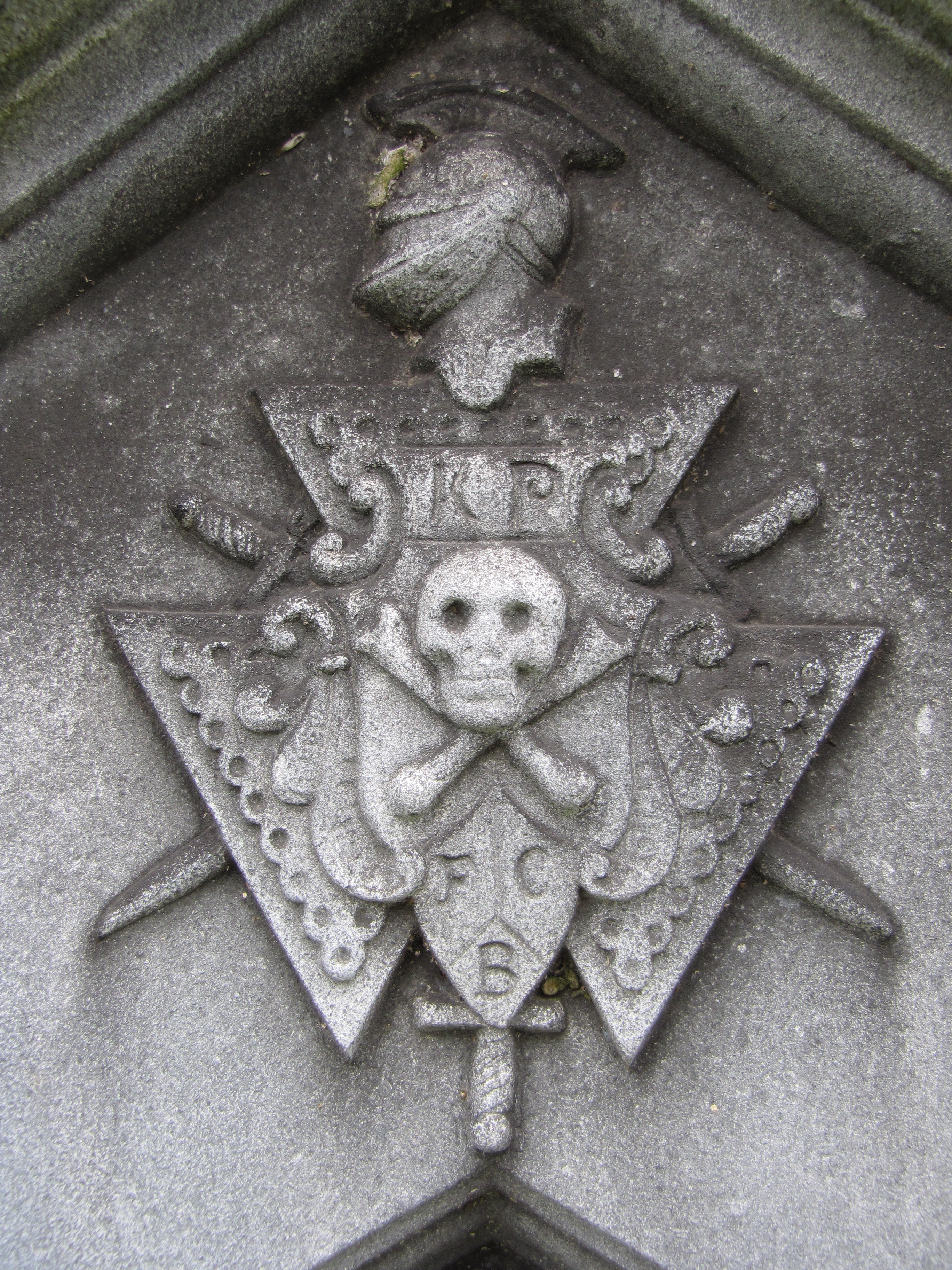
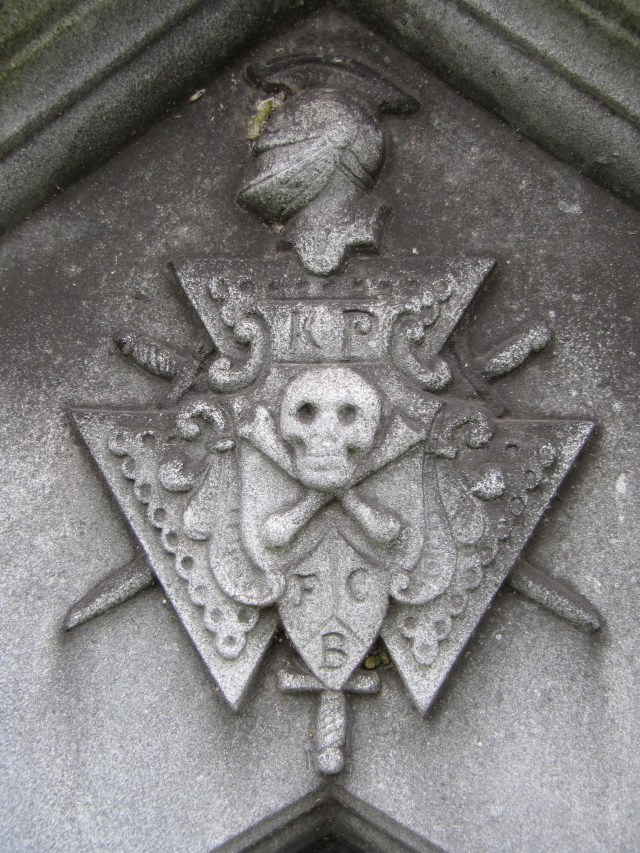
The Knights of Pythias, a society based on the Greek story of friendship from 400 B. C. between Damon and Pythias, became the very first fraternal organization to receive a charter under an Act of the United States Congress.

Pythians promote cooperation and friendship between people of good will, find happiness through service to mankind, believe that friendship is essential in life, view home life as a top priority, show an interest in public affairs, enhance their home communities, respect and honor the law of the land, and expand their influence with people of like interests and energy.

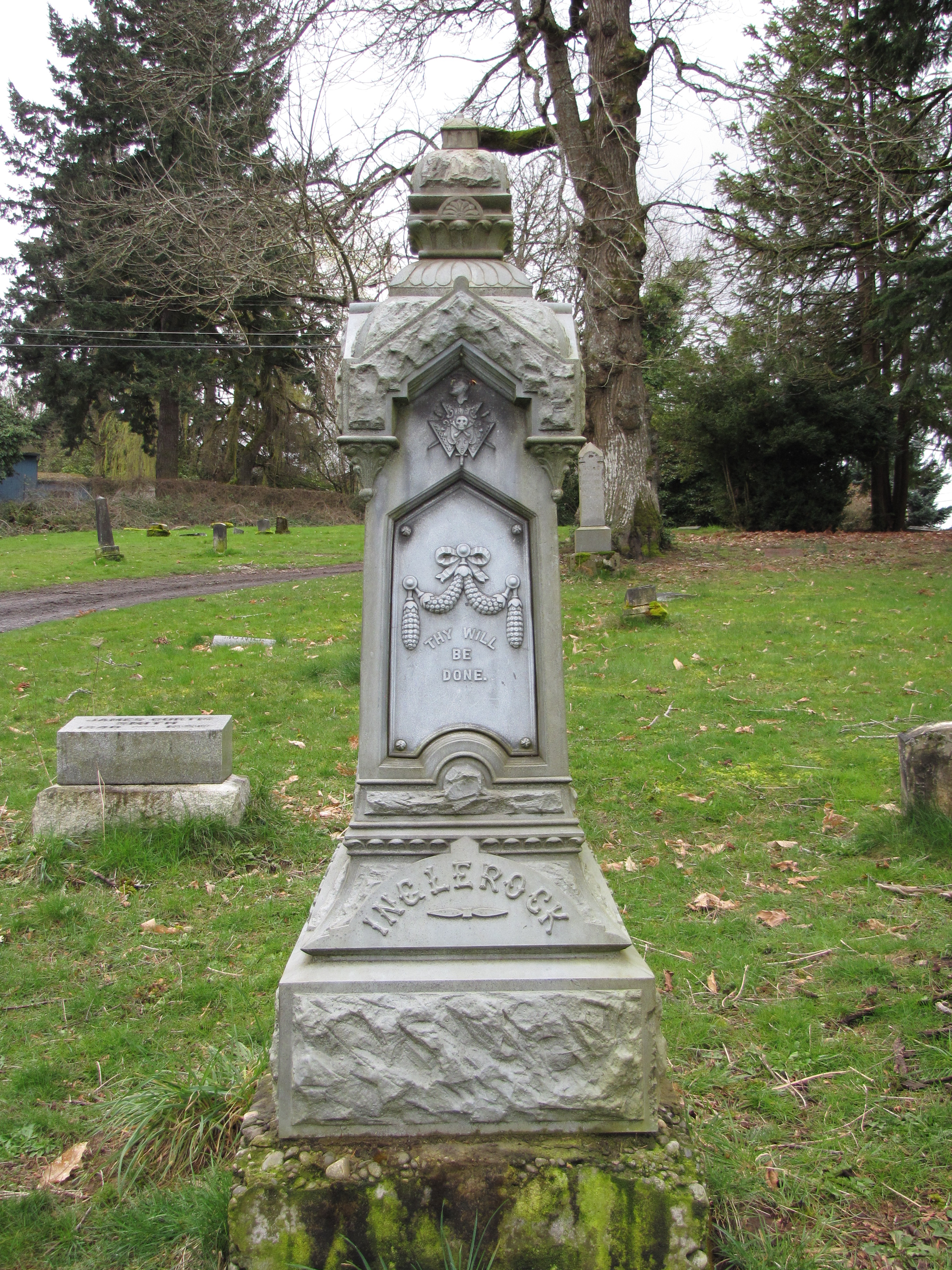
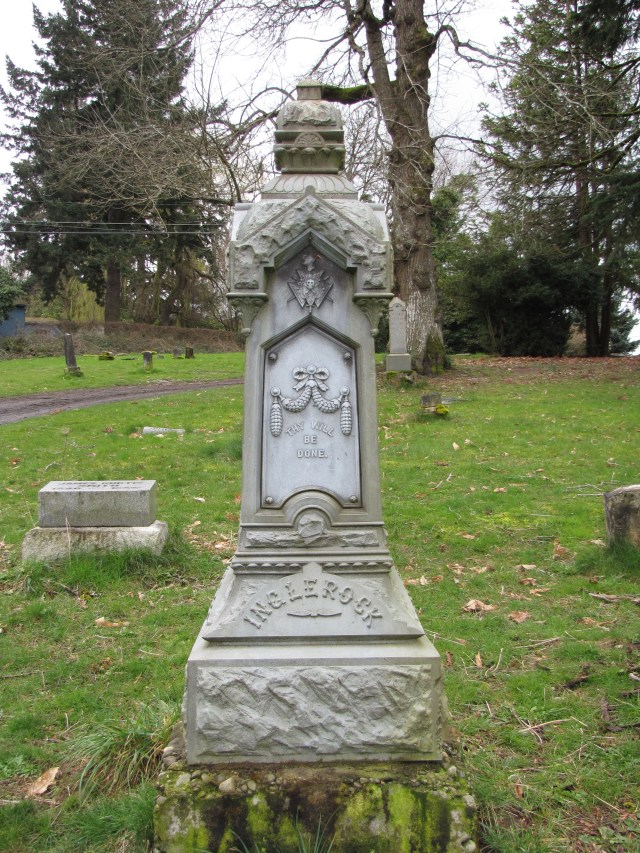
The symbol in the marker above features many of the symbols that are significant to the Knights of Pythias.  A knight’s helmet, above a shield with three letters, “F”, “C”, and “B”, which stand for their motto, FRIENDSHIP, CHARITY, and BENEVOLENCE, surrounded by swords, battle axes, and a spear, representing the weapons that were used against their enemies.  The secondary shield also displays the skull and cross bones, one of as many as 20,000 different symbols used by the Pythians.
Greenwood Hills Cemetery, Portland, Oregon

Posted in Uncategorized | Leave a comment

PS

The symbol above marks the grave of a woman who belonged to the Order of Pythian Sisters.  The organization is the auxillary organization for the Knights of Pythias.  On October 22-23, 1888, the Order was founded at Warsaw, Indiana, by Pythian Knight, Joseph Addison Hill, of Greencastle, Indiana.  Hill was a master of creating order and ceremony and imbued their symbols with meaning.  A laurel wreath surrounds a Maltese Cross with a crown in the center, the cross is crisscrossed by a rapier and star baton, topped with falcon-crested helmet.  The four letters, P, L E, and F, inside the arms of the cross stand for Purity, Love, Equality, and Fidelity.  In a final salute, ALL HAIL SISTER FAREWELL, the member sisters say goodbye.

Greenwood Hills Cemetery, Portland, Oregon

Posted in Uncategorized | Leave a comment