Art Moderne

Mitchell Anthony Mausoleum, Muncie, Indiana

The Mitchell Anthony Mausoleum in Muncie, Indiana, has long styraight lines characteristic of Art Moderne Architecture popular from the 1920s until the late 1970s.  The design is similar to Art Deco in that they both use straight lines with bare forms and geometric ornamentation.  Art Moderne Architecture  often includes rounded corners like the ones framing the doorway of the Mitchell Anthony Mausoleum.  Art Deco and Art Moderne, however, are different in that Art Deco uses vertical orientation while Art Moderne has a distinctly horizontal orientation.

Posted in Mausoleums | Leave a comment

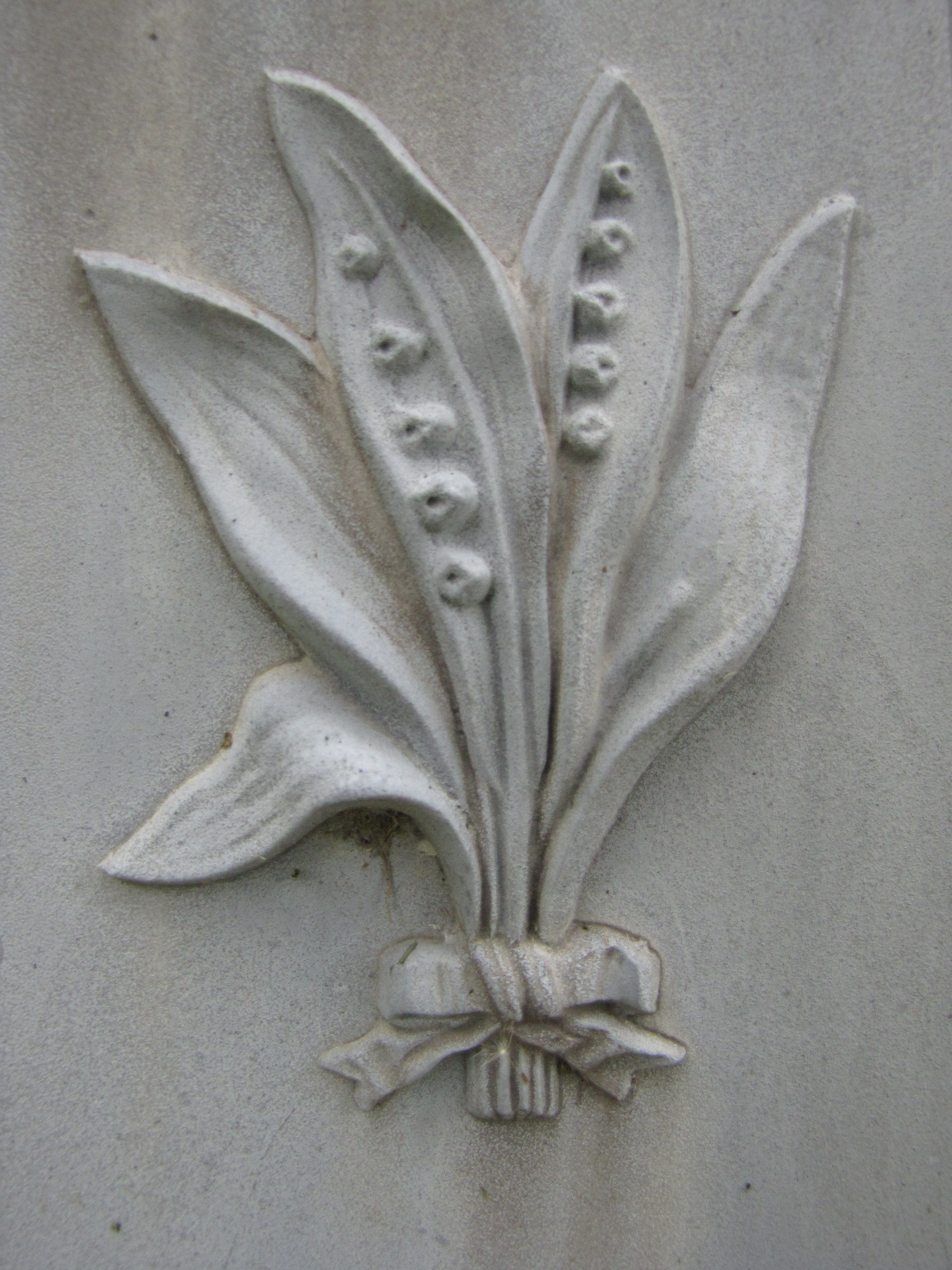
Lily of the Valley


The lily of the valley is not actually a lily.  It belongs in the family Asparagaceae, not Liliaceae.   In spite of that, the lily of the valley is treated much like other lilies in funerary art as a symbol of innocence.  It also symbolizes happiness, purity, and humility.

Posted in Symbolism | Leave a comment

Home in Heaven

Walnut Grove Cemetery, rural Greene County, Indiana

The epitaph for this 12-year old child speaks to the parent’s grief and the broken “circle” of the family.  There is also a hint that the little girl may have suffered an illness and death brought an end to her pain.

A loved one has gone from

our circle.  On earth we shall

meet her no more.  She has gone

to her home in heaven.  And

all her afflictions are o-er.

Posted in Epitaphs | Leave a comment

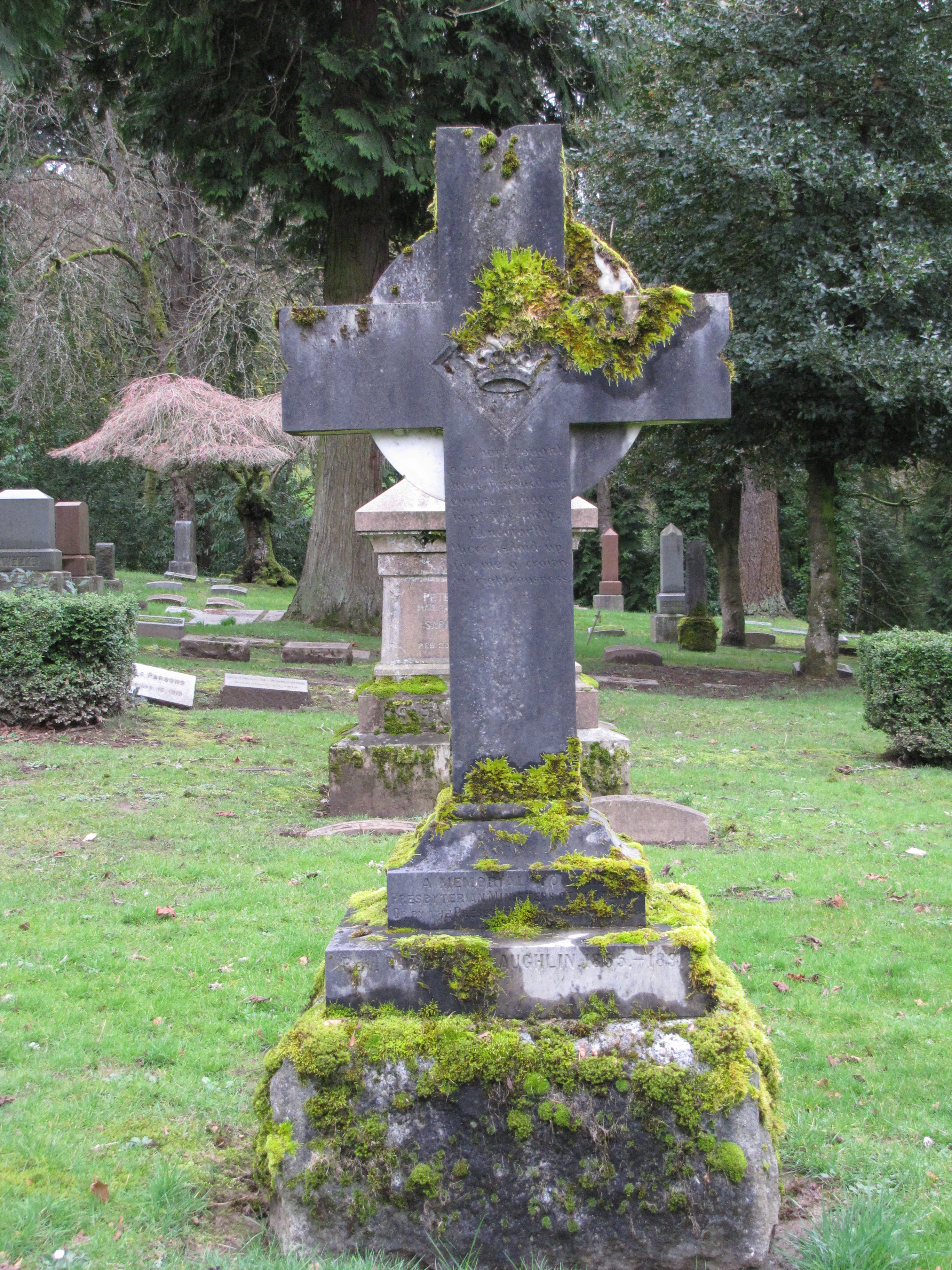
A Crown of Victory

River View Cemetery, Portland, Oregon

Nearly obscured by the moss hanging on this tombstone is the  crown in the center of the cross.  The crown is a symbol of glory and reward and victory over death.  The epitaph on this memorial to prebyterian ministers makes it clear the reward comes after life and the hard-fought battle on Earth against the wages of sin and the temptations of the flesh.  The reward awaits in Heaven where the victor will receive a crown of victory.

   I have fought

a good fight.  I

have finished my

course.  I have

kept the faith.

     Henceforth,

there is laid up

for me a crown

of righteousness.

Posted in Symbolism | Leave a comment

The Finger Pointing Upward

The finger pointing upward, indicates the soul traveling to Heaven, sometimes a presumptuous claim, though a hopeful one. The finger pointing upwards can be coupled with other symbols:

  • a willow tree, a traditional symbol of sorrow indicating while the soul of their loved one has gone to Heaven, the family on Earth mourns the loss and grieves for their loved one
  • the crown symbolizing victory. Sometimes the combination of the images represent the flight of the soul from the earthly realm to the Heavenly realm

In this case, the finger pointing upward is pointing to an open book, most likely respresenting the Holy Bible.  On this gravestone, the finger suggests that the Word is the pathway to Heaven.  The finger pointing upward and the open Bible is enveloped in a heart suggesting love for the departed woman.

River View Cemetery, Seattle, Washington

Posted in Symbolism | Leave a comment

Two little lambs

River View Cemetery, Seattle, Washington

CHARLIE            BERTIE

There  like an Eden blos-

soming in gladness

Bloom the fair flowers the

earth too rudly prized.

This gravestone displays twin lambs facing each other over the names of the twin brothers whose graves the tombstone marks.

The lamb is the symbol of the Lord, the Good Shepherd.  It also represents innocence, likely the reason why this motif usually adorns the tombstones of infants and young children, as in this case.  Most often the lamb is lying down, often asleep and sometimes with a cross behind the lamb.

Posted in Symbolism | 1 Comment

Warren G. Harding

In the great fulfillment, we must have a citizenship less concerned about what the government can do for it and more anxious about what it can do for the nation.”

–U.S. Senator, Warren G. Harding, Republican National Convention, 1916

President Warren G. Harding's Tomb, Marion, Ohio

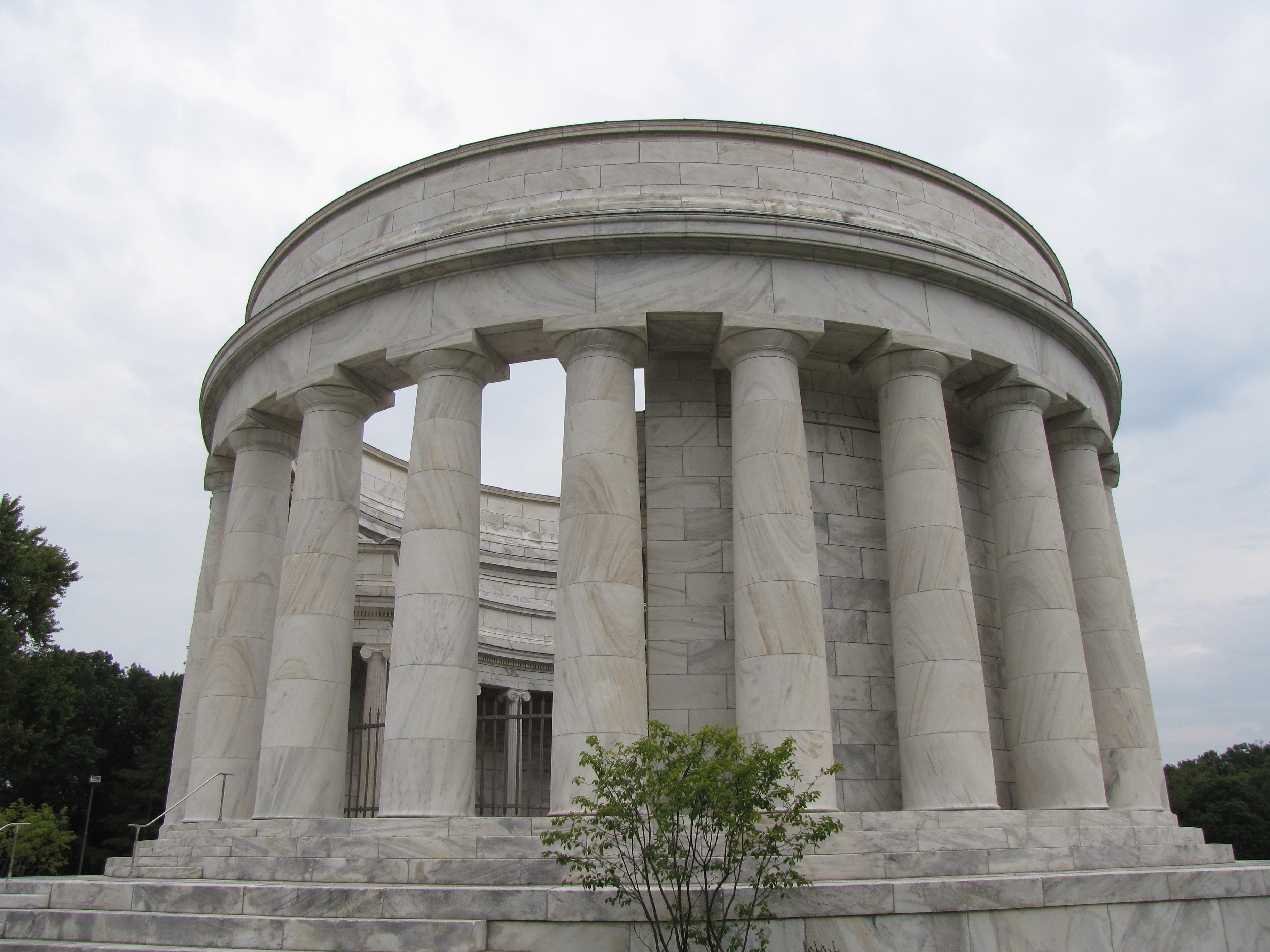
Warren Gamaliel Harding, born November 2, 1865, at Bloomington Grove, Ohio, died August 2, 1923, at San Francisco, California, was the 29th President of the United States.  Harding was a Republican Senator from Ohio who was elected president in 1920 and served from 1921 until his untimely death in 1923.  Even though, his short time in office was scandal ridden, the popularly-elected President Harding was honored with a lavish monument after his death.  The tomb, landscaping, and grounds cost a whopping $783,108, raised by private donations, including pennies contributed by more than 200,000 school children.

President Warren G. and Florence Kling Harding's grave ledgers

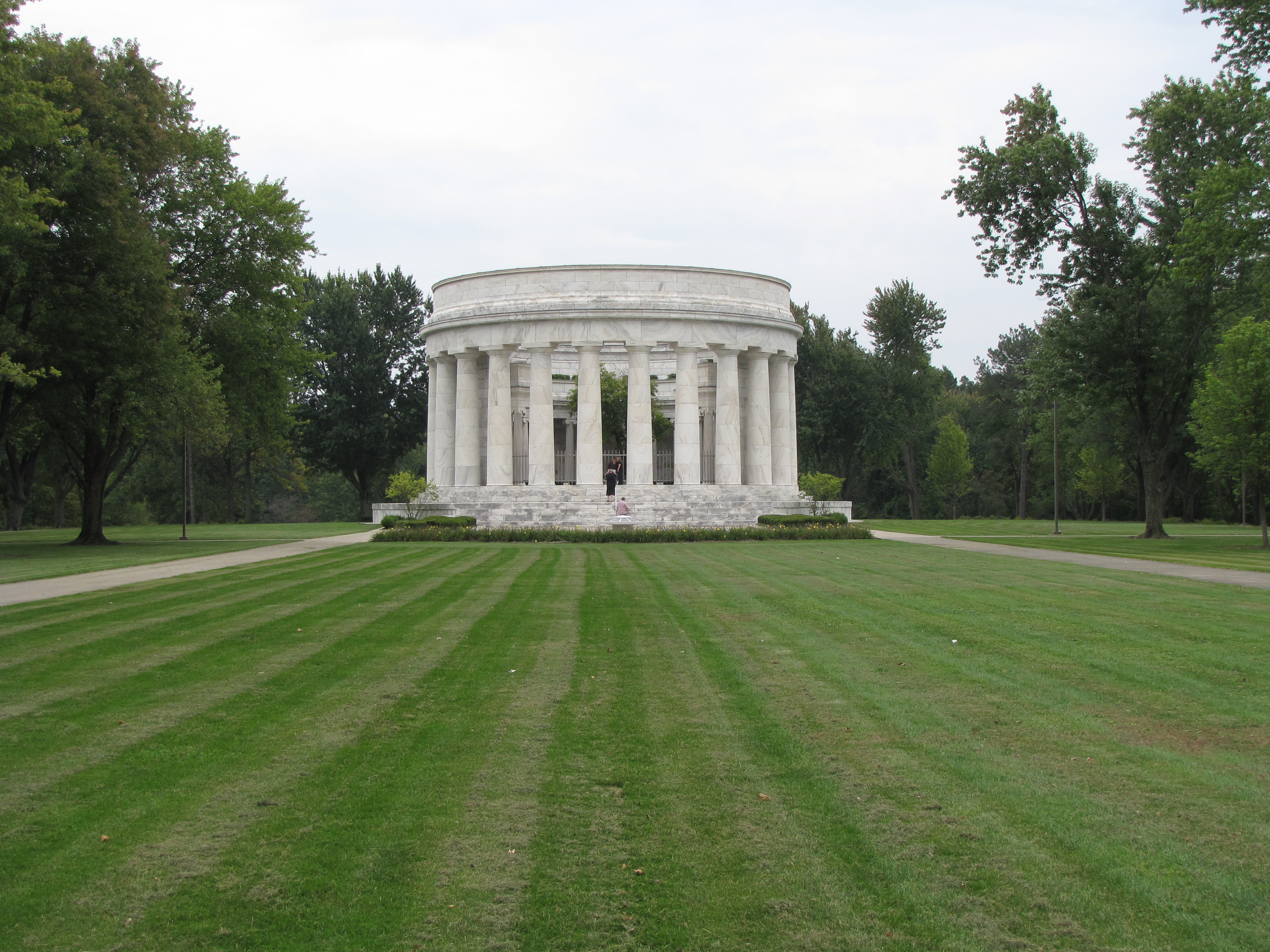
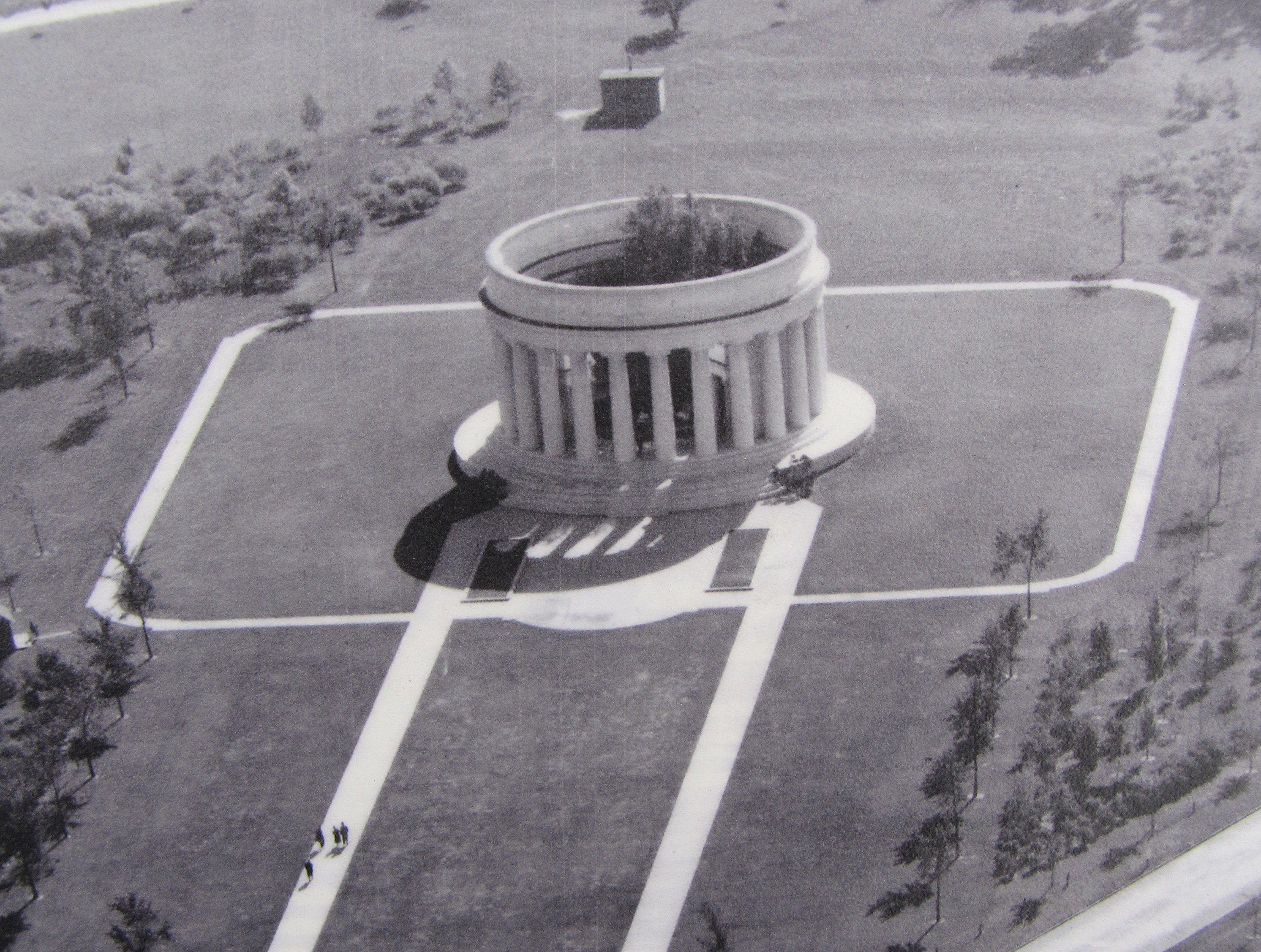
Harding wanted to be buried under the open sky.  Architects Henry F. Hornbostel and Eric Fisher Wood fulfilled Harding’s wish by designing an open space to hold two black granite grave ledgers surrounded by a circular colonnade made of Georgia marble in the tradition of a Greek temple.

President Warren G. Harding's Tomb, Marion, Ohio

According to the placard at the monument, “The exterior colonnade stands entirely free from the circular wall behind it, while the inner columns support two terraces for a hanging garden inside the structure.  Two black tombstones, surrounded by a bed of ground-covering plants and shaded by a Japanese maple tree, mark the graves of President Harding, left, and Mrs. Harding, right…The 10-acre site’s landscaping is part of the overall design.  Rows of trees form the shape of a Latin cross, with the tomb at the intersection of the arms.”  The tomb is a soaring 53 feet high and 103 feet in diameter and represents the last of the monumental and large presidential tombs.

Aerial view of the President Harding's Tomb

Harding’s words from his Republican National Convention speech in 1916 echoed through history to be paraphrased and heard again in President John F. Kennedy’s innaugural address, “Ask not what your country can do for you, but ask what you can do for your country.”

Posted in Presidential graves | 1 Comment

The All-Seeing Eye of God

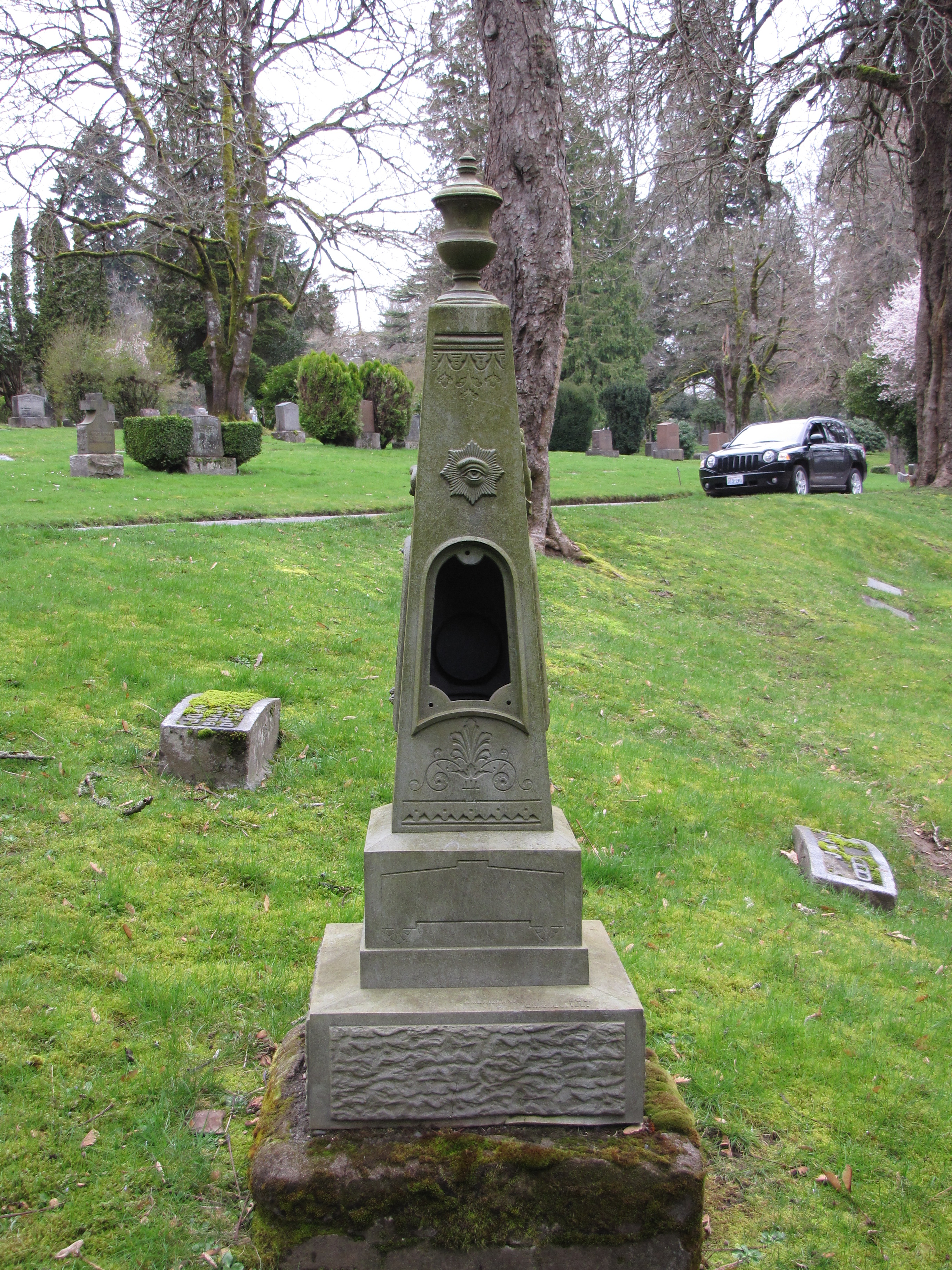
The all-seeing eye of God, also called the Eye of Providence is one of many symbols of Masonic iconography.  This symbol is to remind Masons that all of their actions and deeds are being observed by the watchful eye of the Great Architect of the Universe.  Sometimes the eye is displayed in a triangle.

The all-seeing eye of God is part of the symbolism of the reverse of the Great Seal of America.  The eye is displayed above the pyramid (check it out on the reverse side of a one dollar bill).  Many conspiracy theorists, mistakenly believe that this is proof of the connection between the Masons and the founding of our nation.  After all founding fathers Benjamin Franklin and George Washington were both Masons.  The all-seeing eye of God, however, was not adopted by the Masons as a symbol for use by the society until 14 years after the Great Seal was designed and adopted.

River View Cemetery, Portland, Oregon

Posted in Symbolism | Leave a comment

The Broken Chain

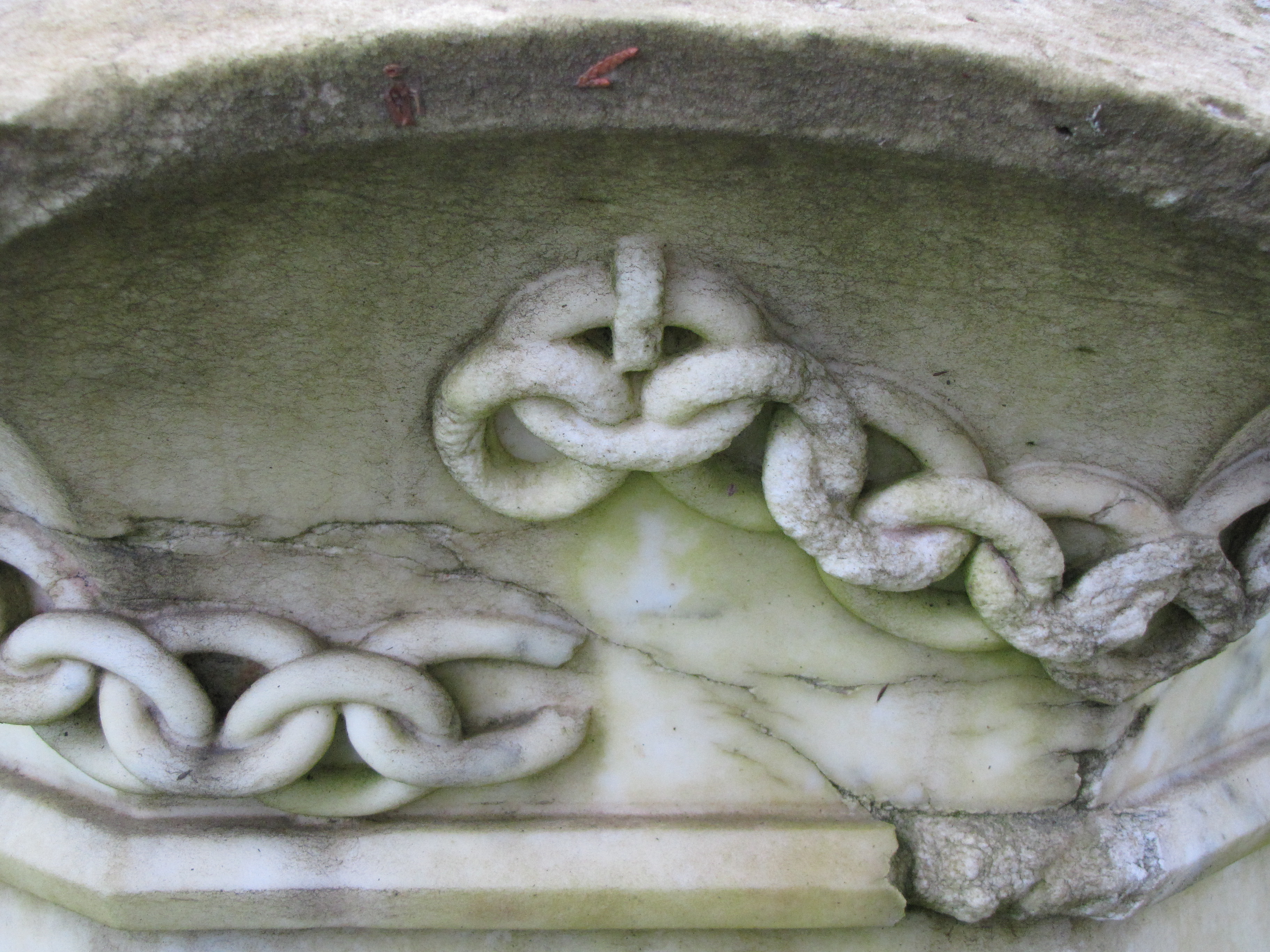
In the cemetery, much of the iconography represents a life ended—the winged death’s head, the hanging bud, the broken wheel, the incomplete circle, the column that is broken.

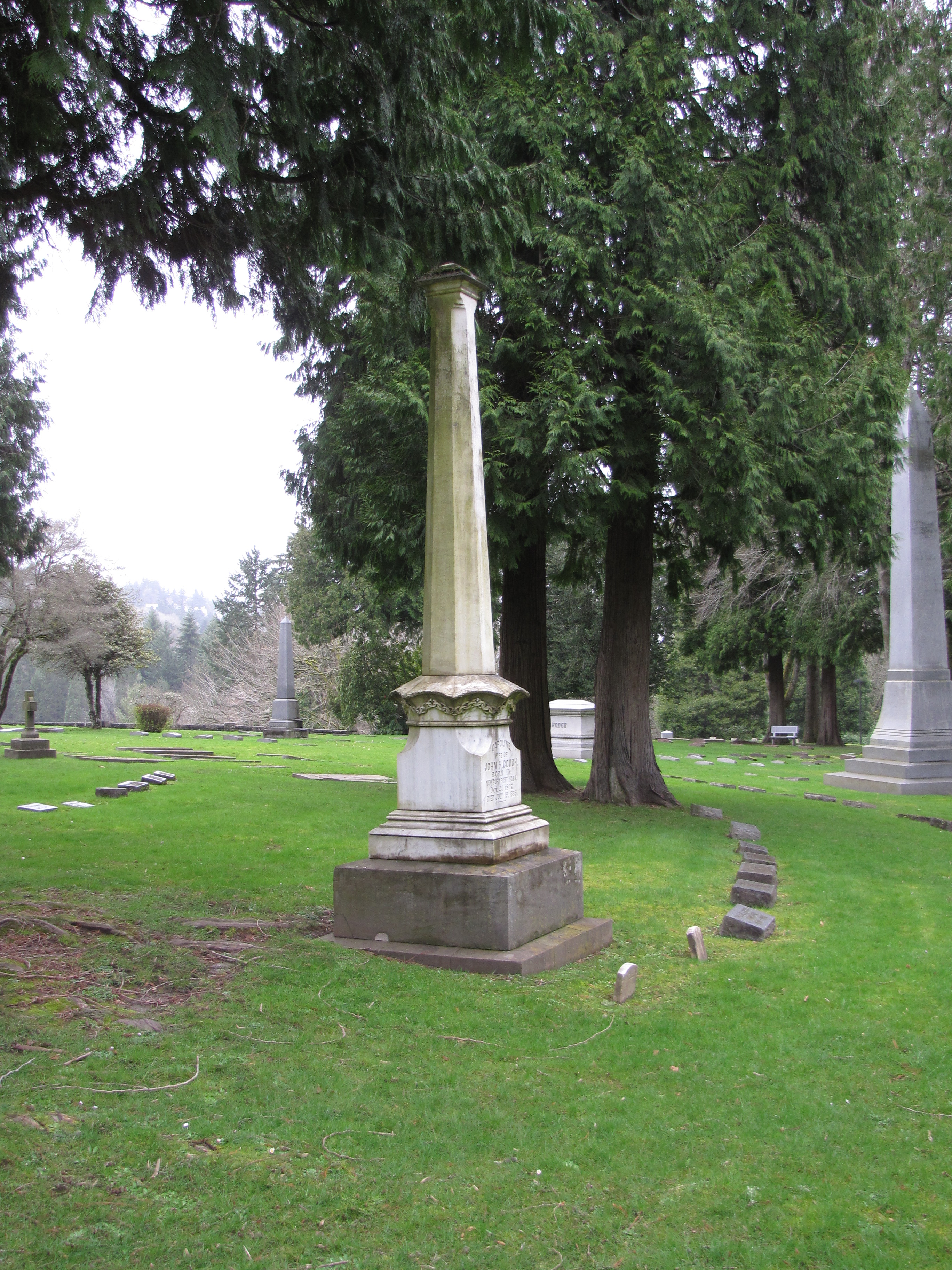
The gravestone below has a broken chain that wraps around the pedestal base of the column.  Like much of the funerary art, the broken link of a chain, too, represents the life that was ended.

This symbolism dates back to Medieval times when people believed that the soul could be held to the body by a golden chain. Once the chain was broken, the soul took flight and rose from the body leaving Earth and ascended to Heaven.

River View Cemetery, Portland, Oregon

Posted in Symbolism | Leave a comment

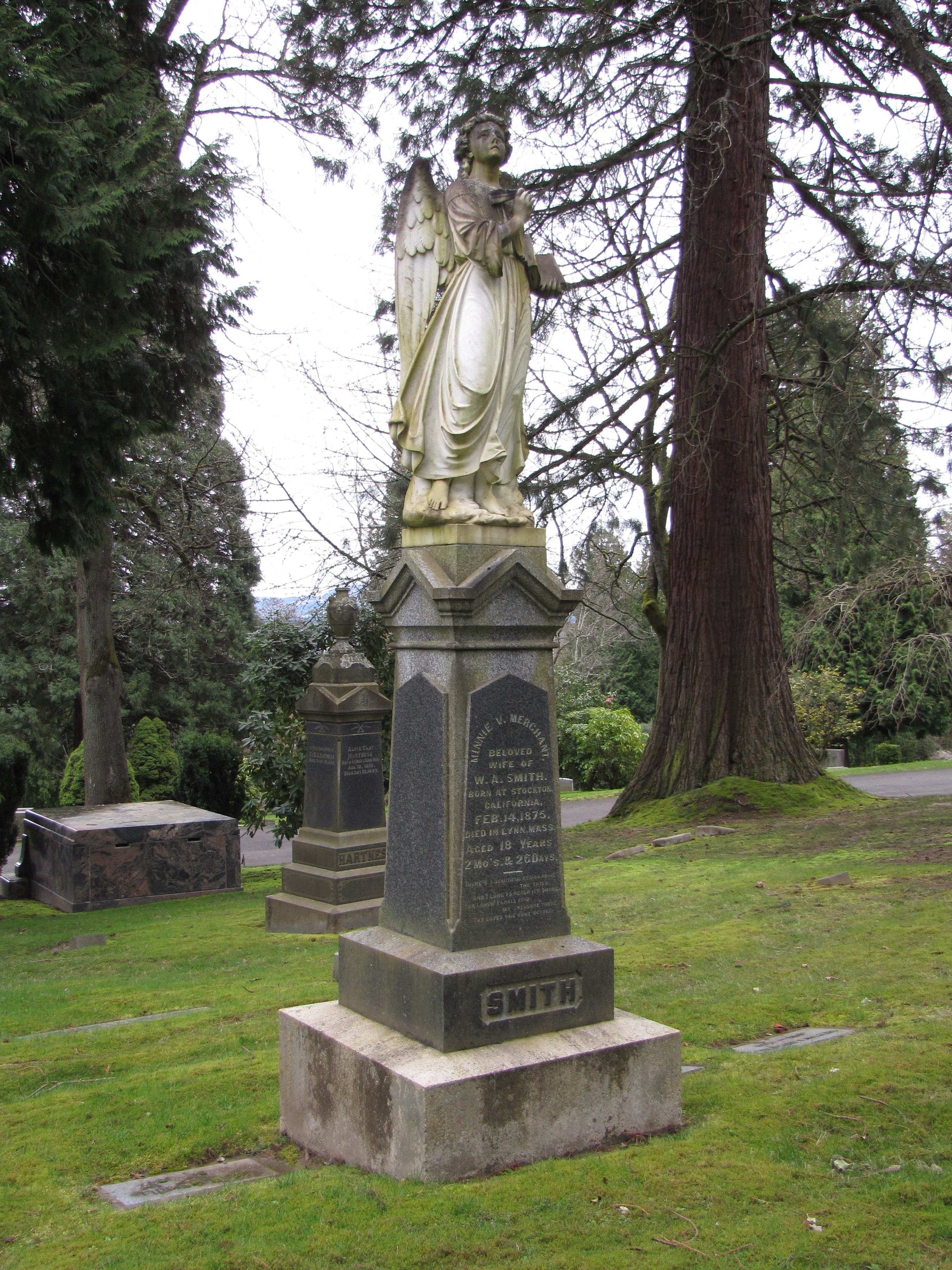
They will meet in Heaven

River View Cemetery, Portland, Oregon

This angel looking toward Heaven is holding an open book and a quill.  The angel is clearly poised to write in the book.  Here the angel is registering the name of the deceased into the Book of Life.  In Judaism and Christianity, the names of the righteous were recorded in the Book of Life; they were assured entry into Heaven.  The Book of Life is referenced many times in the Bible (King James Version), including Revelations, Chapter 12:  “And I saw the dead, small and great, stand before God: and the books were opened: and another book was opened, which is the book of life: and the dead were judged out of those things which were written in the books, according to their works.”

The gravestone also carries an epitaph which expresses the belief that the recently deceased is going to meet her husband who has preceded her in death:

There’s a beautiful region above the skies,

And I long to reach its shore

For I know I shall find my treasure there

The loved one gone before.

Posted in Angels, Epitaphs | Leave a comment