The Chocolatiers

Derry Church, Pennsylvania, which later became known as Hershey is the home of the Hershey Company, one of the oldest chocolate companies in the United States and the largest in North America.  The company was founded by Milton Snavely Hershey in 1894.  Originally the chocolate company was a subsidiary of Hershey’s Lancaster Caramel Company. It wasn’t long, though, before the chocolate confections that Hershey created became the best-selling chocolate products sold in America.

Milton Hershey, however, was not always a successful candy maker.  His first foray into candy making was a flop.  After six years in Philadelphia running a candy shop, Hershey moved back to his hometown of Derry Church to start the Lancaster Caramel Company.  The company grew like crazy and in 1900, Hershey sold it for one million dollars, which gave him the money to start his very own chocolate factory three years later.
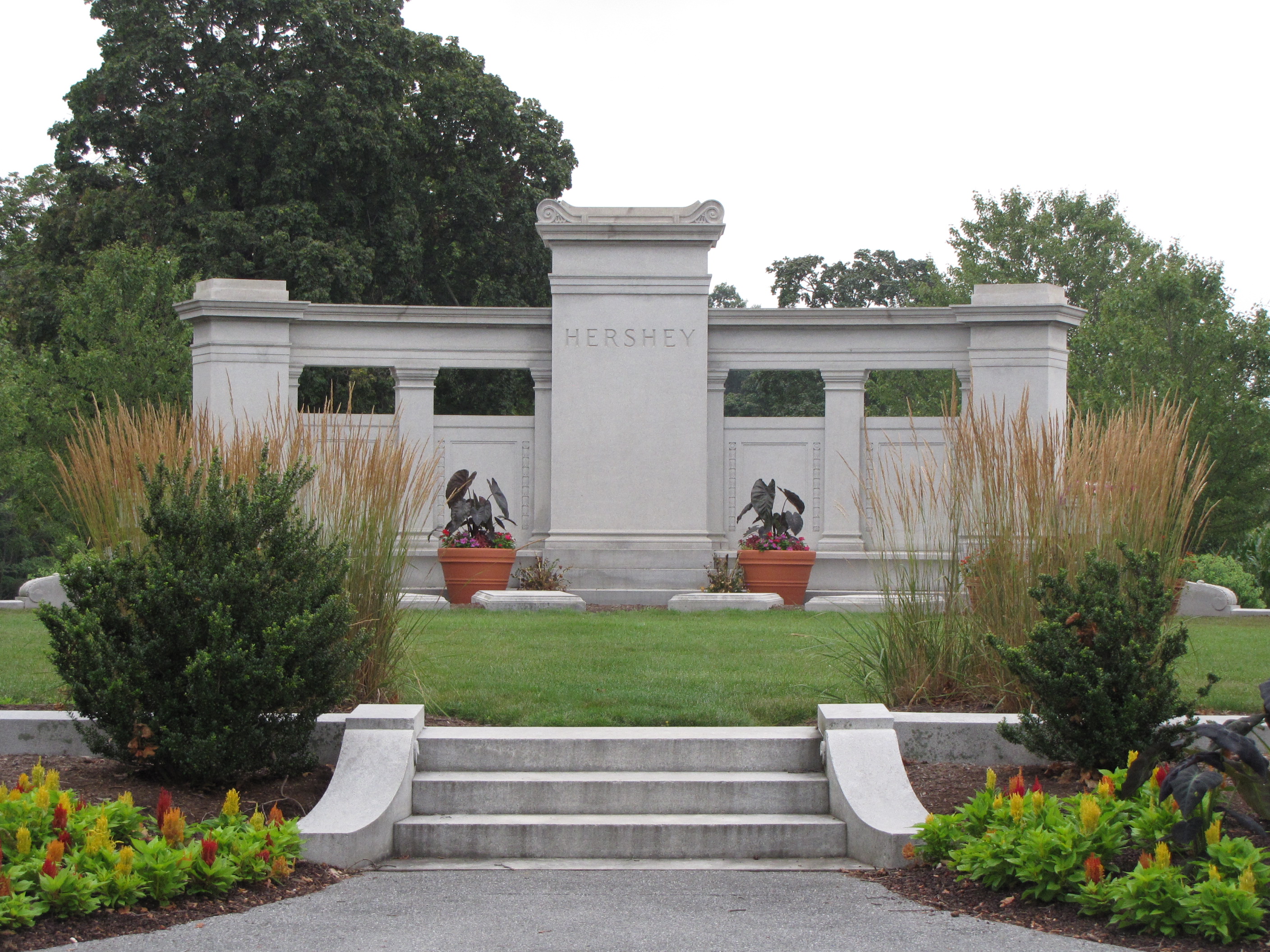
The Milton S. Hershey Monument

In 1907, Hershey created a new chocolate he called the Hershey Kiss. The chocolate bars and the kisses were a huge success.  Other candies were added to the line: Mr. Goodbar in 1925 and the Krackel bar in 1938.
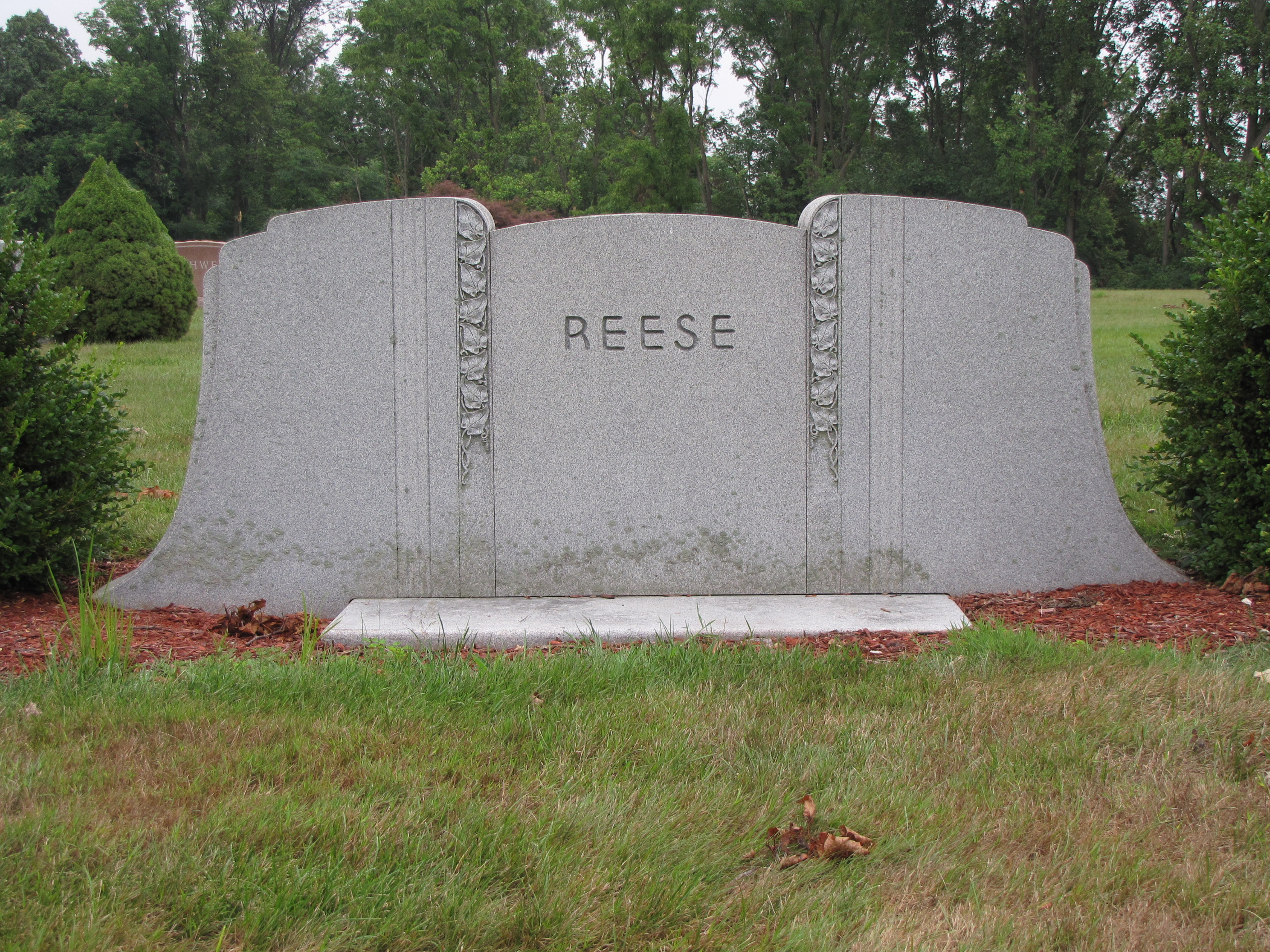
The Harry Burnett Reese Monument

Another industrious chocolatier started his business in Hershey, Pennsylvania—Harry Burnett Reese.  Reese first worked for Milton Hershey as a dairyman but developed his own line of assorted candies including the very popular Reese’s Peanut Butter Cup, which was created during the rationing years of World War II.  Because his peanut butter confection took less sugar he focused his efforts on perfecting and marketing it during the war.  It was a huge hit.  After his Reese’s death in 1956, his six sons ran the business until they sold it to the Hershey Company in 1963.
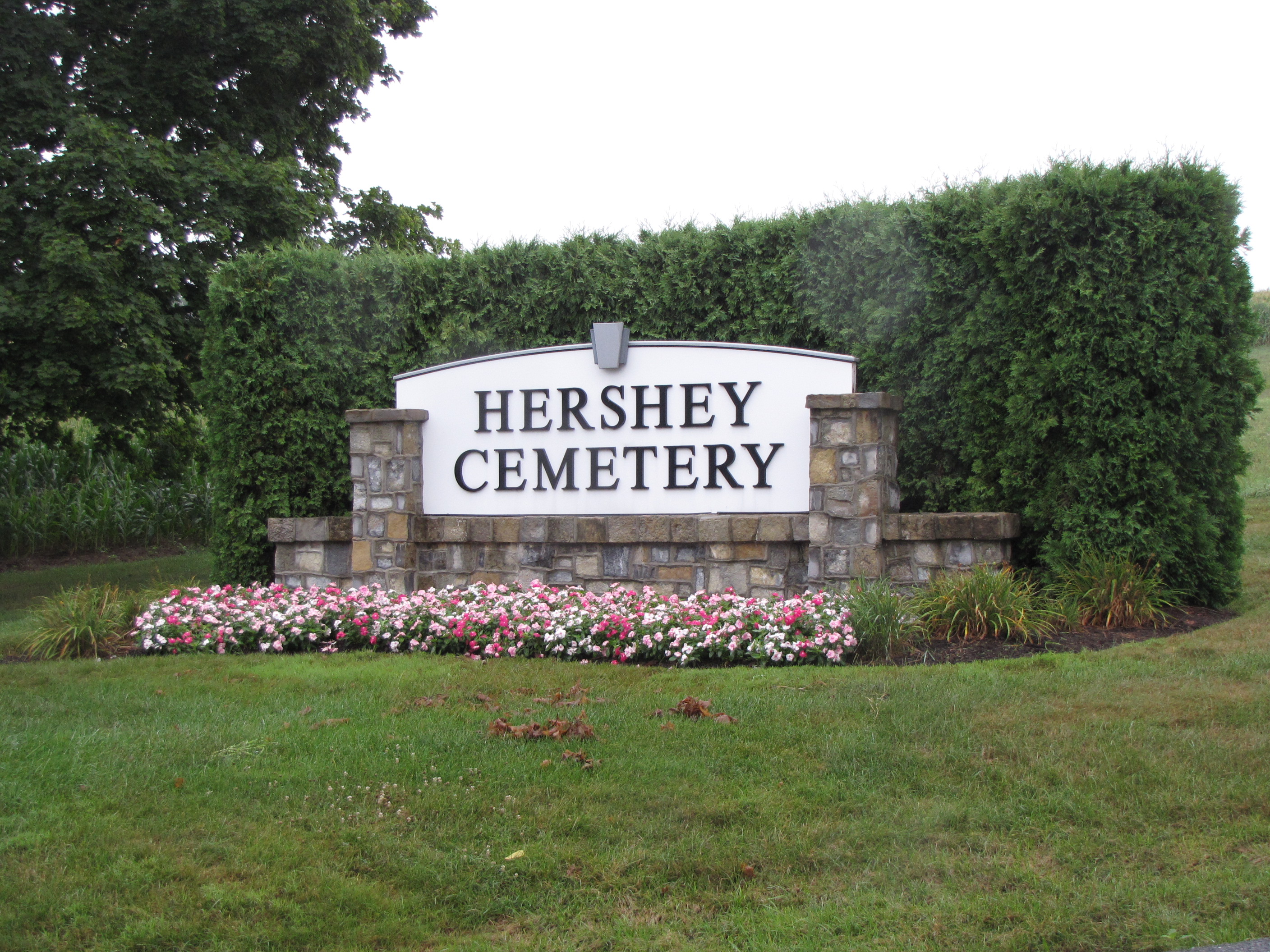
In 1917, Milton Hershey established a cemetery in Hershey.  Both chocolatiers are buried in the Hershey Cemetery in the city they both helped to establish as the Sweetest Place on Earth!
Posted in Famous graves | 1 Comment

Ionic Order

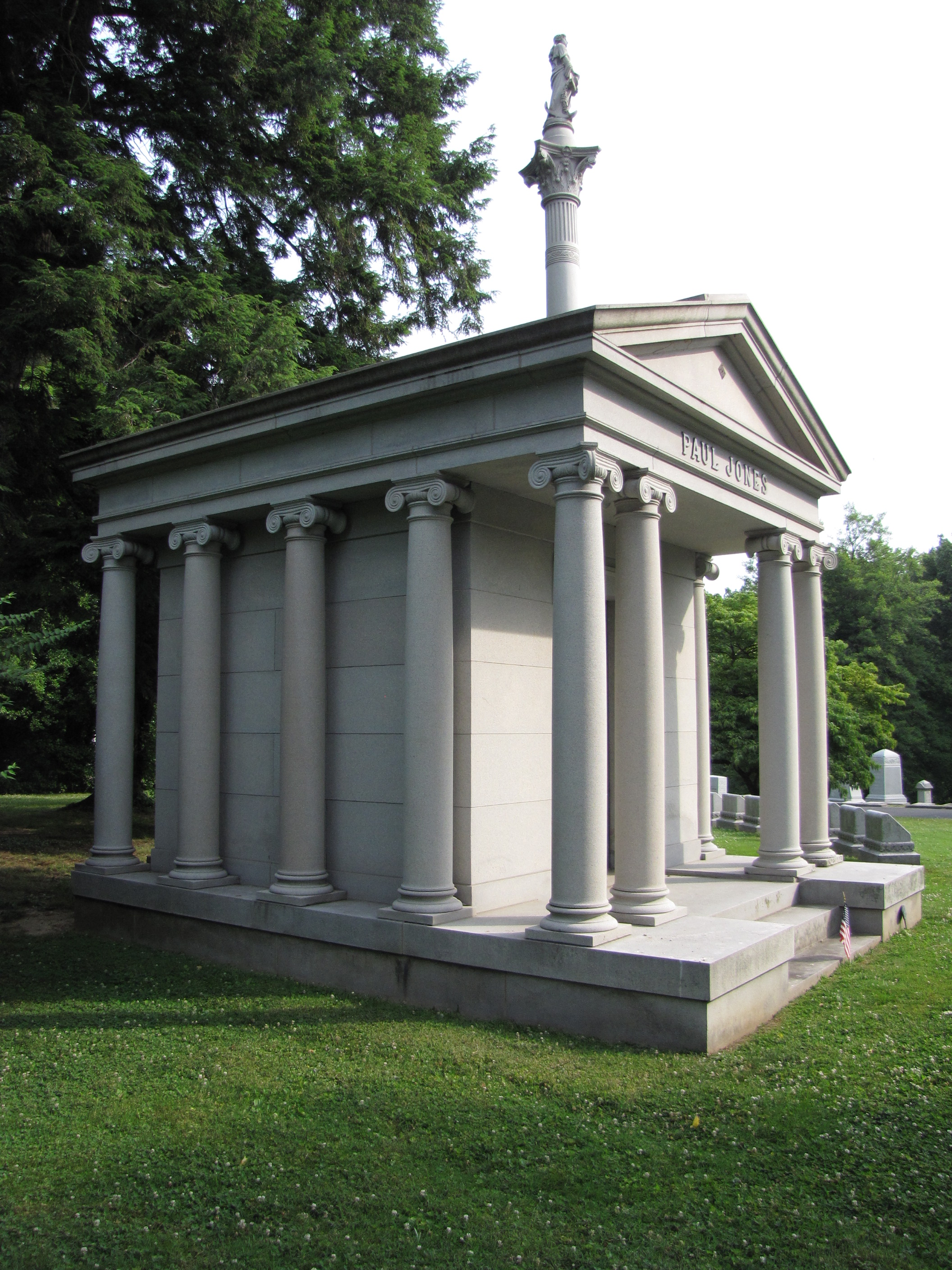
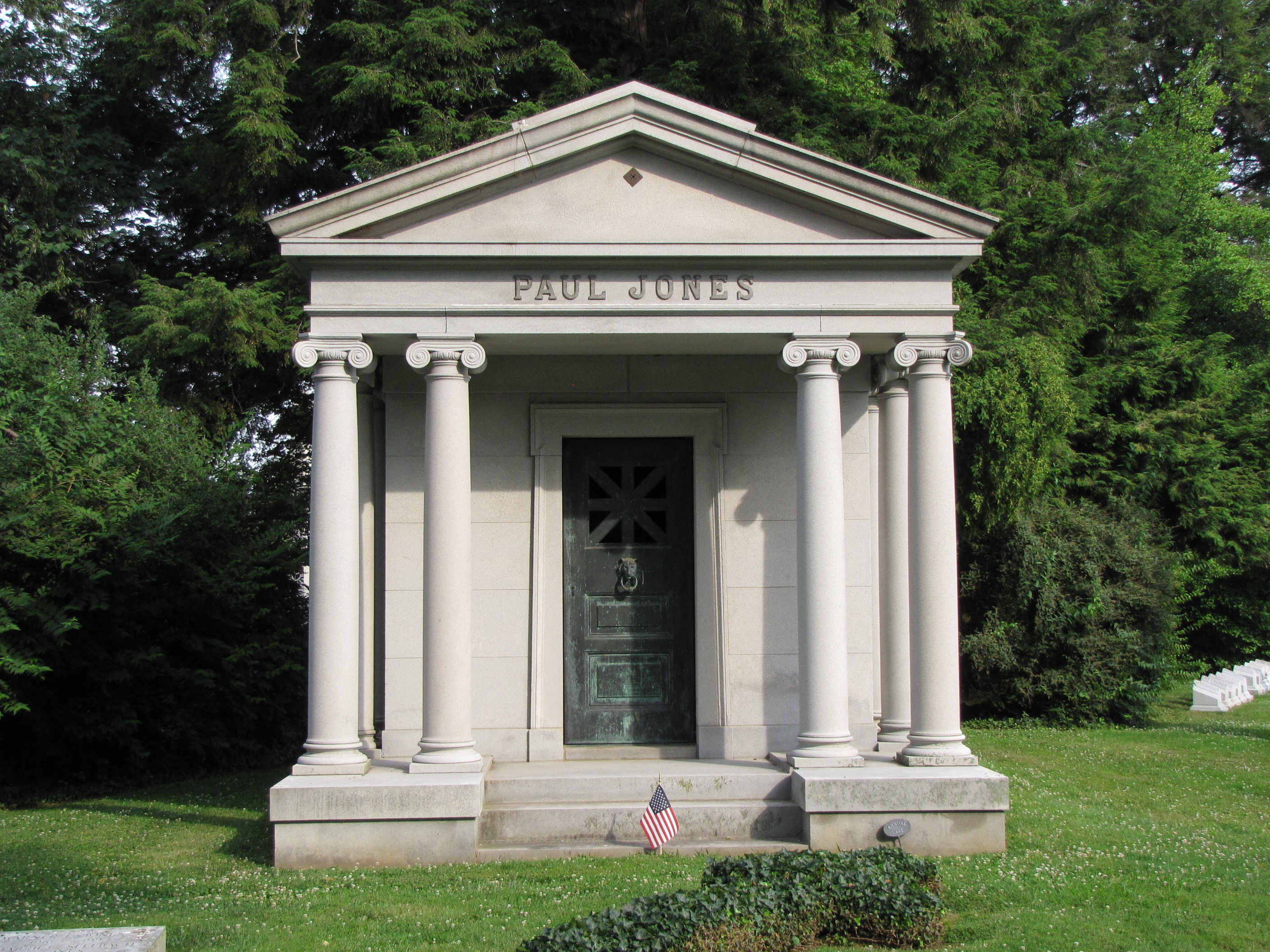
Cave Hill Mausoleum, Louisville, Kentucky

The classically designed mausoleum in the Cave Hill Cemetery at Louisville, Kentucky, was built for Paul Jones, a whiskey and tobacco distributor who left his native Atlanta when Georgia enacted prohibition laws.  Jones picked up and moved to Louisville where he more than doubled his fortune.  He was an innovative marketer and pioneered the use of lighted outdoor advertising signs.  His innovations paid off.  When Jones died in 1895 at the age of 54, he had expanded his business to include real estate and banking.

The mausoleum design is of the Ionic order, one of the three organizational systems of Greek architectural design.  The Ionic order is characterized by the use of a capital (the top of the column) that uses volutes, a spiral scroll-like ornamentation.  In this example, the capital is enriched with an egg and dart design.  The Ionic column is slender and are often fluted, though, the columns in the Paul Mausoleum are not.

The entablature (architectural composition resting on the columns) is composed of an architrave (lentil or beam) which is plain and divided into two or three bands and rests directly on the column; a frieze (the widest band between the capital and the cornice); and the cornice.

Cave Hill Cemetery, Louisville, Kentucky

Posted in Mausoleums | Leave a comment

The Corinthinian Order

Forest Lawn Cemetery, Buffalo, New York

The stately light-gray granite James H. McNulty monument in the Forest Lawn Cemetery at Buffalo, New York, was designed to resemble a similiar monument in France.  The monument’s dome is supported by Corinthinian columns forming a circular colonnade or peristyle.   The Corinthian order is the most ornate of the Greek architectural styles.  The capitals of the columns are elaborately decorated with scrolls and acanthus leaves.  The columns are slender and fluted.

His epitaph reads, “The quality of a man’s life is measured by how deeply he had touched the lives of others.”

Posted in Tombs | Leave a comment

Replica Angel

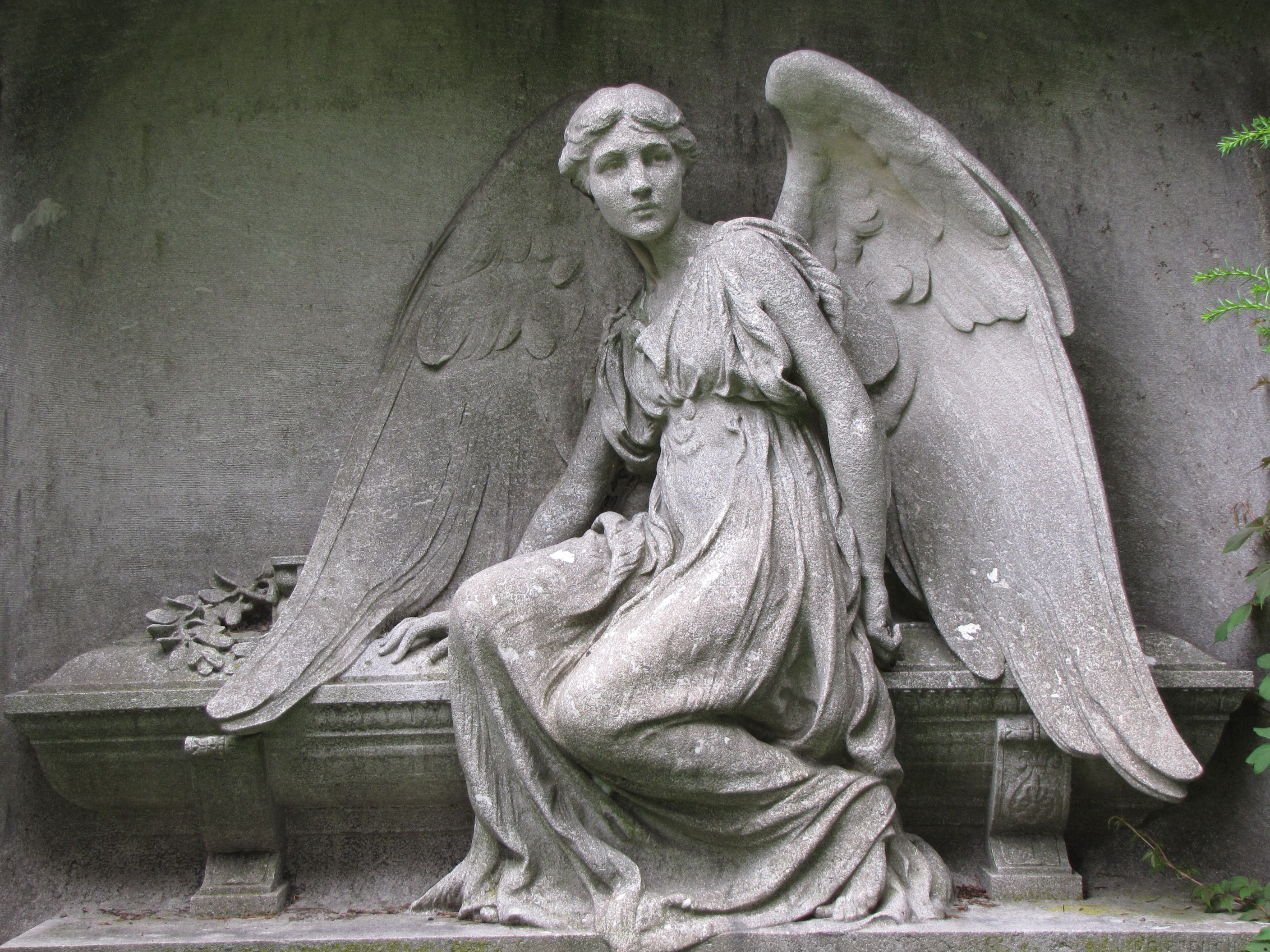
Woodlawn Cemetery, Bronx, New York

One the most famous sculptors of the early Twentieth Century was Daniel Chester French, best known for his monumental sculpture of the seated Abraham Lincoln centered in the Lincoln Memorial at Washington, D.C.  In addition to the many public monuments that he was commissioned to create, French also executed some private commissions, such as the Kinsley Monument in the Woodlawn Cemetery, at Bronx, New York.

Woodlawn Cemetery, Bronx, New York

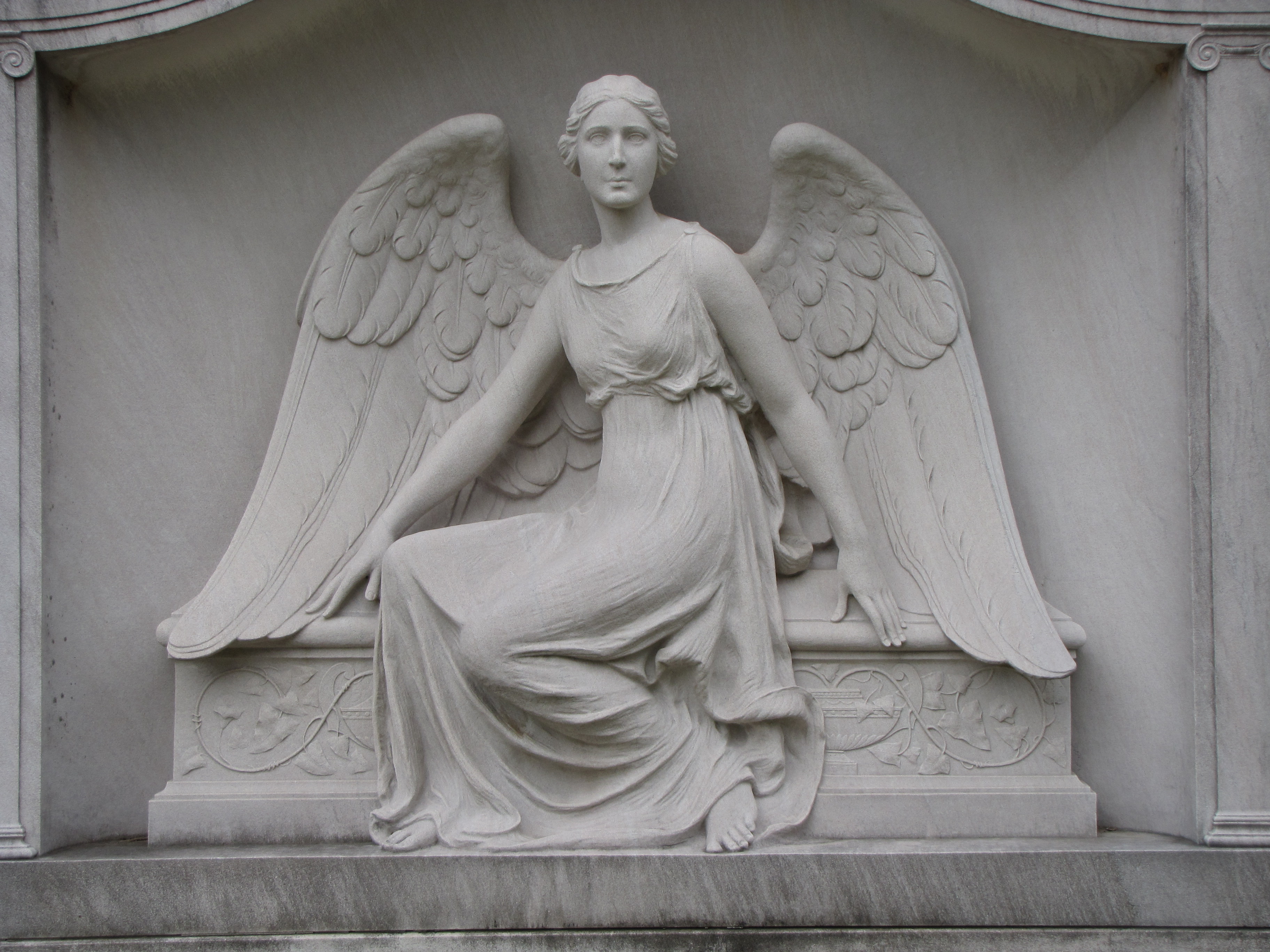
Oakland Cemetery, Atlanta, Georgia

A near replica of the French angel was carved for Mary Glover Thurman of Atlanta, Georgia.  The Oakland Cemetery monument was created to be a sculptural embodiment of Mrs. Thurman who was nicknamed “The Angel” because of the volunteer work that she did in local-area hospitals, visiting the sick and delivering flowers to the patients.

Oakland Cemetery, Atlanta, Georgia


Posted in Angels | Leave a comment

The Lowry Family Monument

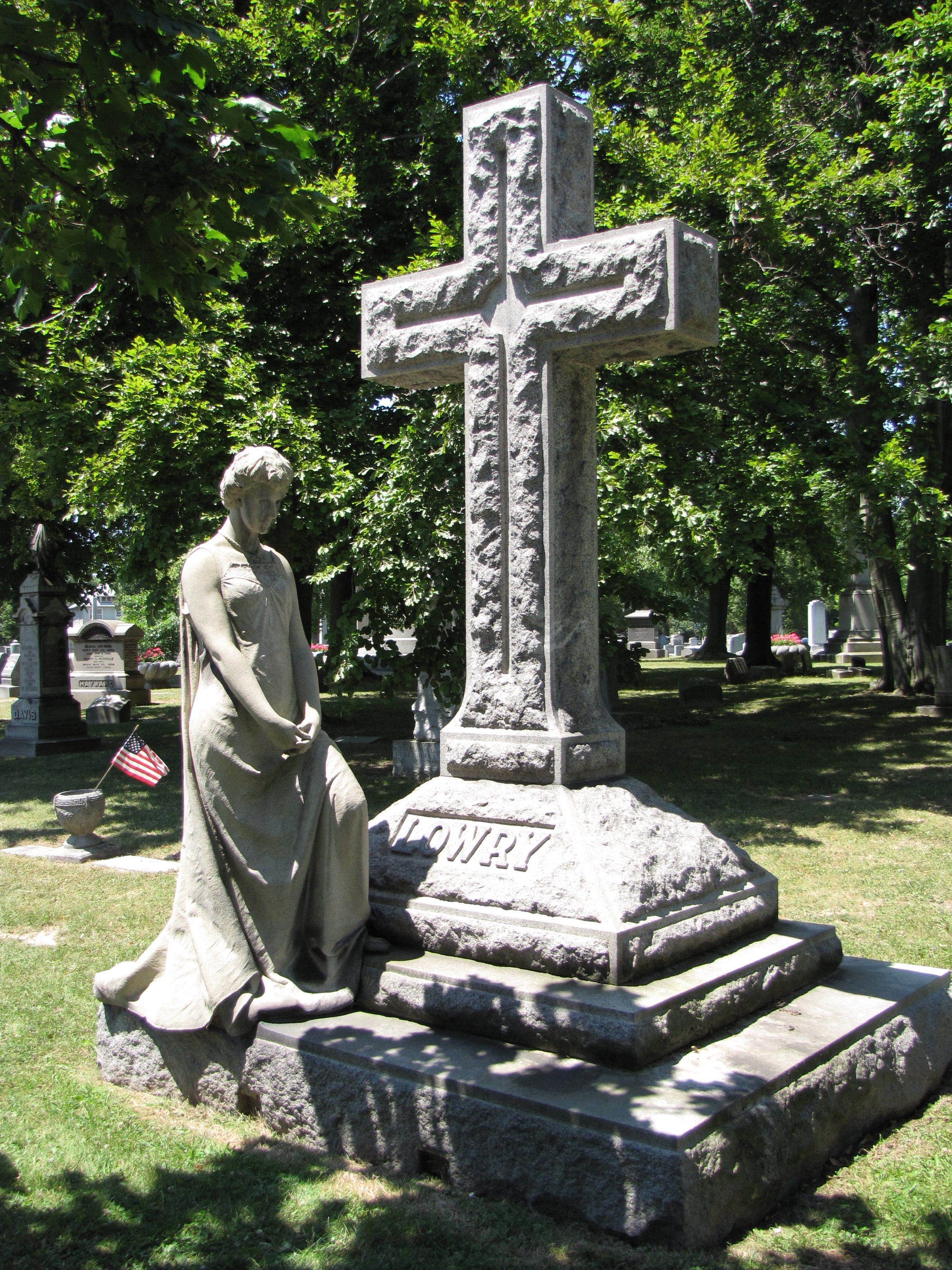
The Lowry Family Monument, Forest Lawn Cemetery, Buffalo, New York

Many Victorian cemetery monuments are adorned with a mourning figure.  In his book, Saving Graces, published by W. W. Norton & Company, David Robinson photographed mourning figures from some of the most beautiful and famous cemeteries in Europe, including Pere Lachaise in Paris and Monumentale in Milan.  The photographs in the book show beautiful, young, and voluptuous women often wearing revealing clothing mourning the dead.

Robinson identified four categories of ”Saving Graces”–first, women completely overcome by grief, often portrayed as having collapsed and fallen limp on the grave.  Second are the women who are portrayed reaching up to Heaven as if to try to call their recently lost loved one back to Earth.  Third, are the women who are immobile and grief stricken, often holding their head in their hands distraught with loss.  Lastly, he describes the last category of “Saving Grace” as the mourning figure who is “resigned with the loss and accepting of death.”

Forest Lawn Cemetery, Baffalo, New York

What is different about the Lowry family monument in the Forest Lawn Cemetery at Buffalo, New York, is that the mourning figure is not a representation of a mourning figure, it is the likeness of Mrs. Lowry, the deceased’s wife.  According to A Field Guide to Forest Lawn Cemetery, published by the Forest Lawn Heritage Foundation, when Joseph Lowry died, “Mary Lowry had her own likeness in her best Victorian evening dress carved in granite and placed beside her husband’s monument.”

Posted in Saving Graces | 1 Comment

Open Book

Cave Hill Cemetery, Louisville, Kentucky

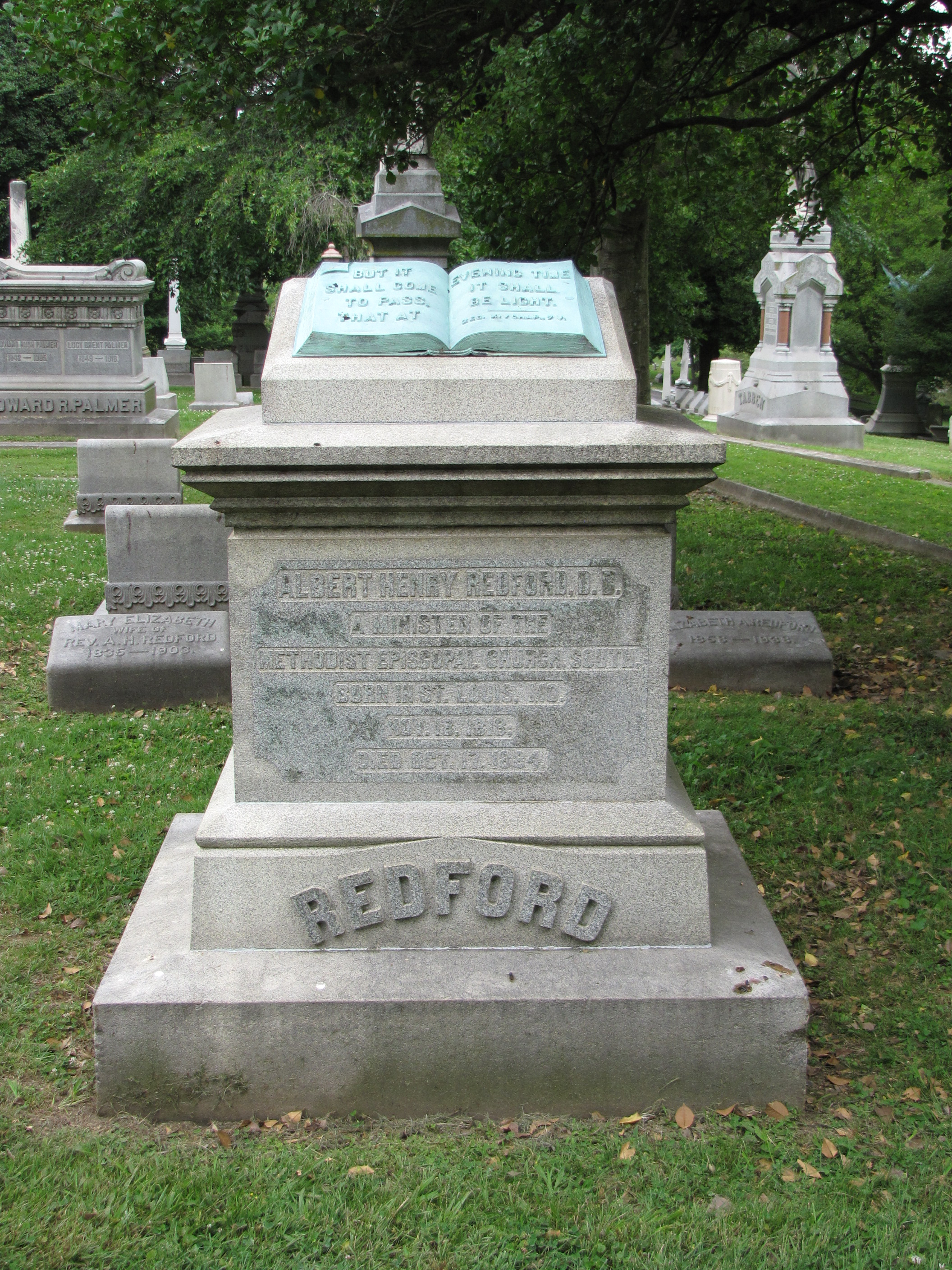
The tombstone above is topped with an oxidized copper sculpture of an open book.  The open book is a fairly common symbol found on gravestones. The motif can represent the Book of Life with the names of the just registered on its pages.  This book, like any book in a cemetery, can also symbolize the Word of God in the form of the Bible.

This open book in particular is most likely representing a Bible.  This is the gravestone, shaped like a pulpit, for Methodist Episopal minister Albert Henry Redford.  The open book is open to the Bible verse, “But it shall come to pass that at evening time it shall be light“.  One can almost imagine Reverend Redford standing behind the lectern delivering the Sunday morning sermon.

Posted in Symbolism | 2 Comments

Tree-Stump Veteran Tombstone


The Old Star City Cemetery, Star City, Indiana

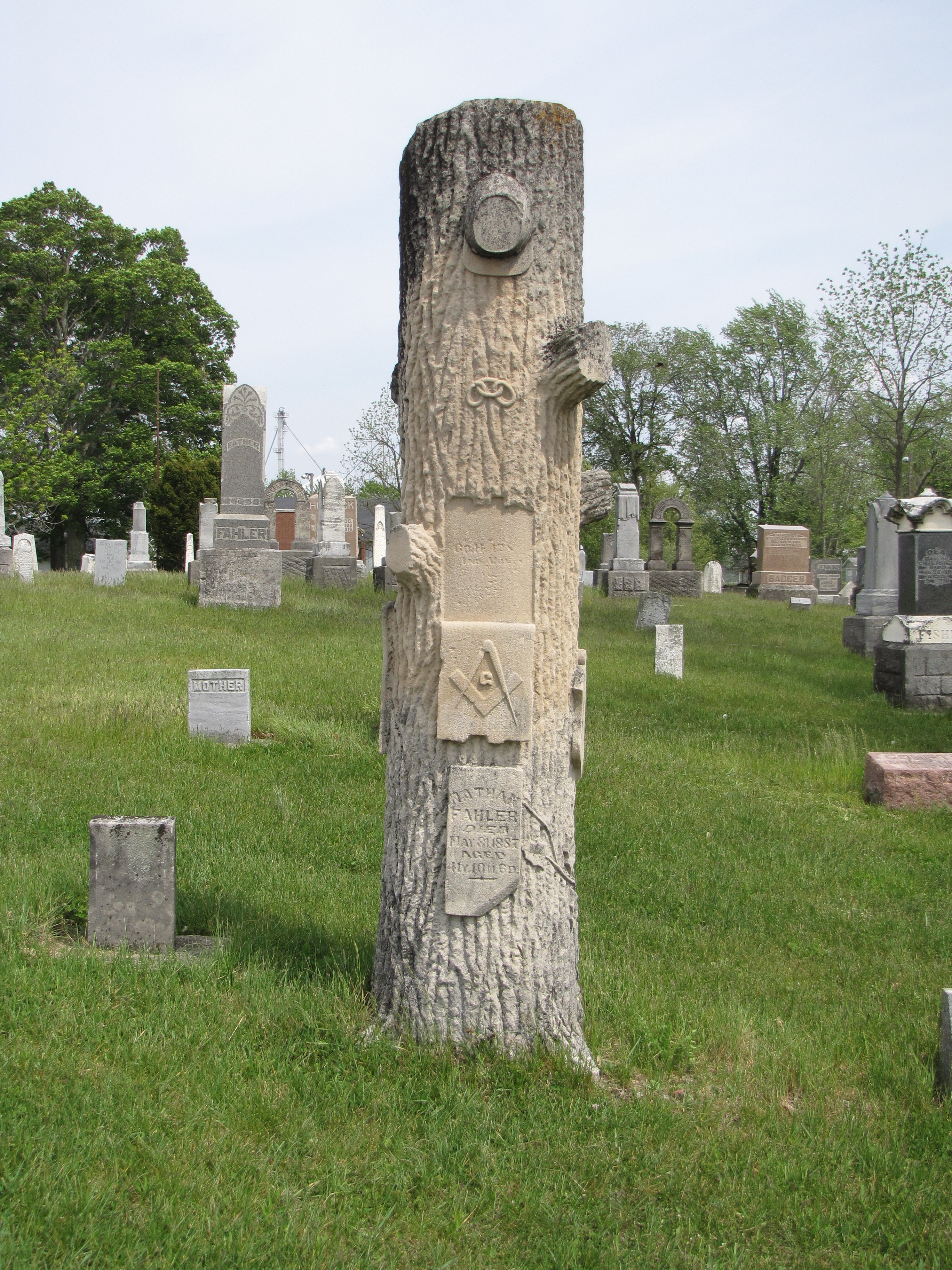
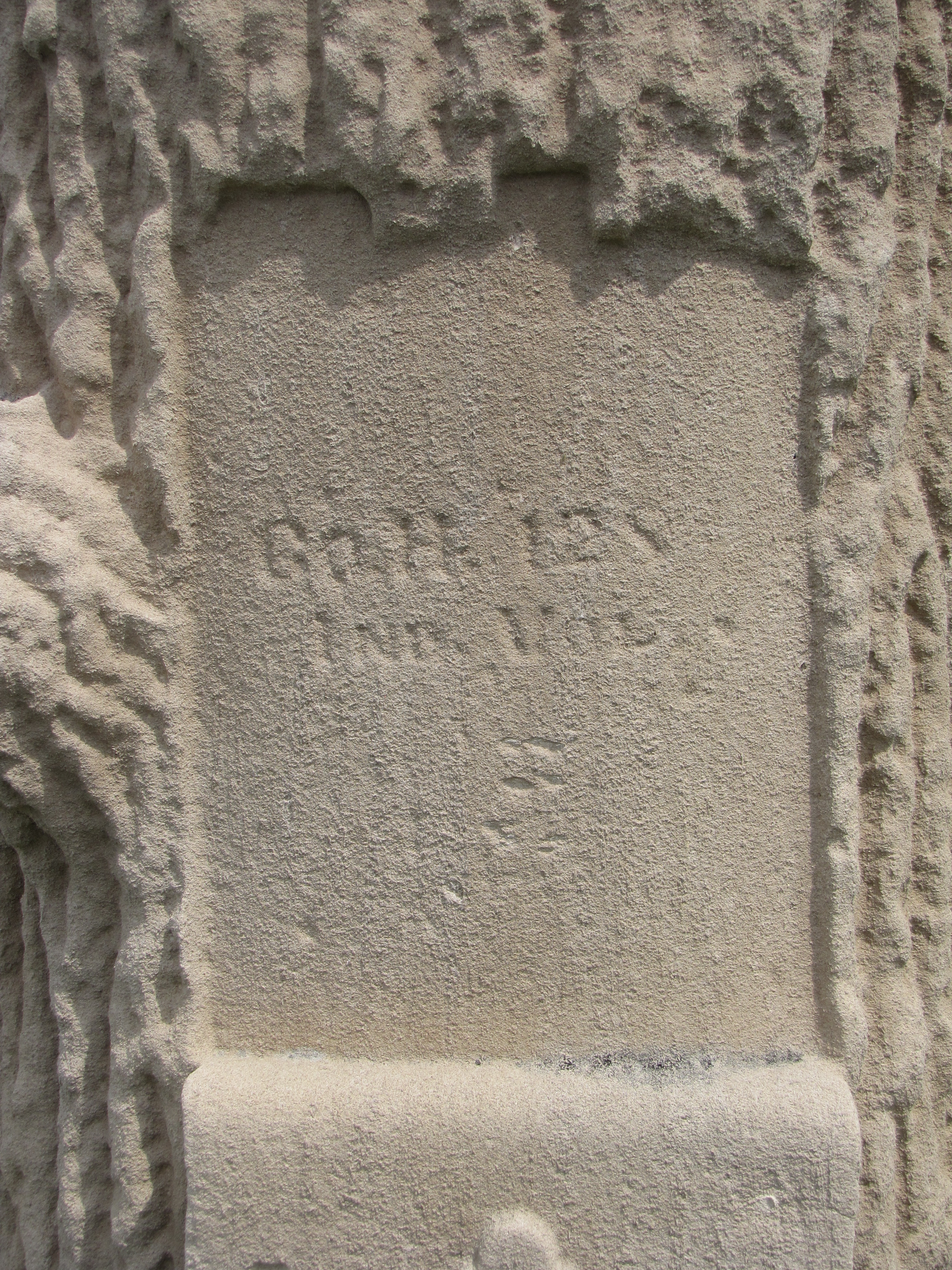
The tree-stump tombstone in the photo above is typical of the era.  The tombstone is carved to look like a tree.  The limbs are cut from the tree. There is a small vine twining up the base and a flap of bark has been pulled back to display information. In this example of the tree-stump tombstone, the stonecutter again shows individualism. Two faternal symbols adorn this gravestone–the Odd Fellows symbol of three chain links and the Masonic symbol.

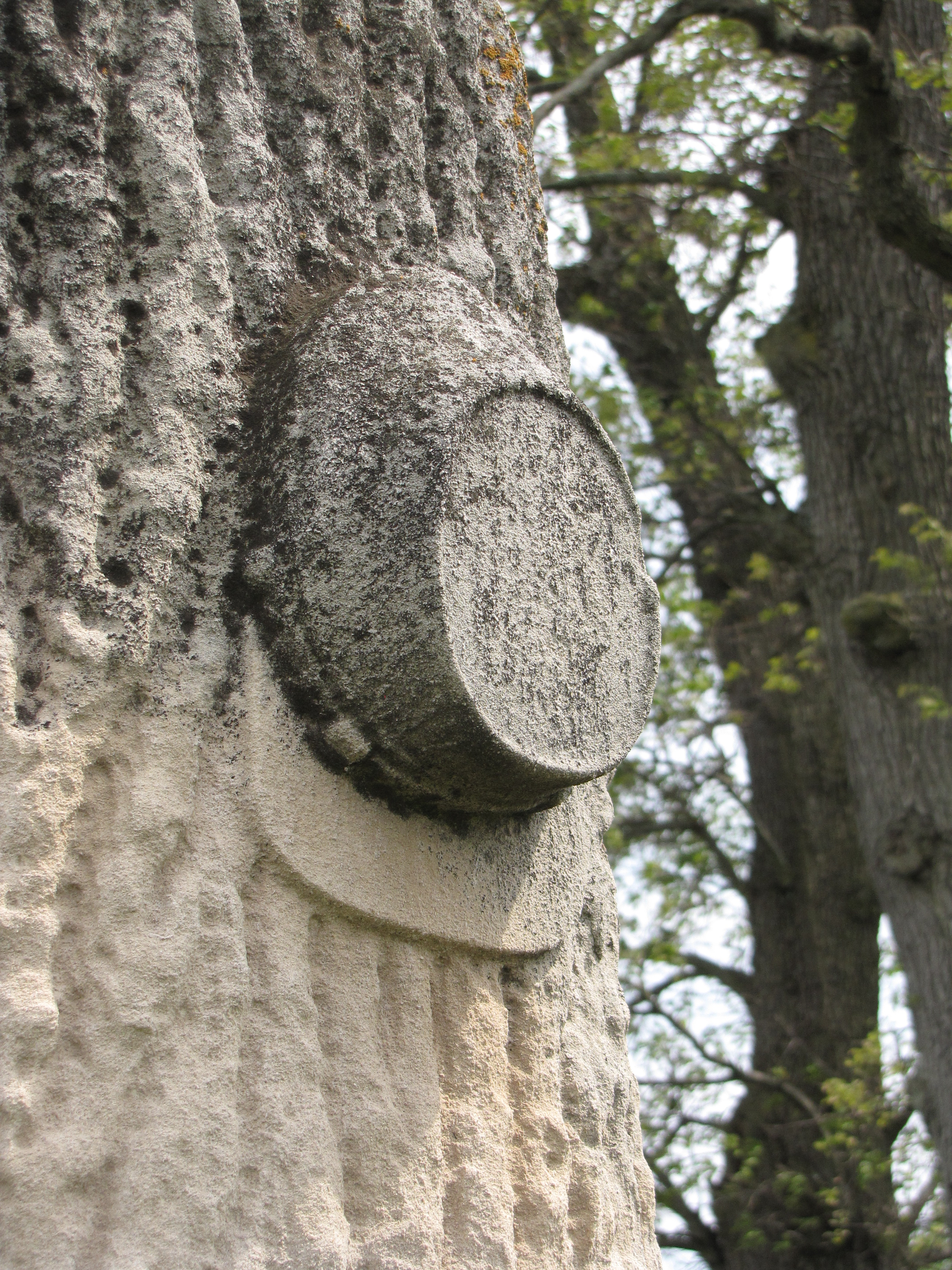
In addition to that, Nathan Fahler was a veteran of the Civil War and served in Company H of the Indiana Volunteers.  That service is honored by the carving of the Union hat that hangs on the tree.

Posted in Uncategorized | 1 Comment

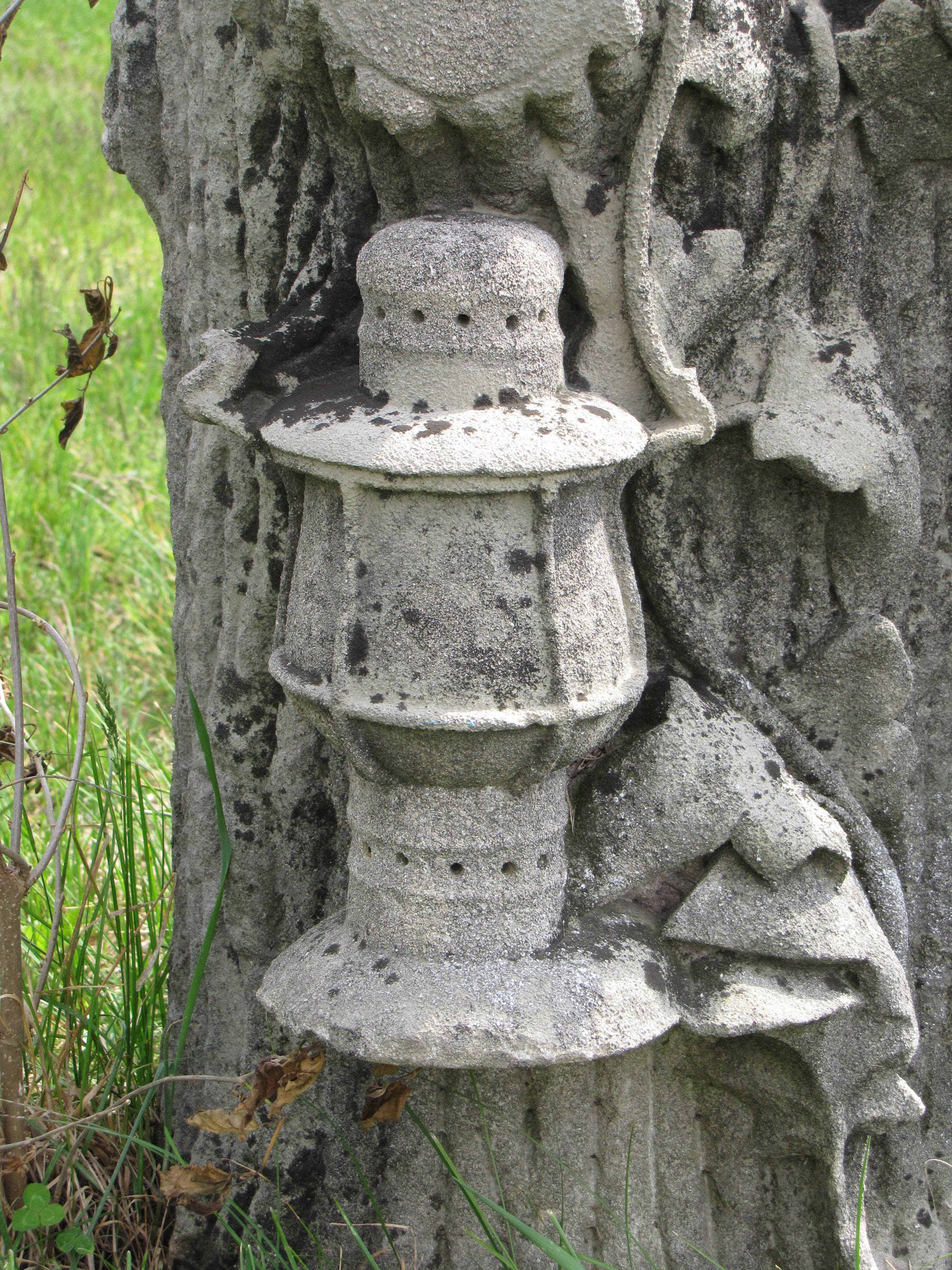
Tree-stump and the railroad lantern

The Old Star City Cemetery, Star City, Indiana

Tree stump tombstones, generally carved from limestone, were a part of the rustic movement of the mid-nineteenth century which was characterized by designs that were made to look like they were from the country. The gravestones are purposefully designed to look like trees that had been cut and left in the cemetery which was part of the movement to build cemeteries to look like parks.  In funerary art, the tree-stump tombstones were varied—the stonecutters displayed a wide variety of carving that often reflected individual tastes and interests of the persons memorialized.

The tree-stump gravestones themselves were imbued with symbolism. The short tree stump usually marks the grave of a person who died young—a life that had been “cut” short.  In this example, E.L. Welch is just 30 years.  His scroll, which can symbolize the Law or the Word of God, displays his name and birth and death dates, is chained to the tree stump. Twining up the face of the gravestone is ivy, a symbol associated with immortality and fidelity.  Hanging from a cut branch on the tree stump is a railroad lantern, which may indicate where he worked.

Posted in Treestump gravestones | 1 Comment

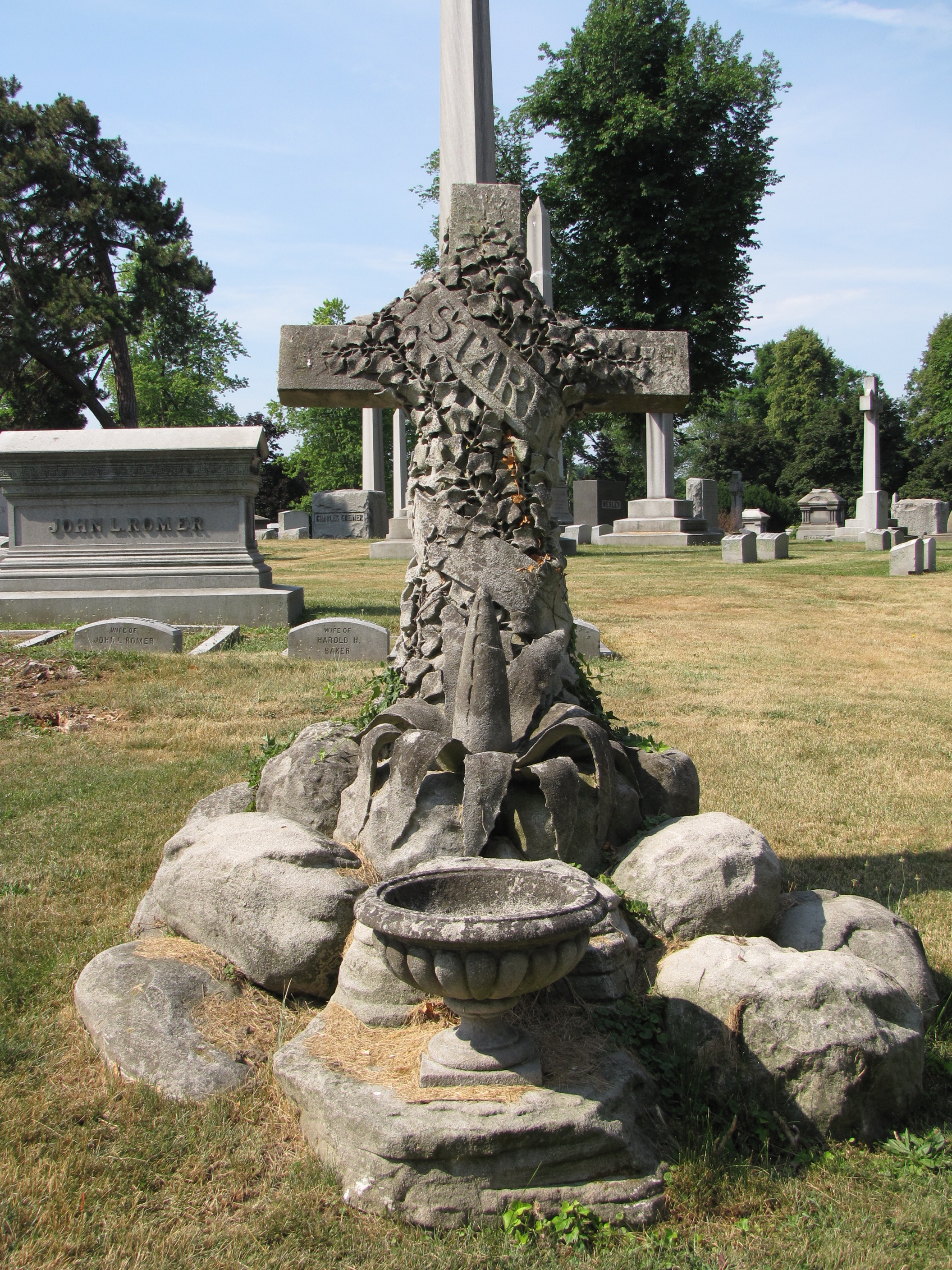
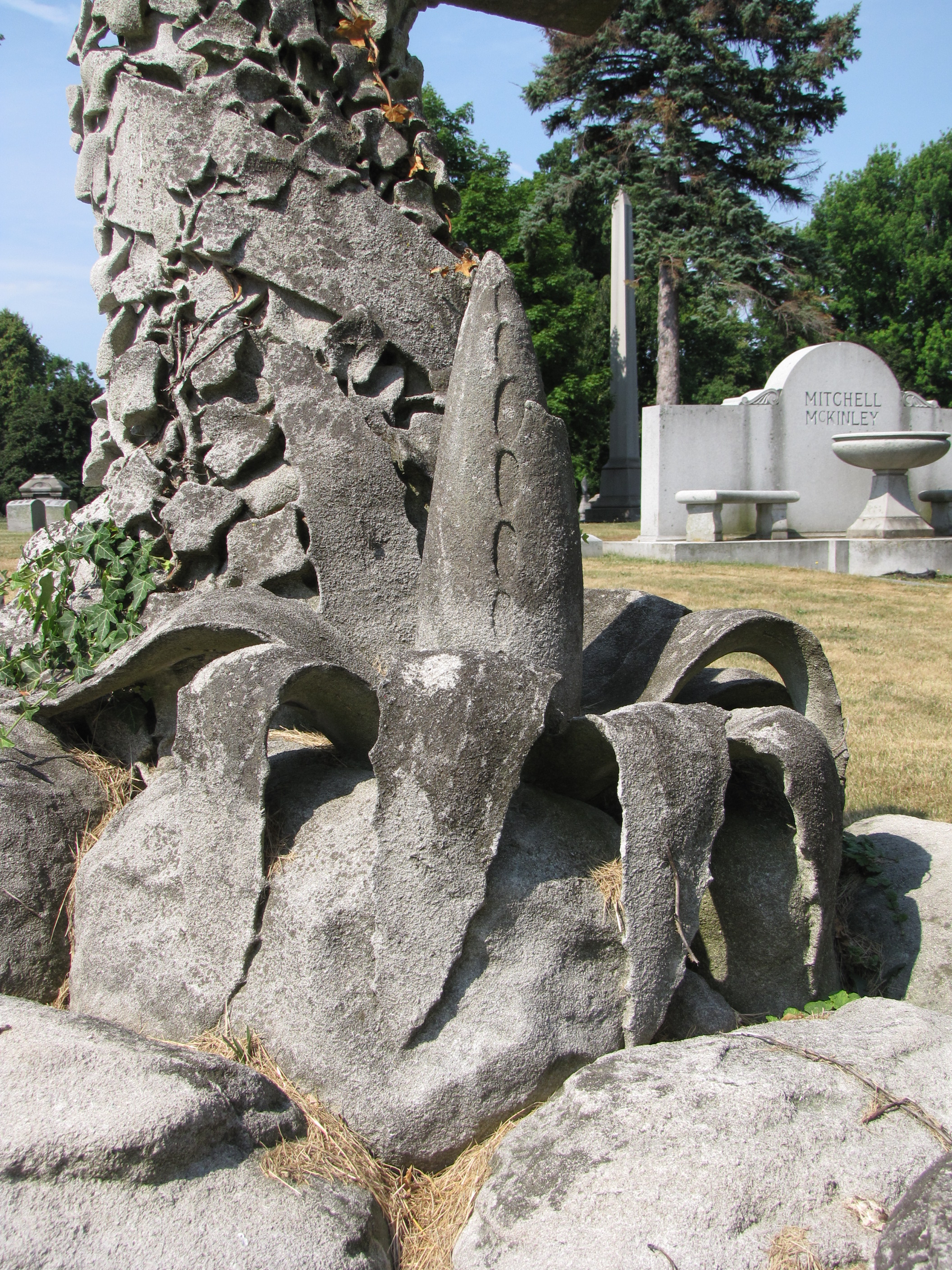
Century Plant

Forest Lawn Cemetery, Buffalo, New York

Centered at the base of the elaborate Victorian-era Starr Family Monument in the Forest Lawn Cemetery at Buffalo, New York, is a century plant.

Many Christian symbols have been appropriated because of the qualities of the animal or the plant are held up by the religion.  The peacock, for example, became a symbol of the resurrection because the feathers on the male peacock grow back each year more beautiful than the year before.  It was a symbol of the incorruptibility of the flesh because of a mistaken belief that peacock flesh did not rot.  Just as the peacock became a Christian symbol due to its natural qualities, so, too, did the century plant (Agave americana).  It was mistakenly believed that the century plant lived to 100 years or more.  Because of that, the misnamed “century plant”, which only lives 10 to 30 years, was adopted as a symbol of immortality.

Forest Lawn Cemetery, Buffalo, New York

Posted in Symbolism | 3 Comments

An Animal’s Best Friend

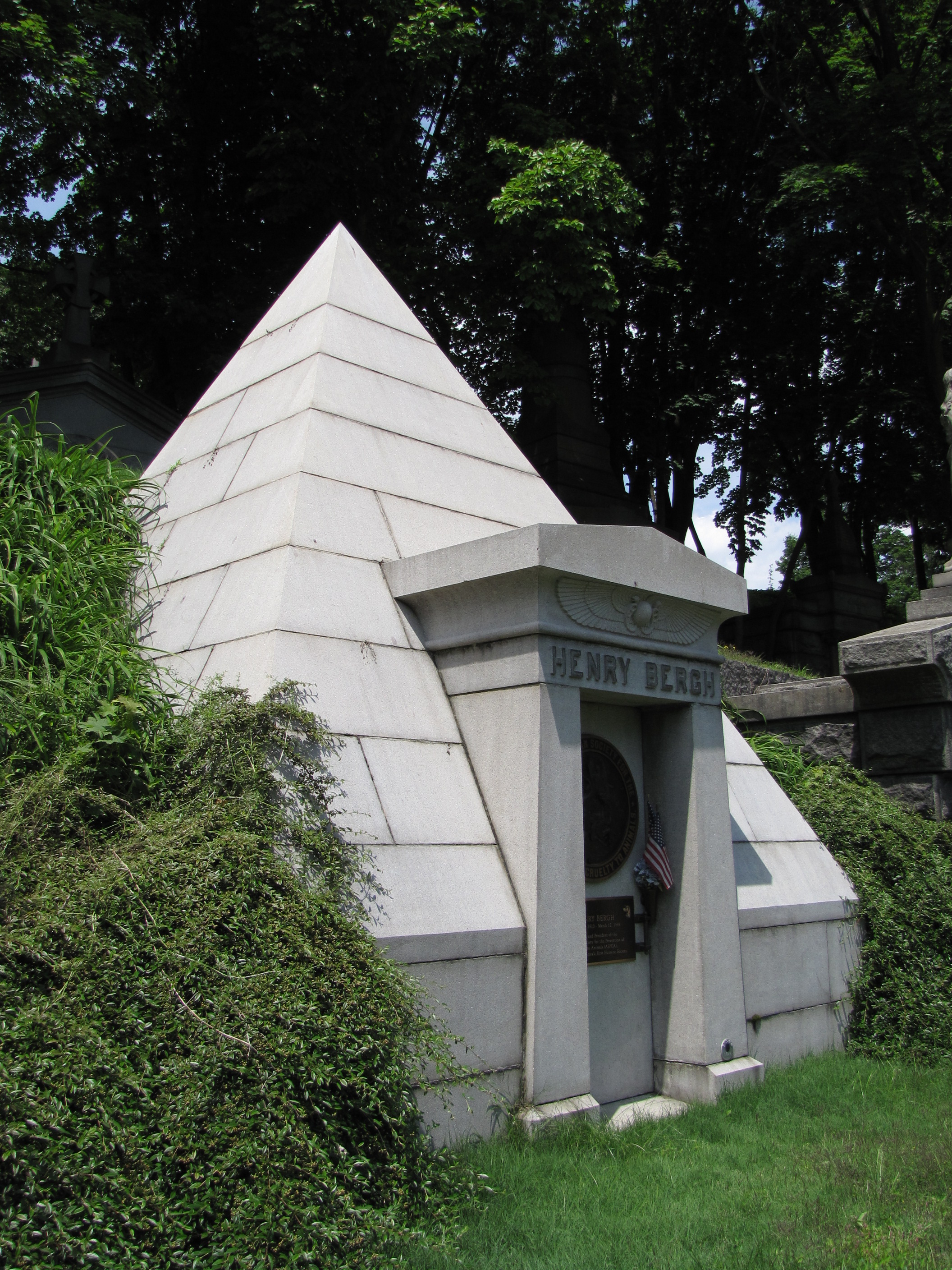
The Henry Bergh Mausoleum

Long before there was a PETA (People for the Ethical Treatment of Animals founded in 1980), there was the ASPCA (America Society for the Prevention of Cruelty of Animals).  Founded in 1866 by Henry Bergh, the organization sought to educate people on behalf of animals and to improve their treatment and welfare.

Bergh was the son of a wealthy shipyard owner in New York and a graduate of Columbia College.  He had travelled extensively and most likely came into contact with members from some of the European societies that had been formed in the late 18th century and early 19th century.  He worked tirelessly in New York to have laws passed that would protect animals from cruelty.  By 1886, 39 states had adopted the laws that he first worked to get enacted in his home state.

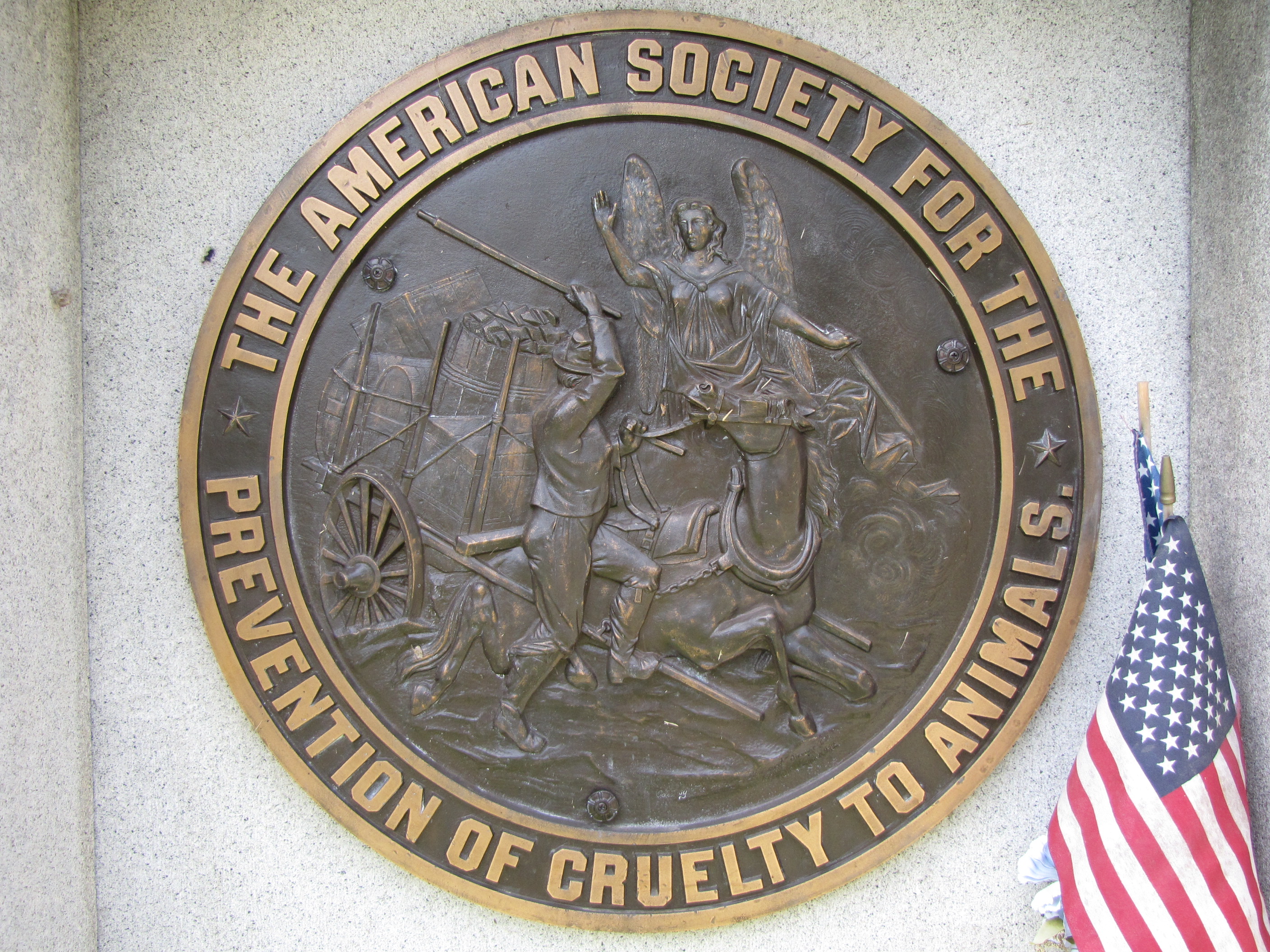
Bergh is buried in Green Wood Cemetery in Brooklyn, New York, in a mausoleum built to resemble a pyramid.  On the entryway of the mausoleum is a large round bronze insignia of the ASPCA which displays a man lifting a club to beat a horse.  An angel comes between the man and the horse interceding to stop the cruelty.

The ASPCA Seal

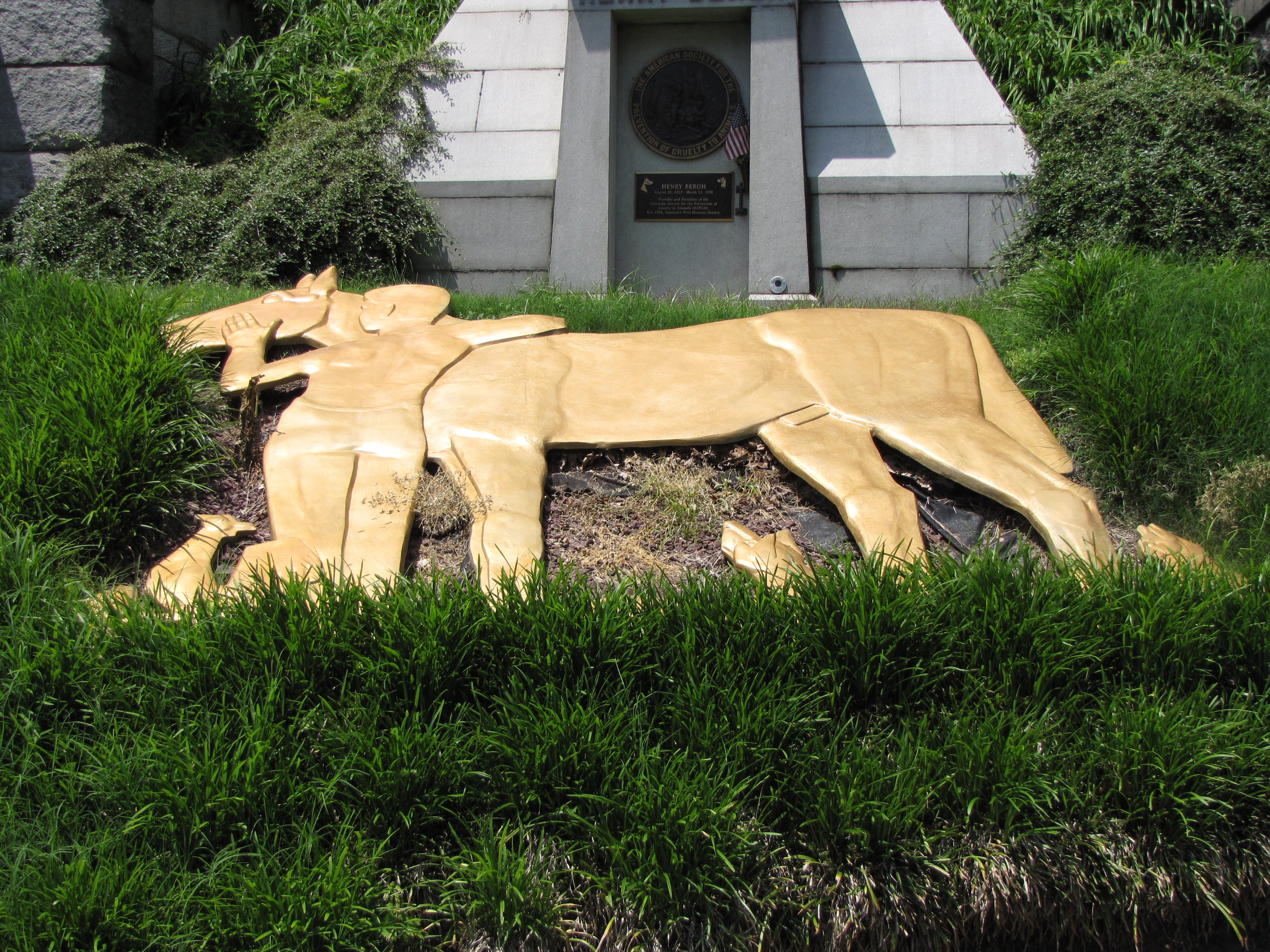
On the bank in front of the tomb is a large flat sculpture of a man with his arm around the neck of a horse.

Posted in Uncategorized | Leave a comment