The Severed Bud

Somerford Cemetery, rural London, Ohio

Cemeteries have many symbols that represent children–shoes, seedpods, cribs, cherubs–but one of the most common is the hanging bud. The broken bud represents the flower that did not bloom into full blossom, the life that was cut short before it had a chance to grow to adulthood.
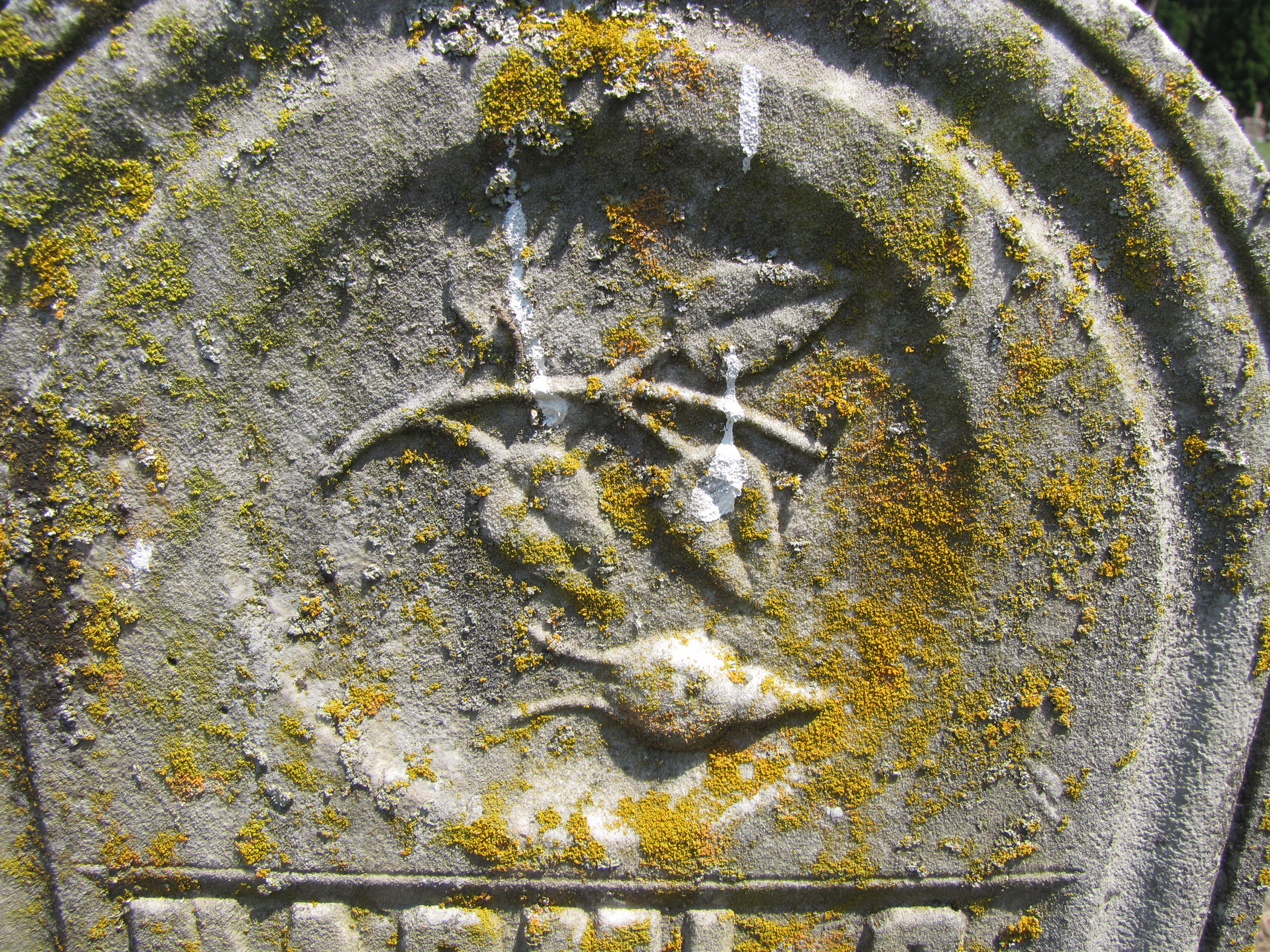
What is unusual about this gravestone is that the bud is not hanging but completely severed and laying below the leaves.  The other element that is different is that the leaves number 4, instead of the often three-leaf combination, which represents the Trinity—the Father, the Son, and the Holy Ghost.

NAOMI G.

Daughter of

J & R YARDLEY

DIED

July 5, 1849

AGED

5 Y, 2M, & 8 D

A sister reposes underneath this sod

A sister to memory dear, and dear to God

Rejoice, yet shed the sympathetic tear

My little sister lies buried here.
Posted in Symbolism | Leave a comment

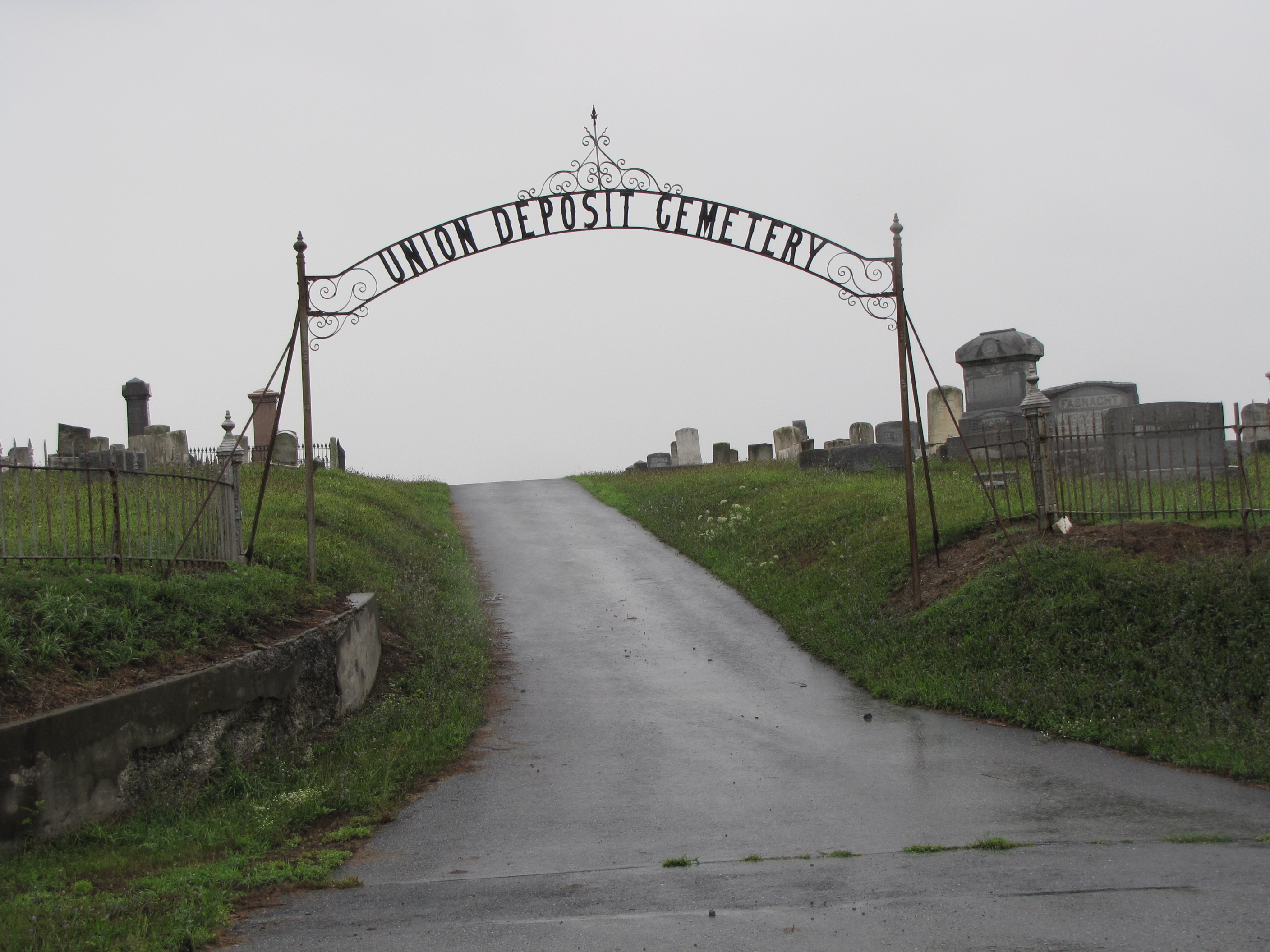
Union Deposit Cemetery

The cemetery gate in the photo is of a small cemetery in rural Pennsylvania, just outside Hershey.  The gate is typical of many of the small cemetery gates that are made of iron rod and steel construction.  What struck me was the name of the cemetery: Union Deposit Cemetery.  Deposit?  The name sounds a bit like a the name of a bank, though, the deposits are definitely different.

Posted in Cemetery Gates | Leave a comment

Coffin-shaped Table Top Tomb

Somerset Cemetery, Somerset, Ohio

The coffin-shaped tombstone in the photograph is also a type of gravestone called a table tomb for an obvious reason—it looks like a table. Usually the table tomb has four or six legs supporting a stone tablet which carries the inscription of the deceased. In this case, the coffin-shaped table top is supported by two blocks.  A large medallion carries the inscription on the widest part of the gravestone:

Sacred to

The

Memory of EDITH HAMILTON

Late consort of the Rev. Samuel Hamilton who

Departed this life in joyful expectation of a

Better, on the 29th of March, A.D. 1832 Aged

33 Years, 7 months and 26 days.

Oh, Woman

I with thee did fix my lot.

Willing to undergo like doom.

When death consorted with thee

Death was to me as life

So forcible in my heart I felt

The bonds of nature draw me to

my own.

Note: I first saw the gravestone above on the Website: www.graveaddiction.com.  Beth Santore, the Webmaster gave me great directions to find the cemetery.  I was just in Ohio Monday and snapped some pictures of the gravestone for myself.  I highly recommend her Website, especially for those tramping around Ohio graveyards!

Posted in Symbolism, Tombs | Leave a comment

Coffin-shaped Tombstone, Part 2

Groveport Cemetery, Groveport, Ohio

Coffins come in many shapes and sizes, though, technically, a coffin is a six-sided container or box for burial.  A casket is generally understood to have four sides and be rectangular.

The six-sided coffin tombstone found in the Groveport Cemetery at Groveport, Ohio, pictured above is tapered to widen around the shoulders and then become narrow around the feet.  The coffin-shaped tombstone replicates what many 18th and 19th century coffins looked like.  This funerary motif represents death and mortality.

The gravestone marks the grave of a young wife who died at the delicate age of only 22 years.  The woman was remembered in her inscription as a bride and a daughter, as she was most likely not married for any length of time.   The epitaph paints a picture of a beautiful young woman snatched away by the Icy and Withered Hand of Death.

Sacred to the memory of

Catherine G. consort of John G. Richardson MD

And Daughter of Captain Isaac Bowman

All Natives of Shenandoah County, Virginia

Born December 23, 1787

Departed this Life January 19, 1809 Aged 22 Years

“Oh Fairest Flower Thy Failing Breath is Gone, the Sense to Please No More,

The Icy Withering Hand of Death Has Rifled All Thy Fragrant Store.

Calm Be Thy Rest, Sweet as the Slumbers of a Saint,

And Mild as the Opening Gleams of a Promised Heaven.”

Note: I first saw the gravestone above on the Website: www.graveaddiction.com.  Beth Santore, the Webmaster gave me great directions to find the cemetery.  I was just in Ohio Monday and snapped some pictures of the gravestone for myself.  I highly recommend her Website, especially for those tramping around Ohio graveyards!

Posted in Symbolism, Tombs | Leave a comment

Coffin-shaped tomb

Union Cemetery, Morristown, Ohio

The coffin in cemetery symbolism represents death.  The reasons for that are fairly obvious.  Sometimes the image of the coffin is carved on the gravestone, other times the gravestone itself is carved to look like a coffin.

This white marble coffin-shaped gravestone found in the Union Cemetery at Morristown, Ohio, is intricately carved to look like a coffin.  The gravestone has handles on the side and the exact shape and dimensions of a coffin that are so real it looks as if a coffin was actually set atop the concrete base.  The gravestone is most likely the marker for a small child.  Though the tombstone looks fairly good sized in the photo, it is actually quite small.  Because of the aging and erosion of the soft marble and the lichens on the gravestone, it is not possible to read the inscription.

Note: I enjoy tramping around old graveyards and also Websites dedicated to cemeteries and gravestones.  I first saw the gravestone above on the Website: www.graveaddiction.com.  I asked the Webmaster, Beth Santore, about the gravestone and she gave me great directions to find it.  I was just in Ohio yesterday and snapped some pictures of the gravestone for myself.  I highly recommend her Website, especially for those trapsing around Ohio graveyards!

Posted in Symbolism, Tombs, Uncategorized | 3 Comments

A Strong Warning

Old Dutch Church Burying Ground, Sleepy Hollow, New York

The red sandstone gravestone of William Tompkins and Sally Tompkins in the Old Dutch Burying Ground at Sleepy Hollow, New York, has an epitaph that is a stern message and a strong warning for those who are still alive:

Go home dear friends dry up your tears

We must lie here till Christ appears

Repent in time whle you have

Theirs (sic) no repentance in the grave.

Posted in Epitaphs | Leave a comment

The Last Word

Forest Lawn Cemetery, Buffalo, New York

Nothing is as final as death.  The quote, “Dead men tell no lies” reminds us of the silence of the grave.  However, the dead can speak one last time in wills, diaries, letters, and epitaphs.  Though many epitaphs are chosen for the person after he or she has passed away, some people do choose their own.  Mel Blanc’s epitaph signs off with his signature Porky Pig closing at the end of the Looney Tunes cartoon, “That’s All Folks!”  One wonders if Mr. Banc was also making a larger statement on the afterlife.

In the case of Barry Becher, the advertising guru who pioneered late-night infomercials hawking Ginsu Knives who just recently died, his family has announced that his epitaph will read, “But wait, there’s more!”  This is his famous catch phrase that has been mimicked by nearly every infomercial now.  Again, this epitaph could be read as a double entendre referring to the hereafter.

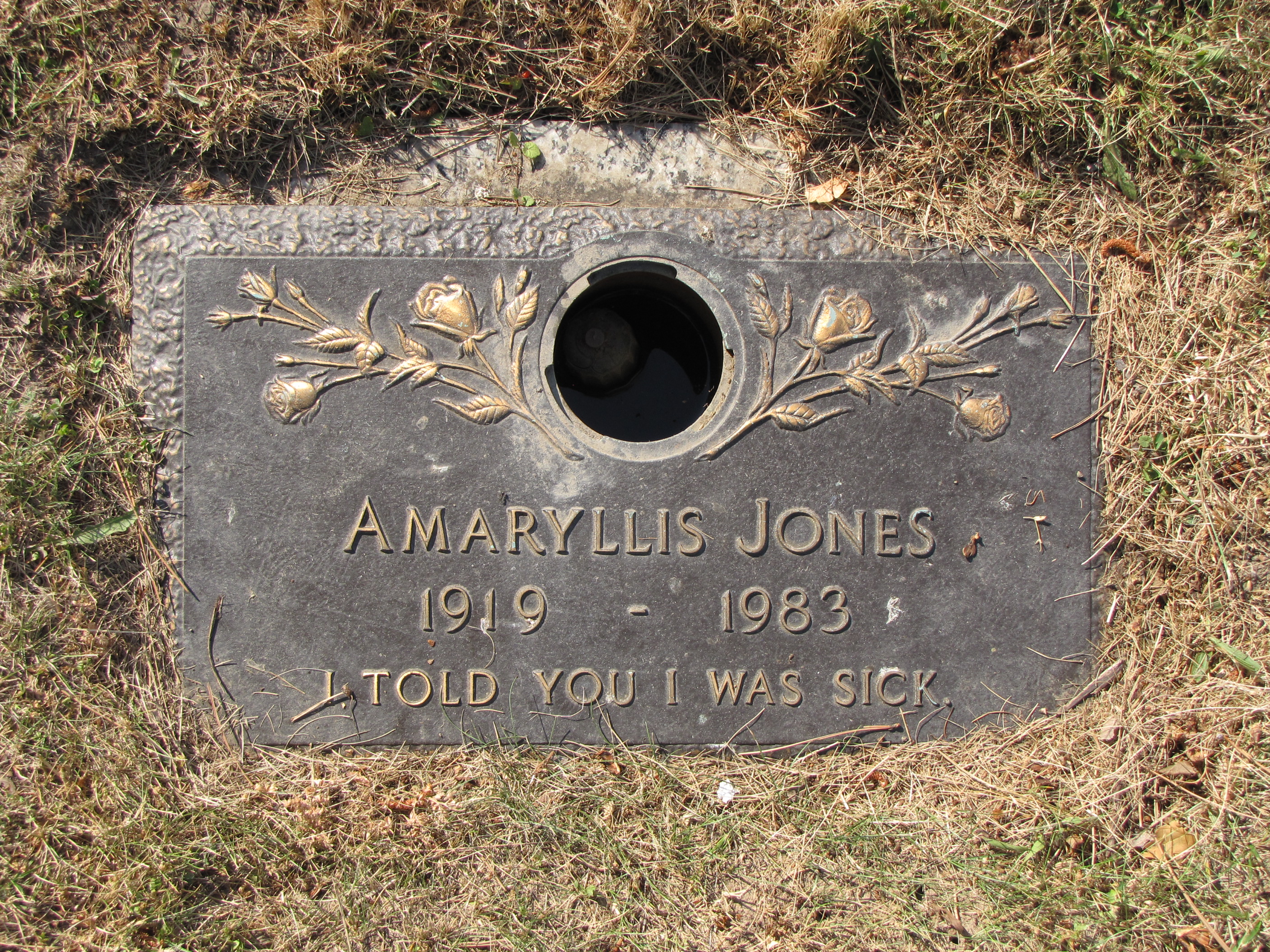
Amaryllis Jones, who is buried in the Forest Lawn Cemetery in Buffalo, New York, also had the last word.  Her epitaph reads, “I told you I was sick.”  No mistaking that message; she wanted to remind those who she left behind that she was not complaining, this was not the typical ailment, that she was RIGHT, she was sick!  Or, she had a good sense of humor.

Posted in Epitaphs | Leave a comment

Relief

Princeton Cemetery, Princeton, New Jersey

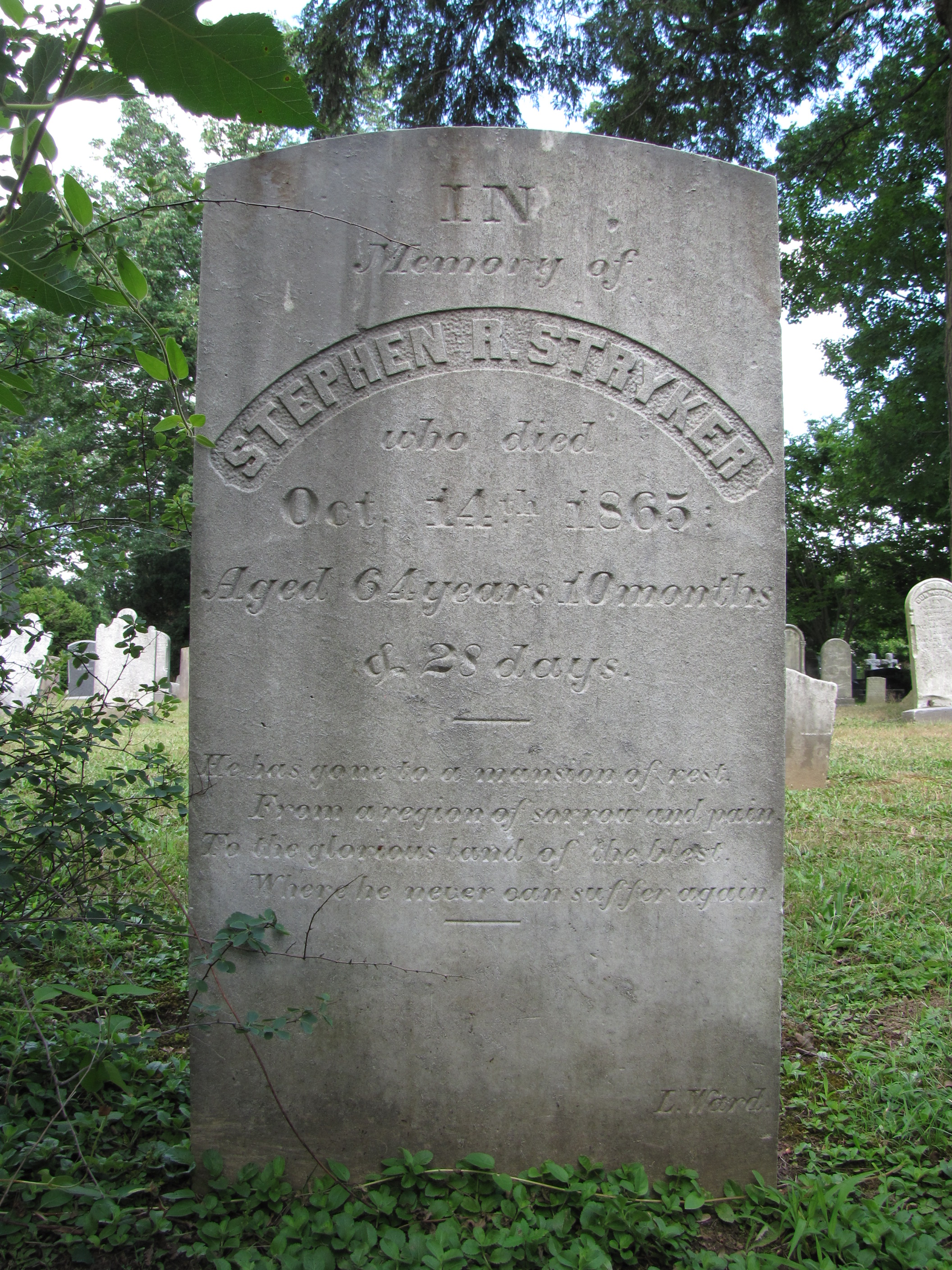
Some epitpahs read as though they are out of a can–that is they read as generic–“Gone But Not Forgotten“, for instance.  While others, even though, they rhyme, which was conventional, still sound personal.  The epitaph of Stephen R. Stryker, who died October 14th, 1865, at the age of 64, in the Princeton Cemetery of the Nassau Presbyterian Church at Princeton, New Jersey, sounds as if it might have been written specifically for Mr. Stryker who had suffered.  His death finally relieved him from his anguish:

He has gone to a mansion of rest,

From a region of sorrow and pain

To the glorious land of the blest,

Where he never can suffer again. 

Posted in Epitaphs | 1 Comment

The Door

Metarie Cemetery, New Orleans, Louisiana

Some tombs in the Metarie Cemetery in New Orleans, Louisiana, have a past, just as do their occupants!  The polished red granite Morales Family Tomb was originally built for a former madam in 1911.  The bronze statue of the woman at the door clutching a bouquet of roses was created by sculptor F. Bagdon ironically to represent the faithful “virgin.”  The tomb, however, became such an attraction for curiosity seekers that the madam’s family had her body moved to a “undisclosed location” in an unmarked crypt in cemetery and sold the glorious tomb to the Morales family.

The tomb has two dominate symbols–the woman at the door and the two flames at top of the mausoleum.  The flame atop each side of the tomb represents life.  The flame illuminates the darkness representing enlightenment.  It can symbolize zeal, liberty, and immortality.

The door as a motif in funerary art symbolizes mystery.  The door is the pathway from the earthly realm to the next.  The waiting virgin at the door seems to hesitate at the door.  Her hand is close but doesn’t touch it; she is tentative.  In Christianity, however, the door is usually viewed with hope, charity, and faith.  The next life will be better.

Posted in Symbolism | 2 Comments

The Chocolatiers

Derry Church, Pennsylvania, which later became known as Hershey is the home of the Hershey Company, one of the oldest chocolate companies in the United States and the largest in North America.  The company was founded by Milton Snavely Hershey in 1894.  Originally the chocolate company was a subsidiary of Hershey’s Lancaster Caramel Company. It wasn’t long, though, before the chocolate confections that Hershey created became the best-selling chocolate products sold in America.

Milton Hershey, however, was not always a successful candy maker.  His first foray into candy making was a flop.  After six years in Philadelphia running a candy shop, Hershey moved back to his hometown of Derry Church to start the Lancaster Caramel Company.  The company grew like crazy and in 1900, Hershey sold it for one million dollars, which gave him the money to start his very own chocolate factory three years later.

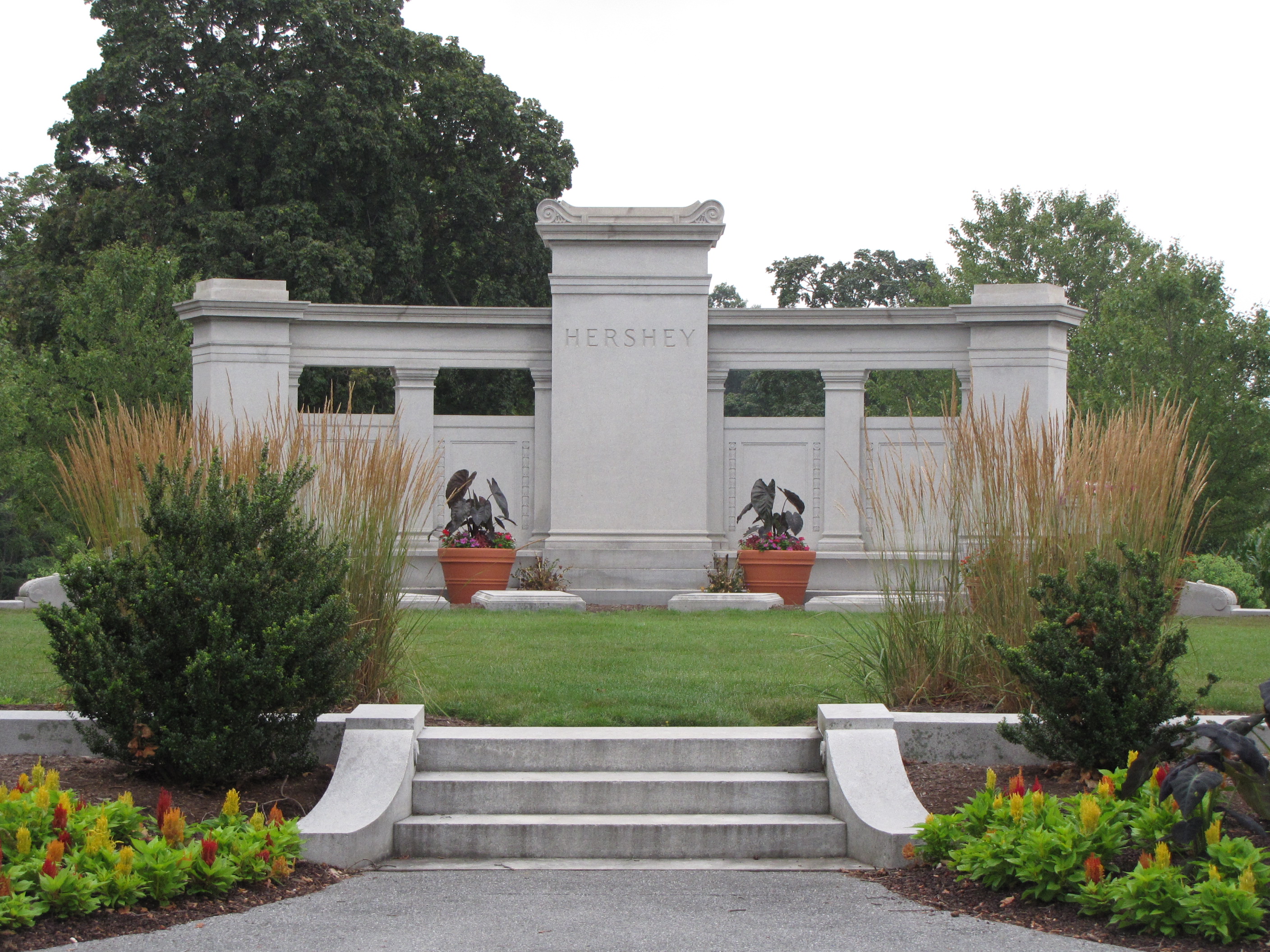
The Milton S. Hershey Monument

In 1907, Hershey created a new chocolate he called the Hershey Kiss. The chocolate bars and the kisses were a huge success.  Other candies were added to the line: Mr. Goodbar in 1925 and the Krackel bar in 1938.

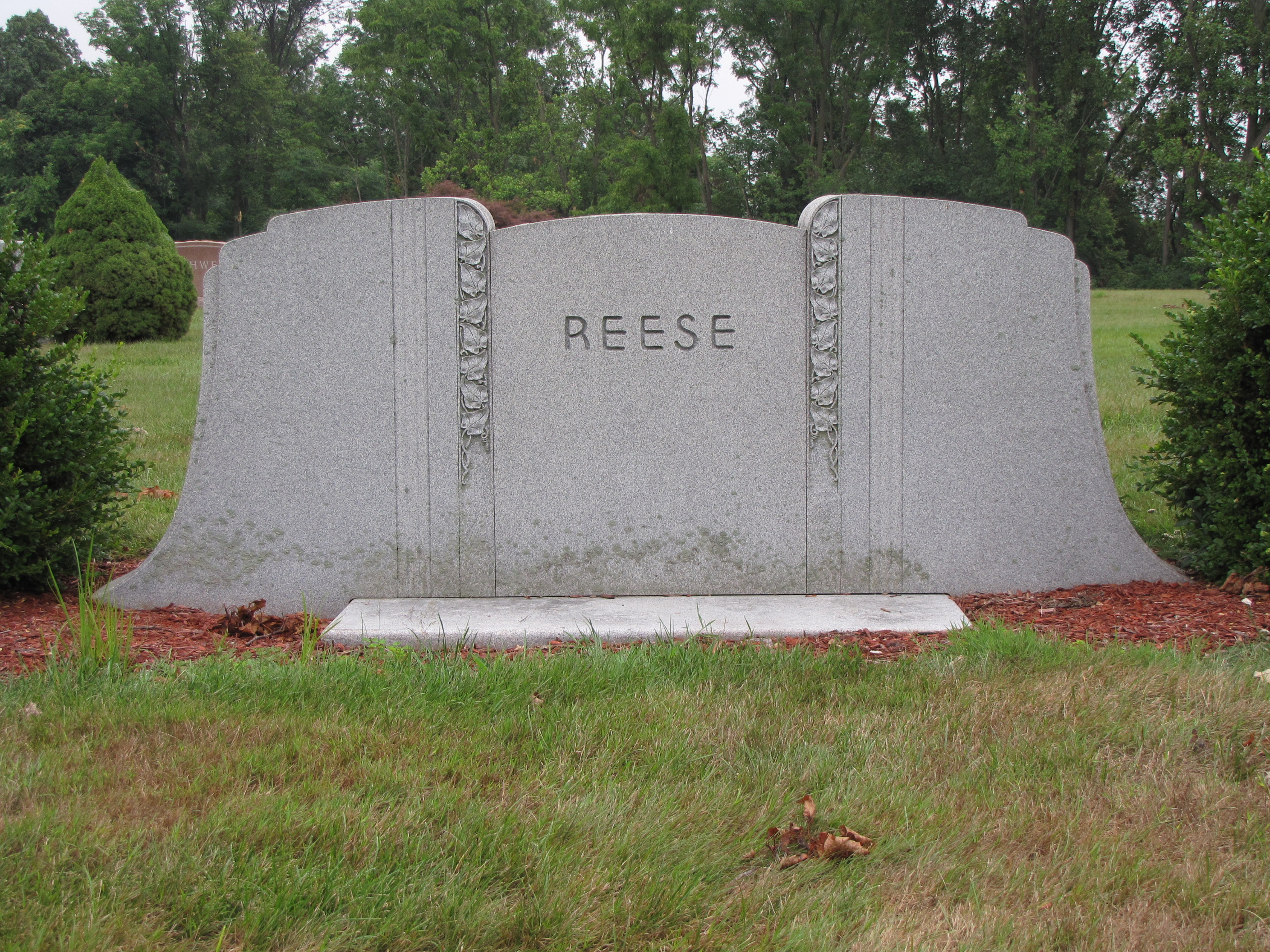
The Harry Burnett Reese Monument

Another industrious chocolatier started his business in Hershey, Pennsylvania—Harry Burnett Reese.  Reese first worked for Milton Hershey as a dairyman but developed his own line of assorted candies including the very popular Reese’s Peanut Butter Cup, which was created during the rationing years of World War II.  Because his peanut butter confection took less sugar he focused his efforts on perfecting and marketing it during the war.  It was a huge hit.  After his Reese’s death in 1956, his six sons ran the business until they sold it to the Hershey Company in 1963.

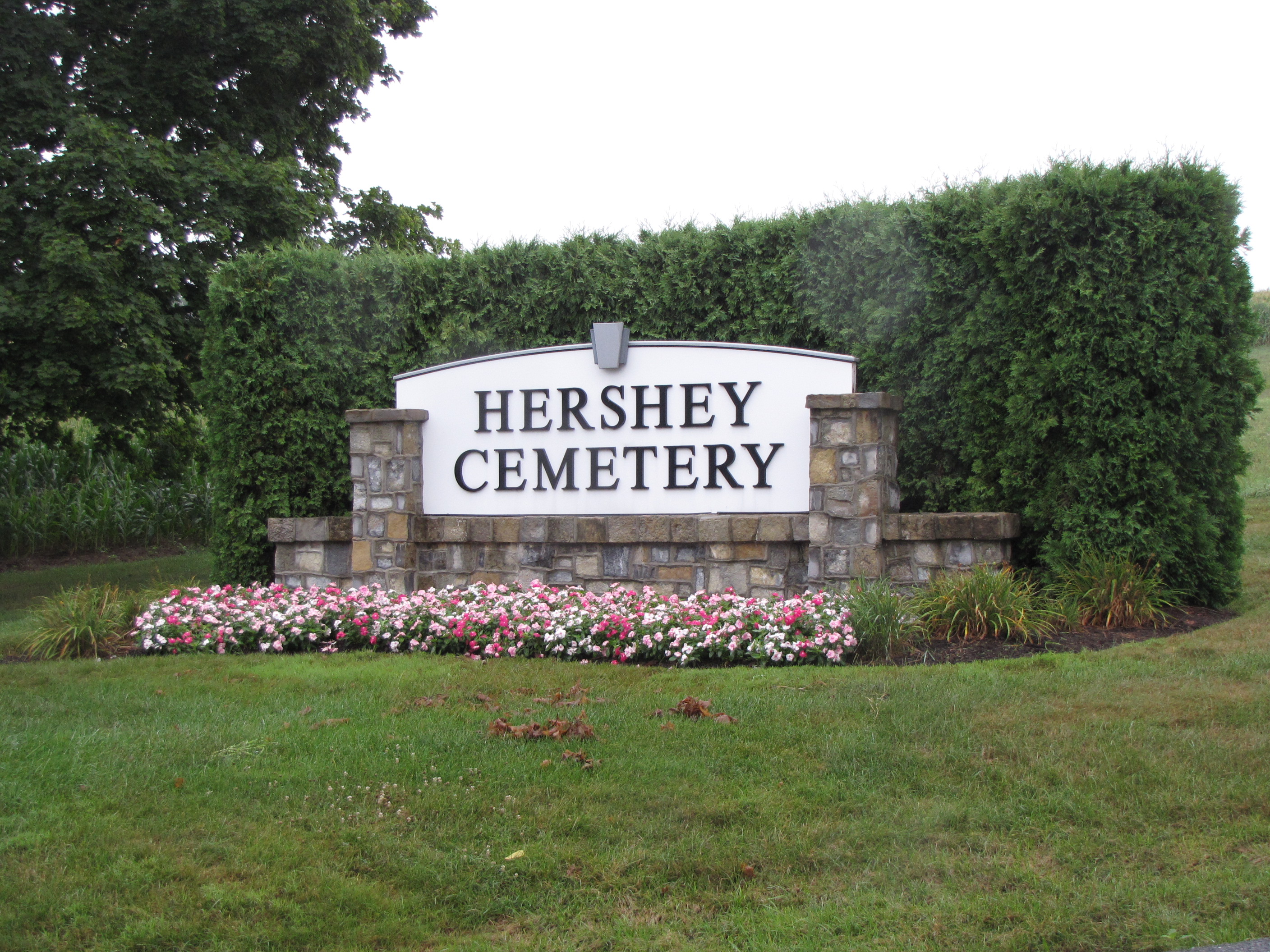
In 1917, Milton Hershey established a cemetery in Hershey.  Both chocolatiers are buried in the Hershey Cemetery in the city they both helped to establish as the Sweetest Place on Earth!

Posted in Famous graves | 1 Comment