Name Change

Sleepy Hollow Cemetery, Sleepy Hollow, New York

Actors have long since dropped their birth names for stage names—Minnesota born Frances Ethel Gumm acted and sang her way into American hearts as Judy Garland; Iowa boy Marion Morrison rode horse back into film as cowboy John Wayne; and dimpled chinned Issur Danielovitch won fame as Kirk Douglas.  And nom de plumes or pen names have long hidden birth names for authors, such as, Hector Hugh Munro penned short stories under the name Saki; novelist Pearl Gray wrote Westerns under the pen name of Zane Grey; and the great American writer and humorist Samuel Langhorne Clemens wrote under the name Sieur Louis de Conte and more famously as Mark Twain.

But who would have thought that the founder of a renowned cosmetic line and the creator of the “makeup makeover” would have had a name makeover.  Florence Nightingale Graham who founded a cosmetic empire became Elizabeth Arden.  Graham pieced her name together by joining the name Elizabeth after one of her first business partners with the name Arden from the tragic Alfred, Lord Tennyson poem “Enoch Arden”.

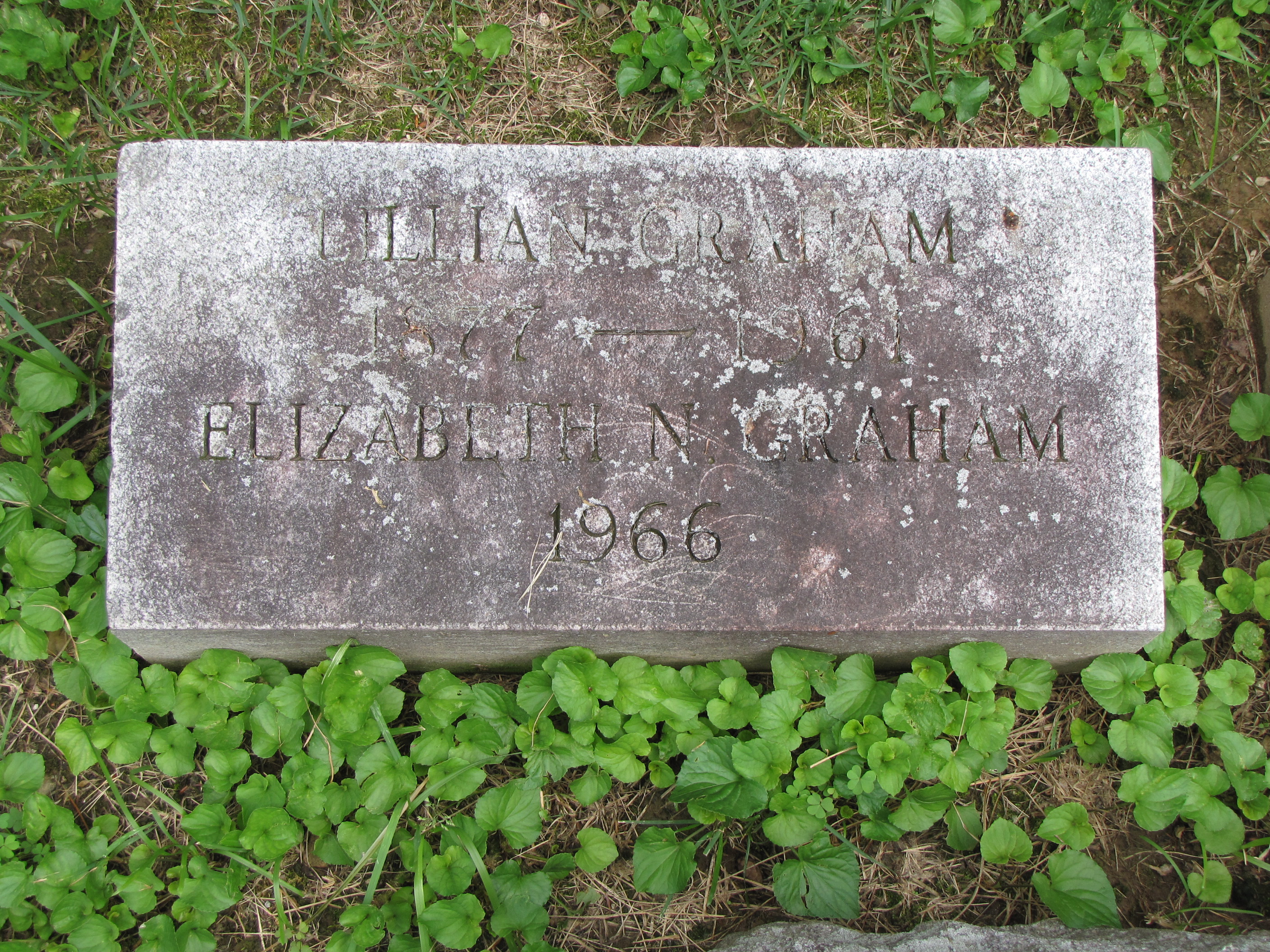
At the height of her career in cosmetics it was said that Elizabeth Arden as a brand ranked with Coca Cola for world-wide recognition.  Her cosmetics adorned royal faces such as Queen Mary and Queen Elizabeth and Hollywood royalty and icon Marlene Dietrich and eternal sex symbol Marilyn Monroe.  Her fame and contribution to the cosmetic industry won her the recognition of the French government which awarded her the Legion of Honor in 1962, four years before her death.  When Elizabeth Arden died in 1966, she was buried in the Sleepy Hollow Cemetery at Sleepy Hollow, New York, in the Graham family plot on a shared footstone with her sister, Lillian Graham.  Elizabeth Arden is buried under the name Elizabeth N. Graham, a nod to the first name she took and the last name with which she was born.
Posted in Famous graves | Leave a comment

Moorish Revival

The Larendon Tomb, Metarie Cemetery, New Orleans, Louisiana

General Pierre Gustave Toutant Beauregard (May 28, 1818 – February 20, 1893) was one of the most prominent and successful generals in the Confederate Army.  Beauregard commanded the defenses at Fort Sumter, and later at the First Battle of Bull Run.  He also commanded the Confederate armies that fought in the Western Theater of the Civil War—including at the Battle of Shiloh.  Even though, Beauregard did not have a good personal relationship with President Jefferson Davis, he and General Joseph Johnston helped convince Davis and the Confederate Cabinet that the armies needed to surrender and end the war

Beauregard was married to Marie Antoinette Laure Villeré one of the most prominent French Creole families in southern Louisiana with whom he had three children: René, Henri, and Laure. His wife, Marie died while giving birth to their daughter, Laure.  Beauregard doted on Laure and he cherished her.  Laure Beauregard was married March 4, 1878, at her father’s home in New Orleans, to Colonel Charles A. Larendon of South Carolina by Arch-Bishop Perche. Charles and Laure Beauregard Larendon had two daughters—Lillian and Laure.  Laure Beauregard Larendon died in New Orleans, July 4, 1884, at the age of 34. Her father was heartbroken by her death.  He commissioned a tomb to be built for her in the Metarie Cemetery.  Charles A. Larendon died December 26, 1918, he is also buried in the tomb alongside his wife.

The grand tomb is made of Belgian limestone and was believed to have been quarried and carved in Europe and then shipped to the Metarie Cemetery in New Orleans, Louisiana, to be constructed.  The design of the tomb is Moorish Revival—with a modified dome resting on the four horseshoe arches characteristic of Islamic architecture.  Punctuating the tomb is a vibrant circular stained-glass window which can be seen on either side of that arch.

Stained-glass window in the Larendon Tomb.

A Byzantine Cross tops the dome on the tomb.The cross has three horizontal crossbeams—the top crossbeam carried the Latin inscription INRI (Iēsus Nazarēnus, Rēx Iūdaeōrum “Jesus of Nazareth, King of the Jews”), the second crossbeam was where Christ’s hands were nailed, and the bottom or third crossbeam was a footrest. The third crossbeam in the Byzantine Cross is slanted with the right side higher slanting downward.  According to tradition those on the right would ascend to Heaven, while those on Christ’s left would descend further south to Hell.

Posted in Mausoleums | 2 Comments

Badge #1620

Calvary Cemetery, Chicago, Illinois

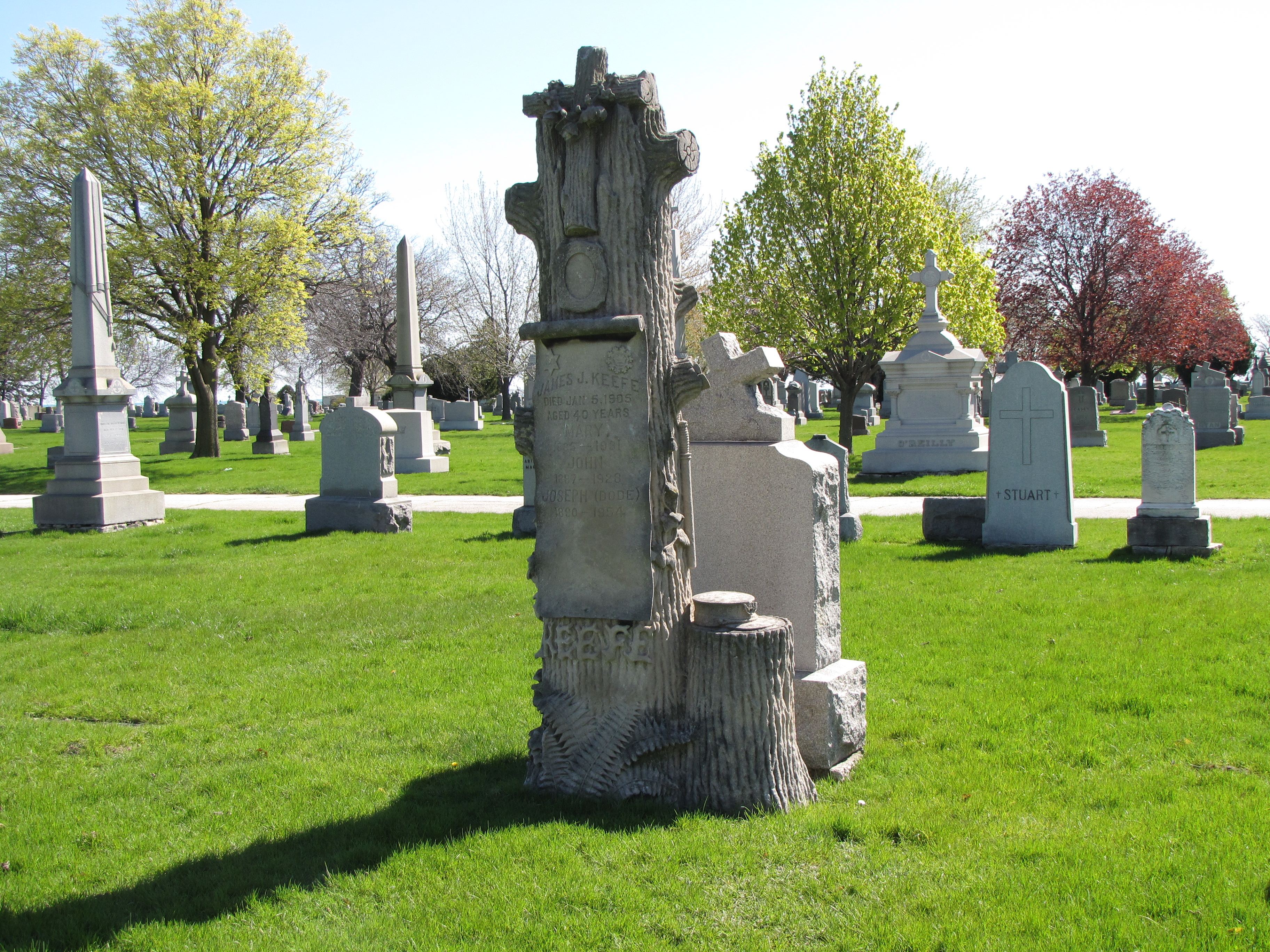
Many tree-stump gravestones were carved to showcase individual characteristics about the deceased for which the marker was made.  In this case, the tree-stump marker was carved for 40-year old James J. Keefe who had been a police officer (Badge #1620) in the Chicago Police Department.  His occupation is indicated on the tombstone with a night stick hanging from a limb and a policeman’s cap resting on the stump.

What the gravestone does not tell the passerby is that Patrolman Keefe was killed in the line of duty.  On Thursday night, January 5, 1905, Keefe and several other officers were called out to apprehend a known and violent criminal who had several priors on his rap sheet including several armed robberies and shooting a police officer.

The officers spotted the suspect at 26th and Wallace Streets.  The criminal quickly drew his gun and began firing at the officers.  The officers ran in hot pursuit of the suspect and followed him into a nearby tavern.  As it turned out the saloon keeper and the suspect had been incarcerated together and the suspect had ducked into the tavern to enlist the aid of his prison buddy.  Now the saloon keeper and the suspect were both firing at the officers.  In the shootout, two officers were wounded, including Patrolman Keefe, who had been shot in the chest.  The saloon keeper was shot in the back and the leg and arrested at the scene.  The suspect had slipped out of the tavern but was caught and arrested several blocks away at a drug store where he had collapsed.  The suspect, too, had been shot and was losing blood.

Unfortunately, Patrolman Keefe was rushed to the hospital but died on the way.  This gravestone memorializes his service.

Posted in Treestump gravestones | Leave a comment

Shake at Death’s Alarms


Greenbush Cemetery, Lafayette, Indiana

The epitaph on the ornamented-top tablet of Margaret Shaw was meant to comfort.  The epitaph tells those who walk by that they need not fear death.   Death is merely the call to go Home, and when one gets there, God will be waiting with open arms to welcome them.

What seems slightly amiss is that the epitaph is on the grave of a 29-year old woman, who is described as a friend in the epitaph but given the title of consort.  Consort is a synonym for wife, most often used to describe the spouse of royalty but also used for those of a more lowly station.  It is not incongruous to think of one’s wife as a friend, of course, but in this context it sounds like the epitaph is talking about a relationship more distant than that of a wife and lover.

IN

Memory of

MARGARET

consort of

JAMES SHAW,

who departed this life,

Sept. 26, AD 1840, aged 29

Years 5 mo. & 26 days.

“Why should we mourn departed friends

Or shake at death’s alarms?

“Tis but the voice that God hath sent

To call them to his arms.”


Posted in Epitaphs | Leave a comment

Going Home


Sleepy Hollow Cemetery, Sleepy Hollow, New York

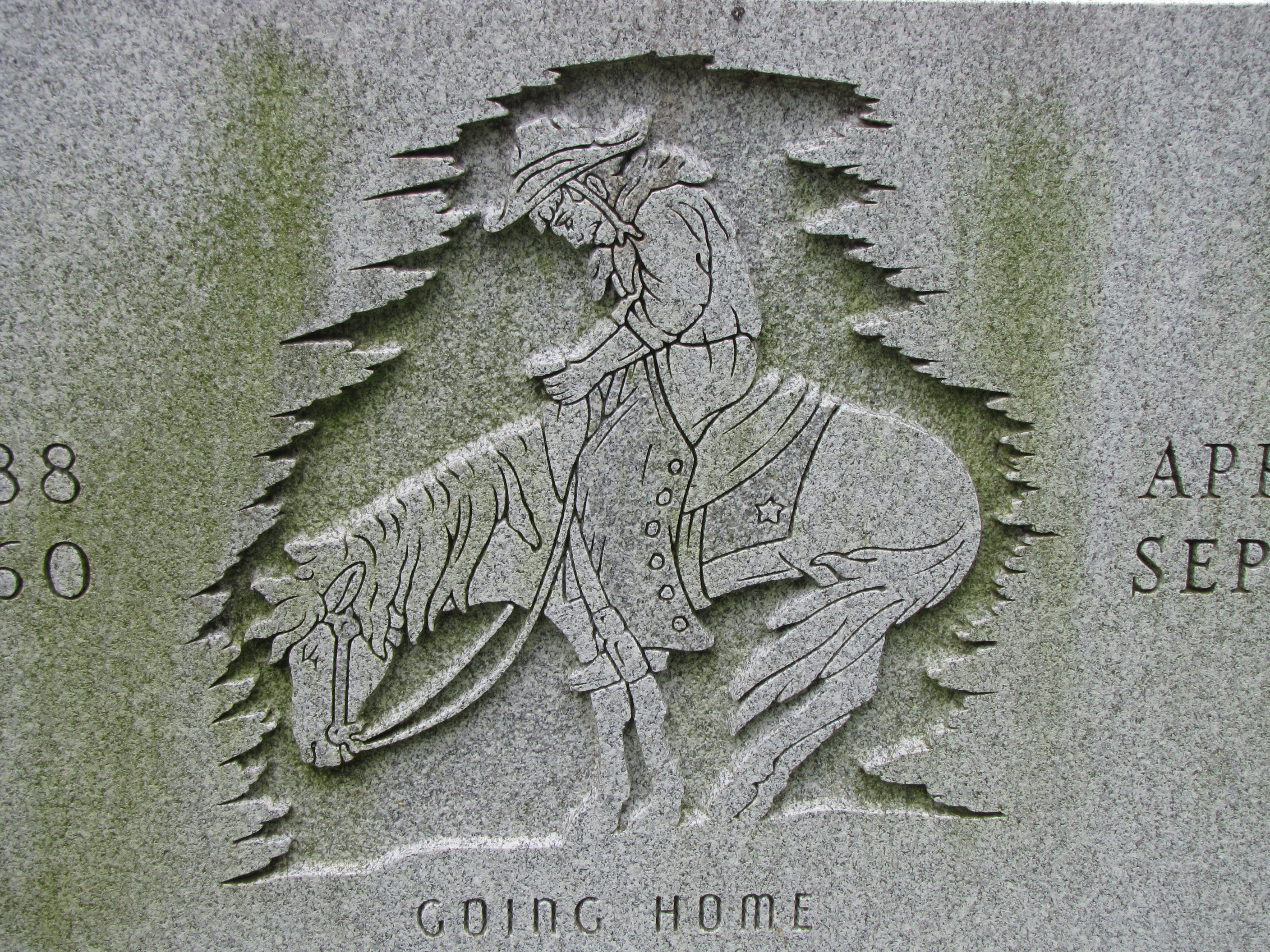
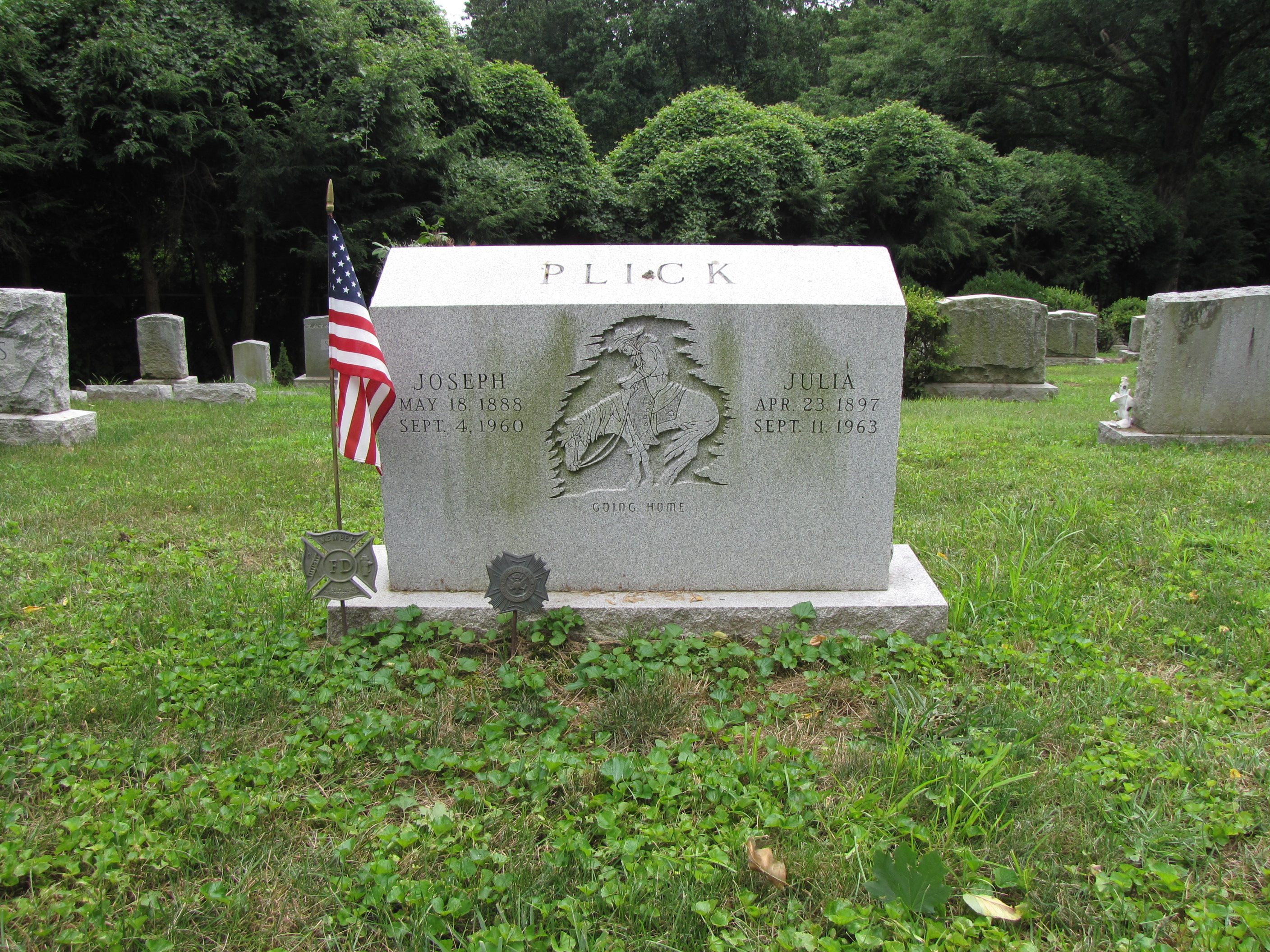
The Joseph and Julia Plick gravestone in the Sleepy Hollow Cemetery at Sleepy Hollow, New York, has an incised carving of a cowboy slumped over on his horse.  The marker is a take off on the sculpture, The End of the Trail, which was a powerful tribute mourning the loss of the Sioux people, by the famous western sculptor, James Earle Fraser.

Fraser created the sculpture for the Panama Pacific Exposition held in 1915 held in San Francisco. In addition to his fame for The End of the Trail, his most famous work, Fraser was also recognized for the art he created for the United States Mint, for the Indian Head Nickel.

End of the Trail sculpture by James Earle Fraser

The End of the Trail is also a fitting metaphor for the end of one’s life.

Posted in Symbolism | Leave a comment

Veteran’s Day

The Inman Chapel Cemetery, Rural Indiana, near Loogootee

The graves of veterans can be found in cemeteries all across America.  In some cases the graves do not in any way denote military service.  In others the graves are marked with a metal marker next to the gravestone that denotes the war in which the soldier fought.  While others have icons carved into the gravestone itself that mark the soldier’s service.

In the circular inset of the soft white marble rounded-top tablet gravestone of Thomas Blair, faded from erosion, displays the American Eagle, the symbol of the United States.  His service in the Civil War is carved into his stone: Co. A 52 REG, IND VOL.

Today is a day to think about Thomas Blair’s service and the service of all the soldiers who have worn the uniform.

Sweet be thy rest O Soldier brave,

Let angels guard thy hallowed grave,

And while the stars in Heaven flame,

Let glory wreath they honored name.

Posted in Symbolism | Leave a comment

The Partridge


The patridge is the homely and smaller cousin of the pheasant.  According to Greek mythology, the partridge was born out of the rage and jealousy of Deadalus.  Deadalus was an accomplished and skilled craftsman.  But his clever nephew, Perdix, had invented the saw and other mechnical wonders.  Deadalus became jealous of his nephew’s skills.  Once when they were working together on top of the Acropolis, Deadalus threw Perdix off of the building hurling him toward the ground.  Athene in a moment of pity and admiration for the boy’s skill and artistry as a craftsman, turned the boy into a partridge as he fell to the ground to save him.  Forever remembering the fall from the top of the Acropolis, the partridge ashews nesting in trees and instead builds its nests on the ground–obviously still fearing heights.   The partridge forages and eats seeds that it finds on the ground.

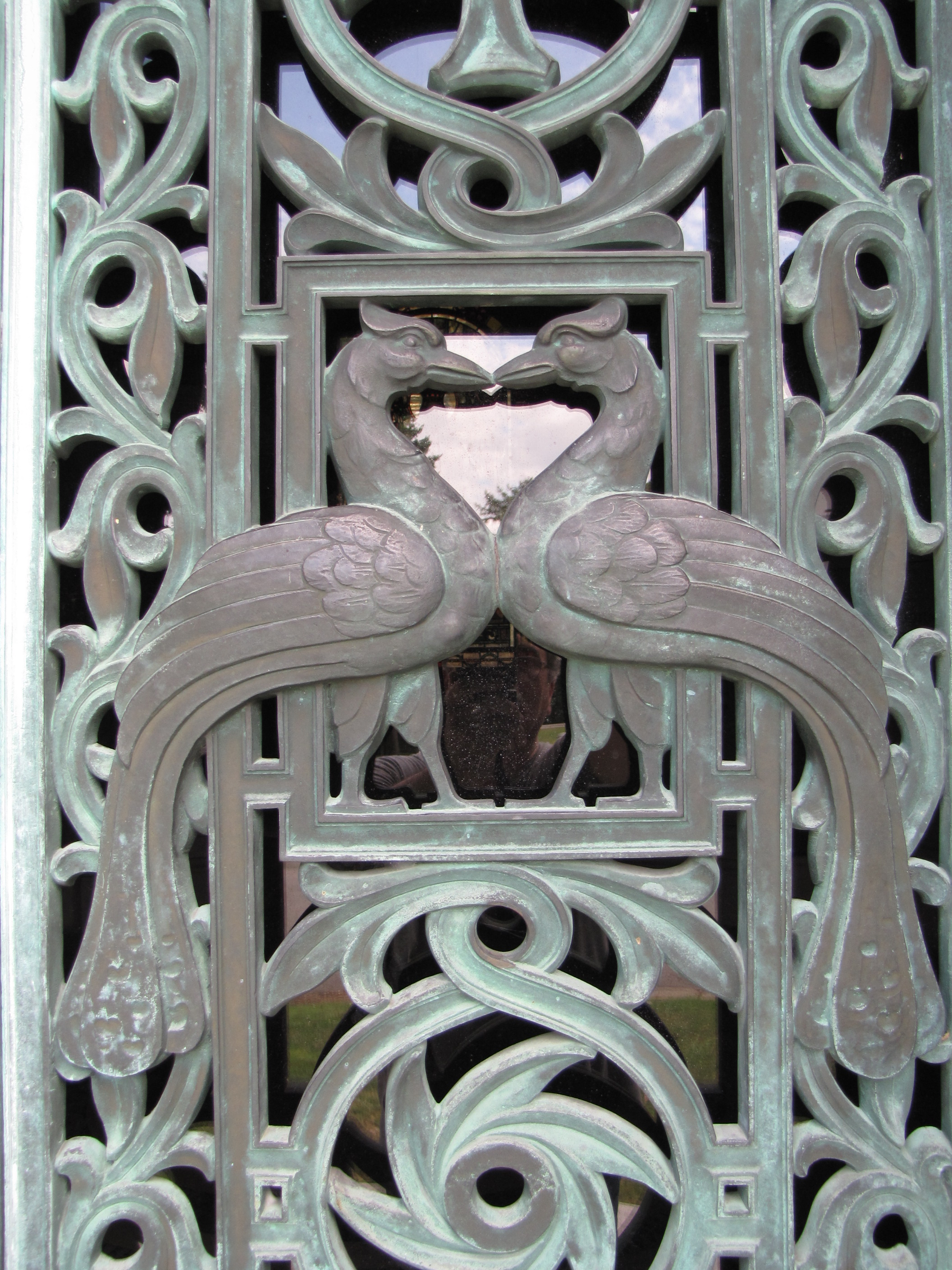
In funerary art, the partridge often serves as a decorative device.  Most likely these two partridges adorning mausoleum doors in the Sleepy Hollow Cemetery are purely ornamental.

In Christian lore the partridge, however, is associated with the Devil as an incarnation of Satan.  It can represent temptation and even damnation.

Posted in Symbolism | 6 Comments

Angel holding a chalice

Mount Olivet Cemetery, Nashville, Tennessee

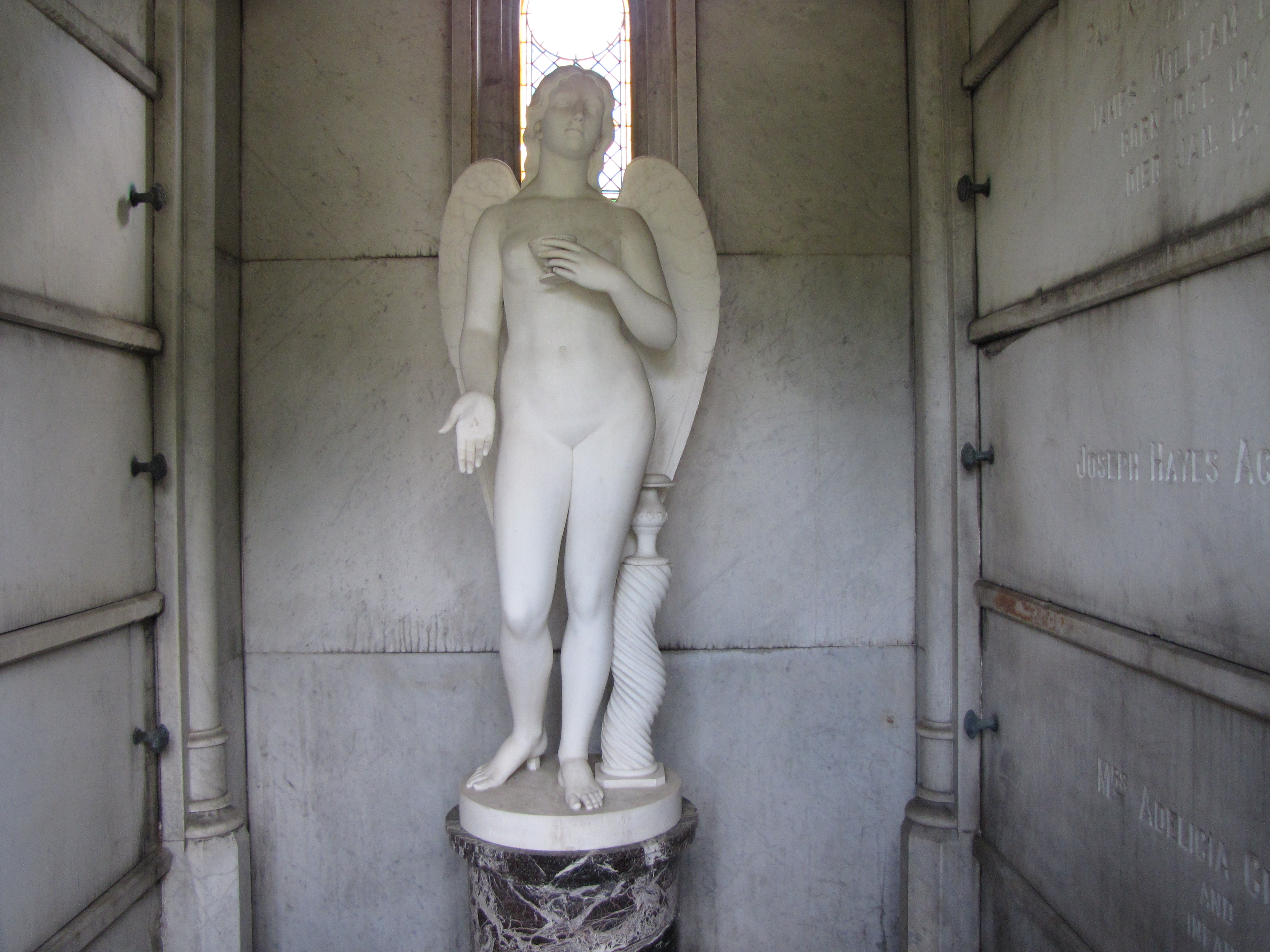
The Acklen Mausoleum in the Mount Olivet Cemetery at Nashville, Tennessee, is a stunning example of Gothic architecture, built for Adelicia Hayes Franklin Acklen Cheatham, the daughter of Oliver Bliss Hayes—a lawyer, judge, minister, and land speculator.

Adelicia was thrice married and mother of ten children. Adelicia’s storied history begins at age 22 when she first married Isaac Franklin, nearly 30 years her senior.  Isaac raised cattle and tobacco on Fairvue, a 2,000-acre estate.  They had four children, one of whom died at birth.  Unfortunately, Isaac died at 57 leaving Adelicia a wealthy widow at the young age of 29.  Within three years, Adelcia married Colonel Joseph Acklen, a lawyer and businessman.  The couple had six children during their marriage and tripled their fortune.  Her second husband died in 1863.

Adelicia was left to manage the estate and proved to be a shrewd business person in her own right.  Adelicia was able to convince Confederate soldiers not to burn her Louisiana cotton fields.  At the same time she negotiated a million dollar sale of cotton to the British and was able to secure its passage through the Union blockade of the Southern ports.  Miraculously, Adelicia was able to survive the war without losing either her home or her fortune, one of the few Southerners to achieve that.

After the war, at the age of 50, Adelcia married Dr. William Archer Cheatham, three years her junior.  After 20 years of marriage, they separated.  When Adelicia died she was laid to rest in the mausoleum.  She is buried there with her first two husbands and nine of her ten children.

Even though the mausoleum is relatively small, the design makes it seem much taller than it actually is with the long thin pinnacle on the central dome stretching upward toward the Heavens.  The doorway of the tomb displays the pointed arch, a characteristic Gothic design that was part of the transformation away from the Romanesque rounded arch and heavy design.  Another feature common to Gothic architecture is the tracery found framing the small window above and the cinquefoil window within the doorway. The cinquefoil is an architectural feature that is composed of five sides.  The word comes from Latin meaning five leaves.

Inside the mausoleum is a magnificent statue of a nude winged angel.  The state of nudity in this statue symbolizes virtue and innocence.  This theory reflects the classical teachings of Plotonius who taught that the nude body was divine and without sin.  The idealized nude body was a reflection of the image of God Himself and therefore good and beautiful.  This angel represents the Neoplatonic ideal of nuditas virtualis, the state of innocence.

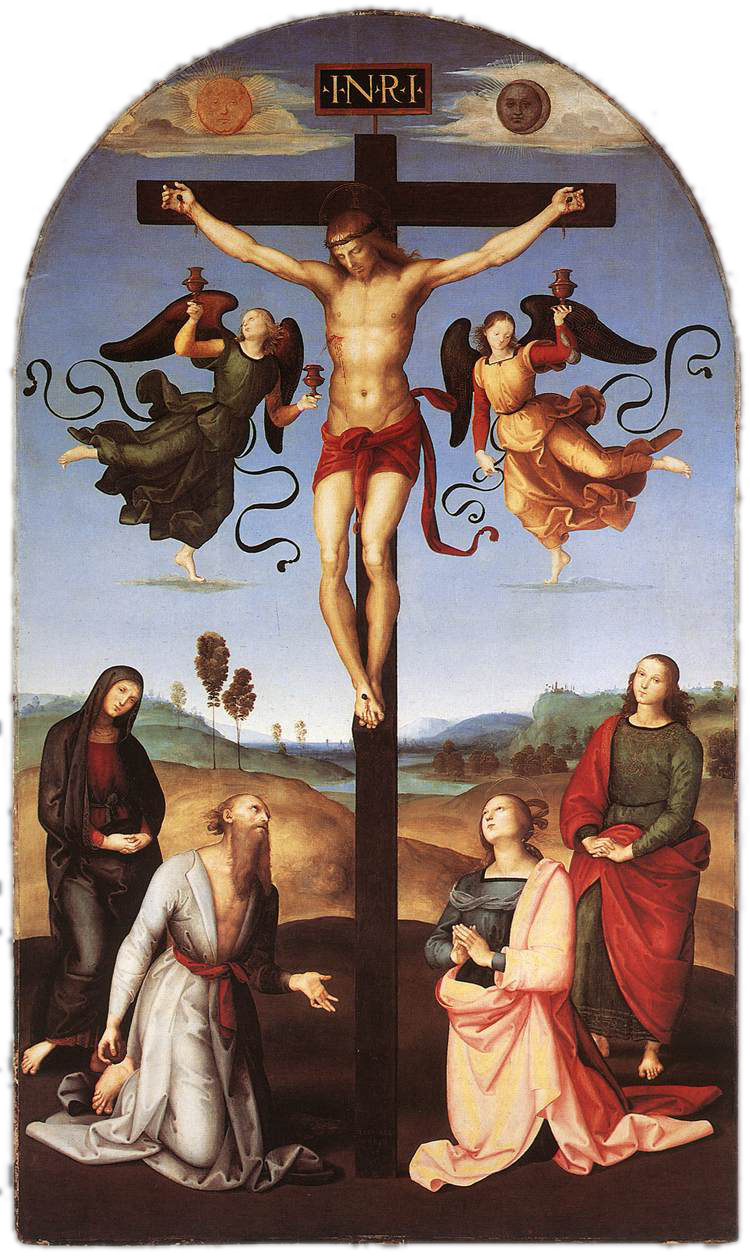
The angel, here, is holding a chalice and exposing her palm displaying drops of blood.  Usually this angel would be part of a larger scene of the Crucifixion.  Many paintings show angels capturing the blood of Christ, such as, Raffaello Sanzio’s Crucifixion (citta di Castello Altarpiece), Crucifixion by Giotto, and Crucifixion by Theophanes the Cretan.  The angels in these paintings capture the Precious Blood of the Savior which flowed from his hands, feet, and side.  The chalice that the angel holds is a symbolic reference to the Eucharist.

The Crucifixion by Raffaello Sanzio (1503-4)

Posted in Mausoleums, Symbolism | 1 Comment

Halloween Night


The Hag, by Robert Herrick, 1648

The Hag is astride,

This night for to ride;

The Devill and shee together:

Through thick, and through thin,

Now out, and then in,

Though ne’r so foule be the weather.


The storme will arise,

And trouble the skies;

This night, and more for the wonder,

The ghost from the Tomb

Affrighted shall come,

Cal’d out by the clap of the Thunder.

Posted in Uncategorized | 1 Comment

Open Gates

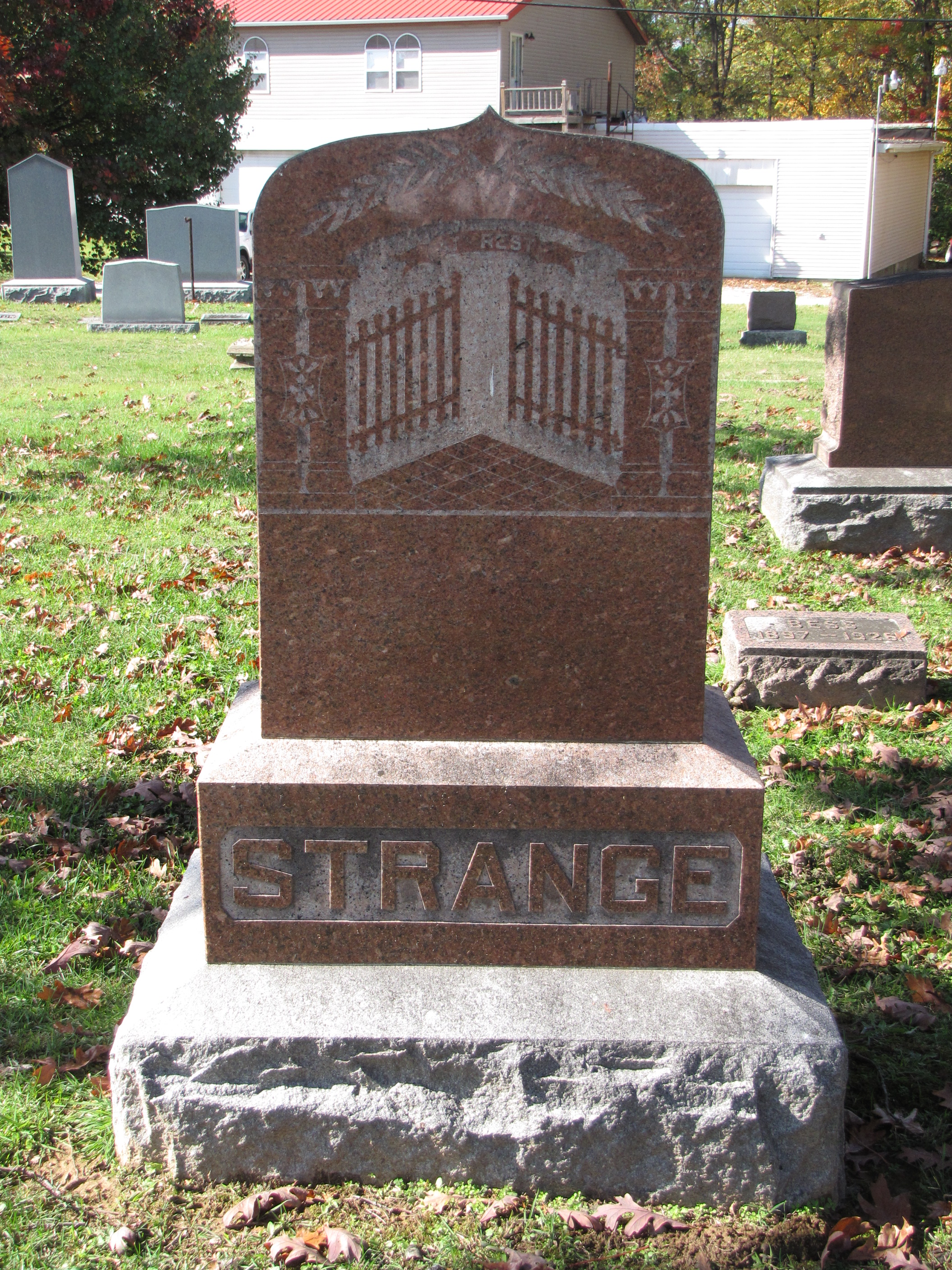
Goodwill Cemetery, Loogootee, Indiana

In the Goodwill Cemetery at Loogootee, Indiana, a red granite block marker displays an incised carving of an open gate, a common symbol found in American cemeteries.  The open gates, which are central to the Last Judgment, are opened to a banner above that reads “AT REST”.  The gates here represent a passageway from one realm to the next.  The gates are the portal for saved souls to make their passage from the Earthly realm to the Heavenly realm upon Christ’s return.

Posted in Uncategorized | Leave a comment