The Old Rugged Cross

St. Ambrose Cemetery, Seymour, Indiana

St. Ambrose Cemetery, Seymour, Indiana

MARIAROSA

SCIARRA

DED. 11, 1847

OCT. 27, 1920

BORN AT CHIAUCI, ITALY

This dramatic monument erected for Mariarosa Sciarra is a depiction of a line from the iconic hymn “Rock of Ages” written by Reverend Augustus Montague Toplady in 1763 and first published in 1775.  The hymn has been a popular Christian standard for over a century.

At the turn of the 19th Century, postcards depicted a dramatic scene of a woman in a flowing dress being buffeted by a storm surrounded by stormy white-crested waves clinging to a cross illustrating the first two lines of the third stanza from the hymn:

“Nothing in my hand I bring, Simply to Thy cross I cling”

The image above is a sculpture of those two lines of the great hymn.  This motif is found in full sculpture,  but also commonly found on white-bronze markers (blue-tinted cast zinc markers) made in Bridgeport, Connecticut.  The woman symbolizes faith.  The raging sea (not depicted in this sculpture–the woman rests upon a rock) is a metaphor for the sea of sin in which humankind lives, and the cross is the hope to which sinners cling to be saved.

Posted in Symbolism | Leave a comment

Corliss Gets a Bath

Crown Hill Cemetery, Indianpolis, Indiana

Crown Hill Cemetery, Indianpolis, Indiana

Corliss Randle Ruckle

Born Dec. 19, 1877

Died Dec. 4, 1889

One of the most sought out monuments in the sprawling Crown Hill Cemetery at Indianapolis, Indiana, is that which was carved for Corliss Randle Ruckle, who was born December 19, 1877, and died of diphtheria December 4, 1889, just shy of his 12th birthday.  Corliss was the only son of Nicholas R. Ruckle, who had been a captain in the Civil War in Company E in the 11th Indiana Volunteer Infantry. He was promoted to Colonel of the 148th Rec’t Indiana Infantry.  His mother was Jennie Moore Ruckle.

Corliss Randle Ruckle is depicted in a white-collared shirt tied with a bow, wearing knee breeches, button-up shoes, while sitting on a spiral staircase, with an open book and a small bouquet of flowers.  His family memorialized young Corliss in a lifelike statue, customary in the Victorian Era.

Over the years, his monument discolored and became covered with biological growths.  The cemetery undertook a restoration of the monument which was estimated at costing $18,000 to remove the lichens, fill the pock marks, and the discoloration.

At a recent Indiana Association for Gravestone Studies Chapter meeting at Franklin, Indiana, Brad Manzenberger, a cemetery preservationist spoke about cleaning headstones.  Of course, no cleaning should be done without the permission of the cemetery management.  When starting out it is important to know what the marker is made of—marble, granite, sandstone, bronze, or zinc—each may be treated with different cleaning materials.  Before you begin, take before pictures of the marker to document the work.  Be sure to include the name on the marker, inscription, type of gravestone, condition, cemetery name, and the location within the cemetery.

During Brad’s PowerPoint Presentation, he stressed the need to understand why the marker is being cleaned: to improve readability, to remove soling, staining, or biological growth, or to remove graffiti.

When cleaning a marker it is important to consider the following questions:

Will cleaning accelerate deterioration?

Will cleaning cause loss of the original material?

What are the long-term effects of cleaning chemicals?

Plain water, non-ionic detergents, biocides, and some specialty masonry cleaners are acceptable.  Salt-based, bleaches, and acids should not be used to clean markers nor should sand blasting, high-pressure washing, wire brushes, or grinders.  They can do serious damage to marker.

In general, when cleaning a stone monument, soak the gravestone thoroughly with water before the cleaning treatment begins.  Apply the chemical treatment (biological or cleaning agent) and start from the bottom of the marker with a soft-bristle brush and move up using small circular motions.  Use lots of water and rinse thoroughly.  When cleaning bronze of zinc markers Ivory Dish soap, a nylon brush, and water work best.  Again, thoroughly rinse after the cleaning is done.

Keep these simple rules in mind to clean and protect gravestones.

IMG_9636

Posted in Children's Graves | 4 Comments

A Young Mother and Her Infant Daughter

Rosehill Cemetery, Chicago, Illinois

Rosehill Cemetery, Chicago, Illinois

Frances M. Pearce

Born June 29, 1835

Died 1854

Second wife of Horatio Odell Stone


Frances Pearce Stone

Born May 1854

Died September 1854

In the early 19th Century the grim images of winged skulls, skeletons, snuffed candles, and gravedigger’s equipment which spoke, in part, to the fragility and brevity of life gave way to more sentimental images of willow trees, flowers of all kinds, and urns.  As the century progressed funerary sculpture and imagery became more ornate and more sentimental often memorializing deceased children in stone.

In the Rosehill Cemetery at Chicago, Illinois, a poignant reminder of the real risks of childbearing are all too clear in the monument that was carved for Frances M. Pearce Stone, the young wife of Horatio Odell Stone, and her infant daughter, Frances Pearce Stone, who died a scant four months after her mother.

IMG_6219

Posted in Children's Graves | 3 Comments

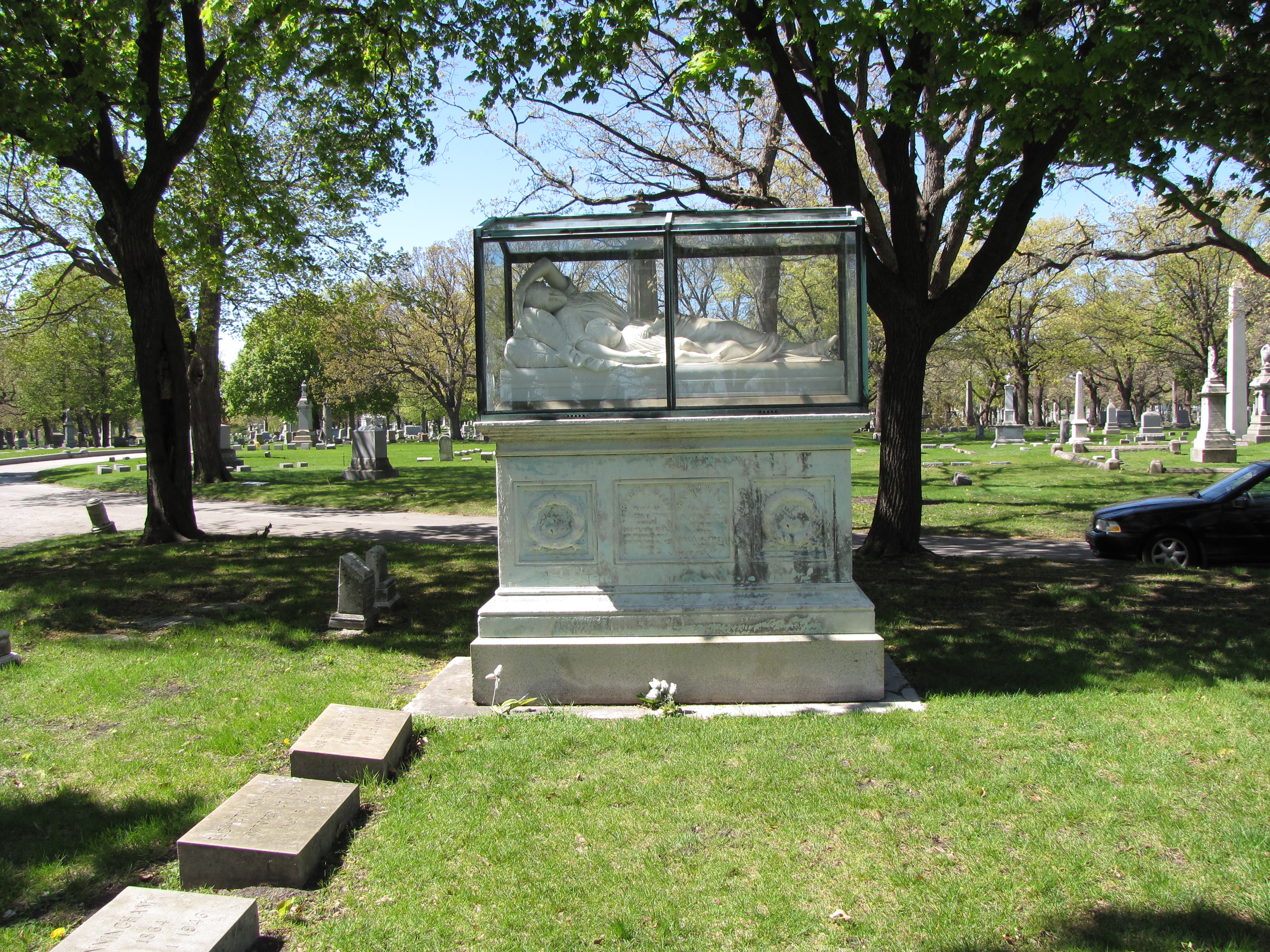
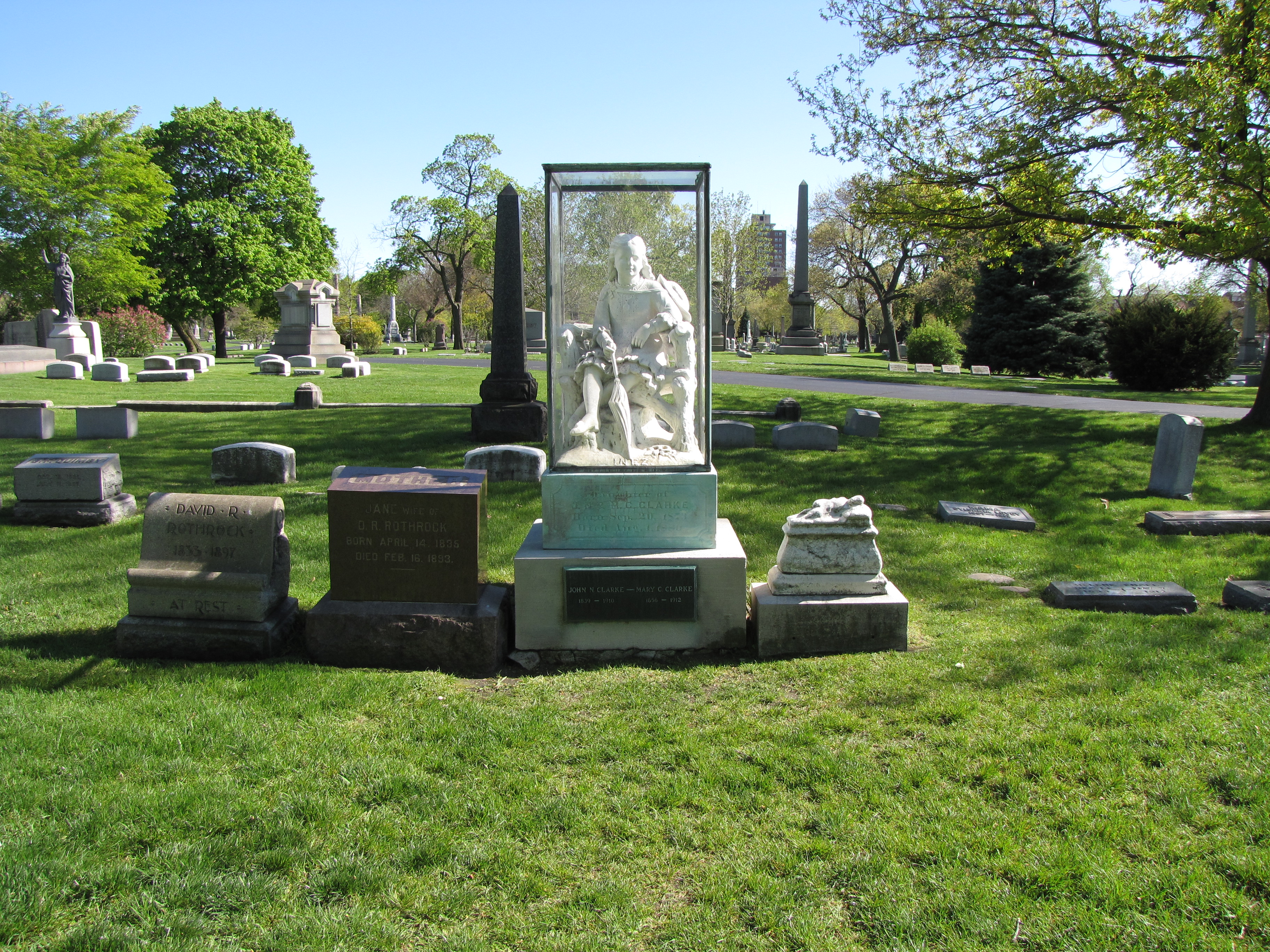
Inez Clarke

Graceland Cemetery, Chicago, Illinois

Graceland Cemetery, Chicago, Illinois

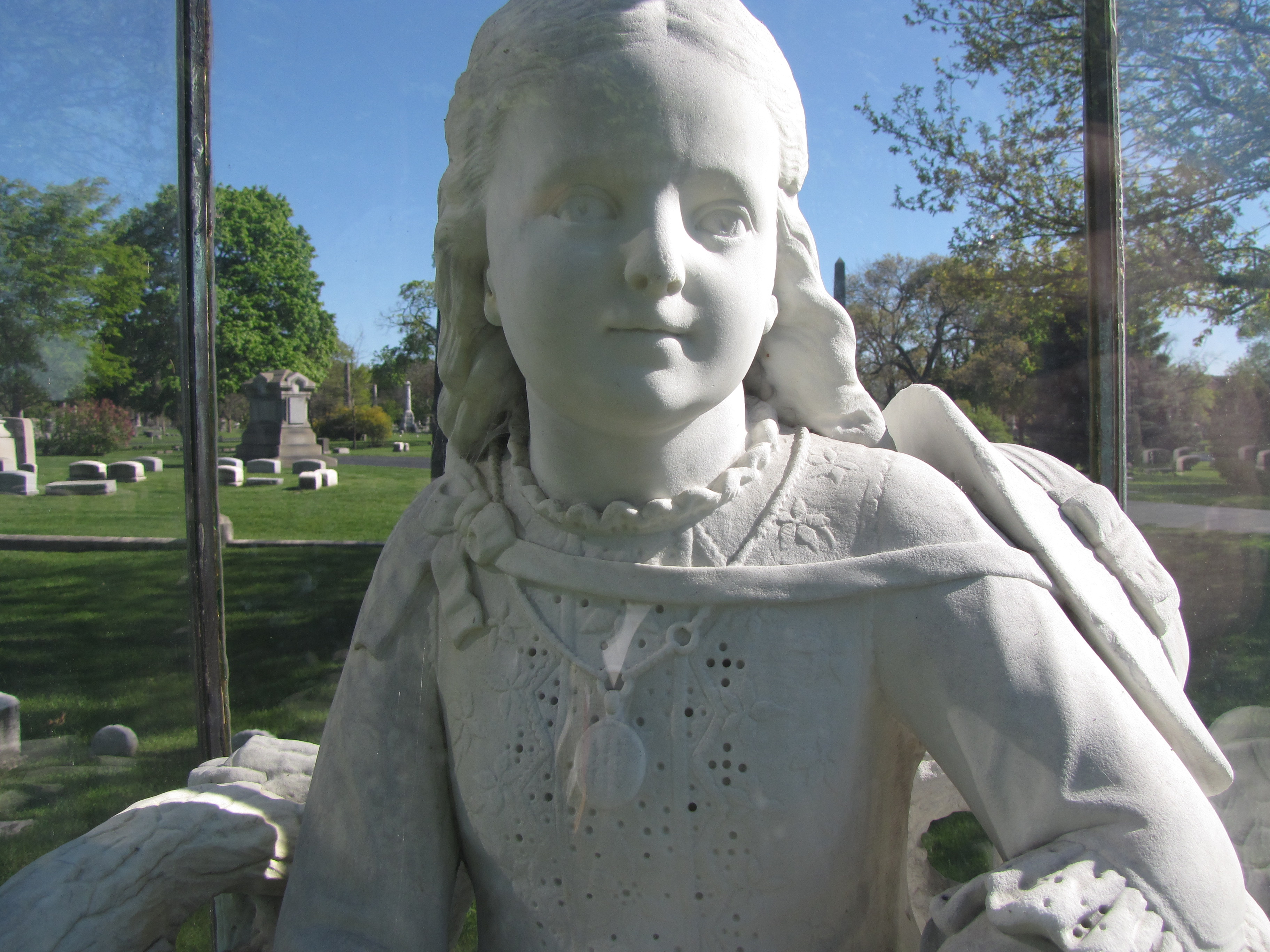
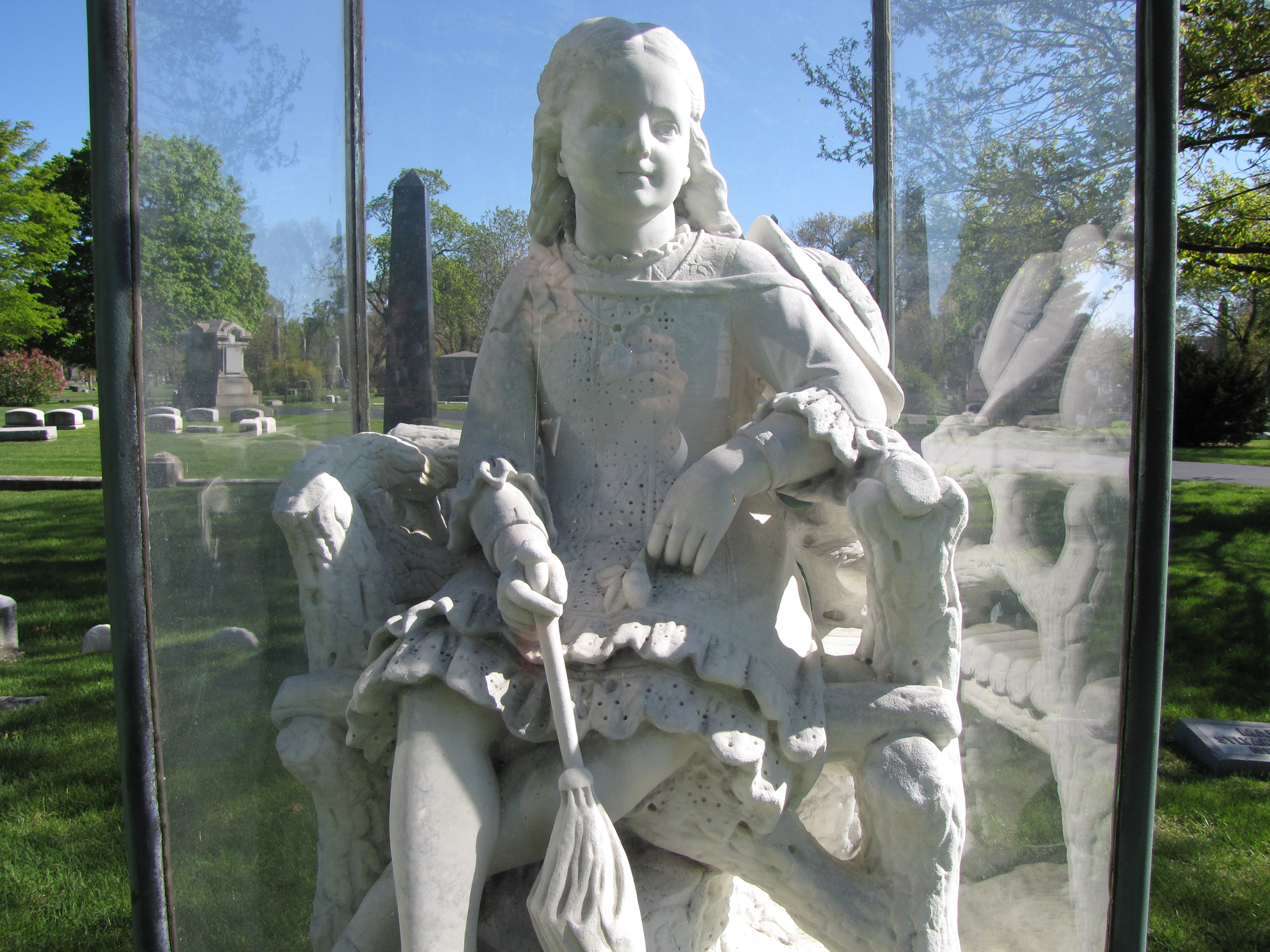
The magnificent white-marble memorial sculpture to Inez, the daughter of John N. and Mary C. Clark, in the Graceland Cemetery at Chicago, Illinois, who was born September 20, 1873, and died August 1, 1880, is a stunning example of sculptures that were created to memorialize children in the Victorian Era. In this example, which has been protected from the weather by glass, the seated girl holds a parasol, her dress is layered eyelet lace, a hat casusally hangs around her neck, and she wears a locket.

She is seated on a chair that is carved to look like it was built from tree limbs with the bark still attached in an unfinished but natural look that was part of the rustic movement of the mid-nineteenth century.  It was characterized by designs that were made to look like they were from the country. Elegant and slim curved lines in furniture gave way to bulkier and heavier. Homes, cabins, and garden houses were designed in the rustic style eschewing classic designs. In decorative furniture this often took the form of chairs made from rough tree limbs curved to form arms and chair backs, chair legs made from tree roots growing upwards. In cabins, railings and the siding were made from unhewn logs with the bark still in place.

IMG_6384

Many Websites claim that the monument to Inez Clarke is a mystery and that, in fact, Inez did not really live; the monument was merely a sculpture created as an advertisement from a monument company.  Others claim that Inez did live and that her spirit is still embodied in the sculpture.  Some claim that the monument is often missing during the night as she walks the cemetery and that it reappears in the morning.  Cemetery staff have confirmed that there was a little girl name Inez Clarke buried in that spot, however, they did not comment on the paranormal activities attributed to the monument.

IMG_6385

Posted in Children's Graves | 4 Comments

Artie and Willie

Calvary Cemetery, Chicago, Illinois

Calvary Cemetery, Chicago, Illinois

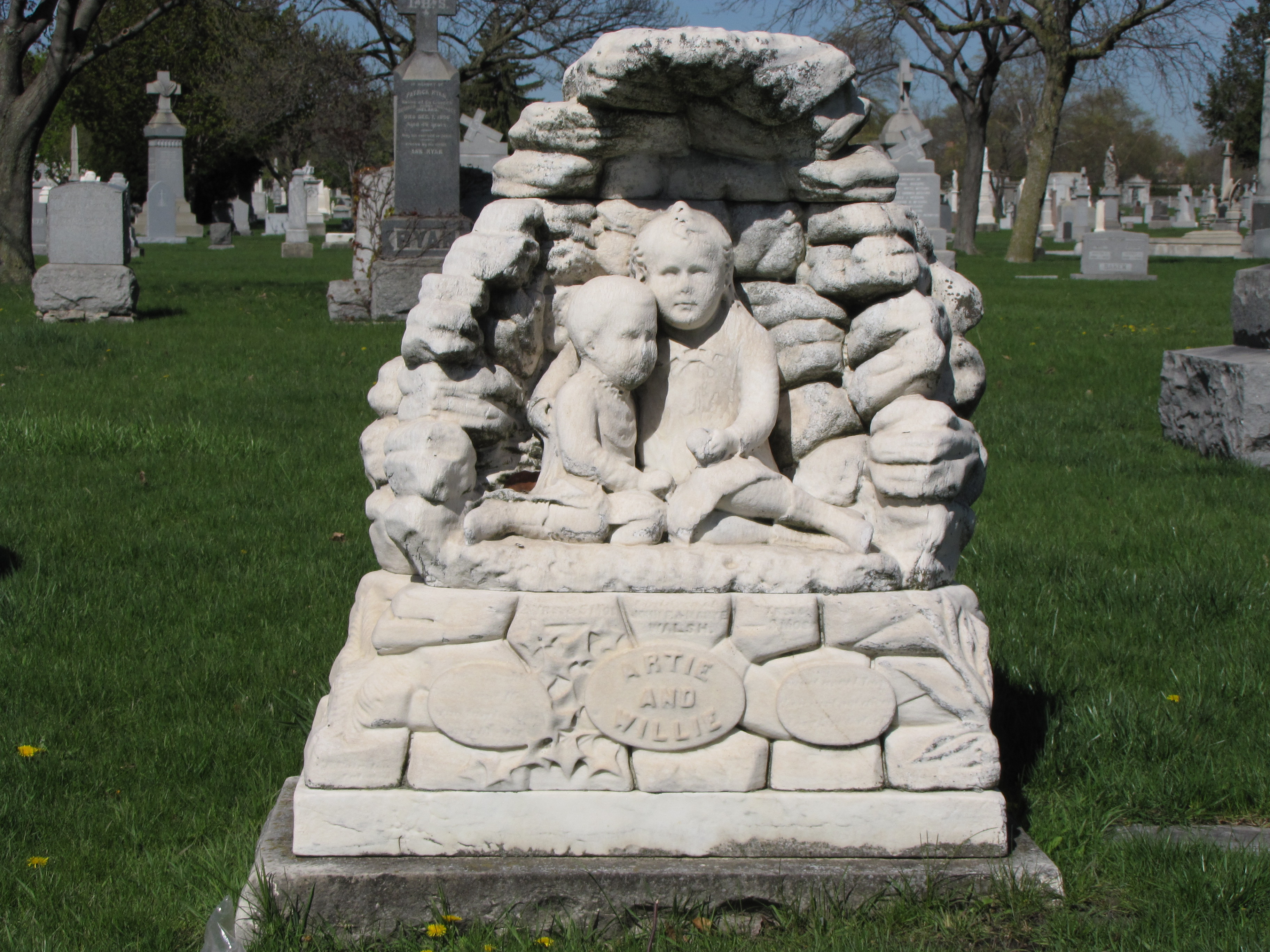
In the Calvary Catholic Cemetery at Chicago, Illinois, there is a gravestone carved to look like a grotto.  Inside the tiny grotto are sculptures of two little children.  At first glance it might look like two little girls because the children are wearing a dresses, however, that was common for boys up to age five in the Victorian era.

The boys were Artie, who was 4 years old, and his brother, Willie, who was 2 years old.  They were the sons of John and Marie Walsh.  They both died in the late 1800s.  Because the soft marble has weathered badly, not much else can be discerned from the inscriptions that have been lost to history.  The sculptures have eroded giving the little boys a ghost-like appearance.  The older brother’s arm wraps around the younger brother in a tender and protective gesture as they huddle together.

Posted in Children's Graves | Leave a comment

Mary Ella McGinnis

Crown Hill Cemetery, Indianapolis, Indiana

Crown Hill Cemetery, Indianapolis, Indiana

Mary Ella McGinnis

Born

December 15, 1869

Died

August 6, 1875

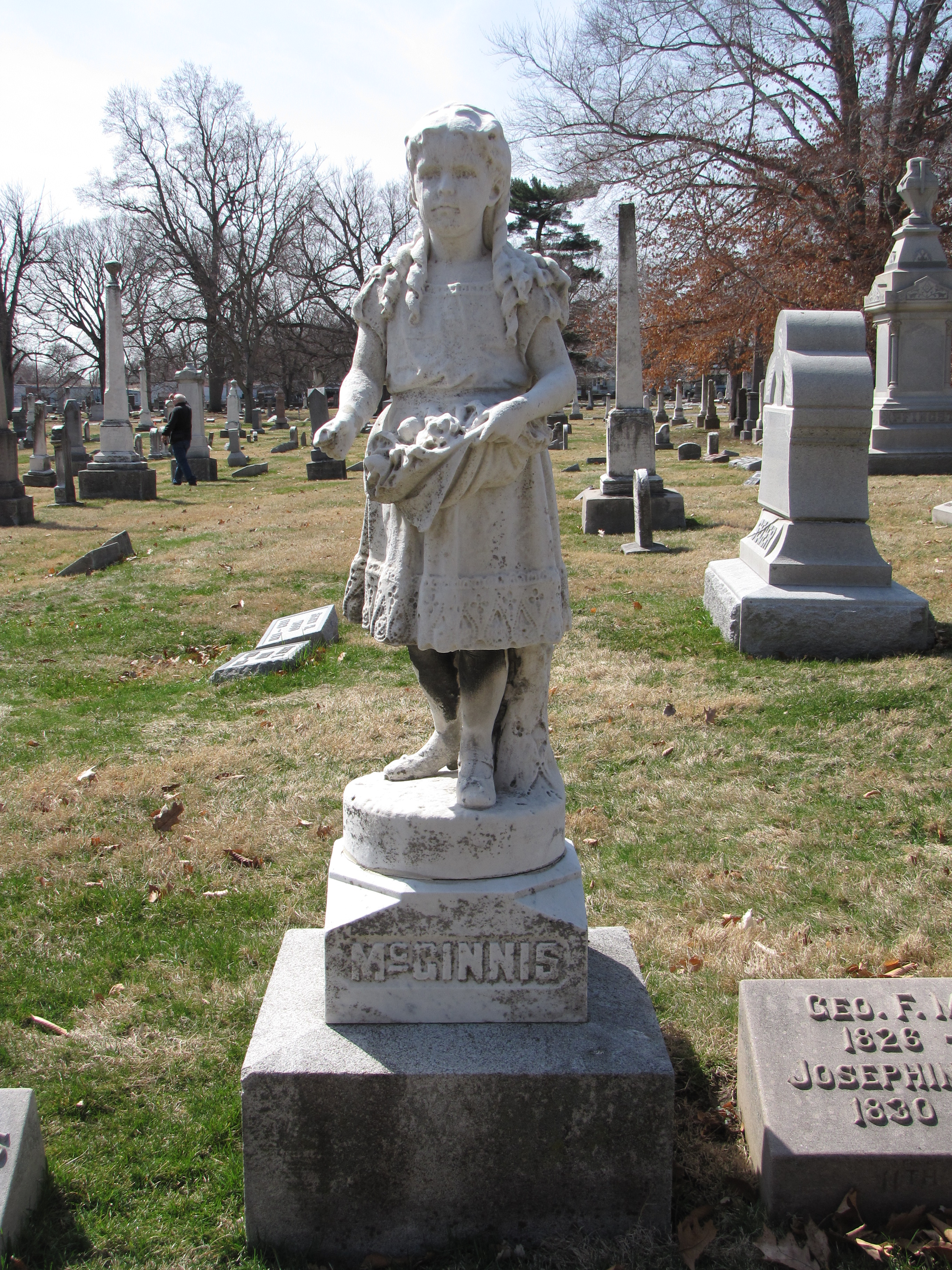
The likeness of Mary Ella McGinnis was created in the Victorian style of memorializing children in funerary statuary.  The realism of the statue is remarkable–her curly hair cascades to her shoulders as she looks forward.  Mary Ella is depicted in her finest clothing, the eyelet lace still visible in the bottom of her skirt.  She is portrayed holding flowers in her apron with one hand and a single flower in her other hand.  Because of the weathering of the soft marble, the kind of flower is not discernable.  The act of placing the single flower on a grave is a common motif and expresses the transitory nature of life. The flower she holds in one hand is a floral metaphor for a young flower that did not have time to fully bloom on Earth, a poignant visual message coupled with the image of this young girl.

Mary Ella, who died of lung congestion at 5 and ½ years old, was the daughter of George and Josephine McGinnis.  Her father, George, was a colonel, promoted to brigadier general, during the Civil War in the 11th Indiana Volunteer Infantry.  According to Memories of the Past: A Tour of Historic Crown Hill Cemetery by Wayne L. Sanford, this Italian white-marble sculpture is the second statue completed for her grave.  The first was reportedly created by the great sculptor Lorado Taft and rejected by the family.

IMG_1383

Posted in Children's Graves | 1 Comment

Minnie Belle Lain

Rest Haven Cemetery, Edinburgh, Indiana

Rest Haven Cemetery, Edinburgh, Indiana

Minnie Belle Lain

1905 – 1913

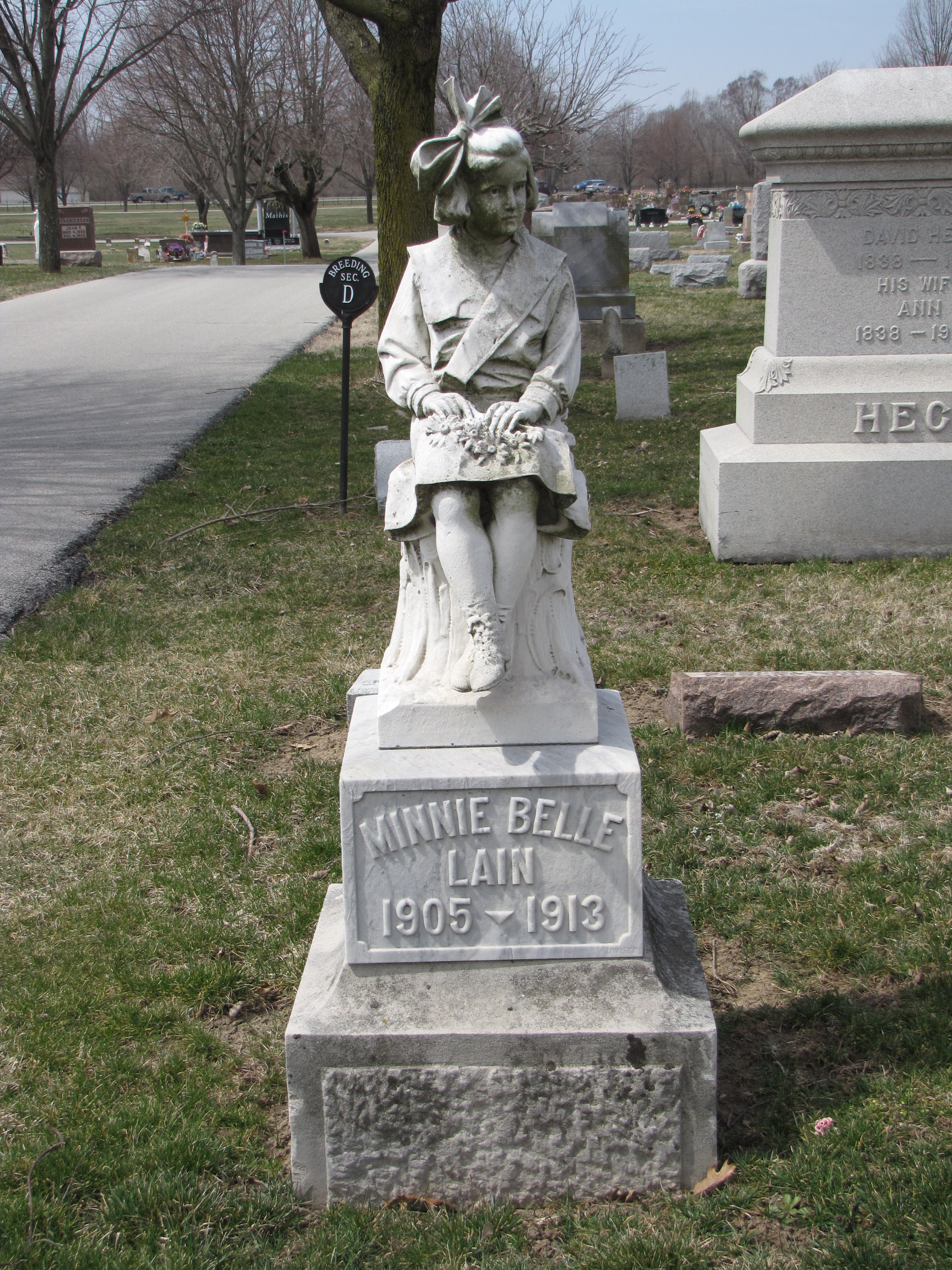
The Rest Haven Cemetery at Edinburgh, Indiana, has an excellent example of the Victorian practice of memorializing children in funerary sculpture.

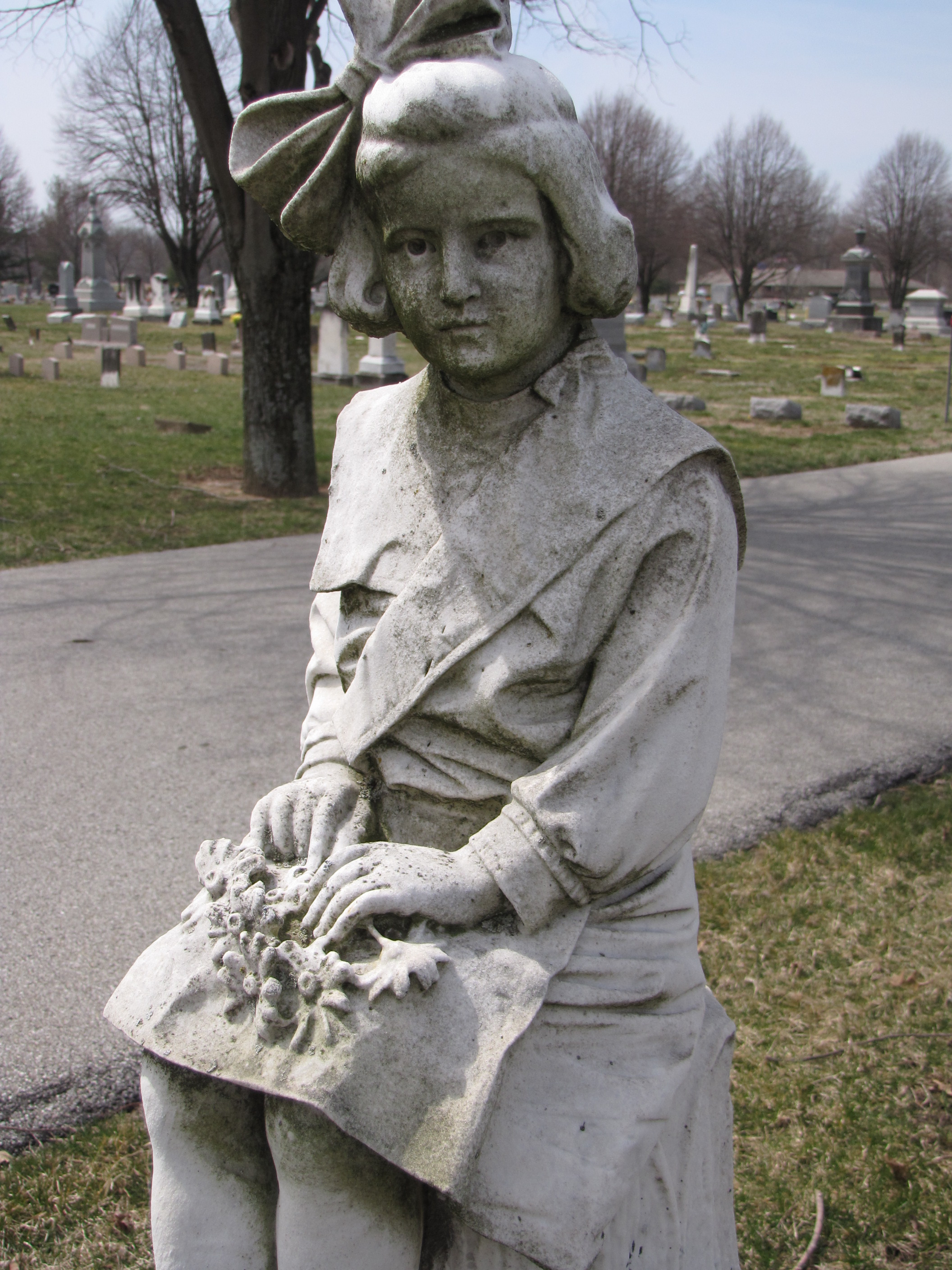
Minnie Belle Lain, the 8-year old daughter of Frank and May Maggie Lain, tumbled out of her father’s wagon as it crossed a bridge, she could not be saved.  Minnie Belle Lain is depicted in her finest clothing complete with a bow in her hair.  She sits with her legs crossed with a bouquet of daisies on her lap.  In the Victorian language of flowers the daisy represented purity, love, and beauty.

IMG_0131

Posted in Children's Graves | Leave a comment

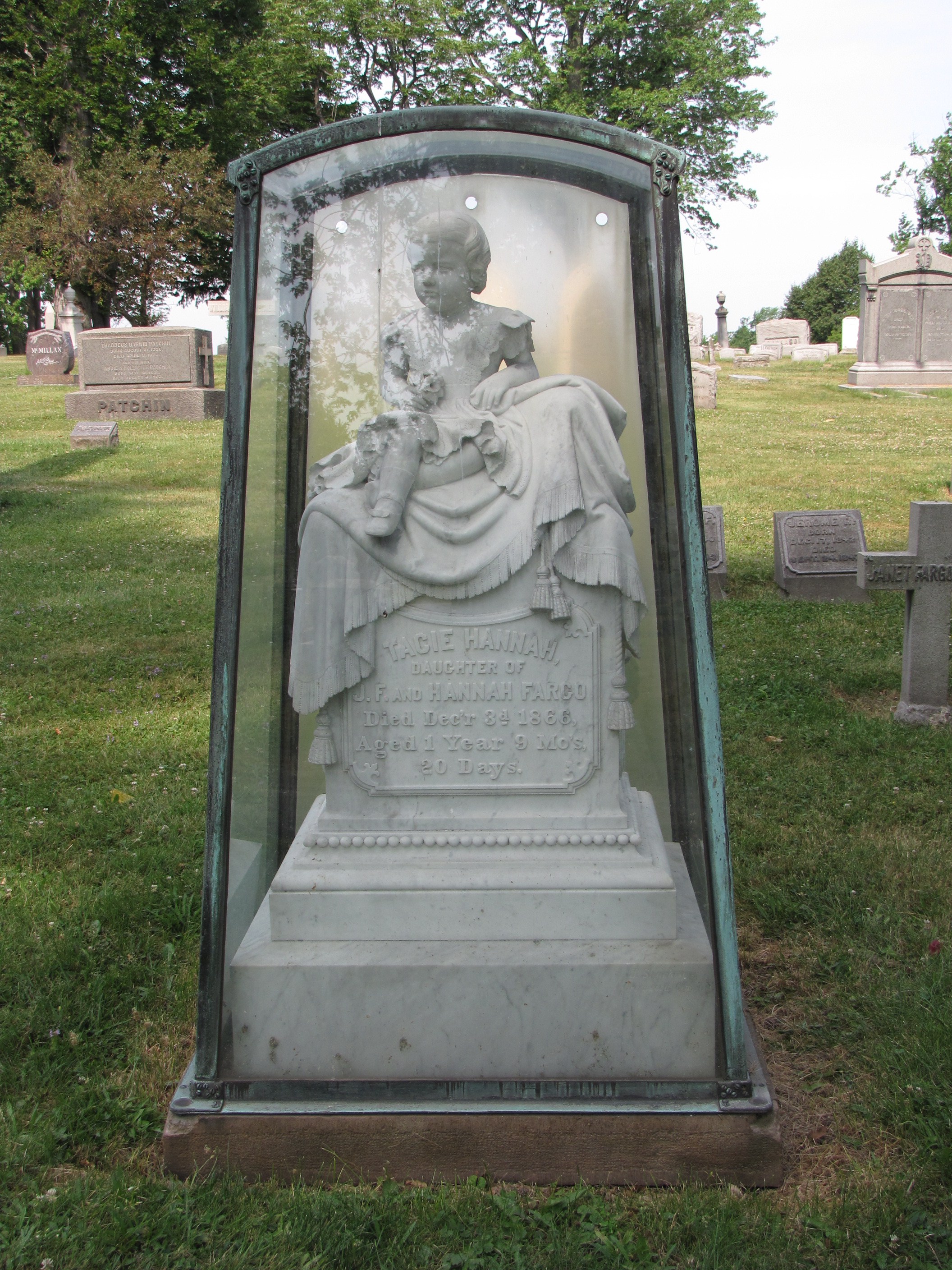
Tacie Hannah Fargo

Forest Lawn Cemetery, Buffalo, New York

Forest Lawn Cemetery, Buffalo, New York

TACIE HANNAH,

DAUGHTER OF

J. F. AND HANNAH FARGO

DIED DEC’R 3’d, 1866

AGED 1 YEAR 9 MO’S

20 DAYS.

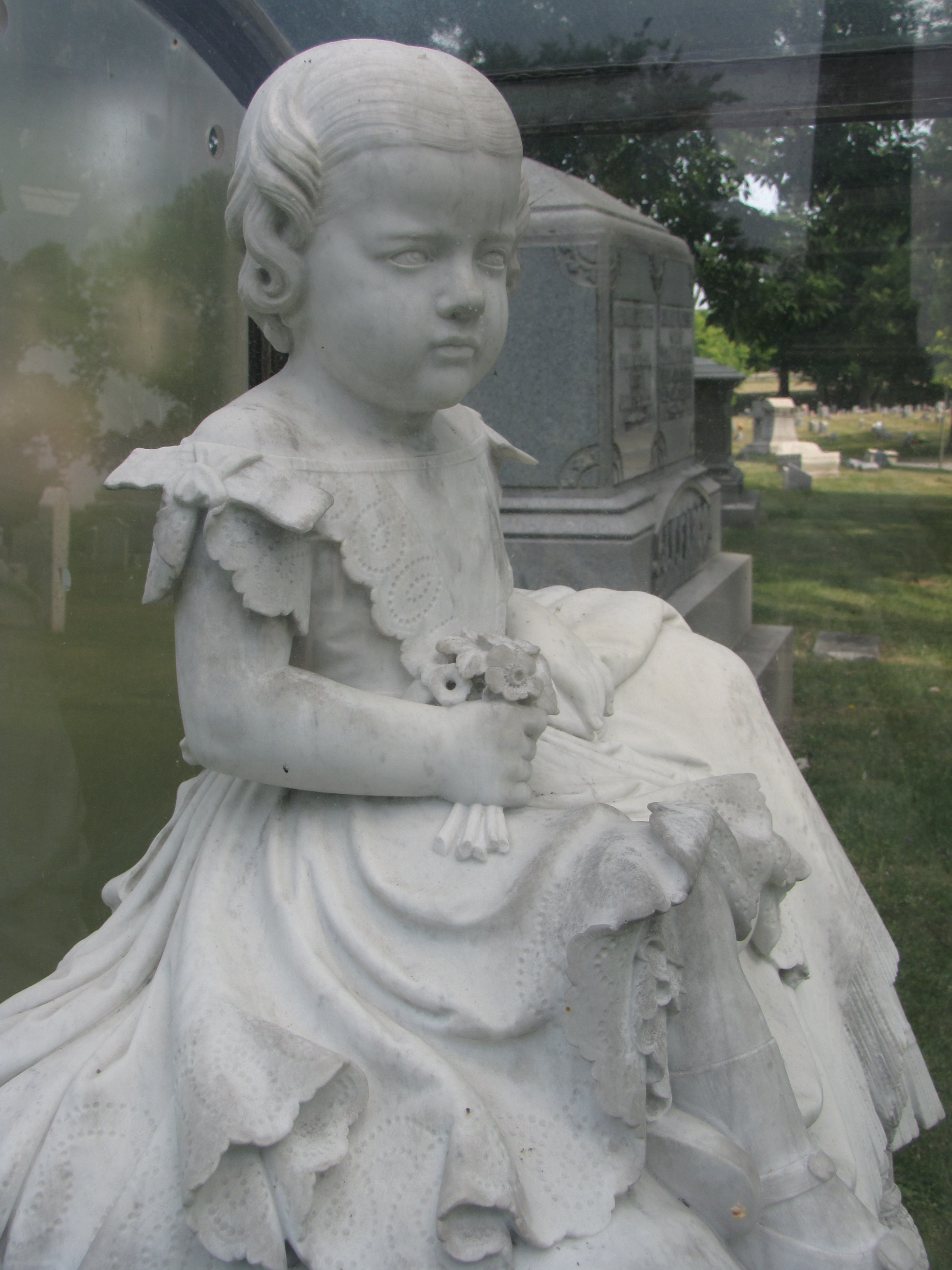
A pristine example of a child being memorialized in stone can be found in the Forest Lawn Cemetery at Buffalo, New York.  The elaborate white-marble sculpture, preserved and encased in glass, portrays the twenty-one month old daughter of J. F. and Hannah Fargo, Tacie Hannah Fargo.  The little girl is positioned sitting on top of a tasseled blanket gripping a small bouquet of flowers.

J. F. Fargo was the brother of William G. Fargo, one of the founders of the Wells Fargo Company.

IMG_6343

Posted in Children's Graves | 3 Comments

The Mystery Girl of Greenlawn

Greenlawn Cemetery, Franklin, Indiana

Greenlawn Cemetery, Franklin, Indiana

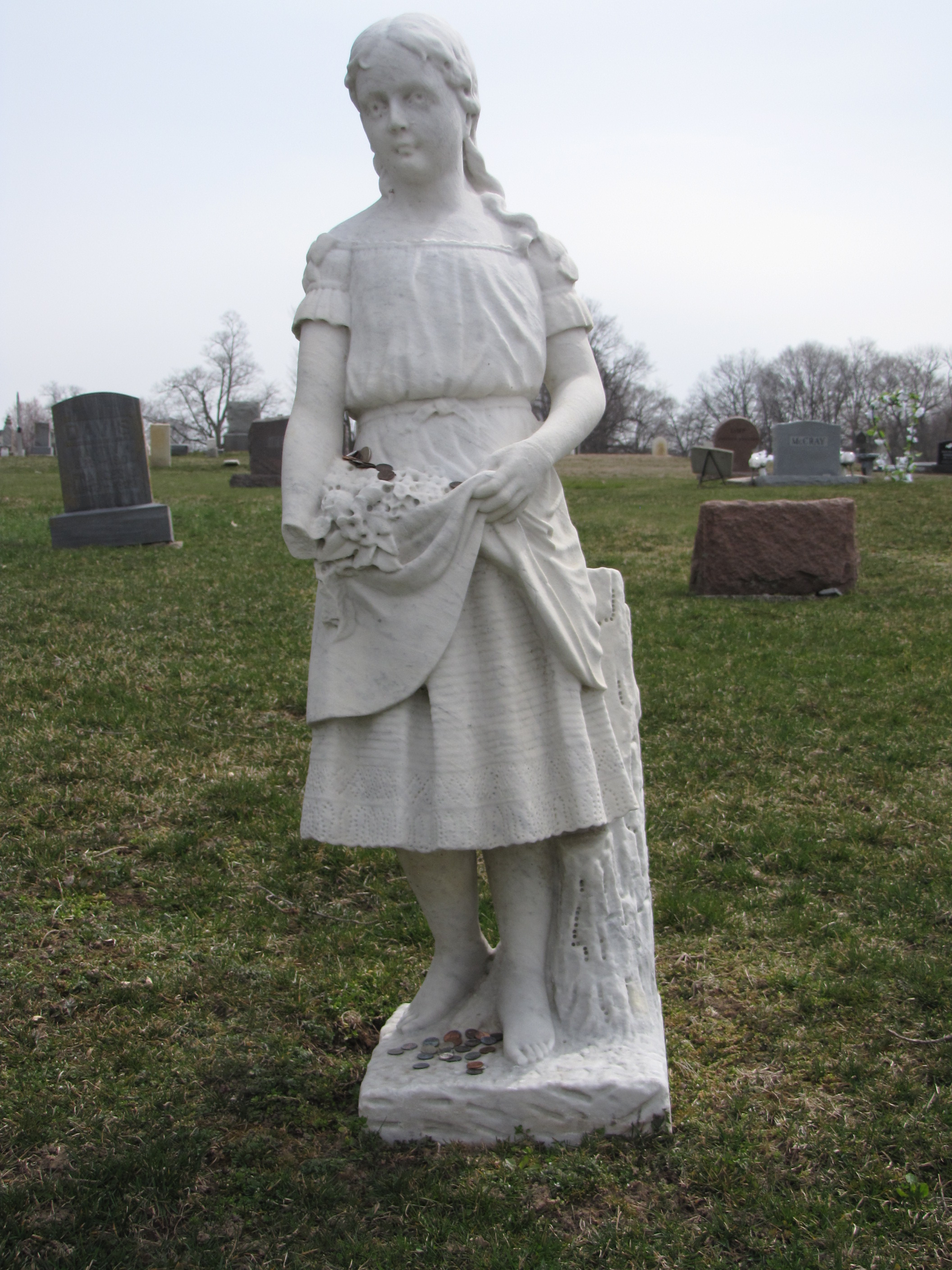
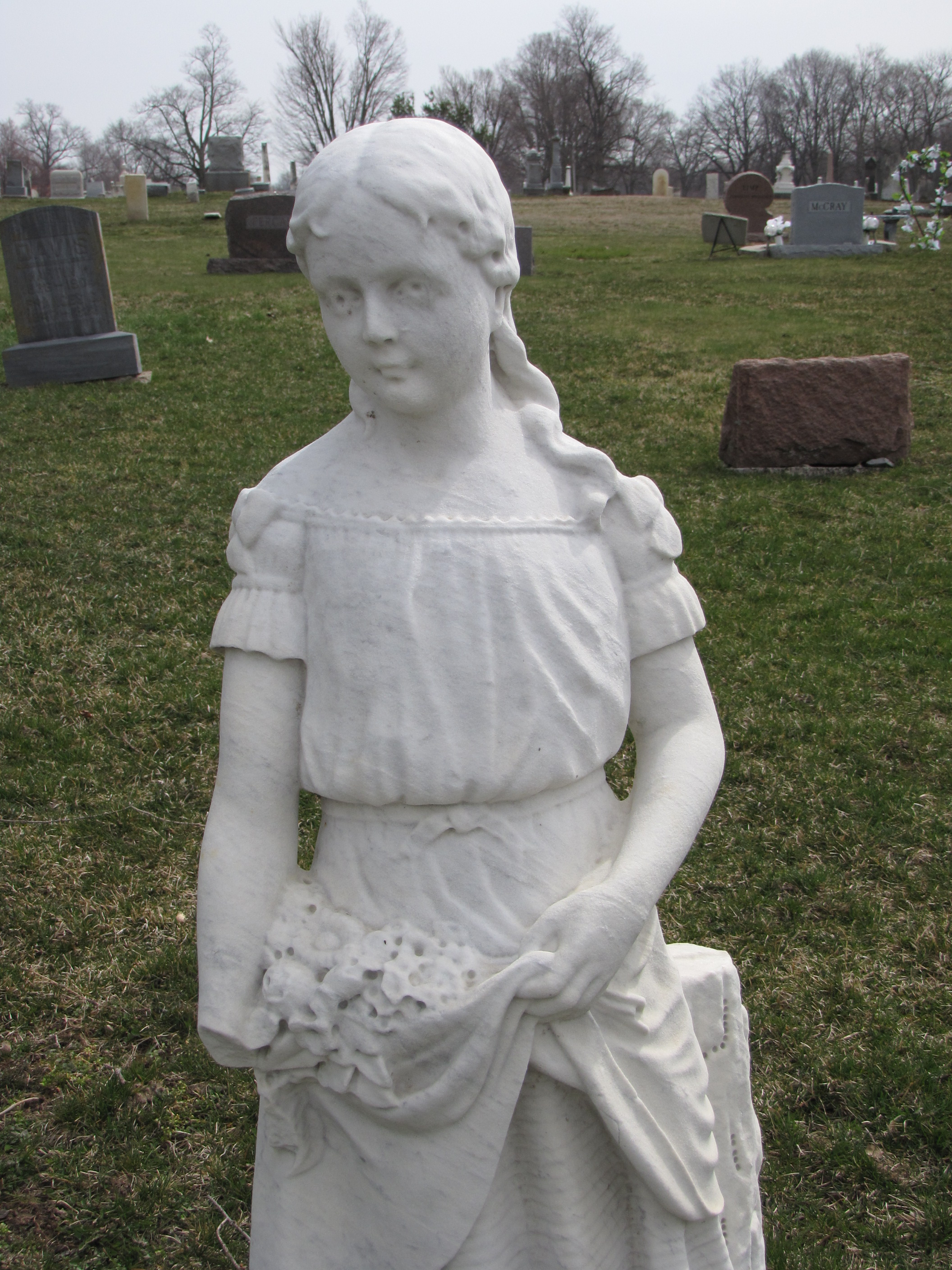
A white-marble memorial sculpture, sometimes referred to as the Girl of Greenlawn, in the Greenlawn Cemetery at Franklin, Indiana, is a mystery.  Brad Manzenberger, Franklin resident and a cemetery preservationist described the history of the sculpture, “She just showed up over seven decades ago.  That is where the story starts and ends because the story is no one really knows the story.  She just appeared.  No one knows who installed it, paid for it, carved it… And there is no one alive that remembers when it wasn’t there. It is believed that the memorial does not mark a grave.”

The sculpture is of the Victorian Era which lasted from about 1832 until Queen Victoria’s death in 1903. The era was an eclectic period in the decorative arts with several styles—Gothic, Tudor, Neoclassical—vying for dominance. The period was marked by ornamentation. This was true in architecture, furniture, and funerary arts. In cemeteries gravestones became taller, ornamented, and sentimental.  Children were often memorialized as life-size sculptures—dressed in their best finery.

In Victorian times, flowers took on significance as a way to send coded messages; this was known as floriography from the Latin combining flora—“goddess of flowers” and graphein—“writing”. Each flower had a meaning that was conveyed to the viewer or receiver of the flower or bouquet of flowers—the lily of the valley represented humility, the coral rose represented desire and passion, the white lily represented purity, and so on.  The sculpted girl is holding an apron full of flowers, unfortunately, weathered, and difficult to discern with certainty. Those clues to symbolic meaning are gone, too.

IMG_9977

Posted in Children's Graves | Leave a comment

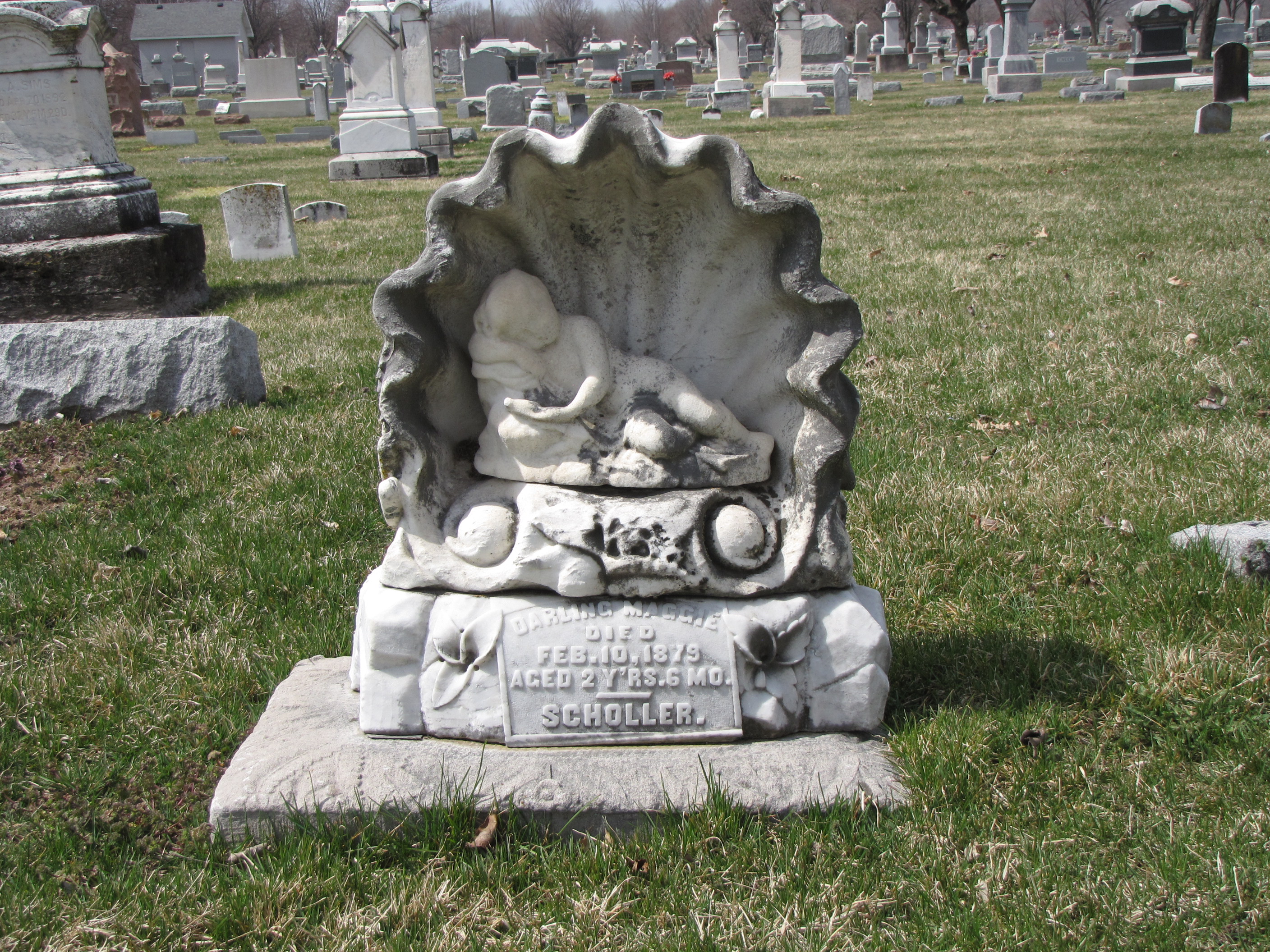
Darling Maggie

Rest Haven Cemetery, Edinburgh, Indiana

Rest Haven Cemetery, Edinburgh, Indiana

DARLING MAGGIE

DIED

FEB. 10, 1879

AGED 2 Y’RS. 6 MO.

SCHOLLER.

The most poignant and tender gravestones are those for children.  In the 1850s, the mortality rates for children under one year, were estimated at over 200 deaths per thousand, with much higher mortality rates for children under 5.

This monument in the Rest Haven Cemetery at Edinburgh, Indiana, shows a sleeping Maggie Scholler, aged 2 years and 6 months, nestled into a pillow tucked into a sea shell.  This gravestone very well could be a metaphor for the shell that contains a pearl, the shell that opens and reveals a precious jewel, in this case, this tiny baby girl.  The shell is also a symbol of baptism because of its obvious association to water.  In fact, a shell is often used to scoop up and sprinkle water during the baptismal ceremony.

The sea shell is also associated with Saint James, somtimes referred to as James the Greater, was one of the Twelve Apostles.  In some church traditions, James’ mother is reported to be the sister to Jesus’ mother, Mary, making Jesus and James first cousins.  Tradition also has it that the remains of the Saint were taken to the Cathedral of Santiago de Compostela in Galacia, which is in the north of Spain.

Saint James became the patron saint of Spain during the reconquest of the country from the Moors and the Cathedral of Santiago de Compostela became a popular site for Christian pilgrims.  Galacia, noted for delicious seafood, including scallops, drew thousands of Christians pilgrims who often carried a scallop shell back with them as a souvenir of the trip.  Before long, the sea shell became a symbol of Christian pilgrimage.

Posted in Children's Graves | 2 Comments