Male Angels

Calvary Cemetery and Mausoleums, Indianapolis, Indiana

Calvary Cemetery and Mausoleums, Indianapolis, Indiana

Most angels depicted in sculpture in cemeteries are female.  There is the occasional St. Michael, standing tall clothed in armor and carrying a sword to fight Satan’s hordes.

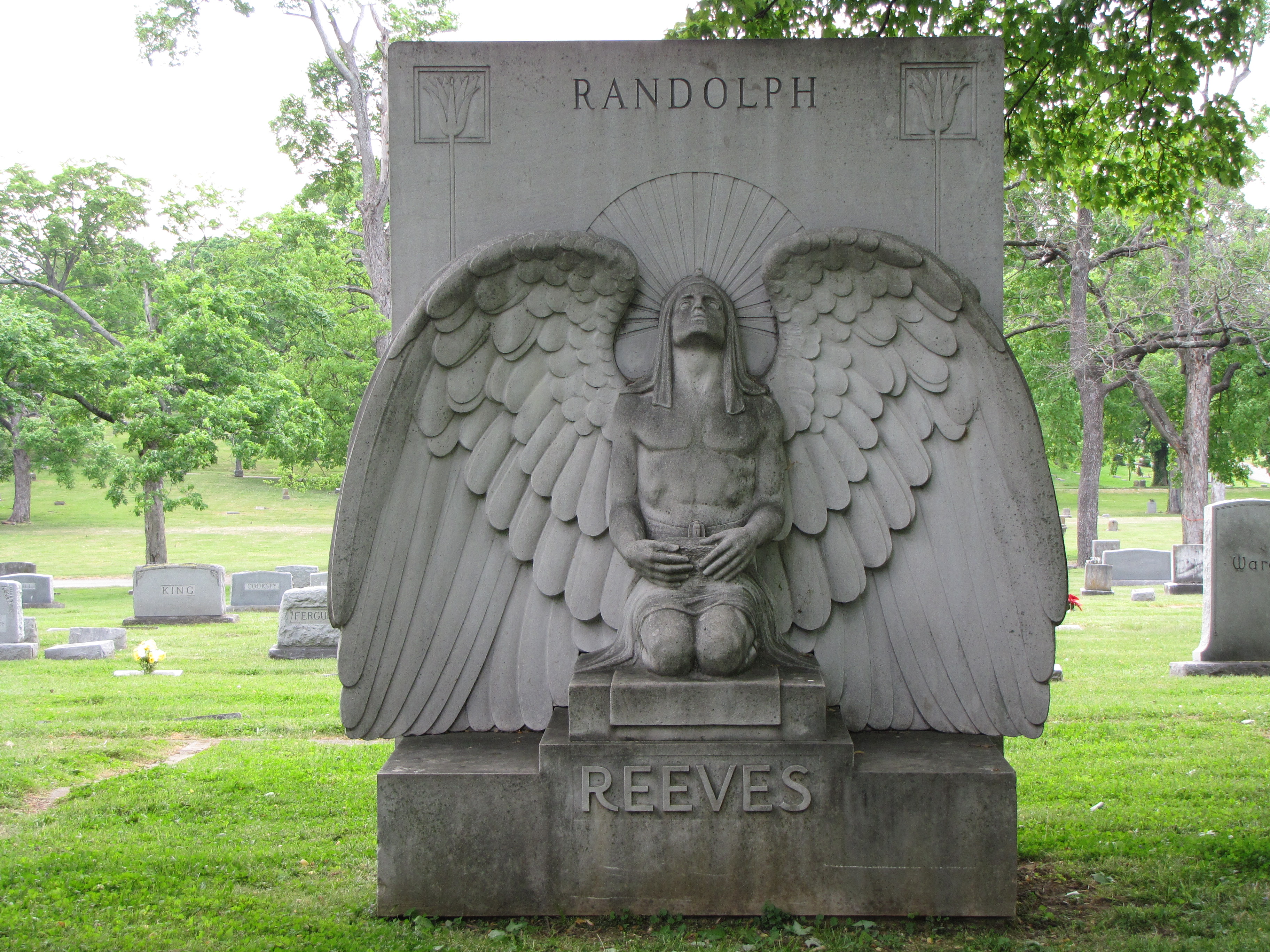
Mount Olivet Cemetery at Nashville, Tennessee.

Mount Olivet Cemetery at Nashville, Tennessee.

But the male angel depicted in the Mount Olivet Cemetery at Nashville is not St. Michael.  The angle is kneeling while holding what looks like a small box or stone.  The angel is looking upward.

The monument marks the grave of John Reeves (1862-1921) and his wife Henrietta (1871-1968).  The symbolism is a mystery to this blogger.  Any guesses?

IMG_5744

Posted in Angels | 2 Comments

A Candy Empire

IMG_1322

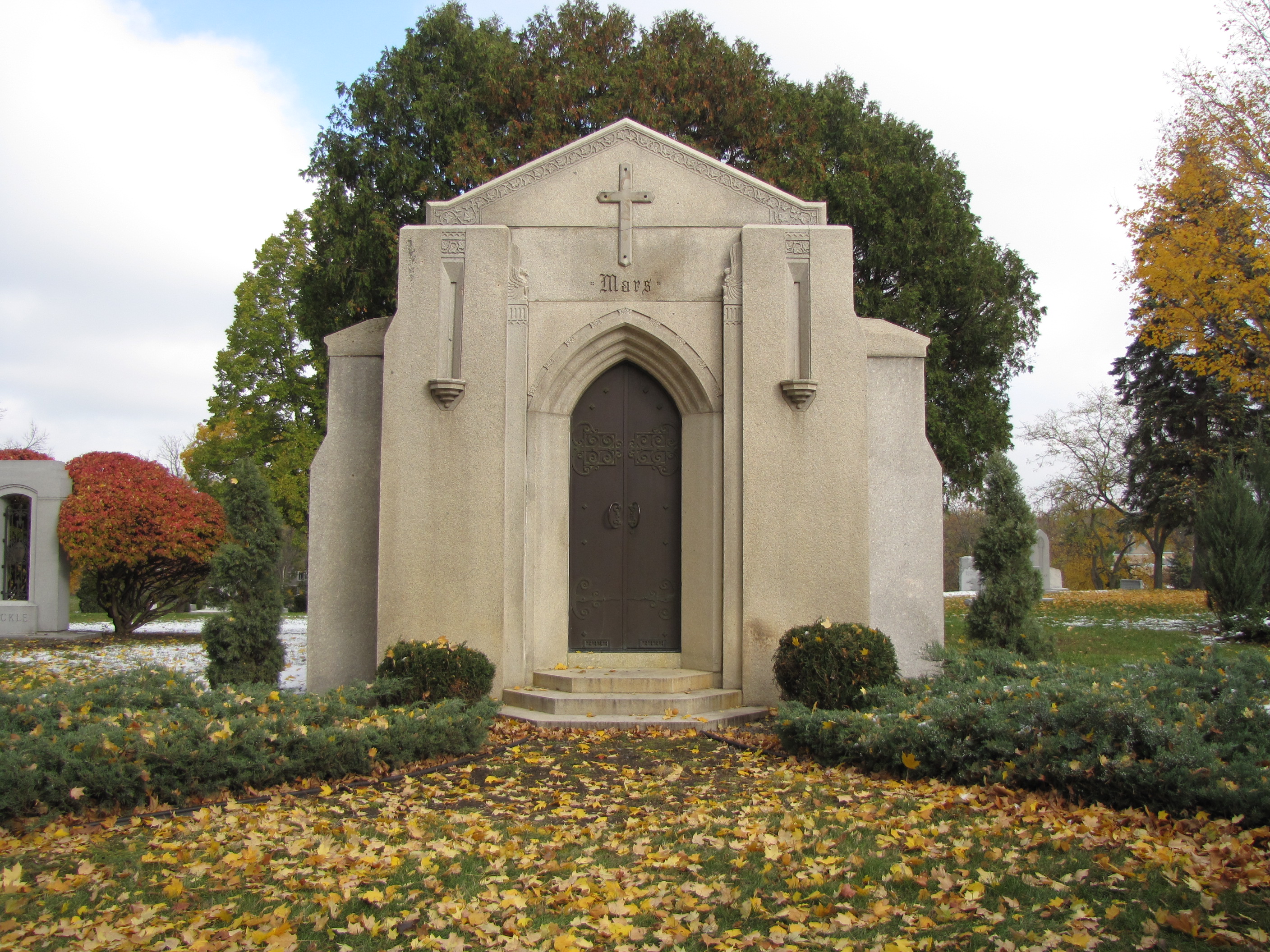
The Mars family seems to have had chocolate running through generations of their blood.  The founder of the Mars candy empire was Frank Clarence Mars (September 24, 1883 – April 8, 1934), whose mother taught him how to hand dip chocolate when he was a young man.  He founded the famous Mars Candy Company, the largest candy company in the world which sells some of the best-selling candies of all time.

The Mars Company created famous candy bars such as the Milky Way.  The famous candy bar was not named for the celestial body in which the planet Mars exists.  No, it was named for a milkshake and advertised as a “chocolate malted milkshake in a candy bar.”  They also created the Snickers bar which was named after one the Mars family’s favorite horses.  This candy bar is reported to be the best-selling candy bar of all time!  Today it is still the 4th best-selling candy in the United States, bringing in over $440 million dollars in 2013!

For a time, Forrest Edward Mars (March 21, 1904 – July 1, 1999), son of Franklin, worked in the family business with his father.  A dispute caused a break in their working relationship.  Forrest founded his own company and partnered with Bruce Murrie, the son of a Hershey’s Chocolate Company executive.  In the early 1940s, Forrest and Bruce created tasty little chocolate candies wrapped in multi-colored candy coatings they called M&Ms—Mars and Murrie.  Today, M&Ms are the number ONE selling candy in the United States.  In 2013, $673 Million dollars’ worth of those tasty little chocolate bites was sold in the United States garnering first place in the candy wars.

Forrest returned to run the family business after his father’s death and ran it until his retirement.  Father and son, creators of the largest candy empire in the world, with sales topping 16 billion dollars annually, are both buried in the Gothic-style Mars Family Mausoleum in the Lakewood Cemetery at Minneapolis, Minnesota.

The Mars Family Mausoleum in the Lakewood Cemetery in Minneapolis, Minnesota

The Mars Family Mausoleum in the Lakewood Cemetery at Minneapolis, Minnesota

Posted in Uncategorized | Leave a comment

The Compass, Trowel, and the 24-inch Gauge


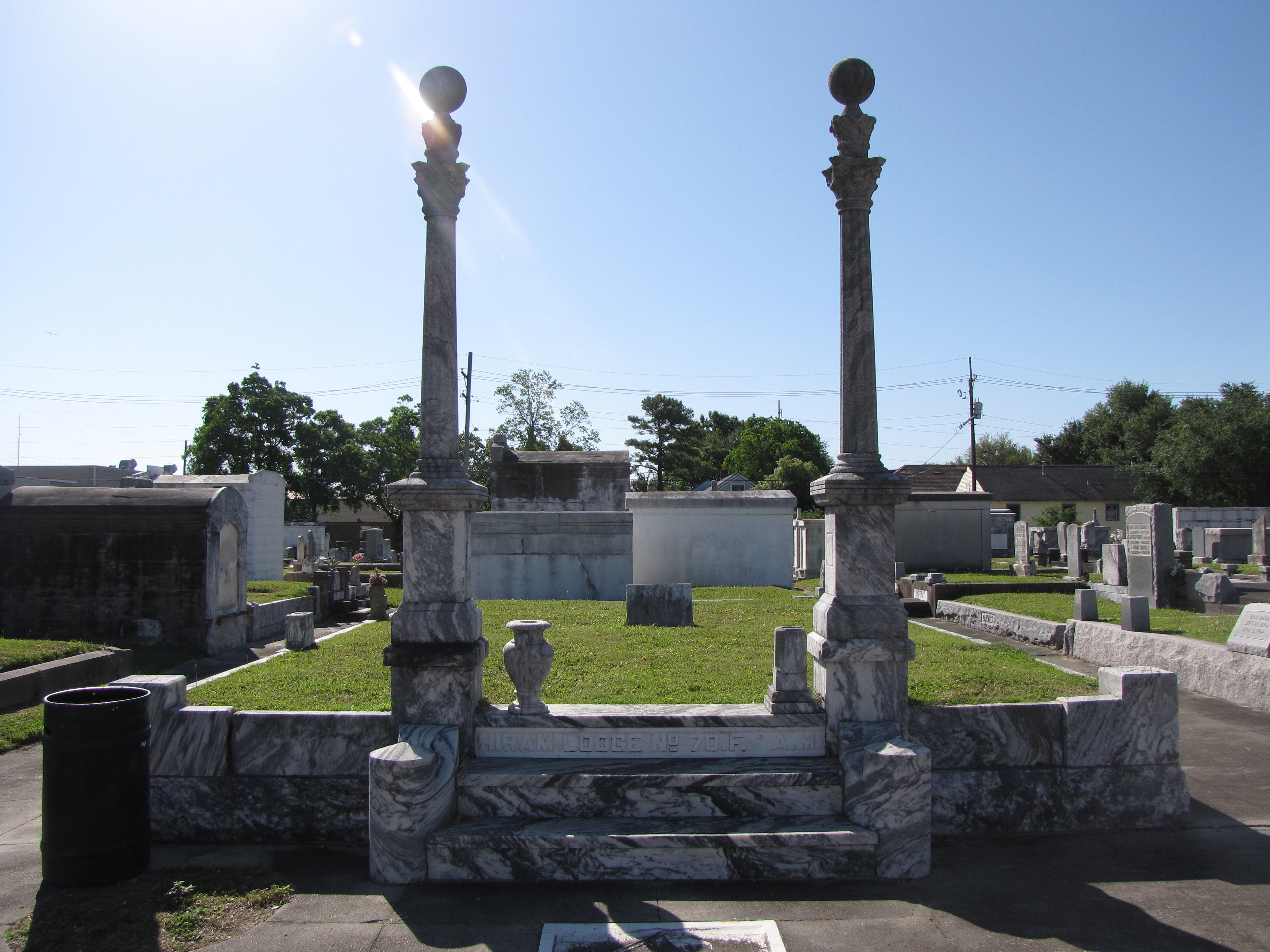
Masonic Cemetery, New Orleans, Louisiana

Masonic Cemetery, New Orleans, Louisiana

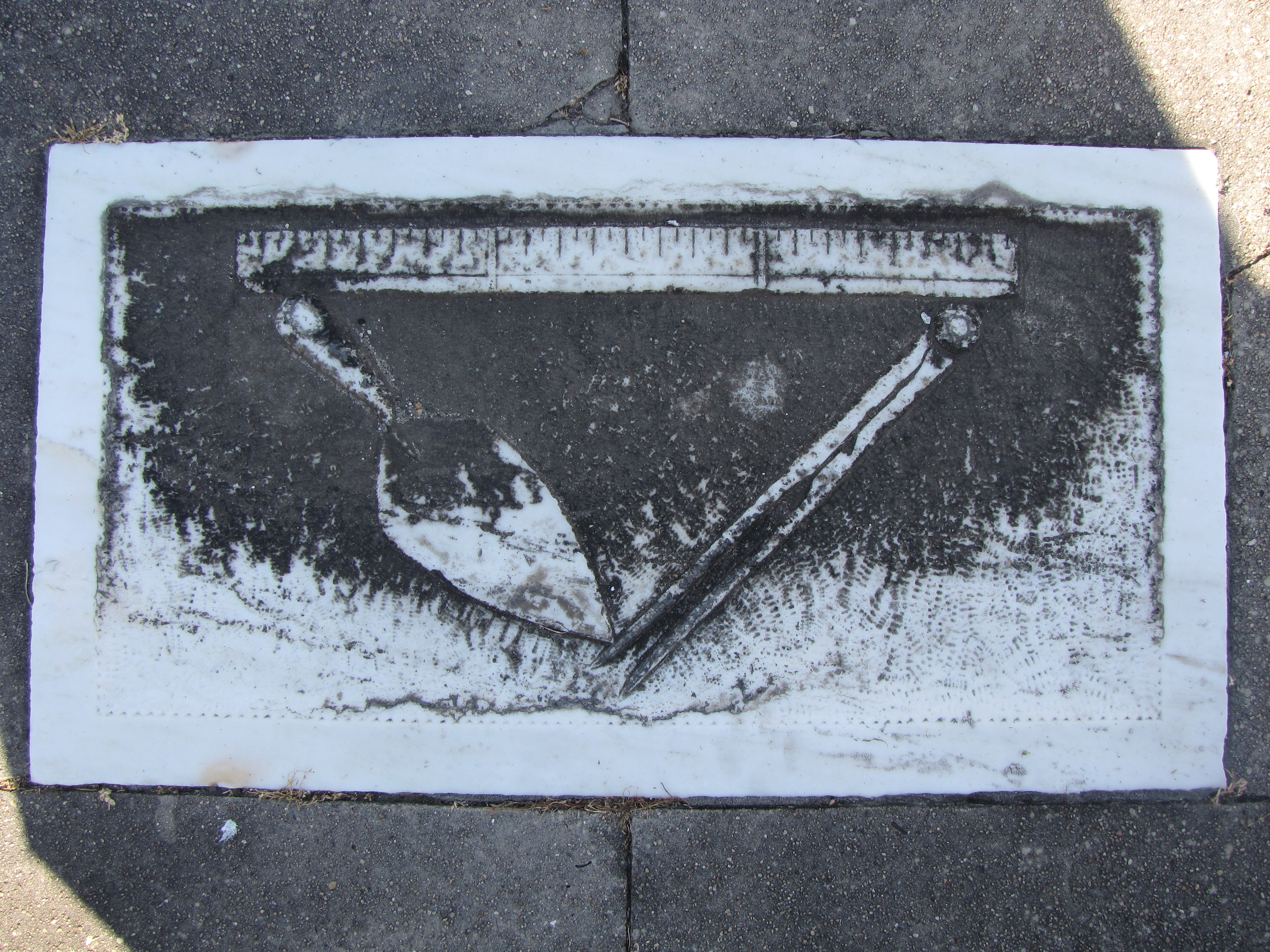
In front of a Masonic society tomb in the Masonic Cemetery at New Orleans, established in 1865, is a small white-marble step with three symbols—the compass, the trowel, the 24 inch gauge.  Each symbol is used in the Masonic iconography to build a metaphor based on how these tools are used by operative masons and how a Freemason is to live his life.

The compass

The compass draws a circle—masons know that they are to keep their life in check and within the boundary of what is right.

The trowel

The trowel is one of the simplest tools in the masons’ bag, used to spread mortar to connect one layer of brick to another.  The metaphor with this tool is that it is an emblem to remind masons to spread a different kind of connector—brotherly love and affection.

The 24 inch gauge

The twenty four inch gauge is a reminder to all masons to make sure that they are wise about dividing their time.   Every day is to be portioned out so give time for God, Work and Rest.

Masonic Cemetery, New Orleans, Louisiana

Masonic Cemetery, New Orleans, Louisiana

Posted in Uncategorized | Leave a comment

Double-Eagle, Part 4


Lakewood Cemetery at Minneapolis. Minnesota

Lakewood Cemetery at Minneapolis. Minnesota

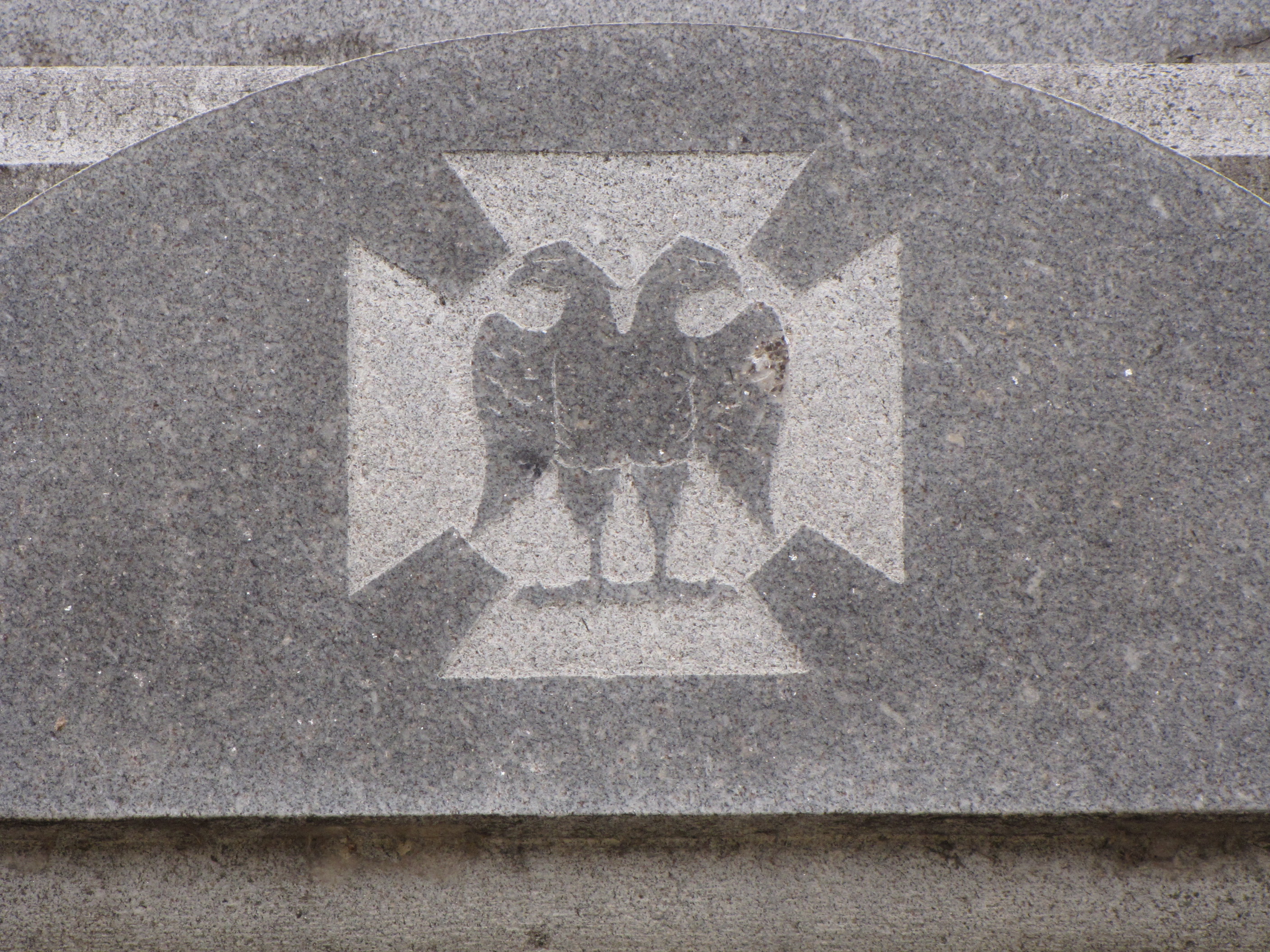
The incised design of the double-headed eagle is centered inside a variant of the Maltese cross, a version known as a Formee Pattee.

Cross-Pattee-alternate2[1]

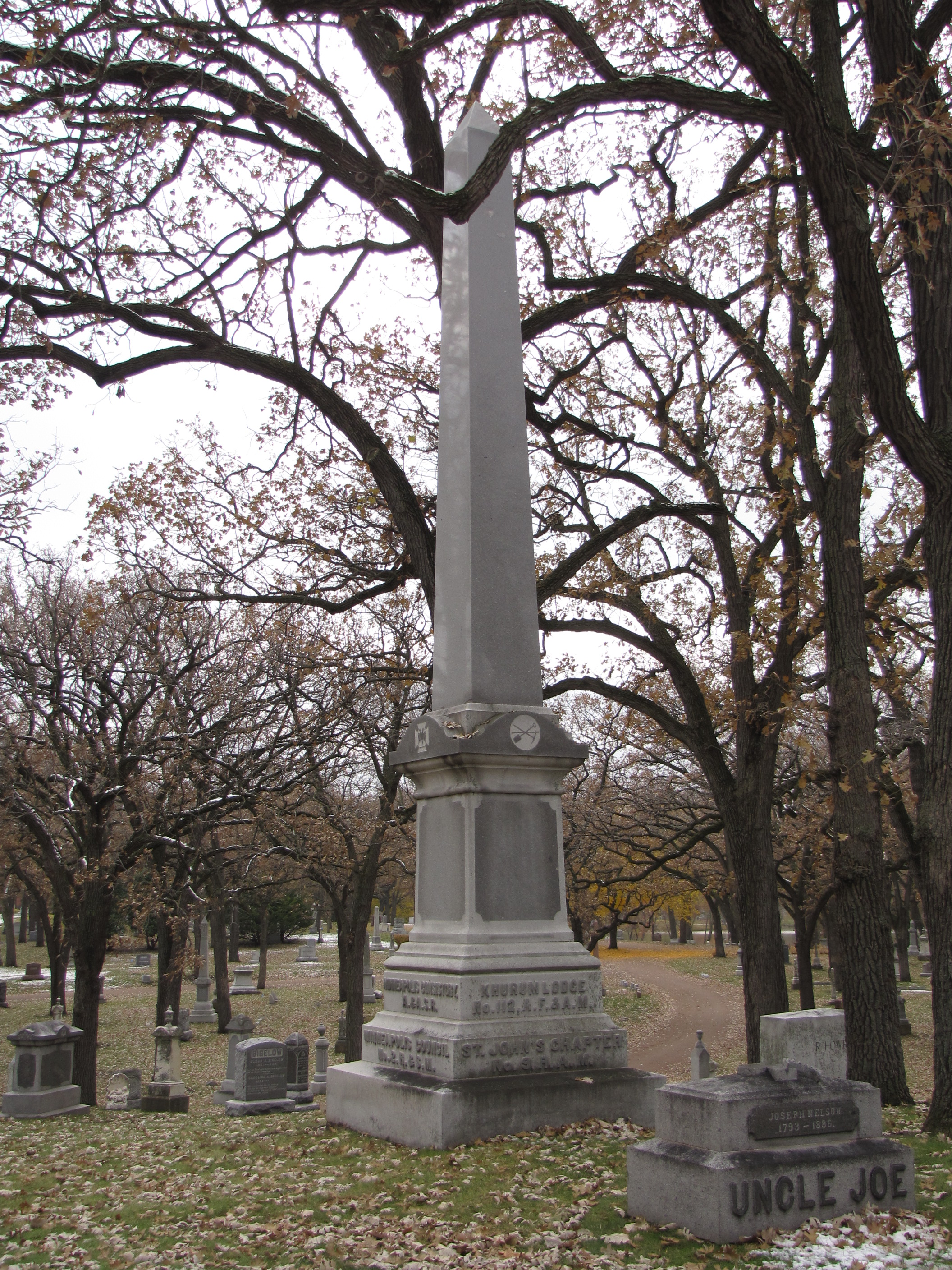
This version is on found on a light-gray granite obelisk monument erected to honor the Ancient Free & Accepted Masons of Minnesota, Khurum Sunlight Lodge No. 112 of Minnetonka, Minnesota.

Lakewood Cemetery at Minneapolis, Minnesota

Lakewood Cemetery at Minneapolis, Minnesota

Posted in Uncategorized | Leave a comment

Double-Headed Eagle, Part 3


Woodland Cemetery, Des Moines, Iowa

Woodland Cemetery, Des Moines, Iowa

The double-headed eagle with a crown and a small triangle with the letters 32 inside also represents the 32-degree of the Ancient and Accepted Scottish Rite.  Again the eagle clutches a banner with the motto: “SPES MEA IN DEO EST”, Latin for “My hope is in God.”  But, in this version the eagle is surmounted on a cross potent.  The cross potent is an ancient heraldic symbol, also referred to as the crutch cross.  The cross potent is made up of four lengths of cross of equal lengths with crossbars on the ends.

120px-Cross-Potent-Heraldry.svg[1]

Two such examples were found on a zinc monuments in the Woodland Cemetery at Des Moines, Iowa.  One example was the elaborate monument of Wesley Redhead, died January 9, 1891, aged 64 years.

Woodland Cemetery, Des Moines, Iowa

Woodland Cemetery, Des Moines, Iowa

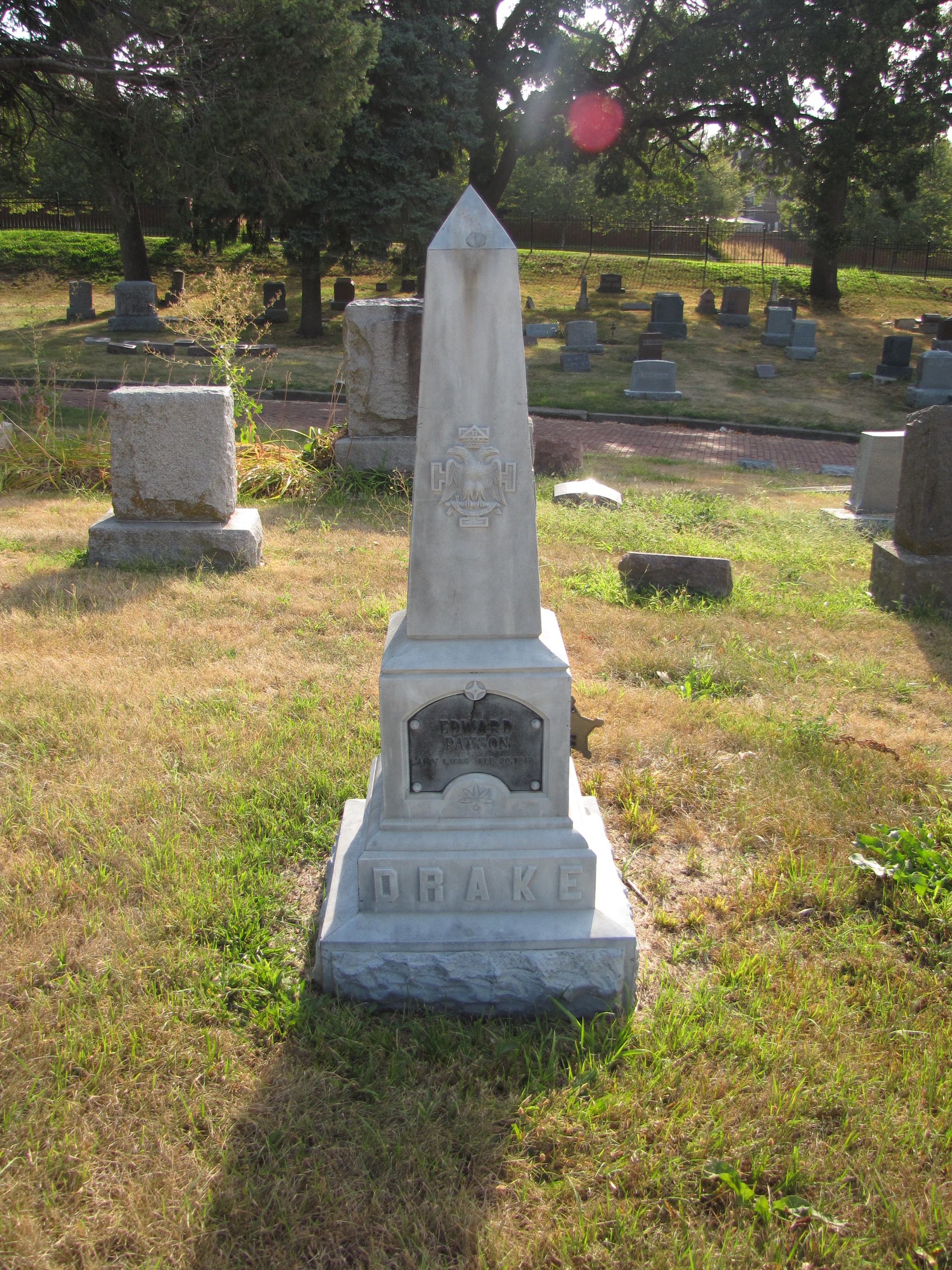
The example below is on the zinc obelisk marker of Edward Payson Drake, who was born May 1, 1856, and died February 20, 1943.

Woodland Cemetery, Des Moines, Iowa

Woodland Cemetery, Des Moines, Iowa

Posted in Uncategorized | Leave a comment

Double-Eagle, Part 2


Lakewood Cemetery, Minneapolis, Minnesota

Lakewood Cemetery, Minneapolis, Minnesota

The double headed eagle without the crown and the triangle represents the 32-degree of the Ancient and Accepted Scottish Rite.  The banner being clutched by the eagle has a different motto: “SPES MEA IN DEO EST”.  That is Latin for “My hope is in God.”

Posted in Uncategorized | Leave a comment

Double-Headed Eagle


IMG_7920

The double headed eagle is an ancient symbol that has been associated with many empires including the Byzantine Empire as early as the 1400s, the Seljuk Turks, the Holy Roman Empire, the Russian Empire, and more recently, the Albanian Coat of Arms, adopted in 1992, or the Coat of Arms of Montenegro adopted in 2004.

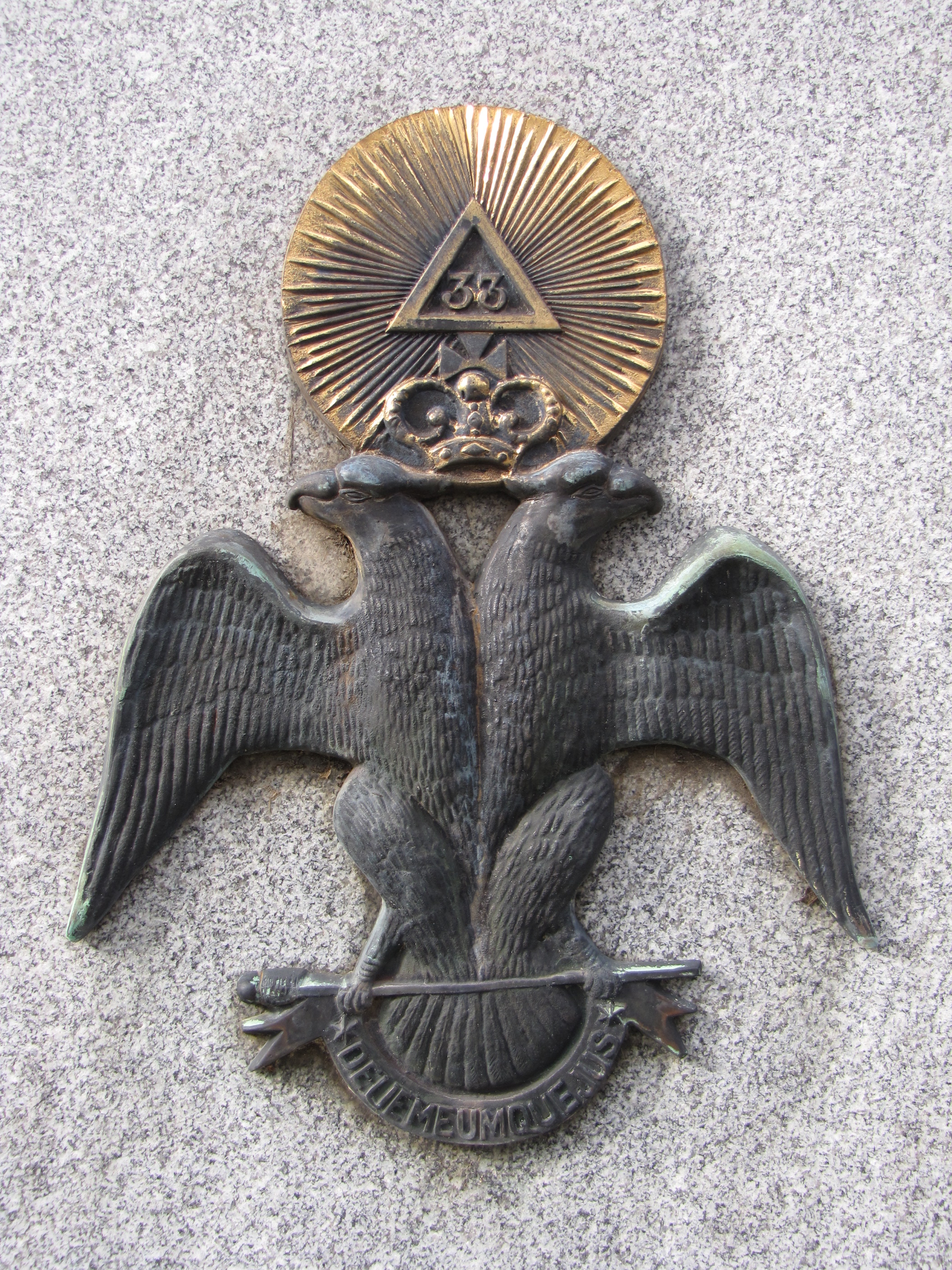
The double-headed eagle was adopted by the Scottish Rite for use by the 33rd Degree Masons.  In this image found in the Lakewood Cemetery at Minneapolis, Minnesota, the body of the double-headed eagle is copper with the crown and the radiating medallion above cast in brass.  The eagle clutches a banner with the Latin phrase, “DEUE MEUMQUE JUS”, meaning, “God and my right”.


Posted in Uncategorized | 5 Comments

Safe Sailing


Lakewood Cemetery, Minneapolis, Minnesota

Lakewood Cemetery, Minneapolis, Minnesota

A common and oft heard remark from Christians is that when they die they will go to Heaven and meet with St. Peter at the “Pearly Gates” when they enter the Kingdom.  This is such a popular scenario that there are entire Web sites devoted to St. Peter-at-the-Pearly-Gates jokes!

In religious paintings, St. Peter is often shown with keys, referring to the Matthew 16:18-19: “And I say also unto thee, That thou are Peter, and upon this rock I will build my church and the gates of hell shall not prevail against it.  And I will give unto thee the keys of the kingdom of heaven: and whatsoever thou shalt bind on earth shall be bound in heaven: and whatsoever thou shalt loose on earth shall be loosed in heaven.”

The term “Pearly Gates” also has its origin in a Biblical passage, Revelation 21:21: “And the twelve gates were twelve pearls; every several gate (sic) was one pearl; and the street of the city pure gold, and it were transparent glass.”

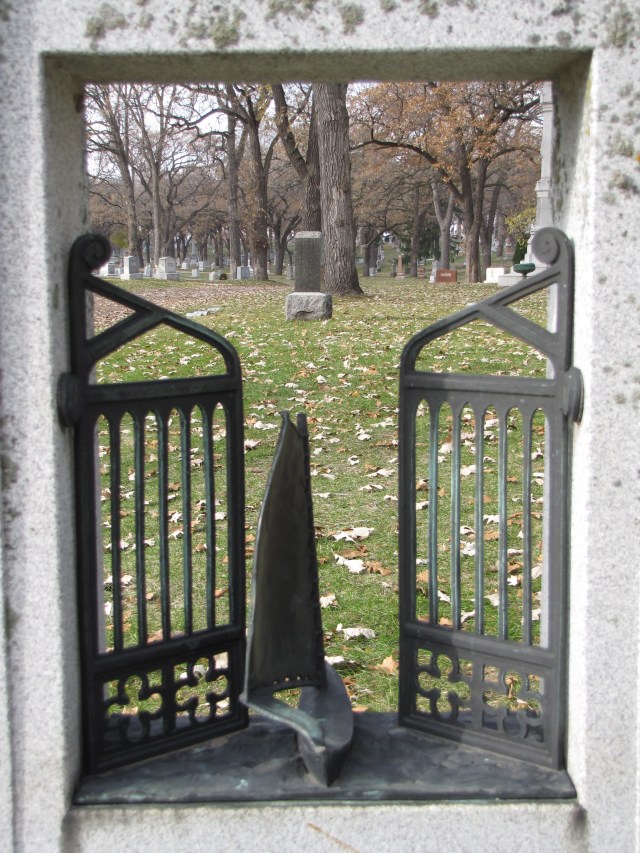
The Beaman Family gravestone, in the Lakewood Cemetery at Minneapolis, Minnesota, has an open gate, a common symbol found in American cemeteries.  Often the gates have stars, a single, star, a dove, or a banner above the open gates.

Garland Brooks Cemetery, Columbus, Indiana

Garland Brooks Cemetery, Columbus, Indiana

What is different about this open gate motif on the Beaman Family Monument is that it is cast in bronze and built into the monument, not merely carved into the face of the gravestone.  It is also different because passing through the open gates is a sail boat as if the smooth waters allowed the soul gentle and safe passage on the placid waters on the way to Heaven.
Lakewood Cemetery, Minneapolis, Minnesota

Lakewood Cemetery, Minneapolis, Minnesota

The open gates are central to the Last Judgment.  The gates represent a passageway from one realm to the next.  The gates are the portal for saved souls to make their passage from the Earthly realm to the Heavenly realm upon Christ’s return.

Posted in Uncategorized | 2 Comments

Spheres

Union Cemetery, Uhrichsville, Ohio

Union Cemetery, Uhrichsville, Ohio

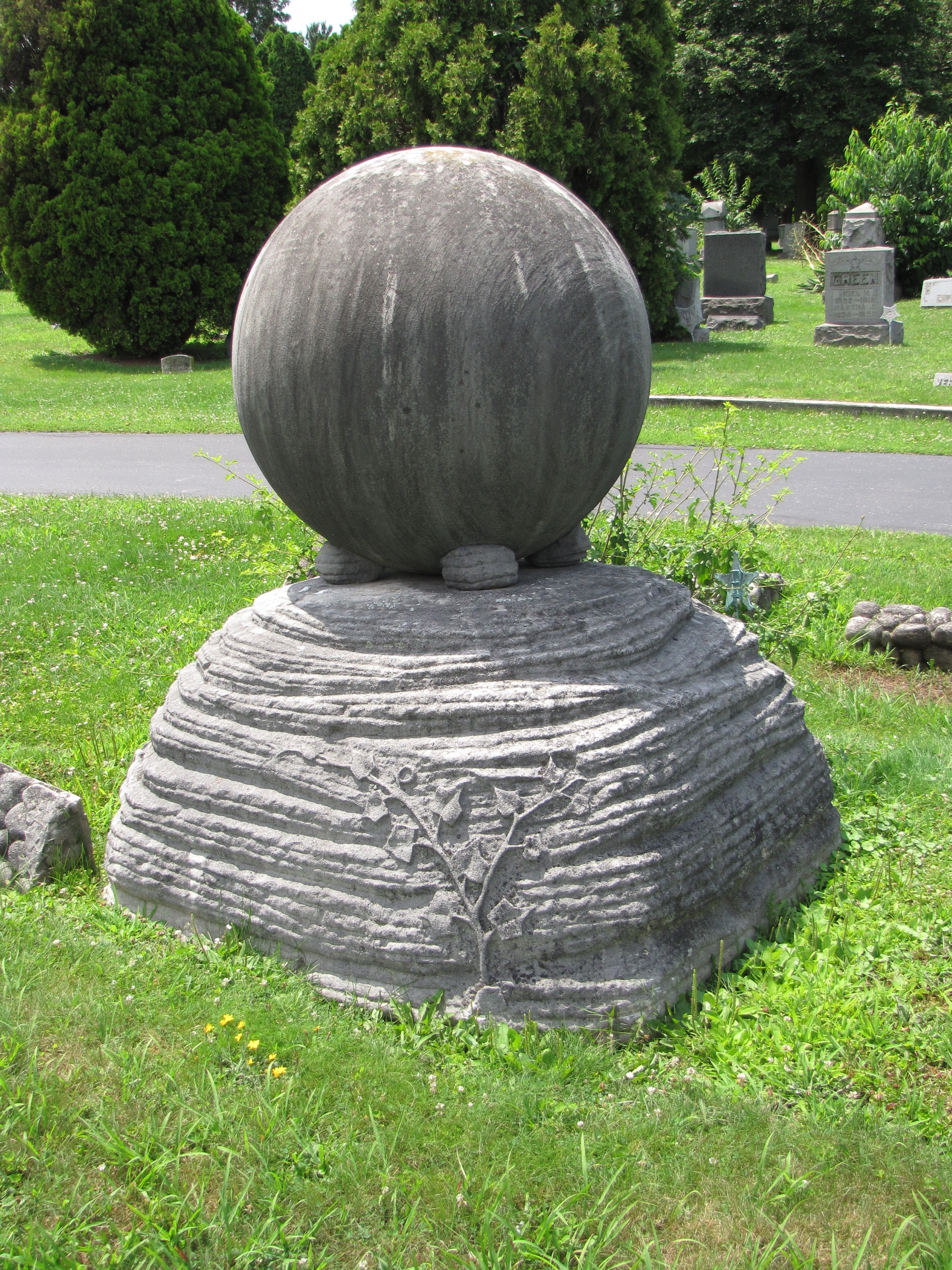
Like many motifs found in the cemetery, sources vary on the meaning or, if, in fact, there is any meaning at all.  The sphere is certainly one of the motifs found in the cemetery where there is a fair amount of disagreement.  Some sources say that spheres found in cemeteries are strictly decorative.  Other sources describe spheres as the circle in 3-D.  Traditionally the “circle” is a metaphor for life.  The circle represents eternity.  Still, other sources say the sphere symbolizes a soul waiting for the resurrection.

Lakewood Cemetery, Minneapolis. Minnesota

Lakewood Cemetery, Minneapolis. Minnesota

Posted in Symbolism | Leave a comment

Victorian angels


Mt. Calvary Cemetery, Columbus, Ohio

Mt. Calvary Cemetery, Columbus, Ohio

Victorians used many flowers in their funeral practices.  The body lay in state in the parlor of a home as long as four days, often without the benefit of being embalmed.  To cover the odors, Victorians filled the parlor with flowers.

Individual flowers were used, too, in the symbolism of death.  For instance, the rose could represent love and beauty or the messianic hope that Christ would return.  The lily of the valley could represent the tears of the Virgin Mary or the quality of innocence.  The Easter lily symbolized the resurrection.

In the funerary statues above and below, the angels are looking down in reflection and sorrow.  Each angel is gently dropping one of her flowers to the ground.  This act is a recurring Victorian funerary motif designed to remind the viewer that life is short.  Often the figure is a young female mourning figure, though, in both cases here, they are angels, appropriate for the Mt. Calvary Cemetery at Columbus, Ohio.

Many of the Victorian funerary symbols expressed the transitory nature of life–how one could be strong and vital one day and dead the next–such as the broken column, broken chain, incomplete circle, broken wheel, or a broken bud.  The sculpture representing a young woman placing flowers on a grave also recreates a tradition begun by the ancient Greeks and Romans that we practice to this day.

Mt. Calvary Cemetery, Columbus, Ohio

Mt. Calvary Cemetery, Columbus, Ohio


Posted in Angels, Symbolism | 3 Comments